- by Crescent Gems
Peach Sapphire — The Complete Buyer's Guide to Color, Origin, and Value
- by Crescent Gems
New to buying sapphires? Start with our Ultimate Sapphire Buying Guide — the complete resource for colour, origin, treatment, and pricing.
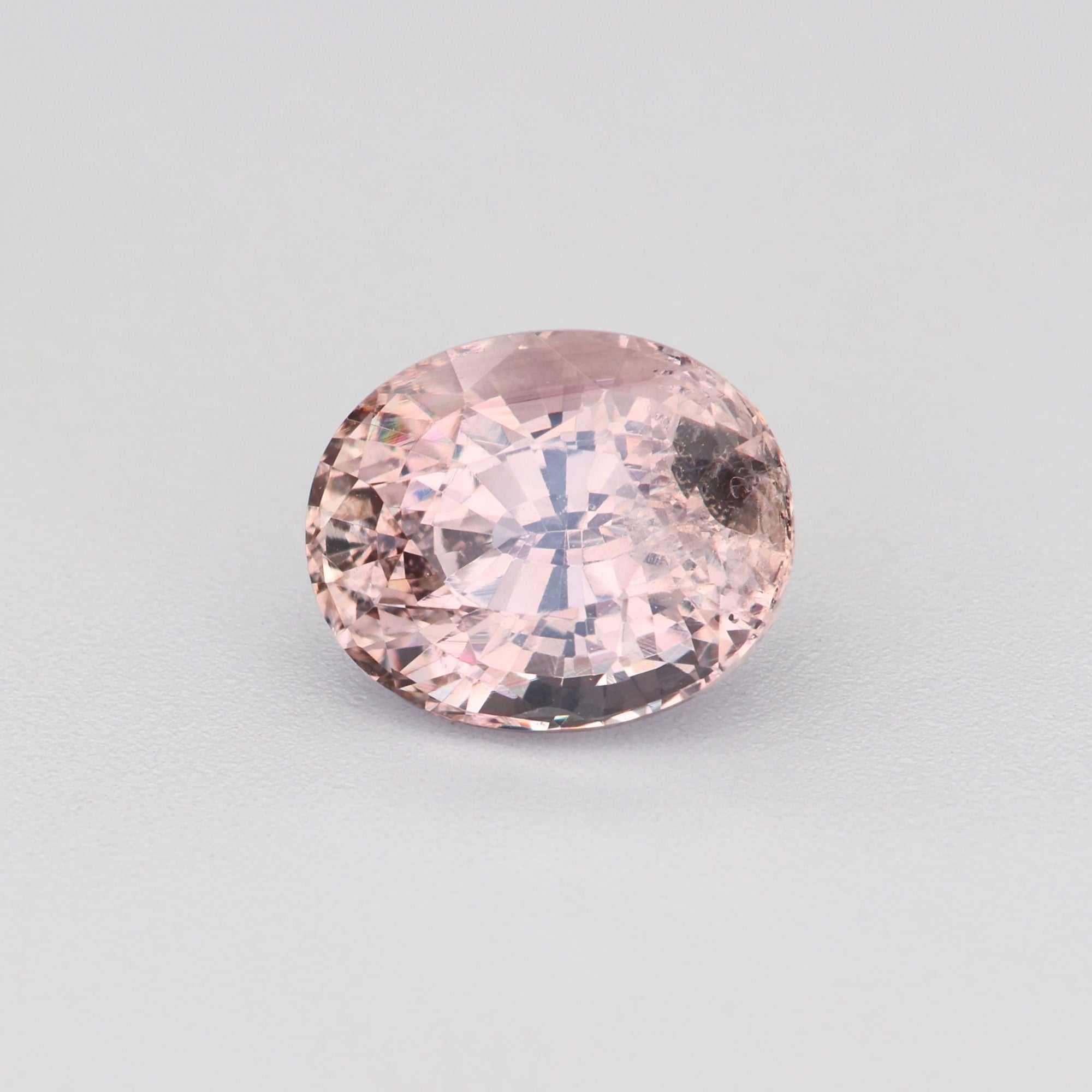
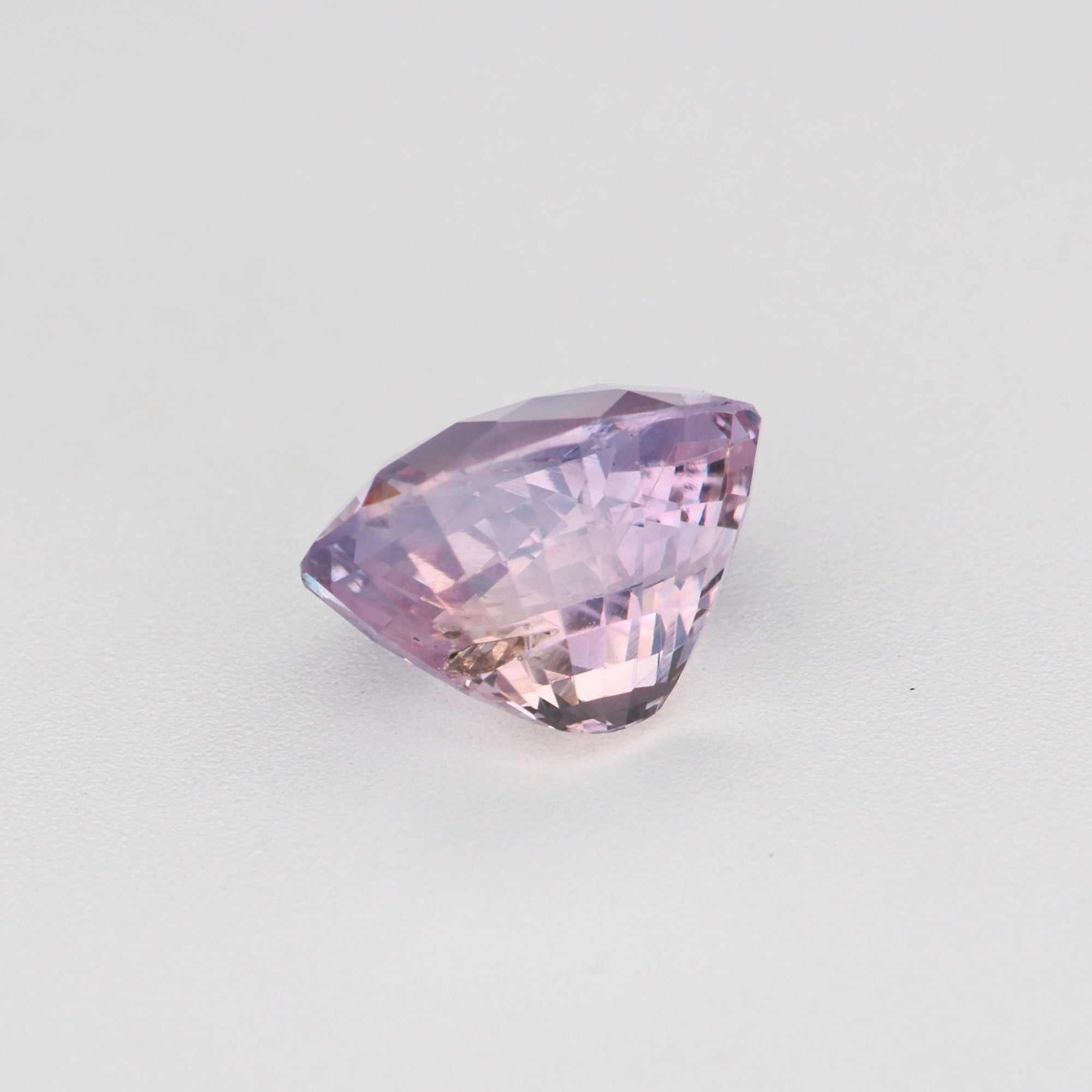
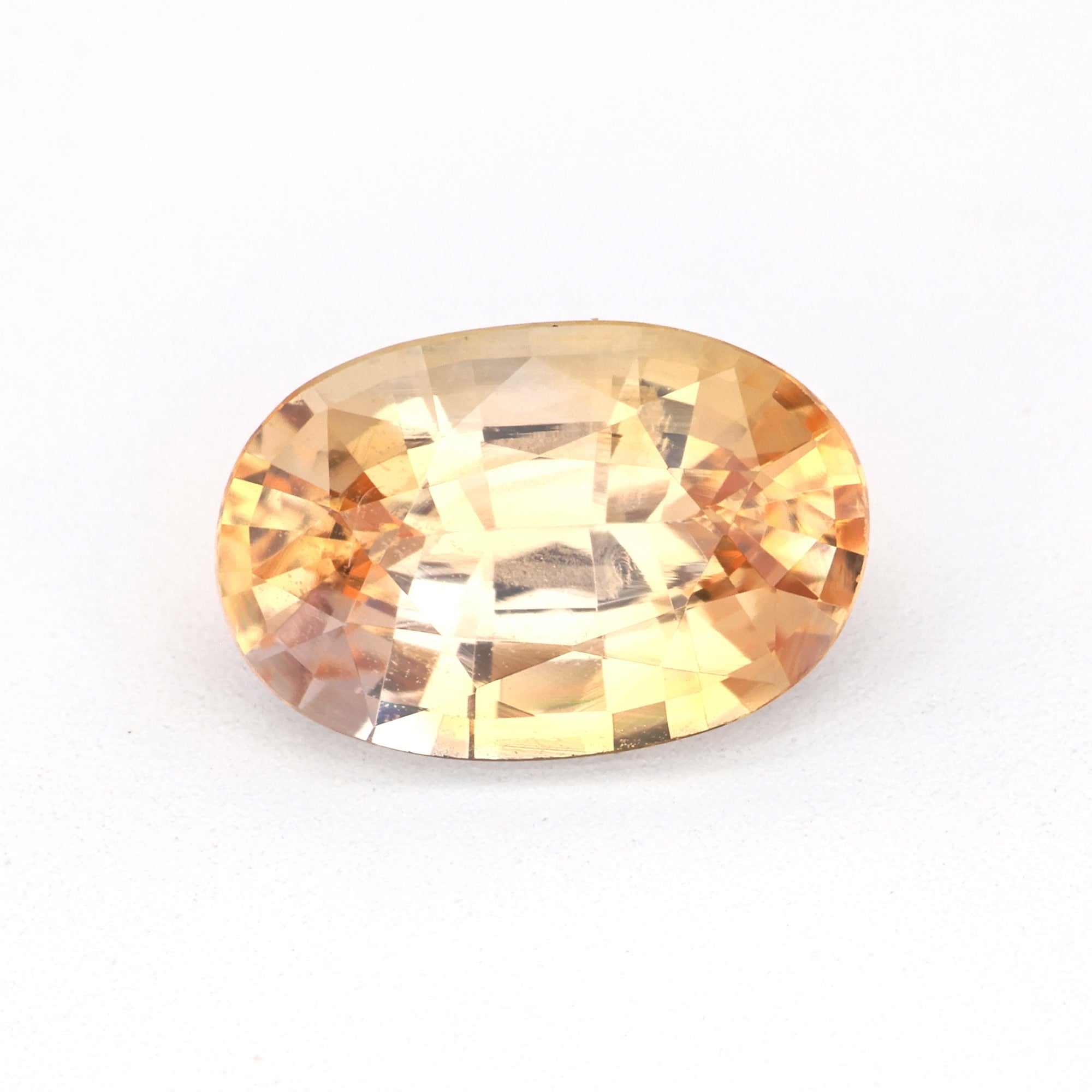
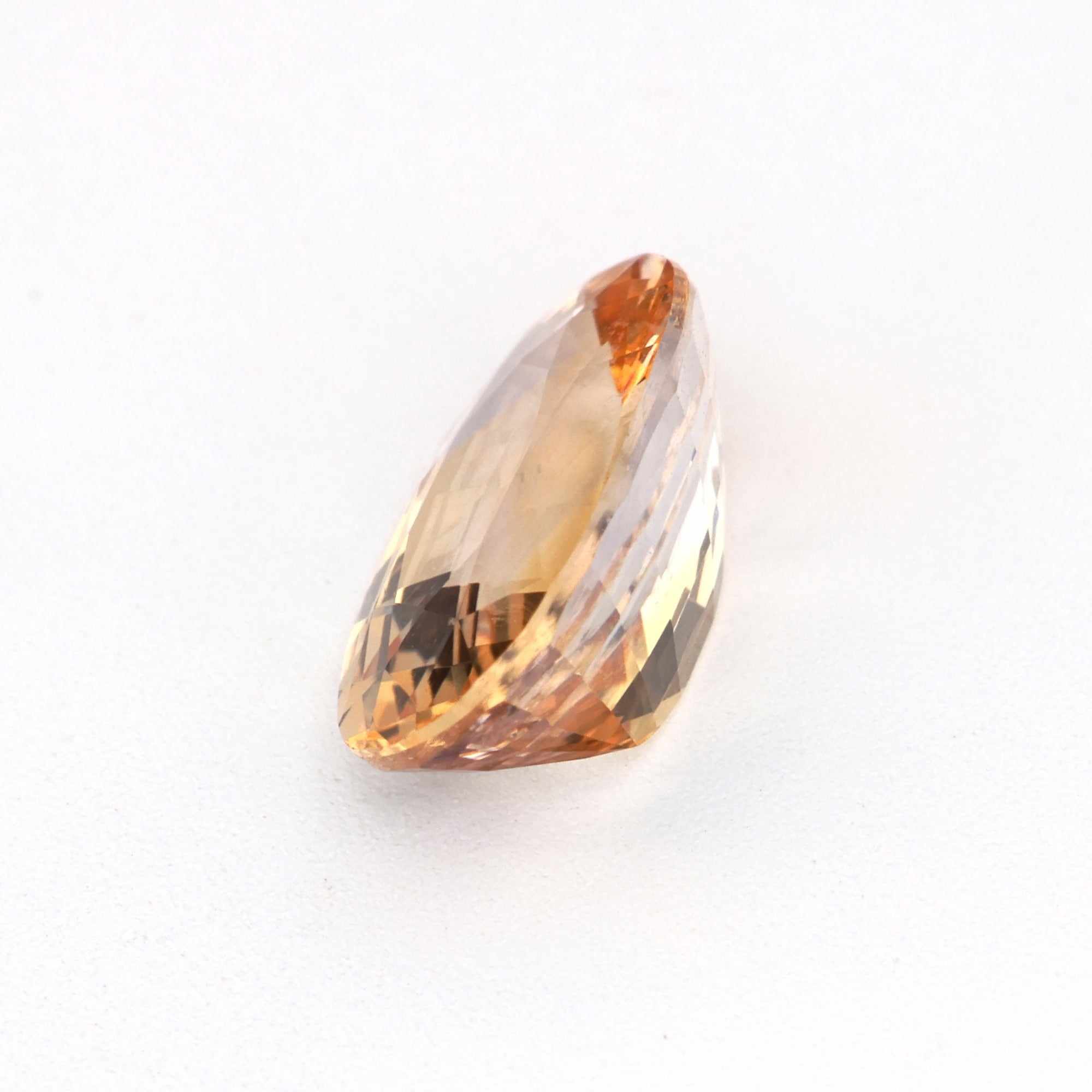
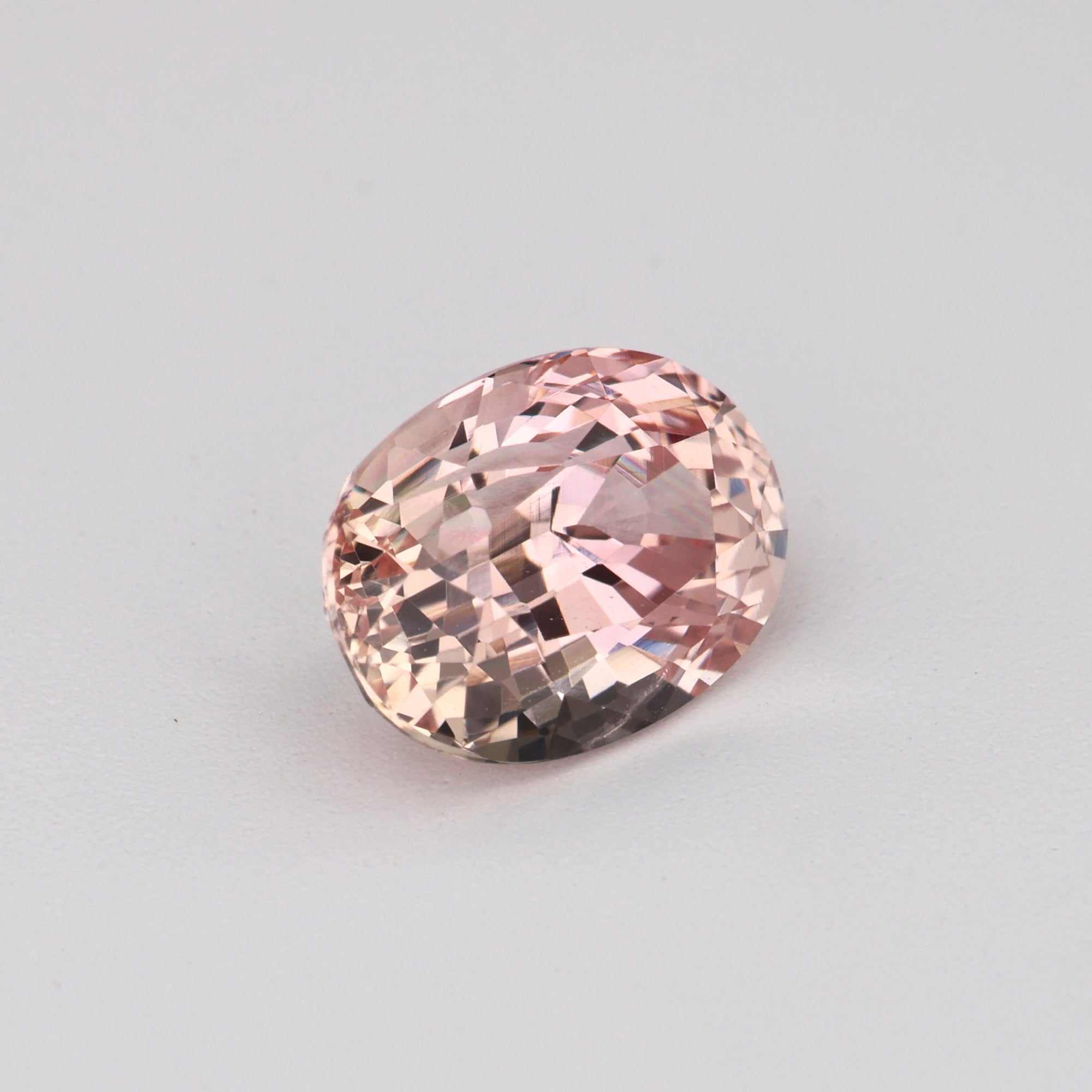
Peach sapphire is natural corundum in the warm blush-orange range — the color zone where pink and orange meet in a tone that reads simultaneously romantic and warm. It is not a standardized gemological category with a fixed definition, but rather a descriptive term for a range of natural sapphire colors that sit between pure pink and vivid orange, typically with a soft, warm quality that reads closer to the inside of a ripe peach than to any single primary color. That warmth, combined with corundum's exceptional durability at Mohs 9, has made peach sapphire one of the most sought-after engagement ring stones of the past decade.
Part of peach sapphire's appeal is exactly what makes it difficult to define: it occupies a color position that no other commercial gemstone category covers. Morganite approaches it from the pink-orange range but lacks corundum's hardness and often relies on heat treatment to sustain its color under UV light over time. Orange topaz is close in hue but fragile and prone to fading. Spessartite garnet delivers vivid orange without the pink component. Peach sapphire — when it's right — has a warmth and softness that none of these alternatives can quite replicate, in a stone durable enough for daily ring wear without protective setting protocols.
This guide covers what peach sapphire is, how it relates to padparadscha (the most valuable sapphire color in the world), which origins produce the finest material, how to evaluate color quality, what heat treatment does to peach corundum, and how to specify a peach sapphire for an engagement ring or custom jewelry commission.

Peach sapphire is corundum colored by a combination of trace iron and chromium. Iron is responsible for yellow and orange in sapphire; chromium is responsible for pink and red. When both are present in certain proportions, the result is a range of warm blush-orange tones — the peach spectrum. The exact balance between the iron-driven orange component and the chromium-driven pink component determines where a stone falls in the peach range: more chromium shifts it toward pink-peach or blush; more iron shifts it toward orange-peach or apricot.
This is also why peach sapphire is directly related to padparadscha — the most coveted and expensive sapphire color in existence. Padparadscha is defined as a pink-orange or orange-pink corundum that shows a specific balance of both components simultaneously, typically described by reference to a lotus blossom (the word padparadscha comes from the Sinhalese for aquatic lotus). The distinction between a padparadscha and a fine peach sapphire is one of degree and precision of color: padparadscha shows the pink-orange balance more vividly and more equally, and must be certified as padparadscha by a recognized laboratory to carry that name and the significant price premium attached to it. A stone that is close to padparadscha but does not quite meet the threshold is commercially described as peach sapphire — which is not a consolation category but a genuine and beautiful color in its own right.
Within the broad peach category, there is significant variation. Understanding the range helps you identify which zone appeals to you aesthetically and commercially.
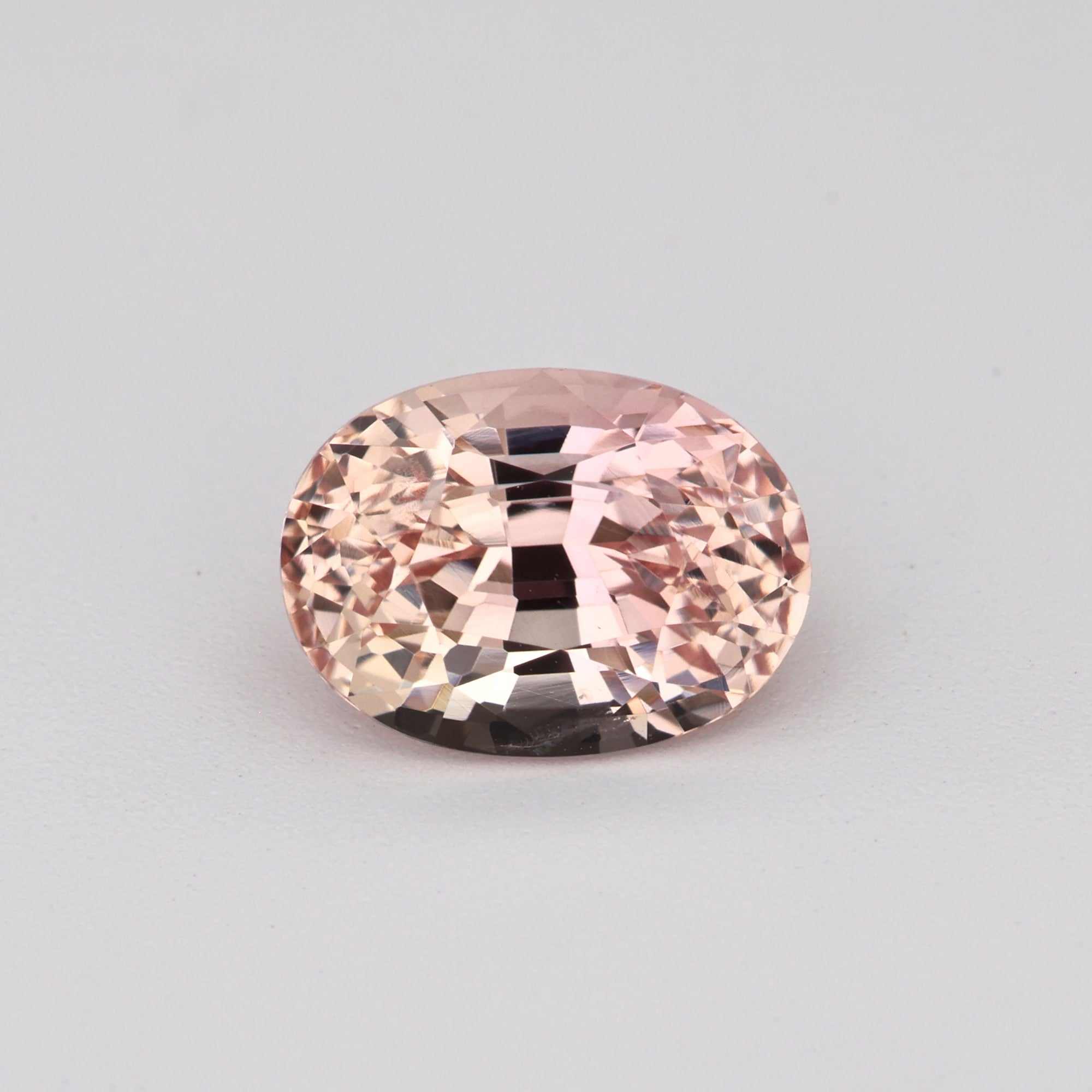
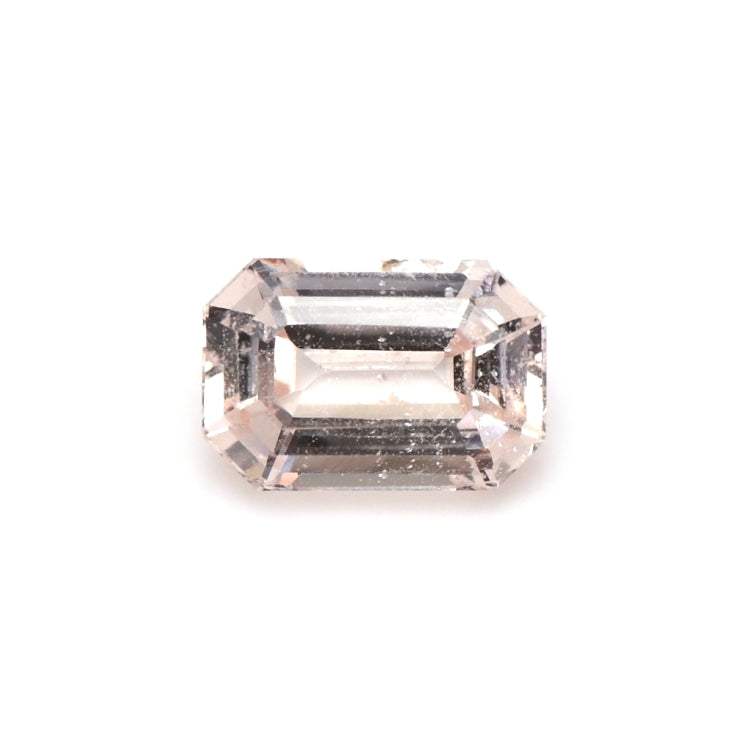
The softest end of the peach range — a pale, warm tone that reads somewhere between very light pink and very light peach. In certain lighting conditions it reads almost colorless with a warm tint; under direct sunlight or incandescent light the peach character becomes more visible. Blush-peach suits buyers who want subtlety and warmth rather than vivid color, and it pairs beautifully with rose gold settings where the metal reinforces the faint warmth of the stone. The risk is that at very light saturation, the color can read as washed-out or near-colorless under some lighting, reducing its visual impact as a center stone.
The most commercially desirable range within the peach category. Mid-tone peach reads clearly as peach — warm, blush-orange, unambiguously colored — under all standard lighting conditions. It has enough saturation to be immediately visible as a colored stone at wearing distance without being so intense that it competes with the setting or jewelry design. True peach material is the most widely sought for engagement rings and fine pendants, and the most consistently available in the Ceylon market.
The deeper, more orange-leaning end of the peach range. Stones in this zone have stronger saturation and a more pronounced orange component — closer to the apricot end of the spectrum. At this depth of color, the distinction from padparadscha becomes most relevant: a richly saturated stone with a well-balanced pink-orange may qualify as padparadscha on a laboratory report. Rich peach and apricot stones are visually bold and make strong statements in yellow gold and warm metal settings. They are less common than mid-tone material and command higher prices per carat.
A modifier toward the pink side of the peach spectrum, where the chromium component slightly dominates the iron. These stones read warmer than pure pink but with a softer, less orange character than true peach. Pinkish-peach occupies a similar commercial zone to very light padparadscha, and fine examples with vivid saturation and a well-balanced pink-orange character are sometimes evaluated for padparadscha classification. This color variant pairs well with both rose gold and white gold.
No discussion of peach sapphire is complete without addressing padparadscha, because the two categories overlap at the finest end of the peach spectrum and confusion between them — intentional and otherwise — is common in the market.
Padparadscha sapphire is defined by the three major gemological laboratories (GIA, Gübelin, SSEF) as a natural pink-orange or orange-pink corundum of light to medium tone and low to medium saturation that shows both pink and orange components simultaneously and in rough balance. The color should not be predominantly pink (that is pink sapphire) or predominantly orange (that is orange sapphire), but a specific blend that reads as simultaneously both. GIA uses the analogy of a salmon or lotus flower color; SSEF and Gübelin use similar descriptors.
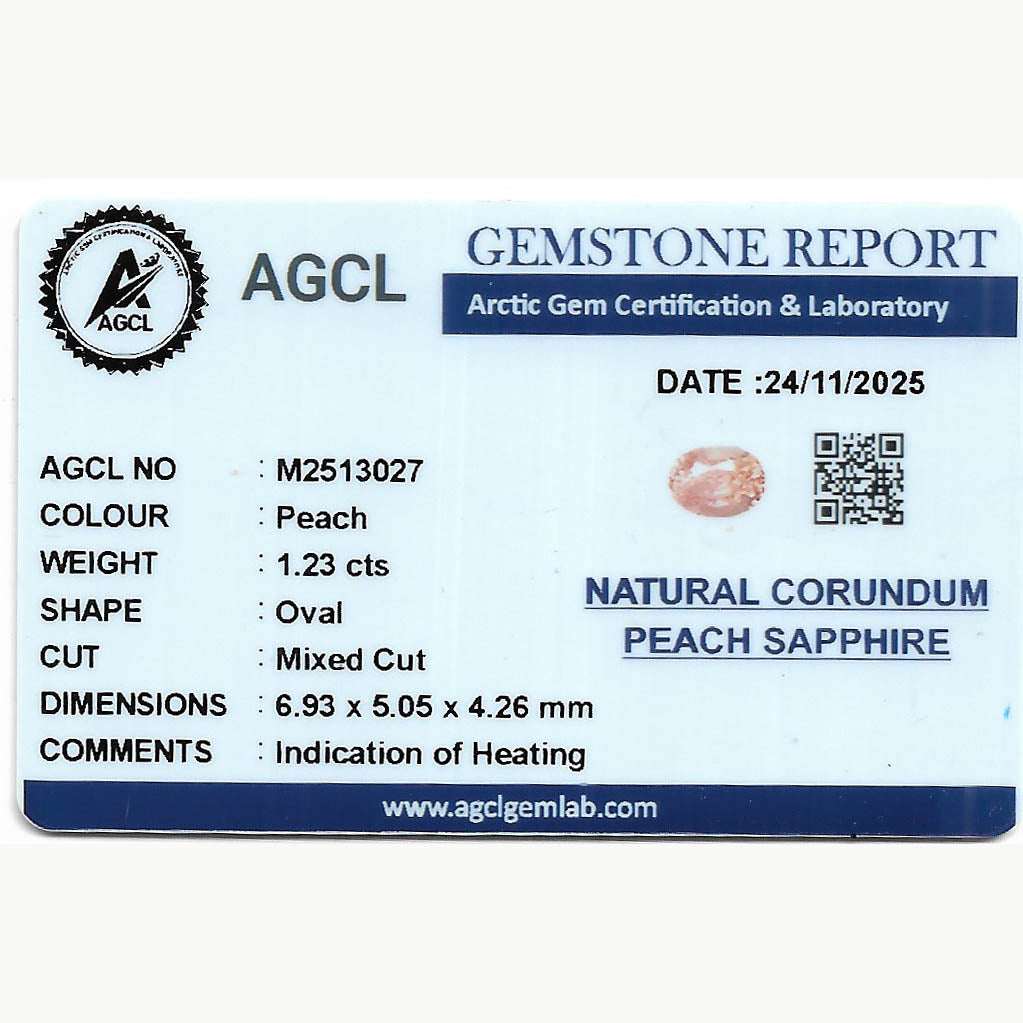
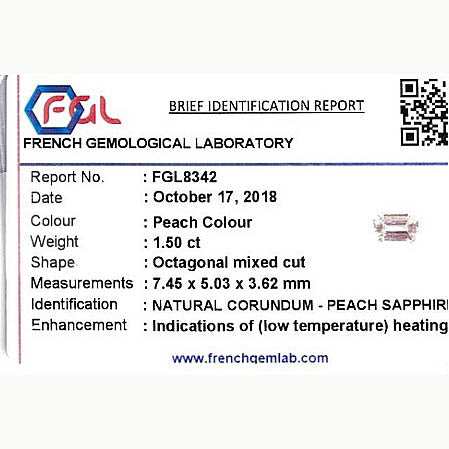
Peach sapphire, by contrast, is a commercially descriptive term, not a laboratory classification. A stone labeled as peach sapphire may or may not qualify as padparadscha on a laboratory report. A seller calling a stone padparadscha without laboratory documentation is making an unverifiable claim — and given that certified padparadscha can command three to ten times the per-carat price of equivalent pink or peach sapphire, the distinction carries real commercial significance.
The practical buying rule: if a seller is pricing a stone as padparadscha, require a GIA, Gübelin, or SSEF report that explicitly uses the word padparadscha in the color description. If the report says pink sapphire or orange sapphire, that is what it is — regardless of what the seller calls it. Fine peach sapphire without padparadscha certification is still beautiful and valuable; it simply should not be priced as padparadscha.
Peach sapphire occurs in most sapphire-producing regions, but the quality and color character differ meaningfully by origin. For the finest material, origin is a meaningful factor in both quality and value.
The primary and most important source for fine peach and padparadscha-adjacent sapphire. Sri Lanka's gem gravels have produced the benchmark examples of both padparadscha and fine peach sapphire for centuries — the very concept of padparadscha originates in Sri Lankan gem culture. Ceylon peach sapphires tend toward high transparency, warm and vivid color, and a natural tendency toward unheated quality. A significant proportion of the finest unheated peach material on the market originates in Sri Lanka, which is why Ceylon origin on a GIA or Gübelin report adds a premium even over fine peach material from other origins. The color profile of Ceylon peach is often described as particularly warm and alive — a luminous quality attributed to the material's exceptional transparency and the specific trace element composition of Sri Lanka's corundum-bearing gravels.
An increasingly important source for peach and warm-pink sapphire. Madagascar produces a range of peach-adjacent colors, often with good saturation, and is now one of the most significant sapphire producers in the world. Madagascar peach sapphires tend to be heat-treated more frequently than Ceylon material, though fine unheated examples exist. The color profile can be excellent — some Madagascar material approaches the padparadscha range — though Ceylon origin still commands the premium at the finest certified level.
Tanzania's Umba Valley produces peach and apricot sapphires that are well-known in the colored stone trade. Umba sapphires often show a characteristic warm-to-orange peach that is distinctly different from Ceylon material — slightly more muted saturation in some cases, but with a distinctive warmth that has its own market following. Umba peach sapphires are generally not certified for origin by major laboratories as frequently as Ceylon or Madagascar material, but they represent a legitimate and often well-priced source for peach color.
Peach sapphire also occurs in Montana (USA), Australia, and various African countries including Kenya and Malawi. Montana sapphires in the peach-to-orange range are increasingly popular in the US market, particularly among buyers who prioritize domestic origin. Their color profiles tend toward cooler or more muted peach tones than Ceylon material.
The peach sapphire category has an unusual relationship with heat treatment. Whereas blue sapphire is heat-treated in the vast majority of commercial supply (estimates run above 90%), peach and padparadscha-range material is actually treated less frequently than blue — for a counterintuitive reason: heat treatment at high temperatures tends to alter or destroy the delicate iron-chromium balance that produces the peach color. Heating peach material can shift it toward pure orange (by driving off the pink chromium component) or toward pink (by reducing the iron-driven orange), making it harder to achieve the specific blush-orange balance that defines the category. As a result, the finest peach sapphires — particularly those approaching padparadscha — are often unheated by necessity as much as by choice.
This does not mean all peach sapphires are unheated. Lighter material can be heated to improve saturation, and some lower-temperature techniques are used specifically to improve peach and orange sapphire without completely altering the color. But the proportion of unheated material in the fine peach category is meaningfully higher than in blue sapphire, which is one reason why unheated status in peach sapphire carries a somewhat different market dynamic than in blue: you are more likely to encounter genuine unheated material in this color range even in the commercial mid-market.
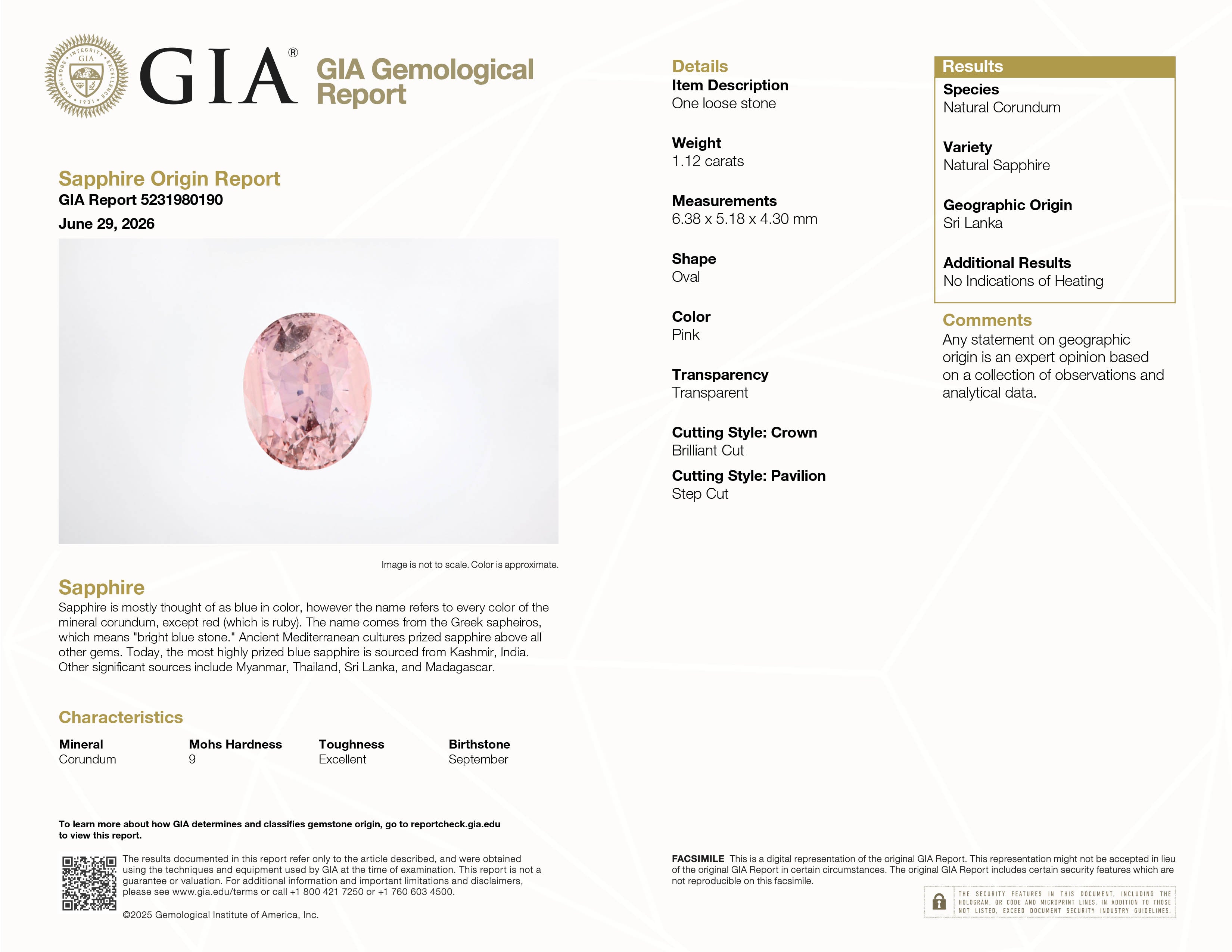
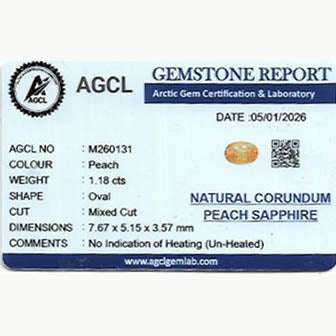
For a fine peach sapphire with vivid, warm color and an approach toward the padparadscha range, unheated status confirmed by a major laboratory is a significant value driver. It confirms that the color is the stone's natural, unaltered character — which is the quality most prized in fine peach and padparadscha collecting. A GIA report stating no indications of heating on a vivid Ceylon peach sapphire is among the more meaningful possible certifications in the colored stone market.
For sub-1-carat commercial peach sapphire used in accent jewelry and smaller designs, unheated status is less critical to most buyers — the per-carat premium is smaller, the documentation cost is proportionally larger, and the stones are often purchased for aesthetic rather than investment reasons.
Evaluating peach sapphire is more subjective than evaluating blue or yellow sapphire because the category itself is defined by a warm blush-orange that reads differently across individuals and lighting conditions. That said, certain principles apply consistently.
The defining quality of a fine peach sapphire is warmth — a quality that comes from the simultaneous presence of both pink and orange components in the color. A stone that is simply pale pink lacks the warmth; a stone that is simply orange lacks the softness. The best peach sapphires read as genuinely warm: inviting, glowing, with a color that seems to come from within the stone rather than sitting on its surface. This quality is easier to recognize than describe, and it is most visible in direct sunlight or under incandescent light.
Mid-tone saturation is the target for most jewelry applications. Very light saturation produces a stone that reads near-colorless in some conditions; very high saturation produces a stone that reads as orange rather than peach. The sweet spot is a saturation level at which the warm blush-orange is clearly visible and consistently warm across daylight, incandescent, and indoor lighting without shifting toward a single primary hue.
Unlike blue sapphire, which tends to hold its color consistently across most light sources, peach sapphire can shift meaningfully between daylight and incandescent light. Under cool daylight or fluorescent light, peach sapphire often reads as slightly cooler and more pink-toned. Under warm incandescent or candlelight, it reads as warmer and more orange-toned. This is not a flaw — it is part of what makes peach sapphire interesting to wear — but it means you should evaluate the stone under multiple light sources before making a significant purchase. A stone that reads beautifully warm under display lighting but nearly colorless under daylight will disappoint in a finished ring.
For peach sapphire, a light to medium tone is typical and desirable. Heavy, dark-toned stones lose the characteristic warmth and softness that define the category — they read as brownish-orange rather than peach. Very light-toned stones lose color visibility. The finest peach sapphires have a medium-light tone that allows the color to be fully luminous without appearing washed out.
The best peach sapphires show a clean blush-orange without brown, gray, or strongly unbalanced pink or orange modifiers. Brown is the most common undesirable modifier in peach sapphire and is often introduced or strengthened by heat treatment. If a stone reads as brownish-peach or brownish-orange rather than clean warm peach, the hue is compromised. Gray modifiers make the stone read muddy. A slight pink or orange lean is acceptable and expected — the question is whether the warmth of the overall tone reads as peach, not as one of the components in isolation.
Peach sapphire from Ceylon is often quite clean — eye-clean material is the expectation for fine jewelry use, and heavily included peach sapphires at the 1-carat-and-above level are less common in fine Ceylon production than heavily included rubies or emeralds. Fine silk (rutile needle inclusions) is common in unheated material and is considered acceptable in fine sapphire of all colors. Heavy silk that scatters light and reduces transparency is more objectionable than a single well-placed feather that is invisible face-up.
Sub-carat peach sapphires for accent use have a wide range of clarity in the market. For center stone applications at 0.80 carats and above, eye-clean is the correct standard. Note that a natural inclusion can create real value opportunities: a peach sapphire with an otherwise premium specification (unheated, Ceylon, vivid color) but a disclosed natural inclusion may be priced well below comparable clean material — worth evaluating on its own terms if the inclusion is not visible face-up in normal viewing.
The cut of a peach sapphire determines how the warm color is displayed face-up. Because peach is a warm tone that benefits from concentrated saturation, the cut choice matters more than it does for a vivid, deeply saturated blue where the color speaks for itself under almost any cut.
The most popular shape for peach sapphire, and the most practical for engagement rings. The oval's broad face-up surface spreads the warm color across a large area, maximizing the visible warmth at wearing distance. Oval peach sapphires in rose gold are the defining aesthetic in the current non-traditional engagement ring market. A length-to-width ratio between 1.30 and 1.50 is the most flattering for most hand shapes.
The cushion cut concentrates peach saturation across the face, producing a deeper, more glowing tone than an oval of the same rough. Cushion-cut peach sapphires read slightly warmer and richer than oval equivalents, which suits the mid-tone and blush-peach ranges particularly well. The rounded corners of a cushion also give the stone a romantic, vintage quality that pairs naturally with the warm aesthetic of peach color.
The elongated pointed-oval that maximizes face-up size for a given carat weight. Marquise peach sapphires are uncommon — most peach material is cut oval or cushion for weight efficiency — which makes them immediately distinctive. The elongated outline suits drop earrings and east-west ring settings particularly well.
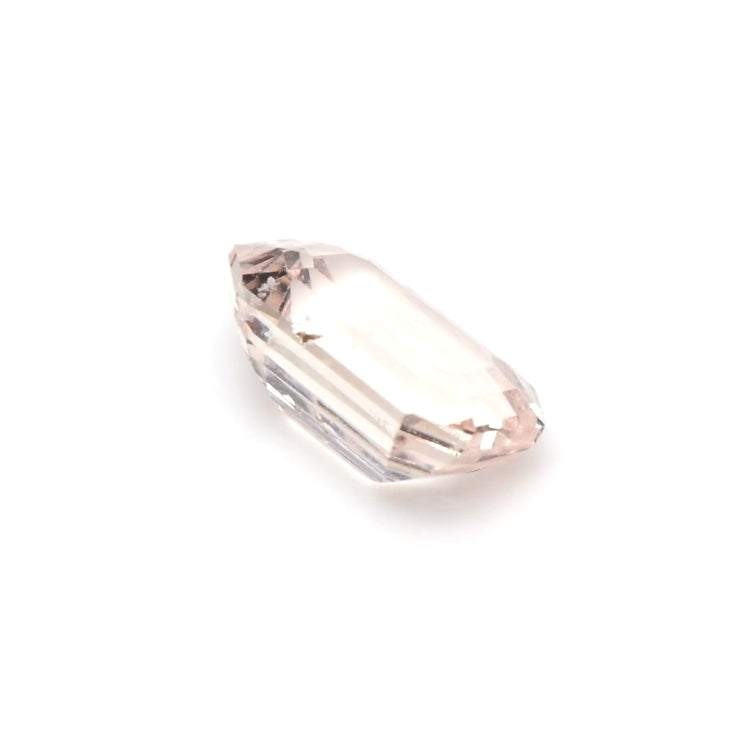
Rare in peach sapphire but striking when the material is clean enough to suit step facets. Step facets reveal the interior warmth of peach color in a way that brilliant cuts do not — the result is a stone with a contemplative, interior-lit quality rather than a sparkling surface. Best suited for the richest peach and apricot range where the saturation is high enough to perform through step facets.
Fancy shapes that appear in peach sapphire and create immediately distinctive, romantic finished pieces. Pear-cut peach sapphires make exceptional pendants and drop earrings. Both shapes require careful evaluation for color evenness across the outline, particularly at the points, where color can sometimes concentrate or thin out depending on the cut quality.
Peach sapphire has become one of the most requested non-traditional engagement ring stones over the past decade, driven by its unique color position, its Mohs 9 hardness, and its compatibility with rose gold. Understanding how to specify it correctly will help you avoid the most common mistakes.
Corundum's 9 on the Mohs scale places peach sapphire second only to diamond in hardness among gemstones commonly used in rings. There is no cleavage, no fragility, no special setting requirements. A standard four-prong or bezel setting in any metal is fully appropriate for a peach sapphire engagement ring worn every day. This is in direct contrast to the most common peach-adjacent alternatives:
Peach sapphire eliminates every practical durability objection to a colored stone engagement ring.
Peach sapphire is one of the most metal-compatible colored gemstones available for engagement rings.
For peach sapphire as an engagement ring center stone, the minimum practical weight in an oval cut is approximately 0.70–0.80 carats — below which the color may lack the face-up presence to read as a significant colored center stone. For a confident, clearly visible peach at wearing distance, 1.00–1.50 carats in an oval or cushion is the target range for most ring settings. Above 1.50 carats, peach sapphire becomes meaningfully rarer in unheated quality and carries a size premium accordingly.
A complete peach sapphire engagement ring specification: carat weight (0.80 ct minimum; 1.00–1.50 ct for strong presence), shape (oval or cushion for most settings), color (mid-tone to rich peach, warm without brown modifier), clarity (eye-clean), treatment status (unheated preferred for long-term value; heat-treated is commercially acceptable and honestly disclosed), and if budget permits, Ceylon origin with GIA or Gübelin documentation.
In Vedic astrology (Jyotish), peach sapphire sits in an interesting position. Padparadscha — the most vivid certified orange-pink corundum — is recommended by some practitioners for both Venus (Shukra) and the Sun (Surya), depending on the color balance toward pink or orange. Peach sapphire that is close to padparadscha but not formally certified may be recommended for similar purposes by a Jyotishi. The standard Jyotish requirements apply: natural, unheated, eye-clean, and set with direct skin contact in a metal appropriate to the planet (gold for Jupiter and the Sun; silver or white metal for the Moon). If you are purchasing specifically for astrological use, unheated status verified by a laboratory report is generally required by the prescribing practitioner.
For Jyotish use, the minimum carat weight typically recommended for peach sapphire is 1.00–1.25 carats. Unheated Ceylon origin is the preferred specification; Madagascar material is accepted by many practitioners provided it is certified unheated by a major laboratory.
Peach sapphire pricing reflects the same drivers as other sapphire colors — carat weight, color quality, treatment status, clarity, and origin documentation — with some specific dynamics unique to the peach and padparadscha-adjacent market. The ranges below are orientation figures for natural, eye-clean, well-cut material.
The price gap between fine peach sapphire and certified padparadscha at the same size and quality level is the most significant pricing discontinuity in this part of the sapphire market. A stone that does not quite achieve laboratory padparadscha certification may look nearly identical to one that does — the color difference can be very small — but the price difference is very large. This is why laboratory documentation matters so much in this category: it is the document that determines which side of that pricing boundary a stone falls on.
Undocumented padparadscha claims. The most important red flag in the peach sapphire market. If a seller is calling a stone padparadscha and pricing it accordingly, require a GIA, Gübelin, or SSEF report that uses the word padparadscha in the color description. No report, no padparadscha premium.
Brown modifiers dismissed as warmth. A peach sapphire with a brownish modifier can be described by sellers as having a warm, earthy, or vintage tone. A brown modifier is a quality defect, not a feature. Look at the stone in natural daylight and assess whether the warmth you see is genuinely blush-orange or whether it is brownish-orange. They are very different aesthetically and commercially.
Morganite comparisons without acknowledging the durability difference. Morganite and peach sapphire can appear very similar in photographs and in casual comparison. Morganite is significantly softer (7.5–8 Mohs vs. 9 for sapphire), fades with UV exposure over time, and is typically heat-treated for color stability. Peach sapphire is durable, stable, and does not fade. They are not equivalent substitutes, and they should not be priced as though they were.
Evaluating only under warm display lighting. Peach sapphire looks at its most vivid and warm under incandescent or warm LED display lighting. Before committing to a significant purchase, view the stone under natural daylight, which reveals the true saturation and any unwanted modifiers more accurately than warm display conditions.
Peach sapphire requires no special care beyond what is standard for any fine gemstone ring. Corundum has no cleavage and excellent toughness at Mohs 9.
Peach sapphire occupies a unique and genuinely beautiful position in the colored gemstone market — warm enough to be romantic, rare enough to be distinctive, and durable enough for daily wear without compromise. Its relationship to padparadscha gives it a ceiling of value that few other sapphire colors can approach, and its compatibility with rose gold places it at the center of the most popular engagement ring aesthetic of the current era.
The keys to buying well are consistent: evaluate color under multiple light sources, understand the treatment disclosure, and if you are buying at the price tier where padparadscha distinction matters, require laboratory documentation before paying a padparadscha premium.
Browse our current selection of natural peach sapphires, all with individual treatment disclosure on every product page. Our padparadscha collection and full sapphire catalog are available for comparison. Questions about a specific stone? Email crescentgems@gmail.com — we respond personally within one business day.
Ahmed Shareek
Proprietor — Crescent Gems
A gem dealer with over 25 years of experience sourcing natural sapphires from Sri Lanka, Ahmed brings hands-on expertise in mining, heat treatment, cutting, and stone selection. With deep roots in the Ceylon gem trade, he offers first hand knowledge of origin, quality, and craftsmanship behind every piece of guidance on this site.
The Ultimate Guide to Buying Natural Loose Sapphires
The definitive guide to buying a natural loose sapphire: colour, origin, treatment, cut, shape, certification, pricing, and engagement rings, with links to every Crescent Gems guide and collection.
Read moreabout The Ultimate Guide to Buying Natural Loose Sapphires
The Ratnapura Gem Market — How Sapphires Are Traded at the Source
Read moreabout The Ratnapura Gem Market — How Sapphires Are Traded at the Source
Madagascar Sapphire — The Modern Origin That Rivals Ceylon
Read moreabout Madagascar Sapphire — The Modern Origin That Rivals Ceylon
Montana Sapphire vs. Ceylon Sapphire — How America's Sapphire Compares to Sri Lanka's
Read moreabout Montana Sapphire vs. Ceylon Sapphire — How America's Sapphire Compares to Sri Lanka's
Sapphire vs. Spinel — The Overlooked Comparison Every Collector Should Understand
Read moreabout Sapphire vs. Spinel — The Overlooked Comparison Every Collector Should Understand
Share: