

- by Ahmed Shareek
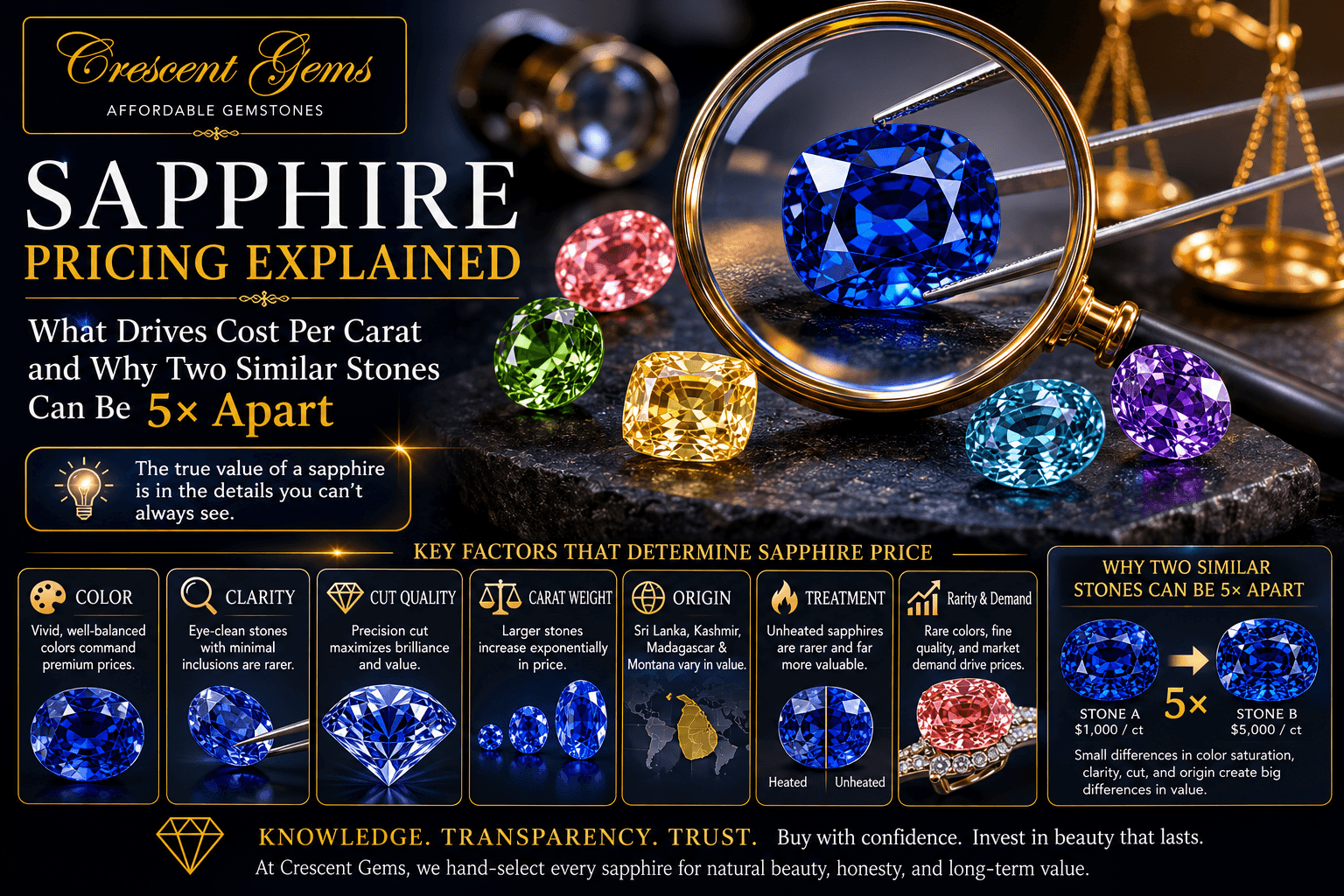
Sapphire Pricing Explained — What Drives Cost Per Carat and Why Two Similar Stones Can Be 5× Apart
- by Ahmed Shareek
We are a supplier from the source in Sri Lanka, so our gemstones reach you direct, without the intermediaries most sellers buy through.
New to buying sapphires? Start with our Ultimate Sapphire Buying Guide — the complete resource for color, origin, treatment, and pricing.
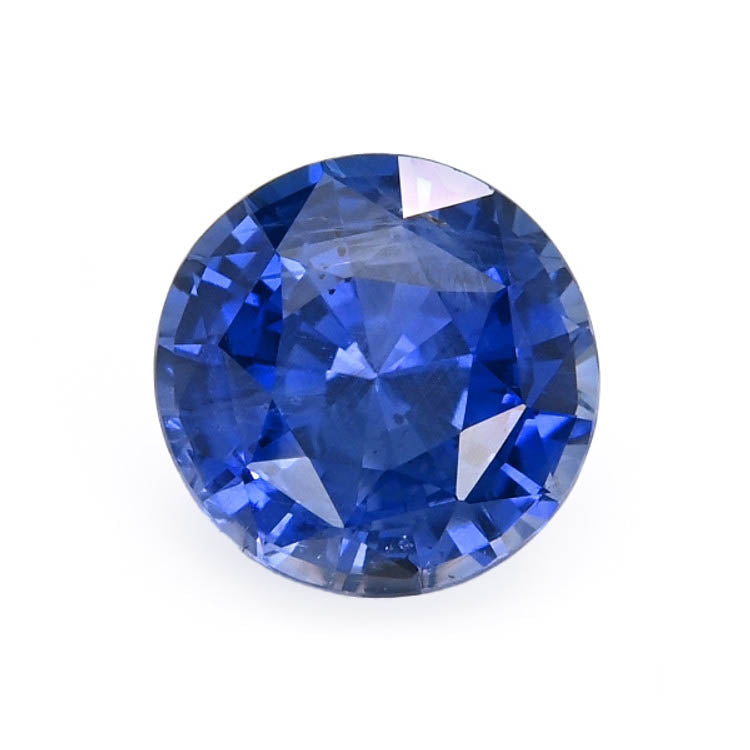
Two blue sapphires sit side by side. Both are 1.50 carats. Both are oval. Both are eye-clean. Both are Ceylon. One costs $600. The other costs $3,200. To a buyer seeing them in photographs, they might look similar. In person, under the right lighting, the difference is obvious — but understanding why the price gap exists before you see the stones is what separates an informed purchase from a confused one.
Sapphire pricing is not arbitrary, but it is not simple either. Unlike diamonds, where a standardized grading system (the 4Cs with GIA grades) produces a relatively predictable price grid, colored gemstones are priced on a matrix of interacting variables where the relationships are not linear. A small improvement in one factor can double the price. A combination of improvements can multiply it five or ten times.
This guide breaks down every factor that drives sapphire pricing, explains how they interact, and walks through real-world examples so you can read a price tag and understand what it is actually telling you.
Every sapphire's price is a product of seven variables. They are listed here in approximate order of impact, but they interact — a change in one shifts the importance of the others.
Color is the dominant pricing factor in sapphire by a wide margin. Two stones identical in every other respect will differ dramatically in price if one has superior color.
Color itself breaks into three components:
Hue — the basic color position. For blue sapphire, pure blue or slightly violetish blue commands the highest prices. Greenish-blue or grayish-blue is valued lower. For each sapphire color, there is an ideal hue position that the market pays the most for.
Saturation — how vivid and intense the color is. Medium to strong saturation is the target. Pale stones lack visual impact; overly dark stones lose their color under low light. Vivid saturation in a blue sapphire can mean the difference between $400/ct and $2,000/ct with all other factors equal.
Tone — how light or dark the stone is. Medium tone (roughly 5–7 on a 10-point scale) is ideal for most colors. Too light reads as washed out; too dark reads as black under incandescent lighting.
Real example: A 1.50ct heated Ceylon blue sapphire with grayish-blue hue, low saturation, and medium-dark tone might price at $300–$500 per carat. The same size, same origin, same treatment, but with pure vivid blue hue, strong saturation, and ideal medium tone prices at $1,200–$2,500 per carat. Same stone on paper. Three to five times the price because of color alone.
For the full guide on evaluating color, see Sapphire Colors Explained and our Interactive Color Chart.
Treatment status is not a quality factor — it is a rarity factor. A heated sapphire and an unheated sapphire of identical apparent color can look the same to the naked eye. The difference is that the unheated stone achieved its color without human intervention, which is genuinely rarer.
An estimated 90-95% of all sapphires sold globally are heat treated before they reach a consumer, so an unheated sapphire with laboratory documentation is the exception rather than the rule. Blue is the tightest case of all: blue sapphire is ~95% heated commercially, so fine unheated blue is genuinely rare. What that rarity is worth depends on the specification:
| Specification | Unheated premium over an equivalent heated stone | What we hold at that specification |
|---|---|---|
| Fine quality, general rule | 2–5× premium at fine quality | 88 of the 131 sapphires we currently list are unheated |
| Fine blue, 1–2 ct, with GIA report | 2x-4x unheated premium over heated equivalent | None — our two unheated blues at that size are AGCL-documented, at $400.00 and $1,237.50 per carat |
| Fine Ceylon blue, 3+ ct, vivid, GIA no heat | 4x-8x premium | A 3.19 ct GIA unheated cushion at $4,990.00 ($1,564.26/ct) and a 5.39 ct GIA unheated round at $34,496.00 ($6,400.00/ct) |
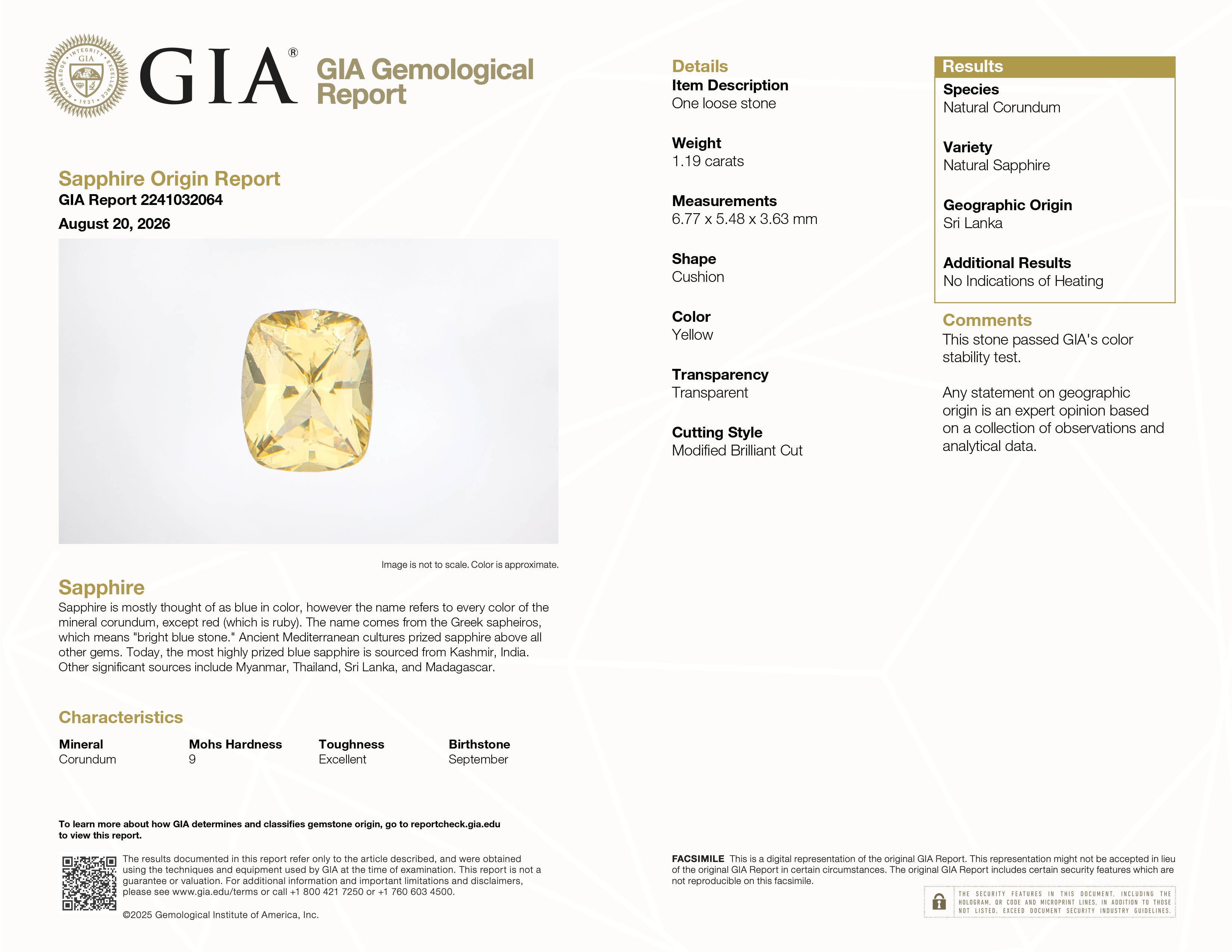
| Yellow, Jyotish-grade, 2+ ct | 2x-5x unheated with cert | Five GIA unheated yellows at 2.10–3.13 ct, $900.00–$1,580.00 per carat |
| Large, vivid, well-documented stones | Up to 8× — the ceiling, not the norm | The 5.39 ct GIA unheated Ceylon blue is the only stone we list in that territory |
Figures above are approximate market guidance, not fixed quotes. Actual value varies by treatment, origin, colour, cut, clarity, and certification.
Two things that ladder does not say. First, the premium is a rarity premium, not a quality premium: a well-treated heated stone and an unheated stone of the same apparent colour look the same in a ring. Second, unheated is a statement about heat only, not a guarantee that no other treatment has been applied — a stone can be correctly described as unheated and still have been treated another way. Read the treatment line on the report, not the word in the listing title. Our own colour-by-colour split runs from yellow, where 19 of 23 stones are unheated, to orange, where none of the three we list is; teal sits at 8 of 8 unheated, and heated teal is uncommon because heat drives off the green component that makes the colour.
Real example: The four heated blue sapphires we currently list between 2.00 and 2.99 carats run $1,800.00–$2,800.00 per carat. The two unheated blues in the same size band, both documented on GIA reports, are $3,386.45 and $4,000.00 per carat. Those are individual stones rather than a matched like-for-like pair, so they under-state what a true comparison shows — at fine quality the unheated premium runs 2–5×, rising to as much as 8× for large, vivid, well-documented stones. Same apparent color either way. The price gap is the rarity of the colour being natural.
For the science behind treatment, see How Sapphire Heat Treatment Works and What Is an Unheated Sapphire.
Sapphire pricing is not linear with size. A 2-carat sapphire does not cost twice as much as a 1-carat sapphire of equivalent quality — it costs three to five times as much per carat. This is because larger rough crystals of fine quality are exponentially rarer than smaller ones.
The price-per-carat jumps occur at threshold sizes:
| Carat band | Sapphires we list | Total price in stock | Price per carat in stock |
|---|---|---|---|
| Under 0.50 ct | 4 | $90.00 – $165.00 | $250.00 – $500.00 |
| 0.50 – 0.99 ct | 33 | $120.00 – $1,044.00 | $176.47 – $1,200.00 |
| 1.00 – 1.99 ct | 65 | $200.00 – $2,985.00 | $133.33 – $2,521.93 |
| 2.00 – 2.99 ct | 17 | $1,877.00 – $8,160.00 | $900.00 – $4,000.00 |
| 3.00 – 4.99 ct | 8 | $2,380.00 – $13,200.00 | $700.00 – $3,300.00 |
| 5.00 ct and above | 4 | $3,990.00 – $34,496.00 | $499.37 – $6,400.00 |
Figures above are approximate market guidance, not fixed quotes. Actual value varies by treatment, origin, colour, cut, clarity, and certification.
Read that table twice. Across the bands, the floor of the total price is what moves: no sapphire we list above two carats costs less than $1,877.00, while below one carat we list stones from $90.00. Within a band, the spread is colour, cut, treatment and documentation doing their work — the same 1.00–1.99 ct shelf holds a peach sapphire at $133.33 per carat and a pink at $2,521.93. The per-carat floor in the top band looks low for the same reason: the two cheapest stones above five carats are star sapphires, at $499.37 and $499.38 per carat, and asterism is priced on a different scale from faceted material.
Real example: A vivid heated Ceylon blue sapphire at 0.80ct might price at $600/ct ($480 total). At 1.50ct, the same quality runs $1,200/ct ($1,800 total). At 3.00ct, it jumps to $2,500/ct ($7,500 total). The per-carat price more than quadrupled from sub-1ct to 3ct — not because the stone looks four times better, but because a 3-carat stone of that quality is many times rarer.
Geographic origin adds (or subtracts) value based on historical reputation and market demand. Origin does not change the stone's physical properties — a fine Madagascar blue and a fine Ceylon blue can look identical — but provenance carries meaning in the market.
Origin premiums in rough order:
Real example: A 2.00ct unheated vivid blue sapphire with GIA documentation. From Ceylon: $5,000–$8,000/ct. From Madagascar with equivalent color and quality: $3,000–$5,000/ct. From Kashmir with Gübelin documentation: 3–10× the Ceylon figure — the prestige benchmark trades at $50,000–$500,000 per carat. Same color. Same size. Three completely different price points based entirely on where the stone formed.
Origin is also where a claim is cheapest to make and most expensive to believe. An origin premium is only worth paying when a laboratory report states the origin — GIA gives geographic origin as an expert opinion formed from trace-element chemistry and inclusions, never as a guarantee, and says so on the report itself. Ceylon is our own specialty and the great majority of what we stock: 110 of the 131 sapphires we currently list are Sri Lankan. Read the full Ceylon Sapphire Complete Guide, the Kashmir Sapphire Guide, the Burma / Mogok Sapphire Guide and the Madagascar Sapphire Guide.
Cut quality is not formally graded on sapphire laboratory reports the way it is for diamonds. There is no "Excellent" or "Very Good" cut designation on a GIA sapphire report. But cut quality is implicitly priced through its effect on color appearance — a well-cut stone shows better color and commands a higher price, even when the underlying rough quality was identical.
The specific cut quality issues that affect price:
Real example: Two 1.20ct heated Ceylon blue sapphires from similar rough. Stone A has a shallow cut with visible windowing in the center — priced at $400/ct. Stone B was recut to correct proportions, losing weight to 1.05ct but eliminating the window and producing even, vivid blue face-up — priced at $900/ct. The smaller stone costs more per carat and more total because it looks dramatically better in a ring.
This is exactly why Crescent Gems recuts stones before listing. We routinely recut native-cut stones in-house, accepting 15–25% weight loss for dramatically improved face-up color and brilliance — the carat number on the invoice goes down and the stone gets better. Read more in Faceting Sapphires and How Cut Affects a Sapphire.
Unlike diamonds, where clarity is graded under 10× magnification, sapphire clarity is evaluated face-up with the naked eye. The standard is eye-clean: no inclusions visible at normal viewing distance without magnification.
Clarity affects pricing in bands rather than on a continuous scale:
Fine silk (microscopic rutile needles) in unheated sapphires is not penalized if it does not affect transparency. In fact, light silk can enhance appearance by softening the light return and creating warmth. Learn how to read inclusions as diagnostic tools in How to Read Sapphire Inclusions.
Different sapphire colors exist at fundamentally different price levels because some are geologically rarer than others. This is independent of all other factors — it is the base price tier before size, treatment, origin, and quality adjustments. The band in the second column is the price guidance we publish across the site; the third column is what our own stones at that size actually cost per carat right now, which is always the narrower window, because it is one dealer's inventory rather than the whole market.
| Colour | Typical band ($/ct, 1–2 ct) | Our stock now, 1–2 ct ($/ct) | Stones listed, all sizes | Unheated / heated |
|---|---|---|---|---|
| Padparadscha | $3,000–$15,000+/ct | None in stock at any size | 0 | — |
| Blue | $400–$6,000+/ct | $400–$1,800 | 28 | 7 / 21 |
| Pink | $500–$4,000/ct | $637–$2,522 | 16 | 9 / 7 |
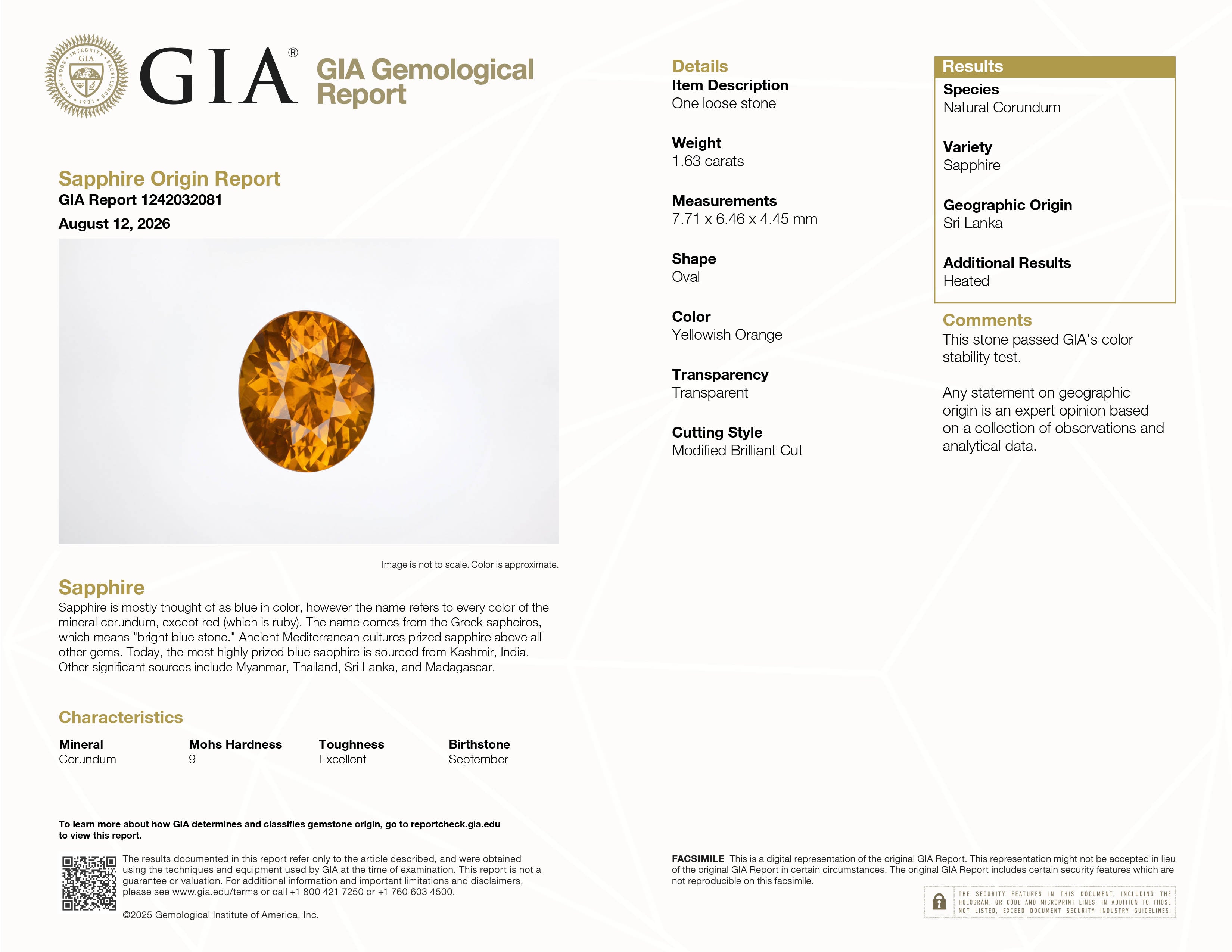
| Orange | Not in our published colour table | $1,500.00/ct — one stone, 1.63 ct at $2,445.00 | 3 | 0 / 3 |
| Teal | $600–$1,500/ct | $730–$1,000 | 8 | 8 / 0 |
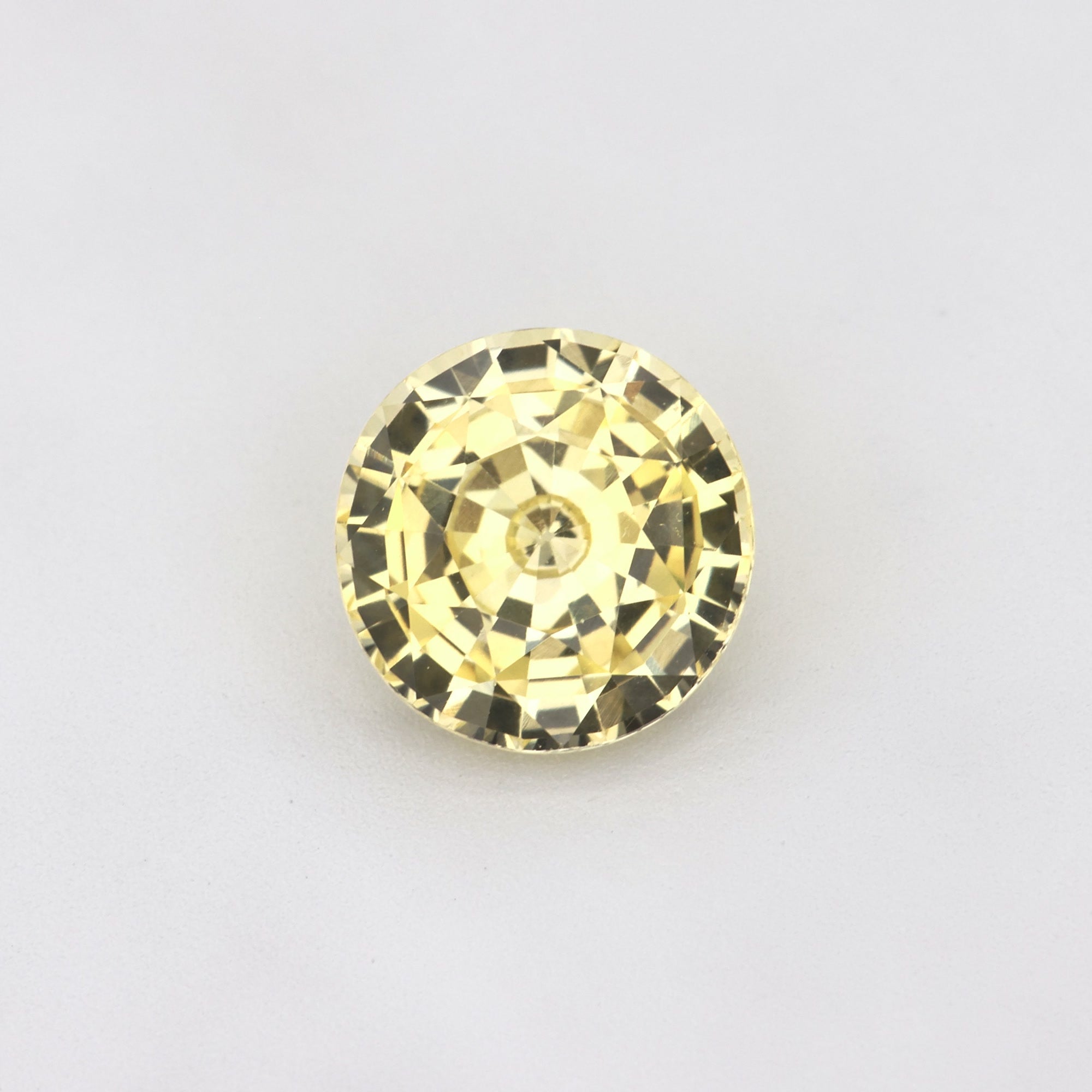
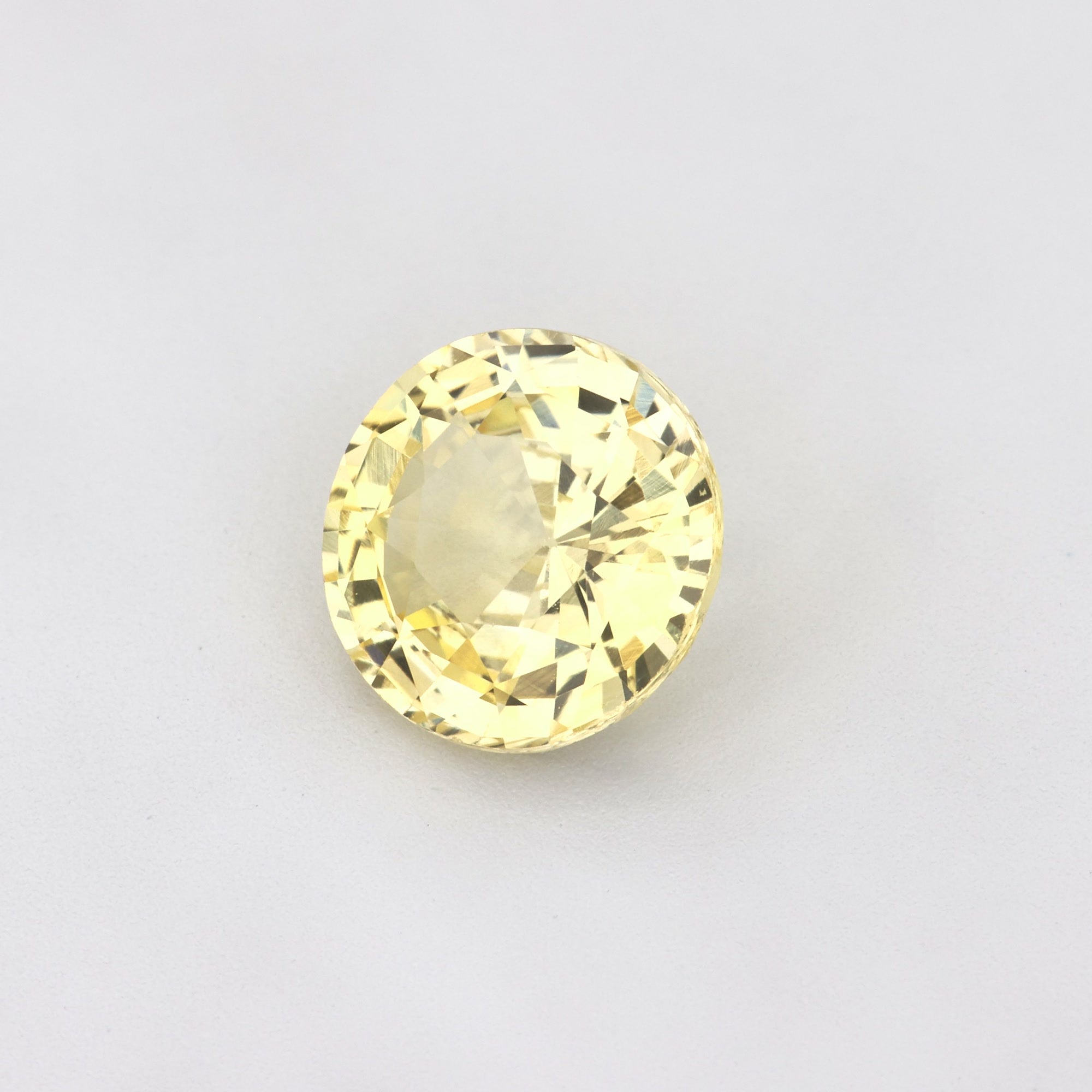
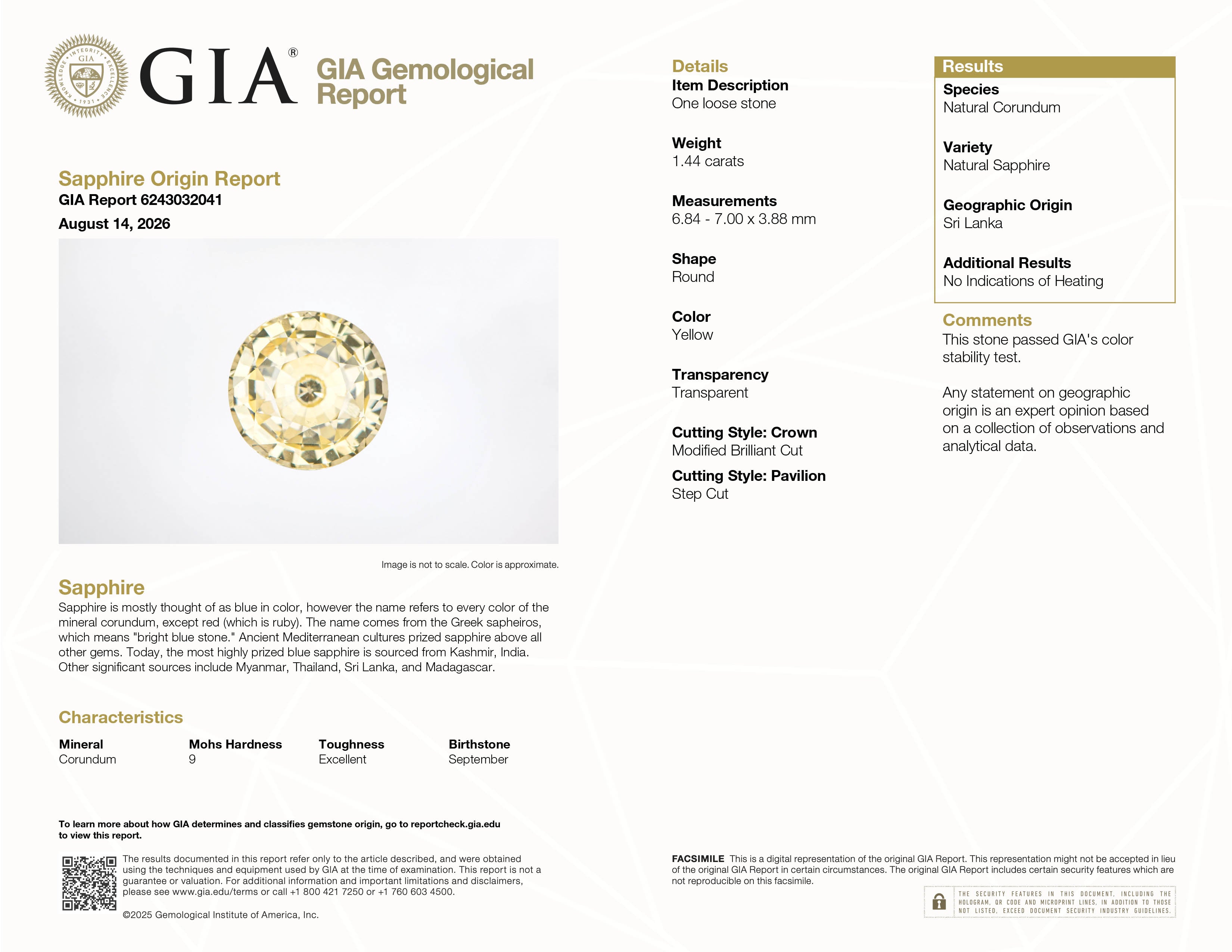
| Yellow | $300–$2,500/ct | $600–$1,600 | 23 | 19 / 4 |
| Purple / violet | $400–$2,000/ct | $774–$1,400 | 24 (11 purple, 13 violet) | 22 / 2 |
| Green | $300–$1,500/ct | $800–$1,039 | 7 | 6 / 1 |
| Peach | $100–$2,500/ct | $133–$813 | 6 | 4 / 2 |
| White (colourless) | $500–$800/ct | $511–$700 | 12 | 10 / 2 |
Figures above are approximate market guidance, not fixed quotes. Actual value varies by treatment, origin, colour, cut, clarity, and certification.
The bands assume eye-clean, well-cut Ceylon material at 1–2ct. Prices shift significantly outside those parameters. Two rows are worth reading closely. Padparadscha is the most expensive sapphire colour there is, and we hold none at any size — email us to source one. And blue is the one colour whose band runs far past what we stock: at 1–2ct specifically we do not currently list a GIA-documented unheated blue at all, and our smallest is 2.008ct at $6,800.00 ($3,386.45 per carat).
The critical insight most buyers miss is that sapphire pricing factors do not add up — they multiply. When multiple premium factors align in a single stone, the price does not increase by the sum of the premiums. It increases by their product.
Example: building a premium blue sapphire price
Start with a commercial baseline: a 1.00ct heated blue sapphire, moderate color, no origin documentation, decent cut. Price: $300/ct.
Now add factors one at a time:
Total price: $5,500 × 2.00ct = $11,000 for the finished stone. That is 36× the price of the commercial baseline stone, even though both are "natural Ceylon blue sapphires" in the broadest description. This multiplicative effect is why two stones that seem similar on a product listing can be priced 5× apart.
Everything above describes the market value of the stone itself. The final price you pay also depends on where you buy it — and how many hands the stone has passed through to reach you.
A natural sapphire typically passes through four to six intermediaries in the traditional supply chain: mine operator, local rough buyer, cutter, wholesale exporter, importing distributor, retail jeweler. Each stage adds margin.
Crescent Gems removes the middlemen. We source directly from Sri Lanka, cut and recut in-house, and sell directly to you. The stone's price reflects its actual market value — color, treatment, origin, size, and quality — without the accumulated margin of intermediaries. This is why our prices are consistently below traditional retail for equivalent quality. Read the full explanation in Why Our Loose Gemstones Cost Less Than Retail.
The most frequent error. A 2.00ct sapphire with grayish color and a window looks worse in a ring than a 1.40ct stone with vivid color and excellent cut. The larger stone costs more but delivers less beauty. Always prioritize color and cut over size.
A buyer sees two 1.50ct Ceylon blue sapphires — one at $800/ct and one at $3,000/ct — and assumes the cheaper one is a better deal. The $800 stone is heated; the $3,000 stone is unheated with GIA documentation. They are not the same product and cannot be meaningfully compared on price alone.
Because there is no "cut grade" on a sapphire report, many buyers overlook it. But a poorly cut stone that windows or shows heavy extinction is worth 30–50% less than a well-cut equivalent. Always evaluate face-up appearance, not just the lab report.
Sometimes a lower price simply means a shorter supply chain. A stone priced at $1,200/ct from a direct-source dealer may be the same quality as a stone priced at $2,500/ct from a branded retailer. The difference is margin, not material. See Buy Loose Gemstones the Smart Way.
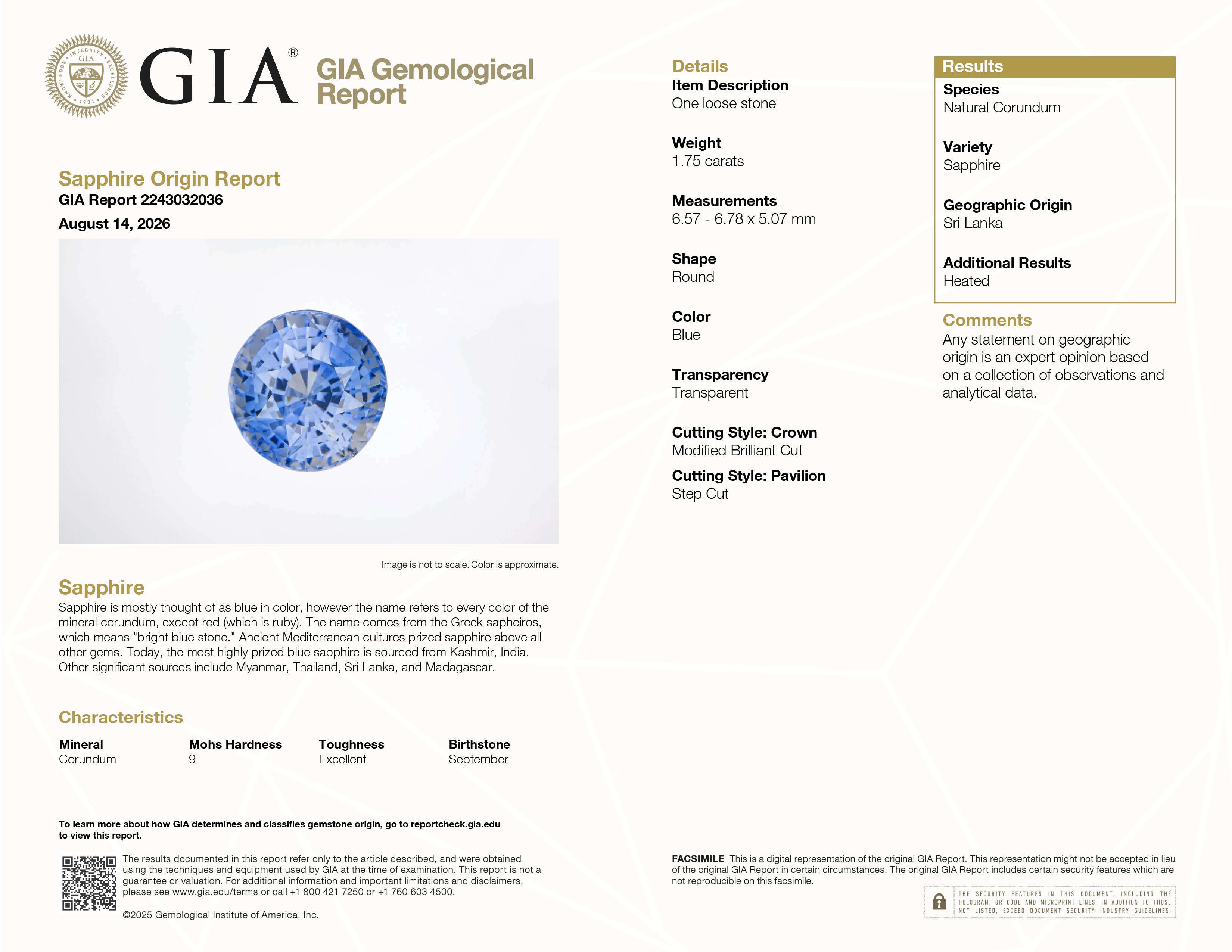
If you are paying for unheated status, pay for the report that confirms it. If you are paying for Ceylon origin, pay for the GIA origin determination. Premium claims without laboratory documentation are just claims. The working rule we apply is a report on any stone above two carats or above roughly $2,000, and on any stone sold as unheated or as a specific origin whatever it costs — below that level the cost of a report is often out of proportion to the stone. See How to Read a GIA Sapphire Report.
Understanding pricing lets you spot genuine value — stones where the price is fair relative to what you are getting. Here is where experienced buyers find the best value in today's market:
Figures above are approximate market guidance, not fixed quotes. Actual value varies by treatment, origin, colour, cut, clarity, and certification.
There is no single figure, because a 1 carat sapphire is worth whatever its colour, cut, treatment status and documentation make it worth. In our own stock the 65 sapphires between 1.00 and 1.99 carats run from $200.00 to $2,985.00 in total price, which is $133.33 to $2,521.93 per carat. A pale peach stone and a vivid GIA-documented pink are both honestly described as one-carat sapphires, and they sit at opposite ends of that range.
Because the combination that makes a fine sapphire is rare, and because the factors multiply rather than add. Colour alone accounts for roughly 60% of a sapphire's value; treatment status, carat weight, origin, cut quality, clarity and colour rarity sit on top of it. Move two or three of those to the top of their range in the same stone and the price does not rise by the sum of the premiums, it rises by their product. That is why two similar-looking stones can be 5× apart.
No. Price per carat rises with size, so a 2 carat sapphire of equivalent quality costs three to five times what a 1 carat stone costs rather than twice. The reason is supply. Of the 131 sapphires we currently list, 65 sit between 1.00 and 1.99 carats, 17 between 2.00 and 2.99, eight between 3.00 and 4.99, and four at 5.00 carats or more. Fine rough gets scarce quickly as it gets bigger.
At fine quality it commands a premium of roughly 2x-5x over a heated stone of equivalent dimensions, rising to as much as 8x for large, vivid, well-documented stones. An estimated 90-95% of all sapphires sold globally are heat treated, which is what makes documented unheated material the exception rather than the rule. Blue is the tightest case: blue sapphire is ~95% heated commercially, so fine unheated blue is genuinely rare.
No, and the difference matters at these prices. Unheated is a statement about heat only, not a guarantee that no other treatment has been applied. A stone can be correctly described as unheated and still have been treated another way. The treatment line on a laboratory report is what an unheated claim rests on, not the wording of a listing title.
Yes, and by a wide margin at the top of the market. A documented Kashmir sapphire carries a premium of 3x-10x over Ceylon, and Burma 1.5x-3x. Madagascar generally runs 20–40% below Ceylon for comparable colour. Ceylon is our own specialty and the great majority of what we stock: 110 of the 131 sapphires we currently list are Sri Lankan. An origin premium is only defensible when a laboratory report states the origin.
The rule we apply is a report on any stone above two carats or above roughly $2,000, and on any stone sold to you as unheated or as a specific origin, whatever it costs. Below that level the cost of a report is often out of proportion to the stone. Every sapphire we sell above two carats, and every sapphire we sell above $2,000, carries a GIA report.
Yellow, teal, and purple or violet, on our own numbers. Unheated Ceylon yellow at 1–2 carats runs $700.00–$1,600.00 per carat in current stock; teal at that size runs $730–$1,000; purple and violet run $774–$1,400 for material that would cost considerably more if it were blue. All three are priced below where their rarity alone would put them, because demand has concentrated on blue.
Figures above are approximate market guidance, not fixed quotes. Actual value varies by treatment, origin, colour, cut, clarity, and certification.
Browse the full Ceylon sapphire catalog with prices that reflect direct sourcing — not retail markup. Every stone lists treatment status, origin, exact measurements, and individual photography. Email crescentgems@gmail.com with your budget and specifications and we will pull matching options. We respond within one business day.

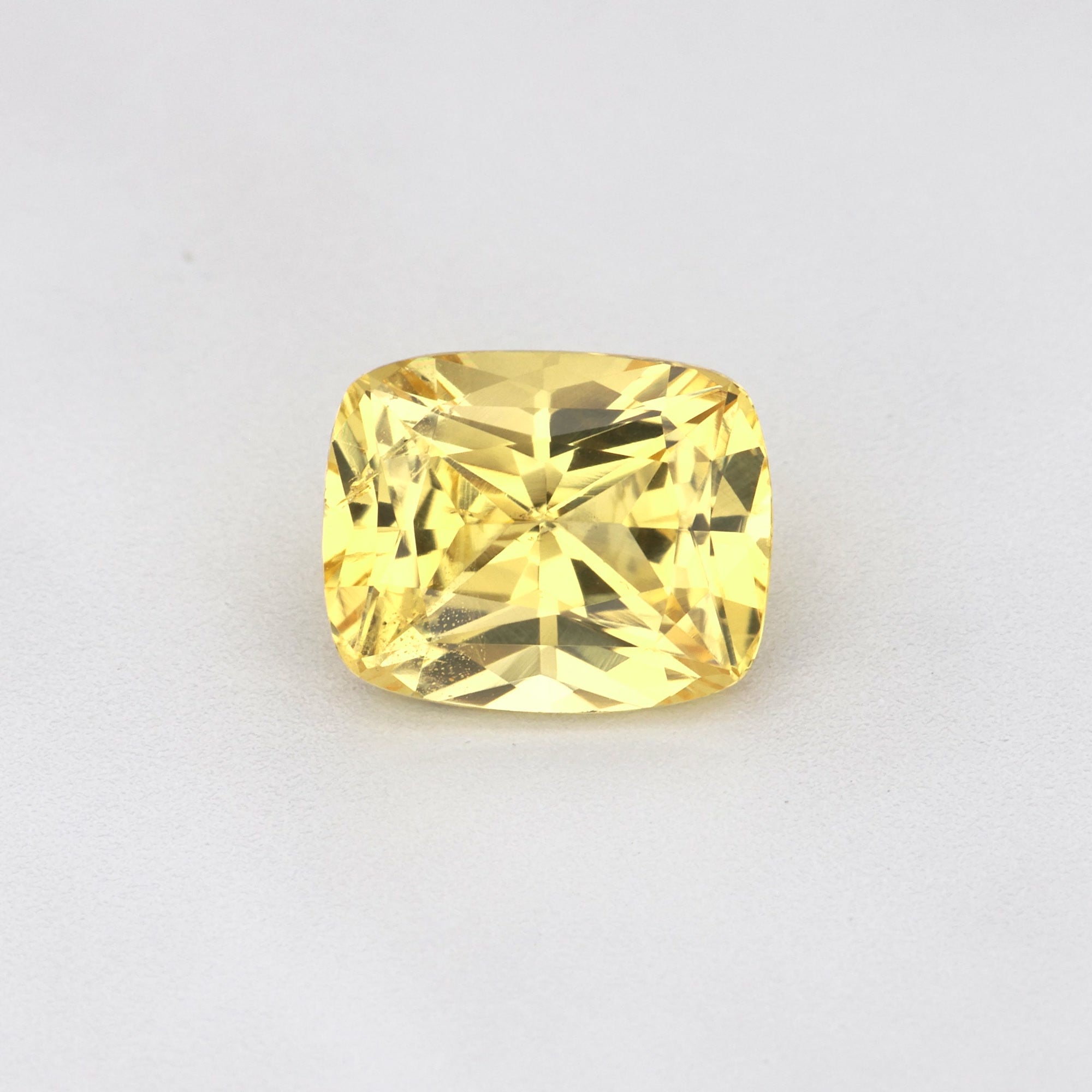
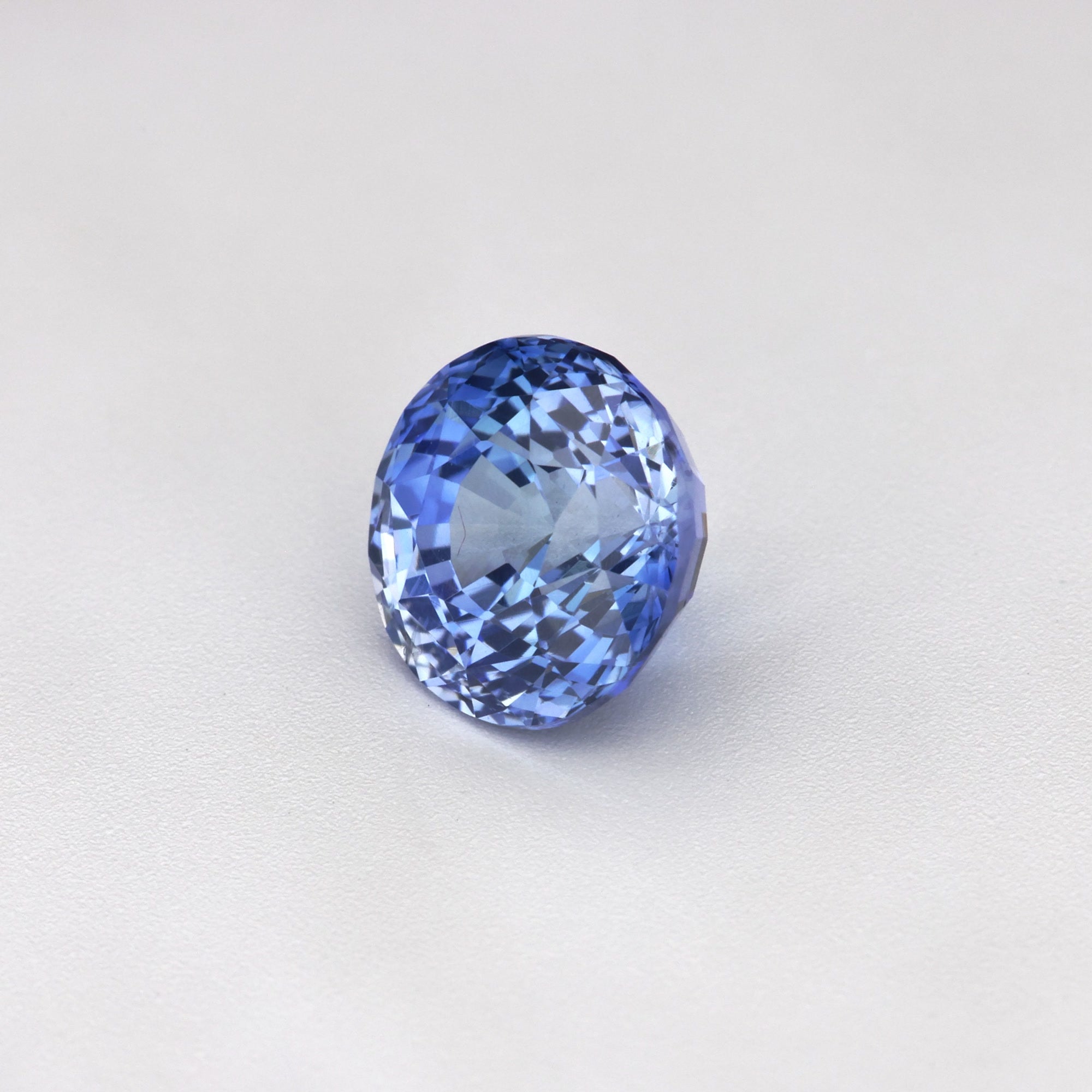
CG8437

Prices are shown in your local currency and may change.
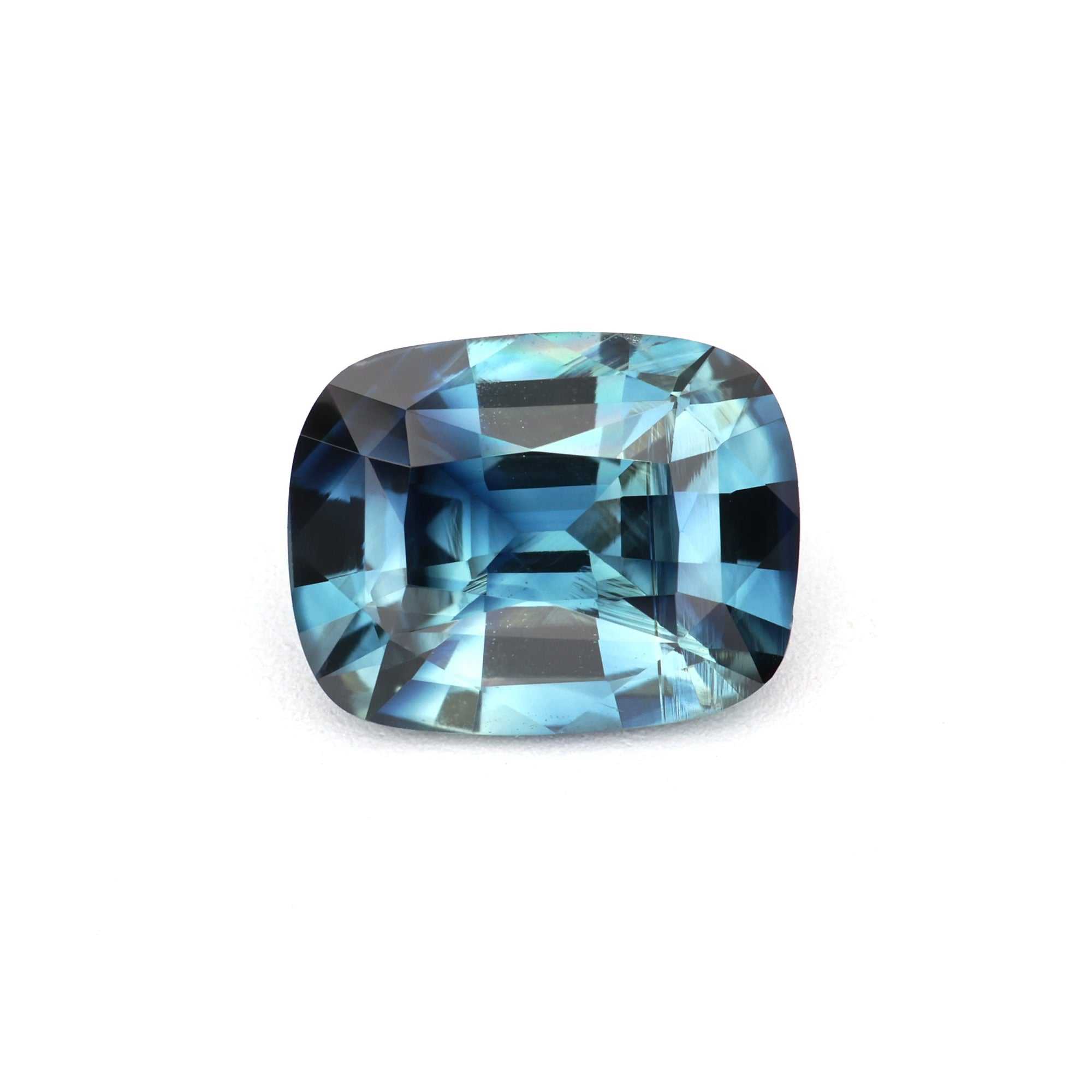
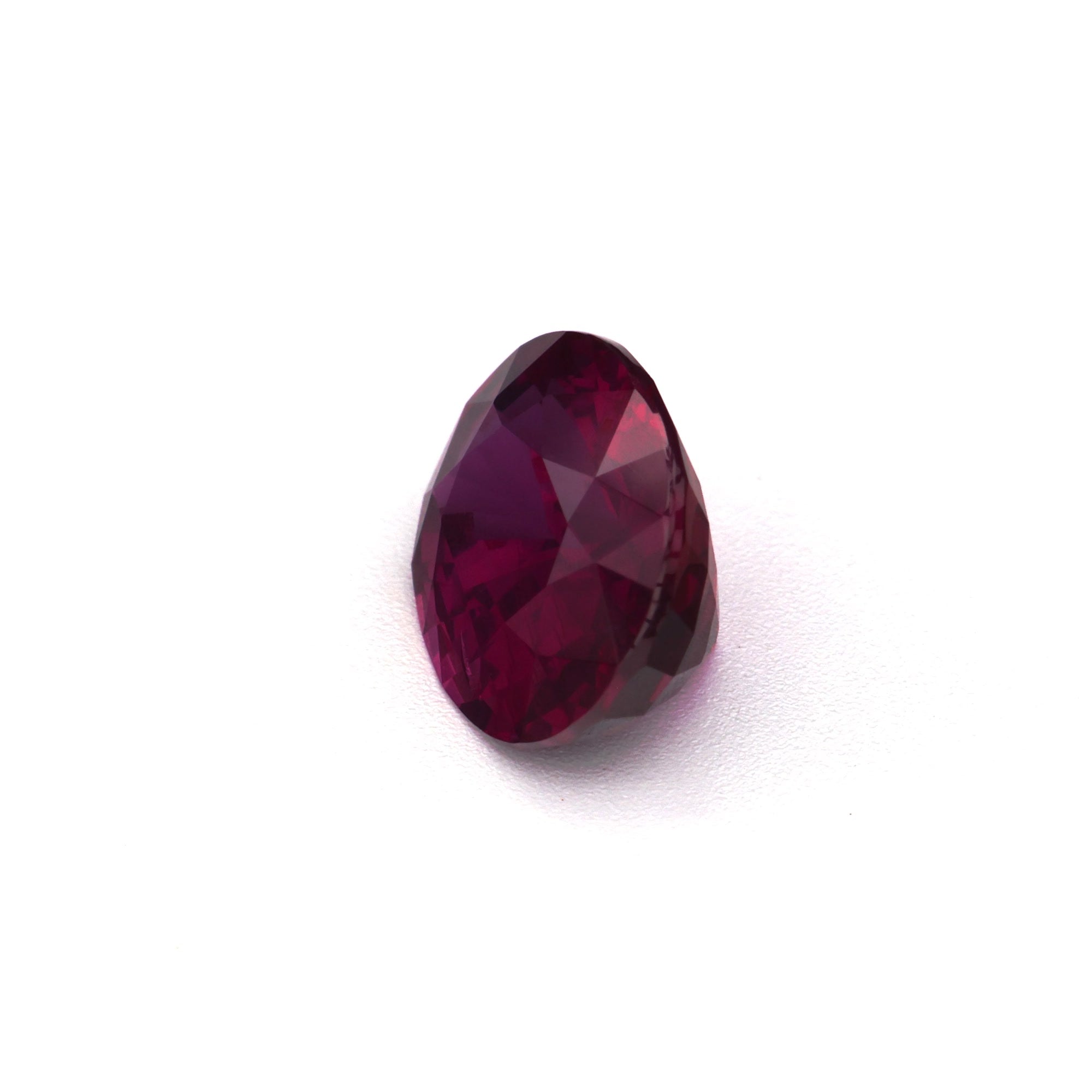
CG8465
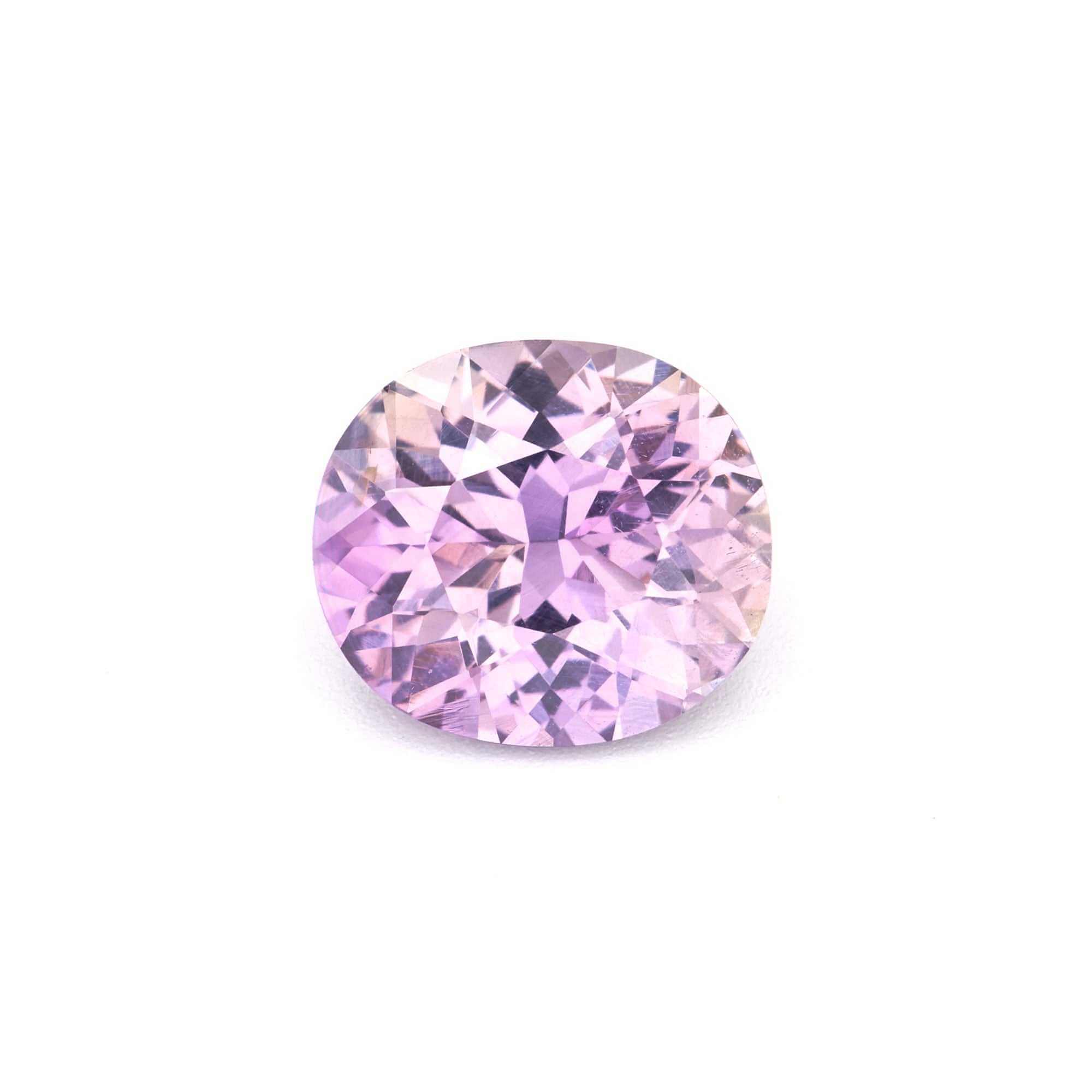
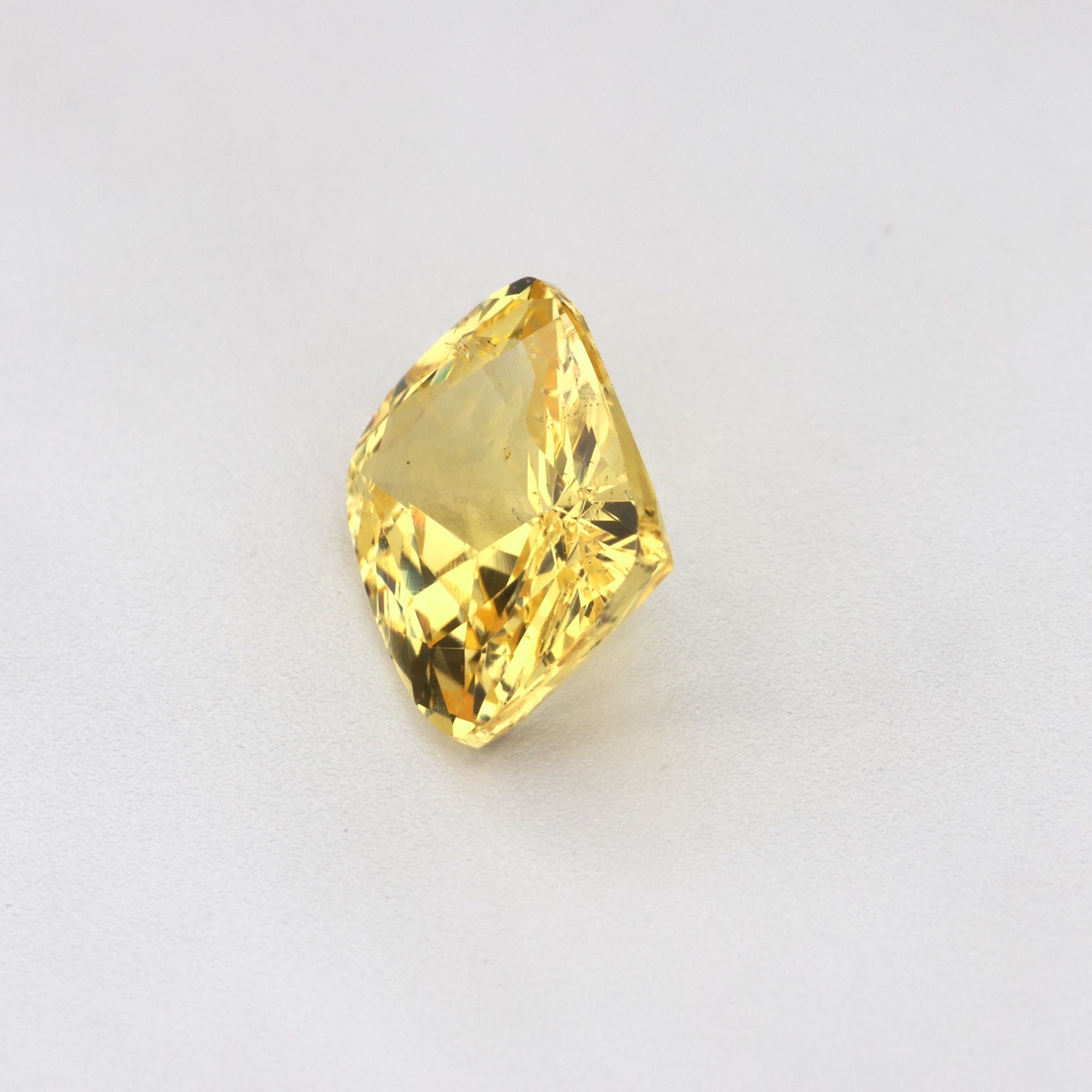
CG8460
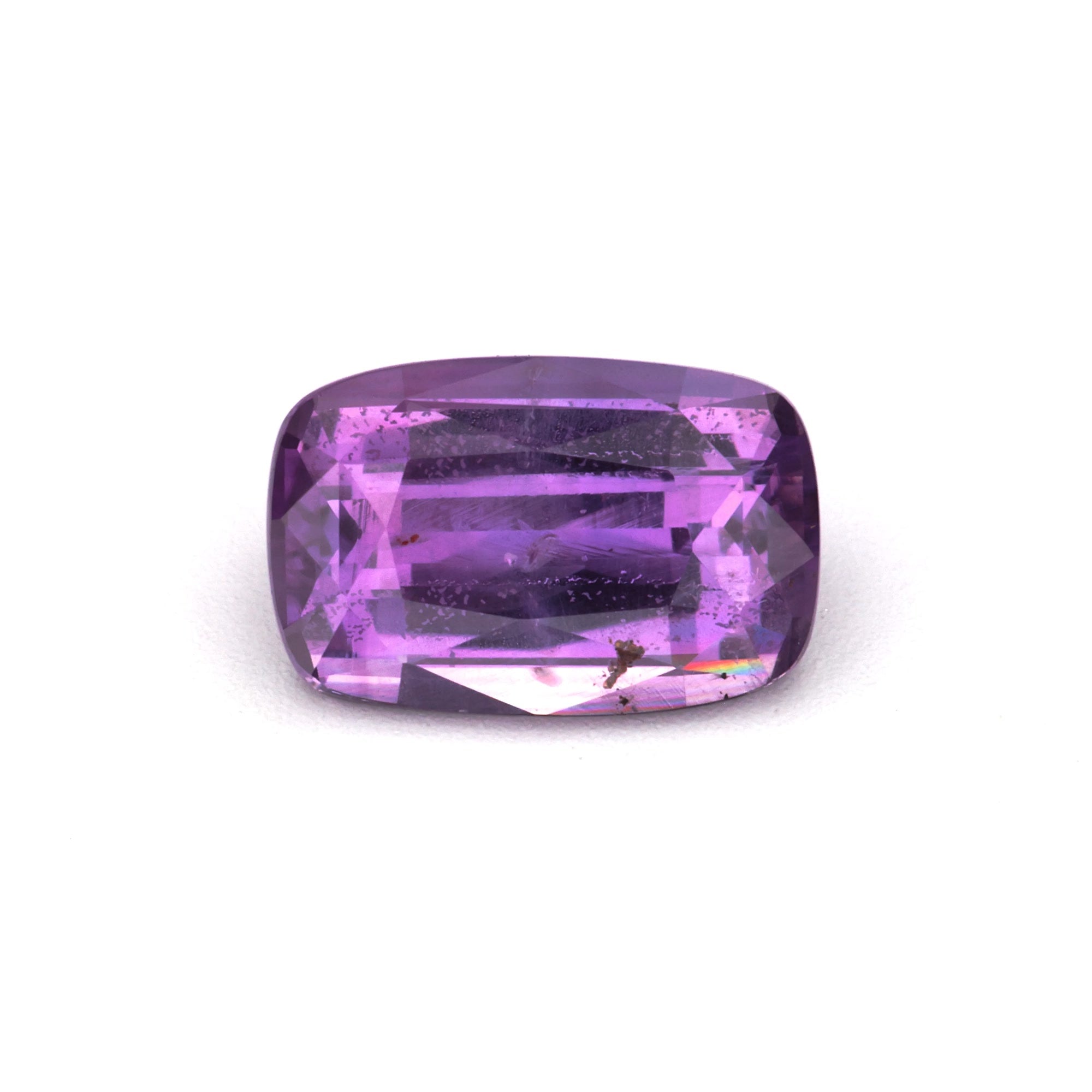
CG8456


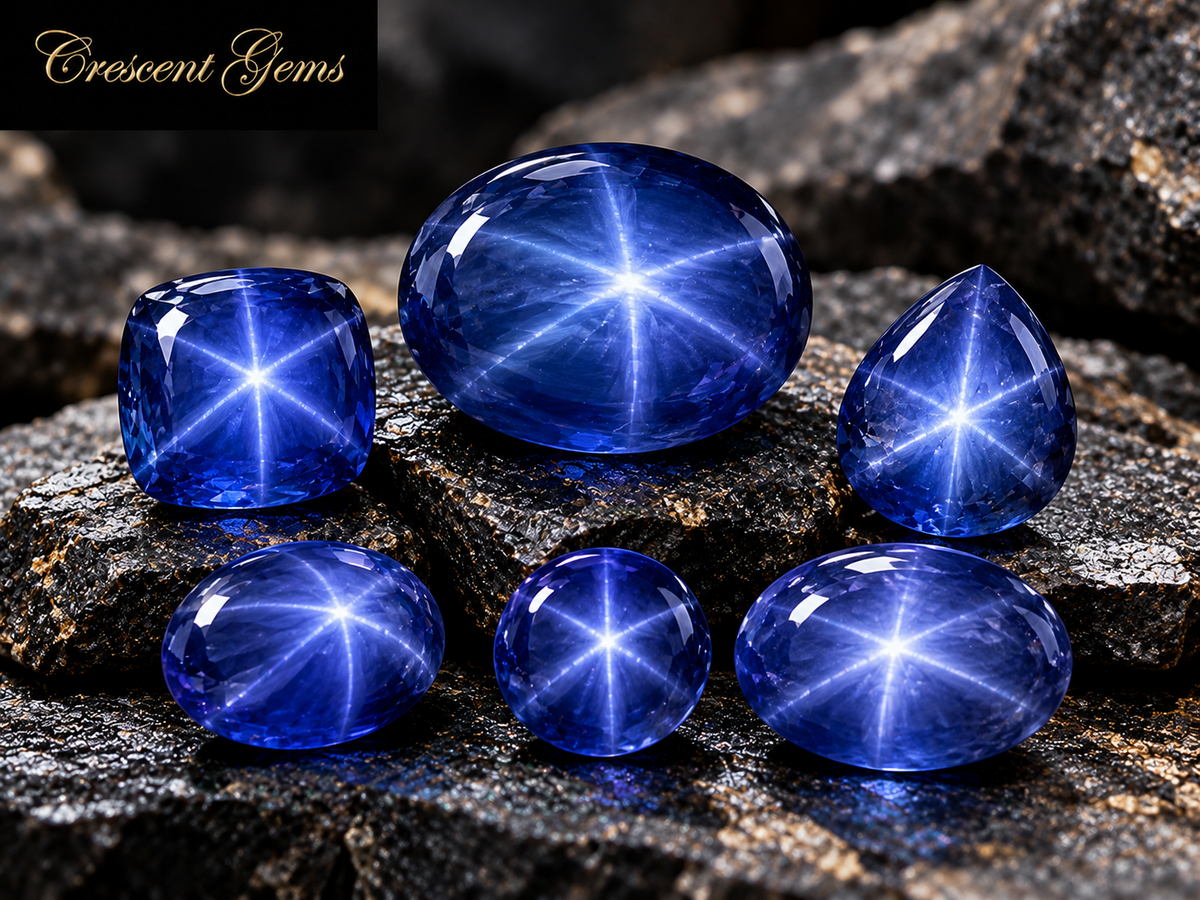
Blue Star Sapphire Price Guide — What They Cost and Why
Read moreabout Blue Star Sapphire Price Guide — What They Cost and Why
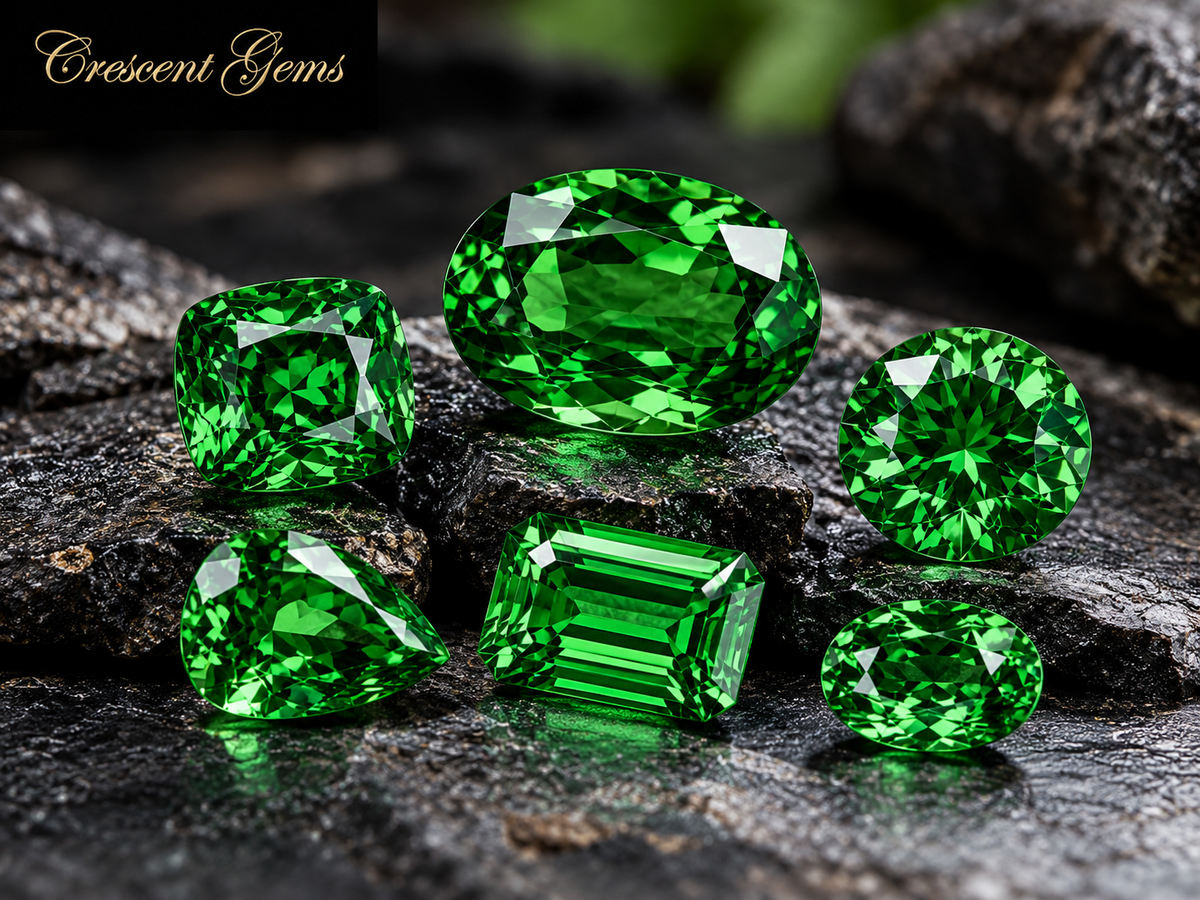
Tsavorite Garnet Price Guide — What They Cost and Why
Read moreabout Tsavorite Garnet Price Guide — What They Cost and Why
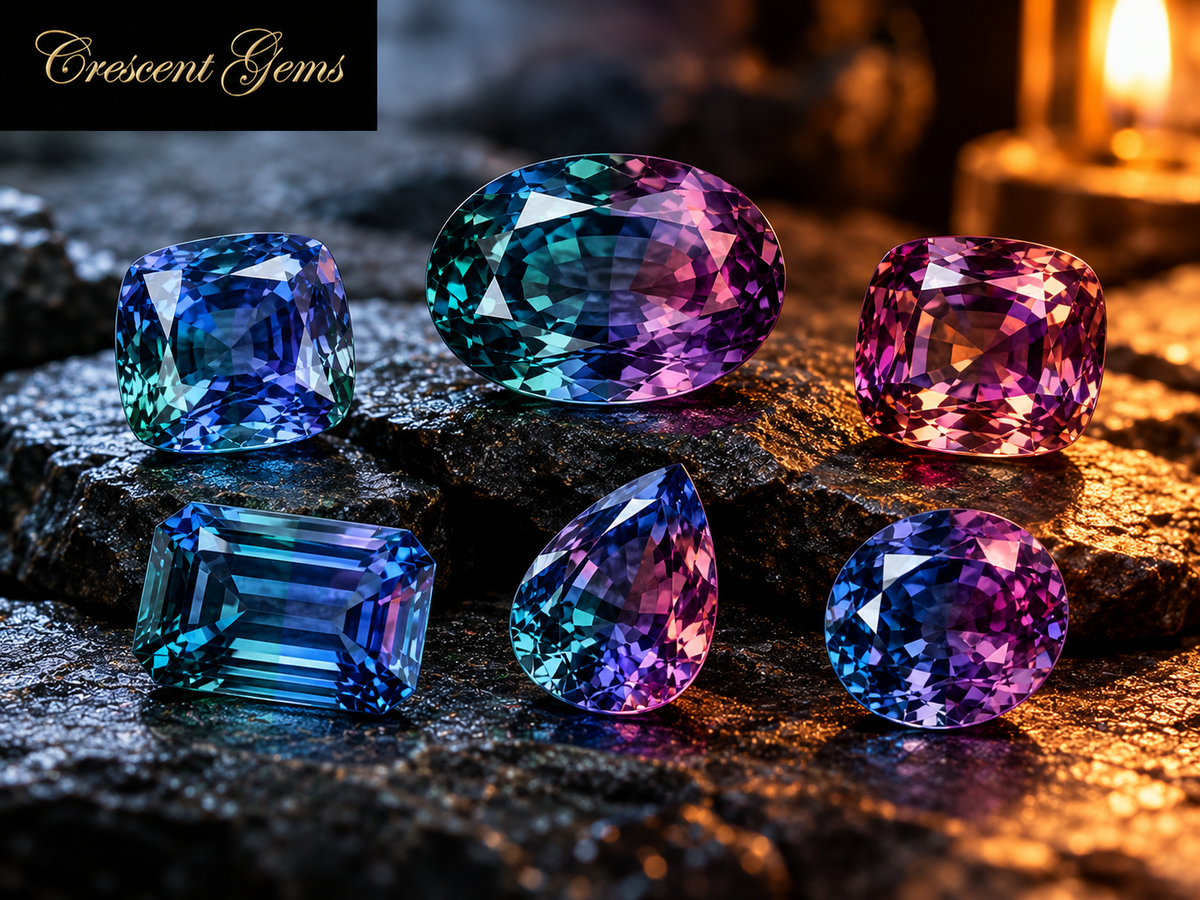
Color-Change Sapphire Price Guide — What They Cost and Why
Read moreabout Color-Change Sapphire Price Guide — What They Cost and Why
Is Cat's-Eye Chrysoberyl Good for an Engagement Ring?
Read moreabout Is Cat's-Eye Chrysoberyl Good for an Engagement Ring?
Cat's Eye Chrysoberyl Price Guide — What They Cost and Why
Read moreabout Cat's Eye Chrysoberyl Price Guide — What They Cost and Why



















Share: