- by Ahmed Shareek
Sapphire Colors Explained — Every Color, What Causes It, and How to Choose
- by Ahmed Shareek
New to buying sapphires? Start with our Ultimate Sapphire Buying Guide — the complete resource for colour, origin, treatment, and pricing.
Most people know that sapphire comes in blue. Far fewer know that it also comes in yellow, pink, teal, green, orange, purple, violet, white, peach, and a balanced pink-orange that has no common equivalent in any other gemstone. Fewer still know that the same mineral — corundum, aluminum oxide — produces all of these colors, and that the differences between them come entirely from trace elements present in concentrations measured in parts per million within the crystal.
This guide is the hub for every sapphire colour we sell. Each section below explains what chemistry produces the colour, what separates a fine example from a commercial one, roughly what it costs per carat, what treatment you should realistically expect to meet in that colour, and how many stones of that colour we are holding right now. Where a colour has its own dedicated buyer's guide, the section links to it. Every stock figure on this page was taken from our live catalogue on 7 September 2026 and describes what we hold, not what the species does in general.
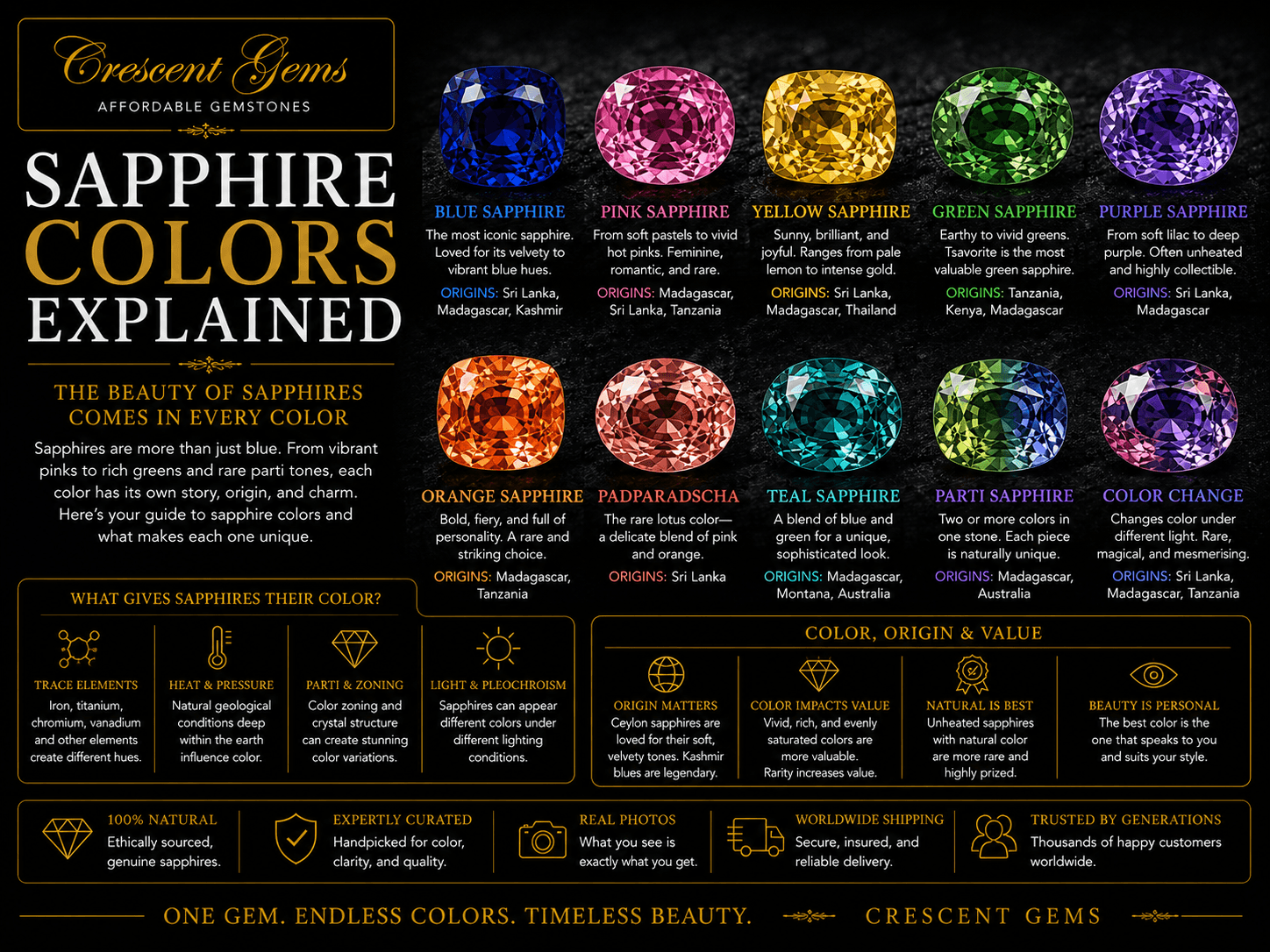
Corundum in its pure form is colorless. Color appears when trace amounts of other elements substitute into the lattice during crystal growth. Iron and titanium together produce blue. Chromium alone produces red (ruby) or pink. Iron alone produces yellow or green. Vanadium produces violet or purple. Chromium and iron together, in the right proportions, produce orange or padparadscha.
The mechanism behind blue is worth understanding, because it explains most of what follows. Blue in corundum comes from intervalence charge transfer: an iron ion and a titanium ion sit next to each other in the lattice, an electron hops between them when light hits the crystal, and the energy that hop consumes is drawn from the yellow-orange part of the spectrum. What is left over reaches your eye as blue. Because the effect depends on a pair of ions being adjacent, blue is unusually sensitive to how the two elements are distributed through the crystal, which is why blue sapphire so often shows colour zoning and why heat treatment — which redistributes those ions — changes blue more dramatically than it changes any other sapphire colour.
The other chromophores work differently. Chromium and iron each absorb light on their own rather than in pairs, so pink, yellow, orange and green are less zonally streaky and less responsive to heat. Vanadium behaves differently again: it absorbs in a way that shifts with the colour temperature of the light source, which is why vanadium-bearing corundum gives us purple, violet, and true colour-change sapphire. Vanadium is not what makes corundum green — green comes from iron, usually iron in two states at once, and any source telling you otherwise has confused corundum with another species.
Sri Lanka, where Crescent Gems sources directly, is among the most colour-diverse sapphire origins in the world. Few major sapphire origins produce the full color range that Ceylon does — blue, yellow, pink, peach, padparadscha, teal, green, orange, purple, violet, white, and star sapphire all occur there in gem quality. That diversity is why a Ceylon-focused inventory can show you eleven colours side by side, and it is the reason this guide exists in the shape it does. For a visual reference across the whole range, see our interactive sapphire colour chart.
The table below is the short version of this whole guide. Chromophore is the trace element responsible for the colour. Typical price is the per-carat band we use across our guides for well-cut, eye-clean stones in the 1–2 carat range. Treatment reality and stock count both describe our own live inventory as at 7 September 2026 — they are counts of what we are holding, not claims about how the species is treated in the trade at large.
| Colour | Chromophore | Typical Price (1–2ct) | Treatment in Our Stock | In Stock |
|---|---|---|---|---|
| Blue | Iron + titanium (Fe–Ti charge transfer) | $400–$6,000+/ct | 7 of our 28 are disclosed unheated | 28 |
| Teal | Iron, blue and yellow-green absorption together | $600–$1,500/ct | 8 of our 8 are disclosed unheated | 8 |
| Yellow | Iron (Fe3+) and colour centres | $300–$2,500/ct | 19 of our 23 are disclosed unheated | 23 |
| Pink | Chromium (Cr3+), low concentration | $500–$4,000/ct | 9 of our 16 are disclosed unheated | 16 |
| Peach | Chromium + iron together | $100–$2,500/ct | 4 of our 6 are disclosed unheated | 6 |
| Padparadscha | Chromium + iron, balanced pink-orange | $3,000–$15,000+/ct | None in stock — see the section below | 0 |
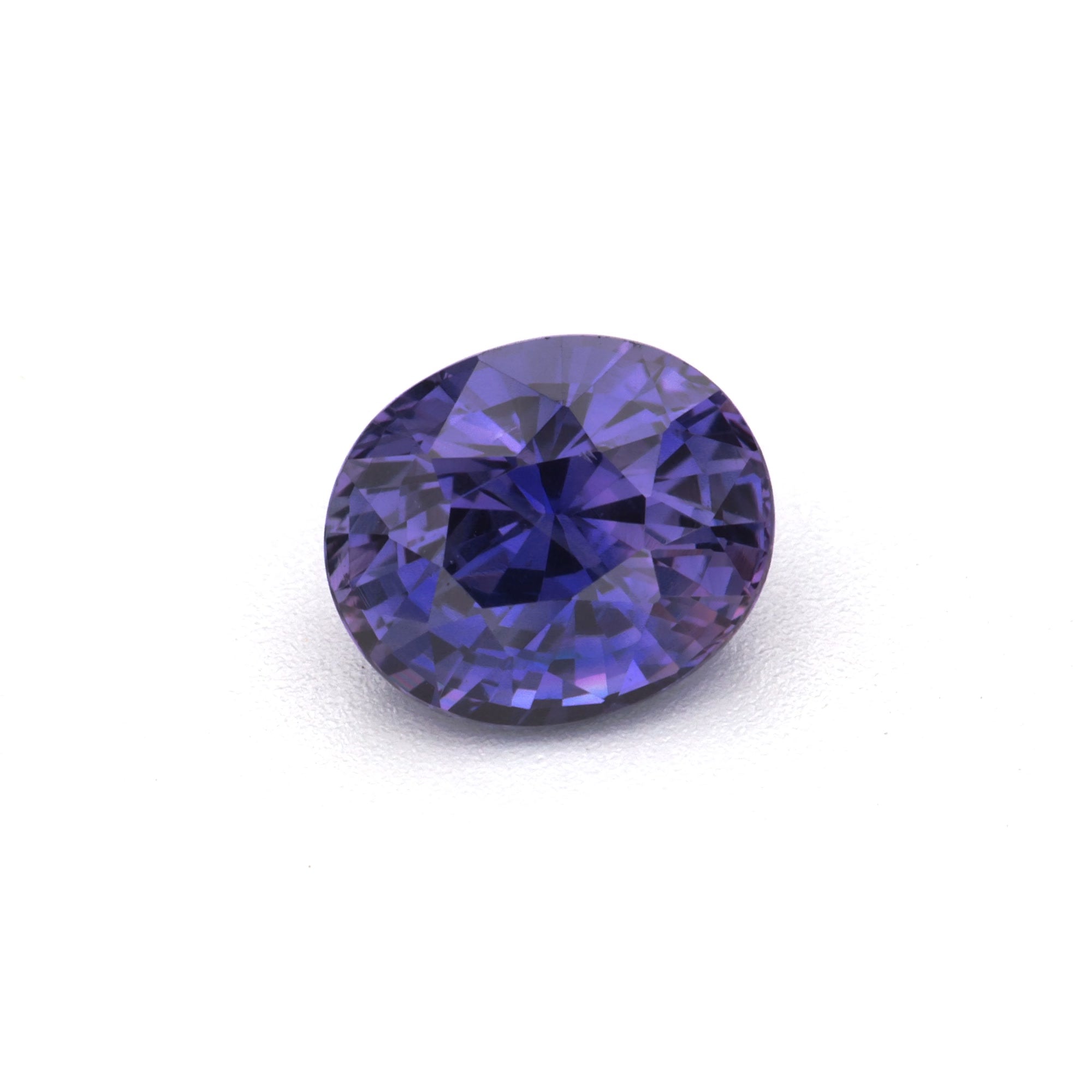
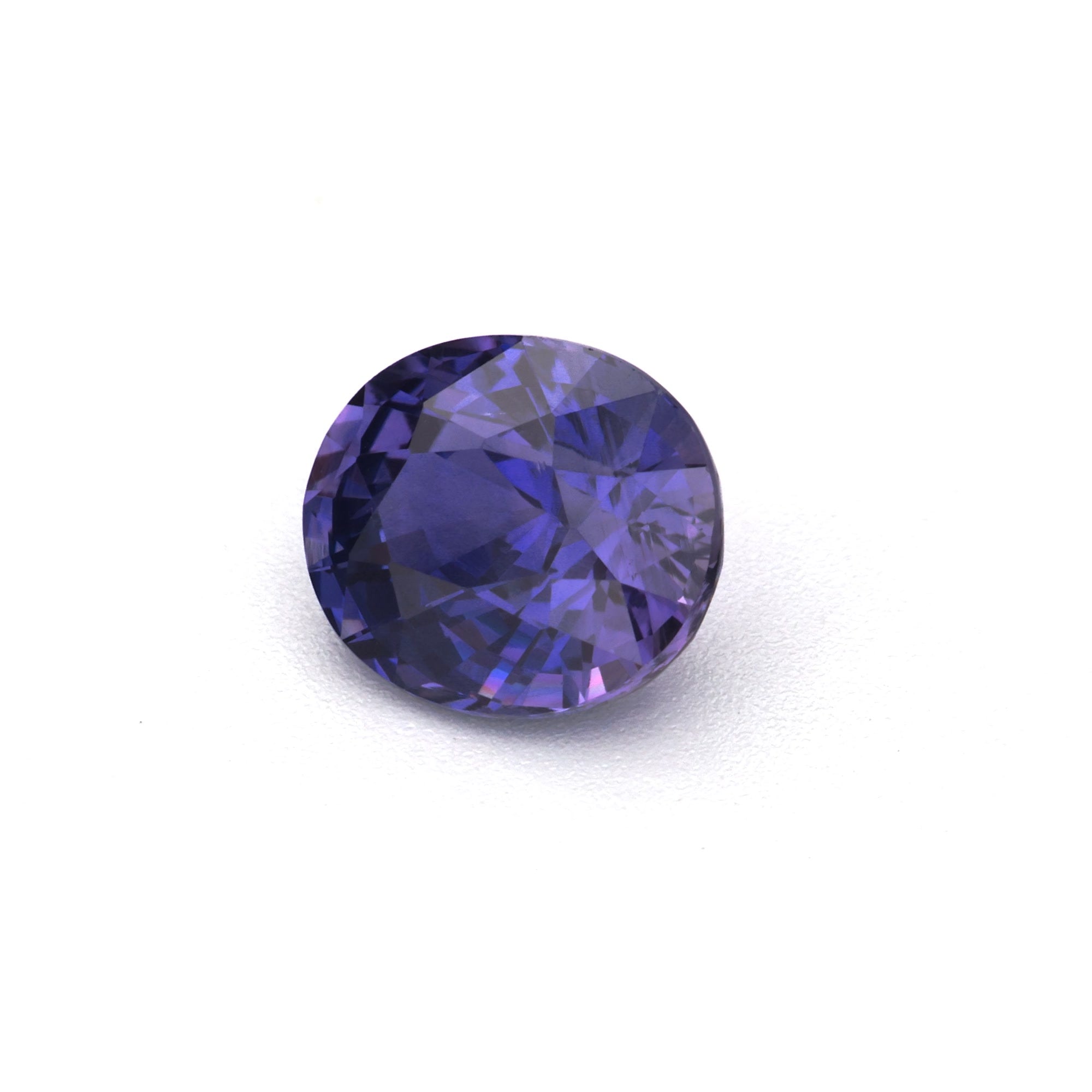
| Purple | Vanadium, with chromium and iron | $400–$2,000/ct | 10 of our 11 are disclosed unheated | 11 |
| Violet | Vanadium, shifted toward blue | $400–$2,000/ct | 12 of our 13 are disclosed unheated | 13 |
| Orange | Chromium + iron, iron-dominant | Not published in our colour price table | 0 of our 3 are unheated — all three are heat treated | 3 |
| Green | Iron (not vanadium) | $300–$1,500/ct | 6 of our 7 are disclosed unheated | 7 |
| White | No chromophore — pure Al2O3 | $500–$800/ct | 10 of our 12 are disclosed unheated or untreated | 12 |
| Star | Rutile needle inclusions, not a chromophore | Not published in our colour price table | 4 of our 4 are disclosed unheated | 4 |
| Colour-change | Vanadium | Not published in our colour price table | 2 of our 2 are disclosed unheated | 2 |
Figures above are approximate market guidance, not fixed quotes. Actual value varies by treatment, origin, colour, cut, clarity, and certification.
Two notes on reading that table. The four star sapphires are counted again inside the blue, pink, violet and purple rows, because a star sapphire is a blue or pink or violet or purple stone that also shows asterism — so the colour rows sum to more sapphires than we hold. And the purple and violet bands are the same figure because we price the two together; the visual difference between them is real, but the market does not separate them on price. Across all colours we currently list 131 sapphires, of which 110 are Sri Lankan.
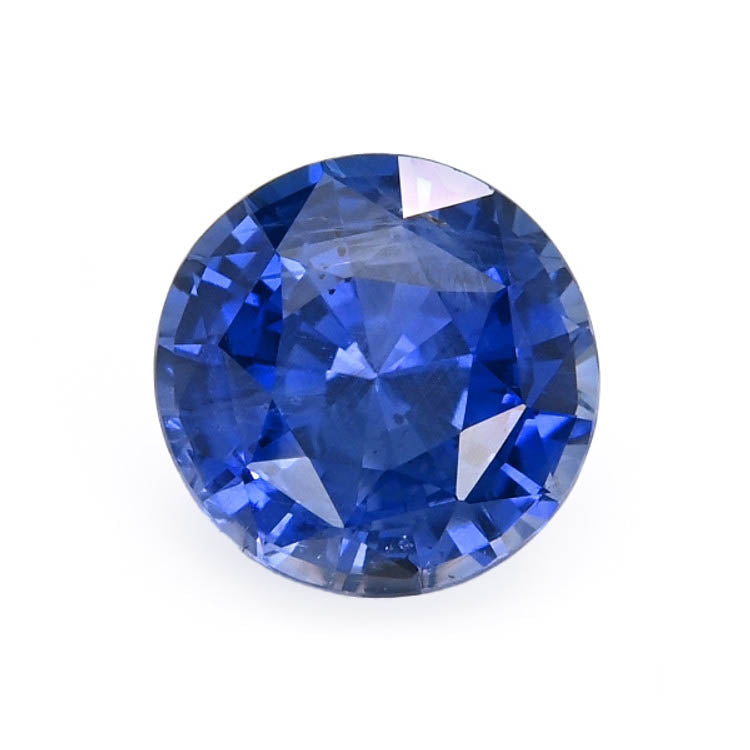
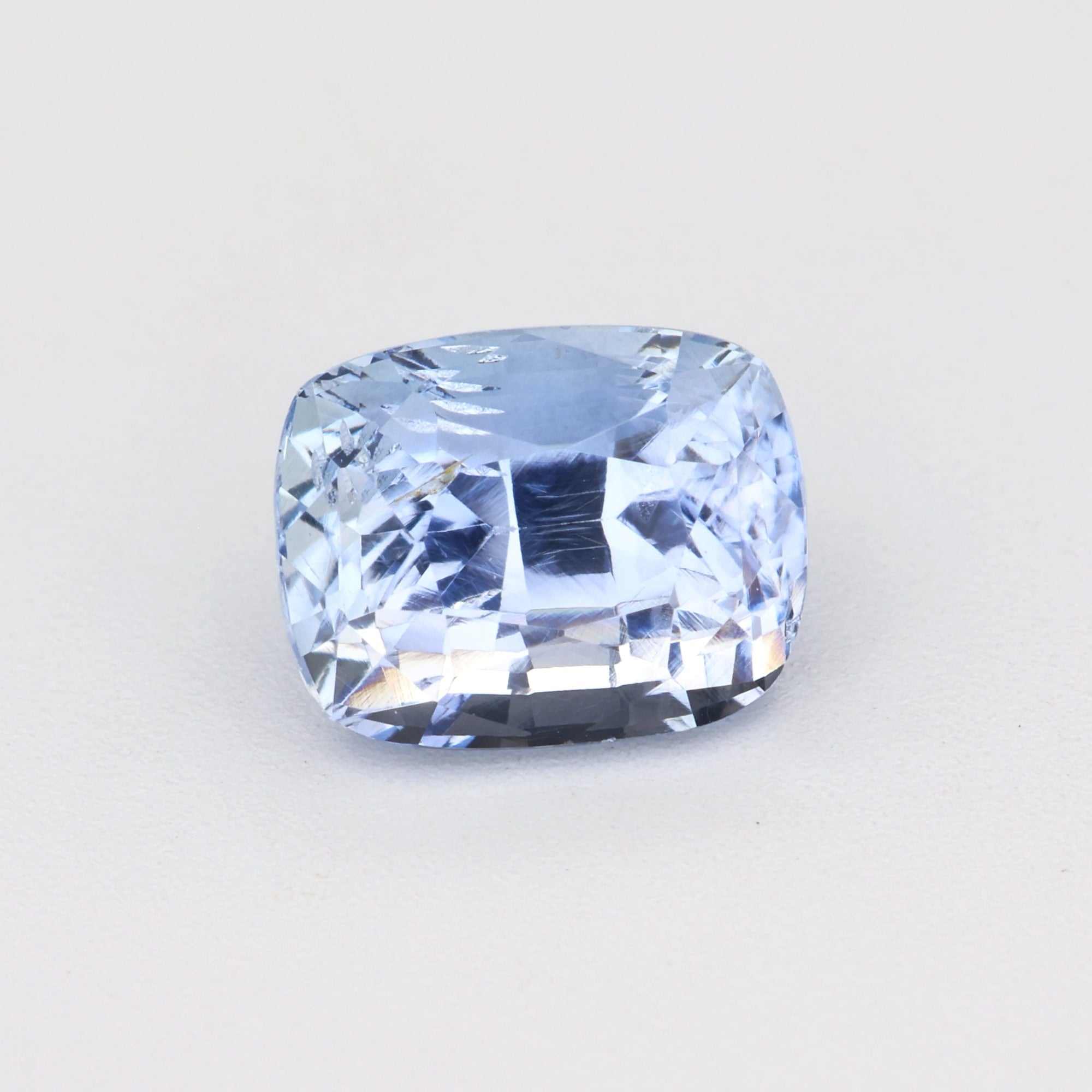
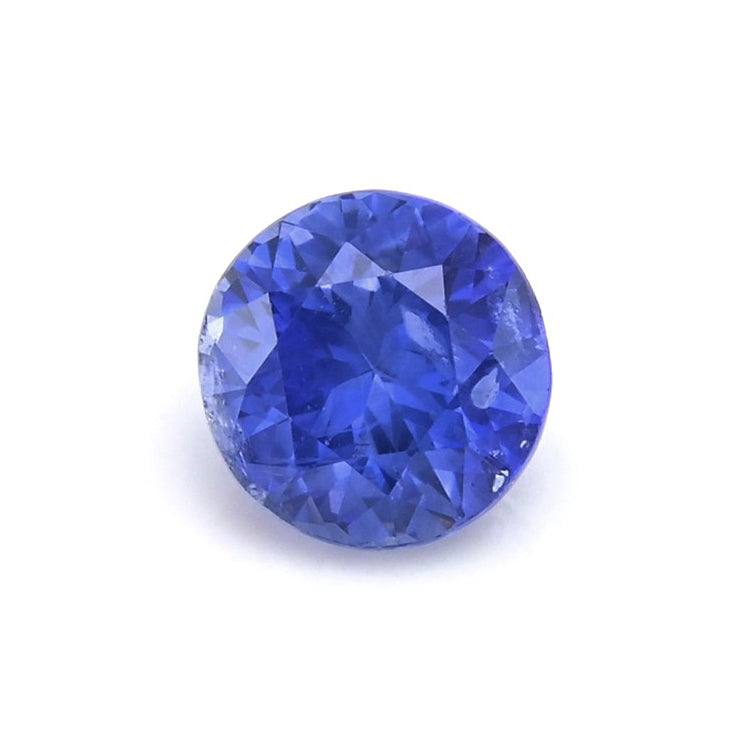
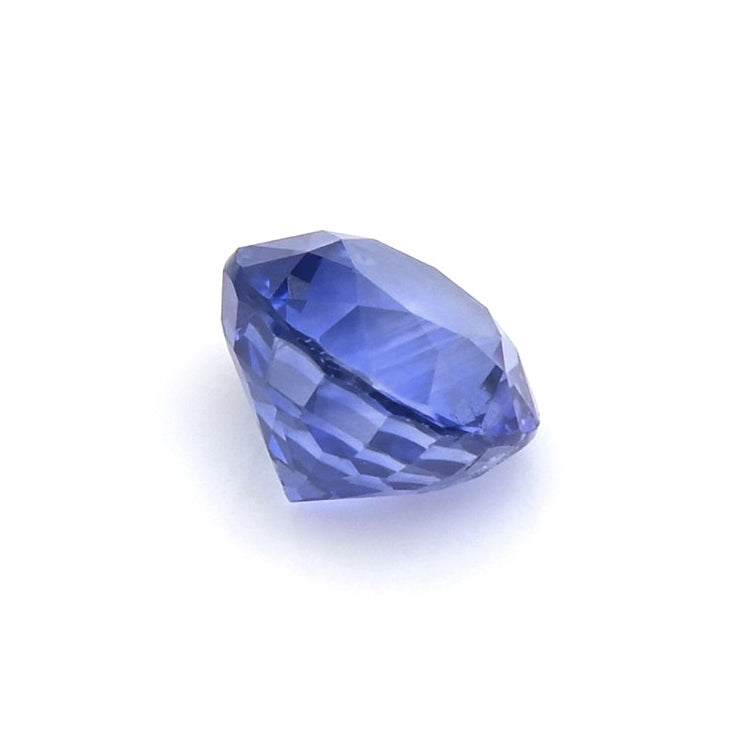
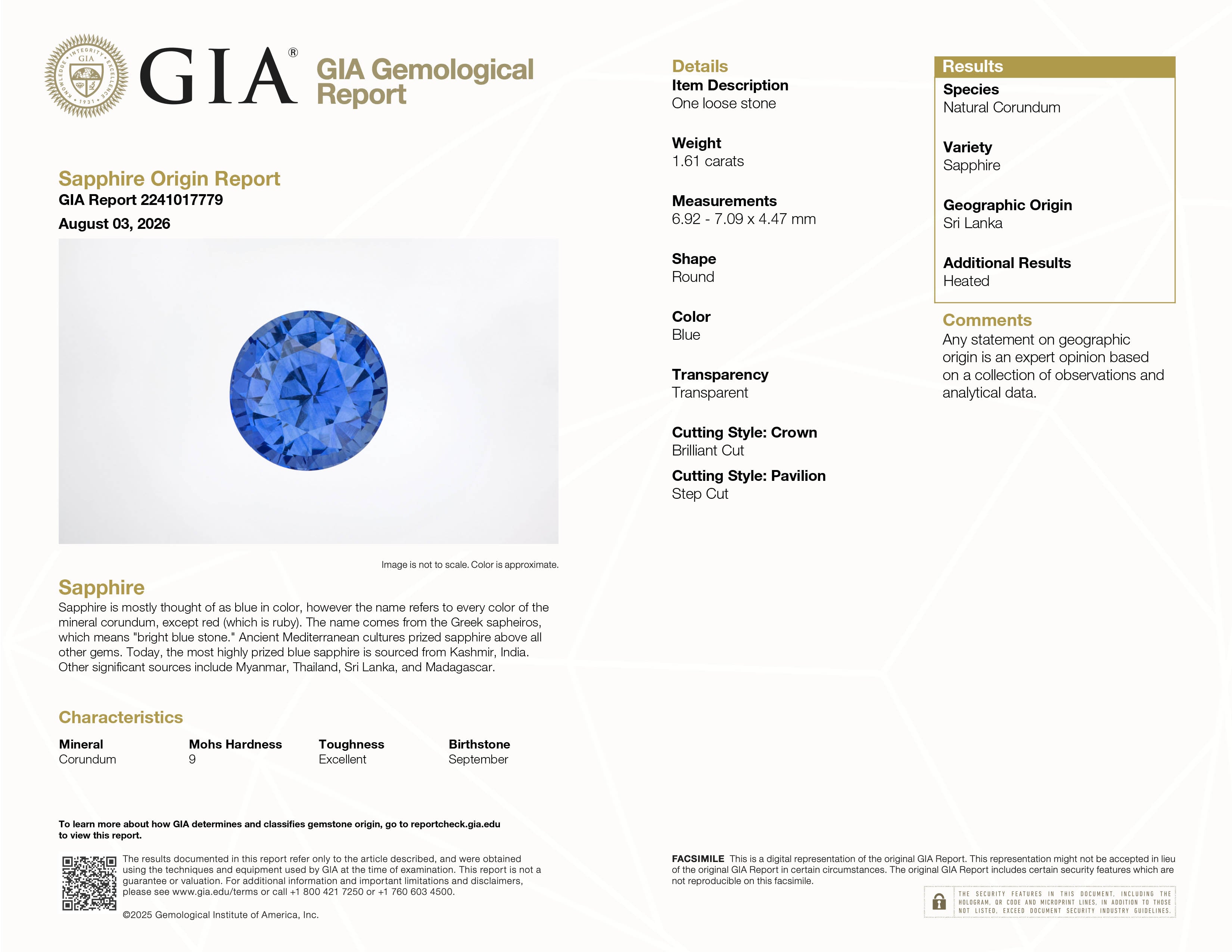
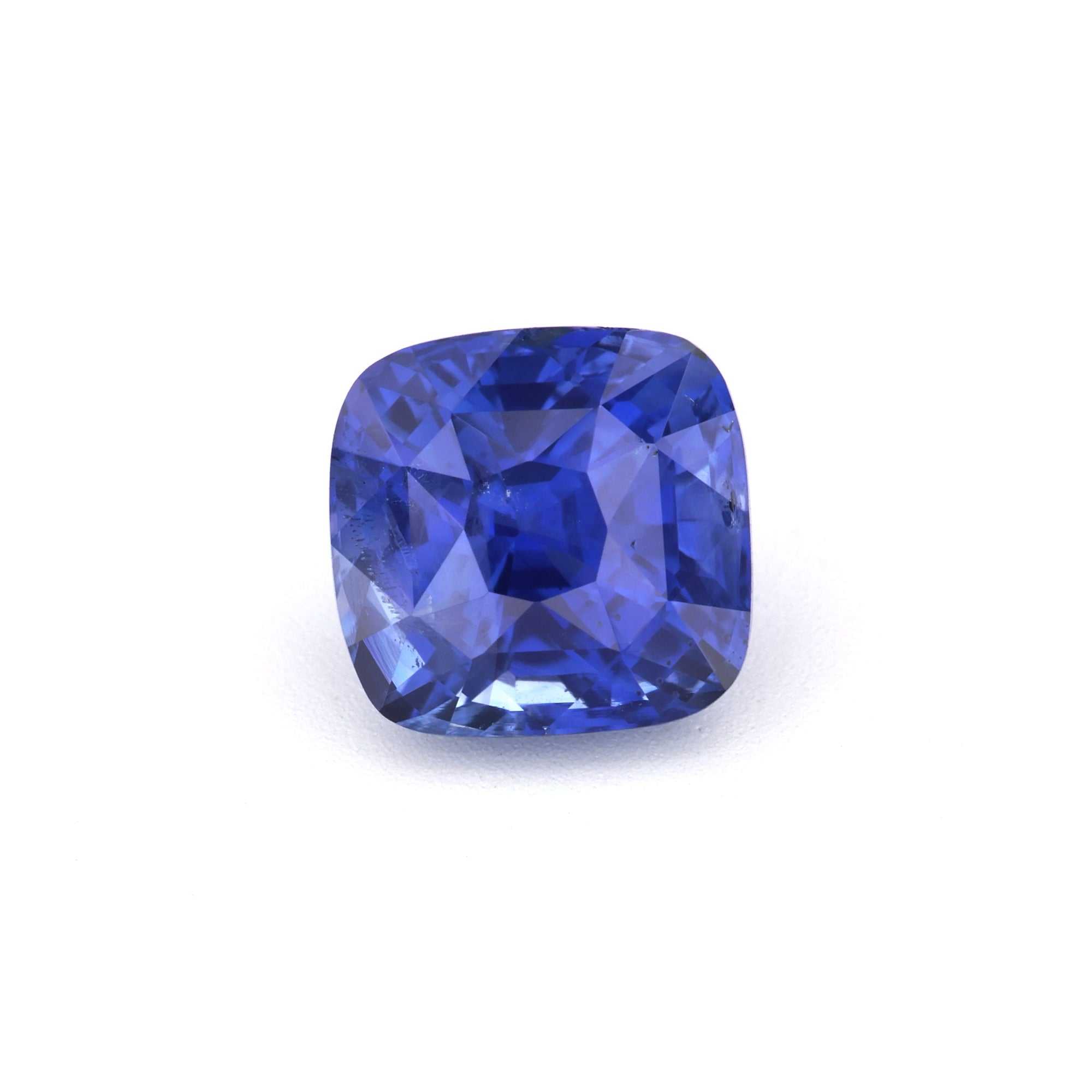
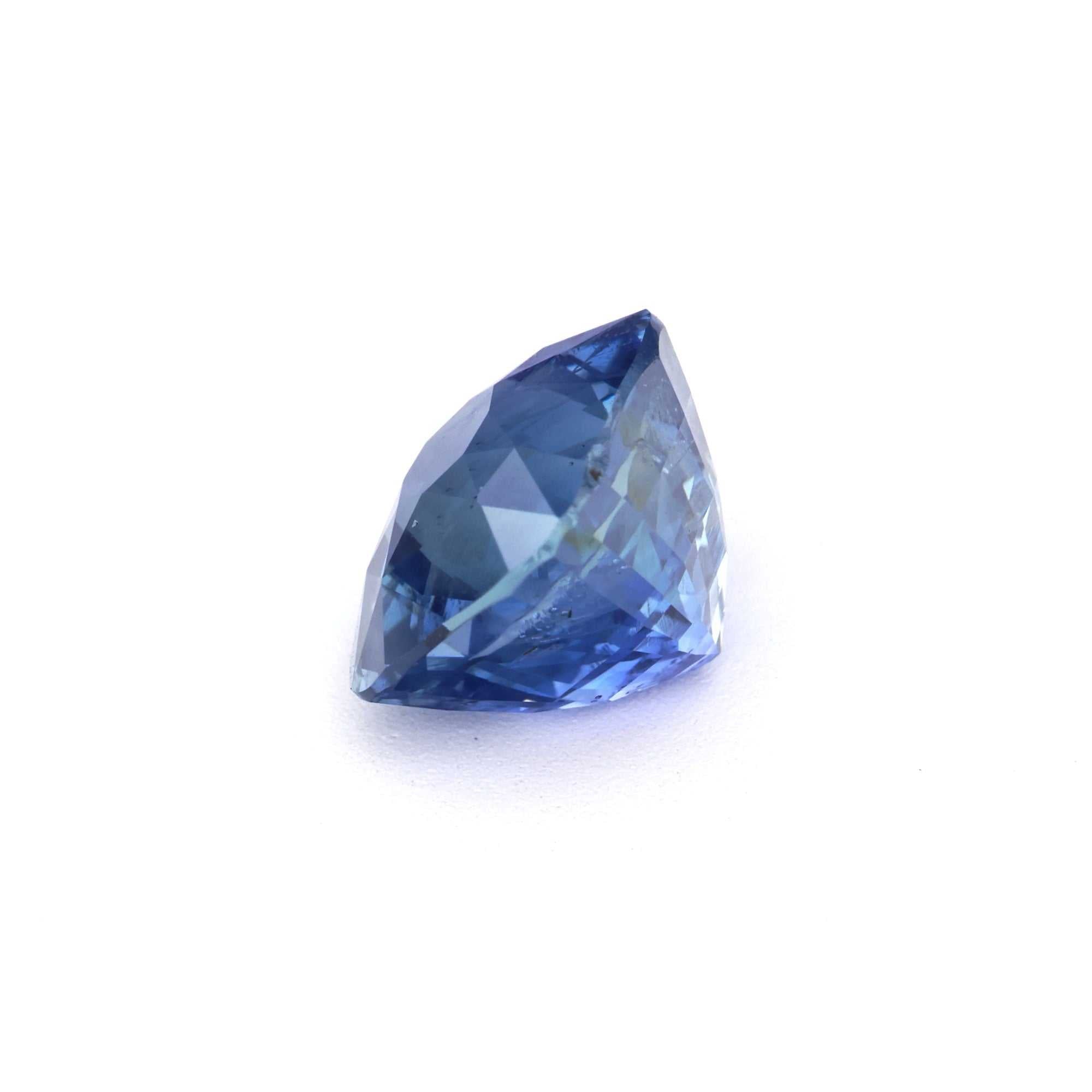
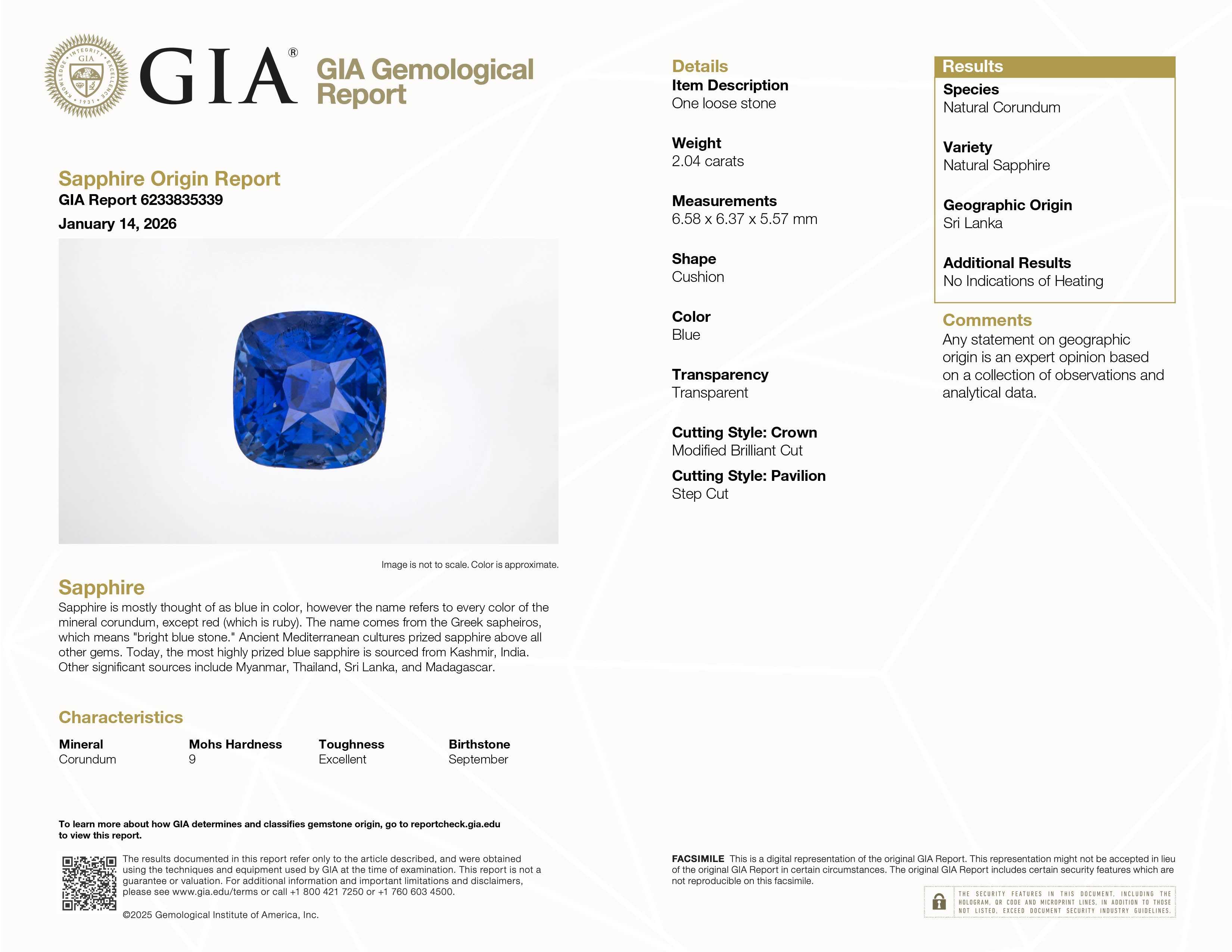
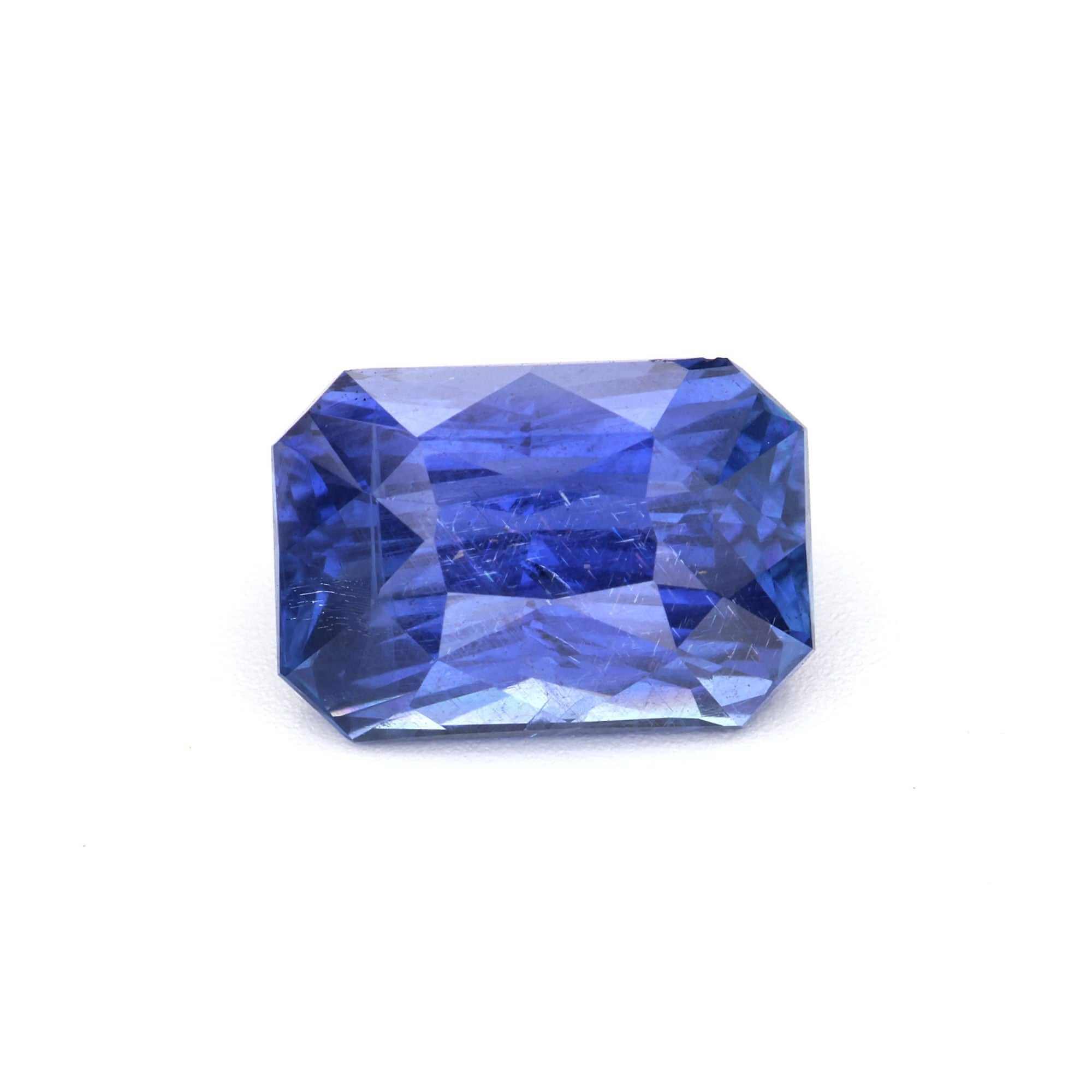
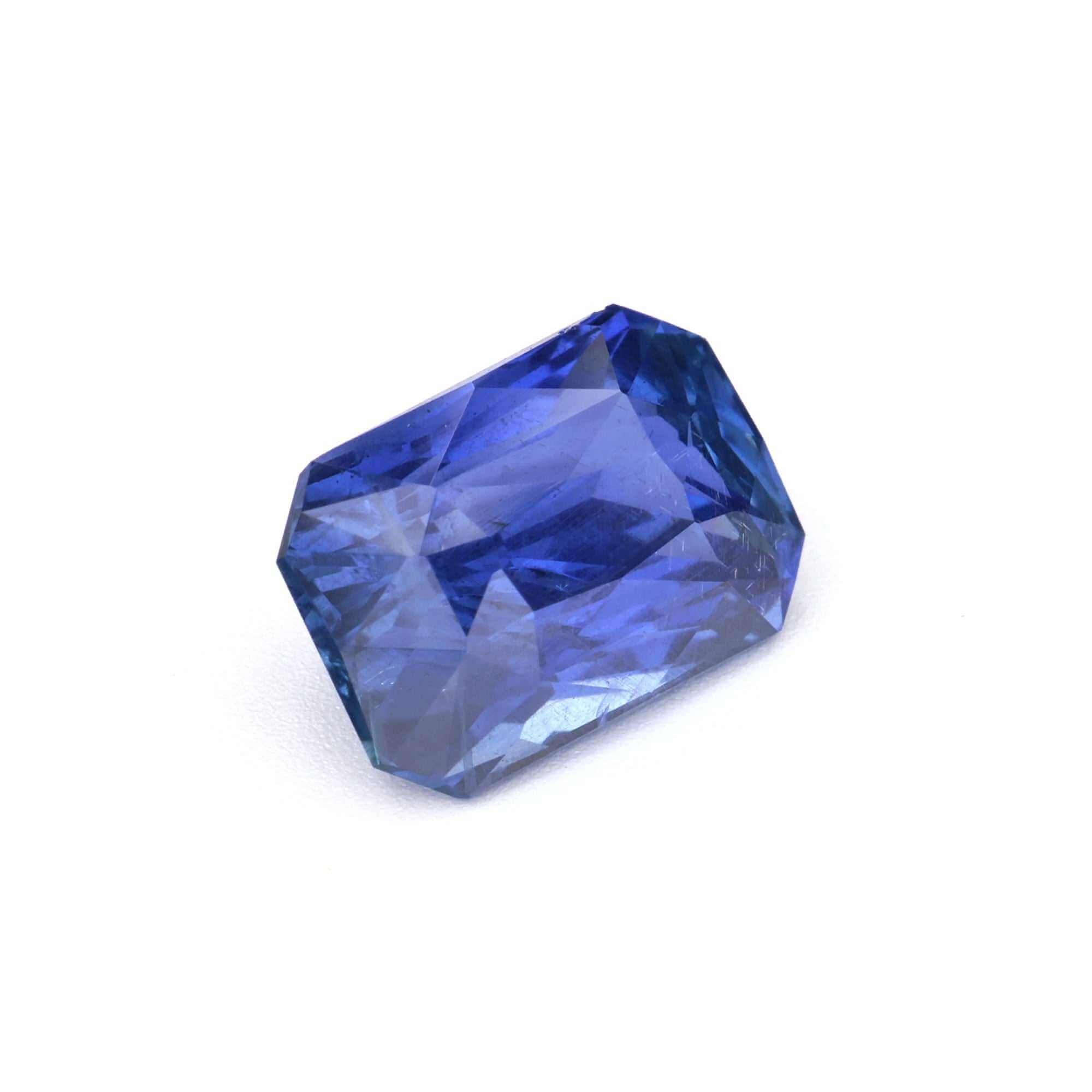
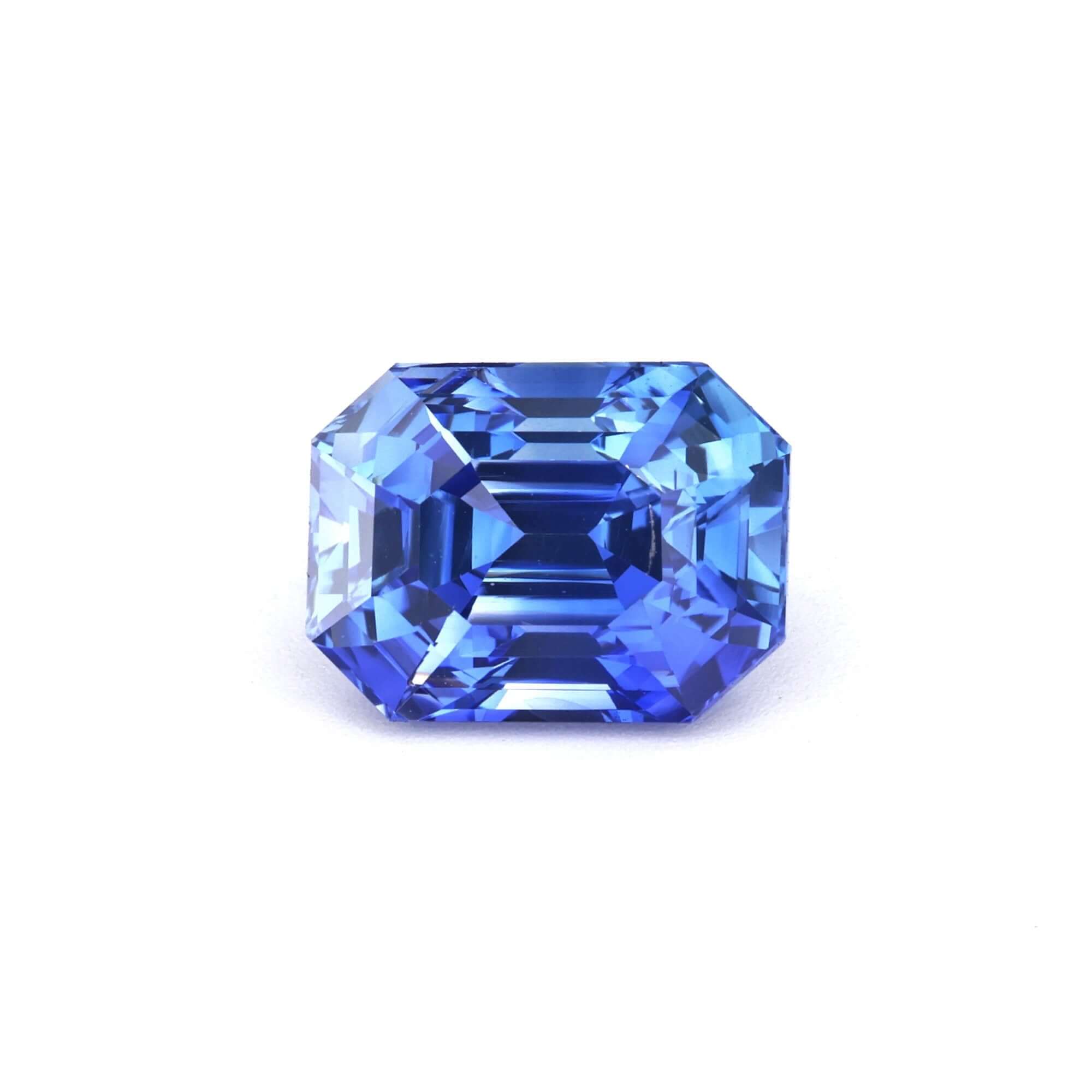
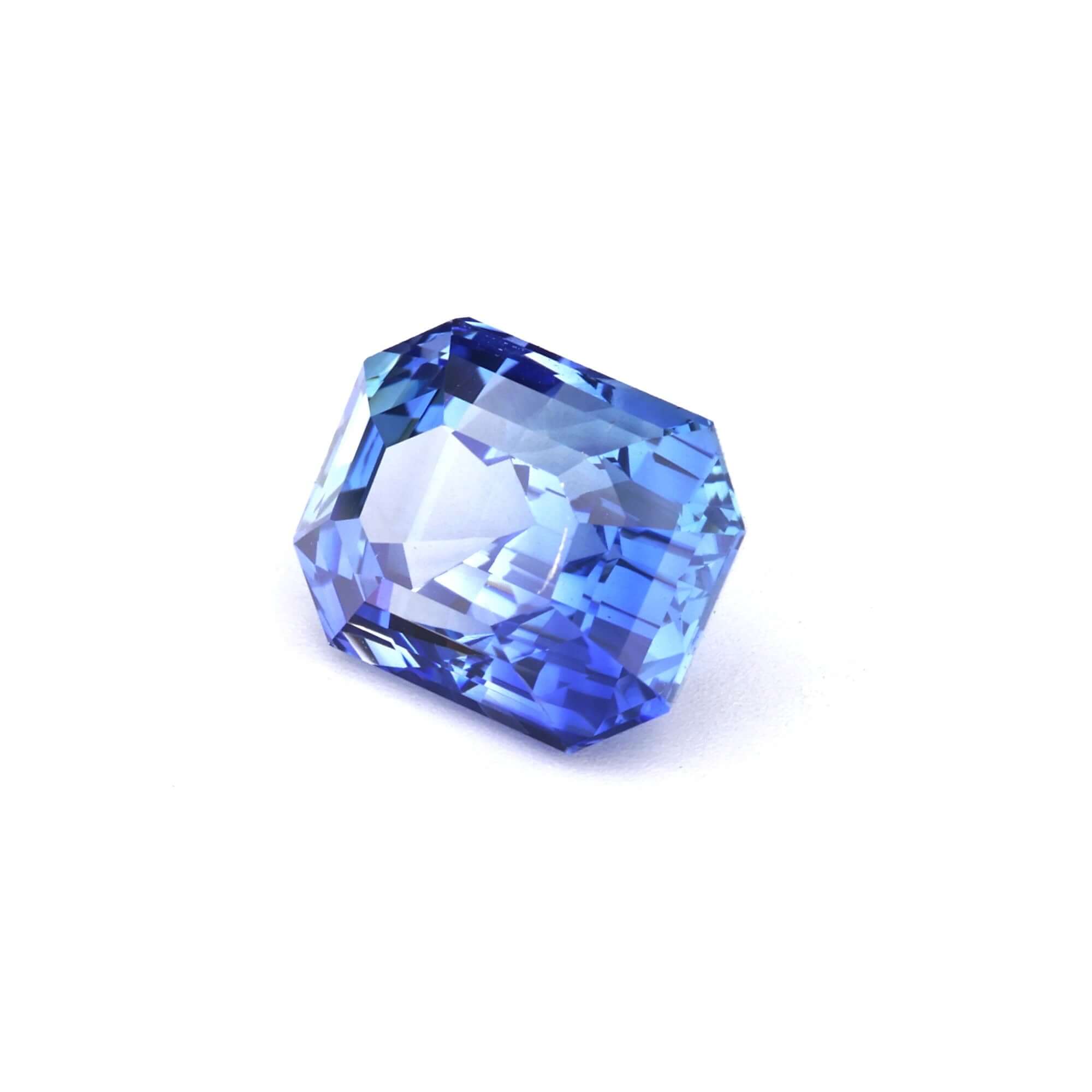
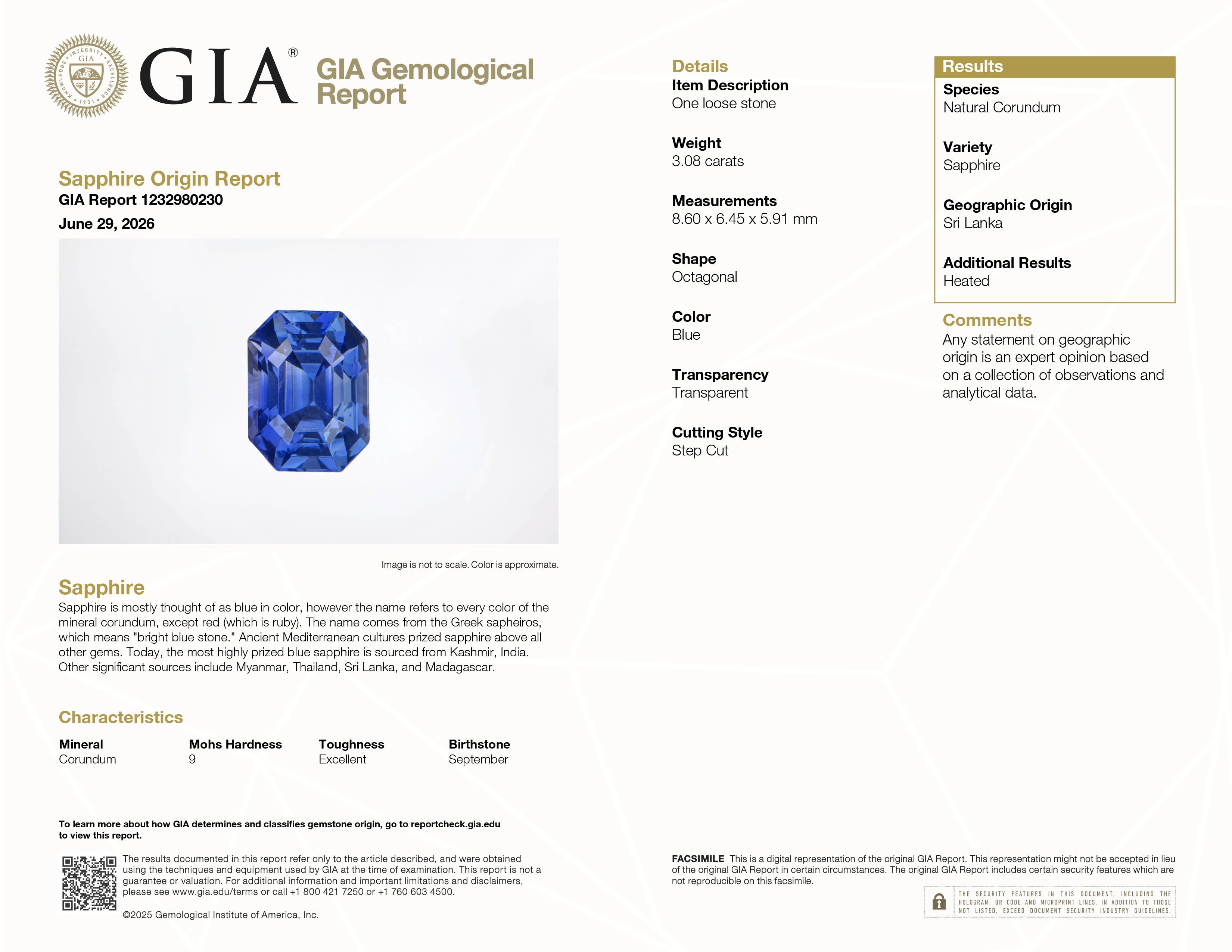
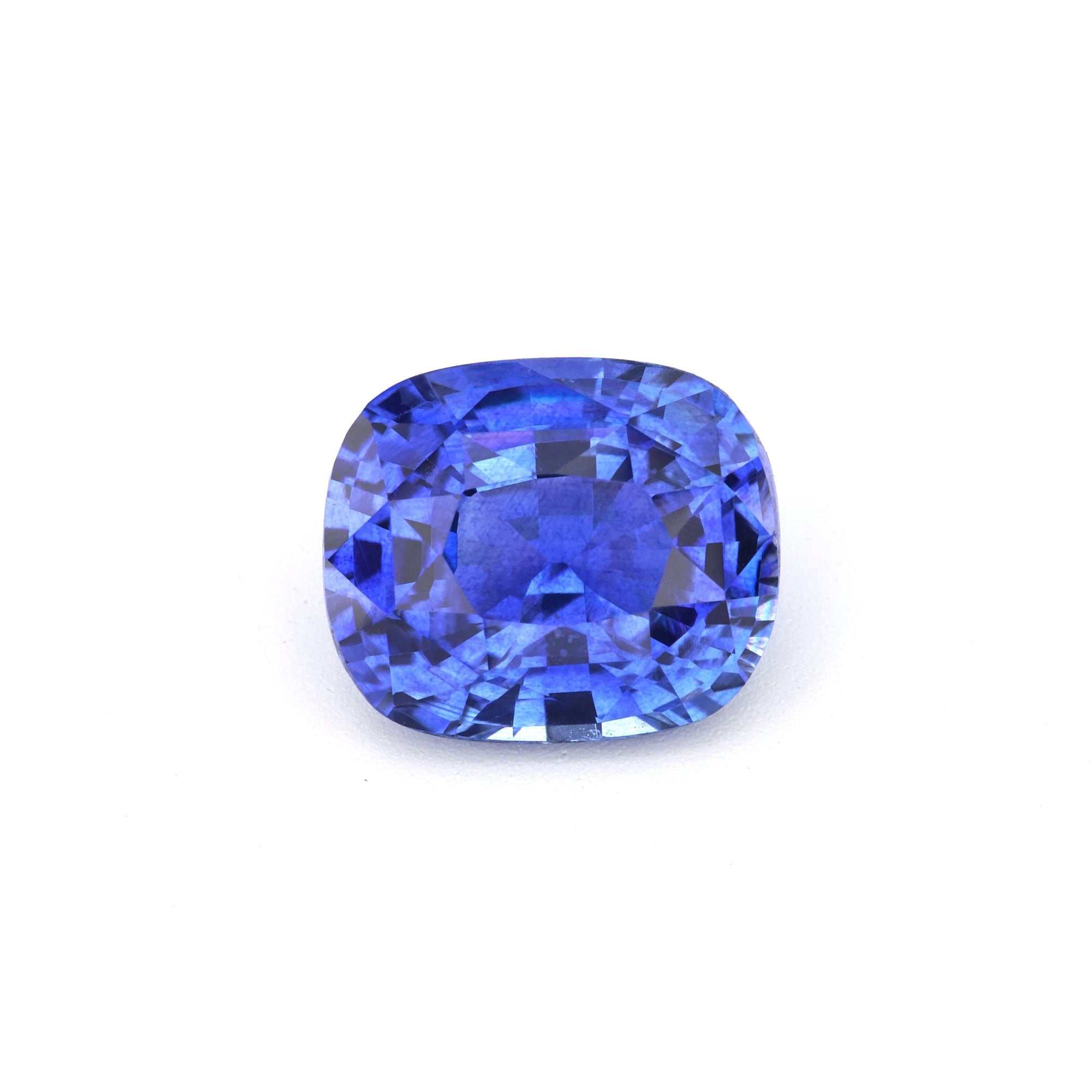
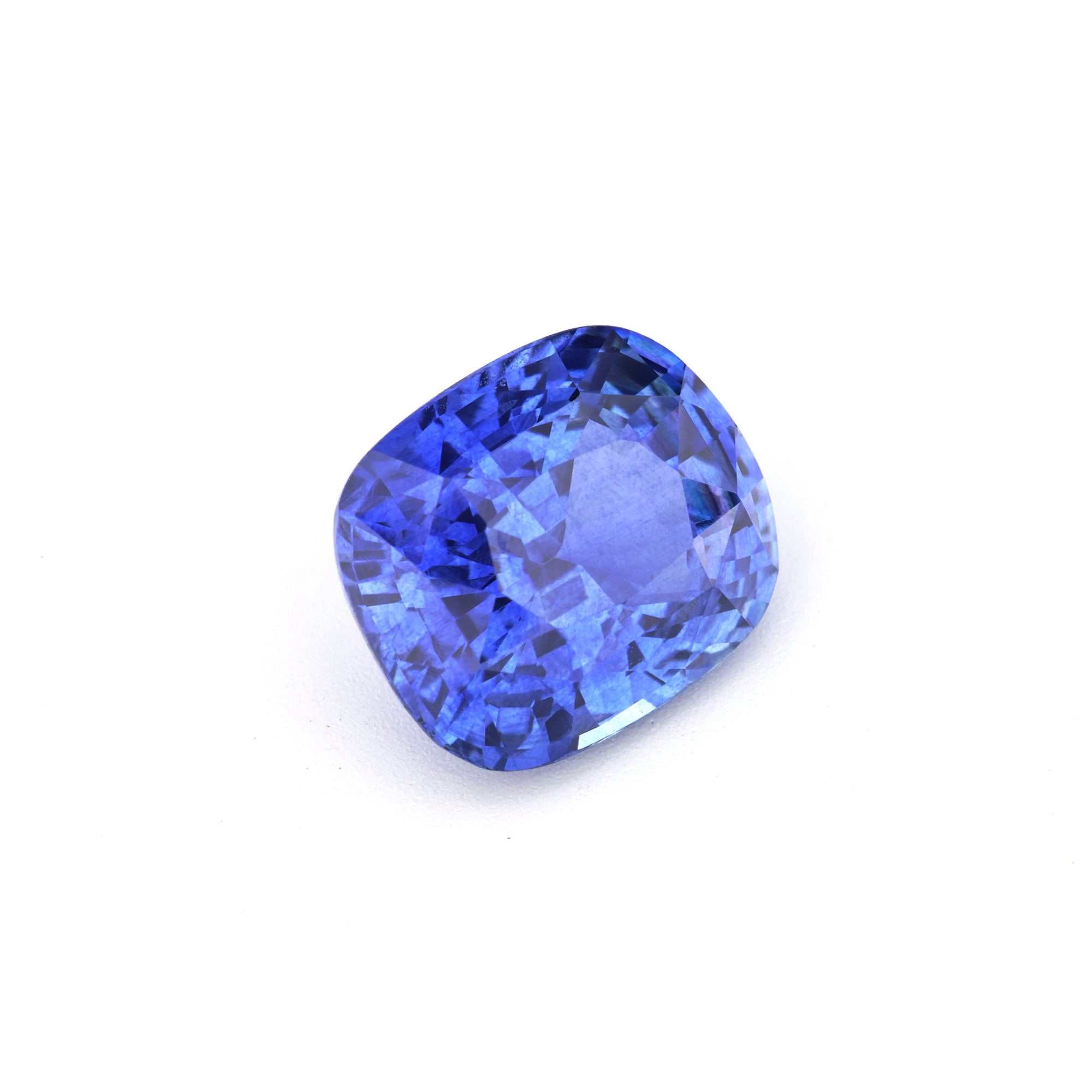
Blue is the benchmark sapphire color. Ceylon blue at its best shows a vivid, medium-toned pure blue with no significant gray or green modifier, high transparency, and a brightness that holds consistently from cool daylight through warm candlelight. Blue sapphire is also the most Jyotish-significant sapphire color — the prescribed stone of Saturn (Shani/Neelam).
What produces it. Iron and titanium sitting adjacent in the lattice, exchanging an electron when light passes through. Neither element produces blue on its own; the colour exists only where the two are neighbours, and the intensity depends on how many such pairs the crystal happens to contain. Concentrations in the low hundreds of parts per million are enough to take a stone from near-colourless to deeply saturated.
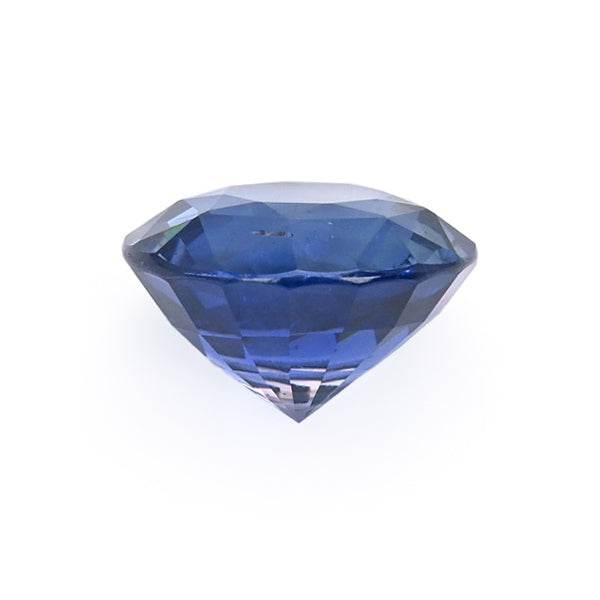
Fine versus commercial. The difference is almost entirely tone and modifier. A fine blue is medium in tone — light enough that the stone stays bright face-up, dark enough that the colour reads as blue rather than pale grey-blue. A commercial blue is either too dark, so the stone goes inky and closes down under anything but direct light, or too grey, so the colour looks washed out beside a better stone. Windowing is the other separator: a blue cut for weight rather than for colour shows a pale see-through patch through the centre, and no amount of good rough rescues it. A vivid, well-cut 1.4-carat stone will look more impressive than a grayish, windowed 2-carat stone at the same price.
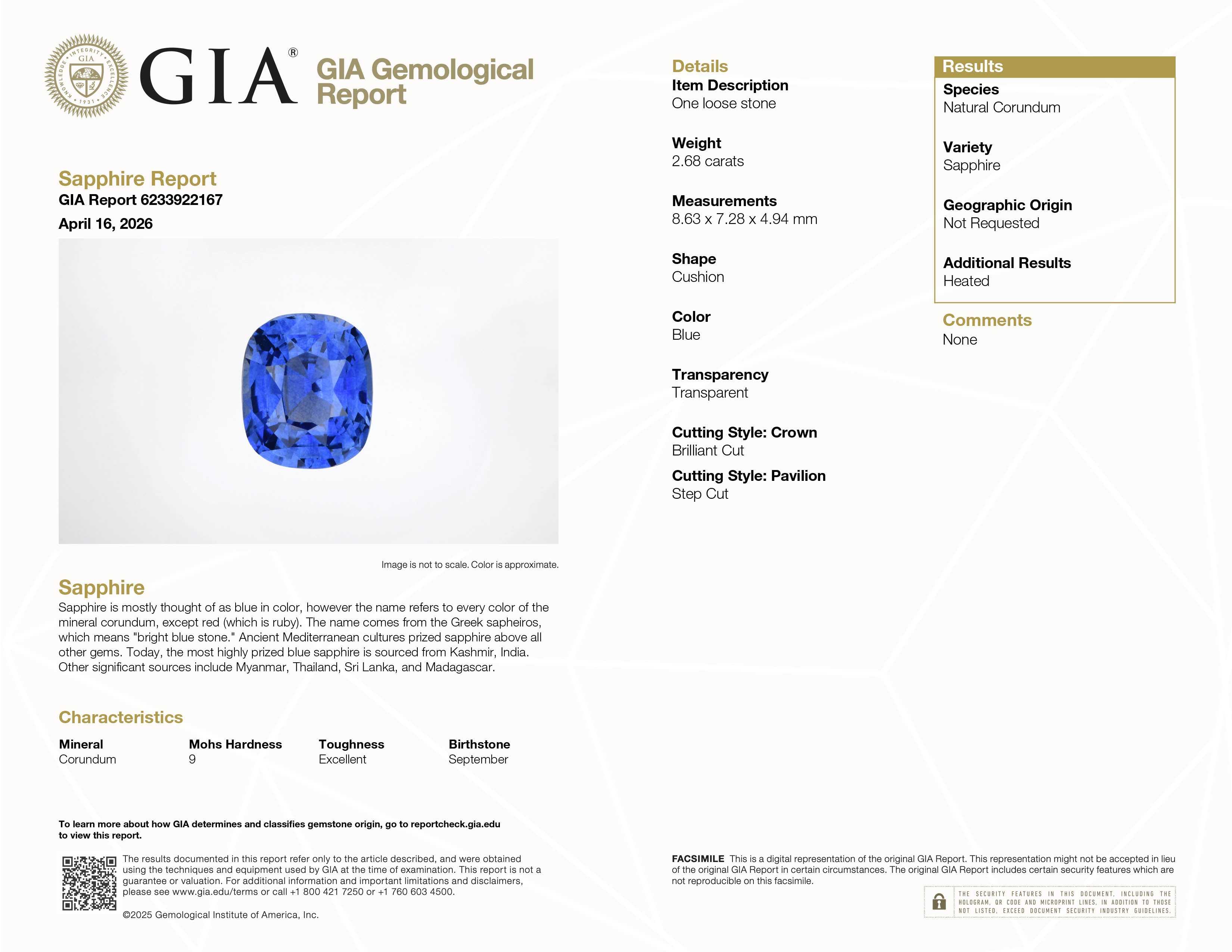
Price. $400–$6,000+/ct for well-cut eye-clean stones at 1–2 carats. Our own blue sapphires currently run from $456.00 to $34,496.00 across all sizes, the top of that range being a 5.39 ct unheated GIA-documented Ceylon round.
Figures above are approximate market guidance, not fixed quotes. Actual value varies by treatment, origin, colour, cut, clarity, and certification.
Treatment reality. Blue sapphire is ~95% heated commercially — fine unheated blue is genuinely rare, and heat changes blue more than it changes any other colour, because it redistributes exactly the iron and titanium the colour depends on. Of the 28 blue sapphires we currently list, 7 are disclosed unheated. At fine quality an unheated blue commands 2–5× premiums above 1ct, rising to as much as 8× for large, vivid, well-documented stones. Unheated is a statement about heat only, not a guarantee that no other treatment has been applied.
In stock now: 28 blue sapphires. See our Blue Sapphire Buyer's Guide, what an unheated sapphire is, and how sapphire heat treatment works. Browse: blue sapphire collection.
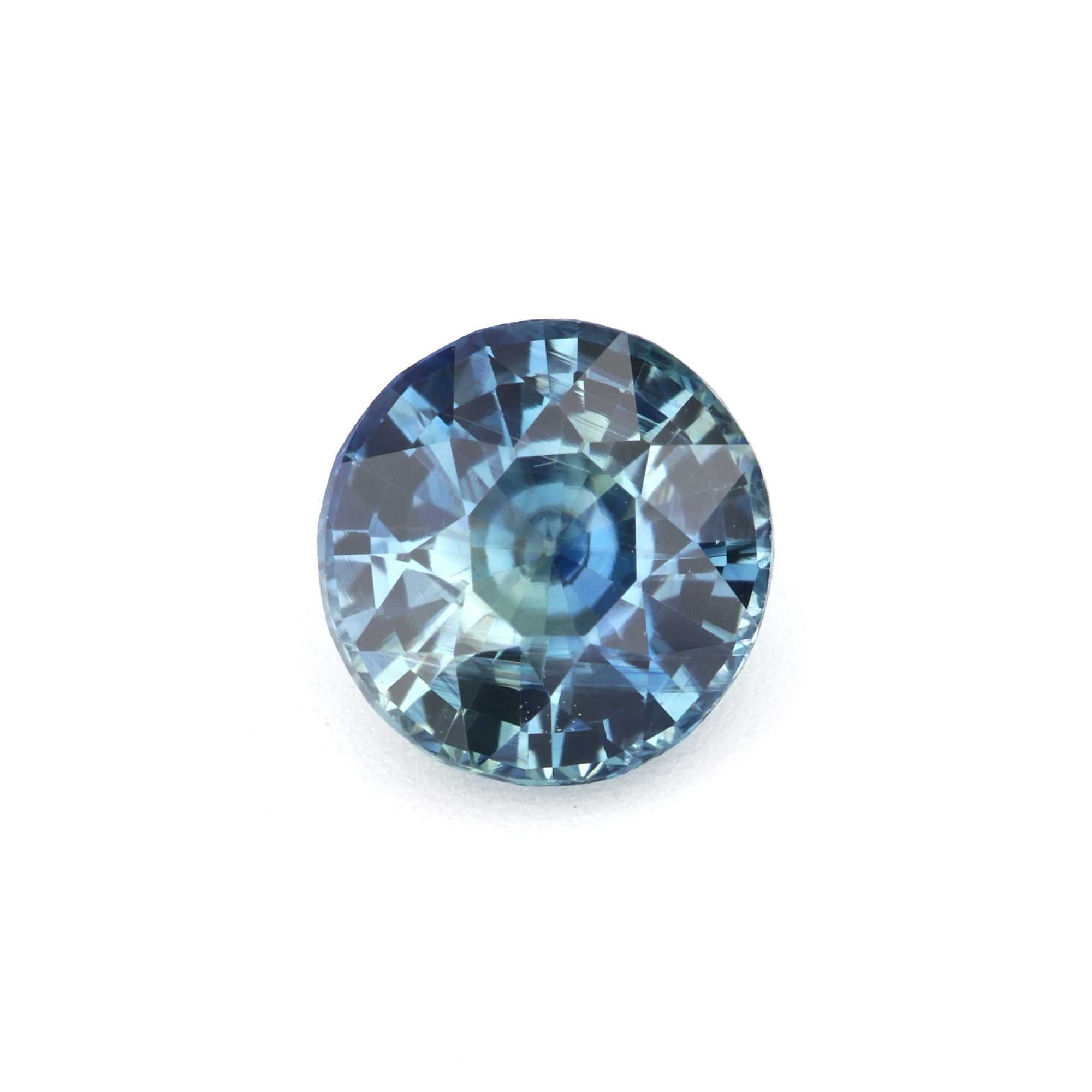
Teal sits at the intersection of blue and green — under cool daylight it reads as vivid blue-green; under warm incandescent it shifts toward green. It is the colour that has moved furthest from curiosity to mainstream demand over the past few years, largely on the strength of how it photographs and how well it suits the low-profile, bezel-set, non-traditional engagement rings that now dominate the category.
What produces it. Iron, doing two jobs at once. Some iron pairs with titanium and gives the blue component; the rest sits as ferric iron and gives a yellow-green component. Teal is what you see when neither wins outright. That balance is delicate, which is the whole story of the colour: it is a coincidence of chemistry rather than a target a miner can aim for.
Fine versus commercial. A fine teal holds both hues at once and keeps them under both light sources, so the stone reads blue-green in daylight and green-blue indoors without ever collapsing into plain grey. A commercial teal is grey-dominant, or it is really a green stone with a hint of blue, or a blue stone with a hint of green, and reads as an indecisive version of a better colour rather than as its own thing. Extinction — dark closed-off patches under the table — matters more in teal than in blue, because a teal that goes dark loses the dual-hue effect entirely.
Price. $600–$1,500/ct at 1–2 carats. Our teal stock currently runs $788.40 to $2,968.00.
Figures above are approximate market guidance, not fixed quotes. Actual value varies by treatment, origin, colour, cut, clarity, and certification.
Treatment reality. The heating that improves blue sapphire tends to disrupt the iron balance that produces teal's characteristic dual-hue, so teal is a colour where unheated material reaches the market in unusual proportion. That is a tendency, not a rule, and each stone still needs its own disclosure: all 8 teal sapphires we currently list are disclosed unheated. Teal is also the colour where our stock is least Ceylon — six of our eight are Madagascar and two carry no origin on file.
In stock now: 8 teal sapphires. See our Teal Sapphire Buyer's Guide and Teal Sapphire Price Guide, and for the origin question the Madagascar sapphire guide and Montana vs. Ceylon sapphire. Browse: teal sapphire collection.
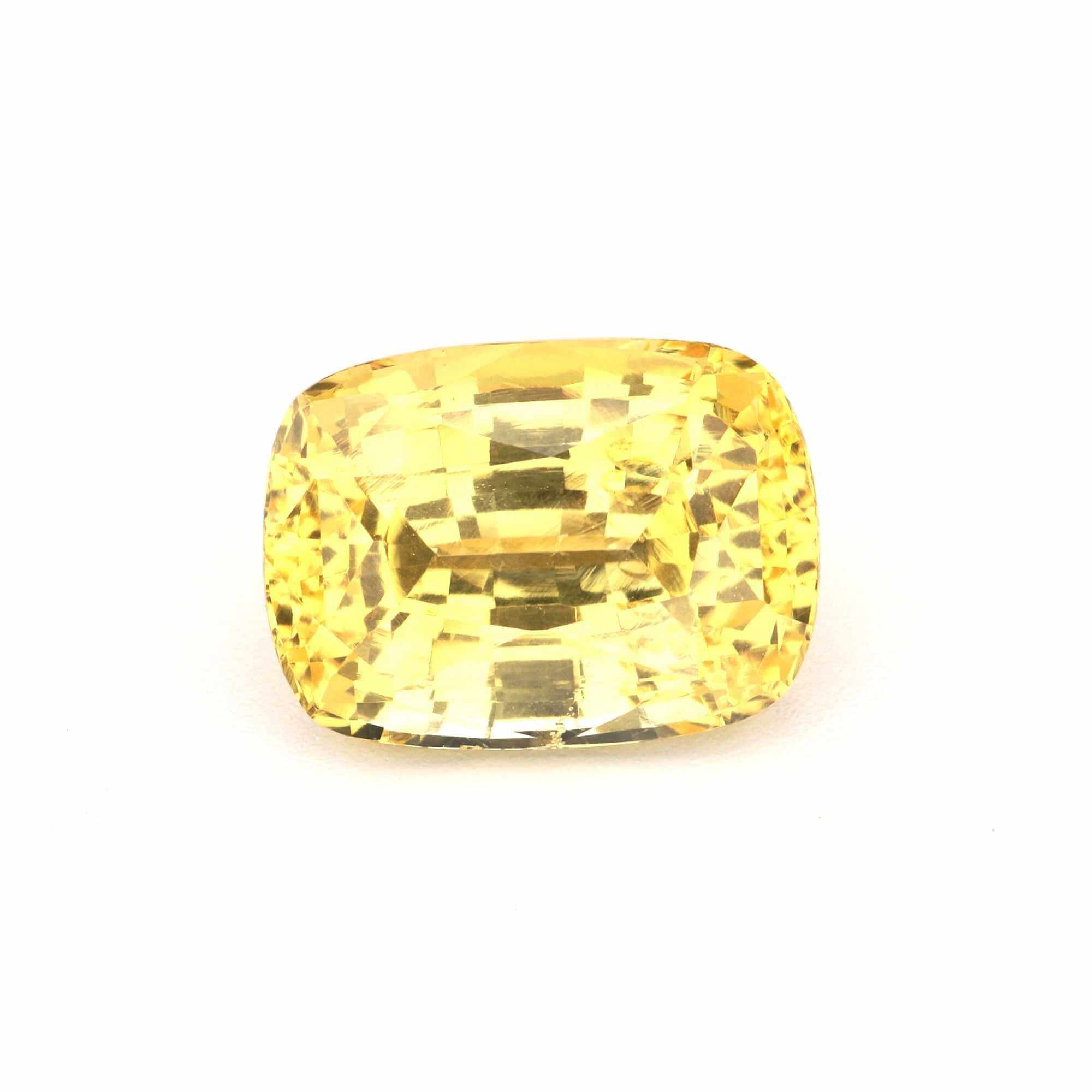
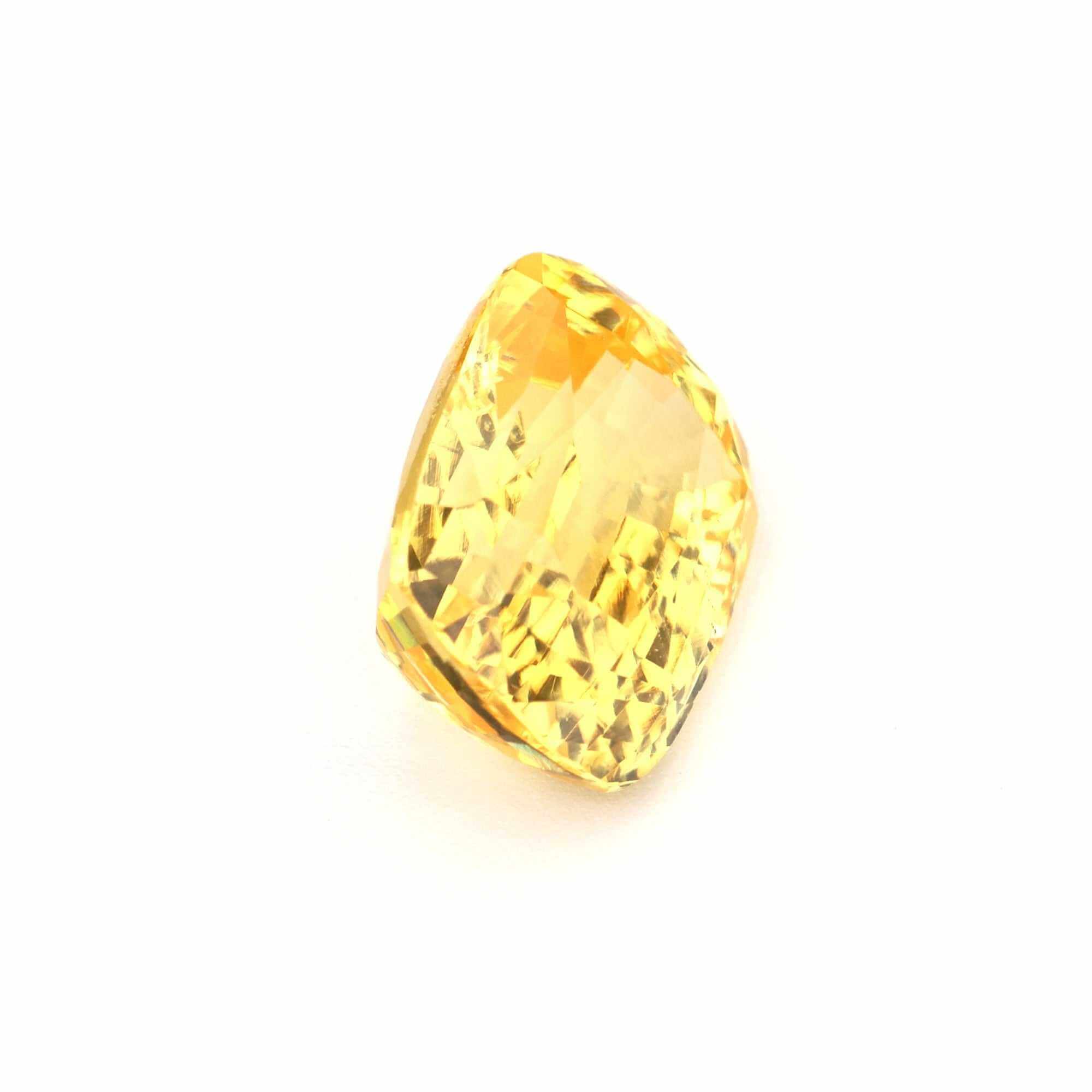
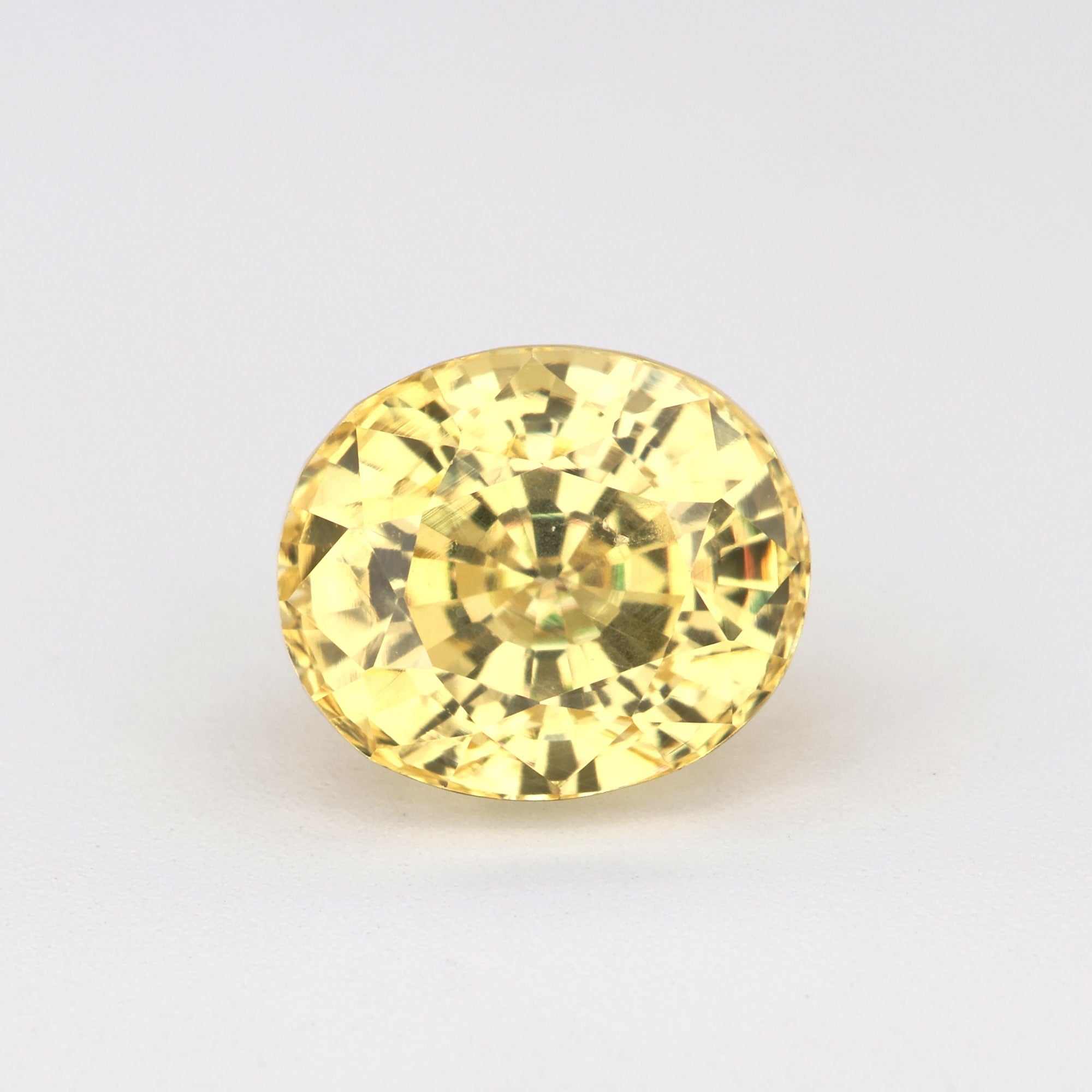
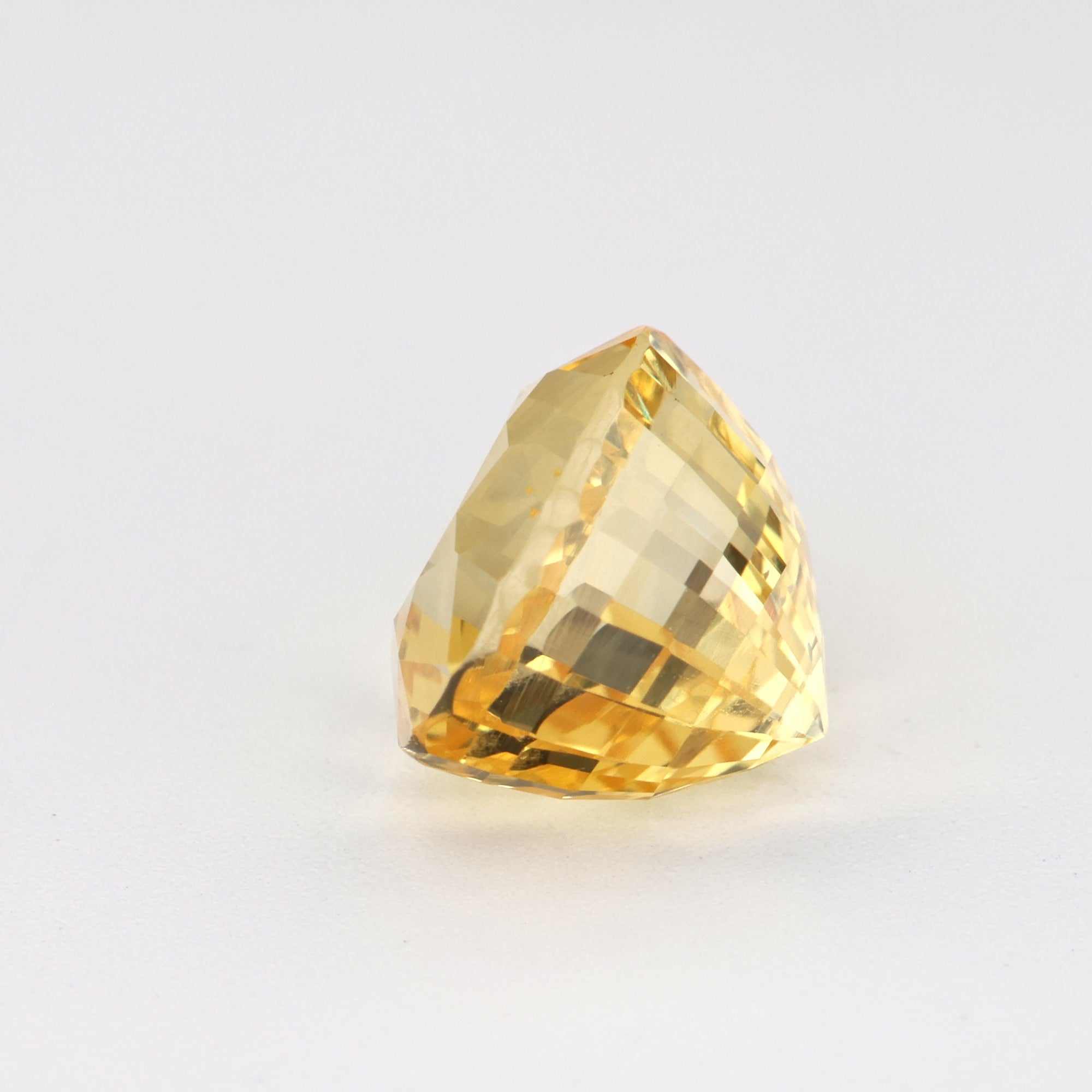
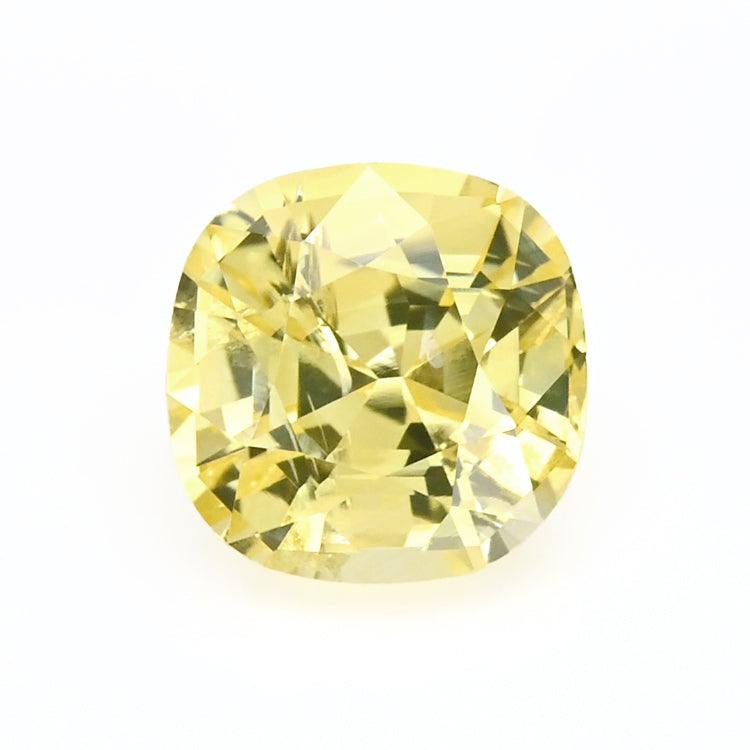
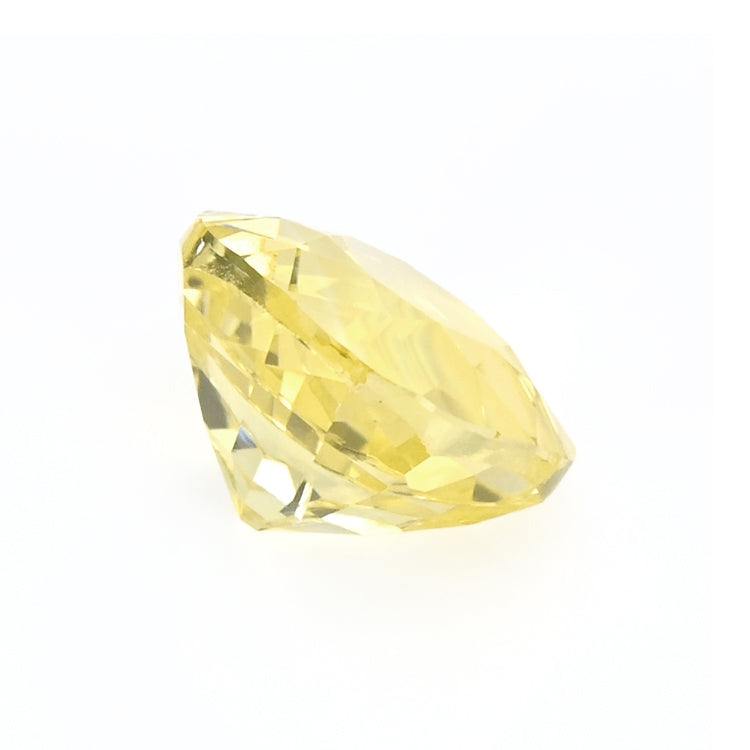
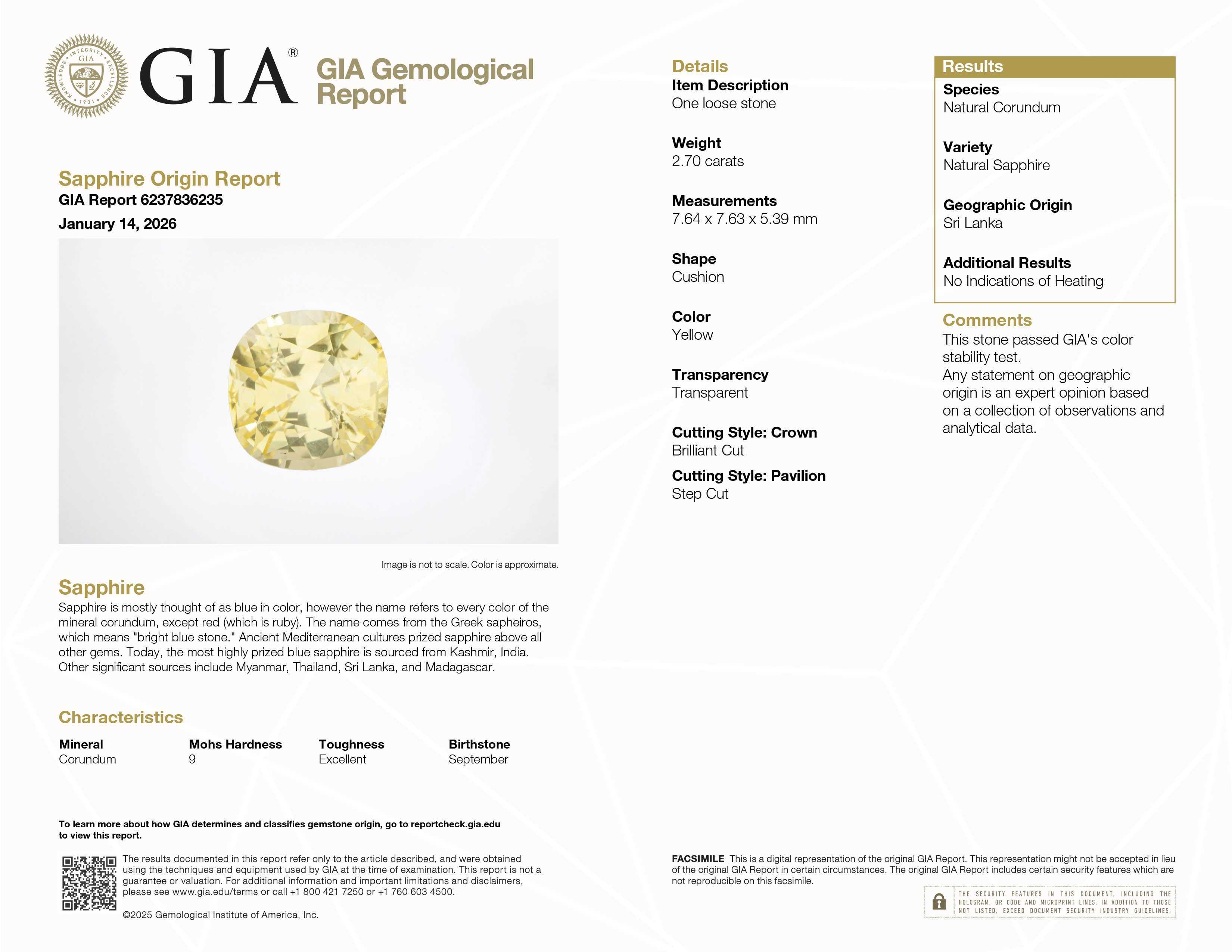
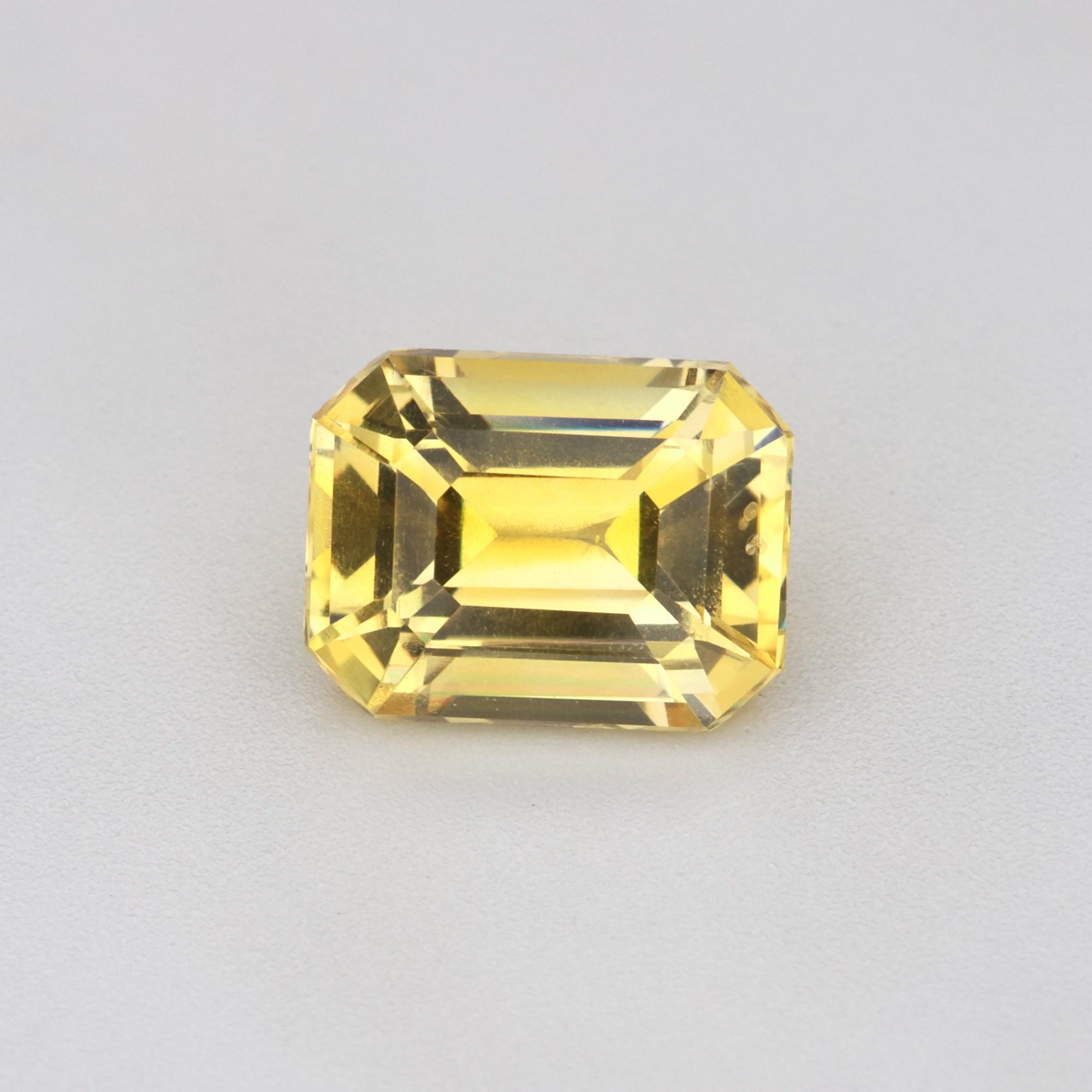
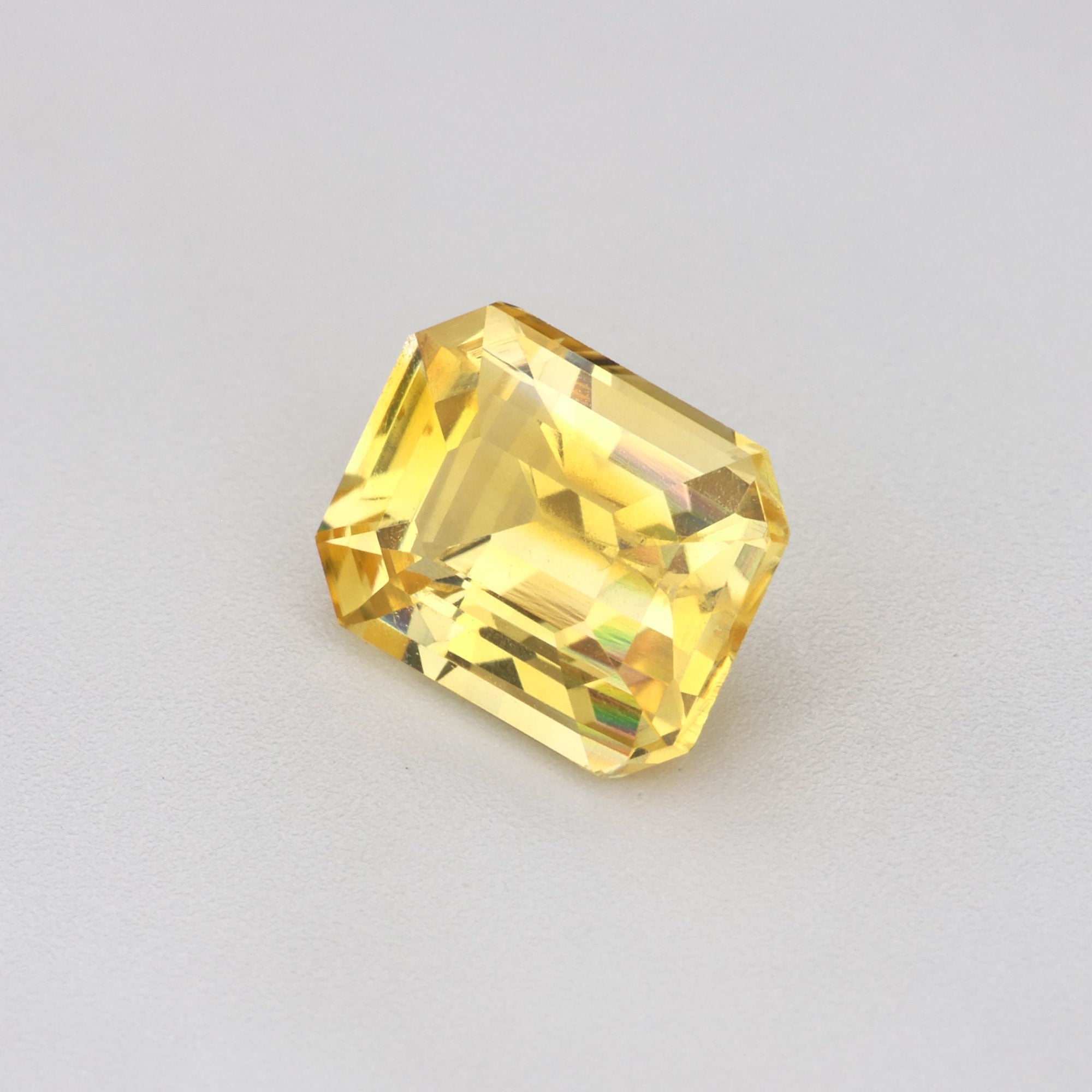
Yellow sapphire ranges from pale lemon through warm canary to deep golden-amber. It is one of the most actively traded natural gemstones in South Asia, where it is the prescribed Jyotish stone for Jupiter (Guru/Brihaspati/Pukhraj) — which gives yellow a second, entirely separate demand curve from the jewellery market, with its own specification: natural, unheated, and certified.
What produces it. Ferric iron, acting alone rather than in a pair, together with colour centres — lattice defects that trap electrons and absorb light. This is why yellow behaves so differently from blue under heat, and why the yellow in a Ceylon stone can be strong at iron concentrations that would leave a blue stone almost colourless.
Fine versus commercial. Saturation is the whole game. A fine yellow is a clean, open canary or golden yellow with no brown and no green cast, bright right across the stone. A commercial yellow is either too pale — a stone that looks like weak citrine and gives nothing back in a ring — or it carries a brownish modifier that dulls it. Because yellow is a light colour, cut quality shows more than in blue: a shallow yellow windows badly, and the pale patch is obvious. For Jyotish buyers there is an additional and stricter test, since the stone is bought to be worn against the skin in an open-back setting, which puts a premium on transparency over size.
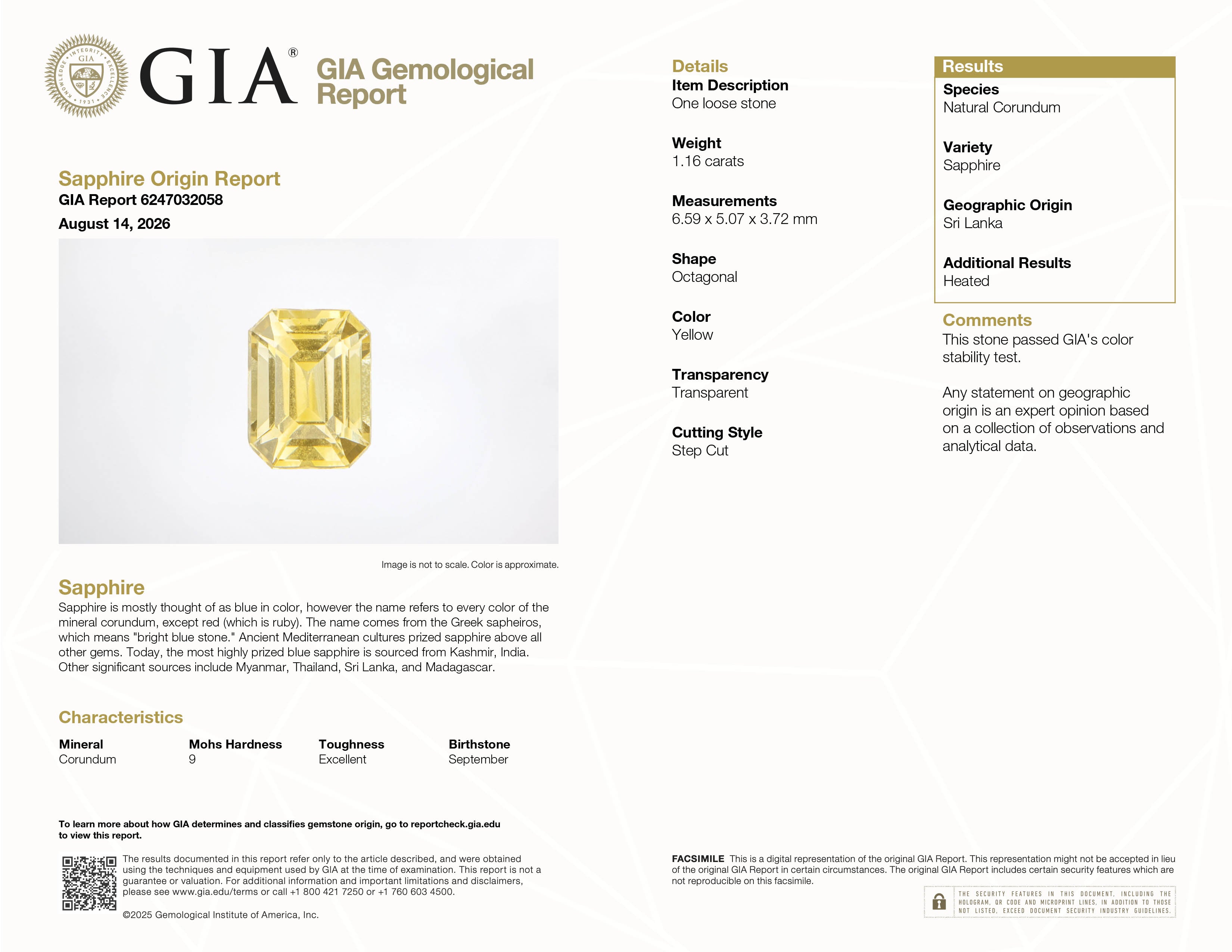
Price. $300–$2,500/ct at 1–2 carats. Our yellow stock currently runs $90.00 to $4,945.40 — the widest span of any colour we carry, because it takes in both small calibrated AGCL-certified stones and GIA-documented unheated Jyotish material.
Figures above are approximate market guidance, not fixed quotes. Actual value varies by treatment, origin, colour, cut, clarity, and certification.
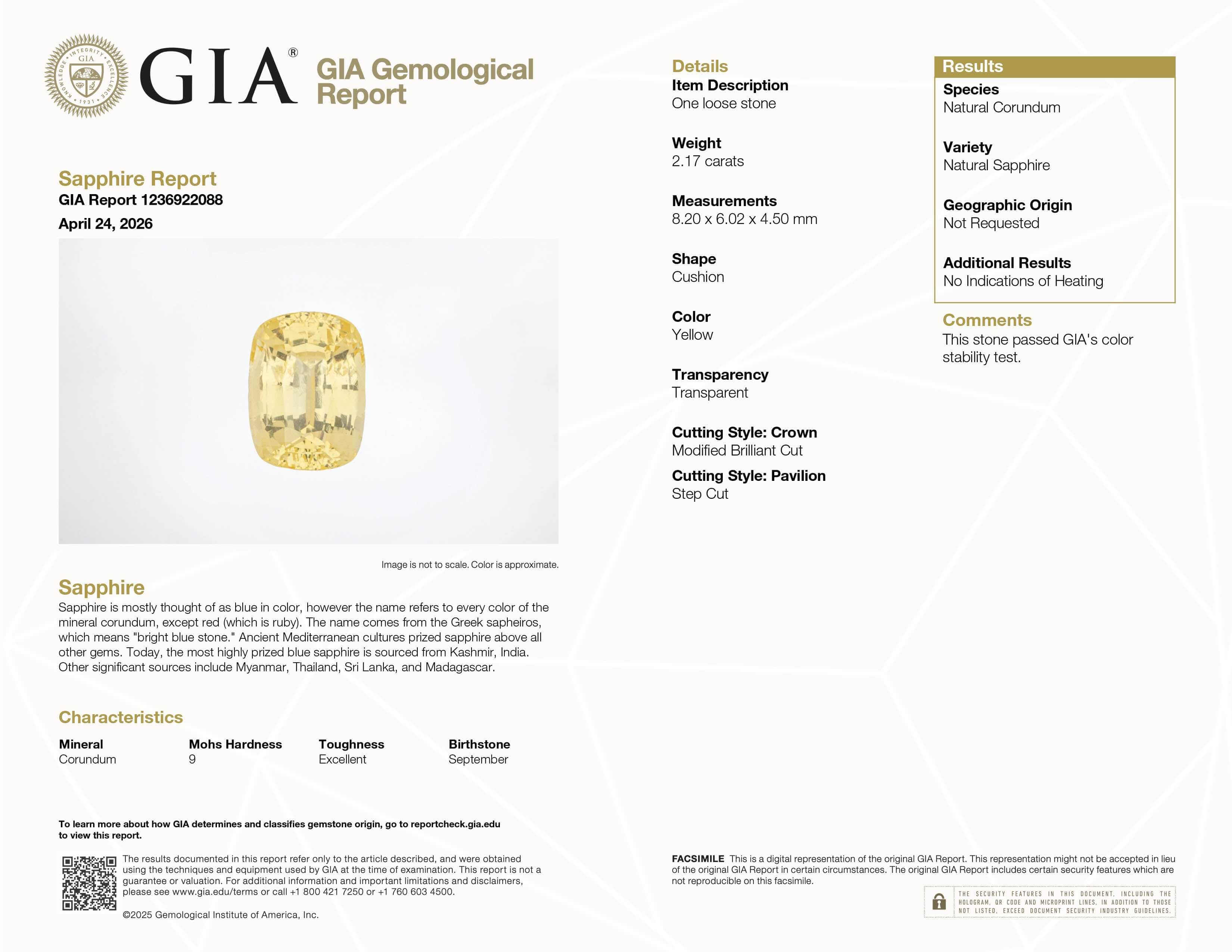
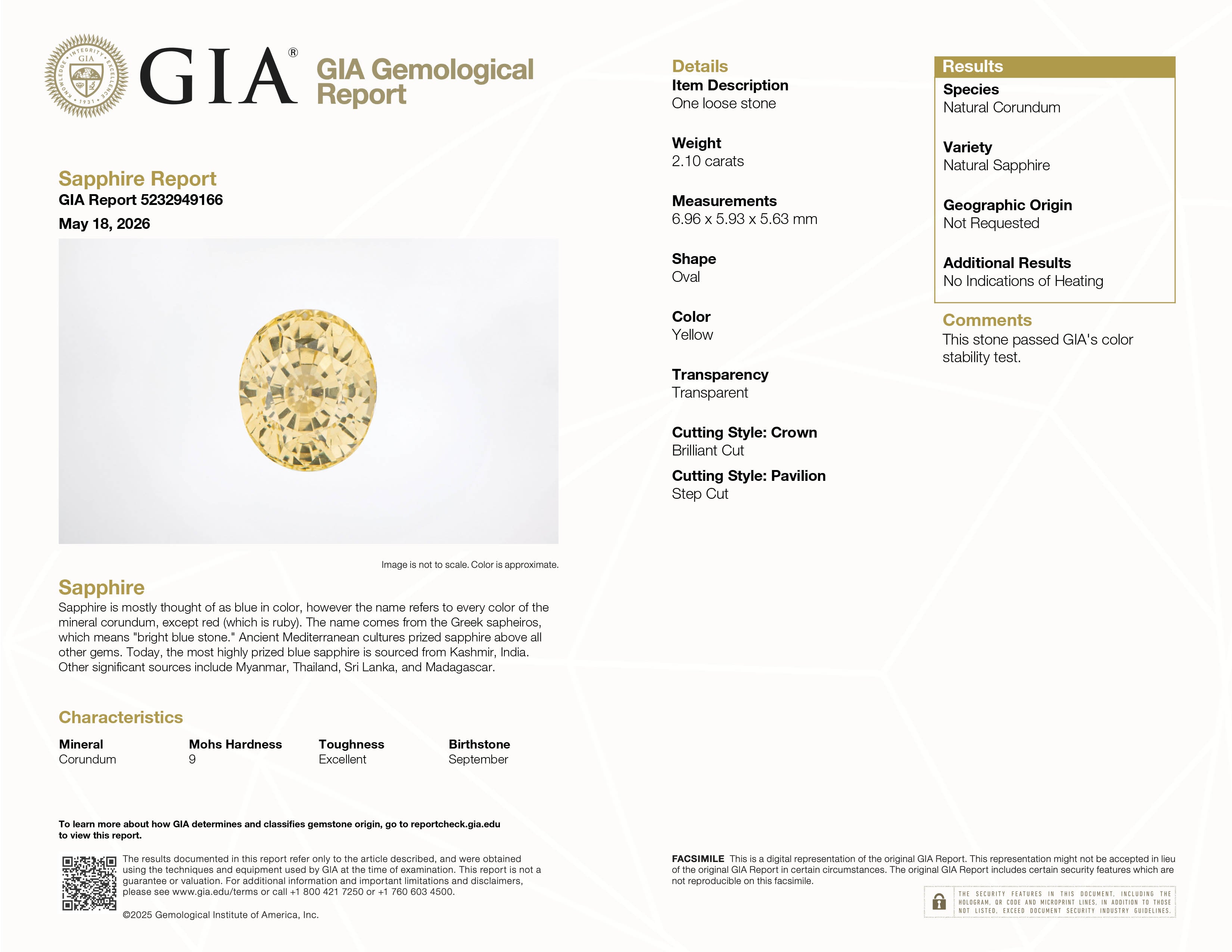
Treatment reality. Yellow is the colour where our unheated proportion is highest in absolute terms: 19 of the 23 yellow sapphires we currently list are disclosed unheated. If you are buying for Jyotish, unheated is required — non-negotiable — and the claim rests on the report, not on the seller's word. Beryllium diffusion is a real concern in the yellow and orange end of the market and is not the same thing as heat; Crescent Gems does not carry beryllium-diffused material.
In stock now: 23 yellow sapphires. See our Yellow Sapphire Buyer's Guide, buying sapphires for Jyotish, and beryllium diffusion explained. Browse: yellow sapphire collection.
Pink sapphire spans from pale pastel blush through soft medium-pink to vivid hot pink approaching ruby saturation. Ceylon pink is the most valued origin for fine pink material. Pink sapphire pairs naturally with rose gold for engagement rings and suits virtually every skin tone.
What produces it. Chromium, the same element that makes ruby red, present at a lower concentration. There is no chemical boundary between pink sapphire and ruby — only a trade boundary, drawn at the point where the colour is judged red rather than pink, and drawn in slightly different places by different laboratories and different markets. A stone sold as a vivid pink sapphire in one market may be described as a light ruby in another, and the price difference across that boundary is real.
Fine versus commercial. A fine pink is clean and saturated, with the colour evenly spread rather than concentrated in one zone. Two faults dominate the commercial end. The first is a brown or orange undertone that muddies the pink. The second is zoning: chromium tends to arrive in growth bands, so a poorly oriented stone shows a bright pink stripe with pale ground around it, and a good cutter has to orient the rough to spread that band across the whole face-up view. Pale pinks are not automatically commercial — a clean pastel pink of good transparency is a legitimate and popular choice — but a pale pink that is also grey or brown is.
Price. $500–$4,000/ct at 1–2 carats. Our pink stock currently runs $228.00 to $5,500.00.
Figures above are approximate market guidance, not fixed quotes. Actual value varies by treatment, origin, colour, cut, clarity, and certification.
Treatment reality. Pink is close to evenly split in our stock: 9 of the 16 pink sapphires we currently list are disclosed unheated. Heat is used on pink to clear silk and lift saturation, and a heated pink of good colour is an entirely reasonable buy; what matters is that the treatment is disclosed and, at the price levels where it changes the number, documented. Pink is predominantly Ceylon in our stock — twelve of our sixteen are Sri Lankan, three are Madagascar and one is Vietnam.
In stock now: 16 pink sapphires, including a 3.26 ct unheated GIA-documented Ceylon pink star sapphire. See our Pink Sapphire Buyer's Guide and which sapphire colour suits your skin tone. Browse: pink sapphire collection.
Peach occupies the color spectrum between pink and orange. The finest peach sapphires approaching the padparadscha boundary are among the rarest and most collectible warm-toned corundum available — and the ones that sit just short of that boundary are, for most buyers, the best value in the warm end of the sapphire spectrum.
What produces it. Chromium and iron together. Chromium supplies the pink, iron the orange-yellow, and peach is the soft, low-saturation blend of the two. The same two elements in a different balance and at higher saturation produce padparadscha, which is why the two colours are constantly confused and why the distinction is worth money.
Fine versus commercial. A fine peach is a soft, clean, slightly warm blush with both the pink and the orange readable in it and no brown. A commercial peach is brown-dominant — a stone that photographs as peach in careful lighting and reads as tan in a room. The other separator is consistency: peach is a pale colour, so uneven zoning shows immediately, and a stone that is peach at one end and near-colourless at the other will never sit right in a ring. Peach is not padparadscha, and a seller who blurs the two is either careless or hoping you are. Padparadscha is a laboratory colour call at high saturation; peach is the soft, pale version of the same chemistry.
Price. $100–$2,500/ct at 1–2 carats. Our peach stock currently runs $200.00 to $1,000.00.
Figures above are approximate market guidance, not fixed quotes. Actual value varies by treatment, origin, colour, cut, clarity, and certification.
Treatment reality. Fine peach and yellow sapphires for Jyotish use are also frequently unheated. In our own stock, 4 of the 6 peach sapphires we currently list are disclosed unheated, all six are Ceylon, and the two heated stones say so on their listings. As with yellow, beryllium diffusion is the treatment to ask about in the warm colours, and it is not covered by a report line that speaks only to heat.
In stock now: 6 peach sapphires. See our Peach Sapphire Buyer's Guide and the Peach vs. Padparadscha guide. Browse: peach sapphire collection.
Padparadscha is the rarest and most valuable sapphire color — a balanced pink-orange or orange-pink where both components are clearly and simultaneously present. The word padparadscha on a laboratory report is the only reliable confirmation that a stone meets the standard. GIA's criteria for the padparadscha designation are rigorous, and certified padparadscha from Ceylon with major laboratory documentation is among the rarest and most commercially significant natural gemstones available.
What produces it. The same chromium-and-iron pairing that produces peach, held in a narrow balance at a saturation high enough for both hues to assert themselves. Neither may dominate. A stone that is pink with an orange cast is a pink sapphire; a stone that is orange with a pink cast is an orange sapphire; padparadscha is the knife-edge between them, and that is precisely why it is rare.
Fine versus commercial. There is no meaningful commercial tier — a stone either earns the laboratory call or it does not, and if it does not it is sold as peach, pink or orange at a fraction of the price. What varies within certified padparadscha is tone and transparency. The most valuable examples are medium in tone, high in transparency, and hold the pink-orange balance under both daylight and incandescent light; stones that shift decisively toward orange indoors sit lower, even with the designation on the report.
Price. $3,000–$15,000+/ct at 1–2 carats — the highest band of any sapphire colour, and the only one in this guide we cannot check against our own shelf.
Figures above are approximate market guidance, not fixed quotes. Actual value varies by treatment, origin, colour, cut, clarity, and certification.
Treatment reality. Padparadscha is the colour where treatment disclosure matters most, because the designation is a colour call and beryllium diffusion can manufacture the colour. A padparadscha report from a laboratory that tests for diffusion is not optional at these prices; a heat-only comment is not sufficient evidence. Crescent Gems does not carry beryllium-diffused material.
In stock now: none. We hold no padparadscha sapphire at present, and we would rather say so than sell you a peach stone under a padparadscha name. The colour has its section here because it is the reference point the warm colours are measured against, and because buyers arrive at this page looking for it. If you want one, email us with your specification and we will look for it at source. In the meantime, read the Padparadscha Buyer's Guide and the Padparadscha Price Guide, and see how peach differs from padparadscha.
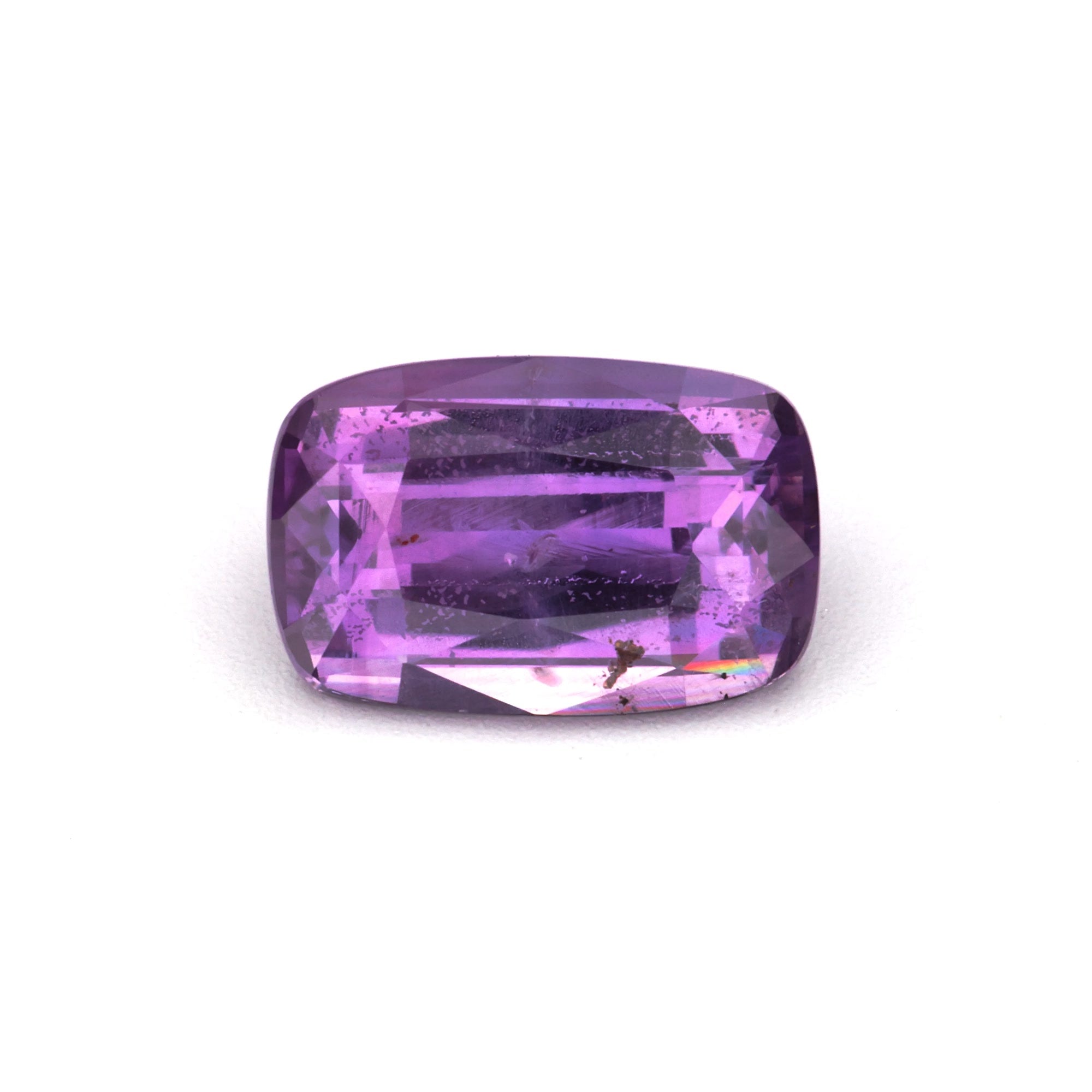
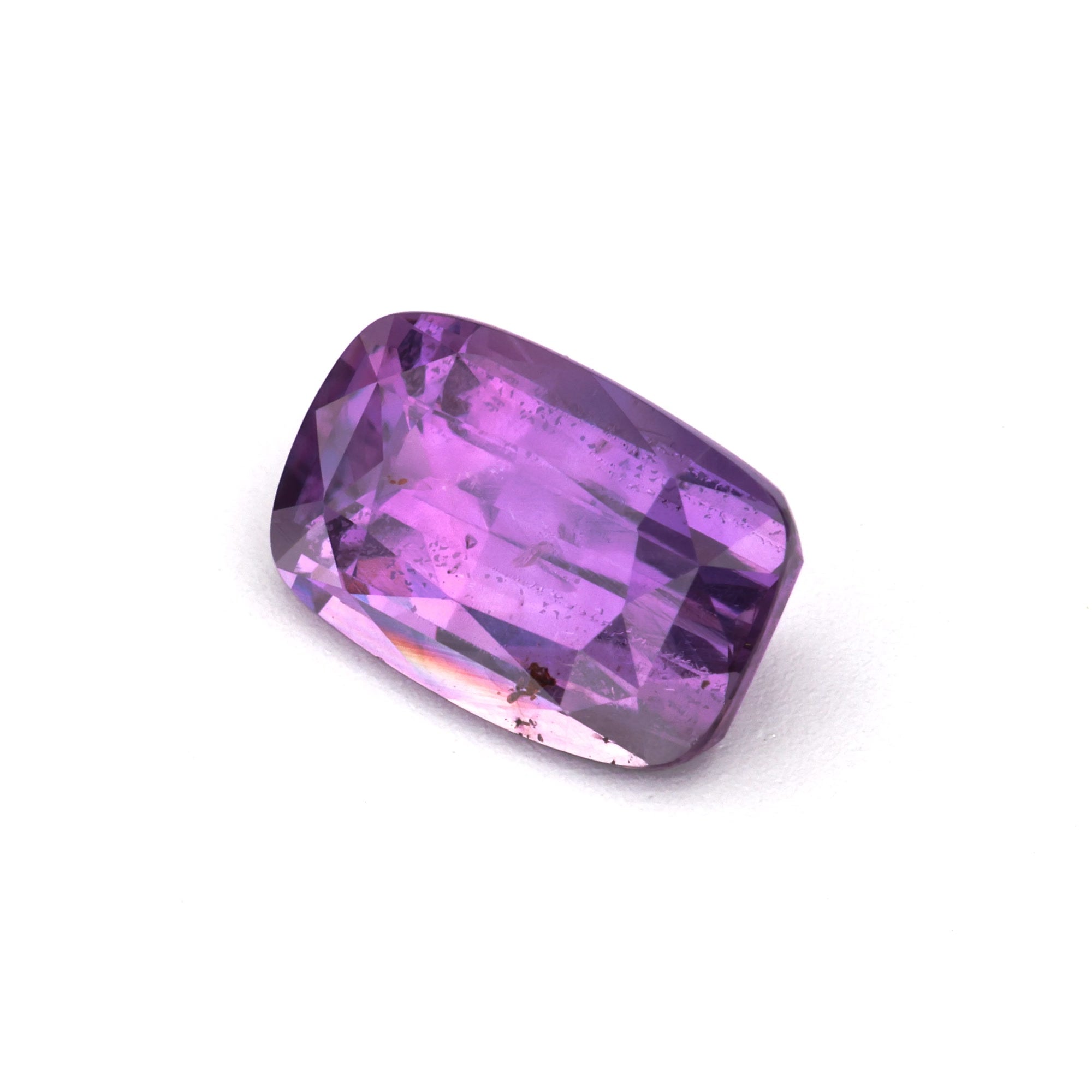
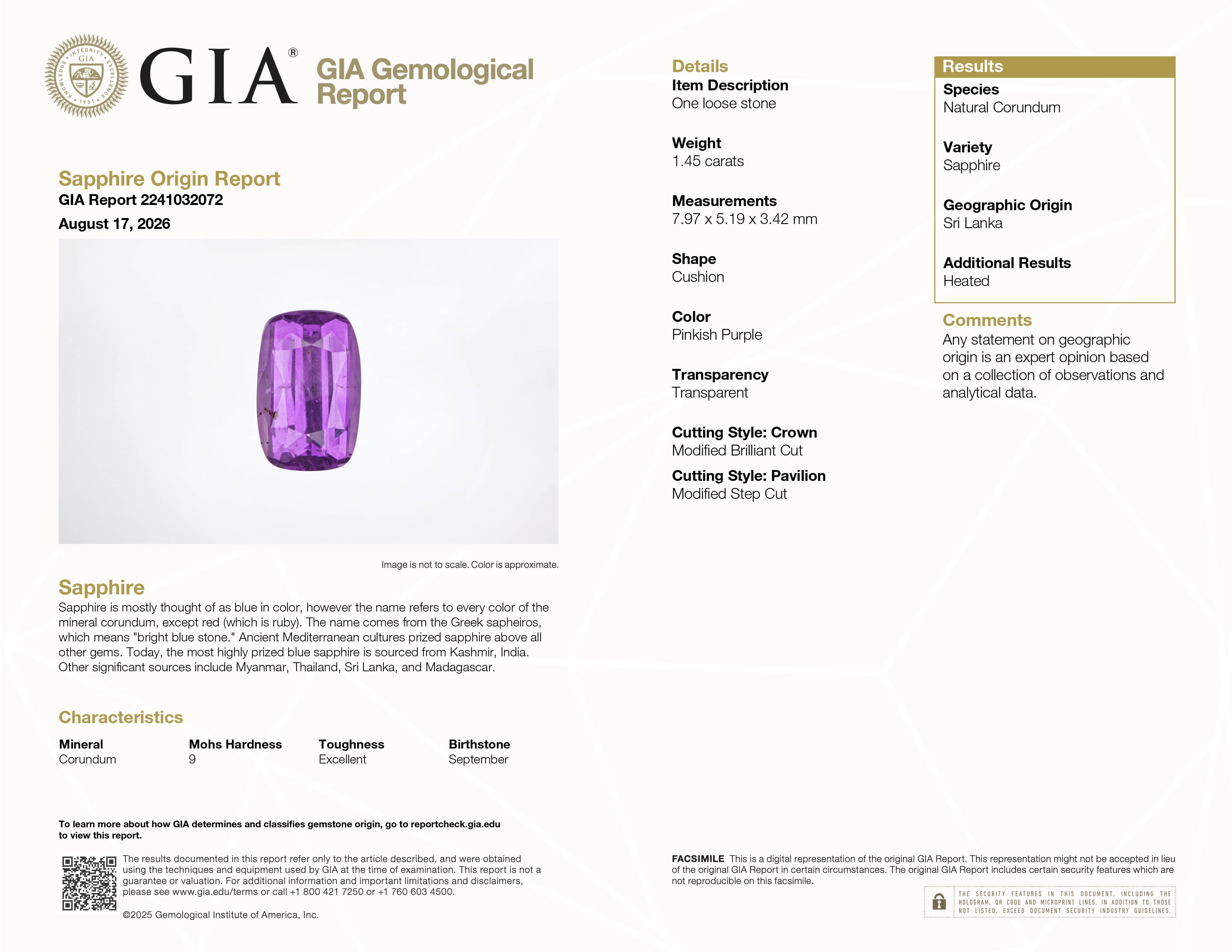
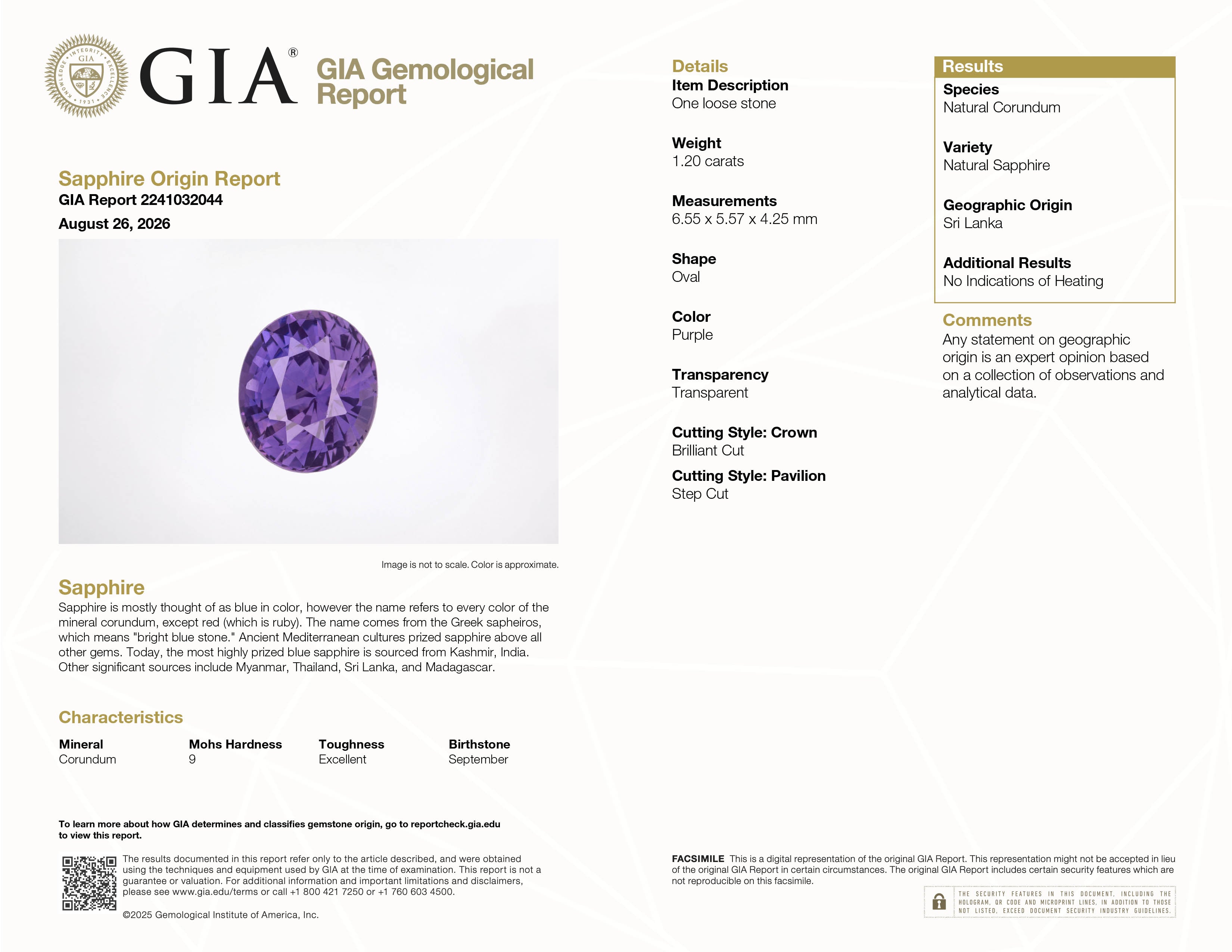
Purple sapphire ranges from cool blue-purple through balanced purple to warm red-influenced purple. The finest Ceylon examples show a color-shifting quality under different light sources — not the dramatic reversal of a true colour-change stone, but a definite warming toward red-purple under incandescent light that gives the stone two personalities across a day.
What produces it. Vanadium is the characteristic purple chromophore in corundum, usually with chromium and iron contributing alongside it. Vanadium is also what produces true colour-change sapphire, and the two effects are the same phenomenon at different strengths: vanadium absorbs light in a way that interacts with the colour temperature of the source, so a vanadium-bearing stone always looks slightly different in daylight and under a lamp. Where that difference is subtle you have a purple sapphire with a shift; where it is decisive you have a colour-change sapphire.
Fine versus commercial. A fine purple is saturated and clean, with the purple reading as purple rather than as a dark blue or a muddy red. The commercial end is dominated by two faults: greyness, which is the most common problem in purple corundum and flattens the stone into something closer to lavender-grey; and excessive darkness, where the tone is so deep the stone shows more extinction than colour. A good purple should still be bright at the centre of the table under ordinary indoor light. Size matters less here than in blue — purple is a colour that works beautifully at under a carat, which is one reason it is among the best-value colours we carry.
Price. $400–$2,000/ct at 1–2 carats, a band we apply to purple and violet together. Our purple stock currently runs $150.00 to $3,990.00.
Figures above are approximate market guidance, not fixed quotes. Actual value varies by treatment, origin, colour, cut, clarity, and certification.
Treatment reality. Purple is one of the colours where unheated material is common in our inventory: 10 of the 11 purple sapphires we currently list are disclosed unheated, and all 11 are Ceylon. That is a fact about our stock rather than a rule about the species, and each listing states its own treatment and its own laboratory.
In stock now: 11 purple sapphires, including a 7.99 ct unheated GIA-documented purple star sapphire. See our Purple Sapphire Buyer's Guide and, for the vanadium effect at full strength, our colour-change sapphire guide. Browse: purple sapphire collection and colour-change sapphire collection.
Violet sits closer to blue on the spectrum than purple. The finest unheated Ceylon violet sapphires show a distinct daylight-to-incandescent shift — cooler and more blue-violet under natural light, warmer and more purple under incandescent. It is the least-known of the sapphire colours and, at small sizes, the cheapest way into a certified natural Ceylon sapphire that we sell.
What produces it. The same vanadium responsible for purple, but with the iron-titanium blue component contributing more strongly, which pulls the hue toward blue. Violet and purple are a continuum rather than two categories, and the line between them is a judgement call made by whoever describes the stone. We follow the laboratory description on the report where there is one.
Fine versus commercial. Violet is a delicate colour and greys out easily; the single most useful test is to look at the stone under two light sources and see whether the hue actually moves. A fine violet is clean, bright, and visibly bluer in daylight than under a lamp. A commercial violet is grey-violet in both, or so pale that the colour disappears at arm's length. Because most violet material comes to market under a carat, cut quality carries unusual weight: a well-cut 0.6 ct violet with a live centre outperforms a sleepy 1.2 ct stone at the same money.
Price. $400–$2,000/ct at 1–2 carats, the same band we apply to purple. Our violet stock currently runs $105.00 to $2,380.00.
Figures above are approximate market guidance, not fixed quotes. Actual value varies by treatment, origin, colour, cut, clarity, and certification.
Treatment reality. Violet is the colour with the highest unheated proportion in our stock: 12 of the 13 violet sapphires we currently list are disclosed unheated, and all 13 are Ceylon. Most are AGCL-documented, and the largest, a 3.40 ct violet star sapphire, carries a GIA report.
In stock now: 13 violet sapphires. See our Purple and Violet Sapphire Buyer's Guide. Browse: violet sapphire collection.
Orange sapphire is among the rarest sapphire colors at the commercial level. The specific iron-chromium ratio required for a clean, vivid pure orange in corundum is less commonly achieved. Orange sits adjacent to padparadscha on one side and to golden-yellow on the other, making the color boundaries commercially significant — the same stone described as a deep golden-yellow, a vivid orange, or an orange-dominant padparadscha carries three quite different prices.
What produces it. Chromium and iron together, iron-dominant, often with colour centres contributing. It is the same chemistry as peach and padparadscha with the balance pushed toward the orange side and the saturation raised. Pure orange with no brown and no pink is genuinely difficult for the earth to make, which is the honest reason the colour is scarce.
Fine versus commercial. Brown is the enemy. A fine orange is a clean, glowing, slightly warm orange with no brownish drag and no red flash. A commercial orange is brownish-orange, which at small sizes can be attractive as a cognac tone but is not what an orange sapphire buyer is paying for. Size is the second issue: fine orange rough is scarce, so above two carats the price curve climbs steeply, and our own three stones illustrate that — a 1.63 ct at $2,445.00, a 2.19 ct at $4,796.00, and a 3.09 ct at $7,675.00.
Price. We do not publish a per-carat band for orange in our colour price table, because our sample is too small and too concentrated at the top of the size range to generalise from honestly. The three prices above are the actual asking prices of the three orange sapphires we hold.
Figures above are approximate market guidance, not fixed quotes. Actual value varies by treatment, origin, colour, cut, clarity, and certification.
Treatment reality. Orange is the colour where you should ask the most treatment questions. All three orange sapphires we currently list are heat treated, and all three carry GIA reports — that is a description of our shelf, not a claim about the species. More importantly, orange is one of the two colours where beryllium diffusion is a live commercial issue, and a report line reading only "no indications of heating" does not address it. Crescent Gems does not carry beryllium-diffused material.
In stock now: 3 orange sapphires, all Ceylon and all GIA-documented. See our Orange Sapphire Buyer's Guide, beryllium diffusion explained, and how to read a GIA sapphire report. Browse: orange sapphire collection.
Green sapphire spans from pale mint through vivid mid-green to deep forest green. It is the most practical green gemstone for daily ring wear — Mohs 9, appropriate for any setting style without special care, and it does not carry the maintenance burden that makes emerald a demanding stone to own.
What produces it. Iron, and iron alone — not vanadium. In most green corundum the colour is a fine-scale mixture: ferric iron produces yellow, iron-titanium pairs produce blue, and where the two alternate in microscopic growth bands the eye integrates them into green. Put a strongly green sapphire under magnification and you will often see the blue and yellow bands separately, which is a satisfying thing to observe and a useful check on what you are buying.
Fine versus commercial. Saturation and the absence of grey. A fine green is a clean mid-green with life in it. The commercial end runs grey-green or olive, and olive in particular is common because the yellow component so often dominates. A second question is whether the stone is really green or really teal, since the two overlap; a stone that reads distinctly blue-green under daylight belongs in the teal conversation, and is usually worth more there. Because green is a mid-tone colour it hides inclusions better than pale colours do, which means clarity expectations can be relaxed slightly in green without the stone looking worse.
Price. $300–$1,500/ct at 1–2 carats. Our green stock currently runs $1,053.00 to $1,877.00, a narrow span because all seven stones sit between 1.18 and 2.08 carats.
Figures above are approximate market guidance, not fixed quotes. Actual value varies by treatment, origin, colour, cut, clarity, and certification.
Treatment reality. 6 of the 7 green sapphires we currently list are disclosed unheated; the seventh is a heated Tanzanian stone with a GIA report. Green is the second colour after teal where our stock is not Ceylon-led — four of our seven are Madagascar, with one each from Sri Lanka, Tanzania and East Africa. Compared with emerald, sapphire is not oiled or resin-filled as a matter of normal trade practice, so a green sapphire does not need the periodic re-treatment an oiled emerald may.
In stock now: 7 green sapphires. See our Green Sapphire Buyer's Guide and, for the emerald comparison, how green stones compare for engagement rings. Browse: green sapphire collection.
White sapphire is colorless corundum — the same Mohs 9 hardness, the same lack of cleavage, the same daily-wear durability as its colored siblings, but without the color. It is the most practical colorless gemstone alternative to diamond for engagement ring use, and the one that is most often bought for the wrong reasons and then regretted, so it is worth being blunt about what it does and does not do.
What produces it. Nothing. White sapphire is what corundum looks like when the trace elements that cause colour are effectively absent — pure aluminium oxide. It is the only entry in this guide defined by an absence rather than a presence.
Fine versus commercial. With no colour to assess, everything rests on transparency and cut. A fine white sapphire is completely clean to the eye, well proportioned, and cut with enough precision to return light briskly. A commercial white sapphire is hazy, milky, or has a faint grey or brown tinge that only becomes obvious next to a better stone. Set expectations correctly on brilliance: sapphire has a lower refractive index and far lower dispersion than diamond, so a white sapphire gives you a soft, glassy white brightness rather than fire and scintillation. Buyers who want that softer look are delighted; buyers who wanted a diamond substitute are not. White sapphire also shows surface grease more visibly than diamond and benefits from more frequent cleaning.
Price. $500–$800/ct at 1–2 carats. Our white stock currently runs $120.00 to $1,211.00.
Figures above are approximate market guidance, not fixed quotes. Actual value varies by treatment, origin, colour, cut, clarity, and certification.
Treatment reality. 10 of the 12 white sapphires we currently list are disclosed unheated or untreated, and all 12 are Ceylon. One point of honesty about documentation: we do not currently hold a GIA-documented white sapphire. The white sapphires we carry are documented by AGCL, or in a few cases carry no laboratory report at all — each listing says which. If a laboratory report matters to you on a colourless stone, read the listing before you buy rather than assuming.
In stock now: 12 white sapphires. See our White Sapphire Buyer's Guide and sapphire vs. moissanite vs. lab diamond. Browse: white sapphire collection.
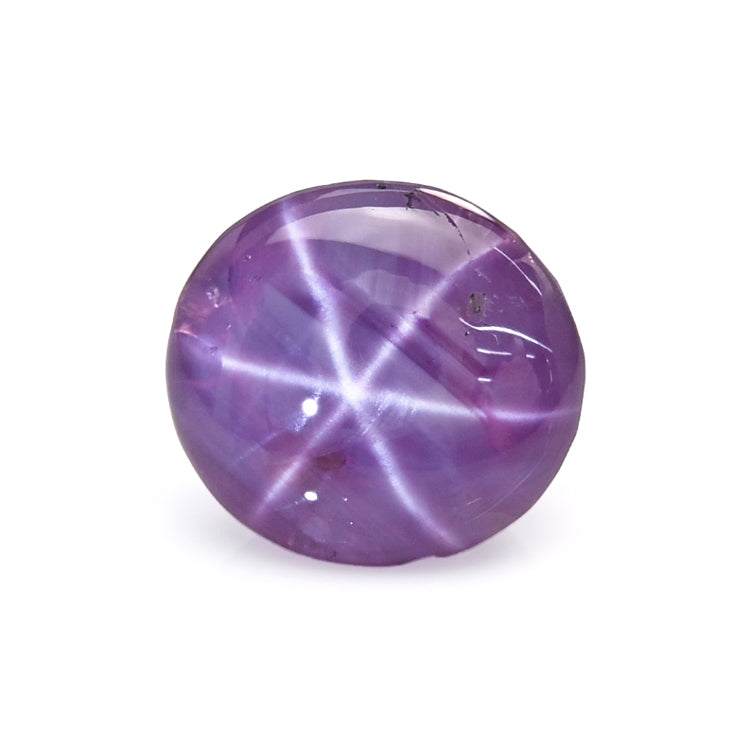
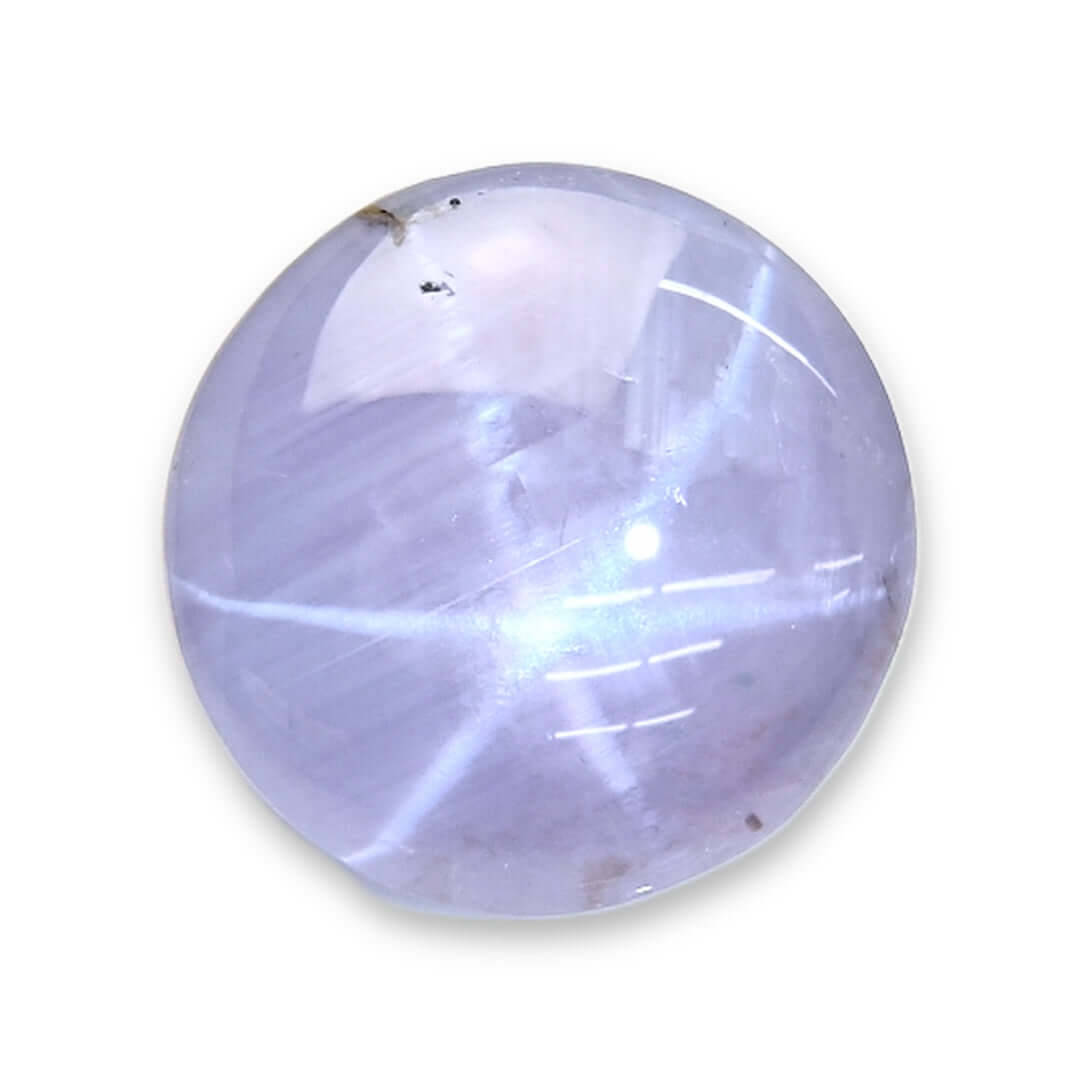
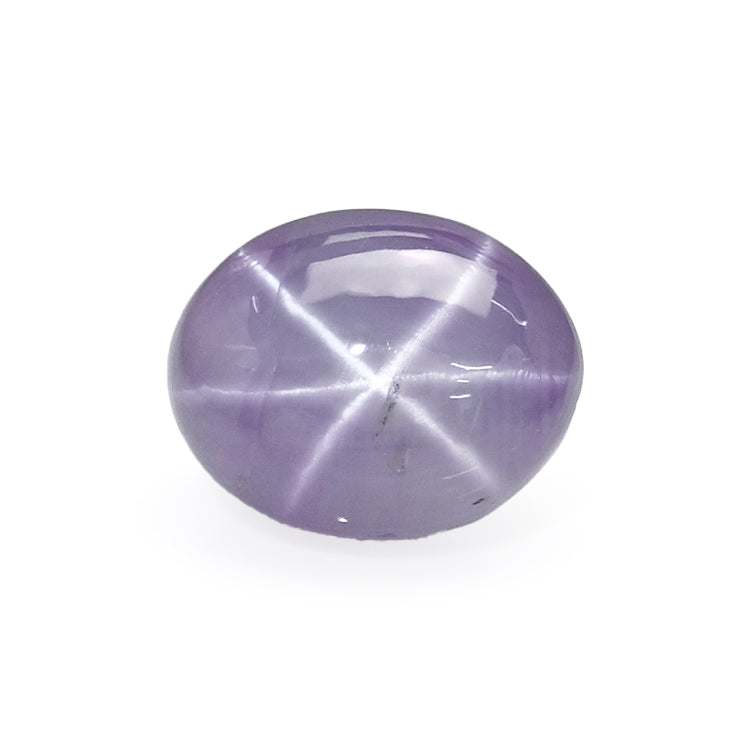
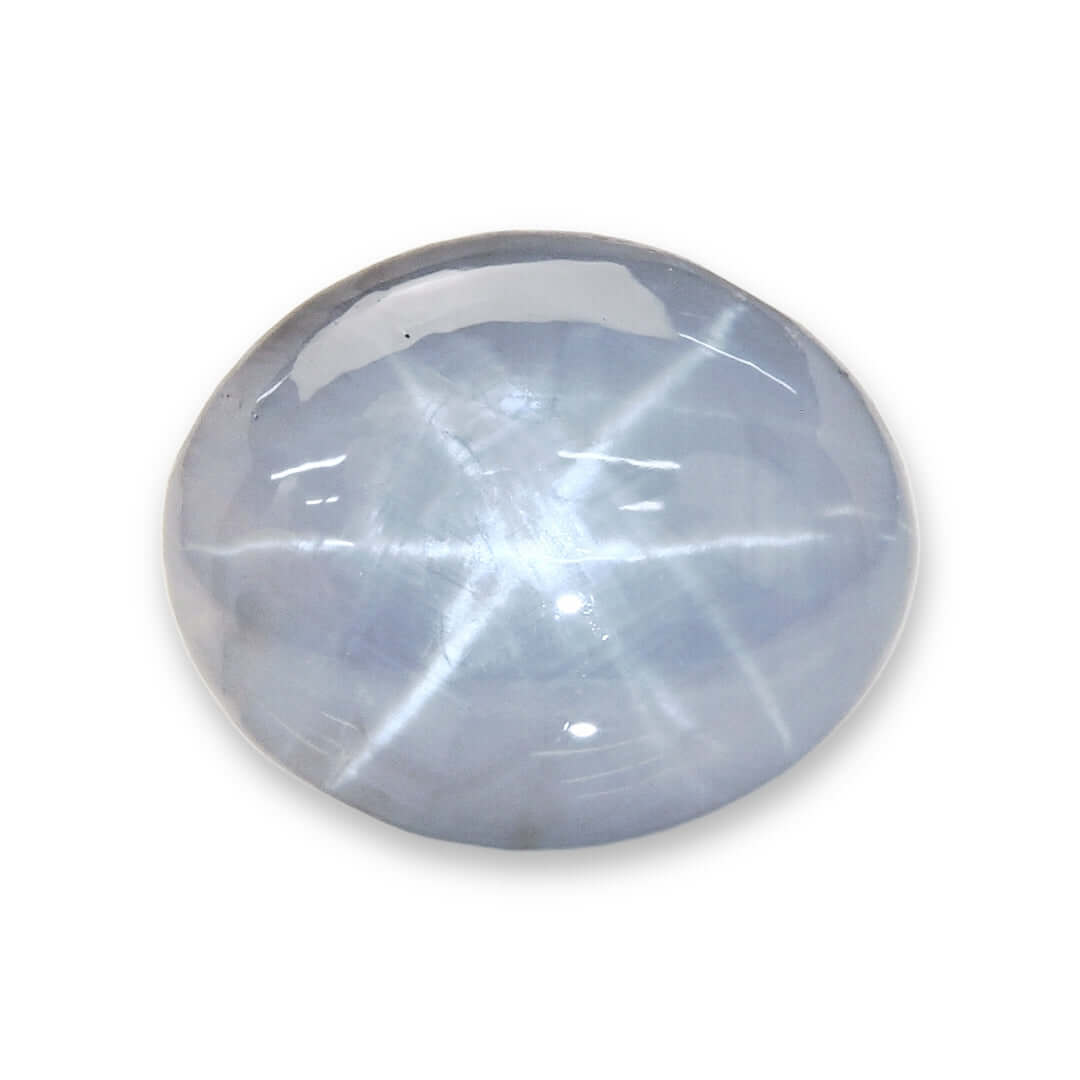
Star sapphire is any corundum cabochon that displays asterism — the six-rayed star of reflected light produced by microscopic rutile needle inclusions aligned parallel to the crystal's hexagonal symmetry. It is the one entry in this guide that is not a colour at all but an optical effect, which is why our four star sapphires are also counted in the blue, pink, violet and purple rows of the table above.
What produces it. Not a chromophore but an inclusion structure. Rutile — titanium dioxide — crystallises out of the corundum as the stone cools, forming needles that lie along three directions set by the host crystal's symmetry, 60 degrees apart. Each set of needles reflects a band of light; three bands crossing give six rays. The body colour comes from whatever chromophore the stone happens to carry, so star sapphires occur in every colour corundum occurs in.
Fine versus commercial. Judge the star first and the colour second. A fine star is sharp, straight, centred on the dome, complete in all six rays, and moves cleanly across the stone as you tilt it under a single light. A commercial star is faint, off-centre, has legs of unequal length, or breaks up. The second question is the trade-off: the same silk that makes the star makes the stone translucent rather than transparent, so a star sapphire with a superb star is usually sleepier in body colour, and one with vivid colour usually has a weaker star. Getting both is what makes a fine star sapphire expensive. Dome shape matters too — too flat and the star spreads and dulls, too high and it tightens into a point.
Price. We do not publish a per-carat band for star sapphire, because the star itself dominates value in a way a colour band cannot capture. Our four star sapphires are currently priced from $2,380.00 to $4,040.00.
Figures above are approximate market guidance, not fixed quotes. Actual value varies by treatment, origin, colour, cut, clarity, and certification.
Treatment reality. Heat treatment dissolves the rutile silk that produces the star, so heating a star sapphire in the way blue sapphire is heated would destroy the effect. All four star sapphires we currently list are disclosed unheated, all four are Ceylon, and all four carry GIA reports. Separately, diffusion-induced stars exist in the wider market and are a different matter from heat, which is one more reason to want a report on a star stone.
In stock now: 4 star sapphires — 8.09 ct blue, 7.99 ct purple, 3.40 ct violet and 3.26 ct pink. See our Star Sapphire Buyer's Guide and how to tell if a star sapphire is natural. Browse: star sapphire collection.
Every color in this guide is the same mineral: corundum, aluminum oxide, Mohs 9 — behind only diamond and moissanite on that scale, and hard enough for daily wear. Every one is appropriate for daily ring wear without special care, special settings, or retreatment over time. Whatever colour you end up choosing, the durability question is already answered before you start, which is not true of emerald, opal, tanzanite or pearl.
What differs between the colours is not durability but chemistry, rarity, and how the trade prices them. Blue is the deepest market and the one where heat is most nearly universal; the fancy colours are shallower markets where unheated material reaches you more often but documentation is patchier; padparadscha sits alone at the top. Understanding which of those situations you are in is most of what this guide is for.
Ceylon is our specialty and the great majority of what we stock: 110 of the 131 sapphires we currently list are Sri Lankan. The rest are mostly Madagascar, concentrated in teal and green, with single stones from Tanzania, Vietnam and East Africa, and two whose origin is not recorded — each listed with the origin held on file. Every stone in our catalog is natural, individually photographed, and ships with complete treatment disclosure and a 14-day return policy.
Browse the complete gemstone catalog across all colors at Crescent Gems, or narrow to every sapphire we hold or to our unheated and untreated stones. Questions about a specific color or stone? Email crescentgems@gmail.com — we respond personally within one business day.
Padparadscha — a balanced pink-orange or orange-pink where both components are clearly and simultaneously present — is the rarest sapphire colour, because the chromium-and-iron balance it requires is very narrow and a stone that misses it becomes a pink, peach or orange sapphire instead. Orange is the rarest of the single hues at commercial quality, since a clean vivid orange with no brown is difficult for the earth to produce. We hold no padparadscha at present and three orange sapphires.
No. Sapphire is the gem variety of corundum in every colour except red, which is called ruby. Blue is simply the most familiar and the deepest market. We currently list 131 sapphires across blue, teal, yellow, pink, peach, purple, violet, orange, green, white, colour-change, grey and brown, of which 28 are blue — so blue is a minority of our own inventory.
Per carat, padparadscha, at a typical band of $3,000–$15,000+/ct for well-cut stones at 1–2 carats. Fine blue is next and has by far the greatest depth of market, at $400–$6,000+/ct, with the very top of the blue market — Kashmir origin — trading far higher than any other sapphire. Within any one colour, treatment, size, cut and documentation move the price more than the colour name does. Figures here are approximate market guidance, not fixed quotes. Actual value varies by treatment, origin, colour, cut, clarity, and certification.
Trace elements substituting into the aluminium oxide lattice at concentrations measured in parts per million. Iron together with titanium produces blue, chromium produces pink, iron alone produces yellow and green, vanadium produces purple, violet and colour change, and chromium with iron together produces peach, orange and padparadscha. White sapphire is corundum with those elements effectively absent. Star sapphire is not a chromophore effect at all but rutile needle inclusions reflecting light as a six-rayed star.
Not always, but it is rarer and it costs more. An estimated 90-95% of all sapphires sold globally are heat treated, so unheated material with laboratory documentation is the exception rather than the rule, and at fine quality it commands a premium of roughly 2x-5x over a heated stone of equivalent dimensions, rising to as much as 8x for large, vivid, well-documented stones. A well-cut heated stone of good colour is a perfectly sound purchase. What matters is that the treatment is disclosed, and that at higher price levels the claim rests on a report rather than on a seller's word.
No, and the difference is worth money. Unheated is a statement about heat only. A stone can be correctly described as unheated and still have been treated another way — beryllium diffusion and lattice diffusion are the treatments that matter most in the yellow, orange and padparadscha end of the market, and a laboratory comment reading no indications of heating does not address them. Untreated is the wider claim, and it is the one to ask for in writing. Crescent Gems does not carry beryllium-diffused material.
Any of them, as far as durability goes: every colour is corundum at Mohs 9 and needs no special care or setting. Blue remains the traditional choice and has the deepest supply at every price. Teal and peach have grown fastest among buyers who want something recognisably not a diamond. Pink suits rose gold particularly well. White sapphire is the colourless option, provided you want its softer glassy brightness rather than diamond fire. The practical advice is to choose on how the colour looks on your hand in daylight, then optimise cut, then treatment, then size.
Almost. As at 7 September 2026 we hold blue, teal, yellow, pink, peach, purple, violet, orange, green, white, star and colour-change sapphire, but no padparadscha. Padparadscha keeps its section here because it is the reference point the warm colours are measured against, and we would rather tell you it is out of stock than sell you a peach stone under its name. Stock counts for each colour are given in the table near the top of this page and in each colour section.
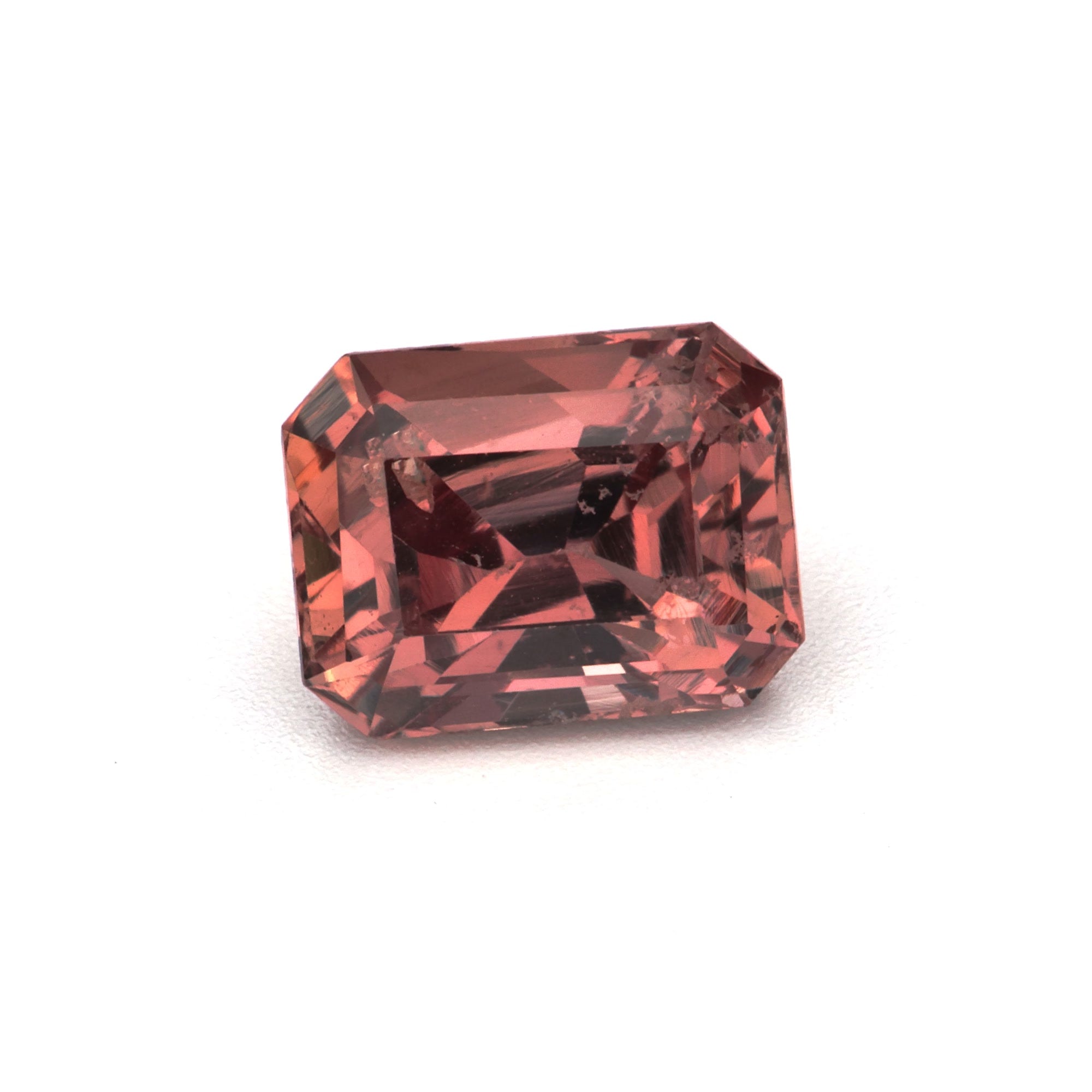
One stone worth singling out while it lasts: a 1.62 ct heat-treated emerald-cut Madagascar pink sapphire with a warm, brownish undertone, GIA-documented at $1,458.00 — view the stone.

CG8293

CG8426
Prices are shown in your local currency and may change.
CG8366
CG8313
CG8460
CG8356
CG8443


Blue Star Sapphire Price Guide — What They Cost and Why
Read moreabout Blue Star Sapphire Price Guide — What They Cost and Why
Tsavorite Garnet Price Guide — What They Cost and Why
Read moreabout Tsavorite Garnet Price Guide — What They Cost and Why
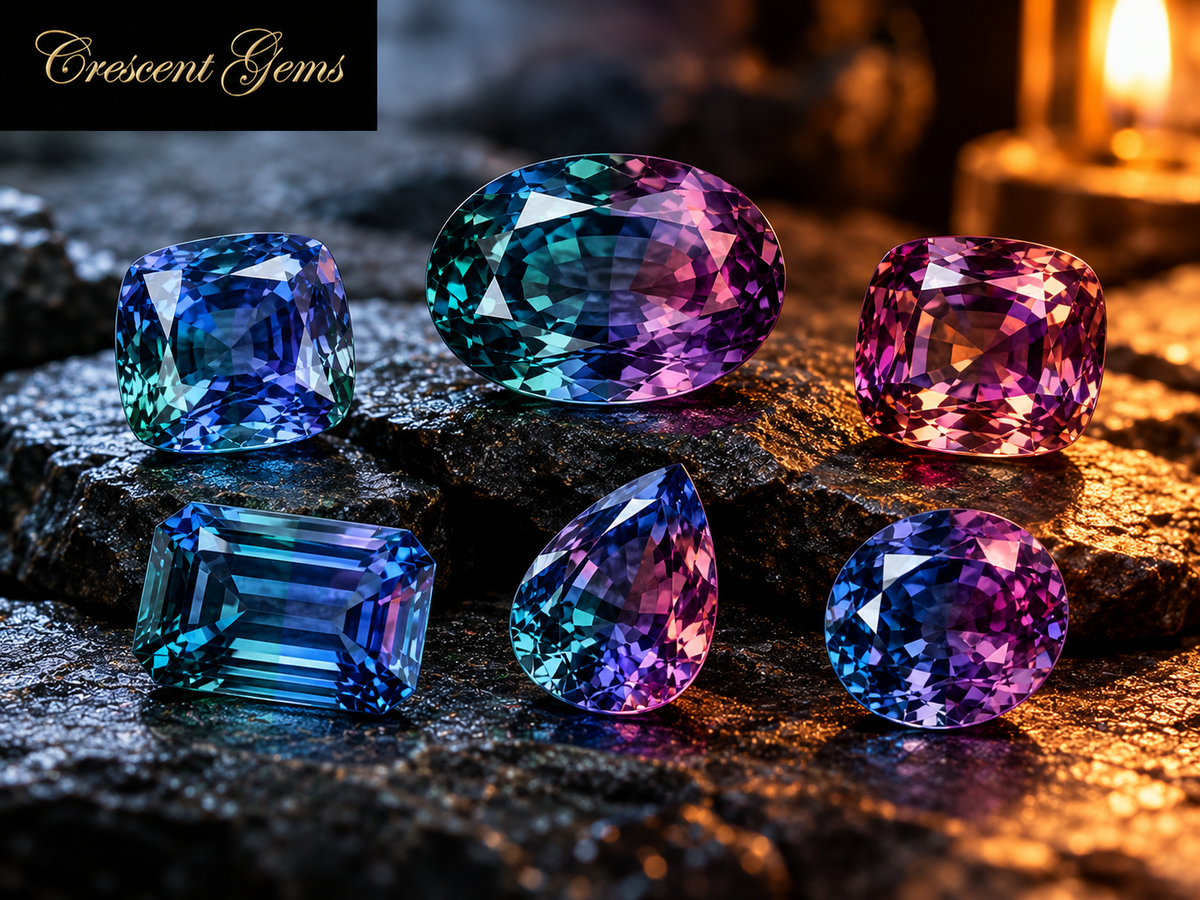
Color-Change Sapphire Price Guide — What They Cost and Why
Read moreabout Color-Change Sapphire Price Guide — What They Cost and Why
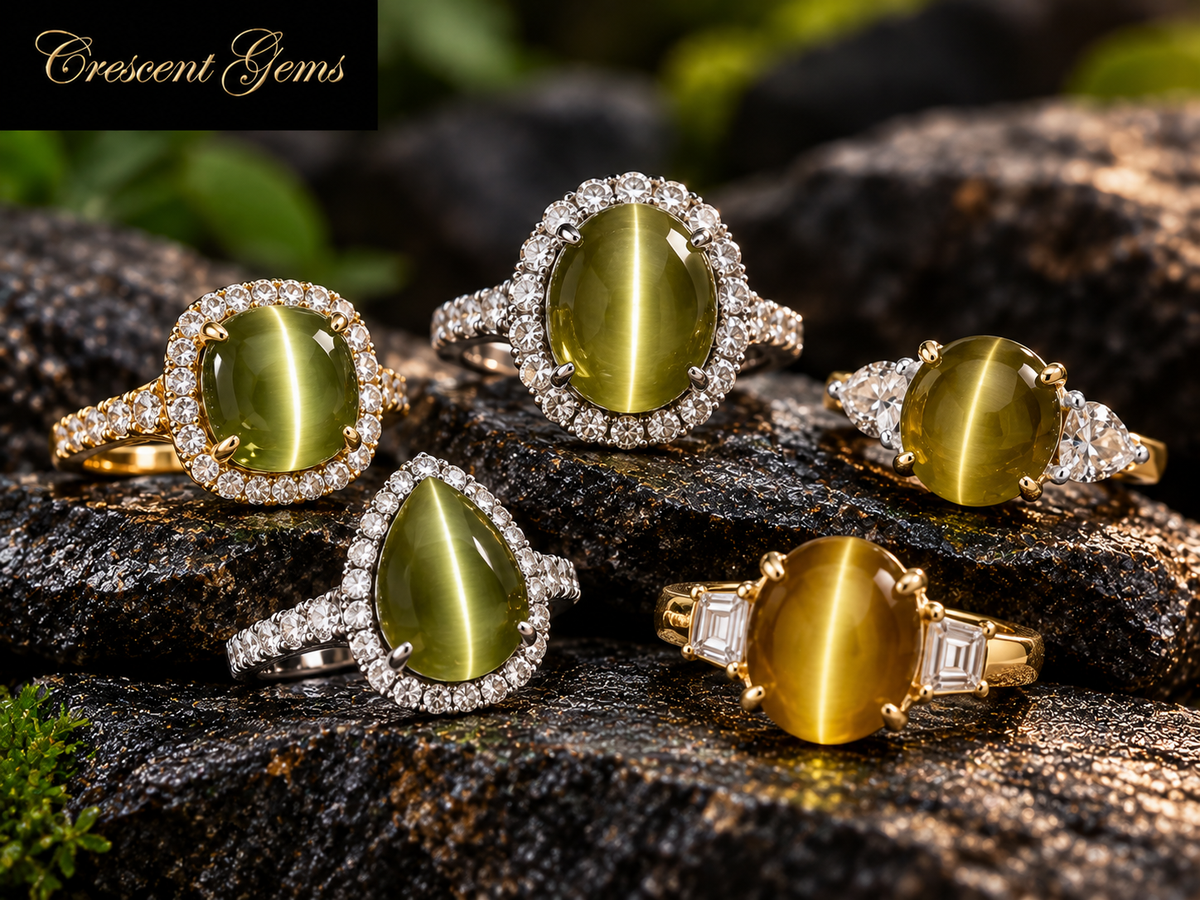
Is Cat's-Eye Chrysoberyl Good for an Engagement Ring?
Read moreabout Is Cat's-Eye Chrysoberyl Good for an Engagement Ring?
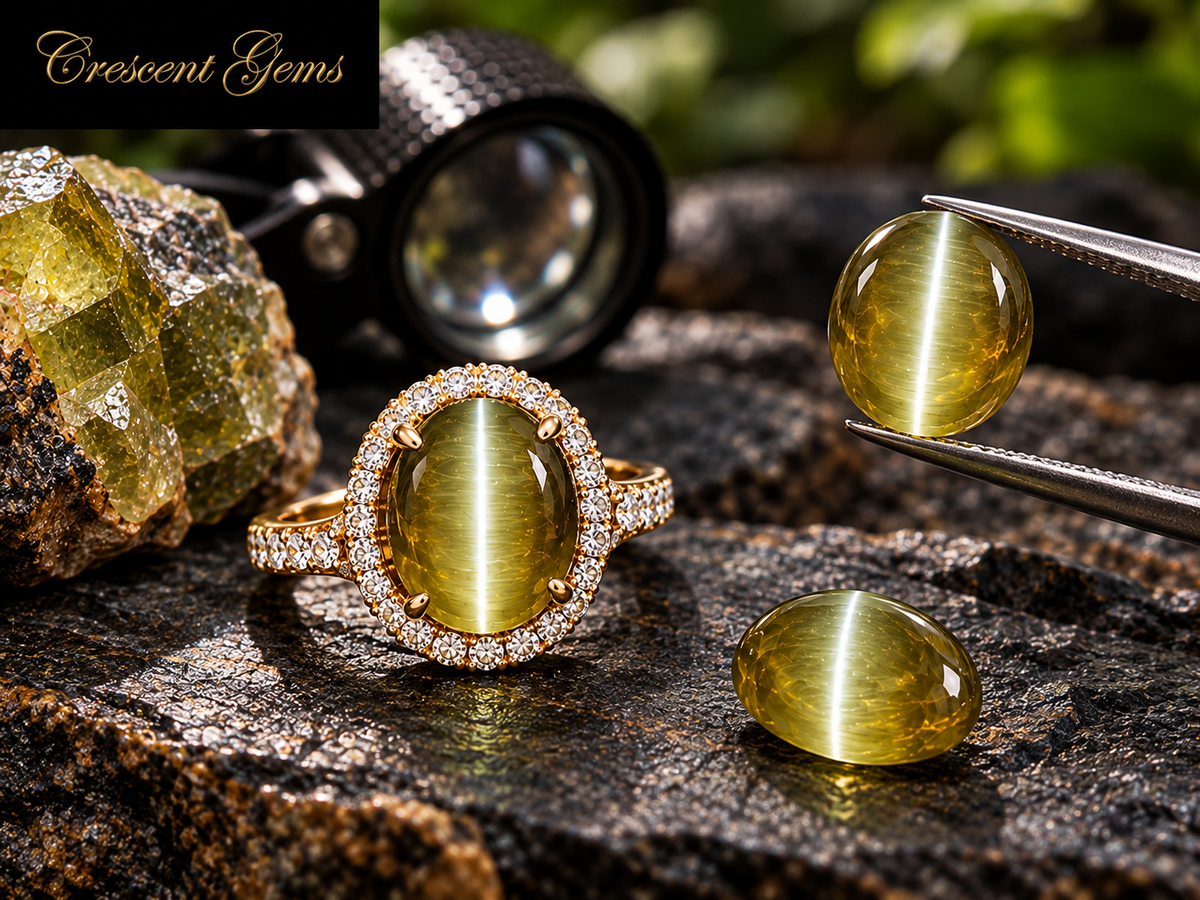
Cat's Eye Chrysoberyl Price Guide — What They Cost and Why
Read moreabout Cat's Eye Chrysoberyl Price Guide — What They Cost and Why