

- by Ahmed Shareek
Padparadscha Sapphire — What the Colour Is and What the Report Must Say
- by Ahmed Shareek
New to buying sapphires? Start with our Ultimate Sapphire Buying Guide — the complete resource for colour, origin, treatment, and pricing — then return here for padparadscha specifically.
Padparadscha is one of the very few colour words in the gem trade that a laboratory actually defines. The Laboratory Manual Harmonisation Committee, which standardises report wording across the major laboratories, publishes an information sheet on it, and the laboratories that adopted that sheet — GIA, Gübelin and SSEF among them — describe the colour as "a subtle mixture of pinkish orange to orangey pink with pastel tones and low to medium saturations", in corundum "from any geographical origin".
That cuts both ways. It means a padparadscha claim can be checked against a document, which is unusual for a colour claim in sapphire. It also means the word is narrow: the definition asks for a mixture of two hues, so a stone whose report prints a single hue is outside the term, however good the stone is.
And yet most people buying sapphires have never seen one in person.
One thing this guide does not do is tell you how padparadscha is graded, because no laboratory grades it. GIA's own published position is that it "doesn't grade or provide quality analysis for sapphire or other colored stones." What a laboratory does is make a colour call on one particular stone, and print it or withhold it. So this guide covers what the definition requires, what a report has to print for a stone to carry the name, where the colour is found, how it differs from peach sapphire, what sets the price, and what we hold — which at the moment is nothing.
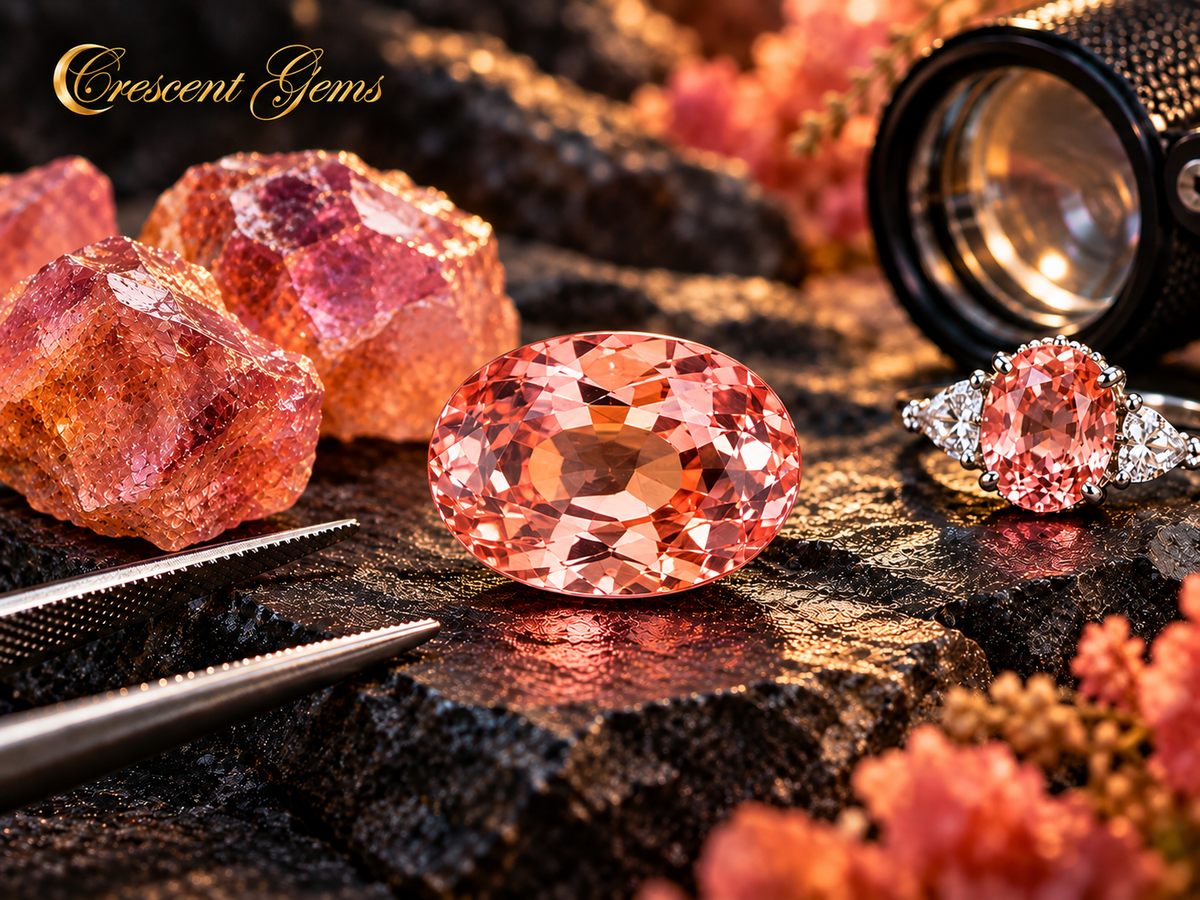
Padparadscha is natural corundum — the same mineral species as blue sapphire, pink sapphire, and ruby — displaying a colour that sits between pink and orange: pinkish orange at one edge of the published range, orangey pink at the other. The name derives from the Sinhalese word for the lotus blossom (padma raga), which captures the colour accurately: the warm, luminous pink-orange of a Ceylon lotus at dawn.
Neither pink nor orange, it holds both in a balance that is warm and luminous in a way that neither colour reaches alone. Unlike most colour words in the trade, padparadscha is standardised: the LMHC publishes an information sheet on it, and GIA, Gübelin and SSEF print the name on a report only where a stone meets the published criteria. Gübelin says so in its own words — it "adopts the definition of the LMHC". So the practical question about any particular stone is not whether a seller calls it padparadscha. It is whether a laboratory printed the word, or did not.
The padparadscha colour zone is narrow, and the published definition is specific about three things:
Simultaneous pink and orange. The stone must display both a pink component and an orange component in the face-up appearance. A stone that is purely pink is pink sapphire. A stone that is purely orange is orange sapphire. Both components have to be legible, which is why a report printing a single hue puts the stone outside the term.
Light to medium tone. The stone must be light-to-medium in overall darkness. Too dark and the orange component reads as brownish or rusty, and the definition asks for a light tone rather than a deep one.
Pastel tones, at low to medium saturation. This is the condition most often got backwards. The published definition does not ask for a strong, vivid colour: it asks for pastel tones at low to medium saturation. Saturated past that range a stone stops reading as a mixture and reads as a pink sapphire or an orange one. Gübelin's published criteria add an even colour distribution across the face.
Those three conditions together are what make the word hard to earn. Most sapphires that read pink carry no orange, and most that read orange carry no pink; a stone has to sit in the overlap, at a saturation low enough to keep both hues legible, and hold an even colour across the face. Nobody publishes production figures by colour, so we are not going to rank padparadscha against every other sapphire colour. What is checkable is that the window the definition leaves open is a small one, and that it is a trade denomination assessed stone by stone: the laboratories do not all draw the line in the same place. Gübelin is candid about why, writing that "as long as lab work continues to have an element of subjectivity, lab harmonisation remains an ambition only."
Common misrepresentations to watch for:
Origin is not part of the definition. The LMHC wording covers corundum "from any geographical origin", and Gübelin publishes that padparadscha sapphires "are also found in other places including Madagascar, Tanzania or Vietnam". So a report can print the name without naming a country, and naming a country does not earn the name.
Sri Lanka is the historic source of the colour and the origin most buyers and gemmologists have in mind when they picture a padparadscha. Sri Lankan material tends to a warm, slightly violet-influenced pink-orange. Ceylon is a trade name; the factual statement of origin is Sri Lanka. See our Sri Lanka pit mining guide.
Madagascar material tends to a slightly warmer, more orange-influenced tone. See our Madagascar sapphire guide.
Both appear in Gübelin's published list of origins for this colour. Tanzanian material tends to a lighter, more purely pink-salmon tone.
Origin is also not a quality grade. Where a stone was formed and how it looks are two separate findings, and pricing one as though it were the other is a habit worth breaking.
| Factor | Padparadscha | Peach Sapphire |
|---|---|---|
| Definition | A colour the laboratories define and print, stone by stone | Descriptive trade term |
| Colour balance | Pinkish orange to orangey pink, pastel, low to medium saturation | Warm pink-orange, can lean either way |
| Treatment | A colour call, not a treatment finding: heated and unheated stones can both carry it, and advanced treatments are excluded | A trade description; the treatment is stated on each listing either way |
| Documentation required | The name rests on the report; without one it is the seller's colour call | We are moving every stone priced above $500 to GIA; the listing names the laboratory, or says there is none |
| Best for | Special-occasion pieces and custom commissions | Engagement rings and daily wear |
See our full peach vs padparadscha guide and our peach sapphire buying guide.
Standard heat treatment does not take the name away. Gübelin publishes that both unheated and heated stones can qualify and that standard heating is accepted; what is excluded is advanced treatment, and beryllium lattice diffusion is the case that matters in this colour. Heat can still move the colour, by shifting the balance between the pink and the orange component, and the usual result is a stone that reads more purely as one or the other. That is the point: the treatment line on the report matters as much as the colour line, and neither can be read off the other.
Beryllium diffusion is the particular fraud risk here, because it can manufacture a pink-orange a stone never had. GIA, Gübelin and SSEF test for it. See our beryllium diffusion guide and heat treatment guide.
Three things set the price of a padparadscha: the colour call on the report, the weight, and the treatment finding. Without the colour call there is no padparadscha to price — there is a pink-orange sapphire, which is a different stone with a different market.
We do not publish price forecasts. Nobody publishes the production or demand figures that would support one. We also hold none, so we have no price of our own to quote: what we would ask would be set by the stone we found and what it cost us. For the longer discussion of what drives cost per carat, see our padparadscha sapphire price guide, and for what each entry on a report means, our GIA report guide.
Yellow gold amplifies the warmth — the warm metal and warm stone create a rich, harmonious combination. Rose gold creates a complementary tonal pairing — the pink component of the rose gold complements the pink in the stone. White gold and platinum provide cool contrast that makes the warm salmon colour appear more vivid by opposition. That is our own recommendation, from handling these stones — no laboratory publishes guidance on settings, and we are not reporting one. For the full metal decision framework, see our yellow gold vs. white gold vs. platinum guide and how to choose metal color for a sapphire ring. See our sapphire cut guide for full format analysis.
Four rules that protect every padparadscha purchase:
We hold no padparadscha in stock at present. Our padparadscha page says the same thing: it is there for when we do list one, and for buyers who want to know what to ask for in the meantime. We buy in Sri Lanka ourselves, in Ratnapura, Beruwala and Colombo, so if you want one looked for to a specification, email crescentgems@gmail.com and say what you are after. We will tell you what we find and what the report says, and we will not call a stone a padparadscha unless a laboratory has printed the word.
What we do hold in the neighbouring colour is peach sapphire — a colour in its own right rather than a substitute: see our peach sapphire collection. Because stock turns over, the product page rather than this one is the current answer for any particular stone. The rule there does not move: treatment is stated on every listing, the laboratory and the report number are named wherever a report exists, and where no report exists the listing says so plainly.

Blue Star Sapphire Price Guide — What They Cost and Why
Read moreabout Blue Star Sapphire Price Guide — What They Cost and Why
Tsavorite Garnet Price Guide — What They Cost and Why
Read moreabout Tsavorite Garnet Price Guide — What They Cost and Why
Color-Change Sapphire Price Guide — What They Cost and Why
Read moreabout Color-Change Sapphire Price Guide — What They Cost and Why
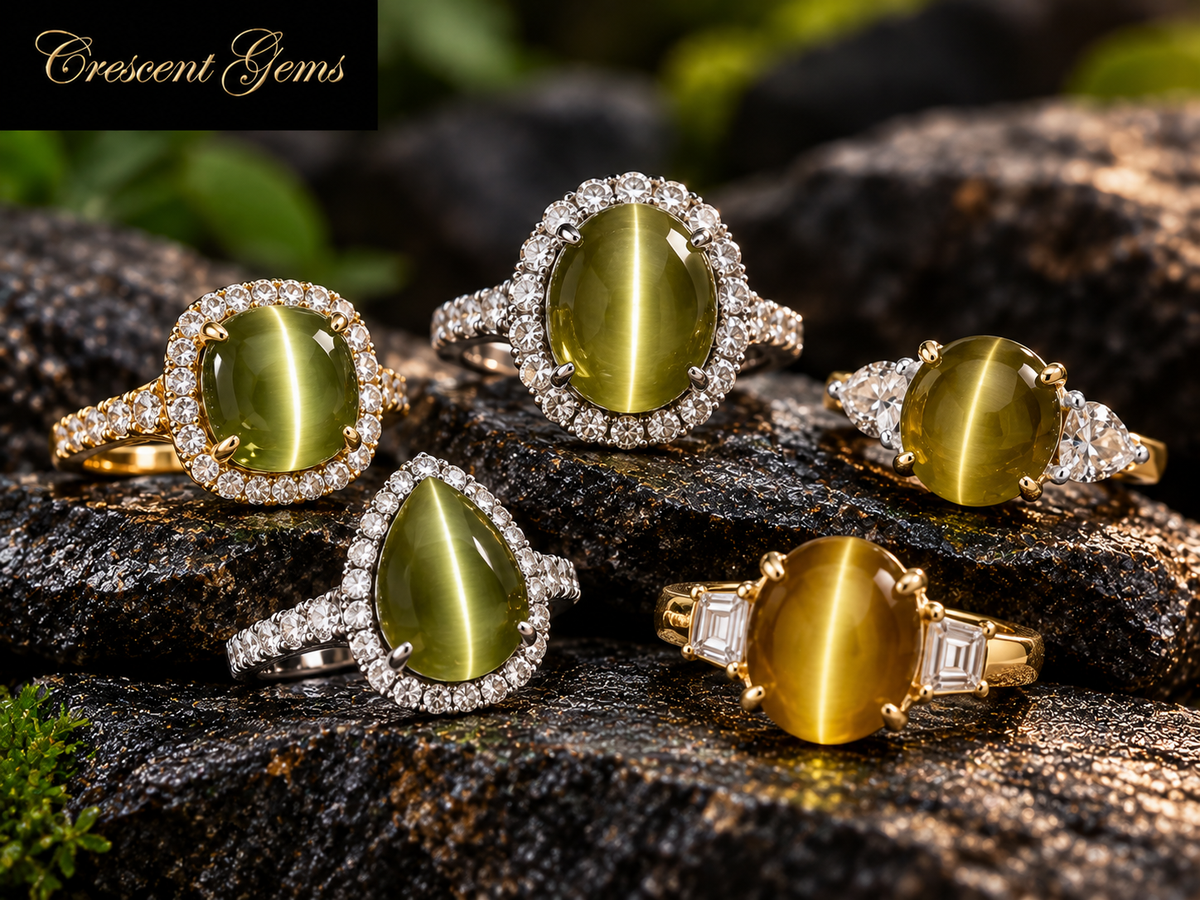
Is Cat's-Eye Chrysoberyl Good for an Engagement Ring?
Read moreabout Is Cat's-Eye Chrysoberyl Good for an Engagement Ring?
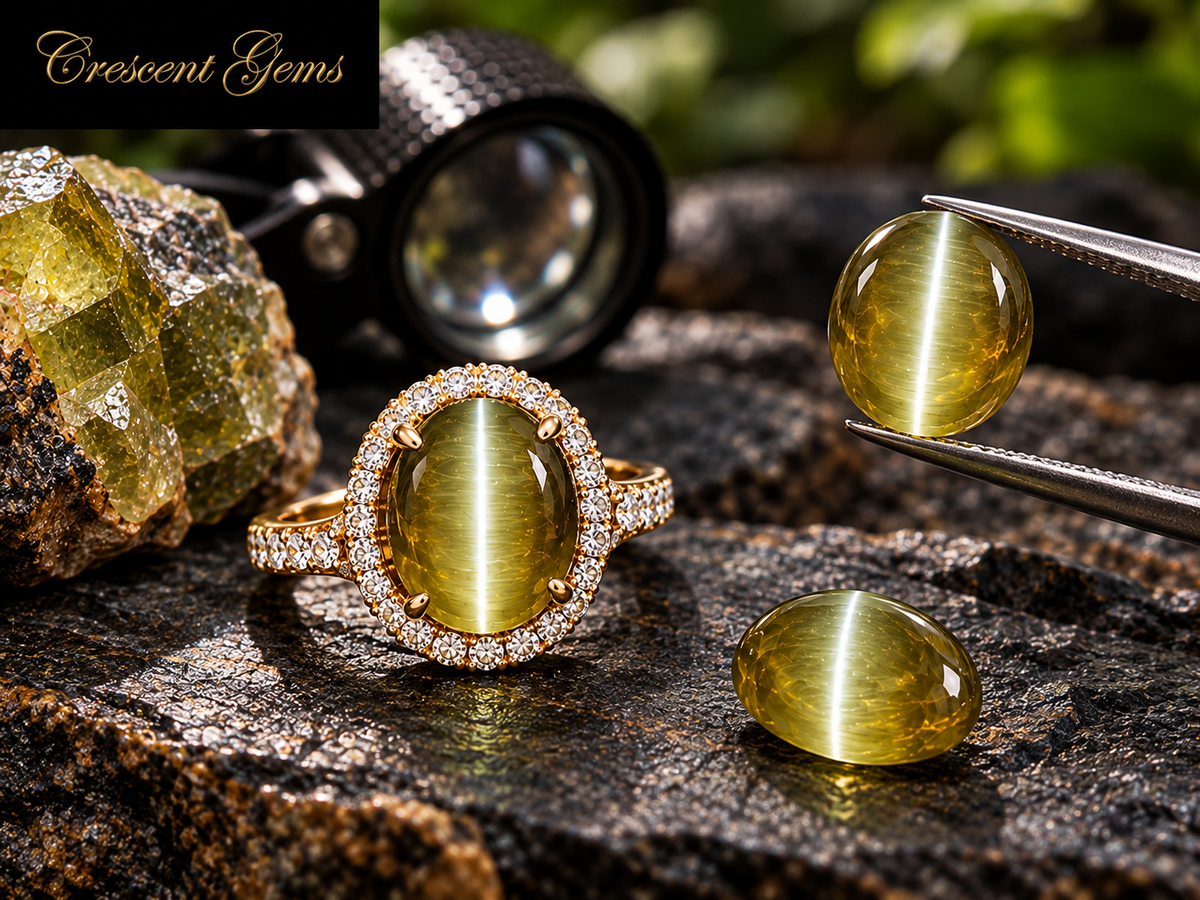
Cat's Eye Chrysoberyl Price Guide — What They Cost and Why
Read moreabout Cat's Eye Chrysoberyl Price Guide — What They Cost and Why