- by Ahmed Shareek
Cushion Cut Sapphire — The Complete Guide to the Vintage Shape That Deepens Color
- by Ahmed Shareek
For cut quality fundamentals: How Cut Affects a Sapphire. For shape comparison: Best Sapphire Cut for an Engagement Ring. For the buying foundation: Ultimate Sapphire Buying Guide.
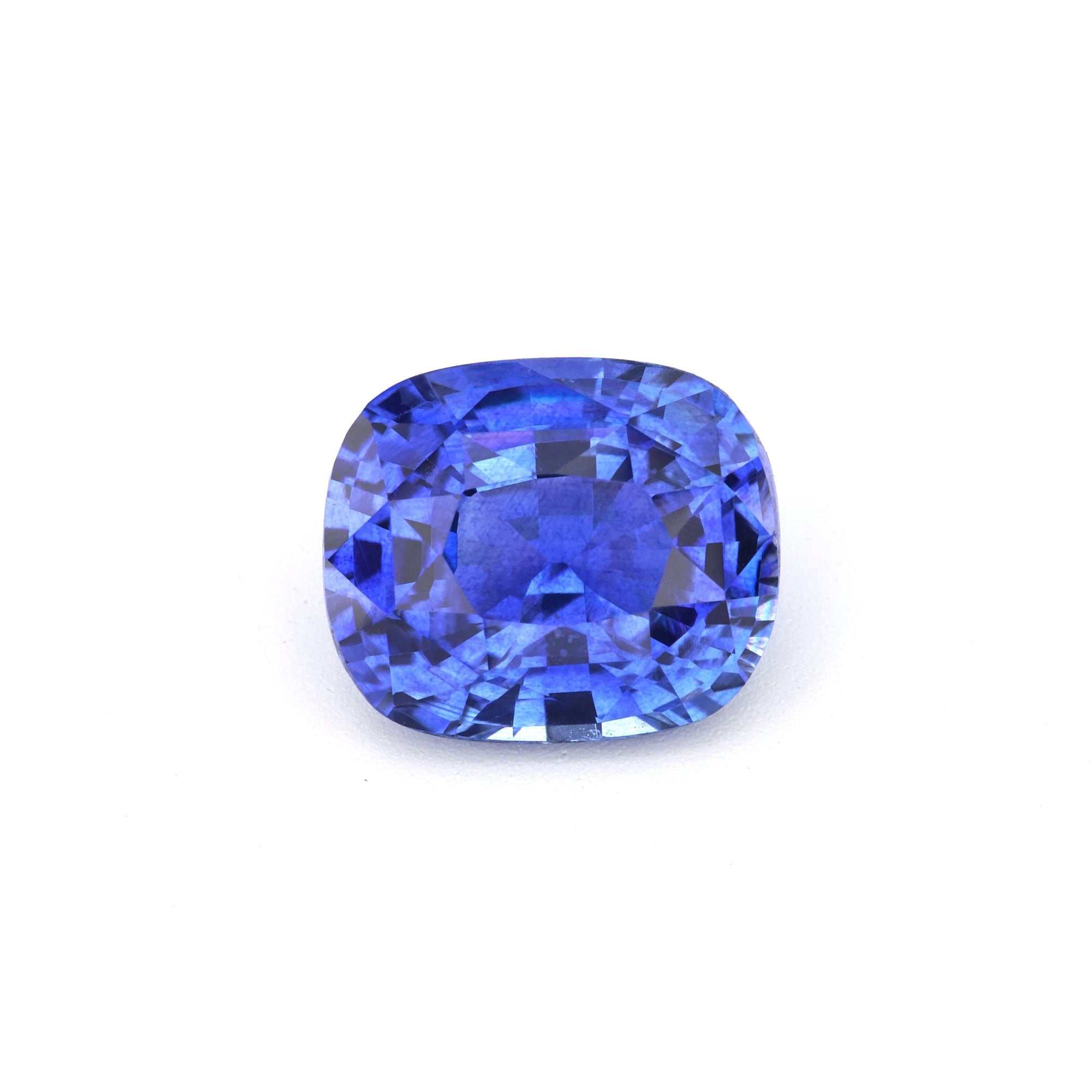
The cushion cut is the oldest surviving brilliant cut form. The great historic sapphires of the 17th, 18th, and 19th centuries are almost invariably cushions. That historical pedigree, combined with a specific optical character that no other cut replicates, has made the cushion one of the most enduring and commercially significant shapes in the sapphire market today.
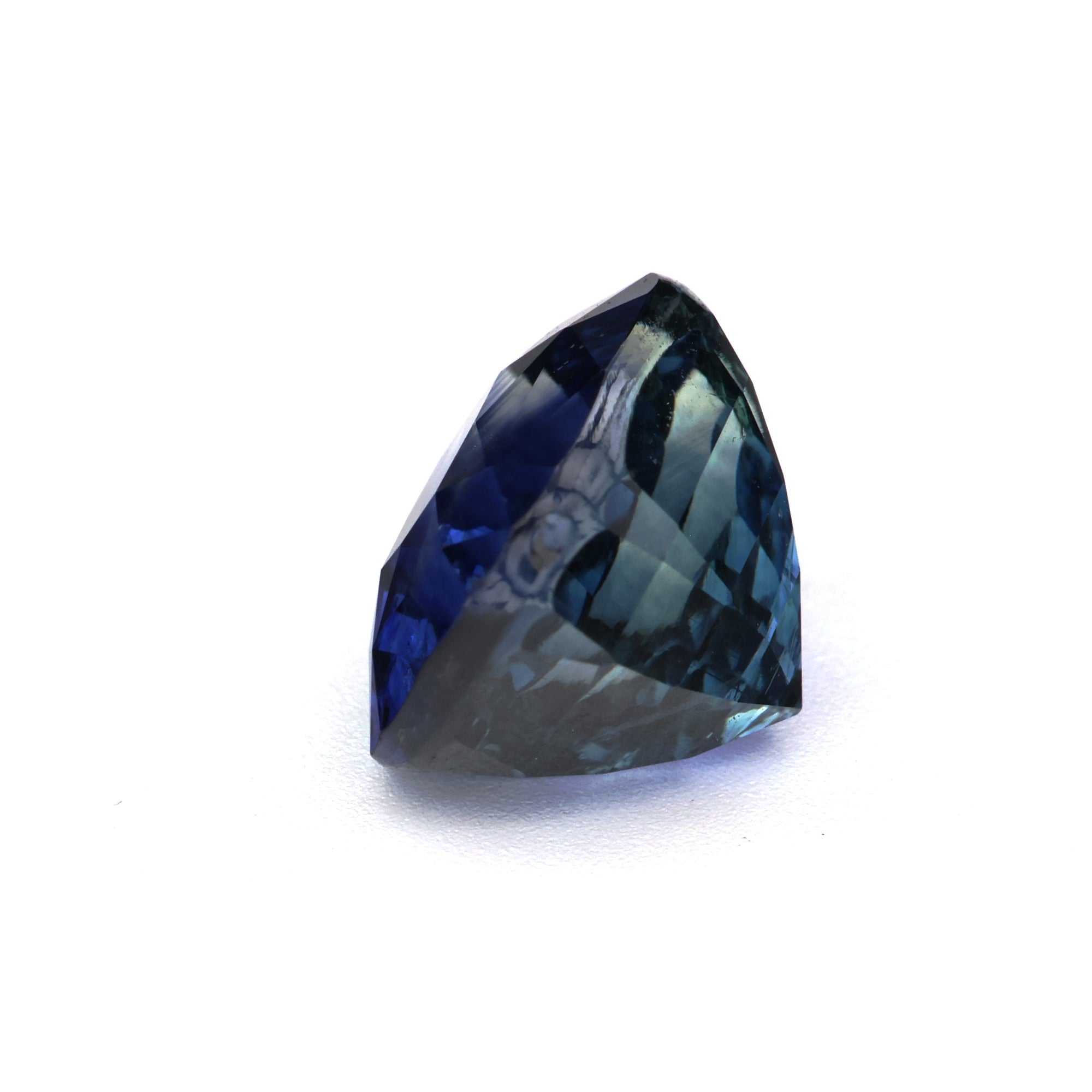
For sapphire specifically, the cushion has an important functional advantage: its rounded corners and deeper pavilion concentrate color more intensely than oval or round cuts. This makes cushion cutting particularly effective for saturated, vivid material where the goal is maximum color impact rather than maximum brilliance.
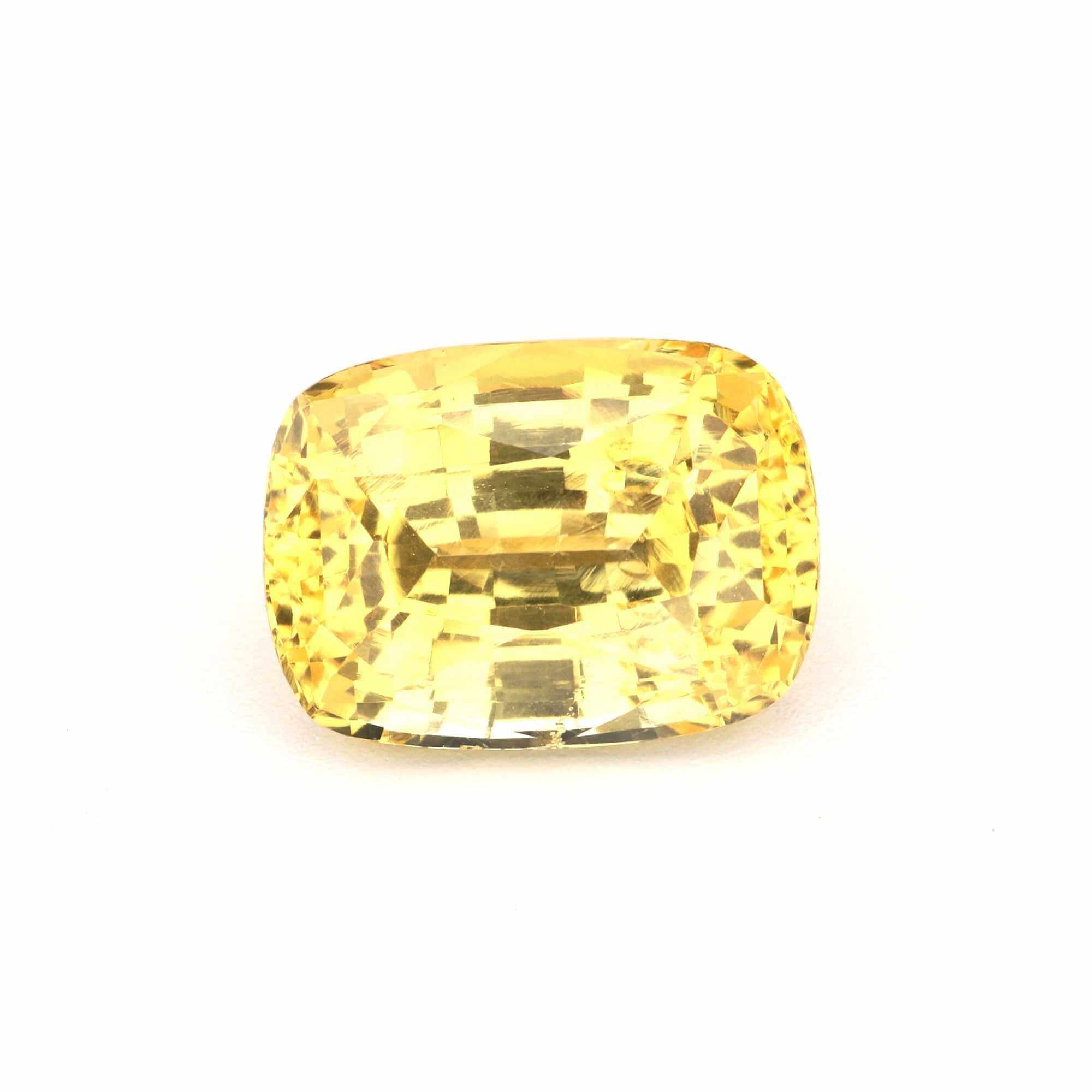
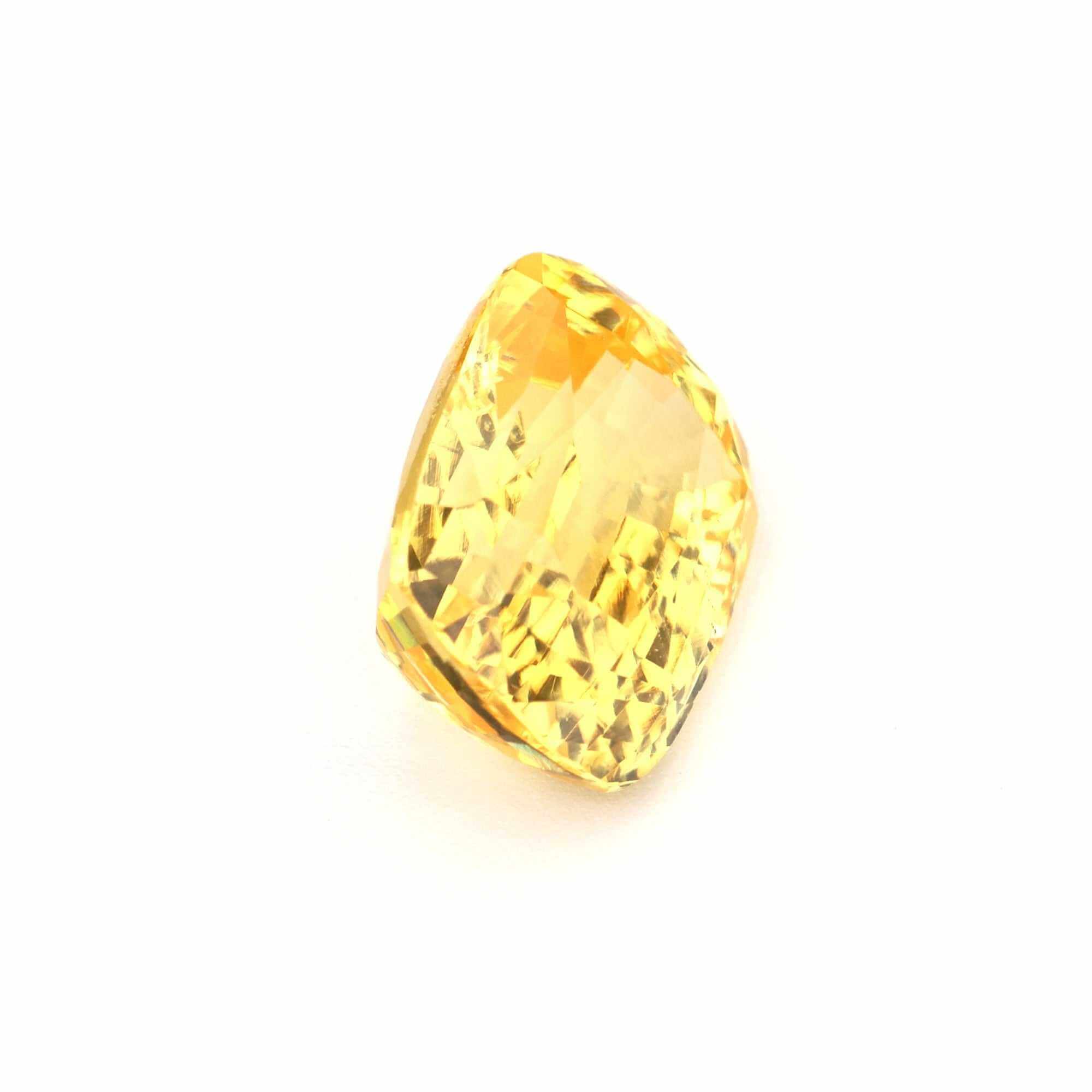
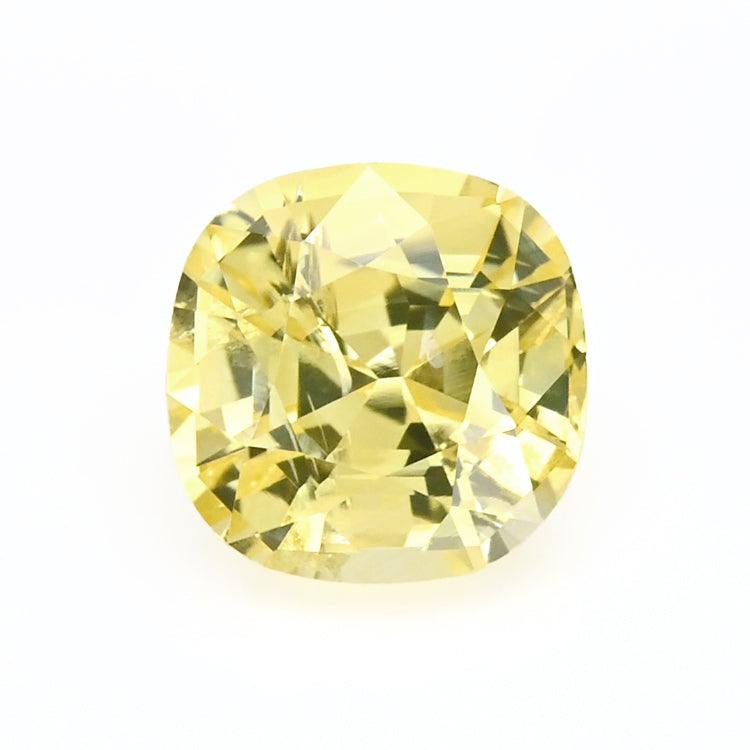
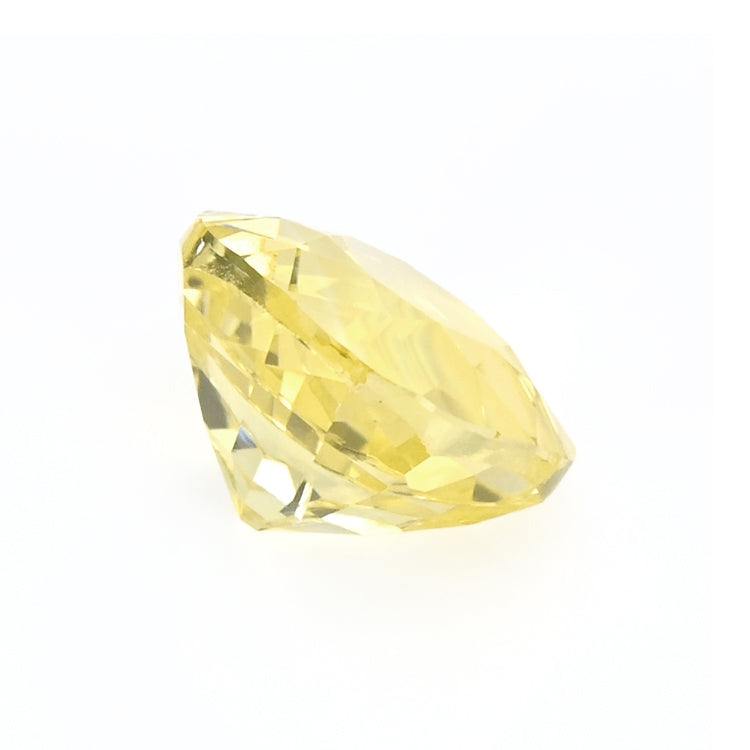
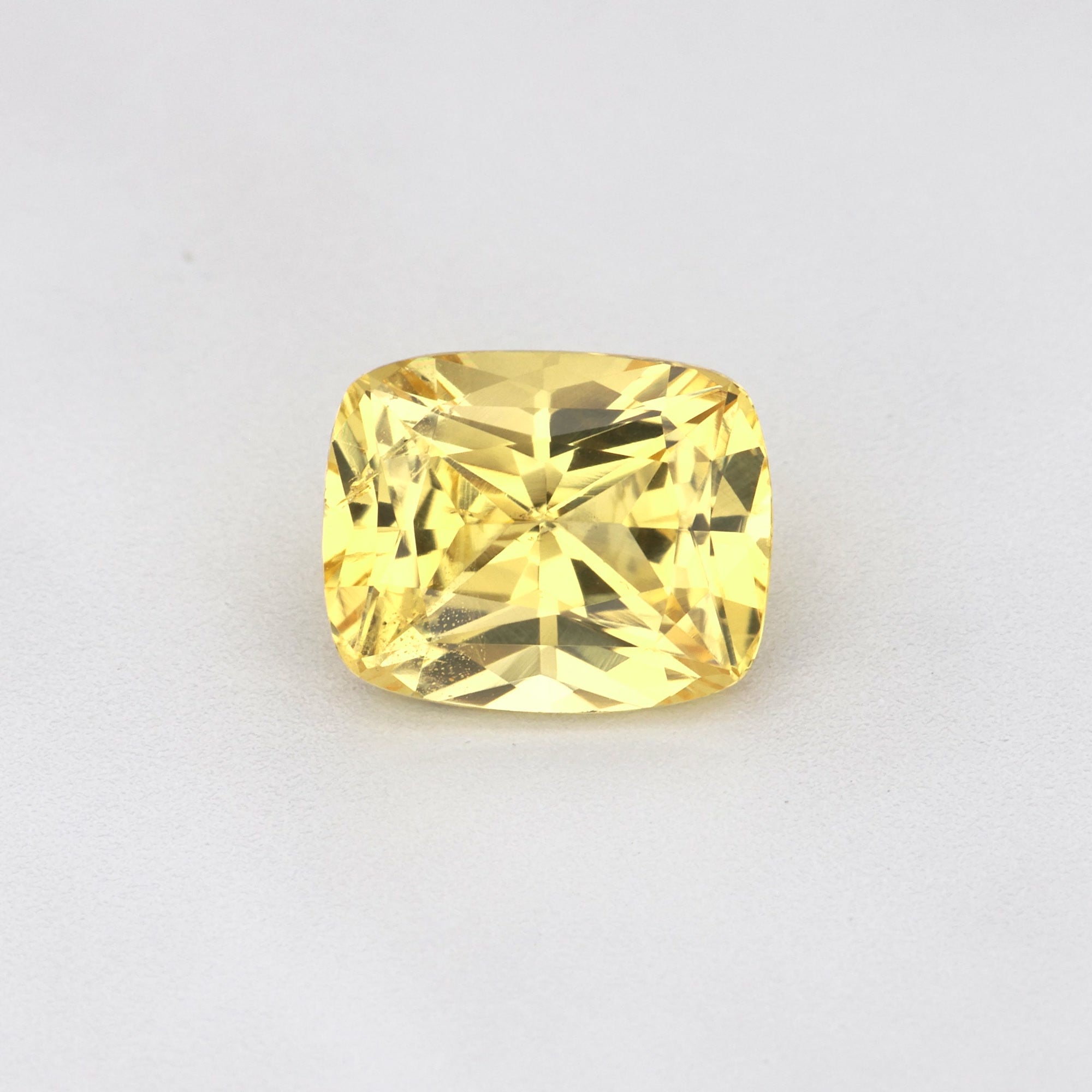
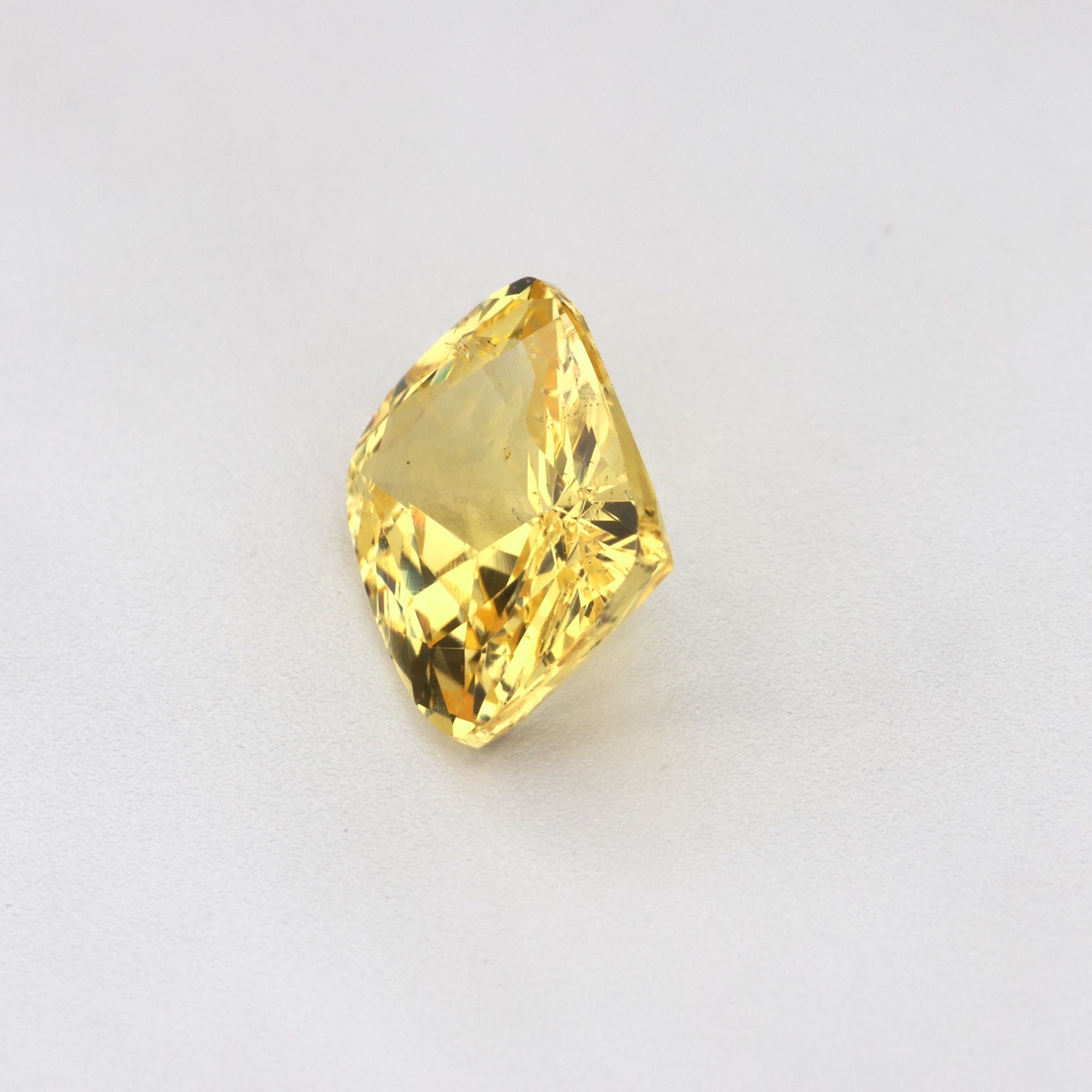
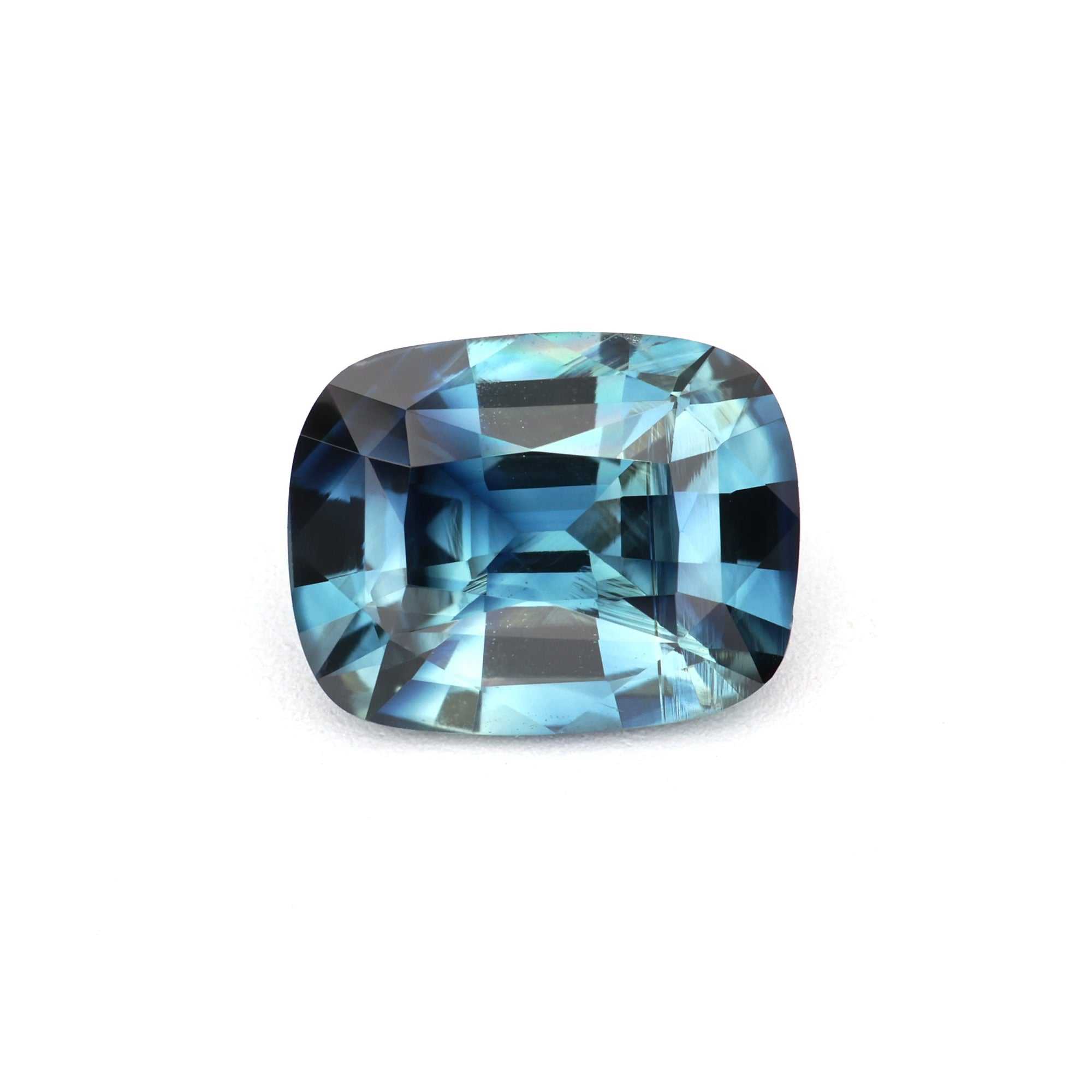
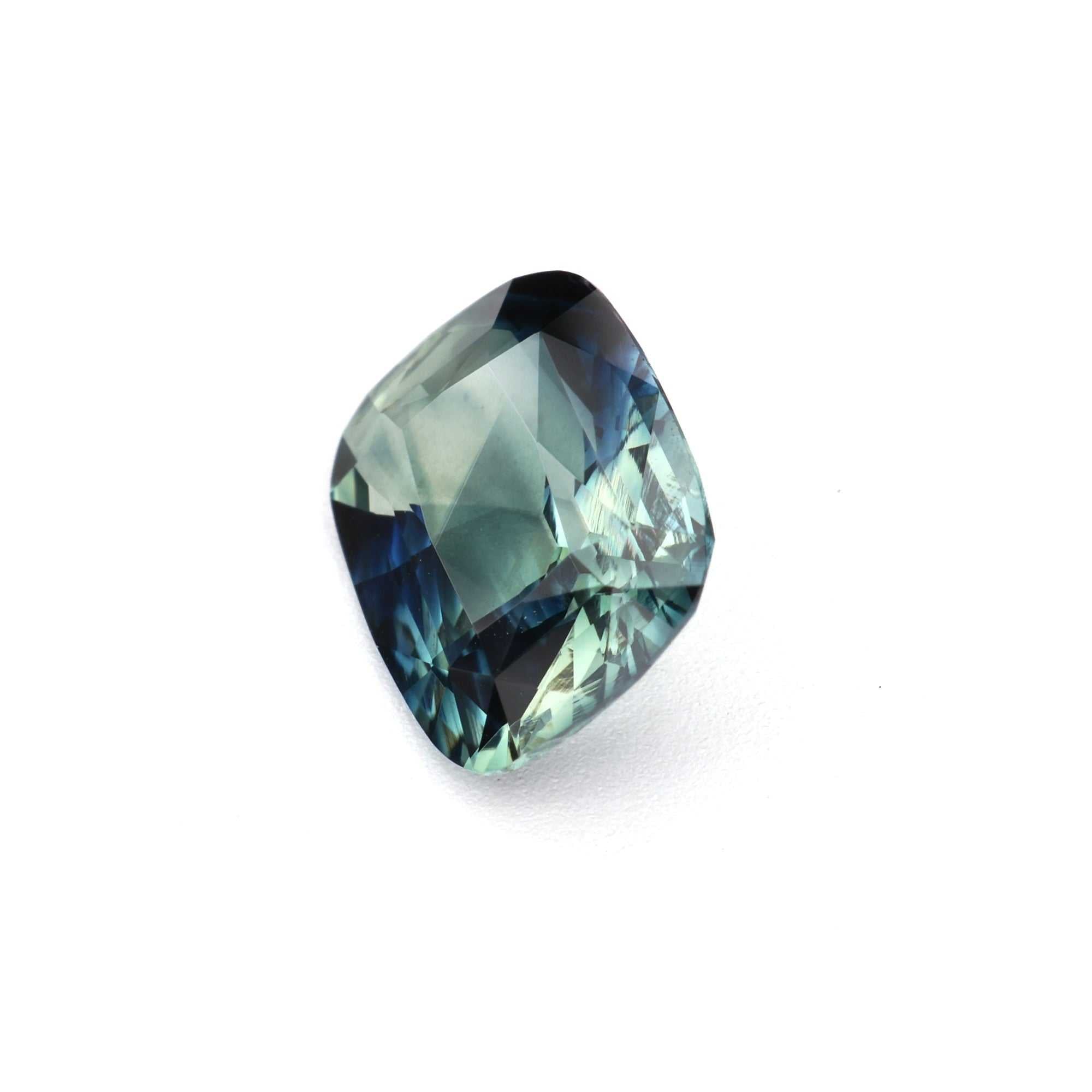
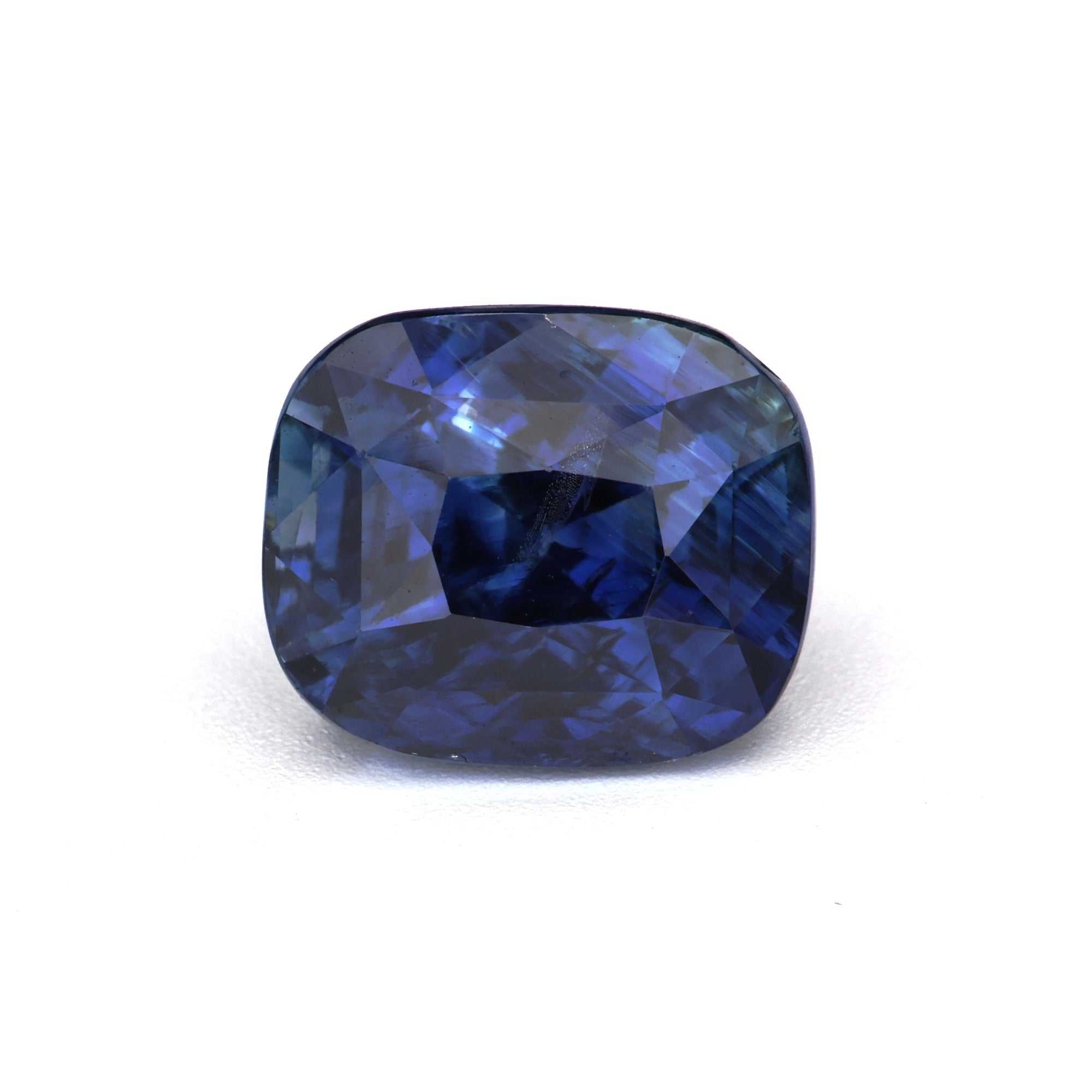
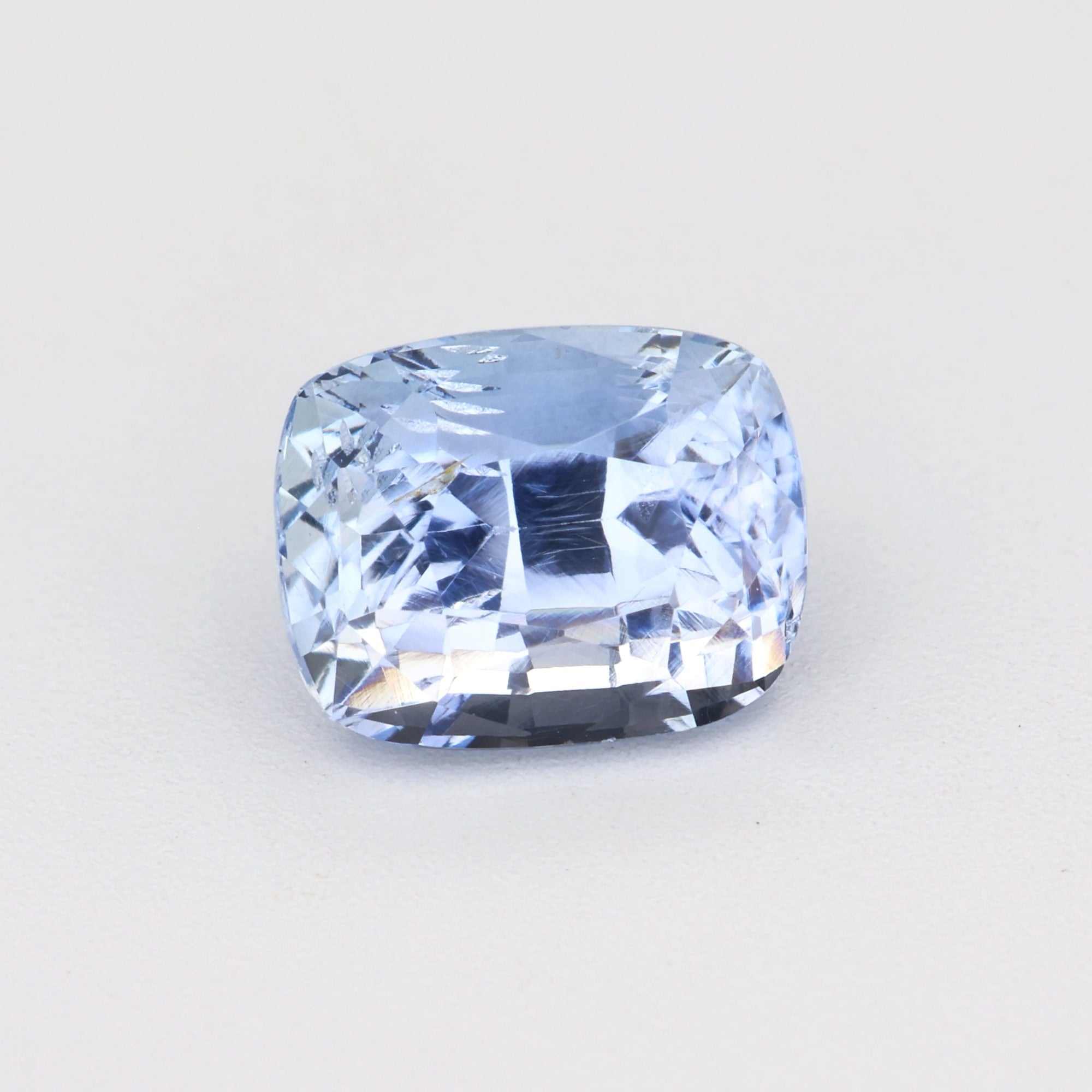
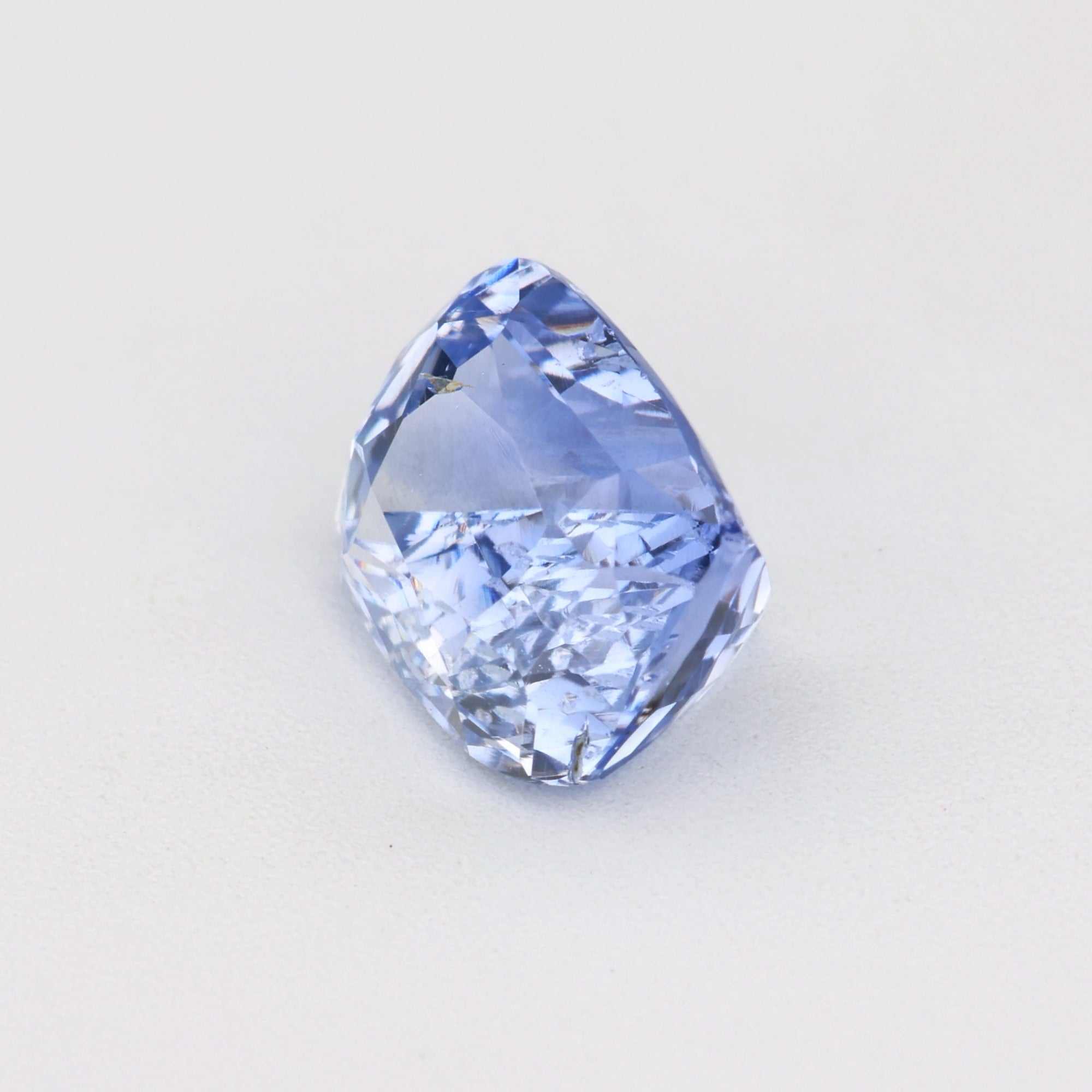
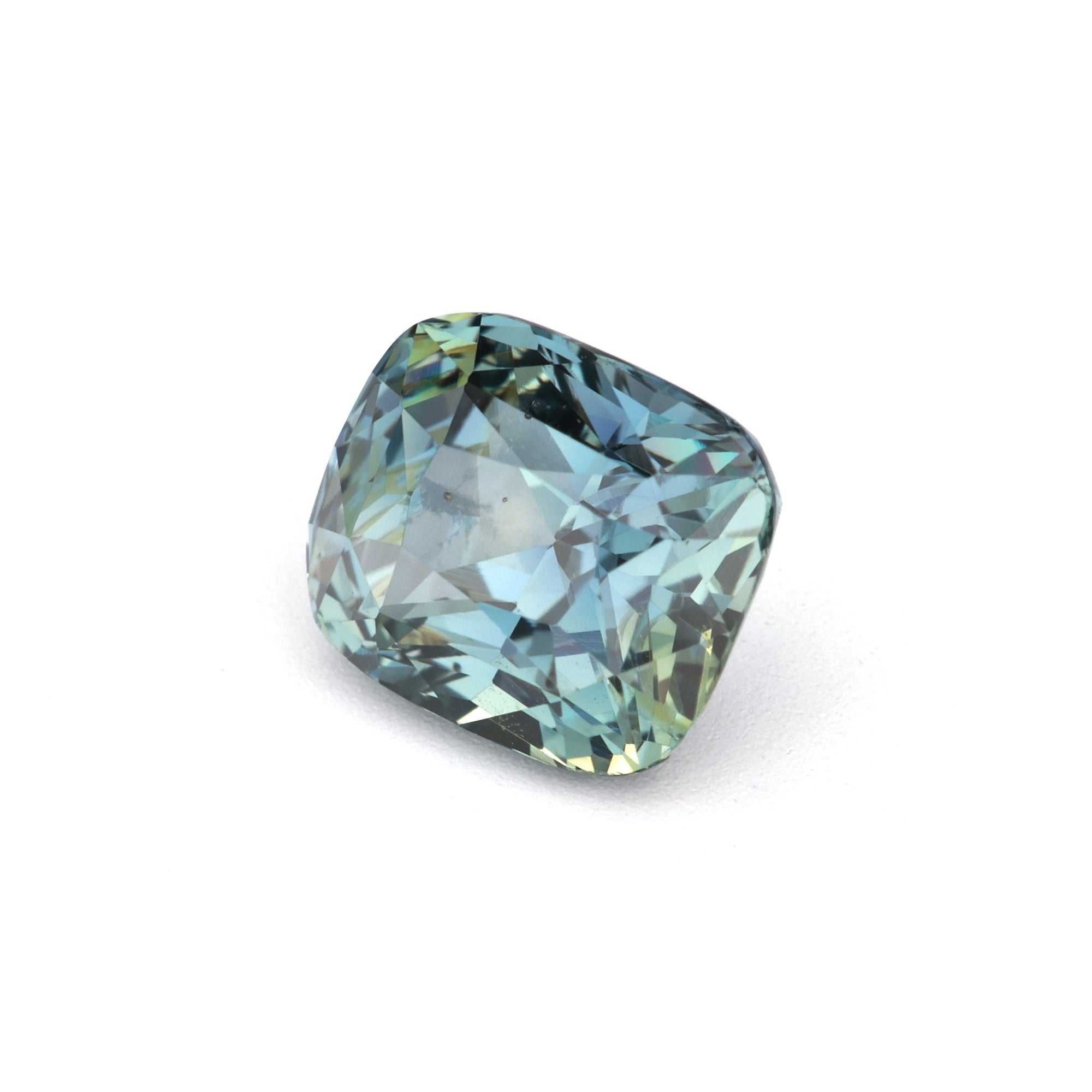
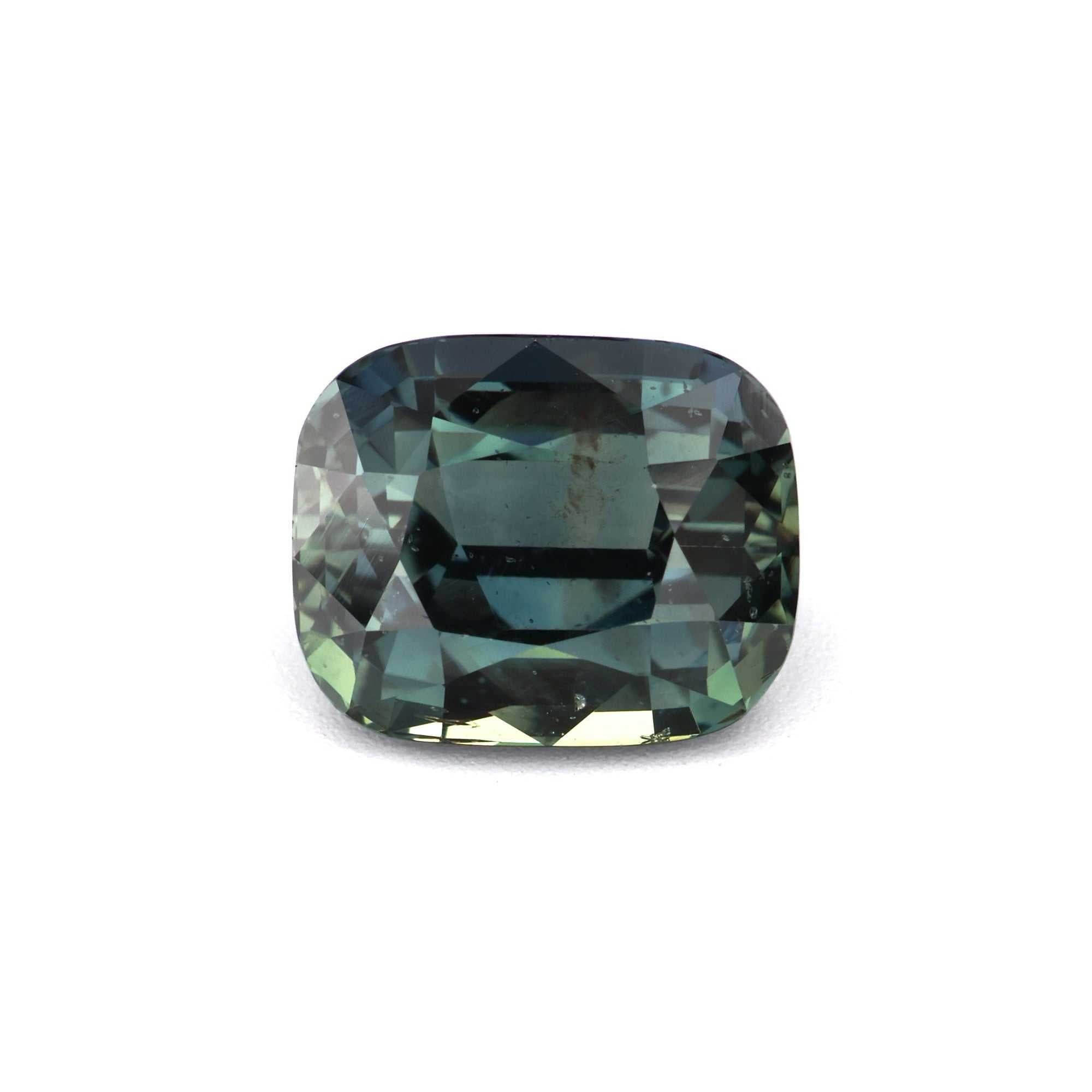
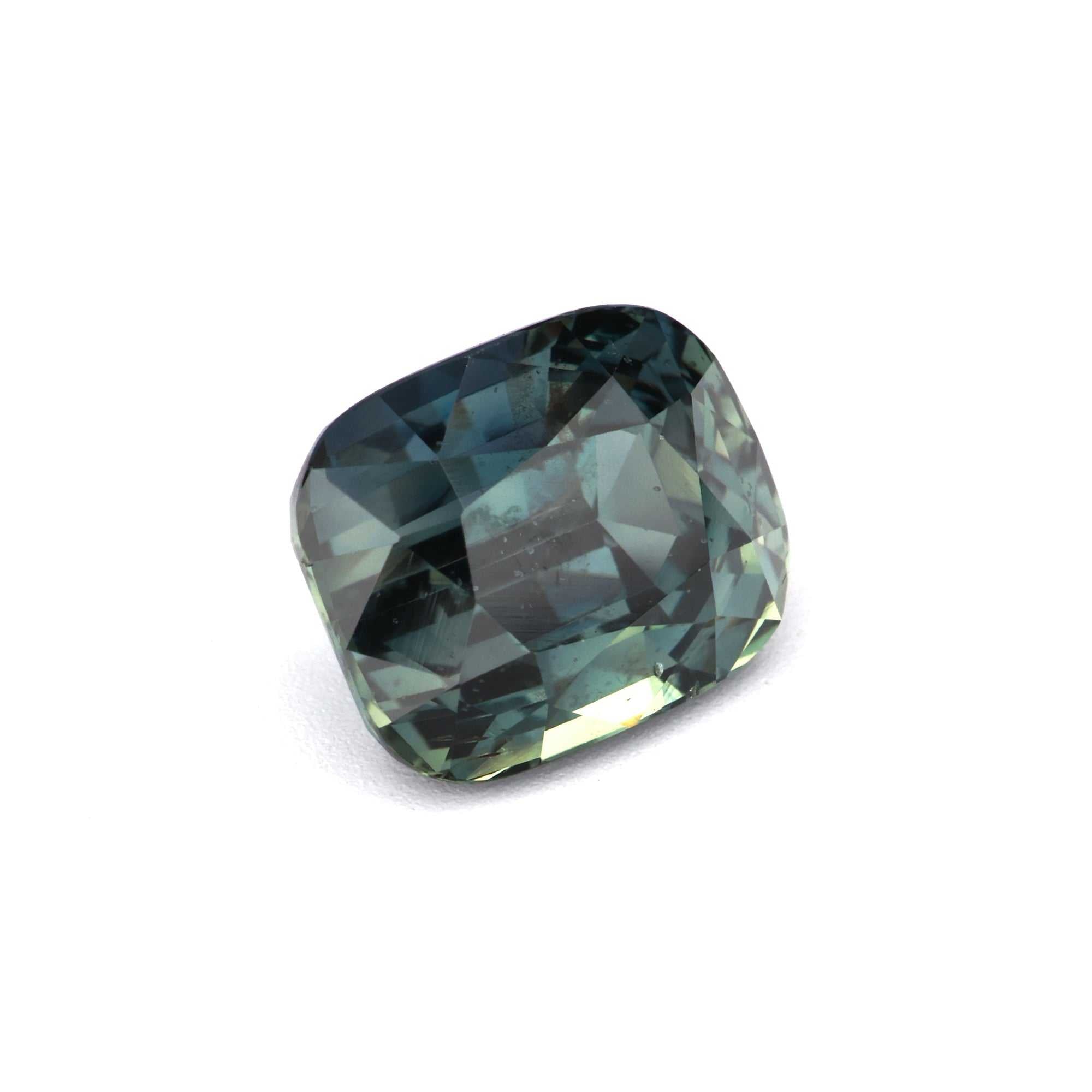
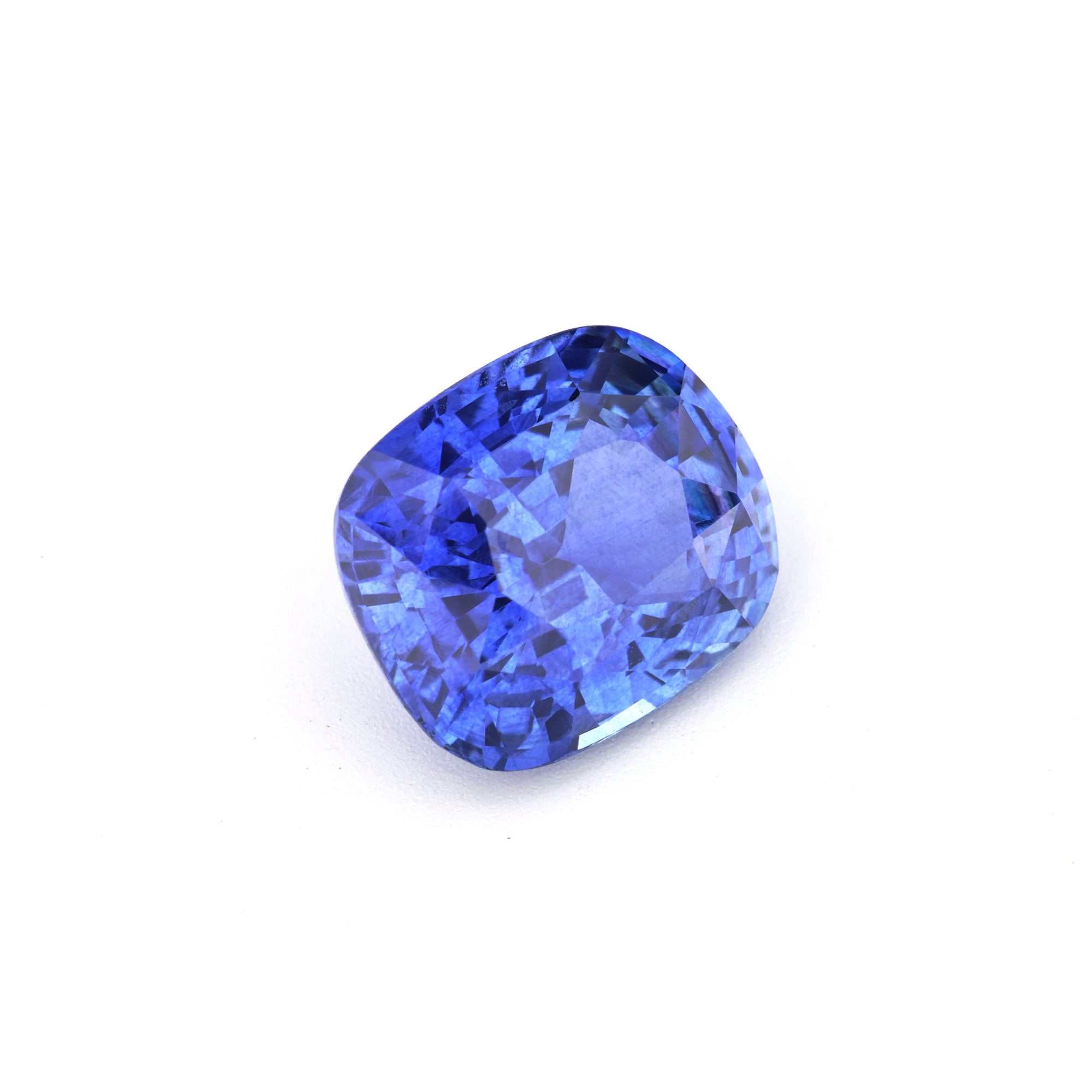
A cushion cut is a square or rectangular stone with curved sides and rounded corners — the outline resembles a pillow or cushion. The key distinguishing features: Curved sides (unlike a radiant cut with straight sides). Rounded corners (no sharp corners vulnerable to chipping). Variable depth (cushion cuts in sapphire tend to run deeper than oval cuts to concentrate color more effectively). Brilliant or modified brilliant faceting (the pavilion is cut with brilliant-style facets that return and scatter light).
Chunky Cushion (Traditional Brilliant): Large pavilion facets that produce distinct, identifiable flashes of light and color. Bold, rich, and saturated — color appears concentrated and intense. The traditional cushion cut style associated with antique and vintage jewelry. Generally better for colored stones because it concentrates and displays color more effectively.
Crushed Ice Cushion (Modified Brilliant): Many small, fragmented pavilion facets that break light into tiny reflections simultaneously. Color appears broken up and less saturated face-up. In colored stone cutting, it is less ideal because it reduces the depth and saturation of the color display. Unless you specifically prefer the glittery, diamond-like appearance of crushed ice, the chunky style is the stronger choice for a colored stone.
| L/W Ratio | Appearance | Best For |
|---|---|---|
| 1.00-1.05:1 | Square cushion — equal proportions, architectural | Buyers who want a square outline with soft corners |
| 1.05-1.15:1 | Slightly rectangular — the most popular cushion range | Widest appeal; flatters most hand types |
| 1.15-1.25:1 | Moderately rectangular cushion | Buyers wanting elongation without losing cushion character |
Window check: Hold face-up over a white surface. Windowing indicates a pavilion too shallow to return light. See our How Cut Affects a Sapphire guide. Extinction in the corners: Some corner extinction is normal in cushion cuts; excessive extinction that dominates the face-up view is a quality issue. Color distribution: View the stone from multiple angles and under different lighting to assess color evenness. Face-up size benchmarks: Check the stone against what our own cushions measure — see the table below.
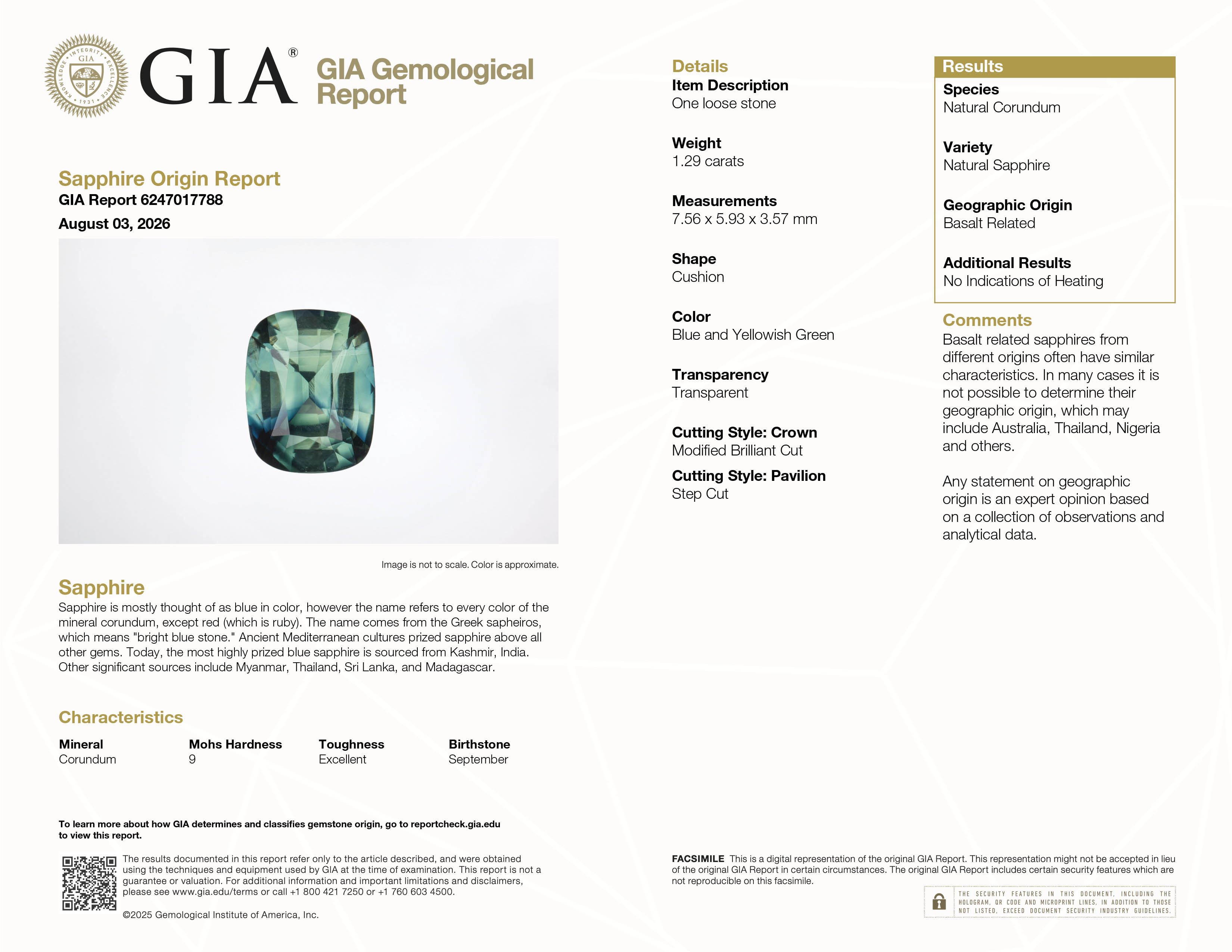
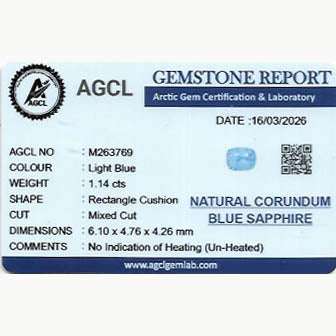
The figures below are measured from the 26 cushion sapphires we currently list — 20 rectangular and 6 square. All 26 have recorded dimensions, so none were excluded from the sample. Because a square cushion and a rectangular cushion of the same weight sit at different length-to-width ratios, blending them into one median would describe neither; the table covers the 20 rectangular cushions, and the 6 square cushions follow it.
| Carat band (median weight) | Rectangular cushions measured | Median face-up size | Range across those stones |
|---|---|---|---|
| 0.86 ct | 1 | 5.52 × 4.94 mm | one stone, not a range |
| 1.00–1.49 ct (median 1.24 ct) | 8 | 6.56 × 5.23 mm | 6.10–7.97 × 4.43–5.93 mm |
| 1.50–1.99 ct (median 1.75 ct) | 4 | 6.87 × 6.00 mm | 6.38–7.63 × 5.65–6.61 mm |
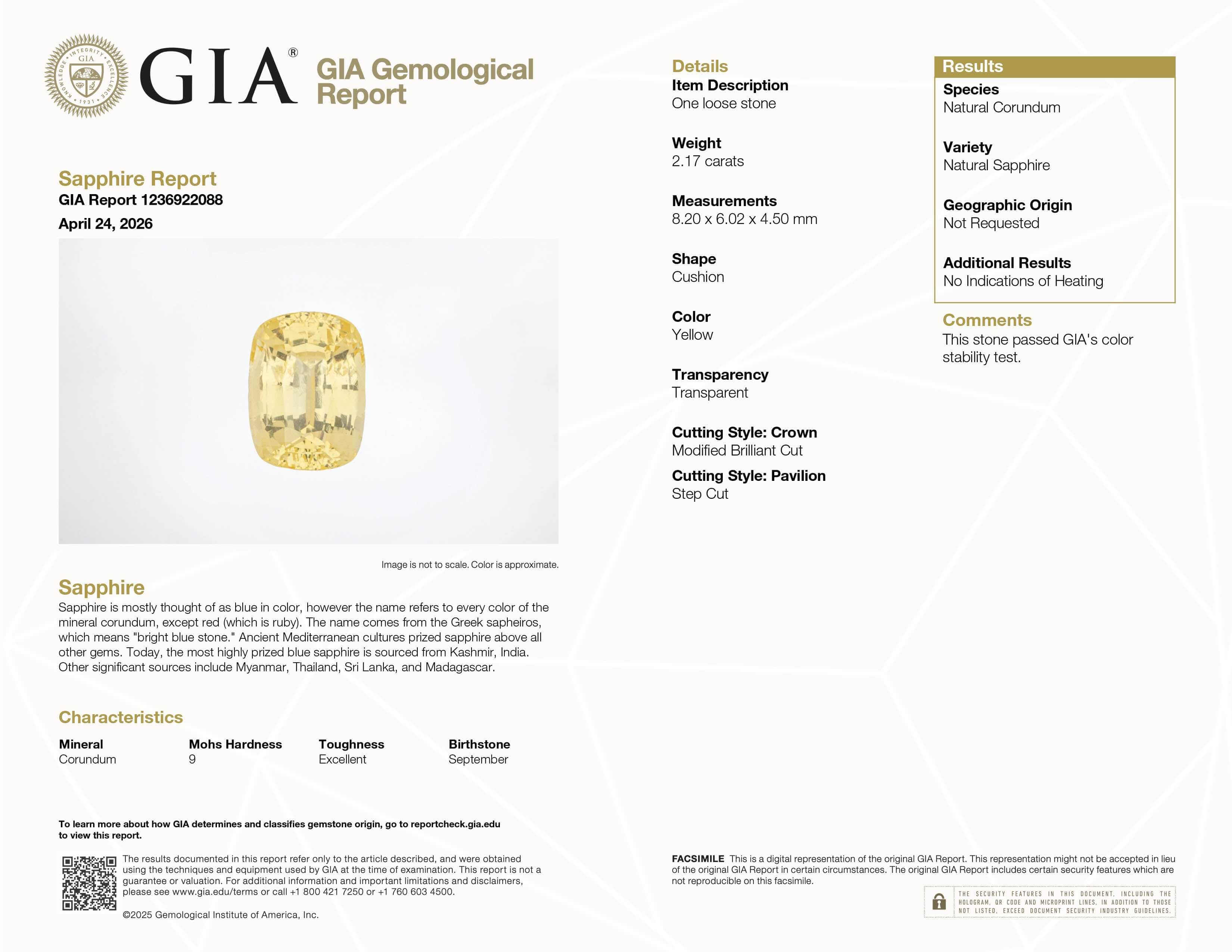
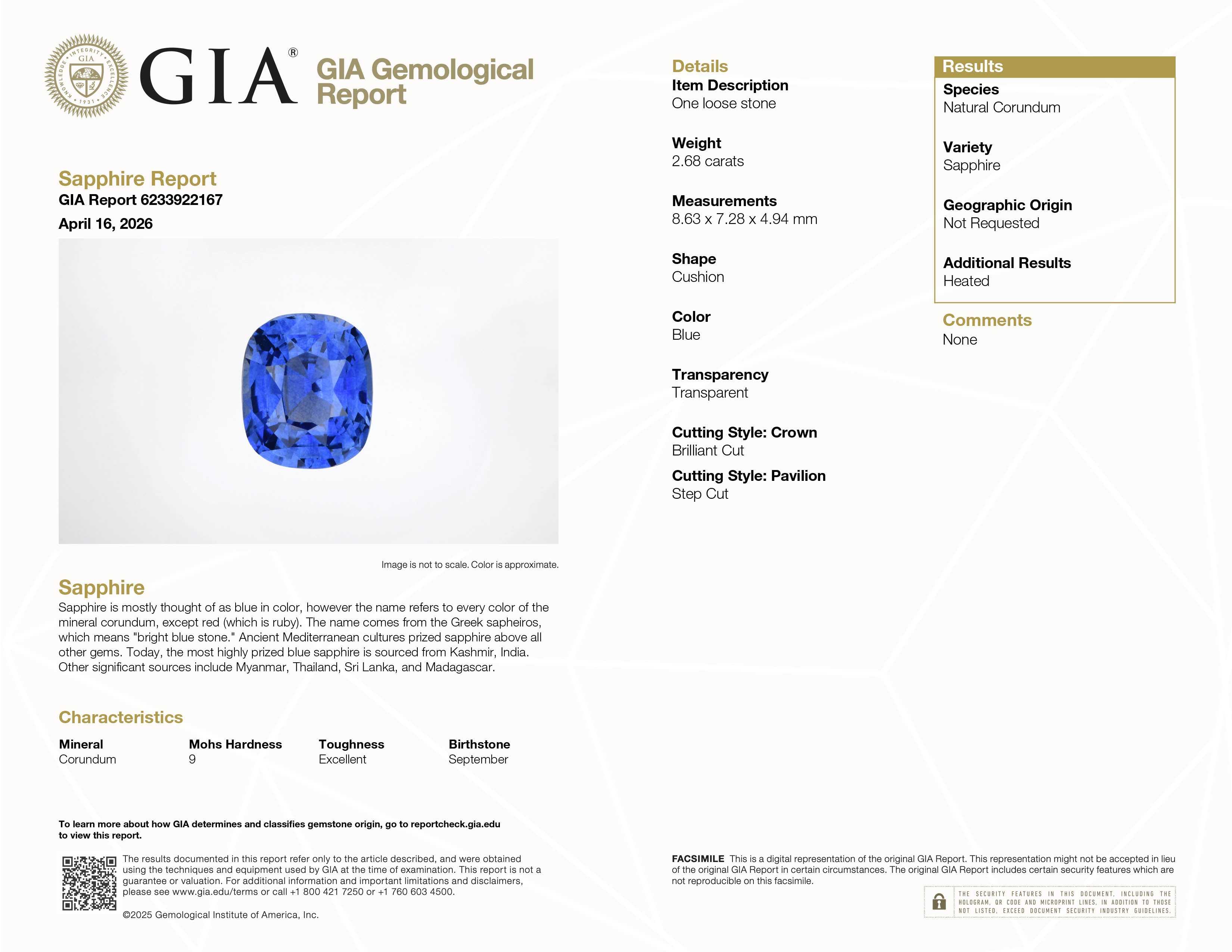
| 2.00–2.99 ct (median 2.17 ct) | 5 | 8.20 × 6.84 mm | 7.17–8.63 × 5.80–7.28 mm |
| 3.19 ct | 1 | 8.07 × 6.79 mm | one stone, not a range |
| 5.18 ct | 1 | 10.00 × 8.42 mm | one stone, not a range |
Measured from the 26 cushion sapphires we currently list, 18 September 2026. These are our own stones, measured — not a universal size chart. Figures are the medians of our recorded face-up length and width; the bands shown are the weights we actually hold, and no band is estimated from stones we do not have.
Three of the rows above rest on a single stone. Those are measurements of that one stone, not ranges, and we hold no rectangular cushion between 3.20 and 5.17 ct, so nothing is shown there.
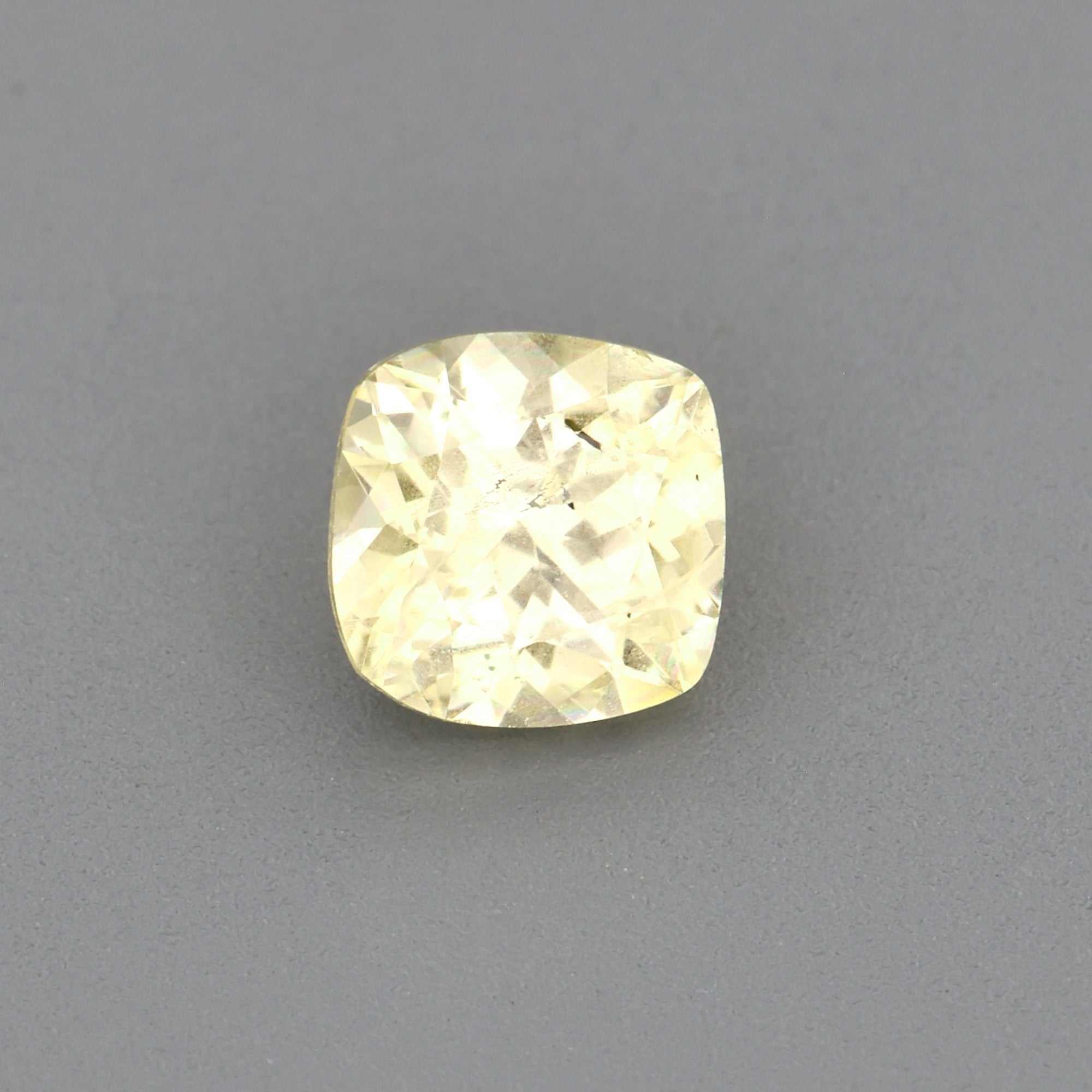
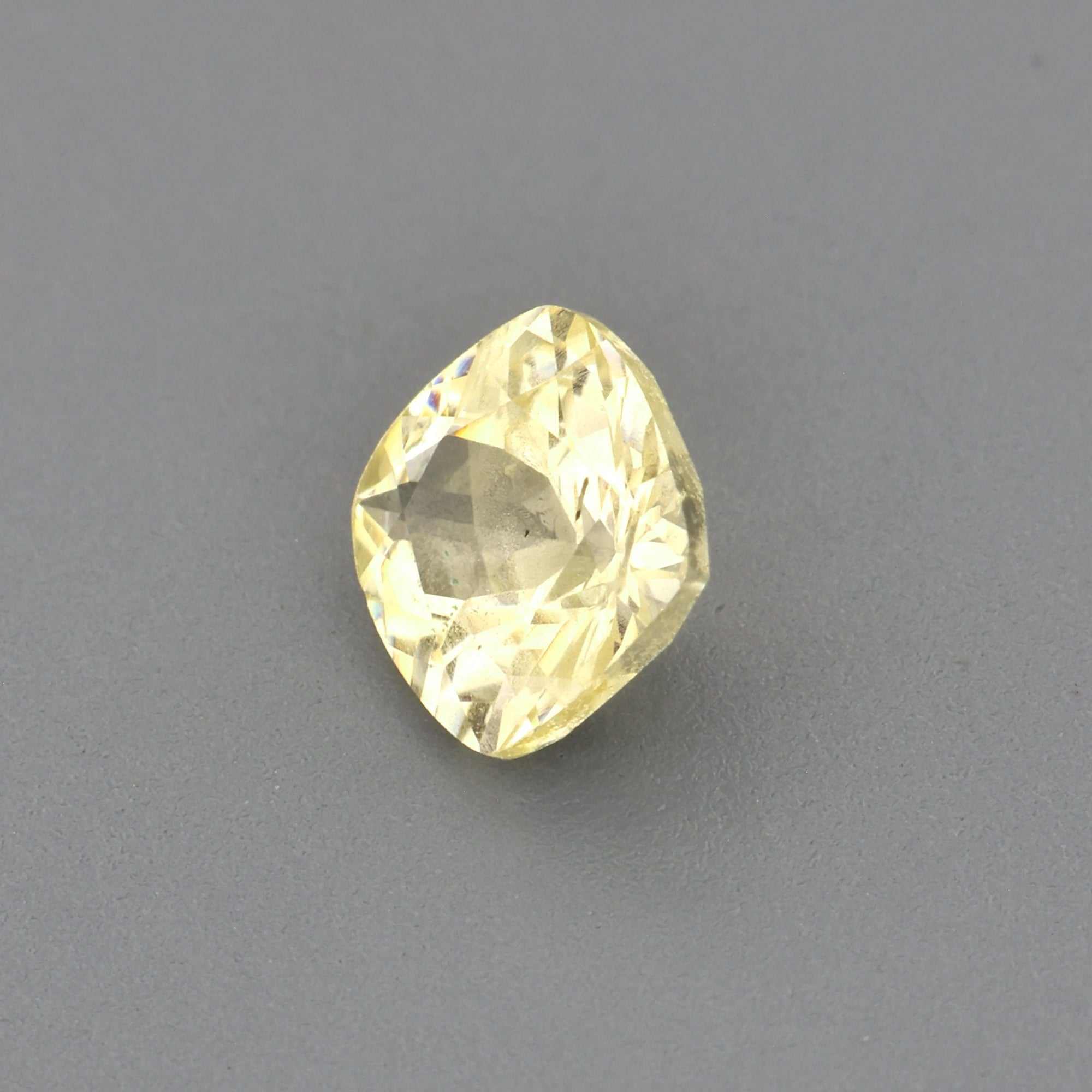
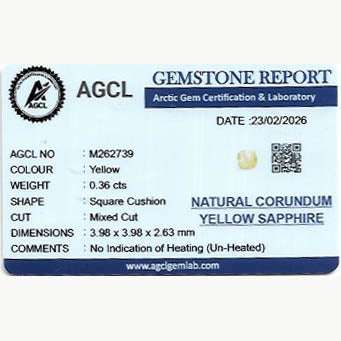
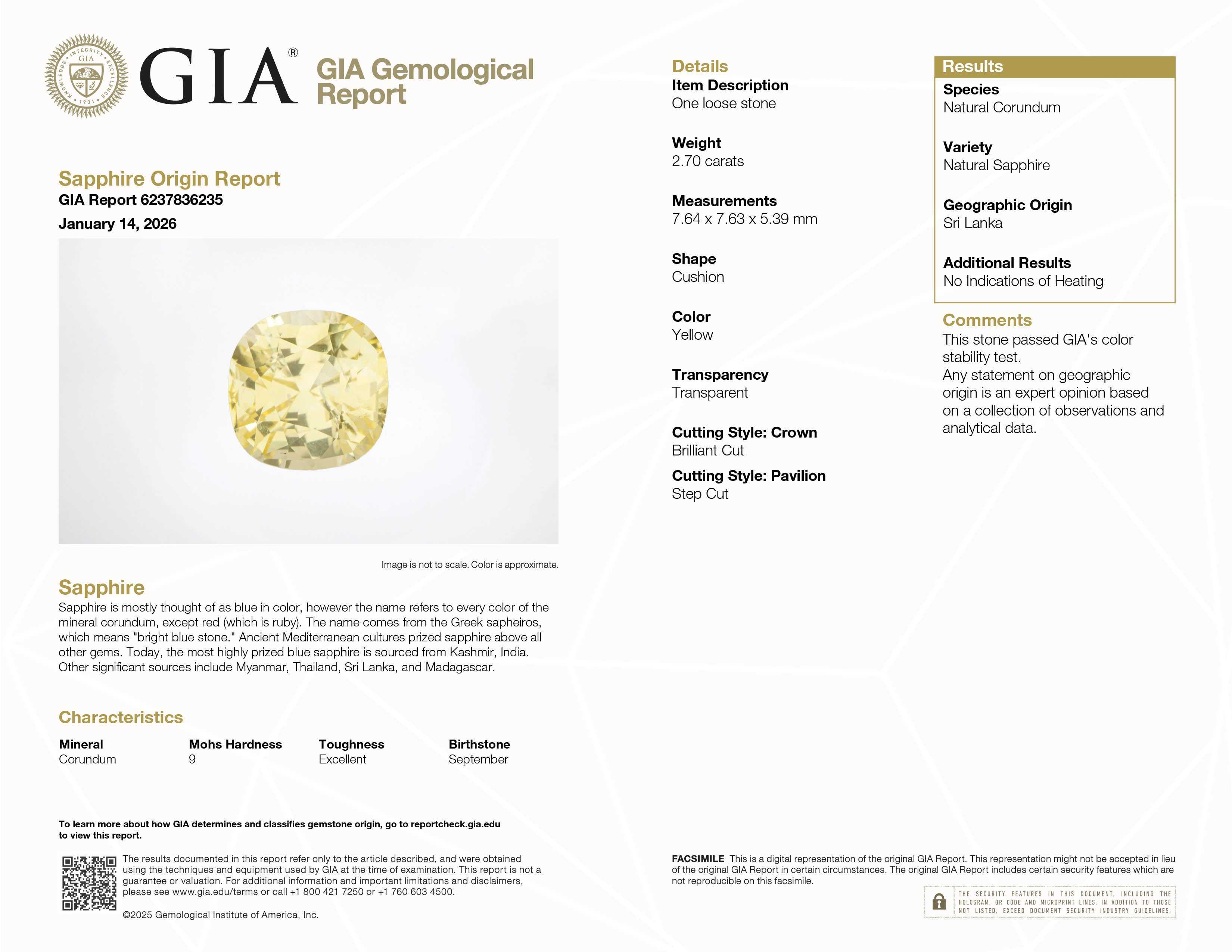
The six square cushions: 0.36 ct at 3.98 × 3.98 mm; 0.63 ct at 4.95 × 4.85 mm; 1.47 ct at 6.38 × 6.09 mm; and three between 2.04 and 2.70 ct measuring 6.58–7.64 × 6.37–7.63 mm, median 6.88 × 6.70 mm. We hold none between 1.50 and 1.99 ct.
A generic trade chart puts a 1 ct cushion at roughly 6.0 × 5.5 mm and a 2 ct at 7.8 × 7.1 mm. Our rectangular cushions at 1.00–1.49 ct (median 1.24 ct) run longer and narrower than that at 6.56 × 5.23 mm, while our square cushions at 2.04–2.70 ct measure 6.88 × 6.70 mm — smaller face-up than the 2 ct chart figure at more than 2 ct of weight. One chart row cannot describe both. Stones cut to retain weight measure smaller face-up than a chart assumes, so two stones of the same carat weight can differ in spread, and spread is what you are really comparing. That is a statement about these stones, not a claim that they are cut better or worse than anyone else's.
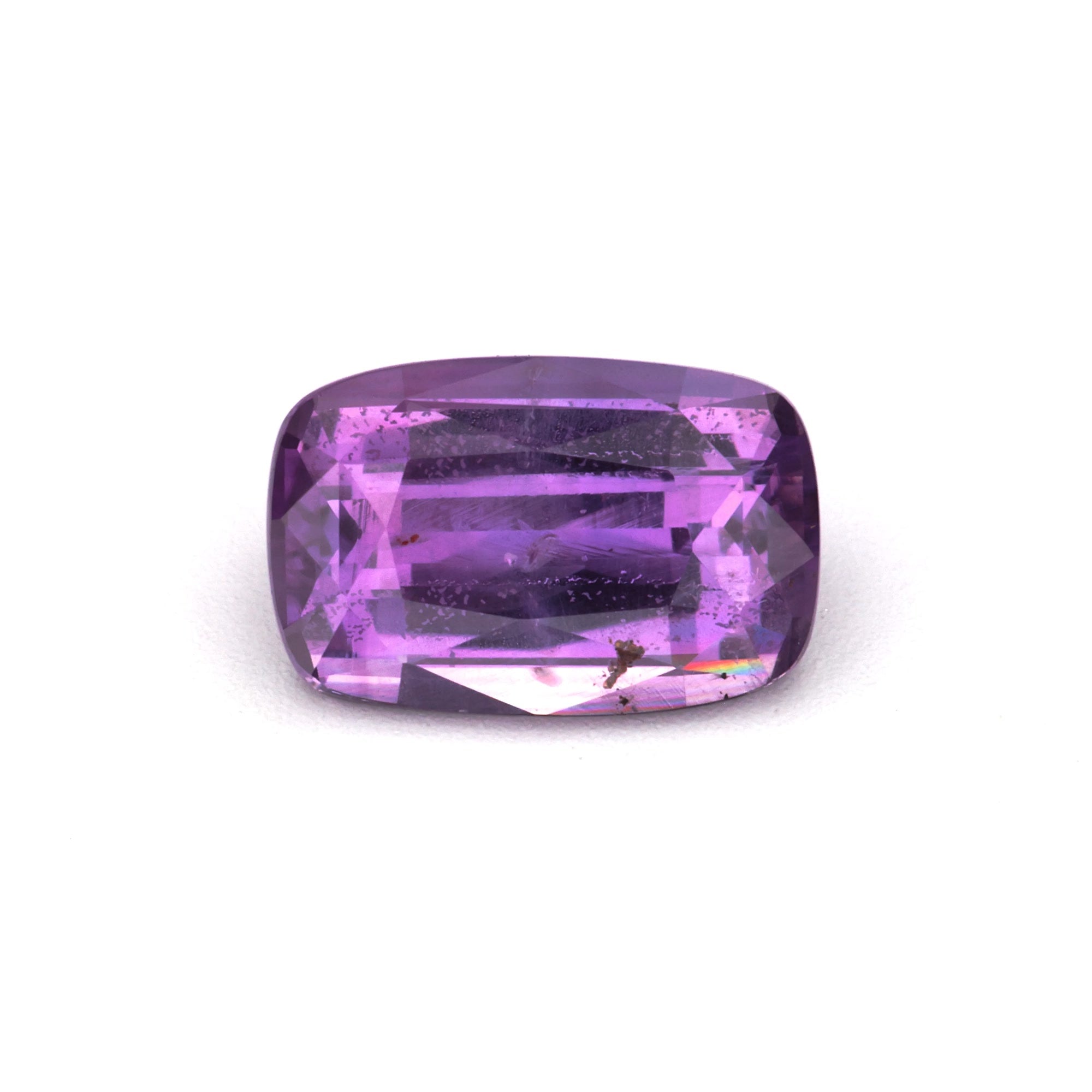
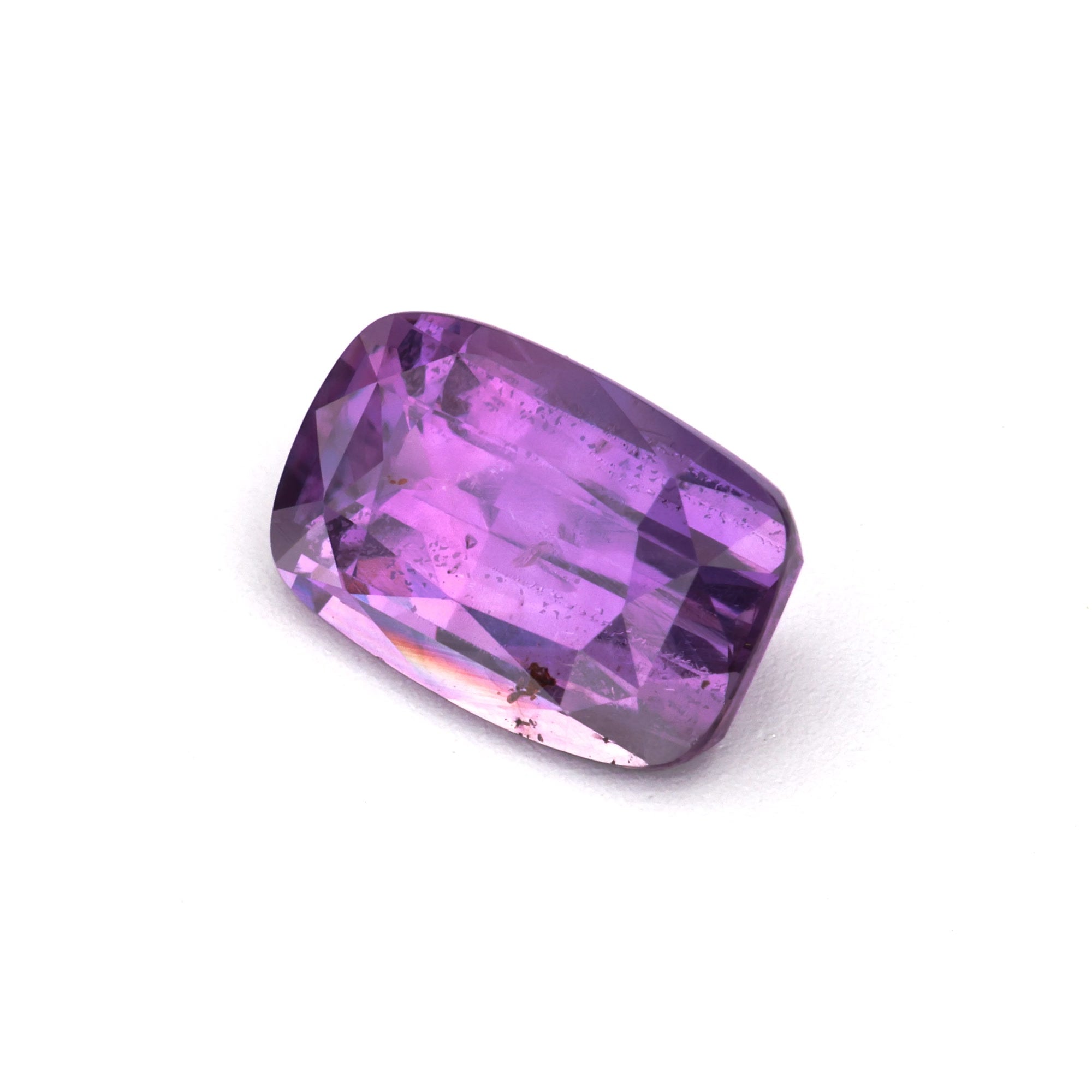
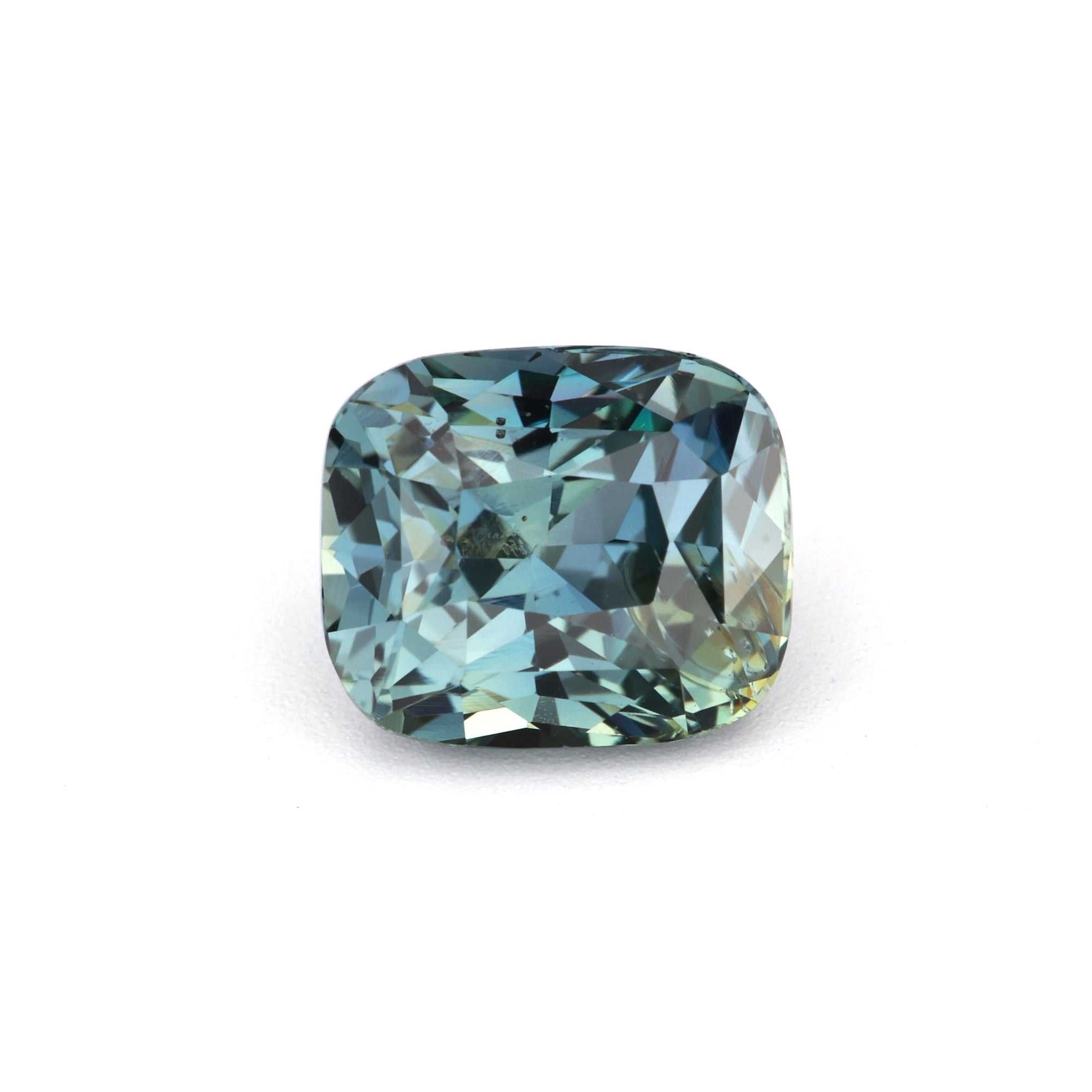
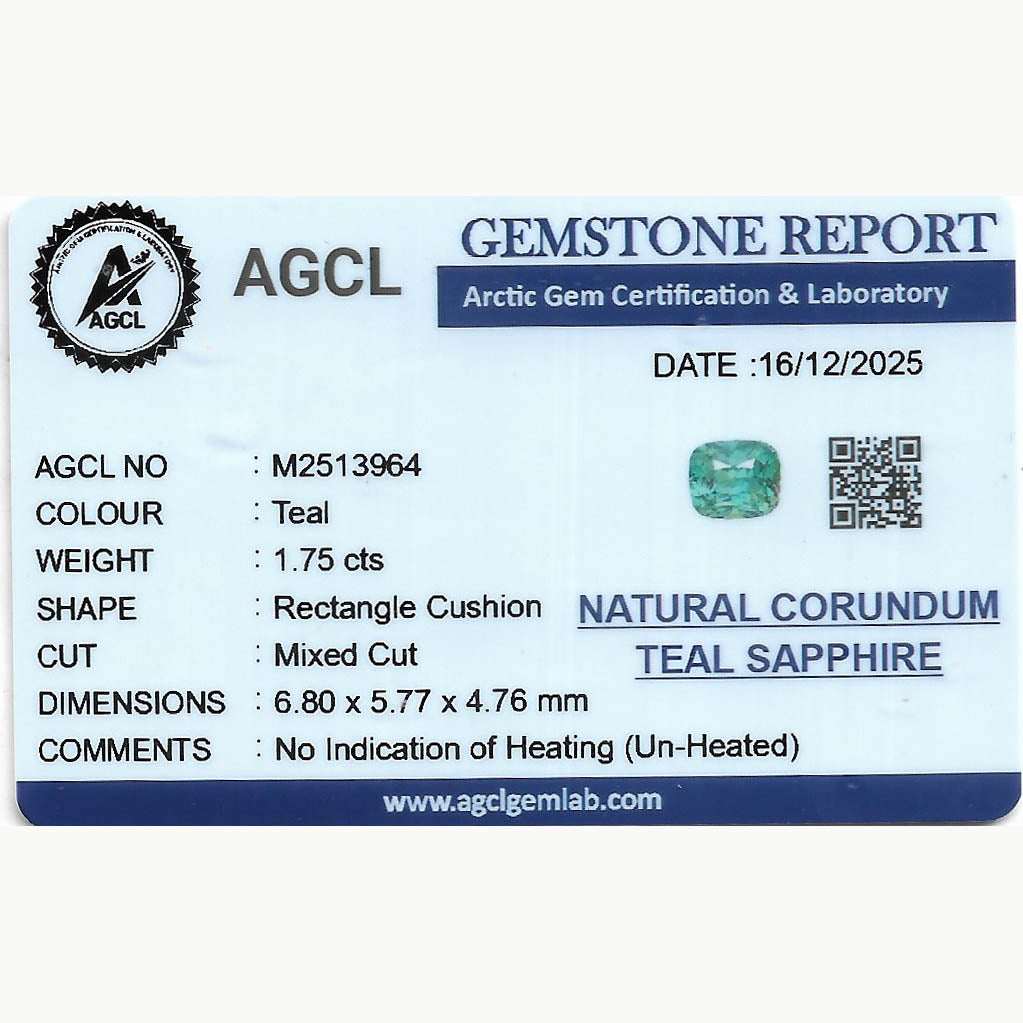
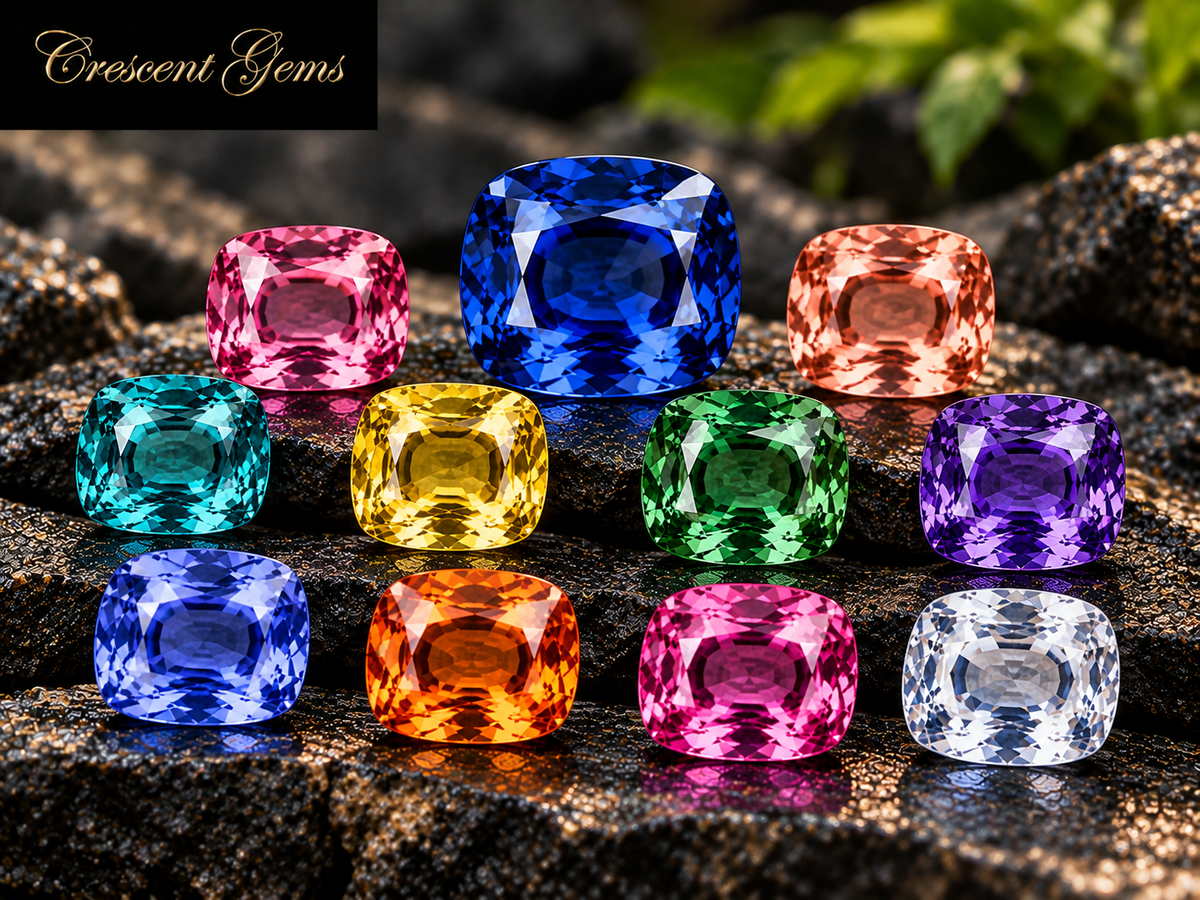
The cushion is the strongest cut choice for highly saturated material. Blue sapphire — arguably the single best cut for fine unheated blue. The concentrated pavilion deepens the blue to its maximum face-up intensity. Medium-dark to dark tone works best. Pink sapphire — vivid pink is stunning in a cushion. Padparadscha — the oval-cushion combination dominates padparadscha cutting. Teal sapphire — teal's pleochroism is amplified by the cushion's deeper pavilion geometry. Violet and purple sapphire — the cushion's depth makes violet and purple sapphires appear richer and more saturated.
Four-prong solitaire — see our best shapes for solitaire rings. Halo — see our halo ring guide and best shapes for halo rings. Vintage and milgrain settings — see our best sapphire colors for vintage-style rings. Three-stone — see our best shapes for three-stone rings. For metal see our metal comparison guide. For the full custom ring design process see our custom ring design guide.
The table below is built from the 26 cushion sapphires we currently list, square and rectangular together. Per-carat figures are each stone's listed price divided by its carat weight, rounded to the nearest dollar. Rows are shown only where we hold at least two stones of that colour in that weight range; where a row rests on two stones, read it as two points, not a range.
| Colour | Weights we list | Stones | Listed price per carat |
|---|---|---|---|
| Blue | 1.14–1.99 ct | 3 | $400 – $1,500 |
| Blue | 2.04–2.68 ct | 2 | $2,800 – $4,000 |
| Blue | 3.19–5.18 ct | 2 | $1,564 – $1,929 |
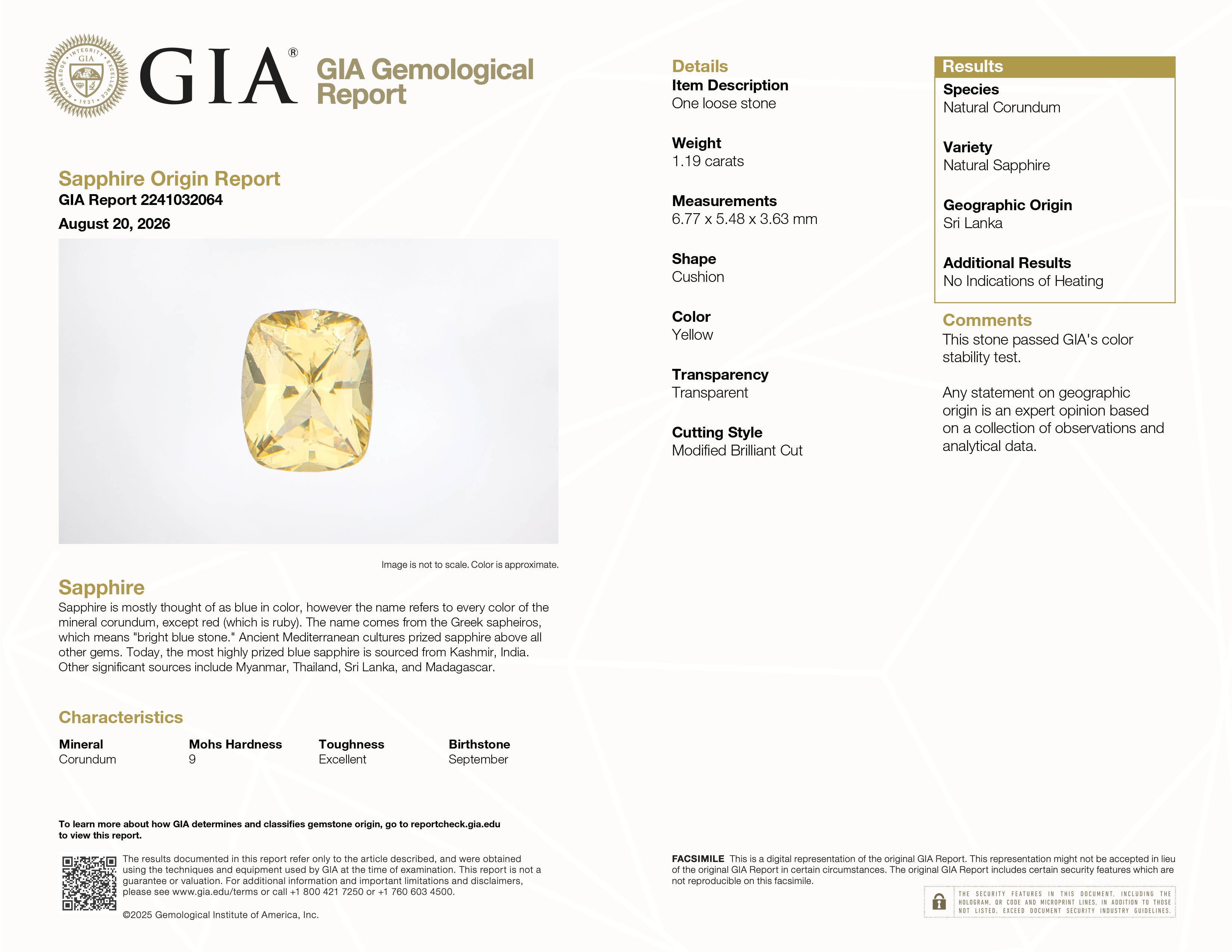
| Yellow | 1.13–1.19 ct | 2 | $600 – $1,600 |
| Yellow | 2.175–2.70 ct | 3 | $927 – $1,214 |
| Teal | 1.29–1.75 ct | 3 | $900 – $992 |
| Pink | 0.86–1.05 ct | 2 | $698 – $800 |
These are our own listed prices for cushion sapphires on this site as of 20 September 2026 — not a market survey and not a valuation. They move with stock; the product page is always the current price.
Figures above are approximate market guidance, not fixed quotes. Actual value varies by treatment, origin, colour, cut, clarity, and certification.
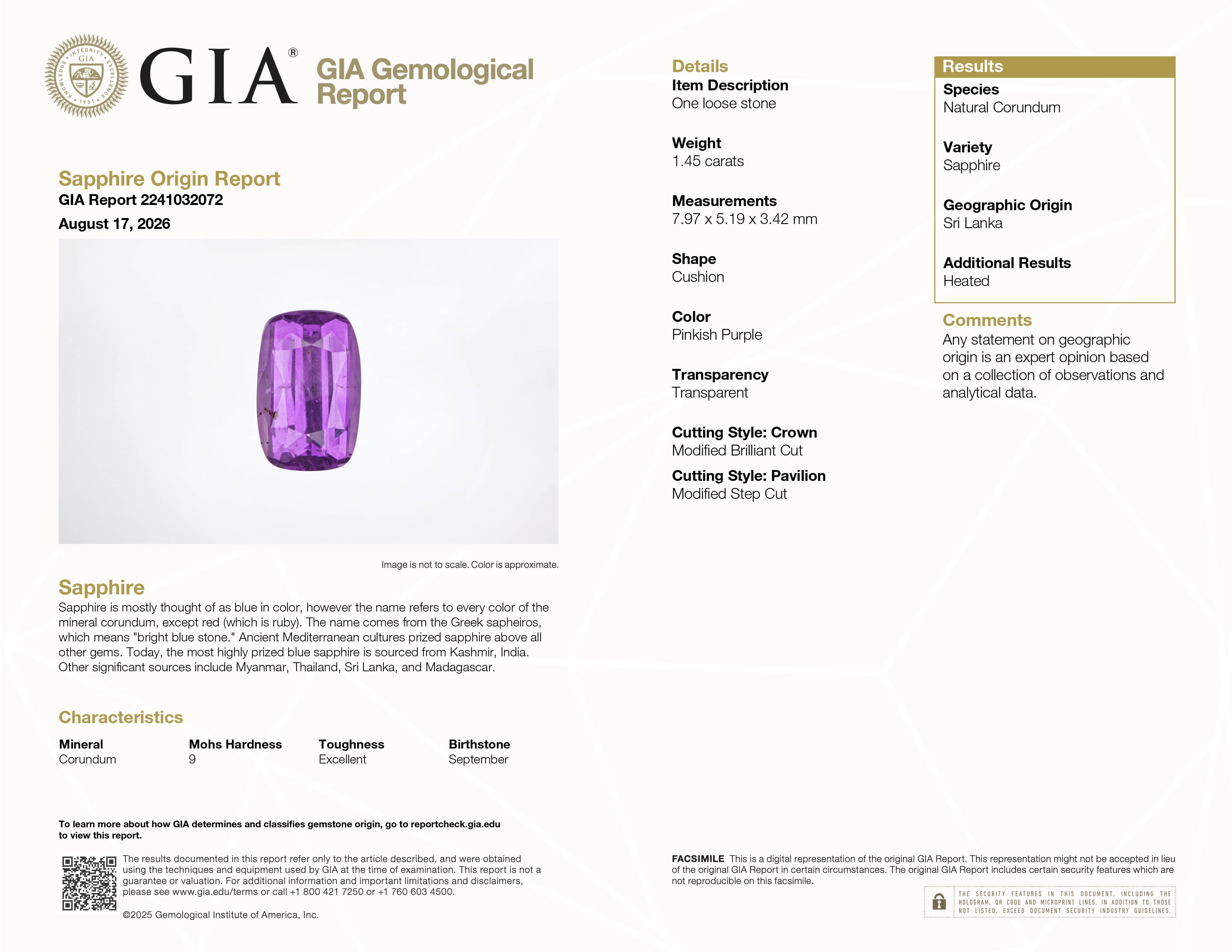
Nine further cushions are the only stone we list in their colour and size, so each is a single data point rather than a range: yellow at 0.36 ct ($250/ct); gray at 0.63 ct ($250/ct); violet at 1.29 ct ($774/ct); purple at 1.45 ct ($1,400/ct); green at 1.46 ct ($800/ct); brown at 1.47 ct ($271/ct); colour-change at 2.01 ct ($1,100/ct); pink at 2.12 ct ($2,009/ct); and orange at 2.19 ct ($2,190/ct).
The blue rows show why weight alone explains little: the two largest blues we list, at 3.19 and 5.18 ct, sit lower per carat than the 2.04–2.68 ct pair, because colour intensity and treatment differ between them.
For pricing context see our Sapphire Pricing Explained, what a good 1 carat costs, and what a good 2 carat costs guides. After purchase, insure your ring: see our jewelry insurance guide.
Browse our cushion sapphire collection — individually selected stones cut to our face-up quality standard, with complete treatment disclosure — or email crescentgems@gmail.com with your color, size, and budget. We respond within one business day.


CG8313
CG8437
CG8426
CG8357
CG8355


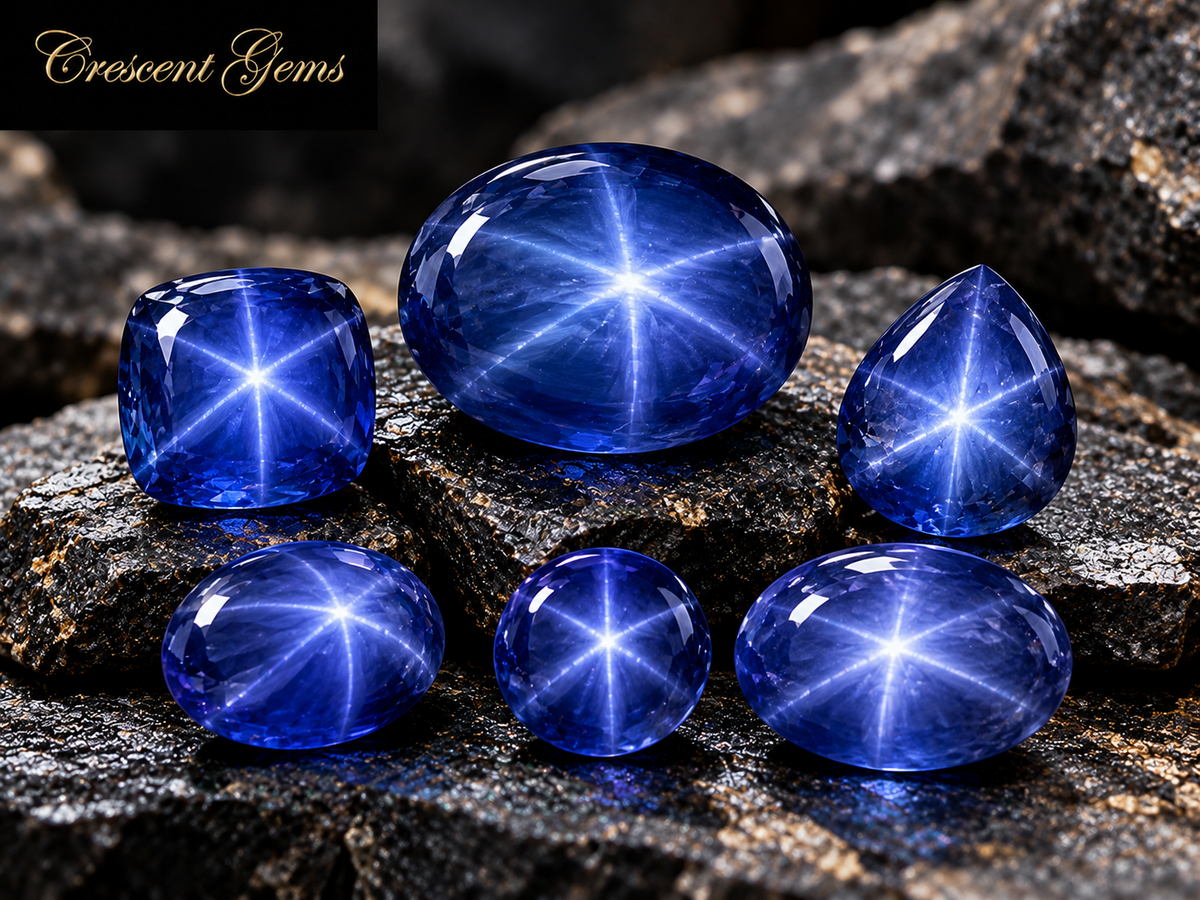
Blue Star Sapphire Price Guide — What They Cost and Why
Read moreabout Blue Star Sapphire Price Guide — What They Cost and Why
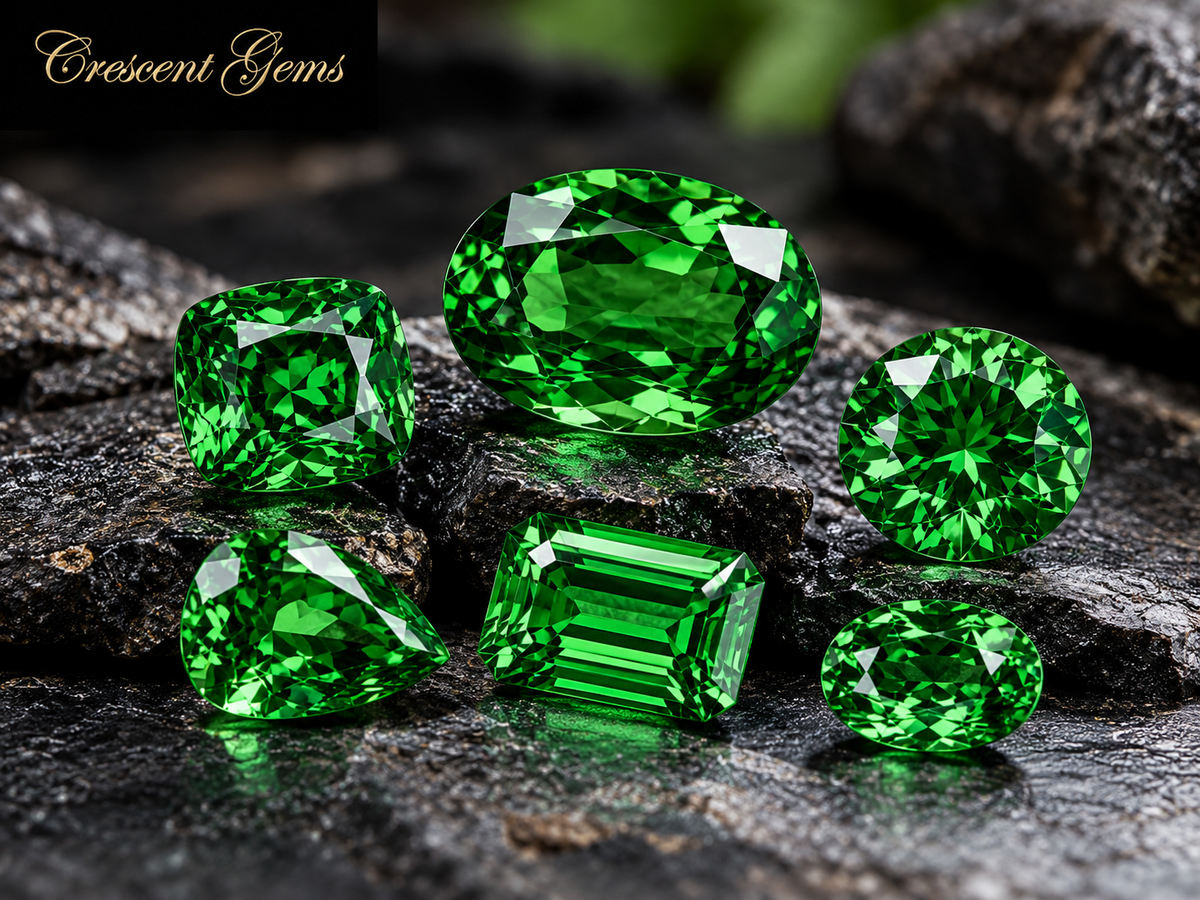
Tsavorite Garnet Price Guide — What They Cost and Why
Read moreabout Tsavorite Garnet Price Guide — What They Cost and Why
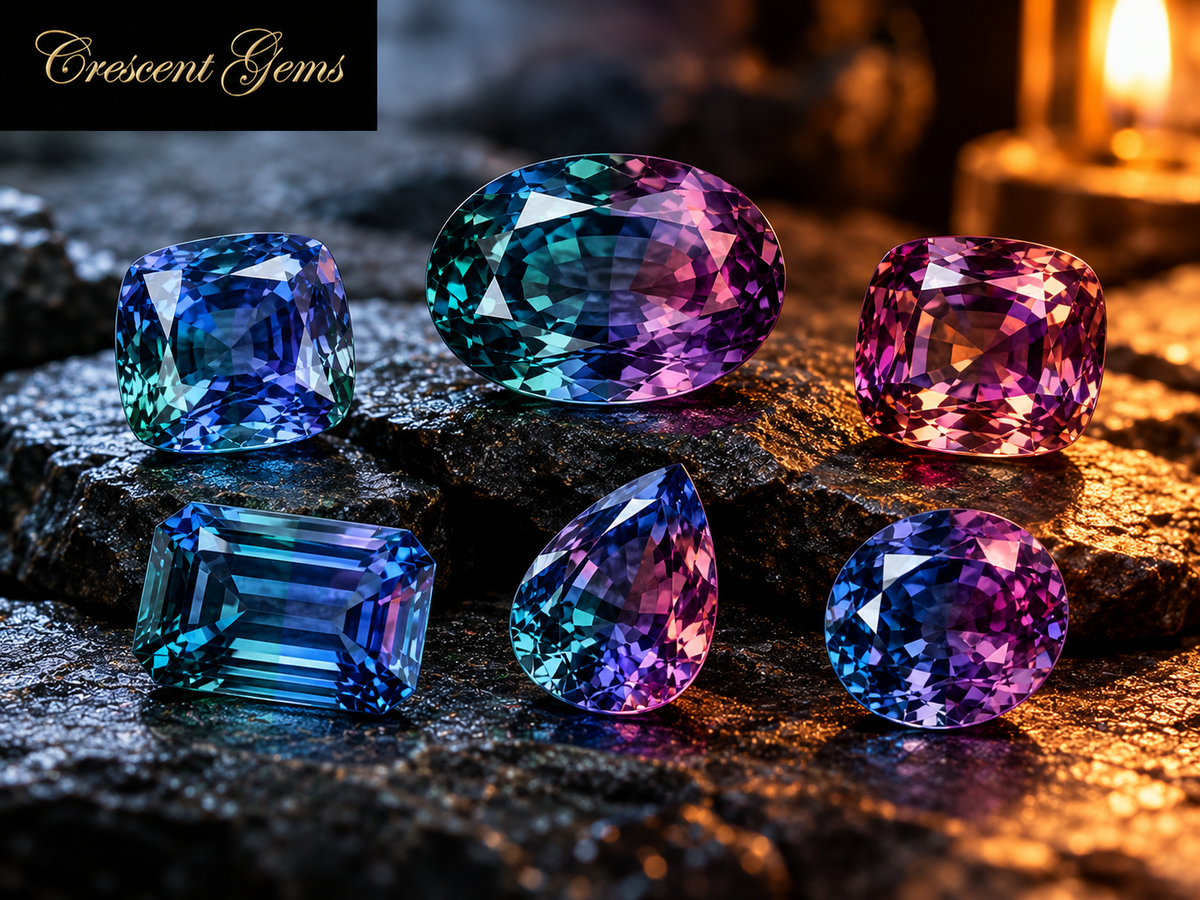
Color-Change Sapphire Price Guide — What They Cost and Why
Read moreabout Color-Change Sapphire Price Guide — What They Cost and Why
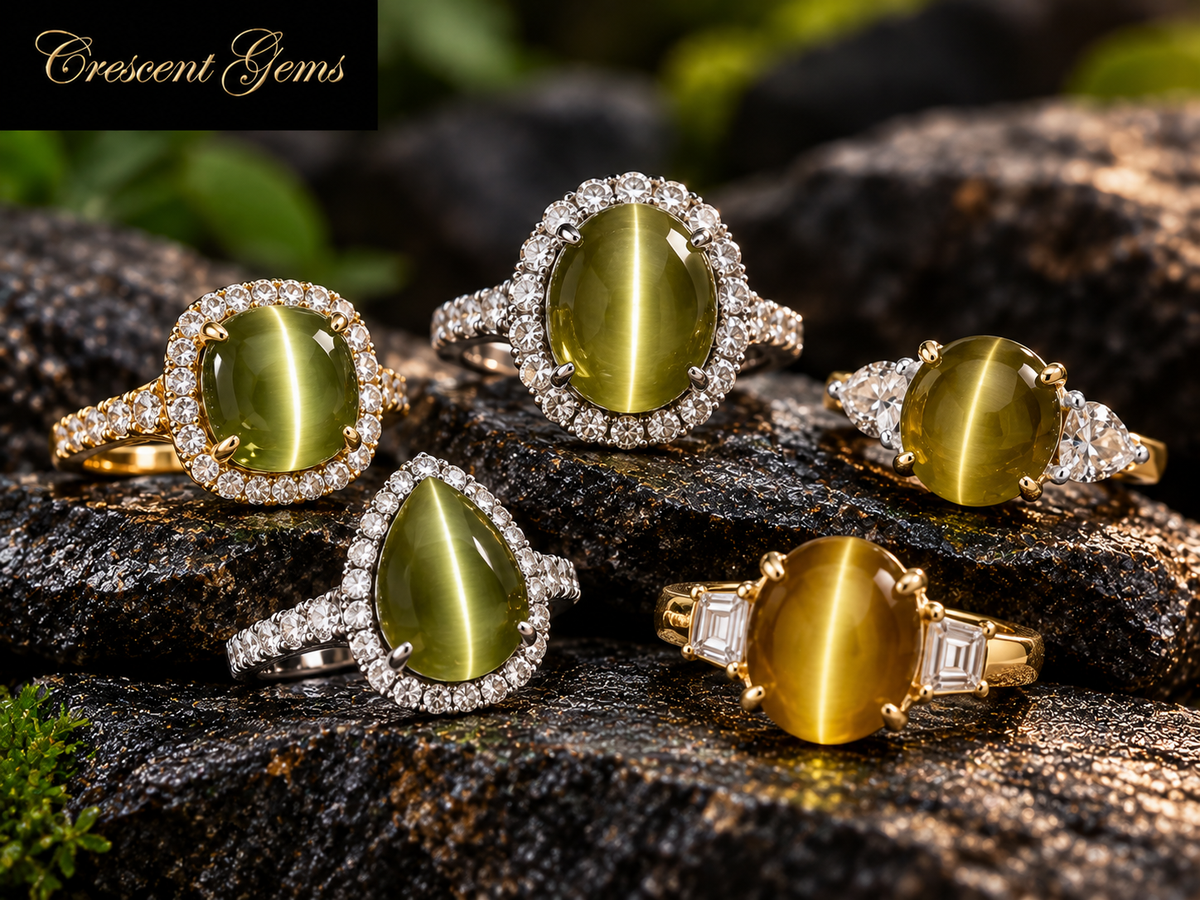
Is Cat's-Eye Chrysoberyl Good for an Engagement Ring?
Read moreabout Is Cat's-Eye Chrysoberyl Good for an Engagement Ring?
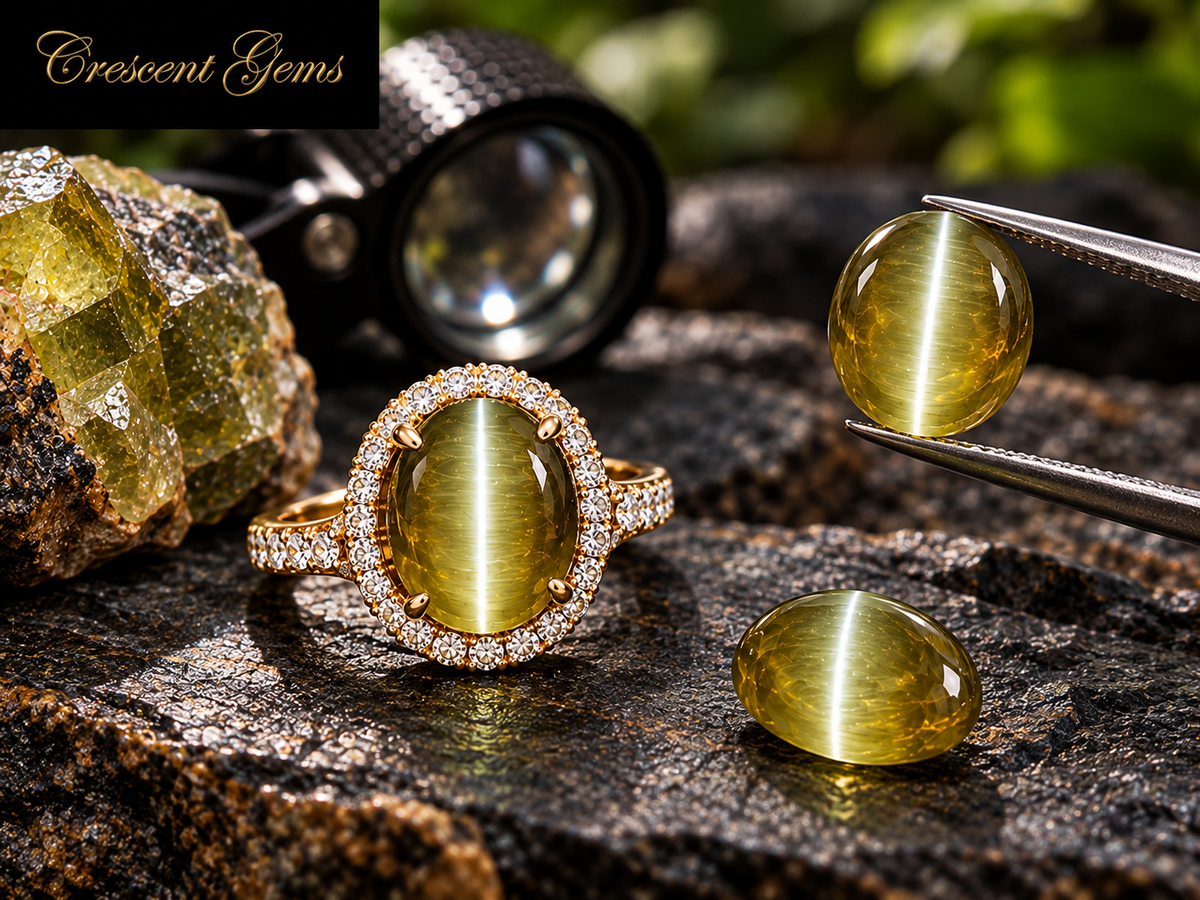
Cat's Eye Chrysoberyl Price Guide — What They Cost and Why
Read moreabout Cat's Eye Chrysoberyl Price Guide — What They Cost and Why