


- by Ahmed Shareek
The Best Sapphire Cut for an Engagement Ring — Shape, Brilliance, and What to Choose
- by Ahmed Shareek
New to buying sapphires? Start with our Ultimate Sapphire Buying Guide — the complete resource for colour, origin, treatment, and pricing.
It is easy to spend weeks comparing color and carat weight before giving serious thought to shape. That's a mistake. Cut shape is one of the biggest variables in how your sapphire actually looks in a ring, and understanding what is the best cut for a sapphire engagement ring means knowing what you're trading off with each option. No single shape wins every category. Cushion and oval outlines give light a longer path through the stone. Oval cuts make the stone appear larger face-up. Round cuts return the most light of the five shapes covered here. Emerald cuts offer architectural elegance. Pear cuts give you something distinctive and finger-flattering. This article covers all five, with honest tradeoffs for each. If you want to see how they compare on your own hand before committing, we carry all five cut styles as natural loose sapphires, and our home preview program ships stones directly to you before you buy.
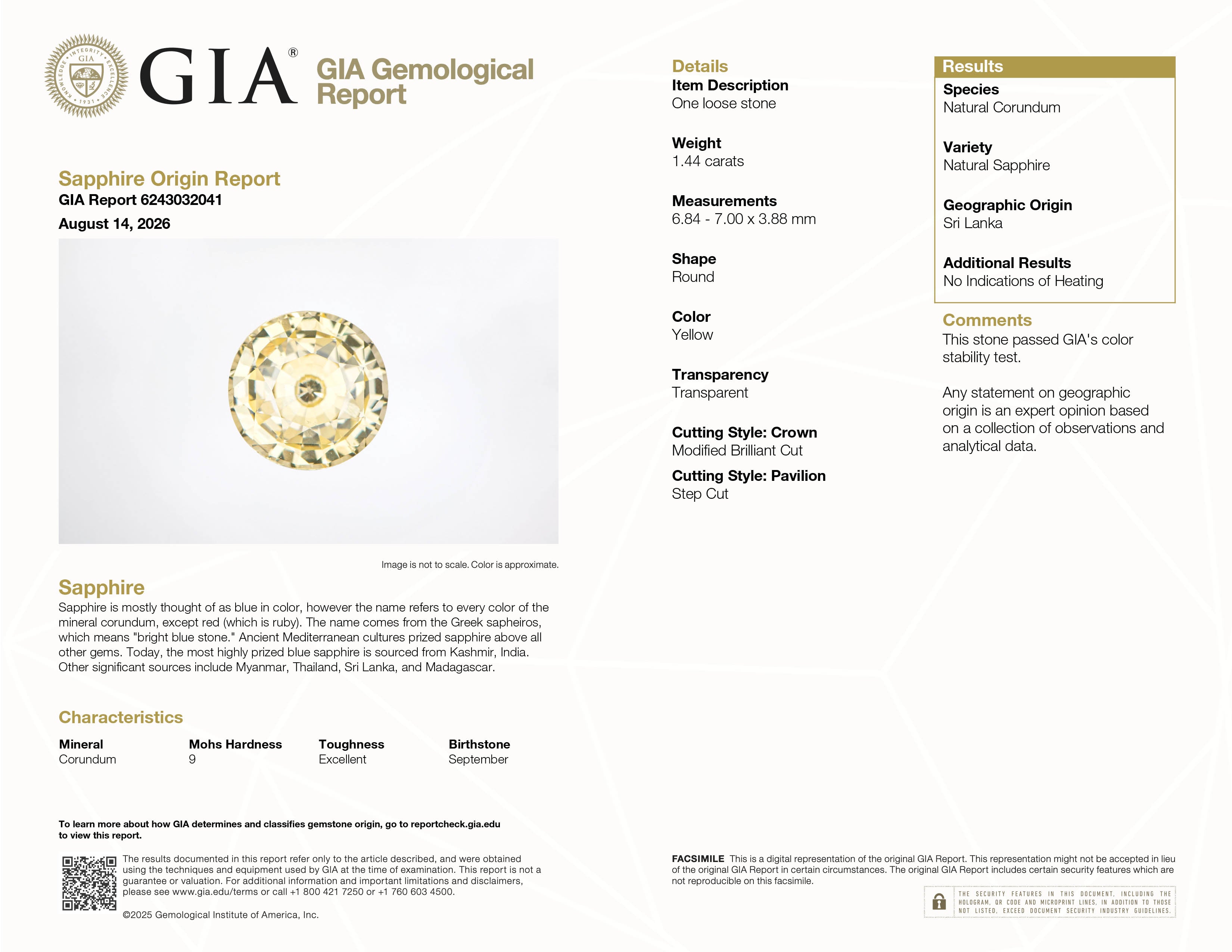
The honest answer: it depends on what you're optimizing for. Start with the fact that frames every list like this one: no laboratory grades cut on a colored stone. GIA's own published position is that it "doesn't grade or provide quality analysis for sapphire or other colored stones," and a colored-stone report carries no cut grade and no clarity grade at all. So every ranking of sapphire cuts you will ever read, including the one on this page, is an opinion rather than a measurement. What follows is our own view, formed from years of cutting and buying sapphire, and we mark it as ours wherever we state a preference. Cut choice in sapphires isn't a universal ranking, it's a set of tradeoffs between light return, face-up size, everyday durability, and aesthetics. Before you can choose the best sapphire shape for your engagement ring, you need to understand why cut affects sapphires so differently than it affects diamonds.
With diamonds, cut quality is largely about precision against a known standard. Sapphires are a different problem. They exhibit color zoning, color is concentrated in certain parts of the crystal rather than distributed evenly throughout, and they display pleochroism, meaning the stone shows slightly different colors depending on the direction light travels through it. Blue sapphires commonly show violetish-blue in one direction and greenish-blue in another. A skilled cutter has to make deliberate decisions about how to orient the rough before a single facet is cut.
That's why two sapphires that read as the same color on paper can look completely different in a ring. A report records what the stone is; it tells you nothing about how the cut makes that stone perform.

The depth of a sapphire's pavilion, the bottom portion of the stone, changes the path light takes before it comes back to your eye. The cut does not add color and cannot deepen it: color belongs to the stone. What a deeper pavilion does is lengthen that light path, and in our experience that is why the same rough reads fuller face-up as a deep cushion than it does as a shallow round. A shallower pavilion lets more light pass straight through, which is what opens up a stone that is cutting too dark. Colored-stone cutting commonly works within a pavilion depth of roughly 60 to 80 percent of the stone's width. That band is a tradeoff rather than a rule: depth weighs carat retention against light return, since a deeper pavilion keeps more of the rough's weight while a shallower one gives weight away to let light back out of material that would otherwise read too dark. Where an individual stone sits inside the band follows from its tone and its pleochroic axis.
The "window" effect is what happens when a cut is too shallow. Light enters through the top, travels straight through the stone, and exits the bottom without reflecting back. The stone looks pale and lifeless, almost like looking through glass. When you're evaluating any sapphire, tilt it slightly and look for a dark ring around a bright, transparent center. That see-through patch is a window, and we read it as a sign of poor proportions.
Color zoning means the blue in a raw sapphire crystal isn't spread evenly through the material. It exists in bands or concentrated areas. A cutter's job is to orient the rough so that color zone sits directly beneath the table facet, the large flat surface at the top of the finished stone. When that's done correctly, light traveling through the stone picks up color evenly, and the gem looks uniformly blue face-up.
When it's done poorly, one side of the stone looks darker, or a greenish tint appears in one quadrant. Symmetrical sapphire facet patterns are what prevent those dead spots. It is also why we find sapphire cutting more technically demanding than diamond cutting: there's no universal template to follow. Every stone requires its own solution.
Both of these shapes trade some light return for a longer path through the stone, which is exactly what you want when the whole point of choosing a sapphire is its rich, distinctive color. When somebody asks us about the best sapphire shape for an engagement ring and color is the top priority, these are the two we put in front of them first. That is our preference, not a graded result.
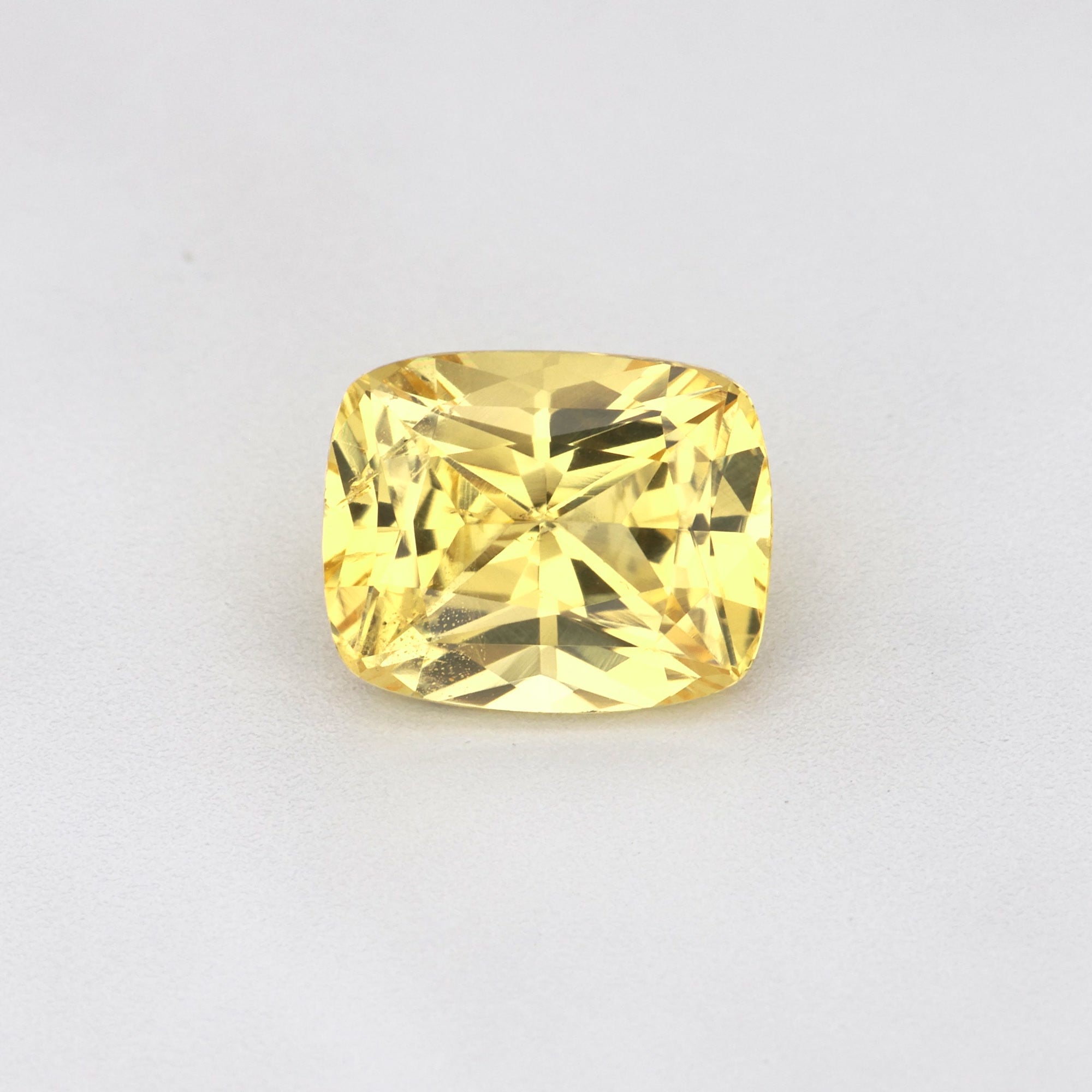
The cushion cut features a large, open table and softly rounded corners, and its facet arrangement returns light more softly than a round brilliant does: a broad, warm return rather than a sharp sparkle. Its pavilion depth and broader facet pattern lengthen the light path through the stone, so the color the stone already has tends to read fuller face-up. The cut is not adding anything; it is changing how much light comes back and how the color reads. If you want your sapphire to read as richly colored from across a room, the cushion cut is the one we would point you to first.
Cushion cuts are well suited to daily wear because there are no sharp corners or pointed tips to catch a knock. The rounded outline spreads stress around the stone's perimeter rather than loading it onto a point. For settings, we like a prong here, because it exposes the full face of the stone without obstruction and lets the color do its job; a four-prong or six-prong solitaire with open sides is our usual pairing. That recommendation is ours and nobody else's, because no laboratory publishes guidance on settings for sapphire.

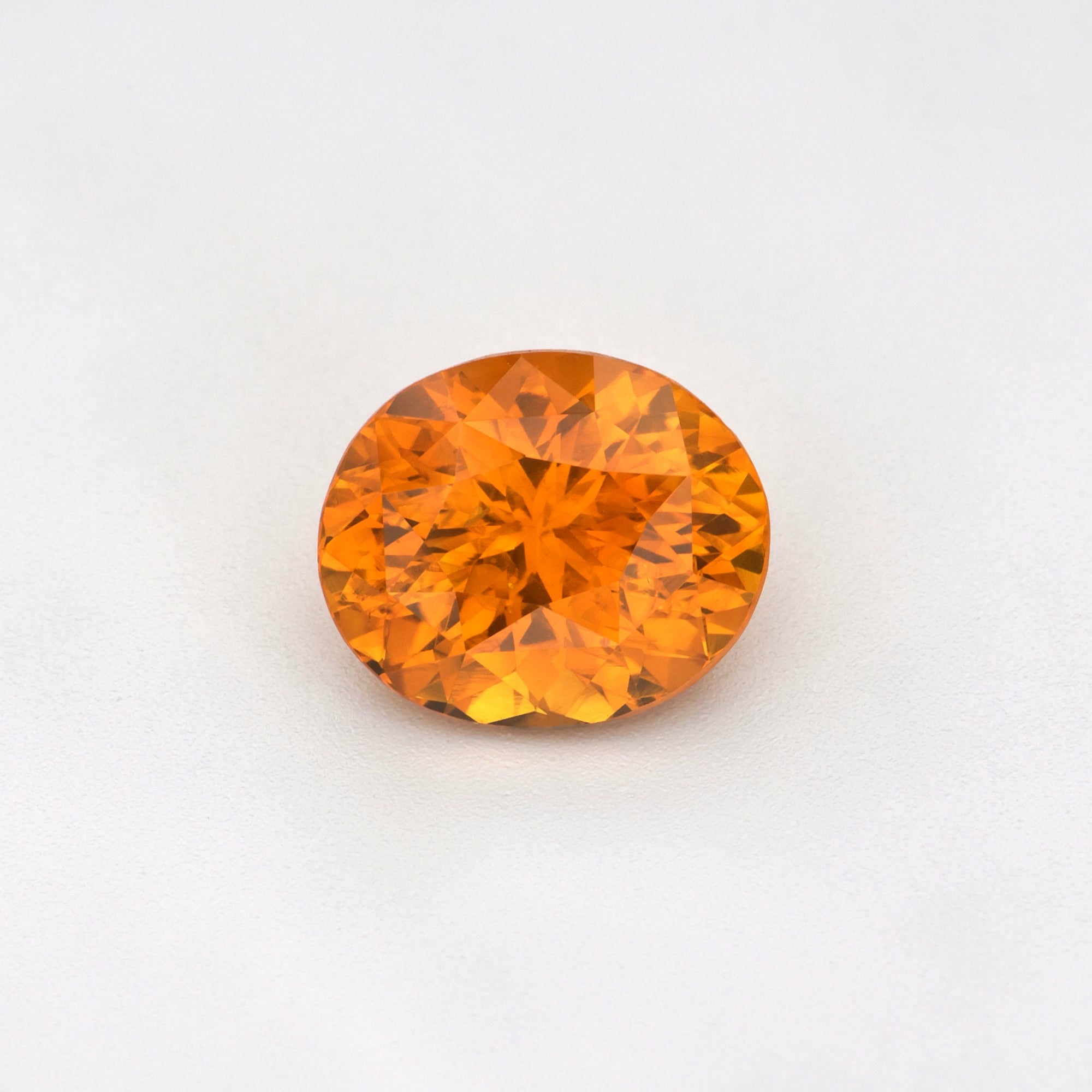
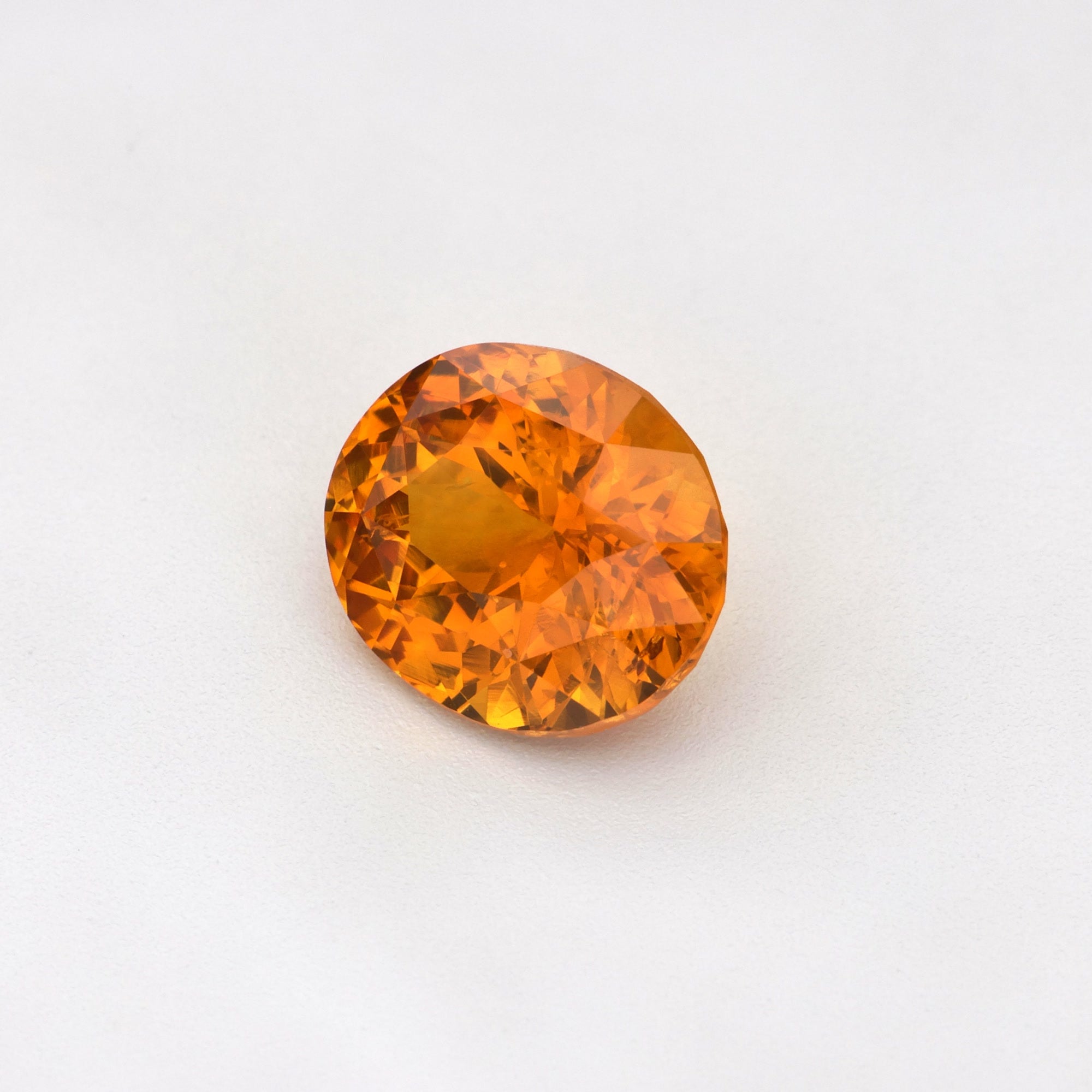
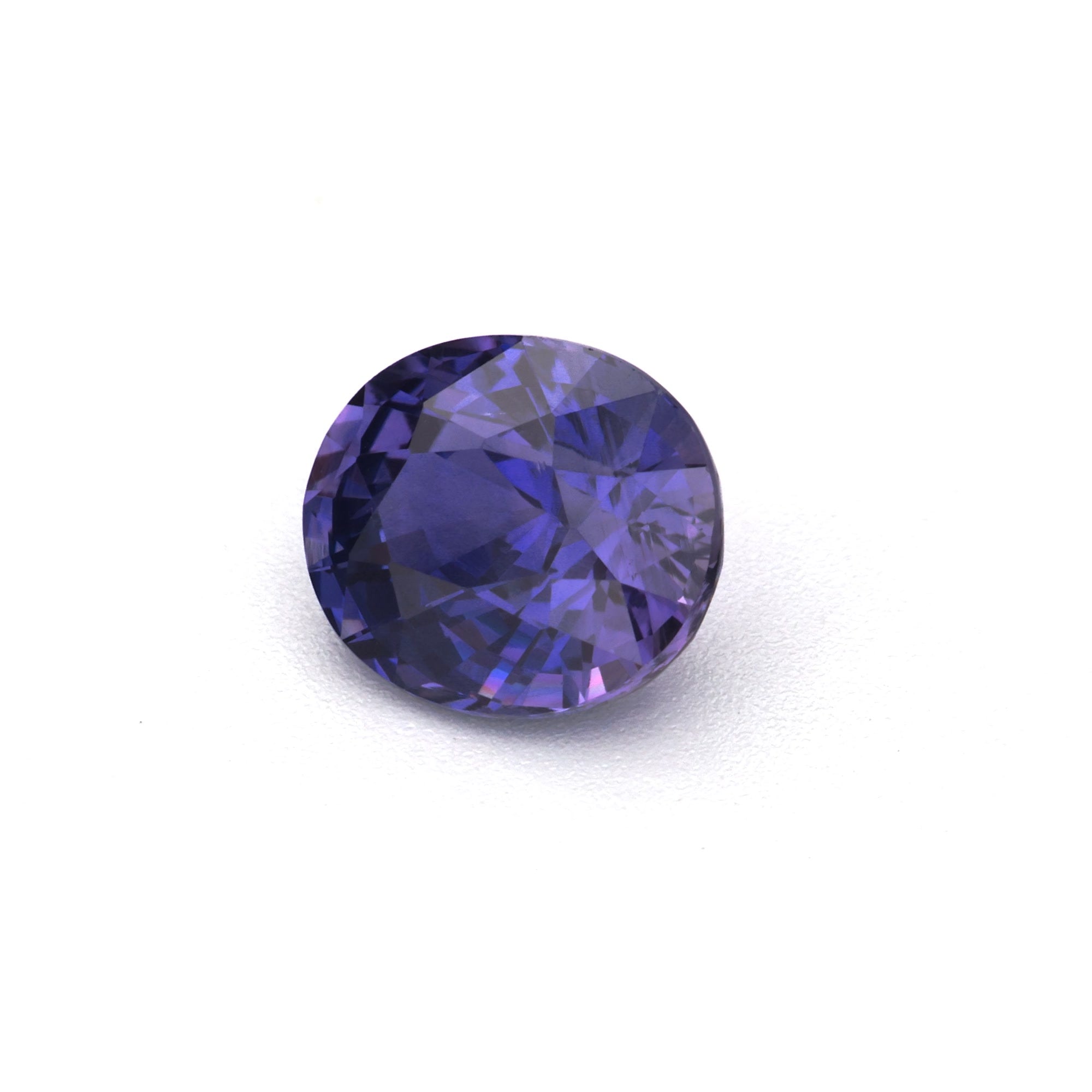
The oval cut solves two problems at once. Its elongated shape makes a 1.5-carat oval appear noticeably larger face-up than a 1.5-carat round or cushion of identical weight, because the cut is shallower and spreads the stone's mass across a wider surface area. At the same time, the oval's geometry directs light through a broader face, which spreads the light return more evenly across the stone.
The elongated silhouette also flatters nearly every hand and finger shape. The honest tradeoff is at the tips: oval cuts have slightly pointed ends that are more vulnerable to chipping than fully rounded edges. We suggest a prong setting with adequate coverage at the tips if color is your priority, or a bezel, which wraps metal around the stone's full perimeter, if the ring is going to be worn hard. Again, that is our recommendation rather than a published standard. One more thing to watch: oval sapphires can show a bow-tie effect, a dark shadow running across the stone's center. It ranges from barely noticeable to quite distracting. Always request video of an oval stone in motion before buying.
These three cuts each serve a different buyer priority. Round returns the most light of the five. Emerald is the sophistication play. Pear is for the buyer who wants something no one else in the room is wearing.
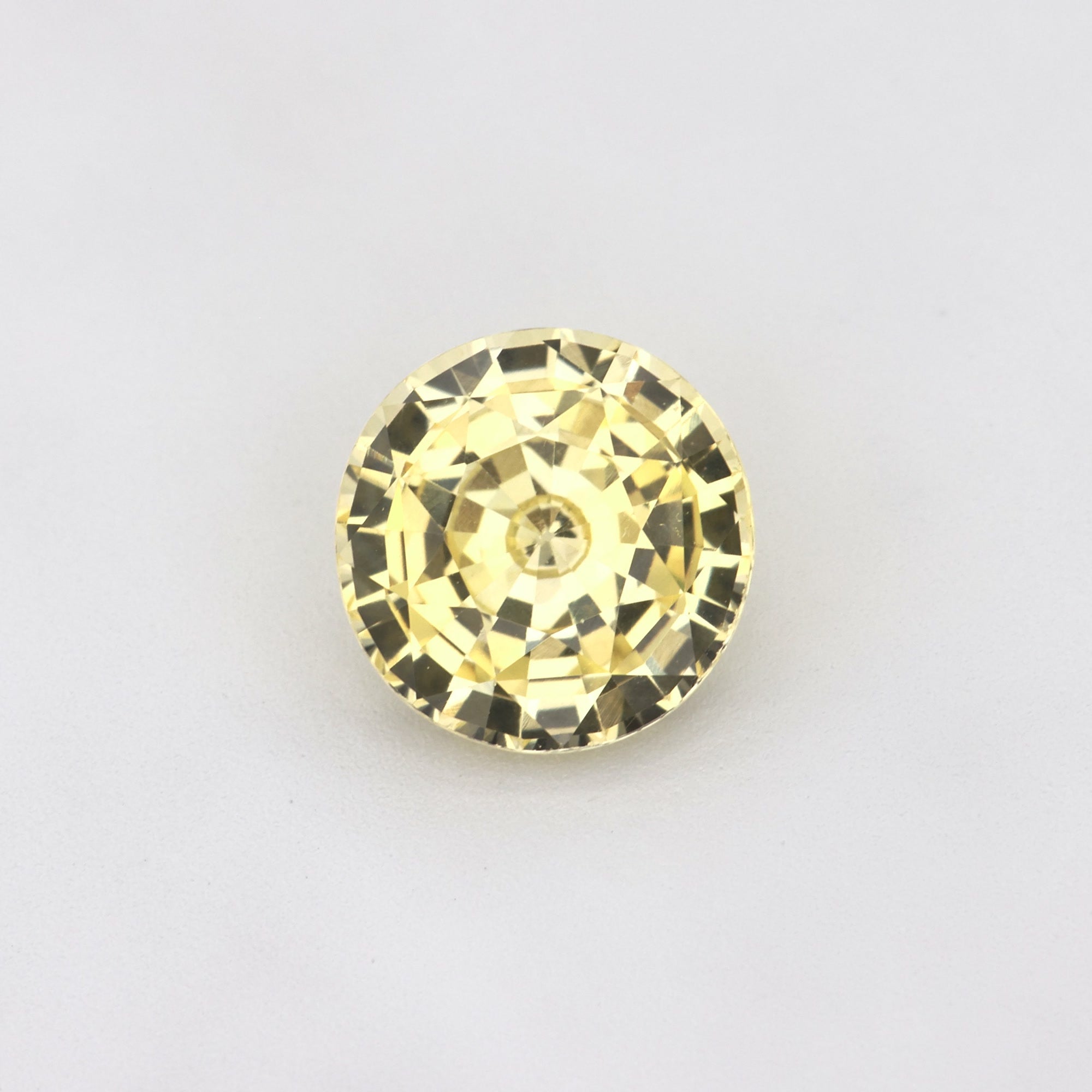
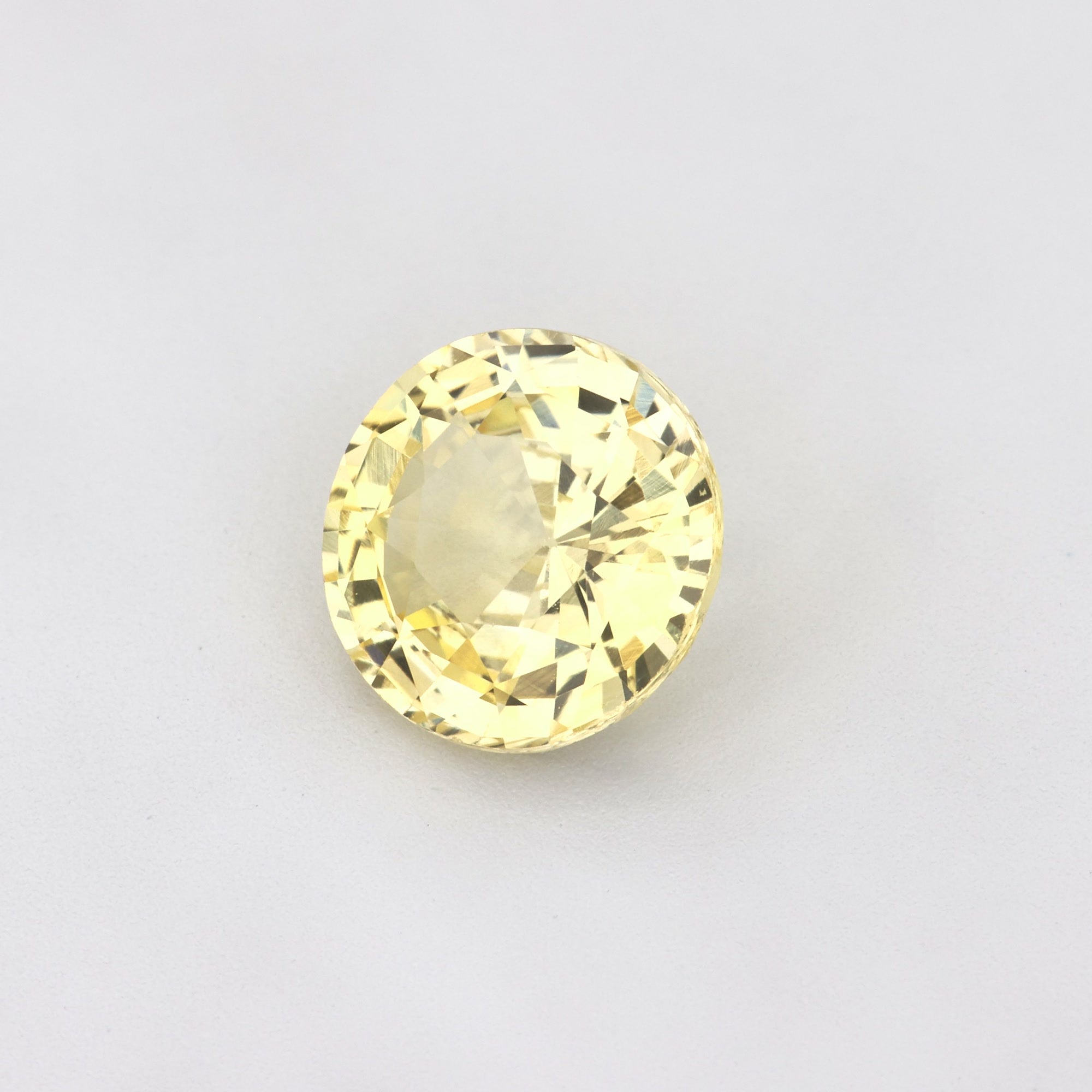
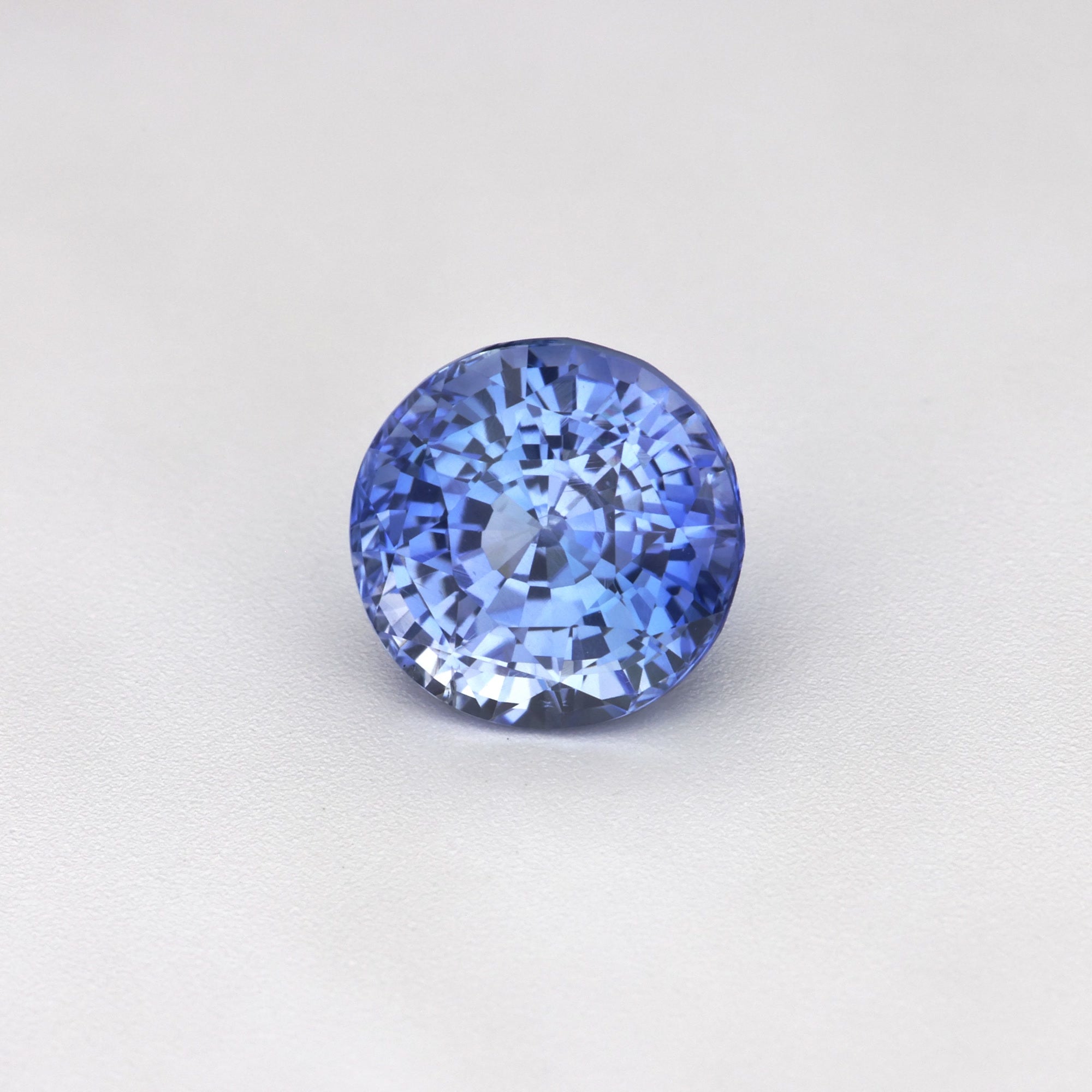
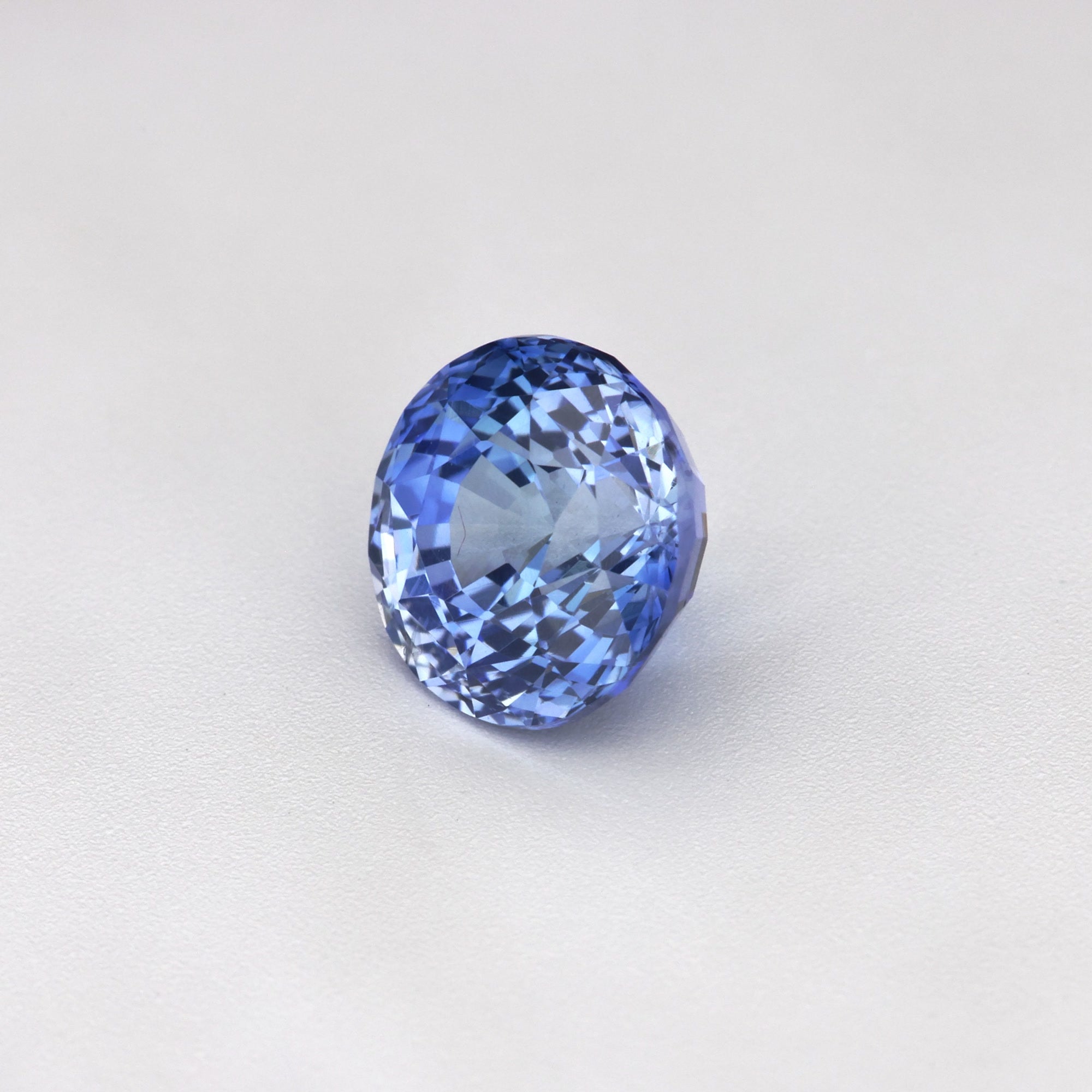
Round brilliant sapphires typically carry 57 or 58 facets, and that brilliant-style arrangement returns more light to the eye than a step cut does. If you want your ring to flash and catch light in every condition, round is the answer. The tradeoff runs the other way: a brilliant-heavy cut gives light a shorter path through the stone, so the same rough cut round will usually read a little lighter face-up than it would as a cushion. Nothing about the stone has changed, only how much light comes back and how the color reads.
On price: round sapphires can require more precise cutting and sometimes involve greater rough yield loss than certain fancy shapes, but per-carat price is driven primarily by the stone itself, by color, clarity, origin, and treatment status, not by shape alone. There is no consistent rule that rounds always cost more per carat than cushions or ovals, and every stone we sell is priced individually on its own listing. We like a halo with a round sapphire: the diamond accents sit lighter than the center stone, and that contrast makes the sapphire's color read more strongly without changing the stone at all. That pairing is our preference, not a graded result.
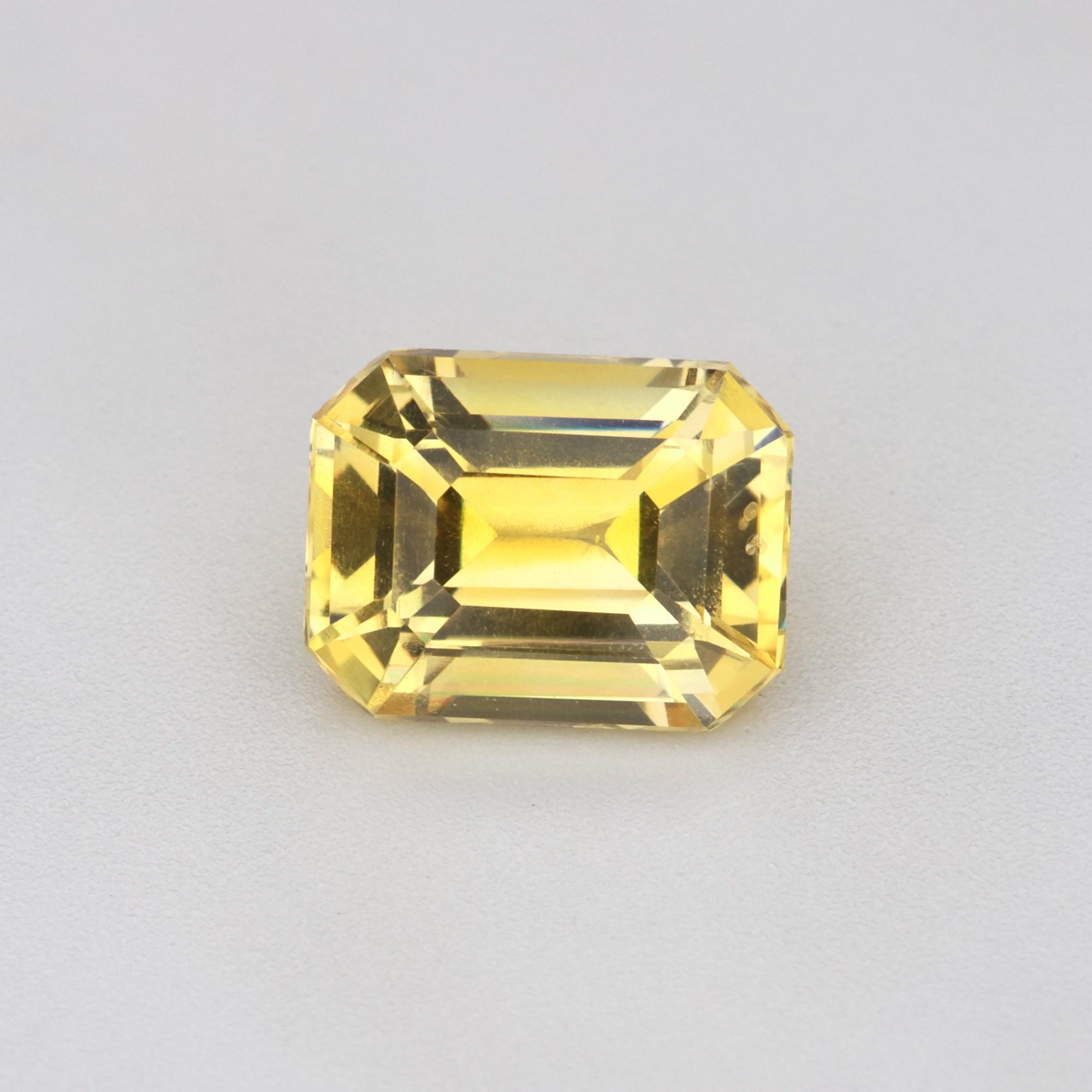
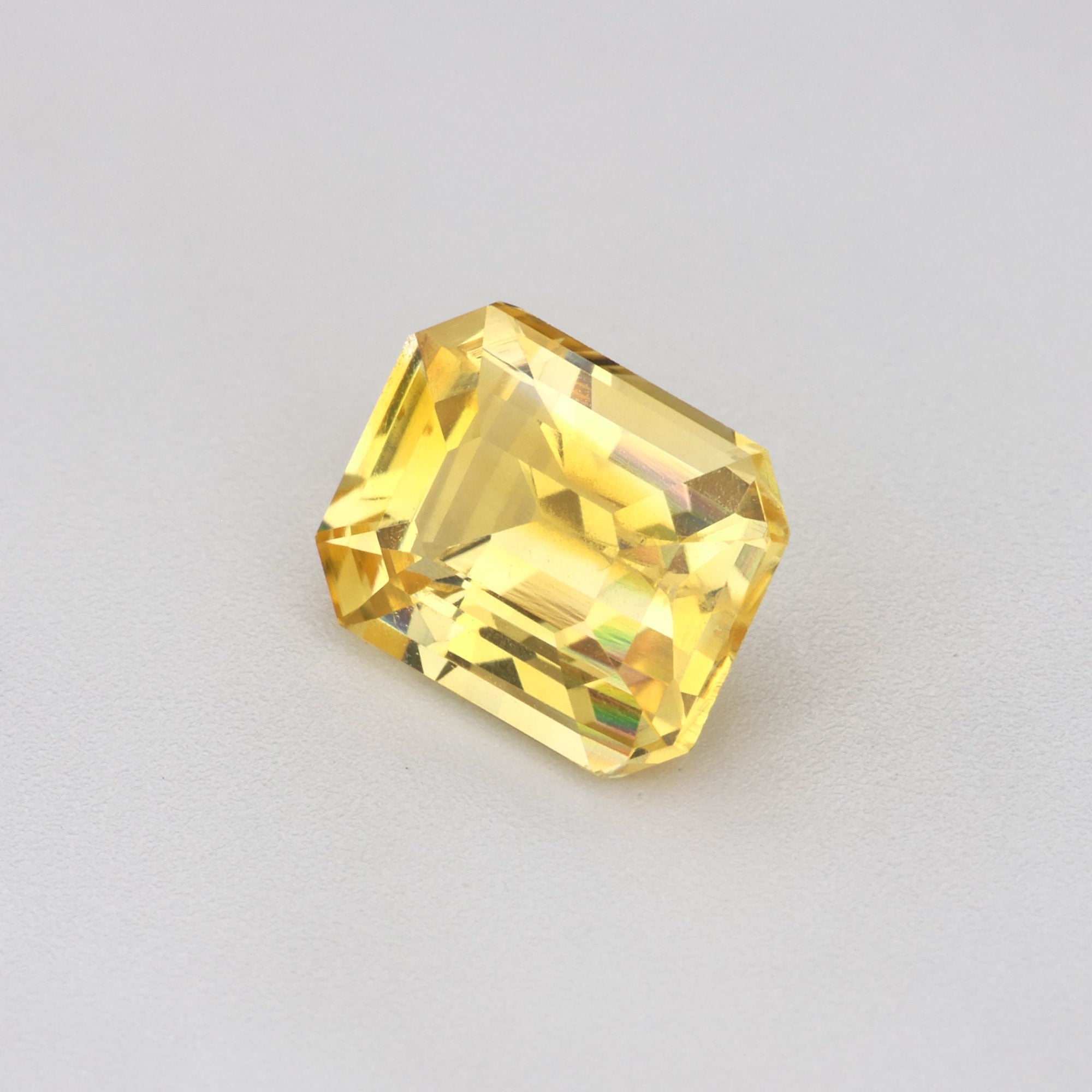
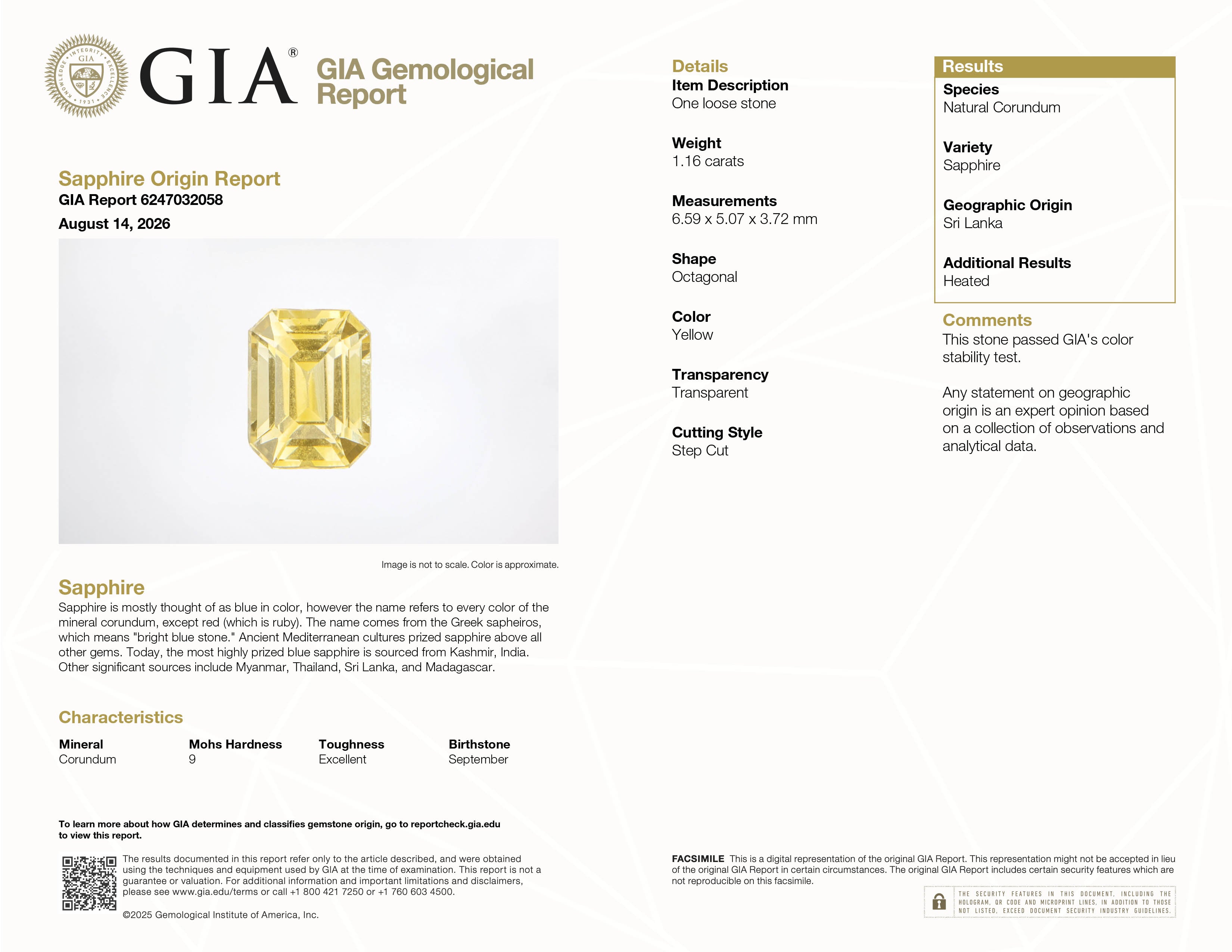
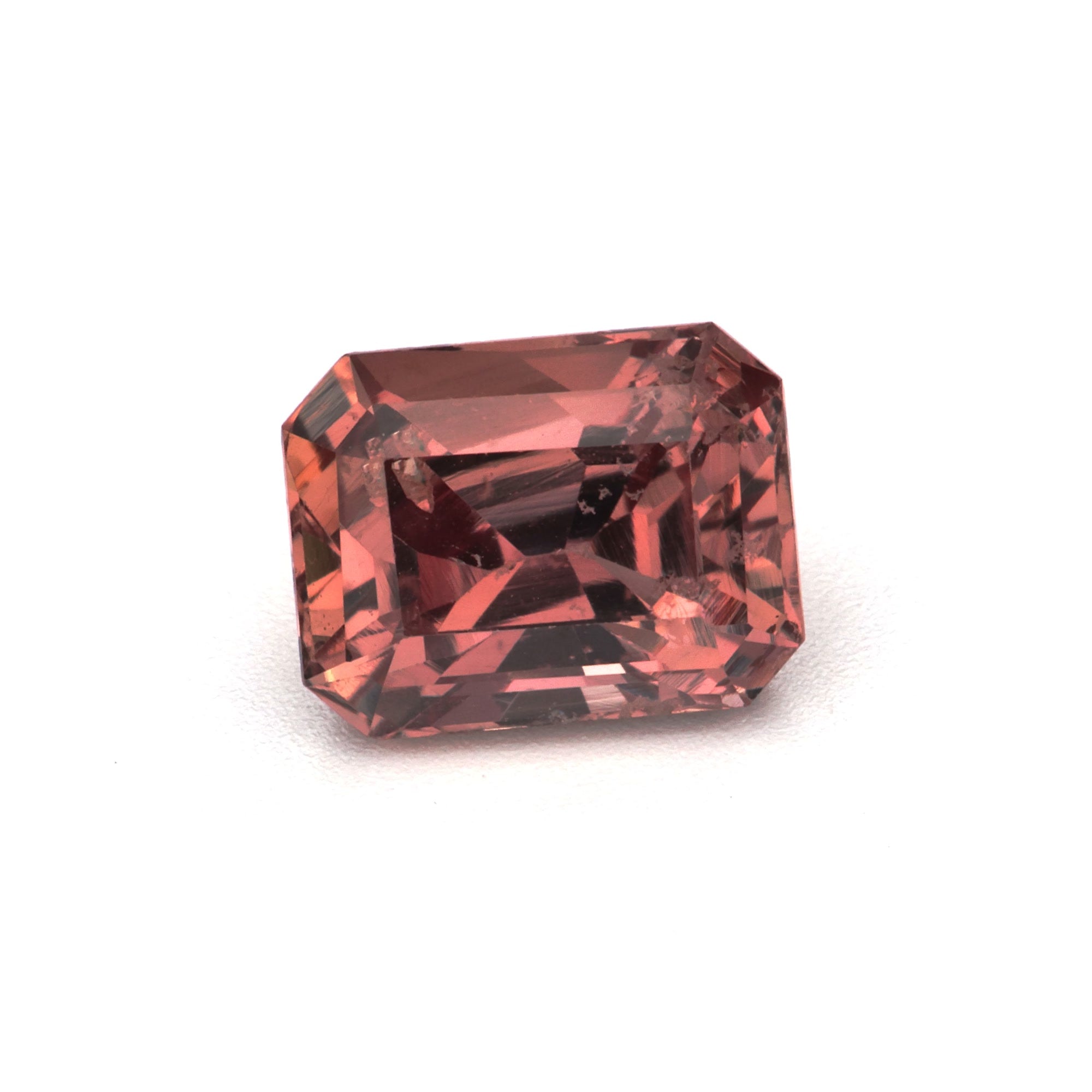
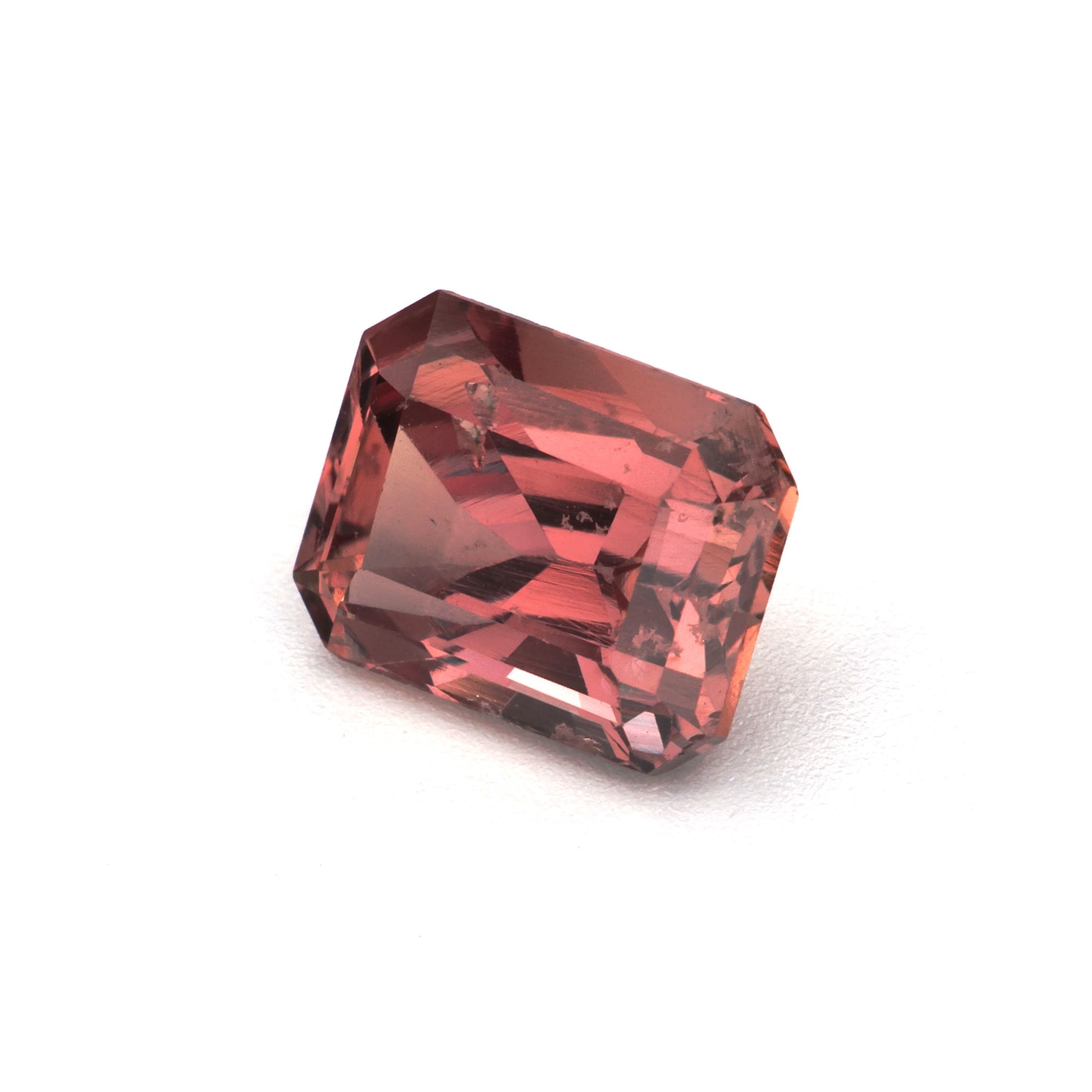
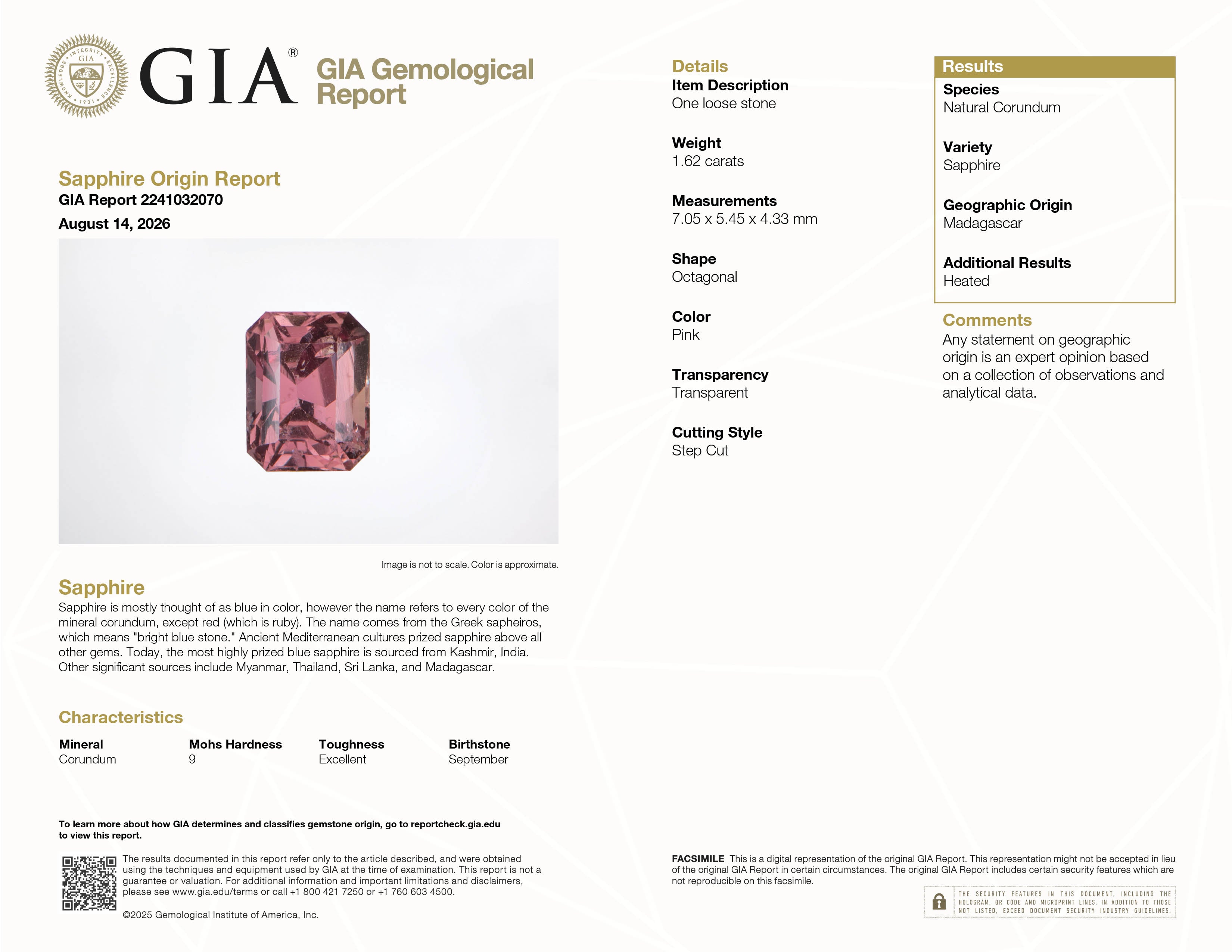
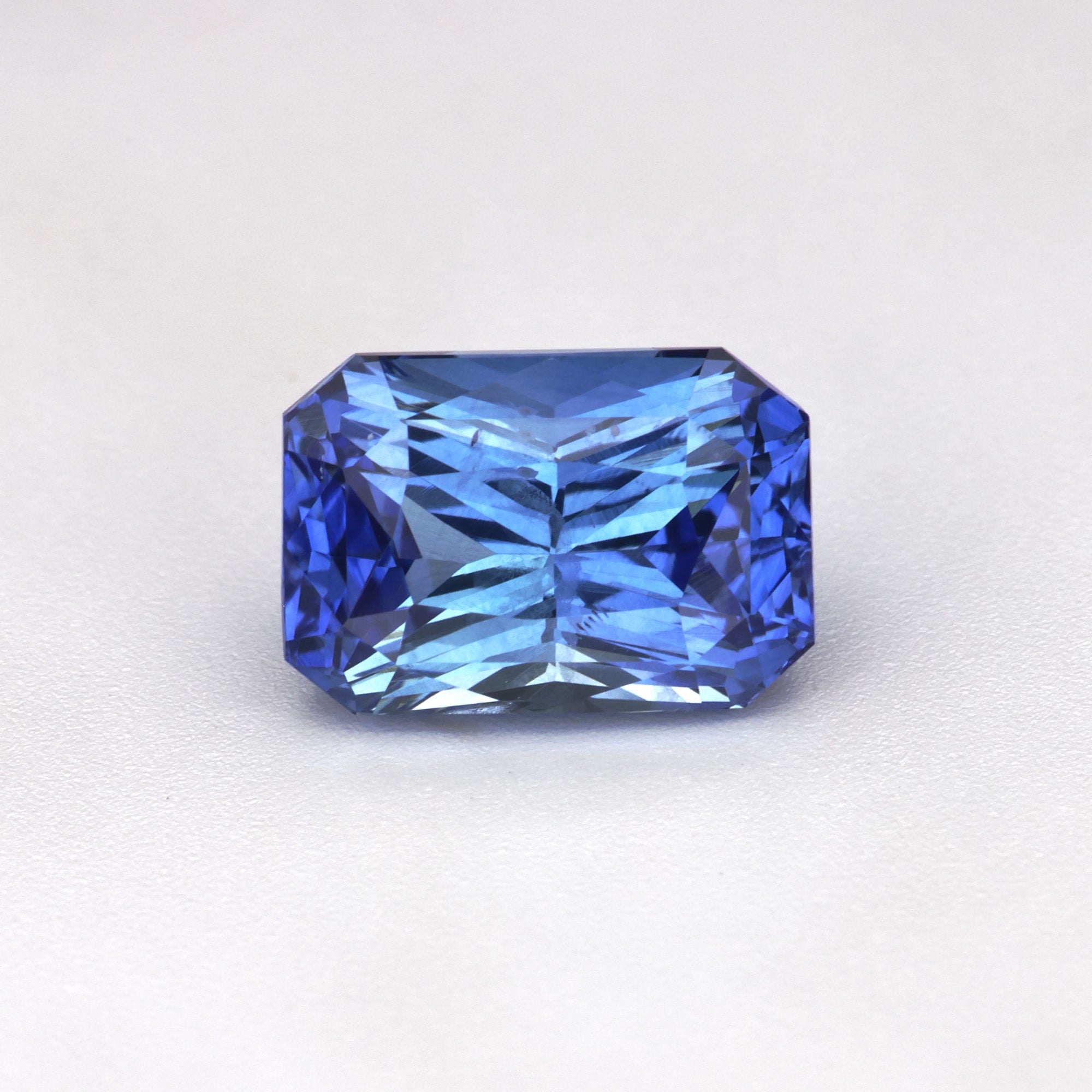
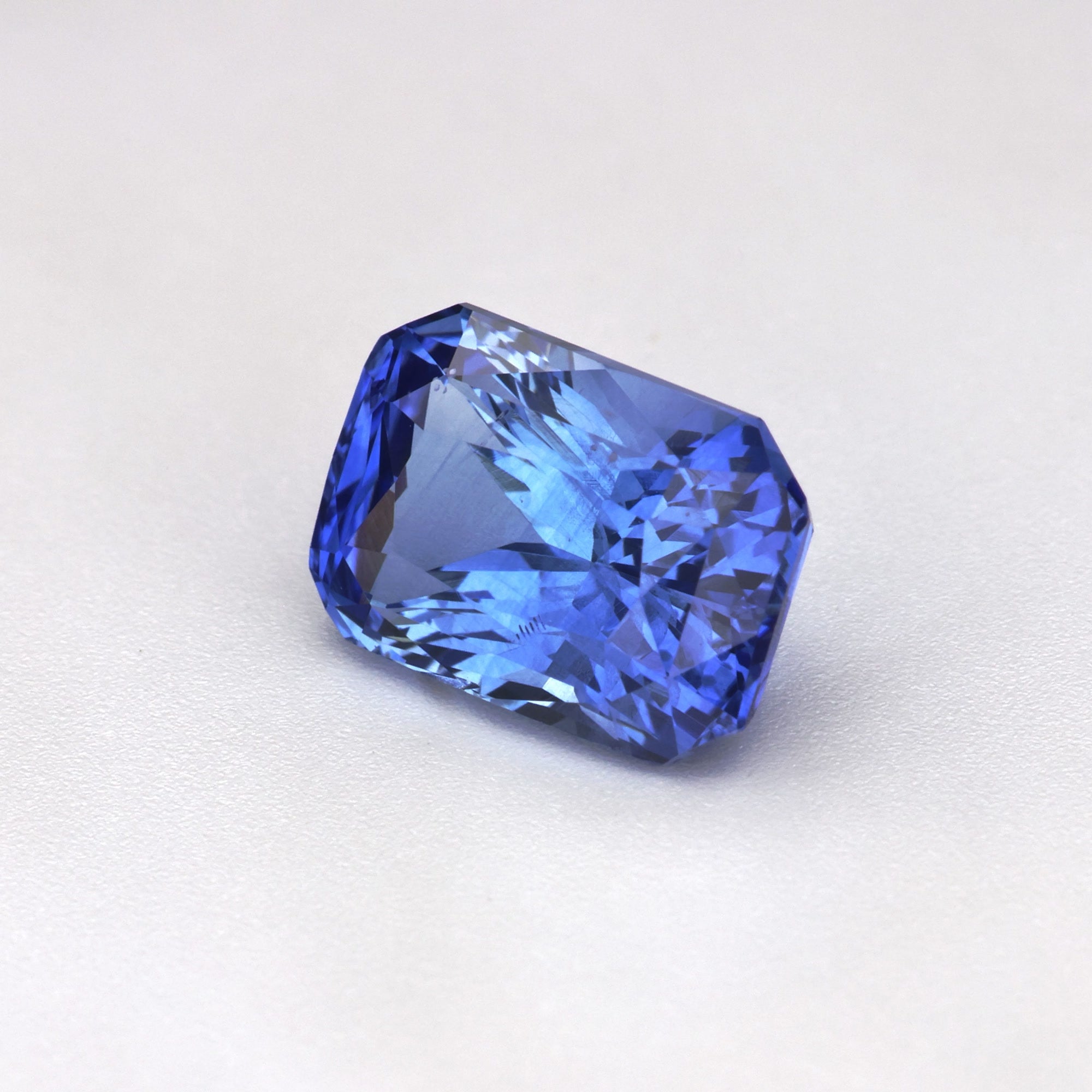
The emerald cut uses broad, flat step facets instead of the triangular and kite-shaped facets found in brilliant cuts. The result is a stone that doesn't sparkle in the conventional sense, it produces a glassy, reflective quality sometimes called the "hall of mirrors" effect. It's a sophisticated, architectural look that appeals to buyers who want something refined rather than flashy.
The practical requirement for an emerald cut sapphire is good clarity, judged by our own eye, since a colored-stone report carries no clarity grade to lean on. Step facets are transparent, and inclusions are visible through them. This cut also has sharp corners that need protection. We set emerald cuts with a V-prong at each of the four corners, which holds the stone securely while keeping the profile clean. That is simply how we do it; there is no laboratory position on settings for sapphire to appeal to.
If you're interested in square profiles like princess or square cuts, our square sapphires collection showcases those options alongside other fancy shapes.
The pear cut is romantic and elongating, tapering to a point at one end and rounding broadly at the other. Worn with the point facing the fingernail, it visually lengthens the finger in a way no other shape quite replicates. A pear is also the least conventional of the five shapes here, which for a lot of buyers is exactly the appeal.
That pointed tip is the cut's vulnerability. Without a V-prong or bezel wrapping the point, the tip is exposed and can chip from a single hard knock. We would not set a pear without one, and that is our rule rather than a published one. Also watch for bow-tie shadowing in the center of pear cuts, the same dark band that can appear in ovals. A well-proportioned pear with even symmetry shows less of it, though that is our own assessment of the stone, since no colored-stone report grades symmetry. Always inspect the stone in video or in person before committing.
The shape you choose isn't just an aesthetic decision. It determines which engagement ring sapphire settings are viable, and it directly affects how the ring holds up over years of daily wear.
Prong settings are what we recommend when your priority is color and light exposure. They hold the stone with minimal metal coverage, allowing light to enter from every angle. Cushion and round cuts do well in prongs because their outlines have no vulnerable edges to leave unprotected. The tradeoff is that prongs need maintenance: they bend over time, and we tell our customers to have them checked periodically. All of that is our own advice, and there is no published standard we could point you to instead.
Bezel settings wrap the stone's perimeter in a continuous metal collar. Of the settings we work with, this is the one that covers most of the stone, and it is our call for oval and pear shapes where the tips need covering. A bezel also suits anyone who is hard on their hands, whatever the shape. Halo settings add a ring of accent stones around the center gem, which enlarges the apparent size and sets up a contrast that makes the sapphire read more strongly. We think halos sit well on round and oval shapes; on pear and emerald cuts they can feel visually heavy, so the design needs more care. These are our preferences, and we state them as ours.
Thin edges and sharp geometry create stress points under impact, so the parts of a stone that stand out or come to a point — an oval's ends, a pear's tip, the corners of an emerald or asscher — are the parts that take the damage. Sapphire rates 9 on the Mohs scale, which is a measure of scratch resistance rather than of toughness, and corundum has no true cleavage planes. Toughness is a characteristic of the species rather than a finding about any individual stone, and it is not something the cut changes. Shape geometry still matters, though: a hard knock on the tip of a pear cut can chip the stone even in the absence of a cleavage plane.
Of the five shapes here, round and cushion are the two we would call most forgiving for everyday wear. Their curved geometry distributes impact force rather than concentrating it at a point. If you work with your hands or know you're hard on jewelry, we would steer you toward one of these two: a practical call, and ours.
By this point you have the technical framework. Here's how to use it to make an actual decision.
The first question is simple: do you want the color to read as fully as possible, or do you want the most light back? If the answer is color, your cuts are cushion and oval. If the answer is sparkle, your cut is round. Emerald and pear occupy their own category, for buyers who prioritize a specific aesthetic over either how the color reads or how much light returns.
The second question is about lifestyle. If you're a nurse, a climber, a mechanic, or anyone who uses their hands hard, we would put you in a shape without points or sharp corners and in a bezel or low-profile prong setting. That steers you toward cushion or round immediately, and it is our recommendation rather than anyone's published standard.
The third question is about your hand. If your fingers are shorter or wider, elongated shapes like oval and pear create a slimming visual effect that flatters the hand. If your fingers are already long and slender, you have more freedom, all five shapes look proportional.
Cut quality varies enormously within the same shape category, and no report will tell you which is which, because grading cut on a colored stone is a judgment and on our listings it is ours. A well-cut oval and a poorly cut oval are not the same product, even if their dimensions and weight match on paper. Photos don't capture the window effect. Photos don't reveal color zoning issues or bow-tie shadows in real light. These are things you need to see in motion, ideally in the actual lighting conditions of your daily life.
Our Try Before You Buy program addresses exactly this problem. We ship natural loose sapphires directly to your home so you can hold each stone in natural light, compare shapes side by side, and see how the color reads on your actual hand before you choose a setting or spend anything. For a ring you are going to look at every day, that kind of hands-on evaluation changes the decision entirely. Browse our cushion, oval, round, emerald, and pear sapphires: most of the sapphire we carry is Sri Lankan, and the rest comes from Madagascar and a handful of other origins, each one named on its own product page. Request a home preview of any stones that interest you.
Cushion and oval when you want the color to carry. Round when you want light. Emerald for elegance. Pear for something distinctly your own. The best cut for a sapphire engagement ring is the one that matches what you're actually optimizing for, and because no laboratory grades cut on a colored stone, that judgment is ultimately yours to make, with our view above offered as exactly that.
Once you've chosen your shape, the setting is what protects it and amplifies it. Decide the cut first, then pick the setting that supports it. Getting those two decisions in the right order saves you from buying a beautiful stone and undermining it with a setting designed for a different shape.
Buyers who do their homework end up happier with the stone they choose. These five cuts give you a real framework to work from. The next step is seeing the stones in person.
There's no single best cut, and no laboratory grades cut on a colored stone, so any answer here is an opinion rather than a measurement. Ours: cushion and oval give light the longest path through the stone, so the color tends to read fullest, which makes them our first suggestions if you want deep, rich blue. Round returns the most light of the five. Emerald cuts offer a refined, architectural look. Pear cuts are distinctive and elongating. Match the cut to what matters most to you: color, sparkle, everyday durability, or style.
Color belongs to the stone, not to the cut, and no cut adds color or deepens it. What changes is the light path: a cushion's large table, rounded corners, and deeper pavilion give light a longer way through the stone than a shallow brilliant does, so in our experience the color reads fullest in a cushion. Oval is close behind, and it brings a larger apparent face-up size with it. That ranking is ours, not a graded result.
Round and cushion are the two we recommend for daily wear. Both have curved geometry with no sharp corners or pointed tips, so impact stress spreads rather than landing on a point. Paired with a secure prong or bezel setting, either shape holds up well to an active lifestyle. That is our recommendation, and we flag it as ours because no laboratory publishes guidance on settings or shapes for sapphire.
The bow-tie effect is a dark shadow that runs across the center of certain elongated cuts, most commonly oval and pear shapes. It's caused by light not returning through specific facet areas. It ranges from subtle to distracting. Always review video footage of oval and pear sapphires in motion before purchasing.
Looking specifically for the Art Deco look? That is the step-cut family: Asscher cut sapphires are its square member and the emerald cut is its rectangular one, and both return light in broad, flat flashes rather than as sharp sparkle. Browse our emerald cut sapphires for the step cuts we list.
For shapes beyond the standard oval, cushion, and round, see our fancy cut sapphires — trillion, kite, hexagon, and other less conventional cuts.
Trilliant (triangular) cuts are a striking choice for a modern three-stone or side-stone design — browse our trilliant sapphires.
If you're set on something other than classic blue, browse our fancy sapphires for engagement rings — unconventional colors and cuts, chosen specifically for ring settings.

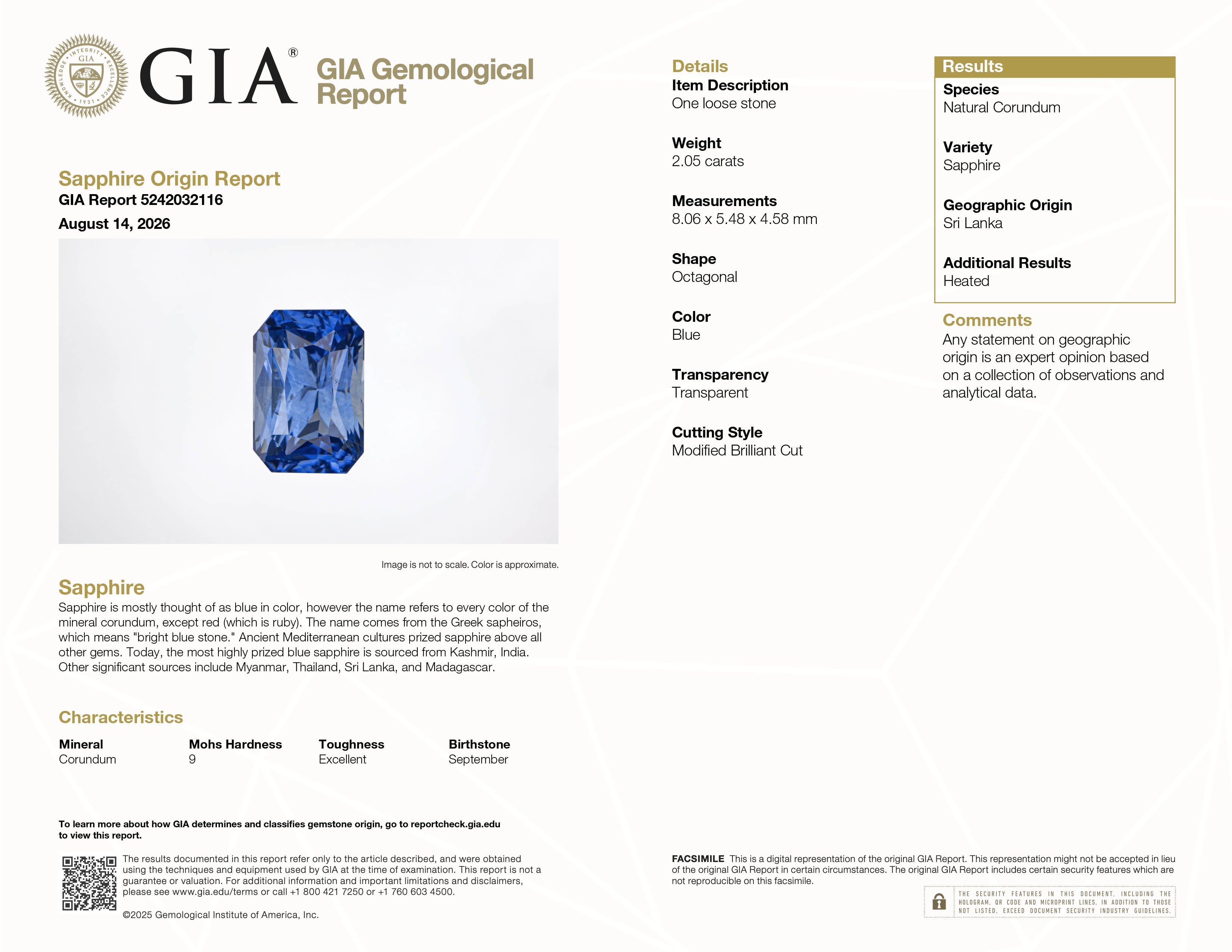
CG8465
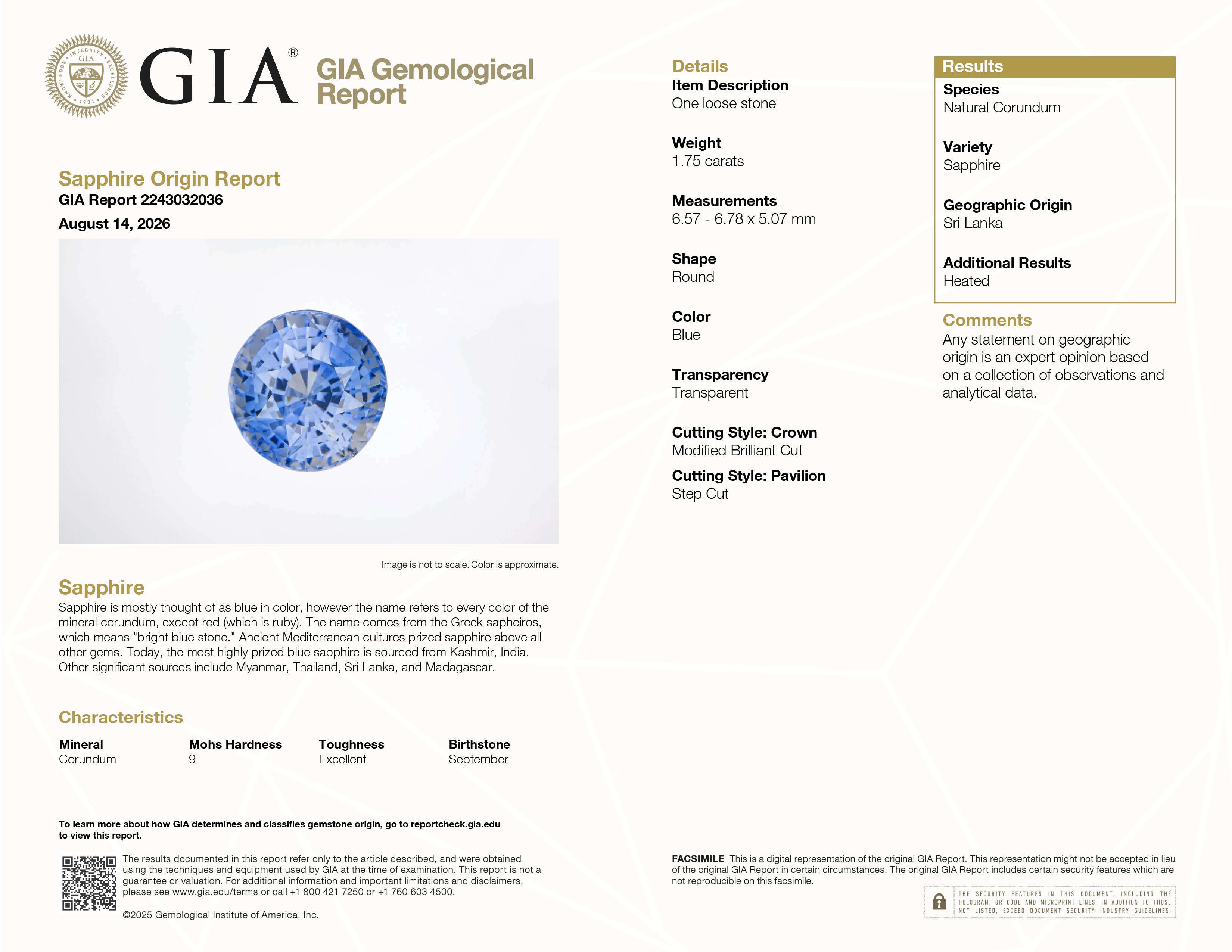
CG8460
CG8456


Blue Star Sapphire Price Guide — What They Cost and Why
Read moreabout Blue Star Sapphire Price Guide — What They Cost and Why
Tsavorite Garnet Price Guide — What They Cost and Why
Read moreabout Tsavorite Garnet Price Guide — What They Cost and Why
Color-Change Sapphire Price Guide — What They Cost and Why
Read moreabout Color-Change Sapphire Price Guide — What They Cost and Why
Is Cat's-Eye Chrysoberyl Good for an Engagement Ring?
Read moreabout Is Cat's-Eye Chrysoberyl Good for an Engagement Ring?
Cat's Eye Chrysoberyl Price Guide — What They Cost and Why
Read moreabout Cat's Eye Chrysoberyl Price Guide — What They Cost and Why















Share: