- by Ahmed Shareek
Beryllium Diffusion in Sapphires Explained — What It Is, How to Detect It, and Why It Matters
- by Ahmed Shareek
For treatment background: How Sapphire Heat Treatment Works. For unheated status: What Is an Unheated Sapphire? For lab verification: How to Read a GIA Sapphire Report.
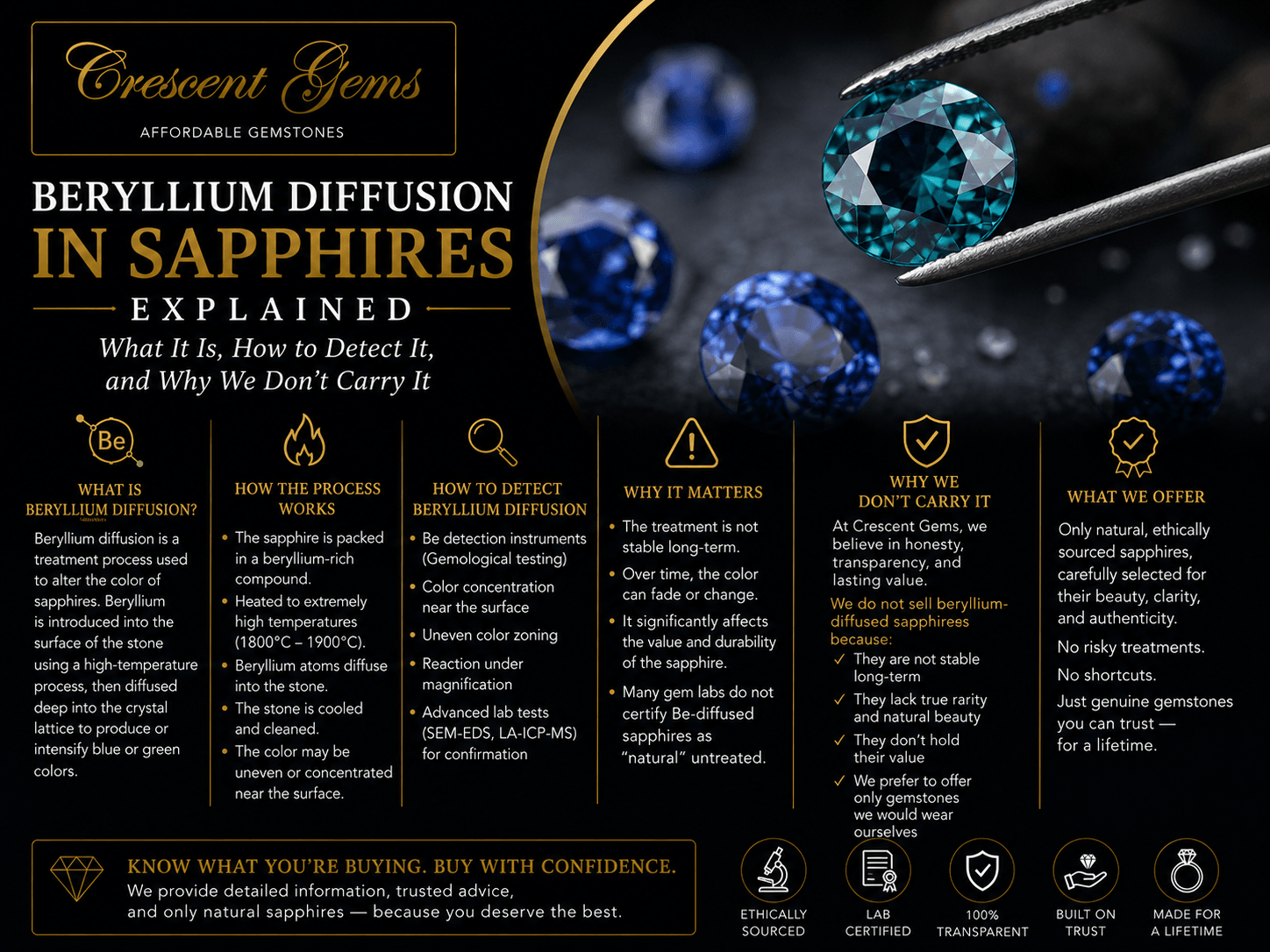
Beryllium diffusion is the most commercially deceptive sapphire treatment in the market. It transforms pale, low-value sapphire rough into stones with vivid orange, yellow, or padparadscha-like colors that closely resemble some of the most sought-after — and most expensive — natural sapphire colors. Unlike standard heat treatment, which redistributes elements already present in the crystal, beryllium diffusion introduces a foreign element into the stone from outside. It cannot be detected by visual inspection, loupe examination, or standard gemological testing. It requires laboratory-grade analytical equipment to identify. And it carries a value discount of 90% or more compared to the natural color it mimics.
This guide explains exactly what beryllium diffusion is, how it works at the atomic level, what colors it produces, how it entered the market and when it was discovered, how major laboratories detect it, how to protect yourself as a buyer, and why Crescent Gems has a strict policy of not stocking beryllium-treated material under any circumstances.
Standard sapphire heat treatment operates at temperatures between 1,000°C and 1,800°C and causes changes within the crystal by redistributing iron, titanium, chromium, and other trace elements already present in the corundum lattice. The chemical composition of the stone — aluminum oxide (Al₂O₃) with natural trace impurities — is not changed by standard heating. Only the distribution of what was already there is altered.
Beryllium diffusion is categorically different. During the treatment, sapphire is heated in direct contact with beryllium-bearing material at extreme temperatures — typically above 1,700°C. At these temperatures, beryllium atoms migrate from the external beryllium source into the crystal structure of the sapphire. Beryllium is a very light element — atomic number 4 — and in its Be²⁺ form it is a very small ion, small enough to move through the corundum lattice relatively freely. Once inside the lattice, beryllium atoms alter the local electronic environment around chromium and iron color centers, dramatically shifting the color of the stone.
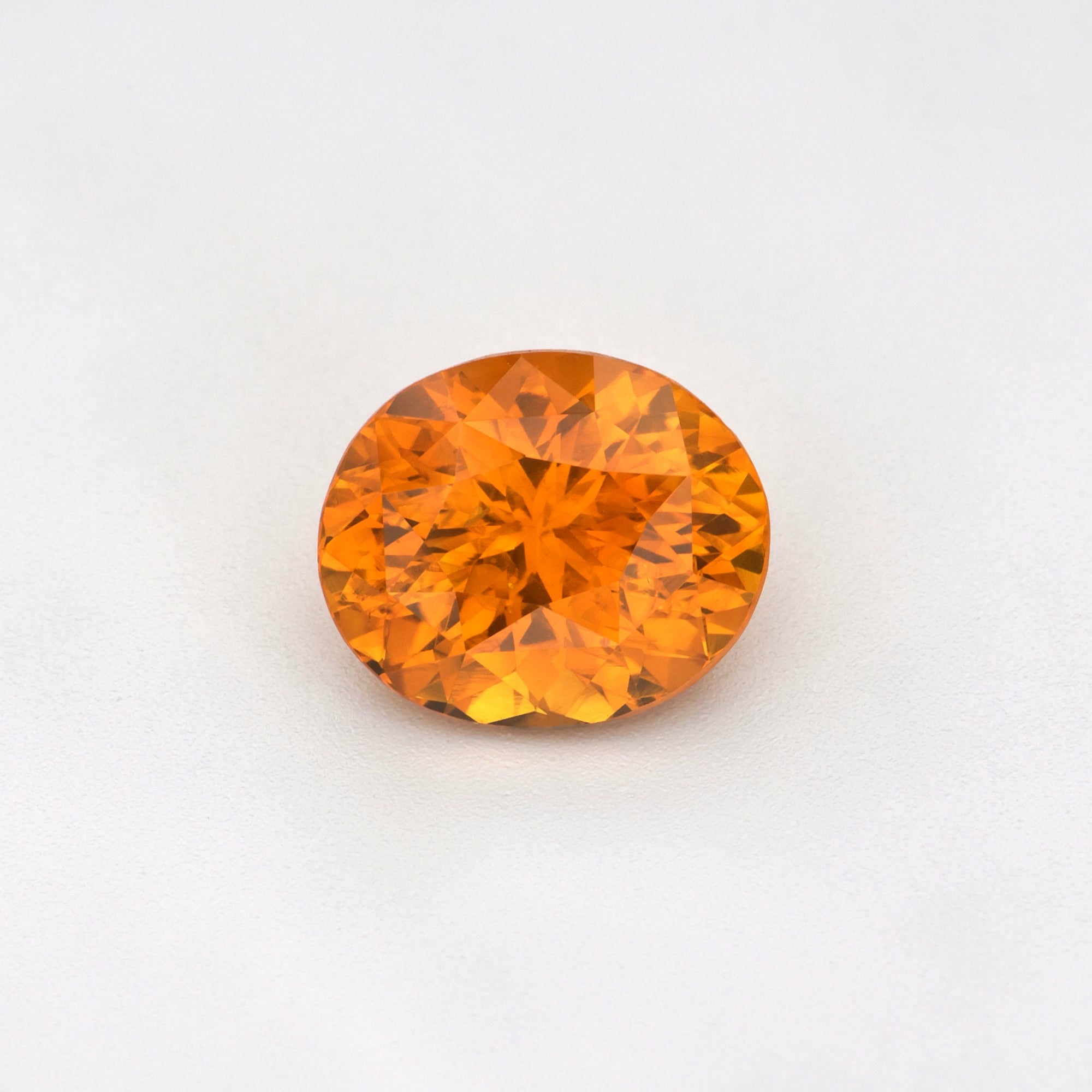
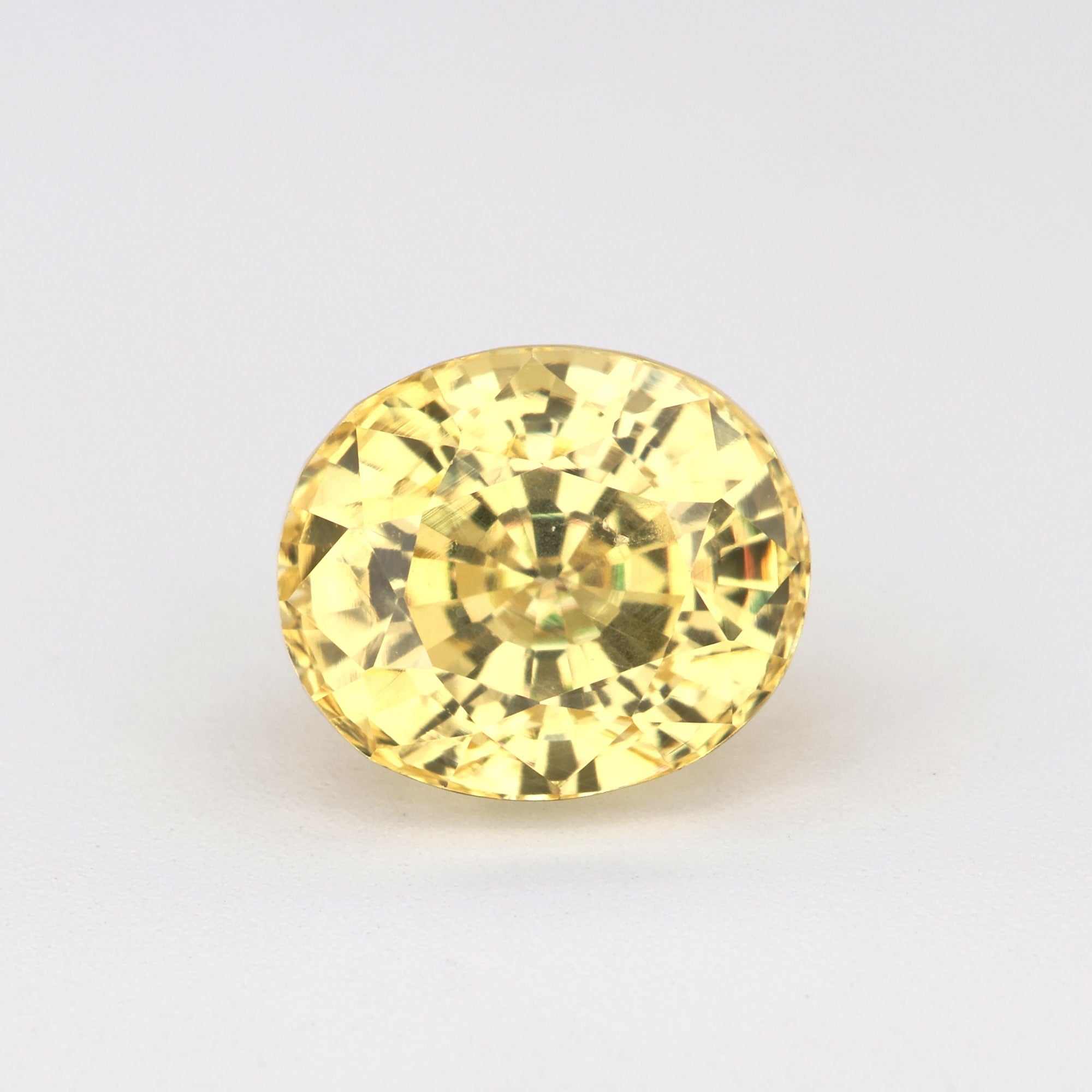
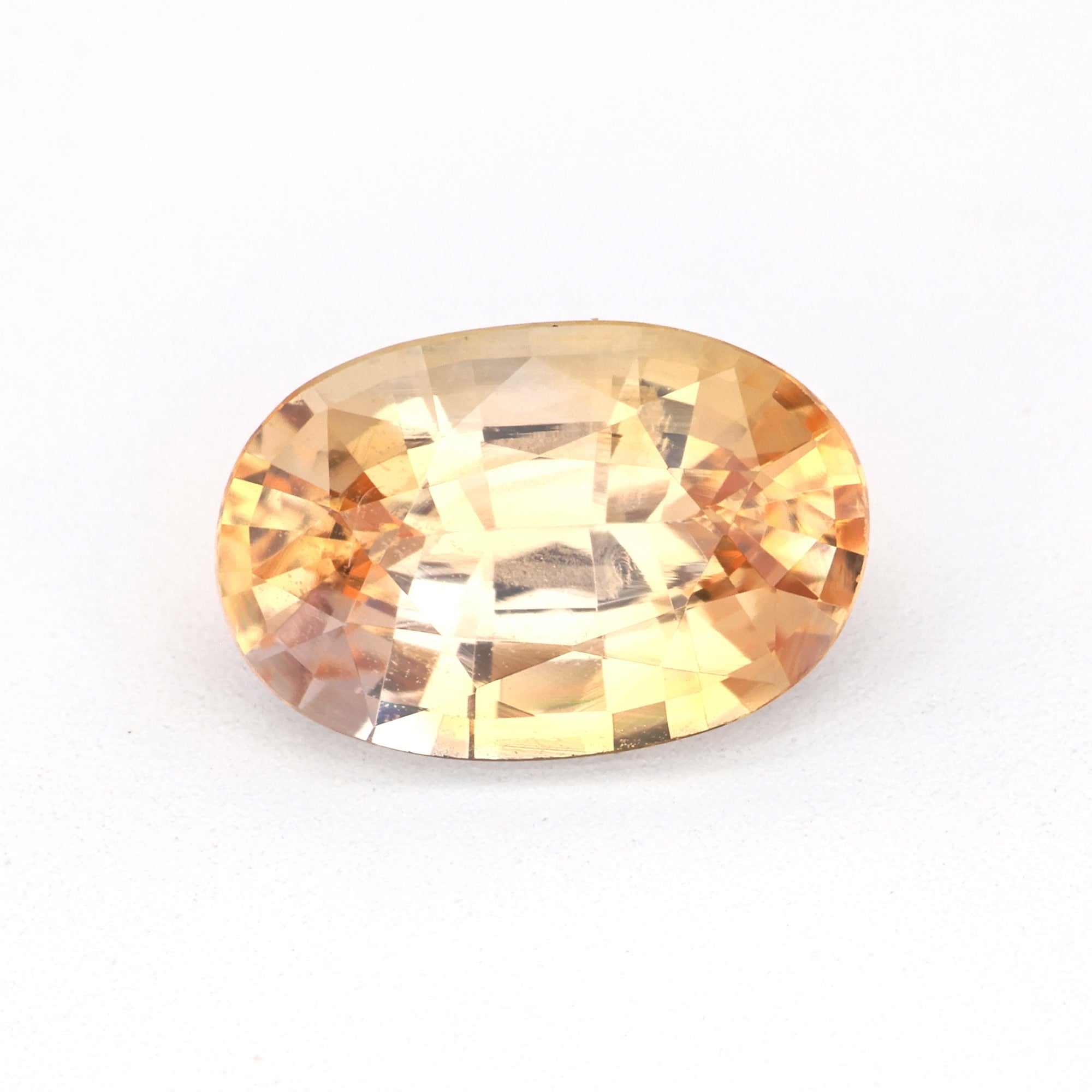
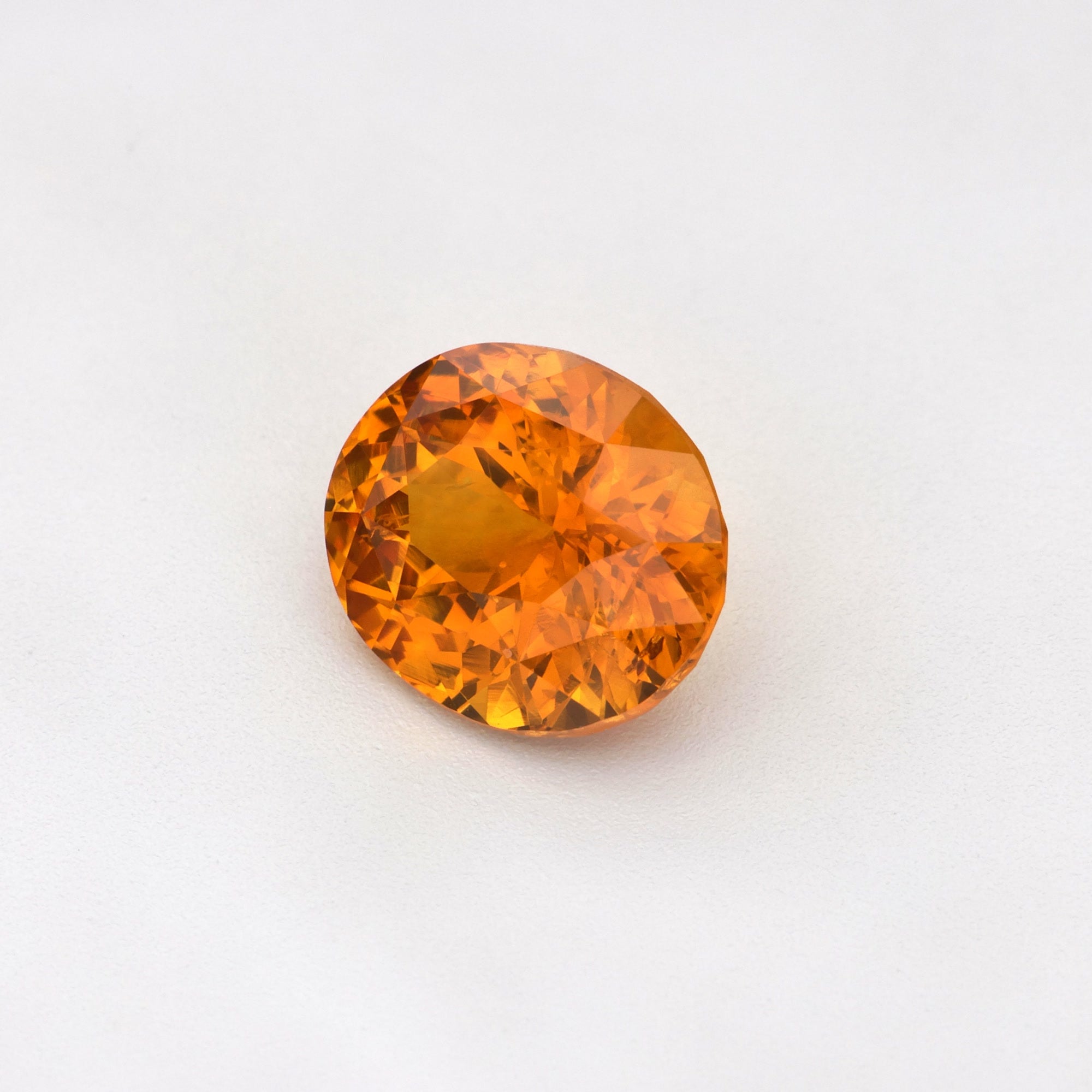
The result: a pale, commercially unattractive sapphire that would sell for tens of dollars per carat in its natural state emerges from the furnace displaying vivid orange, warm yellow, or a pink-orange combination that closely resembles padparadscha — colors that command hundreds to thousands of dollars per carat in their natural, unenhanced form.
Beryllium diffusion in sapphire was first commercially practiced in Thailand in the late 1990s, initially in secrecy. The treatment was introduced by gem treaters who understood that beryllium's small atomic radius made it capable of penetrating sapphire at high temperatures in a way that other elements could not. For approximately three to four years, beryllium-diffused stones entered the international market undetected — sold as natural padparadscha, vivid orange sapphire, and golden yellow sapphire at premium natural prices.
The treatment was publicly identified and disclosed to the gem industry in 2001–2002 by GIA, Gübelin Gem Lab, and SSEF, following the development of LA-ICP-MS testing capable of detecting the beryllium present in treated stones. The disclosure sent significant disruption through the colored stone market, particularly for orange and padparadscha sapphire, as previously certified stones had to be re-examined. Reputable laboratories updated their testing protocols to include beryllium detection as a standard procedure for relevant sapphire colors.
Today, any reputable laboratory report from GIA, Gübelin, or SSEF on an orange or padparadscha sapphire will include beryllium testing as a standard part of the analysis. The treatment continues to exist in the market — undisclosed beryllium-treated stones are still sold by dealers who either don't test or actively conceal treatment status.
Beryllium (Be) has an atomic number of 4 and an atomic radius of approximately 112 picometers — among the smallest of any element commonly found in a gem-treatment context. This small size allows beryllium to occupy interstitial positions within the corundum crystal lattice — spaces between the main aluminum and oxygen atoms — at the extreme temperatures used in the treatment process.
Once in the lattice, beryllium's +2 charge creates charge compensation effects that alter how nearby iron and chromium ions interact with light. Specifically:
Beryllium diffusion does not always penetrate a sapphire uniformly. Because diffusion proceeds from the surface inward, the depth of penetration depends on the temperature, duration of treatment, and the thickness of the stone. This has an important practical consequence:
For most finished gems in the market, cut stones are thin enough that beryllium penetration is complete, making visual detection impossible.
| Color Produced | Natural Equivalent | Natural Price Range (per ct) | Beryllium-Treated Price (per ct) | Value Discount |
|---|---|---|---|---|
| Vivid orange | Natural unheated orange sapphire | Not published in our colour price table | $20–$100 | ~95% |
| Pink-orange (padparadscha-like) | Natural padparadscha | $3,000–$15,000+ | $50–$200 | ~98% |
| Golden yellow | Natural unheated yellow sapphire | $300–$2,500 | $20–$80 | ~90% |
| Yellow-orange | Natural yellow-orange sapphire | $500–$2,500 | $20–$80 | ~95% |
Figures above are approximate market guidance, not fixed quotes. Actual value varies by treatment, origin, colour, cut, clarity, and certification.
The most commercially significant application is the mimicry of padparadscha — the rarest and most expensive sapphire color category. A beryllium-treated stone with padparadscha-like color may have cost $2–$5 per carat in its natural pale state. After treatment, it can superficially resemble a stone worth $5,000–10,000 per carat. The economic incentive for undisclosed treatment is substantial. See our Padparadscha Sapphire Guide for the full explanation of what makes genuine padparadscha and why the distinction matters.
| Factor | Standard Heat Treatment | Beryllium Diffusion |
|---|---|---|
| What it does | Redistributes elements already in the crystal | Introduces a new foreign element (beryllium) into the crystal |
| Chemical composition | Unchanged — still natural Al₂O₃ with existing trace elements | Changed — beryllium is added to the crystal lattice |
| Temperature | 1,000°C–1,800°C | Above 1,700°C — typically at the upper extreme |
| Detection | Microscopic examination of inclusions; UV-Vis spectroscopy | LA-ICP-MS trace element analysis required; cannot be detected visually |
| Value impact | Reduces value vs. unheated equivalent; 2–5× premium at fine quality, up to 8× for large, vivid, well-documented stones | Catastrophic — 90–98% discount vs. the natural color it mimics |
| Industry acceptance | Accepted with mandatory disclosure; standard commercial practice | Not accepted as comparable to natural color; requires specific disclosure |
| Colors affected | Blue, pink, yellow — all major sapphire colors | Primarily orange, padparadscha, yellow; less commonly other colors |
| Reversibility | Permanent — cannot be reversed | Permanent — cannot be reversed |
Beryllium diffusion cannot be detected by:
None of the standard gemological tests available to a jeweler or buyer at the point of sale can identify beryllium diffusion. This is what makes it uniquely dangerous among sapphire treatments.
The definitive detection method is LA-ICP-MS — Laser Ablation Inductively Coupled Plasma Mass Spectrometry. This technique uses a focused laser beam to ablate (vaporize) a tiny sample from the stone's surface, which is then analyzed by mass spectrometry to measure the precise concentration of every trace element present — including beryllium. Natural sapphire contains beryllium in concentrations below approximately 0.1–0.2 parts per million. Beryllium-diffused stones show elevated beryllium concentrations — typically 1–10 parts per million or higher, often concentrated near the surface. The test is definitive and leaves a microscopically small ablation pit that is essentially invisible in a finished gemstone.
| Test Method | Detects Beryllium Diffusion? | Available To |
|---|---|---|
| Visual inspection (naked eye) | No | Anyone |
| Loupe / hand lens (10x) | No | Any gemologist |
| Gemological microscope | No (except the rare thick-stone recutting case) | Any gemologist |
| UV fluorescence | Suggestive in some cases; not conclusive | Any gemologist with UV lamp |
| UV-Vis spectroscopy | Suggestive in some cases; not conclusive | Advanced labs |
| LA-ICP-MS trace element analysis | Yes — definitive | GIA, Gübelin, SSEF, and a small number of advanced labs worldwide |
| EDXRF (energy dispersive X-ray fluorescence) | No — cannot detect beryllium (too light an element) | Some labs; inadequate for Be detection |
EDXRF deserves specific mention because it is used by some laboratories as a cheaper alternative to LA-ICP-MS. EDXRF cannot detect beryllium — beryllium's atomic number (4) is too low for the technique to measure. Labs that rely on EDXRF without LA-ICP-MS cannot confirm the absence of beryllium diffusion. This is why GIA, Gübelin, and SSEF specifically — all of which use LA-ICP-MS — are the only laboratories whose reports provide reliable beryllium-treatment clearance.
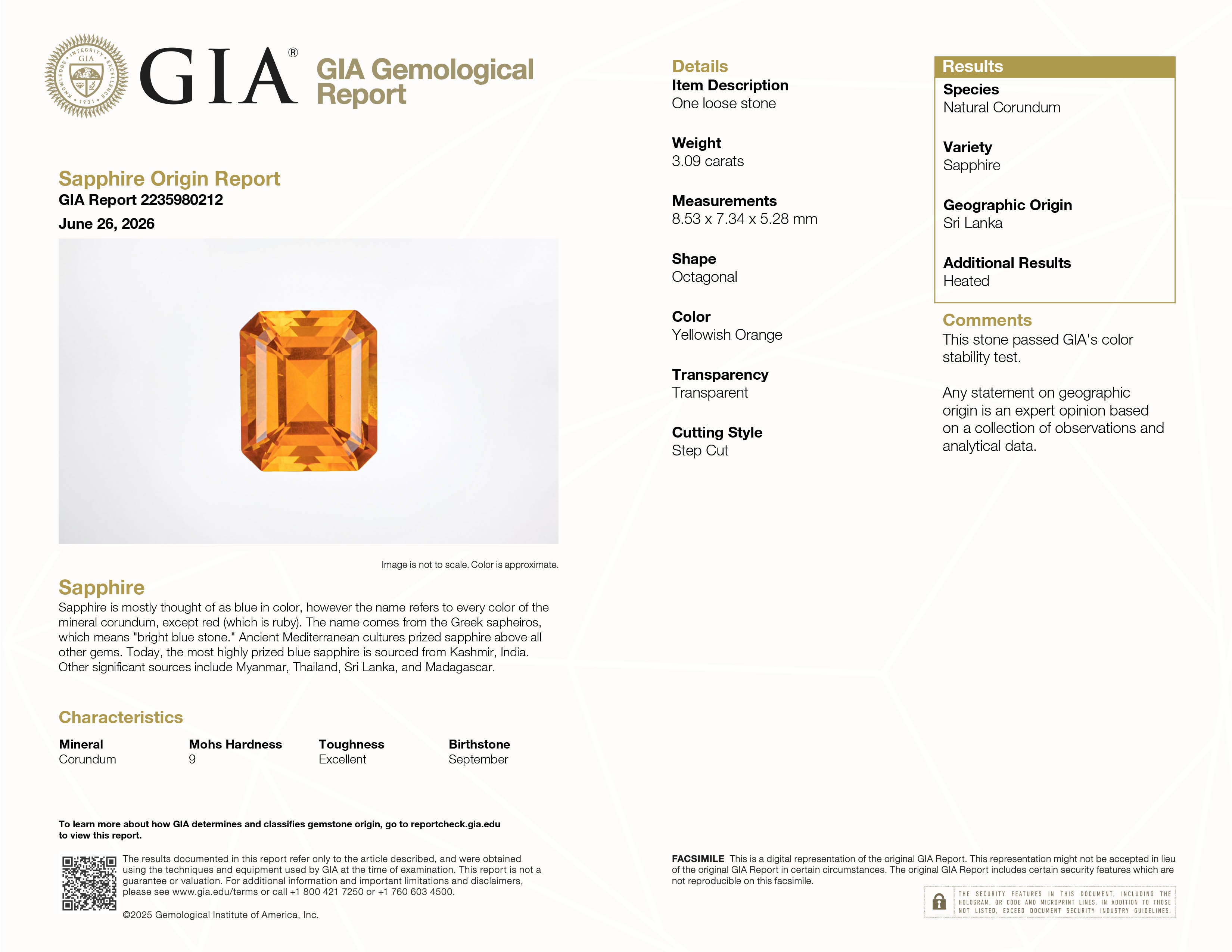
When a GIA, Gübelin, or SSEF report covers a stone that has been tested for beryllium diffusion, the relevant language will appear in the comments or treatment section:
| Report Language | What It Means | Commercial Implication |
|---|---|---|
| "No indications of heating" (with no Be notation) | Stone is unheated and no beryllium was detected above natural levels | Full natural unheated premium applies |
| "Indications of heating" (with no Be notation) | Stone is heated but no beryllium diffusion detected | Standard heated pricing |
| "Beryllium detected" or "Be detected" | Beryllium diffusion confirmed — stone has been treated | Large discount; color is artificially produced |
| "Indications of beryllium diffusion" | Beryllium diffusion confirmed | Same — large discount; mandatory disclosure required |
| Report from minor or unknown lab with no Be testing noted | Beryllium testing was likely not performed | No reliable clearance — treat as unverified |
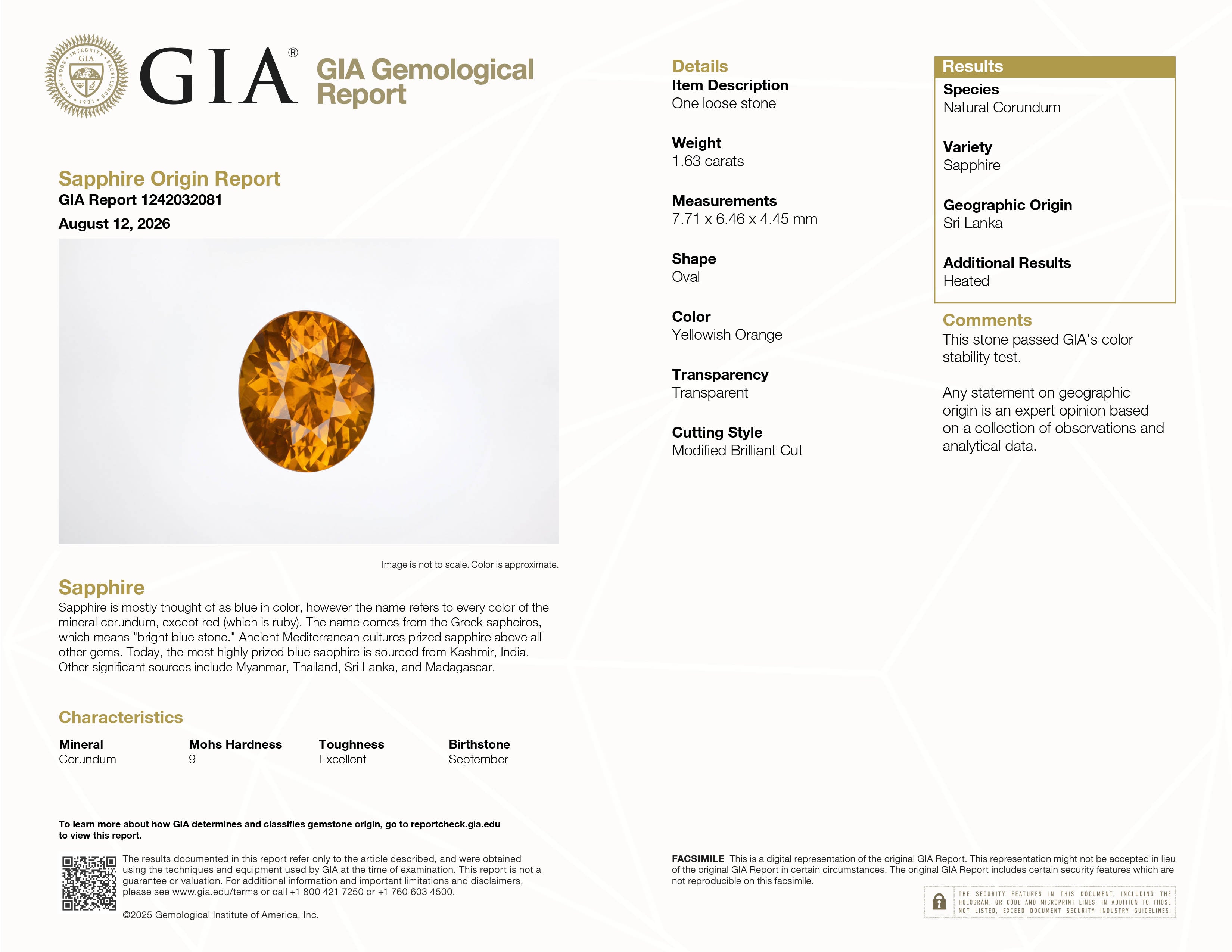
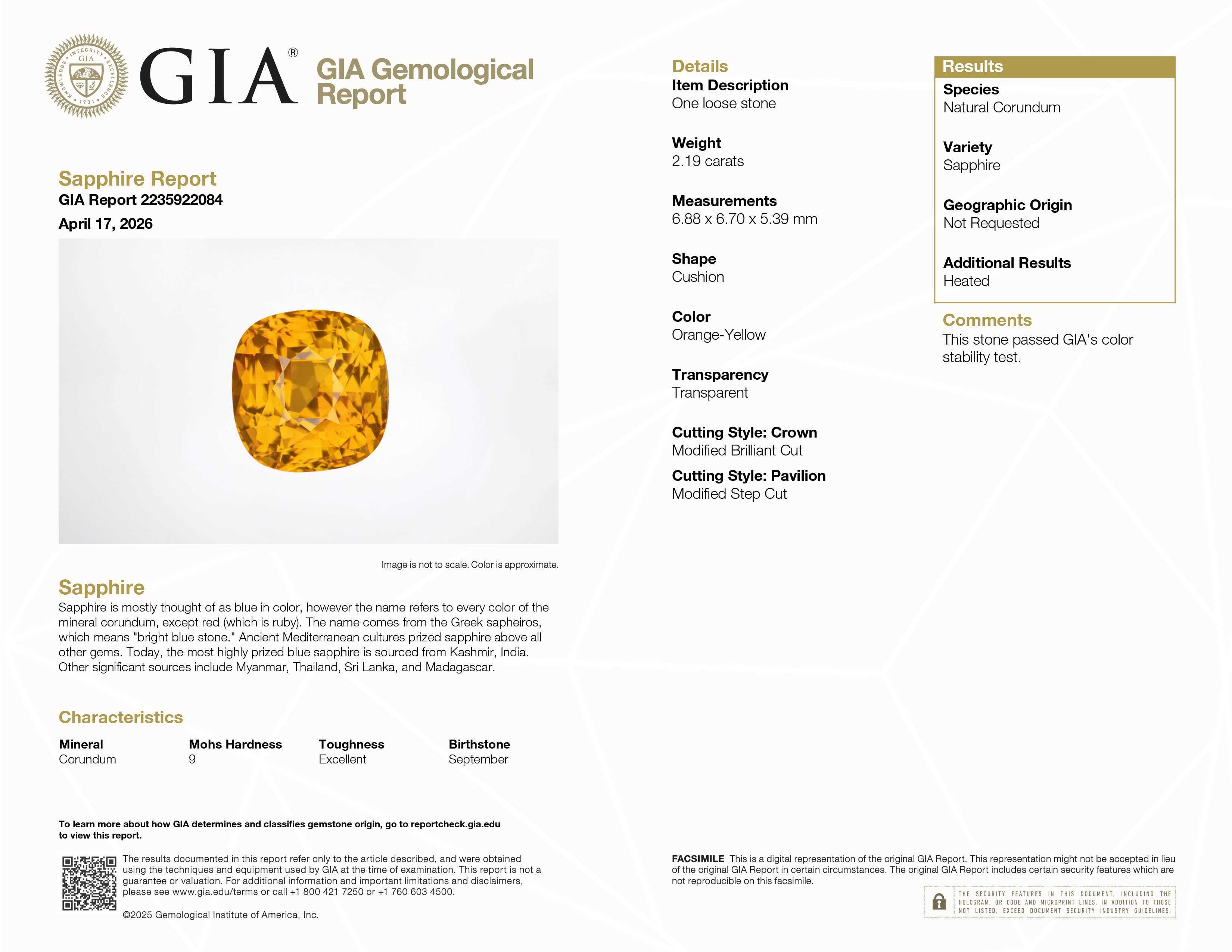
For orange sapphire and padparadscha specifically, never accept a laboratory report as clearance for beryllium treatment unless it is from GIA, Gübelin, or SSEF and explicitly states the stone was tested for beryllium. Reports from minor labs that do not use LA-ICP-MS provide no protection against beryllium-diffused material. See our How to Read a GIA Sapphire Report guide for a full walkthrough of the report fields.
Beryllium diffusion is most commonly applied to produce colors that command the highest premiums in their natural form — because that is where the economic incentive is greatest. Buyers should be most vigilant for beryllium treatment in the following color categories:
| Color / Category | Risk Level | Why It's Targeted | Protection Required |
|---|---|---|---|
| Padparadscha | Very high | The rarest and most expensive sapphire color; Be treatment can mimic it from near-worthless pale rough | GIA, Gübelin, or SSEF report with explicit Be testing |
| Vivid orange sapphire | Very high | Vivid natural orange is rare; Be treatment produces the color cheaply from pale material | GIA, Gübelin, or SSEF report with explicit Be testing |
| Golden yellow sapphire | High | Fine natural yellow sapphire is valuable; Be can produce golden yellow from pale stones | GIA, Gübelin, or SSEF report recommended above $500 |
| Peach sapphire | Moderate | Warm peach colors can be produced by Be treatment; less common than orange/padparadscha targeting | Lab report recommended above $500 |
| Blue sapphire | Low | Standard heat treatment is effective for blue; Be diffusion less commonly applied | Standard GIA report; Be testing not typically required |
| Pink sapphire | Low to moderate | Be can shift pink toward orange-pink; less common targeting | Lab report for high-value stones; Be testing for unusual orange-pink shades |
Beryllium diffusion is sometimes confused with surface diffusion (also called lattice diffusion), which is an older and different treatment. Understanding the distinction is important:
Both treatments require disclosure. Surface diffusion is visually identifiable by an experienced gemologist in most cases; beryllium diffusion is not. Both are excluded from our inventory.
We do not stock beryllium-diffused material under any circumstances. What we can document, and which laboratory documented it, is worth stating precisely here — because beryllium diffusion is the one treatment where the identity of the laboratory decides whether a report means anything at all.
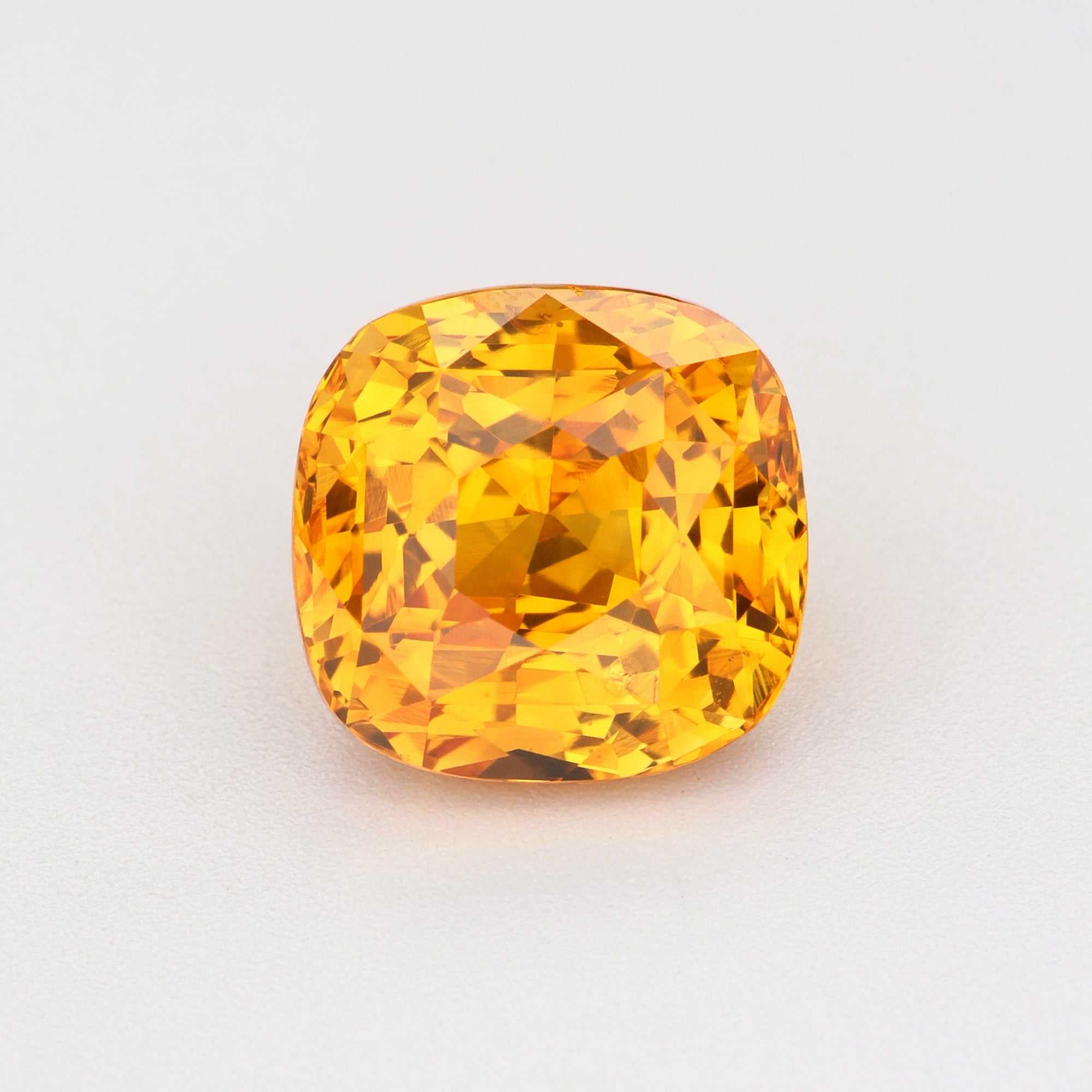
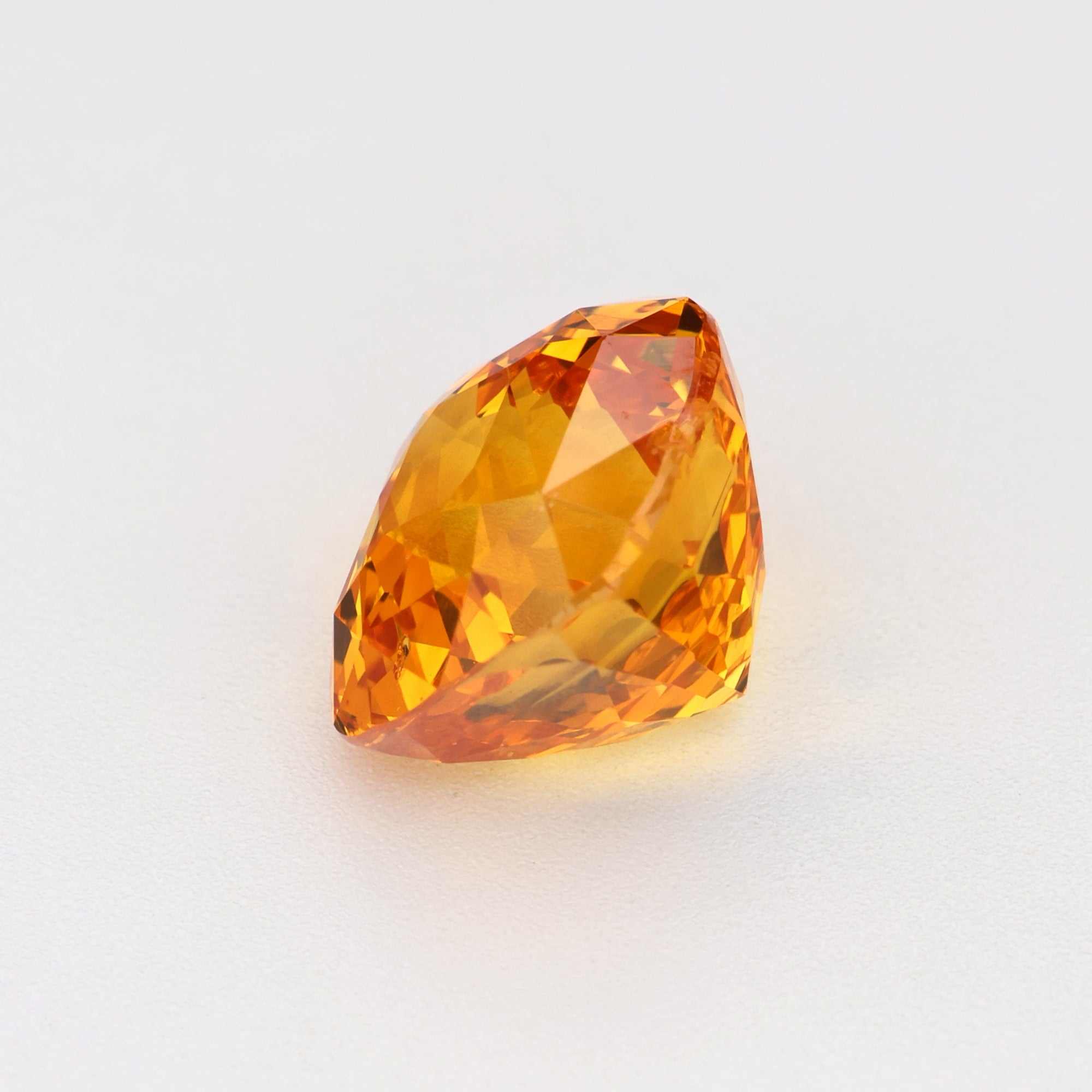
We hold no stone with a Gübelin, SSEF or Lotus report at present; the international reports on our own stones are GIA. AGCL, FGL and GIC are working Sri Lankan trade laboratories we deal with directly, and we stand behind their colour and treatment calls. Across the colours this guide is about: we hold no padparadscha at all; all three orange sapphires we list carry GIA reports; of the 23 yellow sapphires, 10 carry GIA reports and 13 AGCL; of the 6 peach sapphires, 1 carries a GIA report, 4 AGCL and 1 FGL. Every listing names the report it carries and gives the report number, so you can check it yourself — GIA numbers at gia.edu/report-check.
Being accurate about which laboratory looked at a stone matters more on this page than anywhere else on the store. Beryllium clearance is not a call a trade laboratory can make: it requires LA-ICP-MS, and AGCL, FGL and GIC do not run it. Their heating and colour calls we stand behind; beryllium testing is not something their reports assert, and we will not present them as though it were. Where one of these stones carries a GIA report, that is the report to read on beryllium — and where it does not, the standard this guide sets out for any other seller applies to us in exactly the same way.
This is not a marketing position — it is a sourcing standard. We source directly from Sri Lanka, where we have direct buying relationships with miners and dealers in Ratnapura and Beruwala. We know the provenance of our material, and where a stone carries no laboratory report at all, the listing says so rather than leaving you to assume one.
Browse our fully disclosed sapphire collections. We hold no padparadscha at present, so there is no padparadscha collection to browse — the Padparadscha Sapphire Guide is there to help you judge one offered elsewhere:
Before buying any orange, padparadscha, or golden yellow sapphire above $500:
That $500 line is deliberately stricter than the threshold we apply to sapphire generally — a report above two carats or above roughly $2,000, and on any stone sold as unheated or as a specific origin whatever it costs — and it is stricter on purpose. Beryllium diffusion is invisible to every test a buyer, a jeweller or a trade laboratory can run without LA-ICP-MS, so it is the one treatment where the report has to arrive well below the price at which a report would otherwise be worth its cost.
Beryllium diffusion is a sapphire treatment in which beryllium atoms are introduced into the crystal lattice by heating the stone at extreme temperatures in contact with beryllium-bearing material. Beryllium's small atomic radius allows it to penetrate the sapphire structure, permanently altering the color by changing the electronic environment around iron and chromium color centers. The result is vivid orange, yellow, or padparadscha-like colors produced from pale, low-value rough.
No. Beryllium diffusion cannot be detected by visual inspection, loupe examination, standard gemological microscopy, refractive index testing, specific gravity testing, or UV fluorescence alone. The only definitive detection method is LA-ICP-MS (Laser Ablation Inductively Coupled Plasma Mass Spectrometry), available at GIA, Gübelin, SSEF, and a small number of advanced laboratories worldwide.
Standard heat treatment redistributes elements already present in the sapphire without changing its chemical composition. Beryllium diffusion introduces a new, foreign element — beryllium — into the crystal. It is a more invasive enhancement, produces colors that may be completely artificial relative to the stone's natural state, and carries a value discount of 90–98% compared to the natural colors it mimics.
Padparadscha and vivid orange sapphire are the highest-risk categories, because these colors command the largest premiums in their natural form and therefore provide the greatest economic incentive for undisclosed treatment. Golden yellow sapphire is also high risk. For any of these colors above $500 in value, a GIA, Gübelin, or SSEF report with explicit beryllium testing is essential.
Yes — provided the report is from GIA, Gübelin, or SSEF and was issued for the specific stone you are buying. Always verify the report number at gia.edu/report-check and confirm the stone's weight and measurements match. Reports from minor or regional labs that do not use LA-ICP-MS do not provide reliable beryllium clearance.
It should be, and by law in many jurisdictions it must be. However, undisclosed beryllium treatment continues to exist in the market, particularly from dealers who do not test their material or who actively conceal treatment status. The only protection is independent laboratory documentation — not seller assurances.
No. Beryllium toxicity is a concern in industrial settings involving beryllium dust inhalation during processing. In a finished, polished gemstone set in jewelry, the beryllium is locked within the crystal lattice and poses no health risk under normal wearing conditions. The concern with beryllium diffusion is entirely commercial — value misrepresentation — not safety.

CG8366
Prices are shown in your local currency and may change.
CG8410
CG8445


Blue Star Sapphire Price Guide — What They Cost and Why
Read moreabout Blue Star Sapphire Price Guide — What They Cost and Why
Tsavorite Garnet Price Guide — What They Cost and Why
Read moreabout Tsavorite Garnet Price Guide — What They Cost and Why
Color-Change Sapphire Price Guide — What They Cost and Why
Read moreabout Color-Change Sapphire Price Guide — What They Cost and Why
Is Cat's-Eye Chrysoberyl Good for an Engagement Ring?
Read moreabout Is Cat's-Eye Chrysoberyl Good for an Engagement Ring?
Cat's Eye Chrysoberyl Price Guide — What They Cost and Why
Read moreabout Cat's Eye Chrysoberyl Price Guide — What They Cost and Why