

- by Ahmed Shareek
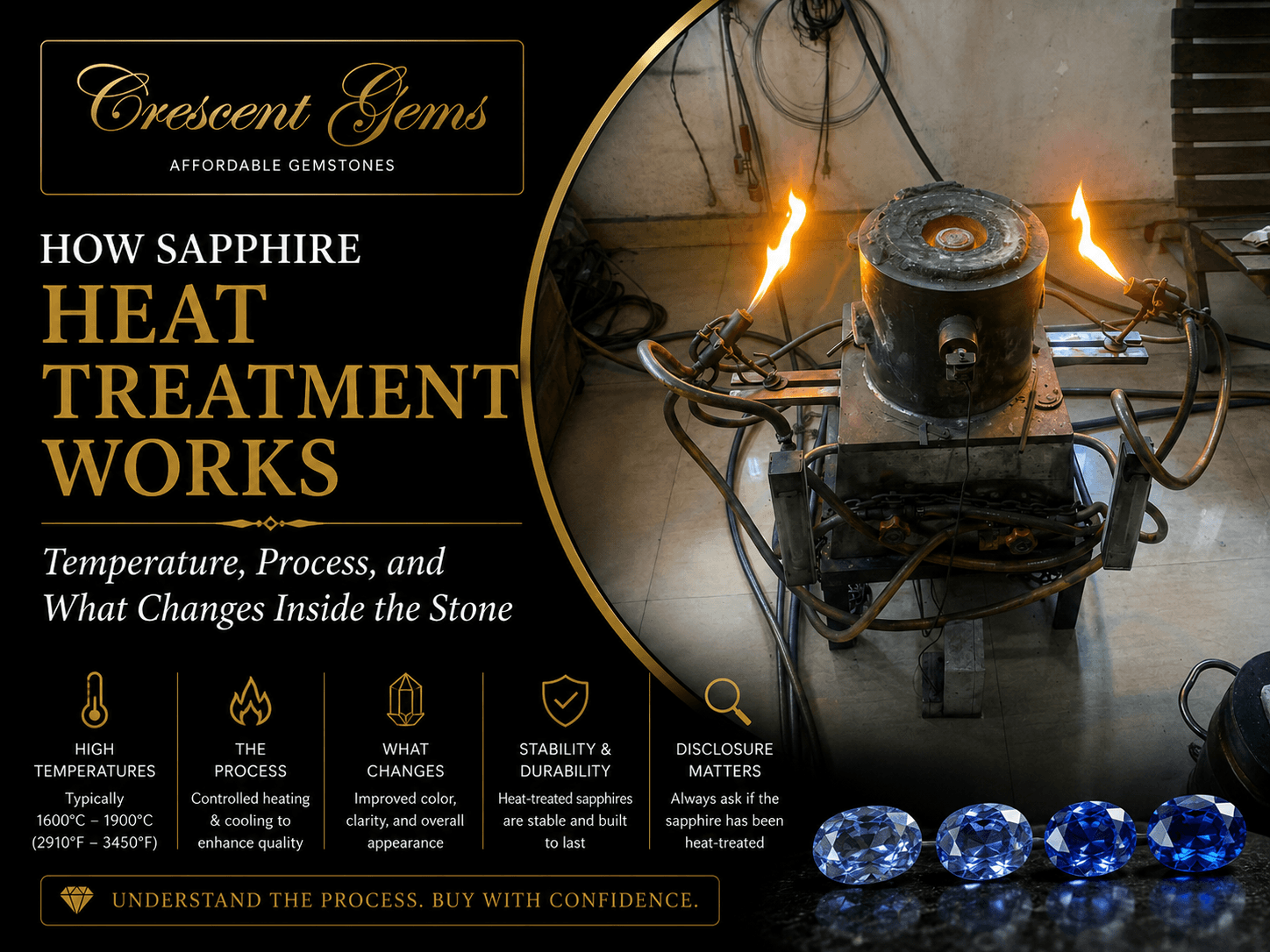
How Sapphire Heat Treatment Works — Temperature, Process, and What Changes Inside the Stone
- by Ahmed Shareek
New to sapphire treatment? Start with What Is an Unheated Sapphire? For the heated vs. unheated comparison: Heated vs. Unheated. For how labs read the evidence: How to Read Sapphire Inclusions.

Heat treatment is the most widespread gemstone enhancement in the world. An estimated 90–95% of all commercial sapphires are heated before they reach a buyer. The process is permanent, stable, accepted by every major gemological body, and has been practiced in one form or another for over a thousand years. It is not fraud — it is a standard part of the global sapphire trade, disclosed on every reputable laboratory report. What it fundamentally changes is the stone's color, clarity, and commercial category. And what it cannot change is the stone's identity as natural corundum.
Understanding how heat treatment works — the actual physical and chemical changes that happen inside the crystal — gives you the foundation for everything else in sapphire buying: why unheated stones command premiums of 2×–5×, rising to 8× for large, vivid, well-documented stones, why certain inclusions disappear after heating, why some colors are almost never heated, and why laboratory reports can reliably distinguish heated from unheated material. This guide covers all of it.

Heat treatment of corundum has been practiced in gem-trading regions of South and Southeast Asia for centuries, possibly over a millennium. Sri Lankan and Burmese gem traders understood empirically — long before modern gemology — that heating certain sapphire rough in charcoal fires could improve color. The modern commercial heat treatment industry, using controlled electric furnaces with precise temperature management and atmospheric control, developed through the 20th century and became the dominant practice by the 1970s and 1980s.
Today, the majority of sapphire produced in Thailand, Madagascar, Australia, and most other commercial sources is treated in industrial furnaces in Thailand — historically the center of the sapphire trading and treatment industry — before entering the global market. The practice is so standard that untreated natural rough is specifically segregated and sold separately at a significant premium by dealers who recognize its value.
Modern sapphire heat treatment takes place in electric furnaces capable of precise temperature control. The process varies by the goal — color enhancement, clarity improvement, or both — but the general sequence is:
| Temperature Range | Primary Effects | What It Targets |
|---|---|---|
| 1,000°C – 1,100°C | Partial silk dissolution; minor color adjustment | Light treatment for subtle clarity improvement |
| 1,100°C – 1,400°C | Full silk dissolution; significant color change; fracture healing possible | Standard commercial heat treatment for blue sapphire |
| 1,400°C – 1,600°C | Complete inclusion dissolution; maximum color change; some fracture healing | High-temperature treatment for heavily included or pale rough |
| 1,600°C – 1,800°C | Extreme treatment; risk of surface melting; glass formation in fractures | Used for difficult low-grade material; flux healing occurs at this range |
| Above 1,800°C | Approaches corundum's melting point; stone damage likely | Not commercially used for sapphire |
For context: 1,400°C is hotter than molten lava. Commercial sapphire heat treatment subjects the crystal to temperatures that would incinerate most organic material and melt most metals. That a sapphire survives this process intact — and emerges with improved color — is a function of corundum's exceptional hardness and thermal stability.

Color in sapphire is produced by trace elements within the aluminum oxide crystal lattice. Blue color in sapphire is primarily caused by intervalence charge transfer between iron (Fe²⁺) and titanium (Ti⁴⁺) pairs. Pink and red color is caused by chromium (Cr³⁺). Yellow color involves iron in a different oxidation state. Heat drives chemical reactions in these trace element systems, producing predictable and commercially useful color changes.
The most commercially significant application of heat treatment. Pale, grayish, or greenish-blue rough — the majority of what comes out of the ground — is transformed by heat in several ways:
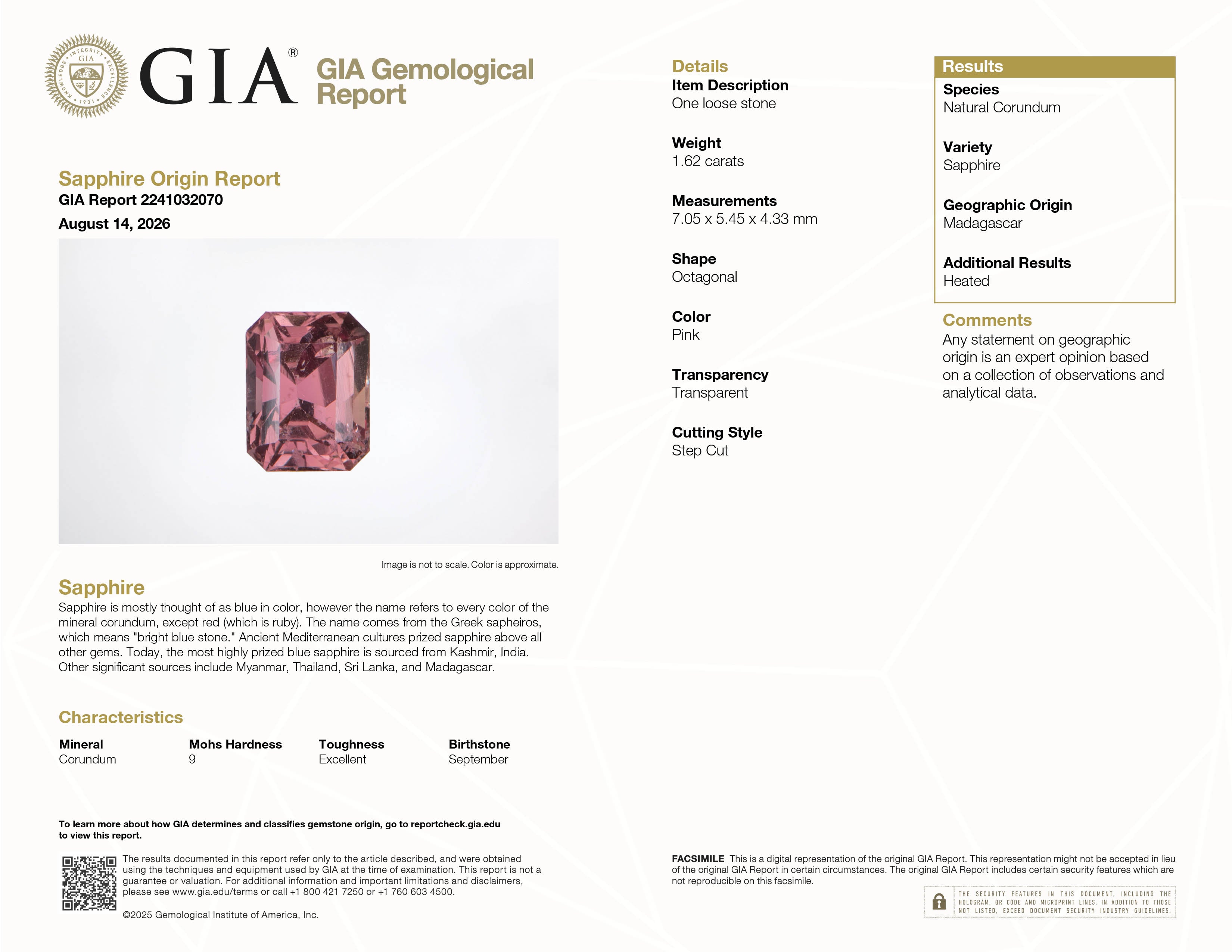
Pink sapphire color is produced by chromium. Heat treatment can intensify pale pink by removing competing color centers, or shift the hue balance. Heating in an oxidizing atmosphere can produce more vivid pink in some material. However, very high temperatures can also destroy or alter chromium-related color centers, making the treatment less predictable for pink material than for blue.
Padparadscha color — the delicate combination of pink-orange produced by a specific chromium-iron interaction — is highly sensitive to heat. The precise balance of iron oxidation states and chromium concentration that produces authentic padparadscha color is disrupted by heat treatment. Heating a padparadscha-colored stone typically shifts it toward pink or orange, destroying the specific combination that gives padparadscha its definition and value. This is why fine padparadscha is usually unheated, and why the market pays a large premium for a stone whose laboratory report says so. The name itself, though, is a color call and not a treatment call: the LMHC definition of padparadscha turns on a pastel pinkish-orange to orangey-pink color, and it excludes lattice diffusion, irradiation, dyeing and coating — but not ordinary heat. Heated stones in this color range are sold as padparadscha by parts of the trade, usually at a significantly reduced value, so treatment status has to come from the laboratory report or from the seller's disclosure, never from the name alone. See our Padparadscha Sapphire Guide. We hold no padparadscha in stock at present.
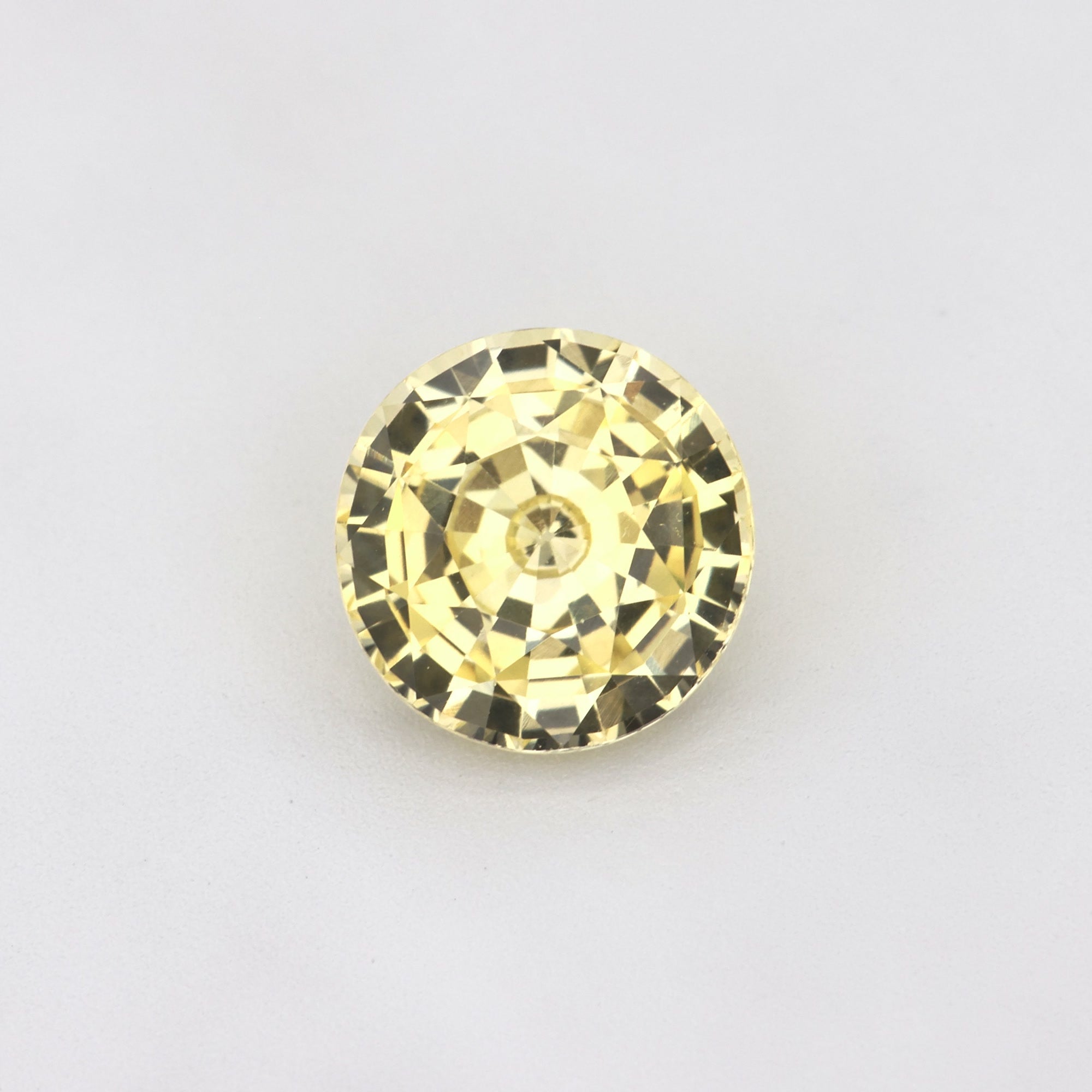
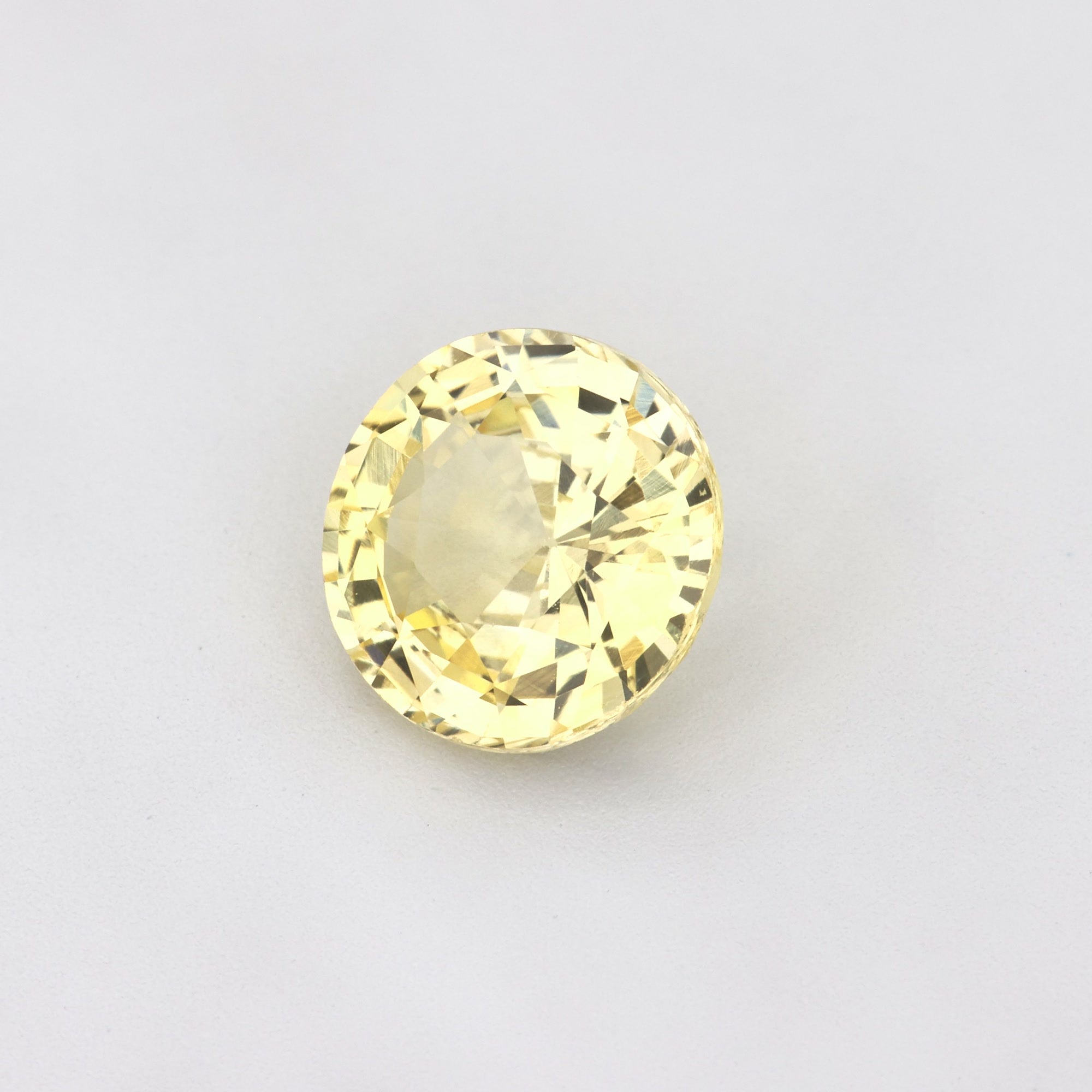
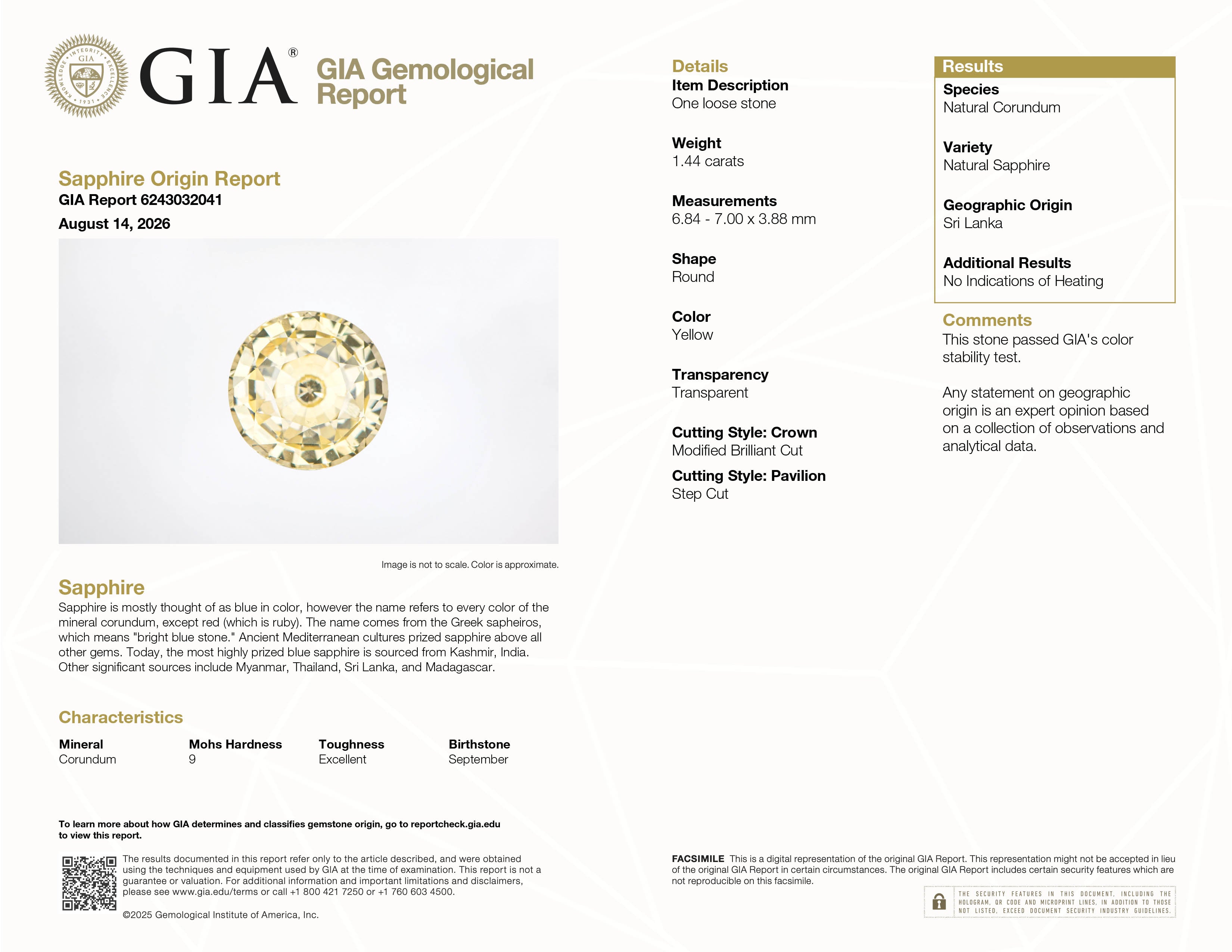
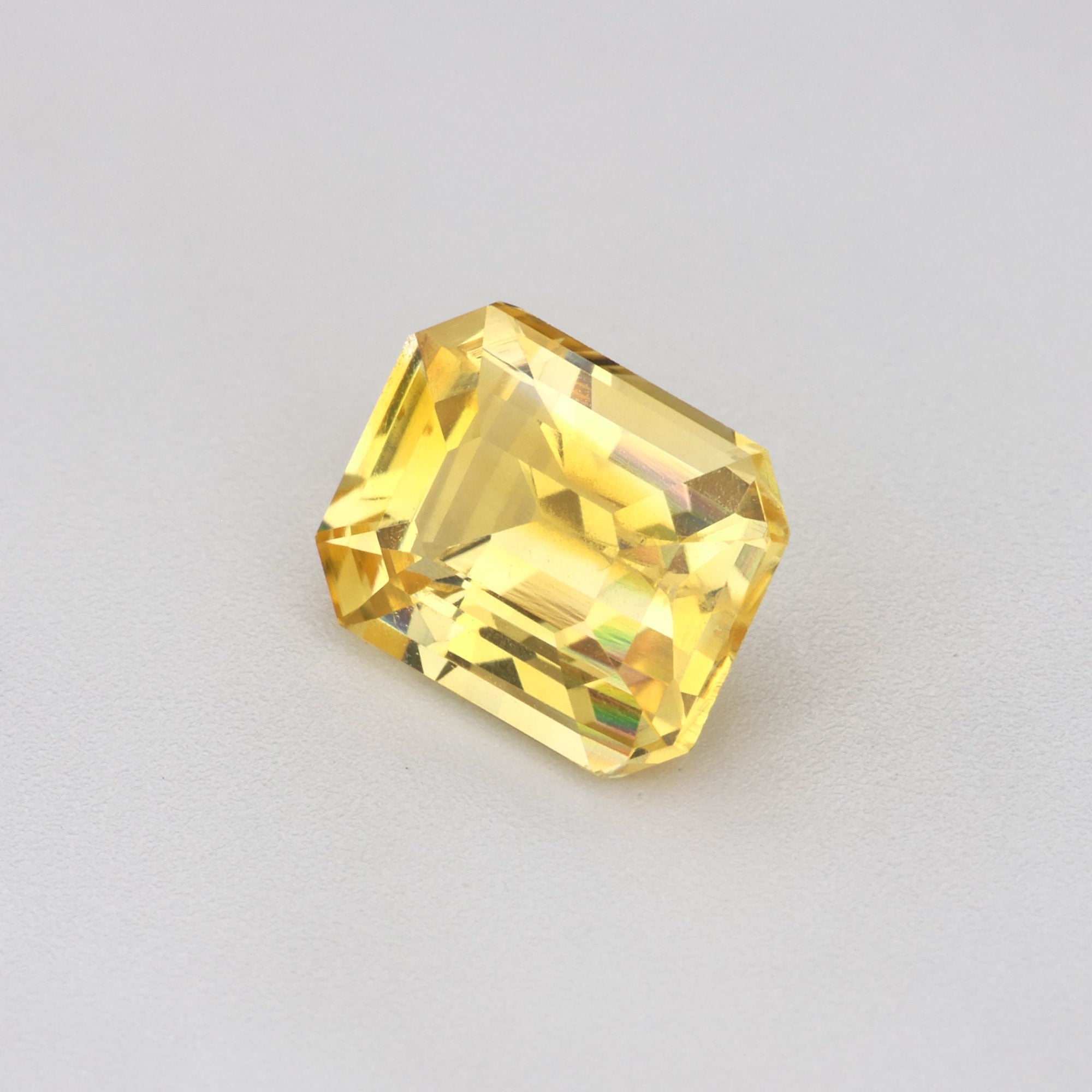
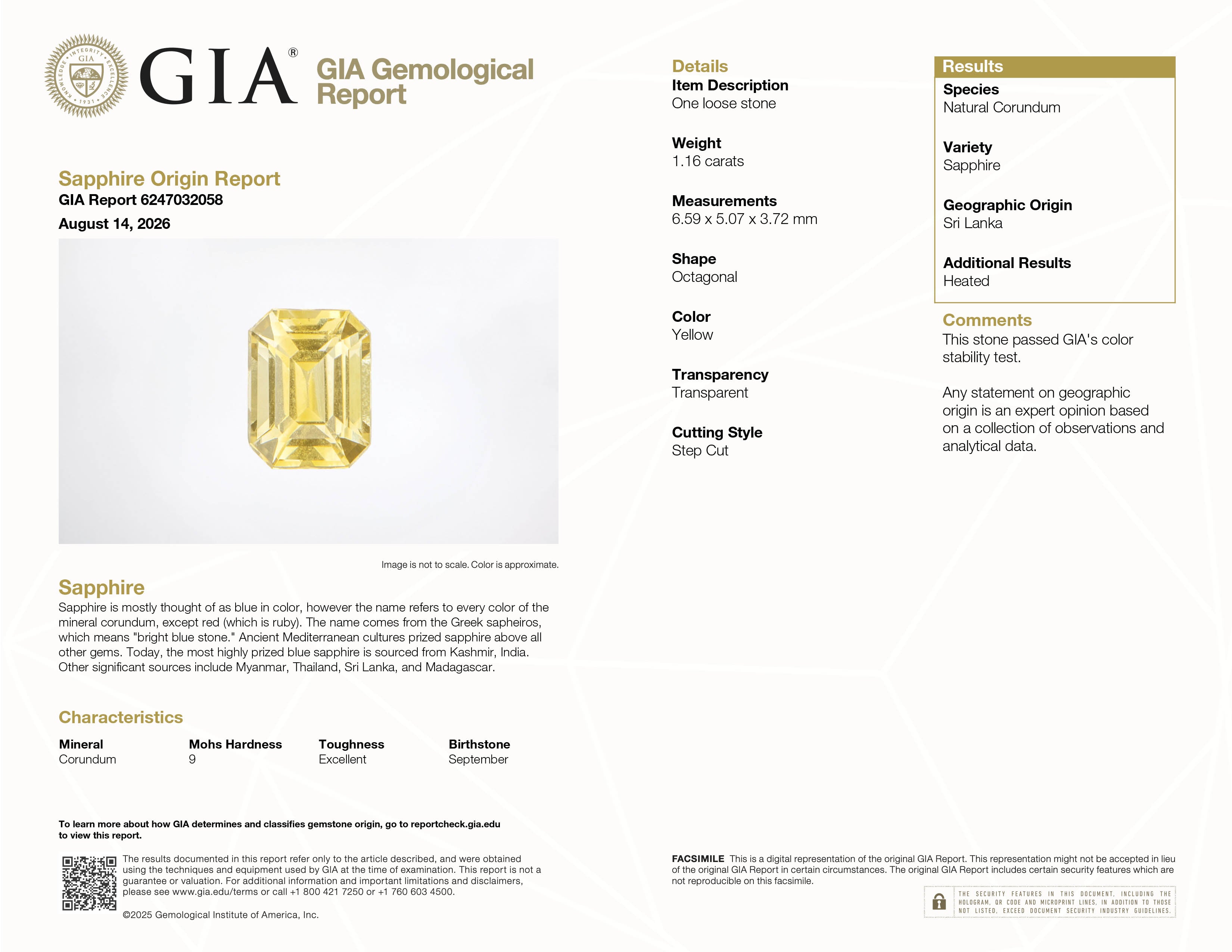
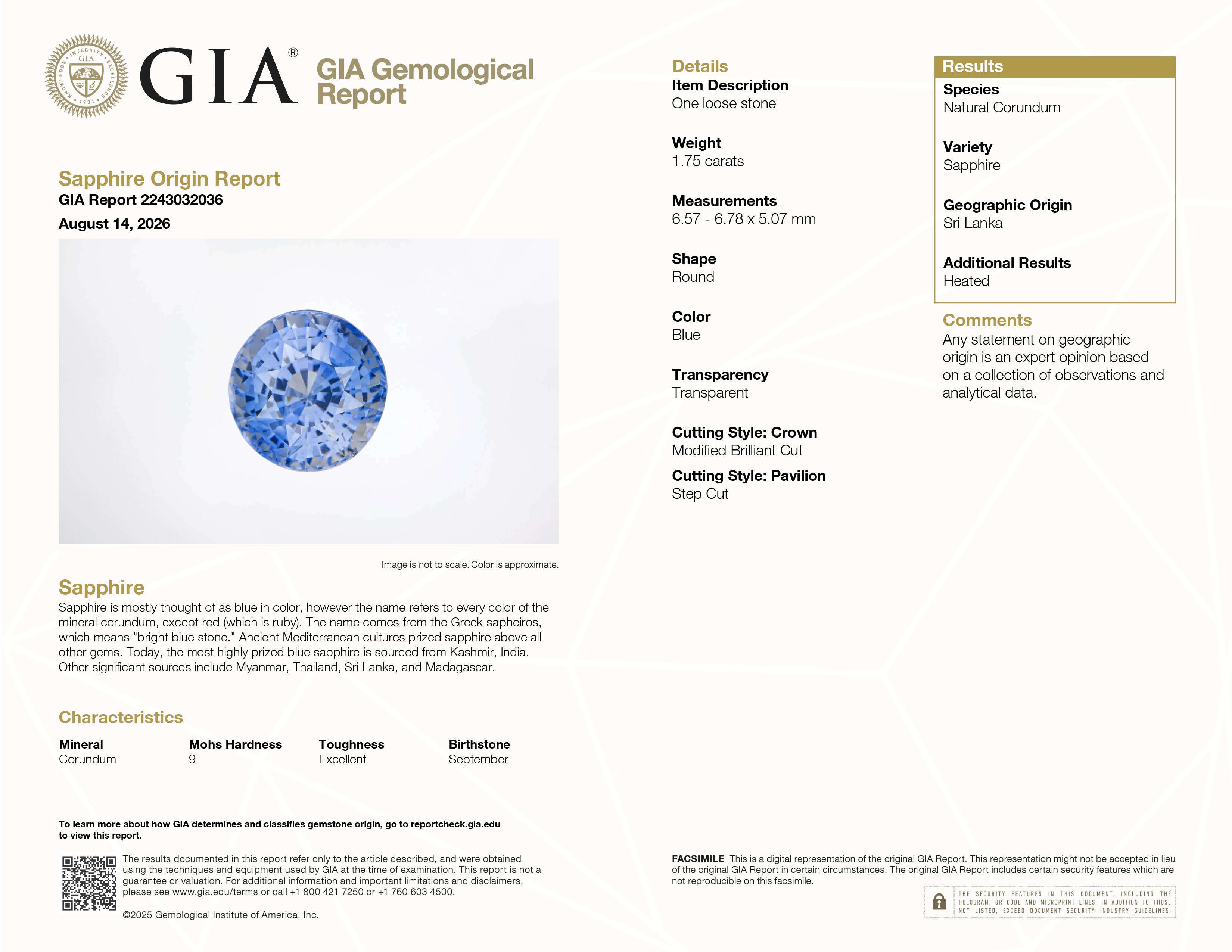
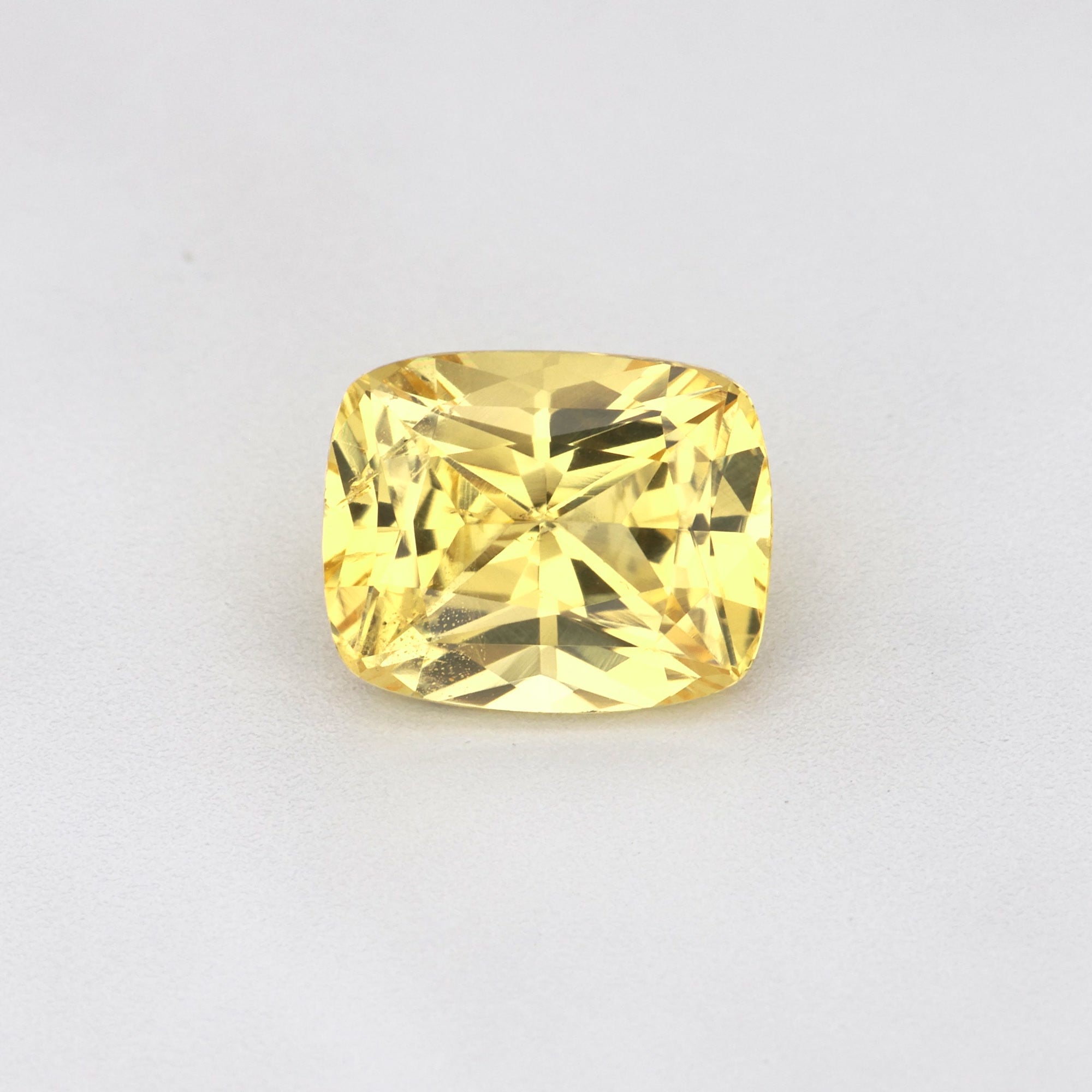
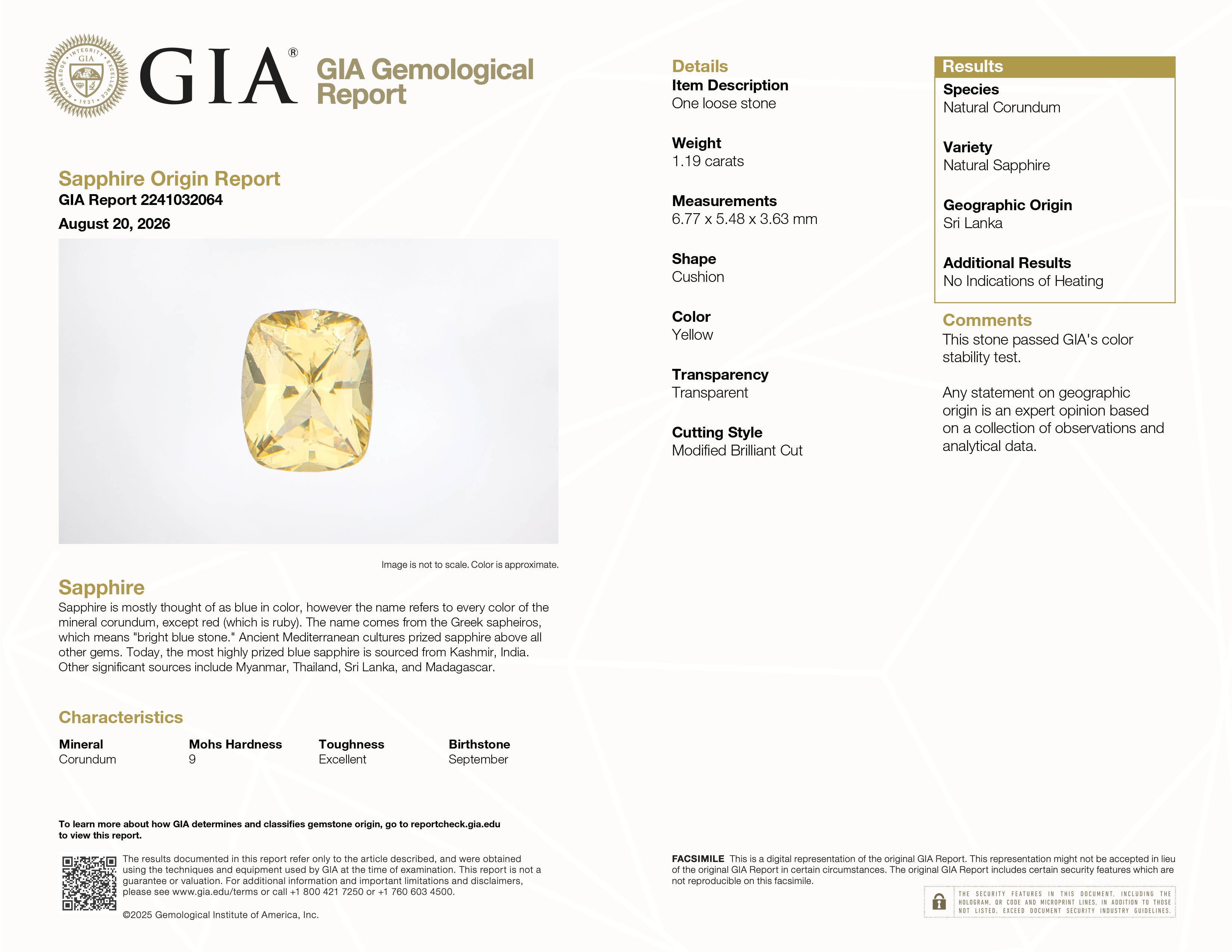
Yellow color in sapphire is caused primarily by Fe³⁺ in specific lattice positions. Heat treatment can intensify yellow by promoting the Fe³⁺ configuration, or shift orange-yellow material toward purer yellow. Ceylon yellow sapphires are significant in the Jyotish (Vedic astrology) market where unheated status is required — the Pukhraj gemstone prescribed for Jupiter must be unheated. See our yellow sapphire collection and Jyotish buying guide. For buyers who don't need Jyotish-grade unheated material, a well-cut heat-treated stone still delivers the same warm golden color at a more accessible price — see our 1.50 ct GIA-documented heat-treated round yellow sapphire as a current example.
Teal sapphire — the blue-green color combination — is almost always unheated because heat typically destroys the blue-green balance, pushing the stone toward blue or green and eliminating the teal character. The same applies to violet and color-change sapphires: their multi-element color mechanisms are often disrupted rather than improved by standard heat treatment. See our unheated teal sapphire collection.
| Sapphire Color | Effect of Heat Treatment | Typically Heated? |
|---|---|---|
| Blue | Deepens pale blue; removes gray/green modifiers | Yes — ~95% of commercial blue sapphire is heated |
| Pink | Can intensify; results variable | Mixed — fine unheated pink commands large premium |
| Padparadscha | Destroys color balance; typically shifts the stone toward pink or orange | Predominantly unheated — but the name is a color call, not a treatment call; check the report |
| Yellow | Intensifies yellow; shifts orange toward yellow | Mixed — large unheated market for Jyotish use |
| Teal | Destroys blue-green balance | Almost never — nearly always unheated |
| Violet | Shifts vanadium color toward blue or pink | Predominantly unheated |
| Orange | Can improve saturation | Mostly heated commercially |
| Star sapphire | Dissolves rutile silk; destroys the star | Rarely — usually unheated |
| Color-change | Typically disrupts the shift mechanism | Usually unheated |
The clarity-improving effect of heat treatment is, for many stones, as commercially significant as the color improvement. Sapphire rough that would be unmarketable due to heavy silk inclusions can emerge from a furnace with dramatically improved transparency. Understanding why this happens explains one of the most important diagnostic signatures that gemological laboratories use to detect treatment.
Rutile silk consists of fine titanium dioxide (TiO₂) needle crystals that grew within the corundum crystal during formation, arranged in three directions at 60-degree angles. At temperatures above approximately 1,200°C, rutile undergoes dissolution back into the corundum lattice — the TiO₂ of the needles reacts with and is absorbed into the Al₂O₃ of the surrounding crystal. The needles disappear. The silky haze they produced in the unheated stone is replaced by improved transparency.
What remains after dissolution are the characteristic heat-treatment signatures that gemologists look for:
These features are irreversible and permanent. They are the primary microscopic evidence used by GIA, Gübelin, and SSEF in their treatment determinations. See our How to Read Sapphire Inclusions guide for the full visual reference.
At very high temperatures (above approximately 1,600°C), surface-reaching fractures in sapphire can heal partially — the corundum at fracture surfaces sinters together, reducing the visibility of fractures. At even higher temperatures, if fluxes are present, glass can form within fractures — this is the basis of flux-healing treatment, which is a significantly more aggressive enhancement than standard heat treatment and is disclosed separately on laboratory reports. A GIA report noting "residues consistent with heat treatment in fractures" indicates flux healing. We do not carry flux-filled or fracture-filled stones.
Fingerprint inclusions — healed fractures containing fluid inclusions — change character under heat. The fluid inclusions within the fingerprint may crystallize or develop stress halos in response to heating. The sharpness or diffuse character of fingerprint inclusion boundaries is one of the secondary diagnostic features examined by gemologists in treatment assessment.
Understanding what heating cannot change is as important as understanding what it does:
| Property | Affected by Heating? | Notes |
|---|---|---|
| Mineral identity (natural corundum) | No | A heated sapphire is still a natural sapphire |
| Crystal structure | No (except at extreme temperatures) | Corundum's hexagonal structure is unaffected by commercial treatment temperatures |
| Mohs hardness (9) | No | Hardness is a property of the crystal structure, not trace element distribution |
| Chemical formula (Al₂O₃) | No (standard heat only) | Beryllium diffusion does change composition — a fundamentally different treatment |
| Long-term color stability | No — color change is permanent | Heat-treated color is stable under normal wear and light exposure |
| Durability for daily wear | No — still fully durable | Treated sapphires are as wear-resistant as unheated material |
| Geographic origin | No | A Ceylon sapphire heated is still a Ceylon sapphire |
| Reversibility | Not applicable — treatment is permanent | Once heated, a stone cannot be returned to its unheated state |
A heated sapphire is a natural sapphire that has been enhanced. It is not synthetic, not fake, and not misrepresented provided the treatment is disclosed — which it always should be, and always will be on a GIA or Gübelin report.
Standard heat treatment redistributes elements already present in the sapphire. Beryllium diffusion is categorically different: it introduces a new element — beryllium — into the crystal by heating the stone in contact with beryllium-bearing material. Beryllium atoms diffuse into the outer zones of the crystal, changing the color mechanism itself and producing vivid orange, yellow, or padparadscha-like colors in stones that have no natural color quality of their own.
Beryllium diffusion is not detectable by visual inspection or loupe examination. It requires LA-ICP-MS trace element analysis at a qualified laboratory. GIA and Gübelin both test for it as a standard part of their sapphire analysis. A stone with beryllium diffusion carries a very large value discount — its color is essentially manufactured from low-quality material, not natural. See our full Beryllium Diffusion Explained guide. Crescent Gems does not sell beryllium-treated stones.
GIA, Gübelin, and SSEF use a multi-technique approach to determine whether a sapphire has been heated. No single test is conclusive — the determination is based on the convergence of multiple independent lines of evidence:
| Technique | What It Detects | Used By |
|---|---|---|
| Microscopic examination (darkfield, brightfield, oblique illumination) | Rutile silk integrity, stress features around inclusions, fingerprint character, dissolution products | All three major labs; primary diagnostic tool |
| UV fluorescence | Treatment and origin can both affect fluorescence patterns; unheated Ceylon sapphires show specific fluorescence characteristics | All three major labs; supporting indicator |
| UV-Vis absorption spectroscopy | Absorption features in the ultraviolet and visible spectrum change with heat treatment; specific absorption bands are suppressed or created by heating | All three major labs; essential tool |
| LA-ICP-MS trace element analysis | Precise trace element concentrations; used primarily for origin determination and for detecting beryllium diffusion | Gübelin and SSEF standard; GIA on request |
| Raman spectroscopy | Can identify inclusion mineralogy precisely; confirms zircon, rutile, calcite, and other inclusions | Gübelin and SSEF; advanced labs |
The result of this analysis is communicated on the GIA report as either "no indications of heating" (unheated) or "indications of heating" (heated). For a full guide to reading the report, see our How to Read a GIA Sapphire Report guide.
Heat treatment is the single most commercially significant factor distinguishing two otherwise identical sapphires of the same size, color, and origin. The premium for unheated status is real and substantial:
| Stone Profile | Heated Price Range | Unheated Premium |
|---|---|---|
| Fine blue Ceylon, 1–2 ct, with GIA report | $1,500–$4,000 per ct | 2×–4× for unheated equivalent |
| Fine blue Ceylon, 3+ ct, vivid | $3,000–$8,000 per ct | 4×–8× for unheated equivalent |
| Pink, fine quality, 1–2 ct | $800–$2,500 per ct | 2×–5× for unheated equivalent |
| Yellow, Jyotish-grade Ceylon, 2+ ct | $300–$800 per ct | 2×–5× for unheated with cert |
| Padparadscha | Not quoted — we hold no padparadscha and cannot check a figure against our own shelf | Large — unheated is the norm at the top of this color, but heat does not remove the padparadscha name; check the report |
Figures above are approximate market guidance, not fixed quotes. Actual value varies by treatment, origin, colour, cut, clarity, and certification.
These premiums are driven by genuine scarcity — fine unheated rough is rare because only a small fraction of what comes out of the ground has natural color and clarity good enough to be commercially attractive without treatment. Supply cannot be increased. As unheated rough from Sri Lanka and other metamorphic sources becomes scarcer with continued mining, the premium for documented unheated material has historically grown. For the full investment-grade sapphire framework, see our Ultimate Sapphire Buying Guide.
Heat treatment of sapphire is a fully accepted and ethical practice provided it is disclosed. Every major gemological laboratory — GIA, Gübelin, SSEF, AGL — discloses treatment on their reports. The International Colored Gemstone Association (ICGA) and other industry bodies require disclosure of heat treatment in commercial transactions. A seller who represents a heated sapphire as unheated, or who fails to disclose treatment status, is misrepresenting the stone — which is fraud, regardless of how common or accepted the treatment itself is.
The practical standard: always ask. Any reputable seller should be able to tell you the treatment status of any stone they sell. The working rule we apply is a report on any stone above two carats or above roughly $2,000, and on any stone sold as unheated or as a specific origin, whatever it costs — below that level a working trade laboratory report is reasonable documentation for what it states, and treatment status should be documented on that report rather than conveyed only verbally. See our GIA Report Guide and our Heated vs. Unheated page for the full comparison.
Sapphire heat treatment is the process of heating a natural corundum stone in a controlled furnace at temperatures between 1,000°C and 1,800°C to improve its color, clarity, or both. The treatment is permanent and accepted by all major gemological bodies, but must be disclosed in any commercial sale.
When done correctly, heat treatment does not damage a sapphire's hardness, durability, crystal structure, or long-term color stability. Incorrectly managed treatment — too rapid heating or cooling, wrong atmosphere, or inappropriate temperature — can fracture stones, which is a risk absorbed by the treater, not the buyer of a finished treated stone.
No. Heat treatment permanently alters the trace element distribution and inclusion character of a sapphire. Once heated, the stone cannot be returned to its original unheated state. This is why unheated status is so commercially significant — it is irreplaceable.
The only reliable way is a laboratory report from GIA, Gübelin, or SSEF stating either "no indications of heating" (unheated) or "indications of heating" (heated). Visual examination and loupe inspection can provide hints but are not conclusive. A seller's verbal claim is not sufficient documentation.

Yes, significantly — for comparable quality stones. Fine unheated sapphires command premiums of 2×–5× over heated equivalents, rising to as much as 8× for large, vivid, well-documented stones, driven by genuine scarcity. However, a heated sapphire of excellent color and cut can be more beautiful and better value than a poorly colored unheated stone. Treatment status multiplies value on otherwise excellent stones — it is not a substitute for quality.
Standard heat treatment redistributes elements already present in the sapphire without adding anything new. Beryllium diffusion introduces beryllium from an external source, fundamentally changing the color mechanism. Beryllium diffusion is a more aggressive, lower-value treatment not detectable by visual inspection, requiring LA-ICP-MS analysis. It carries a much larger value discount than standard heat treatment.
Teal, violet, padparadscha, star sapphires, and color-change sapphires are predominantly unheated because heat treatment destroys their distinctive color properties. For teal sapphire, heat breaks the blue-green balance. For star sapphire, heat dissolves the rutile silk that creates the star. For padparadscha, heat disrupts the precise chromium-iron balance defining the color. Heating these stones would destroy their most commercially valuable attributes.
Of the 88 unheated sapphires we currently list, 56 carry an AGCL report and 29 carry a GIA report confirming "no indications of heating"; three carry no laboratory report at all, and their listings say so. GIA is the international reference; AGCL, FGL and GIC are working Sri Lankan trade laboratories we deal with directly, and we stand behind their colour and treatment calls. We hold no stone with a Gübelin, SSEF or Lotus report at present. We source directly from Sri Lanka and provide full treatment transparency on every listing — each listing names the report it carries.
Use our Try Before You Buy program to see the stone before you commit. Email crescentgems@gmail.com with questions about any stone's treatment documentation — we respond within one business day.
Continue Learning
Return to the Ultimate Sapphire Buying Guide for the full picture on colors, origins, shapes, certification, and pricing — everything you need to buy a natural loose sapphire with confidence.

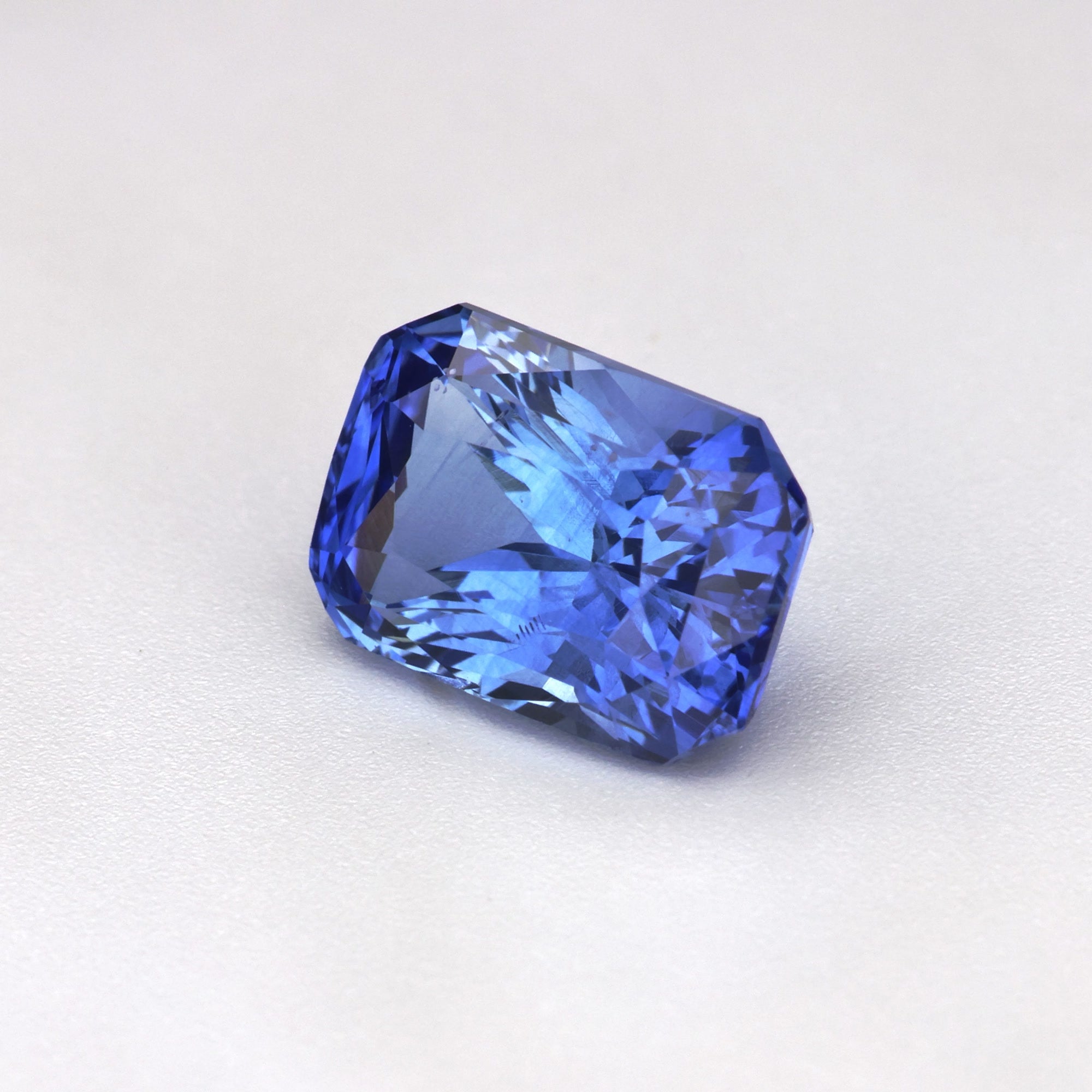
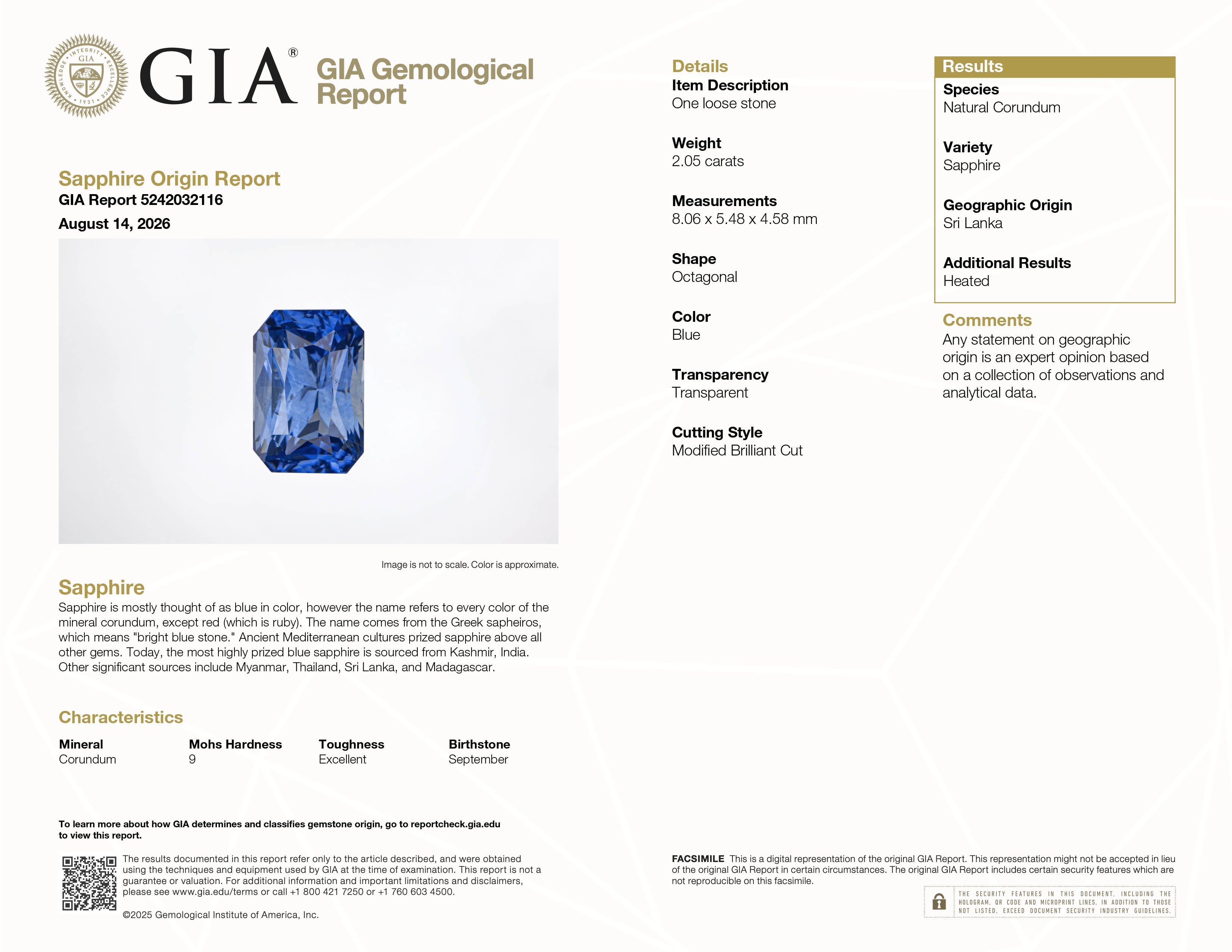
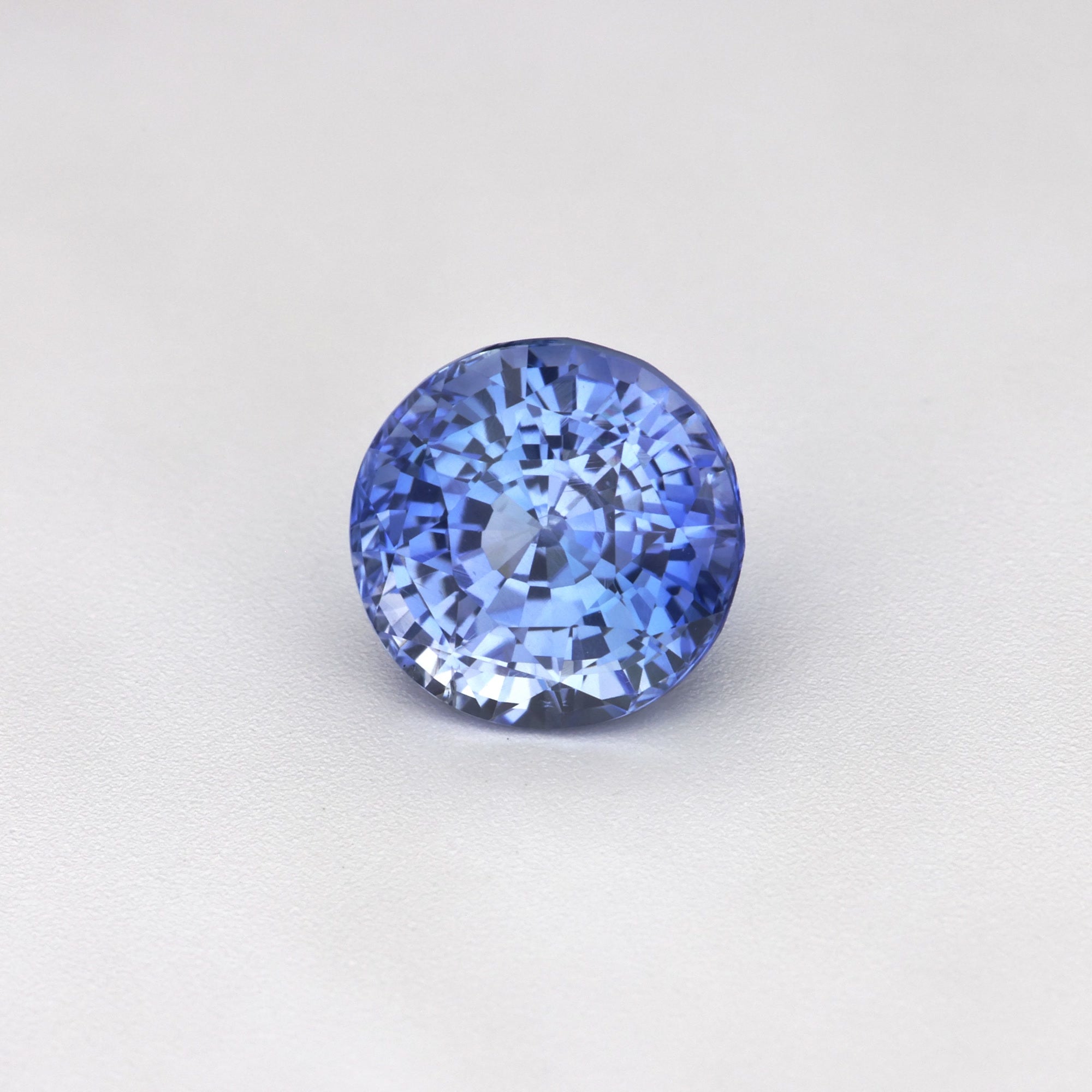
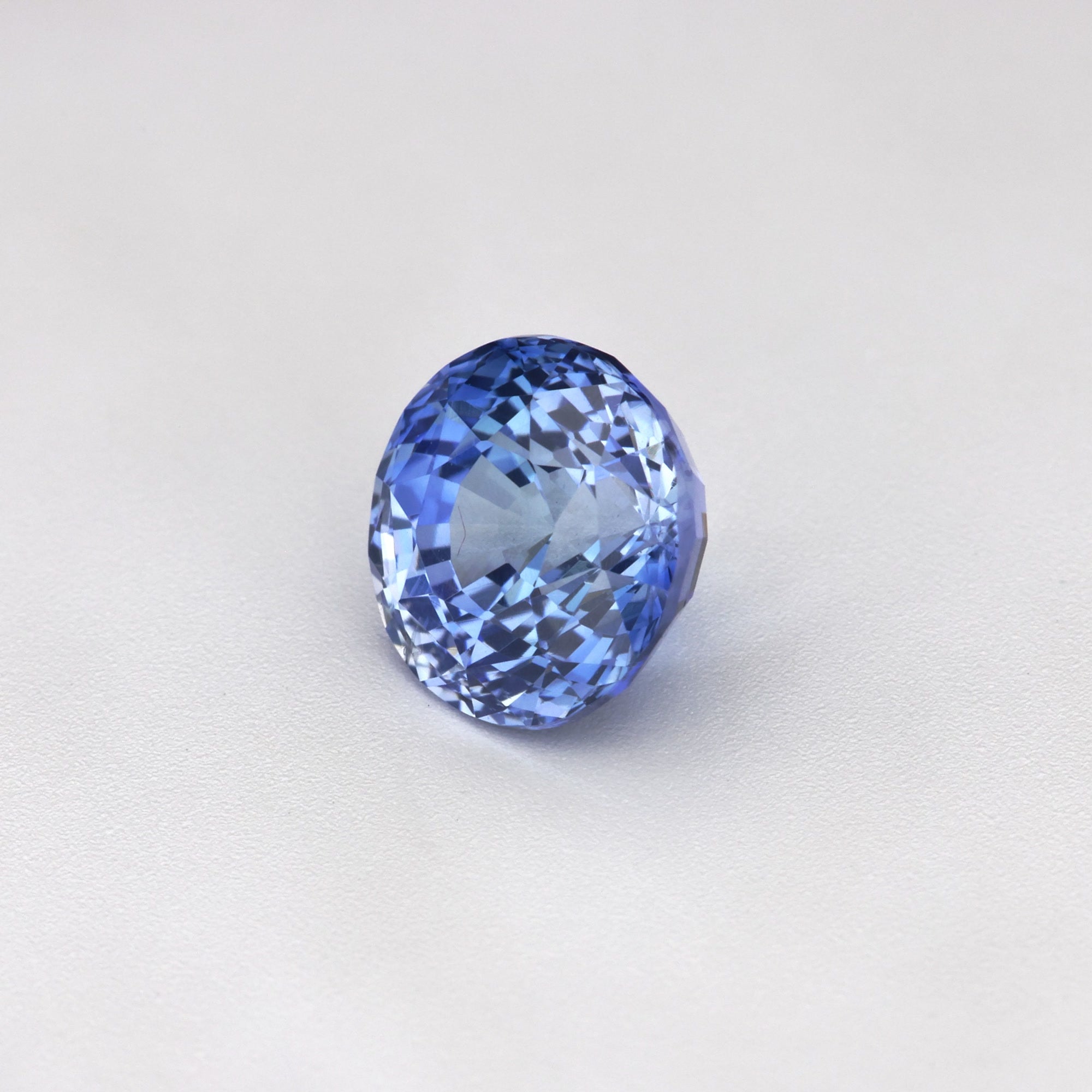
CG8465
CG8460
CG8456


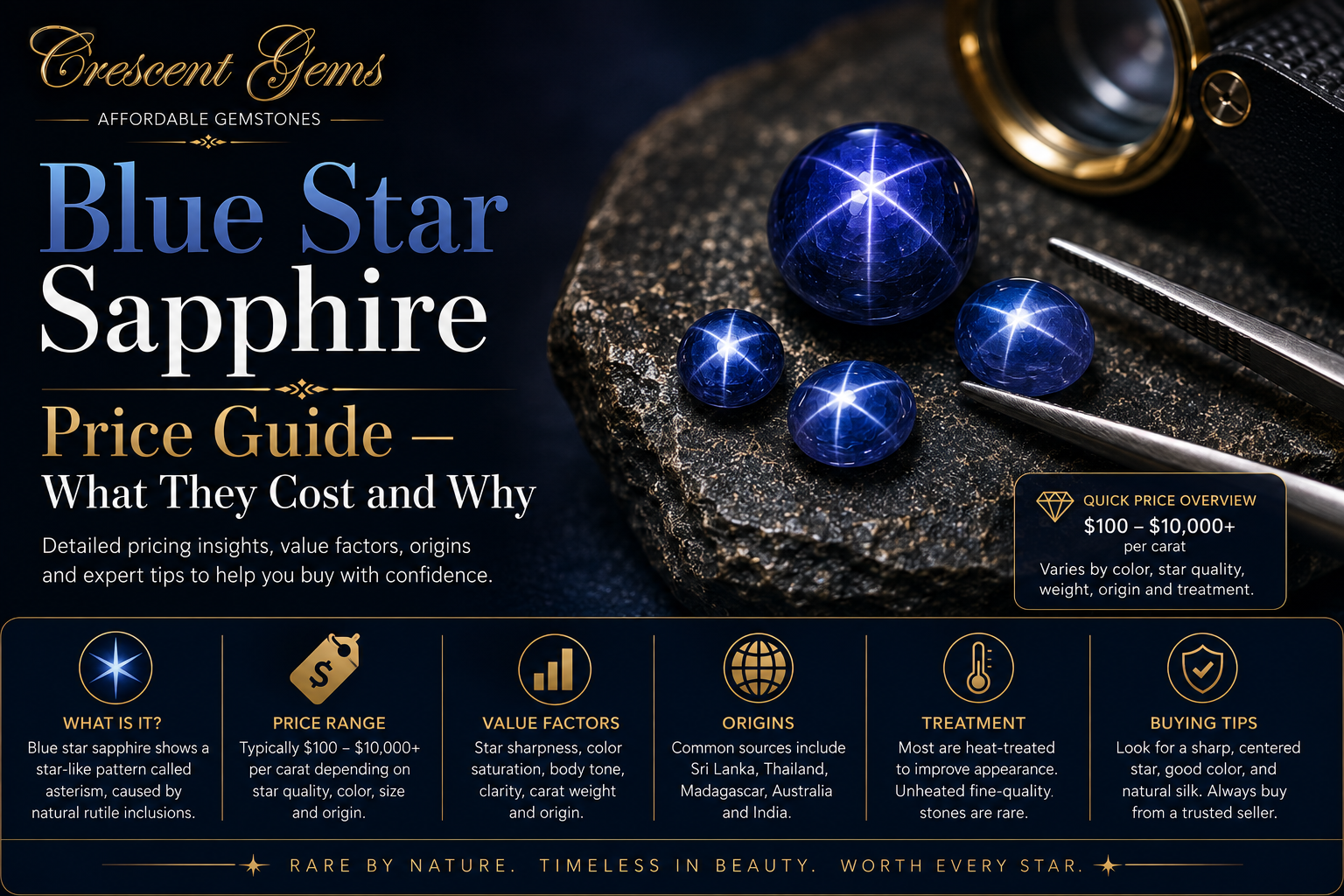
Blue Star Sapphire Price Guide — What They Cost and Why
Read moreabout Blue Star Sapphire Price Guide — What They Cost and Why
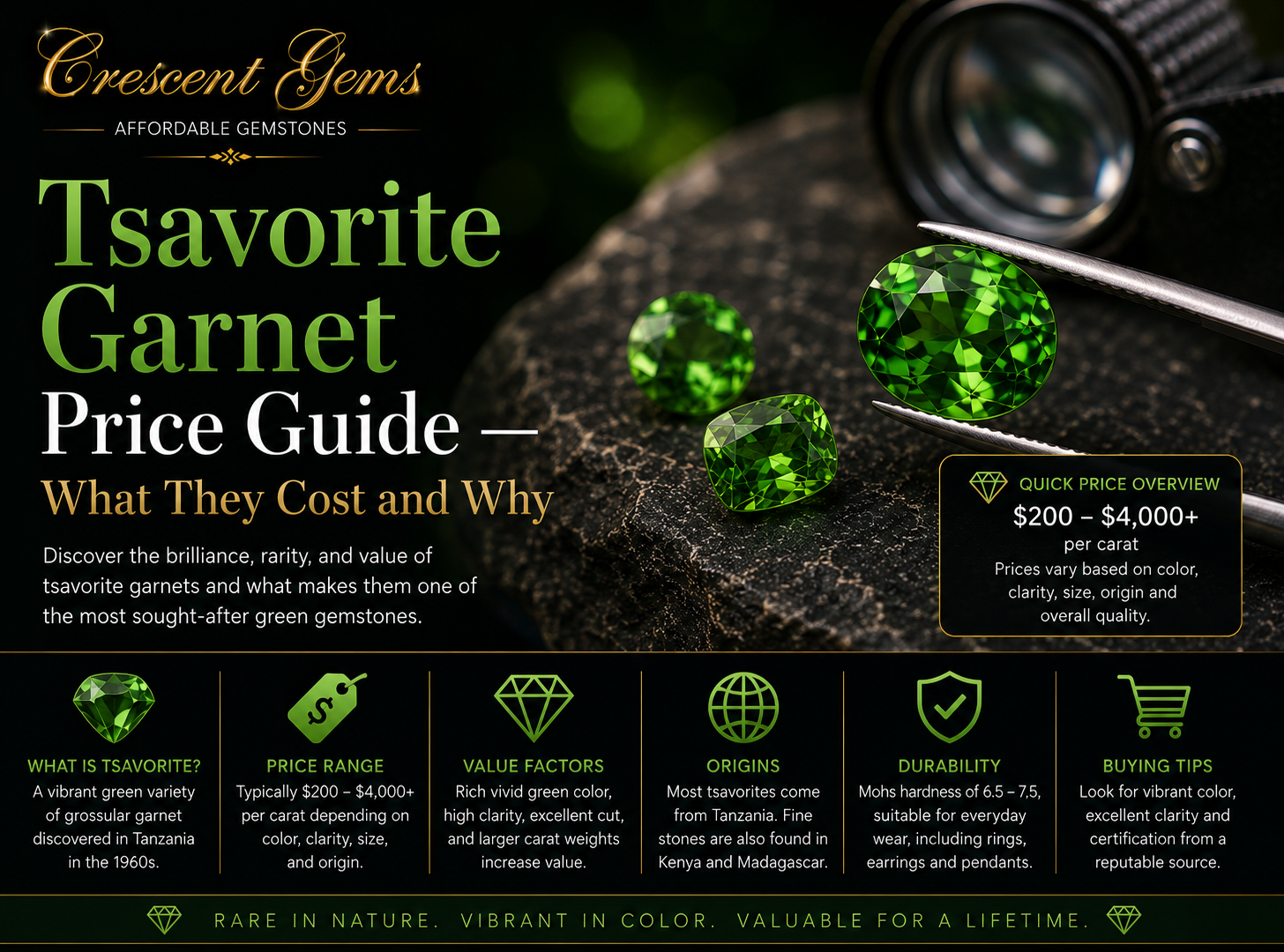
Tsavorite Garnet Price Guide — What They Cost and Why
Read moreabout Tsavorite Garnet Price Guide — What They Cost and Why
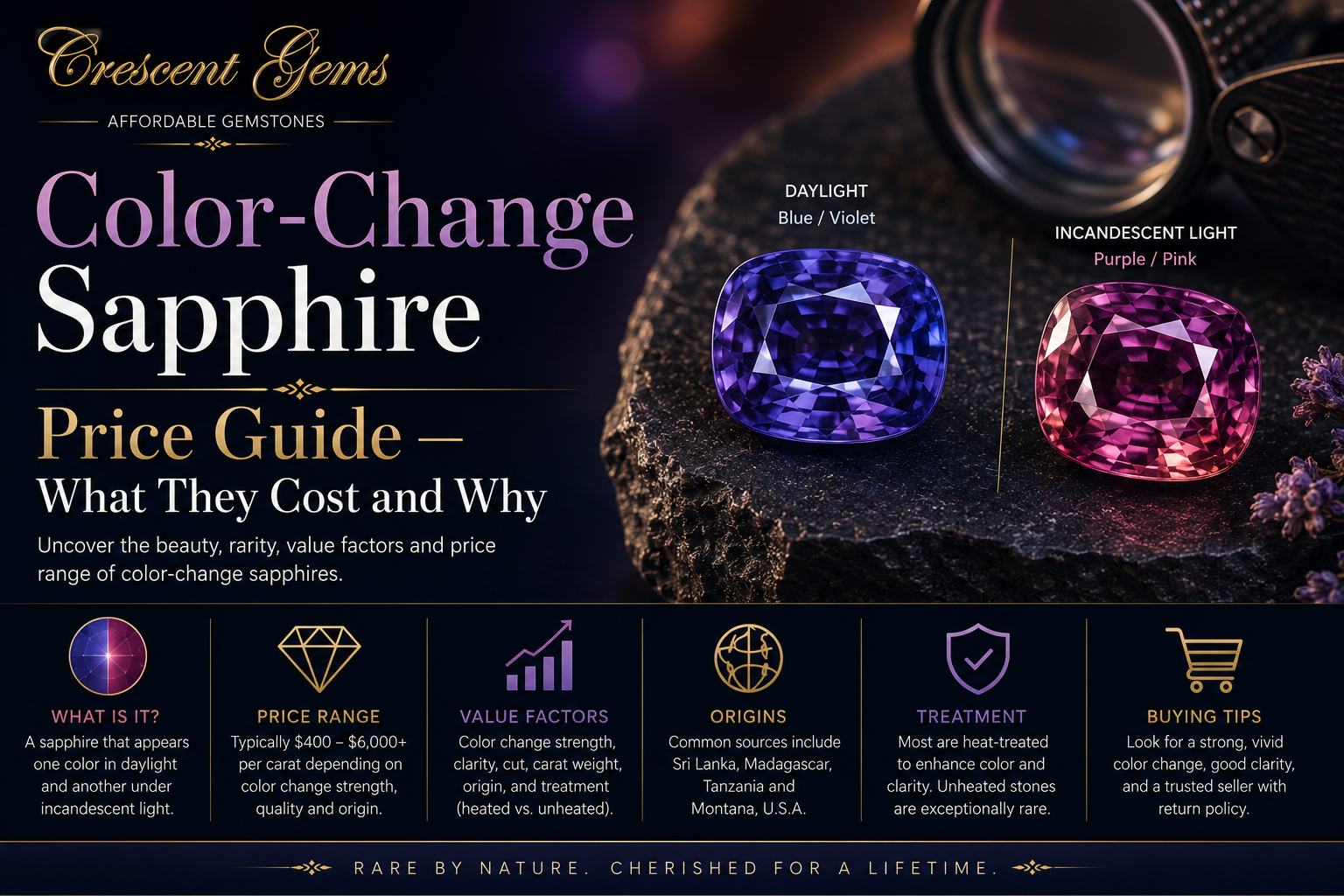
Color-Change Sapphire Price Guide — What They Cost and Why
Read moreabout Color-Change Sapphire Price Guide — What They Cost and Why
Is Cat's-Eye Chrysoberyl Good for an Engagement Ring?
Read moreabout Is Cat's-Eye Chrysoberyl Good for an Engagement Ring?
Cat's Eye Chrysoberyl Price Guide — What They Cost and Why
Read moreabout Cat's Eye Chrysoberyl Price Guide — What They Cost and Why















Share: