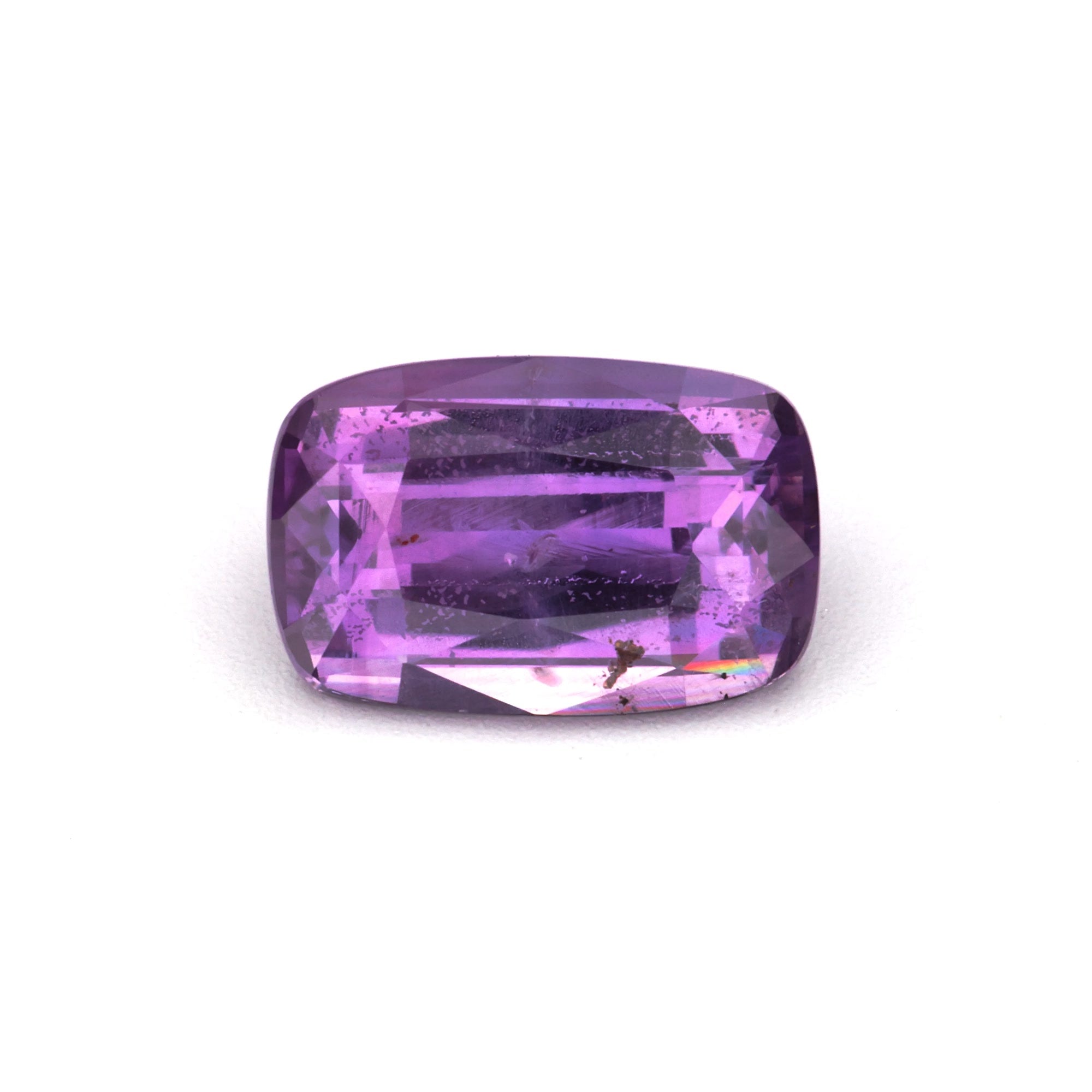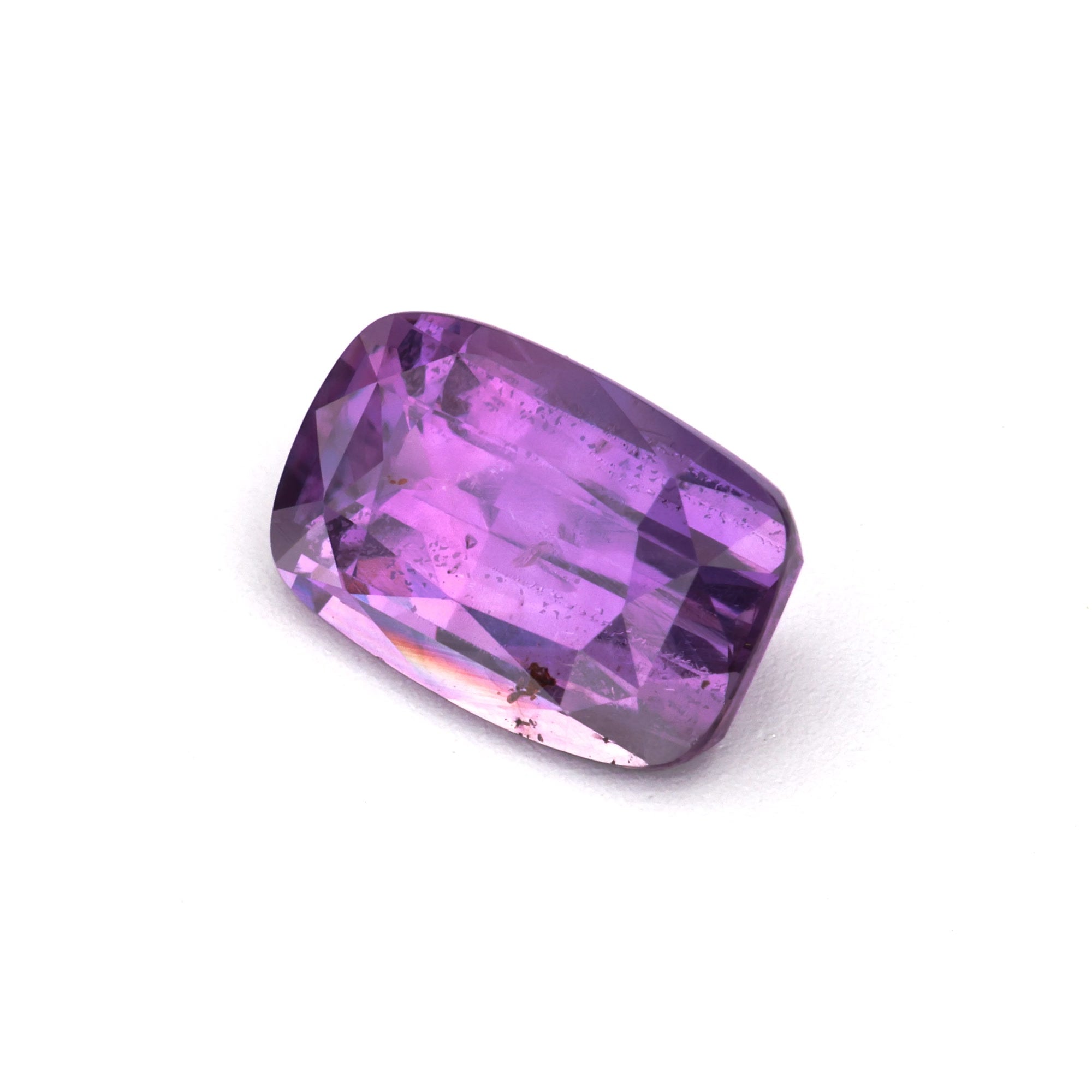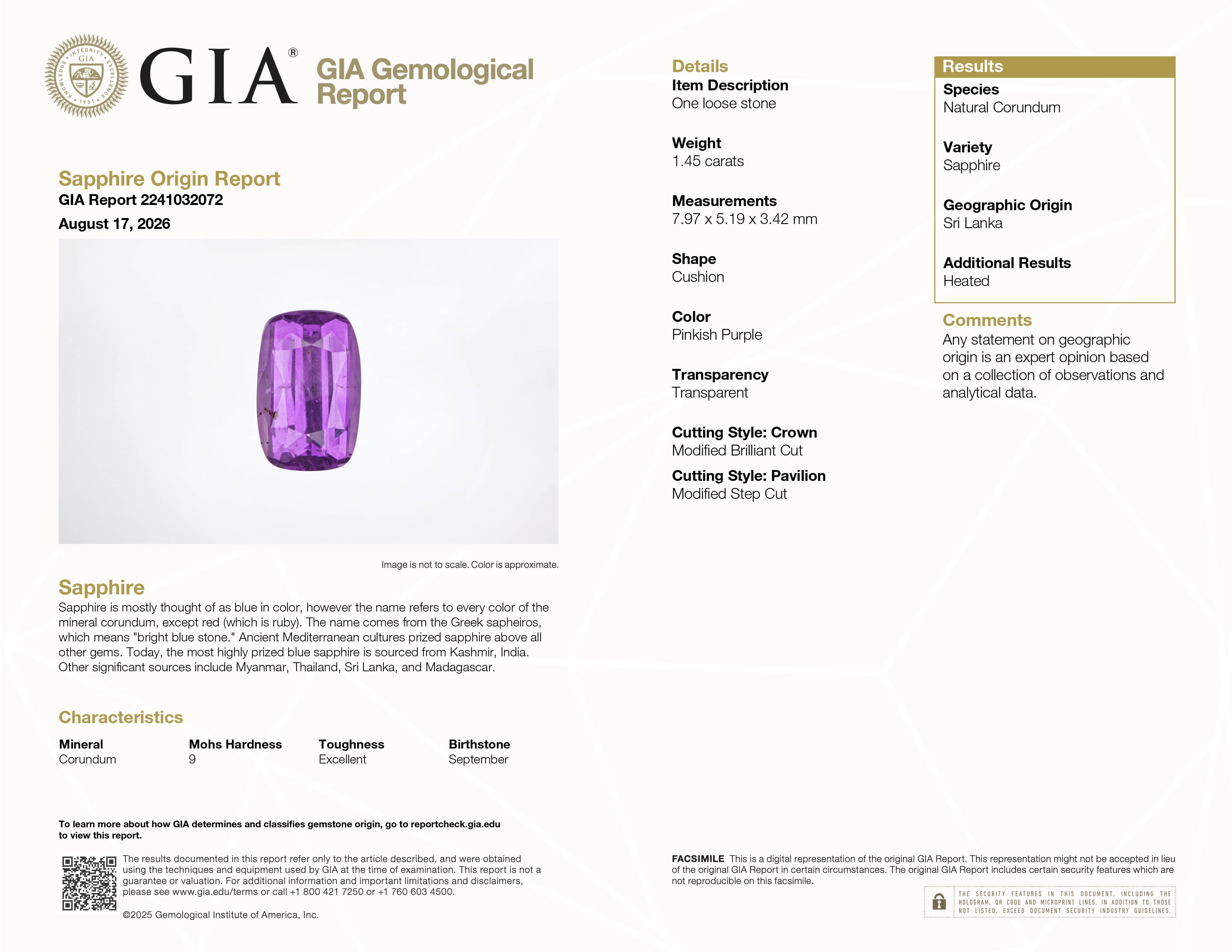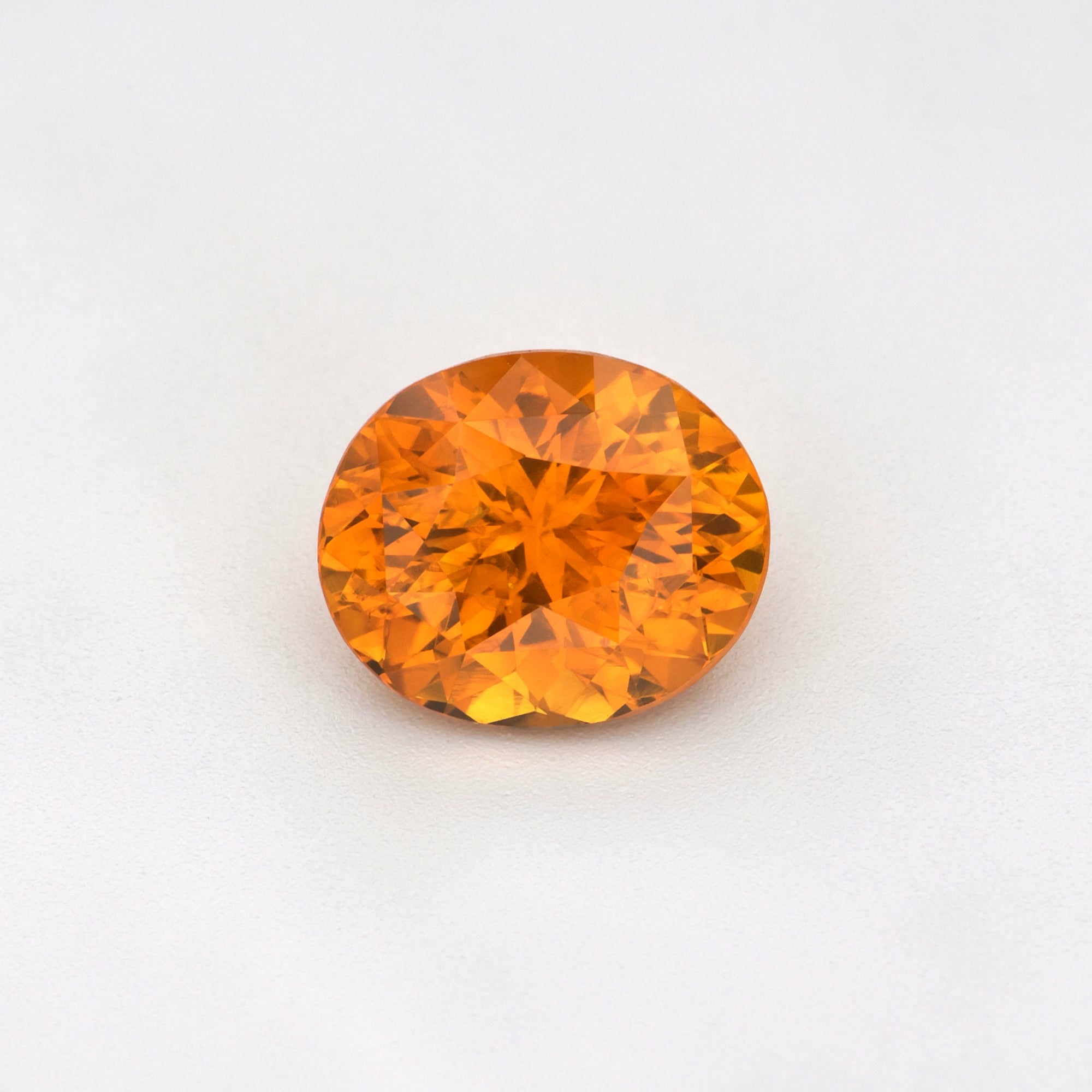
For metal choice: Yellow Gold vs. White Gold vs. Platinum. For setting protection: How to Protect Sapphire Corners. For the buying foundation: Ultimate Sapphire Buying Guide.

How to Design a Custom Sapphire Ring from a Loose Stone

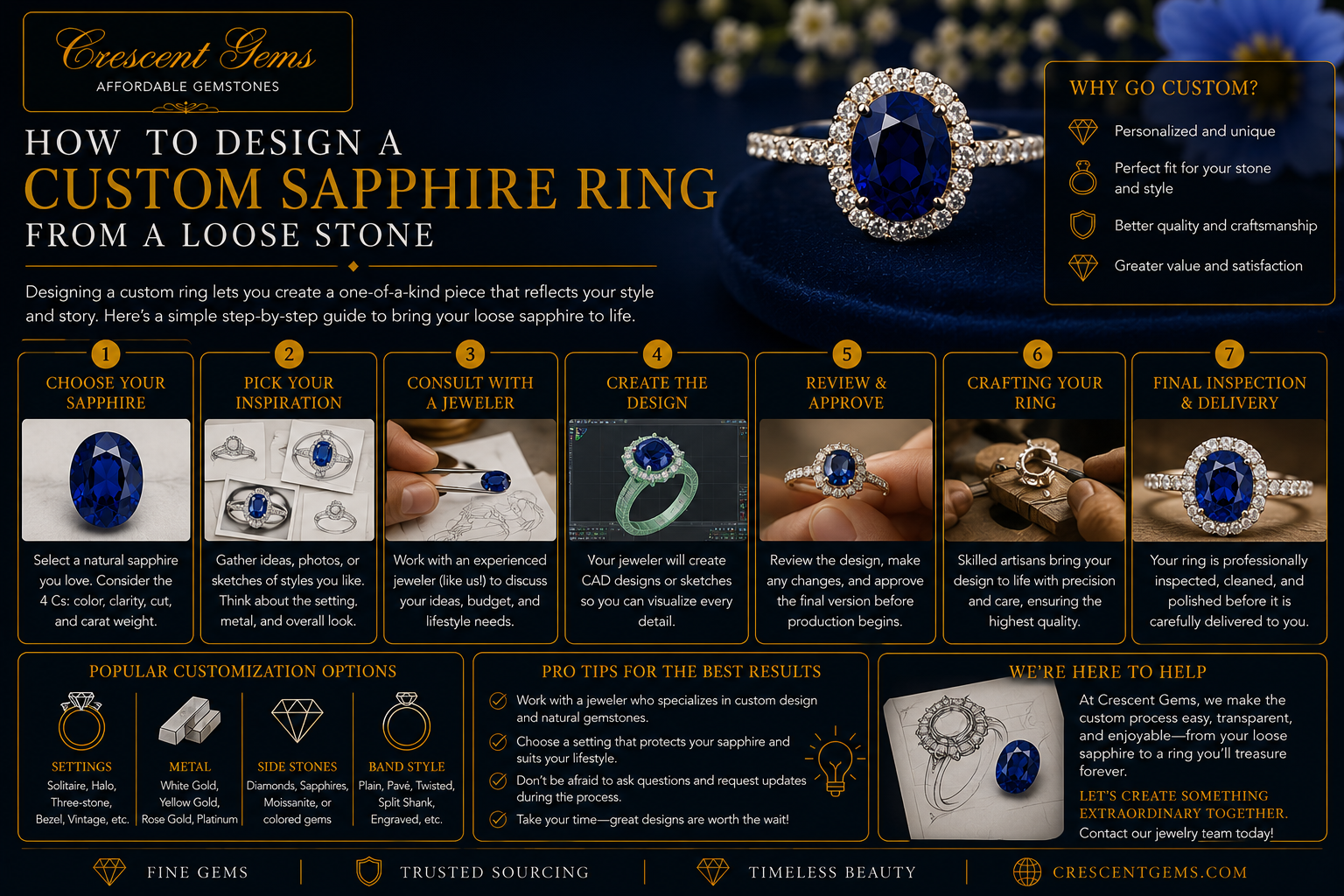
Buying a loose sapphire and having a custom ring made around it is the approach used by serious buyers, collectors, and anyone who wants a ring that is genuinely personal rather than mass-produced. It allows you to choose the best stone you can find at direct-source pricing, then have it set exactly as you want it — the right metal, the right setting style, the right proportions — rather than compromising on stone quality to fit a preset ring or accepting a preset ring's design when it is not what you actually want.

The process has several stages, each with decisions that affect the final result. This guide walks through the complete custom sapphire ring process in sequence — from choosing your stone through briefing a jeweler, reviewing designs, approving CAD renders, and taking delivery of a finished ring.


Step 1: Choose Your Stone First

The most important rule of custom ring design: choose the stone before the setting. The stone is the primary investment, the visual centerpiece, and the irreplaceable element of the ring. The setting can always be changed; the stone defines the ring.

Buying stone first also means your setting can be designed specifically for the stone you have — its exact dimensions, its shape, its weight, and its character can all inform the setting choices rather than being forced into a generic preset. A jeweler designing around your specific stone will produce a more coherent, better-proportioned result than one designing from generic specifications.

Key stone decisions to make before approaching a jeweler:

  • Color: Which sapphire color do you want? See our full color guides for blue, teal, pink, and yellow.
  • Treatment preference: Heated or unheated? See our treatment guide for the full framework.
  • Budget allocation: How much of your total budget goes to the stone vs. the setting? See our pricing guide for realistic stone costs.
  • Shape preference: Which shape suits the ring style you want? See our shape guides.

At Crescent Gems, we help buyers choose stones with custom settings in mind — email crescentgems@gmail.com with your color, budget, and setting vision and we can advise on stones that will work well for the design you want. Our Try Before You Buy program lets you see specific stones before committing.


Step 2: Establish Your Design Direction

Before approaching a jeweler, clarify your design priorities in enough detail to brief effectively. The key decisions:

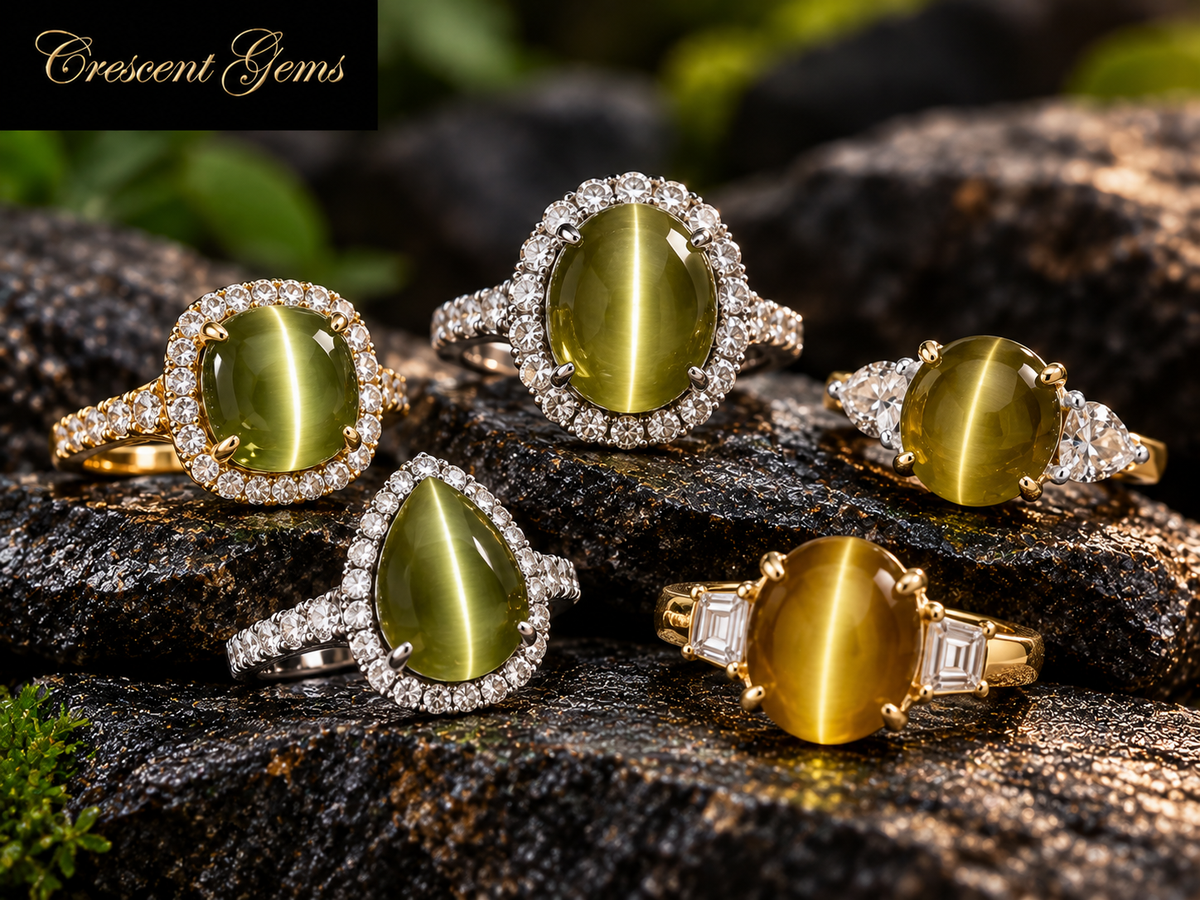
Setting style: Solitaire, halo, three-stone, pavé band, bezel, or combination? See our solitaire, halo, and three-stone guides for shape-specific guidance.

Metal: Yellow gold, white gold, platinum, or rose gold? See our metal comparison guide and our metal color guide.

Aesthetic character: Contemporary and clean? Vintage-inspired with milgrain and engraving? Geometric and architectural? Organic and nature-inspired? Collecting visual references — photographs of rings you like — is more effective than verbal descriptions alone. A Pinterest board or saved Instagram posts that represent your aesthetic preference is the most useful brief you can bring to a jeweler.

Prong or bezel? Prong settings maximize light exposure and visibility; bezel settings maximize protection and create a cleaner, more modern look. See our bezel ring guide and corner protection guide for setting style decisions.

Side stones: Diamond accents, matching sapphire side stones, or plain band? See our side stones guide.


Step 3: Choose Your Jeweler

The jeweler you work with is as important as the design itself. A well-designed ring executed poorly is a disappointment; a simple design executed with skill and care is a beautiful ring. Key criteria for choosing a custom jeweler for a sapphire ring:

  • Experience with colored stones: Setting sapphires requires different skill than setting diamonds — particularly in securing stones without damaging them, managing heat during soldering near the stone, and creating prong geometry appropriate for the sapphire's hardness and shape. Ask specifically about their colored stone setting experience.
  • CAD capability: Most custom jewelers now use computer-aided design (CAD) to create 3D renders of the ring before fabrication. This allows you to review and approve the design accurately before metal is cast. Insist on seeing a CAD render before approving fabrication.
  • References and portfolio: Ask to see previous custom colored stone rings. Look for clean prong work, accurate stone fit, consistent finishing, and proportional balance between stone and setting.
  • Communication clarity: A jeweler who asks good questions about your preferences and explains their process clearly is significantly more likely to deliver what you want than one who moves quickly to execution without establishing a clear brief.

Step 4: The Brief and CAD Review

Your brief to the jeweler should include:

  • The stone's exact measurements (length × width × depth in mm) and carat weight
  • The stone's shape
  • Your preferred metal, karat, and finish (polished, brushed, or matte)
  • Setting style preference with visual references
  • Any specific details: milgrain, engraving, pavé, bezel, prong count and style
  • Your budget for the setting
  • Your timeline

When you receive the CAD render, evaluate it carefully:

  • Do the proportions of the setting look balanced relative to the stone dimensions you provided?
  • Are the prongs the right size — large enough to secure the stone, small enough not to hide its face?
  • Does the band thickness look appropriate for the setting head?
  • Does the overall design match your visual references?
  • For shapes with sharp corners (emerald cut, pear, marquise), are the corner prongs correctly positioned to protect the vulnerable points? See our corner protection guide.

Do not hesitate to request revisions at the CAD stage — it is the right moment to make changes. Changes after casting are expensive; changes to a CAD file are inexpensive.


Step 5: Fabrication and Setting

Once you approve the CAD, the jeweler casts the metal setting, finishes it, and sets your stone. The stone setting process for sapphire requires care because:

  • Sapphire is hard (Mohs 9) but not invulnerable — sharp impacts to prong edges during setting can cause fracturing
  • Heat from soldering must not be applied near a set stone — all heat work must be done before the stone is set
  • Prong tipping (bending prong ends over the stone's girdle) must apply even pressure to avoid stress points

At this stage, you are trusting the jeweler's craftsmanship — which is why Step 3 (choosing a skilled, experienced jeweler) is so important. A well-executed setting holds the stone securely for life; a poorly executed setting risks stone loss or damage within months of wear.


What Custom Ring Design Costs and Takes

Setting costs for custom sapphire rings in the US market range broadly:

  • Simple four-prong solitaire, 14K or 18K gold: $500–$900
  • Simple solitaire with engraved or milgrain detail: $700–$1,200
  • Pavé band with solitaire head: $1,000–$2,000
  • Single halo with pavé band, 18K gold: $1,200–$2,200
  • Platinum solitaire or halo: $1,800–$4,000+
  • Complex vintage or custom design with significant hand work: $2,500–$6,000+

Timeline: Most custom rings take 4–8 weeks from approved CAD to delivery. Complex designs with significant hand finishing take 6–12 weeks. Rush fabrication is sometimes possible at premium cost. Plan for at least 6–8 weeks between approving the design and a delivery deadline.

For a comprehensive guide to commissioning a custom ring specifically, see our dedicated How to Commission a Custom Sapphire Ring guide.


Frequently Asked Questions

How much does it cost to set a loose sapphire in a custom ring?

Setting costs range from $500–$900 for a simple gold solitaire to $1,800–$4,000+ for a platinum halo design. Complex vintage or bespoke designs with significant hand work run $2,500–$6,000+. The setting cost is separate from and in addition to the cost of the stone itself. Budget at least $800–$1,500 for a quality setting for any sapphire ring intended for daily wear.

Do I need to send my sapphire to the jeweler?

Yes — the jeweler needs the physical stone to set it accurately. Reputable jewelers will provide a receipt documenting your stone's receipt and return it set in the finished ring. Always ship insured and trackable when sending a valuable sapphire to a jeweler.

Can I change the setting later if I want a different design?

Yes — sapphires at Mohs 9 can be reset without risk of damage if done by a skilled setter. The original setting can be melted and the gold value credited against a new setting, or you can keep the original setting. Resetting costs similarly to the original setting cost.


Explore Further

Email jewelry@crescentgems.com to discuss commissioning a custom ring around a Crescent Gems stone. We work with trusted setters in the US and can coordinate the full process from stone selection to finished ring delivery.

Continue Learning
Return to the Ultimate Sapphire Buying Guide for the full picture on colors, origins, shapes, certification, and pricing.
Ahmed Shareek — Crescent Gems

Ahmed Shareek

Proprietor — Crescent Gems

A gem dealer with over 25 years of experience sourcing natural sapphires directly from Sri Lanka, Ahmed brings hands-on expertise in mining, heat treatment, cutting, and stone selection. With direct buying relationships in Ratnapura and Beruwala — the heart of the Ceylon gem trade — he offers firsthand knowledge of origin, quality, and craftsmanship that informs every piece of guidance on this site.

Why Buy from Crescent Gems

Sourcing Gemstones for an engagement ring or piece of jewelry is a very personal experience, Its a act of love, Its a Investment that you do only a few times in your life. Before you spend thousands of $$$ You need to be able to trust the seller and make sure you are choosing the right stone. Here at Crescent gems we tick all the boxes.

Wide Selection of well cut gemstones from around the world.

Affordably priced ~ We source our gemstones direct from mining countries, we cut/recut most of our gemstones in-house.

We stock and sell ONLY Natural earth Mined stones. NO beryllium treated Stones, NO Flux filled, NO synthetics, NO man made stuff.

Free & Fast Shipping within USA ( FedEx Or UPS) with Tracking and email updates.

FREE International shipping for orders over US $ 500 ~ we ship to 98 countries Worldwide.

Try Before you buy Option ~ where we send the stone to you before you pay. ~ Unique Feature.

14 day No questions asked money back Guarantee.

FREE Domestic Return Shipping.

GIA lab reports for all significant stones.

Accurate information, Actual Images, Hand shots and 360 videos of the stone on sale, we don't use stock photography.

Join our ever growing group of satisfied customers from around the world.

Latest Stories

View all

The Ultimate Guide to Buying Natural Loose Sapphires

The Ultimate Guide to Buying Natural Loose Sapphires

The definitive guide to buying a natural loose sapphire: colour, origin, treatment, cut, shape, certification, pricing, and engagement rings, with links to every Crescent Gems guide and collection.

Read moreabout The Ultimate Guide to Buying Natural Loose Sapphires

What a Good 2 Carat Sapphire Costs

What a Good 2 Carat Sapphire Costs — Pricing, Scarcity, and What Your Budget Buys

What does a genuinely good 2 carat sapphire cost in 2026? How scarcity drives per-carat price escalation at 2ct, realistic prices across blue, teal, pink, yellow, and padparadscha, and what quality trade-offs to consider when buying at this size.

Read moreabout What a Good 2 Carat Sapphire Costs — Pricing, Scarcity, and What Your Budget Buys

What a Good 1 Carat Sapphire Costs

What a Good 1 Carat Sapphire Costs — Honest Pricing for Real Quality

What does a genuinely good 1 carat sapphire cost in 2026? Not commercial grade, not exceptional — the real price of eye-clean, vivid, well-cut material across blue, teal, pink, yellow, and padparadscha, with honest guidance on what separates good from fine and fine from exceptional.

Read moreabout What a Good 1 Carat Sapphire Costs — Honest Pricing for Real Quality

Teal Sapphire Price Guide

Teal Sapphire Price Guide — What They Cost and What Drives the Range

How much does a teal sapphire cost in 2026? A complete price guide covering teal sapphire quality tiers, how color ratio affects price, why most teal sapphires are naturally unheated, and what realistic prices look like from commercial to fine material across carat weights.

Read moreabout Teal Sapphire Price Guide — What They Cost and What Drives the Range

Padparadscha Sapphire Price Guide

Padparadscha Sapphire Price Guide — What They Cost and Why
How much does a padparadscha sapphire cost in 2026? A complete price guide covering what padparadscha actually is, why prices range from under $1,000 to $20,000+ per carat, how GIA designation affects value, and what to expect at each quality tier.
Read moreabout Padparadscha Sapphire Price Guide — What They Cost and Why