- by Crescent Gems
Green Sapphire — The Complete Buyer's Guide to the Emerald Alternative That Lasts
- by Crescent Gems
New to buying sapphires? Start with our Ultimate Sapphire Buying Guide — the complete resource for colour, origin, treatment, and pricing.
Green sapphire is one of the most underappreciated stones in the colored gemstone world. It sits in a market gap that should be obvious — buyers who want a green engagement ring stone face a limited set of options, most of them with significant practical drawbacks — and it fills that gap with a combination of hardness, clarity, and durability that no other green gemstone consistently delivers. Yet green sapphire remains less known than blue, less trendy than teal, and less commercially visible than pink or yellow. The buyers who find it tend to stay with it. Most others simply have not been introduced to it yet.
This guide is that introduction. It covers what green sapphire is, how it compares to the alternatives buyers most commonly consider, how to evaluate its color, which origins produce the finest material, and how to specify it correctly for an engagement ring or custom jewelry piece. By the end, you will understand both why green sapphire deserves more attention than it typically gets and what its genuine limitations are.
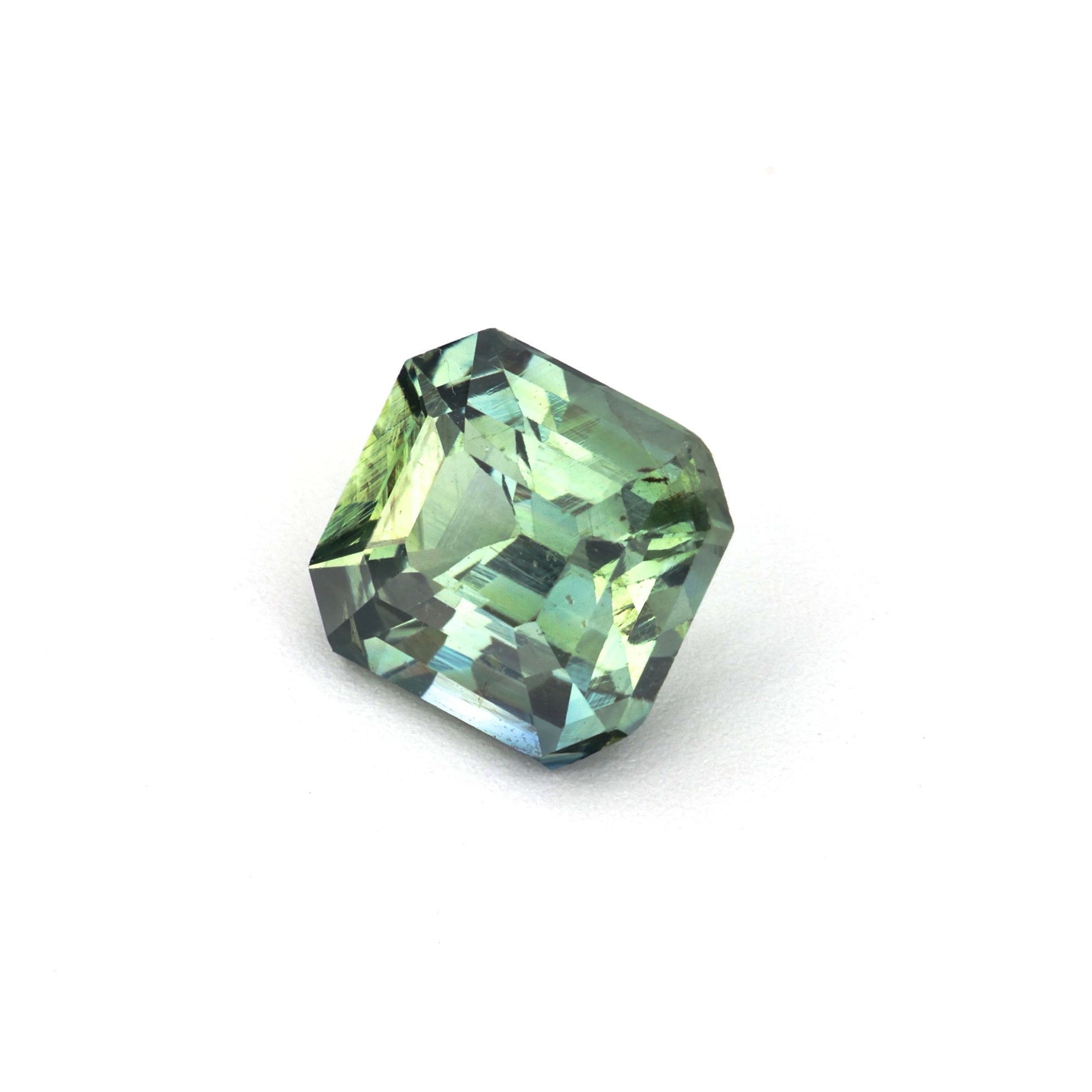
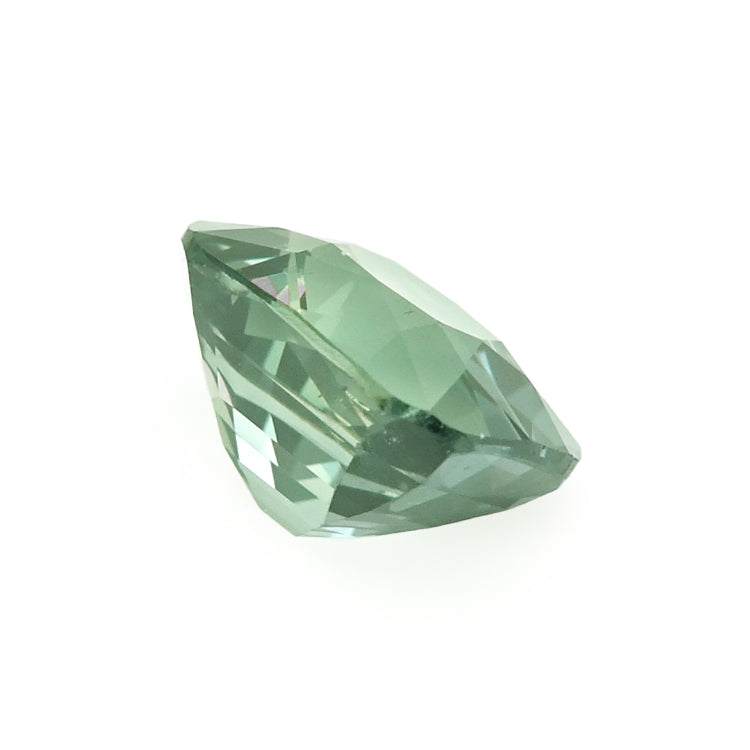
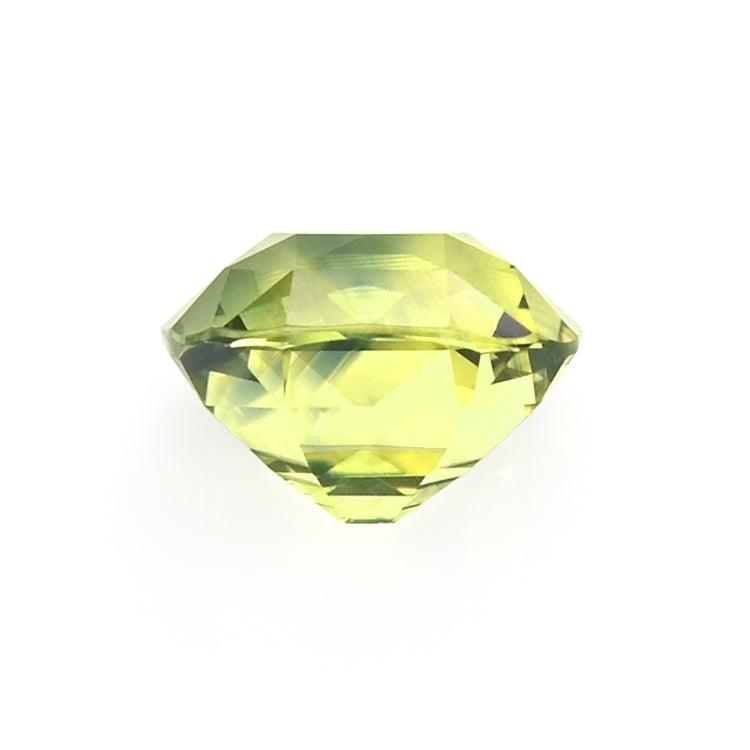
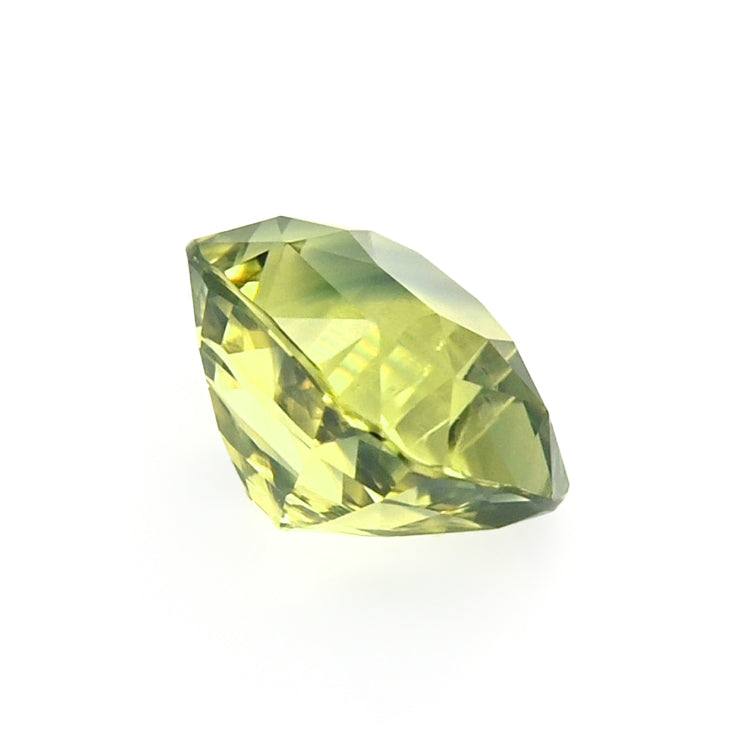
Green sapphire is natural corundum colored primarily by iron. In blue sapphire, iron and titanium interact via charge transfer to produce blue. In green sapphire, iron alone — in specific oxidation states — absorbs wavelengths at the red end of the visible spectrum and reflects green. The result is a range of green tones from pale mint through mid-tone forest green to deep, richly saturated greens that approach the vivid range associated with fine emerald.
Because green sapphire is the same mineral species as blue, pink, yellow, and white sapphire — aluminum oxide, corundum — it shares all the physical properties that make sapphire exceptional as a gemstone material. It ranks 9 on the Mohs scale. It has no cleavage. It is chemically stable and resistant to the household chemicals that damage softer stones. It does not require oiling, fracture filling, or any other treatment to maintain its appearance. A green sapphire worn daily will look the same in thirty years as it does today, without any intervention. This is the fundamental argument for green sapphire, and it is a strong one.
Green sapphire spans a wide range of hue, saturation, and tone that produces very different visual results. Understanding the spectrum is the first step to identifying what you actually want.
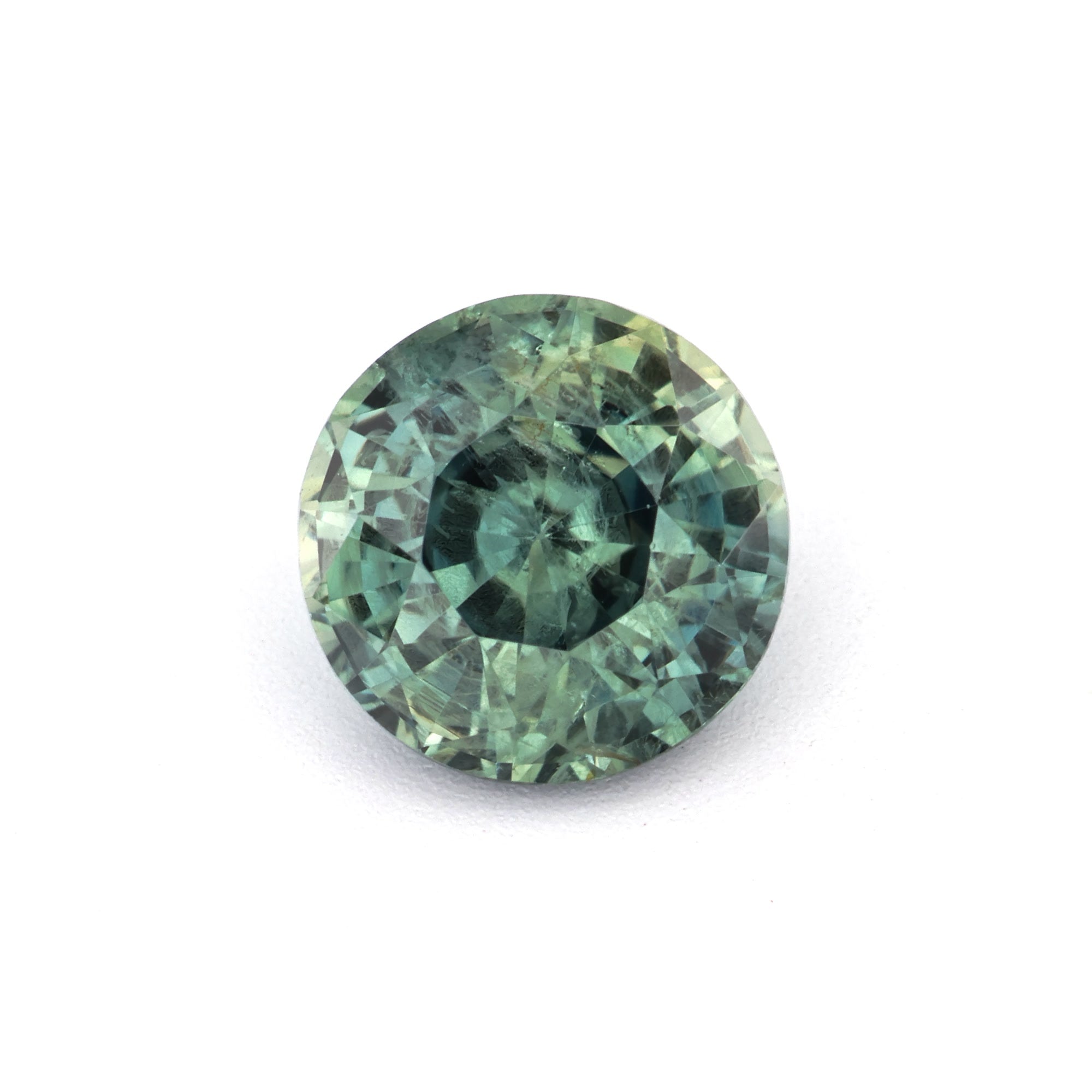
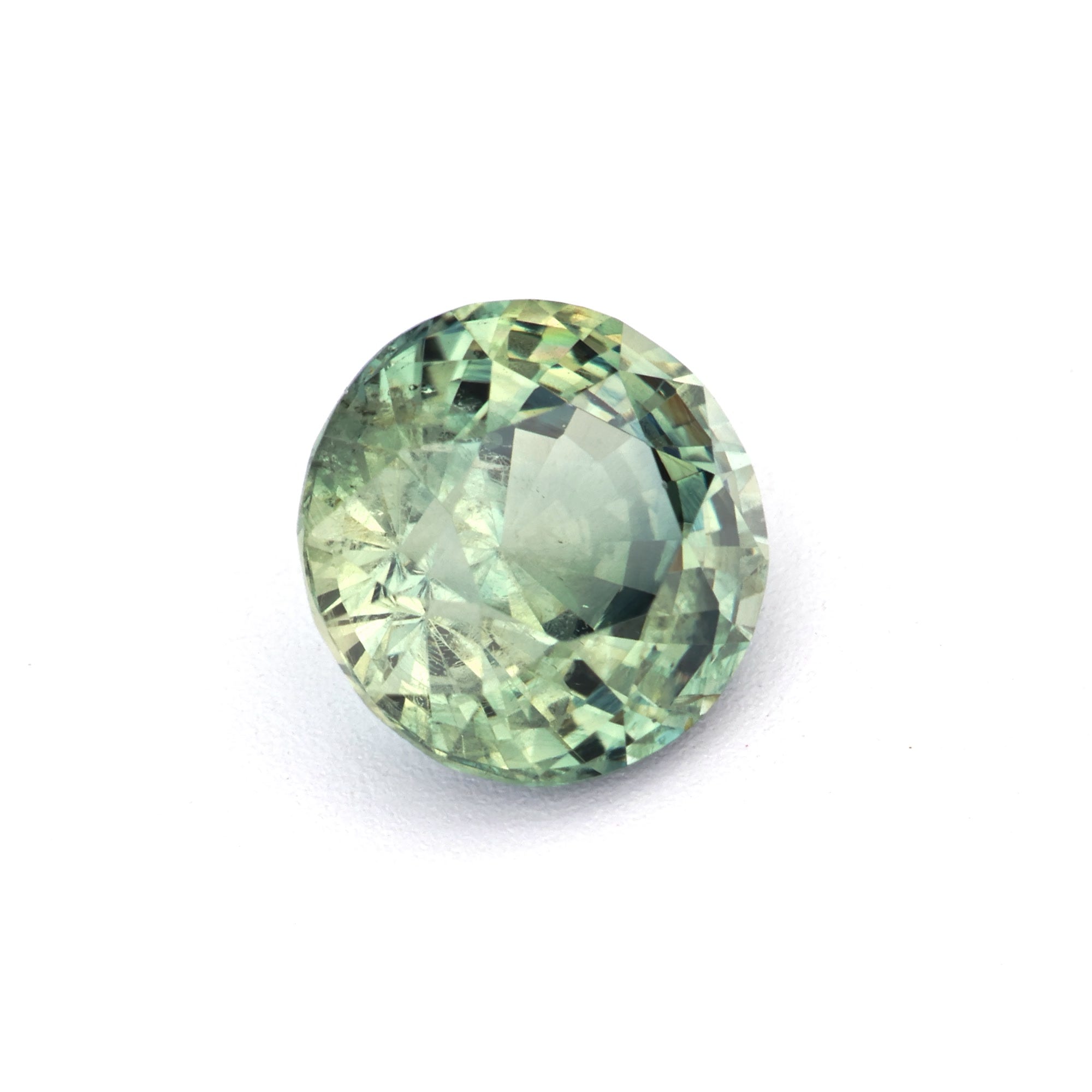
The palest end of the green sapphire range — a soft, cool mint or pale apple green with low saturation. Light green sapphire reads with a delicate, airy quality similar to light teal or aquamarine, and suits minimalist and contemporary jewelry aesthetics. Under some lighting conditions, very pale material approaches near-colorless. The risk with light green is that saturation can be insufficient to read clearly as green at wearing distance, particularly in a small center stone. Light green sapphire works best in larger sizes where the face-up area gives the pale color enough surface to register.
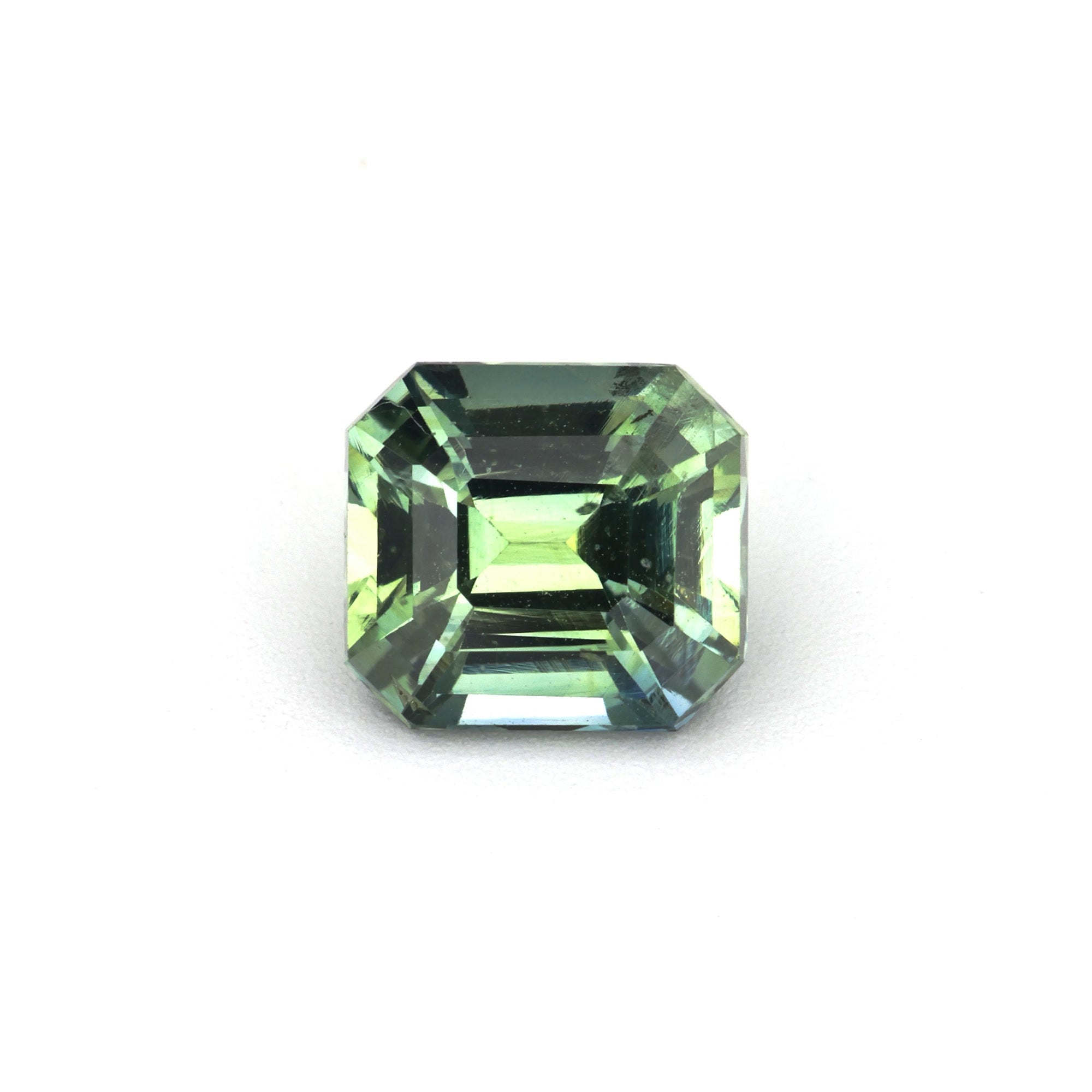
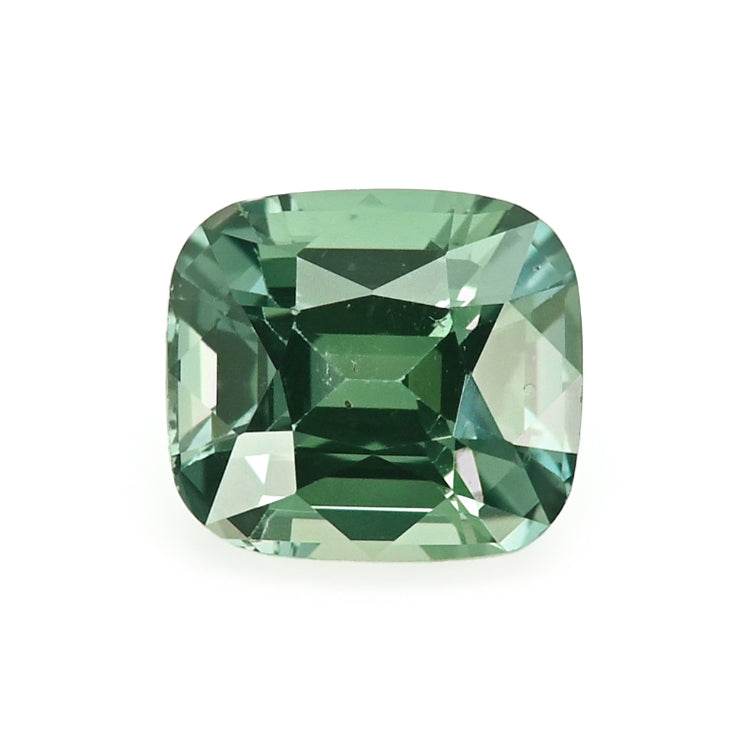
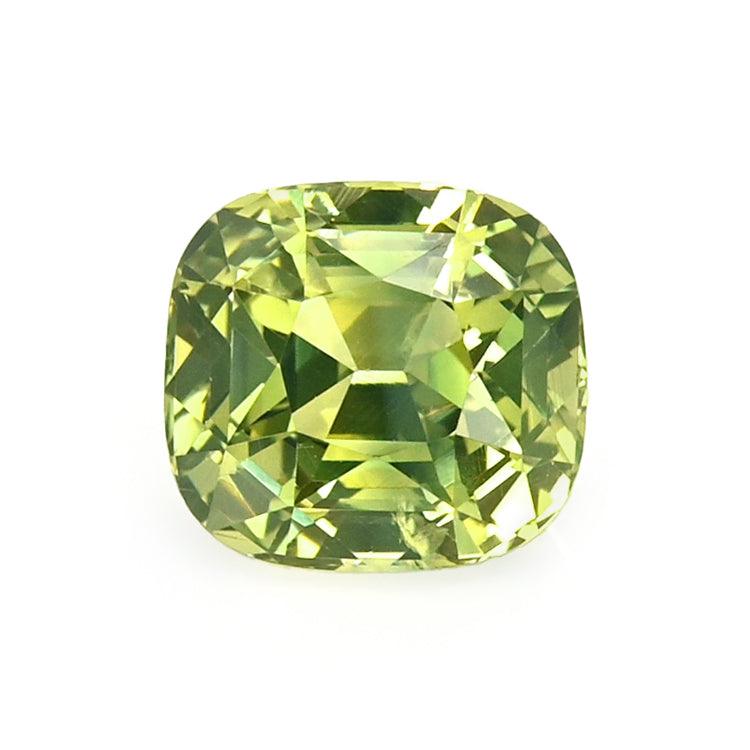
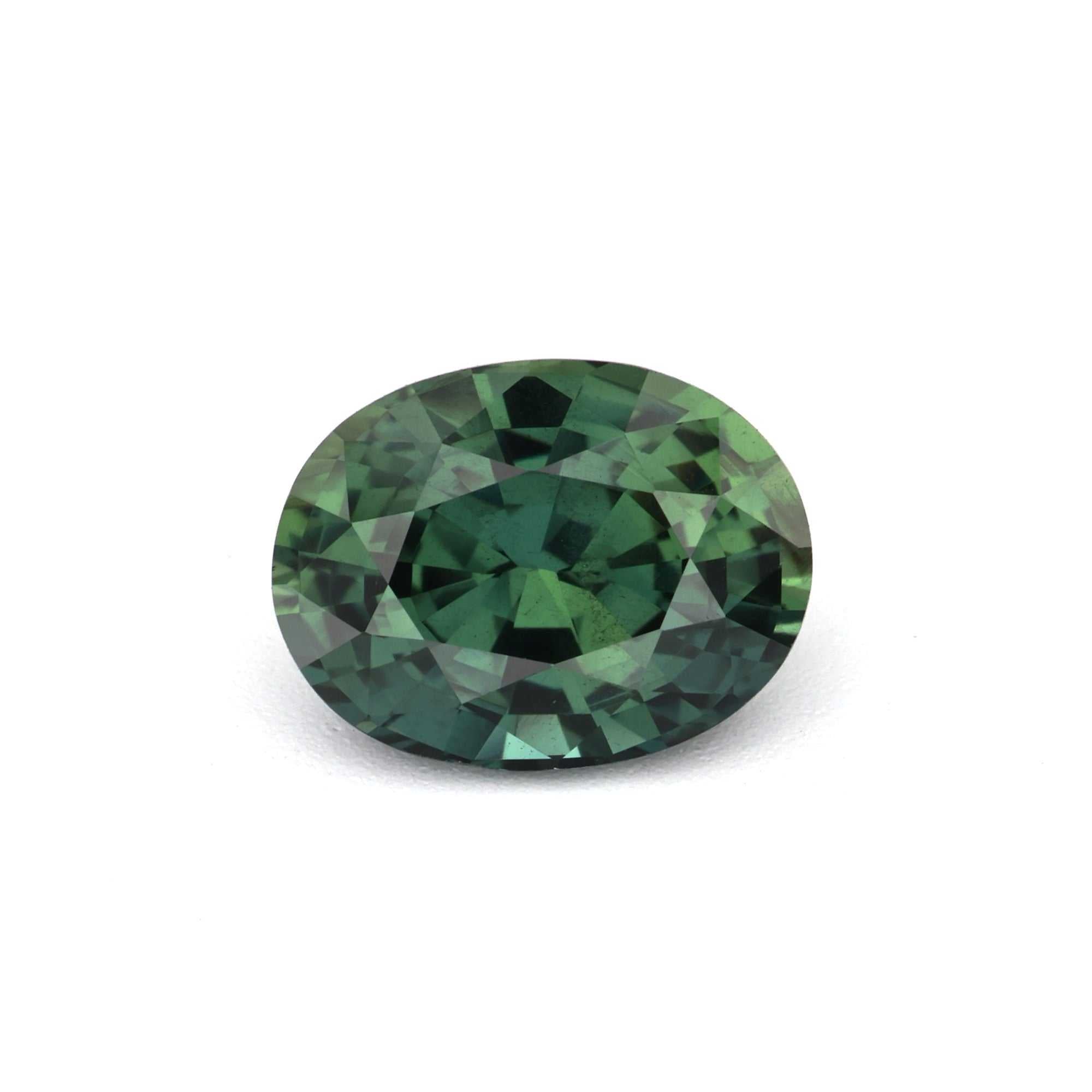
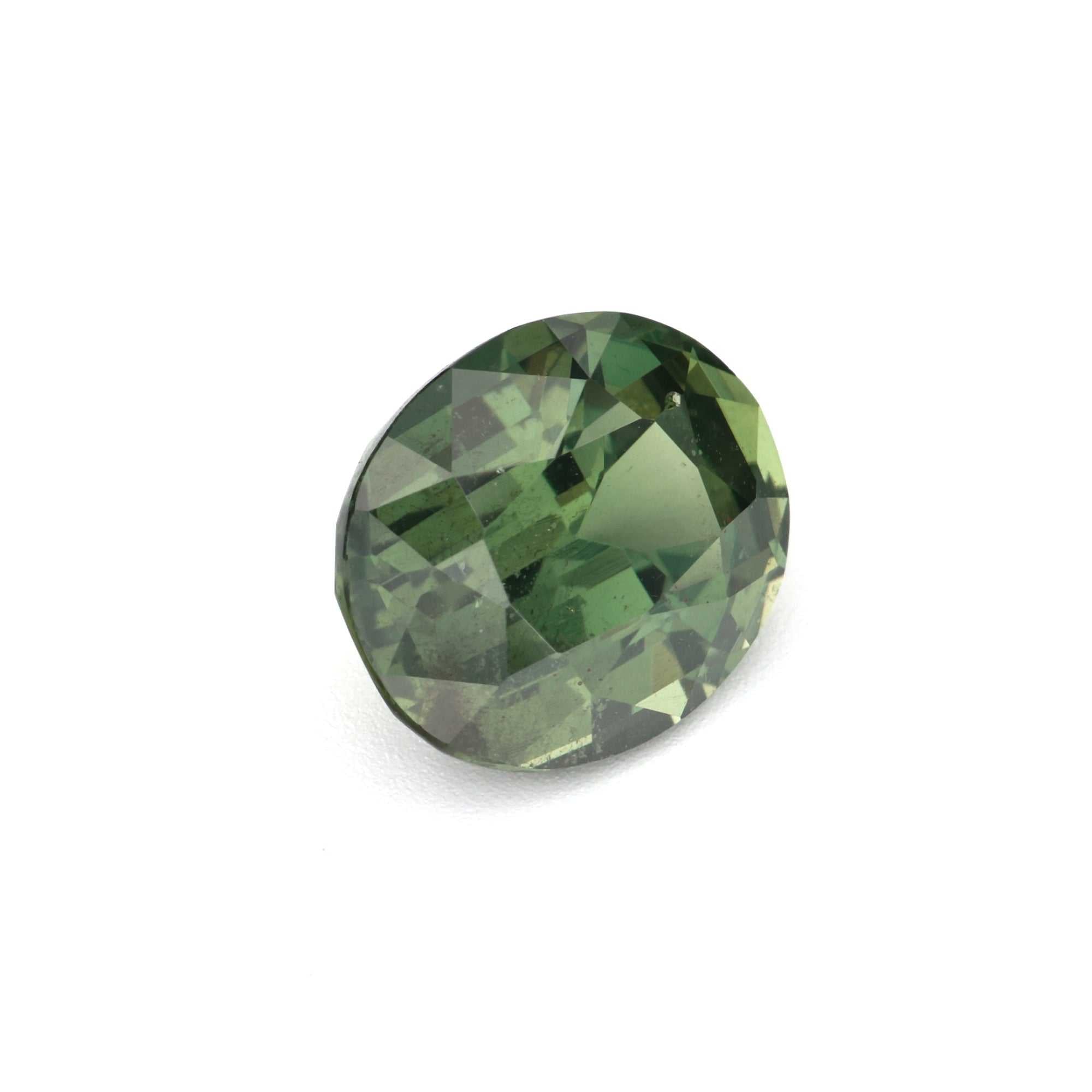
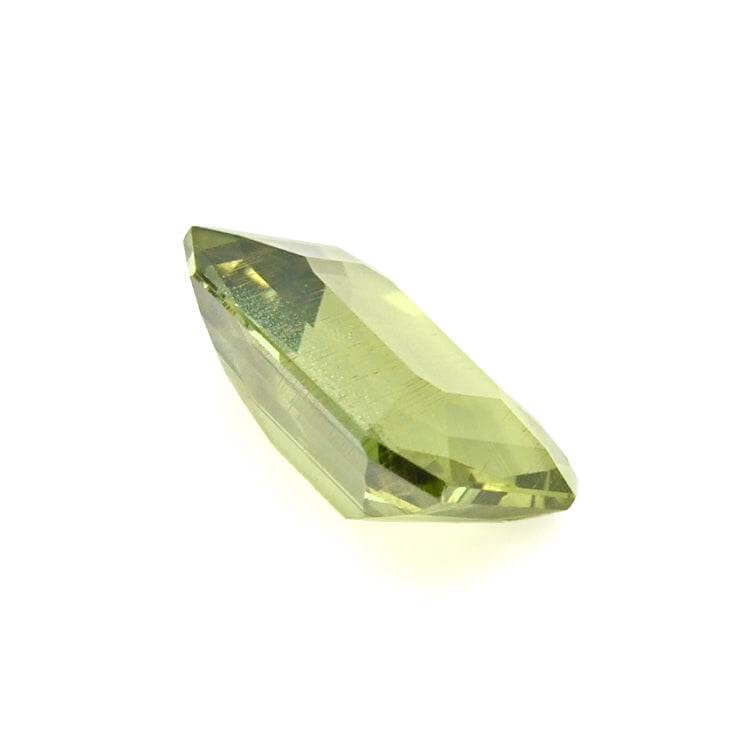
The most commercially desirable range. A medium-tone, vivid pure green that reads clearly as green under all standard lighting conditions — bright, clean, and unambiguous in color identity. This is the green that most buyers are seeking when they say they want a green sapphire engagement ring: a color that reads in the same family as fine emerald, with none of emerald's practical problems. Mid-tone vivid green at eye-clean clarity in an oval or cushion cut is the specification most buyers in this category are working toward.
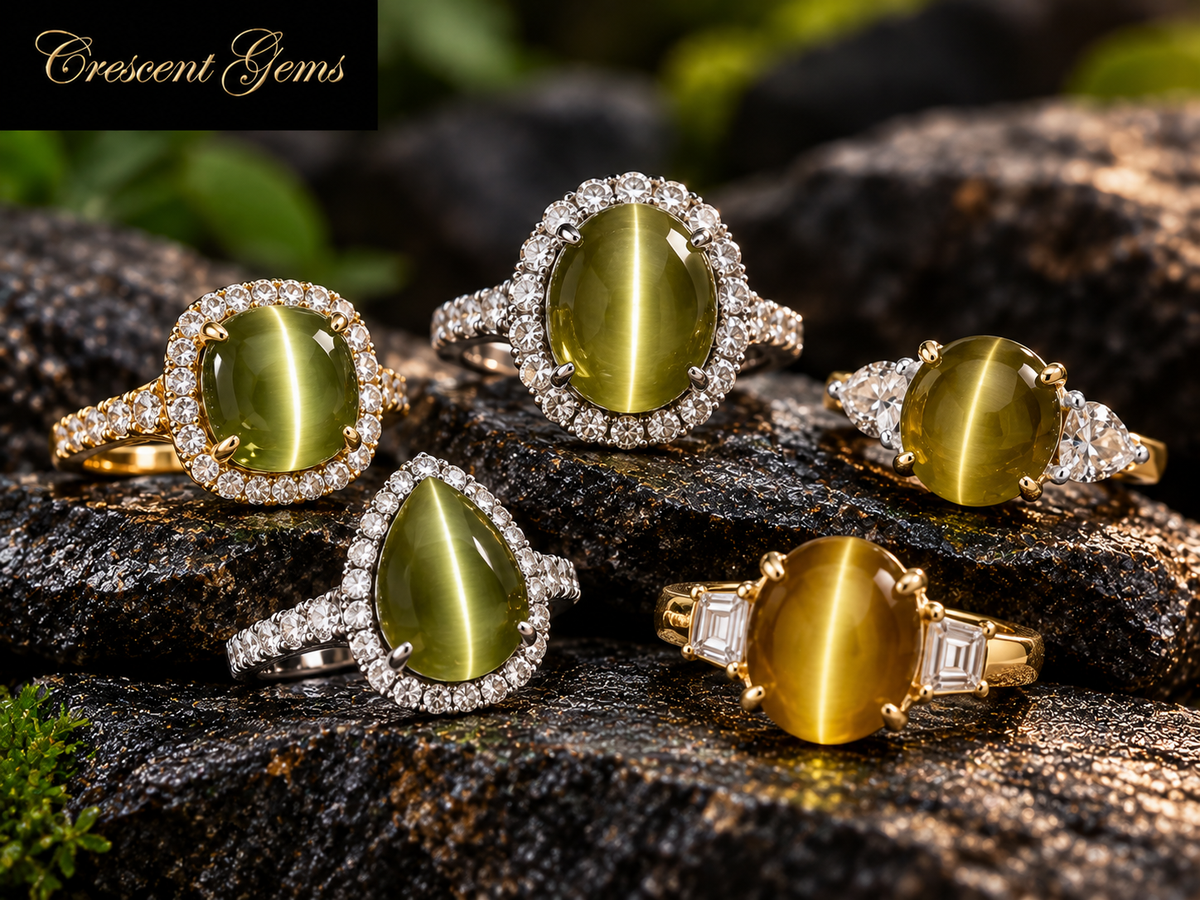
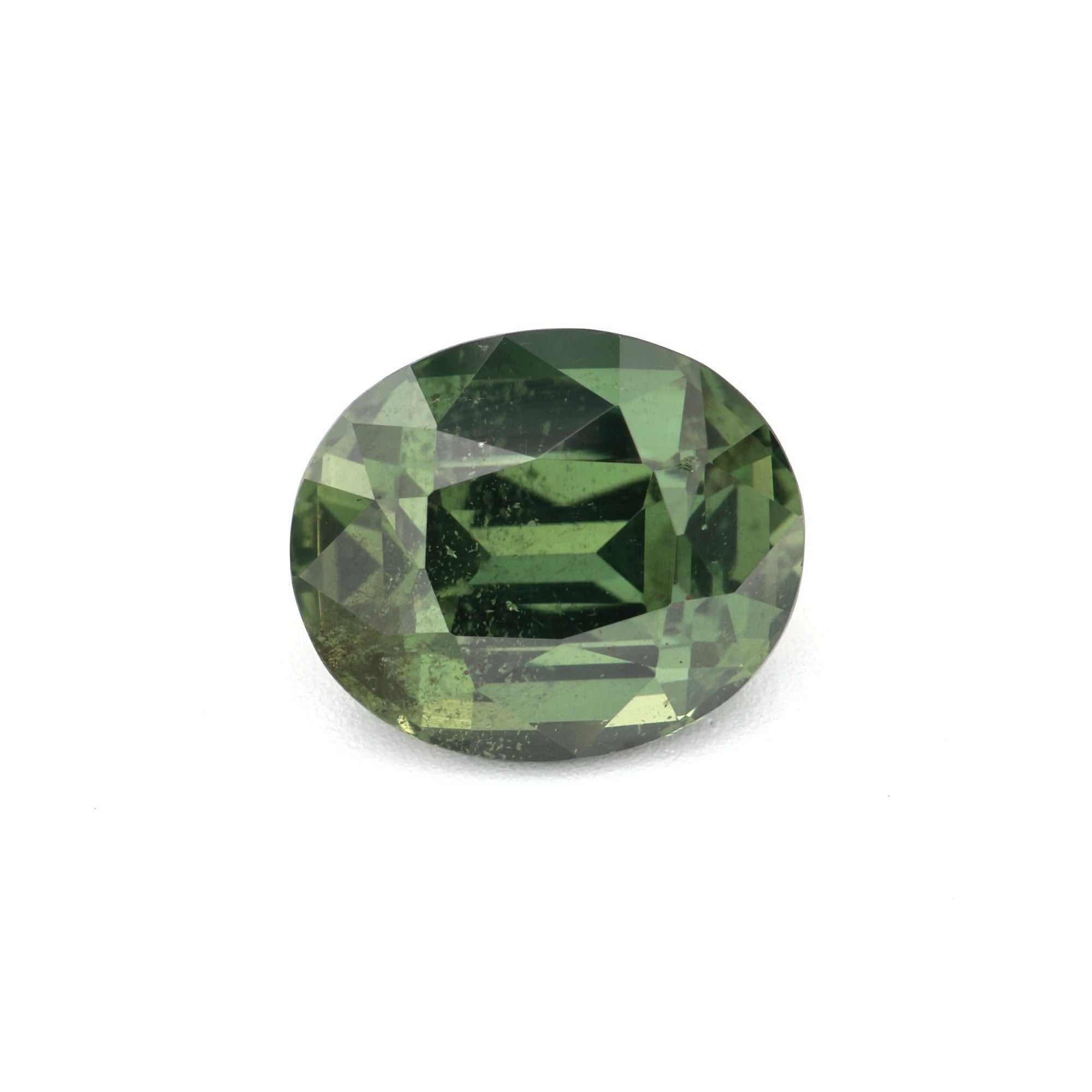
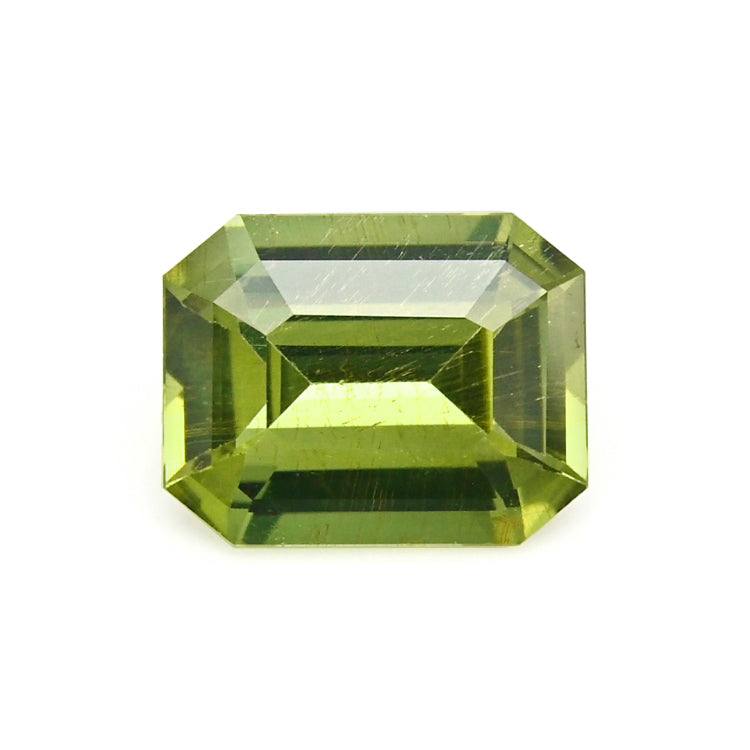
The warmer, more golden end of the green sapphire spectrum — a color with more yellow content than pure green, reading with an earthy warmth rather than the cool clarity of forest green. Olive is a distinctive color that has its own following, particularly among buyers who find conventional gemstone colors too expected. Olive green sapphire pairs particularly well with yellow gold, where the warm metal and the warm stone reinforce each other's character. It does not replicate the emerald color family in the same way that vivid pure green does, but it occupies a color position that no other commercially available gemstone fills in the same way.
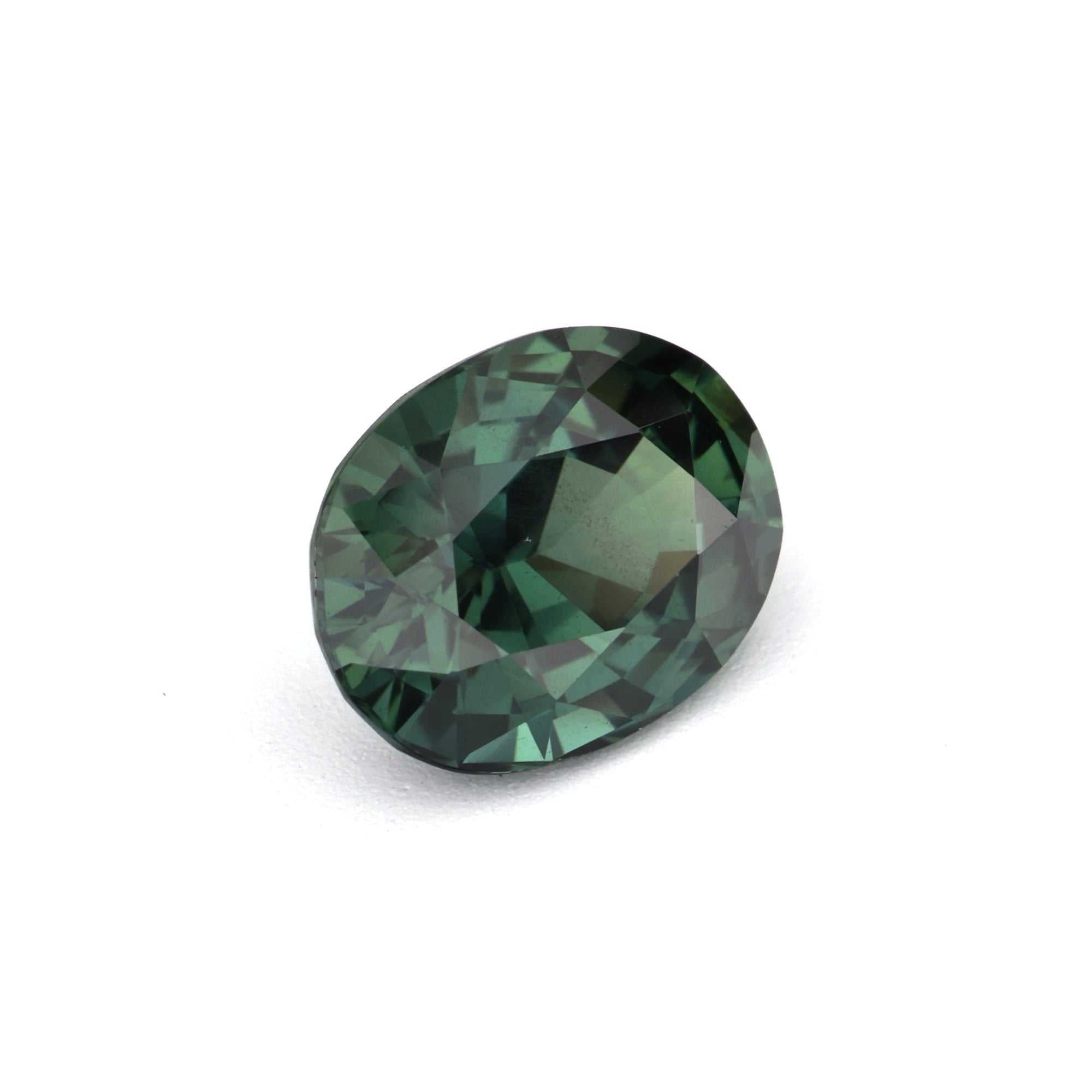
Highly saturated, medium-dark to dark green with strong color depth. At its finest, deep green sapphire reads with a richness that approaches fine emerald in visual impact. At its darkest, it risks losing color visibility under low light — a stone that reads almost black-green indoors at night has sacrificed some of the color's utility as a center stone. The most desirable deep green sapphires hold their vivid character even under dim conditions, reading as rich rather than dark.
The transition zones between green and yellow sapphire, where yellow modifiers are significant enough to push the stone out of the pure green range. These are collector colors rather than mainstream engagement ring stones — distinctive and unusual, but requiring specific aesthetic commitment from the buyer.
The comparison buyers always make, and rightly so. Green sapphire and emerald compete for the same market position — a green center stone for fine jewelry — but they are significantly different stones in practical terms.
Green sapphire ranks 9 on the Mohs scale. Emerald ranks 7.5–8. This difference is meaningful for daily ring wear: stones below 8 accumulate surface scratches from normal environmental abrasion faster than harder materials, and emerald at 7.5–8 will show wear at the surface over years of ring use in a way that green sapphire at 9 will not. The practical implication: a green sapphire ring worn daily for twenty years will look the same as it did on day one; an emerald ring worn the same way will need professional polishing to restore its surface luster.
This is the most important practical difference between green sapphire and emerald for everyday jewelry use. Virtually all commercially sold emerald has been oiled — saturated with cedar oil, Canada balsam, or synthetic resin under vacuum to fill the surface-reaching fractures (called jardin) that are characteristic of the mineral. These fractures are not a defect in emerald; they are structurally inherent to beryl as it forms. But the oil treatment is not permanent. Ultrasonic cleaning removes it. Heat changes it. Direct sunlight over time degrades it. A treated emerald that loses its oil treatment will look worse than it did when purchased — more included, less vivid — and will need retreatment to restore its appearance.
Green sapphire requires no oil treatment and never has. Its inclusions, when present, are structurally inside the crystal rather than surface-reaching fractures. A clean green sapphire stays clean. An emerald that looks clean when you buy it is revealing its appearance under the specific conditions of its current treatment status, which will change.
Buyers who want a green ring stone that requires no maintenance, no retreatment, and no special care protocols are describing green sapphire, not emerald.
Fine emerald has a color that few other gemstones match for pure, saturated vivid green with a characteristic slightly warm, slightly bluish character that defines the finest Colombian and Zambian material. The finest green sapphires approach emerald's color range but do not replicate its specific character exactly. Emerald's color, at its finest, is incomparable. What green sapphire offers is a green that reads in the same broad family — clearly green, vivid, and attractive — in a stone that is dramatically more durable and dramatically less maintenance-intensive.
Fine emerald at 1 carat in vivid green with good clarity and standard oil treatment retails at $2,000–$8,000 per carat depending on origin and quality. Fine green sapphire at 1 carat in vivid mid-tone green retails at $300–$900 per carat. The price difference is significant, and it reflects emerald's prestige, its deeper color richness, and its cultural history rather than a practical durability or care advantage — emerald holds those advantages in reverse.
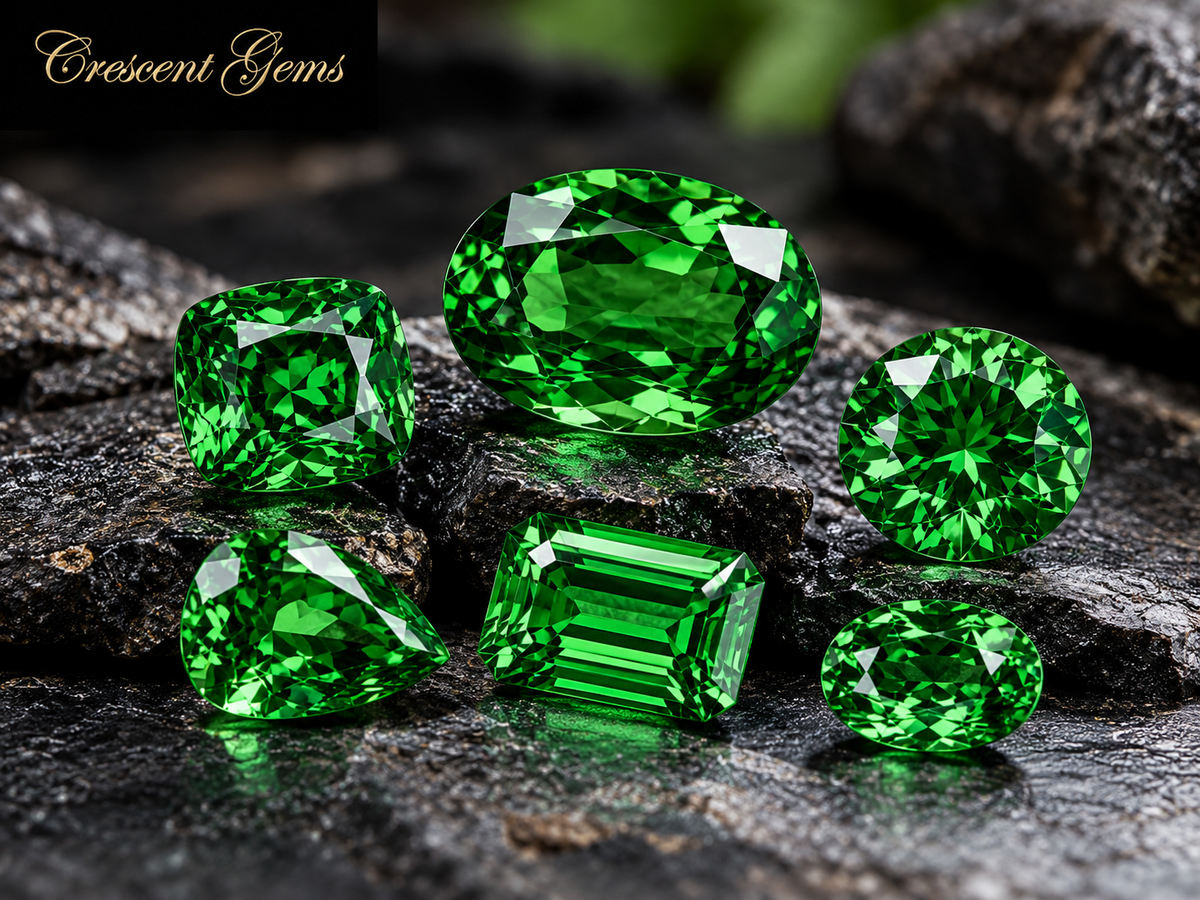
Tsavorite is the other green gemstone that makes a serious case as an emerald alternative. It is calcium aluminum garnet colored by vanadium and chromium, producing vivid jewel-tone greens that rival or surpass emerald in color intensity. It is never treated, always eye-clean, and produces vivid color at a fraction of the emerald price. It deserves separate consideration.
The key difference from green sapphire is hardness: tsavorite ranks 7–7.5 on the Mohs scale, compared to green sapphire at 9. For ring wear, particularly in a solitaire or low-prong setting worn daily, tsavorite is more susceptible to surface abrasion than green sapphire. Both are significantly more durable than emerald in terms of treatment requirements, but green sapphire edges tsavorite on the hardness axis.
Color-wise, fine tsavorite is typically more vivid than comparable green sapphire at the same price — the chromium and vanadium coloring of tsavorite produces a more intense, jewel-tone green than iron-colored green sapphire typically achieves. If maximum color intensity in a green stone is the priority, tsavorite is the stronger choice. If maximum durability is the priority, green sapphire edges it.
Both are good choices. The decision comes down to whether the buyer prioritizes maximum green intensity (tsavorite) or maximum daily-wear hardness (green sapphire). We carry both at Crescent Gems, and we are happy to help buyers compare specific stones across the two species — email crescentgems@gmail.com with your specifications.
Green sapphire occurs in most major sapphire-producing regions, with color profiles that differ meaningfully by origin.
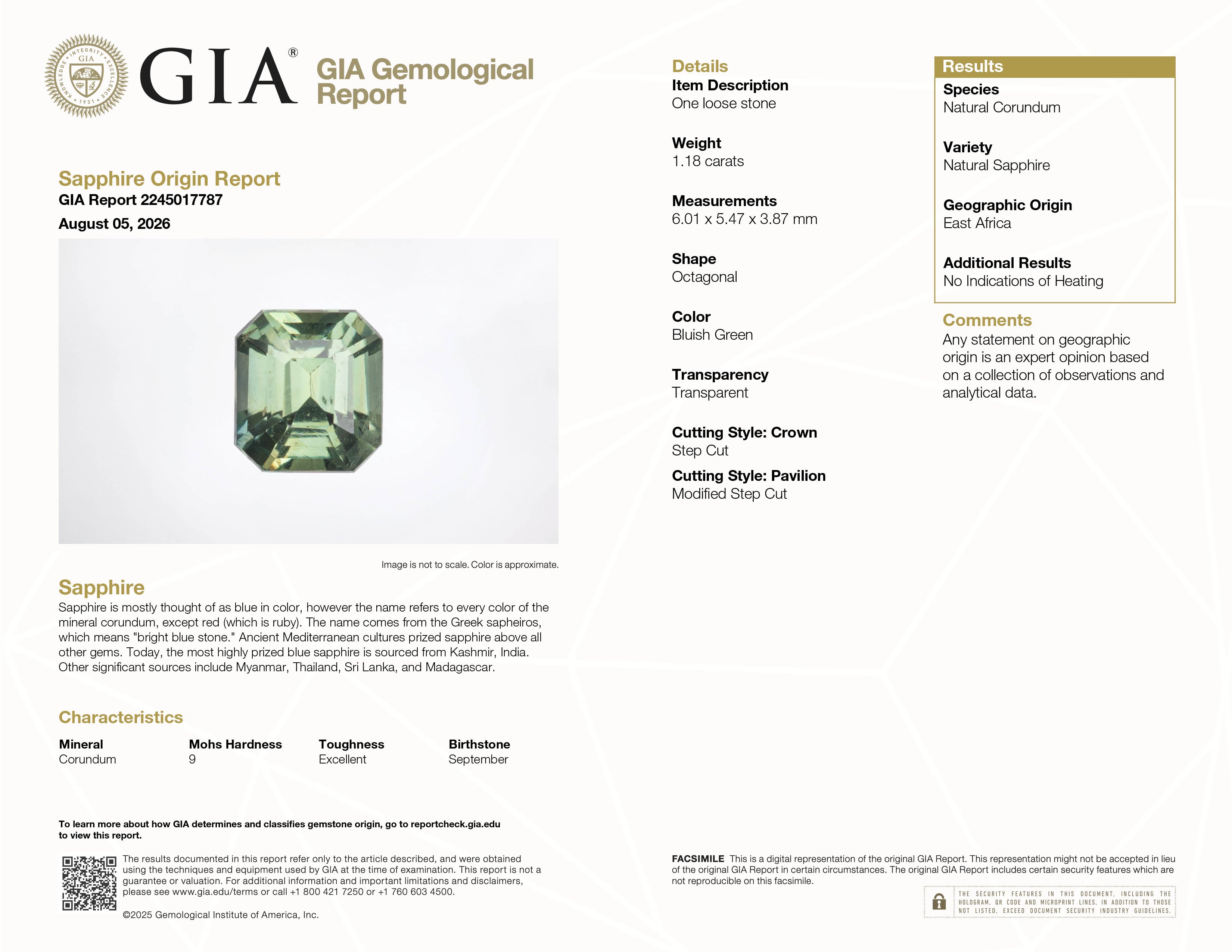
The most important source for fine green sapphire for engagement ring and collector use. Ceylon green sapphires cover the full spectrum from pale mint through vivid mid-tone green and olive. The finest examples show high transparency, clean green color without significant brown or yellow modifiers, and occasionally eye-clean clarity that makes them directly usable in high-quality settings without compromise. Ceylon origin on a GIA report adds a premium for fine material, and unheated Ceylon green sapphire at 1+ carats is a genuinely sought specification among serious collectors.
Australian sapphires include significant green production, often at medium-dark to dark tone. Australian green tends toward a stronger, sometimes inkier green than Ceylon material, and can be excellent in color quality. The color profile suits buyers who want maximum saturation depth rather than the lighter, brighter quality of Ceylon material.
Thailand and Cambodia produce green sapphire through their significant corundum deposits, often alongside blue material. Thai-processed sapphire may have been heat-treated; disclosure is important when buying from commercial Thai sources.
Both produce green sapphire as part of their broad colored sapphire output. Madagascar material in particular has improved significantly in quality representation over the past decade, and fine vivid greens are available from this origin at accessible price points.
Montana produces greenish-blue and teal material alongside its other colors, and some examples fall into the green category. Montana origin adds a domestic provenance premium for US buyers seeking home-country gemstones.
Green sapphire has a more mixed treatment picture than teal sapphire. Unlike teal, where heating typically destroys the characteristic blue-green balance and makes fine teal almost universally unheated by necessity, green sapphire responds to heat treatment in more variable ways. Some green material can be heated to improve saturation or reduce unwanted yellow or brown modifiers, producing a cleaner, more vivid green. Other green material is sold in unheated form with excellent natural color.
The practical implication: do not assume green sapphire is unheated the way you might assume fine teal sapphire is unheated. Treatment disclosure matters for green sapphire specifically because heating can genuinely improve the color of some material, and sellers of heated green sapphire may not always volunteer that information unprompted.
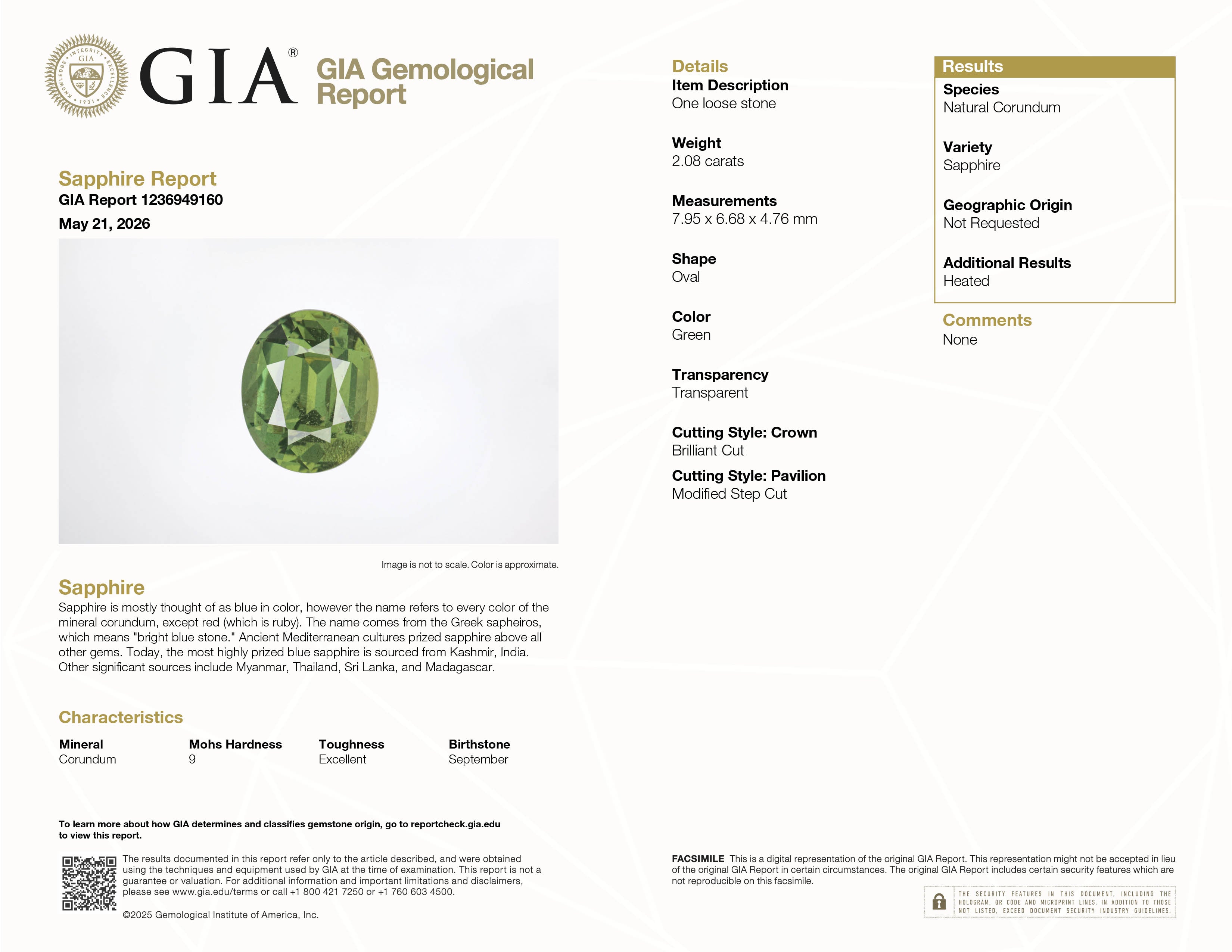
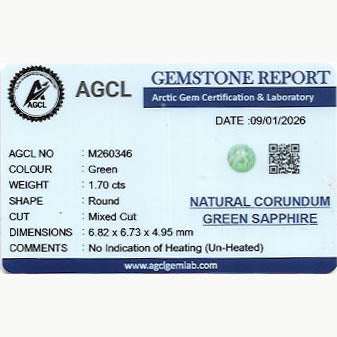
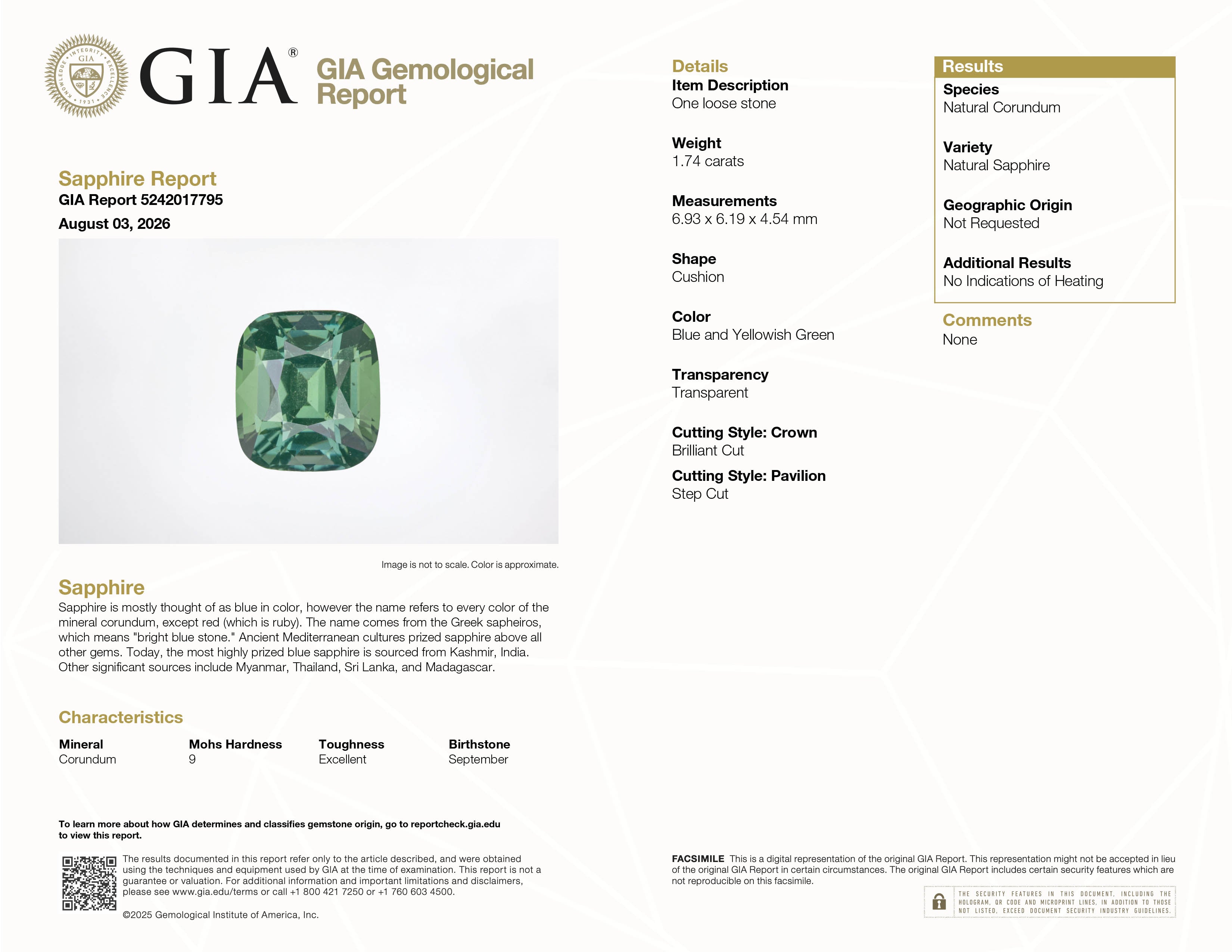
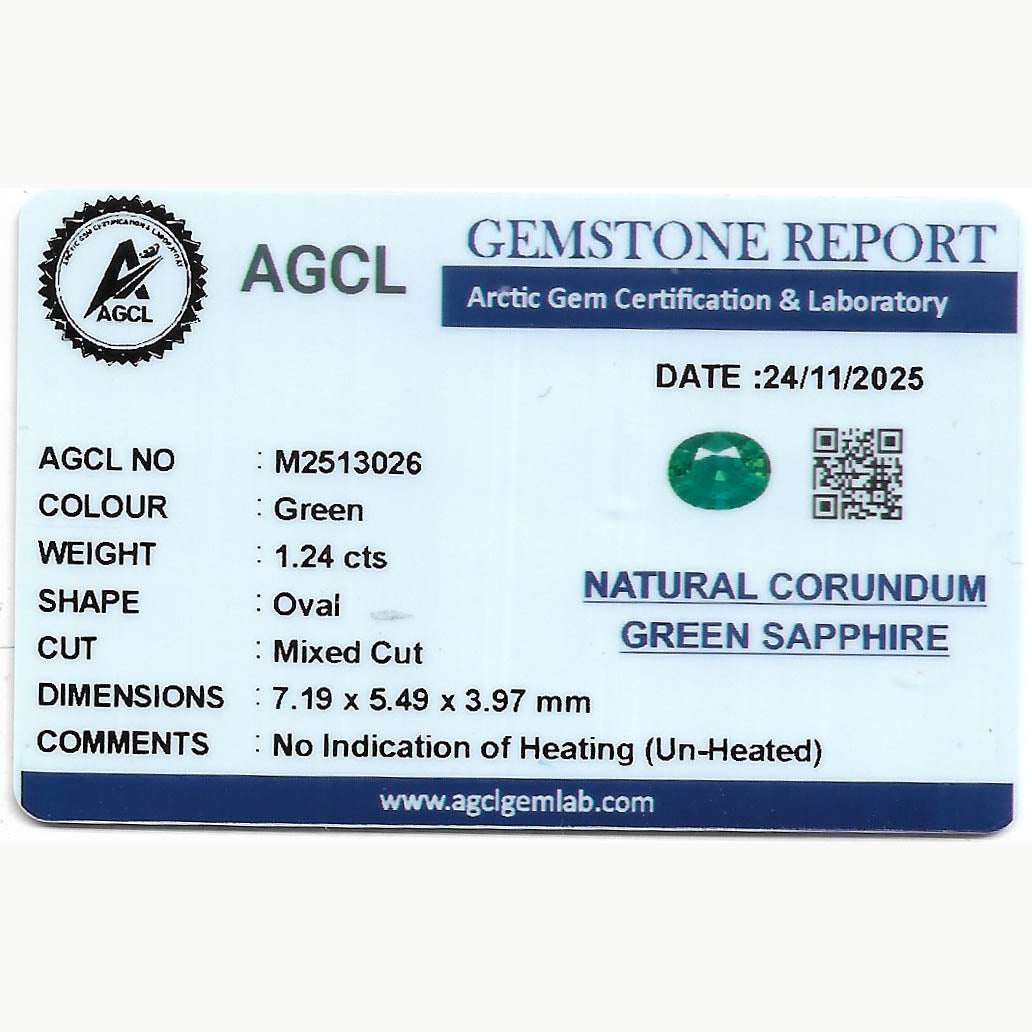
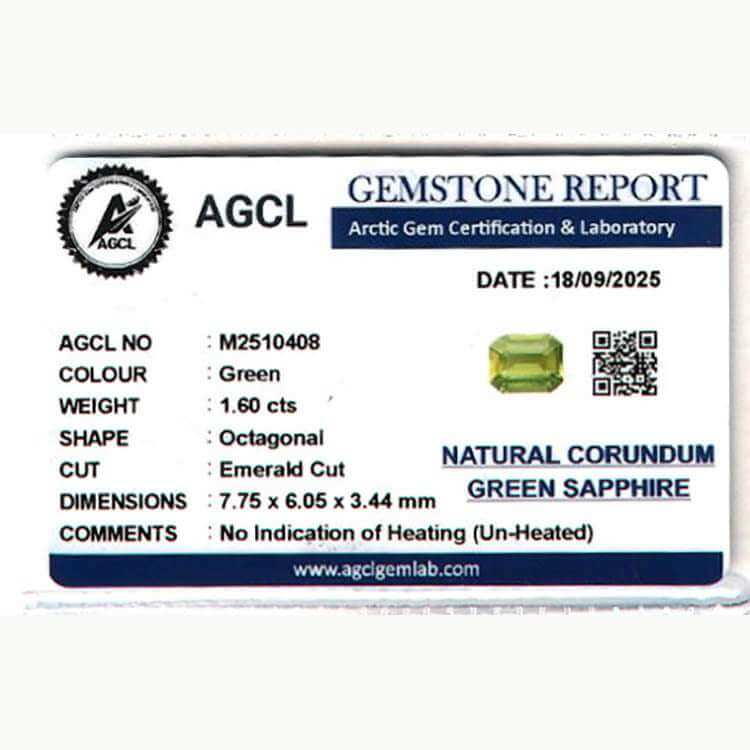
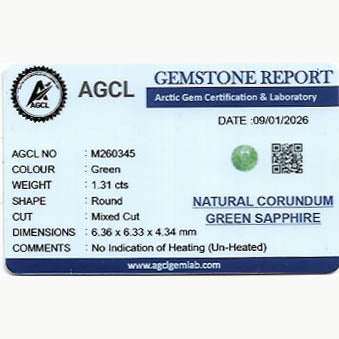
For buyers for whom unheated status matters — for investment reasons, Jyotish use, or philosophical preference for natural color — explicit disclosure and, for stones above $600 per carat at 1+ carats, laboratory documentation are the appropriate standards. At Crescent Gems, treatment status is stated on every product page without exception.
Color evaluation in green sapphire requires attention to several factors that are less prominent in other sapphire colors.
Green sapphire's most common quality challenge is the presence of color modifiers — yellow or brown undertones that shift the stone away from pure green. A slightly yellowish-green reads as less vivid than a pure green of the same saturation; a brownish-green reads as muddy. The finest green sapphires show clean, pure green without significant yellow or brown influence. This is harder to achieve in green corundum than in blue, where iron-titanium interactions tend to produce cleaner hues.
When evaluating green sapphire photographs, look at the stone under both cool daylight and warm incandescent. Under warm light, yellow modifiers that are invisible under daylight often become more apparent. A green that looks clean and vivid under daylight but reads as yellowish-green under incandescent has a modifier issue that matters for a ring worn in all lighting conditions.
Mid-to-vivid saturation is the target. Very light green saturation fails to read as clearly colored at wearing distance; very dark green loses visibility under low light and can read as nearly black indoors at night. The finest green sapphires for ring use show a saturation level that holds their green character visibly across all standard lighting conditions, from bright outdoor daylight through dim indoor evening light.
Medium tone is most desirable for most engagement ring applications. Deep, dark-toned green sapphires are impressive stones but sacrifice some color utility under low light. Light-toned material is delicate and suits different aesthetic contexts. For a confident green presence in a daily-wear ring, medium tone is the most versatile choice.
Green sapphire, like all colored sapphires, can suffer from poor cut that produces a window — a colorless, transparent area in the center of the stone where light passes through rather than reflecting back as color. In green sapphire specifically, a window reduces the color presence significantly because green is less visually dominant than blue and more dependent on good cut to read at its best. Always evaluate green sapphire face-up in finished or semi-finished condition — a stone that looks vivid from the side may have a large window that dominates the face-up view in a setting.
Green sapphire's combination of color, durability, and relatively accessible price makes it genuinely compelling for engagement ring use. Here is how to think about the key decisions.
Mohs 9, no cleavage, no treatment maintenance required. These three facts are the practical foundation of the green sapphire engagement ring argument. Add in the general absence of the oiling and retreatment burden that emerald carries, and the case for green sapphire over emerald in a daily-wear ring is strong on practical grounds alone. The stone will look exactly the same in twenty years of daily wear as it does on the day you receive it.
Oval and cushion are the most practical shapes for green sapphire engagement rings. The oval's broad face-up surface maximizes the visible green at wearing distance; the cushion's rounded corner geometry deepens saturation and concentrates the color. Round brilliant works well for vivid material where the color is strong enough to perform through the light-scattering of a brilliant cut. Emerald cut is an interesting option for green sapphire specifically because step facets create interior depth that can show the green in an unusually rich way, provided the stone is clean enough to suit the format.
Green sapphire benefits from sufficient face-up area for the color to read at wearing distance. A minimum of 0.80 carats in an oval or cushion is recommended for center stone use; 1.00–1.50 carats delivers confident color presence. Very light green material may need to be larger to read clearly as colored at arm's length.
A complete green sapphire engagement ring specification: carat weight (0.80 ct minimum; 1.00–1.50 ct for strong presence), hue position (pure mid-green, olive, or your specific preference), clarity (eye-clean), saturation (mid-to-vivid), treatment status (disclosed explicitly — heated or unheated), and cut quality (face-up color even and vivid, no large window). If origin documentation matters for your purchase, require a GIA or equivalent report confirming Ceylon origin.
Green sapphire is one of the more accessible sapphire colors per carat, which makes it possible to purchase significantly larger stones at fine quality than would be budget-feasible in blue or unheated pink. The ranges below are for natural, eye-clean, well-cut material.
Compared directly to emerald: a fine 1.00-carat Colombian emerald in vivid green with standard oil treatment retails at $2,000–$8,000 per carat. A comparable green sapphire at $300–$700 per carat represents a 4–10x price difference for a more durable, lower-maintenance stone. The emerald's color depth advantage is real; whether it justifies that cost differential is a personal judgment call.
Green sapphire's most common quality issue — yellow or brown undertones — is most visible under warm incandescent light. A stone that looks purely green in cool display lighting may reveal a noticeable yellowish or brownish cast under incandescent. Always request or require photographs and video under both cool and warm light before committing.
Olive green is a specific, intentional color category that some buyers actively seek and others want to avoid. If you want a pure, cool green and end up with an olive, you will be disappointed. If you want an olive and end up with a pure cool green, you may find it reads as too conventional. Clarify your hue preference before buying, not after.
Green sapphire and emerald share the green color family but are not the same color experience. Fine emerald has a slightly warm, slightly bluish vivid green that is uniquely characteristic of the mineral. Fine green sapphire has a different visual character — often cooler, sometimes more yellowish, occasionally approaching emerald's range but not identical. If you have a specific emerald color in mind and want to match it exactly, test specific stones against your reference before buying.
Green sapphire should be meaningfully less expensive than fine emerald of comparable apparent color. If a seller is pricing green sapphire at emerald price levels, something is wrong with the pricing, the comparison, or both. Know the market ranges for both categories before buying in either.
Our green sapphire collection covers the full spectrum of Ceylon green corundum, from pale mint through vivid mid-green to olive and deep green. Treatment status is disclosed on every product page. Where stones are unheated, that is stated; where stones are heat-treated, that is also stated. We do not present heat-treated green sapphire as unheated material, and we do not describe olive green as vivid pure green.
We also carry tsavorite garnet for buyers who want the most vivid possible green in a natural gemstone — a category where tsavorite has a genuine color advantage over green sapphire. If you are deciding between the two, email crescentgems@gmail.com and we will walk through the trade-offs for your specific budget, size preference, and end use. We respond personally within one business day.
Ahmed Shareek
Proprietor — Crescent Gems
A gem dealer with over 25 years of experience sourcing natural sapphires from Sri Lanka, Ahmed brings hands-on expertise in mining, heat treatment, cutting, and stone selection. With deep roots in the Ceylon gem trade, he offers first hand knowledge of origin, quality, and craftsmanship behind every piece of guidance on this site.
The Ultimate Guide to Buying Natural Loose Sapphires
The definitive guide to buying a natural loose sapphire: colour, origin, treatment, cut, shape, certification, pricing, and engagement rings, with links to every Crescent Gems guide and collection.
Read moreabout The Ultimate Guide to Buying Natural Loose Sapphires
The Ratnapura Gem Market — How Sapphires Are Traded at the Source
Read moreabout The Ratnapura Gem Market — How Sapphires Are Traded at the Source
Madagascar Sapphire — The Modern Origin That Rivals Ceylon
Read moreabout Madagascar Sapphire — The Modern Origin That Rivals Ceylon
Montana Sapphire vs. Ceylon Sapphire — How America's Sapphire Compares to Sri Lanka's
Read moreabout Montana Sapphire vs. Ceylon Sapphire — How America's Sapphire Compares to Sri Lanka's
Sapphire vs. Spinel — The Overlooked Comparison Every Collector Should Understand
Read moreabout Sapphire vs. Spinel — The Overlooked Comparison Every Collector Should Understand
Share: