

- by Ahmed Shareek
Alexandrite — The Complete Buyer's Guide to the Color-Change Chrysoberyl
- by Ahmed Shareek
For the color-change counterpart in sapphire: Color-Change Sapphire Guide. For our chrysoberyl catalog: Natural Chrysoberyl Collection. For the buying foundation: Ultimate Sapphire Buying Guide.
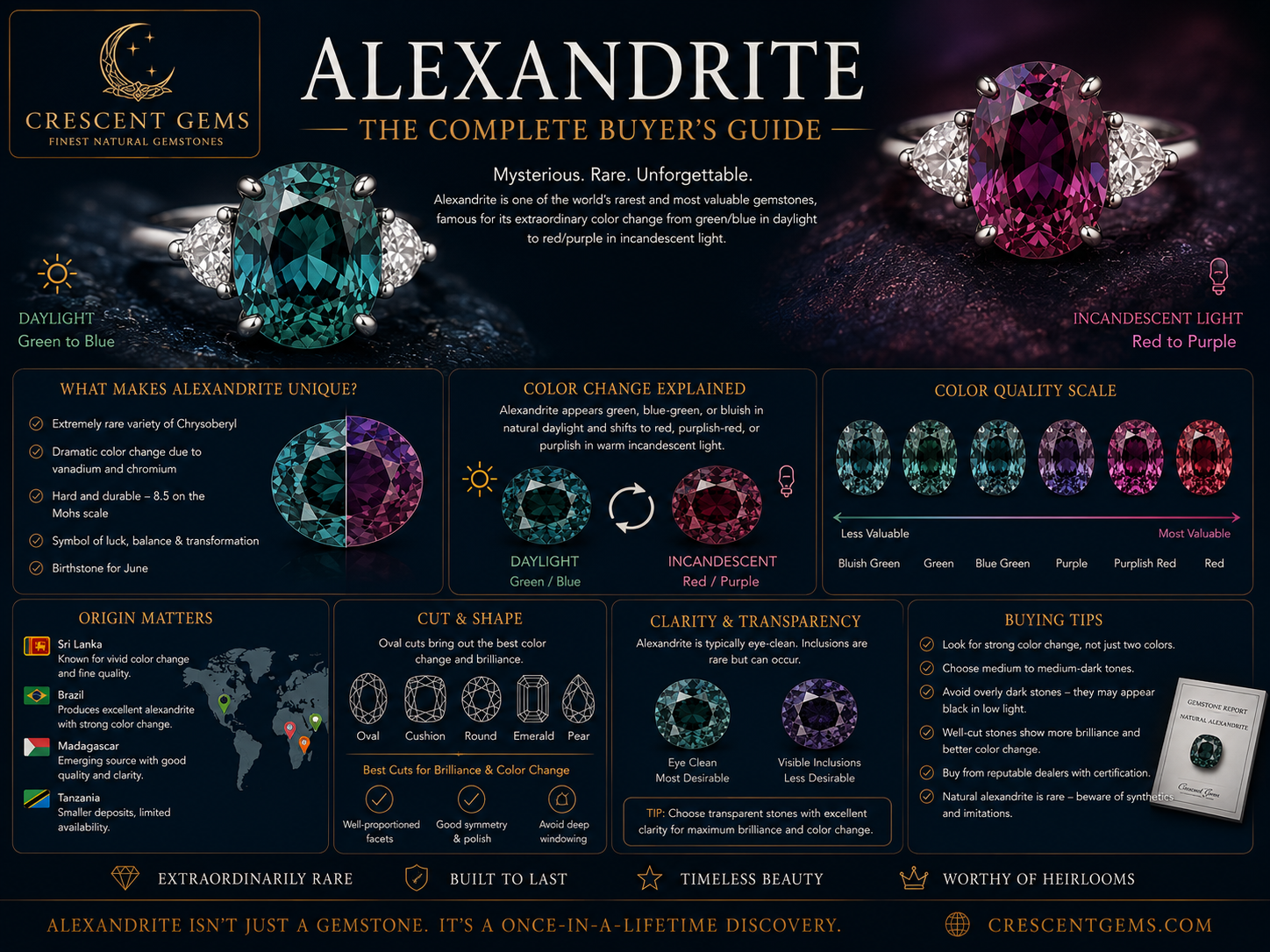
Alexandrite is one of the rarest and most extraordinary gemstones on Earth. It is the only gem species whose defining characteristic is a dramatic color change between different light sources — not a subtle shift, but a genuine, striking transformation: green or blue-green in daylight and red or purplish-red under incandescent light. The finest examples appear genuinely emerald-green outdoors and ruby-red by candlelight, leading to the famous trade description “emerald by day, ruby by night.”
At Crescent Gems, we source chrysoberyl — including alexandrite — directly from Sri Lanka alongside sapphire and other gems.
Alexandrite is the color-change variety of chrysoberyl — beryllium aluminum oxide (BeAl₂O₄) — colored by chromium. It was first discovered in the Ural Mountains of Russia in 1830, named after Tsar Alexander II. Other significant sources include Sri Lanka (Ceylon alexandrite), Brazil, India (Andhra Pradesh), Madagascar, and Tanzania. Alexandrite is Mohs 8.5 — harder than most gemstones, second only to sapphire and diamond among commonly used gems. It has no cleavage, excellent toughness, and is highly resistant to heat and chemicals.
The color change is caused by chromium, which absorbs strongly in the yellow-green region of the visible spectrum. Under daylight (strong blue-green component), the eye perceives the blue-green portion — the stone appears green. Under incandescent light (strong red-orange component), the eye perceives the red portion — the stone appears red or purple-red. This is a fundamental property of the chromium-bearing chrysoberyl crystal that cannot be replicated by any treatment.
Color Change Strength is the primary quality factor: strong (above 75% change) means clearly distinct green outdoors and red or purple-red under incandescent; moderate (50-75%) means a clear shift but more muted colors; weak (below 50%) is commercial material. Always evaluate under actual incandescent light — LED warm-white bulbs do not replicate incandescent spectral composition. Color quality in both states matters independently: pure green outdoors, pure red or raspberry-red indoors, with no brown modifiers. Clarity: natural alexandrite is typically included; completely eye-clean material warrants laboratory testing. Cut: same quality criteria apply as for sapphire — check for windowing and excessive extinction.
Synthetic alexandrite has been produced since the 1960s and often shows a stronger color change than natural material. The price difference is a factor of 50 to 200. Detection methods: natural alexandrite contains characteristic inclusions — fingerprint patterns, needles, two-phase inclusions — absent in most synthetics. For any alexandrite above $500 in value, a laboratory report from GIA, Gubelin, or AGL is the minimum acceptable standard. See our GIA report guide for how laboratory documentation works.
Russia (Ural): Pure green to pure red — the benchmark; strongest shift; most valuable; extremely scarce. Ceylon (Sri Lanka): Blue-green to purple or purple-red — more available; often larger; shift typically strong. Brazil: Often brownish modifiers; some fine material in larger sizes. India (Andhra Pradesh): Fine material available; some strong-shift stones. Tanzania / Madagascar: Variable quality.
Ceylon alexandrite is the most commercially accessible origin for buyers seeking natural material with a genuine strong color change. Browse our chrysoberyl collection for available Ceylon material.
Alexandrite (chrysoberyl) changes from green to red via chromium. Color-change sapphire (corundum, Mohs 9) changes from blue to violet via vanadium. Alexandrite at fine grades is 5-20x the price of equivalent color-change sapphire. Buyers on a budget who are drawn to the color-change phenomenon but cannot access natural alexandrite prices are often well-served by fine color-change sapphire from East African sources.
Under 0.25ct, weak to moderate shift: $200-$800/ct. 0.25-0.50ct, moderate shift: $800-$2,500/ct. 0.50-1.00ct, strong shift, eye-clean, GIA: $3,000-$10,000/ct. 1.00-2.00ct, strong shift, fine color, GIA: $8,000-$25,000/ct. Russian origin, strong shift, above 1ct: $20,000-$80,000+/ct. Ceylon alexandrite, strong shift, 0.50-1.00ct, GIA: $2,500-$8,000/ct. Without laboratory documentation, any price for alexandrite should be treated as unverifiable.
Alexandrite at Mohs 8.5 is suitable for all jewelry types including daily-wear rings. White gold and platinum showcase the color change most neutrally. A diamond halo around an alexandrite center stone can amplify the visual drama of the color change by providing a constant neutral white frame. For ring design guidance, see our metal comparison guide, halo ring guide, and custom ring design guide. For insurance, see our insuring a sapphire ring guide.
Browse our natural chrysoberyl collection or email crescentgems@gmail.com with your specifications. We respond within one business day.
Our alexandrite collection features the color-change chrysoberyl described above — check back regularly, as true alexandrite turns over quickly when in stock.

Blue Star Sapphire Price Guide — What They Cost and Why
Read moreabout Blue Star Sapphire Price Guide — What They Cost and Why
Tsavorite Garnet Price Guide — What They Cost and Why
Read moreabout Tsavorite Garnet Price Guide — What They Cost and Why
Color-Change Sapphire Price Guide — What They Cost and Why
Read moreabout Color-Change Sapphire Price Guide — What They Cost and Why
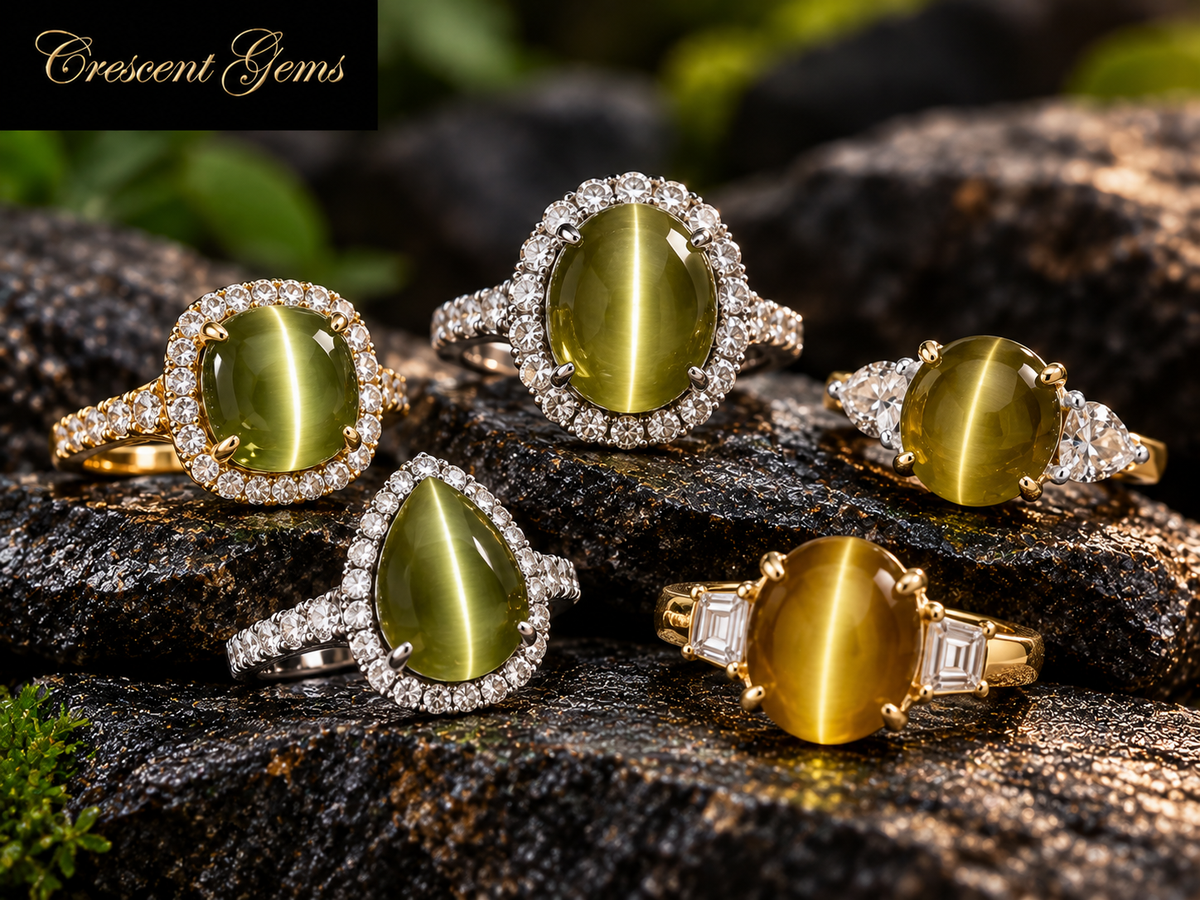
Is Cat's-Eye Chrysoberyl Good for an Engagement Ring?
Read moreabout Is Cat's-Eye Chrysoberyl Good for an Engagement Ring?
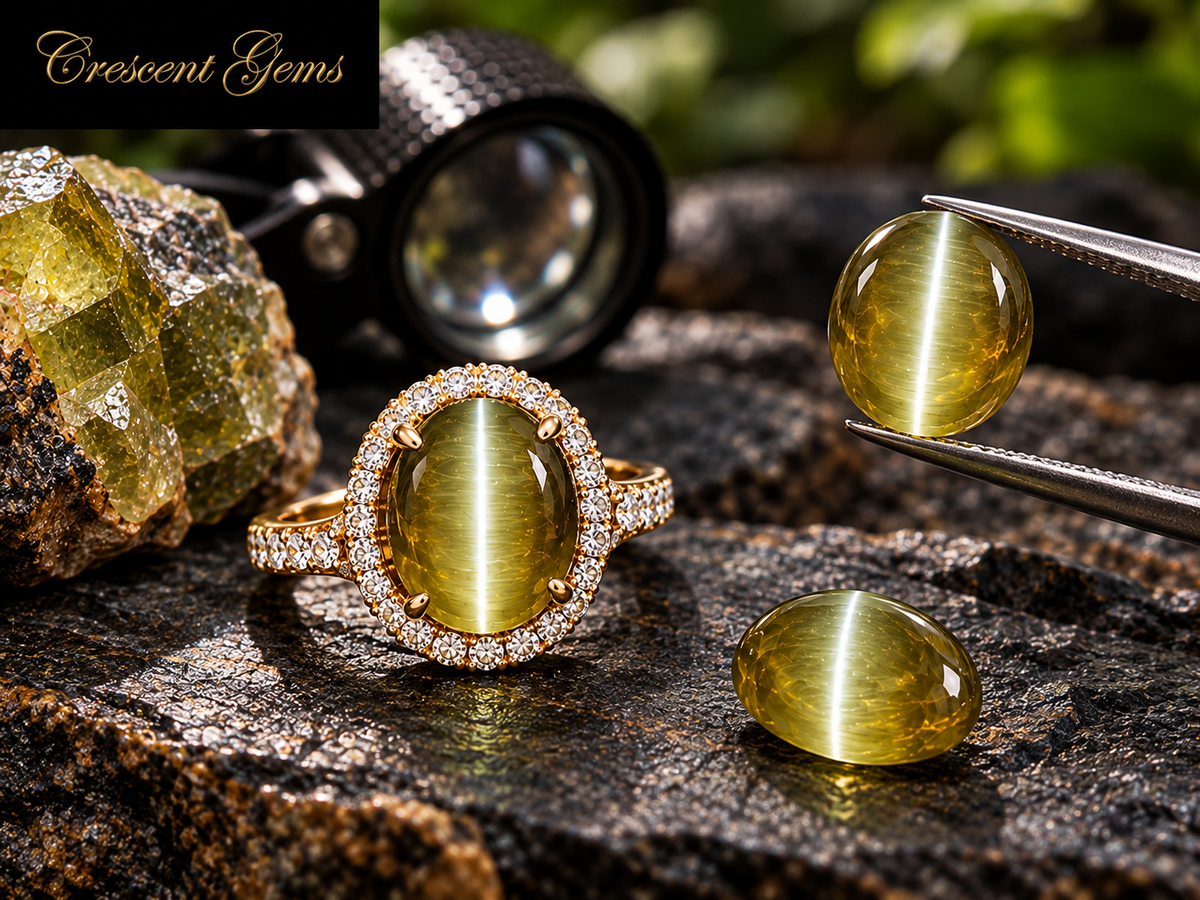
Cat's Eye Chrysoberyl Price Guide — What They Cost and Why
Read moreabout Cat's Eye Chrysoberyl Price Guide — What They Cost and Why