- by Ahmed Shareek
Color-Change Sapphire — The Phenomenon Stone That Shifts Before Your Eyes
- by Ahmed Shareek
New to buying sapphires? Start with our Ultimate Sapphire Buying Guide. For the adjacent blue-influenced lighting-sensitive color: our Violet Sapphire Guide. Comparing to alexandrite? Read our Alexandrite Buyer's Guide for the other great collector phenomenon stone.
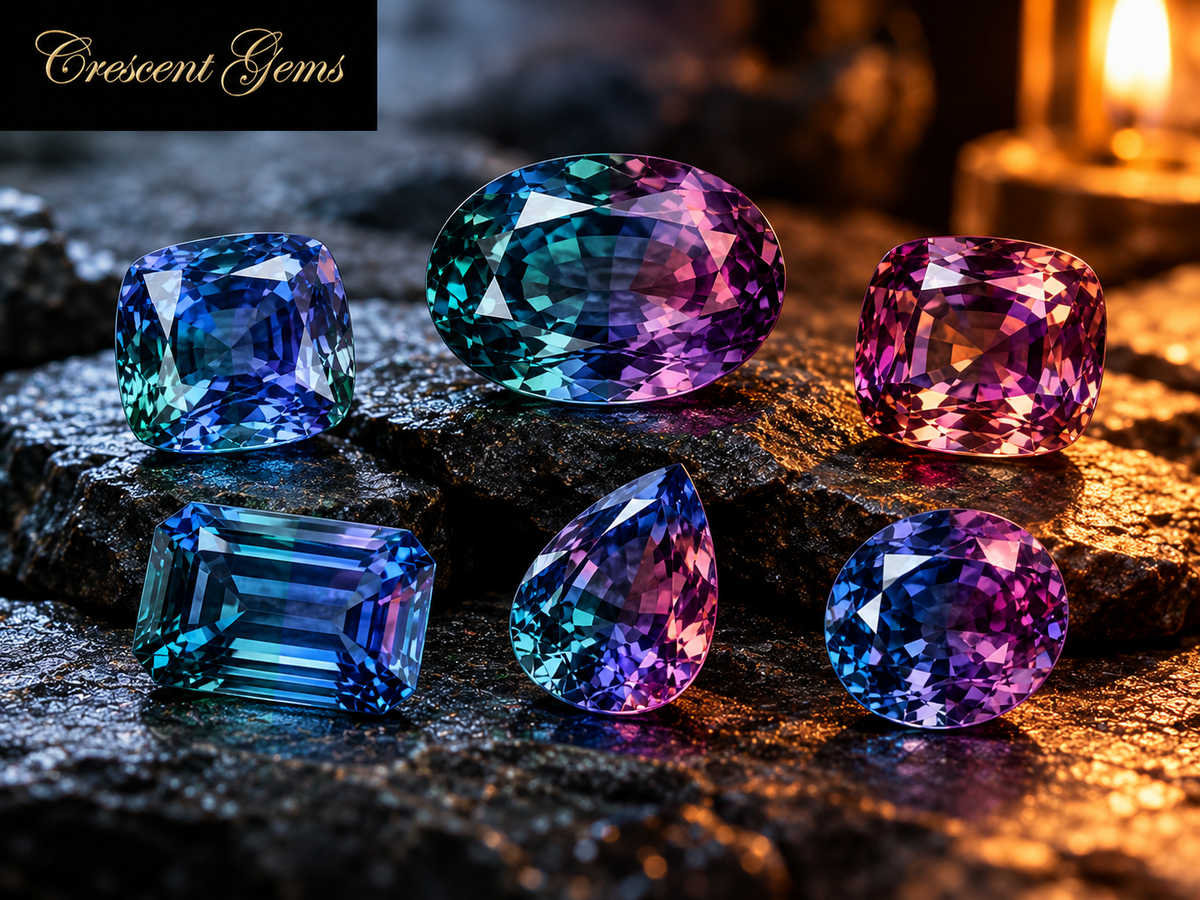
Color-change sapphire is the most dramatic optical phenomenon in the sapphire family. Not a subtle shift between two adjacent positions on the color wheel — but a clearly observable change from one named color to a distinctly different named color, happening instantly as you step from daylight into artificial light. The same stone that appears blue or teal on a bright morning appears purple or reddish-purple under the warm lamp in the evening. It looks like a different stone because, under standardized gemological lighting conditions, it effectively is.
Fine color-change sapphire is genuinely rare — rarer than fine padparadscha, rarer than fine star sapphire, rarer at the top quality level than most buyers realize. The demand side of the market is smaller than for blue or pink sapphire, which means the pricing has not yet caught up to the geological scarcity. For collectors and discerning buyers, this creates one of the most interesting value positions in natural corundum.
This guide covers the full picture: the vanadium color mechanism, how the change is graded, the different color-change patterns, where the finest material comes from, the relationship to alexandrite, treatment, pricing, and how to evaluate a specific stone before buying.
Color-change sapphire gets its phenomenon from vanadium in the corundum crystal lattice. Vanadium is an unusual chromophore because it absorbs light across a broad transmission window — unlike iron and titanium (which produce blue by absorbing yellow-green) or chromium (which produces red by absorbing green and violet), vanadium absorbs in a way that allows two different color regions of the visible spectrum to be transmitted simultaneously.
The apparent color of a vanadium-bearing sapphire depends on the relative energy of blue and red wavelengths in the illuminating light:
The shift is not a gradual transition — it is effectively instantaneous. Move from a window into a warm room and the stone changes. Hold it under a flashlight in a darkened room and it appears closer to its daylight position. The speed of the change is one of the characteristics that makes color-change sapphire uniquely dramatic.
This vanadium mechanism is also responsible for the lighter lighting-sensitivity of violet and purple sapphires — those stones show a color variation rather than a complete color change. The distinction is commercially and gemologically significant. See below.
Not every sapphire that looks different in different light is a color-change sapphire. This distinction matters commercially because “color-change sapphire” is a specific laboratory designation that commands a premium over ordinary violet or purple sapphire.
| Phenomenon | What it means | GIA designation | Commercial status |
|---|---|---|---|
| Color change | Stone shifts from one named color to a distinctly different named color (e.g., blue to purple) | Formally designated as color-change in report comments | Premium designation; commands significant price premium |
| Color variation | Stone shifts within the same color family (e.g., blue-violet to reddish-violet; still violet) | Described as violet or purple sapphire; no color-change designation | Standard violet/purple pricing; no color-change premium |
| Pleochroism | Stone appears different colors when viewed from different angles (not different light sources) | Not color change; noted separately when present | Not priced as color-change |
The practical implication: a violet sapphire that shifts between blue-violet and reddish-purple within the violet family is not a color-change sapphire in the GIA sense. It shows color variation — which is beautiful and commercially significant, but distinct. A stone that GIA describes as blue in daylight and purple in incandescent — crossing from one named color to another — is formally a color-change sapphire.
Sellers sometimes describe violet sapphires with visible shifts as “color-change” in marketing. Always require GIA documentation before paying a color-change premium. See our violet sapphire guide for the adjacent color family.
Color-change sapphires do not all shift between the same two colors. The specific color positions — both the daylight color and the incandescent color — vary by stone and are a significant quality and preference variable.
The most commercially prized pattern: the stone appears a clear, pure blue in daylight (resembling fine blue sapphire) and shifts to a distinct purple, reddish-purple, or violet-red under incandescent light. This shift is the most dramatic because the two positions are visually well-separated — blue and purple are clearly different colors to any observer — and because both positions are independently beautiful. A fine blue-to-purple color-change stone effectively delivers two beautiful and very different gemstone experiences in one stone. This is the pattern most directly associated with fine alexandrite, though the color positions differ between the two species.
A slightly warm daylight position (blue-violet rather than pure blue) shifting to a warmer incandescent position (reddish-purple or magenta-purple). This is the most common pattern in fine Ceylon color-change material. The shift is clearly observable and the two positions are aesthetically distinct, though not as dramatically separated as pure blue-to-purple.
Some color-change sapphires appear greenish-blue or teal in daylight and shift to purple or reddish-purple under incandescent. The teal daylight position overlaps with the teal sapphire family and is distinctive — particularly popular with buyers who want something genuinely unusual. The shift from teal-to-purple is perhaps the most dramatic in terms of visual contrast between the two positions.
Color-change sapphires with a grayish or muted daylight color that shifts to purple or reddish-purple are the most commercially available and least expensive. The shift is present but the daylight color is not independently beautiful, reducing overall appeal even when the shift is technically strong. These stones represent the entry point to color-change sapphire at accessible pricing.
Shift strength is graded from weak through moderate to strong. A strong color-change sapphire shifts completely and unambiguously from one color to another — there is no ambiguity about which color the stone is in either lighting condition. A moderate shift shows the same two positions but less completely, with some lingering character of the daylight color visible under incandescent. A weak shift shows only a hint of difference between the two positions. Strong shift commands the highest premiums and is the defining characteristic of collector-grade material. Within a color-change stone, the shift must be complete to merit the full premium.
A color-change sapphire is evaluated for color quality in each lighting condition independently. The finest stones show vivid, well-saturated color in both positions — a vivid blue in daylight AND a vivid purple under incandescent. Many color-change sapphires show good color in one position and muted, greyish, or washed-out color in the other. These stones are significantly less valuable than stones with strong, vivid color in both positions. The combination of strong shift AND vivid color in both positions is the rarest and most commercially prized quality combination.
Color-change sapphire is held to the same clarity standards as other corundum: eye-clean material is the commercial expectation for quality grades. Included material is priced lower. Heavy inclusions that reduce transparency also reduce color quality in both positions, which compounds the value impact.
Fine color-change sapphire above 2 carats in strong shift with vivid color in both positions is genuinely scarce. Price per carat increases significantly at the 1ct and 2ct thresholds, consistent with other fine sapphire colors but more dramatic because the available supply of fine color-change rough in large sizes is more limited than standard blue or pink sapphire.
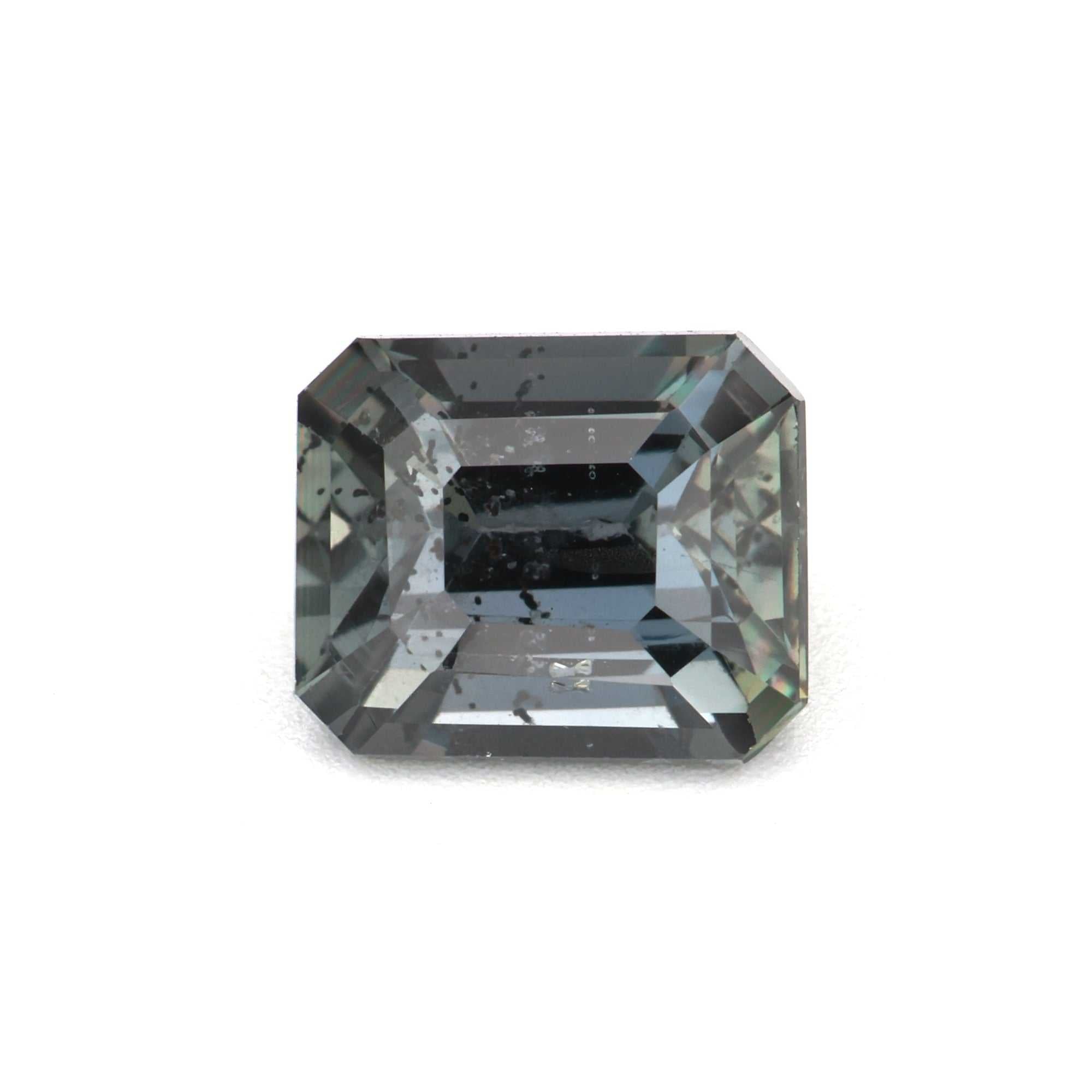
Cut quality in color-change sapphire is particularly significant because the color-change effect is most dramatic when light return is maximized. A well-cut stone will show both color positions vividly; a poorly cut stone with significant windowing (light passing straight through without being returned) will appear duller in both positions and the shift will seem weaker. Color-change sapphires are most often cut in brilliant formats (oval, cushion, round) rather than step cuts, because brilliant faceting maximizes light interaction with the vanadium color centers — but step cuts do occur and can carry the phenomenon well: the 1.03 ct Sri Lankan color-change sapphire we currently hold is an emerald cut.
| Quality level | Shift strength | Color in daylight | Color under incandescent | Price range (1ct) |
|---|---|---|---|---|
| Exceptional | Strong; complete | Vivid blue or teal | Vivid purple or red-purple | $2,000–6,000+ per carat |
| Fine | Strong to moderate | Good blue-violet | Good purple | $800–2,500 per carat |
| Good | Moderate | Blue-violet, slightly muted | Purple, partially muted | $300–$900 per carat |
| Commercial | Weak to moderate | Grayish or muted | Purplish, washed out | $100–$400 per carat |
Figures above are approximate market guidance, not fixed quotes. Actual value varies by treatment, origin, colour, cut, clarity, and certification.
Alexandrite — the color-change variety of chrysoberyl — is the most famous color-change gemstone in the world, and buyers who discover color-change sapphire frequently ask how the two compare. The comparison is worth making precisely.
| Factor | Color-Change Sapphire | Alexandrite |
|---|---|---|
| Species | Corundum (Al₂O₃) | Chrysoberyl (BeAl₂O₄) |
| Mohs hardness | 9 | 8.5 |
| Colorant | Vanadium | Chromium |
| Daylight color | Blue, blue-violet, or teal | Green to teal-green |
| Incandescent color | Purple, reddish-purple, or plum | Red to purplish-red |
| Shift character | Blue-to-purple; cool-to-warm | Green-to-red; most dramatic contrast of any gem |
| Treatment | Can be heated; heat damages shift | Usually untreated, but treated and laboratory-grown material circulates — treat it as untreated only on a laboratory report |
| Rarity | Fine quality rare; more available than alexandrite | Among the rarest natural gemstones globally |
| Price (1ct, strong shift) | $800–6,000+ per carat | $3,000–50,000+ per carat |
| Size availability | Better; 1ct+ in strong shift available | Very limited above 1ct; 2ct+ extremely scarce |
Figures above are approximate market guidance, not fixed quotes. Actual value varies by treatment, origin, colour, cut, clarity, and certification.
The key practical distinction: alexandrite's green-to-red shift crosses the two most contrasting complementary colors on the spectrum, producing the most dramatic visual transformation of any natural gemstone. Color-change sapphire's blue-to-purple shift is less visually contrasting but occupies a more wearable and arguably more beautiful aesthetic range. Alexandrite at equivalent quality costs 5x–10x more than color-change sapphire. For buyers who want the phenomenon at an accessible price point, color-change sapphire delivers a genuinely extraordinary experience at a fraction of alexandrite's cost.
Heat treatment is commercially complicated in color-change sapphire in a way that differs from other sapphire colors. The vanadium color mechanism that produces color change is sensitive to heat treatment — high temperatures can alter the vanadium color centers in ways that reduce or eliminate the color-change effect while shifting the stone toward a fixed violet or purple color.
The commercial implications:
See our unheated sapphire guide, heat treatment guide, and our heated vs. unheated page.
Color-change sapphires are produced by fewer origins than standard blue sapphire because the specific vanadium concentration required for the phenomenon is less common in sapphire geology globally.
Ceylon produces the finest color-change sapphire commercially available. The characteristic Sri Lanka color-change sapphire shifts from a bright, slightly violetish blue in daylight to a vivid reddish-purple or violet-red under incandescent — a shift that is often complete enough to qualify as true color change rather than color variation. Ceylon origin commands the highest premiums for color-change material, consistent with other sapphire colors. See our Ceylon sapphire complete guide and Ceylon origin page.
Tanzania is the most commercially significant source of color-change sapphire by volume. The vanadium-bearing geology of the Umba Valley and other East African deposits produces color-change sapphires in a range of shift patterns, from blue-to-purple to teal-to-purple. Tanzanian material tends toward slightly warmer daylight colors (more blue-violet or teal than pure blue) and is available in larger sizes than Ceylon. Fine Tanzanian color-change represents excellent value relative to Ceylon-documented material. Tanzania also produces alexandrite, at Lake Manyara and Tunduru, but it is one source among several rather than the primary one — the classic and most highly valued alexandrite comes from Russia's Ural Mountains, from Brazil, and from Sri Lanka.
Madagascar produces color-change sapphires with quality characteristics that overlap with both Ceylon and Tanzania. Madagascar material ranges from blue-to-purple shifts similar to Ceylon to teal-to-purple patterns similar to Tanzanian material. Good unheated Madagascar color-change at moderate prices represents excellent value for buyers who want the phenomenon without paying Ceylon origin premiums. See our Madagascar sapphire guide.
India (Kashmir region, separate from the famous Kashmir blue sapphire deposit) occasionally produces color-change sapphires. Other minor sources include Brazil and Vietnam. These are less commercially significant and evaluated on individual stone quality rather than origin premium.
| Origin | Typical shift pattern | Treatment | Commercial position |
|---|---|---|---|
| Ceylon (Sri Lanka) | Blue-to-purple; blue-violet-to-red-purple | Mostly unheated; heat damages shift | Highest; benchmark for the category |
| Tanzania | Teal-to-purple; blue-violet-to-red-purple; varied | Often unheated; larger sizes available | Moderate; most available commercial source |
| Madagascar | Blue-to-purple to teal-to-purple; variable | Often unheated | Moderate; strong value positioning |
| India / other | Variable | Variable | Minor; evaluate by stone |
Color-change sapphire is among the stones most poorly served by product photographs. The shift between lighting conditions — the primary quality variable — is essentially impossible to capture in a single image. Even video is an imperfect representation. In-hand evaluation under real lighting conditions is strongly recommended for any significant purchase.
6-step evaluation protocol for color-change sapphire:
Color-Change Sapphire Price Ranges
The comparison that frames the value proposition: fine alexandrite in equivalent shift strength at 1ct trades at $3,000–50,000+ per carat — the range given in the comparison table above, and market commentary rather than our own pricing, since Crescent Gems holds no alexandrite. Fine color-change sapphire with strong shift at 1ct trades at $800–6,000+. The phenomenon is comparable; the price is 5x–10x lower. For buyers who want the extraordinary experience of a stone that looks different at different times of day, and who do not specifically require the green-to-red shift of alexandrite, color-change sapphire is one of the most compelling buys in the natural gemstone market. See our sapphire pricing guide.
Color-change sapphire presents an interesting setting challenge: the stone has two distinct color personalities, and the setting choice will emphasize one over the other.
White gold and platinum emphasize the daylight color — the cool, blue or blue-violet position. The neutral cool metal does not compete with either color position and allows the full contrast between them to be most clearly perceived. This is the setting choice for buyers who want the shift to be maximally dramatic.
Yellow gold complements the incandescent color — the warm purple or reddish-purple position. The warm metal and warm indoor color create a rich combination. Under daylight, the blue stone against yellow gold creates the strong complementary contrast that many buyers find compelling.
Rose gold creates a harmonious warmth with the incandescent purple position and a striking cool-warm contrast with the daylight blue position. A particularly balanced choice for buyers who want both positions to be strong.
Because the stone should be visible from the sides to allow the color to be seen across different lighting conditions throughout the day, settings that minimize metal coverage of the stone sides — prong settings, bezel settings with an open profile — are most appropriate. See our engagement ring guide and engagement ring page.
Commercial quality under $400 total: Seller disclosure is sufficient. GIA adds cost disproportionate to value at this price point.
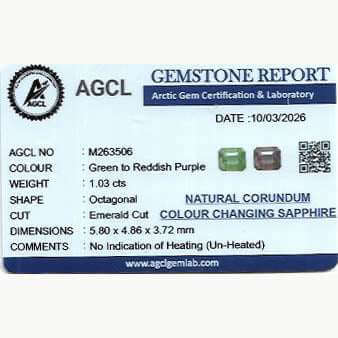
Any stone described as “color-change” with a significant price above $500: a laboratory report is required. GIA is the international reference for the color-change designation; a working Sri Lankan trade lab whose colour and treatment calls we stand behind — AGCL, FGL or GIC — also satisfies this, and every stone we list names the report it carries. That $500 line is deliberately stricter than the threshold we apply to sapphire generally — a report above two carats or above roughly $2,000 — and it is stricter on purpose: with a phenomenon stone it is the designation itself you are paying for, and color change is the easiest sapphire effect to misrepresent, so the phenomenon needs verifying far lower down the price scale than ordinary color or origin do. The report must explicitly describe the color-change in the comments section — not simply describe the stone as “violetish-blue” in one condition. A violet sapphire with color variation priced as color-change is not color-change sapphire.
Unheated color-change, any significant value: a laboratory report confirming “no indications of heating” is mandatory. GIA is the international reference for that call; a working Sri Lankan trade lab whose treatment calls we stand behind — AGCL, FGL or GIC — also satisfies this, and every stone we list names the report it carries. An unheated claim has to rest on a report, never on the seller's word.
Investment-grade pieces (strong shift, vivid both positions, 1ct+): GIA documentation is mandatory. See our GIA report guide and investment-grade collection.
Vanadium in the corundum crystal lattice. Vanadium absorbs light across a broad transmission window, so two different color regions of the visible spectrum are transmitted at once and the color you see depends on which wavelengths dominate the light source. Daylight carries strong blue wavelengths and the stone reads blue, blue-violet or teal; incandescent light is weighted toward red and yellow and the same stone reads purple, reddish-purple or plum. The shift is not gradual — it is effectively instantaneous as you move from one light to the other.
No — they are different mineral species with different chemistry. Color-change sapphire is corundum colored by vanadium, and it shifts from blue, blue-violet or teal in daylight to purple, reddish-purple or plum under incandescent light. Alexandrite is chrysoberyl colored by chromium, and it shifts from green to red, the most dramatic visual transformation of any natural gemstone. Sapphire is also the harder of the two: Mohs 9 against alexandrite's 8.5.
The change is natural. It comes from vanadium that was already in the crystal lattice as the stone grew. Heat treatment works against the phenomenon rather than producing it: high temperatures can alter the vanadium color centers, reducing or eliminating the shift while pushing the stone toward a fixed violet or purple. That is why most fine color-change sapphire on the market is unheated, and why a stone described as heated but still showing a strong shift should be evaluated skeptically — ask for the specific GIA treatment disclosure.
Fine color-change sapphire is genuinely rare — rarer than fine padparadscha, and rarer than fine star sapphire at the top quality level. What holds the price down is demand rather than supply: the market for it is smaller than for blue or pink sapphire, so pricing has not caught up to the geological scarcity. Alexandrite at equivalent quality costs 5x–10x more. That gap is what makes color-change sapphire one of the most interesting value positions in natural corundum.
Two sources, and you need both. Start in natural daylight, near a bright window or outdoors, for the daylight position — blue, teal or blue-violet. Then move the stone to an incandescent bulb or a warm LED at 2700–3000K for the second position — purple, red-purple or plum. A cool LED at 5000K or above behaves more like daylight and will not show you the change. A flashlight or phone torch in a darkened room shows the phenomenon most dramatically of all.
Color change means the stone crosses from one named color to a distinctly different named color, such as blue in daylight to purple under incandescent light. Color variation means it moves within a single color family — blue-violet to reddish-violet, still violet throughout. Only the first is designated color-change by GIA, and only the first carries the color-change premium. Because sellers sometimes market violet sapphires with a visible shift as color-change, require a GIA report that describes the color change explicitly in its comments section before paying that premium.
Yes. Sapphire is Mohs 9, hard enough for daily wear, and the change means the ring has one character in daylight and another under the lamp in the evening. Metal choice decides which position is emphasized: white gold and platinum favor the cool daylight color and make the contrast between the two positions clearest, yellow gold complements the warm incandescent purple, and rose gold sits between the two. Prong settings and open-profile bezels suit the stone best, because it needs to be visible from the sides for the color to read across the day.
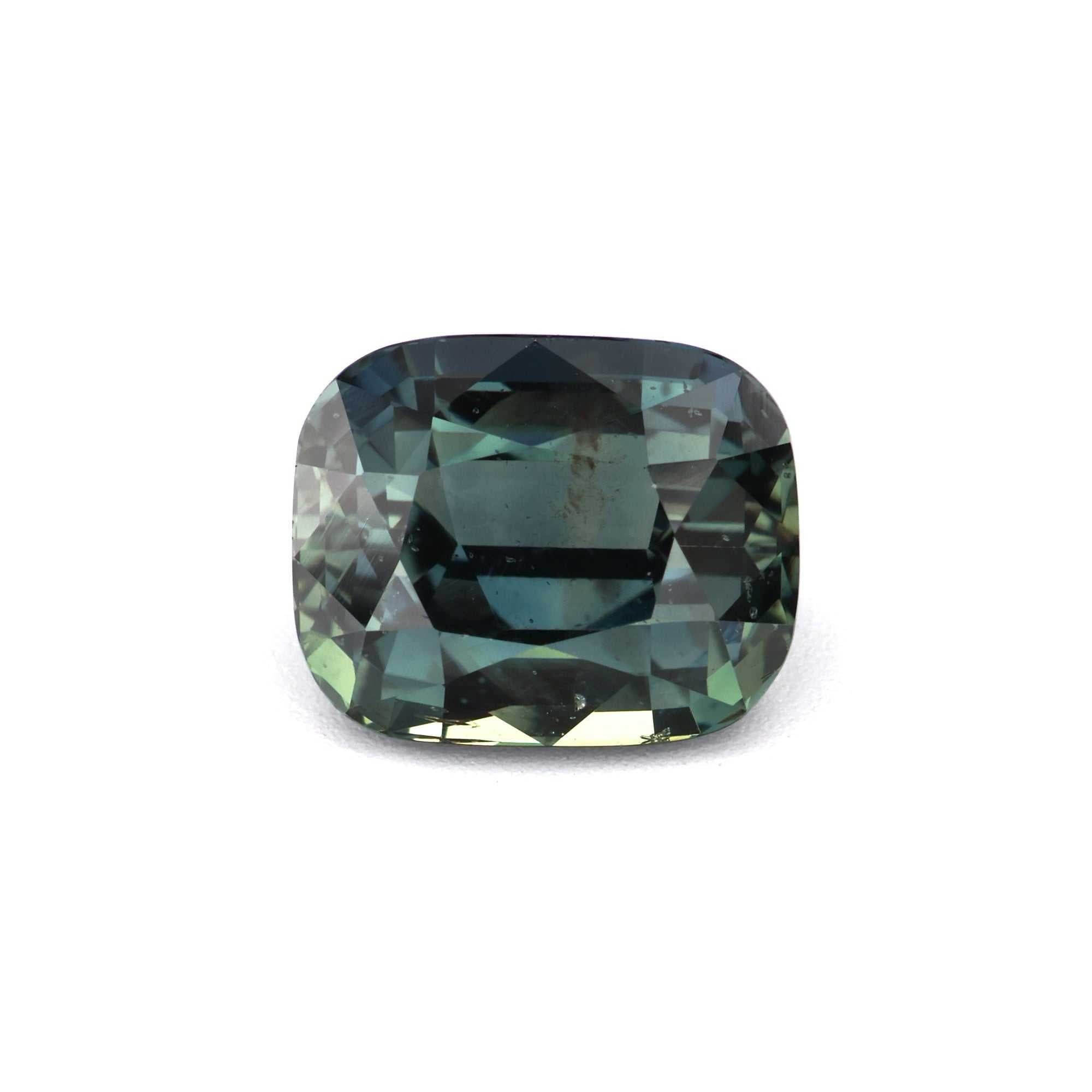
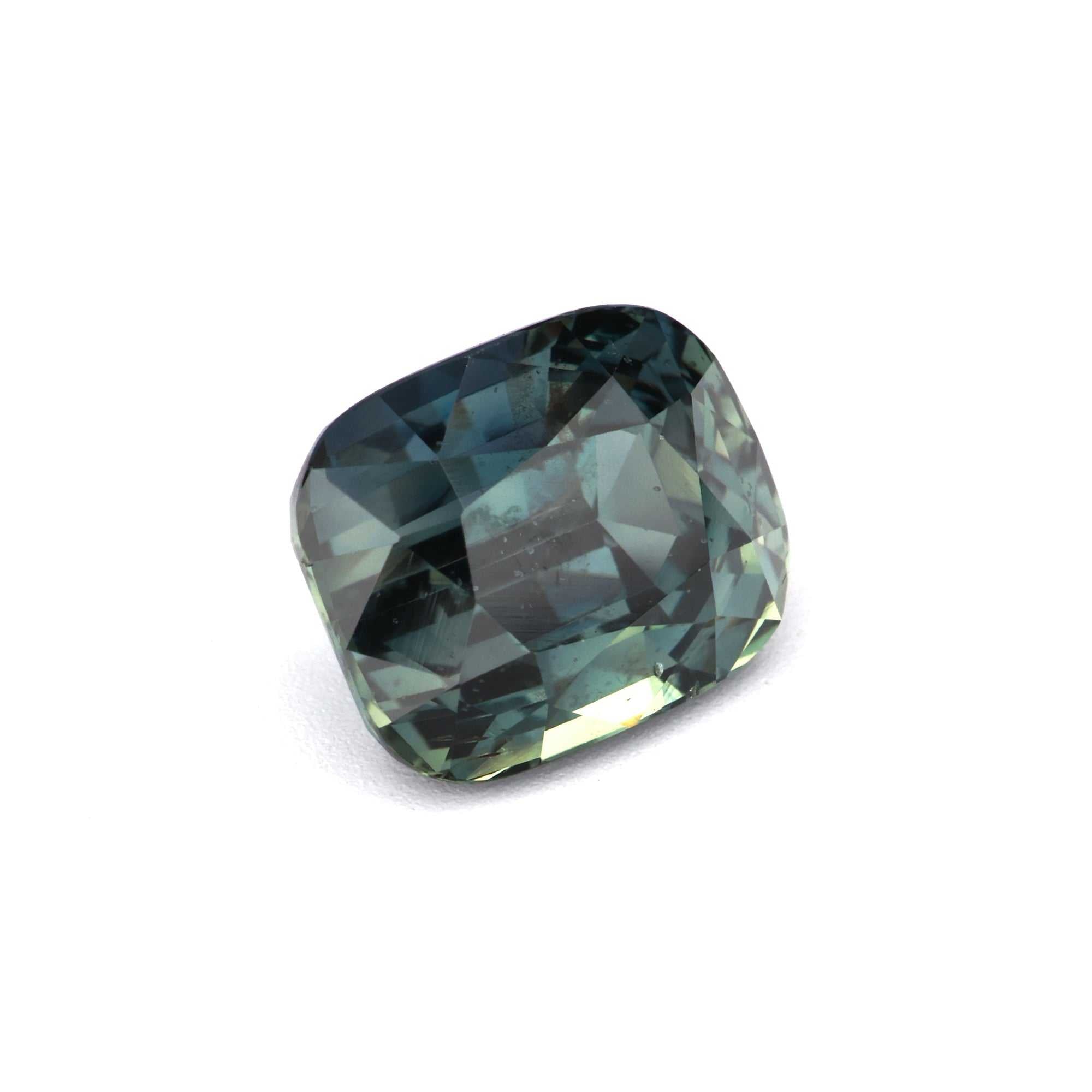
Two at present. A 2.01 ct cushion-cut stone, unheated and untreated, documented on GIA report #1236949156, which we assess as Madagascar origin — GIA origin testing was not requested for it. And a 1.03 ct unheated emerald-cut stone from Sri Lanka, documented by AGCL under report M263506. Both are available through our Try-On program, which we strongly recommend for color-change sapphire, because neither the shift nor the two color positions can be judged from a photograph or a video.
Currently in stock: a 2.01 ct unheated cushion-cut color-change sapphire with a GIA report (#1236949156) and confirmed as true color-change — a saturated greenish-blue in daylight shifting to purple under incandescent light — with Madagascar origin reflecting our own store assessment, as GIA origin testing was not requested for this stone.
Our color-change sapphire collection holds two stones at present: the 2.01 ct unheated cushion above, which we assess as Madagascar origin, and a 1.03 ct unheated emerald-cut stone from Sri Lanka (Ceylon), documented by AGCL under report M263506. Both carry complete treatment and origin disclosure on the listing.
Our Try-On program is strongly recommended for color-change sapphire — the shift, both color positions, and how dramatically the stone changes in your actual living and working environments cannot be assessed from photographs or video. Email crescentgems@gmail.com to arrange. Free US shipping; 14-day returns on every order.
Because color-change is the single easiest sapphire effect to misrepresent, lab confirmation matters most here — see our GIA-documented color-change sapphires.


CG8355


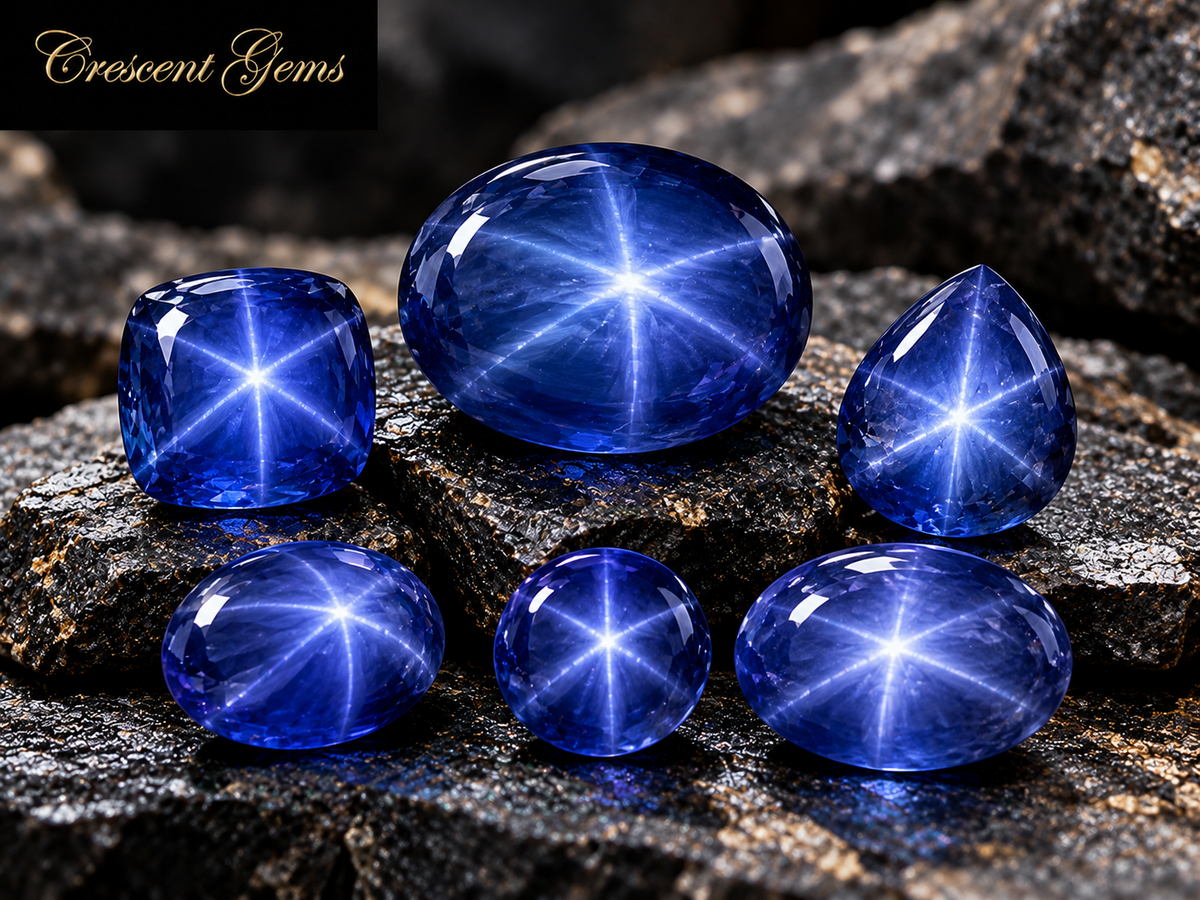
Blue Star Sapphire Price Guide — What They Cost and Why
Read moreabout Blue Star Sapphire Price Guide — What They Cost and Why
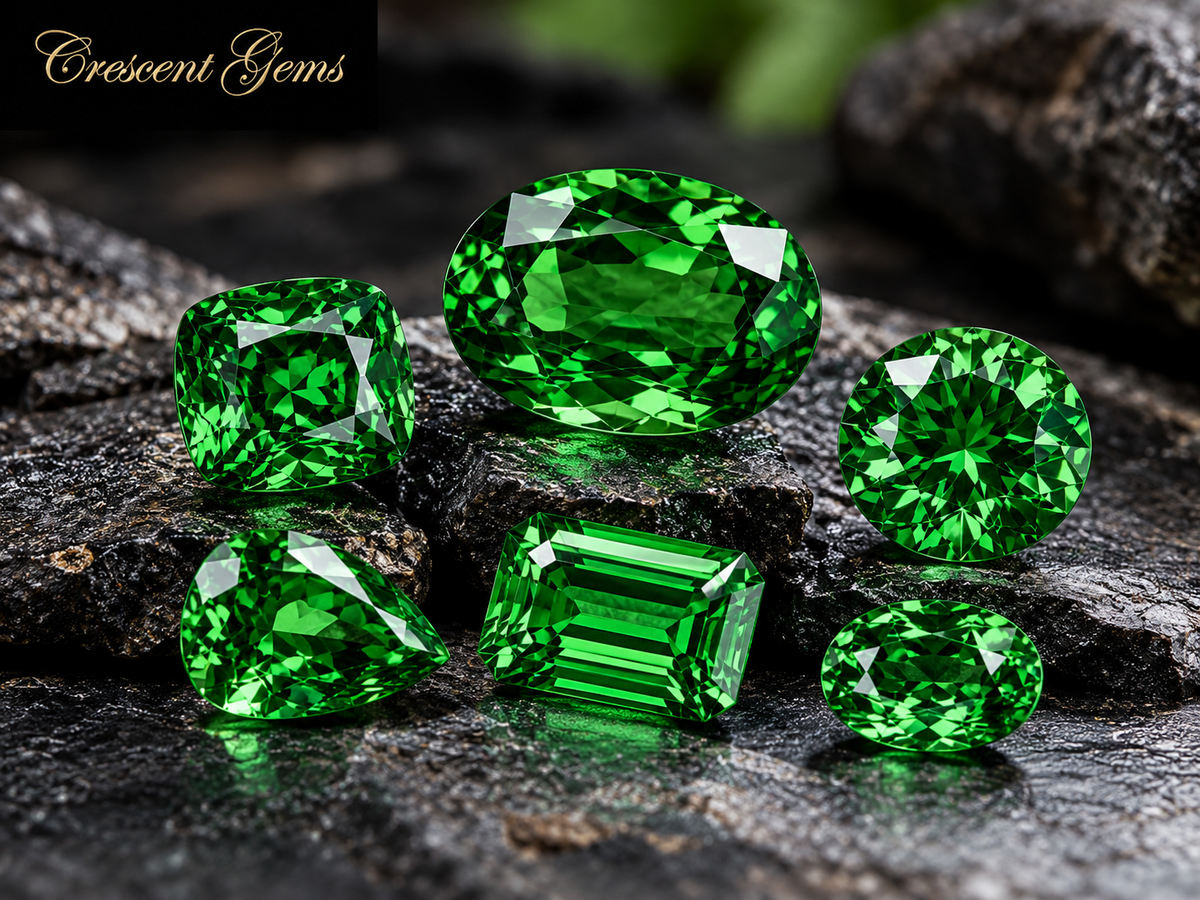
Tsavorite Garnet Price Guide — What They Cost and Why
Read moreabout Tsavorite Garnet Price Guide — What They Cost and Why
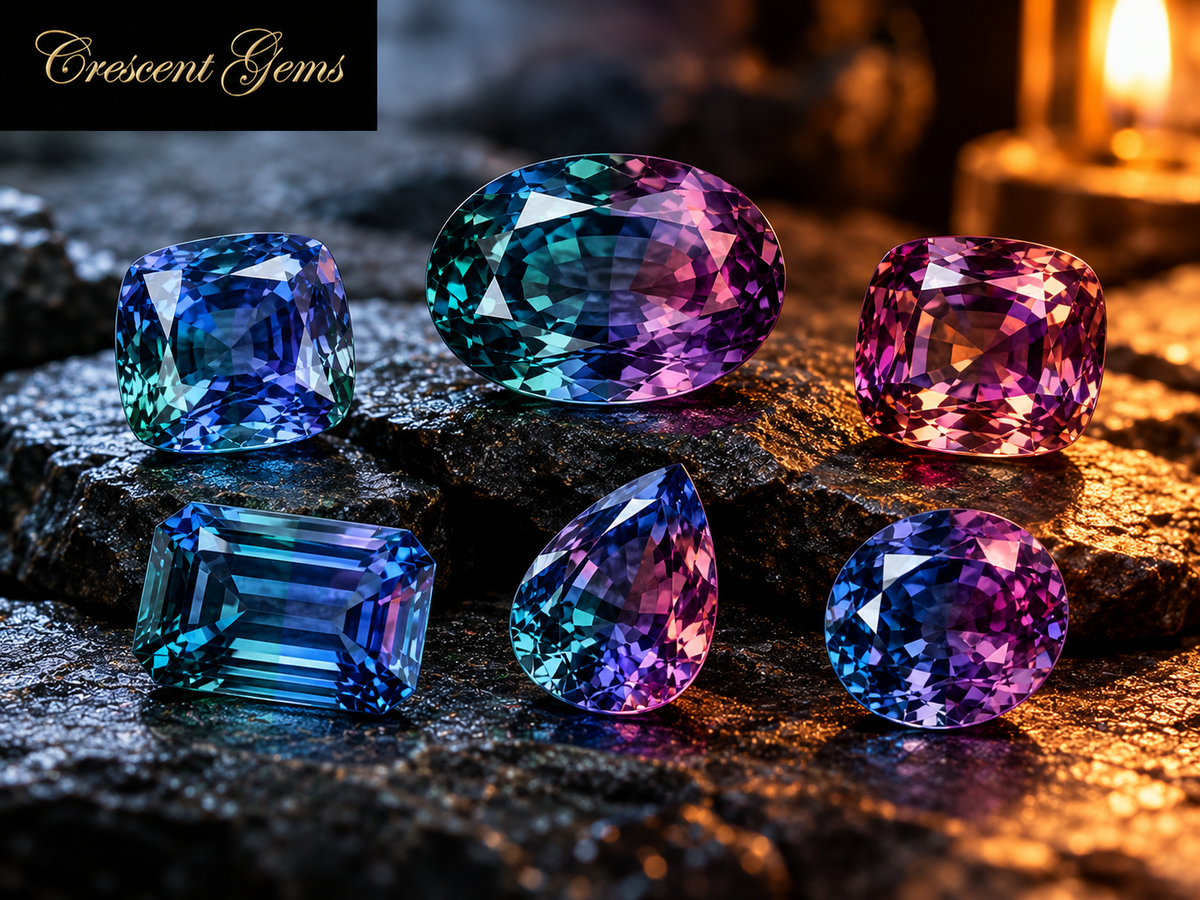
Color-Change Sapphire Price Guide — What They Cost and Why
Read moreabout Color-Change Sapphire Price Guide — What They Cost and Why
Is Cat's-Eye Chrysoberyl Good for an Engagement Ring?
Read moreabout Is Cat's-Eye Chrysoberyl Good for an Engagement Ring?
Cat's Eye Chrysoberyl Price Guide — What They Cost and Why
Read moreabout Cat's Eye Chrysoberyl Price Guide — What They Cost and Why