

- by Ahmed Shareek
How to Read Sapphire Inclusions — What They Tell You About Origin, Treatment, and Quality
- by Ahmed Shareek
We are a supplier from the source in Sri Lanka, so our gemstones reach you direct, without the intermediaries most sellers buy through.
New to buying sapphires? Start with our Ultimate Sapphire Buying Guide. For treatment background: What Is an Unheated Sapphire? For documentation: How to Read a GIA Report.
Sapphire inclusions are the natural internal features of the crystal — growth signatures, foreign minerals, partially healed fractures, and structural features that formed during the stone's creation inside the earth over millions of years. Most buyers treat inclusions as negatives: flaws that reduce clarity and therefore value. Experienced buyers read them differently.
Learning to read inclusions tells you three things that no laboratory report, no seller description, and no photograph can tell you on its own: whether the stone has been heated, where it likely came from, and how it formed. For serious sapphire buyers — particularly those evaluating unheated stones, investment-grade material, or high-value stones where treatment claims are commercially significant — inclusions are information, not just flaws.
This guide covers every major inclusion type found in sapphire, what each looks like under magnification, what it tells you about treatment and origin, and how inclusions interact with value. Browse our unheated sapphire collection and full sapphire catalog.
In diamonds, inclusions are almost universally negative — they reduce clarity grade and therefore value on a well-defined scale. Sapphire is fundamentally different. In sapphire, certain inclusions are diagnostic evidence. They are how gemological laboratories determine heat treatment status and geographic origin. They are the mineralogical fingerprint of the geological environment where the crystal grew.
This creates a counterintuitive situation that every serious sapphire buyer needs to understand: a stone with minor rutile silk that is invisible to the naked eye but clearly present under magnification — and therefore diagnostic of unheated status — is more valuable than a visually cleaner stone of the same size and color that has been heated. The inclusion adds value because it documents authenticity. The absence of inclusions, in this context, can be evidence of heat treatment rather than evidence of quality.
Understanding inclusions is therefore not just about clarity assessment. It is about reading the stone's history.
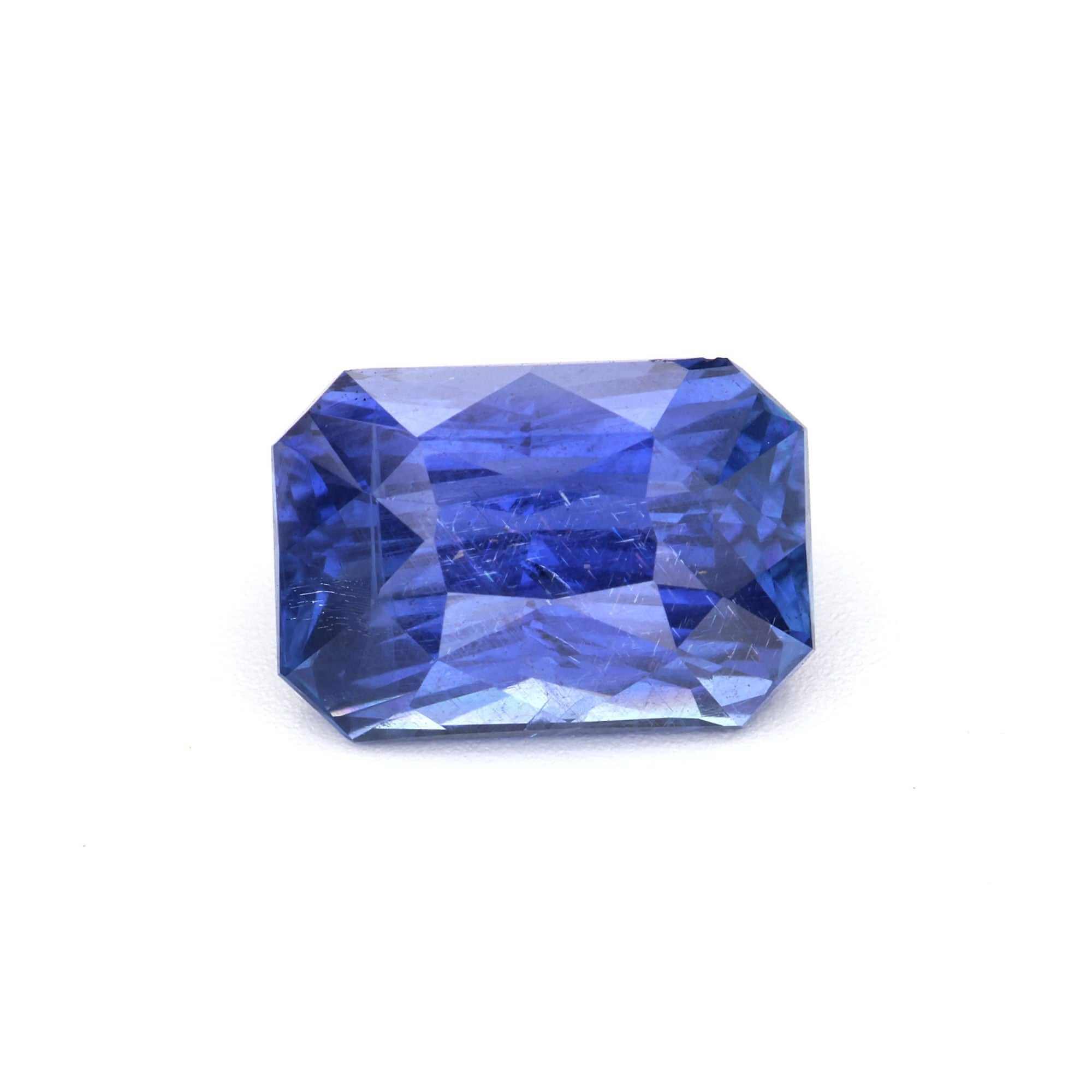
Rutile silk is the single most diagnostically significant inclusion in sapphire. It appears as fine, needle-like titanium dioxide crystals arranged in three directions at 60-degree angles to each other, producing a shimmering, silky appearance in the body of the stone when viewed under magnification. In blue sapphire, the silk often has a slightly reflective, almost metallic quality. In pink and yellow sapphires, it may appear finer and more delicate.
Intact, well-developed rutile silk is the clearest single indicator of an unheated sapphire available to a gemologist. Heat treatment at the temperatures used in commercial sapphire heating (typically 1,200°C–1,800°C) dissolves rutile silk. In a stone that has been fully heat treated, the silk either disappears entirely or transforms into small rounded crystals, discoid inclusions, or diffuse halos — all of which are characteristic of dissolved rutile rather than intact growth needles. The difference under magnification is unmistakable to a trained eye.
| What You See Under Magnification | What It Indicates | Treatment Implication |
|---|---|---|
| Sharp, fine, intact needles in 3 directions at 60° | Intact rutile silk — as grown in the crystal | Strong indicator of unheated status |
| Absent silk in a stone that should have it by origin type | Silk likely dissolved by heat | Indicator of heat treatment |
| Diffuse halos or rounded crystals instead of needles | Dissolved or partially dissolved rutile | Indicator of heat treatment |
| Needles present but with stress fractures around them | Thermal shock damage around inclusions | Strong indicator of heat treatment |
| Silk present but shortened or interrupted | Partial dissolution — stone may have been lightly heated | Possible light heat treatment |
The density, character, and arrangement of rutile silk varies by origin. Ceylon (Sri Lanka) sapphires typically display well-developed, dense rutile silk that, when present in very high quantities aligned perpendicular to the c-axis, produces the asterism seen in star sapphires — also always from Sri Lanka in the finest examples. Burmese sapphires may show finer silk. Kashmir sapphires — the benchmark for quality — often show a distinctive soft, velvety internal character partly attributable to their fine silk distribution. These differences are part of the origin-determination analysis performed by GIA, Gübelin, and SSEF.
For the complete explanation of why intact silk confirms unheated status and why its dissolution proves heat treatment, see our How Sapphire Heat Treatment Works guide.
Fingerprint inclusions are partially or fully healed fractures within the crystal that became sealed during the stone's growth, trapping tiny amounts of fluid or gas in a pattern that, under magnification, resembles a human fingerprint or lace-like veil. They form when a fracture develops in the crystal and then heals — a natural process that can happen multiple times during a crystal's millions of years of growth.
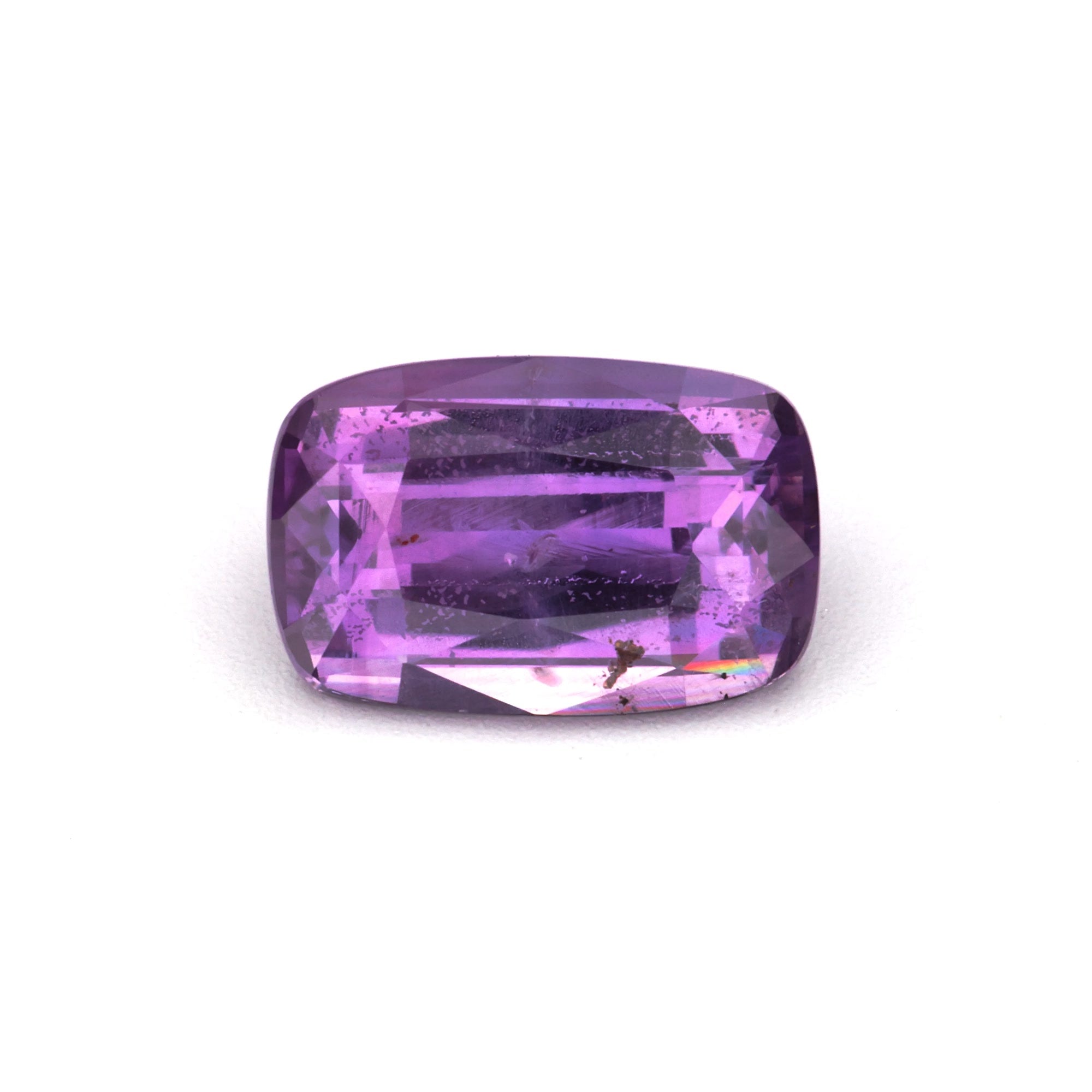
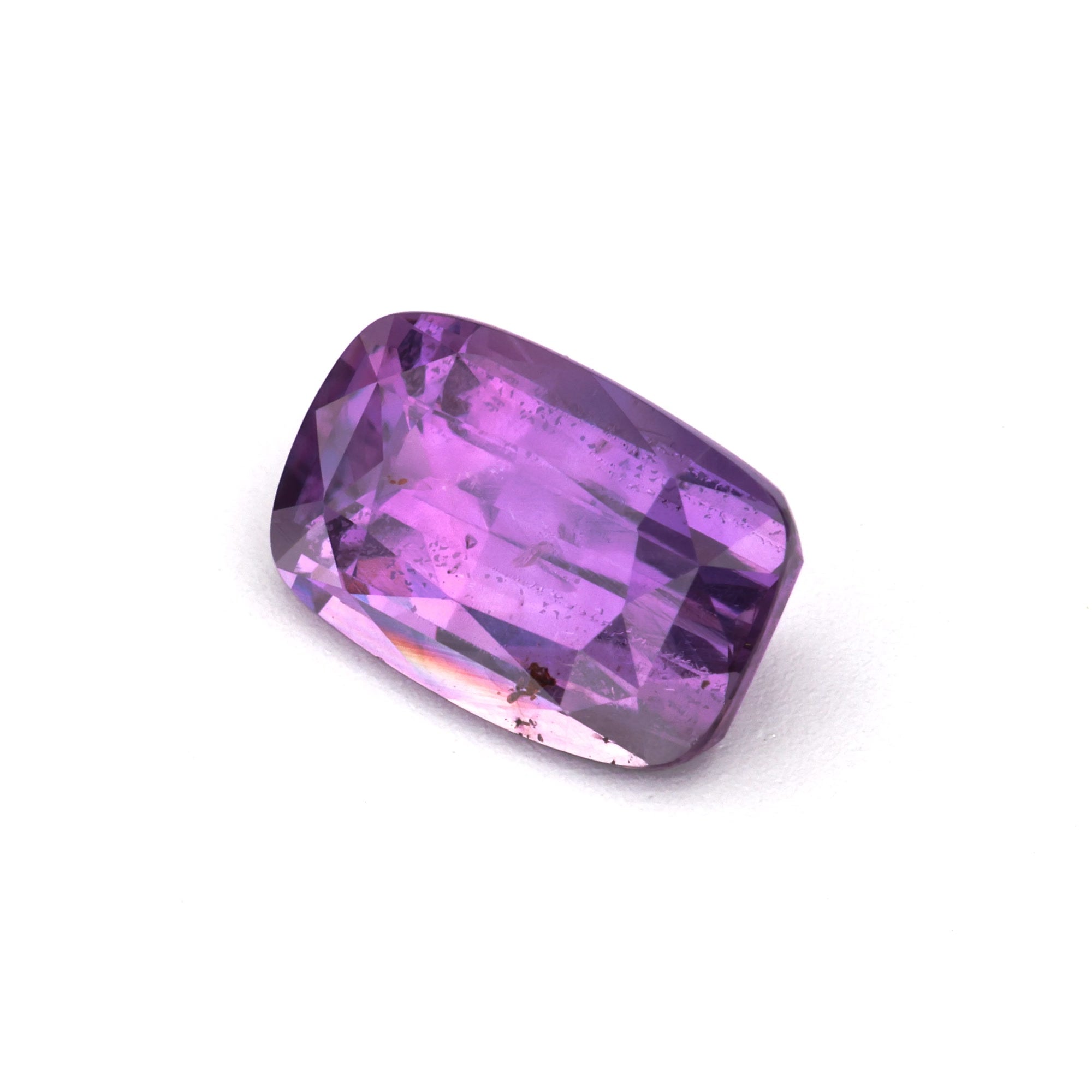
The character of fingerprint inclusions changes dramatically after heat treatment. In an unheated sapphire, fingerprints typically appear as clean, well-defined fluid inclusions in a veil-like pattern with clear boundaries. After heating, the fluid inclusions within the fingerprint may crystallize, develop stress halos around them, or show characteristic physical changes caused by the pressure and temperature of the heating process. Gemologists examine the nature of fingerprint inclusions — the sharpness of their boundaries, the presence or absence of stress features around them, and the state of any trapped inclusions within the fingerprint — as a key diagnostic indicator in treatment determination.
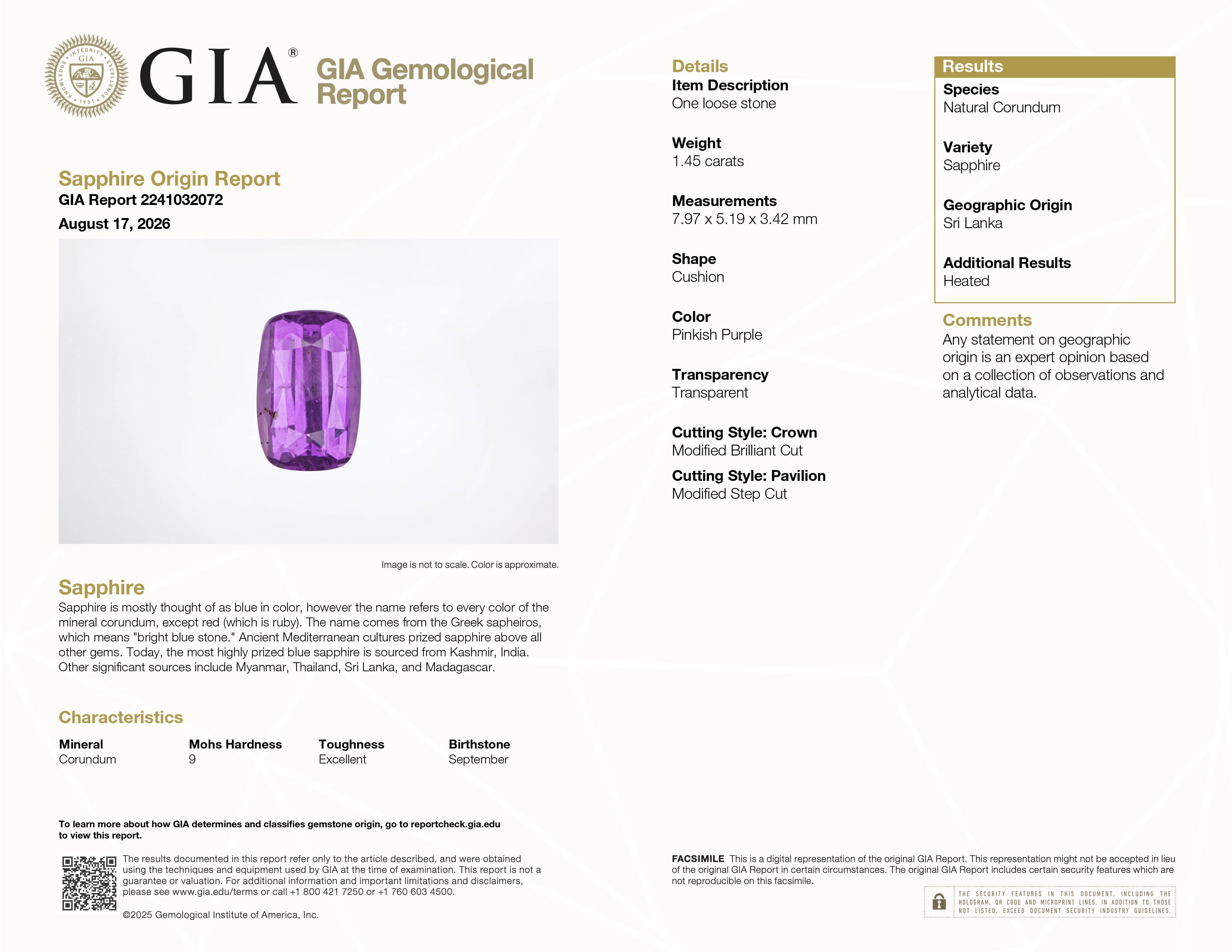
Fingerprints are one of the inclusion types most carefully scrutinized in GIA's treatment analysis. The presence of specific stress features around fingerprint inclusions is strong evidence of heating. See our How to Read a GIA Report guide for how the lab communicates its findings.
Sapphires can contain tiny crystals of other minerals that grew alongside the corundum during formation. These solid inclusions are among the most powerful origin-determination tools available to gemological laboratories because different geological environments produce different mineral assemblages. Specific inclusions are diagnostic of specific origins.
Zircon is one of the most characteristic and reliably diagnostic inclusions in Ceylon (Sri Lanka) sapphire. Zircon crystals appear as small, often rounded or irregular crystals surrounded by a distinctive circular stress fracture called a halo or tension crack. The halo forms because zircon undergoes radioactive decay over geological time, causing it to expand and fracture the surrounding corundum. These zircon-with-halo inclusions are so strongly associated with Ceylon origin that their presence is one of the primary indicators used by GIA and Gübelin to assign Sri Lanka origin on a colored stone report. When you see a zircon halo in a sapphire under magnification, you are almost certainly looking at a Ceylon stone.
Calcite and other carbonate mineral inclusions are commonly associated with sapphires from Burma (Mogok), where the sapphires formed in a marble-hosted geological environment. Calcite is white and appears as small white or colorless crystals. Its presence in a sapphire is a strong indicator of Mogok or similar marble-hosted origin. Marble-hosted sapphires from Burma tend to be high-fluorescence, strongly saturated blue and pink, and are frequently unheated — the same geological environment that hosts the calcite also produces the fine color that doesn't require enhancement.
Specific feldspar types and distinctive rutile arrangements are associated with sapphires from Madagascar and Montana. Madagascar's two geological zones — metamorphic and basaltic — produce different inclusion assemblages: metamorphic-zone Madagascar sapphires may resemble Ceylon material, while basaltic-zone material has different characteristics. Montana sapphires from the Yogo Gulch deposit are notably inclusion-free, which is itself a diagnostic characteristic — the absence of common inclusions in a blue sapphire of specific color character is part of what identifies Yogo material.
Apatite crystals, tiny spinel octahedra, and pyrite crystals can all appear as inclusions in sapphires from various origins. Each carries geological information: spinel and corundum forming together is consistent with specific metamorphic environments; pyrite is associated with certain East African deposits. Gemologists build an overall mineralogical picture from multiple inclusion types together rather than relying on any single inclusion as a definitive origin marker.
| Inclusion Type | Appearance Under Magnification | Origin Association | Treatment Relevance |
|---|---|---|---|
| Rutile silk (intact) | Fine needles in three directions at 60°; silky sheen | Ceylon, Burma, Kashmir | Strong indicator of unheated status |
| Rutile silk (dissolved) | Halos, rounded crystals, diffuse zones | Any heated origin | Strong indicator of heat treatment |
| Fingerprint inclusions | Lace-like veils of fluid inclusions; healed fractures | All origins | Stress halos around them indicate heating |
| Zircon with stress halo | Small crystal with circular fracture ring around it | Ceylon (Sri Lanka) — highly diagnostic | Not directly treatment-relevant |
| Calcite crystals | White/colorless crystals; often cleavable | Burma (Mogok) — marble-hosted | Not directly treatment-relevant |
| Apatite | Colorless to pale crystals; hexagonal form | Various; common in Ceylon | Not directly treatment-relevant |
| Spinel octahedra | Tiny dark or colorless 8-sided crystals | Ceylon; metamorphic origins | Not directly treatment-relevant |
| Pyrite | Bright metallic cubic crystals | East Africa; some Madagascar | Not directly treatment-relevant |
| Negative crystals | Empty cavities in the shape of a crystal | All origins | May show evidence of heating if reopened |
| Color zoning | Bands or patches of stronger/weaker color | All origins; common in Ceylon | Heating can modify or diffuse color zoning |
Color zoning is not an inclusion in the traditional sense — it is a variation in color within the crystal caused by fluctuations in trace element concentration during growth. In blue sapphire, zoning appears as bands or patches of more and less intense blue. In multicolor sapphires, it can produce distinct color sectors. Color zoning is extremely common in natural sapphire and is itself a sign of natural growth.
Heat treatment modifies color zoning. In an unheated stone, color zones have sharp boundaries that reflect the crystal growth layers precisely. After heating, these boundaries can become diffuse as the trace elements responsible for color redistribute at high temperature. Very sharp, well-defined color zoning in a stone is therefore consistent with unheated status; unusually diffuse or uniform color can be a consequence of heat treatment. This is a subtle but recognized diagnostic feature used in conjunction with other indicators.
Not all inclusions are information-bearing in the treatment and origin sense. Many sapphires contain fractures (also called feathers), surface-reaching breaks, chips, and other clarity features that affect transparency and appearance without being diagnostically useful for treatment determination. These are assessed in the traditional clarity sense — how visible are they face-up, do they affect durability, and do they reduce the stone's commercial appeal?
The key distinction for buyers:
For more on how treatments other than standard heat affect sapphires, see our Beryllium Diffusion Explained guide.
The relationship between inclusions and value in sapphire is more nuanced than in diamond, and understanding it separates informed buyers from uninformed ones. Here is the framework:
| Inclusion Scenario | Effect on Value | Why |
|---|---|---|
| Intact rutile silk, invisible face-up, in an unheated stone | Increases value | Documents unheated status; the inclusion is the evidence |
| Dissolved rutile (halos), no silk in a heated stone | Reduces value vs. unheated equivalent | Stone has been treated; commands heated pricing |
| Zircon halo in a Ceylon sapphire | Neutral to slightly positive (origin confirmation) | Supports Ceylon origin determination on GIA/Gübelin report |
| Eye-visible fractures or feathers in the face-up view | Reduces value | Affects beauty; classic clarity deduction |
| Surface-reaching fractures | Reduces value more significantly | Durability concern plus appearance |
| Fracture-filled inclusions (glass, flux) | Large discount; treatment disclosure required | Unstable treatment; significant misrepresentation risk |
| Minor internal fractures invisible face-up | Minor or no effect | Standard in colored stones; eye-clean is the benchmark |
| Dense silk producing strong star in a star sapphire | Dramatically increases value | Silk creates the asterism phenomenon; it IS the value |
The core insight: in sapphire, the presence of specific inclusions can be the most valuable thing about the stone — because they prove it has never been altered. This is the opposite of how most buyers initially think about inclusions, and it is one of the key conceptual shifts that separates collectors from casual buyers.
A gemological microscope at 10x–40x magnification is the proper tool for inclusion analysis. That said, a 10x loupe — the standard hand magnifier used by gemologists — can reveal rutile silk, fingerprints, zircon halos, and crystal inclusions in many stones with practice.
For laboratory-level inclusion analysis confirming treatment status, there is no substitute for GIA, Gübelin, or SSEF examination. A loupe is a useful starting point for initial evaluation; a laboratory report is the authoritative determination.
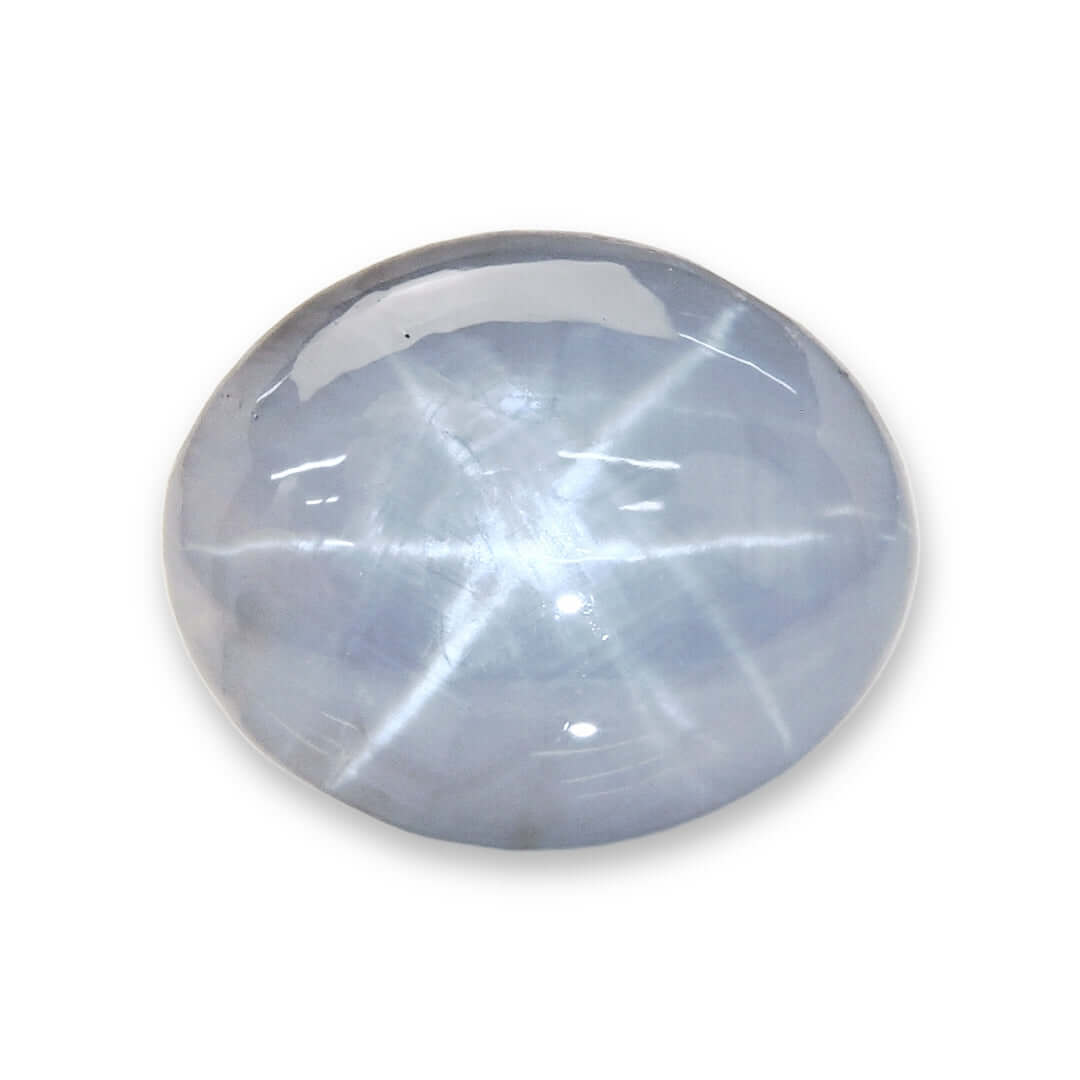
Star sapphires represent the most dramatic example of inclusions adding rather than subtracting value. The asterism that defines a star sapphire — the six-rayed (or twelve-rayed) star of light that appears when the stone is illuminated from above — is caused entirely by dense rutile silk aligned perpendicularly to the crystal's c-axis. The silk is present in such high concentration that it reflects light in a star pattern rather than simply creating a sheen.
A star sapphire without its rutile silk has no star. The silk is the phenomenon. The value of the stone depends entirely on the quality of the star it produces — the sharpness of the rays, the centering over the dome, and whether all six rays are complete and of equal length. Example from our collection: an 8.09 ct GIA-documented unheated blue Ceylon star sapphire at $4,040 (view). And star sapphires are usually unheated, because strong heat dissolves the rutile silk that creates the star. But that is a tendency rather than a guarantee: gentler controlled heating is sometimes applied to star material, and titanium diffusion can induce or strengthen a star at the surface. The presence of a star is not by itself proof that a stone was never heated — the report is.
See our Star Sapphire Complete Buyer's Guide and browse our natural star sapphire collection.
GIA, Gübelin, and SSEF gemologists examine inclusions as part of a multi-technique analysis that also includes UV-Vis spectroscopy, fluorescence analysis, and in some cases LA-ICP-MS trace element analysis. Inclusions are one pillar of the determination, not the sole basis for it. The specific workflow:
The final treatment and origin determination is based on the convergence of multiple analytical techniques. No single inclusion type is conclusive on its own, but intact rutile silk combined with appropriate spectroscopic findings is considered very strong evidence of unheated status. See our How to Read a GIA Sapphire Report guide for how these findings are communicated on the actual document.
Inclusions are natural internal features of the crystal — other minerals, partially healed fractures, growth features, and structural characteristics that formed during the sapphire's creation inside the earth. They are the mineralogical record of the stone's geological history.
It depends on the inclusion type and its visibility. Eye-visible fractures or clarity features that affect the face-up appearance reduce value. But certain inclusions — particularly intact rutile silk in an unheated stone — can increase value because they provide evidence of unheated status, which commands a significant premium. In sapphire, inclusions are information, not just flaws.
Rutile silk is fine titanium dioxide needle crystals arranged in three directions at 60-degree angles within the corundum crystal. Intact silk is one of the clearest indicators of an unheated sapphire — heat treatment at gemological temperatures dissolves the silk, transforming it into halos and rounded crystals rather than sharp needles.
Intact rutile silk, clean fingerprint inclusions without stress halos, and the absence of heat-related crystal damage around inclusions are all indicators of unheated status. GIA and other laboratories examine these features under magnification as part of their multi-technique treatment analysis. No single inclusion type is conclusive alone, but the combination of microscopic evidence with spectroscopic analysis produces reliable treatment determinations.
Zircon crystals surrounded by circular stress halos (called tension cracks) are among the most diagnostic inclusions for Ceylon origin. They appear in sapphires from Sri Lanka's metamorphic gem belt and are a primary indicator used by GIA and Gübelin in origin determination. Combined with characteristic spectroscopic fingerprints and other indicators, zircon halos strongly support a Ceylon origin assignment.
Calcite and other carbonate inclusions are characteristic of Burmese (Mogok) sapphires, which formed in a marble-hosted geological environment. The presence of calcite crystals, combined with spectroscopic characteristics and other features, supports a Burma origin determination.
No. Some sapphires are naturally eye-clean and unheated — their inclusions are present but too small or well-positioned to be visible to the naked eye. The relevant distinction is whether any inclusions present are consistent with unheated or heated status when examined under magnification, not whether the stone appears clean to the eye.
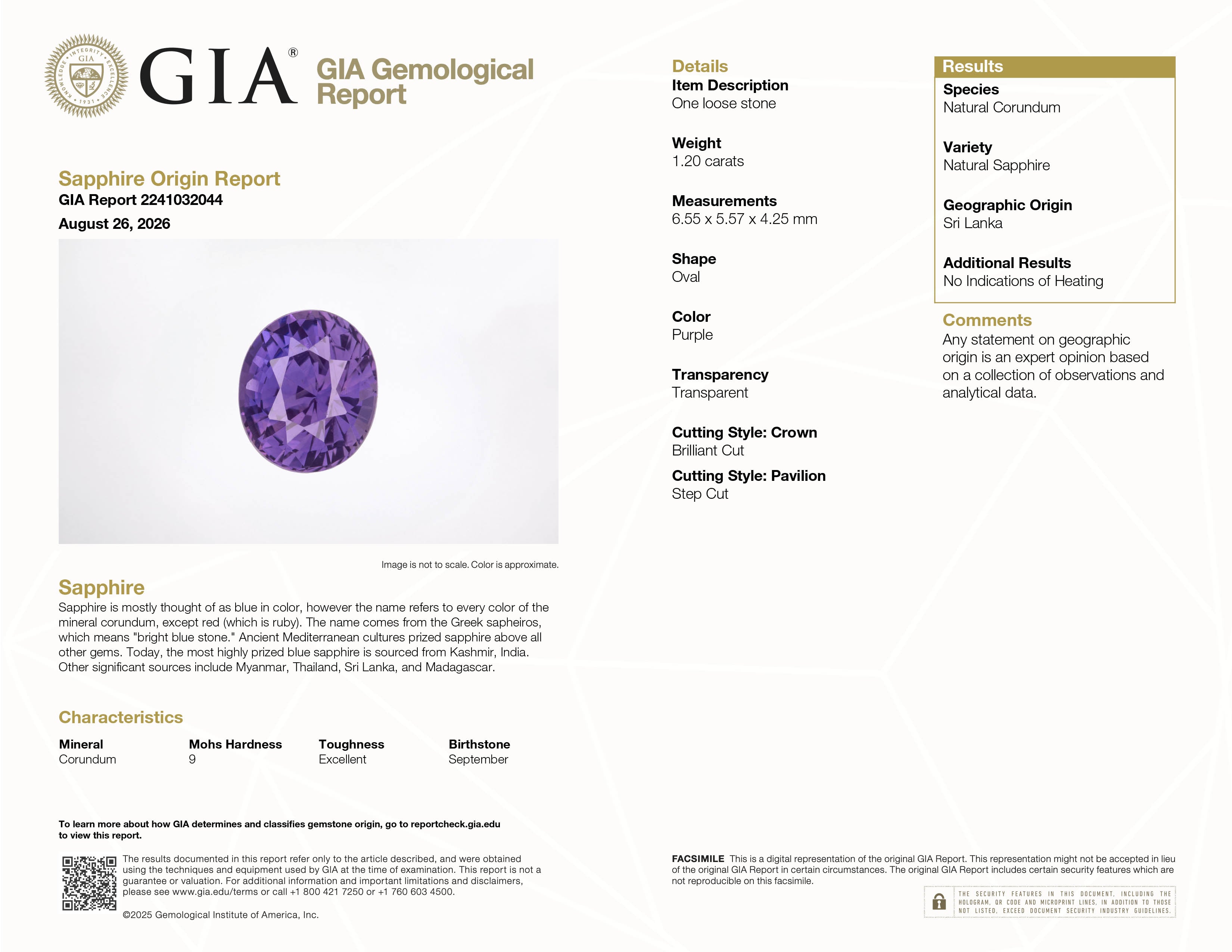
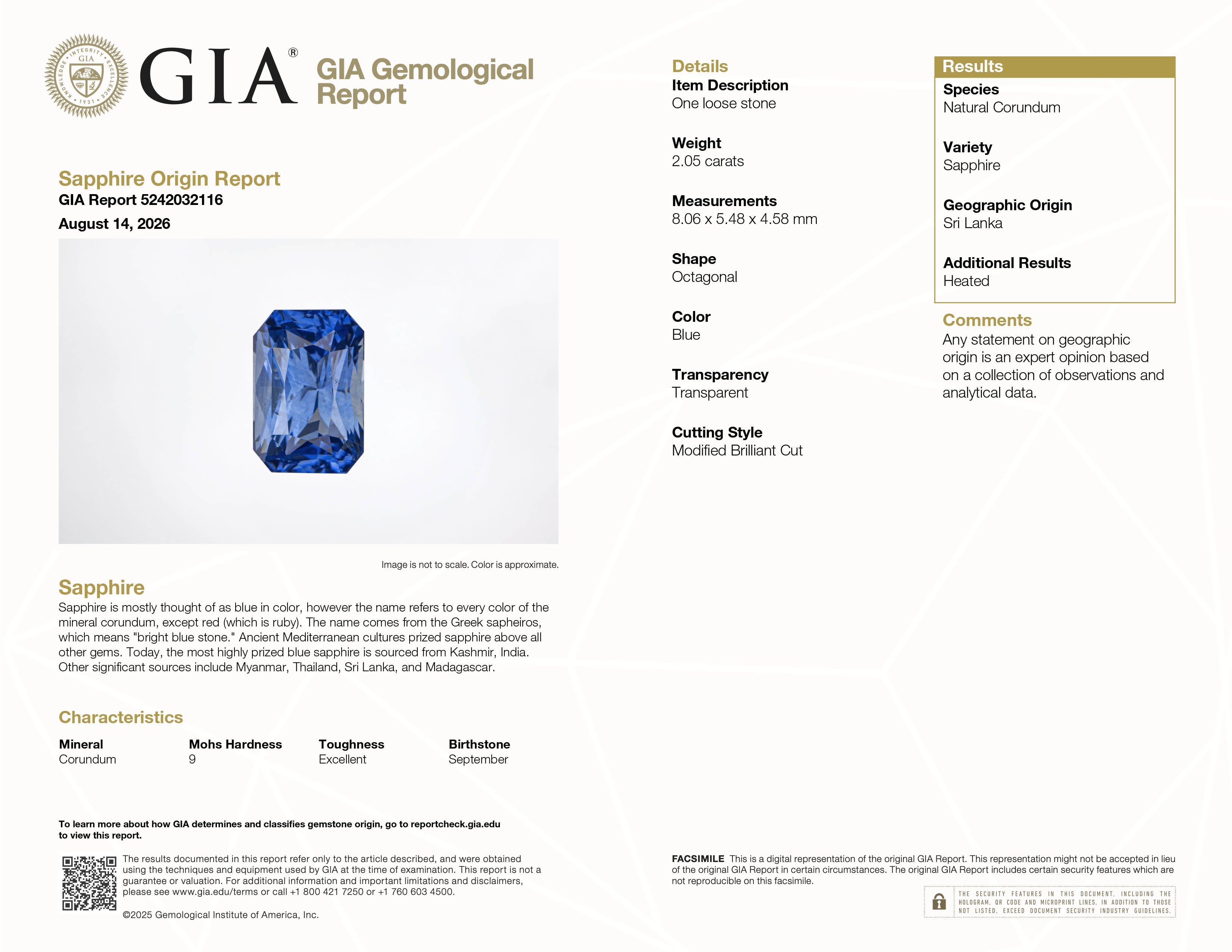
Every unheated sapphire in our catalog is accompanied by laboratory documentation from GIA, Gübelin, or SSEF confirming treatment status. We source directly from Sri Lanka — the origin whose mineralogy produces the most diagnostically rich inclusions and the clearest unheated evidence.
Use our Try Before You Buy program to examine any stone before committing. Email crescentgems@gmail.com with any question about a specific stone's inclusion character, treatment documentation, or origin evidence — we respond within one business day.
Continue Learning
Return to the Ultimate Sapphire Buying Guide for the full picture on colors, origins, shapes, certification, and pricing — everything you need to buy a natural loose sapphire with confidence.

Prices are shown in your local currency and may change.
CG8465
CG8460
CG8456


Blue Star Sapphire Price Guide — What They Cost and Why
Read moreabout Blue Star Sapphire Price Guide — What They Cost and Why
Tsavorite Garnet Price Guide — What They Cost and Why
Read moreabout Tsavorite Garnet Price Guide — What They Cost and Why
Color-Change Sapphire Price Guide — What They Cost and Why
Read moreabout Color-Change Sapphire Price Guide — What They Cost and Why
Is Cat's-Eye Chrysoberyl Good for an Engagement Ring?
Read moreabout Is Cat's-Eye Chrysoberyl Good for an Engagement Ring?
Cat's Eye Chrysoberyl Price Guide — What They Cost and Why
Read moreabout Cat's Eye Chrysoberyl Price Guide — What They Cost and Why

















Share: