- by Ahmed Shareek
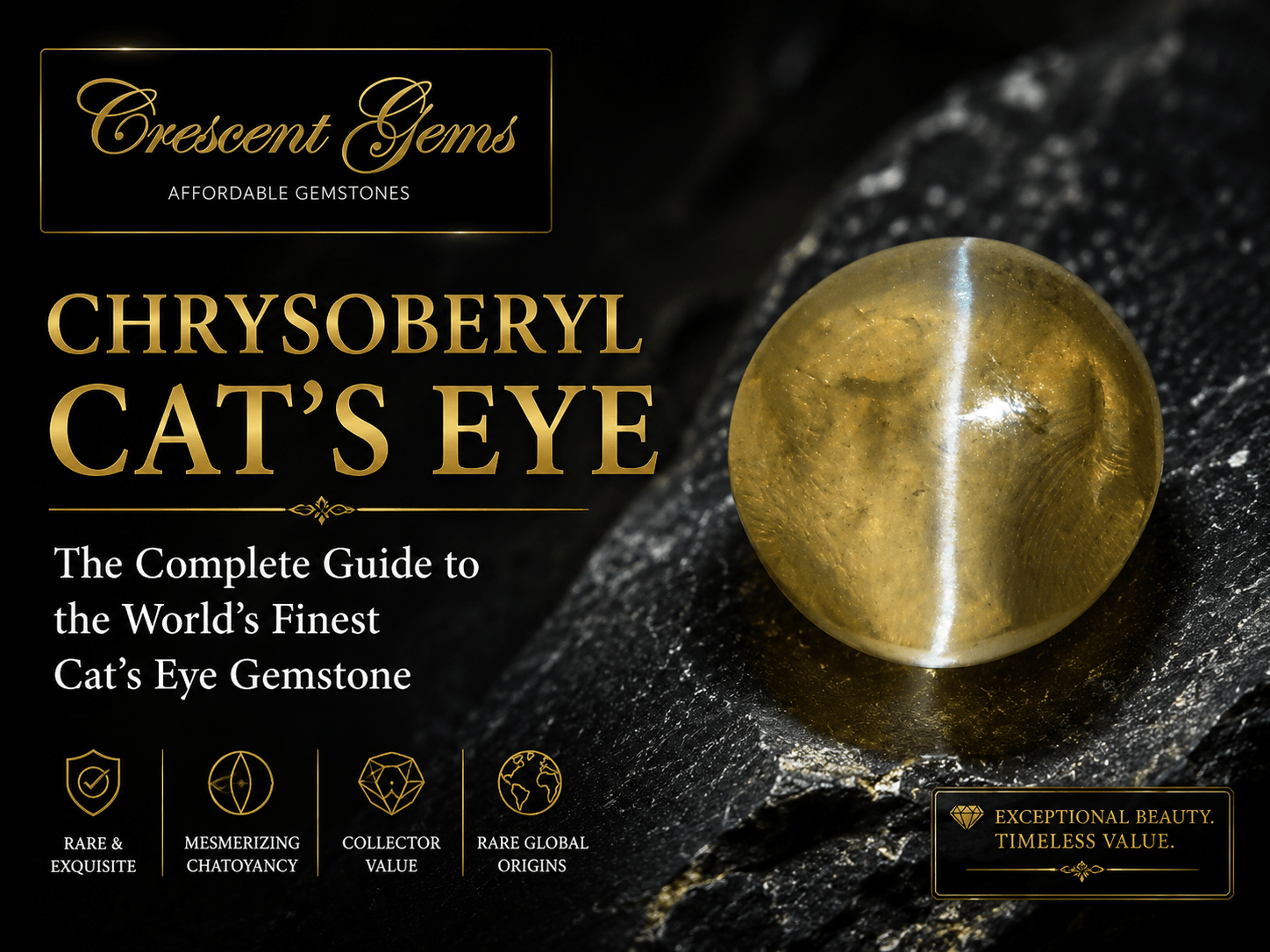
Cat's Eye Chrysoberyl — The Complete Buyer's Guide to the Most Prized Phenomenon Gemstone
- by Ahmed Shareek
We are a supplier from the source in Sri Lanka, so our gemstones reach you direct, without the intermediaries most sellers buy through.
Interested in other phenomenon gemstones? Read our Star Sapphire Guide. For the alexandrite color-change phenomenon: our Color-Change Sapphire Guide. For the Jyotish use of cat's eye: our Jyotish Gemstone Guide.
Cat’s eye chrysoberyl is not a gemstone most buyers encounter before they are ready for it. It is not in the standard engagement ring conversation alongside sapphire, emerald, and diamond. It is not on the first page of results when someone searches for colored stones. It is found by buyers who have been looking for a while — collectors who have worked through the mainstream categories and arrived at phenomenon stones, or Jyotish practitioners who have been prescribed Lahsuniya (cat’s eye) for Ketu and are discovering for the first time what fine chrysoberyl actually looks like.
When they find it, most buyers have the same reaction: they had no idea something like this existed.
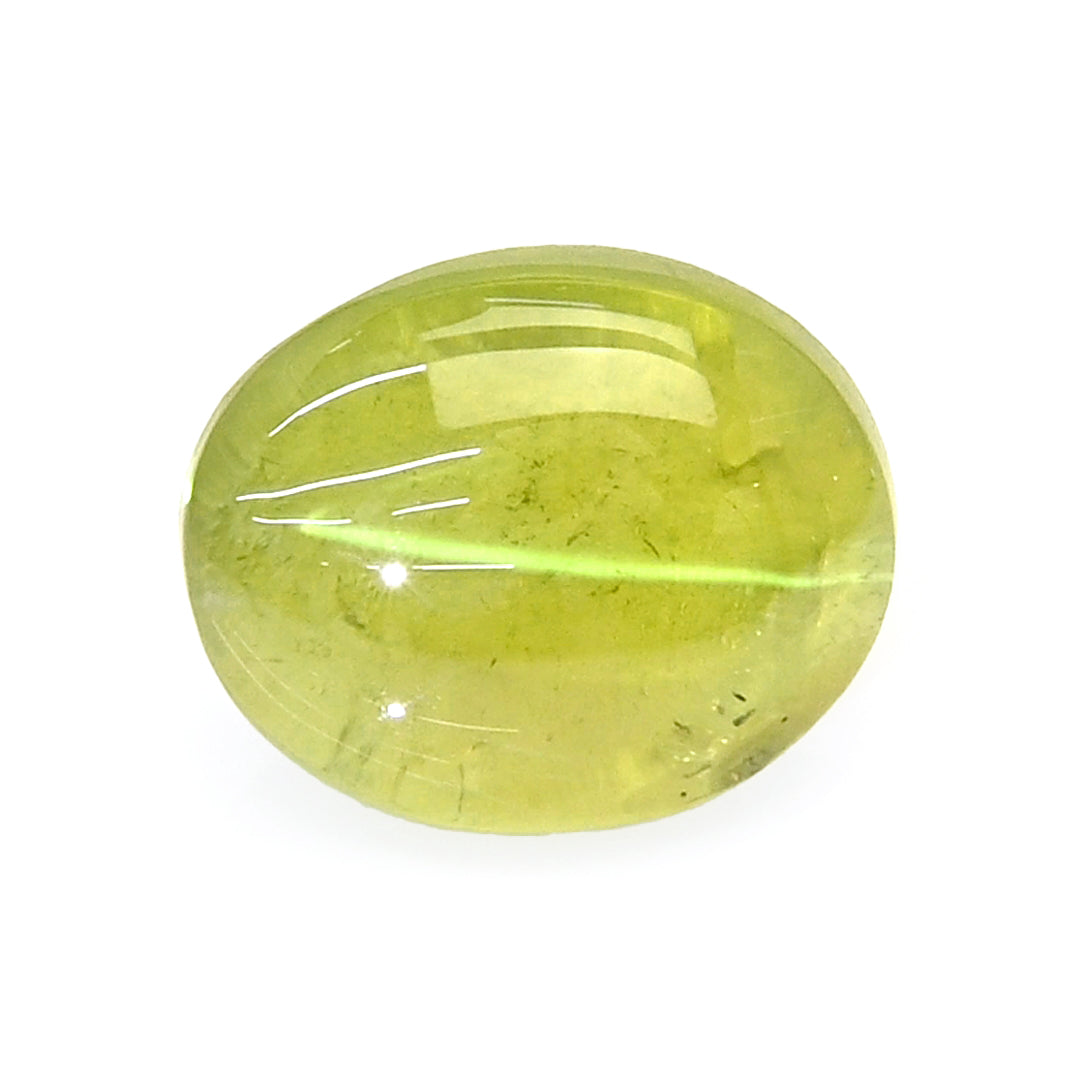
A fine cat’s eye chrysoberyl in strong honey-yellow with the milk and honey effect fully developed — one half of the dome a bright milky white, the other a glowing golden honey, the cat’s eye line sharp and centered above it all — is one of the most extraordinary visual experiences in the natural gemstone world. It is the gemstone equivalent of an optical illusion that happens to be real.
This guide gives you the complete picture: the science, the quality grading, the identification of fine material, the origin differences, the Jyotish dimension, the pricing, and how to buy correctly.
Chrysoberyl is beryllium aluminum oxide (BeAl₂O₄) — a distinct mineral species entirely separate from corundum (sapphire and ruby), beryl (emerald and aquamarine), and garnet. It is one of the harder natural gemstones, with a Mohs hardness of 8.5, exceeded only by corundum (9) and diamond (10). It has no cleavage in the plane relevant to cabochon cutting and is an exceptionally tough stone for daily wear.
Chrysoberyl occurs in three commercially significant varieties:
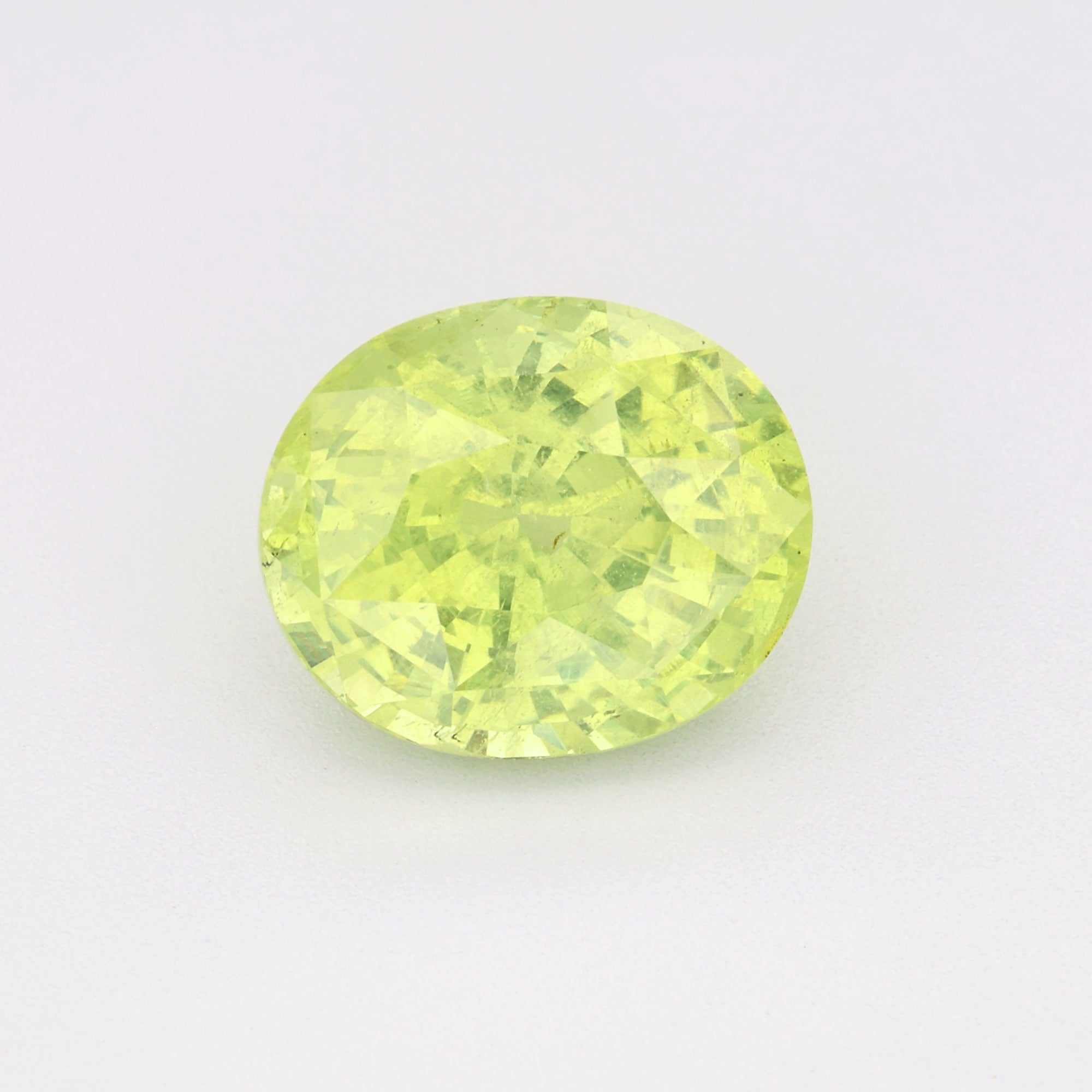
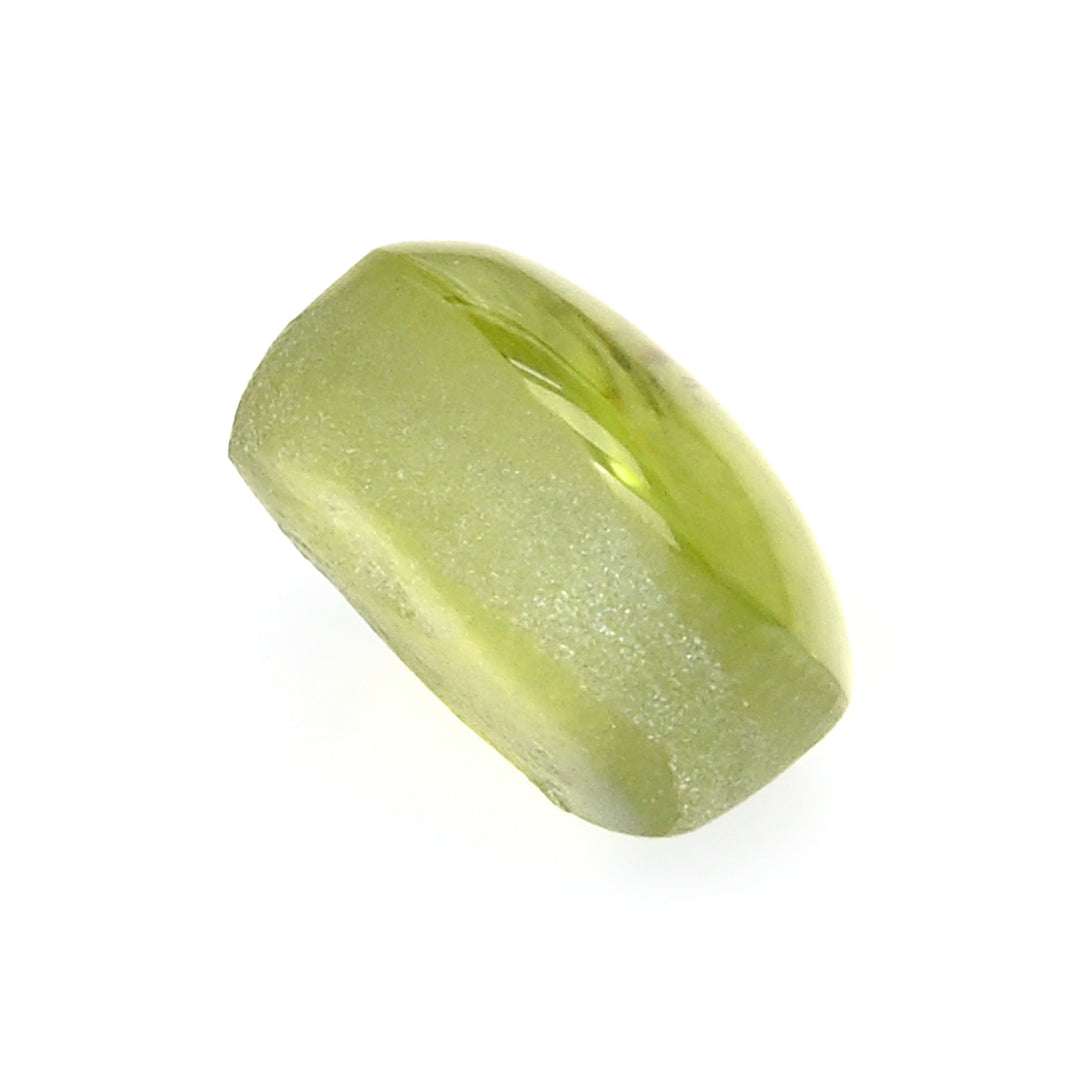
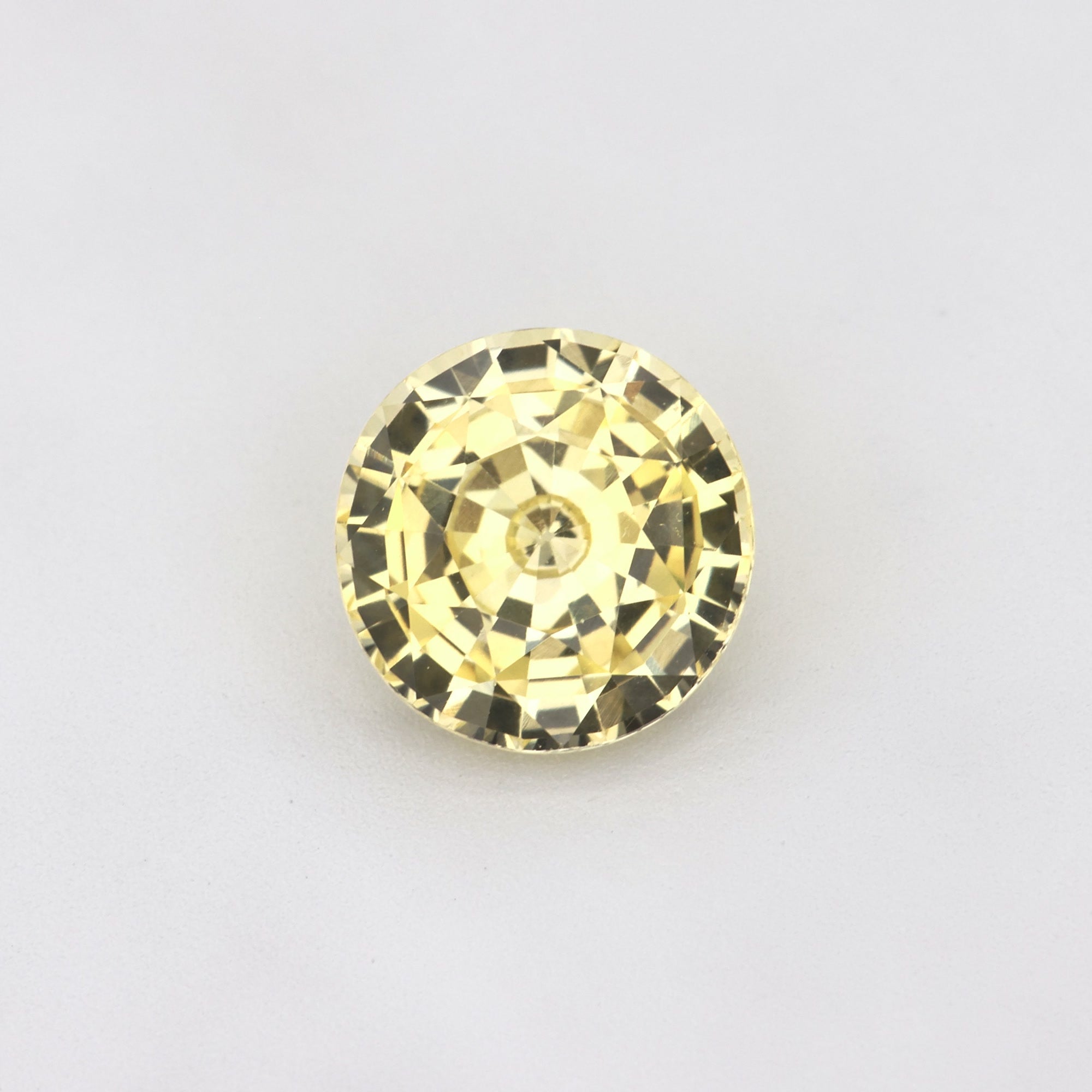
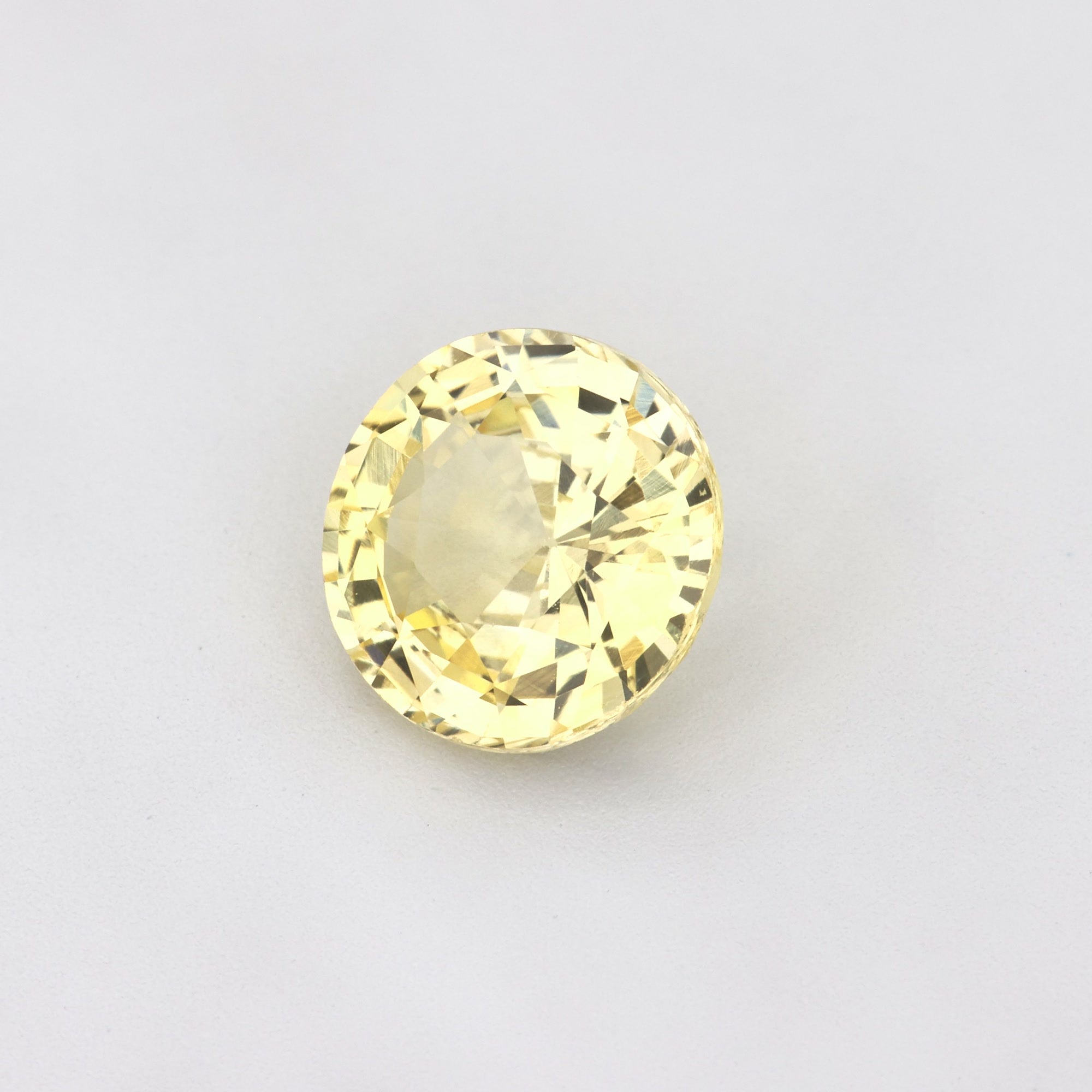
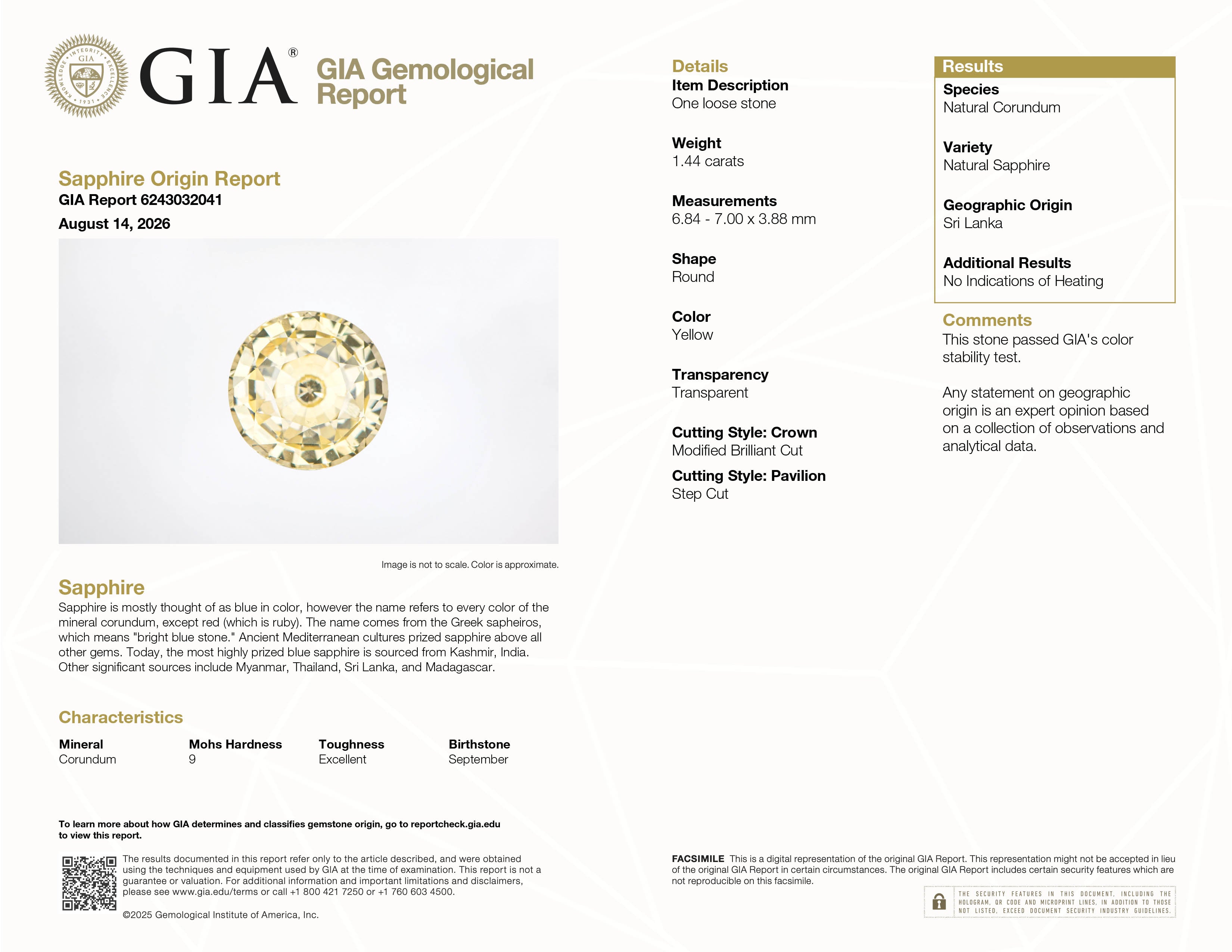
For buyers interested in this third variety rather than the cat’s eye phenomenon: a current in-stock example is this 3.64 ct natural unheated chrysoberyl, GIA-documented (Report #2235922104) — a green-yellow, mixed-cut stone with no chatoyancy, showing chrysoberyl's clean transparency and hardness (Mohs 8.5) without the eye effect that is this guide's main subject.
When gemologists say simply “cat’s eye” without qualification, they mean cat’s eye chrysoberyl specifically. All other chatoyant stones — cat’s eye tourmaline, cat’s eye aquamarine, cat’s eye quartz — must be qualified by their species name. Chrysoberyl alone owns the unqualified term in the gemological tradition, because it is the finest and most prized chatoyant stone in the world.
| Property | Cat's Eye Chrysoberyl |
|---|---|
| Mineral species | Chrysoberyl (BeAl₂O₄) |
| Variety name | Cymophane (when chatoyant) |
| Mohs hardness | 8.5 — third hardest after diamond and corundum |
| Cleavage | Distinct in one plane; not relevant to cabochon orientation |
| Refractive index | 1.745–1.757 |
| Phenomenon | Chatoyancy — a single mobile band of reflected light across the dome |
| Treatment | Rarely treated; color is natural in most material |
| Primary origins | Sri Lanka (Ceylon), Brazil, India, Tanzania |
Chatoyancy is an optical phenomenon caused by the reflection of light off parallel fibrous inclusions within the gemstone. In chrysoberyl, these inclusions are typically hollow growth tubes or fine fibrous rutile needles that grew parallel to the crystal’s long axis during formation. When the crystal contains enough of these parallel inclusions, light reflecting off them creates a single bright line of light perpendicular to the inclusion direction.
The mechanism works as follows:
Each parallel inclusion acts as a tiny mirror, reflecting light in a direction perpendicular to its length. When thousands of parallel inclusions are stacked within the crystal, each reflecting light in the same direction, the combined reflection appears as a single bright band — the cat’s eye. When the stone is tilted, the angle of the reflections changes and the band appears to move across the dome, creating the impression of a living eye opening and closing.
For chatoyancy to work in a cut stone, three conditions must be met:
This is why cat’s eye quality is a joint function of the stone’s natural inclusion density and alignment AND the cutter’s skill in identifying the correct orientation. Fine rough with poorly oriented cutting produces a mediocre cat’s eye; fine cutting of moderately included rough can produce a surprisingly good eye.
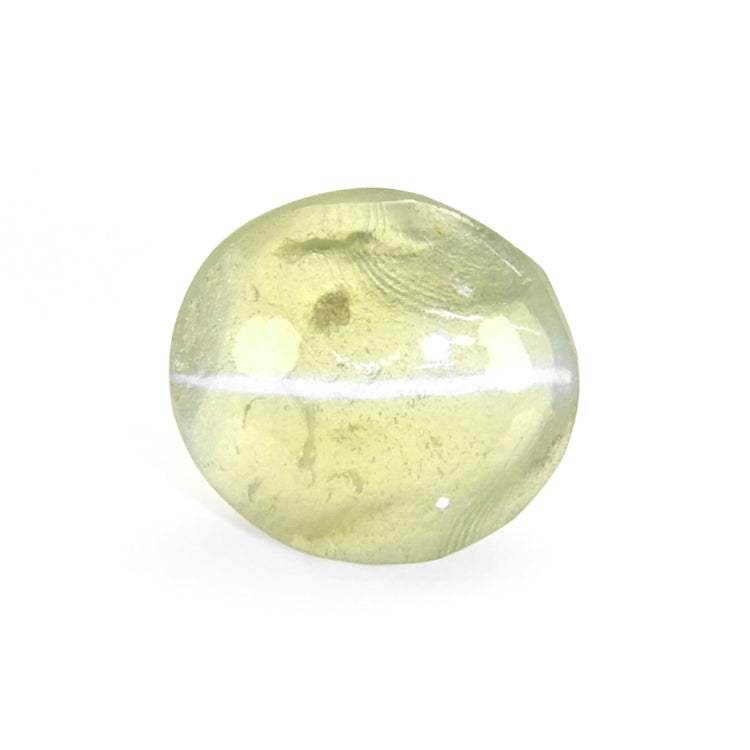
The cat’s eye line should be a single, clearly defined bright band with crisp edges. The sharpest eyes have an almost fiber-optic quality — a bright, razor-thin line of white light that maintains its definition as the stone is tilted. Poorer eyes are broad, diffuse, or interrupted. Eye sharpness is determined by inclusion density and alignment: higher density with better alignment produces sharper eyes. The finest Ceylon material produces the sharpest eyes of any source globally, a reflection of the quality of the fibrous inclusions within Sri Lanka’s chrysoberyl geology.
When a single light source is directed at the stone from directly above, the cat’s eye should appear centered over the crown of the dome. An eye that sits to one side of the dome is decentered — a cutting flaw that reduces quality and value. Some decentering is accepted in the market; significant decentering substantially reduces the stone’s appeal. Good cutters orient the rough carefully to position the eye at the dome’s center before cutting.
The milk and honey effect is the single most reliable indicator of elite quality in cat’s eye chrysoberyl, and understanding it is essential for buyers evaluating fine material.
When a single directional light source is directed at the stone from the side — rather than from above — the dome divides into two visually distinct zones: one half appears milky-white (the illuminated side, where the dense fibrous inclusions scatter and reflect the incoming light back toward the viewer) and the other half appears the stone’s body color — typically golden honey or yellowish-green (the shadowed side, where the body color reads through the translucent inclusions). As the stone is rotated, the two halves switch. The milky side becomes honey; the honey side becomes milky.
This effect requires very high inclusion density — dense enough to scatter and reflect light strongly from the illuminated side while still permitting body color to be read through the inclusions from the dark side. It is the defining marker of elite-grade natural cat’s eye and the experience that collectors pursue at the finest quality levels. A stone without it can still be beautiful; a stone with it fully developed is extraordinary.
How to test for the milk and honey effect:
Cat’s eye chrysoberyl ranges in body color from pale straw through bright golden-yellow through honey-amber to greenish-yellow. The most commercially prized body color is a rich, warm honey or golden-yellow — the color that makes the milk and honey description immediately apt. Greenish-yellow stones are considered less desirable, though fine chatoyancy with a clean greenish body can still be beautiful. Very pale or very dark stones are less prized. In Jyotish use, the ideal body color is specifically described as the color of a ripe mango or a cat’s eye — a warm, rich gold.
Like star sapphire, cat’s eye chrysoberyl must be cut as a cabochon. The dome height is critical: too low and the eye is weak and diffuse; too high and the body color darkens and the stone appears dull. The optimal dome height allows a sharp, well-centered eye to appear clearly while the body color remains vivid and saturated. The base should be as flat as possible to minimize unnecessary weight retention, which inflates carat weight without improving the stone’s appearance.
| Quality level | Eye character | Milk and honey | Body color | Price range (3–5ct) |
|---|---|---|---|---|
| Exceptional | Razor-sharp, perfectly centered, bright | Fully developed; halves switch cleanly | Rich honey-gold | $2,000–6,000 per carat |
| Fine | Sharp, well-centered, clearly defined | Present; partial or less complete | Good honey or golden yellow | $800–2,500 per carat |
| Good | Clearly visible, moderately sharp | Faint or absent | Yellow to yellowish-green | $300–$900 per carat |
| Commercial | Broad, diffuse, or poorly centered | None | Pale or greenish | $50–$300 per carat |
Sri Lanka is the world’s most significant and most historically prestigious cat’s eye chrysoberyl source. The specific geology of Sri Lanka’s gem-bearing belt — the same Highland Complex that produces fine sapphire, spinel, and garnet — produces chrysoberyl with a specific fibrous inclusion density and alignment that generates the sharpest cat’s eyes of any origin globally. The finest examples, with razor-sharp eyes and fully developed milk and honey, almost always come from Ceylon.
The Ratnapura and Matale districts of Sri Lanka are the primary cat’s eye chrysoberyl producing areas. Stones are typically recovered from alluvial gravels — the same illam deposits that yield sapphire, chrysoberyl, and spinel together. Ceylon origin commands the highest per-carat premiums for cat’s eye chrysoberyl. See our Ratnapura gem market guide, pit mining guide, and Ceylon origin page.
Brazil is the second most commercially significant cat’s eye chrysoberyl source, producing stones from the state of Minas Gerais. Brazilian material tends toward a slightly lighter, more yellowish character compared to Ceylon’s warmer honey-gold, and the eye sharpness is generally considered slightly less consistent than the finest Ceylon material. However, fine Brazilian cat’s eye with good milk and honey is genuinely beautiful and priced below Ceylon equivalents, making it an attractive value option for buyers who want quality without paying full Ceylon premiums.
India — particularly the Orissa and Andhra Pradesh states — produces cat’s eye chrysoberyl, typically in larger sizes than Ceylon with somewhat broader, less sharp cat’s eyes. Indian material is generally the most affordable and suits buyers who want a substantial carat weight at accessible pricing without the quality of Ceylon or Brazilian fine material.
Tanzania occasionally produces cat’s eye chrysoberyl alongside its other gem production. Tanzanian material varies significantly in quality and eye sharpness. It is a minor source commercially and is generally evaluated on individual stone quality rather than origin premium.
| Origin | Eye quality | Body color | Origin premium |
|---|---|---|---|
| Ceylon (Sri Lanka) | Finest globally; sharpest, most consistent | Rich warm honey-gold | Highest |
| Brazil | Good to fine; slightly less consistent than Ceylon | Lighter yellow; slightly cooler | Moderate; strong value |
| India | Variable; larger sizes but broader eyes | Yellow to greenish-yellow | Lower; best entry point |
| Tanzania | Variable; minor commercial source | Variable | Evaluate by stone, not origin |
Because chrysoberyl owns the unqualified term “cat’s eye” in the gemological tradition, other chatoyant stones must be identified by their full species name. Buyers should understand these distinctions to avoid paying chrysoberyl prices for inferior chatoyant material.
| Stone | Species | Mohs | Eye quality | Price vs. chrysoberyl |
|---|---|---|---|---|
| Cat’s eye chrysoberyl | Chrysoberyl | 8.5 | Finest of all cat’s eye stones | Benchmark |
| Cat’s eye tourmaline | Tourmaline | 7–7.5 | Good; less sharp than chrysoberyl | Significantly lower |
| Cat’s eye aquamarine | Beryl | 7.5–8 | Moderate; pale and diffuse | Much lower |
| Cat’s eye quartz (tiger’s eye) | Quartz | 7 | Broad, diffuse; not comparable | Fraction of price; semi-precious |
| Cat’s eye apatite | Apatite | 5 | Good eye but far too soft for rings | Very low; collector only |
The key practical takeaway: if a seller lists a stone as simply “cat’s eye” without specifying chrysoberyl, ask the species name. Any reputable seller of cat’s eye chrysoberyl will identify it as chrysoberyl explicitly. A listing that says only “cat’s eye” may be quartz, apatite, or tourmaline at a fraction of chrysoberyl prices being presented ambiguously.
Cat’s eye chrysoberyl (Lahsuniya) is the gemstone of Ketu in Jyotish — the south node of the moon, associated with spirituality, detachment, past-life karma, and liberation (moksha) in Vedic astrology. It is one of the nine Navratna gemstones and among the most actively prescribed in the Jyotish gemstone market, particularly for buyers whose charts show Ketu as a significant or challenging planetary force.
The Jyotish specifications for Lahsuniya are among the most specific of any prescribed gemstone:
See our Jyotish gemstone buying guide for the full framework on purchasing gemstones for planetary use.
Cat’s eye chrysoberyl is not routinely treated. The chatoyancy is entirely natural — it cannot be artificially produced in chrysoberyl by heat or other enhancement. Heat treatment of chrysoberyl is possible but rarely commercially applied because it does not reliably improve the color in ways that justify the risk of damaging the stone. The fibrous inclusions that produce the cat’s eye are not dissolved by standard heat treatment (unlike rutile silk in sapphire), so heating does not destroy the phenomenon.
The practical consequence: you do not need to worry about treatment status when buying cat’s eye chrysoberyl in the way you do when buying sapphire or ruby. The color and chatoyancy you see are natural. Treatment disclosure should still be requested from sellers, but the expected answer is “no treatment” for virtually all cat’s eye chrysoberyl.
Cat’s eye chrysoberyl is imitated by several less valuable materials, and synthetic chrysoberyl exists. Understanding what to avoid is essential for any significant purchase.
What to watch for:
Cat’s Eye Chrysoberyl Price Ranges
The price multiplier between commercial and exceptional quality is among the largest of any colored gemstone — a 5ct commercial cat’s eye may be $500 total while a 5ct exceptional Ceylon cat’s eye with full milk and honey is $15,000+. This range reflects the genuine scarcity of fine material and the difficulty of finding the combination of sharp eye, perfect centering, full milk and honey, and rich honey body color in a single stone. See our gemstone pricing guide.
Bezel settings are strongly recommended for cat’s eye chrysoberyl, for the same reason as star sapphire: the dome must be fully visible from above for the phenomenon to display properly, and a bezel protects the edges of the cabochon from the chips that exposed edges are vulnerable to. A yellow gold bezel around a fine honey cat’s eye is a classically beautiful combination.
Prong settings work when the prongs are positioned at the girdle and do not extend over the dome. Low prongs that leave the crown fully exposed are appropriate; tall prongs that cover part of the dome interrupt the phenomenon display.
Metal pairing: Yellow gold is the most natural and harmonious partner for the warm honey body color. The warm gold and warm golden stone create a cohesive, rich combination. White gold and platinum provide cool contrast that can make the chatoyancy appear more dramatic by contrast. Silver is the traditional Jyotish setting metal for Lahsuniya.
Cat’s eye chrysoberyl at Mohs 8.5 is fully suitable for daily wear in a ring. It is harder than most materials it will encounter and has no cleavage in the relevant plane. See our gemstone ring care guide.
Commercial quality under $300 total: Seller disclosure is sufficient. A GIA report adds cost disproportionate to the stone’s value at this price point.
Any stone above $500, particularly for Jyotish use: A GIA Colored Stone Report confirming natural chrysoberyl species is essential. The report confirms the stone is natural chrysoberyl (not quartz, glass, or synthetic chrysoberyl) and documents carat weight. No treatment section is typically needed since cat’s eye chrysoberyl is not routinely treated. See our GIA report guide.
Investment-grade cat’s eye (fine or exceptional quality, 5ct+, Ceylon): GIA documentation is mandatory. These stones represent a meaningful financial commitment and the lab report is the foundational protection. Browse our investment-grade gemstones collection.
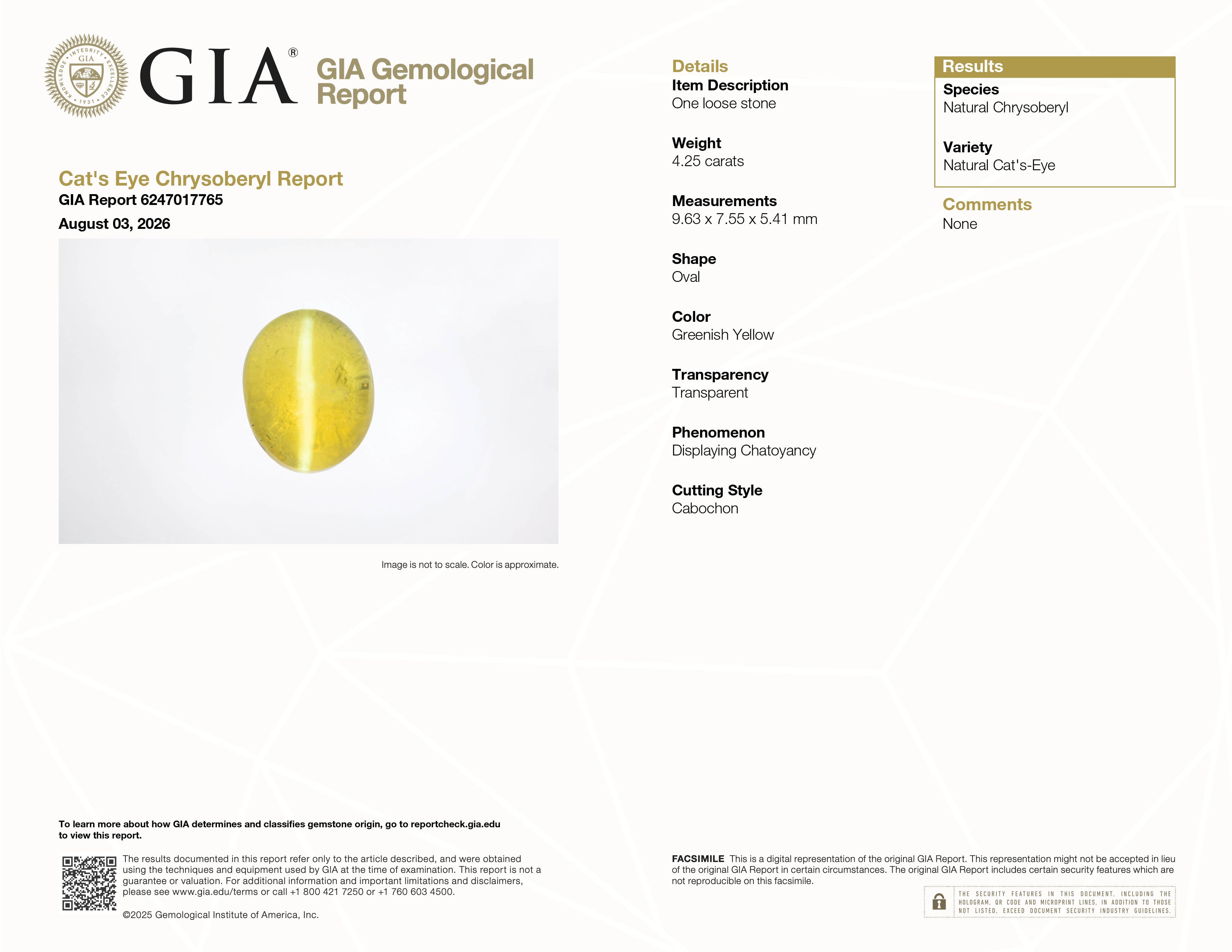
Currently in stock: a 4.25ct Ceylon cat’s eye chrysoberyl, GIA-documented and untreated, priced at $9,482, with a sharp, well-centered eye — the collector-grade tier described above.
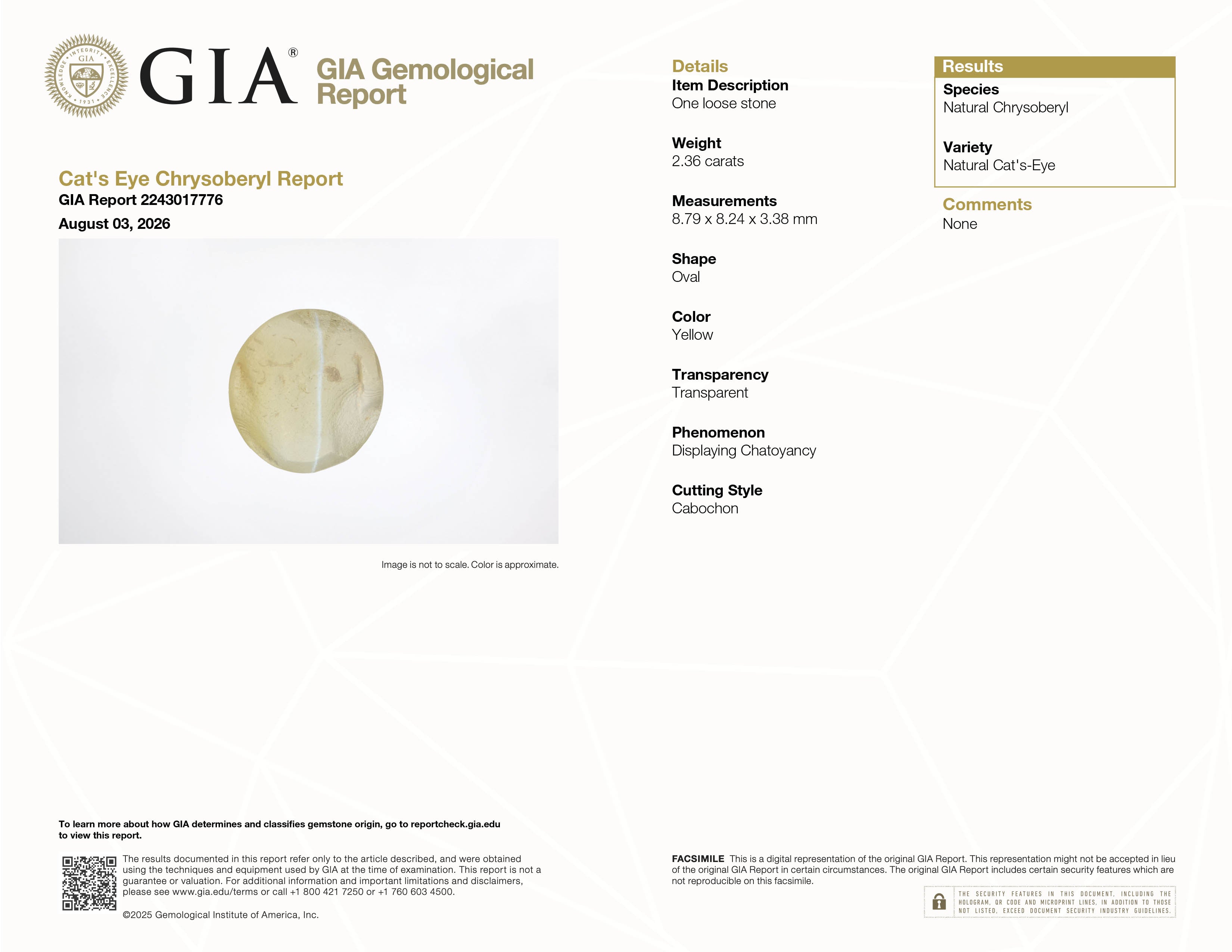
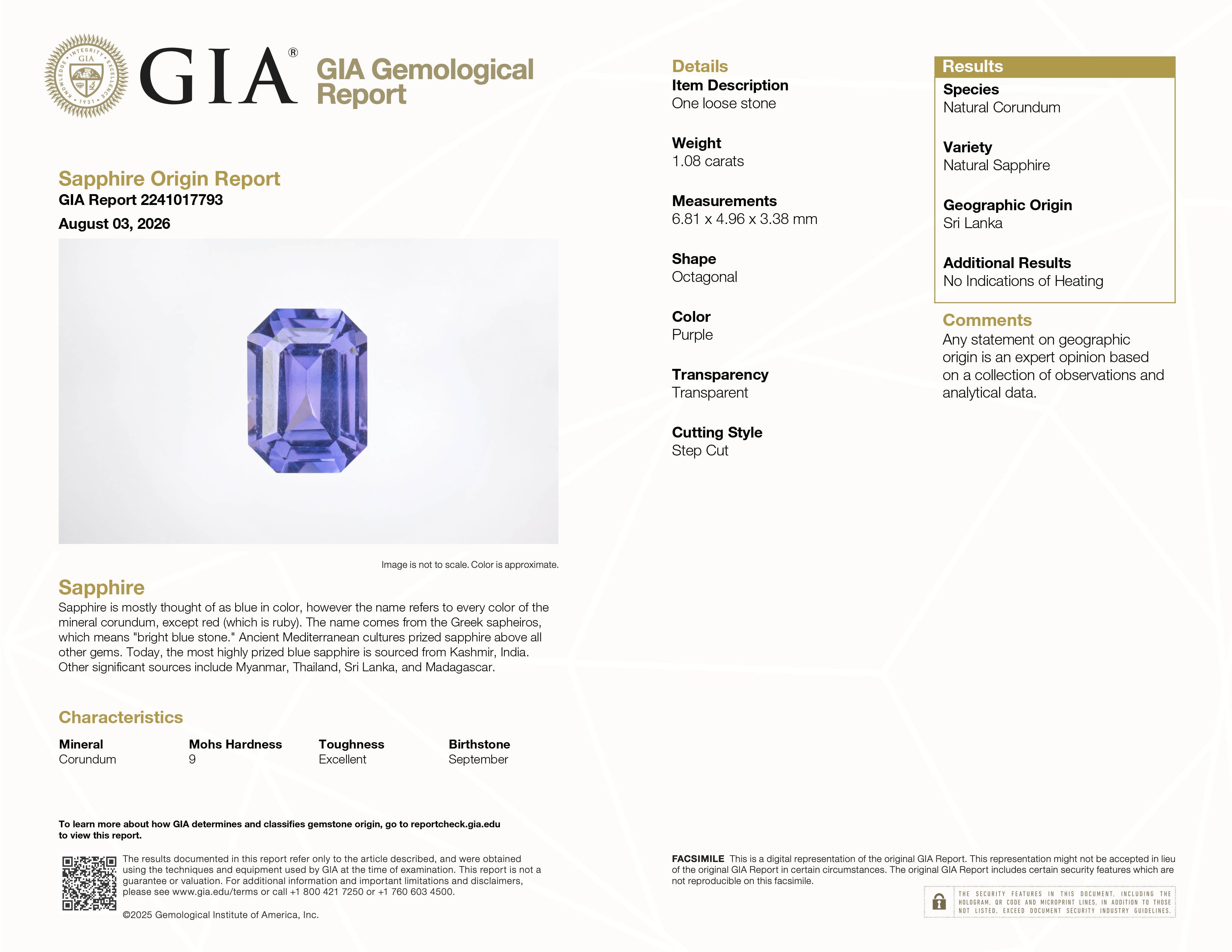
We also currently stock a 2.36 ct unheated oval cabochon cat’s eye chrysoberyl, GIA-documented (Report #2243017776), priced at $3,792, in a medium-saturation honey yellow with Ceylon origin reflecting our own store’s assessment — not addressed by the GIA report — a smaller, more accessible example of the fine-quality tier described above.
Our cat’s eye chrysoberyl collection features Ceylon and Brazilian material across the full quality range. Our chrysoberyl collection includes faceted and alexandrite varieties alongside cat’s eye.
For other phenomenon gemstones: star sapphire collection. For investment-grade pieces: investment-grade gemstones.
Email crescentgems@gmail.com with any question about a specific stone, its eye quality, or sourcing for Jyotish specification. We respond within one business day. Free US shipping; 14-day returns on every order.

CG8413
3.64 ct Natural Unheated Chrysoberyl | GIA Certified
Prices are shown in your local currency and may change.


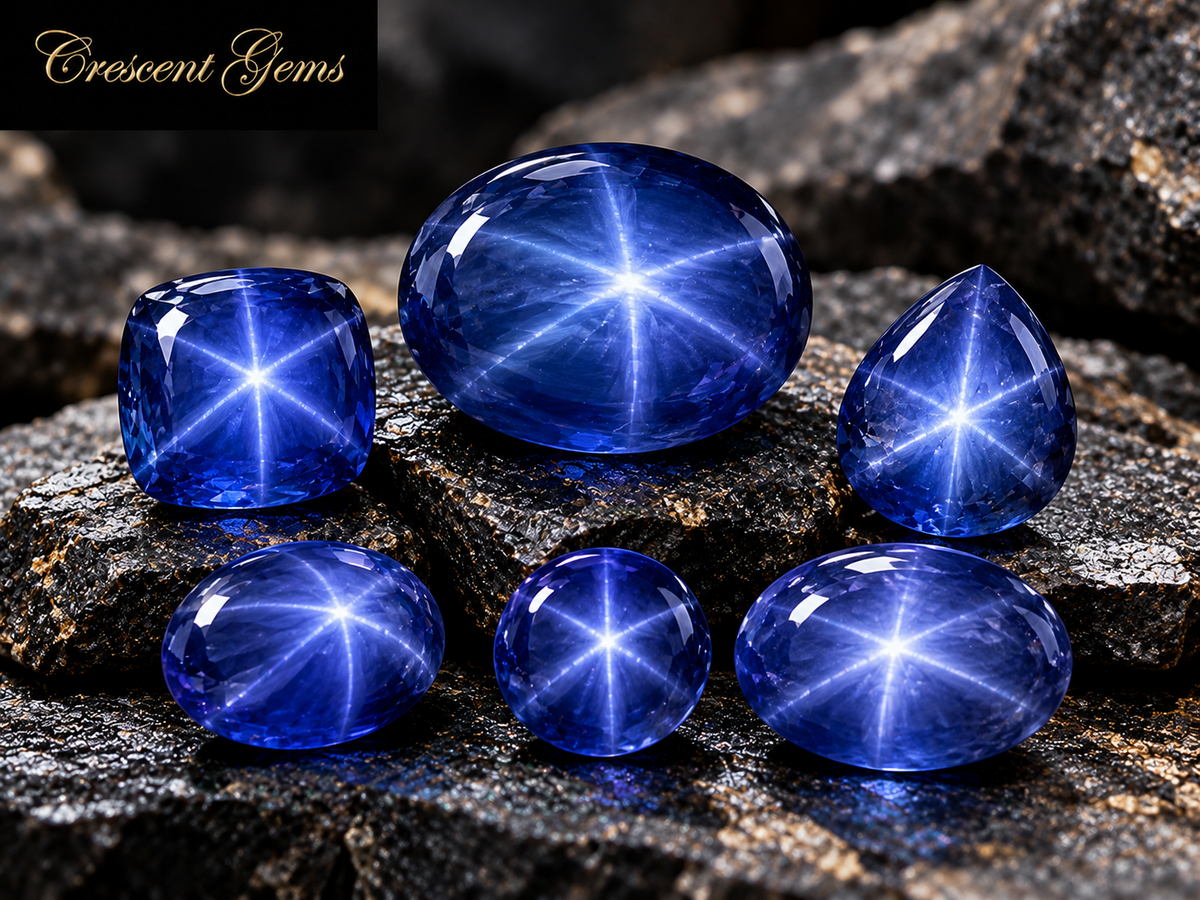
Blue Star Sapphire Price Guide — What They Cost and Why
Read moreabout Blue Star Sapphire Price Guide — What They Cost and Why
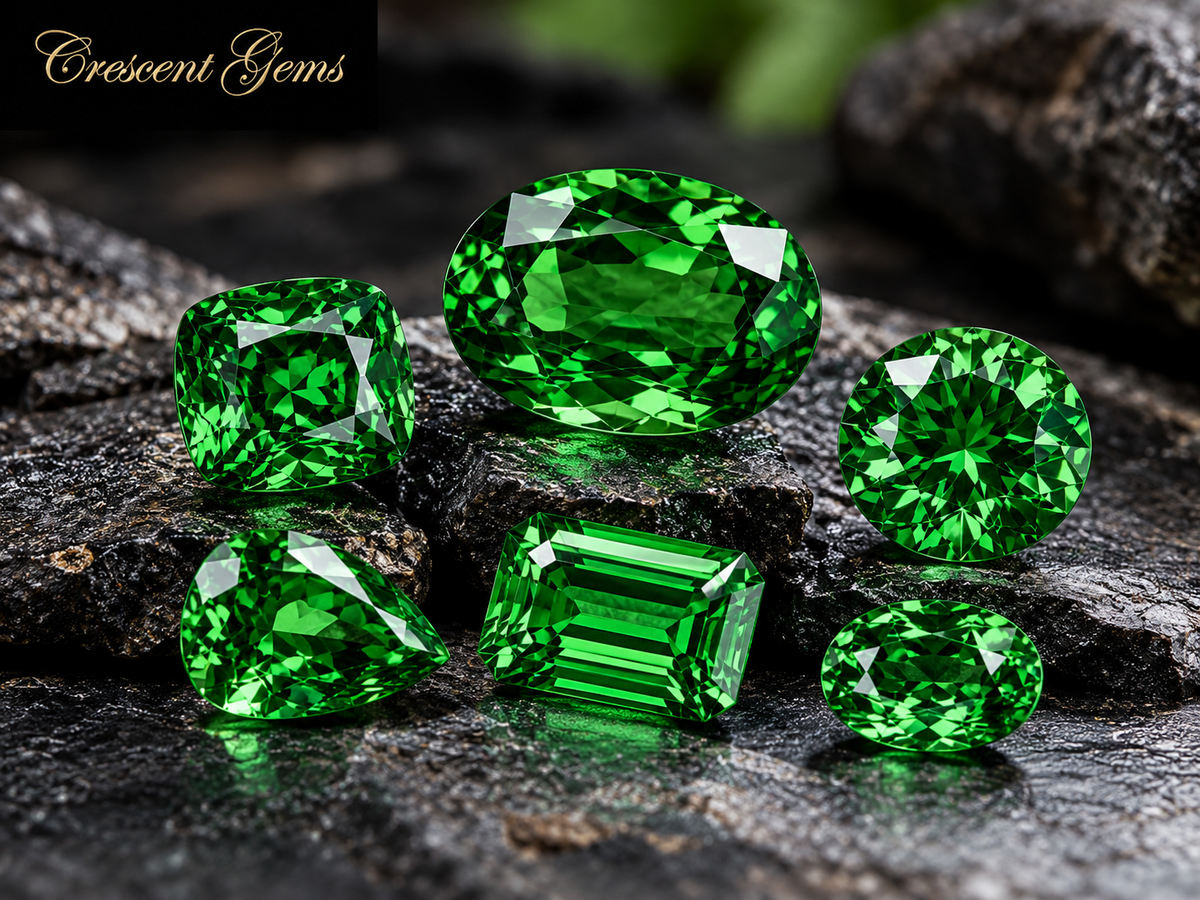
Tsavorite Garnet Price Guide — What They Cost and Why
Read moreabout Tsavorite Garnet Price Guide — What They Cost and Why
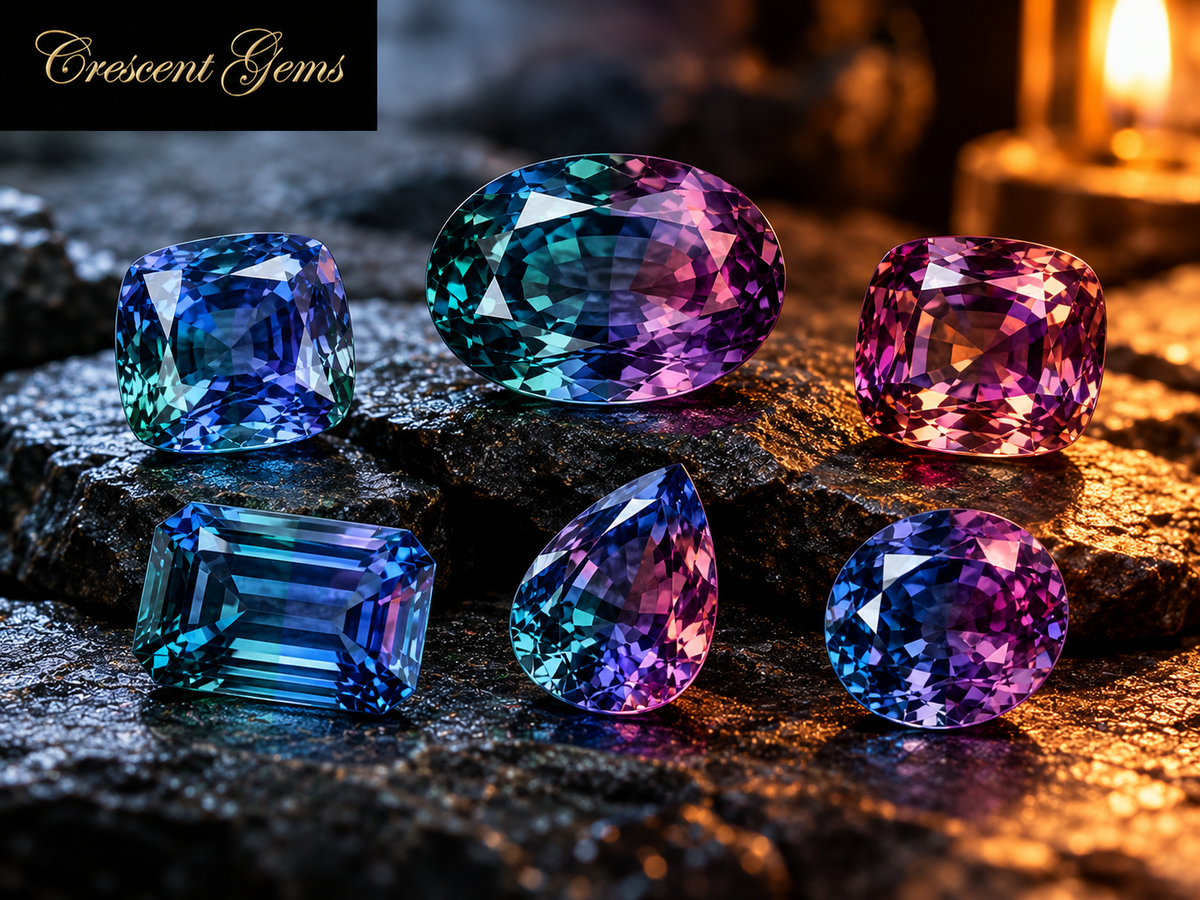
Color-Change Sapphire Price Guide — What They Cost and Why
Read moreabout Color-Change Sapphire Price Guide — What They Cost and Why
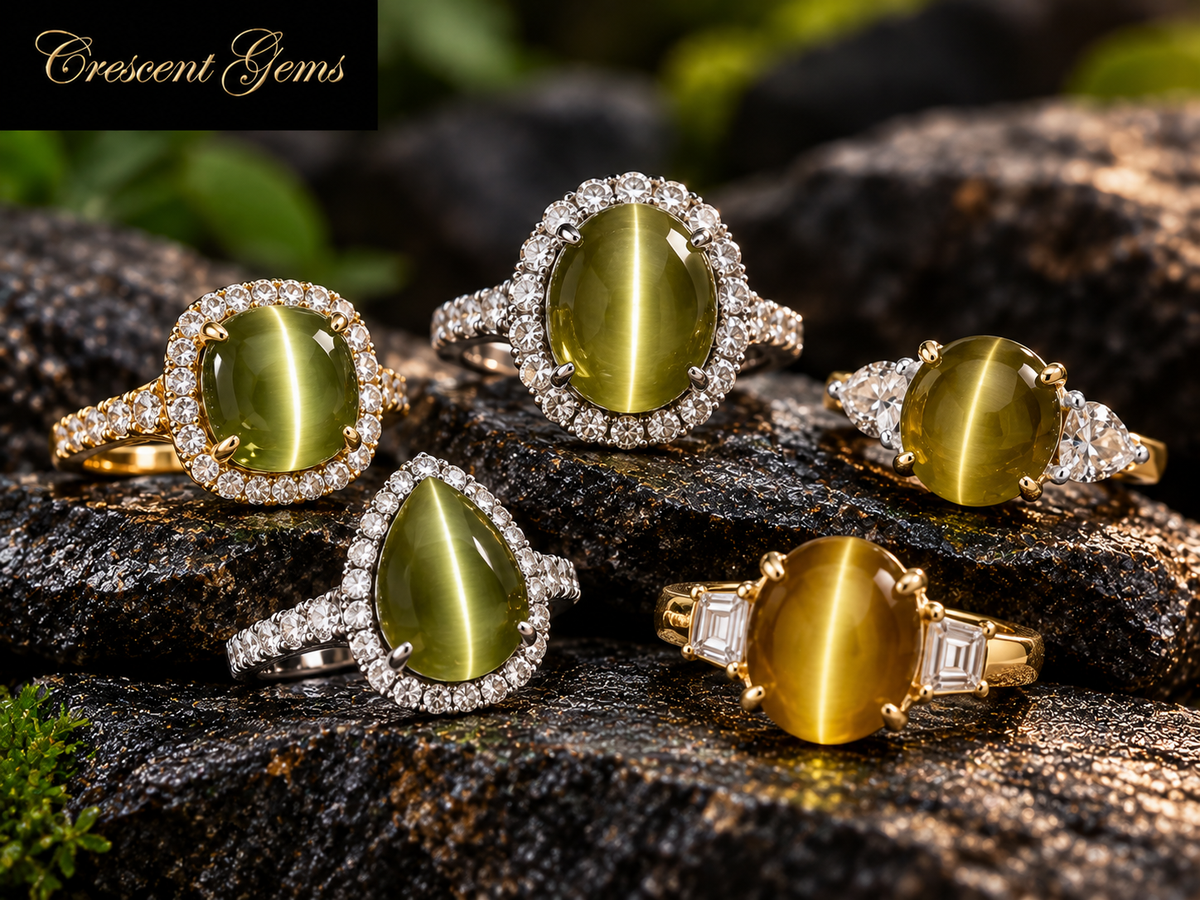
Is Cat's-Eye Chrysoberyl Good for an Engagement Ring?
Read moreabout Is Cat's-Eye Chrysoberyl Good for an Engagement Ring?
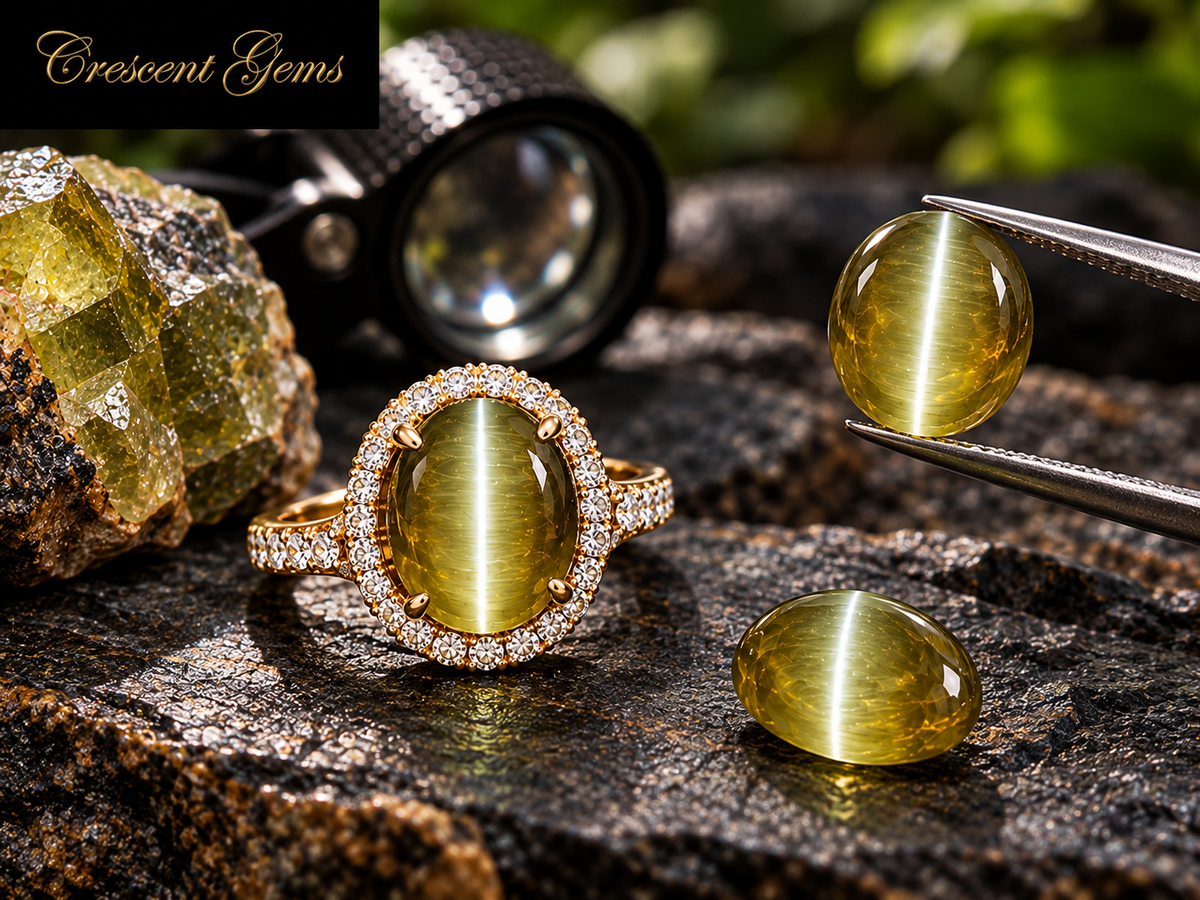
Cat's Eye Chrysoberyl Price Guide — What They Cost and Why
Read moreabout Cat's Eye Chrysoberyl Price Guide — What They Cost and Why