- by Ahmed Shareek
Cat's Eye Chrysoberyl Price Guide — What They Cost and Why
- by Ahmed Shareek
Cat's-eye chrysoberyl pricing confuses people used to diamond or faceted-gemstone grading, because the thing buyers in this category pay for first — the eye — has no equivalent in a clarity or cut grade, and no laboratory grades it. This guide breaks down what drives the price of a genuine cat's-eye chrysoberyl and prices it against two stones currently in stock.
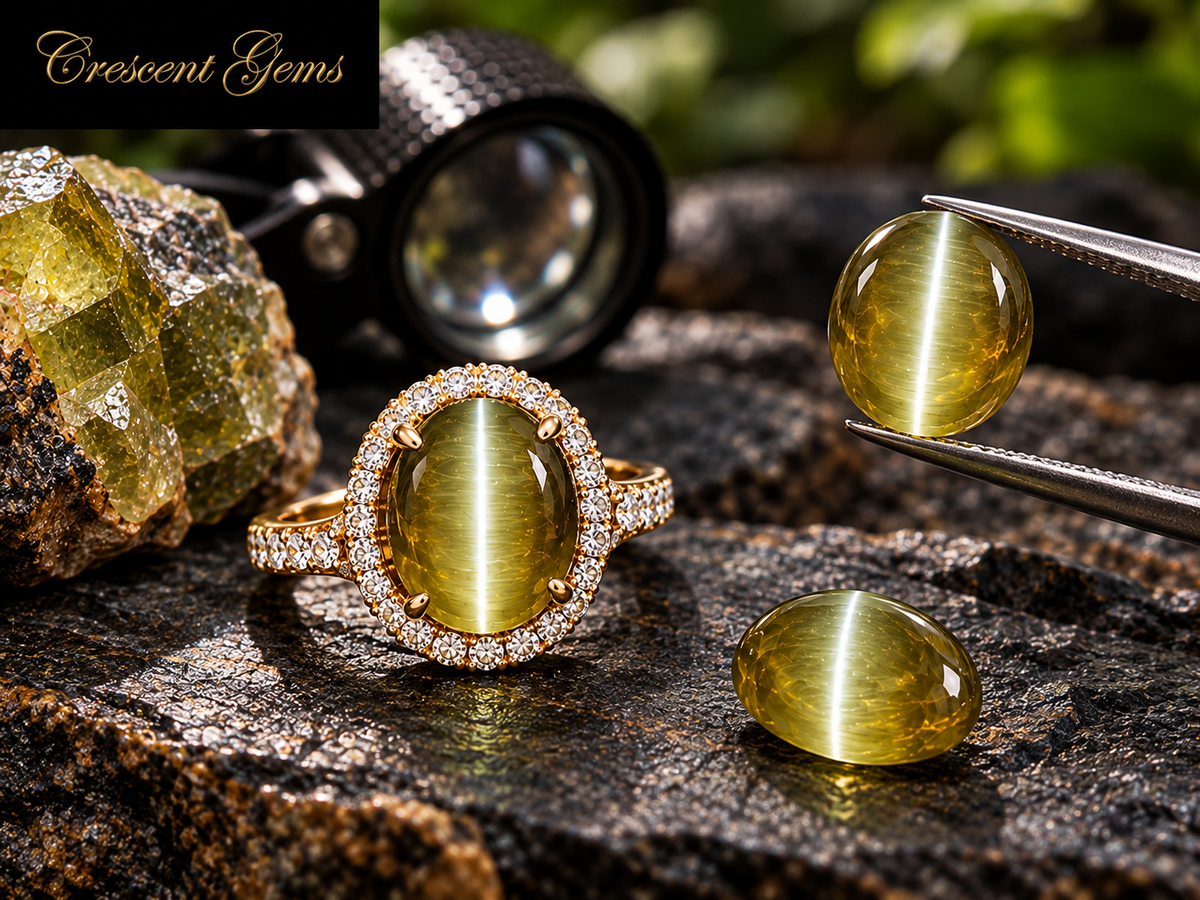
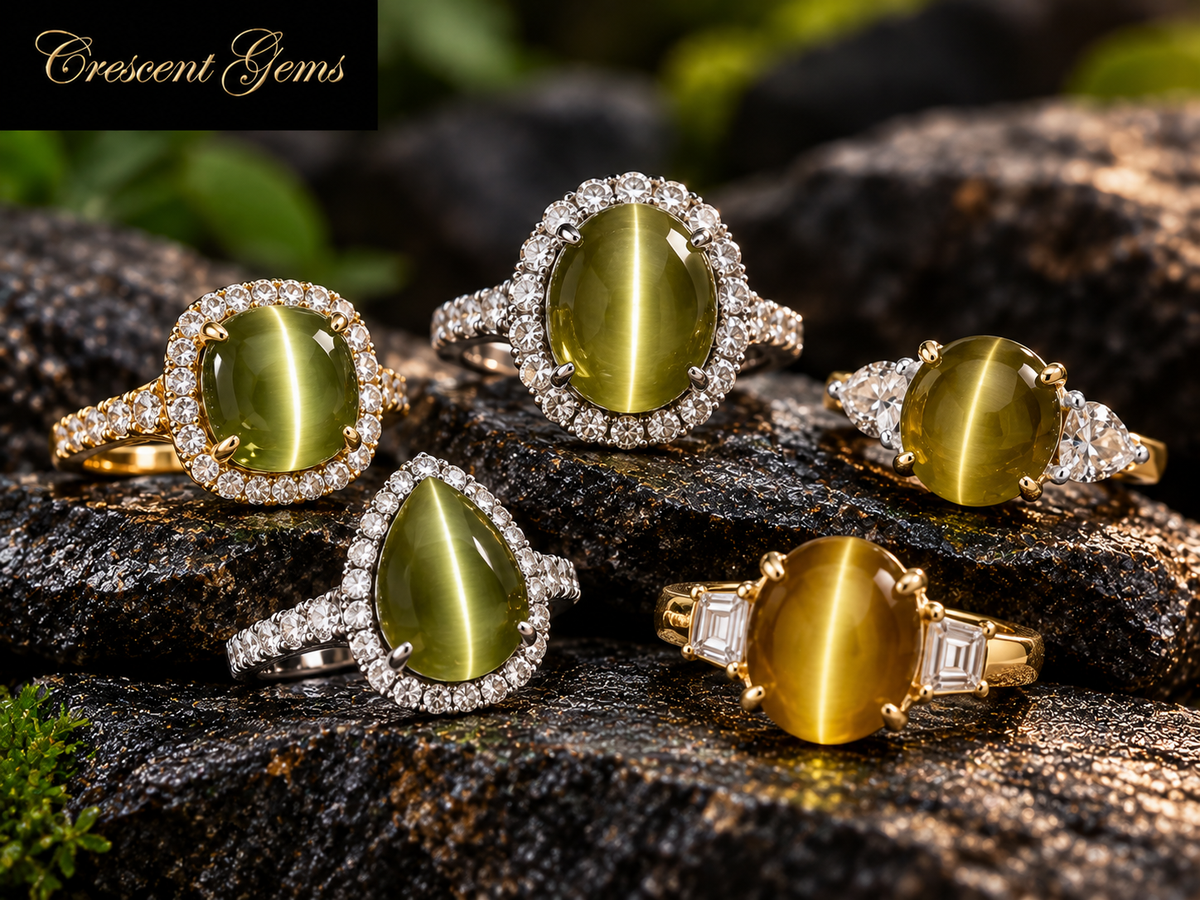
Chatoyancy — the "cat's eye" — comes from dense, parallel needle-like inclusions running through the stone, reflecting light back as a single bright line across a domed cabochon. The eye is the reason the stone exists, and it is what the market prices first. No laboratory grades it, though: GIA grades no colored stones at all, and there is no LMHC information sheet covering chatoyancy. So any description of how a particular eye looks is the seller's own opinion, ours included, which is why we would rather send you video of a stone than hand you an adjective. For the full framework, including the "milk and honey" effect, see our Cat's Eye Chrysoberyl Buyer's Guide.
The table below sets out the per-carat levels cat's-eye chrysoberyl is commonly offered at, and what tends to change between them. The headings matter: these are price bands, not quality grades. No laboratory grades chatoyancy, so nothing here is a grading scale, and our own two stones are not placed on it.
| Price per carat | Typical size and documentation at this level |
|---|---|
| $50–$250 | Commonly 2–5 ct. Usually sold with no laboratory report. |
| $250–$600 | Commonly 2–5 ct. A report from a smaller laboratory, or none at all. |
| $600–$2,000 | Commonly 2–5 ct, often with the honey body color the material is known for. A report from a recognized laboratory is the normal expectation at this level. |
| $2,000–$6,000 | 2 ct and up. A full report from a major laboratory. |
| $6,000–$15,000+ | 10 ct and up. A full report from a major laboratory. |
Approximate market orientation as at September 2026, for natural cat's-eye chrysoberyl sold loose. These are not measured figures, not a survey, and not our own sales data, and they are not offers. Our own stock is two stones and is described separately below.
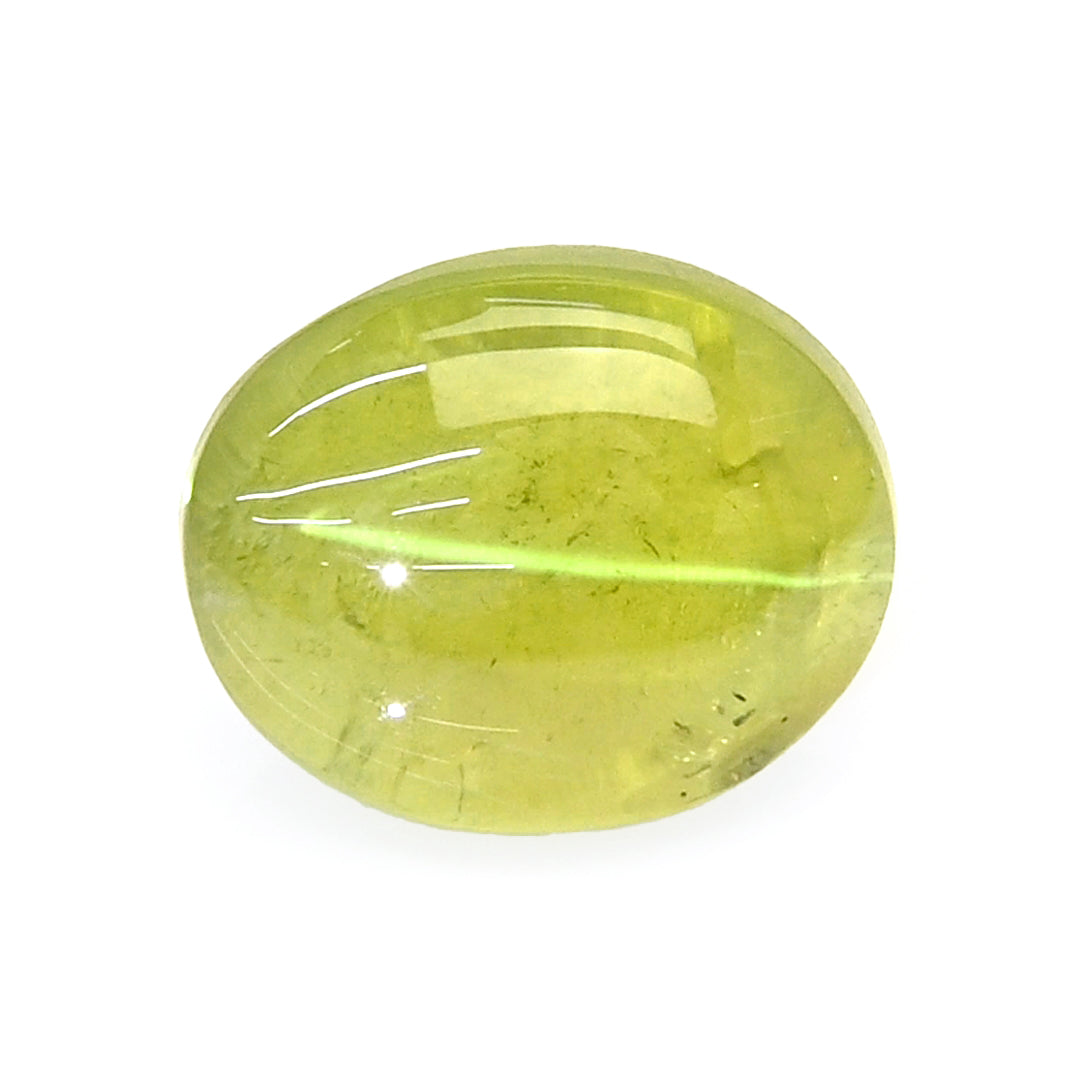
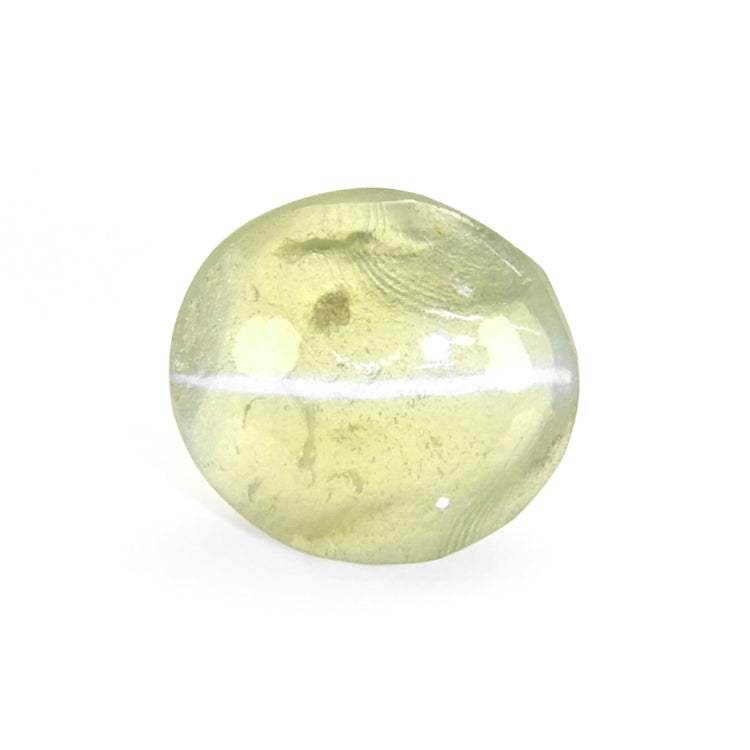
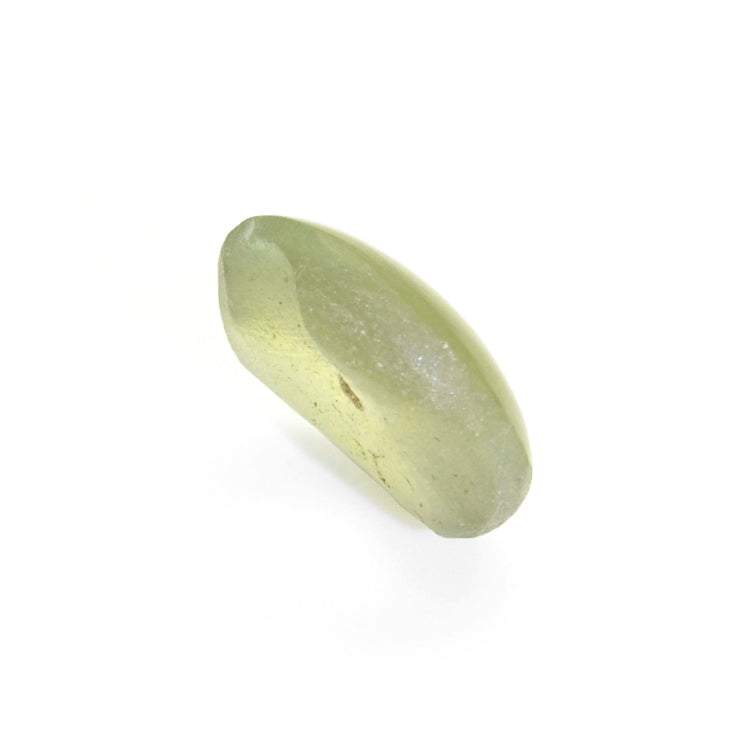
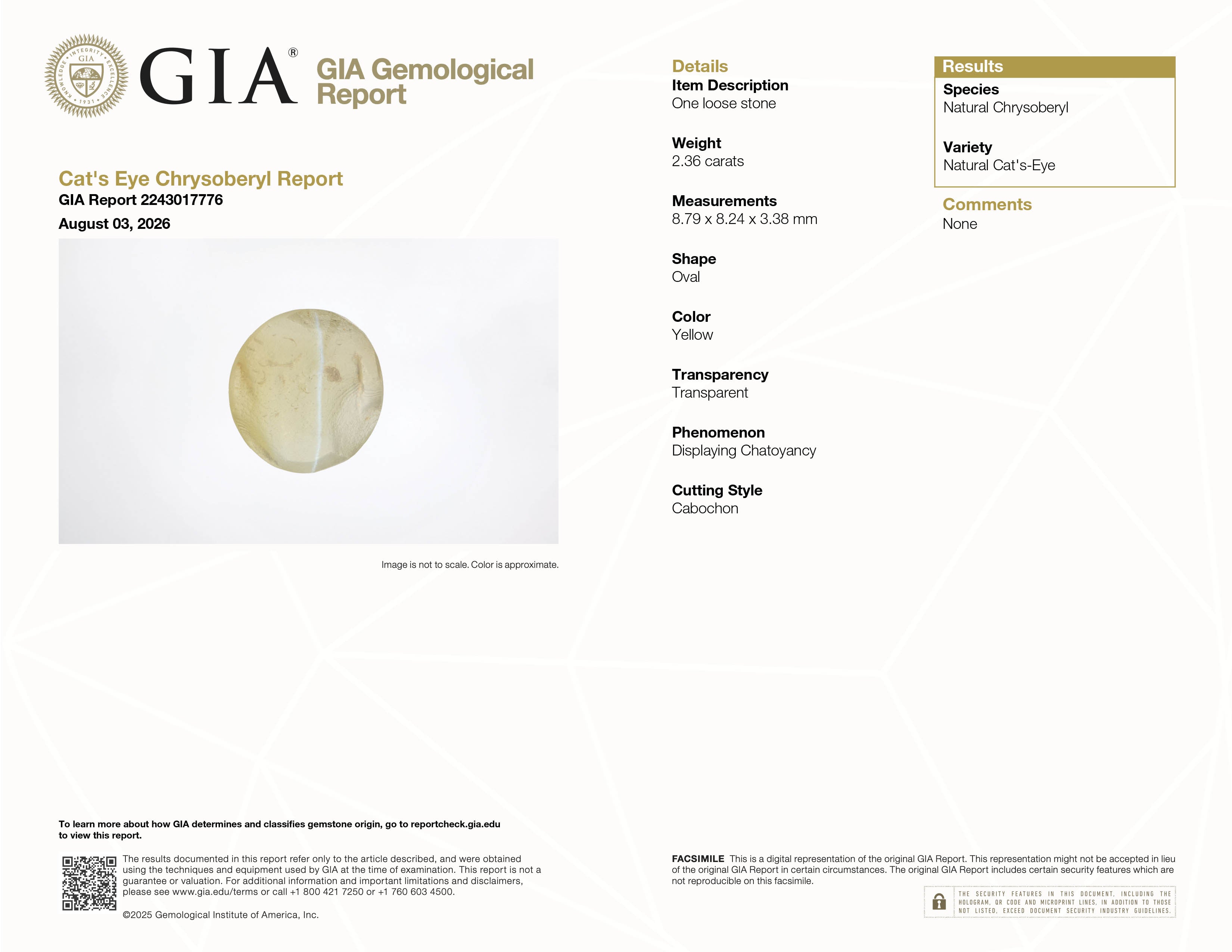
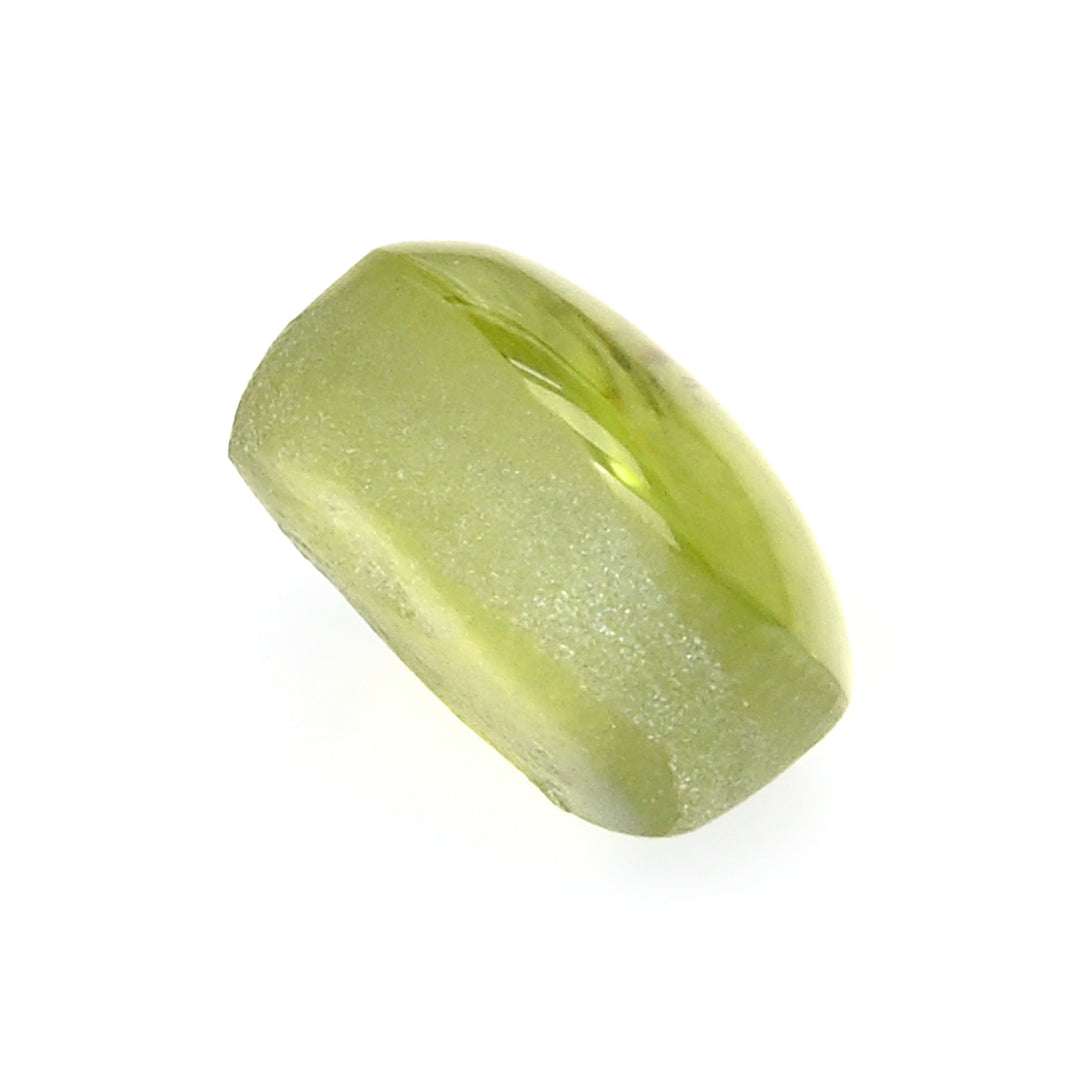
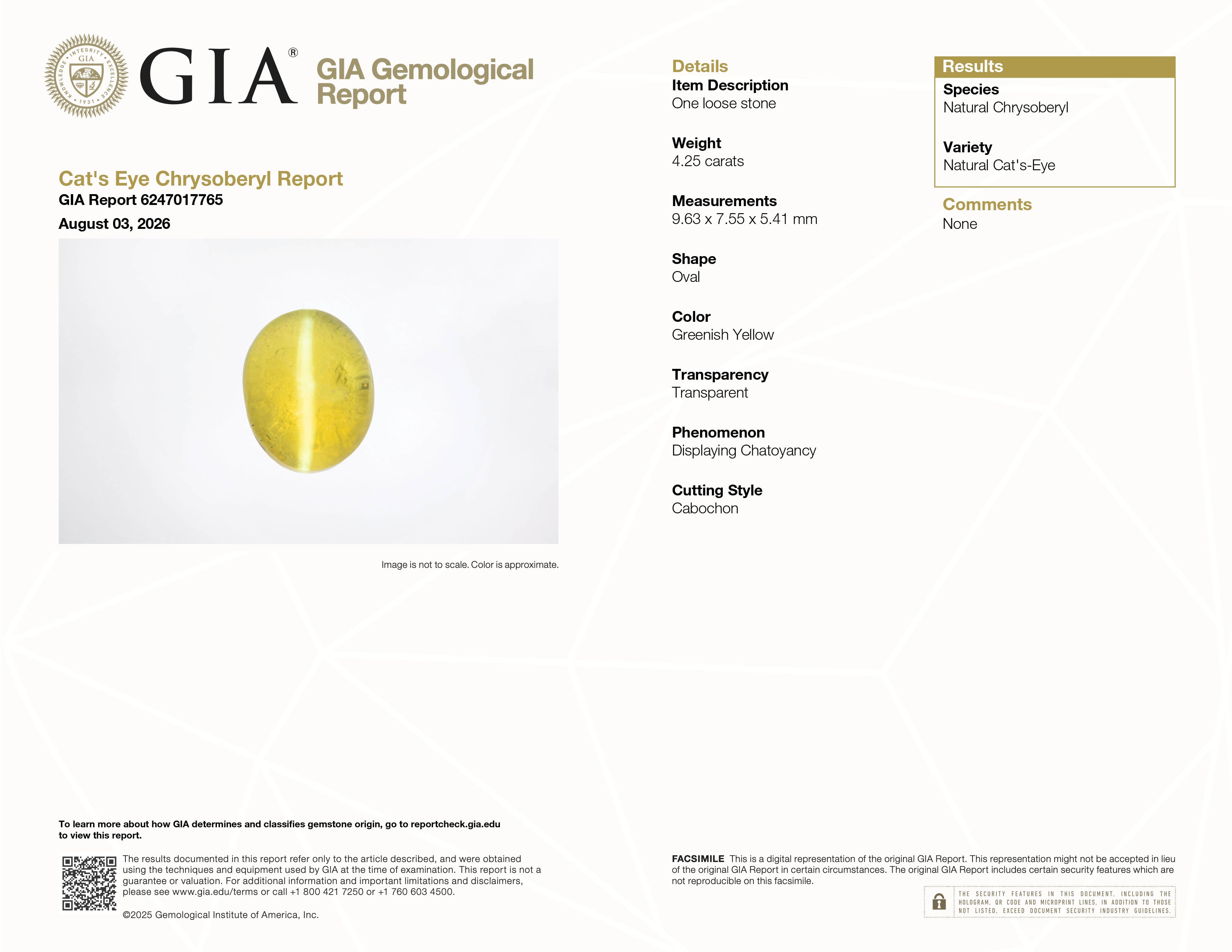
Our own two stones: a 2.36ct oval cabochon documented on GIA Report #2243017776, unheated, priced at $3,792 (about $1,607/ct); and a 4.25ct oval cabochon documented on GIA Cat's Eye Chrysoberyl Report #6247017765, unheated, priced at $9,482 (about $2,231/ct). Sri Lanka origin is our own assessment for both and is not addressed by either report, and the eye descriptions we give on the product pages are our own expression for the same reason — no laboratory grades an eye. On per-carat price these two run the way size usually runs in this material: the larger stone is the dearer of the two per carat, $2,231 against $1,607, which makes our smaller stone about 28% cheaper per carat than our larger one.
Origin is also not a quality grade, which is why it does not appear as a column in the table above. Where a stone was formed and how it looks are two separate findings, and pricing one as though it were the other is a habit worth breaking.
Most price guides for this material price it on the quality of the eye. This one does not, and the reason is worth stating plainly.
The trade does price chatoyant stones on the phenomenon, and that much is not in dispute. What does not exist is any published laboratory grading of it. GIA states that it "doesn't grade or provide quality analysis for sapphire or other colored stones." The Laboratory Manual Harmonisation Committee, whose information sheets standardize report wording across the major laboratories, publishes none that covers chatoyancy. CIBJO defines the category and stops there. So a description of how a particular eye looks is the seller's own opinion — ours included — and no report can be produced to substantiate it.
The bands above are built instead on what a report or an invoice actually records: carat weight, and what documentation comes with the stone. The eye is the reason the stone exists. It is simply not something any laboratory will grade for you.
Under $250 per carat is the entry level for genuine cat's-eye chrysoberyl, usually in the 2–5 ct range and usually with no laboratory report at all.
Between $250 and $600 per carat the material is still commonly 2–5 ct, and documentation is inconsistent — worth asking about before you buy.
Between $600 and $2,000 per carat, a report from a recognized laboratory becomes the normal expectation rather than a bonus, and the honey body color the material is known for is what sellers at this level are charging for. Our smaller stone's per-carat figure falls in this band: $3,792 ÷ 2.36 ct = $1,606.78 per carat. That is arithmetic about a price, not a position on a quality scale.
Above $2,000 per carat you are paying for an even, saturated body color and a full report from a major laboratory. Our larger stone sits here: $9,482 ÷ 4.25 ct = $2,231.06 per carat.
What none of these levels buys you is a graded eye. Whatever a seller tells you about the eye on a particular stone, no report stands behind it — ask for video instead.
Each of our two stones carries its own GIA report, and we describe both as unheated. "Unheated" is the narrow word and it is the one we use: it speaks to heating, and it is not a synonym for "untreated" — we make the narrower claim and leave the wider one alone. We publish no figure for how much of the cat's-eye chrysoberyl on the market is treated: we could not source one to GIA, AGTA, SSEF, GIT or Lotus, and the causal story usually told alongside such a figure — that heat spoils the inclusions which make the eye — is not something any of them publish either. What a report does address is substitution. GIA has documented a glass imitation of cat's-eye chrysoberyl (Gems & Gemology, Summer 2023, Lab Notes), and the stone is also confused with quartz cat's-eye, a different and much less expensive material — see our buyer's guide for how the two are told apart.
Cat's-eye chrysoberyl is commonly offered somewhere between about $50 and $15,000 per carat, and where a given stone falls depends on its body color, its carat weight, and what documentation comes with it. Those figures are an approximate market orientation rather than measured data. No laboratory grades a cat's eye, so any description of the eye itself is the seller's own opinion, ours included. Our own stock is two stones: $3,792 for 2.36 ct ($1,606.78 per carat) and $9,482 for 4.25 ct ($2,231.06 per carat), both unheated and each documented on its own GIA report.
The eye. It is the reason the stone exists and it is what the market prices first. No laboratory grades it, though — GIA grades no colored stones at all, and there is no LMHC information sheet covering chatoyancy — so any description or rating of the eye on a particular stone is the seller's own opinion, ours included, and no report can be produced to substantiate it. Color, clarity and carat weight sit underneath it.
Currently in stock: our 2.36 ct GIA-documented natural unheated cat’s-eye chrysoberyl, priced at $3,792, and our 4.25 ct GIA-documented natural unheated cat’s-eye chrysoberyl, priced at $9,482.
Have a question about eye quality, milk-and-honey effect, or sourcing to a specific carat weight? Email crescentgems@gmail.com — we respond within one business day. Free US shipping; $60 flat elsewhere, free over $499. 14-day returns on every order.

Prices are shown in your local currency and may change.


Blue Star Sapphire Price Guide — What They Cost and Why
Read moreabout Blue Star Sapphire Price Guide — What They Cost and Why
Tsavorite Garnet Price Guide — What They Cost and Why
Read moreabout Tsavorite Garnet Price Guide — What They Cost and Why
Color-Change Sapphire Price Guide — What They Cost and Why
Read moreabout Color-Change Sapphire Price Guide — What They Cost and Why
Is Cat's-Eye Chrysoberyl Good for an Engagement Ring?
Read moreabout Is Cat's-Eye Chrysoberyl Good for an Engagement Ring?
Cat's Eye Chrysoberyl Price Guide — What They Cost and Why
Read moreabout Cat's Eye Chrysoberyl Price Guide — What They Cost and Why