- by Ahmed Shareek
Tsavorite Garnet Price Guide — What They Cost and Why
- by Ahmed Shareek
We buy our tsavorite garnets ourselves, so they reach you direct, without the intermediaries most sellers buy through.
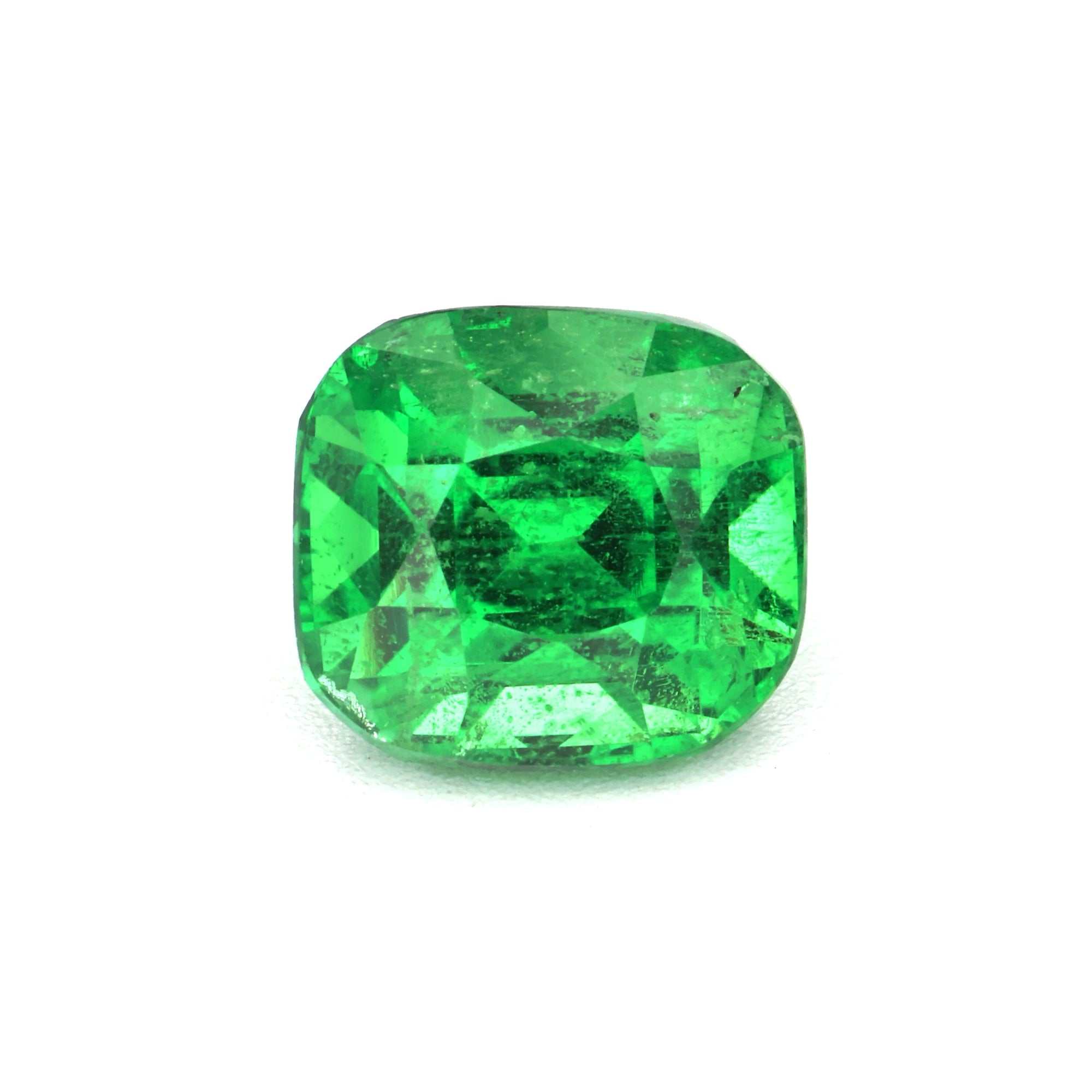
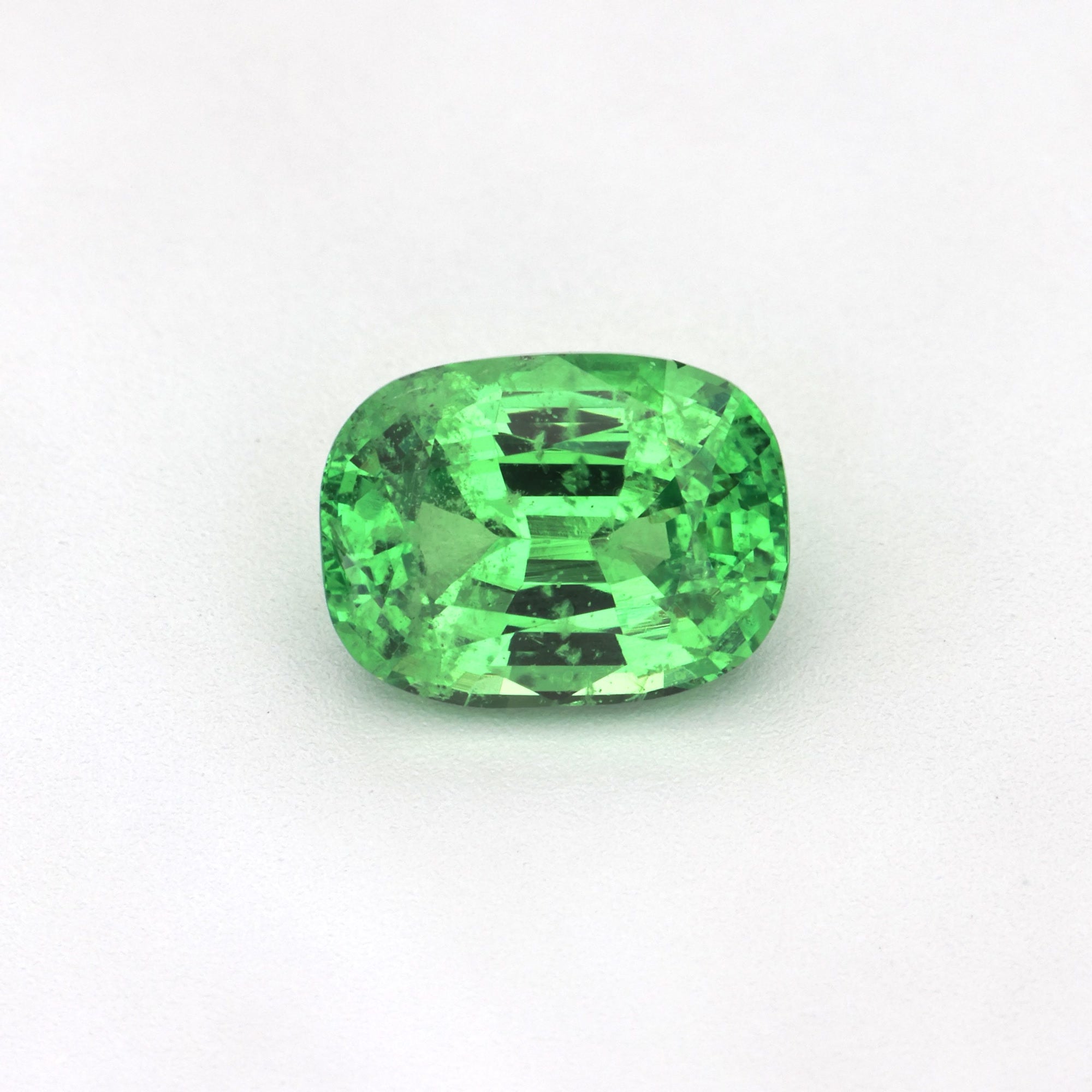
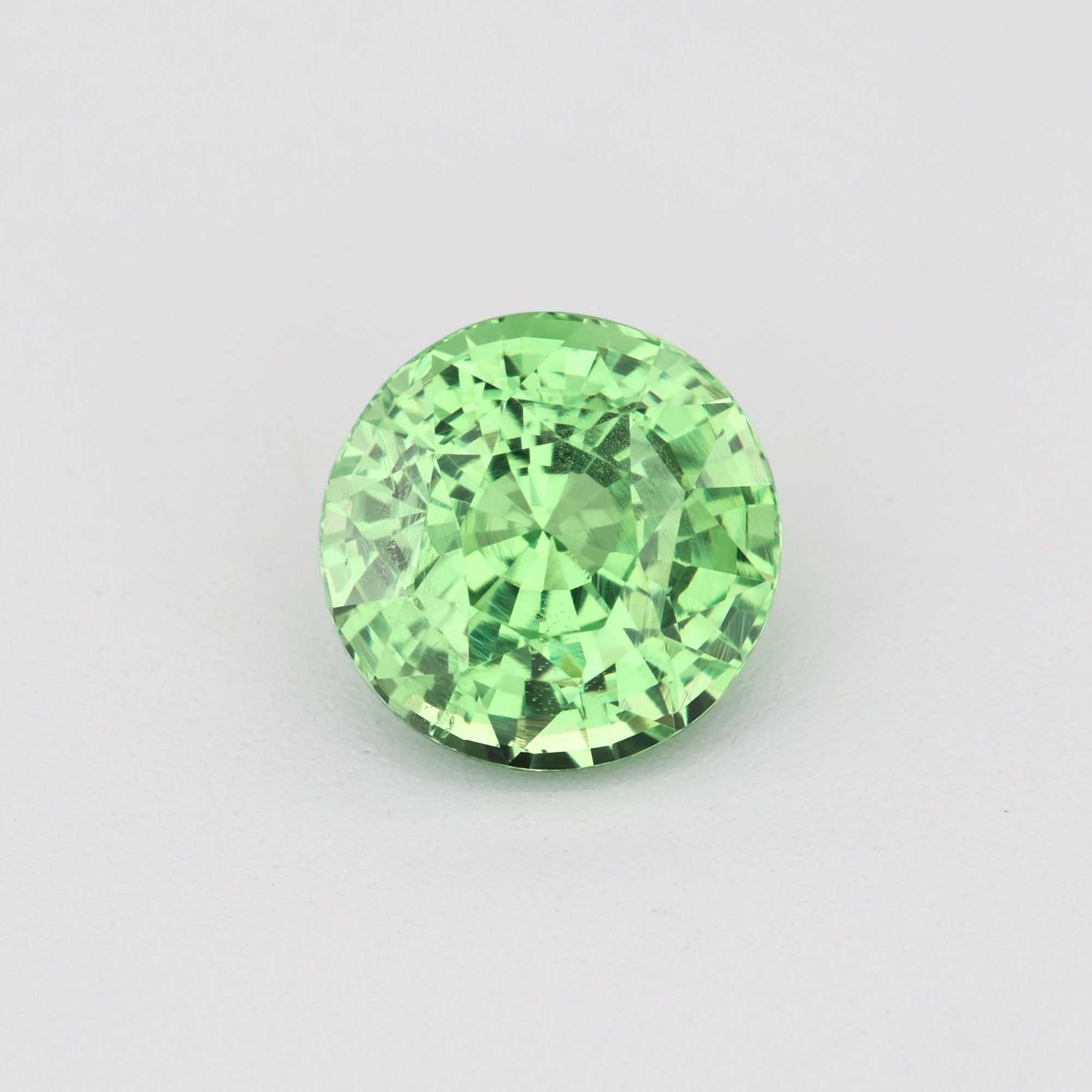
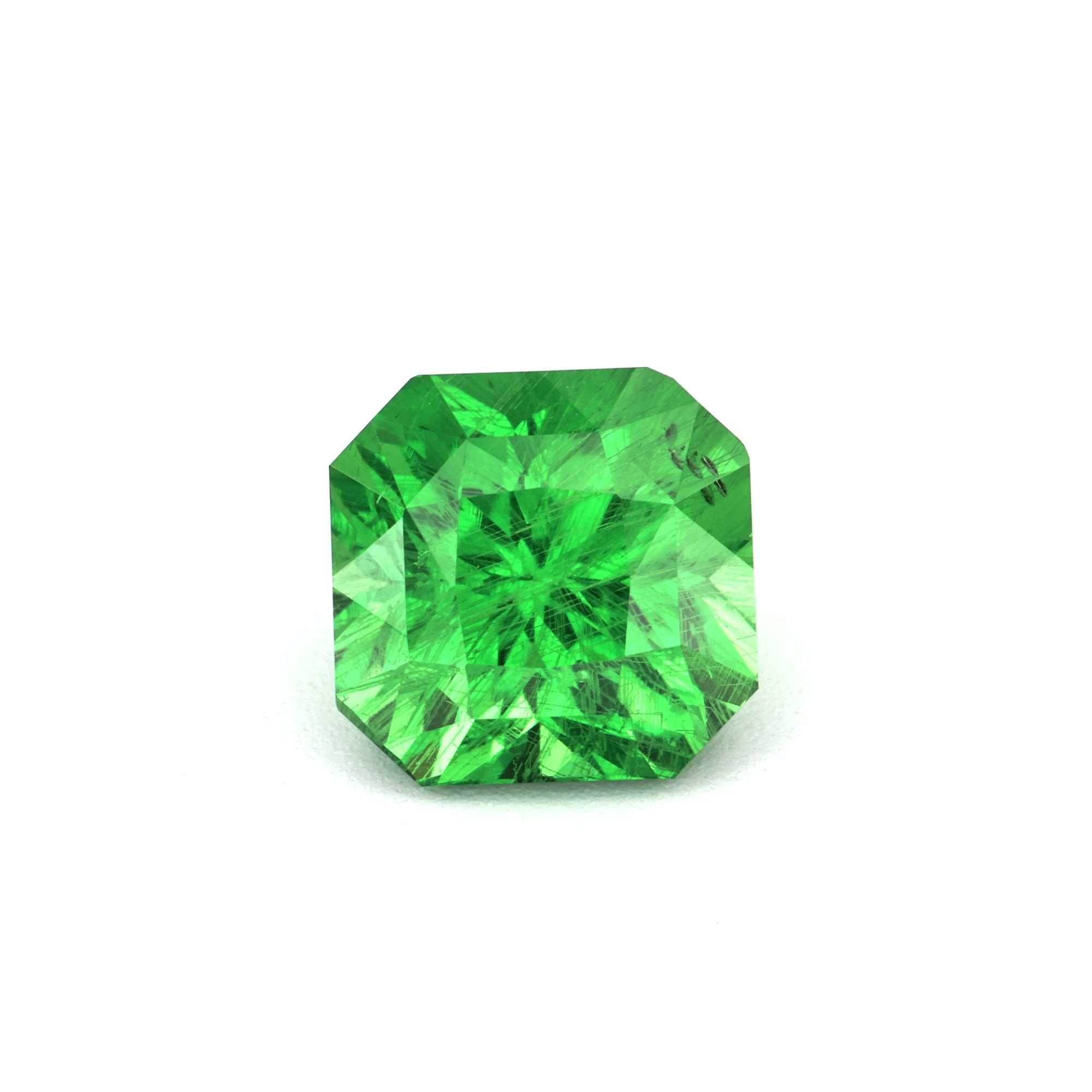
This guide prices tsavorite garnet from the seven stones we hold on 29 September 2026, and from nothing else. They run from $1,177 to $22,724. Six of the seven are untreated by our own assessment; the seventh, a 1.85 ct cushion, is clarity enhanced and is listed and sold as treated. Every figure below is a price on one of our own product pages on that date, not a market estimate.
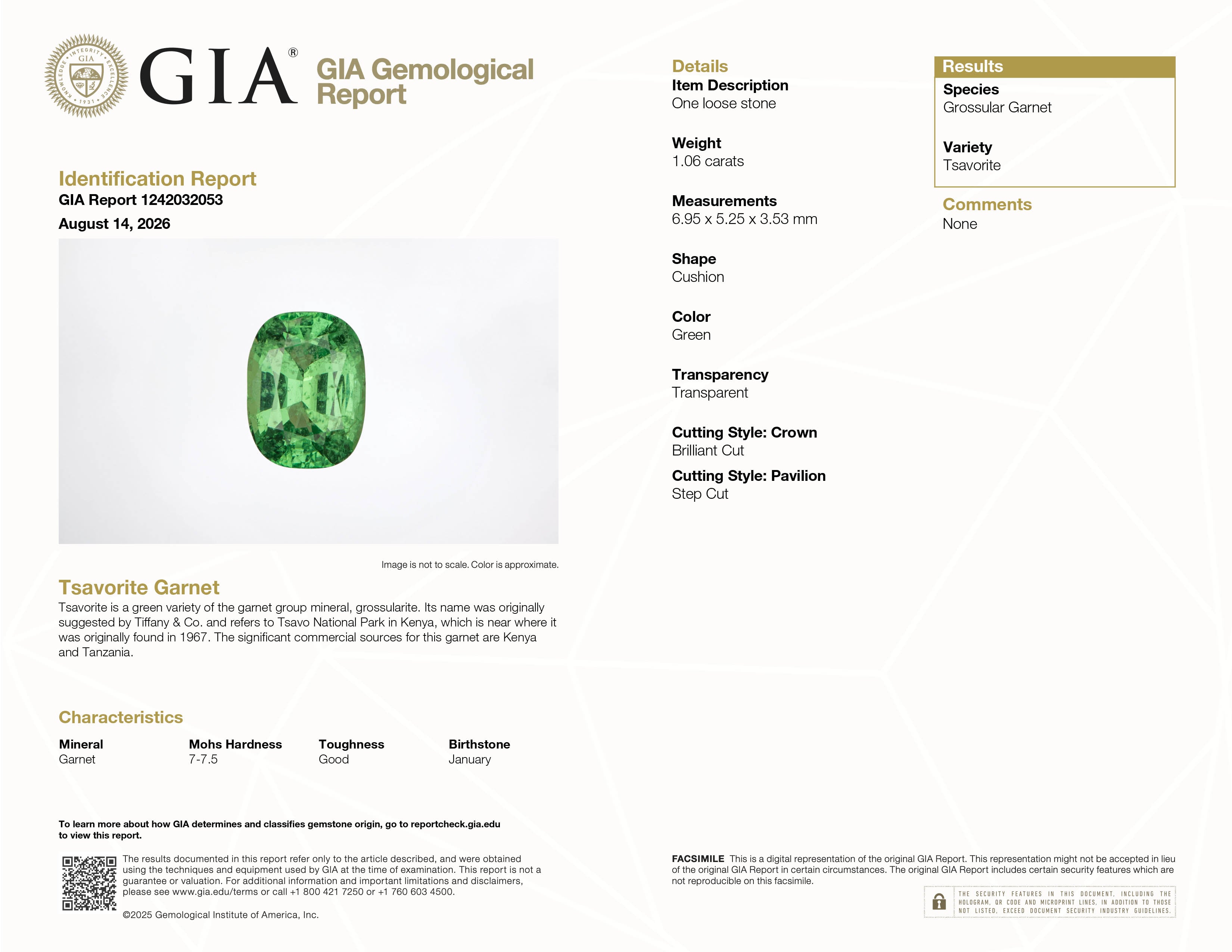
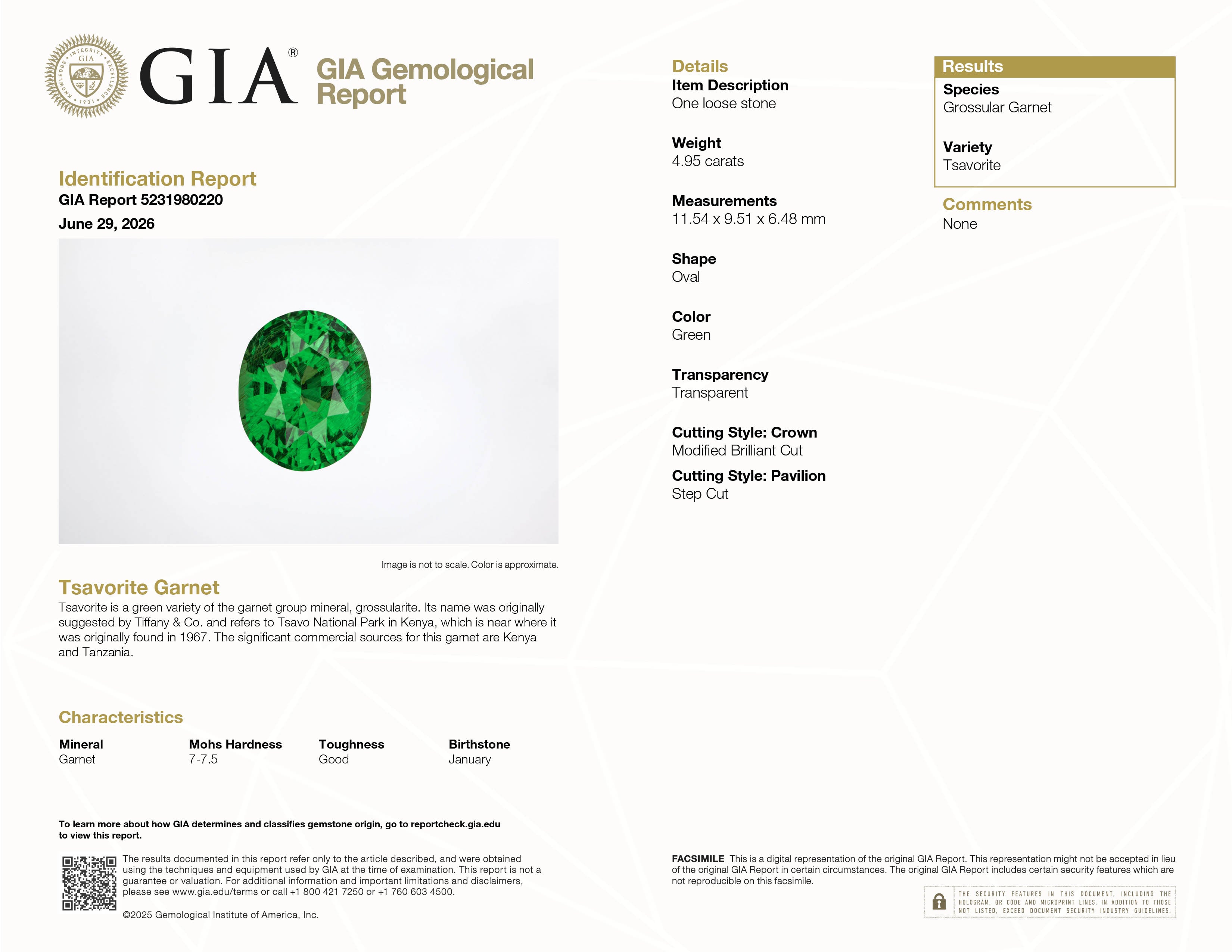
This is worth settling before any price talk, because a laboratory report prints both and they are often collapsed into one word. Grossular garnet is the mineral species. Tsavorite is its green variety. A report recording grossular garnet rules out the other green garnets; it is the report's own variety field that prints Tsavorite. Garnet is the January birthstone, and that attaches at the group level, so it reaches grossular and so it reaches tsavorite. For the full color and quality framework, see our Tsavorite Garnet Buyer's Guide.
Price guides for colored stones usually open with a grid of quality tiers — commercial, good, fine, exceptional — each with a per-carat band beside it. This one does not, and the reason is that we could not source one. GIA states plainly that it "doesn't grade or provide quality analysis for sapphire or other colored stones," so there is no published grading scale for those tier labels to refer to, and no laboratory or trade body publishes per-carat price data for tsavorite at all. A tier chart here would be our own numbers wearing the clothes of a standard.
What we can show you is what we actually charge for stones you can look at, which is the table further down.
The usual explanation is that tsavorite crystals simply grow small. That is not the explanation GIA gives. Writing in Gems & Gemology (Winter 2017), GIA puts it down to fracturing: "as tsavorite occurs under very high pressures and temperatures, it is often highly fractured in rough form." The limiting factor is clean rough, not large rough — and large tsavorite plainly exists, since the same article describes faceted stones of 25.10, 31.27, 33.55 and 58.52 carats.
The only sourced size marker we are aware of belongs to the ICA, which calls a cut tsavorite of more than two carats a rare and precious thing. Below two carats there is no published rarity statement we can point to, so we make none.
On geography, the host rock has a proper name: the Neoproterozoic Mozambique Belt, the metamorphic terrane running through Kenya and Tanzania. On commercial supply, GIA publishes that "the significant commercial sources for this garnet are Kenya and Tanzania." Our tsavorite mining guide covers the deposits in detail.
Seven stones, every one of them in stock and linked. Six untreated, one clarity enhanced and marked as such.
| Carat weight | Shape | Treatment | Report | Price | Price per carat |
|---|---|---|---|---|---|
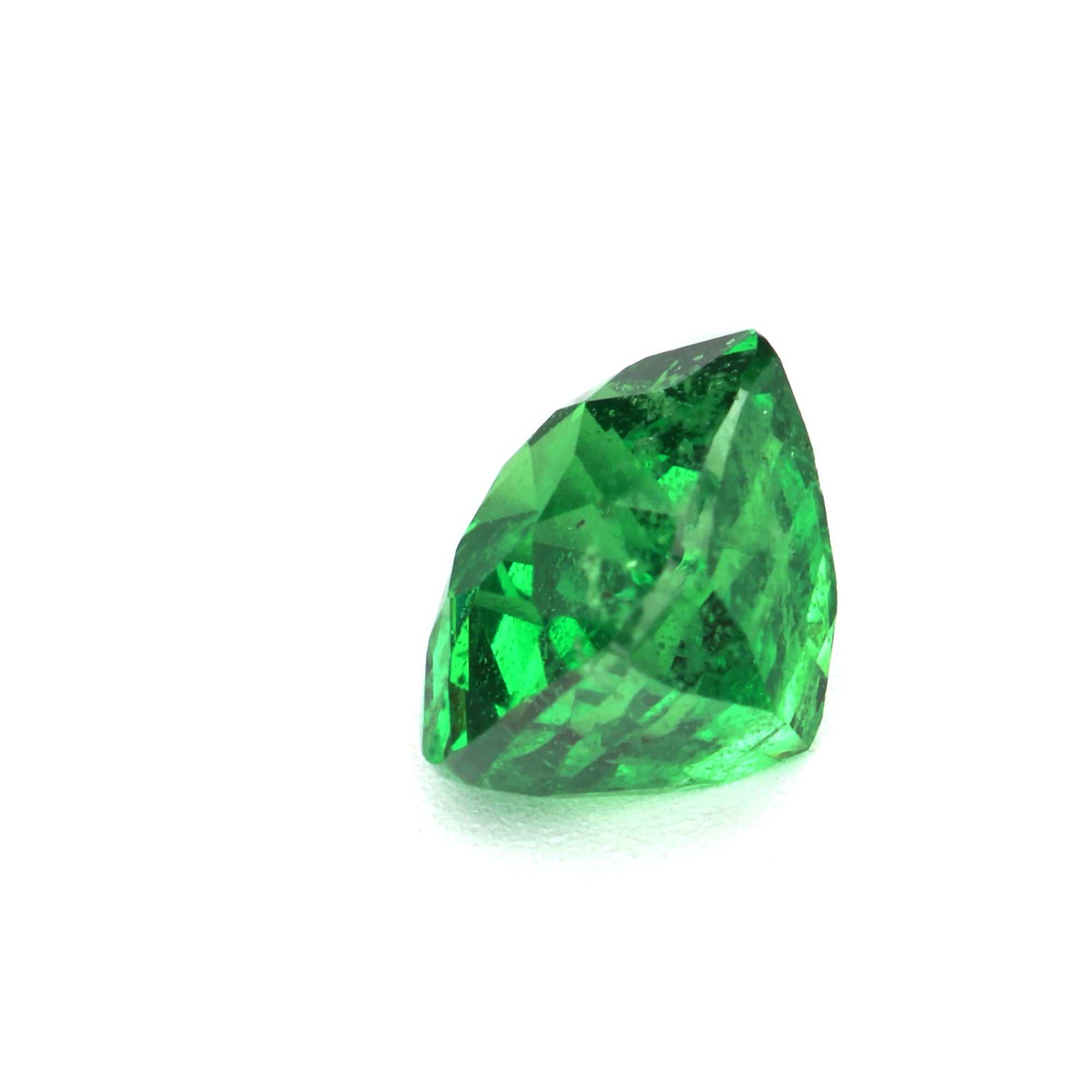
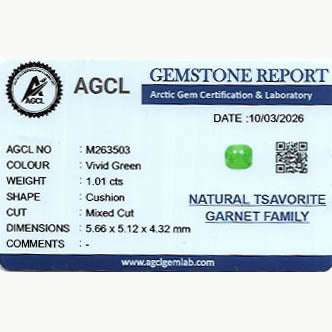
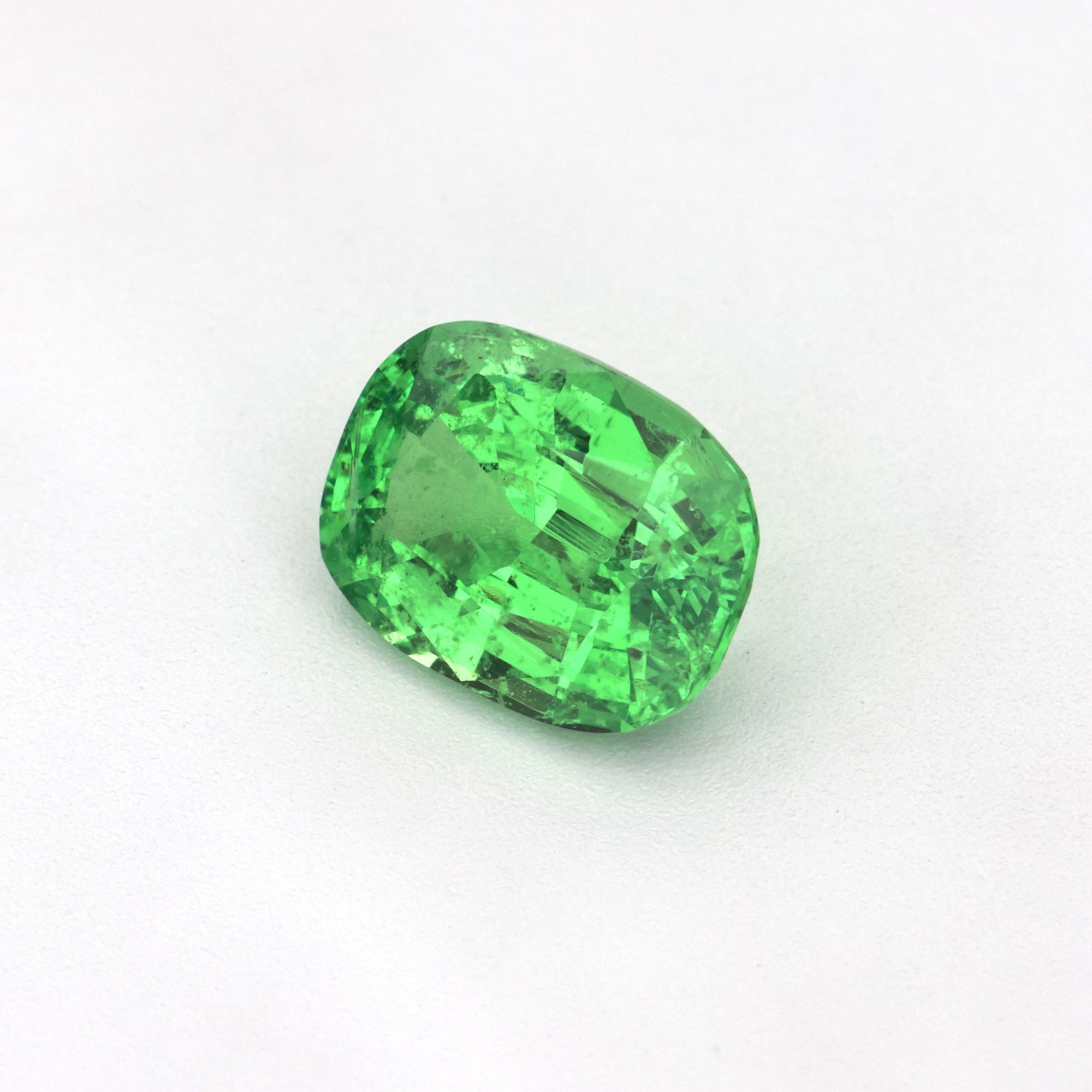
| 1.01 ct | Cushion | Untreated* | AGCL - Gem Lab #M263503 | $1,212 | $1,200/ct |
| 1.06 ct | Cushion | Untreated* | GIA #1242032053 | $1,590 | $1,500/ct |
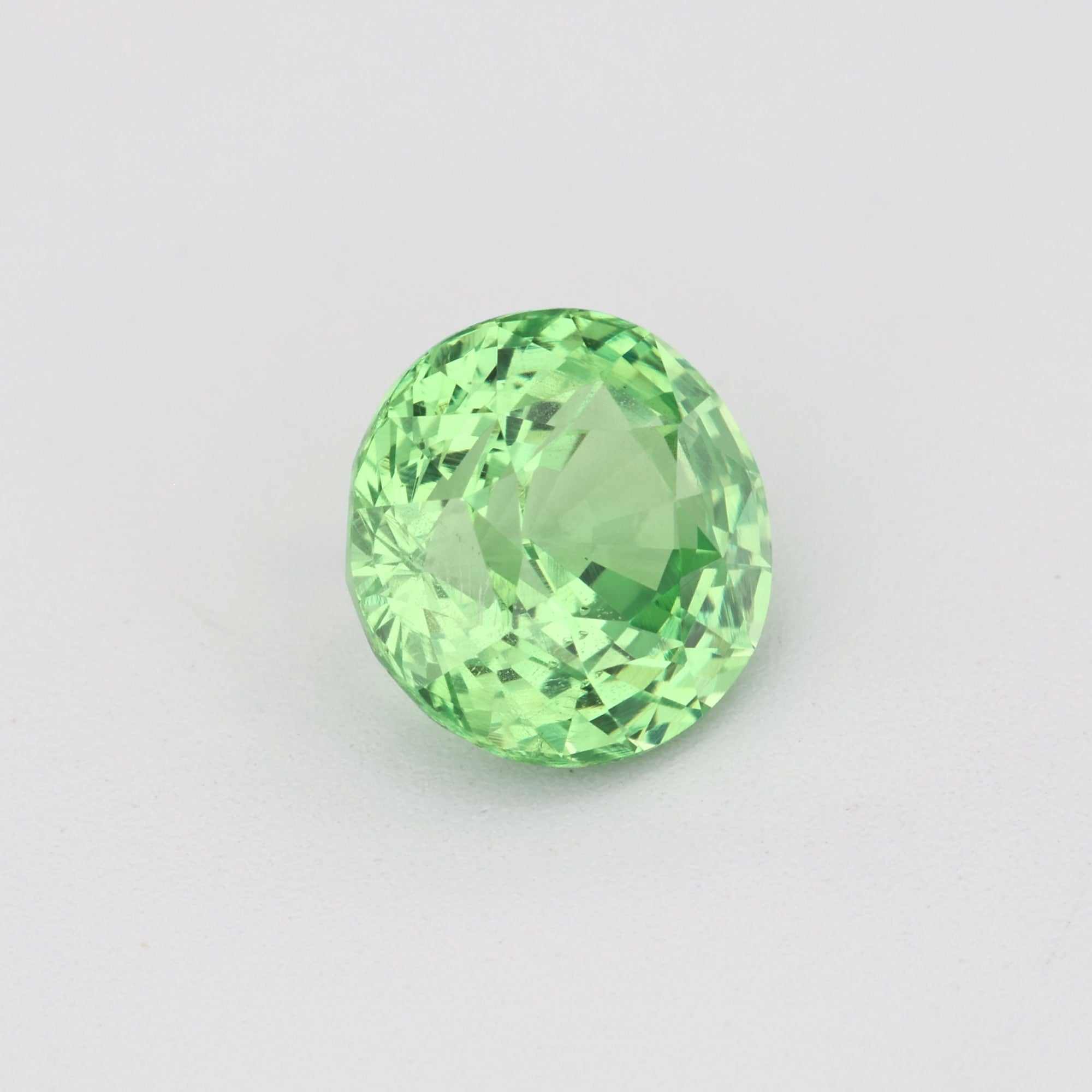
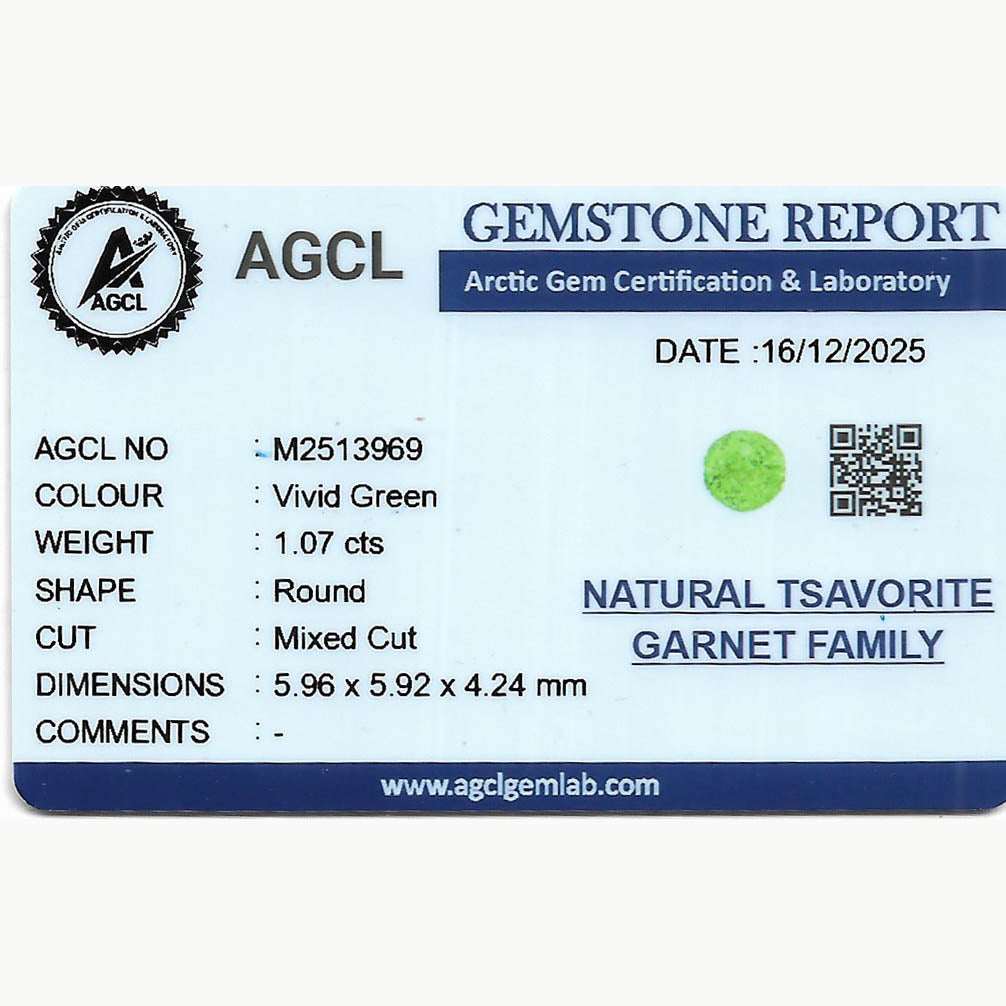
| 1.07 ct | Round | Untreated* | AGCL - Gem Lab #M2513969 | $1,177 | $1,100/ct |
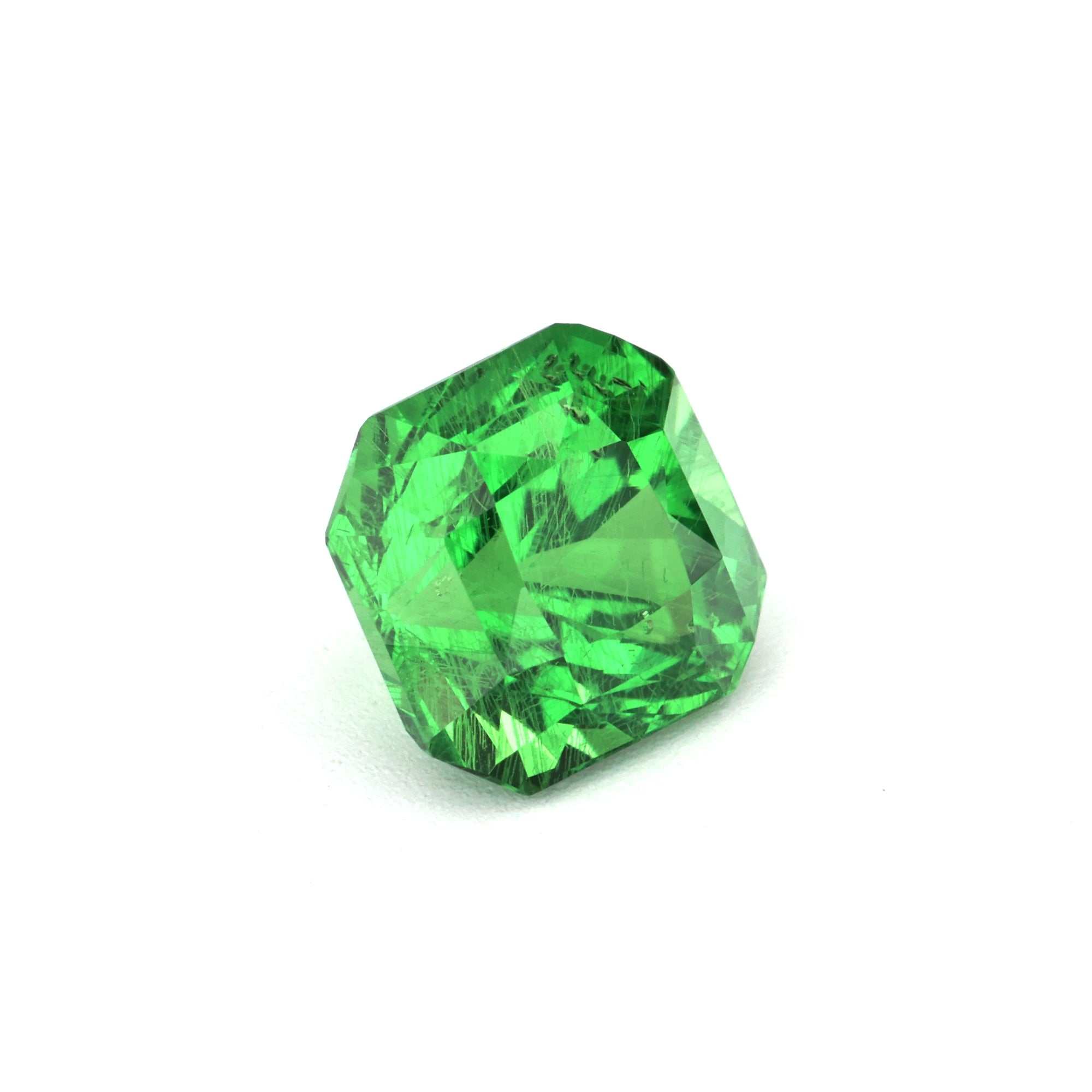
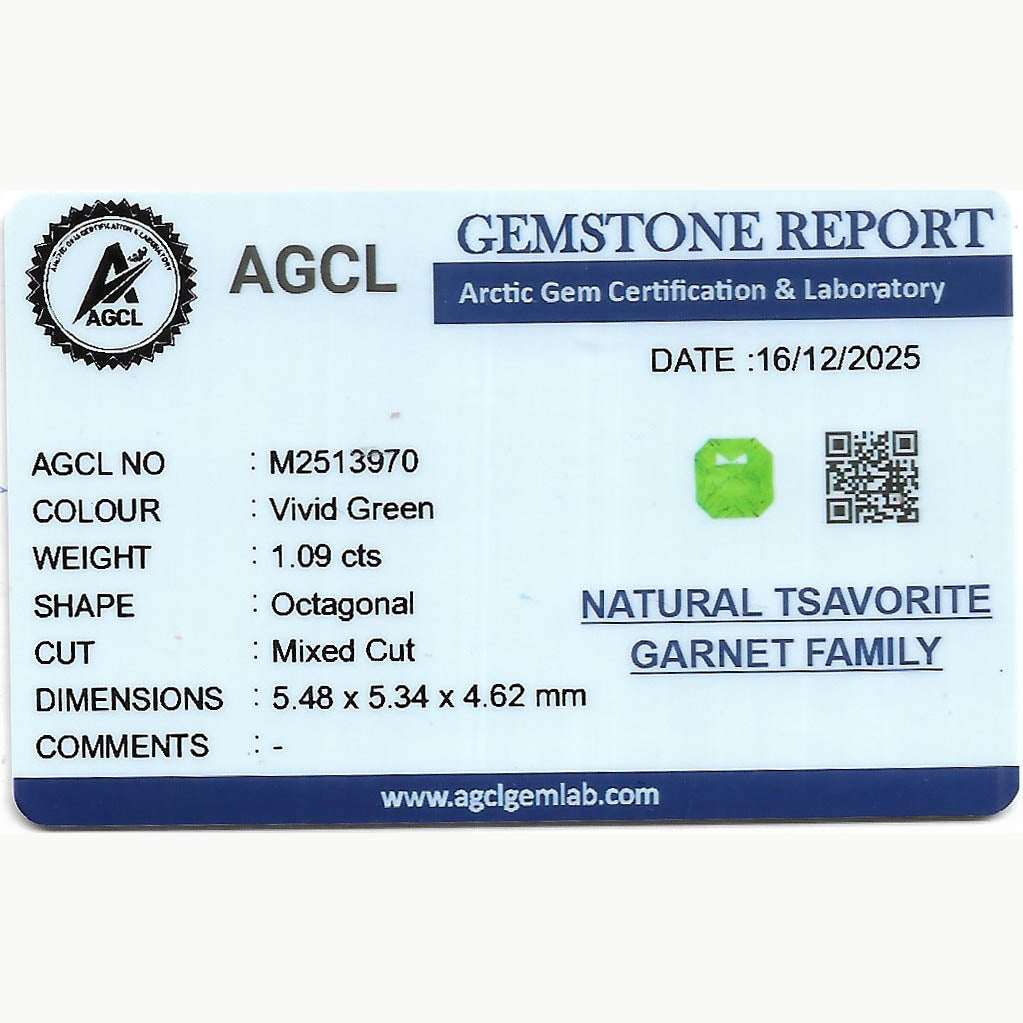
| 1.09 ct | Octagon | Untreated* | AGCL - Gem Lab #M2513970 | $1,635 | $1,500/ct |
| 1.85 ct | Cushion | Clarity enhanced | GIA #6243017771 | $1,860 | $1,005/ct |
| 1.86 ct | Cushion | Untreated* | GIA #1242032119 | $2,805 | $1,508/ct |
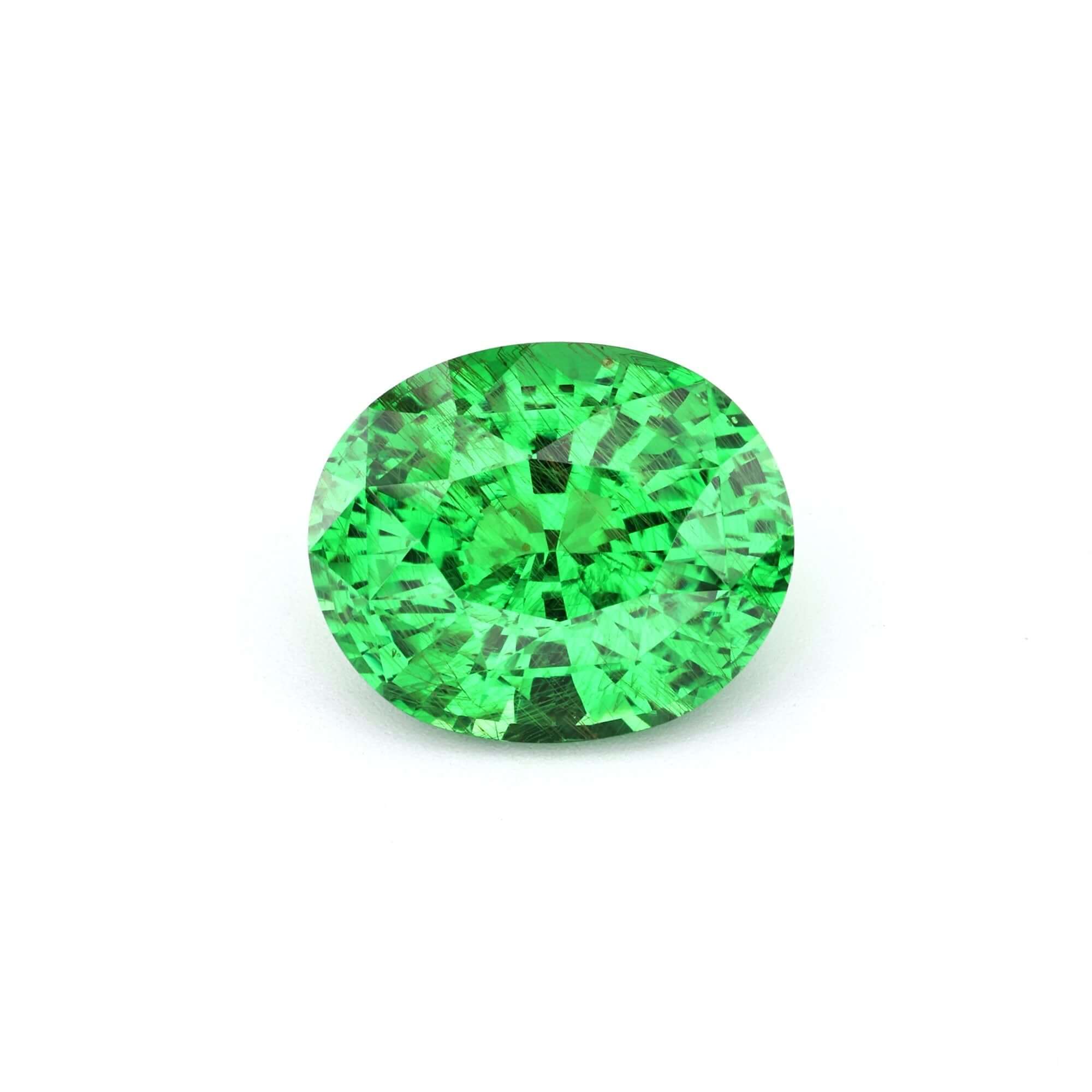
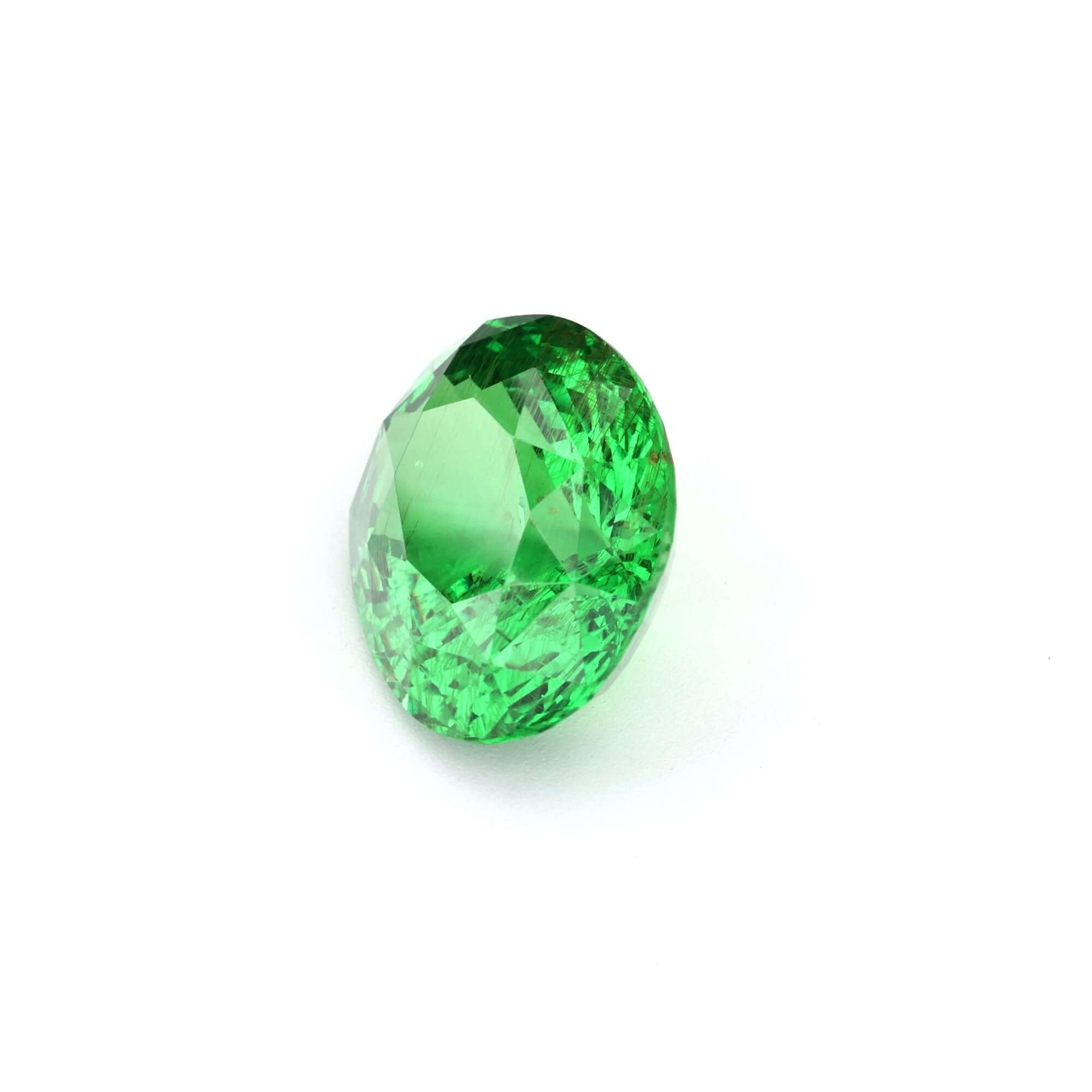
| 4.95 ct | Oval | Untreated* | GIA #5231980220 | $22,724 | $4,591/ct |
*Untreated is our own assessment. All seven are Kenyan by our own purchase record; GIA does not issue a geographic origin opinion for grossular garnet. These are our own listed prices on 29 September 2026 — our stock, not a market survey — and they move with the stock; the price on the product page is the binding one.
Two things in that table are worth reading slowly, and one thing is missing from it on purpose.
Five of the six untreated stones sit between 1.01 and 1.86 carats, and their per-carat prices run $1,100 to $1,508 — a spread of about a third across a weight range that nearly doubles. The sixth untreated stone, the 4.95 ct oval, is $4,591 per carat. Set against the nearest untreated stone we hold, the 1.86 ct at $2,805, it is 8.10 times the price at 2.66 times the weight.
What is missing is anything between 1.86 and 4.95 carats. That gap is a real hole in our stock, not a simplification of the table, and it means those two prices are two prices rather than two points on a curve. We are not going to interpolate a per-carat figure across a weight we hold no stone in.
The 1.85 ct cushion is clarity enhanced. It is titled, listed and sold as treated, at $1,860. GIA publishes that its identification report states any detectable treatments; this report prints Clarity Enhanced under Additional Results. On GIA's own account, clarity enhancement of this kind means "filling surface-reaching fractures or cavities with a glass, resin, wax or oil." The filler on this stone is not identified, so we name none.
Care for it is different from care for the other six, and the instruction is GIA's own: "Only warm soapy water should be used to clean fracture-filled stones." No ultrasonic and no steam. If it goes to a bench jeweler, tell them about the enhancement before any work starts.
No laboratory or trade body publishes a per-carat price scale for tsavorite — GIA's own published note on value says only that it goes up significantly with size — so this guide prices from our own stock rather than from a tier chart. On 29 September 2026 we hold seven tsavorites, from $1,177 for a 1.07 ct to $22,724 for a 4.95 ct. Five of the six untreated stones are under 2 carats and run $1,100 to $1,508 per carat; the sixth, at 4.95 ct, is $4,591 per carat. The seventh stone, a 1.85 ct at $1,860, is clarity enhanced and is listed and sold as treated.
GIA's published explanation is about fracturing rather than crystal size: "as tsavorite occurs under very high pressures and temperatures, it is often highly fractured in rough form." What is scarce is clean rough, not large rough — the same Gems & Gemology article (Winter 2017) describes faceted tsavorites of 25.10, 31.27, 33.55 and 58.52 carats. The one sourced size marker we are aware of is the ICA's, which calls a cut tsavorite of more than two carats a rare and precious thing. In our own stock the step shows up exactly once: our 4.95 ct at $22,724 against our 1.86 ct at $2,805 — 8.10 times the price at 2.66 times the weight. We hold nothing between those two weights, so that is two prices, not a curve.
Not quite, and the rank is worth getting right because a report prints both. Grossular garnet is the species; tsavorite is its green variety. A report recording grossular garnet rules out the other green garnets, and it is the report's own variety field that prints Tsavorite. Garnet is the January birthstone, and that attaches at the group level, so it reaches grossular and so it reaches tsavorite.
Have a question about a specific tsavorite, or want to see options at a certain size or budget? Email crescentgems@gmail.com — we respond within one business day. Free US shipping; $60 flat elsewhere, free over $499. 14-day returns on every order.

CG8417

CG8460
CG8359
CG8360
CG8465
CG8447
Prices are shown in your local currency and may change.
CG8417
CG8460
CG8359
CG8360
CG8465
CG8447


Blue Star Sapphire Price Guide — What They Cost and Why
Read moreabout Blue Star Sapphire Price Guide — What They Cost and Why
Tsavorite Garnet Price Guide — What They Cost and Why
Read moreabout Tsavorite Garnet Price Guide — What They Cost and Why
Color-Change Sapphire Price Guide — What They Cost and Why
Read moreabout Color-Change Sapphire Price Guide — What They Cost and Why
Is Cat's-Eye Chrysoberyl Good for an Engagement Ring?
Read moreabout Is Cat's-Eye Chrysoberyl Good for an Engagement Ring?
Cat's Eye Chrysoberyl Price Guide — What They Cost and Why
Read moreabout Cat's Eye Chrysoberyl Price Guide — What They Cost and Why