

- by Ahmed Shareek
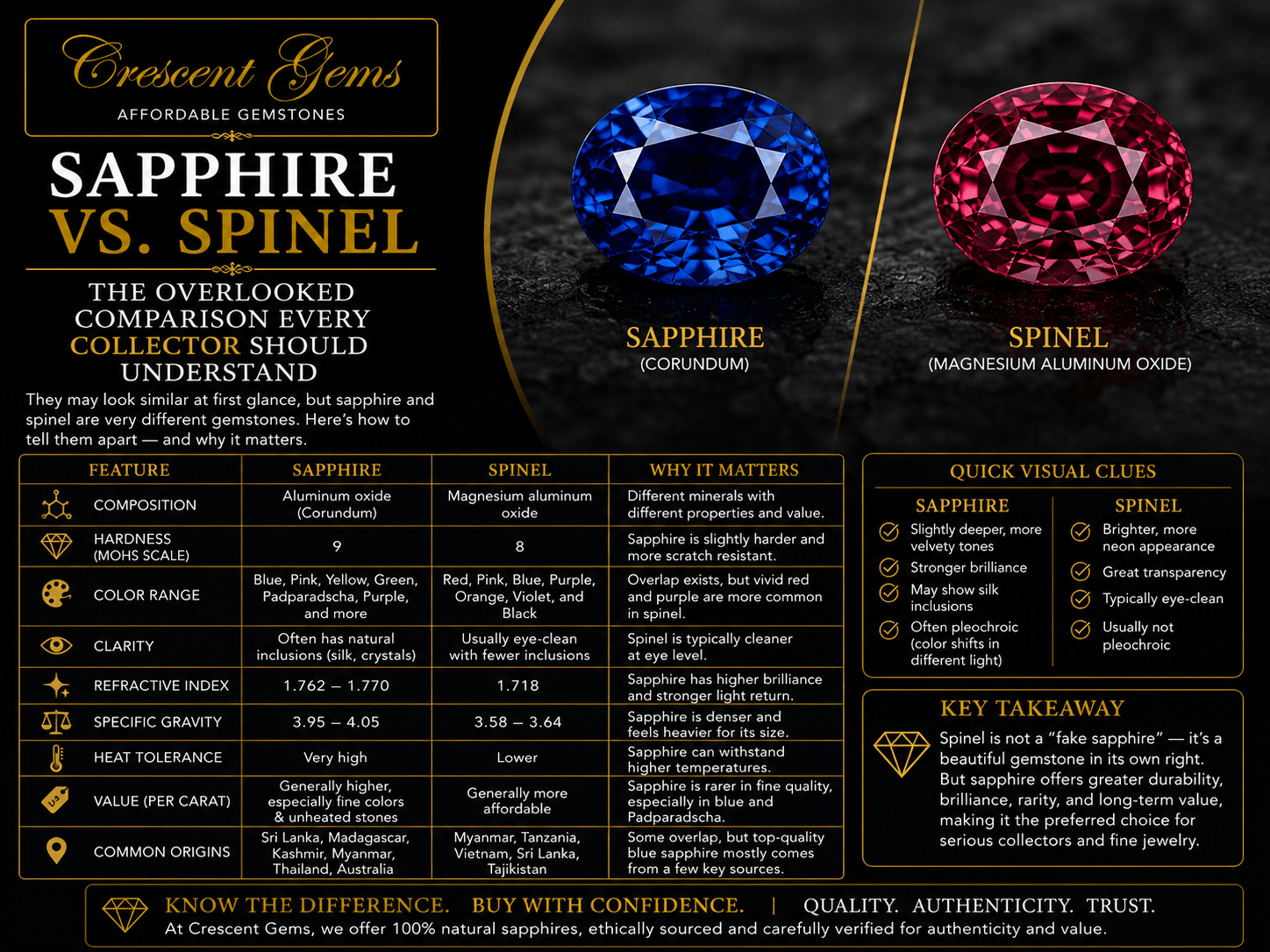
Sapphire vs. Spinel — The Overlooked Comparison Every Collector Should Understand
- by Ahmed Shareek
New to buying sapphires? Start with our Ultimate Sapphire Buying Guide — the complete resource for color, origin, treatment, and pricing.
For most of gemological history, spinel did not even have its own name. The great "rubies" of royal collections — the Black Prince's Ruby in the British Imperial State Crown, the Timur Ruby in the British Crown Jewels — were identified as spinels only after modern mineralogy could tell the difference. Spinel spent centuries in the shadow of corundum, mistaken for ruby or sapphire, undervalued, and overlooked.
That is changing. Over the past decade, spinel has emerged as one of the fastest-growing categories in the colored gemstone market. Collectors, jewelry designers, and informed buyers are discovering what dealers have long known: spinel produces some of the most vivid, clean, and optically brilliant colored gemstones on Earth — and it does so at prices significantly below equivalent sapphire and ruby. The comparison between sapphire and spinel is no longer academic. It is a real decision that serious buyers face.
This guide provides an honest, side-by-side comparison of the two minerals across every dimension that matters: color, hardness, treatment, clarity, rarity, price, and collector value. We sell sapphires at Crescent Gems — but understanding where spinel has genuine advantages is part of what makes our guidance trustworthy.
| Factor | Sapphire (Corundum) | Spinel |
|---|---|---|
| Mineral | Aluminum oxide (Al₂O₃) | Magnesium aluminum oxide (MgAl₂O₄) |
| Crystal system | Trigonal (hexagonal) | Cubic (isometric) |
| Hardness | Mohs 9 | Mohs 8 |
| Toughness | Excellent | Good |
| Color range | Every color | Red, pink, blue, violet, gray, black |
| Pleochroism | Yes (shows different colors along axes) | None (singly refractive) |
| Standard treatment | Heat (common, ~85–95% of market) | None (almost never treated) |
| Typical clarity | Eye-clean common | Eye-clean very common |
| Market recognition | Universally known | Growing but still niche |
| Resale liquidity | Strong, established market | Growing, less liquid |
| Price (fine, 1–2ct) | $800–$6,000/ct | $500–$4,000/ct |
Figures above are approximate market guidance, not fixed quotes. Actual value varies by treatment, origin, colour, cut, clarity, and certification.
Spinel is magnesium aluminum oxide — a different mineral from corundum, with a different crystal structure, different chemistry, and different optical properties. It crystallizes in the cubic system (like diamond and garnet), which means it is singly refractive — it has no pleochroism, no directional color variation, and no birefringence doubling. Light passes through spinel the same way regardless of direction.
This single refraction gives spinel a clean, pure optical character that some collectors consider more "honest" than corundum's pleochroic complexity. A red spinel shows the same red from every angle. A blue sapphire may show different blues, violets, or greens depending on which crystal axis you are looking along. Whether you prefer the simpler or the more complex optical character is a matter of taste.
Spinel forms in the same geological environments as corundum — in metamorphic marbles and in alluvial deposits. In Sri Lanka, Myanmar, Tanzania, and Vietnam, spinel is literally found alongside sapphire and ruby in the same gem gravels. The two minerals are geological siblings, which is why they were confused for so long.
Sapphire and spinel share several colors but each has territories where it dominates.
Vivid red and hot pink. This is spinel's strongest suit. Fine red spinel — sometimes called "flame spinel" or, at the top end, "Jedi spinel" from Mogok, Myanmar — produces a vivid, neon-bright red or hot pink that is among the most electrifying colors in all of gemology. The color is chromium-based (the same element that colors ruby and pink sapphire), but spinel's cubic crystal structure allows chromium to produce a purer, more saturated red without the slight orange or brown modifiers that ruby sometimes carries.
Fine red spinel above 2 carats is genuinely rarer than equivalent ruby. The difference is that the market has not caught up — red spinel still trades at a fraction of ruby's price for comparable beauty and rarity. This is the value proposition that collectors are increasingly recognizing. For a full look at what drives ruby's own pricing, browse our GIA-documented ruby collection.
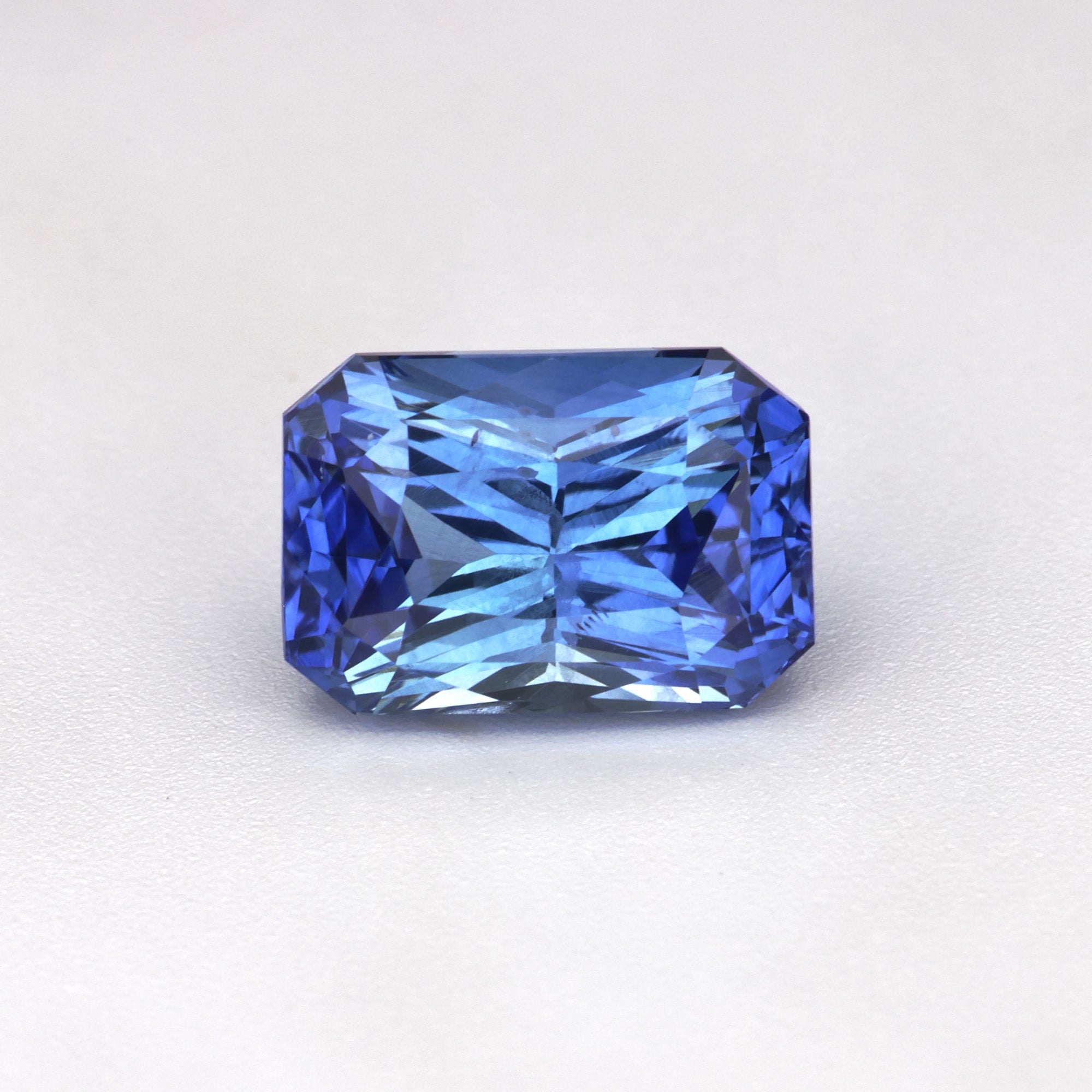
Cobalt blue. A specific subset of blue spinel — colored by cobalt rather than iron — produces a vivid, slightly violet-tinged blue that is electric and immediately recognizable. Cobalt blue spinel from Vietnam (Luc Yen) and Tanzania is one of the most sought-after colors in the current collector market. The color is different from blue sapphire's iron-titanium blue: brighter, more neon, less deep.
Lavender and gray. Spinel produces delicate lavender, gray-violet, and steel-gray tones that have no direct equivalent in sapphire. These softer, more nuanced colors have become increasingly popular in modern engagement ring designs and are one of spinel's unique contributions to the color palette.
Blue depth and range. While cobalt spinel produces a brilliant neon blue, sapphire produces the full blue spectrum from pale pastel through cornflower to deep royal. The iconic "blue sapphire" color — a deep, rich, medium-toned blue with slight violet — is something spinel does not replicate. Sapphire owns blue in the way that emerald owns green. For the full range, see our Blue Sapphire Buyer's Guide.
Yellow, orange, green, and teal. Sapphire produces vivid yellow, orange, green, and the blue-green teal that has become one of the hottest engagement stone colors. Spinel exists in some of these hues but rarely with the saturation or availability that sapphire offers. In these colors, sapphire has no real competition from spinel. See our Interactive Sapphire Color Chart.
Padparadscha. The balanced pink-orange padparadscha color is unique to sapphire. No spinel equivalent exists. See our Padparadscha Guide.
Star phenomenon. Star sapphires are a major category with centuries of collecting history. Star spinel exists but is extremely rare and not commercially significant.
Pink. Both produce fine pink. Spinel's pink tends to be brighter and more neon; sapphire's pink tends to be warmer and more saturated. Pink sapphire carries chromium warmth; pink spinel carries chromium brightness. Both are excellent in rose gold engagement rings. Compare in our Pink Sapphire Buyer's Guide.
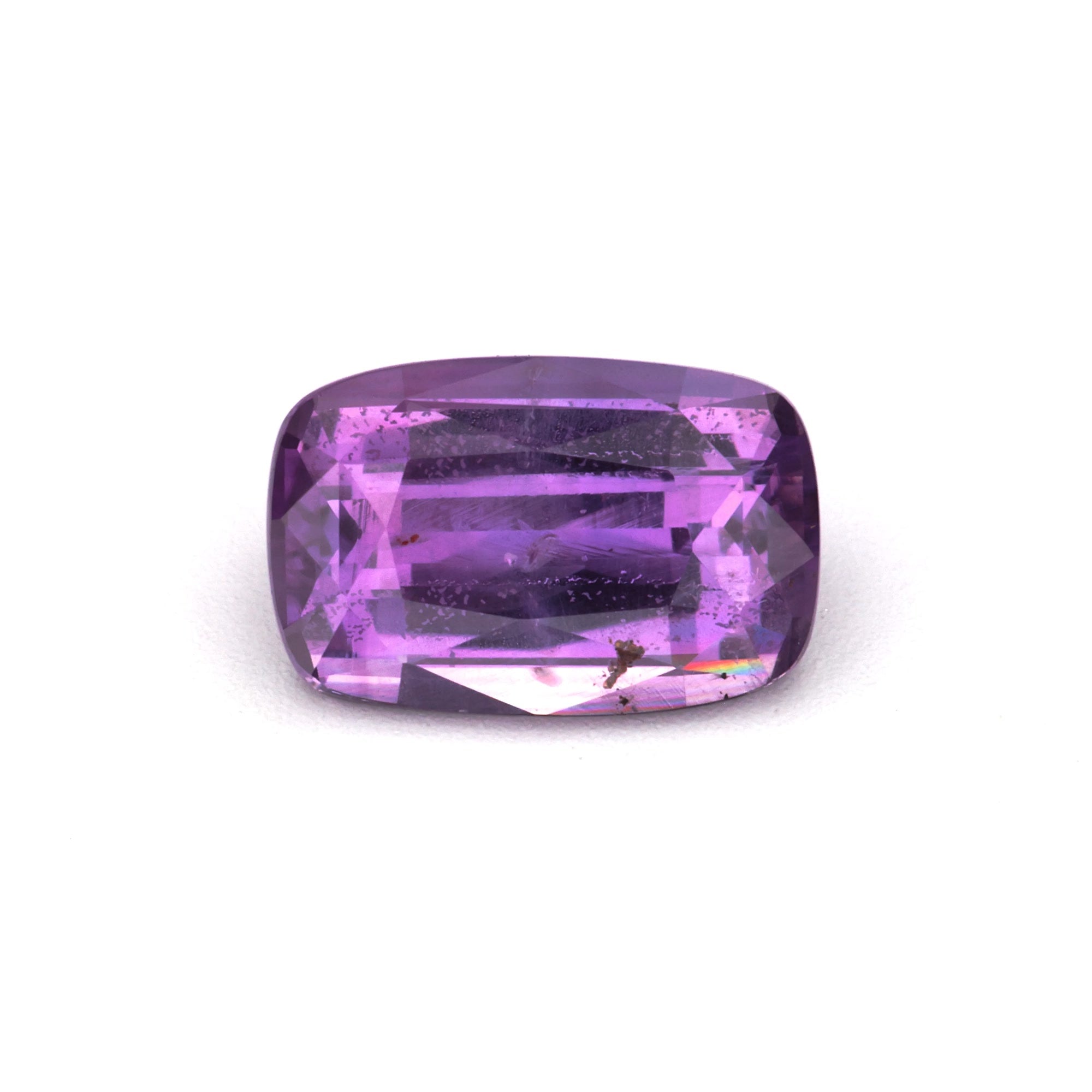
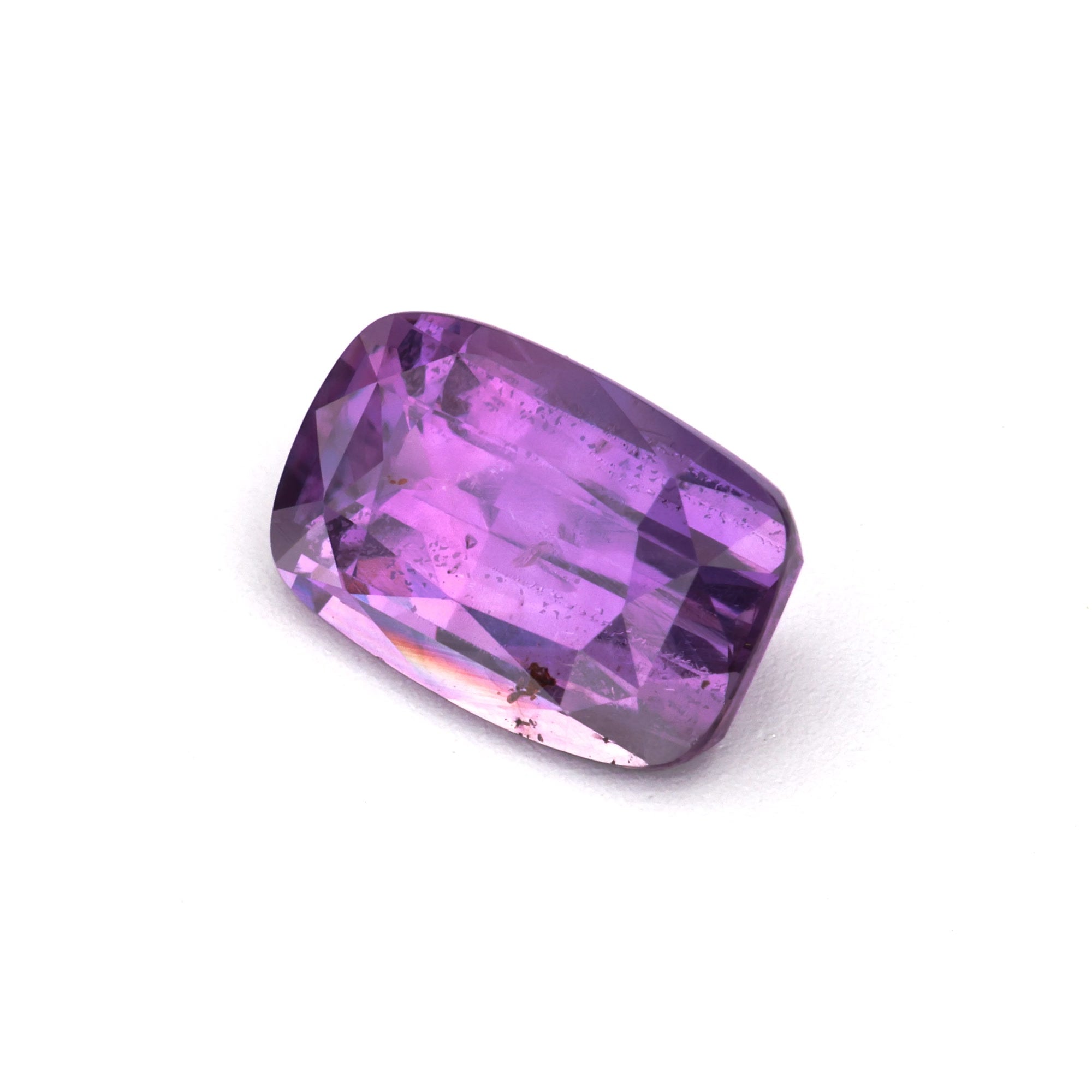
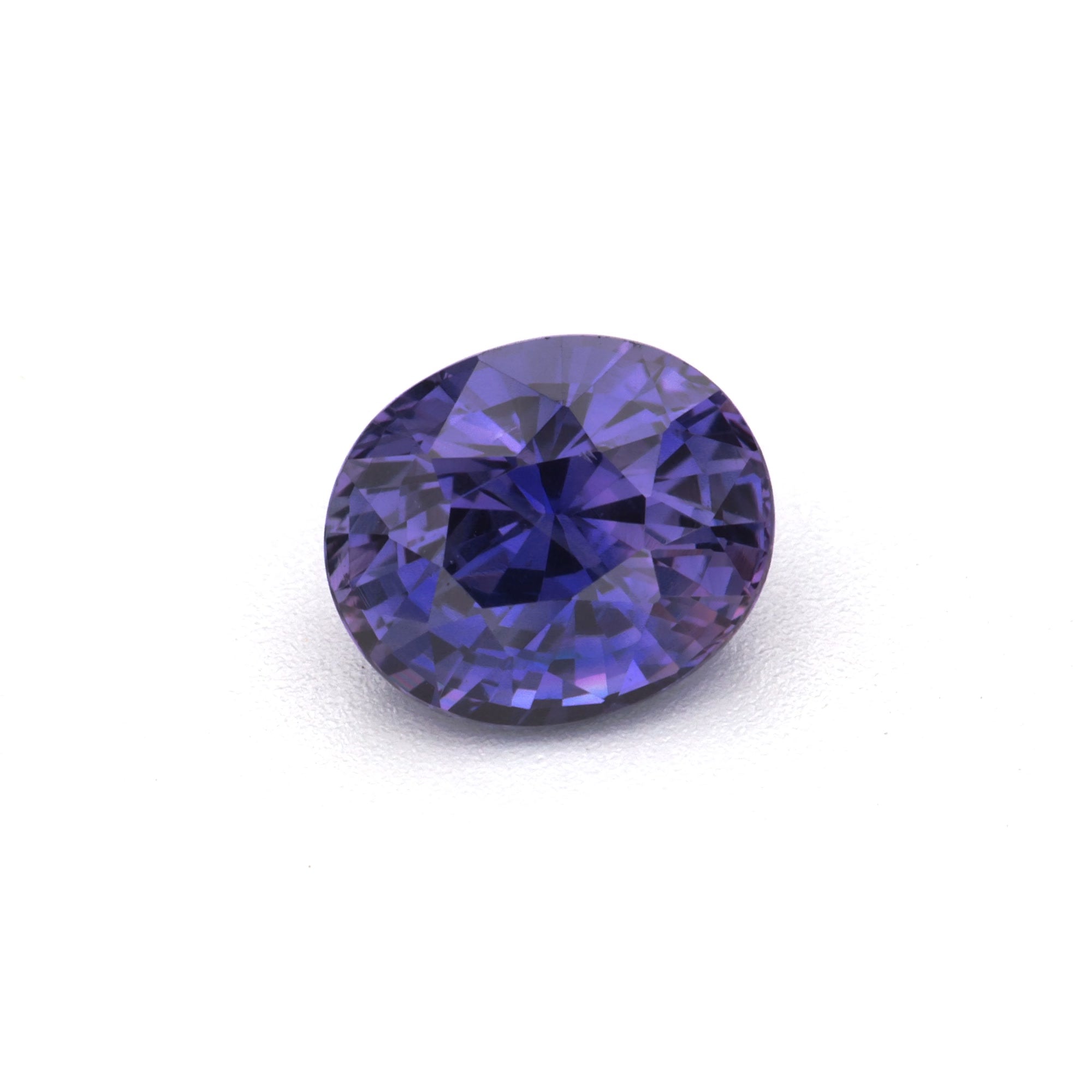
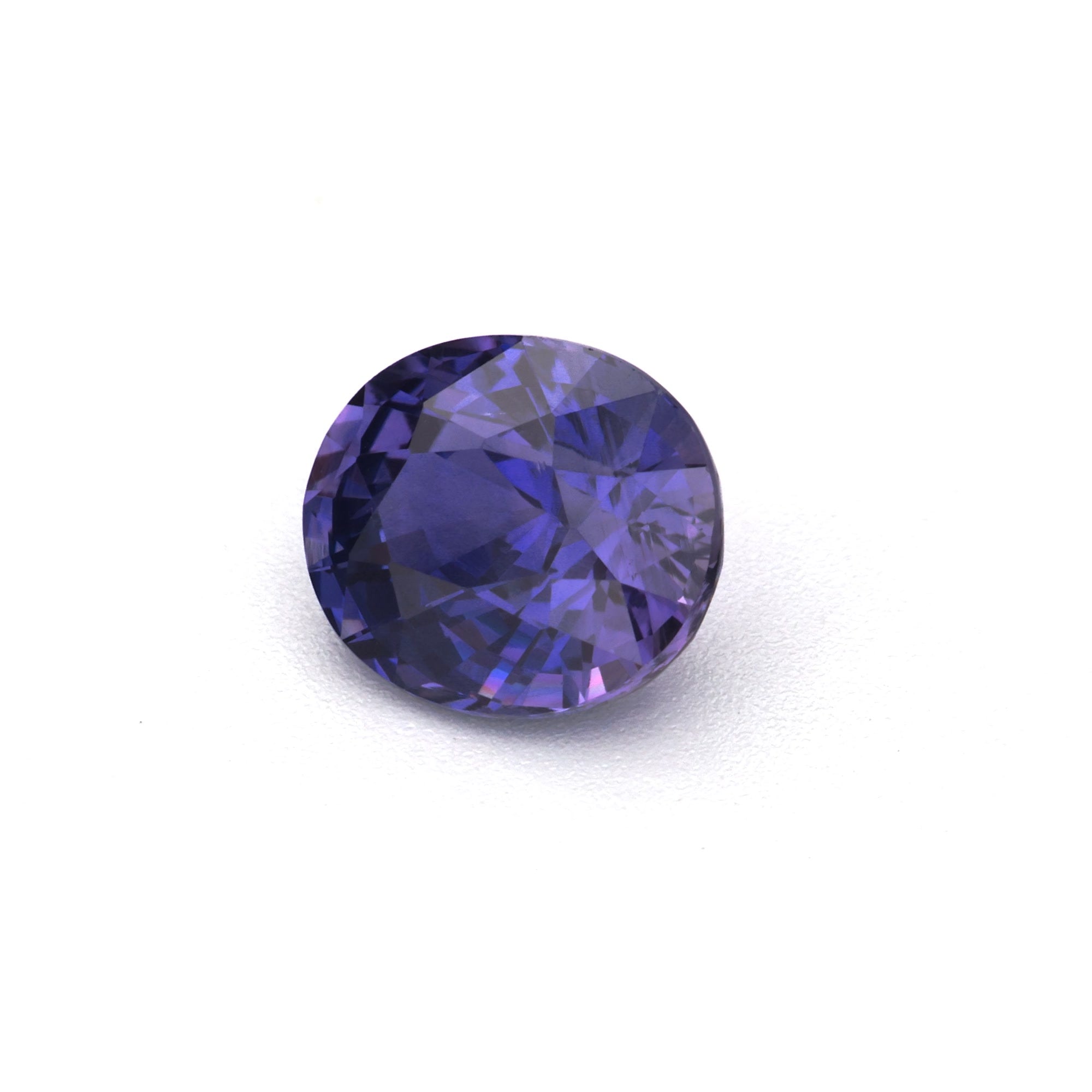
Purple and violet. Both produce fine purple. Sapphire's purple is often warmer and shifts more under different lighting (due to pleochroism and vanadium chemistry). Spinel's purple is more consistent across lighting conditions (no pleochroism). See our Purple Sapphire Buyer's Guide.
Sapphire wins on hardness. The question is whether the margin matters.
Sapphire: Mohs 9. Only diamond can scratch it. Dust, metal, glass, and all household materials are too soft to mark the surface. Daily-wear polish retention is essentially permanent.
Spinel: Mohs 8. Harder than topaz, harder than emerald, harder than garnet and tourmaline. The only common materials that can scratch spinel are sapphire and diamond. In practical daily-wear terms, spinel is very durable and suitable for engagement rings. Over decades, a spinel ring may develop finer surface wear than an equivalent sapphire ring, but the difference is subtle and most wearers would never notice it.
Both minerals have good toughness — sapphire slightly better, but neither is fragile. Both are suitable for daily-wear rings. If you are choosing between sapphire and spinel for an engagement ring, hardness is a point in sapphire's favor but not a decisive one. For an engagement ring durability comparison across multiple stones, see Sapphire vs. Emerald.
This is the factor that collectors care about most, and where spinel has a clear, unambiguous advantage over sapphire.
Sapphire: The vast majority of commercial sapphire — estimated at 85–95% — is heat-treated. The treatment is accepted, permanent, and fully legitimate, but it means that an unheated sapphire of fine color is genuinely rare and commands a significant premium. At 2+ carats, the unheated premium for blue sapphire can be 200–400% over heated equivalents. Finding fine unheated sapphire requires either specialist dealers (like Crescent Gems) or paying the rarity premium. See What Is an Unheated Sapphire and How Heat Treatment Works.
Spinel: Spinel is almost never treated. The overwhelming majority of gem-quality spinel on the market is unheated, untreated, and in its entirely natural state. Heat treatment of spinel is documented but uncommon, because the results are generally not significant enough to justify the effort. That makes the "heated vs. unheated" question far less fraught than it is in sapphire — but not moot. GIA records colour-altering heat treatment and occasional fracture filling in spinel, cobalt-diffused blue spinel has been traded in quantity since 2015, and checking spinel for cobalt diffusion is part of GIA's standard service. The report is still what settles an individual stone.
For collectors who value natural, untreated color above all else, this remains a powerful argument for spinel. Fine spinel is far likelier than fine sapphire to be exactly what nature made: untreated color is the ordinary case in spinel rather than the rarity premium it is in corundum.
Both sapphire and spinel are commonly available in eye-clean quality. Neither mineral is characteristically included the way emerald is. At the fine jewelry level, eye-clean clarity is the standard for both, and achieving it does not require a significant premium in either case.
Spinel arguably has a slight edge here: because it is singly refractive and typically untreated, fine spinel often shows an exceptional "crystal" quality — a pure, glass-like transparency with no silk, no haze, and no treatment-induced features. The cleanest spinels look like colored glass with impossible saturation. Sapphire can match this clarity, but the finest unheated examples sometimes carry light silk (which can actually be desirable for its warming effect). See How to Read Sapphire Inclusions.
Spinel is, as of 2026, meaningfully less expensive than sapphire at most comparable quality levels. This is the core of the collector opportunity.
| Color/Quality | Sapphire (per carat) | Spinel (per carat) |
|---|---|---|
| Fine pink, 1–2ct, unheated | $800–$4,000 | $500–$2,500 |
| Vivid red/hot pink, 1–2ct | Ruby: $2,000–$10,000+ | $1,000–$5,000 |
| Fine blue, 1–2ct, unheated | $2,000–$6,000 | Cobalt: $1,500–$5,000 |
| Purple/violet, 1–2ct | $400–$2,000 | $300–$1,500 |
| Exceptional, 3ct+ | $4,000–$15,000+ | $2,000–$10,000+ |
Figures above are approximate market guidance, not fixed quotes. Actual value varies by treatment, origin, colour, cut, clarity, and certification.
The discount ranges from 20% to 60% depending on color and size. For a collector building a colored gemstone portfolio, spinel represents a value position — comparable beauty at lower per-carat cost, with the added advantage of near-universal untreated status.
However, this pricing advantage is narrowing. As more collectors and designers discover spinel, demand is rising faster than supply. Fine Burmese red spinel above 2 carats has appreciated 50–100% over the past five years. The value window exists now but may not exist indefinitely. For sapphire pricing detail, see Sapphire Pricing Explained.
This is where sapphire's advantage is most decisive and most practical.
Sapphire: Universally recognized. Everyone knows what a sapphire is. The word carries instant associations with royalty, engagement rings, and fine jewelry. Sapphires have a deep, liquid resale market. A fine Ceylon blue sapphire with GIA documentation can be resold through auction houses, dealers, and private channels with confidence. Market values are well-established and transparent.
Spinel: Still building recognition. Most non-specialist buyers have never heard of spinel. Explaining what it is — that it is a genuine, natural, valuable gemstone and not a synthetic or a lesser stone — is part of the purchase experience. The resale market for spinel exists among collectors and specialist dealers but is thinner and less liquid than sapphire's. Selling a fine spinel requires finding a buyer who understands what it is, which limits the audience.
This recognition gap is both spinel's weakness and its opportunity. The gap is what keeps prices lower than comparable sapphire. As recognition grows, prices follow. Collectors who buy fine spinel now are betting on that recognition curve — and the bet has been paying off over the past decade.
Both work. Both are durable enough for daily wear. The choice comes down to priorities:
Choose sapphire if:
Choose spinel if:
For sapphire engagement ring guidance, see How to Choose a Sapphire for Your Engagement Ring and How to Commission a Custom Ring.
For serious gemstone collectors, owning both makes sense. Sapphire and spinel are complementary, not substitutes. A collection that includes fine Ceylon blue sapphire, unheated padparadscha, and a vivid Burmese red spinel covers three color positions that no single mineral can fill alone.
The informed collector's approach:
Sri Lanka produces spinel alongside sapphire in the same alluvial deposits. Ceylon spinel — particularly blue, violet, and pink varieties — has a long history and produces fine material. Because we source from Sri Lankan gem gravels, we occasionally encounter fine spinel in the same parcels as our sapphires. We focus on sapphire as our core offering, but we appreciate spinel for what it is: a beautiful, natural gemstone that rarely needs any treatment, with a collector profile that is rising fast.
Browse the full Ceylon sapphire catalog — every stone natural, every treatment disclosed, every price reflecting direct sourcing. Email crescentgems@gmail.com with questions. We respond within one business day.
Browse our current spinel collection — natural stones in the same rich color range as sapphire, each listed with its treatment status — or our GIA-documented ruby collection for the classic red benchmark spinel is so often compared against.

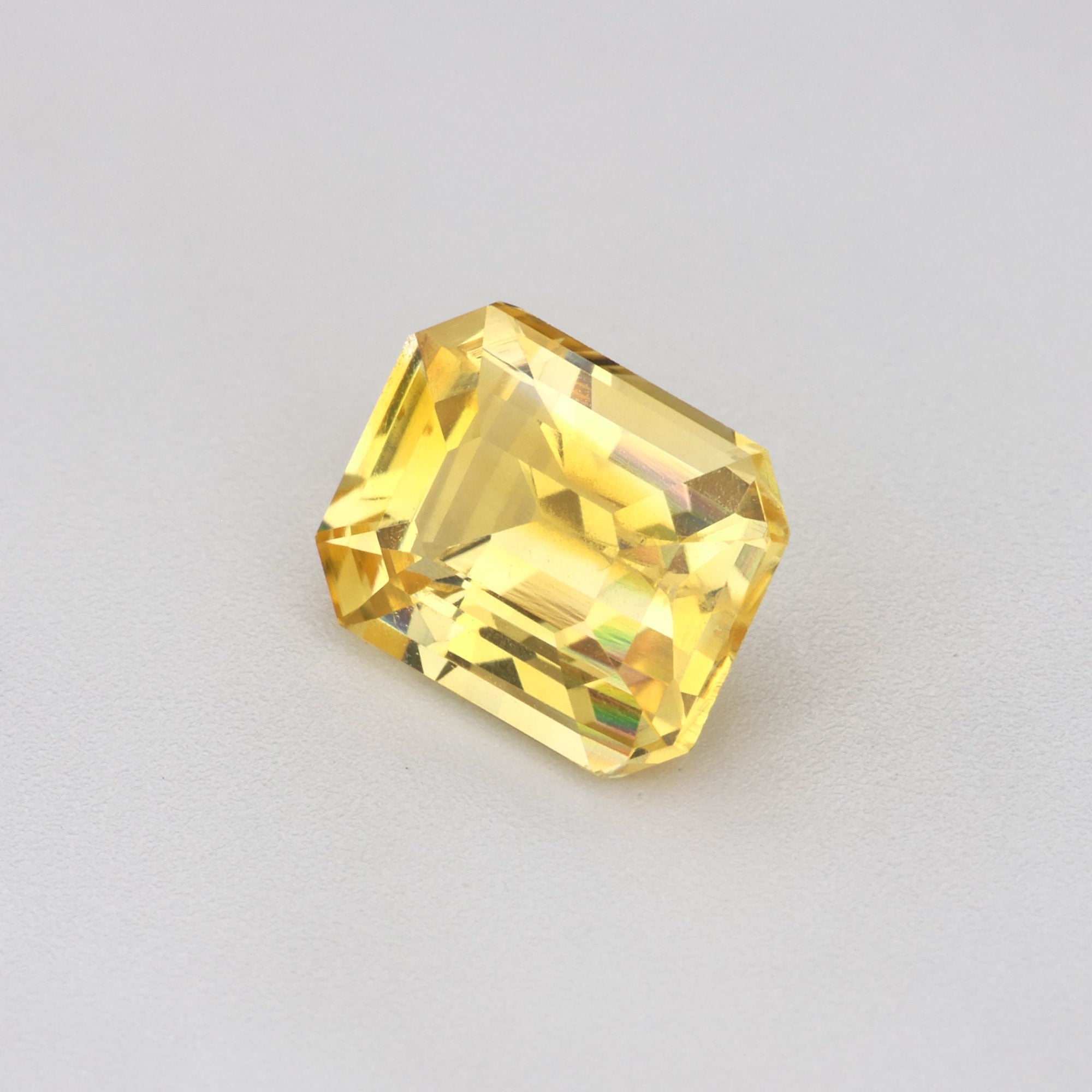
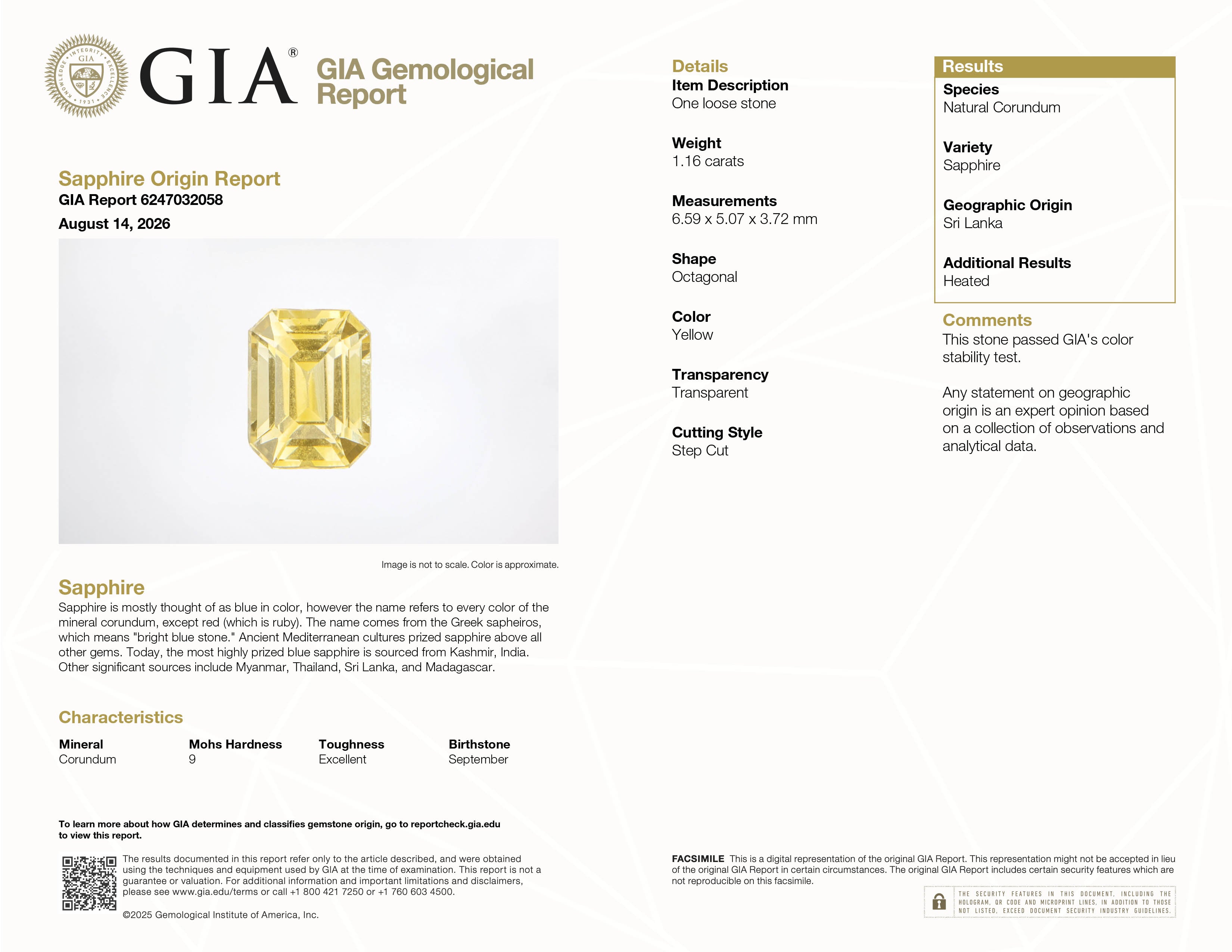
CG8465
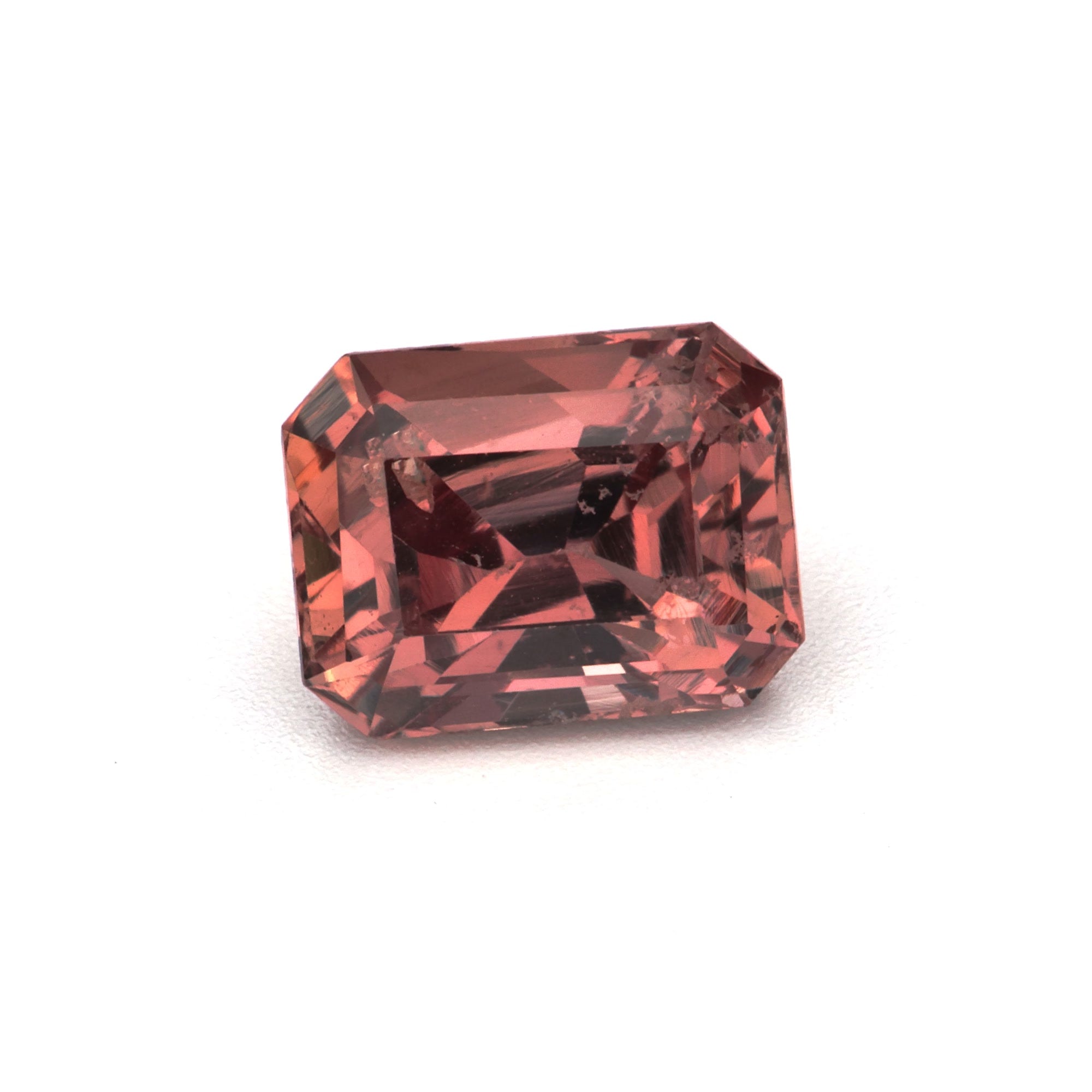
CG8460
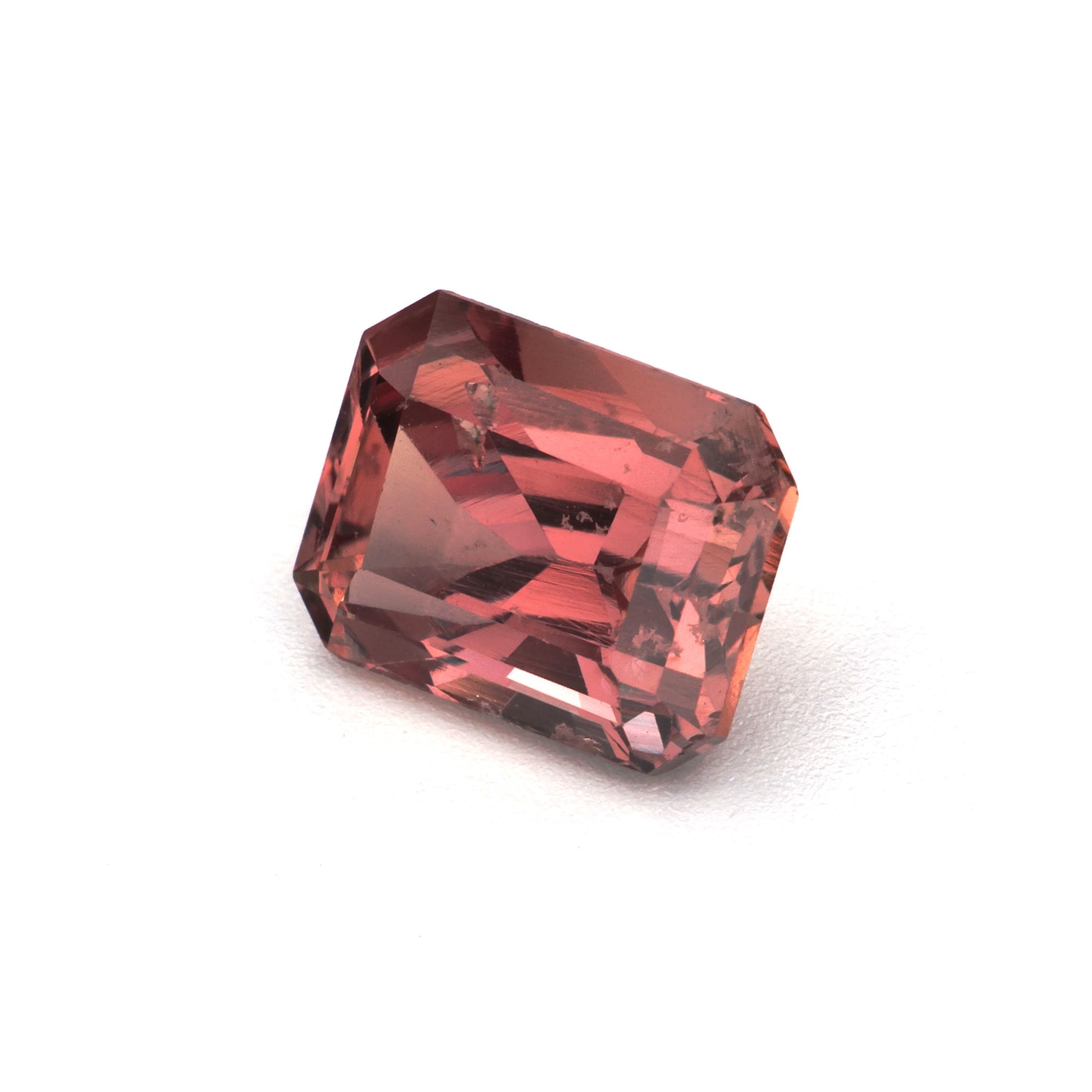
CG8456


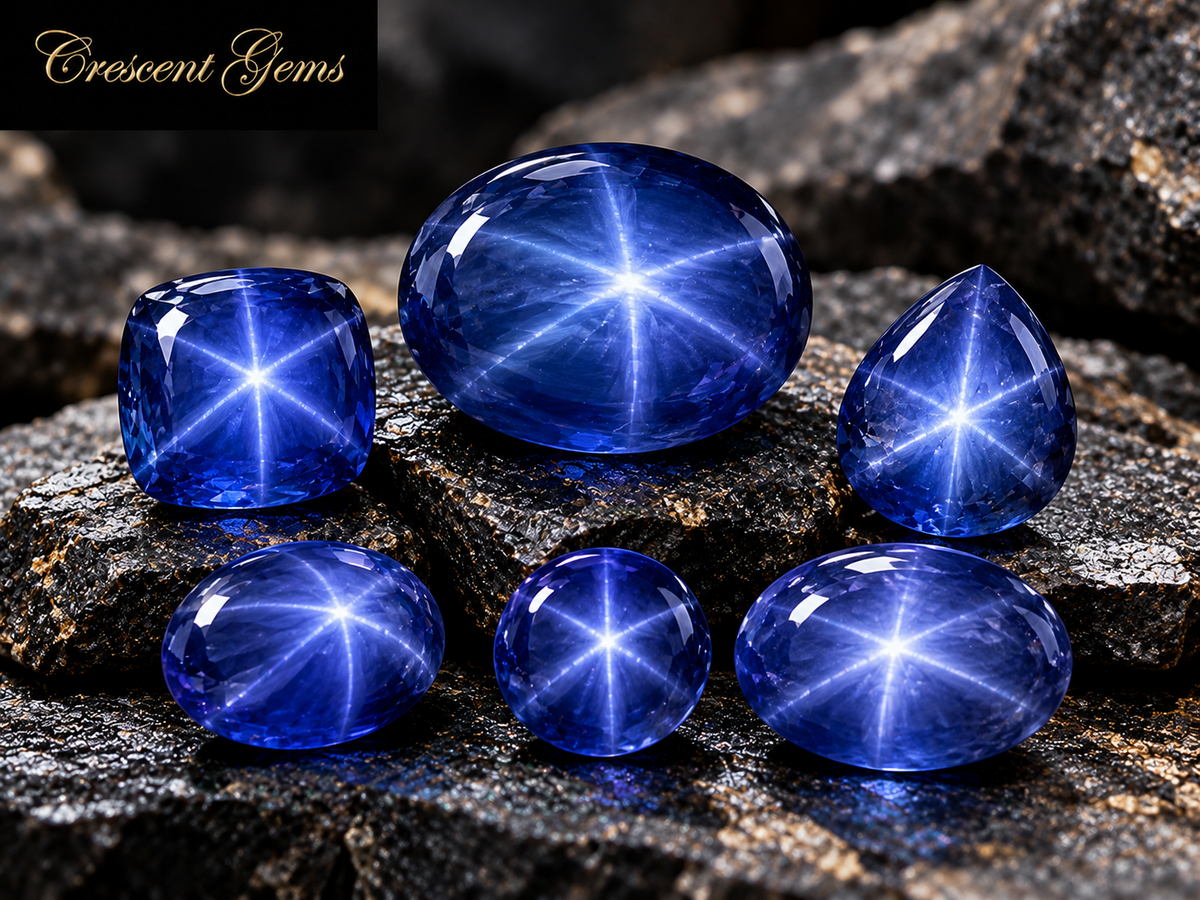
Blue Star Sapphire Price Guide — What They Cost and Why
Read moreabout Blue Star Sapphire Price Guide — What They Cost and Why
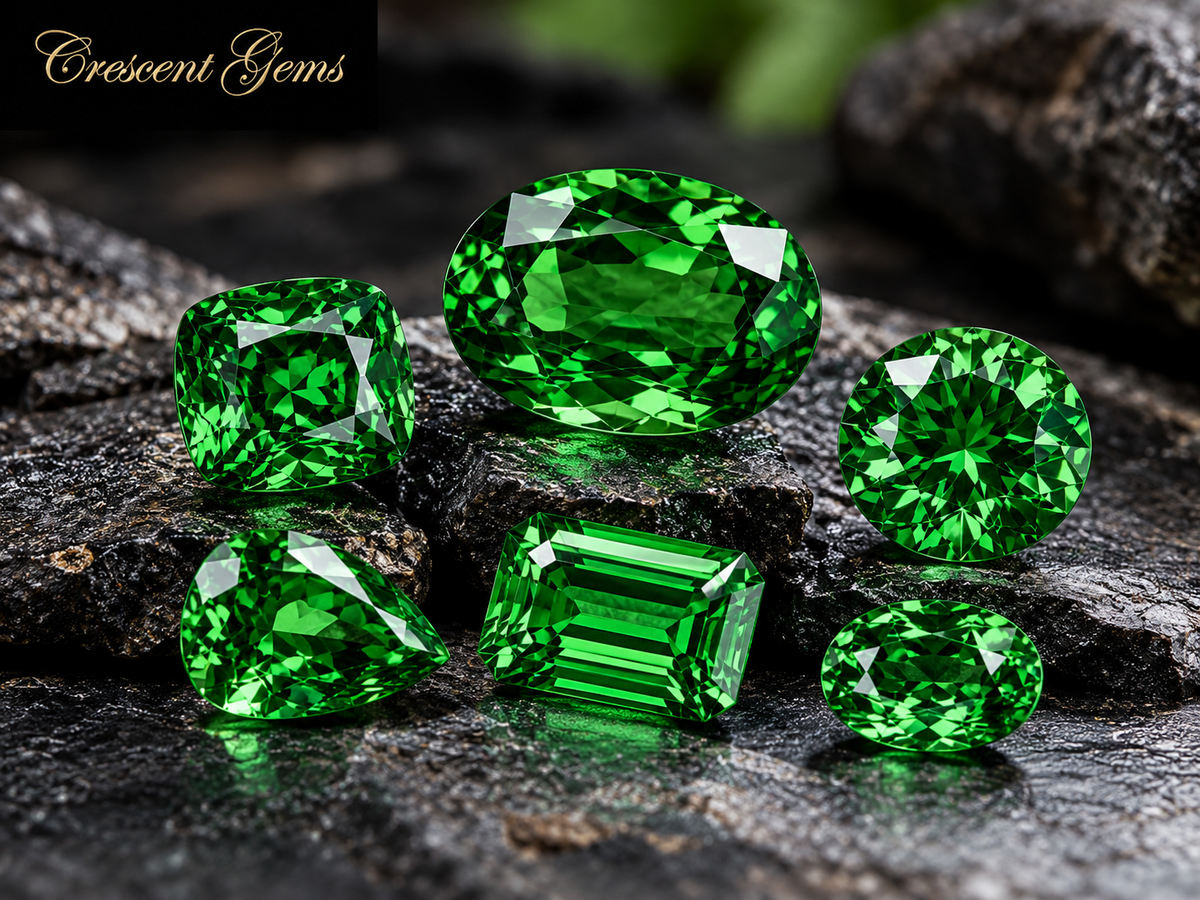
Tsavorite Garnet Price Guide — What They Cost and Why
Read moreabout Tsavorite Garnet Price Guide — What They Cost and Why
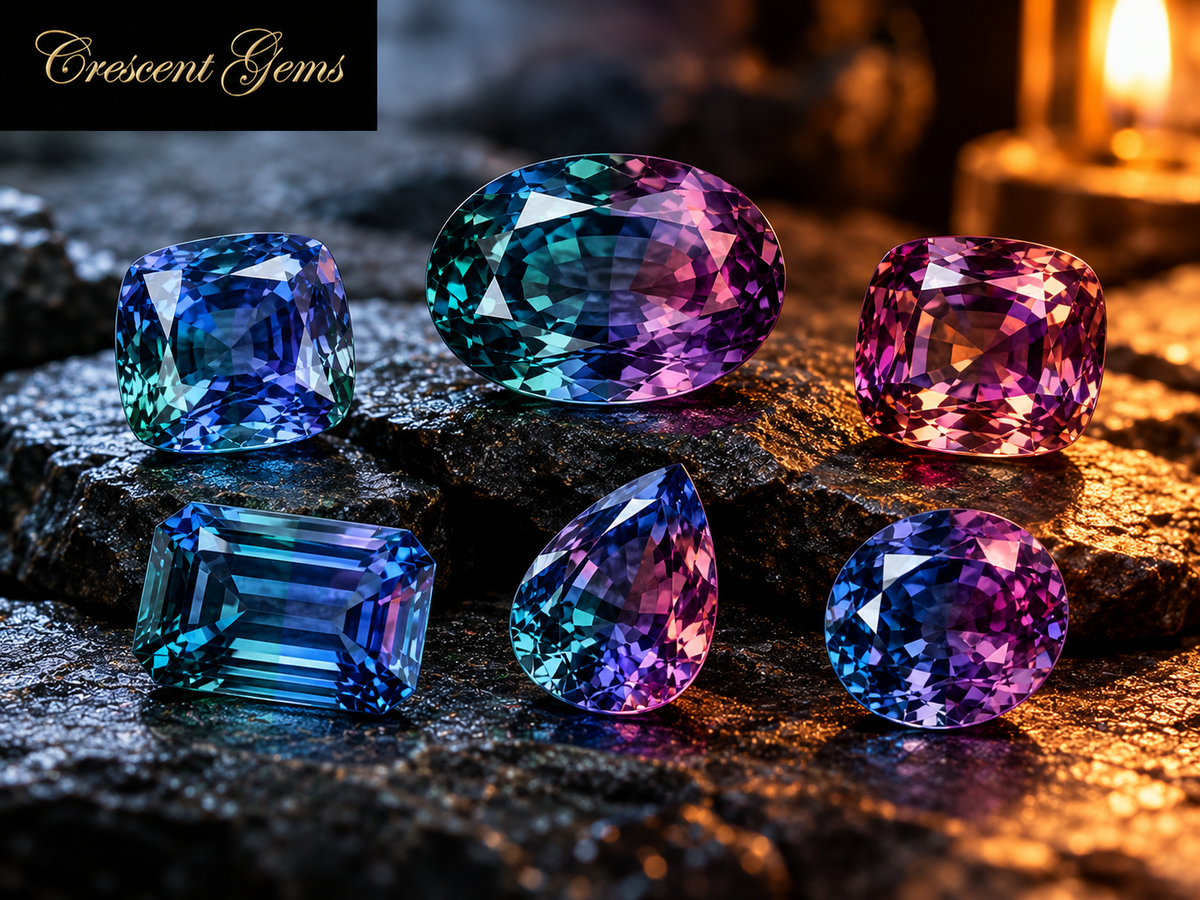
Color-Change Sapphire Price Guide — What They Cost and Why
Read moreabout Color-Change Sapphire Price Guide — What They Cost and Why
Is Cat's-Eye Chrysoberyl Good for an Engagement Ring?
Read moreabout Is Cat's-Eye Chrysoberyl Good for an Engagement Ring?
Cat's Eye Chrysoberyl Price Guide — What They Cost and Why
Read moreabout Cat's Eye Chrysoberyl Price Guide — What They Cost and Why















Share: