- by Ahmed Shareek
Ruby — The Complete Buyer's Guide to the World's Most Valuable Colored Gemstone
- by Ahmed Shareek
We are a supplier from the source in Sri Lanka, so our gemstones reach you direct, without the intermediaries most sellers buy through.
Comparing ruby with sapphire? Read our Pink Sapphire guide for the ruby-pink sapphire boundary explained in full. For certification: our GIA report guide. For treatment: our unheated gemstone guide.
Ruby is among the most commercially valuable colored gemstones in the world. At the finest quality levels — fine unheated Burmese ruby above 3 carats, pigeon’s blood color, GIA-documented — per-carat prices regularly exceed equivalent diamonds at major auction houses. A 5-carat unheated Mogok ruby in exceptional color sold at Sotheby’s Geneva in 2015 for over $1.2 million per carat. Few other colored stones have reached these levels with any consistency.
It is also one of the most misrepresented categories in the gemstone market. The word

“ruby” is applied commercially across an enormous quality range — from $50 per carat commercial material to $100,000+ per carat collector pieces — and the treatments applied to lower-quality material range from standard and accepted (heat treatment) to significant and poorly disclosed (lead glass filling). Understanding what makes a ruby valuable, what treatments exist and what they mean, how to read a GIA report for ruby, and what documentation actually protects you is essential before any significant purchase.
This guide covers all of it.
Ruby is natural corundum — aluminum oxide (Al₂O₃) — colored red by chromium in the crystal lattice. It is the same mineral species as sapphire: all gem-quality corundum that is not red is sapphire; all red corundum is ruby. The distinction between ruby and sapphire is color, not species.
Chromium in corundum absorbs green and violet wavelengths of light, transmitting red and causing a strong red fluorescence under ultraviolet light. This fluorescence — where the stone effectively produces its own additional red glow in daylight conditions — is one of the defining characteristics of fine ruby, particularly Burmese material, and contributes to the extraordinary visual depth of the finest stones.
Key properties:
| Property | Ruby |
|---|---|
| Mineral species | Natural corundum (Al₂O₃) |
| Coloring agent | Chromium |
| Mohs hardness | 9 — second only to diamond; fully suitable for daily wear |
| Refractive index | 1.762–1.770 |
| Cleavage | None — no directional weakness |
| Fluorescence | Strong red to UV in fine Burmese; contributes to color depth |
| Treatment prevalence | 90%+ of commercial ruby is heat treated; glass filling common in lower grades |
Pigeon’s blood is among the most coveted color designations in the ruby market — and one of the most commercially misused terms in the gemstone trade. Understanding what it actually describes, and how it is formally designated, is essential for any buyer considering high-value ruby.
Pigeon’s blood is a formal color designation issued by Gübelin and SSEF (and recognized but not used as a formal term by GIA) describing a specific combination of hue, tone, and saturation in ruby. The precise description varies slightly between labs, but the consistent elements are: a pure red hue without significant pink or orange modifier, medium tone (vivid but not dark), and maximum saturation — the most intensely red color achievable at that tone level. The name traditionally refers to the color of the eyes of a freshly killed pigeon — a vivid, slightly fluorescent red with a hint of blue. It is not merely very red; it is a specific position on the color wheel with specific tone and saturation requirements.
Fine Burmese ruby shows strong red fluorescence under ultraviolet light — and, critically, under the UV component of daylight. This fluorescence causes the stone to emit additional red light in natural daylight conditions, making it appear more intensely red and luminous than its color alone would suggest under artificial light. The finest pigeon’s blood rubies appear to glow from within in sunlight — a quality that photographs cannot fully capture and that is one of the defining reasons why experienced buyers pay extraordinary premiums for Burmese material over equivalents from other origins.
Gübelin and SSEF formally designate stones as pigeon’s blood in their reports when the color meets their criteria. GIA does not use the term on reports but describes color using standardized hue-tone-saturation language. Any seller using “pigeon’s blood” without a Gübelin or SSEF report bearing that designation is applying their own opinion, which carries no weight as buyer protection. For any stone being sold as pigeon’s blood, require the specific Gübelin or SSEF report that formally grants the designation.
Ruby and pink sapphire are both chromium-colored red corundum. The distinction between them is purely one of saturation and tone: ruby must meet a minimum color intensity defined by major gemological laboratories; stones that fall below that threshold are classified as pink sapphire, regardless of their red hue position.
| Factor | Ruby | Pink Sapphire |
|---|---|---|
| Species | Natural corundum — chromium colored | Natural corundum — chromium colored |
| Distinction | Meets or exceeds ruby color threshold: vivid red, not pink | Falls below ruby threshold: pink, purplish-pink, or light red |
| Lab standards | GIA, Gübelin, SSEF each use different criteria; not always identical | Graded as pink sapphire when below ruby threshold |
| Price impact | Ruby designation commands 3x–10x+ premium over equivalent pink sapphire | Priced as pink sapphire regardless of visual appearance |
| Lab disagreement | A stone that GIA calls ruby may be pink sapphire at Gübelin; labs differ | Same stone may receive different classification from different labs |
| Investment basis | For collector-tier stones, a GIA, Gübelin or SSEF ruby designation plus origin documentation should be treated as essential | GIA documentation for unheated; less critical for heated commercial |
Figures above are approximate market guidance, not fixed quotes. Actual value varies by treatment, origin, colour, cut, clarity, and certification.
The lab disagreement point is commercially significant and poorly understood by most buyers. The ruby-pink sapphire boundary is not universally defined — GIA, Gübelin, and SSEF each have their own criteria and they are not identical. A stone sitting at the boundary may receive a ruby designation from one lab and a pink sapphire designation from another. In the US market, a GIA ruby designation controls commercial pricing. In the European and Asian collector market, Gübelin or SSEF is often preferred. For collector-tier stones at the boundary, obtaining reports from multiple labs is sometimes done specifically to establish the strongest documentation. See our full pink sapphire guide for the boundary explained in detail.
Ruby has one of the most complex treatment landscapes of any major gemstone. Understanding every treatment type, what it means commercially, and how it is disclosed on a GIA report is essential for any buyer above the commercial price point.
Over 90% of commercial ruby is heat treated. Standard heat treatment in ruby operates at temperatures up to 1,800°C and accomplishes several things: it improves color by deepening pale or brownish-red material toward more vivid red; it improves clarity by dissolving rutile silk inclusions; and it heals some surface-reaching fractures by causing partial recrystallization. The treatment is permanent, accepted by all major gemological bodies, and required to be disclosed. A GIA report for a heat-treated ruby will state “heat treatment” in the comments section.
A more significant enhancement than simple heat treatment. Some rubies are heated in a flux material (typically borax) that melts and flows into fractures within the stone during heating, improving apparent clarity by filling the fractures with a glass-like material. When present, GIA discloses “residues in fractures consistent with heat treatment” or similar language. This treatment significantly reduces value below equivalent heat-only treated material because the filled fractures are not permanent and the clarity improvement is not natural.
Lead glass filling (sometimes called composite ruby or glass-filled ruby) involves heavily fracturing a low-quality, heavily included ruby, then impregnating it with lead-silicate glass to fill the fractures and produce apparent clarity. The result can look superficially like a fine ruby to the naked eye but is dramatically different in value — the stone is largely glass, not ruby. Lead-filled rubies are extremely sensitive to acid (lemon juice, household cleaners), heat (ultrasonic cleaning, jeweler’s torch), and mechanical impact. They must be disclosed as a specific treatment category.
Treatment red flags — walk away from these:
Unheated ruby — natural red corundum that has never been subjected to thermal enhancement of any kind — commands a dramatic premium over equivalent heated material. At 1ct in fine vivid red: unheated Burmese ruby with GIA documentation may trade at $5,000–15,000 per carat; equivalent heated Burmese ruby trades at $1,500–4,000 per carat. The premium increases sharply with carat weight and color quality, reaching 5x–10x at 3ct+ in fine color. See our unheated gemstone guide and heated vs. unheated page.
Figures above are approximate market guidance, not fixed quotes. Actual value varies by treatment, origin, colour, cut, clarity, and certification.
Ruby is among the most origin-sensitive of the major colored gemstones. Origin not only affects price — it defines the entire commercial positioning of a stone. A fine 2-carat ruby is not simply a fine 2-carat ruby; it is a fine Burmese ruby or a fine Mozambique ruby or a fine Ceylon ruby, and the origin determines price by a factor of 2x–5x at equivalent quality.
Mogok Valley ruby is among the most prestigious gemstone origins in the world. The geological conditions of the Mogok Valley in northern Myanmar — marble-hosted corundum with low iron content and high chromium content — produce rubies with the specific combination of pure red hue, strong fluorescence, and characteristic luminosity that defines the pigeon’s blood standard. Fine unheated Mogok ruby is the benchmark most other ruby origins and qualities are measured against.
The Mogok Valley has been mined for over 2,500 years. Modern political complications in Myanmar have disrupted supply while demand has grown, contributing to the extraordinary price appreciation of fine Mogok material. GIA and Gübelin can issue Mogok Valley (Burmese) origin determinations on their reports. That documentation should be treated as essential for any stone being sold with a Burmese origin premium.
Mozambique has become the most significant commercial ruby source since large deposits were discovered in the Montepuez region in 2009. Mozambique ruby produces vivid reds with good saturation and — at the finest quality levels — strong fluorescence approaching Burmese character. The color character of Mozambique ruby tends slightly warmer than Burmese material, with slightly higher iron content that in some stones produces a slightly orangey-red modifier.
At the highest quality levels, fine unheated Mozambique ruby commands significant premiums. At commercial heated levels, Mozambique material has largely replaced Thailand as the dominant commercial supply. Major auction houses and collectors accept Mozambique origin at significant prices, though Burmese commands the ultimate premium for comparable material.
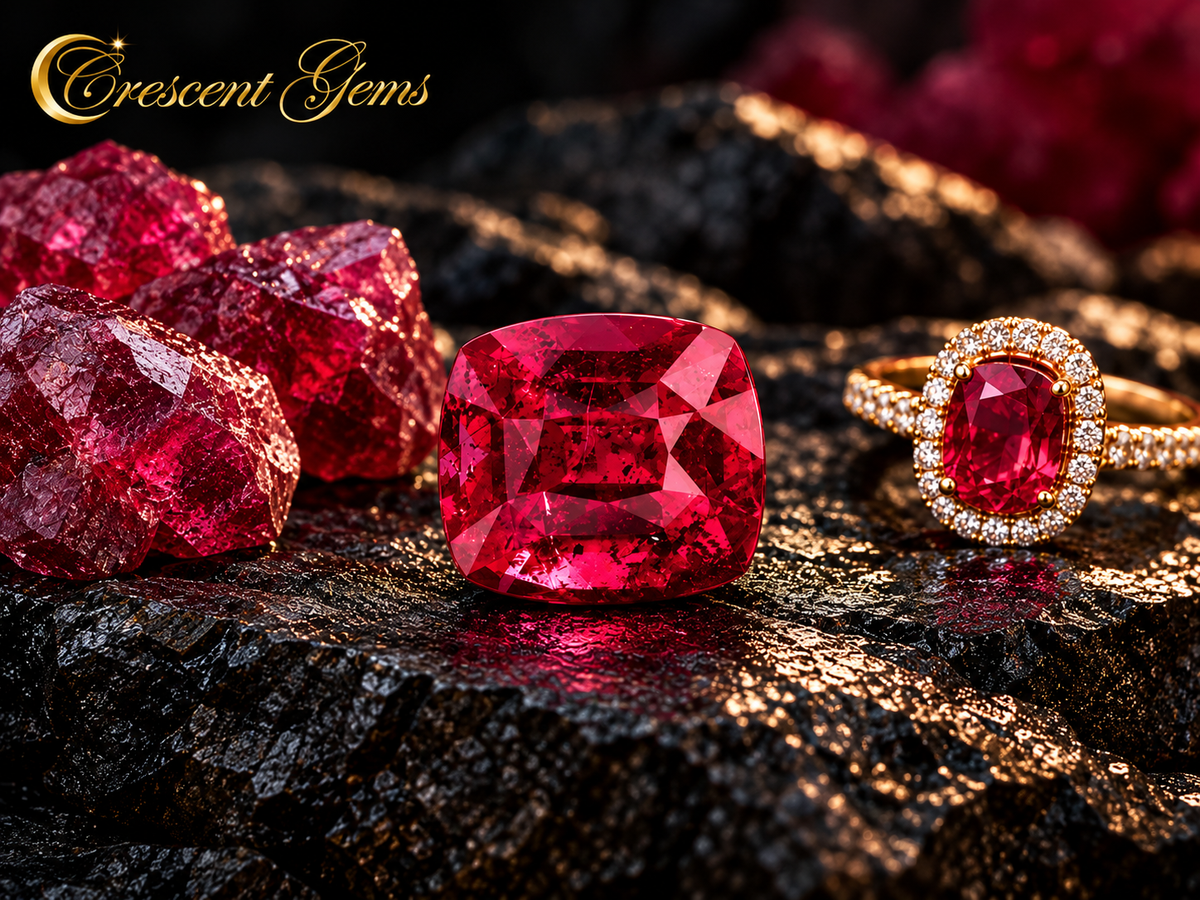
Ceylon ruby is uncommon and underappreciated. Sri Lanka is primarily known for sapphire, but the same geological conditions that produce fine sapphire also occasionally produce red corundum. Ceylon ruby tends toward a lighter, slightly pinker red compared to Burmese or Mozambique material — a quality sometimes described as “hot pink” that sits near the ruby-pink sapphire boundary. Fine unheated Ceylon ruby in clear, vivid red with GIA documentation is genuinely rare and commands collector premiums. Browse our ruby collection.
Thai ruby, historically sourced from the Chanthaburi-Trat district, is the darkest commercially traded ruby color family. High iron content in Thai corundum reduces fluorescence and produces a darker, more brownish-red that lacks the luminosity of Burmese or Mozambique material at equivalent saturation. Thai ruby is typically the least expensive natural ruby origin and has been largely supplanted by Mozambique in commercial volume. Thailand remains the world’s primary ruby treatment center, processing material from multiple origins.
Tanzania, Madagascar, Vietnam, Afghanistan, and Tajikistan all produce ruby in smaller quantities. Vietnamese ruby from the Luc Yen area has historically commanded premiums for resemblance to Burmese material. Madagascar ruby from Ilakaka overlaps quality-wise with Mozambique material. Each origin produces stones with distinct characteristics recognized by major laboratories.
| Origin | Color character | Fluorescence | Commercial position |
|---|---|---|---|
| Burma (Mogok) | Pure vivid red; pigeon’s blood; low iron | Very strong; glows in daylight | Supreme; highest per-carat prices globally |
| Mozambique | Vivid red; slightly warm; higher iron | Strong in finest material; variable overall | Dominant modern source; strong premiums at top quality |
| Ceylon (Sri Lanka) | Lighter red; pinker; near ruby-pink boundary | Moderate to strong | Rare; collector premium for fine unheated |
| Thailand (Chanthaburi) | Dark brownish-red; high iron; lower luminosity | Weak to none; iron suppresses fluorescence | Lower tier; significant commercial volume historically |
| Vietnam (Luc Yen) | Pure red approaching Burmese character | Strong; resembles Burmese quality | Premium origin; lower volume than Burma or Mozambique |
The price range in ruby is broader than that of most other major colored gemstones. Understanding the specific variables that drive value at each quality level is the difference between a confident purchase and a costly mistake.
The most commercially prized ruby color is a vivid, pure red without significant modifiers — no pink that would classify it as pink sapphire, no orange that would shift it toward orange-red, no purple that would darken and cool the red, and no brown. Tone matters: medium-vivid (vivid but not too dark) is the commercial peak because deeply saturated, very dark rubies lose color depth in lower lighting. The color must hold its vivid character across daylight and incandescent light without going dark or losing saturation.
Unlike most gemstones where fluorescence is a neutral or negative factor, red fluorescence in ruby adds commercial value. Strong fluorescence in Burmese ruby means the stone appears more intensely red in natural daylight, effectively amplifying the color beyond what the base color alone would produce. A Burmese ruby with strong fluorescence in equivalent color to a Thai ruby with weak fluorescence will appear significantly more vivid in daylight conditions — and will be priced accordingly.
Ruby is held to a clarity standard between emerald and sapphire. Unlike emerald where inclusions are expected, ruby buyers expect mostly eye-clean material, though fine-needle silk and minor fingerprint inclusions are accepted in fine material if they do not significantly impact face-up appearance. Heavily included ruby is graded separately as commercial or low grade. Inclusions that reach the surface or that significantly reduce apparent color or brilliance substantially reduce value.
Fine ruby above 1 carat is significantly rarer than sub-1ct material, and fine ruby above 3 carats is among the rarest natural gemstone categories in the world. Price per carat approximately doubles at each of the 1ct, 2ct, and 3ct thresholds for fine quality material. A 3ct unheated Burmese ruby in fine color is not simply three times the price of a 1ct equivalent — it may be 8x–12x the price because of the exponential rarity of large, fine, unheated Burmese material.
Ruby Price Ranges by Quality and Treatment
Figures above are approximate market guidance, not fixed quotes. Actual value varies by treatment, origin, colour, cut, clarity, and certification.
The range from $10 to $1,000,000 per carat in this price list is not a typo — it reflects the genuine breadth of what is commercially called “ruby.” A glass-filled composite ruby and a fine unheated Mogok pigeon’s blood are both technically natural corundum colored red by chromium. They are priced differently by a factor of 100,000x. This is why documentation, treatment disclosure, and origin verification are not optional for any ruby purchase above the most basic commercial level. See our colored stone pricing guide.
Laboratory documentation for ruby is more complex than for sapphire because of the treatment landscape. Here is what each lab’s report covers specifically:
GIA Colored Stone Report for ruby: Confirms natural corundum, carat weight, color description, clarity, cut, and treatment status. Treatment comments state specifically whether heat treatment is present and whether residues (flux healing) are present. Origin is determined when possible and stated in the comments. The report does not use the term “pigeon’s blood.”
Gübelin and SSEF reports: Both issue quality designations including “pigeon’s blood” when applicable. Both issue origin reports. Gübelin and SSEF reports are preferred by European and Asian collectors for fine ruby. For stones being sold with a pigeon’s blood or premium origin premium, these labs’ designations are the relevant documentation.
Lead glass filling detection: All three labs detect and disclose lead glass filling. A GIA report for a glass-filled ruby will state “Fracture filling: glass” prominently. No reputable lab will issue a clean treatment report for a glass-filled stone. If a stone is offered at very low price without a lab report, assume heavy treatment until proven otherwise.
Verify any GIA report at gia.edu/report-check before purchasing. See our GIA report guide for full guidance on reading every section.
Ruby at Mohs 9 sits second only to diamond on the Mohs scale and is well suited to daily wear in most setting styles. The durability case for ruby in jewelry is the same as for sapphire: it resists scratching from essentially every material encountered in normal wear, it has no cleavage, and it needs little care beyond normal jewelry maintenance. One important exception: the lead-glass-filled material described above is not durable in this way — it is sensitive to acids, heat and impact, and should never be cleaned ultrasonically or exposed to a jeweller’s torch.
Metal pairing: Yellow gold is the most traditional partner for ruby and, to most eyes, the most harmonious, amplifying the warm red and creating a classic, jewelry-store aesthetic. White gold and platinum provide cool contrast that makes the red appear more vivid by opposition — a modern look that is particularly striking with very vivid Burmese material. Rose gold creates a warm, romantic combination.
Best cuts: Oval is the format we are asked for most often in ruby, maximizing face-up color area across a generous surface. Cushion produces a softer vintage aesthetic. Round is classic and formal. Emerald cut displays ruby color as a deep still window of red light — beautiful in fine vivid material. Pear creates a distinctive silhouette.
Settings: Prong settings maximize light return and color display. Bezel settings protect the edges and create a clean, modern look. Halo settings with white diamonds create dramatic contrast against vivid red. See our engagement ring guide and engagement ring page.
In Jyotish (Vedic astrology), ruby is Manik — the gemstone of the Sun (Surya). It is one of the most commonly prescribed Navratna gemstones for buyers whose charts show the Sun as a positive planetary force. Jyotish requirements for ruby: natural (not synthetic or simulant), unheated (treated stones are not considered valid for planetary use by most practitioners), eye-clean, preferably Burmese or Ceylon origin, set in gold touching the skin, typically worn on the ring finger of the right hand.
Fine unheated ruby with GIA documentation satisfies Jyotish requirements and, at the same time, gives the buyer the independent verification any significant purchase should have. The unheated requirement and the documentation a collector-tier stone needs point in the same direction. See our Jyotish gemstone guide.
Our ruby collection focuses on GIA-documented stones with full treatment and origin disclosure on every listing. For collector-tier pieces above 1 carat: ruby over 1 carat with GIA. For comparison with warm-tone sapphire: unheated pink sapphire.
Currently in stock: a 1.09 ct emerald-cut heated ruby, GIA-documented and Madagascar origin (Report #5232922092) — priced at $3,270, a step-cut example from the Ilakaka-adjacent Madagascar source described above, priced accessibly for a heat-treated stone with independently verified origin.
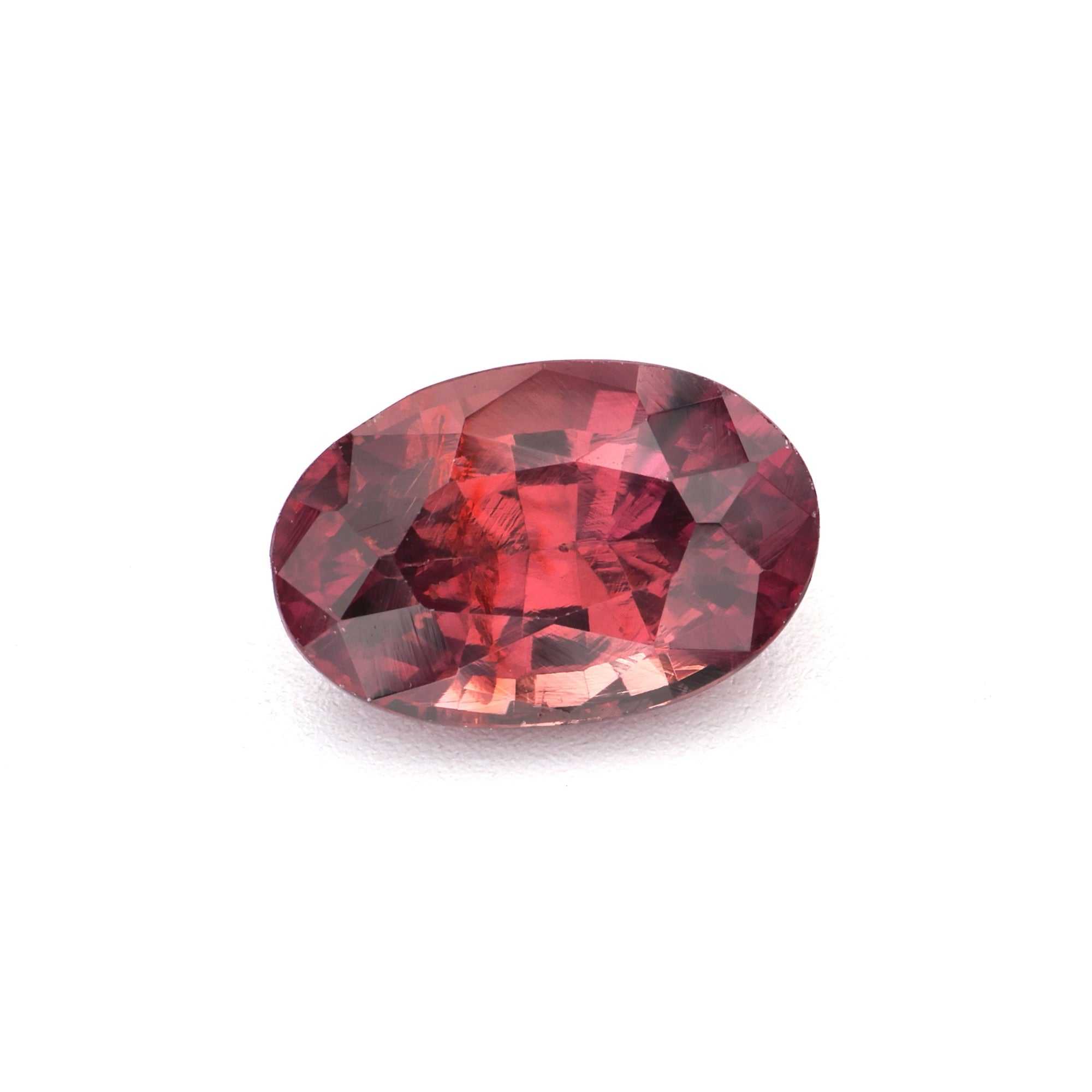
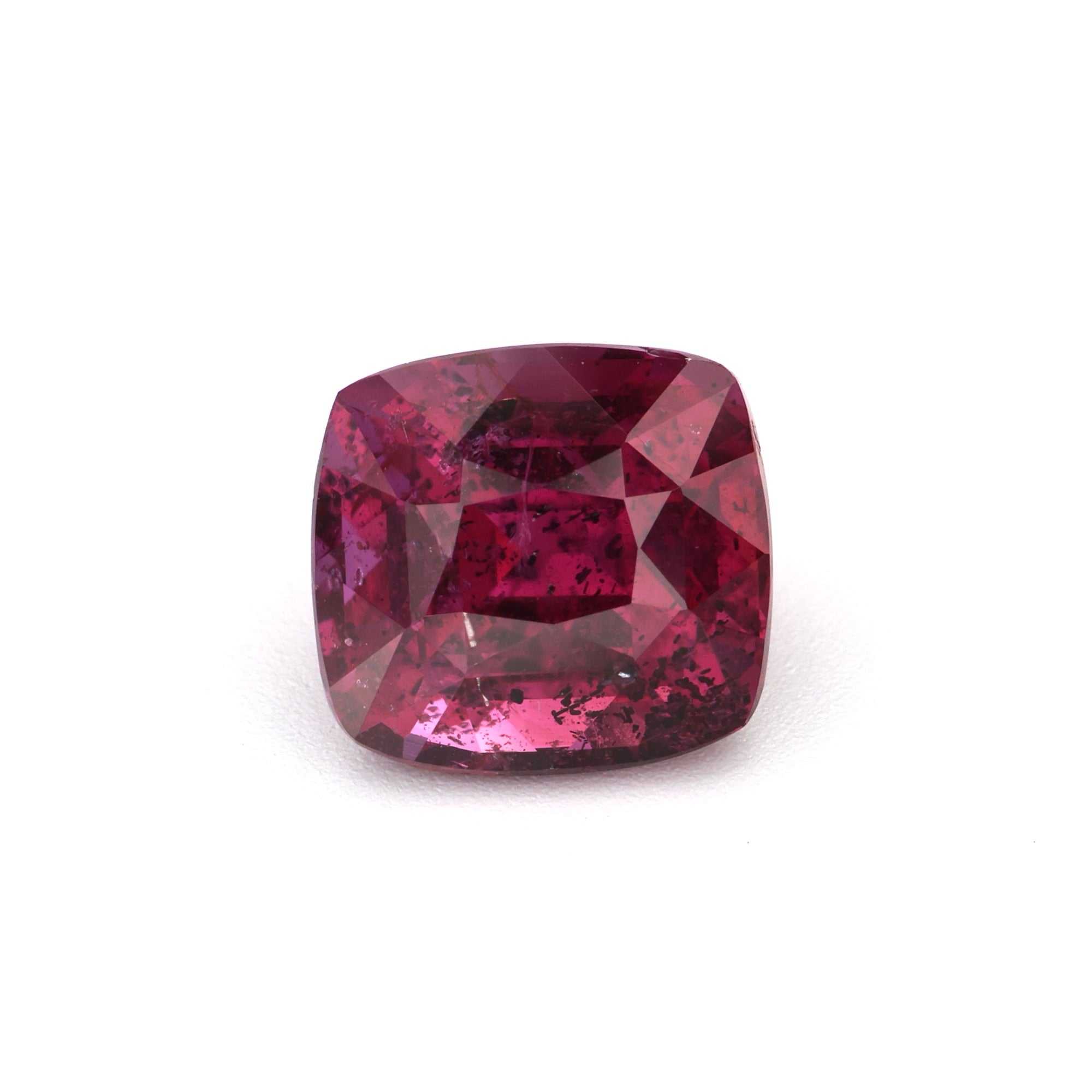
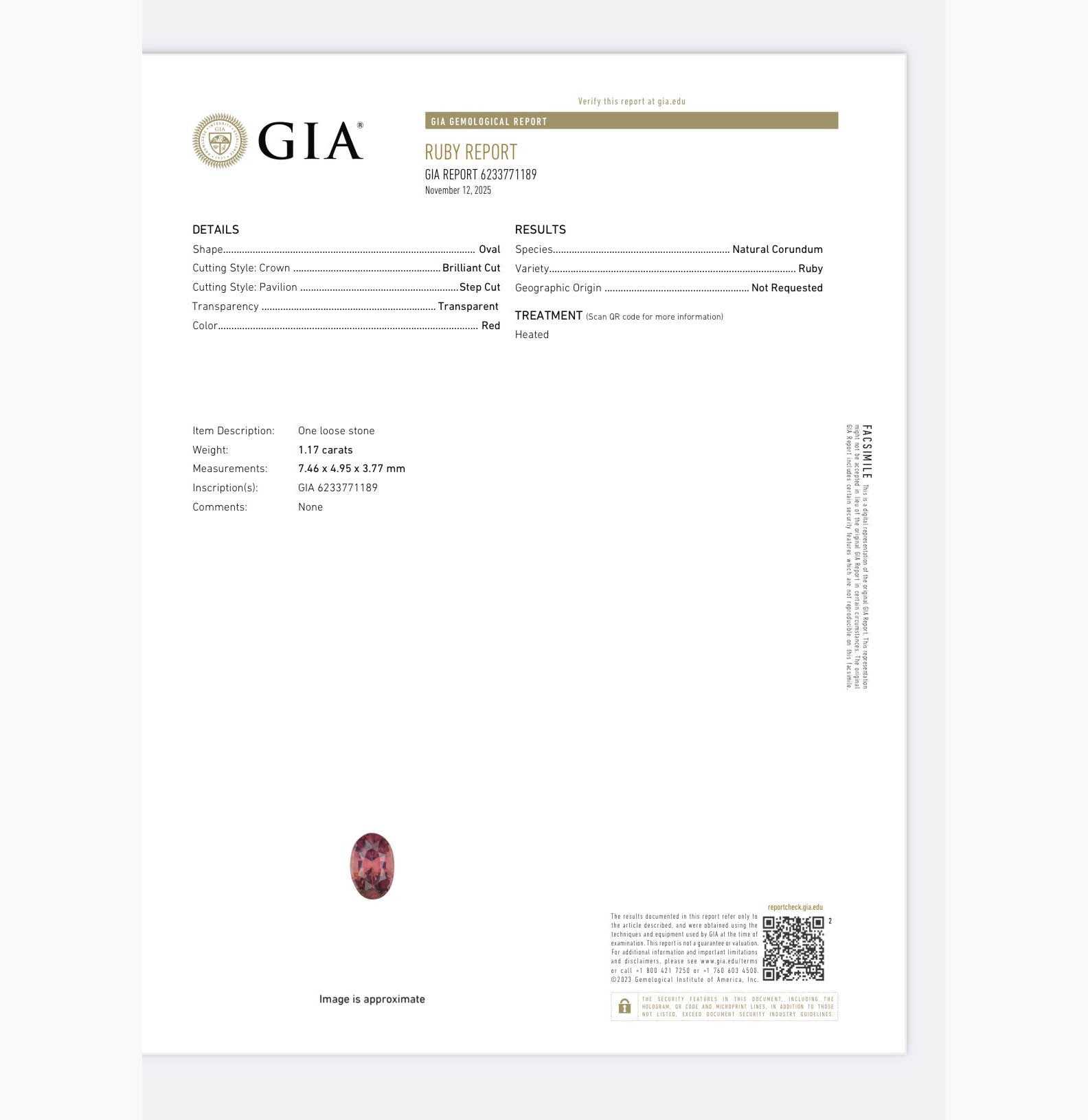
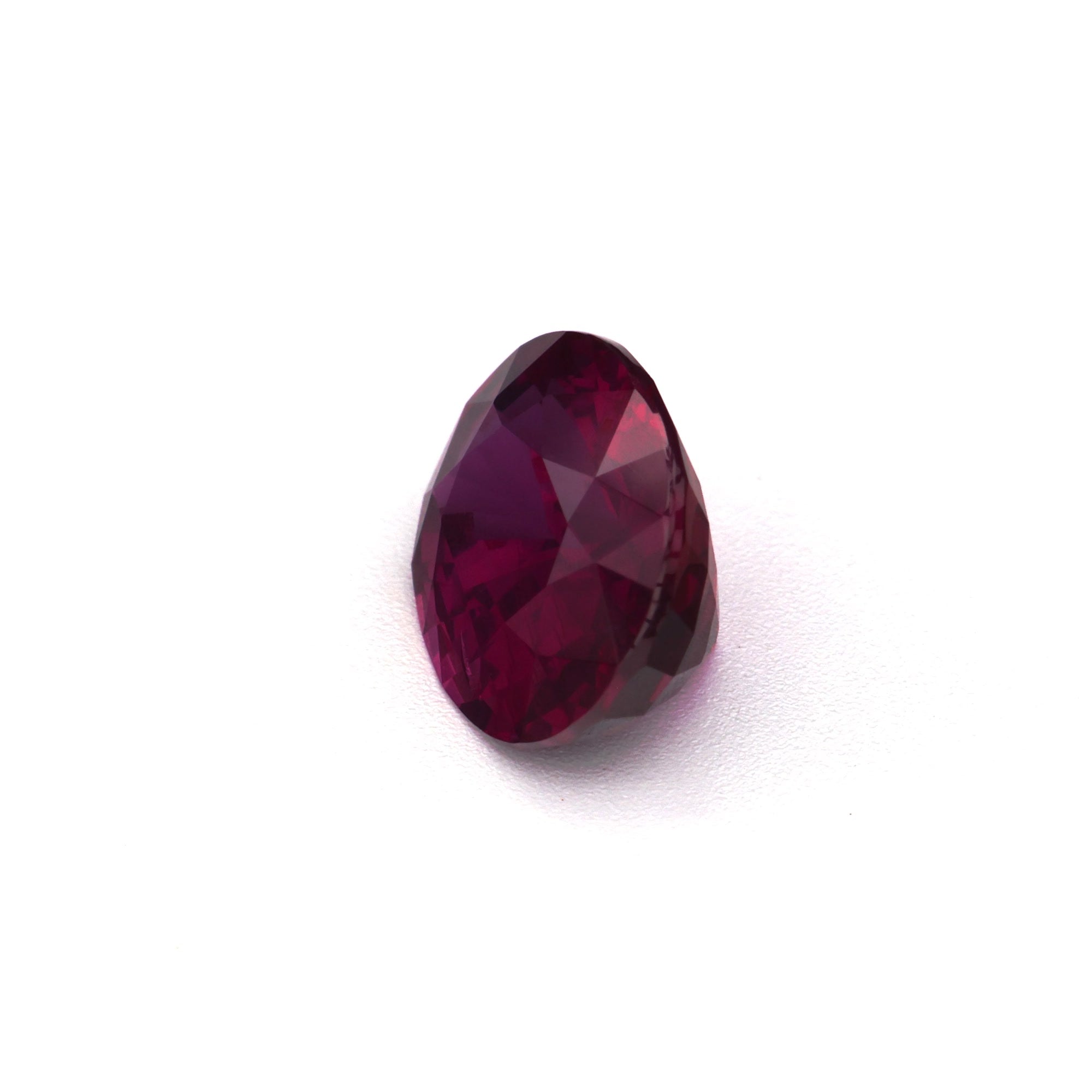
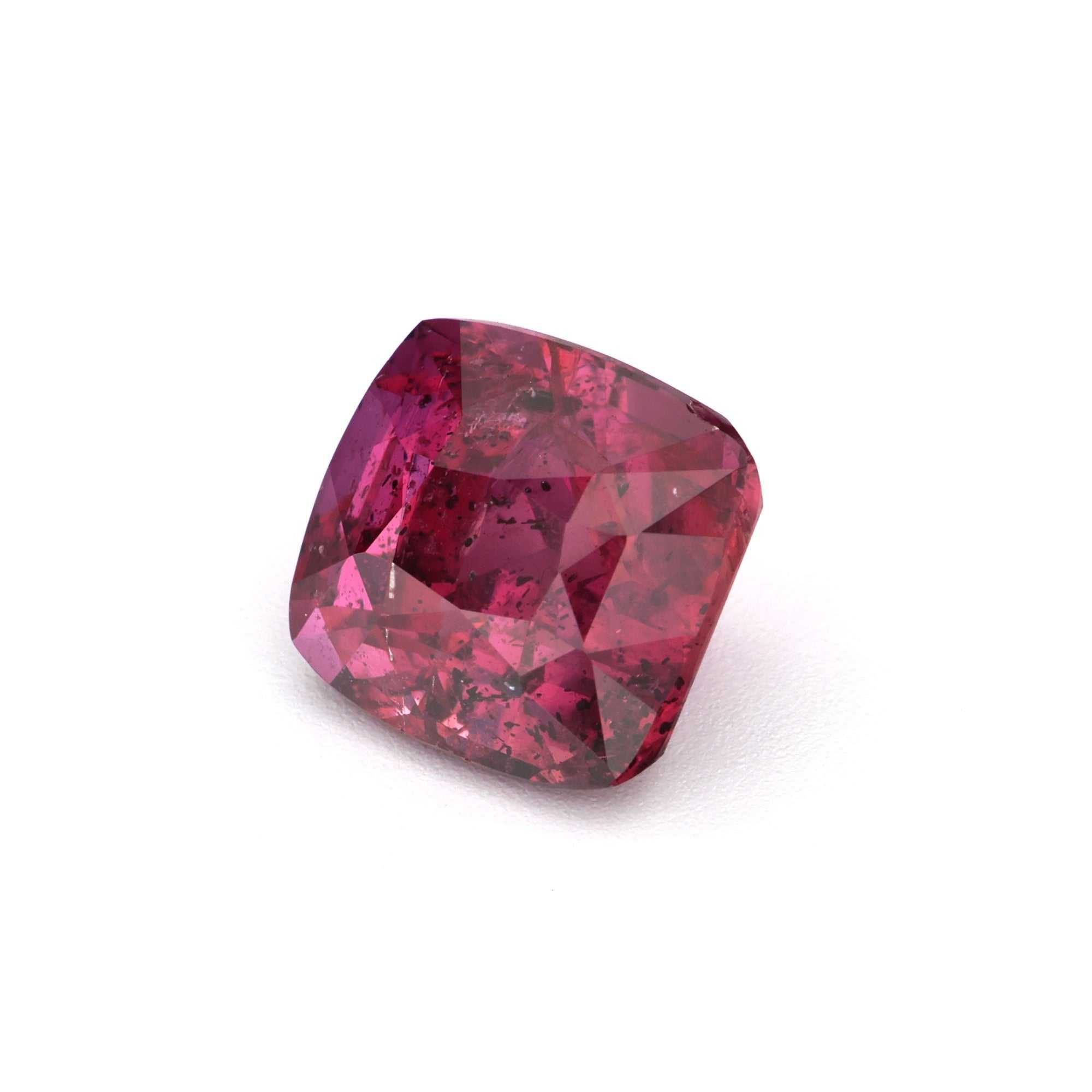
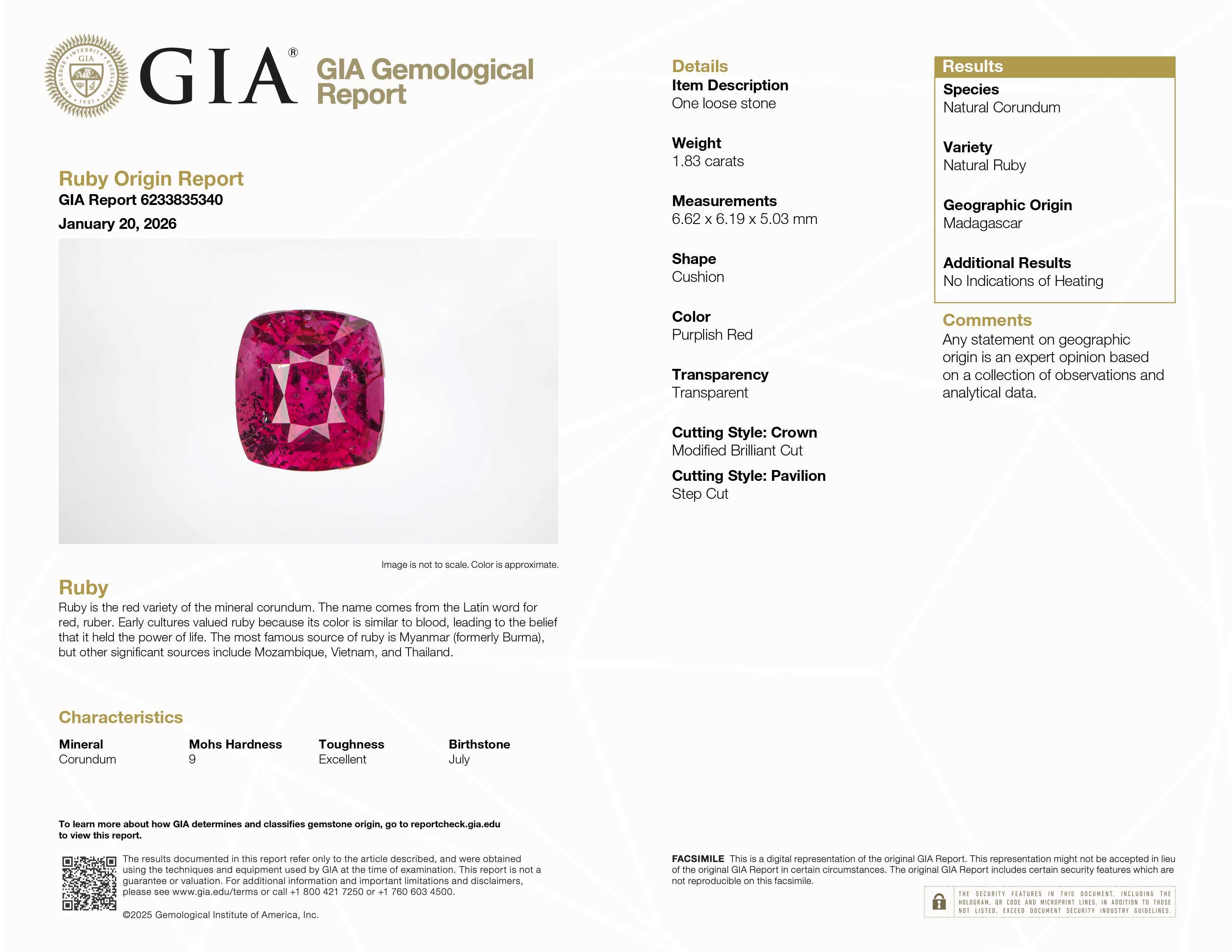
Also available: a 1.17 ct heat-treated oval-cut ruby, GIA-documented (Report #6233771189) — priced at $3,600, a vivid red stone with eye-clean clarity, offered without an origin designation on its GIA report — and a 1.83 ct unheated cushion-cut ruby, GIA-documented with confirmed Madagascar origin (Report #6233835340), priced at $3,700, a genuinely rare combination of natural, untreated ruby with GIA-verified provenance, priced well below equivalent unheated Burmese material.
For an oval-cut option in the same unheated Madagascar category: a 1.65 ct unheated oval-cut Madagascar ruby, GIA-documented (Report #2245032085), Madagascar origin per its GIA report — priced at $11,550 — eye-clean with vivid red saturation — the oval-cut counterpart to the cushion-cut stone above, and one of the rarer size-and-treatment combinations in the Madagascar supply.
Email crescentgems@gmail.com for any question about a specific stone, its documentation, or sourcing to specification. Free US shipping; 14-day returns on every order.

CG8407
CG8250
1.17 ct Natural Heated Ruby – Oval Cut | GIA Certified
CG8338
CG8456
CG8140
Prices are shown in your local currency and may change.
CG8140
CG8407
CG8250
1.17 ct Natural Heated Ruby – Oval Cut | GIA Certified
CG8456
CG8338


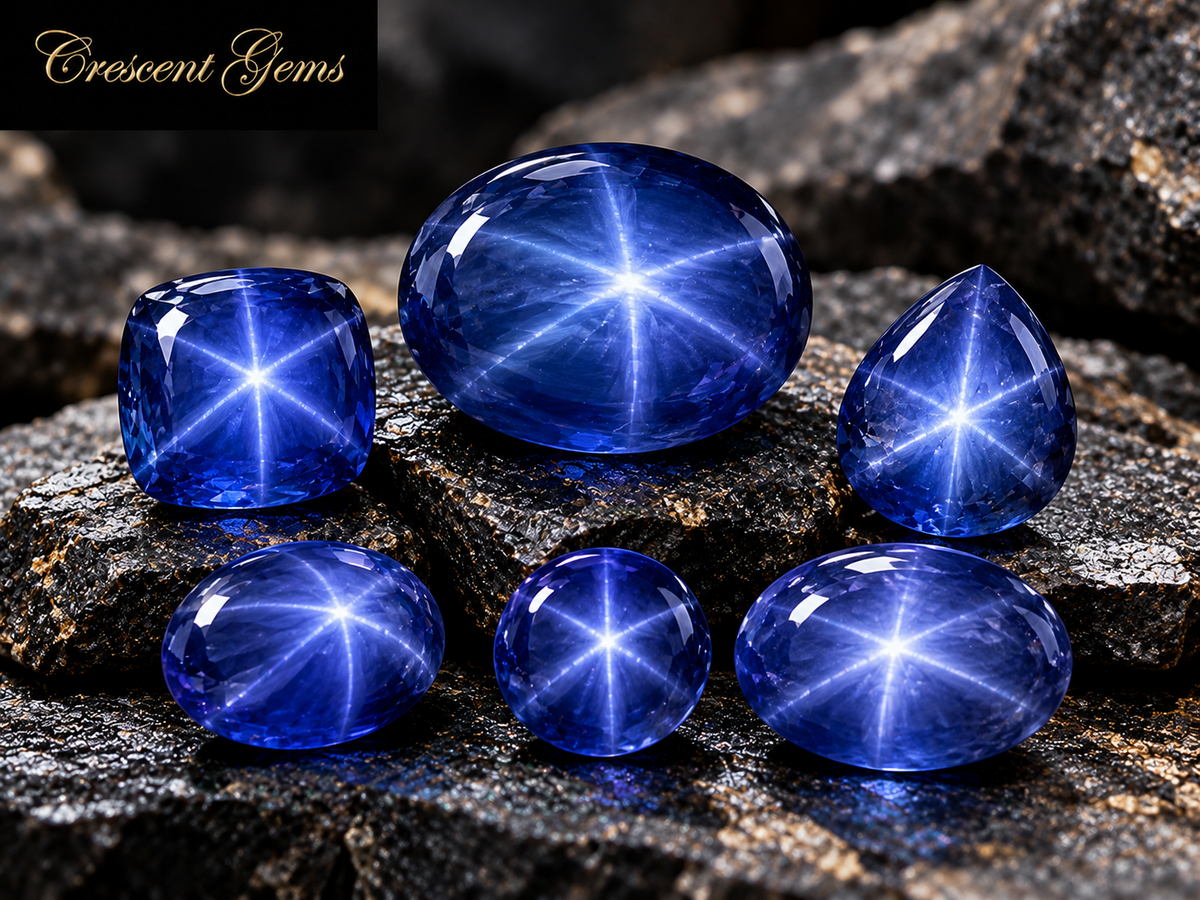
Blue Star Sapphire Price Guide — What They Cost and Why
Read moreabout Blue Star Sapphire Price Guide — What They Cost and Why
Tsavorite Garnet Price Guide — What They Cost and Why
Read moreabout Tsavorite Garnet Price Guide — What They Cost and Why
Color-Change Sapphire Price Guide — What They Cost and Why
Read moreabout Color-Change Sapphire Price Guide — What They Cost and Why
Is Cat's-Eye Chrysoberyl Good for an Engagement Ring?
Read moreabout Is Cat's-Eye Chrysoberyl Good for an Engagement Ring?
Cat's Eye Chrysoberyl Price Guide — What They Cost and Why
Read moreabout Cat's Eye Chrysoberyl Price Guide — What They Cost and Why