First time buying a sapphire? Start with our Ultimate Sapphire Buying Guide for the full picture on color, origin, treatment, and pricing — then return here for the online-specific buying checklist.
The natural sapphire market online ranges from world-class to outright fraudulent, often within the same search results page. A GIA-documented unheated Ceylon sapphire from a specialist dealer and a synthetic stone described as “natural unheated Ceylon” on a marketplace listing can appear side by side, at prices that do not obviously signal which is which.
Buying online is entirely viable — the selection is broader than any local market, and we buy the stones we sell ourselves, at the source, from miners and from dealers at the rough markets, rather than taking them on from a domestic supplier. What that is worth on a given stone depends on the stone, and we do not publish a percentage, because we cannot substantiate one. What online buying does require is knowing what to look at, what a document does and does not settle, and which patterns in listings and seller behavior signal a problem before you send money.
This guide gives you the complete framework.
The Five Things to Verify Before Every Online Sapphire Purchase
1. Treatment disclosure — the most important variable
Treatment status is the single most commercially significant piece of information about any sapphire. Heated vs. unheated is not a minor distinction: at equivalent quality the gap is large and real, and unheated material of fine color is the dearer of the two. We do not publish a multiple for it. The figures in circulation contradict one another by an order of magnitude, none of them traces to a method we can check, and anyone who hands you a specific multiple is estimating. What matters on a listing is that the status is disclosed by the seller on every stone, without your having to ask.
What you need to see on every listing, without having to ask:
-
Explicit statement of treatment status. “Heat treated” or “No heat treatment — unheated.” Not “minimally treated” or “naturally enhanced” or any other euphemism.
-
For unheated claims above $500: a report from a laboratory you can trace, printing “No Indications of Heating.” Without lab documentation, the unheated claim is the seller’s own, and there is nothing in the listing to check it against.
-
For heated stones: disclosure sufficient. No lab report required, but treatment must be stated clearly.
-
If it is not disclosed: ask directly. A reputable seller will answer immediately and specifically. Vague responses (“our stones are natural”) are a red flag. “Natural” means not synthetic — it does not mean unheated.
See our unheated sapphire guide, how heat treatment works, and our heated vs. unheated page.
2. Origin disclosure and what it actually means
Origin is priced in the trade, and it is frequently misrepresented online. Ceylon is a trade name; the factual statement of origin is Sri Lanka. “Ceylon origin” stated by a seller without documentation is that seller’s claim, and nothing in the listing lets you check it.
The strongest origin evidence available is a laboratory origin report. GIA, Gübelin and SSEF are the laboratories whose origin opinions the trade treats as decisive, and they reach them from microscopic and spectroscopic examination of inclusions, trace-element chemistry and optical properties. Two things about that service are rarely spelled out in a listing. It is a separate service, requested and paid for separately, so a report that was never asked the question prints nothing about origin — and that silence is not a finding about the stone. And where the question is asked, the answer is an opinion, which the laboratory says in its own words; section 3 below quotes it. Some stones are inconclusive whatever their actual source.
What this means practically:
| What a seller says |
What it actually means |
What to do |
| “Ceylon origin” + a GIA origin report placing the stone in Sri Lanka |
The strongest origin evidence there is. It is the laboratory’s expert opinion, and GIA prints that reservation on the report itself. |
Verify report number at gia.edu/report-check |
| “Sri Lanka origin” with no lab report |
Seller’s claim only. Unverifiable. |
Price as unverified origin; ask for documentation |
| “Natural Ceylon sapphire” with no further detail |
Marketing language. Could mean anything. |
Ask for lab documentation or treat as unverified |
| No origin mentioned |
Unknown. Origin not claimed. |
Price as no-origin-premium material; fine for heated commercial stones |
| “Conflict-free” / “ethically sourced” only |
Marketing claim. No gemological meaning. |
Ignore; look for specific origin and treatment disclosure |
3. Laboratory documentation — what a report is, and what it settles
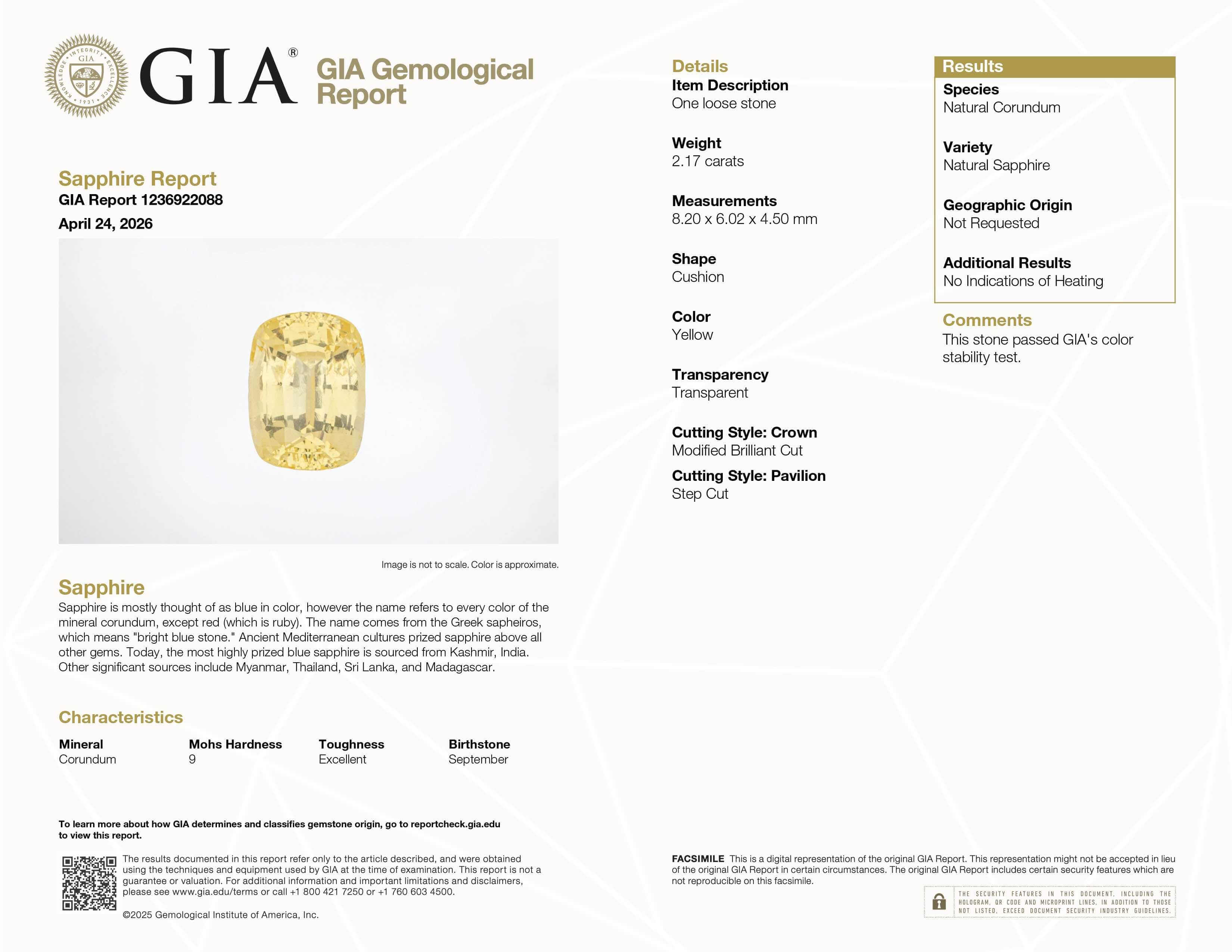
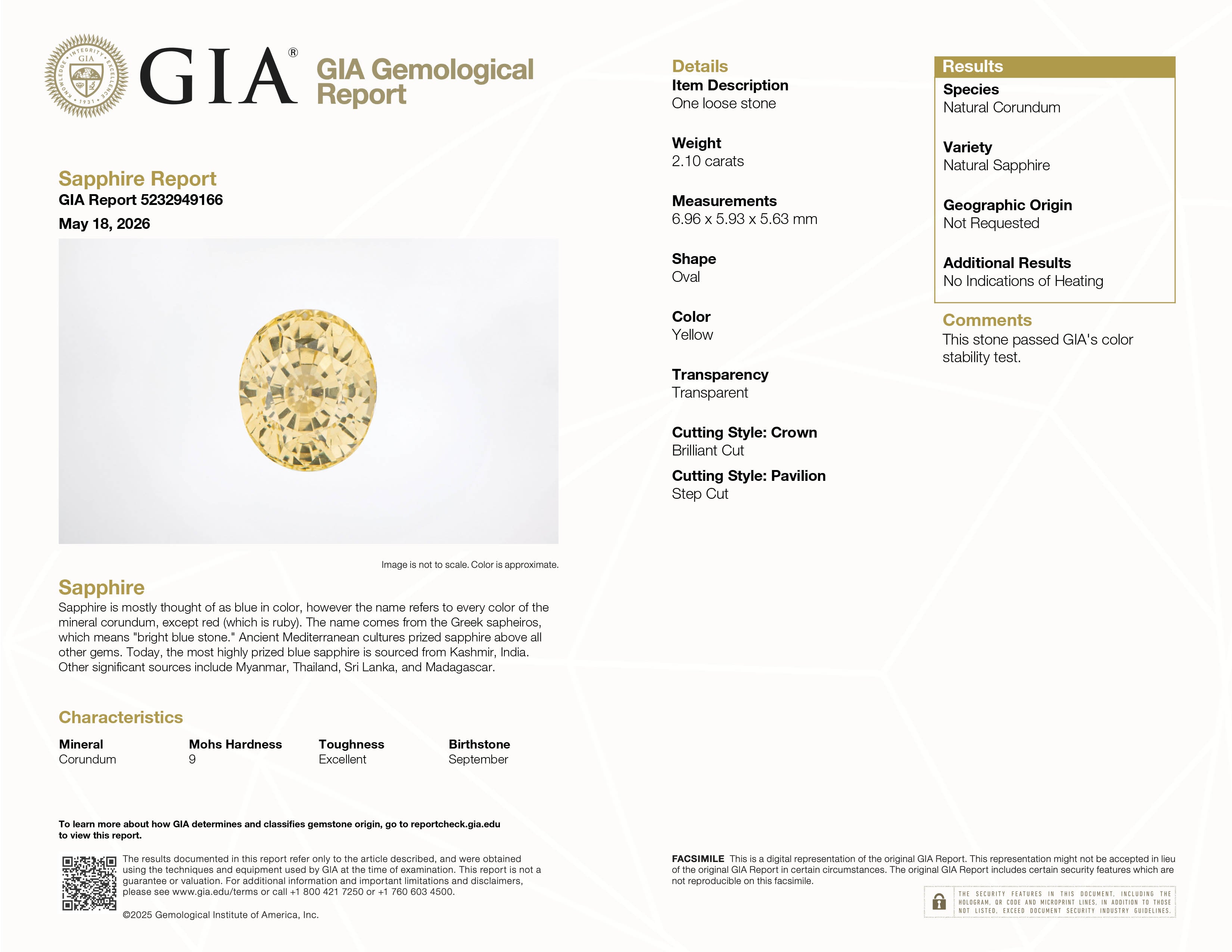
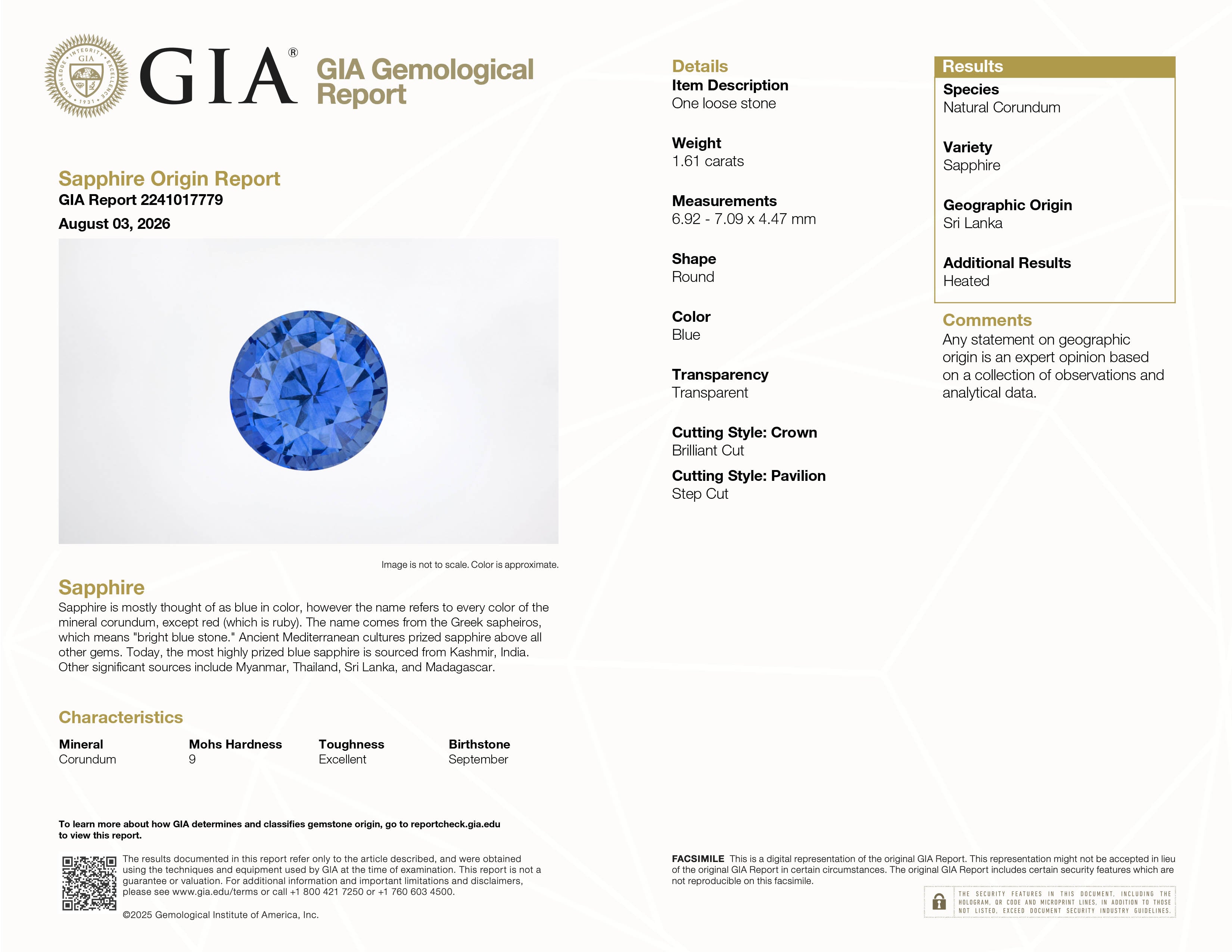
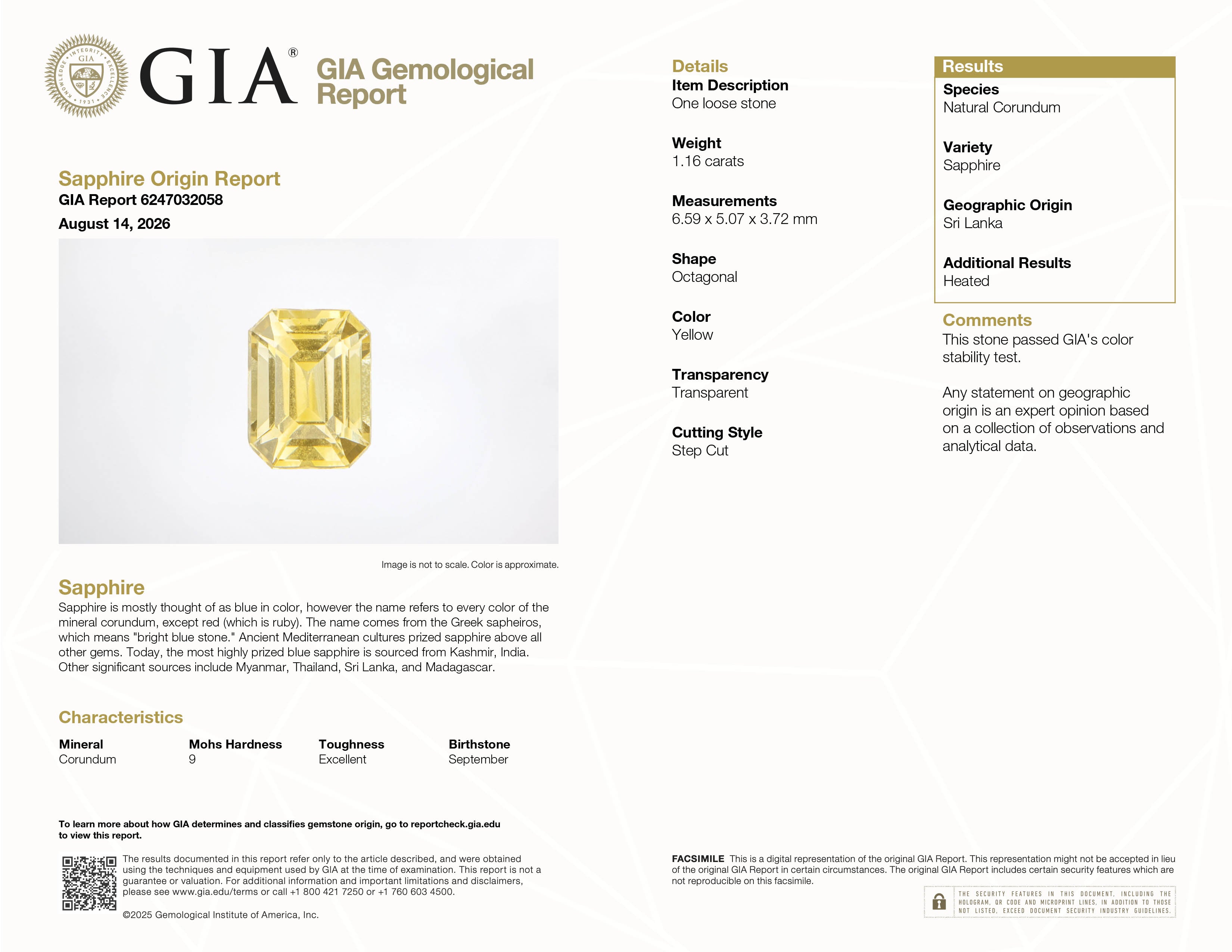
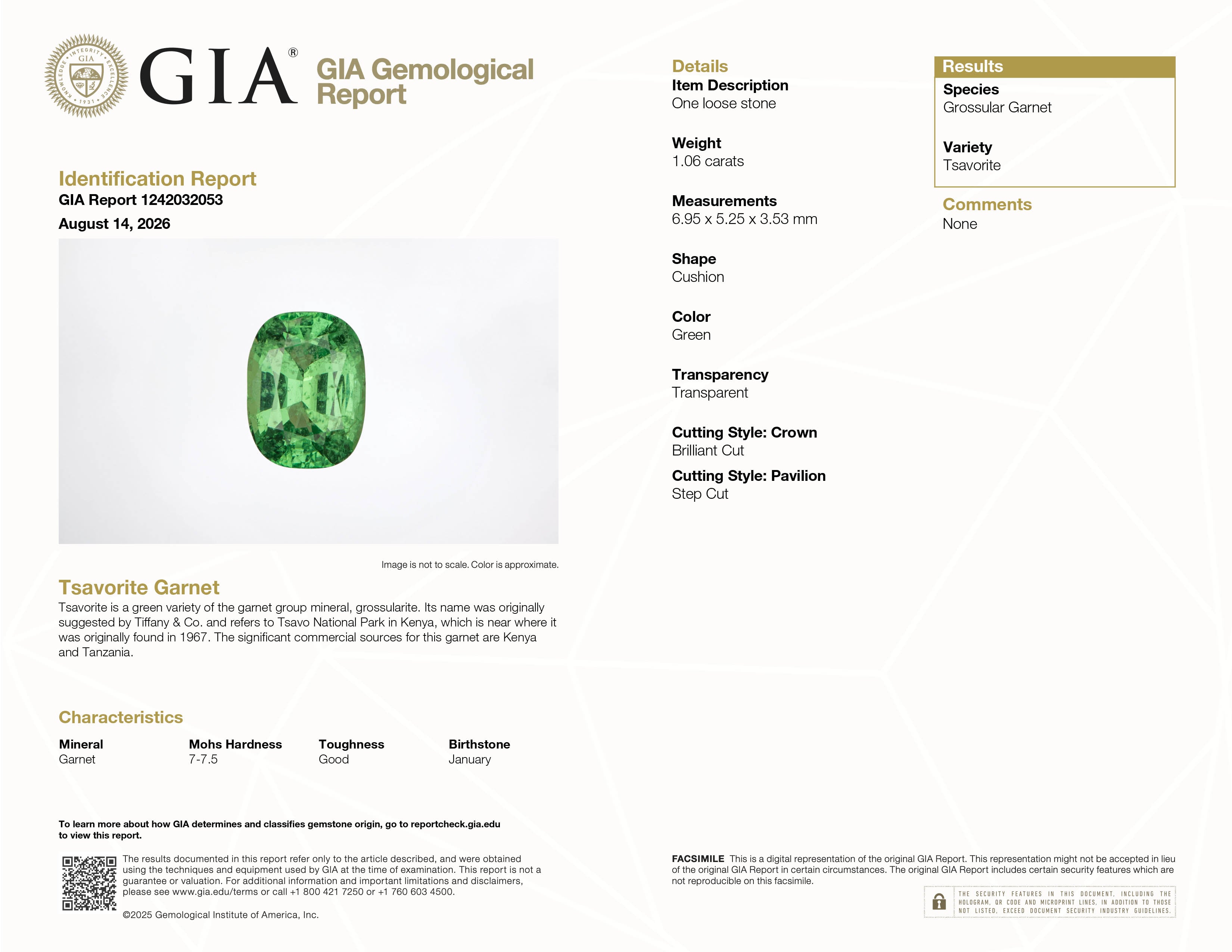
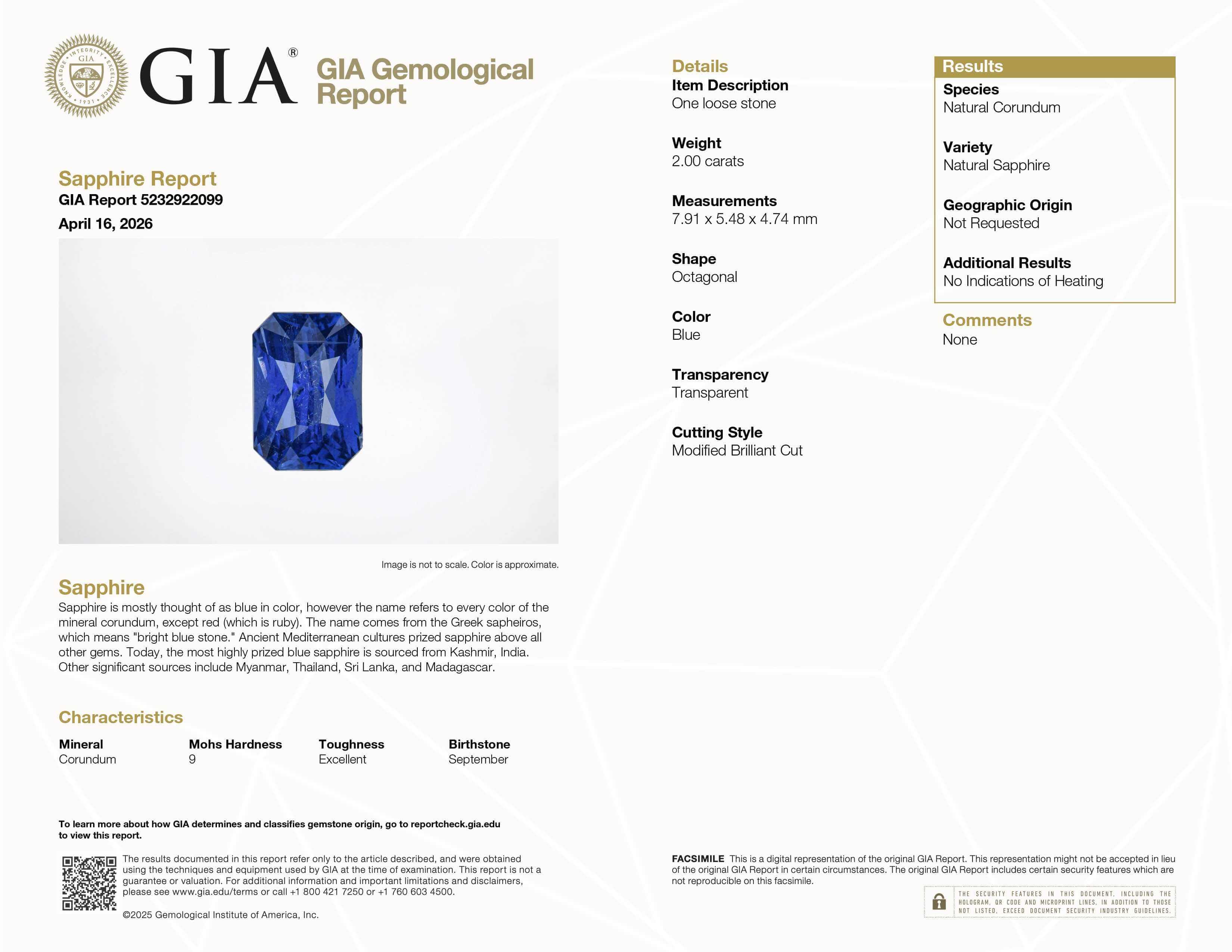
A laboratory report is the most useful document in the natural sapphire market, and it is the one most often described as something it is not. A report is a record: of what qualified examiners observed, and of the opinion they formed from those observations. GIA prints on the report itself that it "is not a guarantee or valuation." Three things follow from that, and between them they are the whole of how to use one.
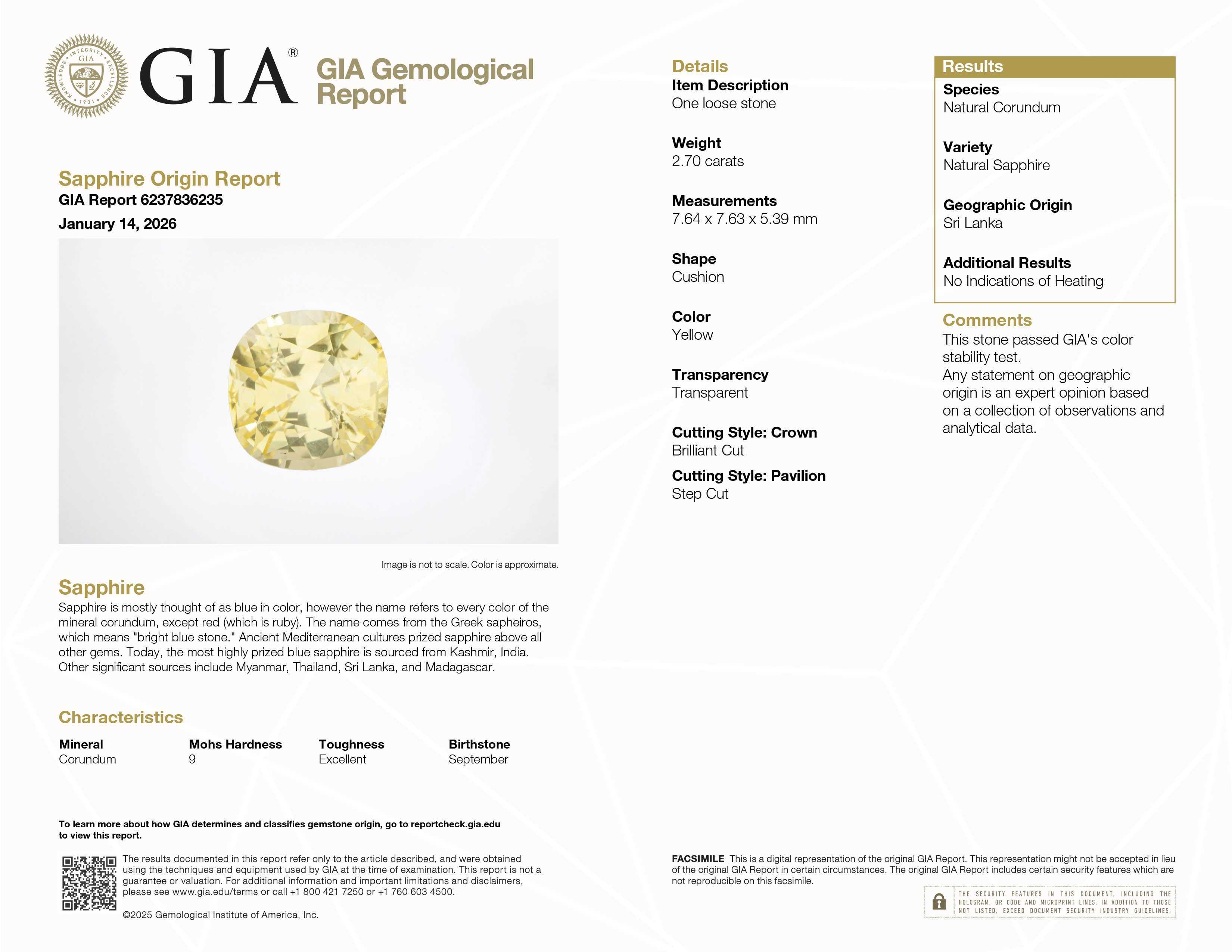
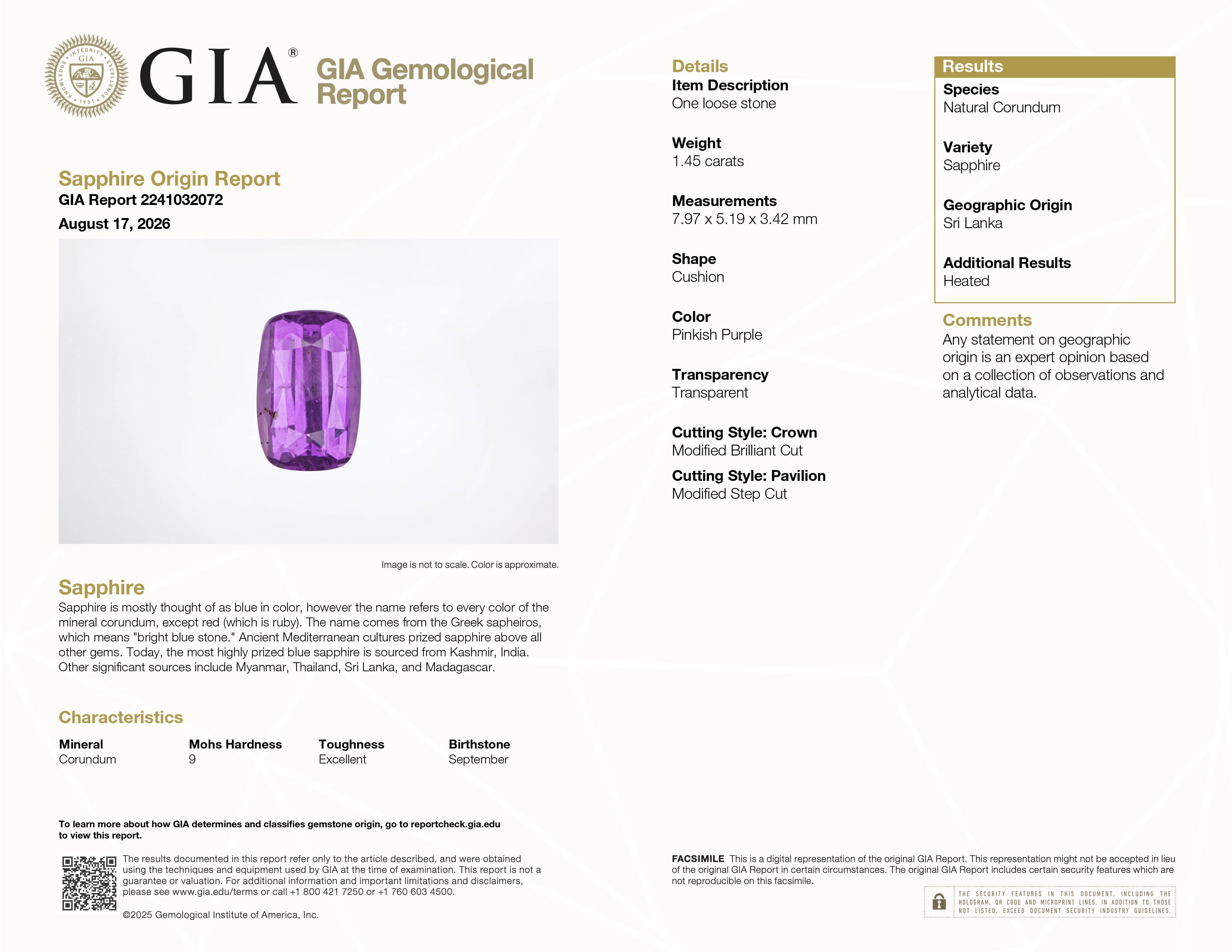
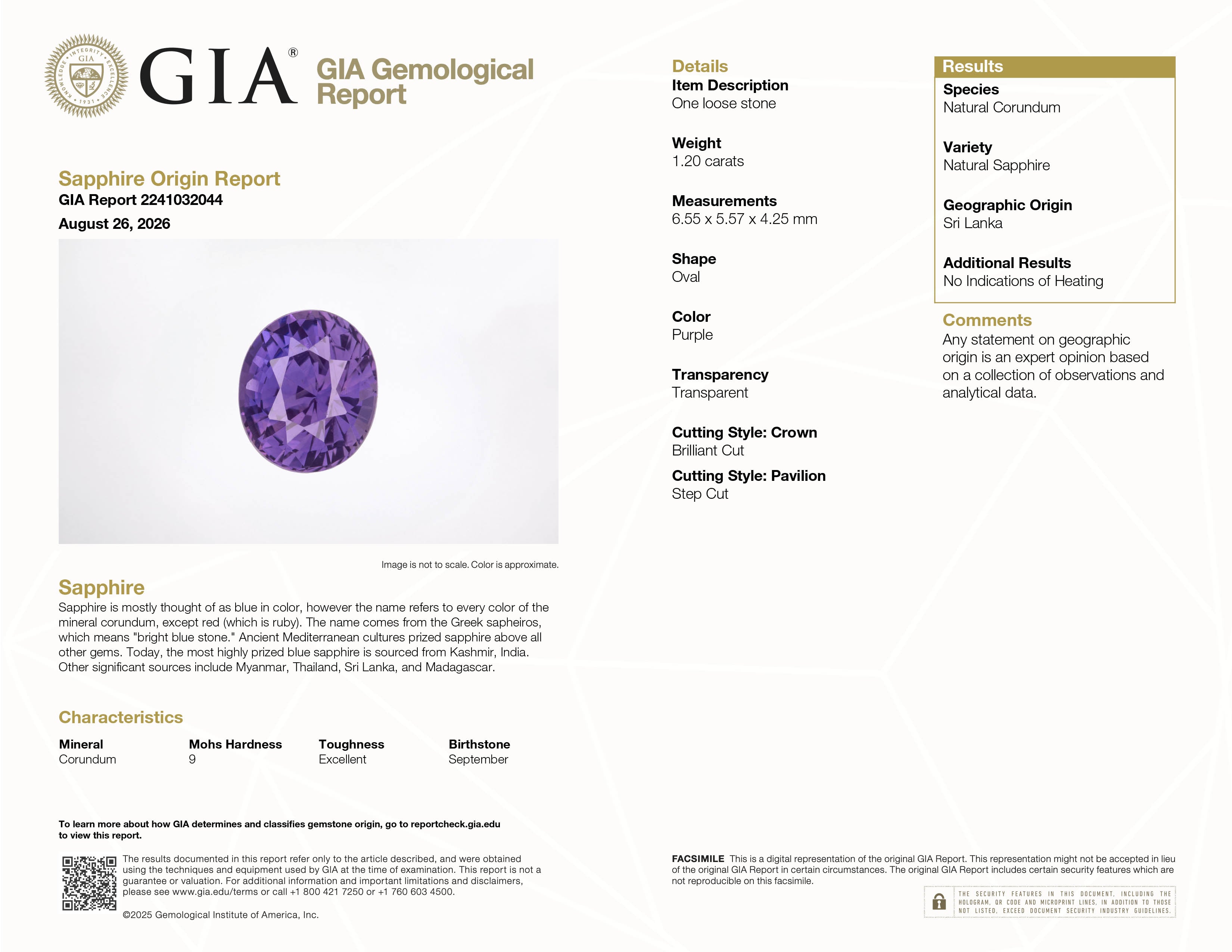
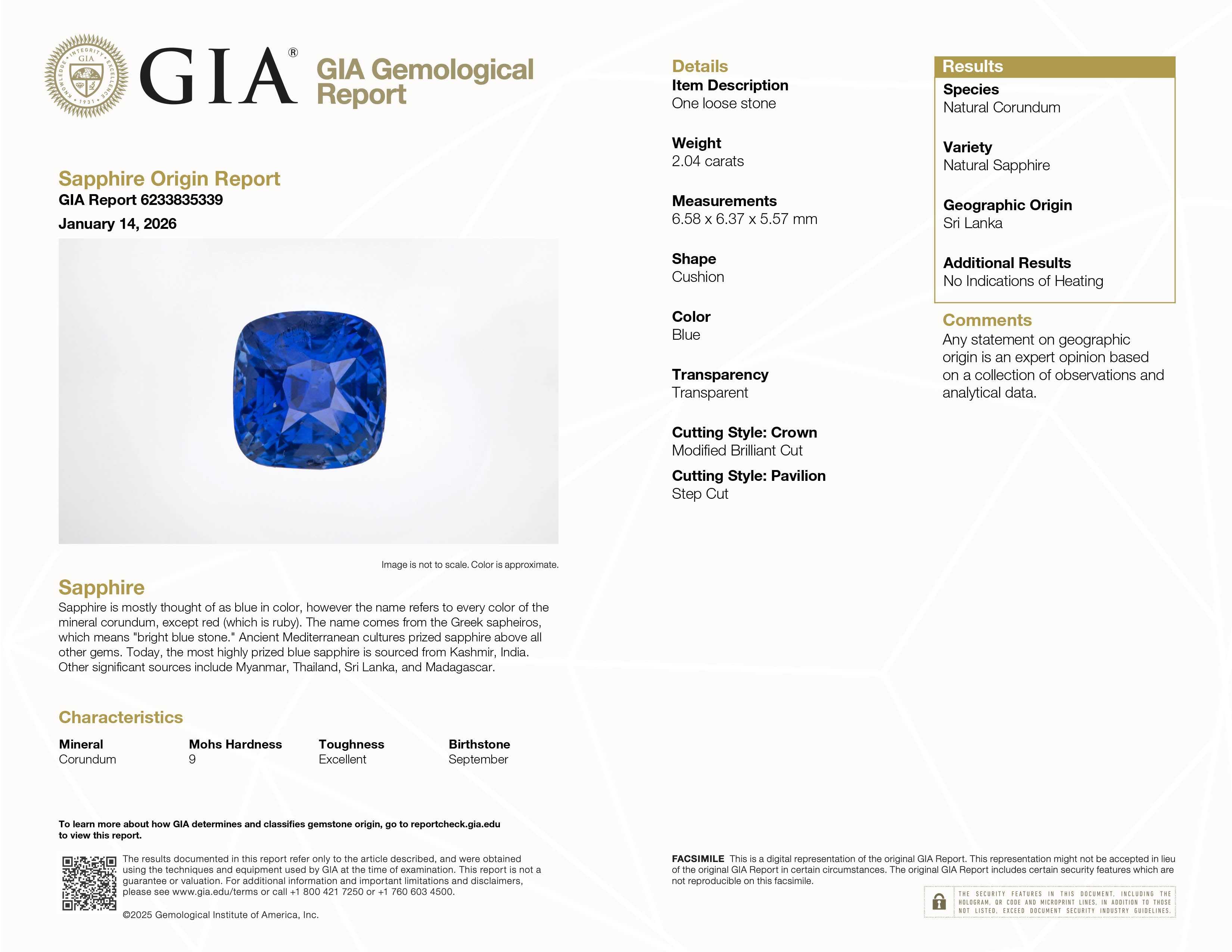
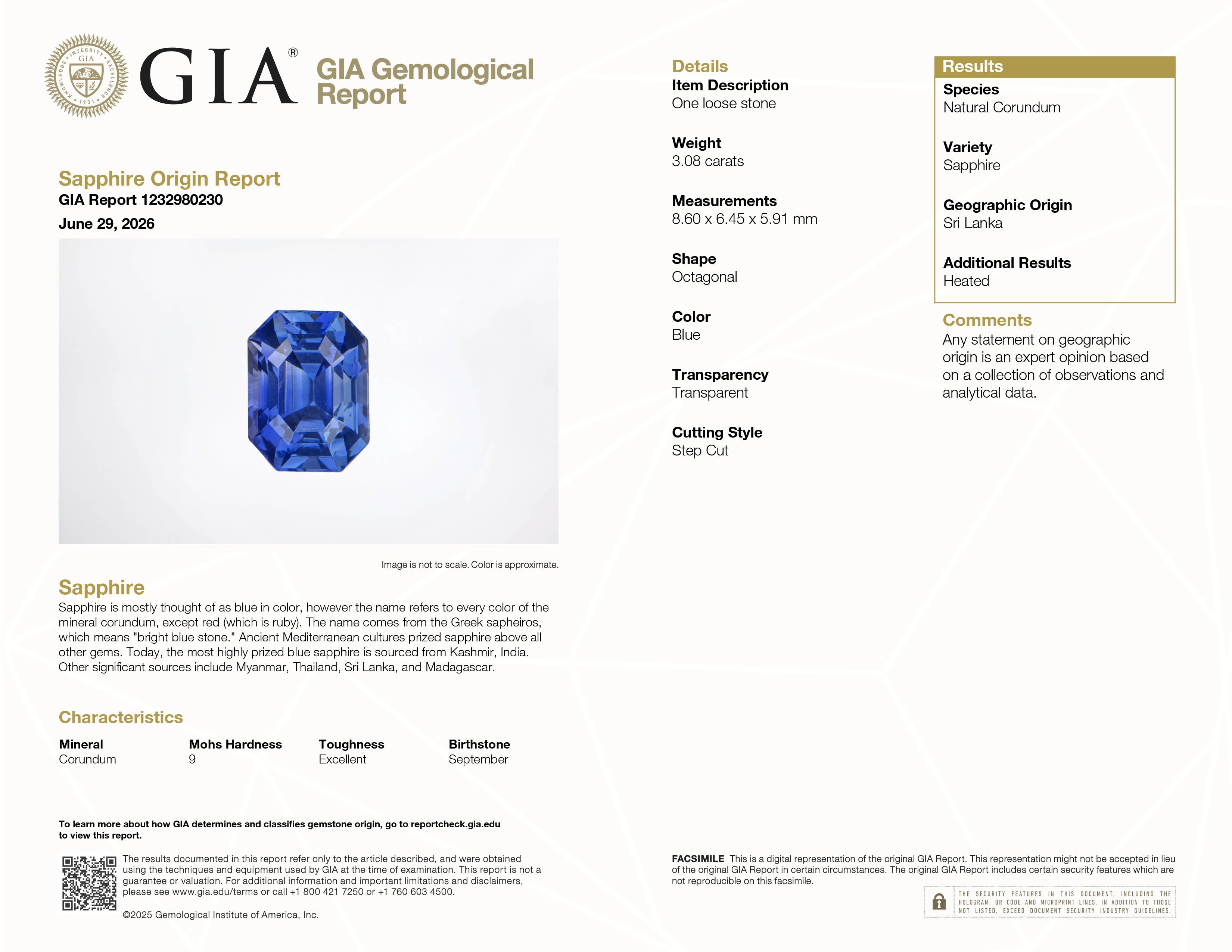
A report records observations and states an opinion. Beside an origin finding, GIA prints its own reservation in its own words: "Any statement on geographic origin is an expert opinion based on a collection of observations and analytical data." The Laboratory Manual Harmonisation Committee, whose information sheets standardize report wording across the major laboratories, makes the same point about reports generally — "All findings described in the report are opinions expressed by the laboratory." Those are opinions reached by qualified examiners, with equipment and comparison material you do not have, and that is exactly why they are worth paying for. They are still opinions, and no part of the document turns one into a guarantee.
What the report records:
- Species and variety — the report identifies the material as natural corundum rather than synthetic, glass or simulant, and names the variety
- Carat weight — to two decimal places
- Measurements, shape and cutting style
- The color, as the laboratory describes it
- Treatment indications — the report prints “No Indications of Heating” or “Indications of Heating”
Read the treatment line as narrowly as it is written. “No Indications of Heating” is a finding about heating, reached from what the examination was able to see. “Unheated” is the narrow word and it is the one we use: it speaks to heating, and it is not a synonym for “untreated” — we make the narrower claim and leave the wider one alone. “Natural” is narrower still. It means not synthetic, and it does not mean unheated.
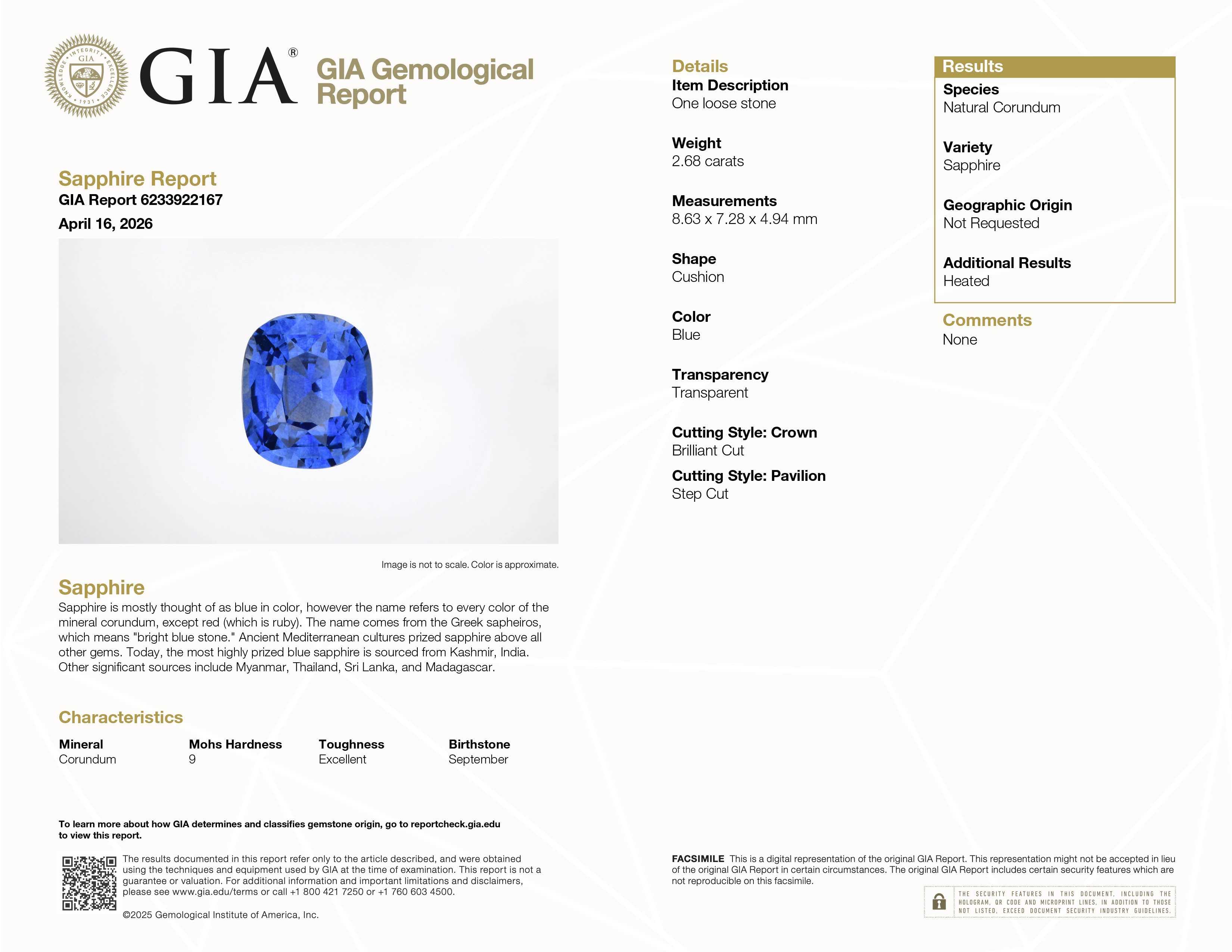
Geographic origin is a different service, answering a different question. Identity and origin get listed side by side under one heading on a great many buying guides, and the habit is worth breaking, because the laboratory does not treat them alike. Identity is a determination the report states flatly: the material either is natural corundum or it is not. Origin is an opinion; it has to be requested and paid for separately; and it is the finding GIA attaches a printed reservation to. A report that was never asked the question says nothing about origin, and our own stock carries both cases — one star sapphire with a GIA Sapphire Origin Report placing it in Sri Lanka, another whose GIA report prints Not Requested in that field. The second stone is not a lesser stone and its paperwork is not deficient. A question was simply not put. Some stones are also inconclusive whatever their actual source.
The opinion is only as good as the laboratory. So check who issued the report, and check that you can trace it to a named laboratory with a public verification service. GIA, Gübelin and SSEF are the laboratories whose origin opinions the trade treats as decisive, and origin is where the choice of laboratory counts for most. Below those there are many competent regional laboratories whose reports identify the stone and record treatment indications perfectly well, but which the trade does not treat as origin authorities: we use AGCL, and on some stones FGL and GIC, and every one of our listings names the laboratory that issued that stone’s report. What you should not accept is a document you cannot trace to a named laboratory at all.
And the report only answers the question that was asked. That is the part that catches buyers out, because a silence in a report reads like a finding and is not one. A report does not reach:
- Value, or price, or whether what is being asked for the stone is reasonable
- Rarity
- Cut quality or optical performance
- A quality grade of any kind. GIA states that it "doesn't grade or provide quality analysis for sapphire or other colored stones," and a GIA colored stone report carries no clarity grade
- Any question it was not asked — origin included. An empty field is a question not put, not an answer
So a report tells you what the stone is, and what the examination found in it. It does not tell you whether the stone is a good buy at the price, and it is not a substitute for looking. A documented sapphire can still be overpriced, poorly cut, or a color you do not like. See our full GIA report guide for how to read every section.
Verifying a report is real: Every GIA report has a report number. Enter it at gia.edu/report-check before purchasing any GIA-documented stone. The GIA database will confirm the report exists and display its key findings. If a seller provides a report number that does not appear in the GIA database, do not purchase.
4. Return policy and buyer protection
A reputable natural sapphire dealer offers a minimum 14-day return policy with no questions asked. Colored gemstones look different in photographs than in person — color, saturation, and the way a stone responds to different lighting are all genuinely difficult to assess from a product image. Any seller who does not offer a meaningful return window is telling you they are not confident you will be happy with the stone when you see it in person.
If the stone does not match your expectations, it comes back. Free US shipping; $60 flat elsewhere, free over $499. 14-day returns on every order.
Platform-specific buyer protection: What a selling platform offers by way of buyer protection varies from platform to platform, and it does not necessarily cover disputes about gemstones. For any purchase above $500, read the seller’s own return policy explicitly before buying rather than relying on the platform.
5. Seller transparency and responsiveness
The quality of a seller’s communication before the sale is a reliable predictor of their behavior after it. Before making a significant purchase, email the seller with a specific question about a stone — its treatment status, its origin documentation, how to read a specific section of the lab report, or what the stone looks like under incandescent light. A reputable specialist seller will answer specifically, knowledgeably, and promptly. A volume-focused marketplace seller often cannot.
Email crescentgems@gmail.com with any question about a specific Crescent Gems stone. You get Ahmed personally. We respond within one business day.
Red Flags: Walk Away From These
If you see any of the following, stop and reconsider:
-
“Natural unheated” without lab documentation, above $500 total. The seller is asking you to take their word for a claim that moves the price substantially. With no laboratory report you can trace and check, there is nothing behind the claim but the seller.
-
A price far under every comparable you can find. A price well below what comparable documented stones are asking is information about the claim, not about the bargain. Compare like with like — same weight, same color, same treatment status, same laboratory — and if a listing sits far under every comparable you can find, work on the assumption that one of those four is not what it says. Our pricing guide sets out how each of those variables moves price.
-
Treatment stated as “naturally enhanced,” “minimally treated,” or “lightly heated.” These are not standard gemological terms. The standard terms are “heat treated” and “no indications of heating.” Non-standard language is used to obscure, not clarify.
-
No return policy or returns “by arrangement only.” This signals a seller who is not confident you will be satisfied with the stone as described.
-
A report you cannot trace to a named laboratory. Check which laboratory issued it, and check that the laboratory publishes a verification service you can use yourself. Treat with care a document whose issuer is not named at all, or whose name looks built to be mistaken for a better-known one. Section 3 above sets out which laboratories the trade treats as origin authorities, which it does not, and why that distinction is about origin rather than about competence. See our guide to spotting fake sapphires.
-
“Factory direct,” “wholesale price,” or “mine direct.” These phrases appear on high-volume listings that prioritize marketing over accuracy. Genuine direct-source dealers describe their sourcing specifically — specific locations, specific relationships, specific buying practices — not generically.
-
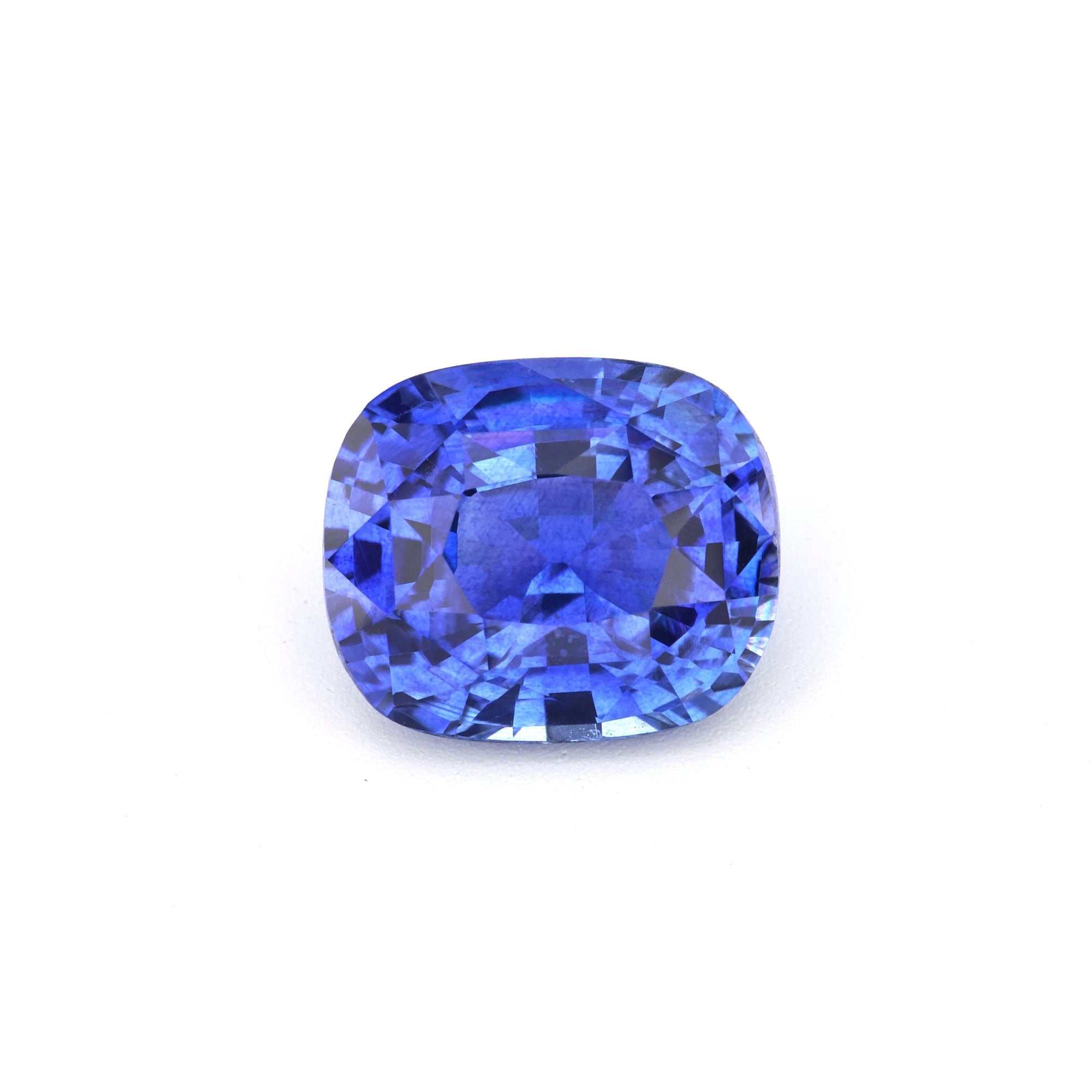
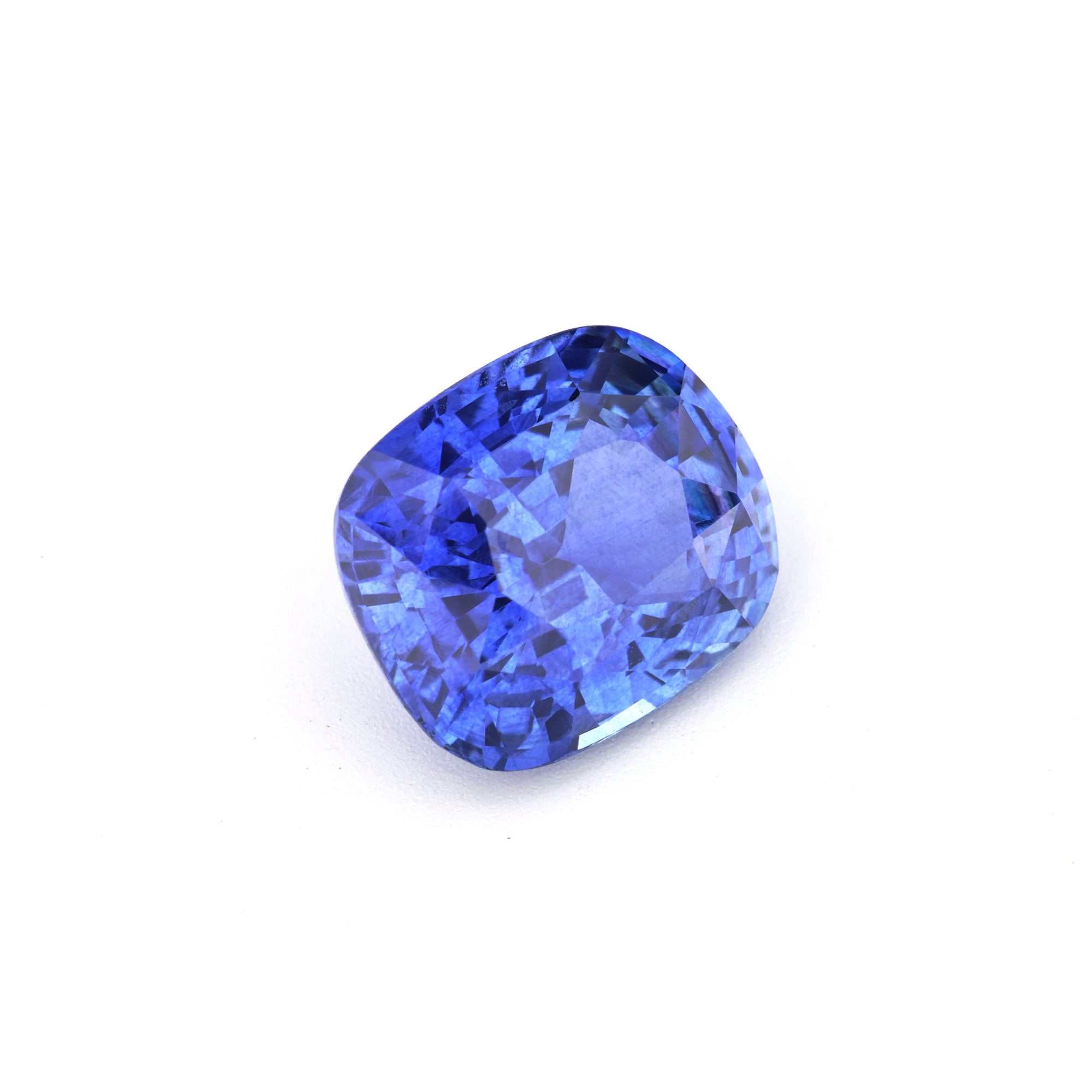
Stock photos instead of actual stone photos. Every stone in a reputable natural sapphire listing should be photographed individually. Generic stock imagery means the specific stone you are buying has not been accurately represented.
Where to Buy Natural Sapphires Online: Provider Types Compared
The table compares types of provider, not named houses or named platforms. The names are deliberately absent: attaching a judgement to a named business is comparative advertising, and we would have to be able to substantiate it stone by stone and sale by sale. What is substantiable is the structure of each type — what it is good at, and what it leaves you to do yourself.
| Provider type |
What it is good at |
What you have to do yourself |
Suits |
| Direct-source specialist dealer |
Full disclosure, direct knowledge of the individual stone, personal service |
Smaller inventory than aggregators; less brand recognition |
Buyers who want to deal with whoever handled the stone |
| Established online colored-stone dealer |
Large inventory, reliable; good for rare stones |
Less personal service; usually a reseller rather than the cutter |
Buyers who want broad selection and established reputation |
| Auction house |
Market-price transparency; GIA documentation standard |
A buyer’s premium is added on top of the hammer price at whatever rate that house currently publishes, so look it up before you bid; selection is limited; the outcome of the bidding is open |
Documented stones; price benchmarking |
| Handmade and individual-seller marketplaces |
Wide selection; platform buyer protection exists |
Quality and disclosure vary enormously, so the whole of the checking above falls to you |
Low-value purchases only; apply full checklist above |
| General online auction sites |
Occasionally a genuine stone at a low price |
Descriptions are frequently imprecise and you have no recourse to the seller’s own policy, so navigating these safely takes real experience |
Experienced buyers only; apply full checklist above |
The Try-On Option: Seeing the Stone Before You Commit
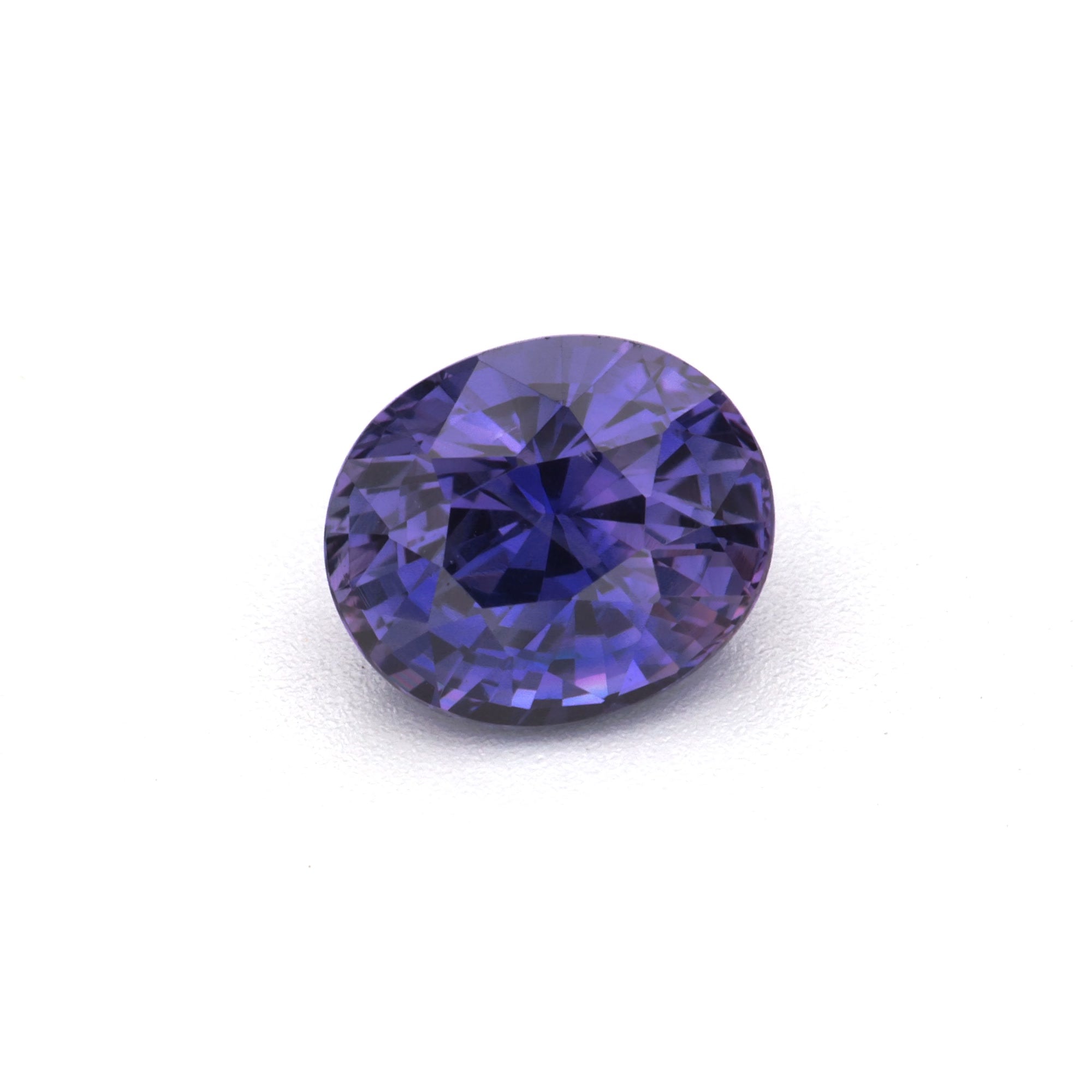
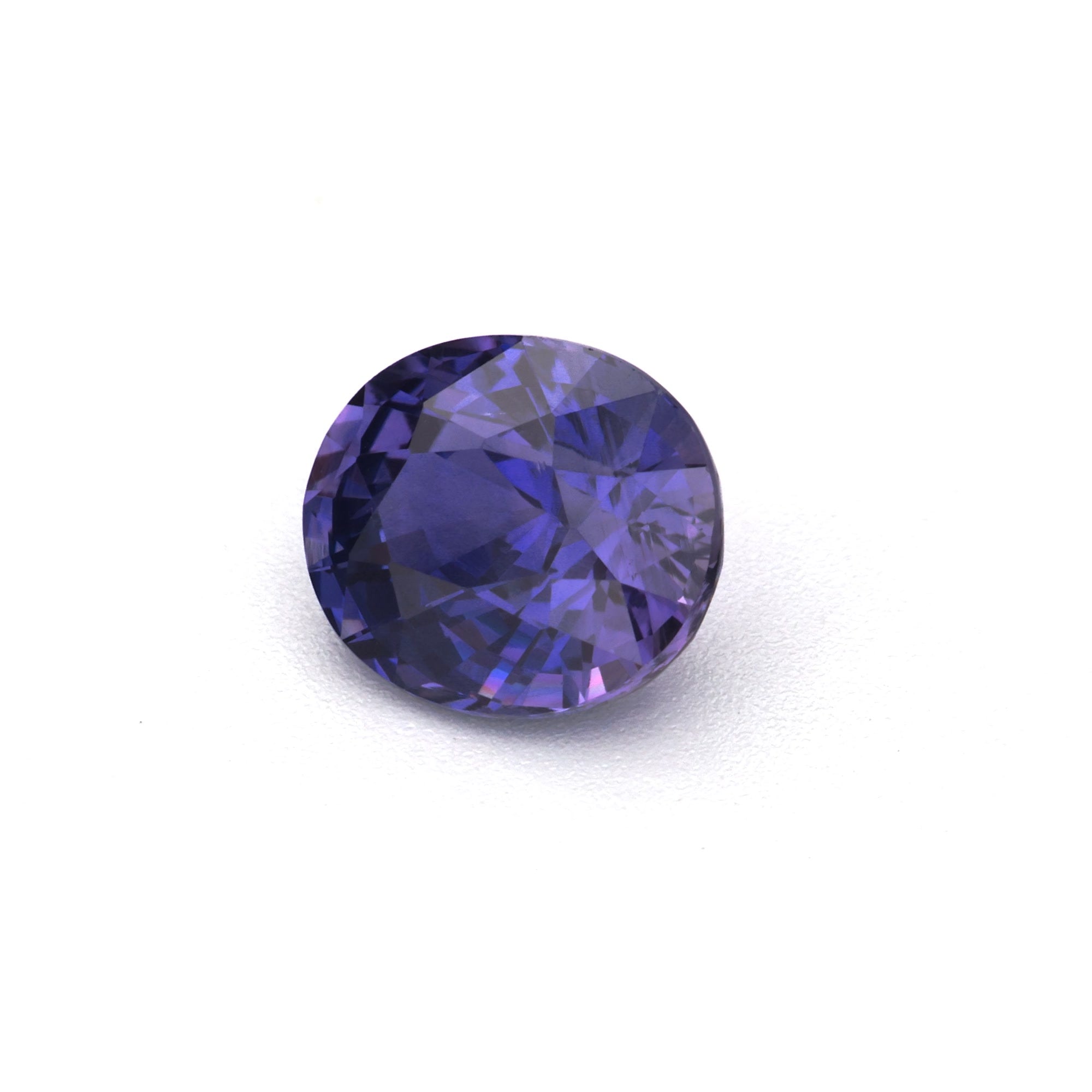
One of the most significant limitations of online sapphire buying is that color, saturation, and the way a stone responds to different lighting are all genuinely difficult to assess from photographs. A stone that looks vivid and well-saturated in a product image can appear lighter or darker in person; a stone that appears to have a strong color shift may show it less dramatically in your home lighting than it does in studio conditions.
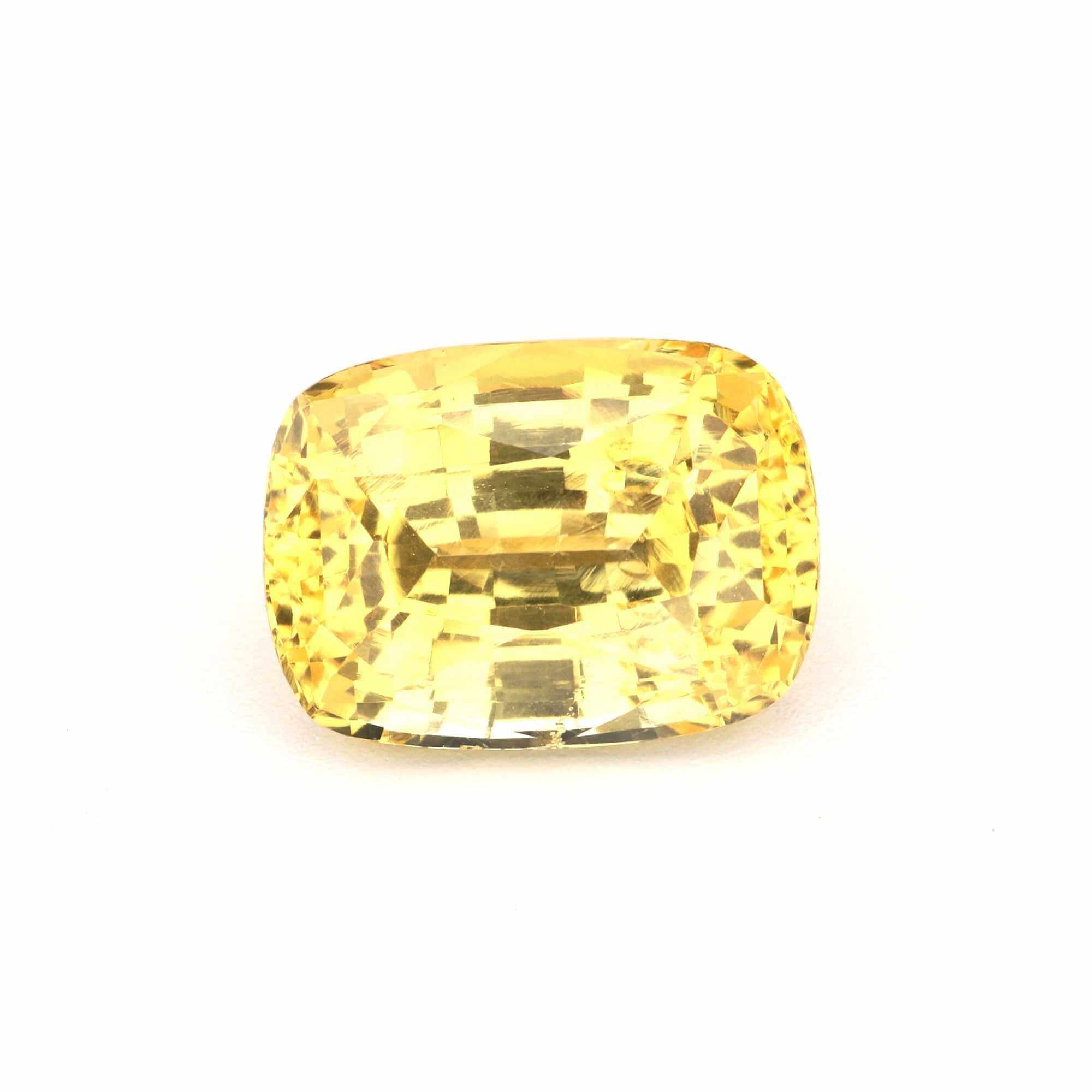
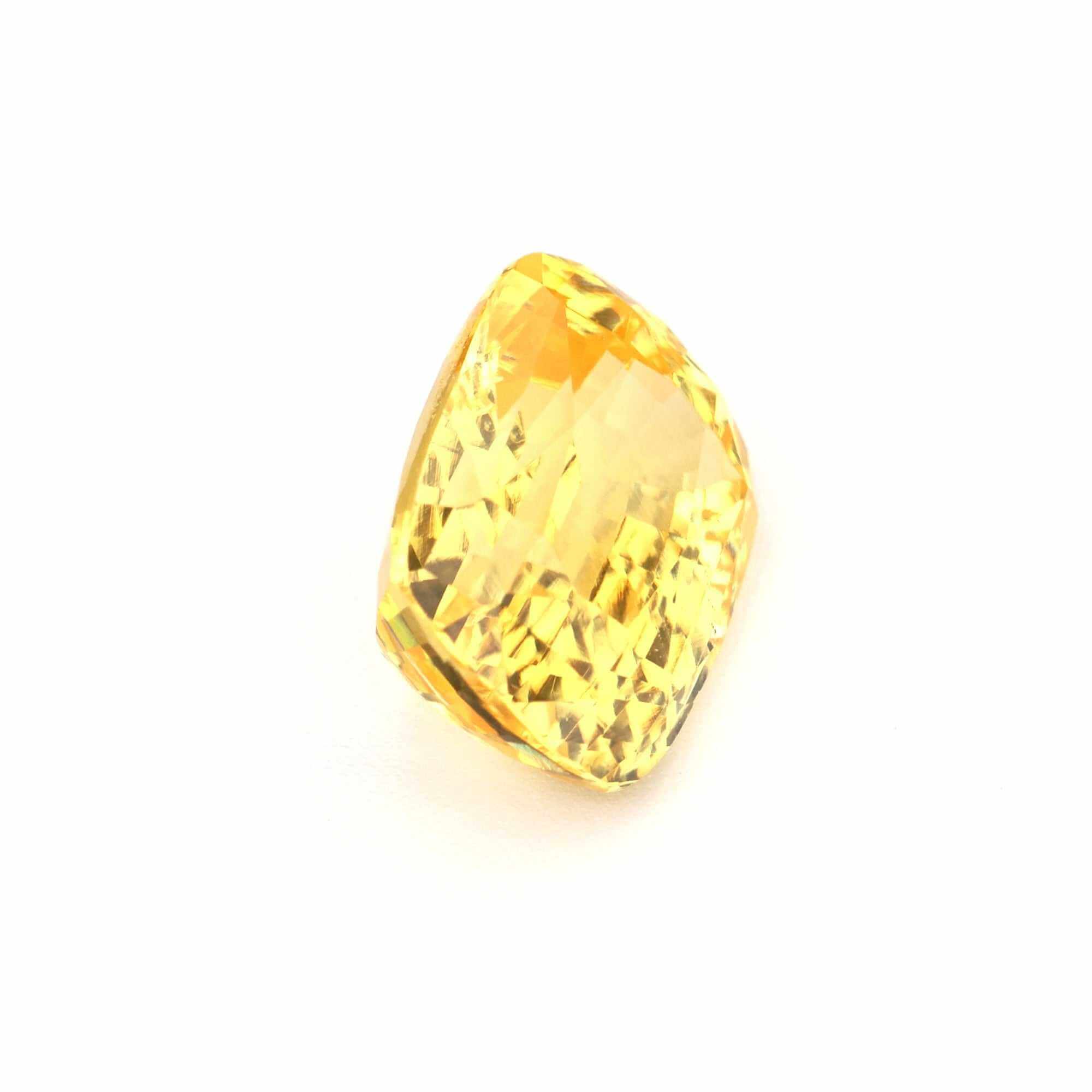
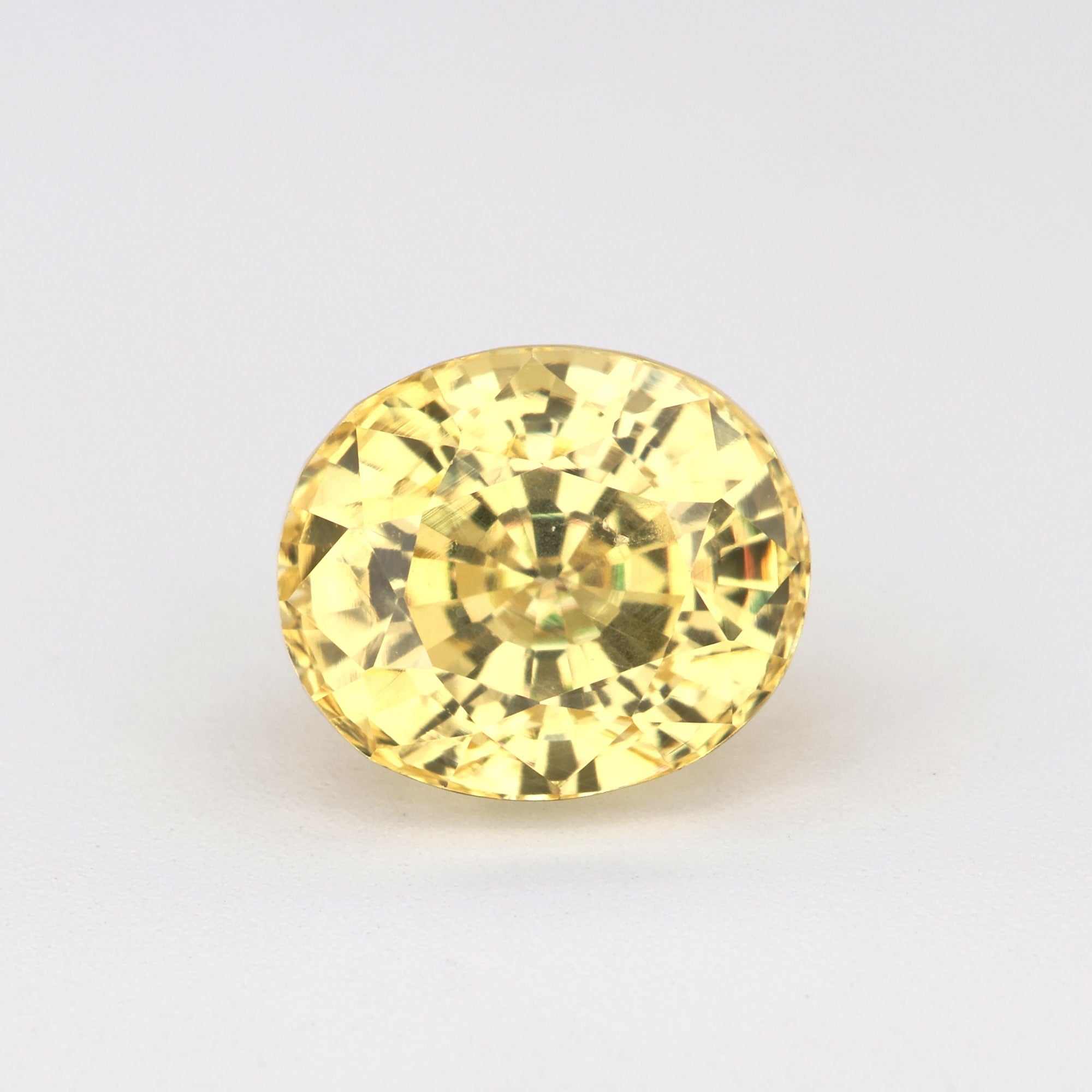
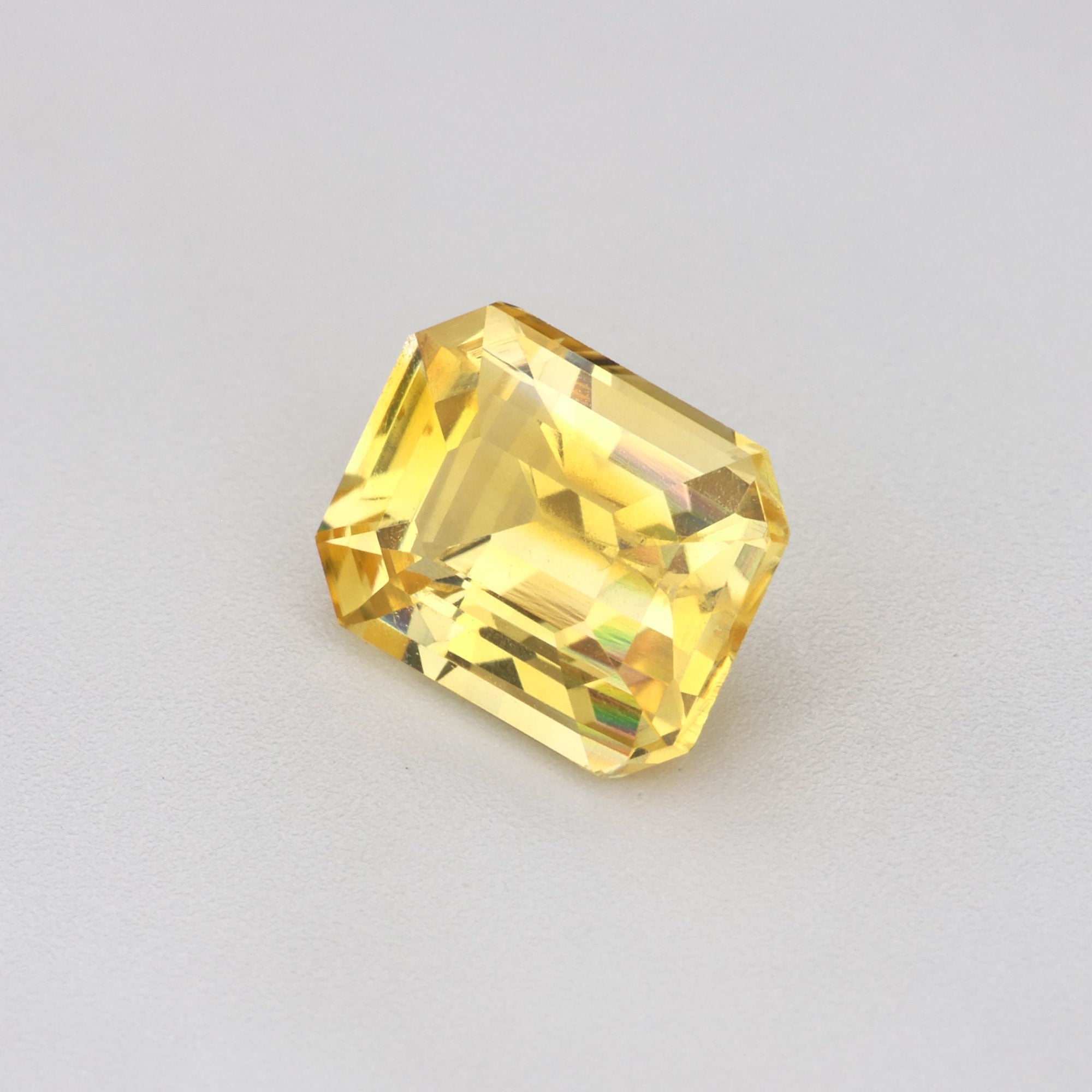
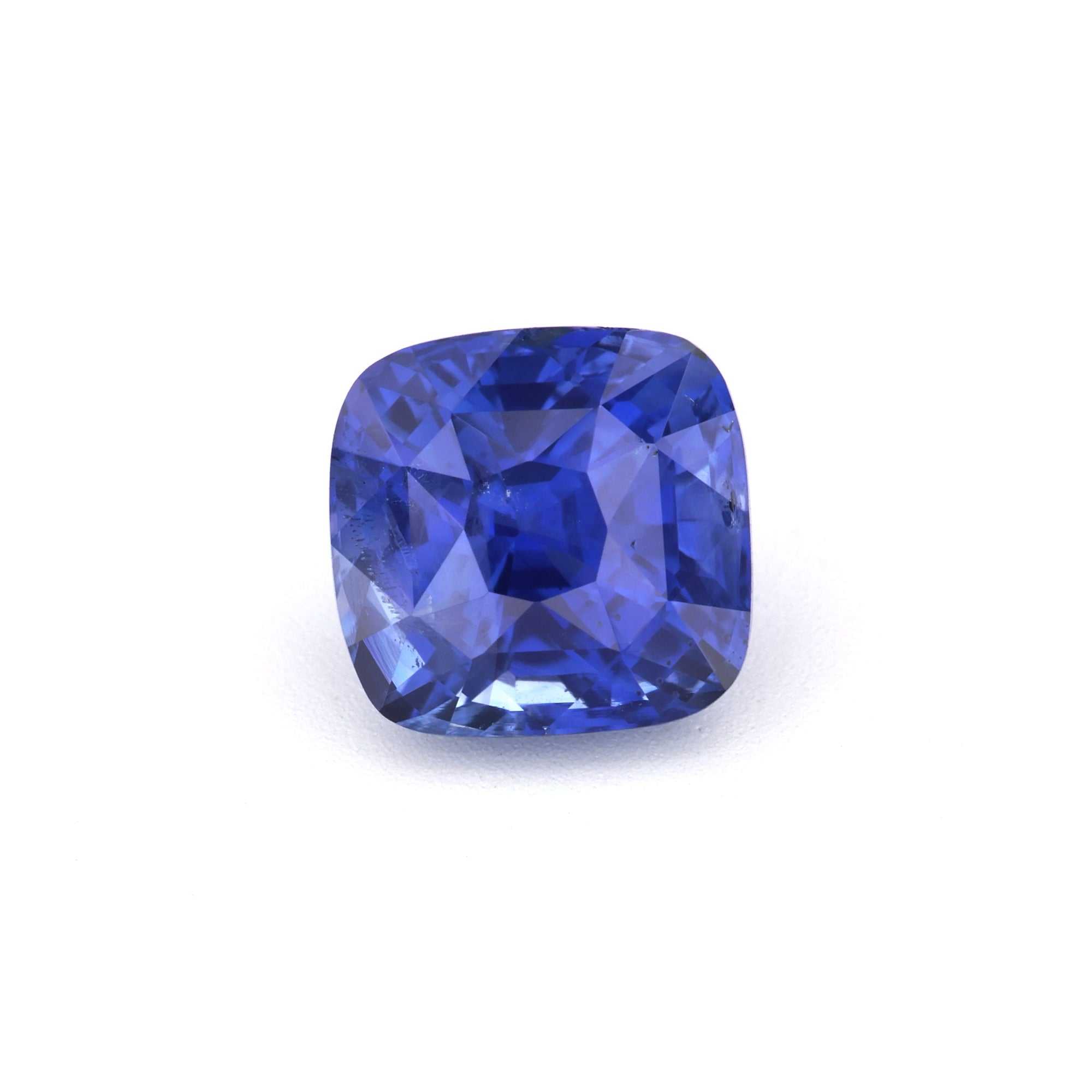
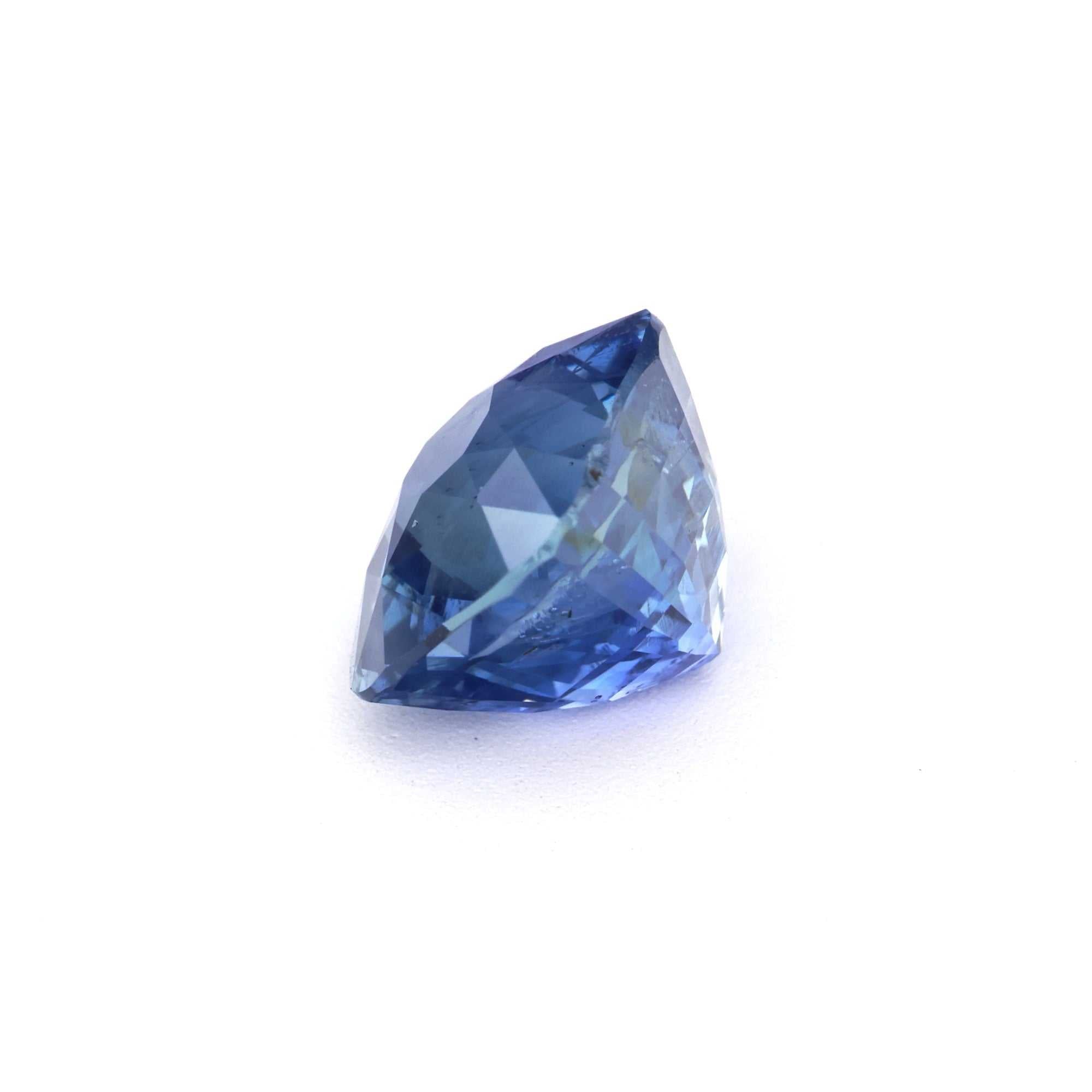
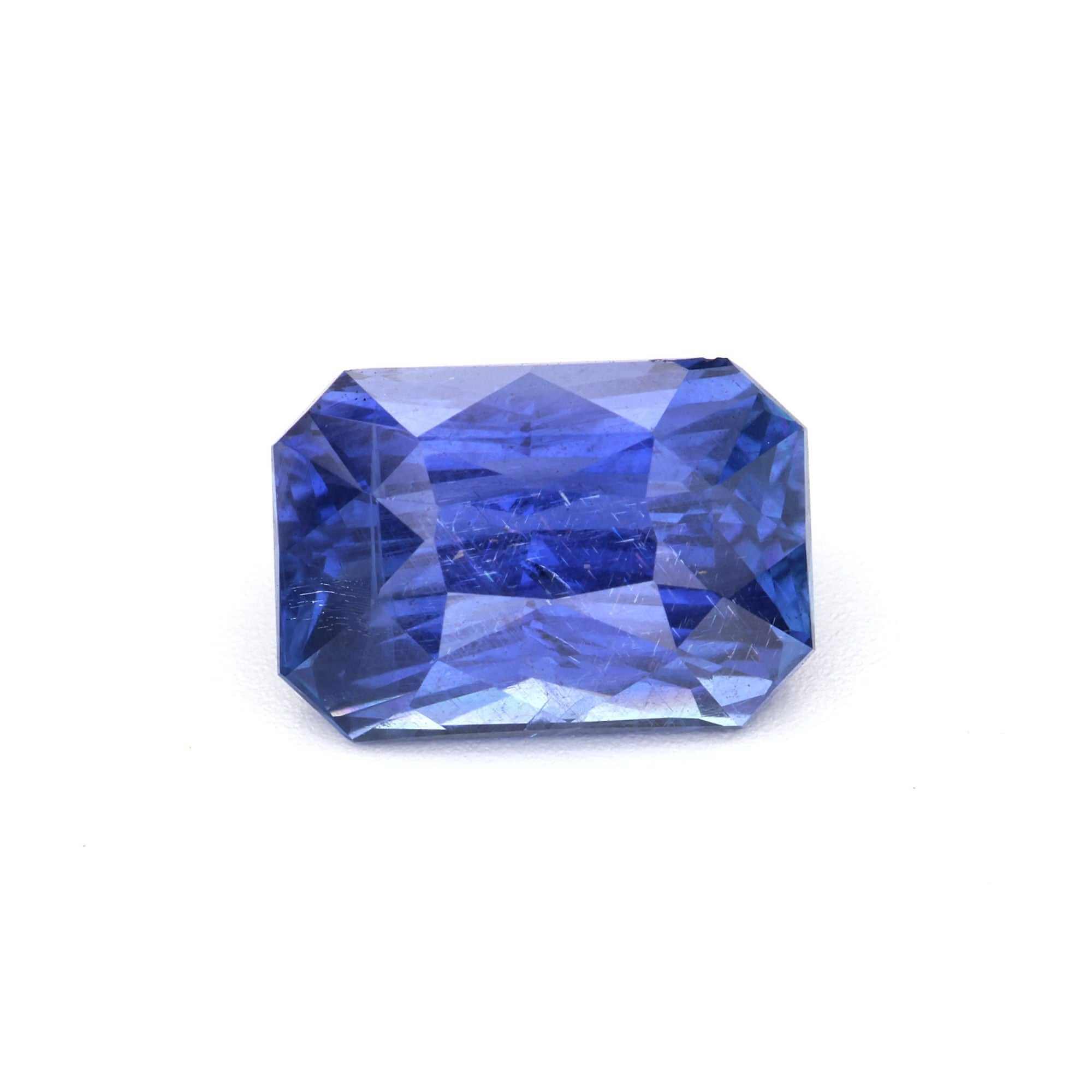
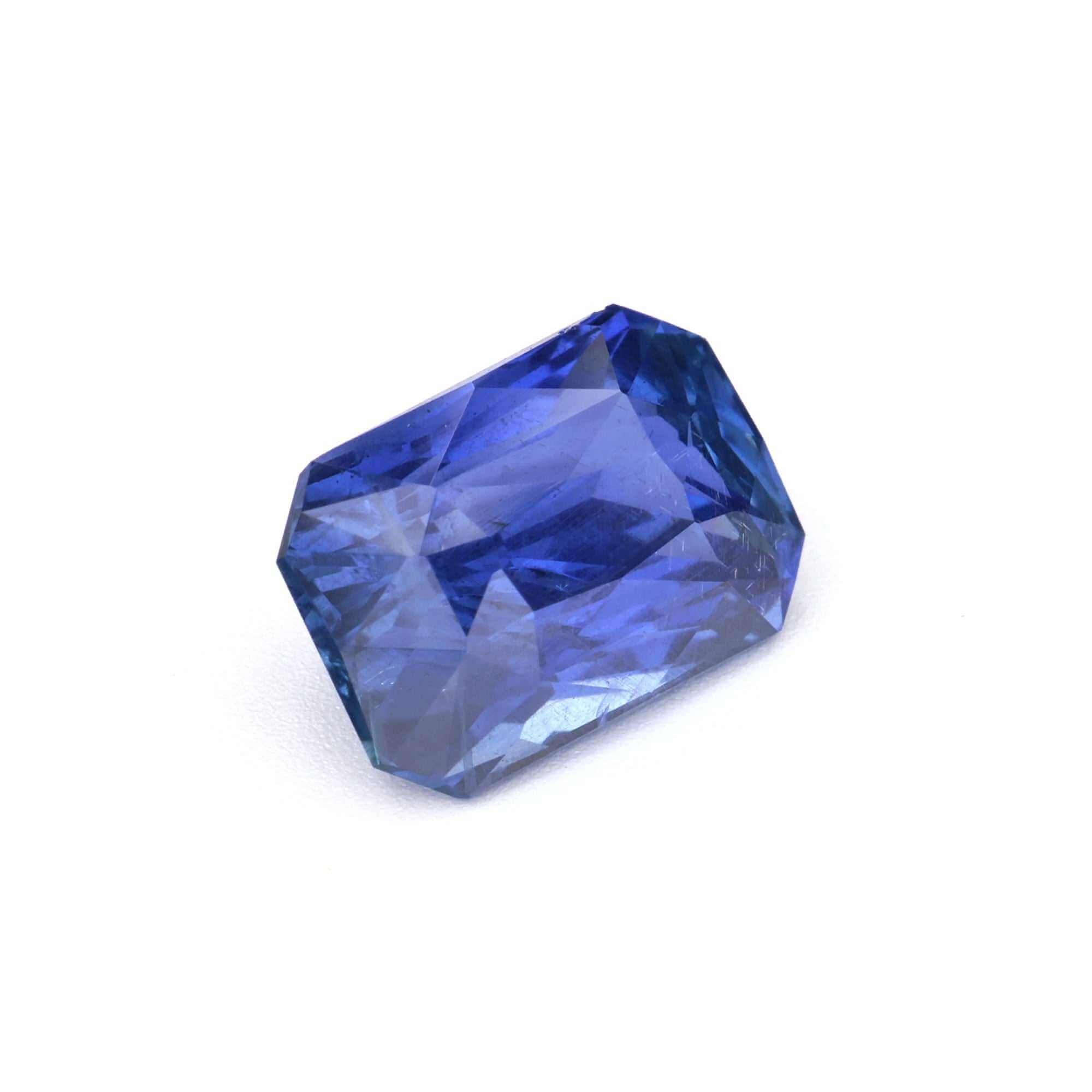
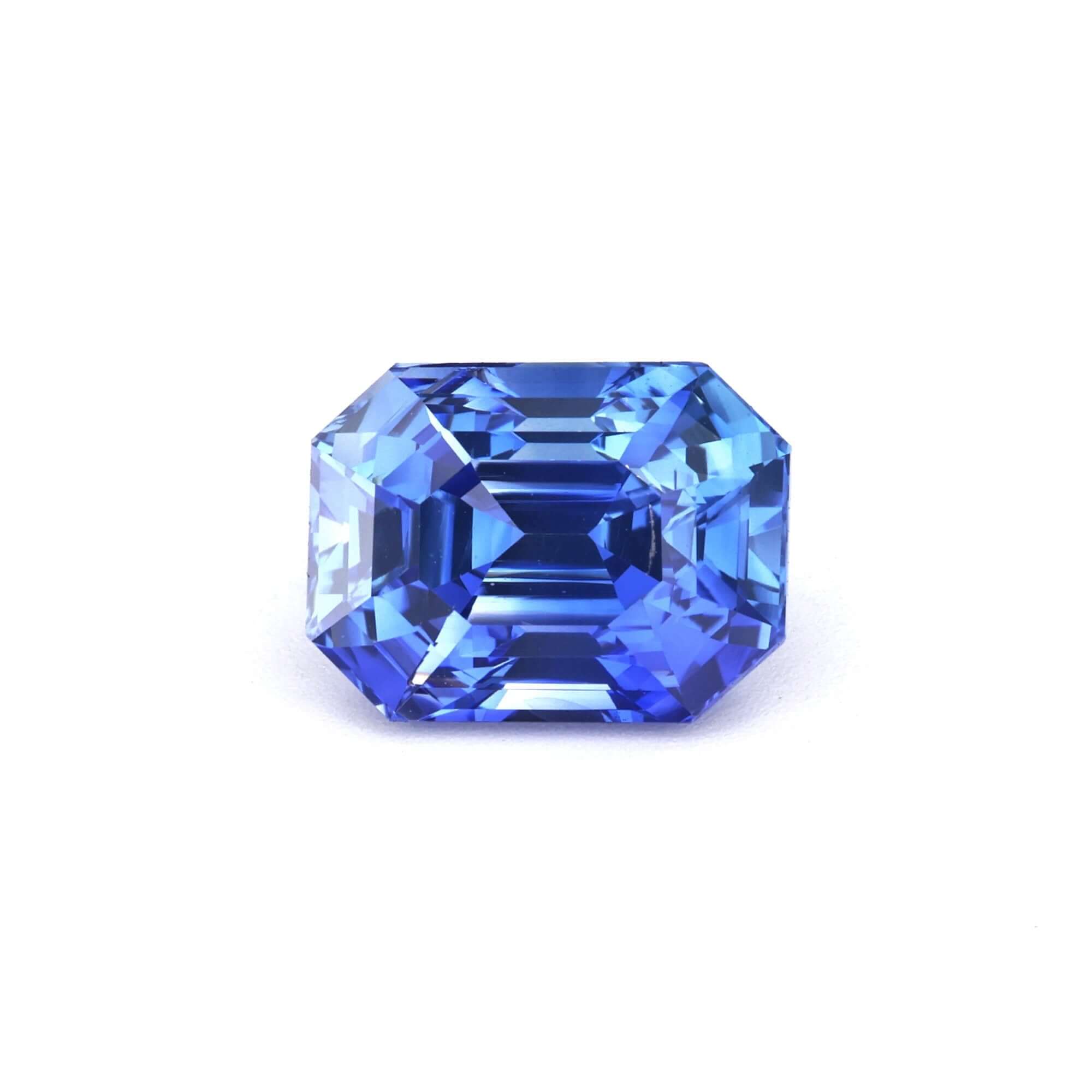
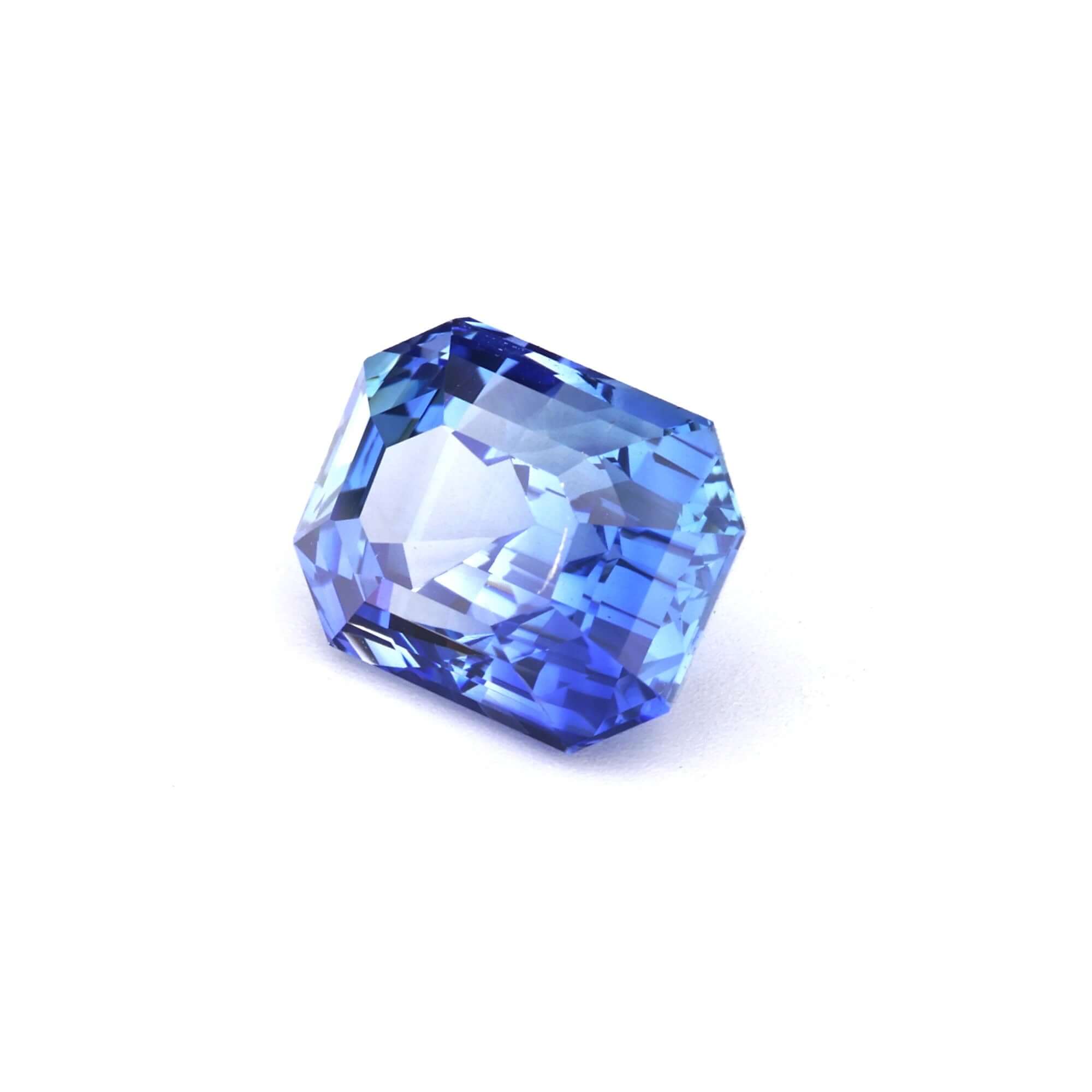
The most effective solution is a Try-On program — where the stone ships to you for in-hand evaluation in your own environment before you commit to purchasing. Crescent Gems offers this for most stones in our collection. You see the stone in your actual lighting, against your skin, in the setting style you have in mind, with time to evaluate it properly.
Browse our Try-On collection to see which stones are currently eligible. Email crescentgems@gmail.com to ask about a specific stone. Free US shipping; $60 flat elsewhere, free over $499. 14-day returns on every order.
How to Evaluate Color Quality Online
Photographs of sapphires are unreliable in specific, consistent ways that are useful to know:
-
Studio lighting overstates brilliance. Stones are typically photographed under high-intensity studio lights that produce sparkle and color saturation beyond what the stone shows in typical room lighting. A stone that appears vivid in a product photo may appear somewhat lighter in your home.
-
Color balance varies by camera and monitor. A blue sapphire that appears vivid cornflower blue on one monitor may appear darker or more violet on another. Teal sapphires in particular shift noticeably between screen types.
-
Color shift is almost impossible to photograph accurately. Teal, purple, and color-change sapphires shift between lighting conditions in ways that flat product photos cannot capture. These stones specifically benefit from the Try-On program.
-
Videos are more reliable than photos. A rotating video of a stone in multiple light sources gives a significantly more accurate picture of real-world color than static photographs. Look for sellers who provide video.
-
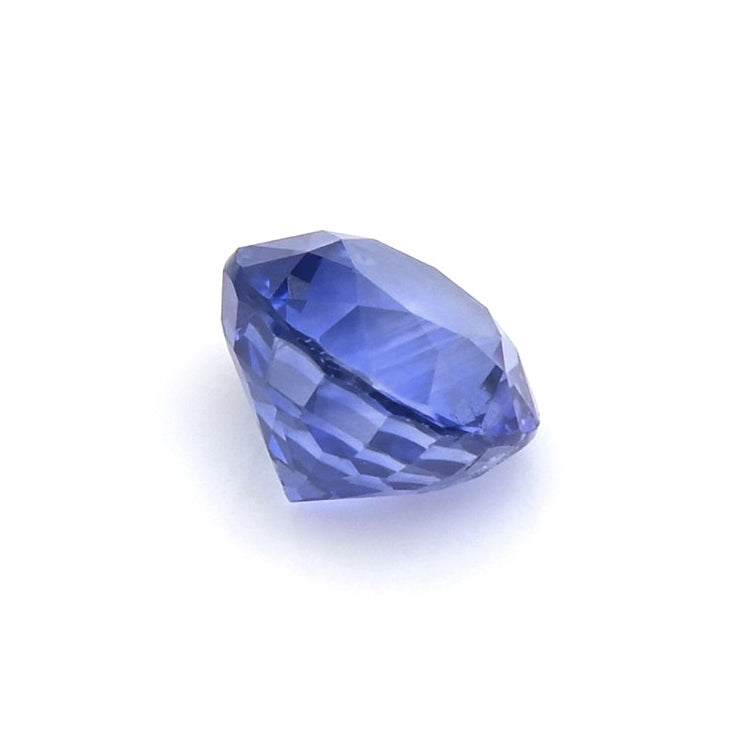
Ask for additional images. Any reputable seller will photograph a specific stone in multiple lighting conditions, from multiple angles, and alongside a size reference on request. If they cannot or will not, that is information.
A Pre-Purchase Checklist
Before confirming any online sapphire purchase, run through this list:
- ☑ Treatment status is explicitly disclosed — “heat treated” or “unheated.”
- ☑ For unheated claims above $500: GIA, Gübelin, or SSEF report provided.
- ☑ Report number verified at gia.edu/report-check (if GIA report).
- ☑ Origin claim is either documented by lab or explicitly stated as unverified seller belief.
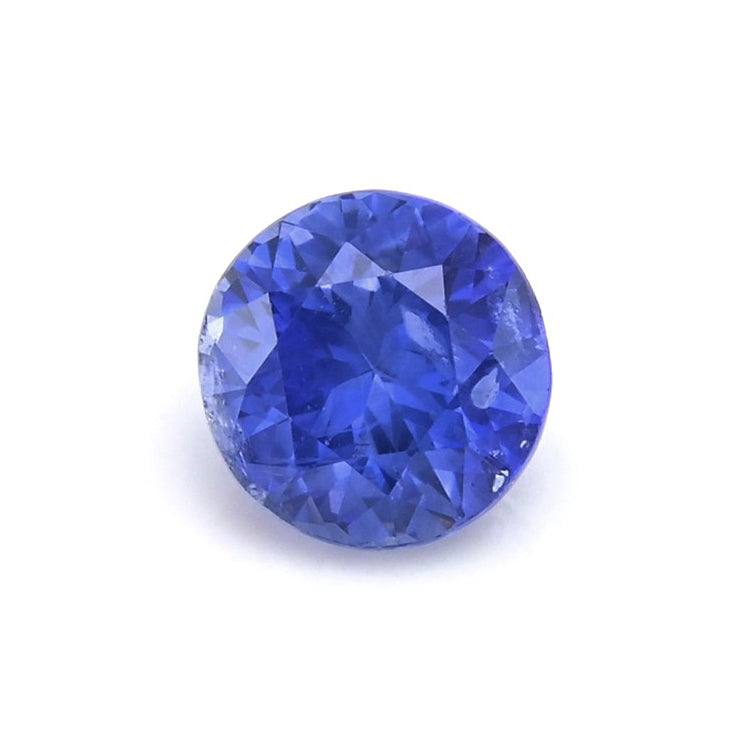
- ☑ Photos show the actual stone being purchased, individually photographed.
- ☑ Return policy is at least 14 days, stated explicitly, no conditions that make returns impractical.
- ☑ Price is consistent with market benchmarks for the stated quality, origin, and treatment. See our pricing guide.
- ☑ Seller has answered any specific pre-purchase questions promptly and specifically.
- ☑ For significant purchases: consider the Try-On program to evaluate in person before committing.
Frequently Asked Questions
How do I know a sapphire is natural and not synthetic?
Not from a photograph, and not reliably by eye. What settles it is a report from a laboratory you can trace: the report identifies the material as natural corundum rather than synthetic, glass or simulant. Laboratory-grown corundum is common and well made, so above $500 that document is worth insisting on, and where the report is a GIA one you can check the number yourself at gia.edu/report-check before you pay.
What does a sapphire lab report actually tell me?
It records what the examination found: species and variety, carat weight, measurements, shape and cutting style, the color as the laboratory describes it, and treatment indications. Geographic origin is a separate service that has to be requested and paid for separately, and where it is given it is the laboratory’s expert opinion rather than a determination. A report assigns no quality grade of any kind, so cut, color and whether the price is reasonable are all still yours to judge.
Does it matter whether a sapphire is heated or unheated?
It matters to the price rather than to whether the stone is natural. Heating is a common and accepted treatment and most sapphire on the market has been heated; unheated material of fine color is the dearer of the two. We do not publish a figure for the gap, for the reason given in section 1. What matters on any listing is that the status is stated plainly and that an unheated claim above $500 comes with a report you can trace.
What should I check in the photos and video before buying?
Photographs of the actual stone, individually photographed, rather than stock imagery. Studio lighting overstates brilliance and color balance shifts between cameras and monitors, so a rotating video under more than one light source tells you more than any still image. Ask for extra shots from different angles and alongside a size reference; a reputable seller will provide them, and if they will not, that is information too.
Is it safe to buy loose sapphires online?
It is, provided you check the same things you would check in a shop: treatment stated explicitly, a report from a named laboratory you can trace once the price gets serious, photographs of the stone you are actually buying, and a written return window of at least 14 days. Crescent Gems also ships most stones in the collection for in-hand evaluation before you commit, through the Try-On program.
Browse Natural Sapphires at Crescent Gems
Our full sapphire collection states treatment and origin on every listing, and names the laboratory that issued the report for that stone. The great majority of our stones above $500 carry a laboratory report; a few do not, and the listing says so rather than leaving you to work it out. Individual stone photos and video available on request.
Browse by color: blue sapphire · teal sapphire · pink sapphire · peach sapphire · yellow sapphire · all unheated sapphires
Email crescentgems@gmail.com with any question before or after purchase. Free US shipping; $60 flat elsewhere, free over $499. 14-day returns on every order.
Explore Further