

Natural Sapphire & Gemstone Buying Guides
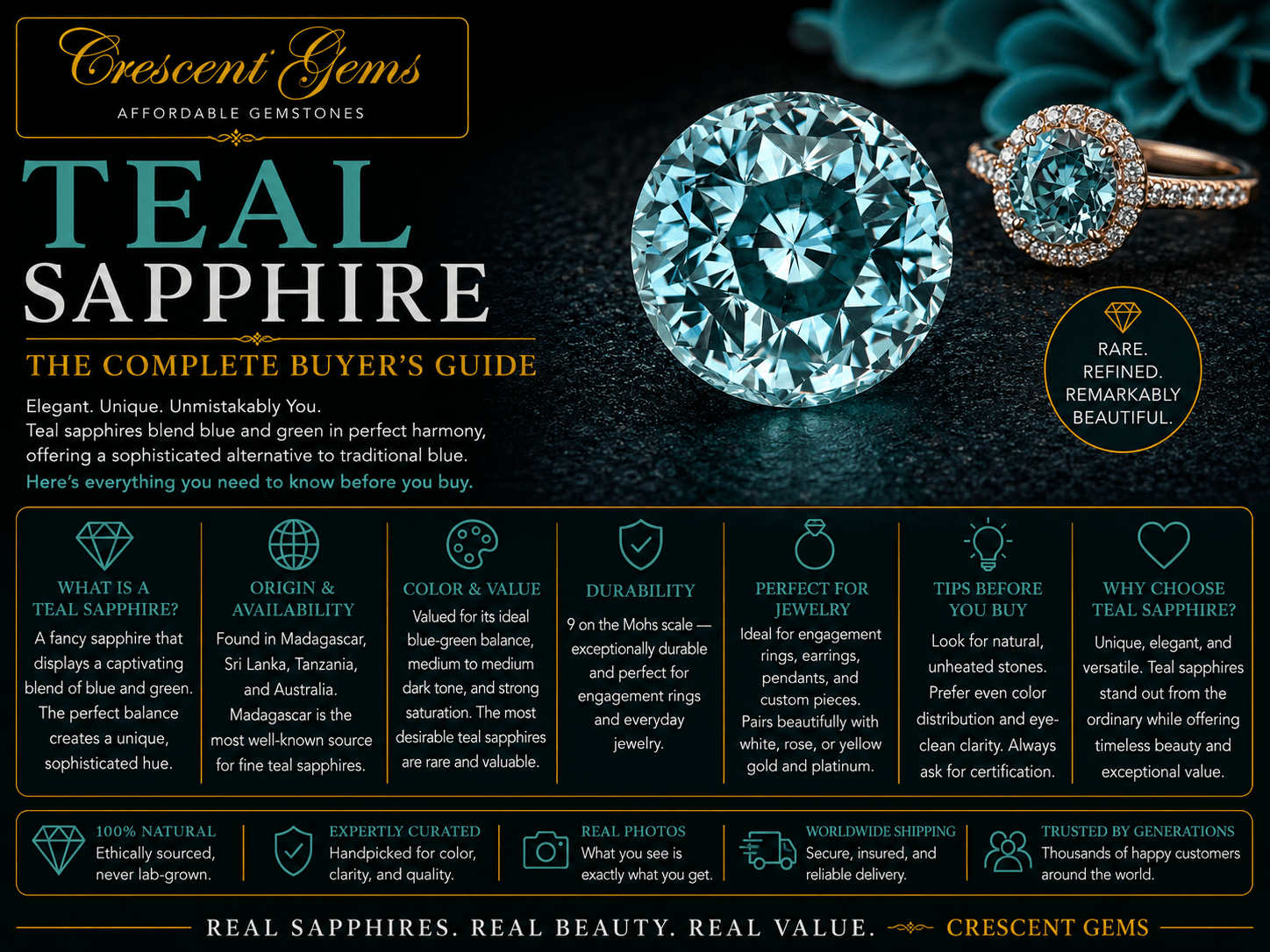
Teal Sapphire — The Complete Buyer's Guide to the Color That Changes Everything
Teal sapphire is the defining non-traditional engagement ring stone of the current decade — a blue-green corundum that is almost always unheated by nature, shifts between teal-blue in daylight and teal-green indoors, and sits at price points meaningfully below equivalent unheated blue sapphire. This guide covers the full blue-green color spectrum, origin differences, why heat destroys teal color, the color shift phenomenon, pricing, skin tone and metal pairing, and the best engagement ring cuts.
Read moreabout Teal Sapphire — The Complete Buyer's Guide to the Color That Changes Everything
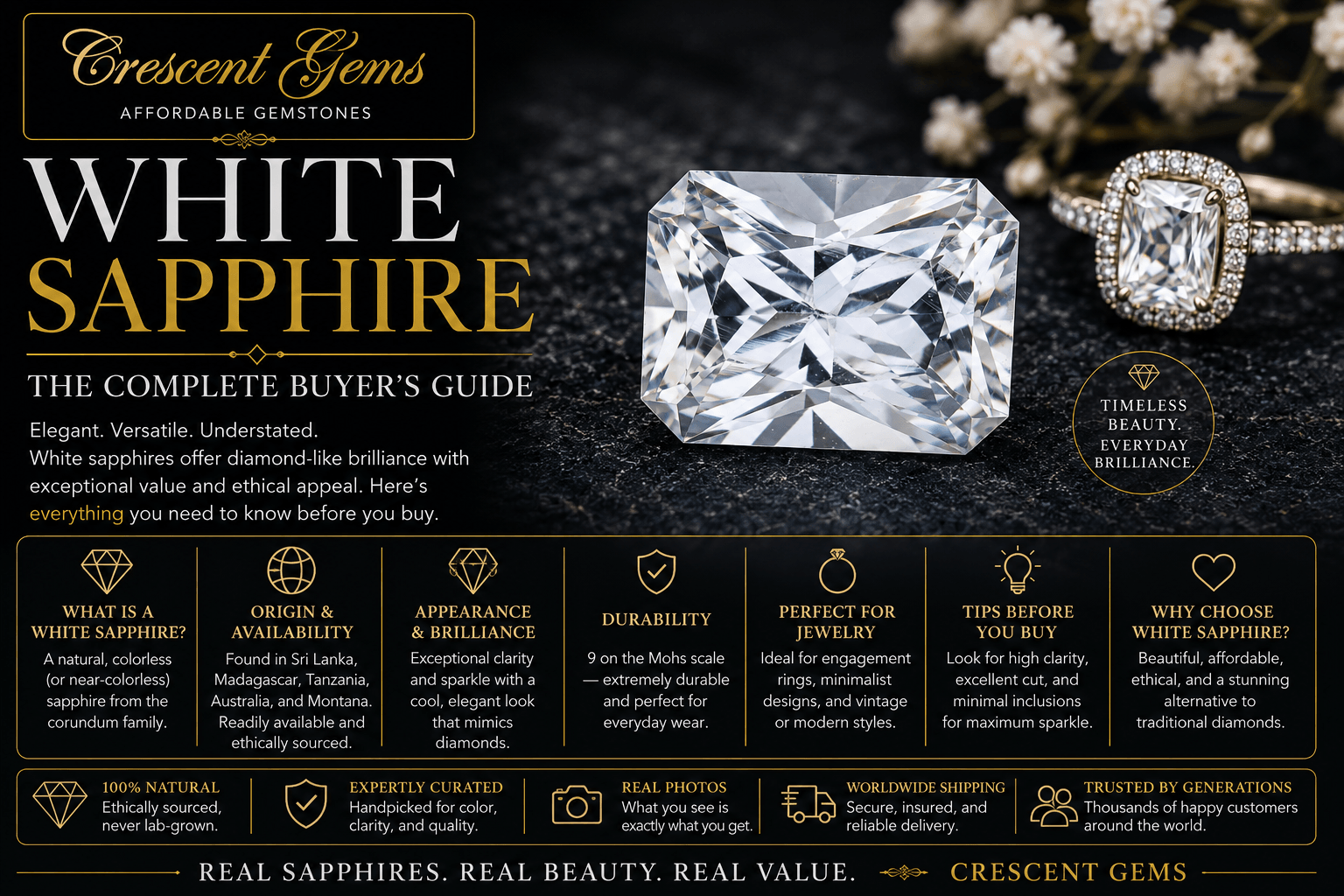
White Sapphire — The Complete Buyer's Guide to the Diamond Alternative
Read moreabout White Sapphire — The Complete Buyer's Guide to the Diamond Alternative
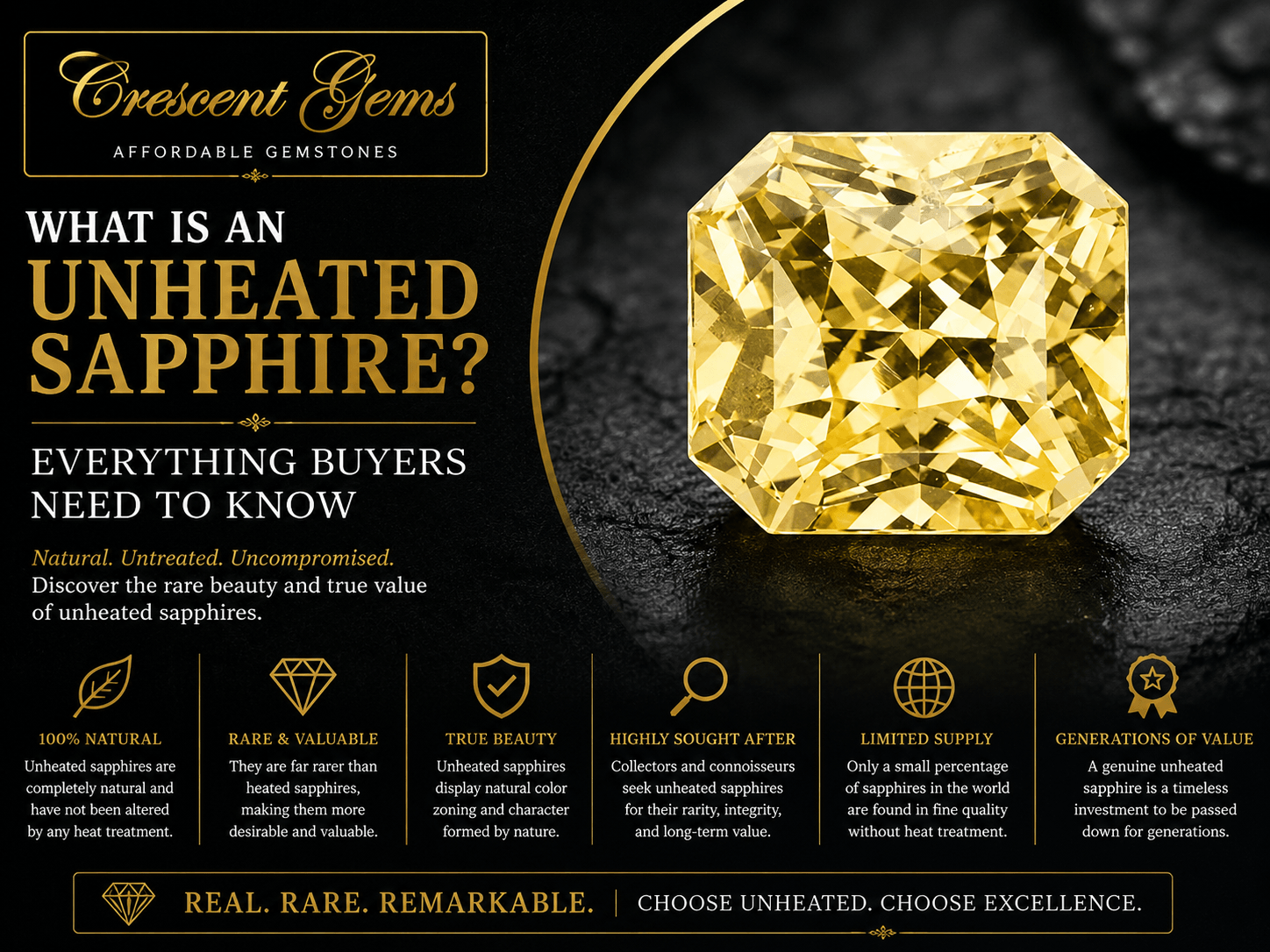
What Is an Unheated Sapphire? The Complete Buyer's Guide
Read moreabout What Is an Unheated Sapphire? The Complete Buyer's Guide
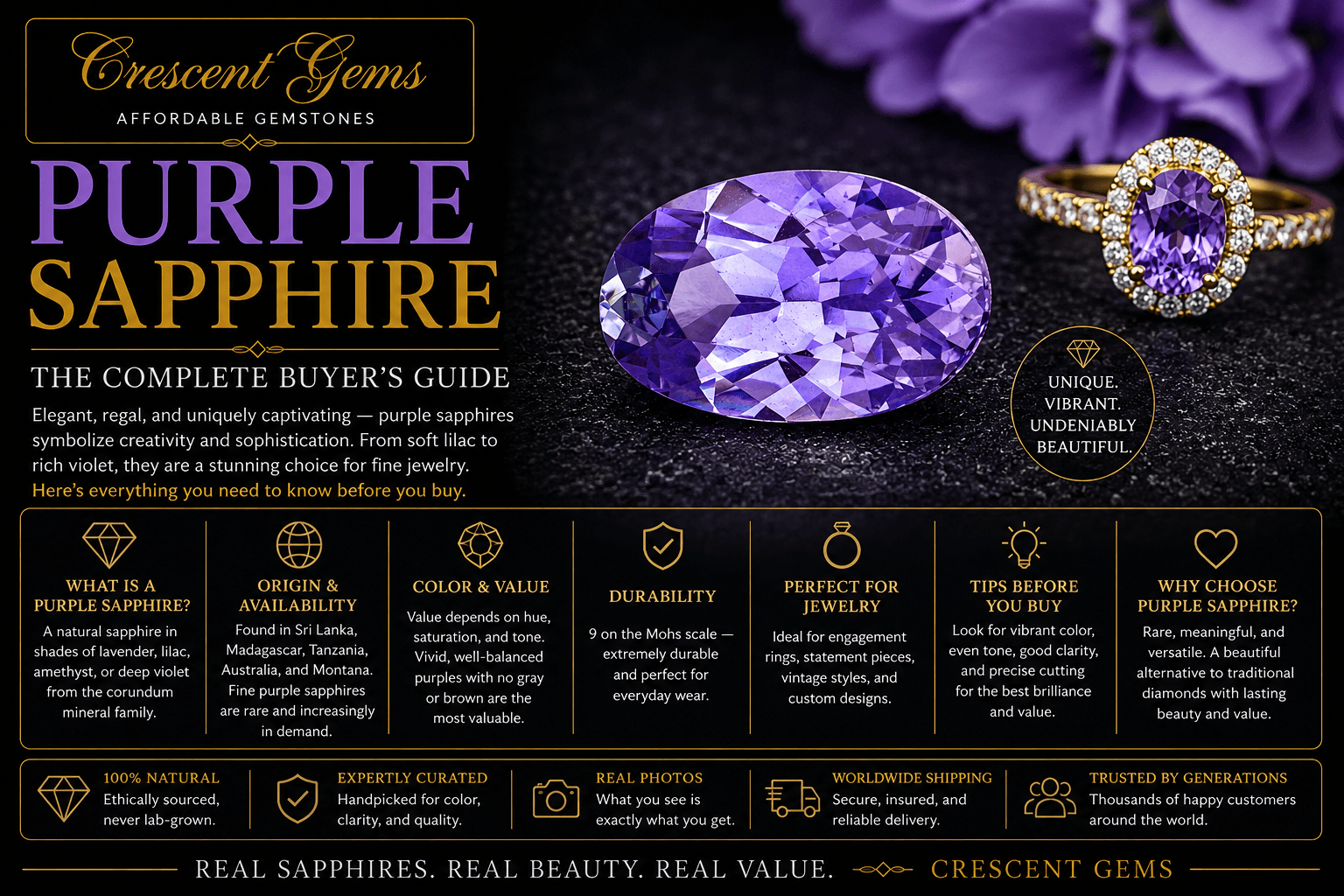
Purple Sapphire — The Complete Buyer's Guide to Color, Origin, and Value
Purple sapphire is one of the most undervalued stones in the sapphire family — a color-shifting, vanadium-colored corundum that moves from blue-violet in daylight to reddish-purple under warm light. This guide covers the full color spectrum from lavender to plum, the purple vs. violet distinction, why fine purple is almost always unheated, origin differences, pricing, skin tone and metal pairing, engagement ring cuts, and how it compares to amethyst and tanzanite.
Read moreabout Purple Sapphire — The Complete Buyer's Guide to Color, Origin, and Value
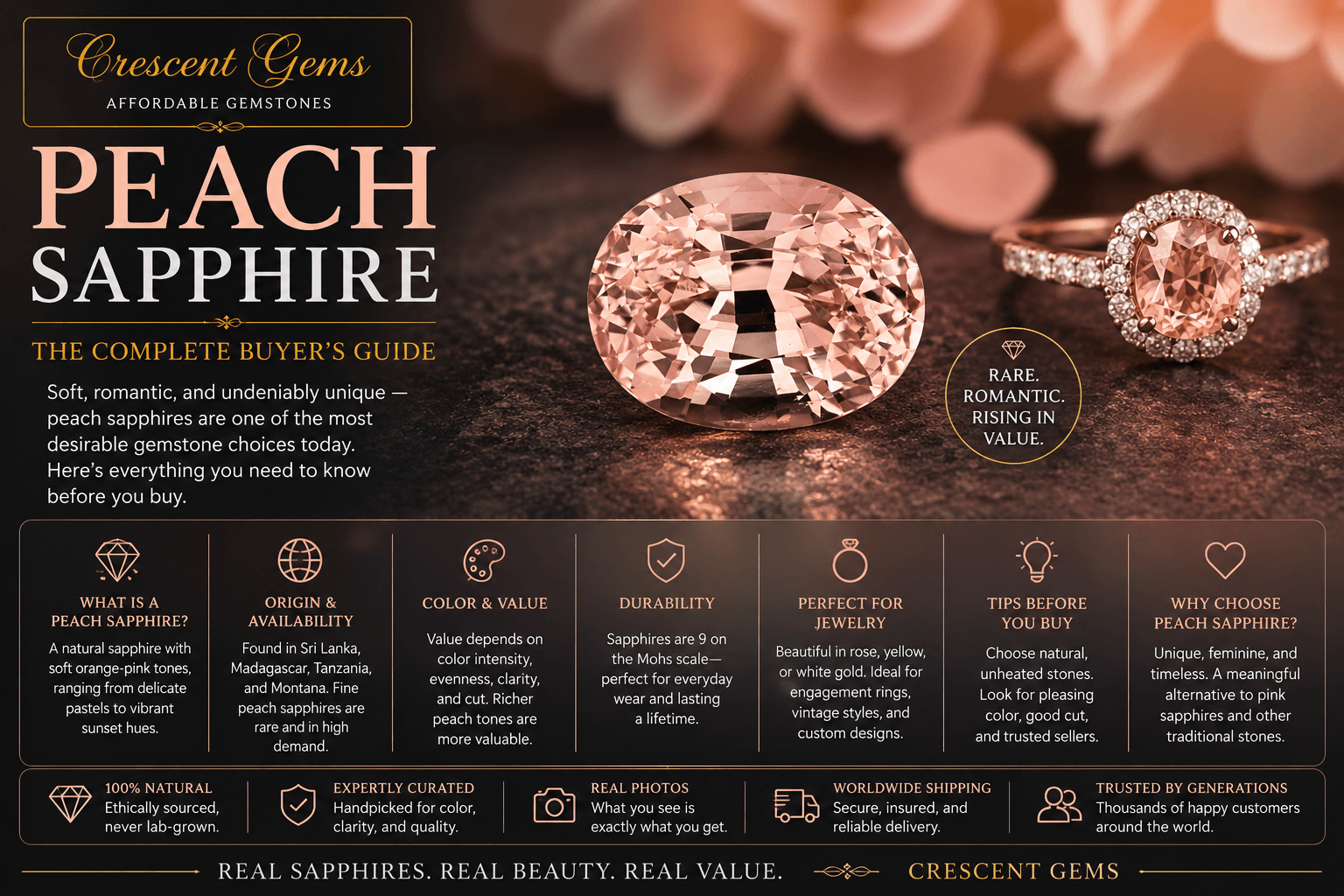
Peach Sapphire — The Complete Buyer's Guide to Color, Origin, and Value
Peach sapphire is natural corundum in a warm salmon-pink color — one of the most flattering and undervalued gemstone colors available. This guide covers what creates the peach color, the padparadscha boundary, origin differences, why fine peach is almost always unheated, pricing, skin tone and metal pairing, the best engagement ring cuts, and how it compares to morganite and padparadscha.
Read moreabout Peach Sapphire — The Complete Buyer's Guide to Color, Origin, and Value
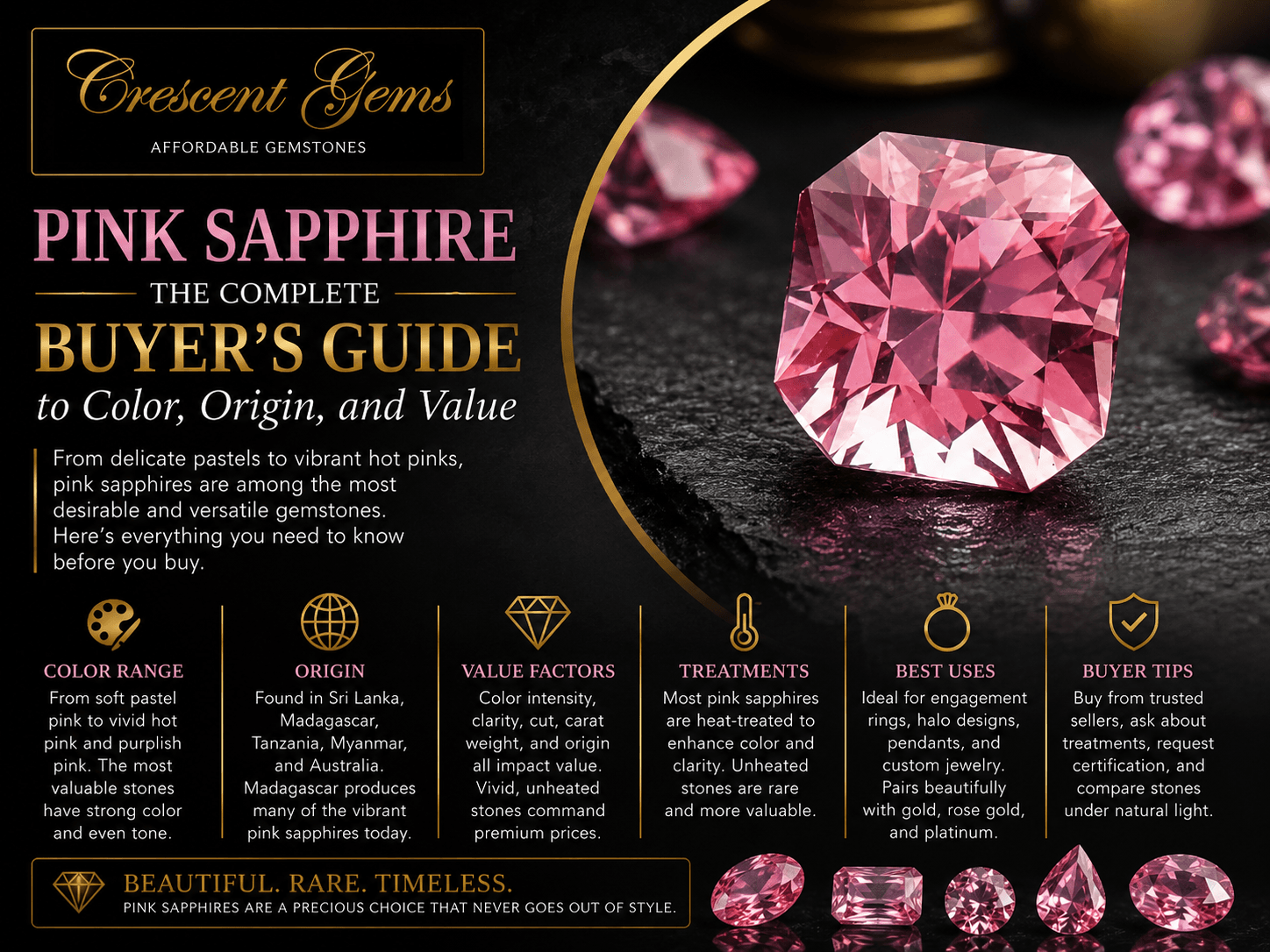
Pink Sapphire — The Complete Buyer's Guide to Color, Origin, and Value
Pink sapphire is natural corundum coloured by chromium — the same element responsible for ruby. This complete guide covers the full colour spectrum, the pink-sapphire-to-ruby boundary, origin differences, heat treatment, pricing, skin tone and metal pairing, engagement ring guidance, and how pink sapphire compares to pink diamond and morganite.
Read moreabout Pink Sapphire — The Complete Buyer's Guide to Color, Origin, and Value
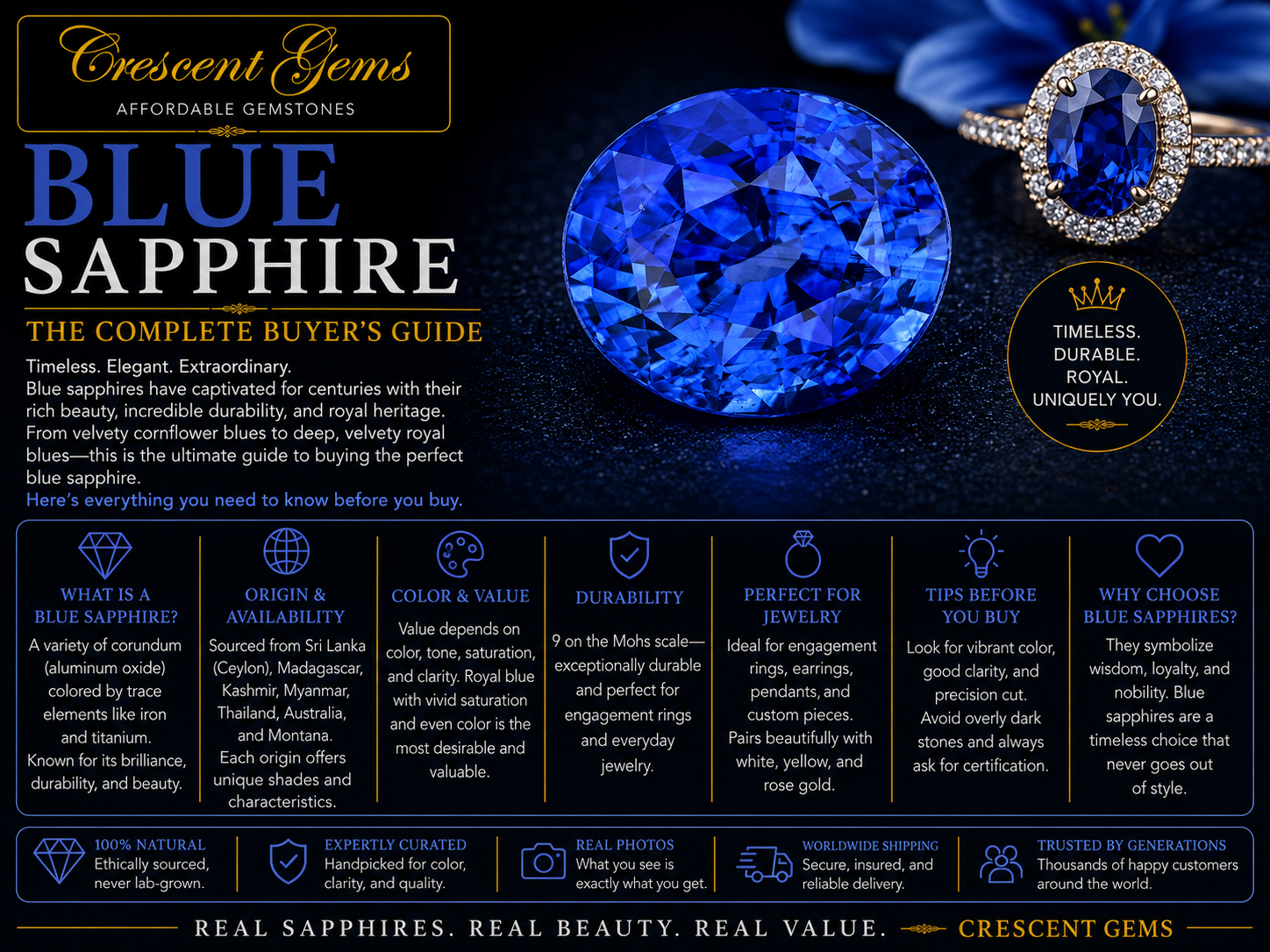
Blue Sapphire — The Complete Buyer’s Guide to Color, Origin, and Value
Blue sapphire is the most commercially significant colored gemstone in the world — prized for over 2,500 years, the benchmark against which every other colored stone is measured, and the most consistently appreciating investment-grade gemstone category when unheated and GIA-certified. This guide covers the iron-titanium color mechanism, hue-tone-saturation grading, the five key origins (Kashmir, Burma, Ceylon, Madagascar, Thailand), heat treatment and the unheated premium, how to read a GIA report for blue sapphire, Jyotish Neelam specifications, a complete pricing framework from $150 to $200,000+ per carat, blue sapphire vs. tanzanite and aquamarine, engagement ring cuts and settings, metal pairing, and a four-scenario certification guide.
Read moreabout Blue Sapphire — The Complete Buyer’s Guide to Color, Origin, and Value
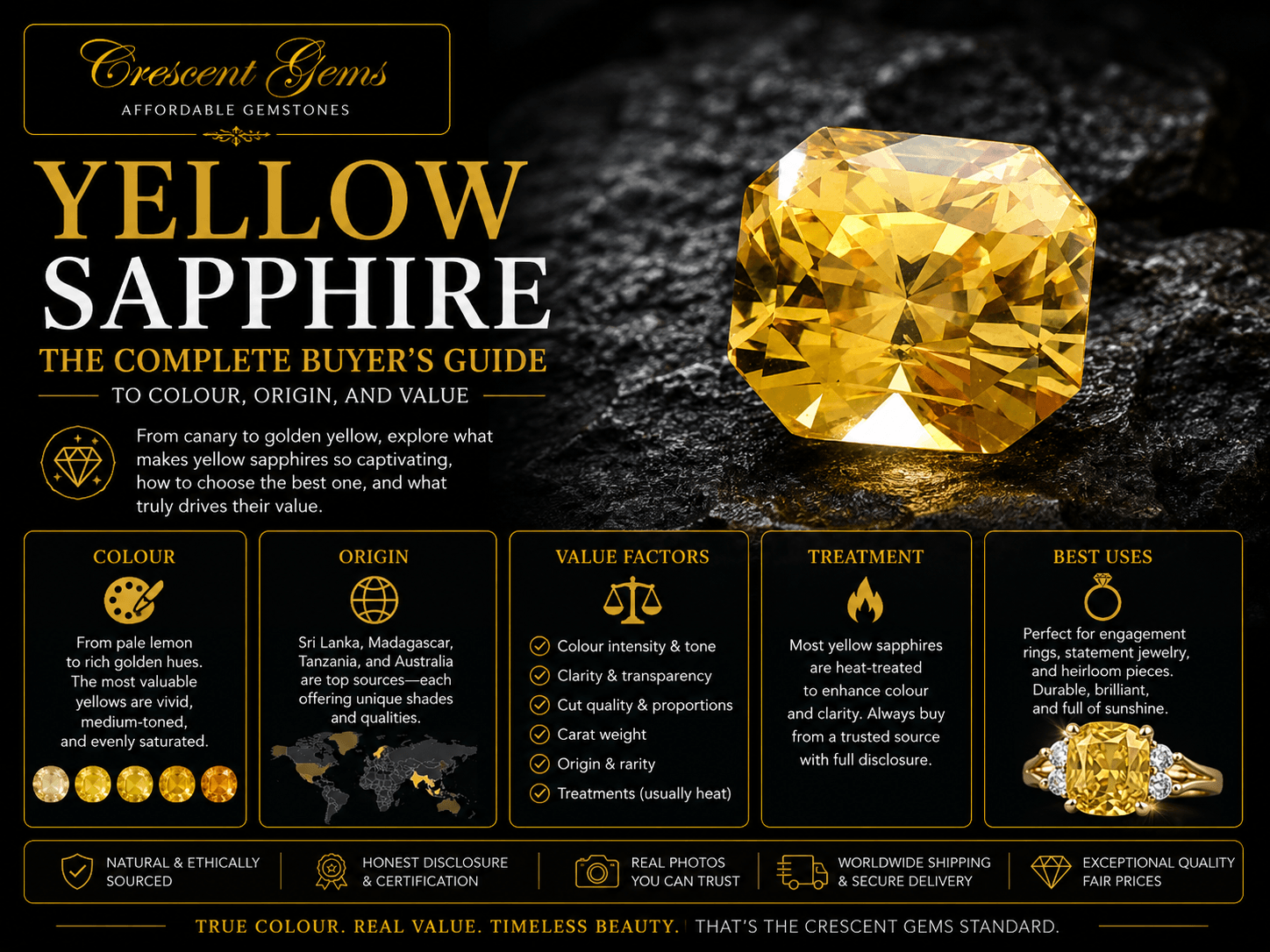
Yellow Sapphire — The Complete Buyer’s Guide to Colour, Origin, and Value
Yellow sapphire is the most commercially significant non-blue sapphire in the world — spanning pale straw through vivid canary to deep orange-gold. This guide covers the full colour spectrum, origin differences, heat treatment, Jyotish requirements, certification, pricing, and how to compare yellow sapphire against yellow diamond and citrine.
Read moreabout Yellow Sapphire — The Complete Buyer’s Guide to Colour, Origin, and Value
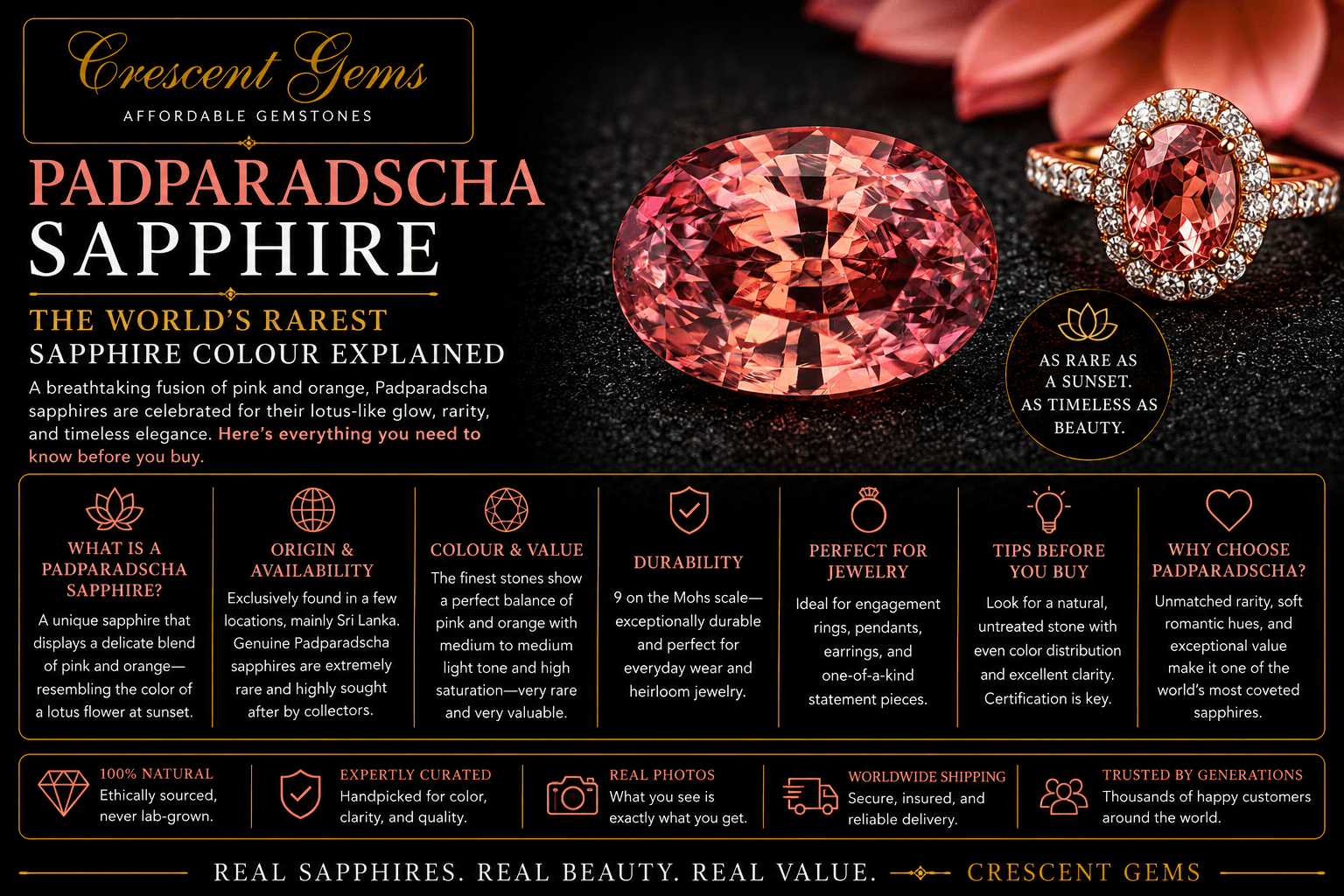
Padparadscha Sapphire — The World's Rarest Sapphire Colour Explained
Padparadscha sapphire is the rarest colour variety in the natural corundum family — a precise salmon-pink to orange-pink tone certified only by major gemological laboratories. This guide covers what defines a true padparadscha, how it is graded, where it comes from, what it costs, and how to buy one safely.
Read moreabout Padparadscha Sapphire — The World's Rarest Sapphire Colour Explained
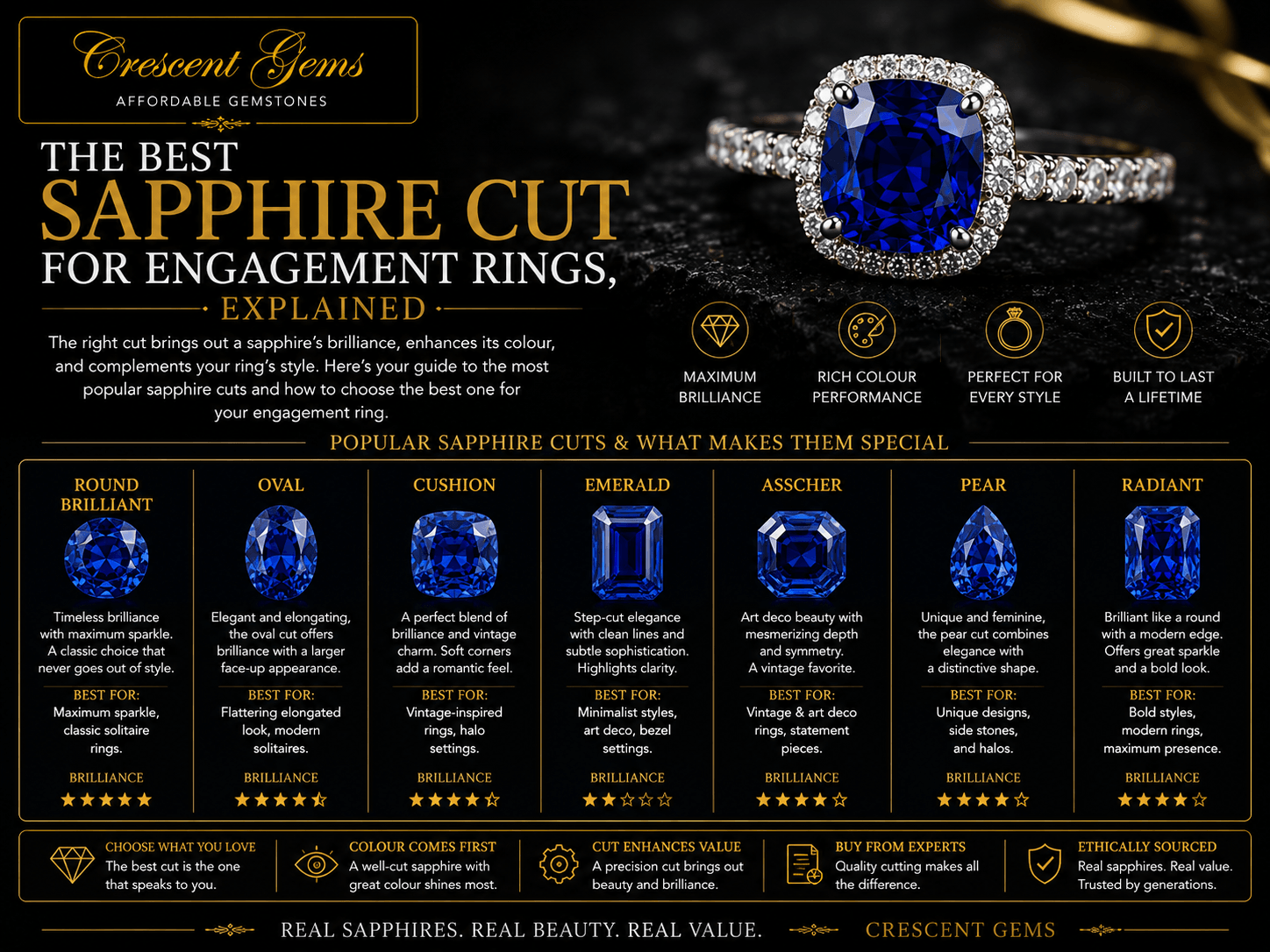
The Best Sapphire Cut for an Engagement Ring — Shape, Brilliance, and What to Choose
Read moreabout The Best Sapphire Cut for an Engagement Ring — Shape, Brilliance, and What to Choose
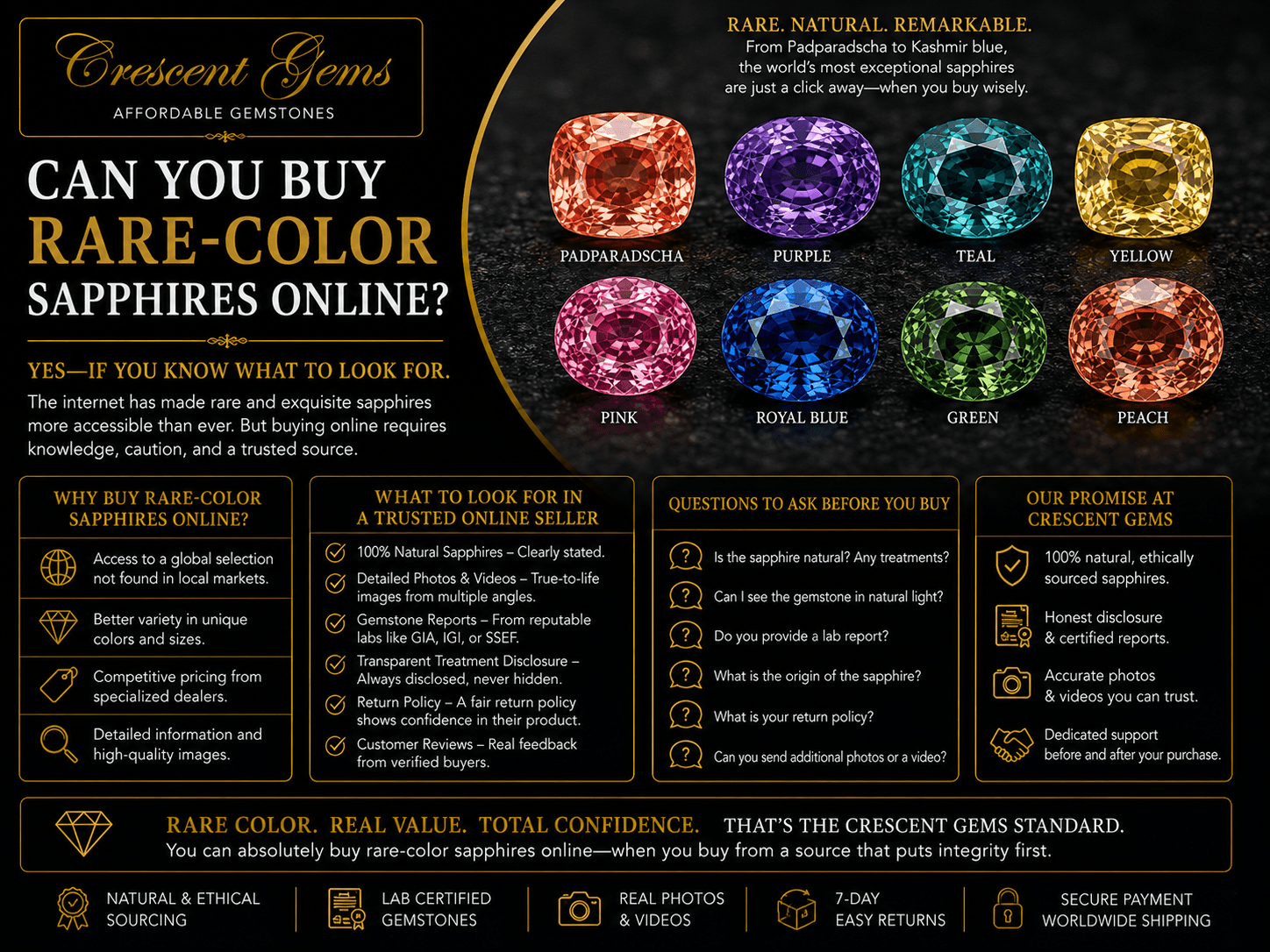

Buy Loose Gemstones the Smart Way in 2026
