Yes — rare-color sapphires are genuinely available online. The harder question, and the one this article is about, is how much of a listing you can actually check for yourself before you send money.
We are specialists in loose sapphire, and we hold some of the colors below and none of others. There is no padparadscha in our stock at present. Our teal is Madagascar material and most of our green sapphire comes from Madagascar and East Africa rather than Sri Lanka. So this article covers which sapphire colors are genuinely scarce and why, what we hold and what we do not, what a laboratory report does and does not settle, and what to look at on any listing — ours or anyone else's — before you commit.
Which Sapphire Colors Are Considered Rare?
Blue is the default colour for sapphire: it is the one the trade vocabulary was built around, and the one a buyer finds without looking. The colors below are the ones you have to go looking for. We are not going to rank them against each other for rarity, because nobody publishes the production figures that would settle such a ranking. What can be described is the mechanism that makes each one uncommon, and whether we have any:
-
Padparadscha — pink and orange in the same stone, in balance. Most pink corundum carries no orange and most orange corundum carries no pink, so stones that sit at the intersection are uncommon. It is also the one sapphire color name that laboratories have agreed a definition for. We hold none in stock at present.
-
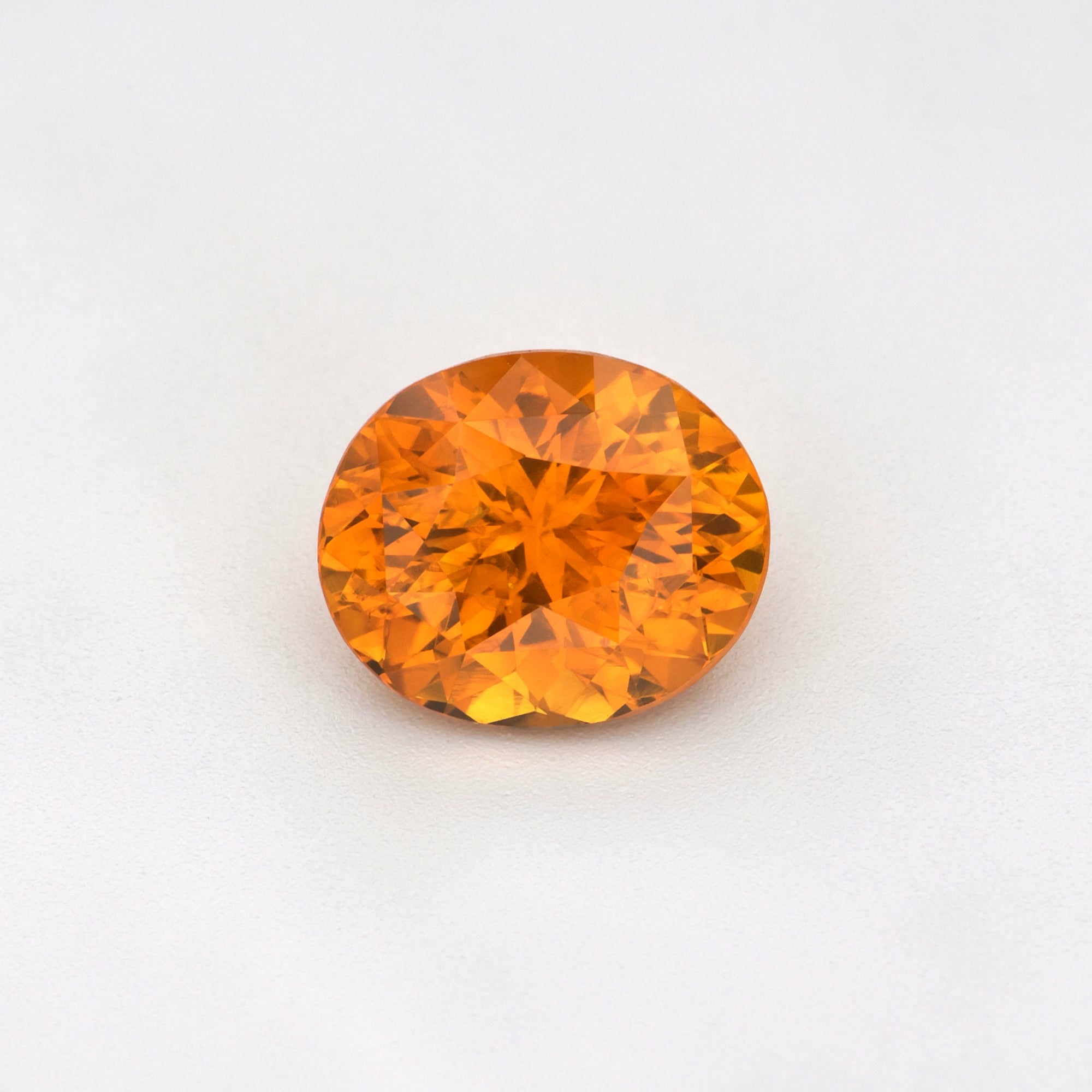
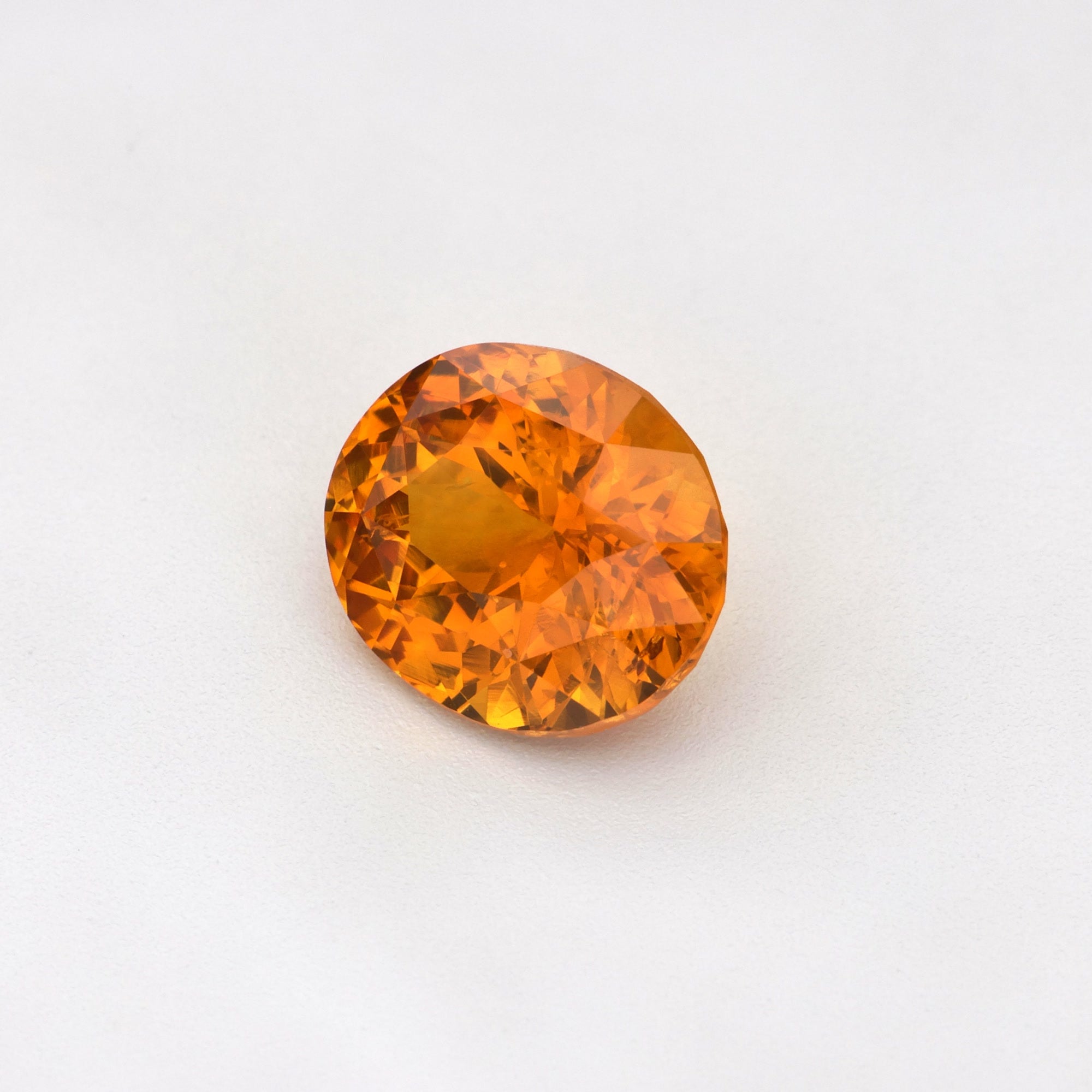
Orange — orange without a significant pink or yellow secondary hue. Much of the bright orange material on offer anywhere owes its color to beryllium diffusion, which is a different thing from a stone that grew orange; see below.
-
Teal — blue and green in roughly equal measure. Heat drives the green out, so teal is sold unheated almost by definition.
-
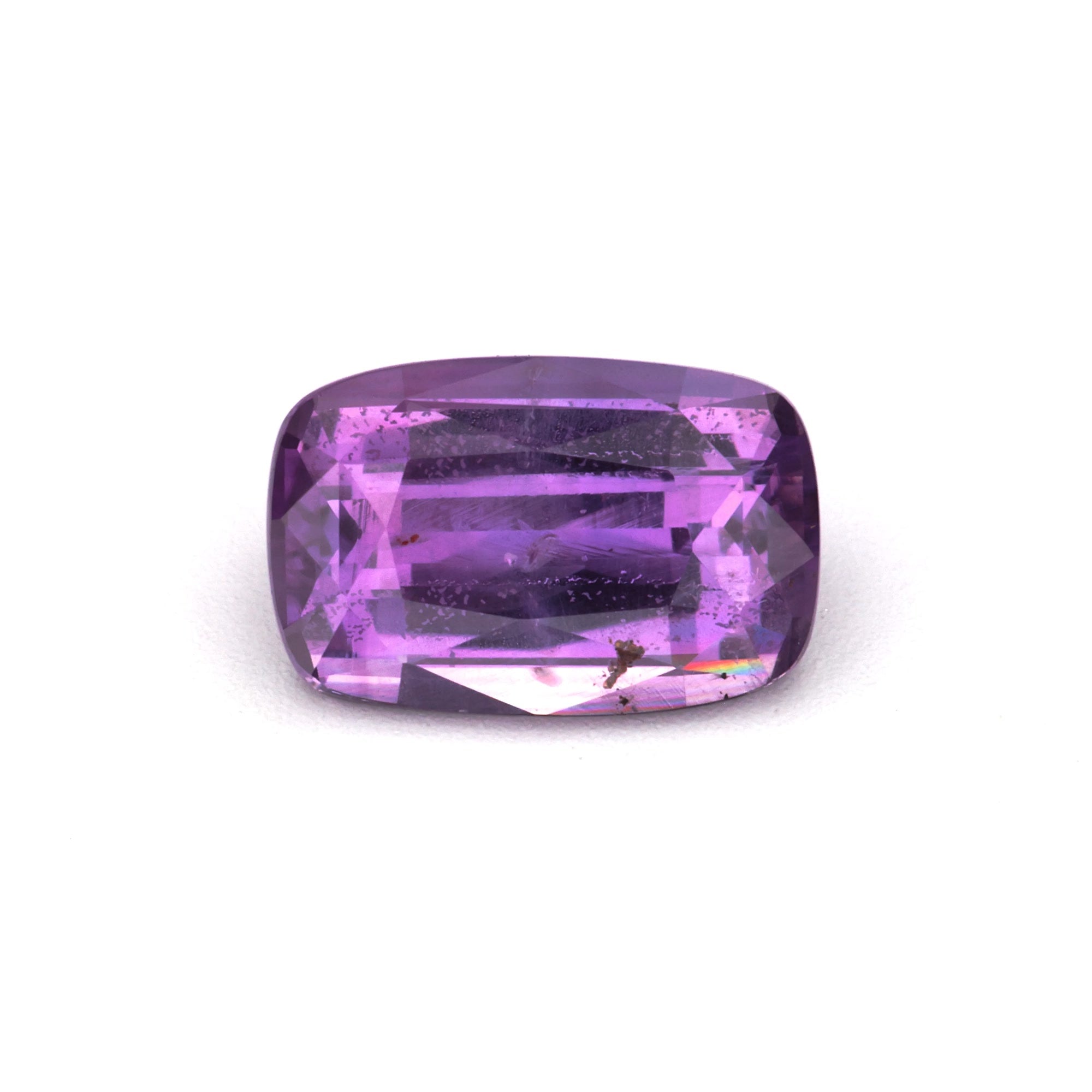
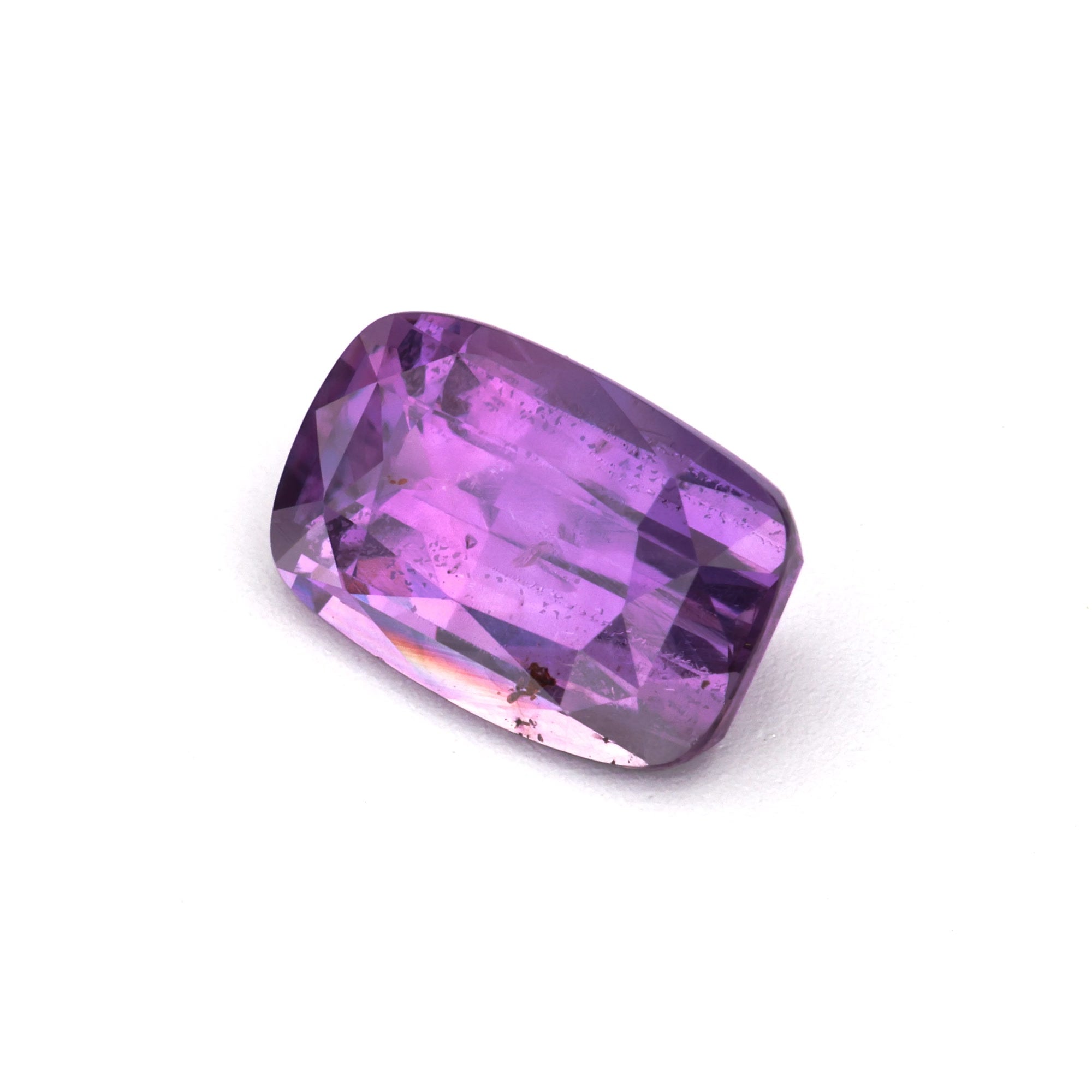
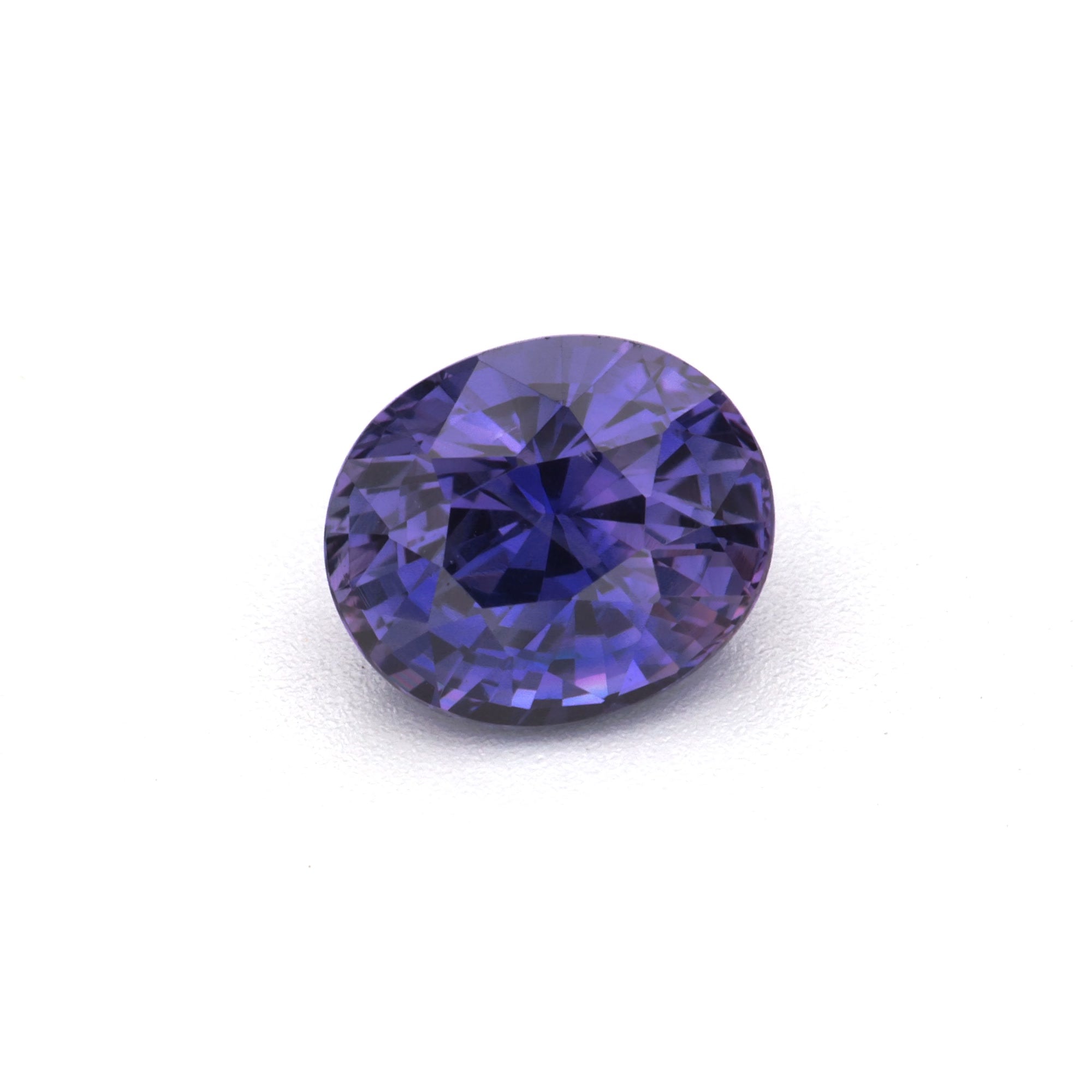
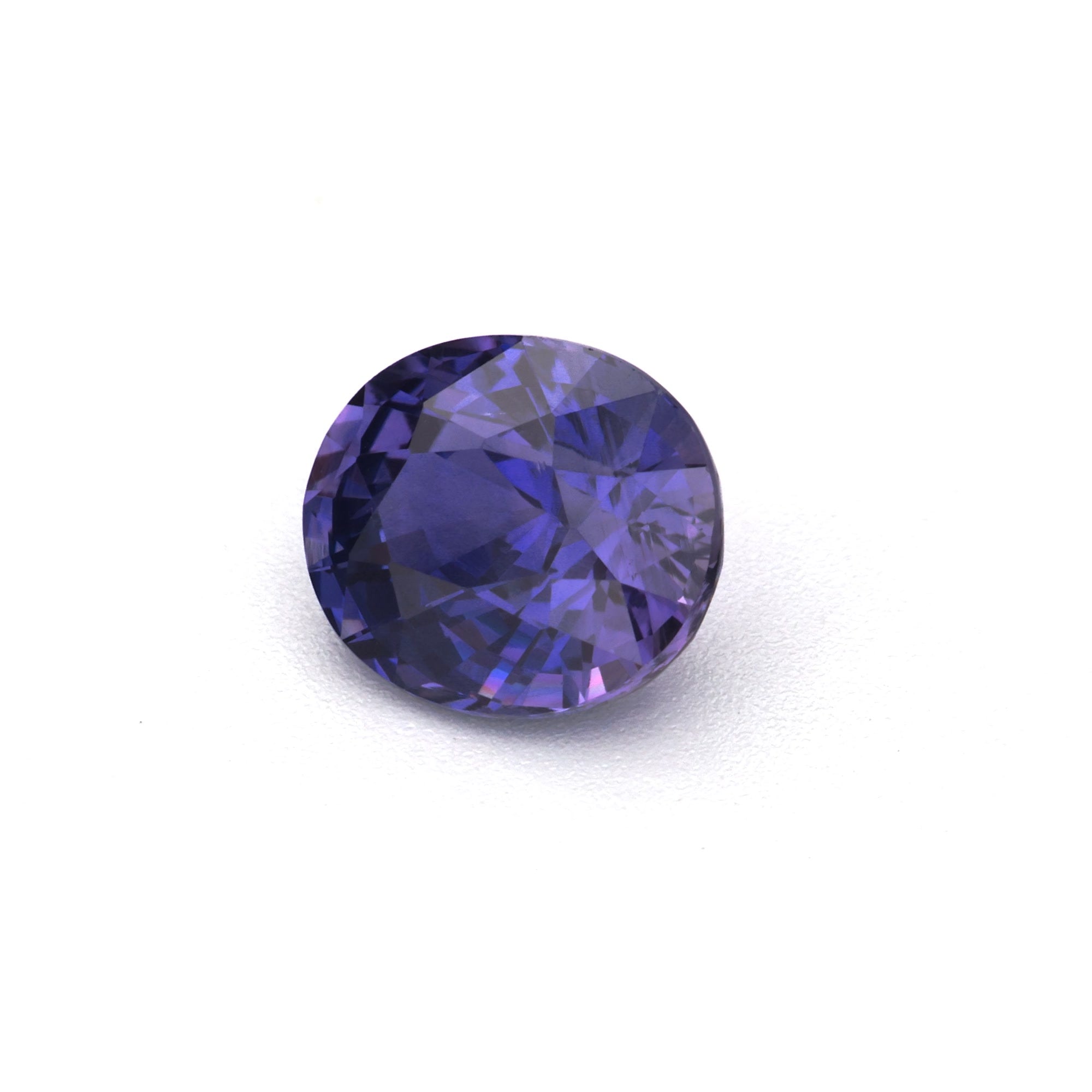
Violet and purple — corundum in the part of the range that runs from blue toward red. Which of the two words a given stone gets is not settled between the trade, the laboratories and our own listings, and that is worth knowing before you compare one seller's violet against another's purple; see below.
-
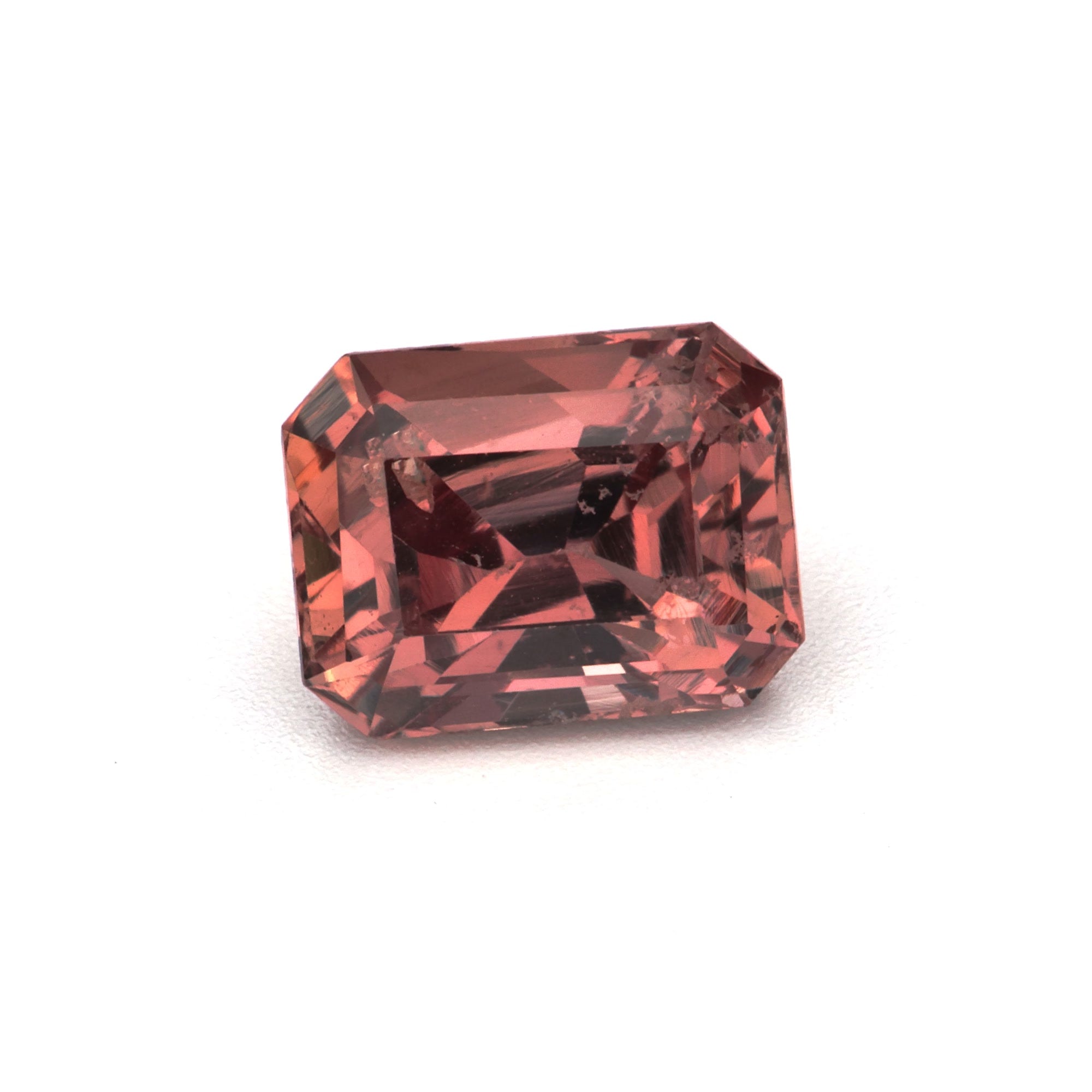
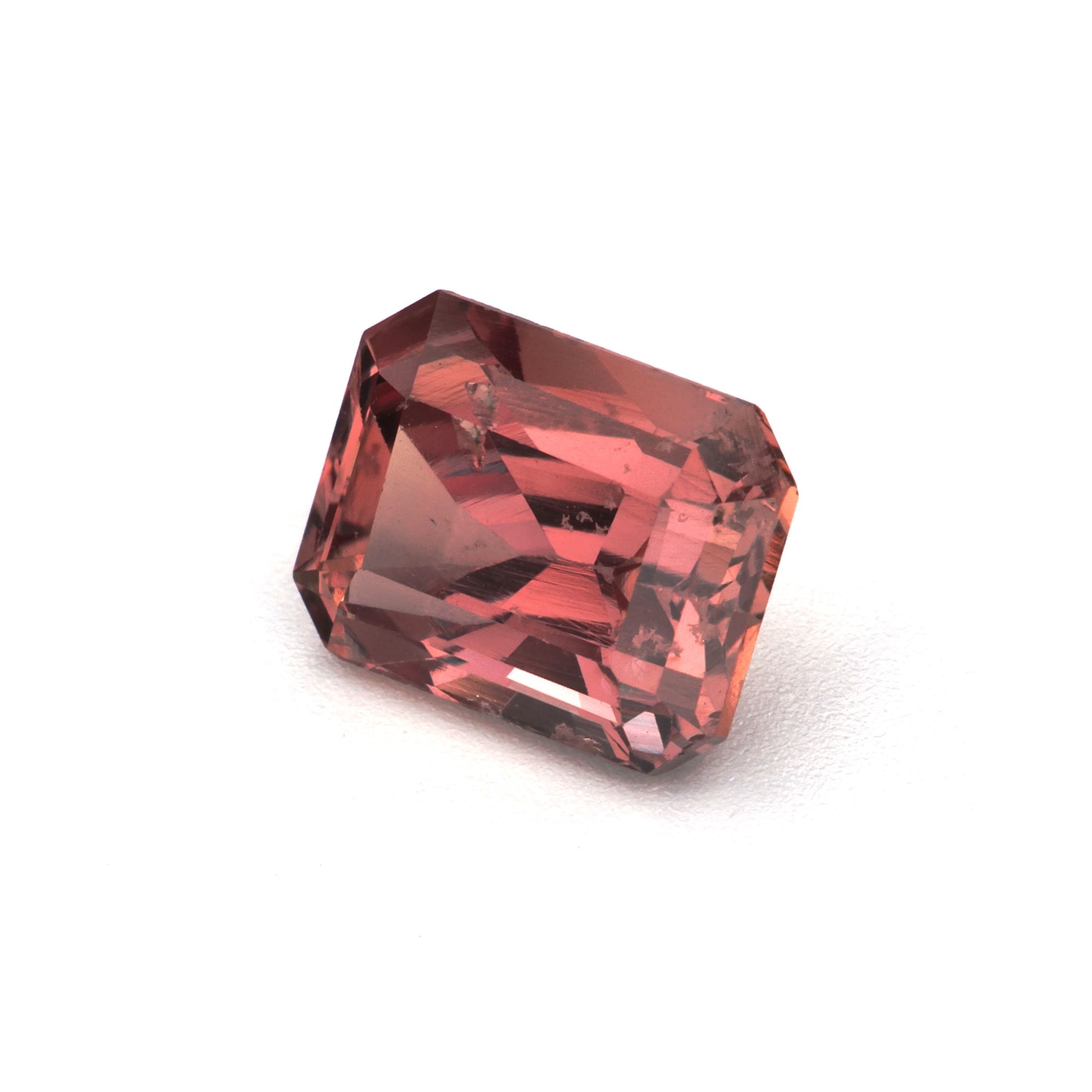
Peach — a warm pink-salmon tone, lighter and more pink-dominant than the padparadscha range.
-
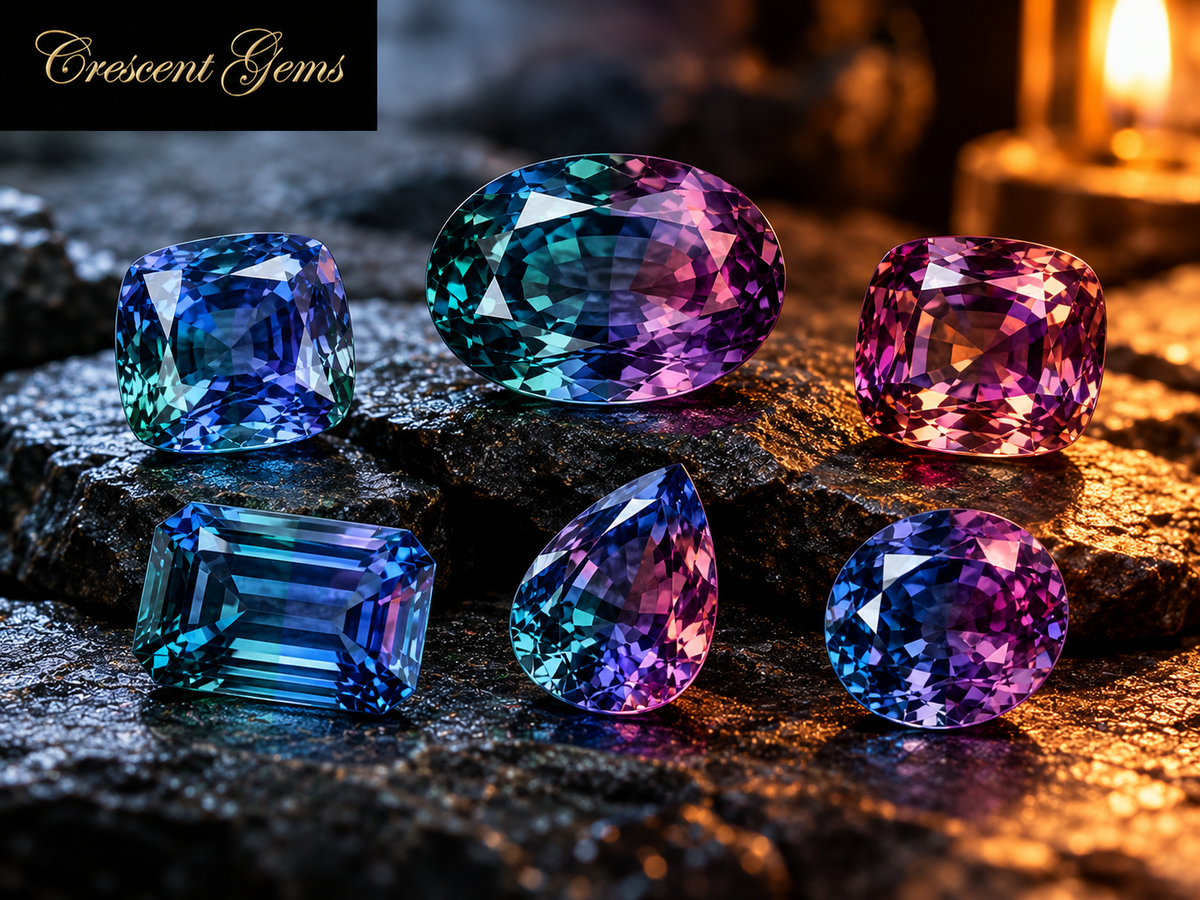
Color-change — reads one color under daylight or fluorescent light and another under incandescent. A change of color is one of the findings a laboratory report can record.
Pink, yellow and blue are not scarce colors. What varies most within them is treatment, and the listing has to tell you which one you are looking at. Treatment, not color, is what most often separates two stones that look alike.
Padparadscha: The One Color Name the Laboratories Have Defined
The name comes from the Sinhala word for the lotus blossom, and it describes a blend of pink and orange in one stone. Unlike every other sapphire color, padparadscha has an agreed laboratory definition behind it. The Laboratory Manual Harmonisation Committee, whose information sheets standardize report wording between the major laboratories, devotes one of those sheets to padparadscha and settles the description as "a subtle mixture of pinkish orange to orangey pink with pastel tones and low to medium saturations."
Two things follow, and they are why this color has to be treated differently from the rest. First, a padparadscha claim can be true or false, which is not the case for most color descriptions — a report that prints a single hue is describing a stone outside the term. Second, the word has to actually appear on the report. A stone described as pinkish orange, with no padparadscha designation printed, is not a padparadscha, and a seller's own color note is not a substitute.
The color is historically associated with Sri Lanka, and it is also found in Madagascar and in Tanzania. We are not going to rank those origins against one another, and the laboratory definition does not mention origin at all: it describes a color, not a provenance.
So for this one color a report is not optional, and it is the only sapphire color of which we would say that. Without a report that prints the word, the designation rests on the seller's own judgement, and judgements vary.
We hold no padparadscha at present. Our padparadscha collection page says the same, and it is where stock will appear when we have it. We are not publishing a price band for a color we do not stock: what a padparadscha costs turns on how near the center of that definition the stone sits, and that is a stone-by-stone question rather than a band.
See our padparadscha collection page →
Orange Sapphire: Beryllium Diffusion Is the Thing to Ask About
Beryllium diffusion — a high-temperature process that drives beryllium into the stone — can turn pale or yellowish corundum a bright golden-orange. The result looks like orange sapphire and is not priced like it, and it is the reason orange is the color where documentation matters most.
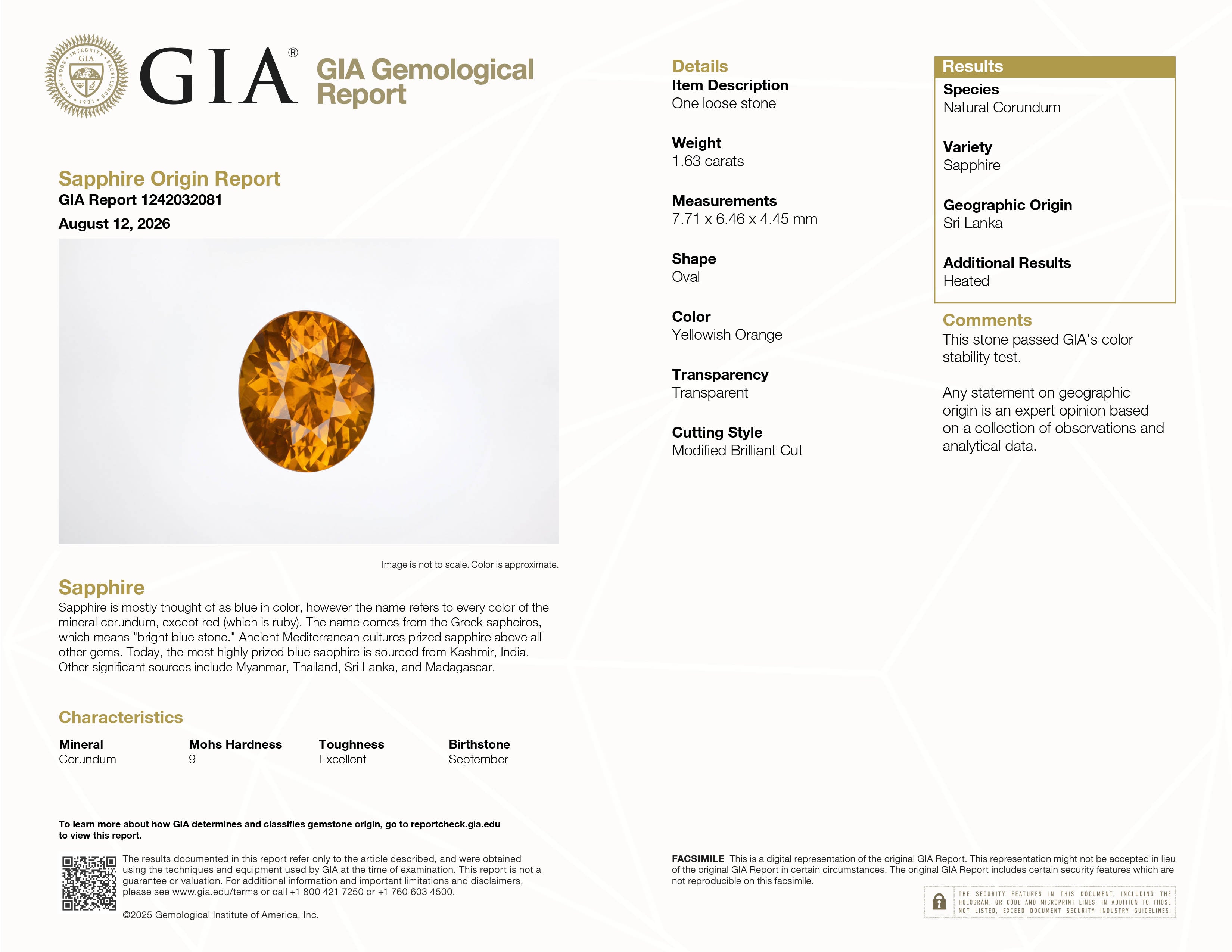
Detecting beryllium treatment requires LA-ICP-MS or LIBS spectroscopy — advanced testing that not all laboratory reports include by default. Before purchasing any orange sapphire, ask the seller explicitly whether the stone has been tested for beryllium diffusion, not just standard heat treatment. A reputable dealer answers this directly.
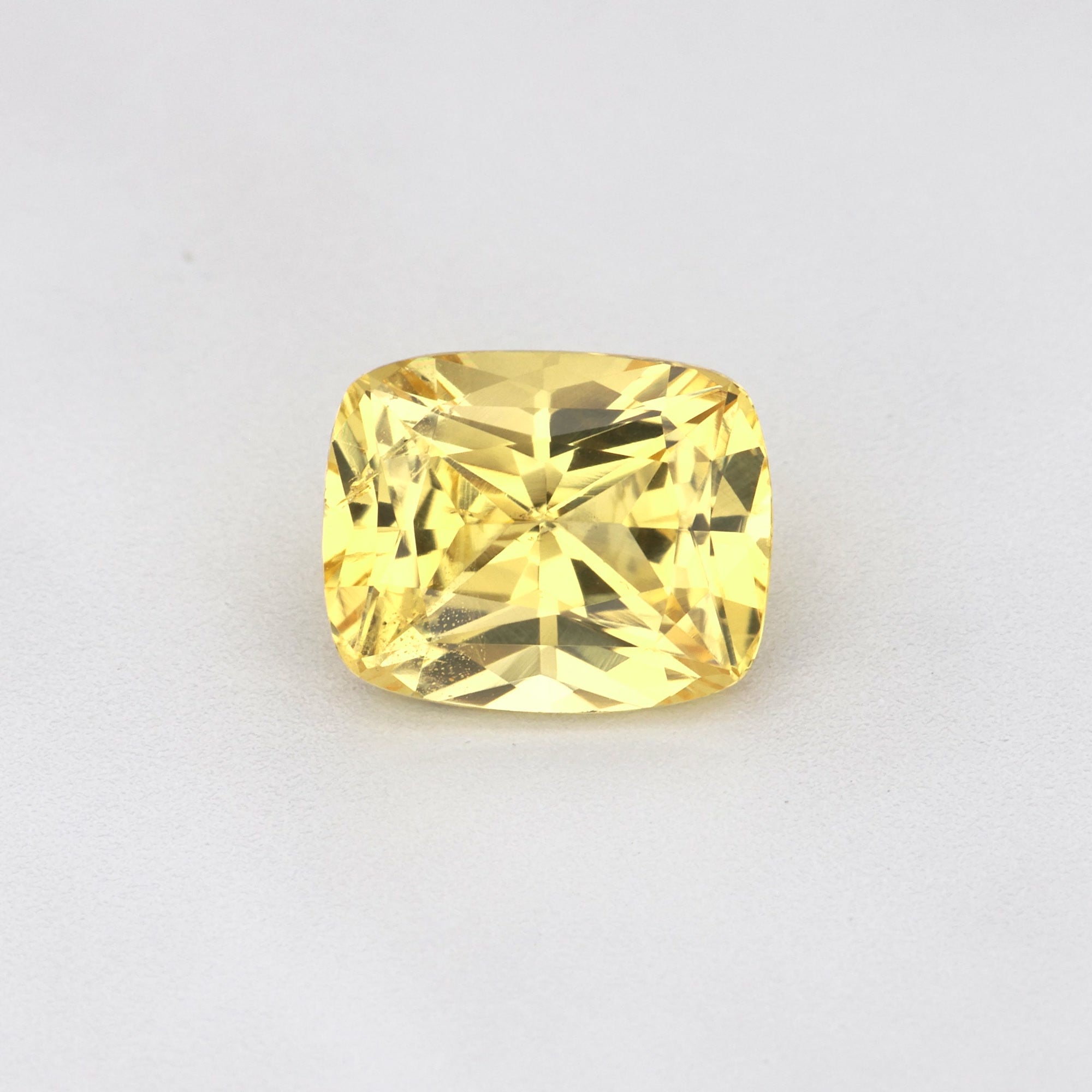
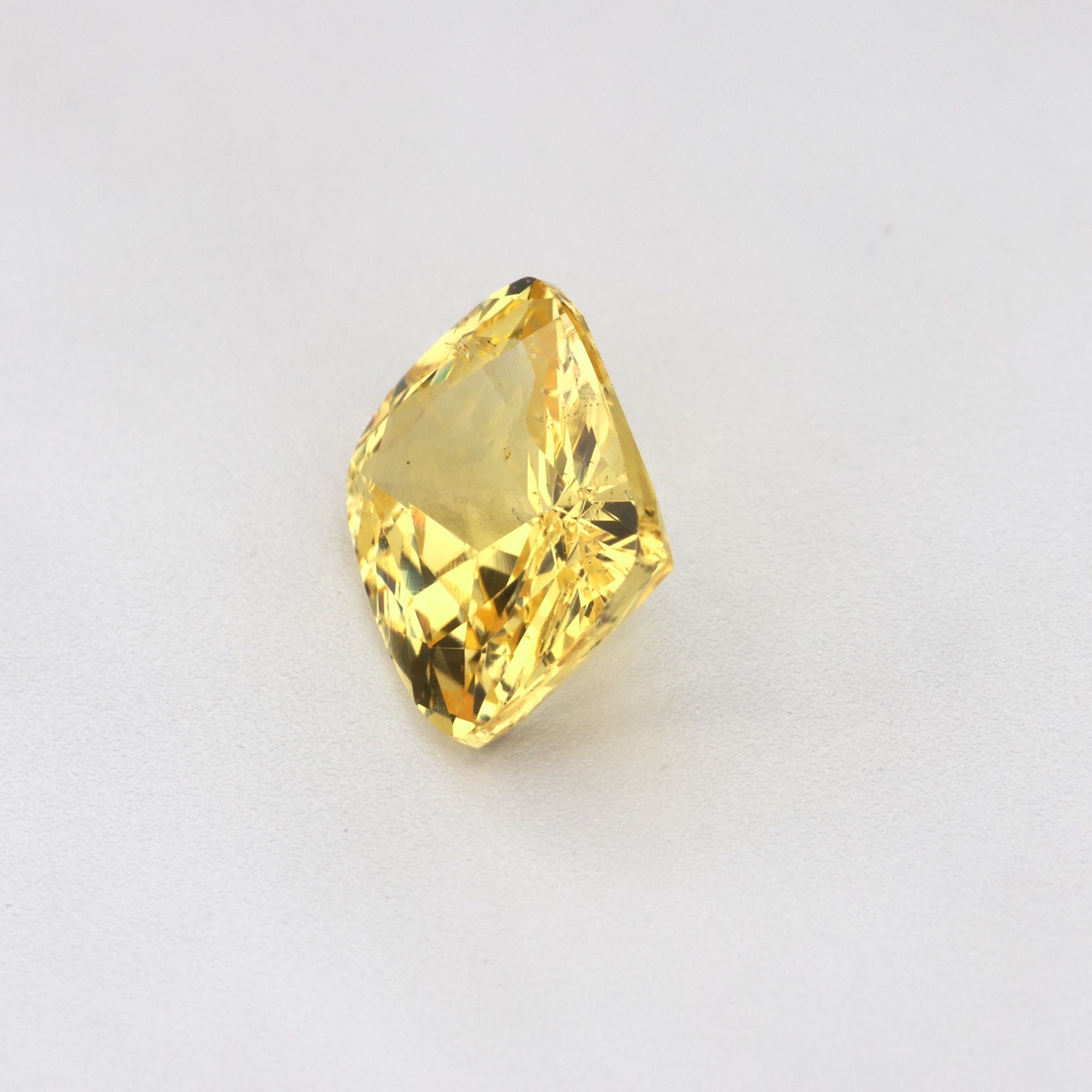
No stone we list is beryllium-treated, and every stone we list as an orange sapphire carries a GIA report, because a regional laboratory report cannot address the beryllium question. One thing to be plain about: our orange sapphires are heat-treated, and each listing says so. If it is unheated orange you want, we do not have it, and the collection page is a better answer than this page.
See our orange sapphires →
Teal Sapphire: Heat Is What Makes It Stop Being Teal
Teal is blue and green in roughly equal measure, and heat treatment pushes the color toward pure blue by driving out the green component that makes teal what it is. That is why teal is almost always sold unheated: heat the stone and you no longer have a teal sapphire. We do not publish a figure for the gap between heated and unheated teal, because we hold no heated teal to compare against and we are not going to invent the comparison.
The color zoning in teal sapphires — variations in the blue-green ratio across the stone — is a natural formation feature, not a defect. How a stone is oriented on the wheel makes a real difference to the final color balance, which is why we cut to our own specification rather than to maximum yield.
Our teal is Madagascar material, apart from a few stones whose origin we cannot place and which say so on the listing. We hold no Sri Lankan teal, which is worth stating plainly on a page where most of the other sapphire is Ceylon material. The treatment and the origin we hold for each stone are on its listing.
See our teal sapphires →
Violet and Purple Sapphire: Which Word You Get Is Not Settled
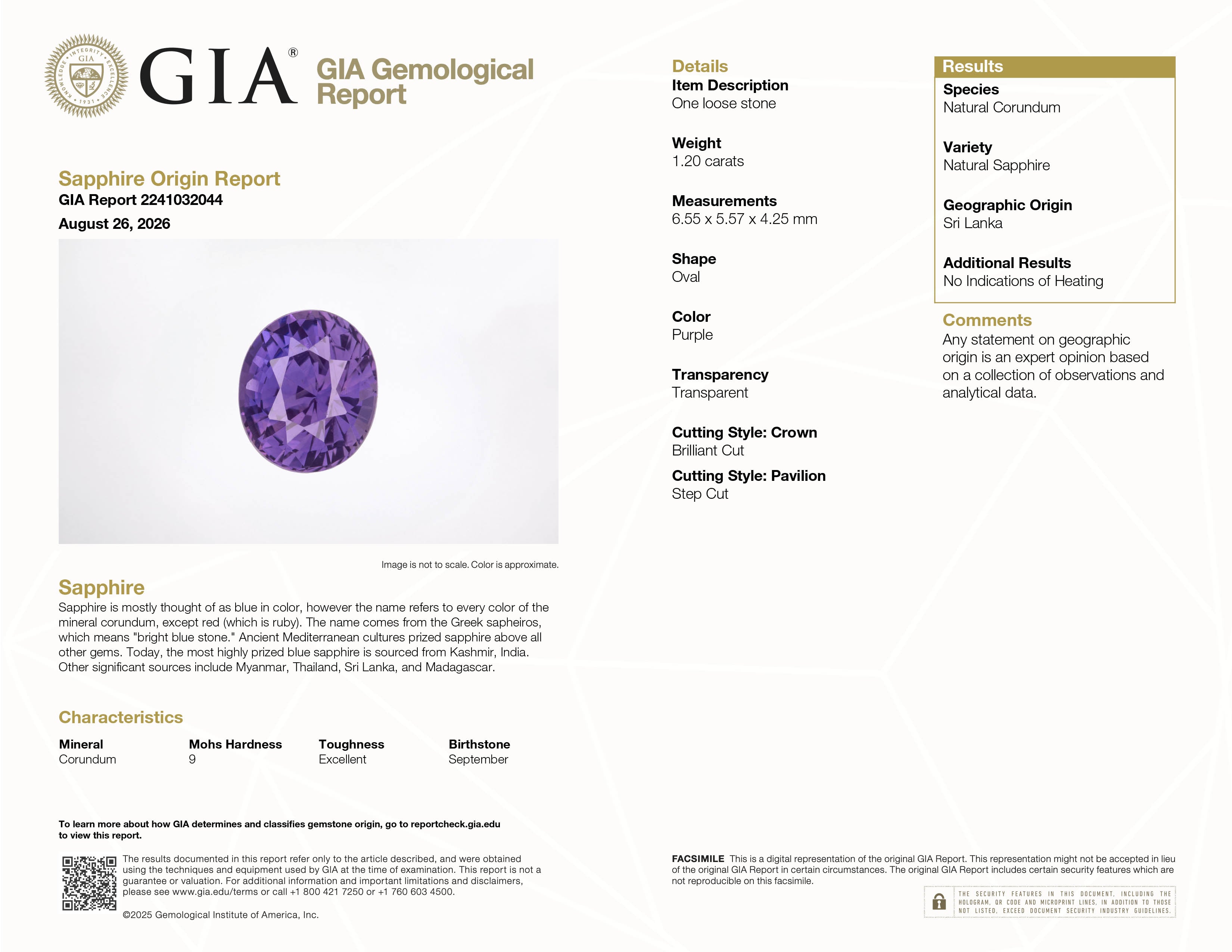
GIA prints a single color value on a colored stone report, and "Purple" and "Violet" are two different values. Which one a stone is given is the laboratory's judgement about that stone, not a line the trade agrees on — and our own catalogue shows the seam. Some of our own listings record a color the laboratory did not: a stone we describe as purple whose AGCL report reads Violet, and a peach stone whose GIA report reads Pink. Neither is an error. Each is two descriptions of one stone, one of them ours and one of them the laboratory's. When you set a violet sapphire at one seller against a purple at another, you may be comparing two words rather than two colors.
These stones also read differently under different light. One that looks cleanly violet under daylight-balanced light can look warmer under incandescent. That is the stone, not a treatment. Where we describe a stone as blue-leaning or red-leaning, that is our own observation from handling it and not a field on any report — a report carries no hue ratio and no color grade. If you are judging a stone from a single light source, ask for photographs or video under both daylight and warm light before you commit.
See our violet and purple sapphires →
Peach Sapphire: Beside the Padparadscha Range, Not In It
Peach is a warm pink-salmon tone that sits lighter and more pink-dominant than the padparadscha range. The line between the two is the one the laboratory definition draws: a stone outside "pinkish orange to orangey pink with pastel tones" is not a padparadscha however close it looks. Two stones can look much alike and carry different names, and the report is where that gets settled rather than the photograph.
Our peach sapphires are Sri Lankan, and the treatment for each one is stated on its listing — some are unheated and some are heated. One qualification we owe you, because the beryllium risk category is wider than the word orange: peach is a pinkish orange, and most of our peach stones are not yet GIA-documented. If one of them interests you, say so and we will send it to GIA before it ships.
See our peach sapphires →
What a Laboratory Report Records — and What It Doesn't
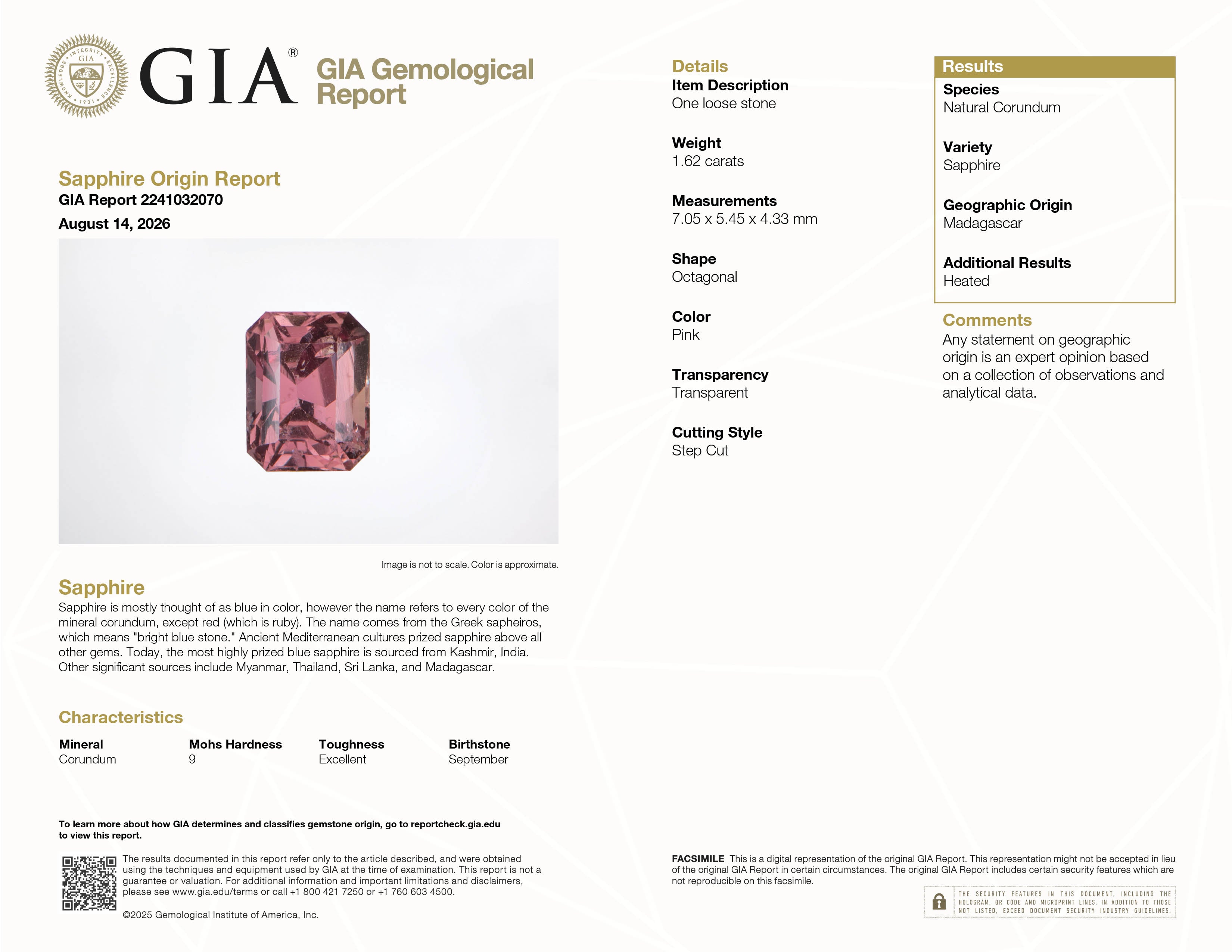
A laboratory report is the most useful document in this market and the one most often described as something it is not. A report is a record: of what qualified examiners observed, and of the opinion they formed from those observations. GIA prints on the report itself that it "is not a guarantee or valuation." Three things follow, and between them they are the whole of how to use one.
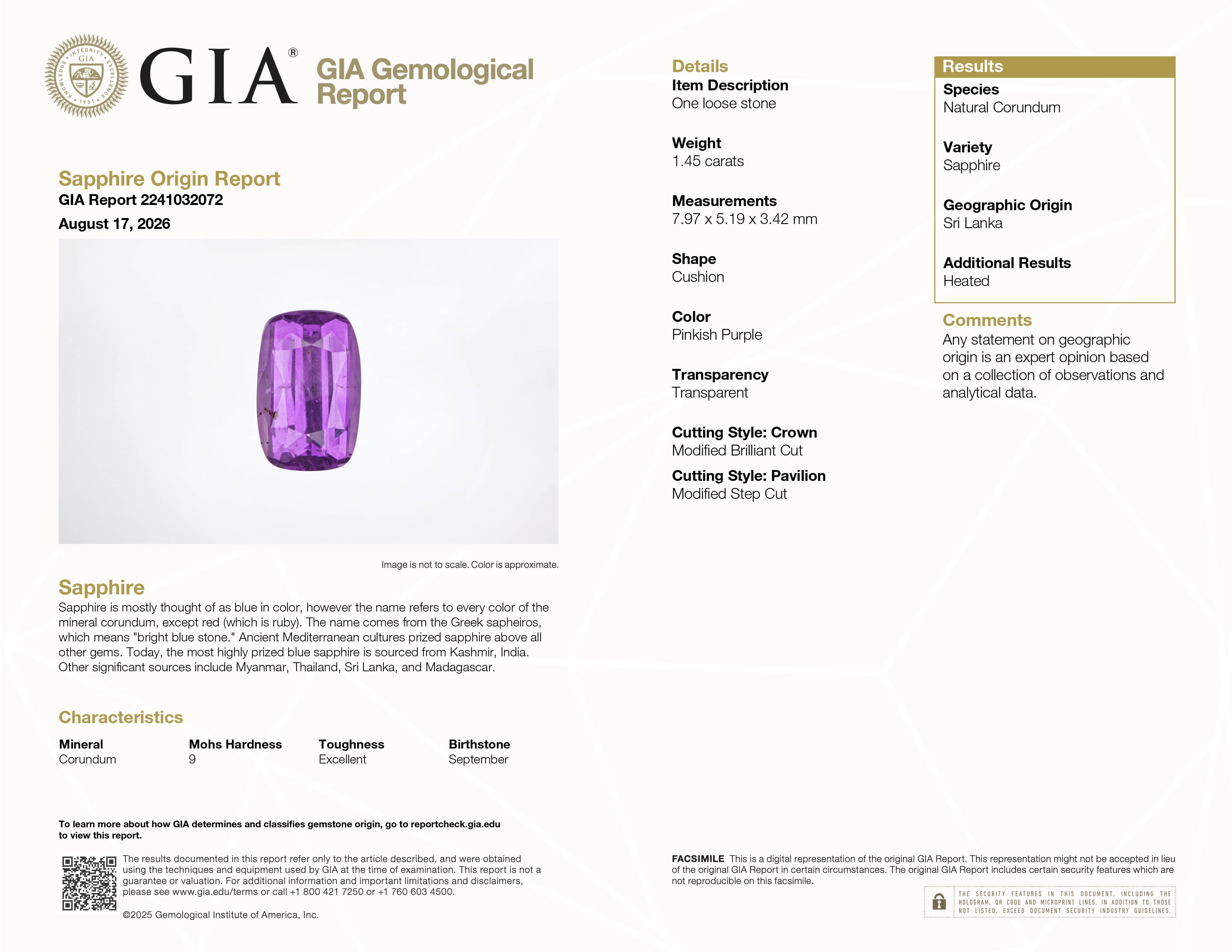
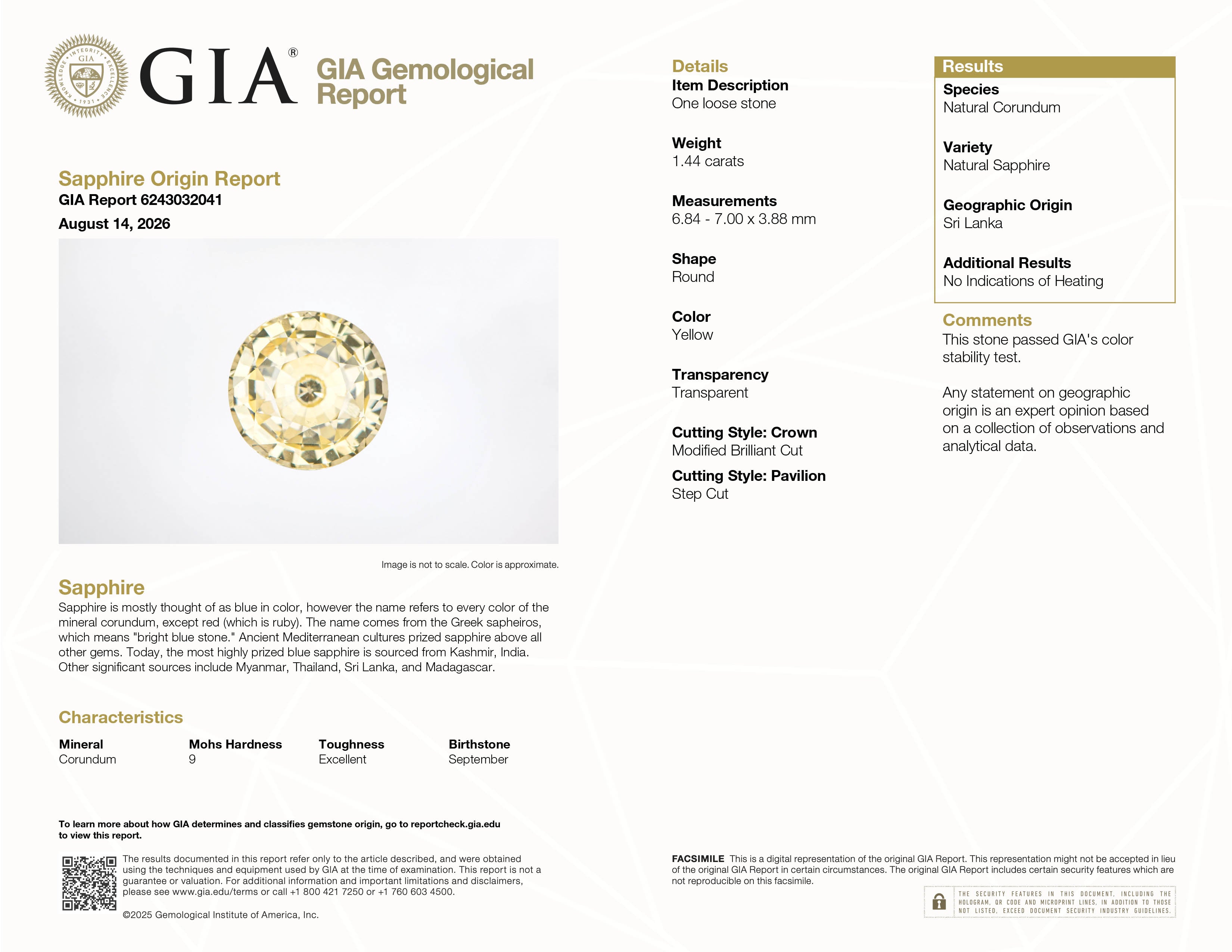
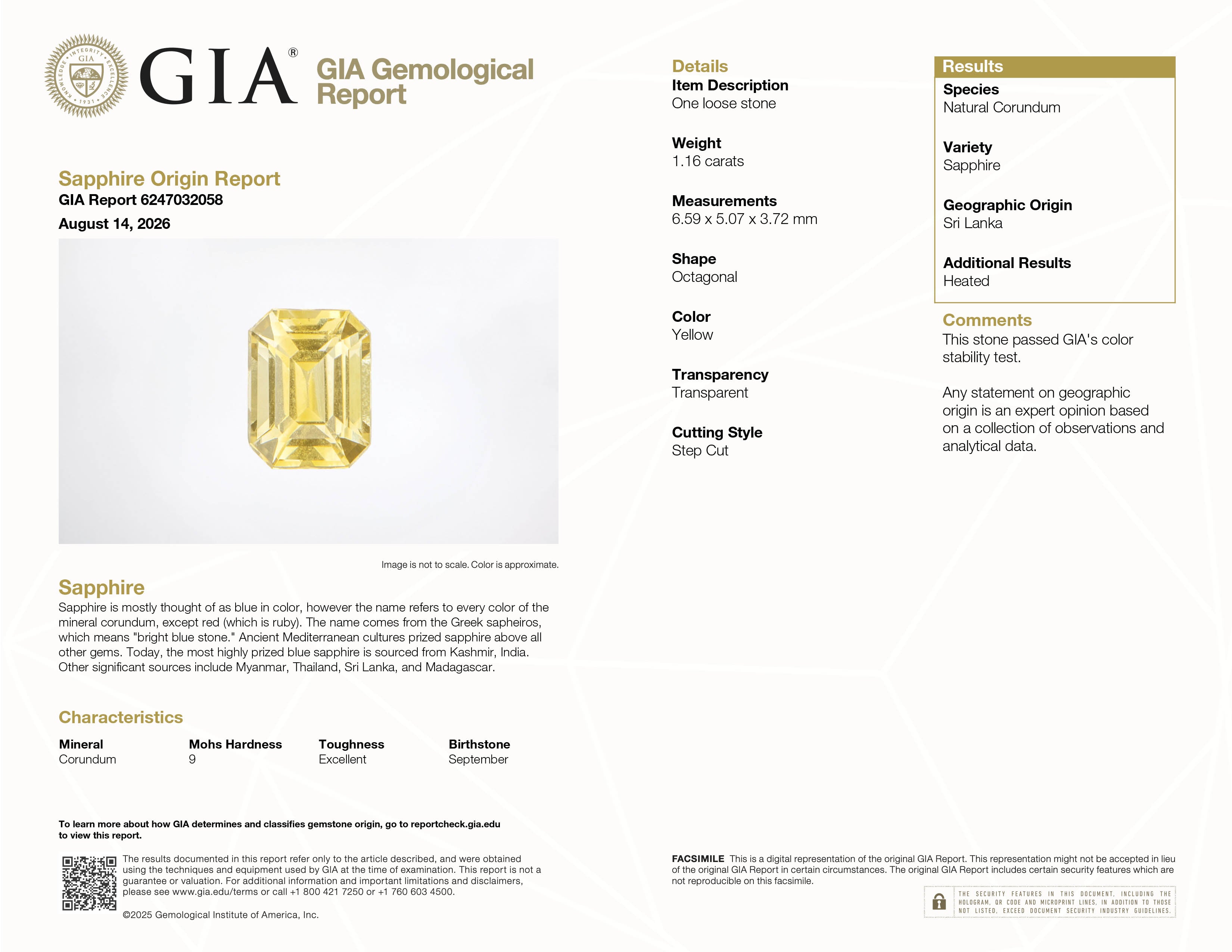
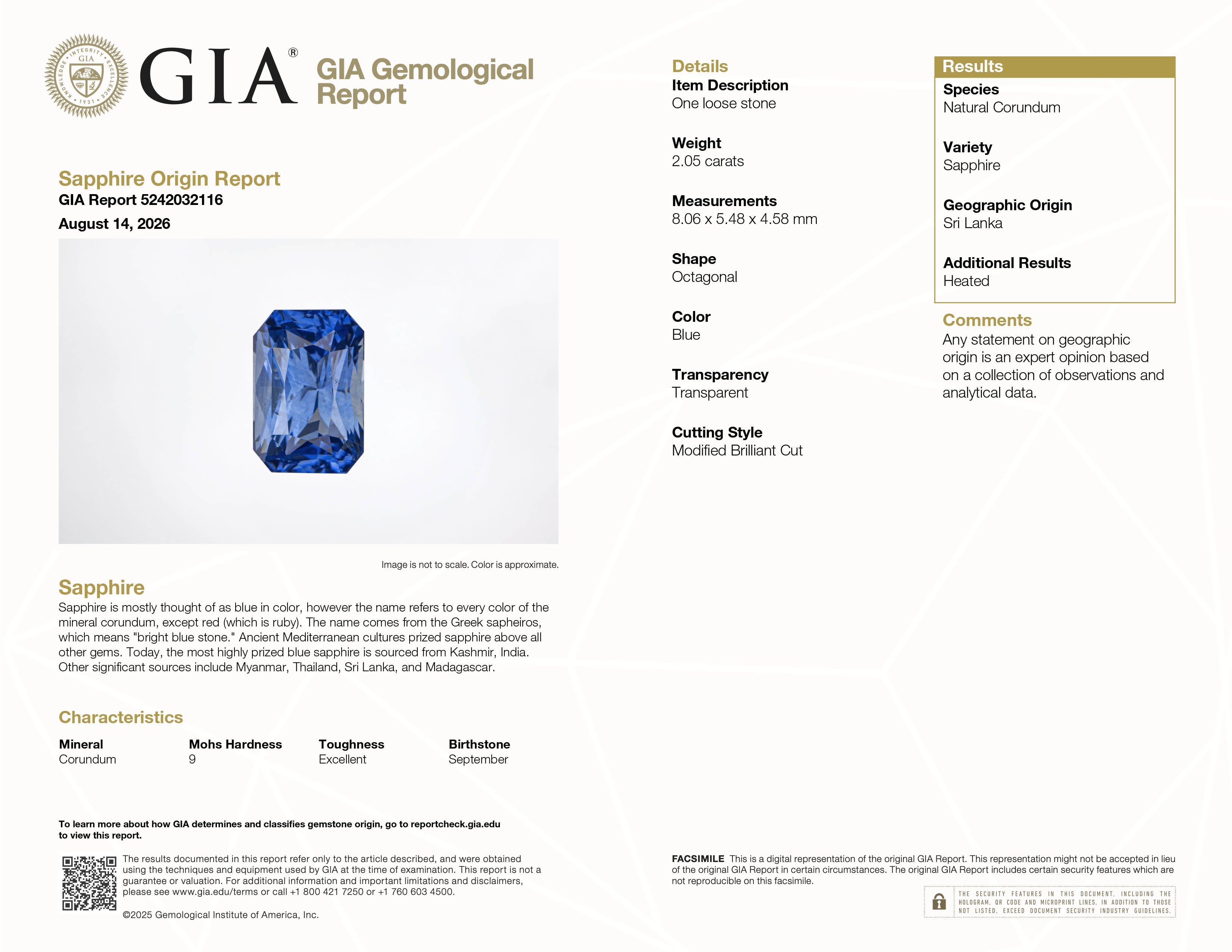
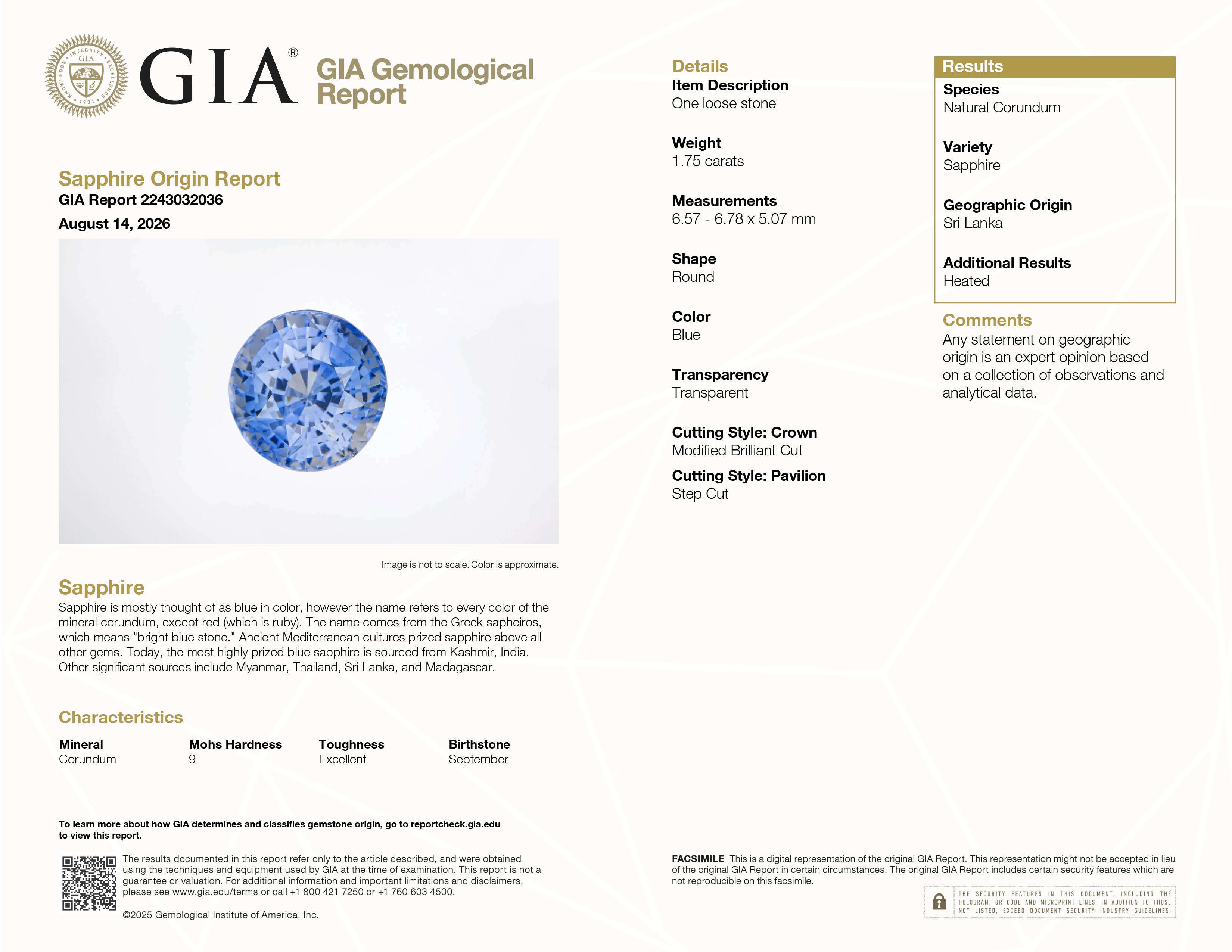
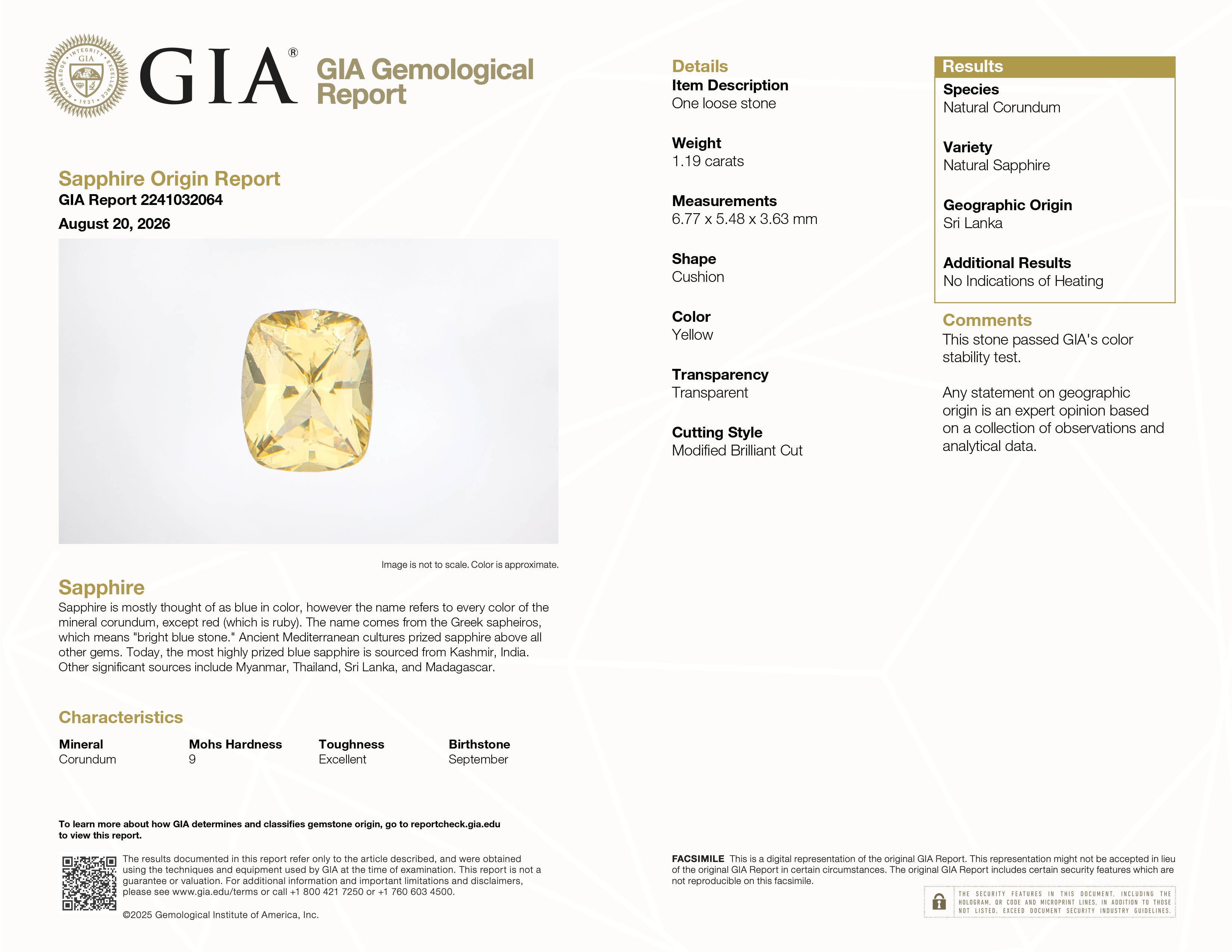
A report records observations and states an opinion. Beside an origin finding, GIA prints its own reservation in its own words: "Any statement on geographic origin is an expert opinion based on a collection of observations and analytical data." The Laboratory Manual Harmonisation Committee makes the same point about reports generally — "All findings described in the report are opinions expressed by the laboratory." These are opinions reached by qualified examiners with equipment and comparison material you do not have, which is exactly why they are worth paying for. They are still opinions, and nothing in the document turns one into a guarantee.
The opinion is only as good as the laboratory. GIA, Gübelin and SSEF are the laboratories whose origin opinions the trade treats as decisive, and origin is where the choice of laboratory counts for most. Below those there are competent regional laboratories whose reports identify the stone and record treatment findings perfectly well, but which the trade does not treat as origin authorities. Four laboratories appear across our own stock: GIA, AGCL, FGL and the Gemmological Institute of Colombo. Every listing names the laboratory that issued that stone's report, and says plainly where there is no report. What you should not accept is a document you cannot trace to a named laboratory with a public verification service.
And a report only answers the question that was asked. This is the part that catches buyers out, because a silence in a report reads like a finding and is not one. Geographic origin in particular is a separate service: it has to be requested and paid for on its own, it is the finding GIA attaches a printed reservation to, and a standard GIA sapphire report may print "Not Requested" in that field. "Not Requested" is not the same as origin unknown — a question was simply not put, and the stone is not a lesser stone for it. Our own stock carries both cases, and the listing tells you which.
The fields that matter most for a rare color, and how to read each one:
-
Treatment disclosure — for an unheated stone GIA prints "No Indications of Heating". Read that as narrowly as it is written: it is a finding about heating, from what the examination was able to see. A report that does not mention treatment at all is not a confirmation of unheated status. And unheated is not untreated — it speaks to heating and to nothing else
-
Geographic origin opinion — printed as "Sri Lanka" on a GIA origin report, with GIA's reservation beside it. "Ceylon" is the trade name for the same place and it does not appear as the origin on a report, so a listing that puts "Ceylon" where the country belongs is using a trade word for a factual field. And because origin is requested separately, the field may read "Not Requested" instead
-
Color description — for padparadscha the report has to print the word; "pinkish orange" with no padparadscha designation is not a padparadscha report. For every other color the report records the laboratory's own description of the color and no grade at all: GIA states that it "doesn't grade or provide quality analysis for sapphire or other colored stones"
-
Beryllium diffusion testing — relevant for yellow, orange and peach stones; ask whether the laboratory tested specifically for light-element diffusion rather than for heat alone
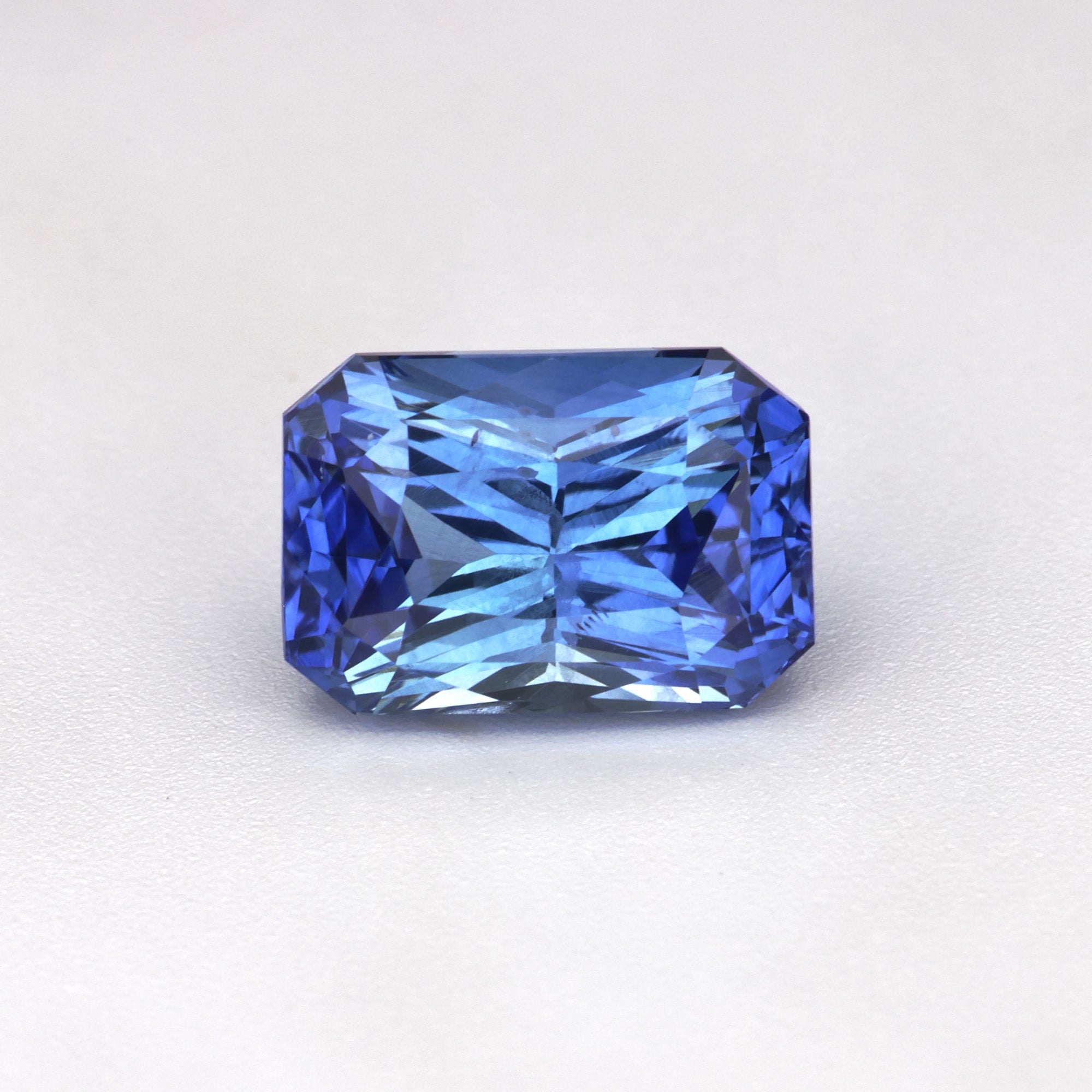
What no report reaches, whichever laboratory issued it: value, price, rarity, cut quality, or a quality grade of any kind. And the one piece of verification you can genuinely do yourself is worth doing every time. Every GIA report carries a report number, and you can enter it at gia.edu/report-check before you buy; the database will show that the report exists and what it says. A number that does not come back is the end of the conversation.
Why a Specialist Ends Up Holding These Colors
A scarce color sells slowly, and a seller has to be built to wait for it. We carry no showroom. We buy our Sri Lankan stones ourselves in Ratnapura, Beruwala and Colombo, and we cut in our own factory to our own specification. Our buyers are not confined to one town, so a color that moves twice a year is still worth holding. That is our own position, and we are not going to characterise anybody else's.
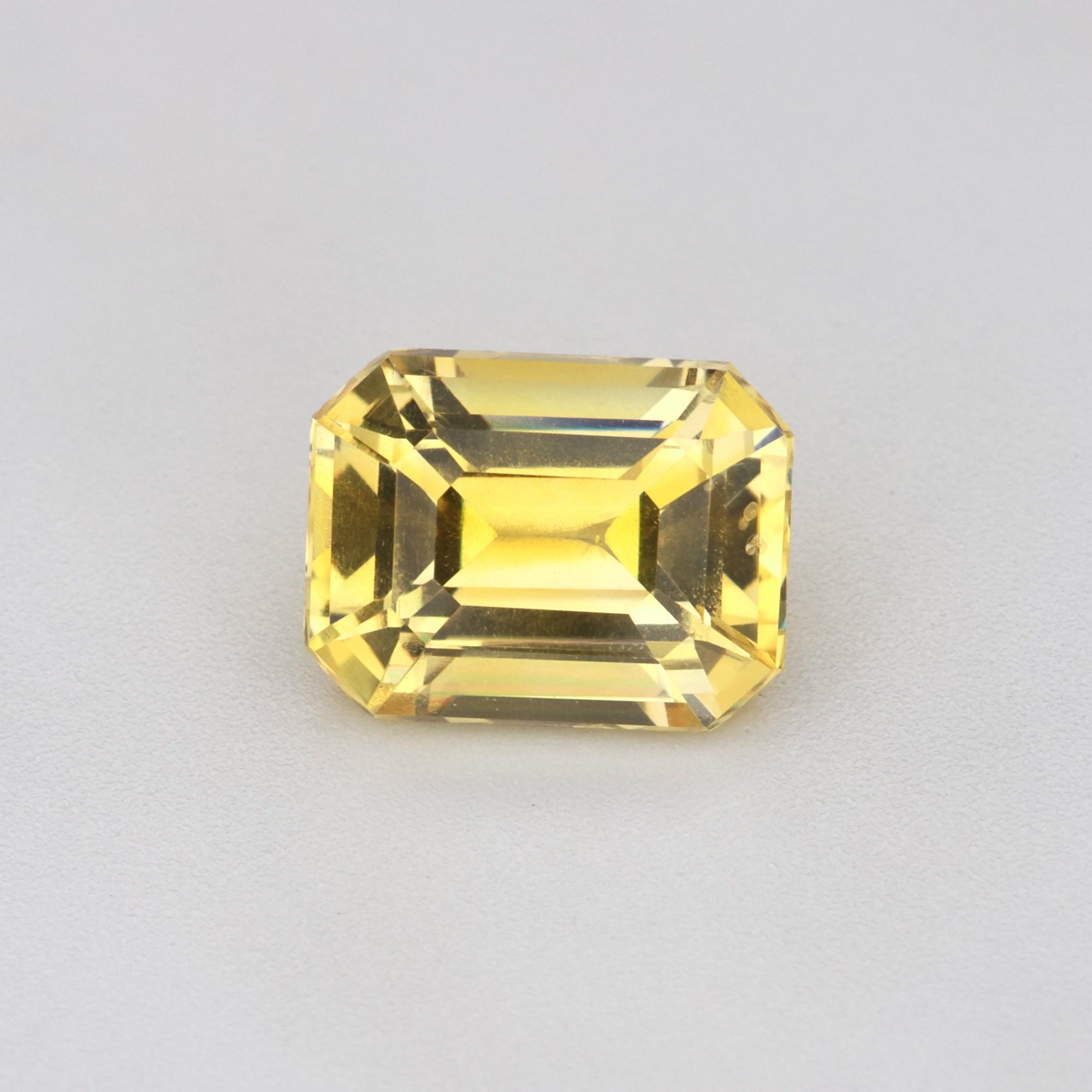
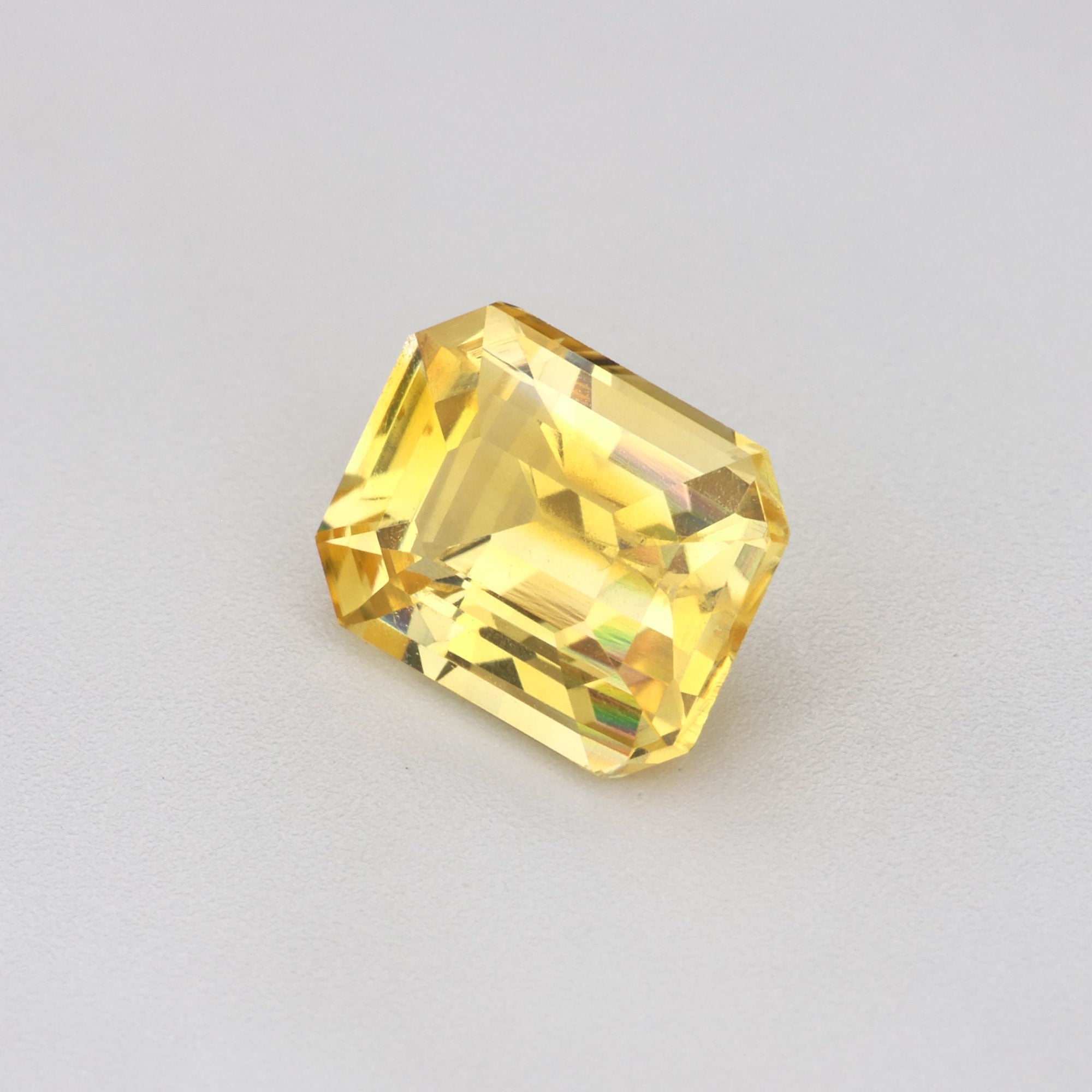
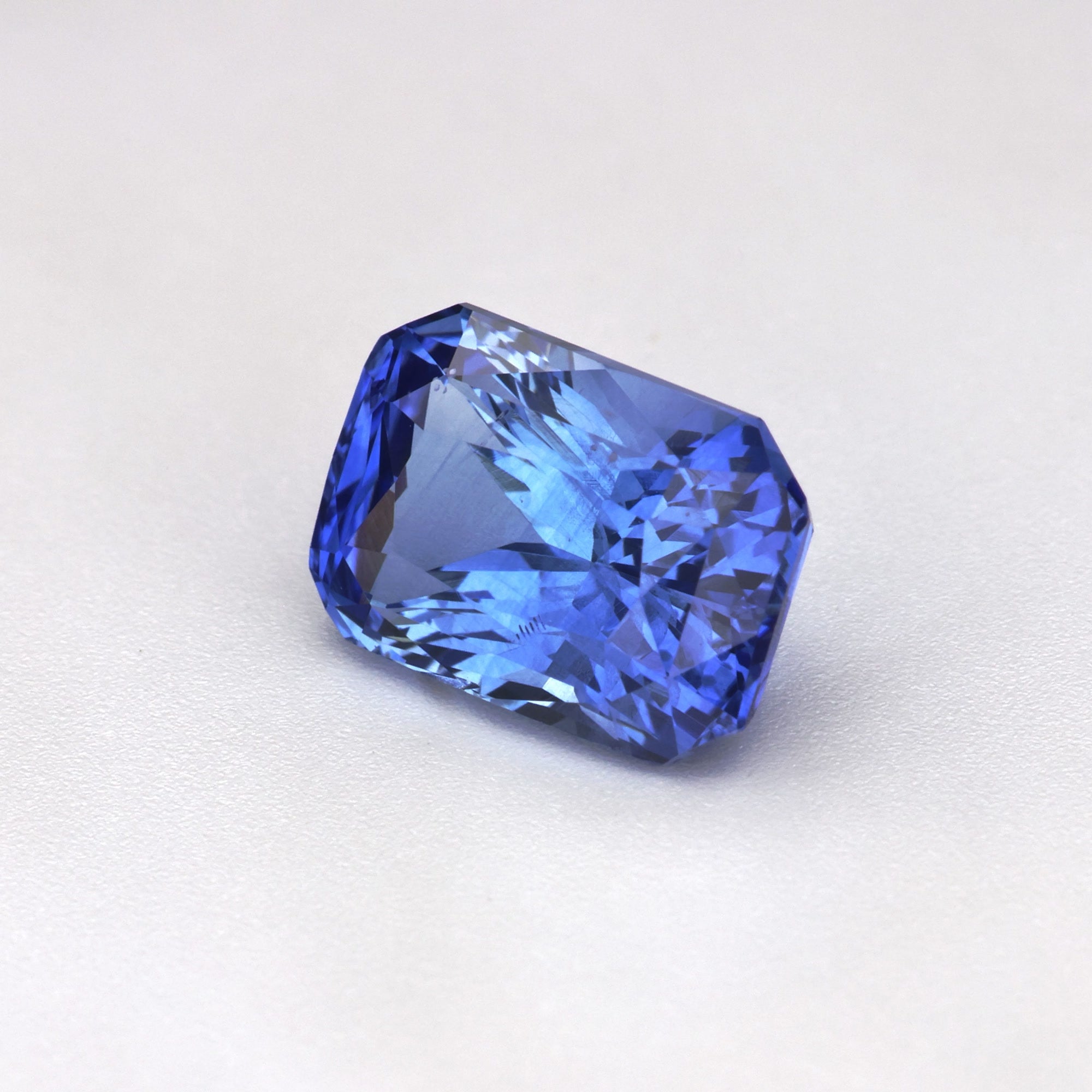
What you give up buying online is seeing the stone first. The mitigation is documentation: several photographs under different lighting rather than one saturated studio shot, video of the stone in motion, a stated return window — ours is 14 days on every order — and a report number you can check yourself against the issuing laboratory's own database.
Red Flags When Buying Rare-Color Sapphires Online
-
A padparadscha with no report that prints the word — this is the one color name with an agreed laboratory definition behind it, so a seller's own color call is not enough for it
-
Single heavily processed photograph — artificial lighting and image processing can make almost any stone look vivid; ask for daylight photos and video
-
"Available on request" for the lab report — the report number and a scan of the report itself should appear on the product listing, not be something you have to chase
-
No explicit treatment disclosure — "natural and authentic" is not treatment disclosure; the listing must state whether the stone is heated, unheated, or treated in any way
-
A report you cannot trace — no laboratory named, or a report number that does not come back when you check it against the issuing laboratory's own database
-
No return policy stated — a color you have only seen in a photograph is exactly the case a return window exists for; ours is 14 days on every order
What These Colors Cost
This page used to carry a per-carat band for each color. The bands have been taken out, and it is worth saying why rather than quietly dropping them. A scarce color is by definition a small number of stones, so a band built from them is a band that one sale can make wrong — and several of those bands had no stone of ours behind them at all, including a band for a color we do not stock. A figure that will be wrong within a month is worse than no figure.
So here is the part that does not move. The price we are asking for a stone is on that stone's own product page, beside its weight, its origin, its treatment and its laboratory report. Because stock turns over, the collection pages rather than this page are the current answer for what we hold in a given color and what we are asking for it.
What can be said in general is only directional. Unheated stones sell for more than comparable heated stones of the same color and size, and we do not publish a percentage for the gap, because it depends on the stone. In teal the comparison barely arises: heat drives the green out, so a heated stone is not a teal any more.
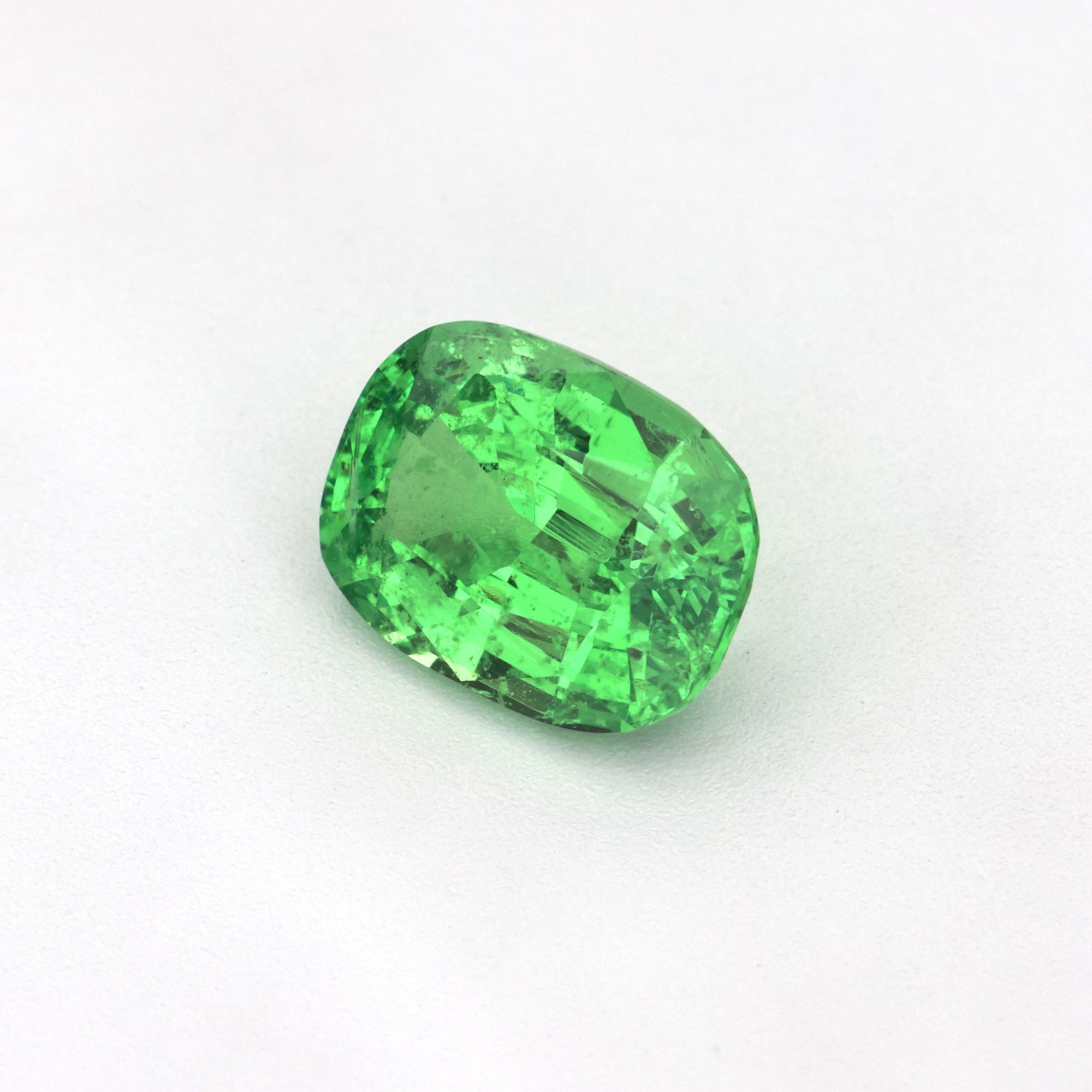
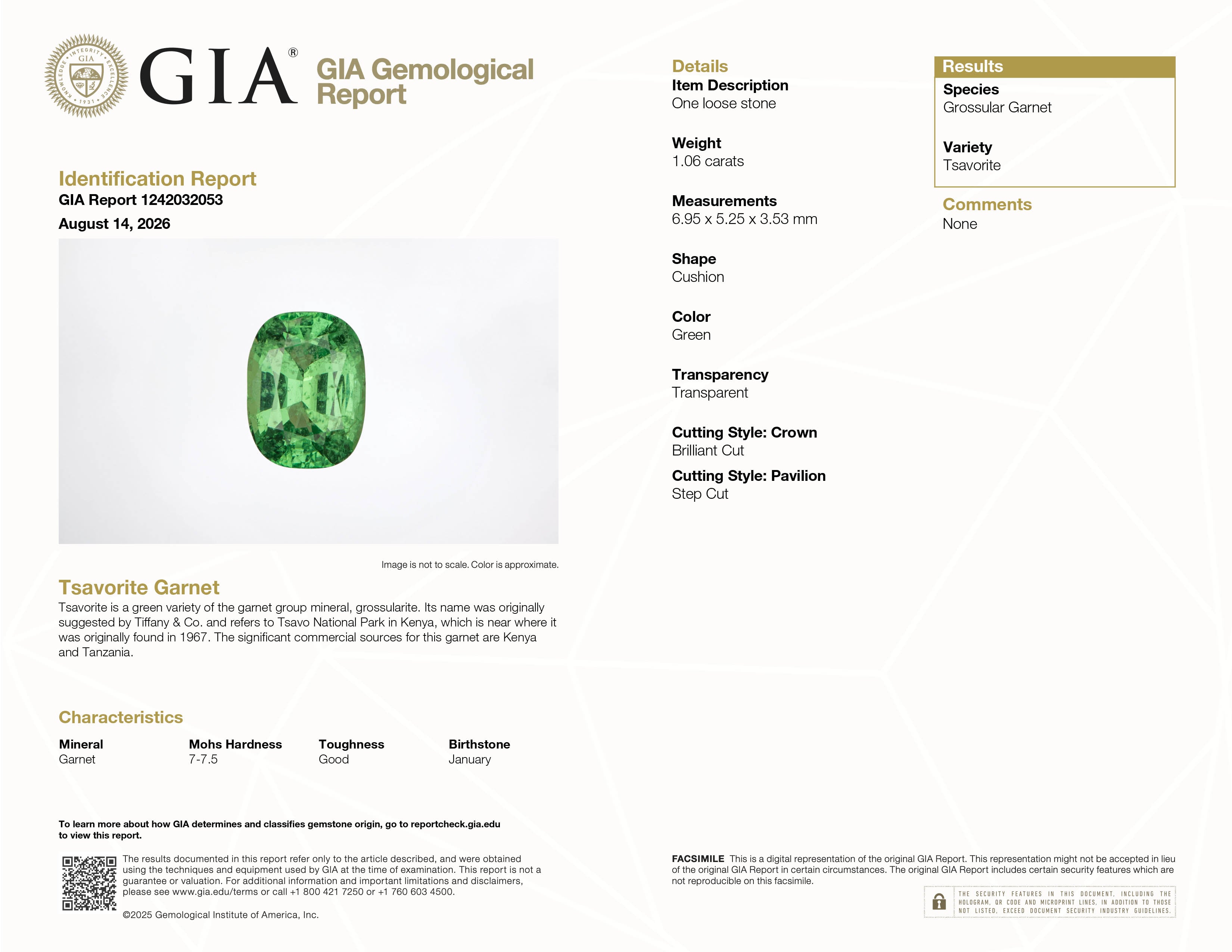
Our sapphire comes from Sri Lanka, Madagascar, Tanzania, Vietnam and East Africa, plus a small number of stones we cannot place, whose listings say so. Alongside the sapphire we list a few other natural species, including tsavorite garnet from Kenya. The origin we hold for a stone is recorded on its listing, the treatment is stated on every listing, the laboratory and the report number are named wherever a report exists, and where no report exists the listing says so plainly. No stone we list is beryllium-treated.
Browse all our loose gemstones →
This guide is educational and does not replace a laboratory report for any individual stone.
Continue LearningReturn to the
Ultimate Sapphire Buying Guide for the full picture on colours, origins, shapes, certification, and pricing — everything you need to buy a natural loose sapphire with confidence.



















Share: