Natural Sapphire & Gemstone Buying Guides
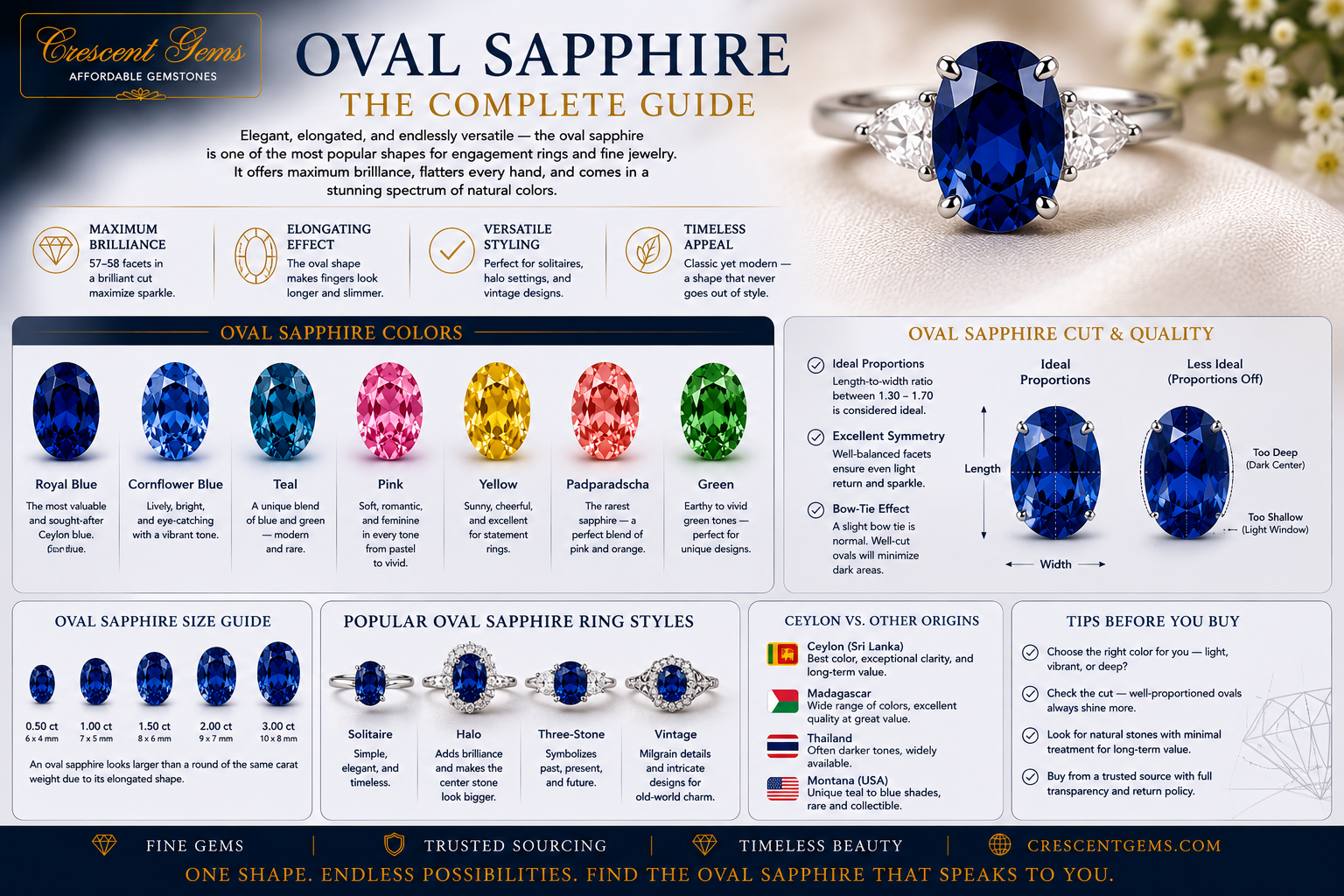
Oval Sapphire — The Complete Guide

Oval Sapphire — The Complete Guide to the Most Popular Sapphire Cut
Oval sapphire: why it is the most popular sapphire shape, how to evaluate length-to-width ratio, avoid the bowtie effect, assess cut quality without a GIA cut grade, choose the right size for an engagement ring, and what to pay by color and carat weight.

Read moreabout Oval Sapphire — The Complete Guide to the Most Popular Sapphire Cut

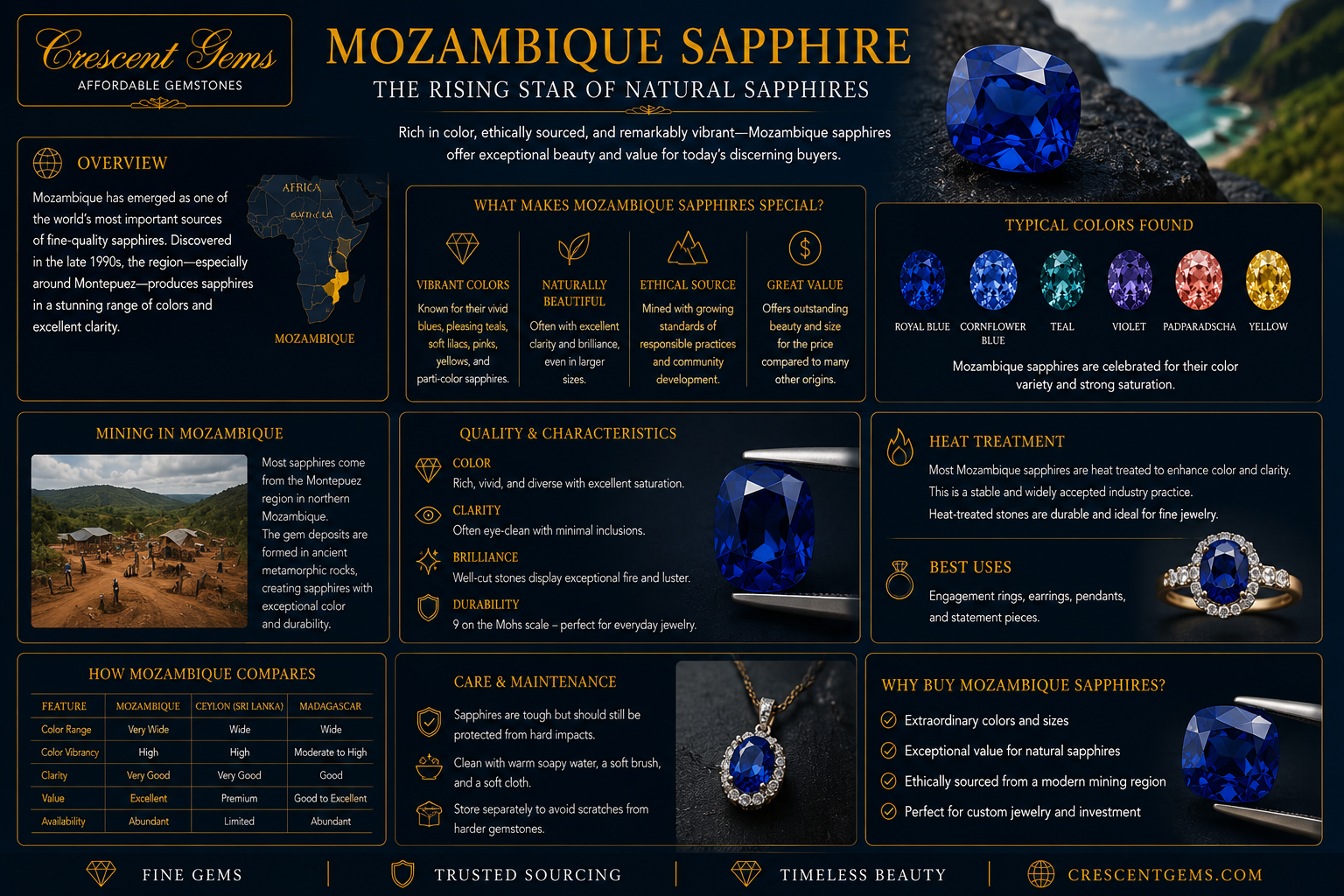
Mozambique Sapphire

Mozambique Sapphire — The East African Origin Buyers Are Starting to Notice
Mozambique sapphire: where it comes from, what colors it produces, how it compares to Ceylon and Tanzania, what treatment is standard, pricing by color and size, and why this undervalued East African origin deserves more attention from buyers.

Read moreabout Mozambique Sapphire — The East African Origin Buyers Are Starting to Notice

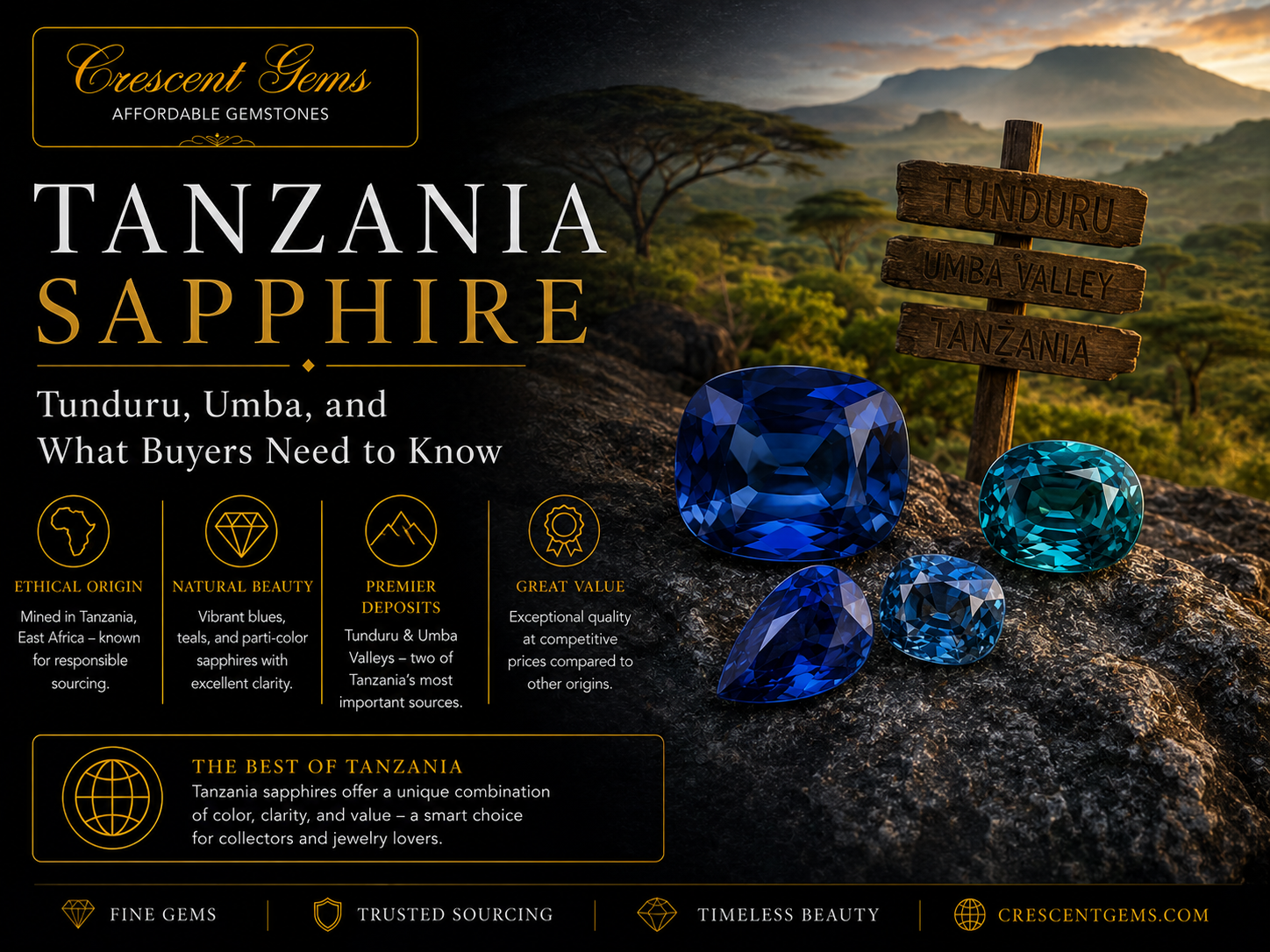
Tanzania Sapphire — Tunduru, Umba

Tanzania Sapphire — Tunduru, Umba, and What Buyers Need to Know
Tanzania sapphire from Tunduru and the Umba Valley: the geology behind its exceptional color range, how it compares to Ceylon, what treatment is standard, pricing by color and size, and how to buy with confidence.

Read moreabout Tanzania Sapphire — Tunduru, Umba, and What Buyers Need to Know

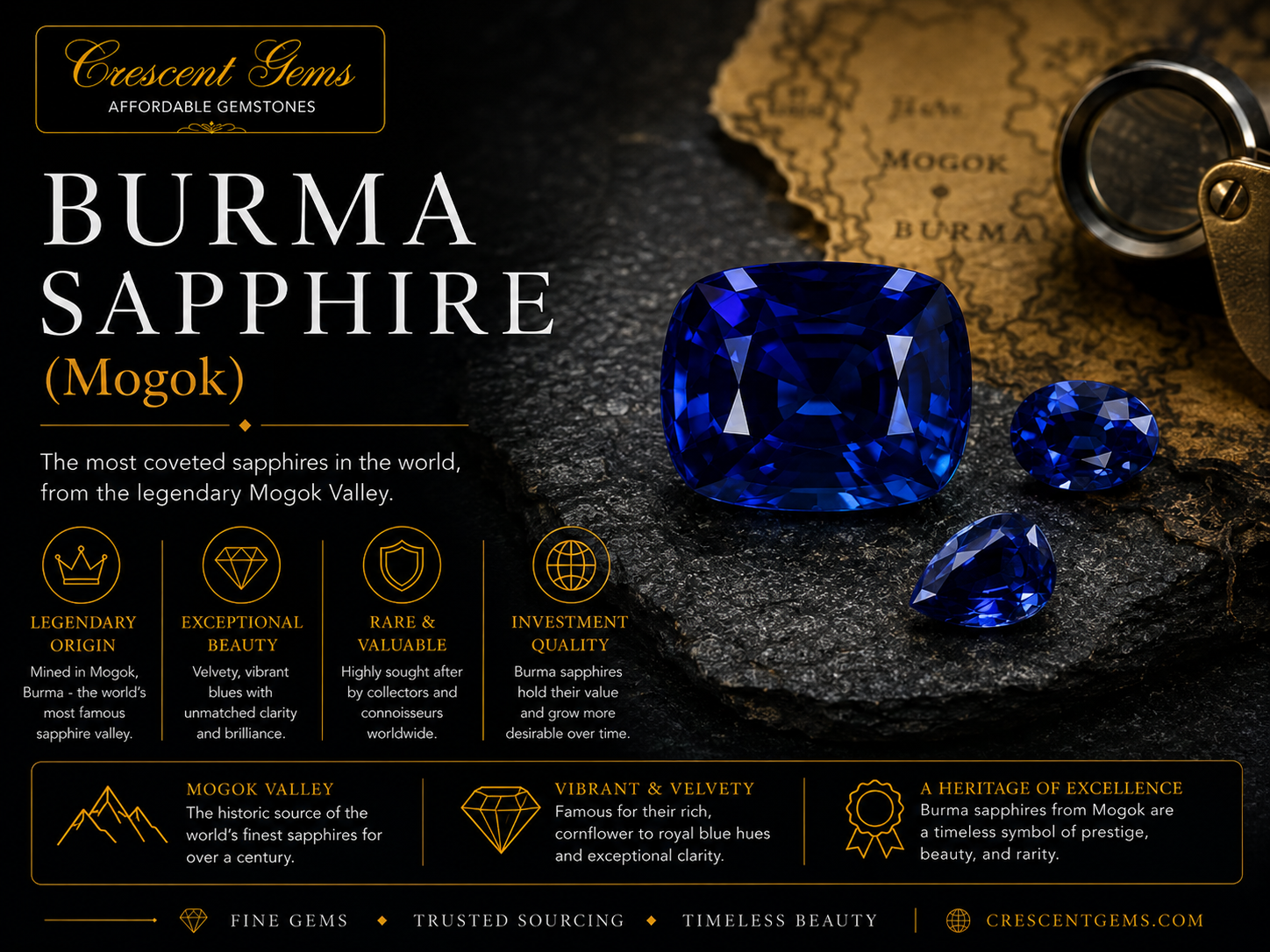
Burma Sapphire (Mogok)

Burma Sapphire (Mogok) — The World's Most Coveted Origin, Explained
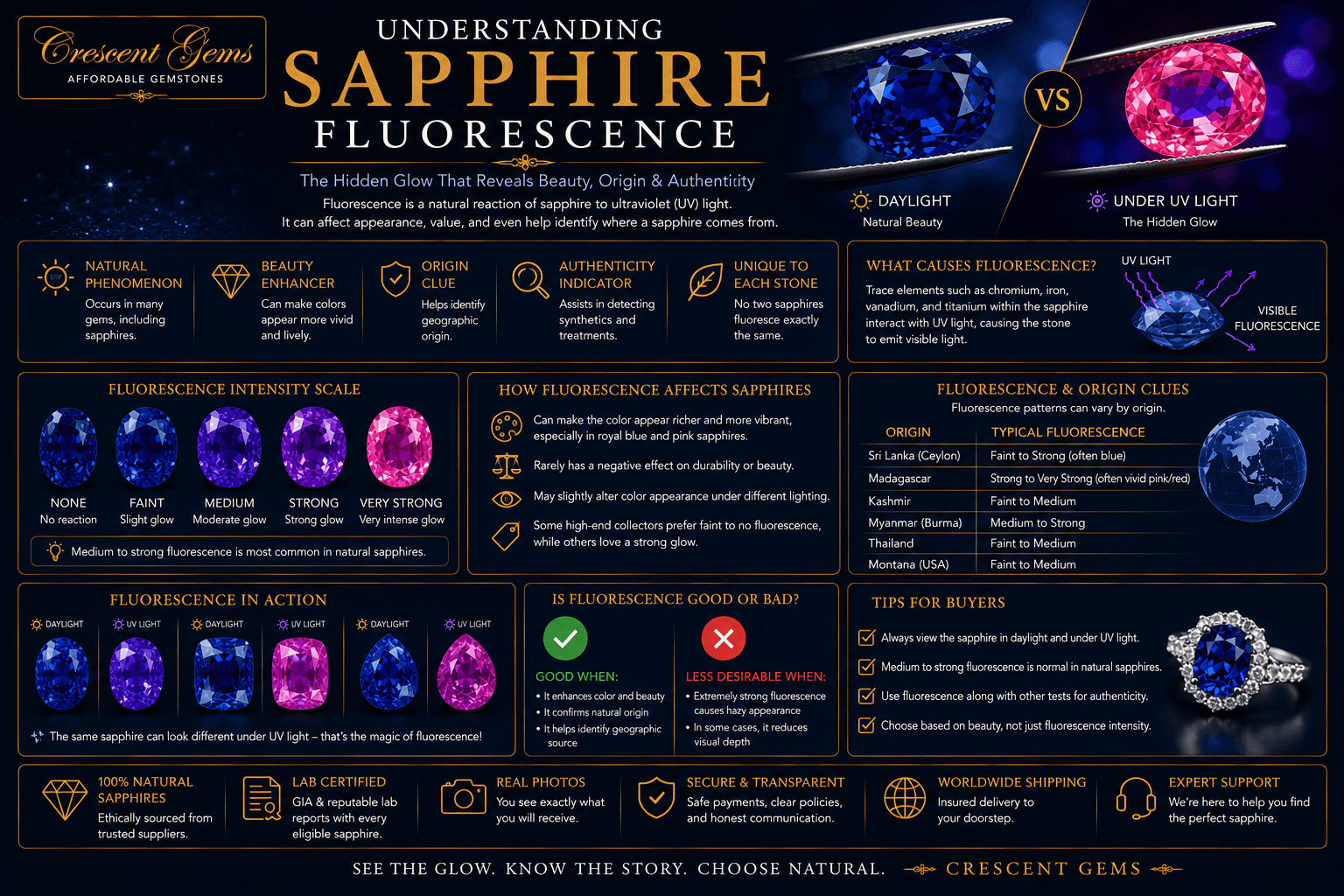
Burma sapphires from Mogok explained: why the origin commands the world's highest premiums, what genuine Burma color looks like, how GIA confirms origin, real availability in 2026, and when Ceylon is the smarter buy.

Read moreabout Burma Sapphire (Mogok) — The World's Most Coveted Origin, Explained

Understanding Sapphire Fluorescence

Sapphire Fluorescence Guide: What It Is, What It Means, and Whether It Matters
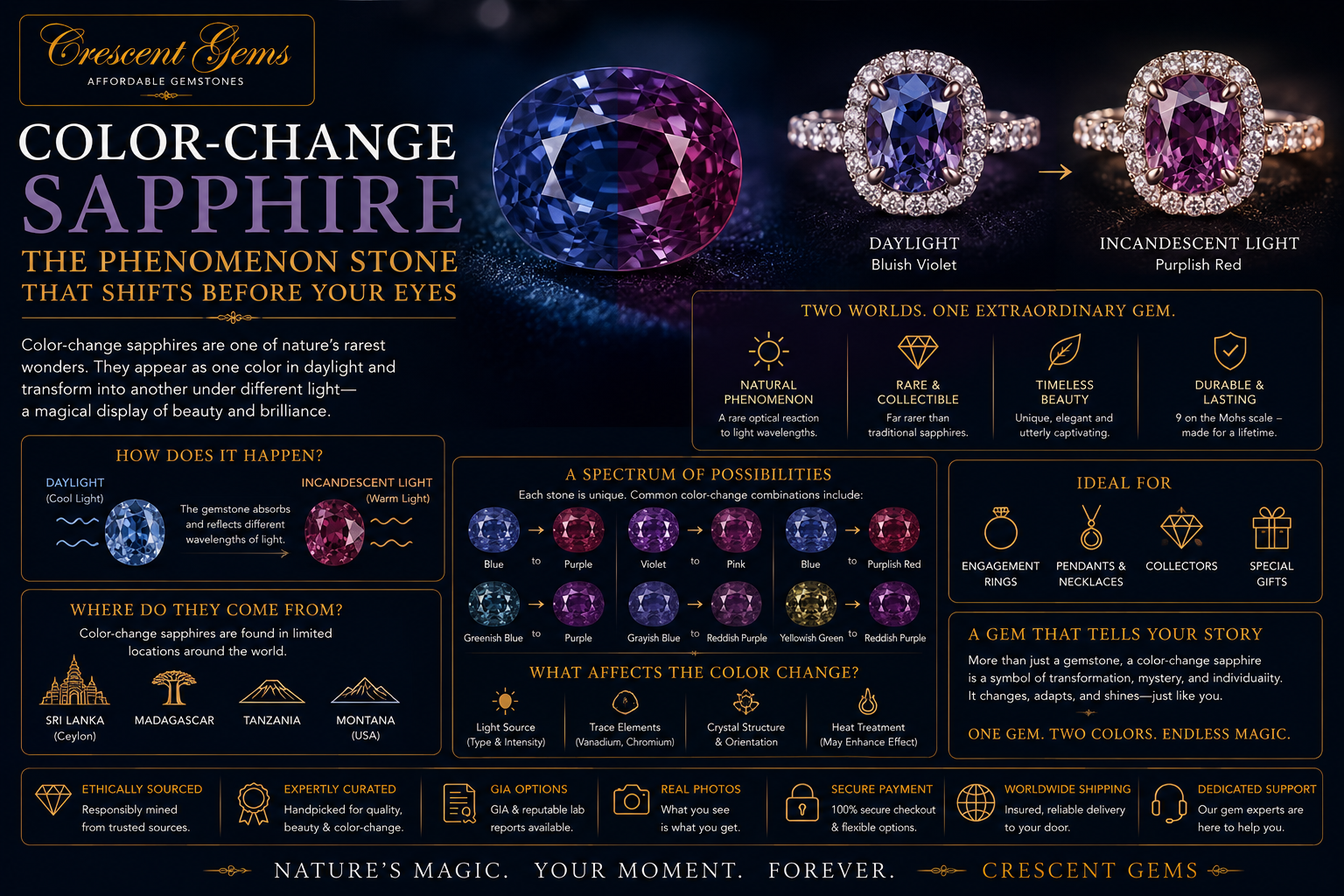
Sapphire fluorescence explained: what causes it, how it varies by color and origin, whether it affects appearance or value, and how laboratories use it as a diagnostic tool for treatment and origin.

Read moreabout Sapphire Fluorescence Guide: What It Is, What It Means, and Whether It Matters

Color-Change Sapphire — The Phenomenon Stone That Shifts Before Your Eyes

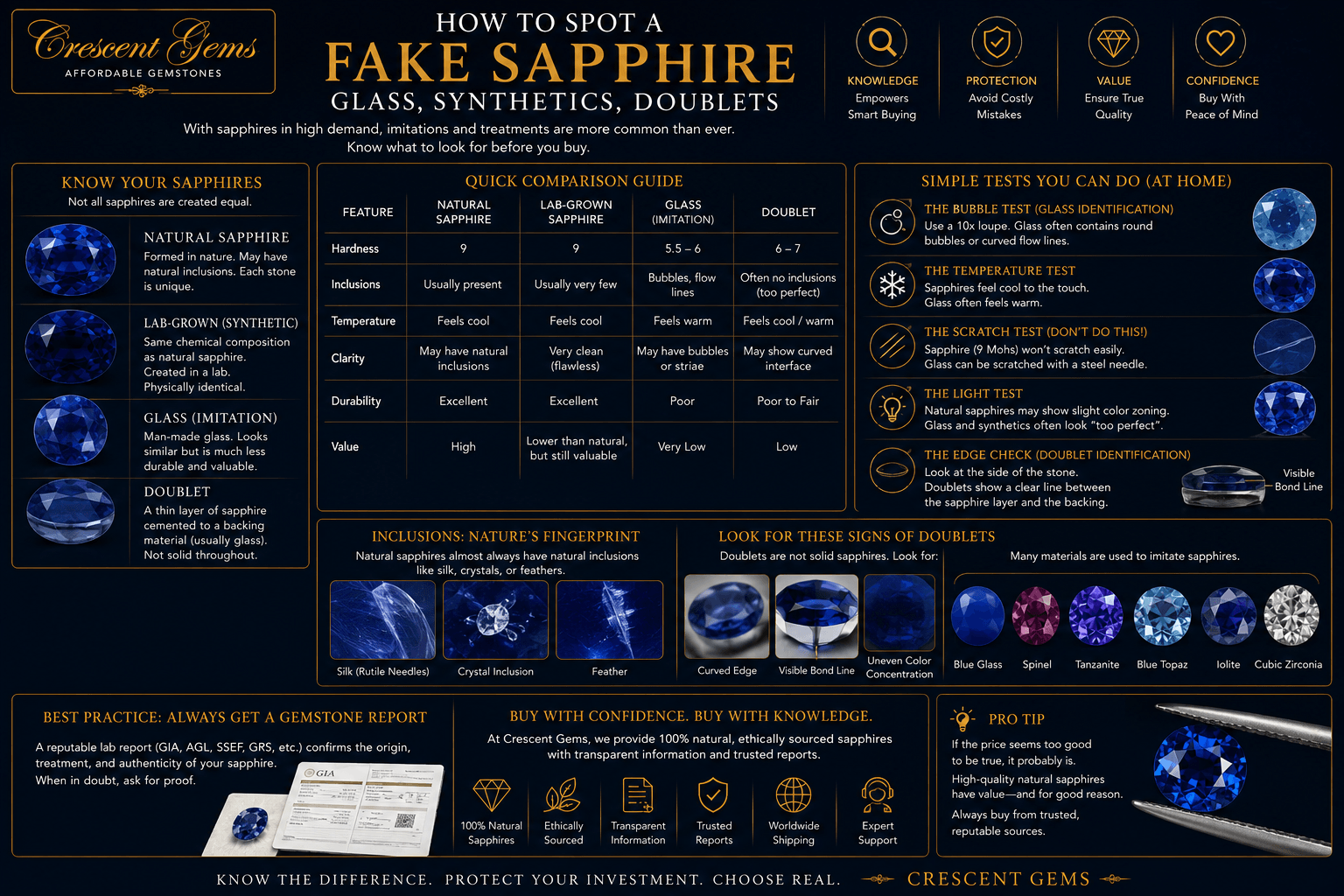
Color-Change Sapphire — The Phenomenon Stone That Shifts Before Your Eyes

Color-change sapphire is vanadium-bearing corundum that shifts from blue, blue-violet, or teal in daylight to purple or reddish-purple under incandescent light — a complete change between two named colors, not merely a color variation. This guide covers the vanadium mechanism, the distinction between color change and color variation, four shift patterns, a 5-variable quality grading framework with price reference table, a detailed color-change sapphire vs. alexandrite comparison, heat treatment effects on the phenomenon, origin differences between Ceylon, Tanzania, and Madagascar, a 6-step in-hand evaluation protocol, pricing, settings, and certification guidance.

Read moreabout Color-Change Sapphire — The Phenomenon Stone That Shifts Before Your Eyes
How to Spot a Fake Sapphire — Glass, Synthetics, Doublets

How to Spot a Fake Sapphire — Glass, Synthetics, Doublets, and What to Watch For
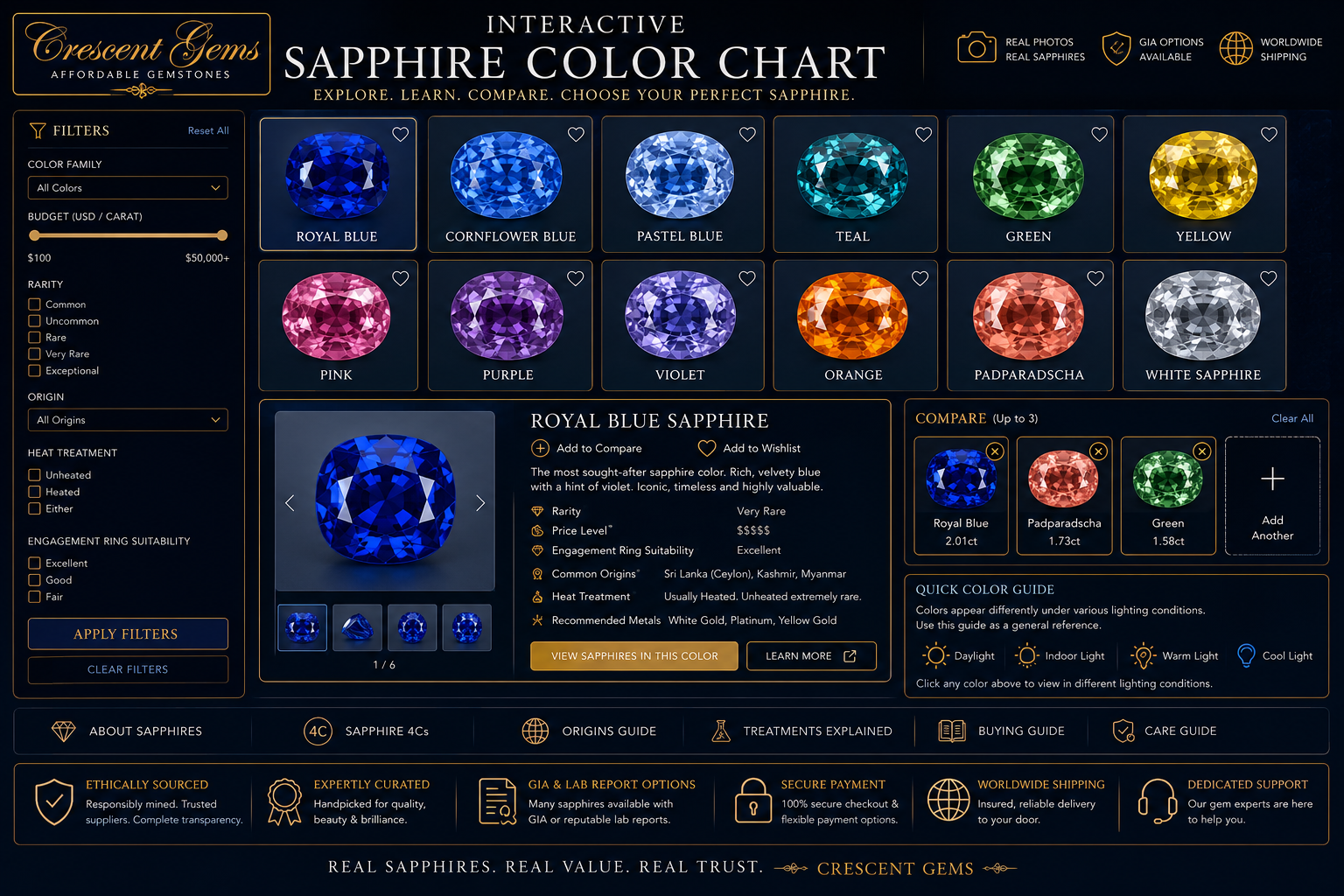
How to spot a fake sapphire: glass, synthetic, doublets, beryllium diffusion, and misrepresented species — the tests you can do yourself, when you need a lab, and the red flags to watch for when buying.

Read moreabout How to Spot a Fake Sapphire — Glass, Synthetics, Doublets, and What to Watch For

Interactive Sapphire Color Chart
Interactive Sapphire Color Chart

An interactive visual reference for every natural sapphire color — blue, teal, yellow, pink, peach, padparadscha, orange, violet, green, white, and star — with links to browse each color in the Crescent Gems catalog.

Read moreabout Interactive Sapphire Color Chart

Sapphire Pricing Explained — What Drives Cost Per Carat and Why Two Similar Stones Can Be 5× Apart
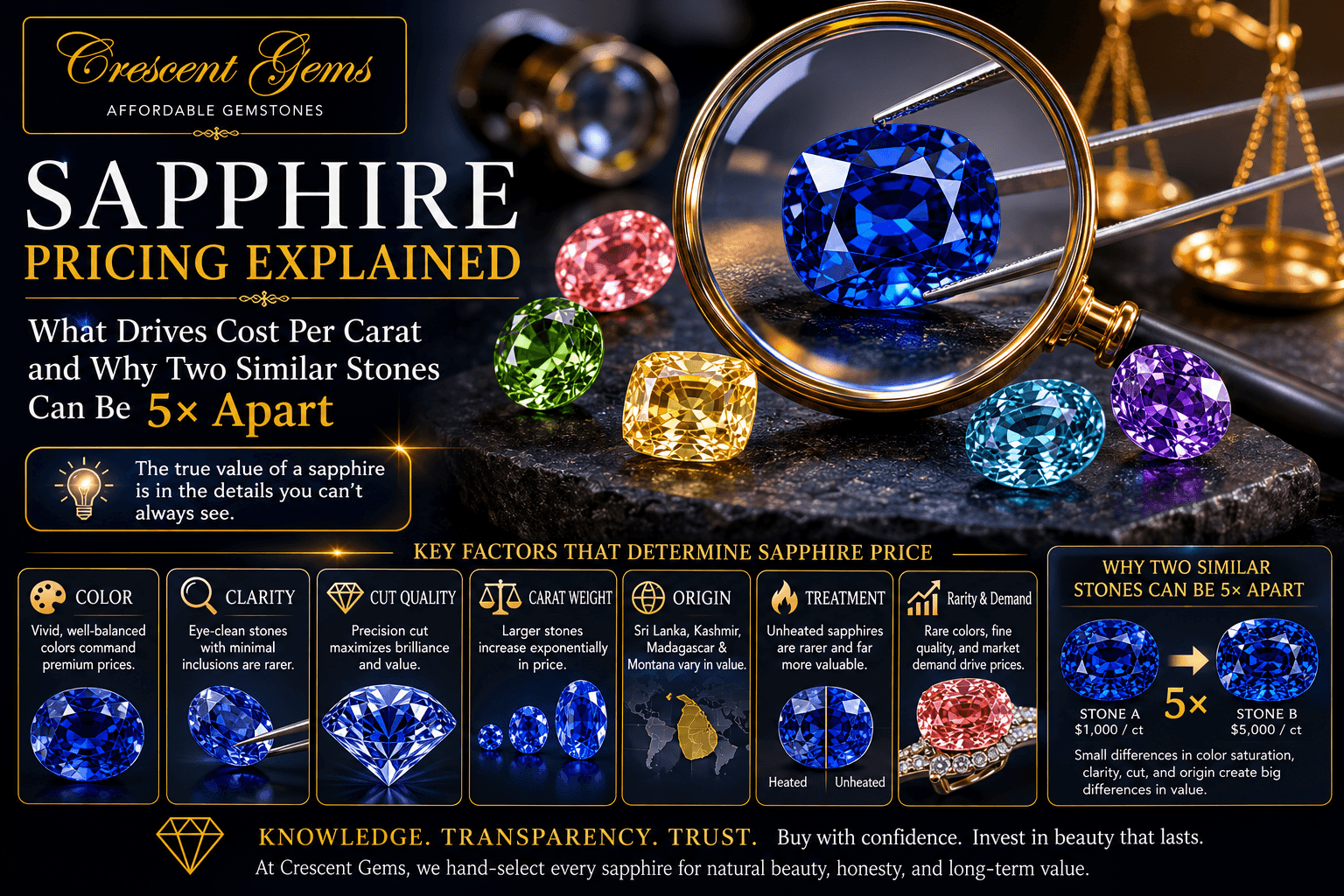
Sapphire Pricing Explained — What Drives Cost Per Carat and Why Two Similar Stones Can Be 5× Apart

What actually drives sapphire price per carat: the seven factors — color, treatment, carat weight, origin, cut, clarity, and color rarity — how they compound rather than add, and the common pricing mistakes that cost buyers money.

Read moreabout Sapphire Pricing Explained — What Drives Cost Per Carat and Why Two Similar Stones Can Be 5× Apart

How to Read Sapphire Inclusions

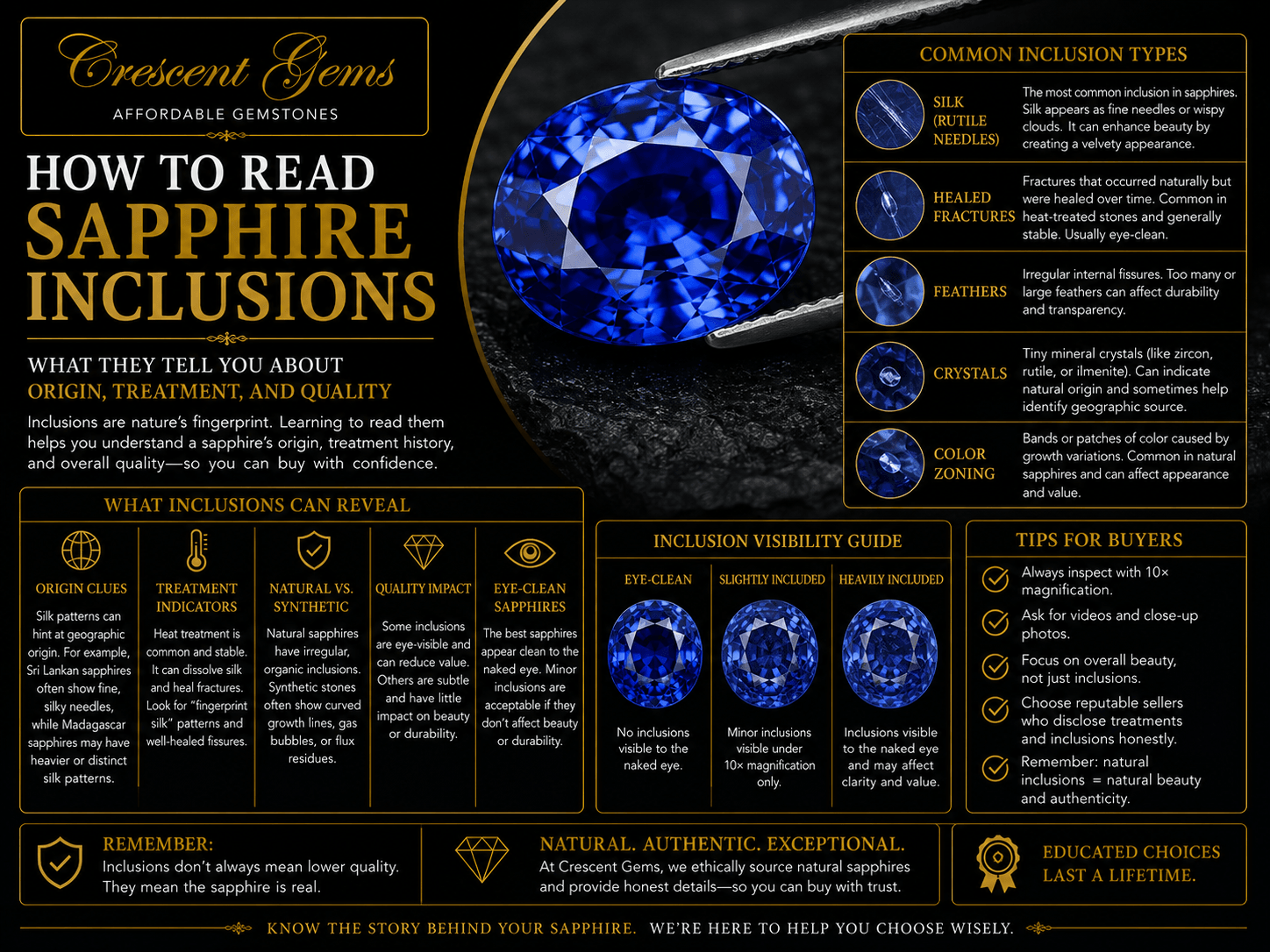
How to Read Sapphire Inclusions — What They Tell You About Origin, Treatment, and Quality
A complete guide to sapphire inclusions: what rutile silk, fingerprints, zircon halos, and needle crystals look like, what each tells you about heat treatment and geographic origin, and why inclusions can add rather than subtract value in high-quality sapphires.

Read moreabout How to Read Sapphire Inclusions — What They Tell You About Origin, Treatment, and Quality

Beryllium Diffusion in Sapphires Explained — What It Is, How to Detect It, and Why We Don’t Carry It

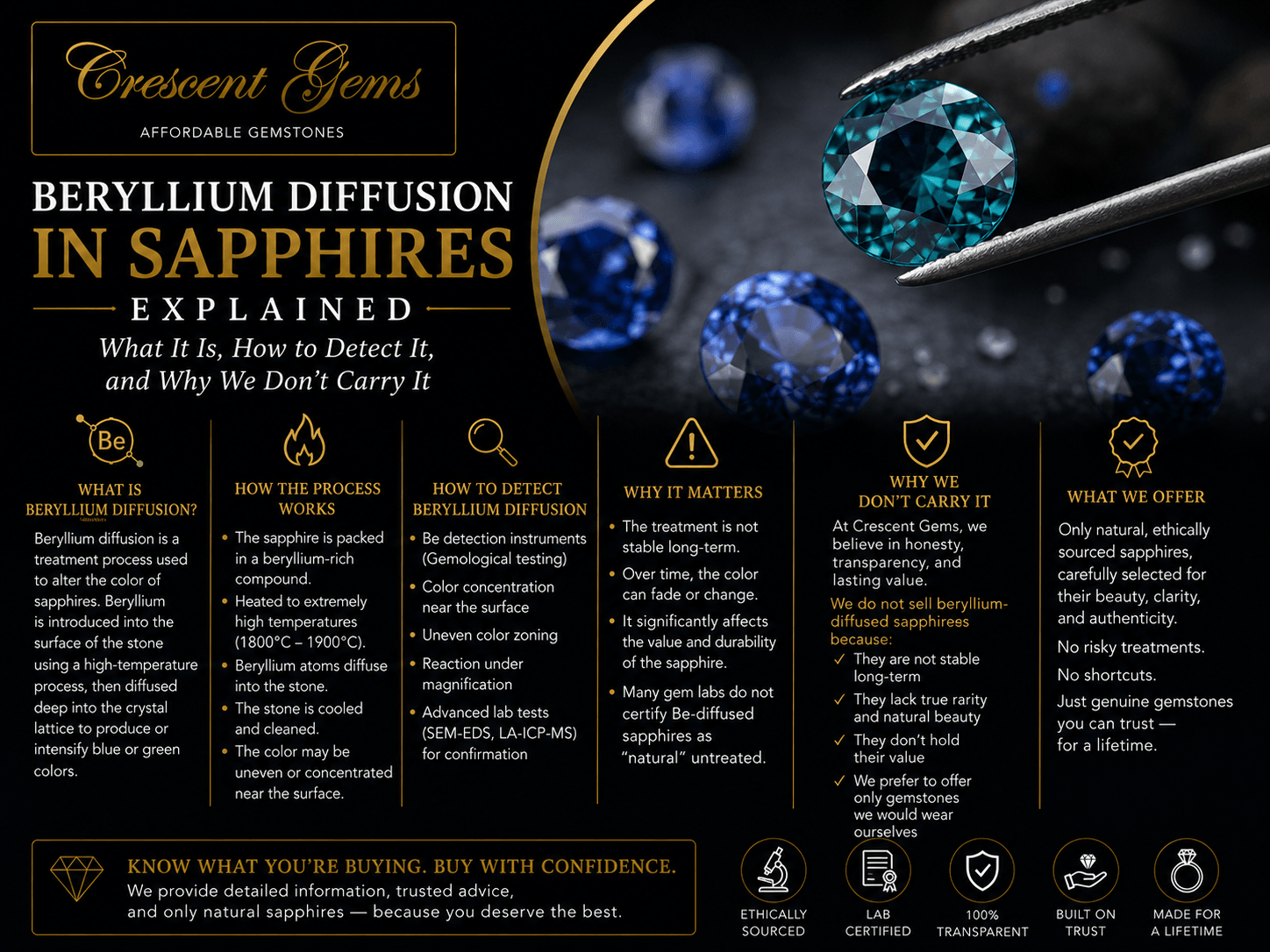
Beryllium Diffusion in Sapphires Explained — What It Is, How to Detect It, and Why It Matters
Beryllium diffusion in sapphires explained: what it is, how it differs from standard heat treatment, why it cannot be detected visually, how LA-ICP-MS identifies it, which colors are most at risk, and how to protect yourself as a buyer.

Read moreabout Beryllium Diffusion in Sapphires Explained — What It Is, How to Detect It, and Why It Matters

How Sapphire Heat Treatment Works — Temperature, Process, and What Changes Inside the Stone

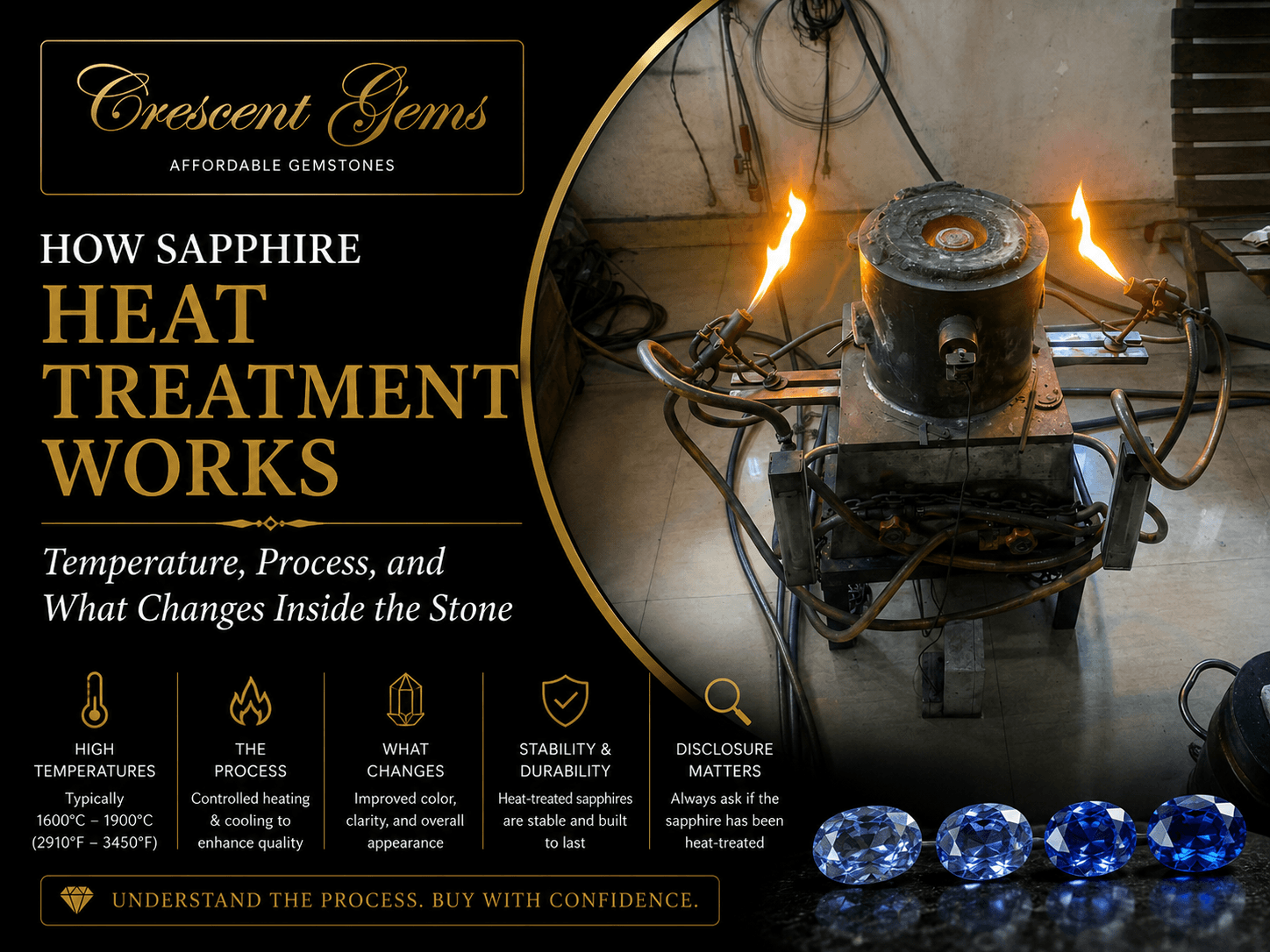
How Sapphire Heat Treatment Works — Temperature, Process, and What Changes Inside the Stone

How sapphire heat treatment works: the furnace process, temperatures, what changes in color and clarity, why rutile silk dissolves, how labs detect treatment, what heating cannot change, and when treatment is disclosed.

Read moreabout How Sapphire Heat Treatment Works — Temperature, Process, and What Changes Inside the Stone

Why Buy from Crescent Gems


Choosing a gemstone for an engagement ring or important piece of jewellery is a deeply personal decision. It is often a meaningful purchase made only a few times in a lifetime, so trust, accurate information and expert guidance matter. Crescent Gems combines more than 25 years of gemstone experience with direct sourcing, careful cutting and transparent treatment disclosure to help you choose with confidence

Natural, earth-mined gemstones only

Direct sourcing from leading mining regions

No synthetic, flux-filled or beryllium-diffused stones

In-house cutting and recutting

FREE Shipping within USA and Low rates for international orders.

Actual photographs, hand videos and 360-degree views

14-day returns

Free US return shipping

GIA reports for significant gemstones

Try Before You Buy

Join our ever growing group of satisfied customers from around the world.