- by Ahmed Shareek
Is Tsavorite Good for an Engagement Ring? Durability, Color, and What Buyers Need to Know
- by Ahmed Shareek
Considering a green gemstone ring? Read our Complete Tsavorite Buyer's Guide. For a full comparison: Sapphire vs. Emerald. For ring design: How to Commission a Custom Ring.
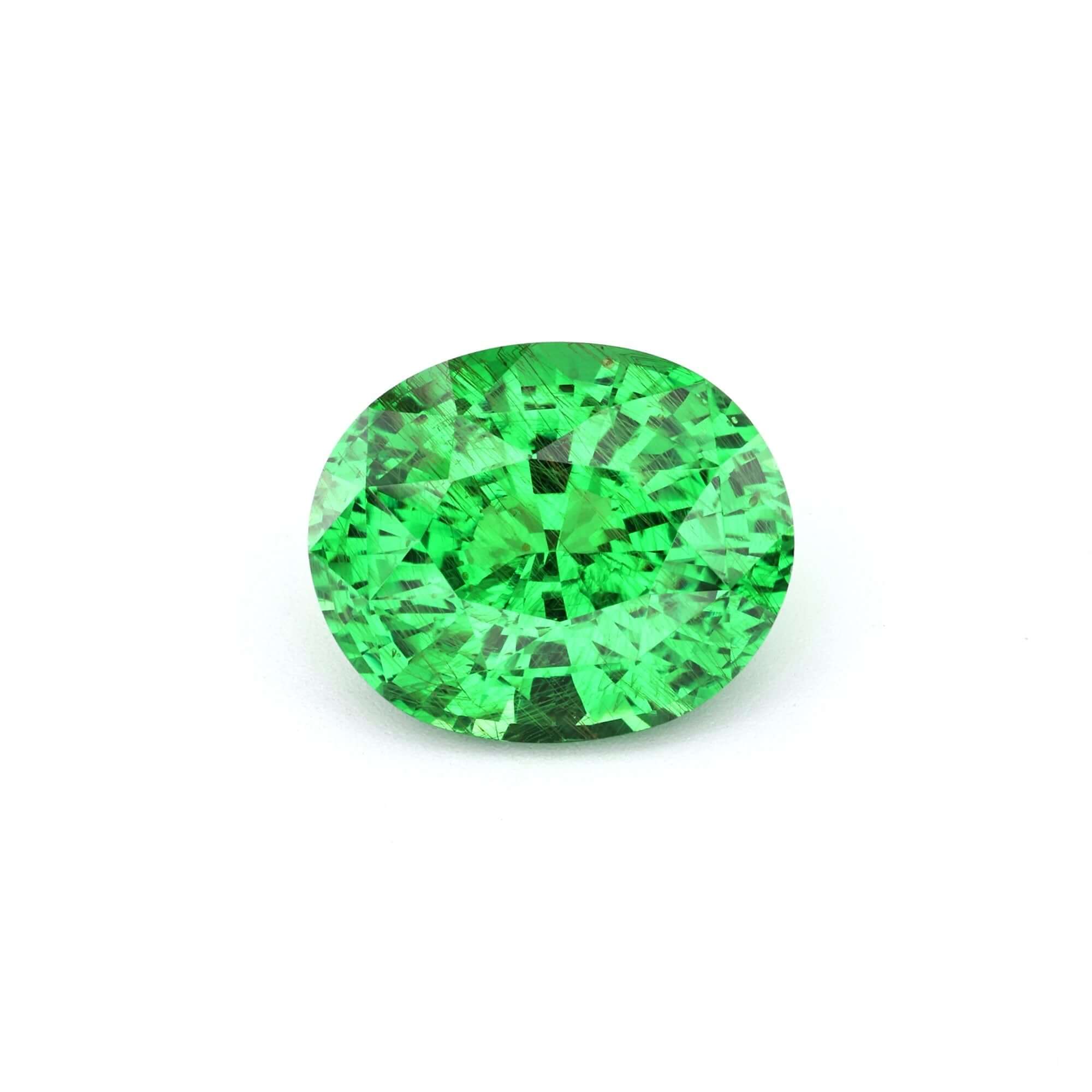
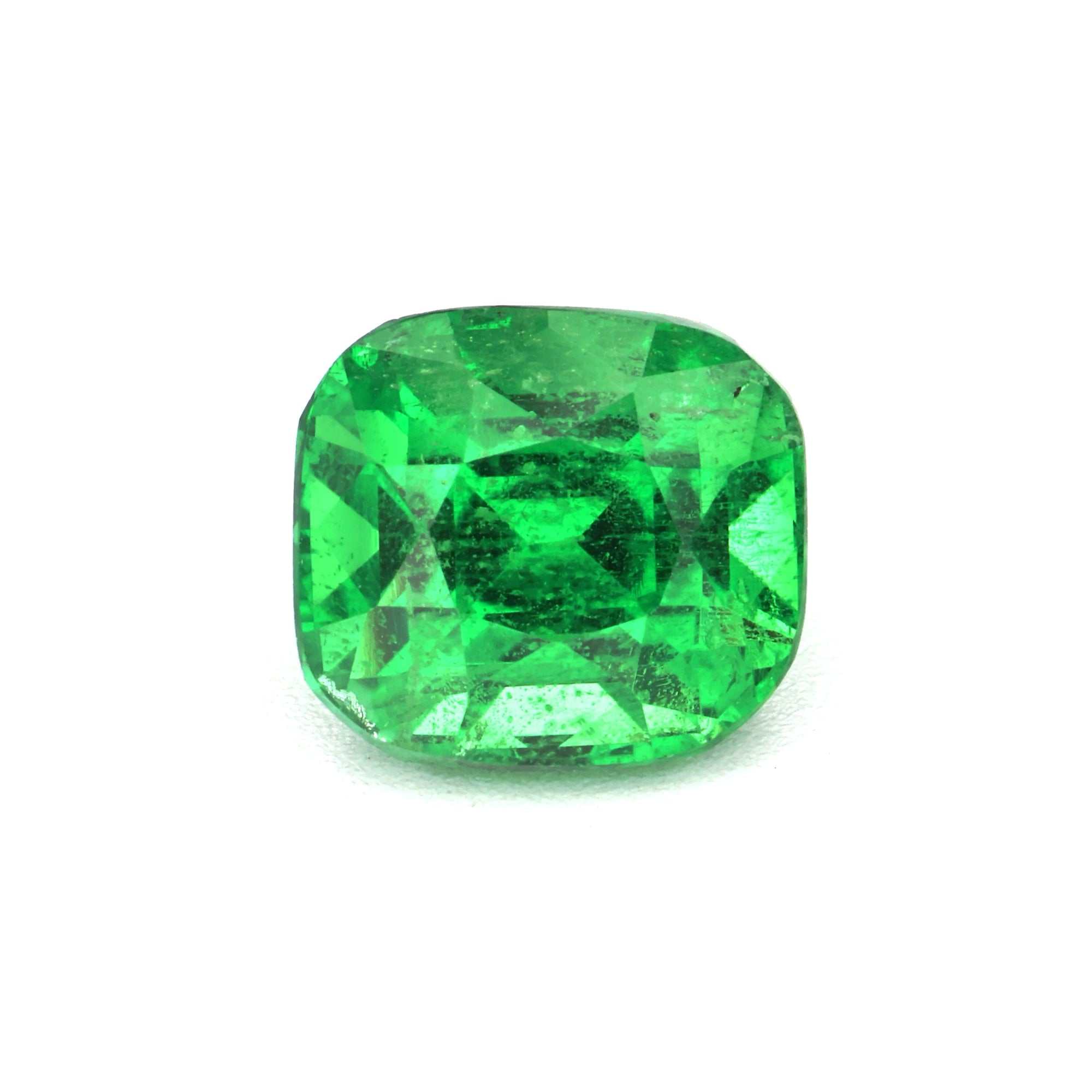
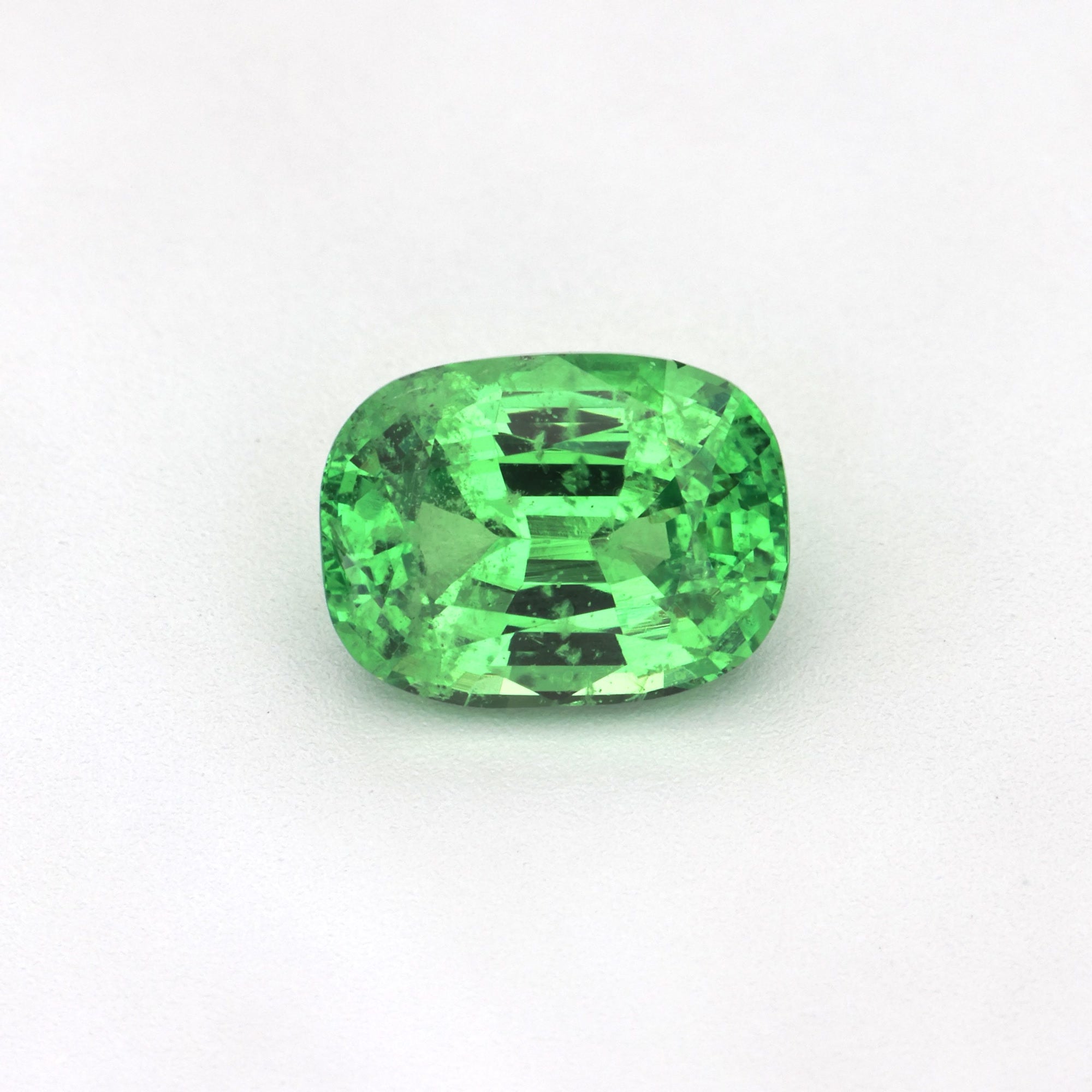
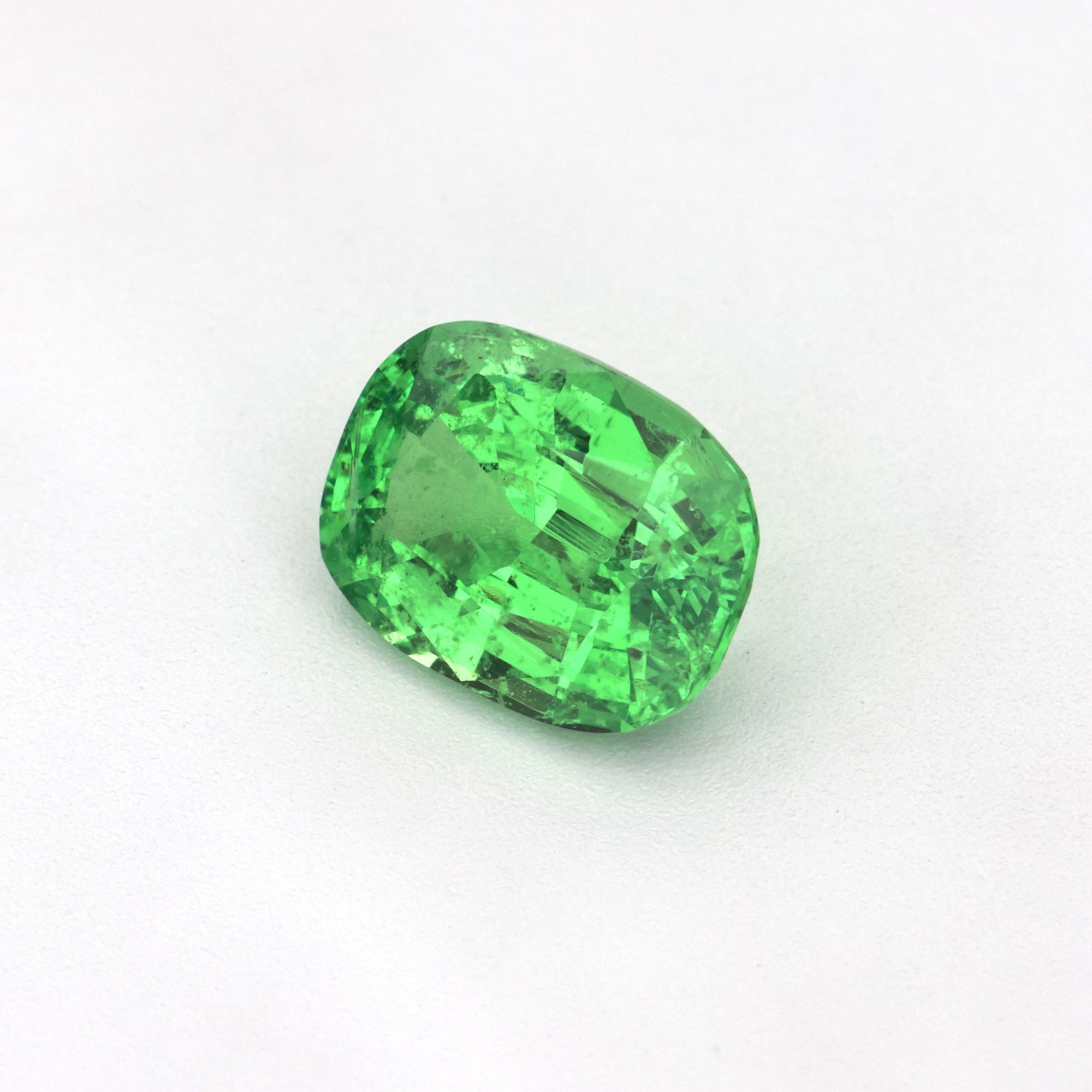
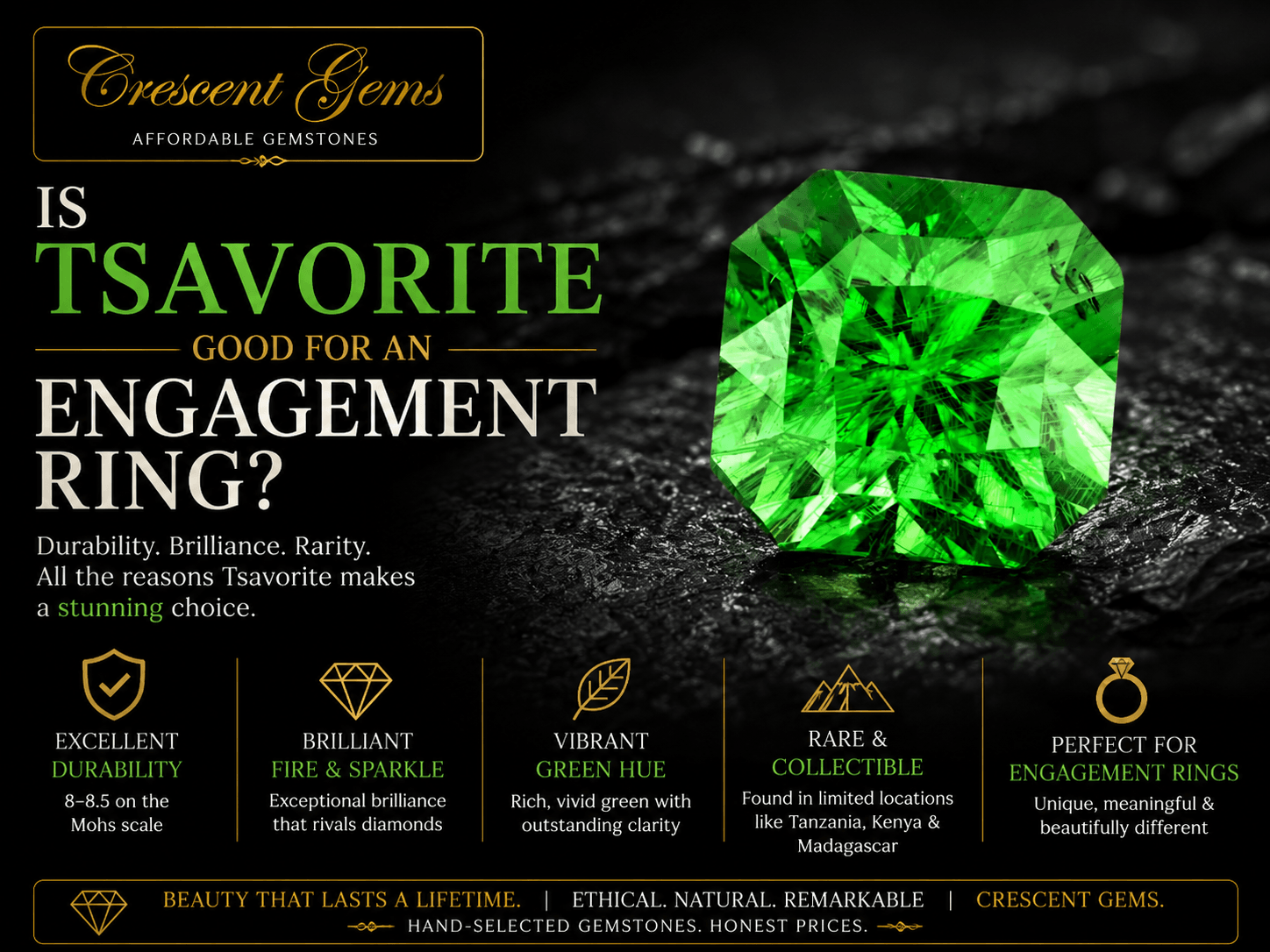
Tsavorite garnet is one of the most compelling colored gemstones available for an engagement ring — and one of the most consistently underestimated. Its vivid pure green, almost always natural untreated color, refractive index that exceeds emerald, and Mohs 7.5 hardness make it a serious choice for buyers who want something genuinely different from the mainstream sapphire-and-diamond conversation.
The question most buyers ask first is durability: can tsavorite actually hold up to daily wear in a ring? The honest answer is yes, with appropriate setting choices and normal care — but the full picture requires understanding exactly how tsavorite's physical properties compare to other engagement ring stones, where its vulnerabilities actually lie, and how those vulnerabilities are managed by setting design. This guide covers all of it: gemology, color quality, durability comparison, setting recommendations, care, treatment, value, and how tsavorite compares to its closest competitors as an engagement ring stone.
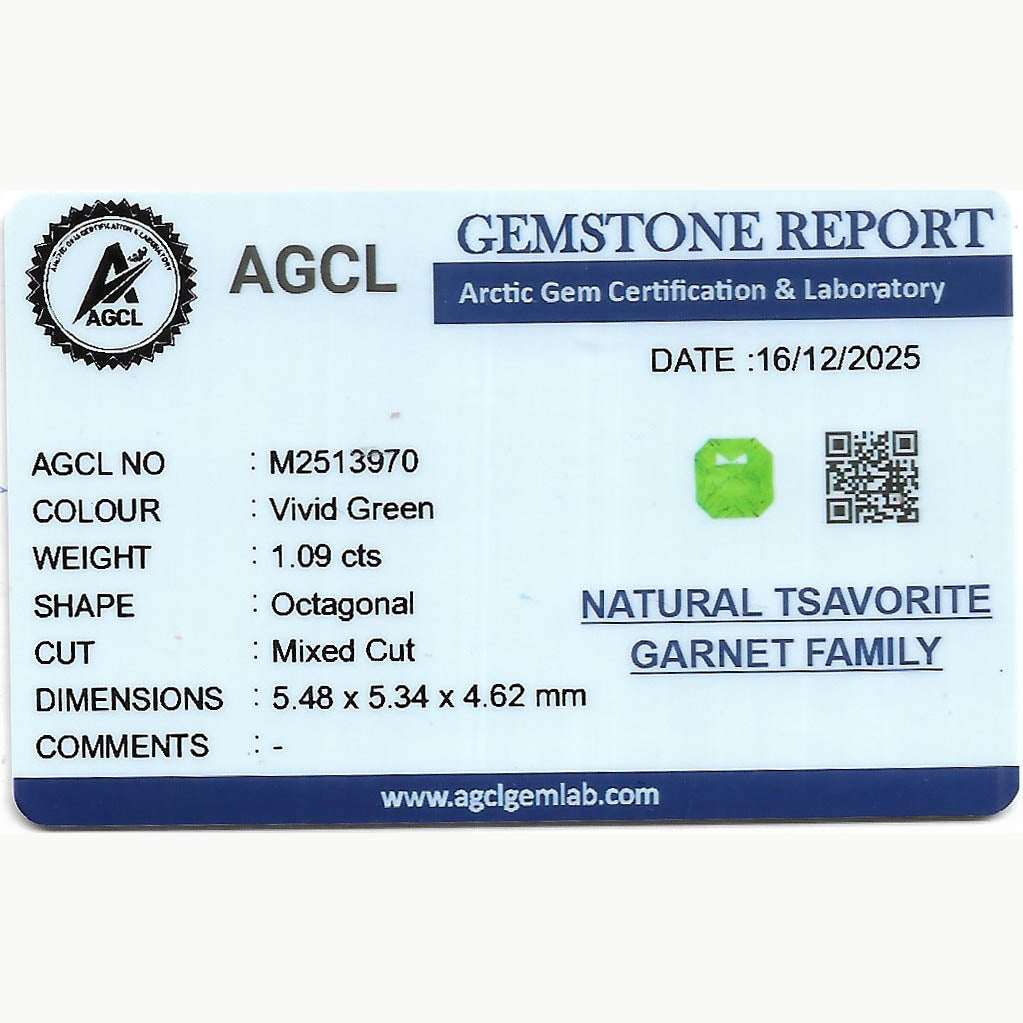
Tsavorite is a variety of grossular garnet — calcium aluminum silicate — colored green by vanadium and chromium. It was discovered in the Tsavo region of Kenya and Tanzania in the late 1960s by Scottish geologist Campbell Bridges and named tsavorite by Tiffany & Co., which helped introduce it to the commercial market in the early 1970s. It is mined almost exclusively in East Africa — primarily Kenya and Tanzania — in a relatively small number of active deposits.
| Property | Tsavorite Garnet | Practical Meaning |
|---|---|---|
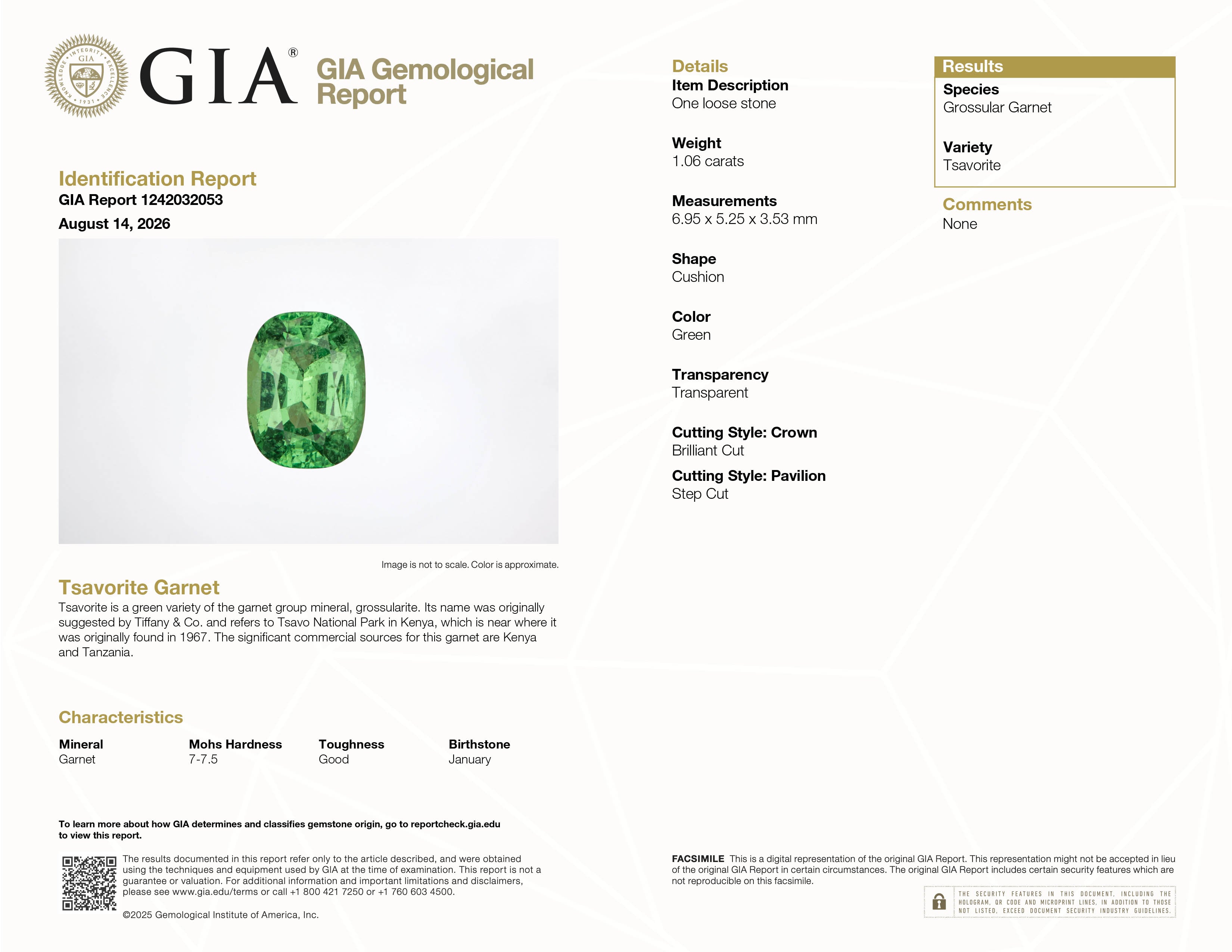
| Mineral species | Grossular garnet (Ca₃Al₂Si₃O₁₂) | Distinct species from pyrope, almandine, and spessartine garnets |
| Mohs hardness | 7–7.5 | Harder than most colored gemstones; softer than sapphire (9) and diamond (10) |
| Cleavage | None | Does not split along crystal planes; good resistance to impact fracture |
| Toughness | Good — no cleavage, no fracture sensitivity | Significantly tougher than emerald, which typically has heavy fracturing |
| Refractive index | 1.734–1.759 | Higher than emerald (1.577–1.583); produces more brilliance and sparkle per carat |
| Dispersion | 0.028 | Higher than emerald; contributes to lively play of light |
| Color cause | Vanadium (V) and chromium (Cr) | Same chromophores responsible for ruby and emerald color; produces pure, saturated green |
| Treatment | Virtually always none — natural color | The great majority of tsavorite is untreated at any price; clarity enhancement is used on a minority of stones and is named on the laboratory report |
| Primary origins | Kenya (Tsavo), Tanzania (Merelani), Madagascar | Limited supply from a small number of active deposits; scarcity increases with size |
Mohs 7.5 is the most commonly cited concern about tsavorite for engagement ring use. Here is the full context that makes that number meaningful:
The Mohs scale measures scratch resistance — specifically, what materials can scratch the stone's surface. Common reference points:
For practical daily wear in a well-chosen setting, tsavorite at Mohs 7.5 performs adequately. It will not develop the rapid surface hazing that softer stones like opal (5.5–6.5) or tanzanite (6.5–7) experience. Over decades of daily wear with normal knocks and contact, minor surface wear is possible — but this is true of all gemstones except diamond and can be addressed by a professional polish if it develops.
| Gemstone | Mohs Hardness | Cleavage | Toughness | Daily Ring Wear Suitability |
|---|---|---|---|---|
| Diamond | 10 | Perfect in 4 directions | Good (cleavage is a vulnerability) | Excellent — the benchmark |
| Sapphire / Ruby (Corundum) | 9 | None in cutting planes | Excellent | Excellent — best colored stone for rings |
| Alexandrite / Chrysoberyl | 8.5 | Distinct but not problematic | Excellent | Excellent |
| Spinel | 8 | None | Excellent | Excellent |
| Topaz | 8 | Perfect in one direction | Poor (cleavage fractures easily) | Moderate — cleavage is a serious risk |
| Tsavorite Garnet | 7–7.5 | None | Good | Good — suitable with protective setting |
| Emerald | 7.5–8 | Indistinct | Poor (fracturing; almost always oiled) | Moderate — fracturing and treatment make it fragile |
| Aquamarine | 7.5–8 | Imperfect | Good | Good — similar to tsavorite |
| Tanzanite | 6.5–7 | Perfect in one direction | Poor | Low — not recommended for daily ring wear |
| Opal | 5.5–6.5 | None | Poor (brittle; water sensitive) | Very low — not suitable for daily ring wear |
The critical comparison is tsavorite vs. emerald — the two stones most often compared as green engagement ring options. Tsavorite at Mohs 7–7.5 with no cleavage and good toughness is actually a safer daily-wear choice than emerald, which typically has significant natural fracturing (jardin), is almost universally fracture-filled with oil or resin, and is genuinely fragile in practical ring use. The Mohs number alone is misleading here — toughness (resistance to fracture and impact) matters more for ring durability than hardness alone, and tsavorite significantly outperforms emerald on toughness.
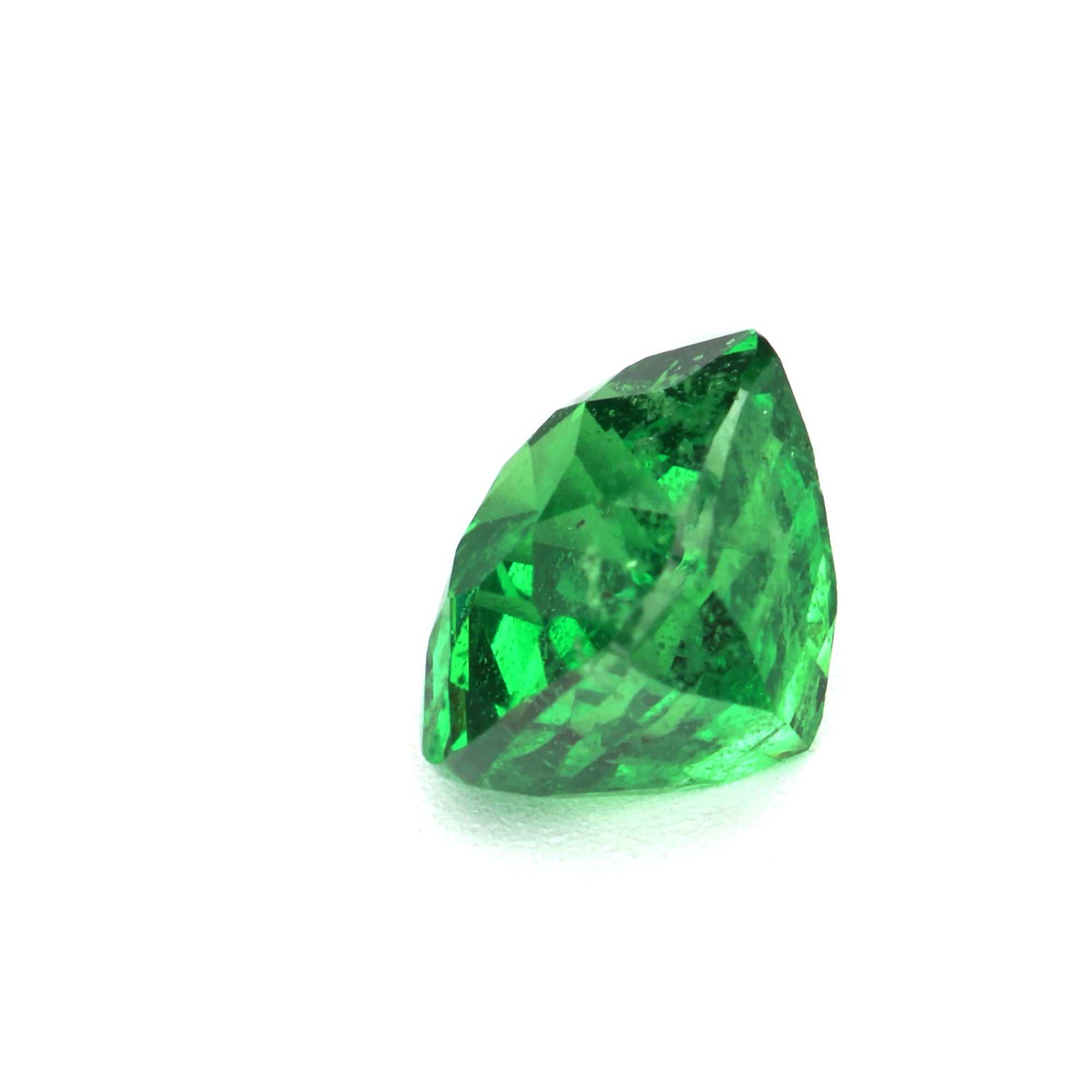
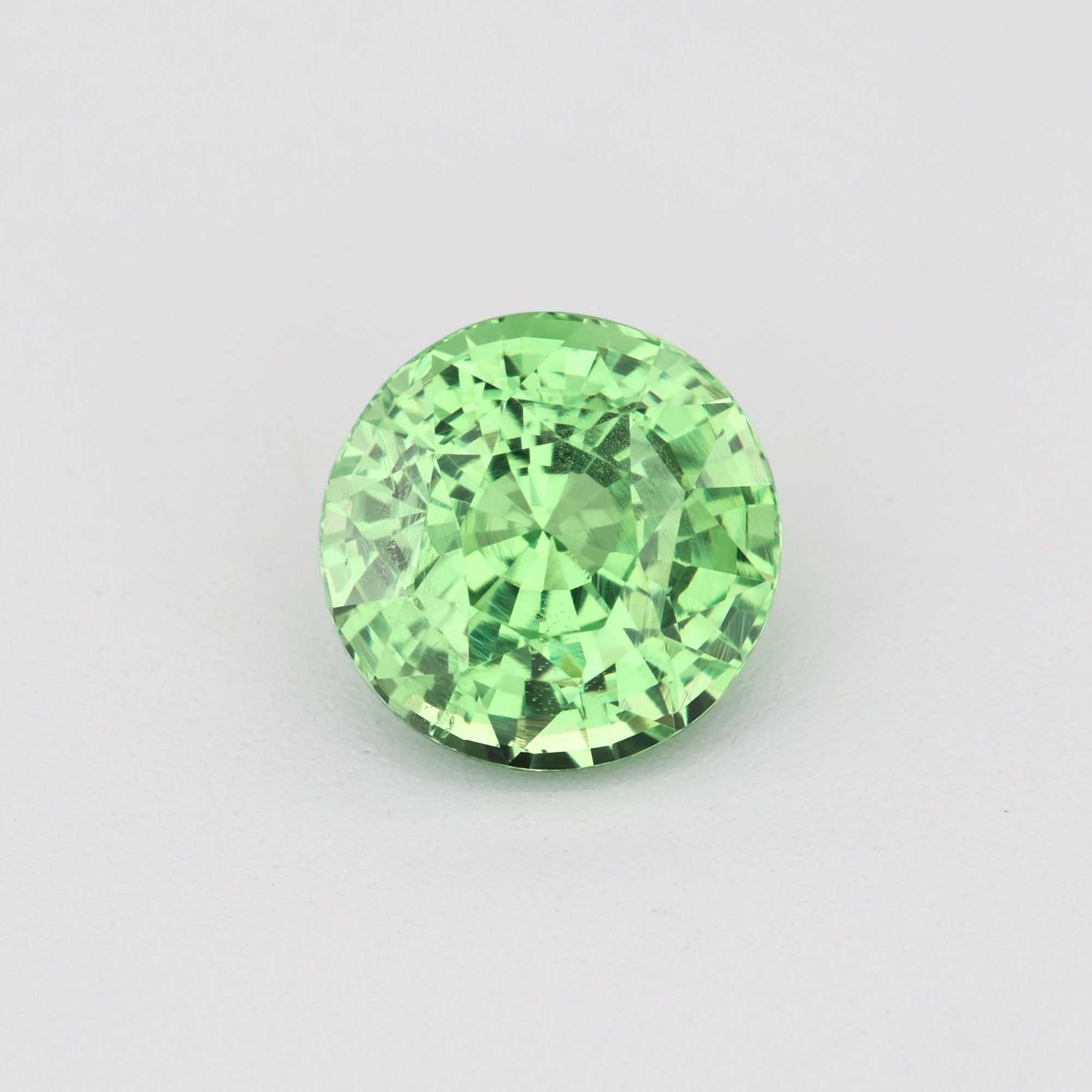
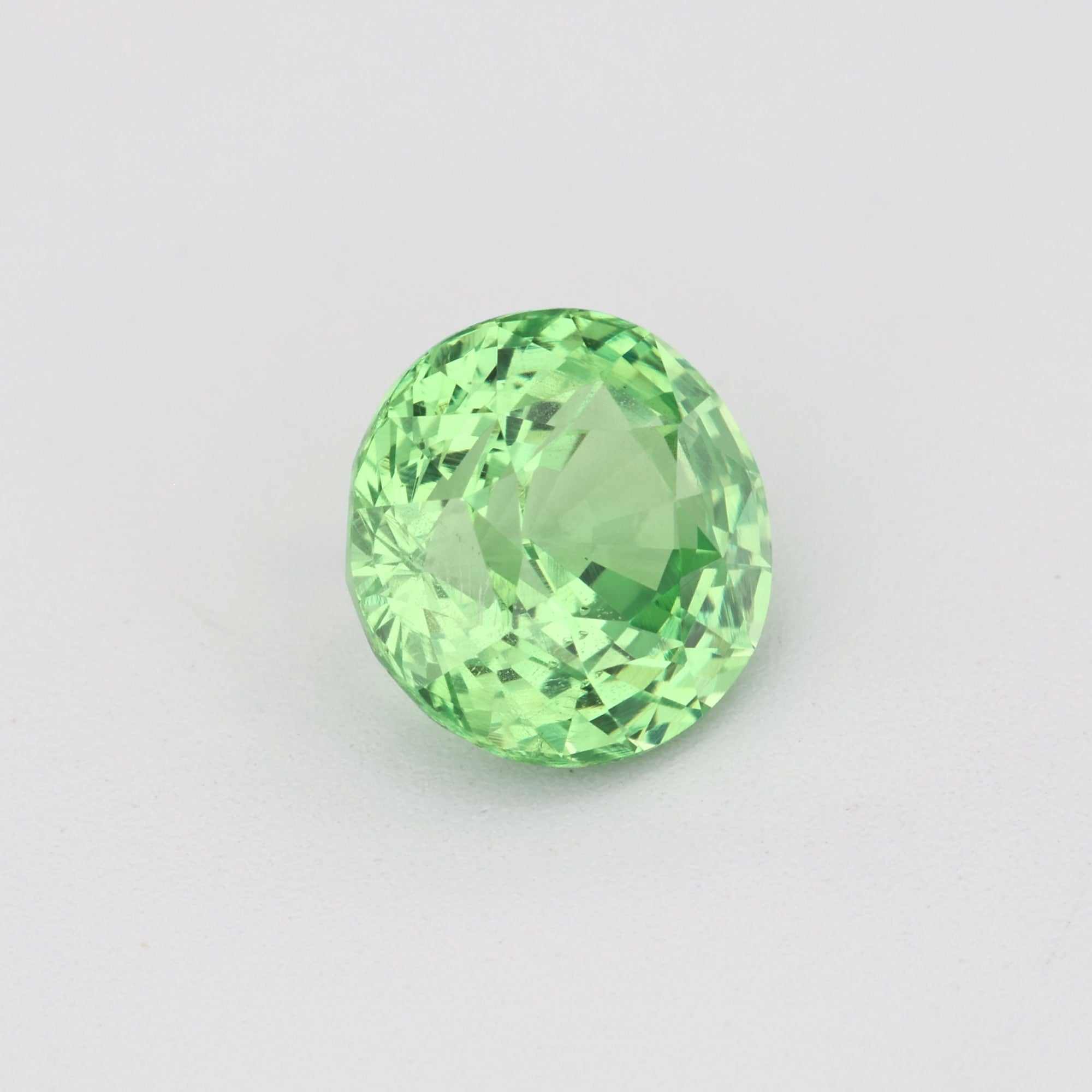
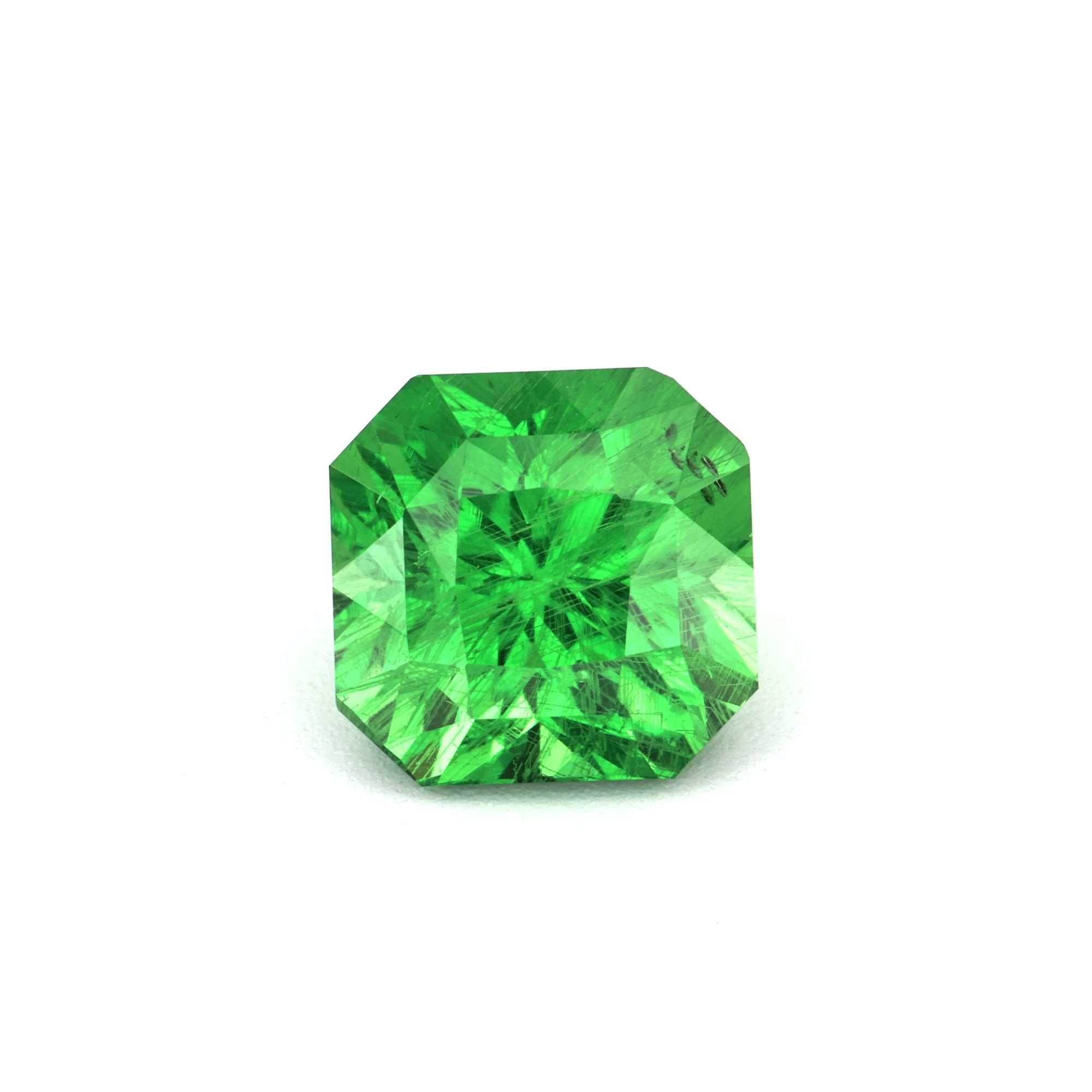
Tsavorite color spans a range from pale mint green through medium vivid green to deep forest green. The most commercially prized tsavorite is a saturated, pure vivid green — often described as comparable to fine emerald color but with greater brilliance and without the grayish or bluish modifier that can affect some emeralds.

Tsavorite has a refractive index of 1.734–1.759, compared to emerald's 1.577–1.583. Higher refractive index means more light is bent and reflected back to the eye from the facets — producing more brilliance (white light return) and dispersion (fire). In practical terms, a well-cut tsavorite in a ring appears livelier and brighter than an equivalent emerald. It also tends to be eye-cleaner than emerald — emerald's characteristic heavy fracturing (jardin) is largely absent in tsavorite, and most commercial tsavorite is eye-clean without enhancement. For more on the comparison, see our Sapphire vs. Emerald guide.
Fine tsavorite above 2 carats is significantly rarer than below 2 carats — the deposit geology and typical crystal size means that most production is under 1 carat, and stones above 2 carats with fine color are genuinely scarce. The price per carat increases sharply with size:
| Size Range | Color Quality | Approximate Price Per Carat | Notes |
|---|---|---|---|
| Under 0.5 ct | Good to fine | $300–$800 | Good supply; typical for accent stones and halos |
| 0.5–1 ct | Good to fine | $600–$1,500 | Best value range; ideal for solitaire rings with smaller profile |
| 1–2 ct | Fine | $1,200–$3,500 | Fine color increasingly rare at this size; strong demand |
| 2–3 ct | Fine to exceptional | $3,000–$8,000 | Meaningfully scarce; exceptional color commands large premium |
| Above 3 ct | Fine to exceptional | $6,000–$20,000+ | Rare; collector-grade material; prices approach fine Ceylon sapphire |
Figures above are approximate market guidance, not fixed quotes. Actual value varies by treatment, origin, colour, cut, clarity, and certification.
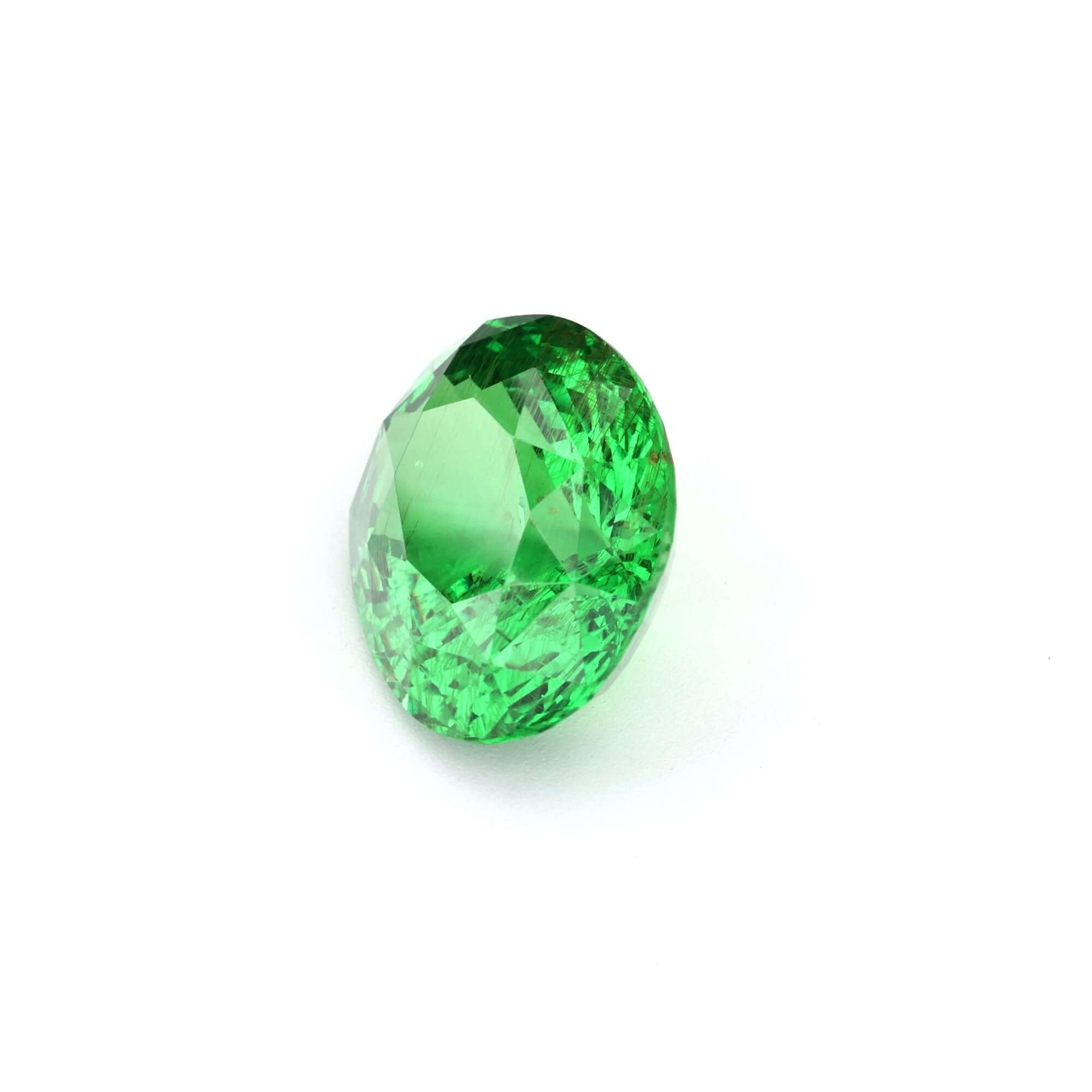
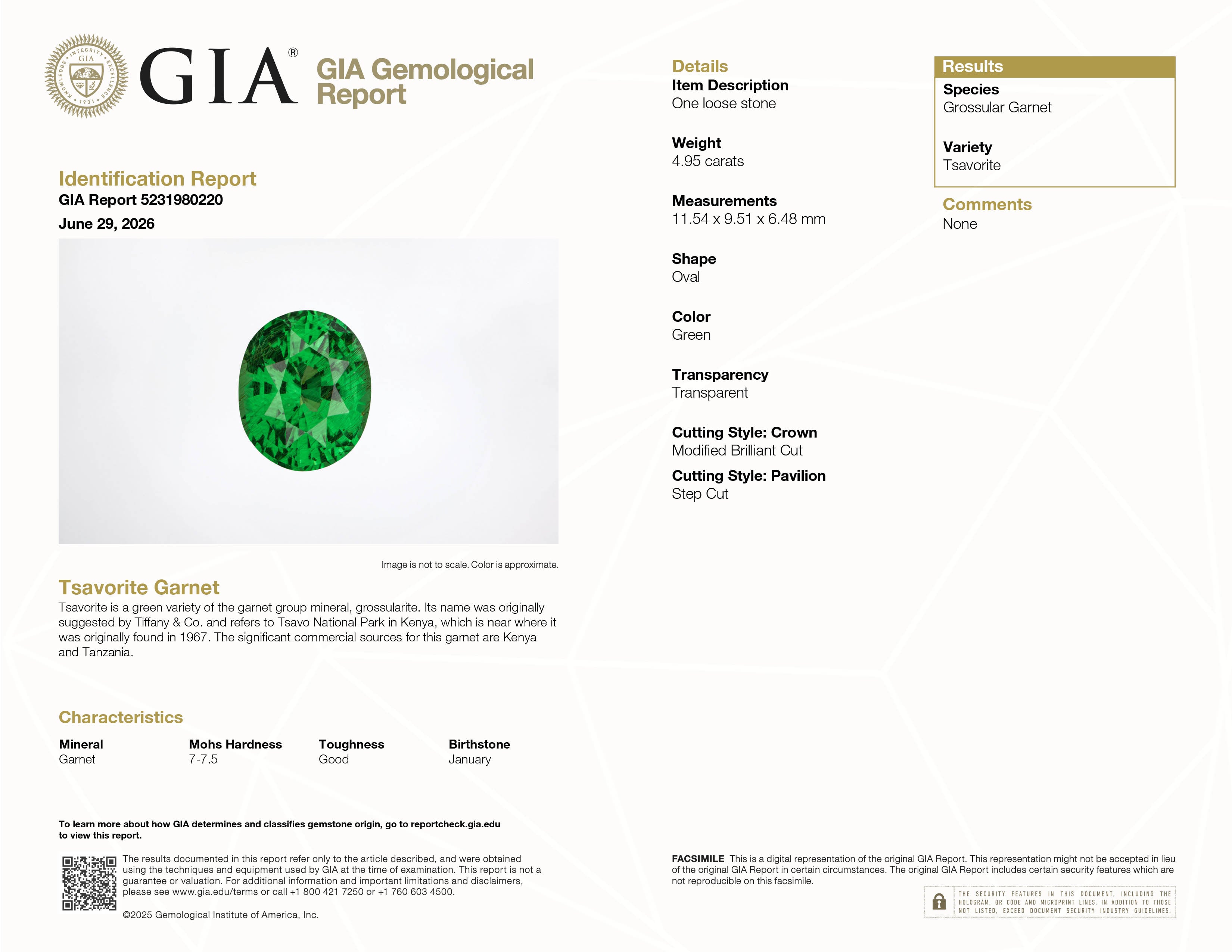
Browse our current tsavorite collection for available stones with full color, weight, and clarity specifications — including a 4.95 ct oval tsavorite garnet, GIA-documented and untreated from Kenya, currently in stock.
Tsavorite garnet is virtually never heat treated. This is not a premium attribute — it is simply how tsavorite works, because heat offers no benefit to the color of grossular garnet, so no commercial incentive to heat it exists. The overwhelming majority of tsavorite, at every price point from a $50 accent stone to a $20,000 collector piece, has entirely natural, permanent color that required no enhancement at any stage from mine to finished gem.
Clarity enhancement is the one treatment that does turn up. It is not routine in the tsavorite trade the way oiling is in emerald — most tsavorite reaches the market clean and needs nothing — but it is used on a minority of stones, GIA and the other major laboratories identify it, and a reputable seller discloses it rather than letting the species name imply untreated. We have sold one such stone ourselves, and we stock another: see the 1.85 ct GIA-documented tsavorite further down this page, whose GIA report notes clarity enhancement.
This distinguishes tsavorite sharply from:
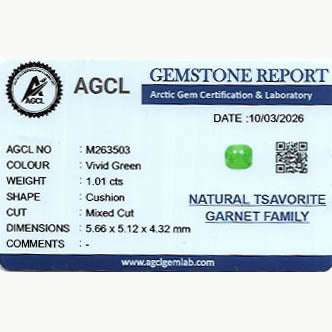
When you buy a tsavorite, you are buying natural color as the default — not as a premium category. A default is not a guarantee, though. What confirms untreated status on an individual stone is a report from GIA or another major laboratory, or the seller's written treatment disclosure — that report is also where a clarity enhancement would be named. Ask for one rather than taking the species name as proof. For buyers who value natural, unenhanced gemstones, tsavorite delivers this more reliably than almost any other colored stone. See our What Is an Unheated Sapphire? guide for the full context on treatment and value.
This is the comparison most buyers making a green engagement ring decision need to work through:
| Factor | Tsavorite Garnet | Emerald (Beryl) | Advantage |
|---|---|---|---|
| Mohs hardness | 7–7.5 | 7.5–8 | Emerald marginally harder |
| Toughness (fracture resistance) | Good — no cleavage, typically clean | Poor — typically heavily fractured (jardin) | Tsavorite significantly |
| Treatment status | Virtually always untreated — natural color; a disclosed clarity enhancement on a minority of stones | Almost always fracture-filled with oil or resin | Tsavorite significantly |
| Clarity | Usually eye-clean to loupe-clean | Usually heavily included; eye-clean fine emerald is exceptional and expensive | Tsavorite significantly |
| Brilliance (refractive index) | 1.734–1.759 — high brilliance | 1.577–1.583 — lower brilliance | Tsavorite |
| Color quality at equivalent price | More color per dollar at most price points | Fine emerald color commands very high premiums | Tsavorite for value |
| Availability above 2 ct | Scarce; significant price jump | Better supply in medium quality; fine large emerald also very scarce | Roughly equivalent at fine quality |
| Name recognition | Growing but still niche | One of the "Big Three" — strong brand recognition | Emerald for recognition |
| Oiling / re-oiling required | Not routine | Typically requires periodic re-oiling as fracture fill degrades | Tsavorite significantly |
| Care complexity | Simple — warm soapy water | No ultrasonic, no steam, no harsh chemicals (damages oil fill) | Tsavorite significantly |
The practical conclusion: tsavorite is a better daily-wear stone than emerald in every respect except name recognition and the absolute upper end of color at very large sizes. For buyers who want a vivid green stone they can wear without anxiety, tsavorite outperforms emerald in durability, clarity, treatment status, brilliance, and care simplicity. See our full Tsavorite Garnet Buyer's Guide for the complete picture.
The right setting significantly extends the practical lifespan of a tsavorite ring and protects against the stone's primary vulnerability — edge and corner chipping from sharp impacts at Mohs 7.5:
A full bezel setting wraps the girdle of the stone in a metal rim, protecting the edges from direct impact. For tsavorite worn daily with an active lifestyle — gym, travel, manual work — a bezel is the strongest setting choice. The metal rim does partially reduce the stone's visible face area compared to a prong setting, but modern bezel designs can be made fine and elegant. Yellow gold bezels complement tsavorite's warm green beautifully; platinum bezels provide a cooler, more contemporary look.
Prong settings expose more of the stone's surface and allow more light entry, maximizing tsavorite's natural brilliance. For tsavorite, use 6 prongs rather than 4 where possible — more prongs distribute pressure more evenly and provide more edge support. Avoid claw-style prong tips that leave the girdle edge exposed on the sides; opt for rounded or flat prong tips that cover the girdle edge more completely. Have prongs checked annually.
A halo of small diamonds or sapphires around the tsavorite center stone provides both aesthetic impact and practical edge protection — the surrounding stones act as a partial bumper around the center stone's girdle. Halo designs also make the center stone appear larger. For a 1 ct tsavorite, a diamond halo can produce the visual impact of a 1.5–2 ct stone.
Elongated shapes (oval, pear, marquise) have pointed ends that are more vulnerable to chipping than rounded shapes. For tsavorite in these cuts, a V-tip prong at each pointed end is essential, or a partial bezel at the tips. Cushion and round cuts are the most forgiving shapes for tsavorite from a durability standpoint.
| Metal | Effect on Tsavorite Color | Recommendation |
|---|---|---|
| Yellow gold (18k or 14k) | Warm, complementary — enhances the green's warmth | Classic, beautiful pairing; most traditional look |
| Rose gold | Warm contrast — the pink-green combination is striking and modern | Contemporary and distinctive; works especially well with vivid medium-green stones |
| White gold or platinum | Cool contrast — makes the green appear more vivid and pure | Best for maximum color saturation appearance; modern, clean aesthetic |
Tsavorite care is refreshingly simple — significantly simpler than emerald care in particular:
For a complete ring care reference, see our Sapphire Ring Care Guide — most of the guidance applies equally to tsavorite rings.
| Buyer Profile | Tsavorite Suitability | Notes |
|---|---|---|
| Wants a vivid green stone for daily wear | Excellent choice | Better durability than emerald; brighter; untreated |
| Wants the most durable colored stone available | Consider sapphire instead | Sapphire at Mohs 9 with no cleavage is the benchmark for colored stone ring durability |
| Values natural, untreated color | Excellent — virtually always untreated | The great majority is natural color; confirm on the report, since a minority are clarity enhanced |
| Wants something distinctive and non-mainstream | Excellent | Tsavorite is still relatively unknown outside the collector market; a striking choice |
| Has an active lifestyle with frequent hard impacts | Good with protective setting; bezel recommended | A bezel-set tsavorite handles active daily wear well |
| Wants a large center stone (3 ct+) at accessible price | Challenging — fine large tsavorite is scarce and expensive | Fine sapphire or a smaller tsavorite may be better value at large sizes |
| Cares deeply about gemstone name recognition | Consider emerald or sapphire | Tsavorite is not yet a household name; if recognition matters, emerald has stronger cultural cachet |
Yes — with appropriate setting choices. Tsavorite at Mohs 7–7.5 with no cleavage and good toughness is a practical daily-wear gemstone. It outperforms emerald in toughness despite the similar hardness numbers, because tsavorite typically has no significant fracturing while emerald is almost always heavily fractured. A bezel or 6-prong setting with annual professional inspection is the recommended approach for active daily wear.
Tsavorite is a better practical choice for daily ring wear than emerald in nearly every respect: it rarely carries significant fracturing, it is rarely treated, it requires no re-oiling, it is brighter due to higher refractive index, and it is typically cleaner. Emerald has stronger name recognition and the very finest large emeralds command exceptional prices, but as a daily-wear ring stone, tsavorite significantly outperforms it.
Almost always — but not always, and the difference matters. Heat does nothing for grossular garnet, so tsavorite is virtually never heated, and the overwhelming majority of stones reach the market with entirely natural color. Fracture filling is not routine the way oiling is in emerald, but clarity enhancement is used on a minority of stones, and GIA names it on the report when it is present. Confirm treatment on the laboratory report for the individual stone, or on the seller's written disclosure — not from the species name.
A saturated medium to medium-dark pure green — vivid without being so dark that brilliance is lost. Avoid very pale (mint) stones that lack the impact expected of a center stone, and very dark stones that appear almost black in indoor light. The sweet spot is a stone that shows strong green across both daylight and indoor lighting conditions.
0.5–2 carats is the practical sweet spot for tsavorite engagement rings. Below 0.5 ct, the stone may be too small for a statement center stone. Above 2 ct, fine-quality tsavorite becomes significantly scarce and expensive. Many buyers find a vivid 1–1.5 ct tsavorite in an elegant setting more visually impactful than a larger pale stone.
Yes. Tsavorite's natural vanadium and chromium color is entirely stable under normal wear conditions. It does not fade in light, change with temperature, or alter from contact with cleaning products. A dull appearance is always accumulated residue — cleaning restores full brilliance immediately.
A bezel setting is best for maximum durability — the metal rim protects the stone's edges from direct impact. For maximum brilliance, a 6-prong setting with prongs covering the girdle edge. For a balance of protection and visual impact, a halo design where surrounding small stones provide edge protection. For elongated shapes (oval, pear), V-tip prongs at the pointed ends are essential.
We carry a carefully selected range of natural tsavorite garnet from Kenya and Tanzania across the full size and quality spectrum, all with full color, clarity, and origin information provided. Browse:
Currently in stock: a 4.95 ct oval tsavorite garnet, GIA-documented and untreated from Kenya — a near-5-carat, vivid green, eye-clean example near the top of what East Africa's mines produce.
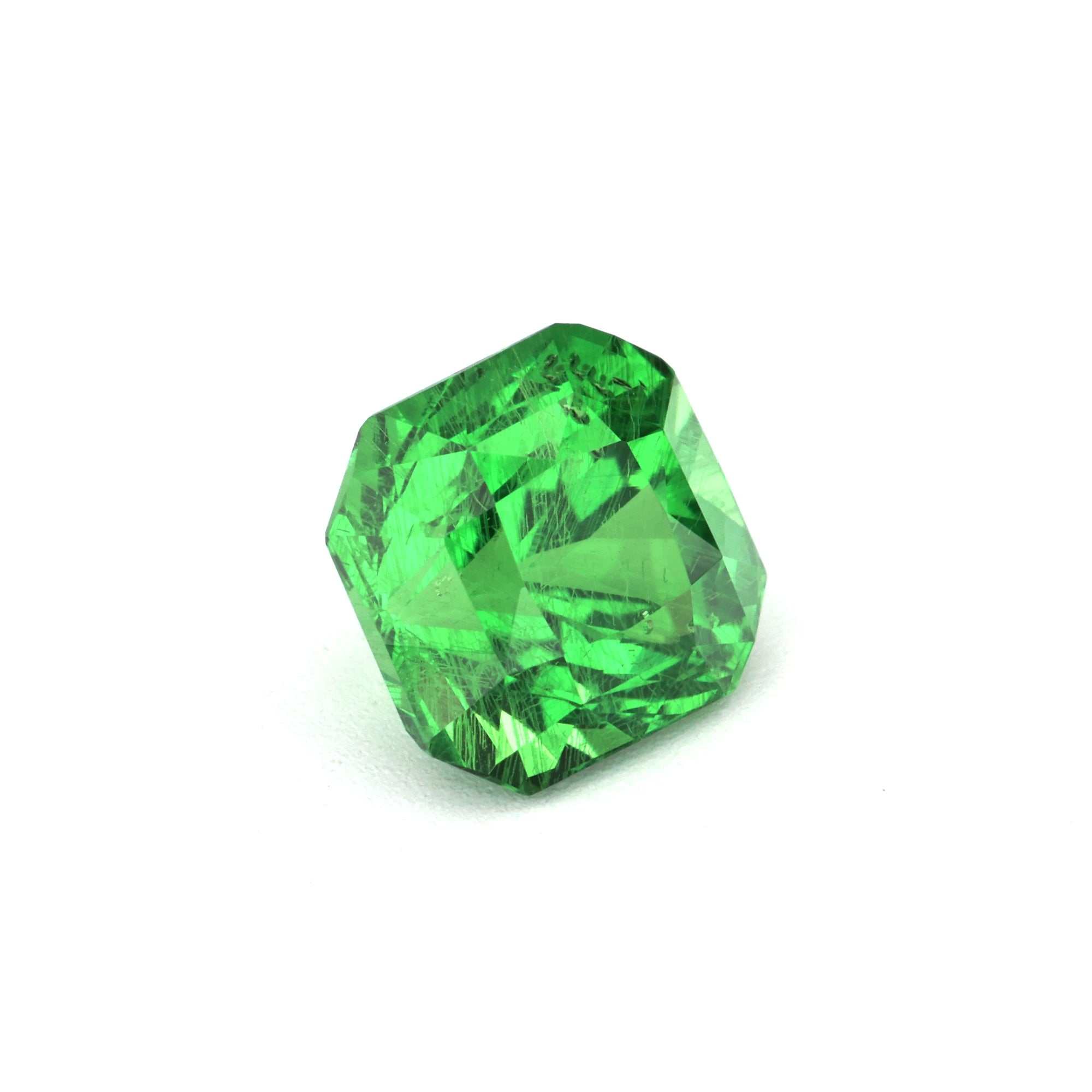
Also in stock: a 1.85 ct rectangular cushion tsavorite garnet, GIA Report #6243017771. In the interest of full disclosure: unlike the untreated norm described above, this specific stone is noted as clarity enhanced on its GIA report, and we disclose that plainly here rather than presenting it as untreated.
Use our Try Before You Buy program to see any stone in your hand before committing. Email crescentgems@gmail.com with questions about a specific stone's suitability for a ring design, setting recommendation, or size — we respond within one business day.

CG8447
Prices are shown in your local currency and may change.

CG8417
CG8460
CG8359
CG8360
CG8465
CG8447


Blue Star Sapphire Price Guide — What They Cost and Why
Read moreabout Blue Star Sapphire Price Guide — What They Cost and Why
Tsavorite Garnet Price Guide — What They Cost and Why
Read moreabout Tsavorite Garnet Price Guide — What They Cost and Why
Color-Change Sapphire Price Guide — What They Cost and Why
Read moreabout Color-Change Sapphire Price Guide — What They Cost and Why
Is Cat's-Eye Chrysoberyl Good for an Engagement Ring?
Read moreabout Is Cat's-Eye Chrysoberyl Good for an Engagement Ring?
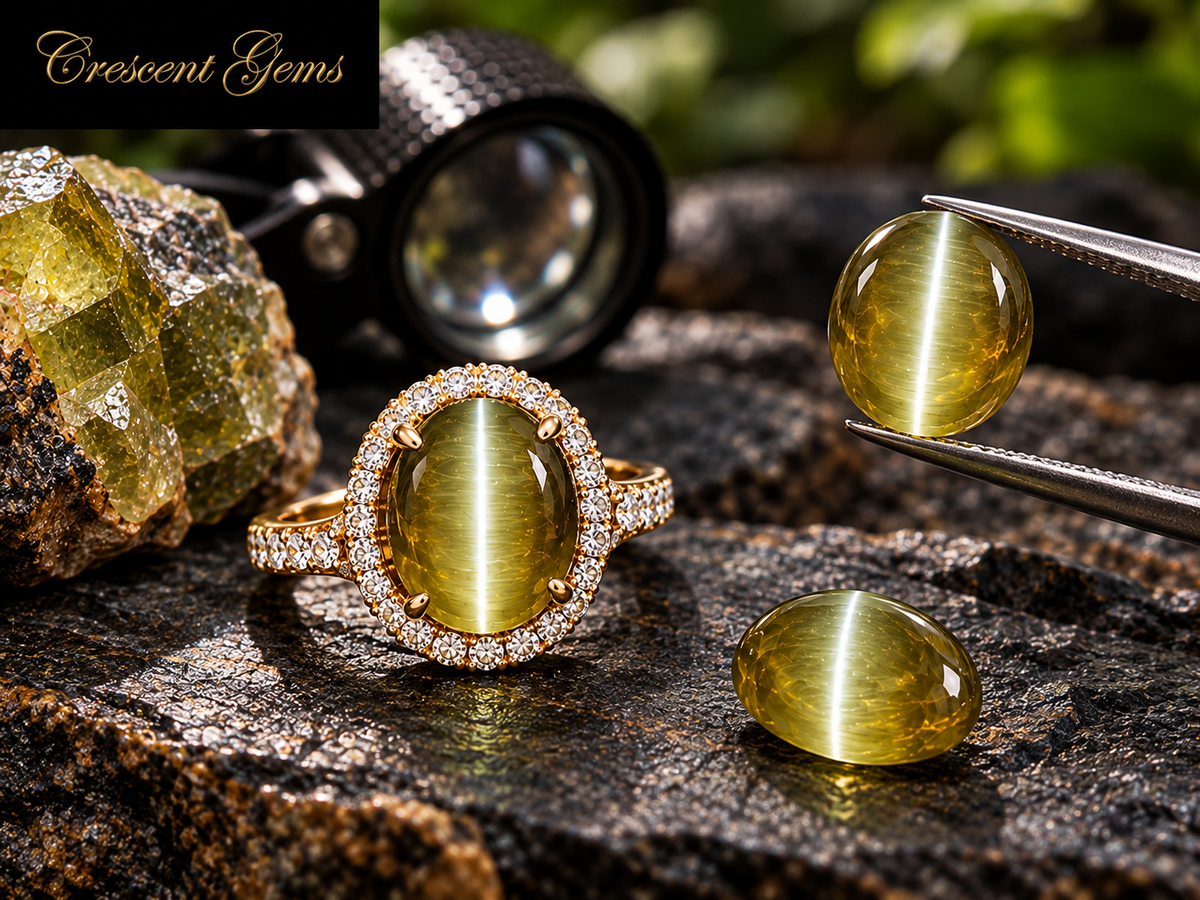
Cat's Eye Chrysoberyl Price Guide — What They Cost and Why
Read moreabout Cat's Eye Chrysoberyl Price Guide — What They Cost and Why