Information pages : The complete guide
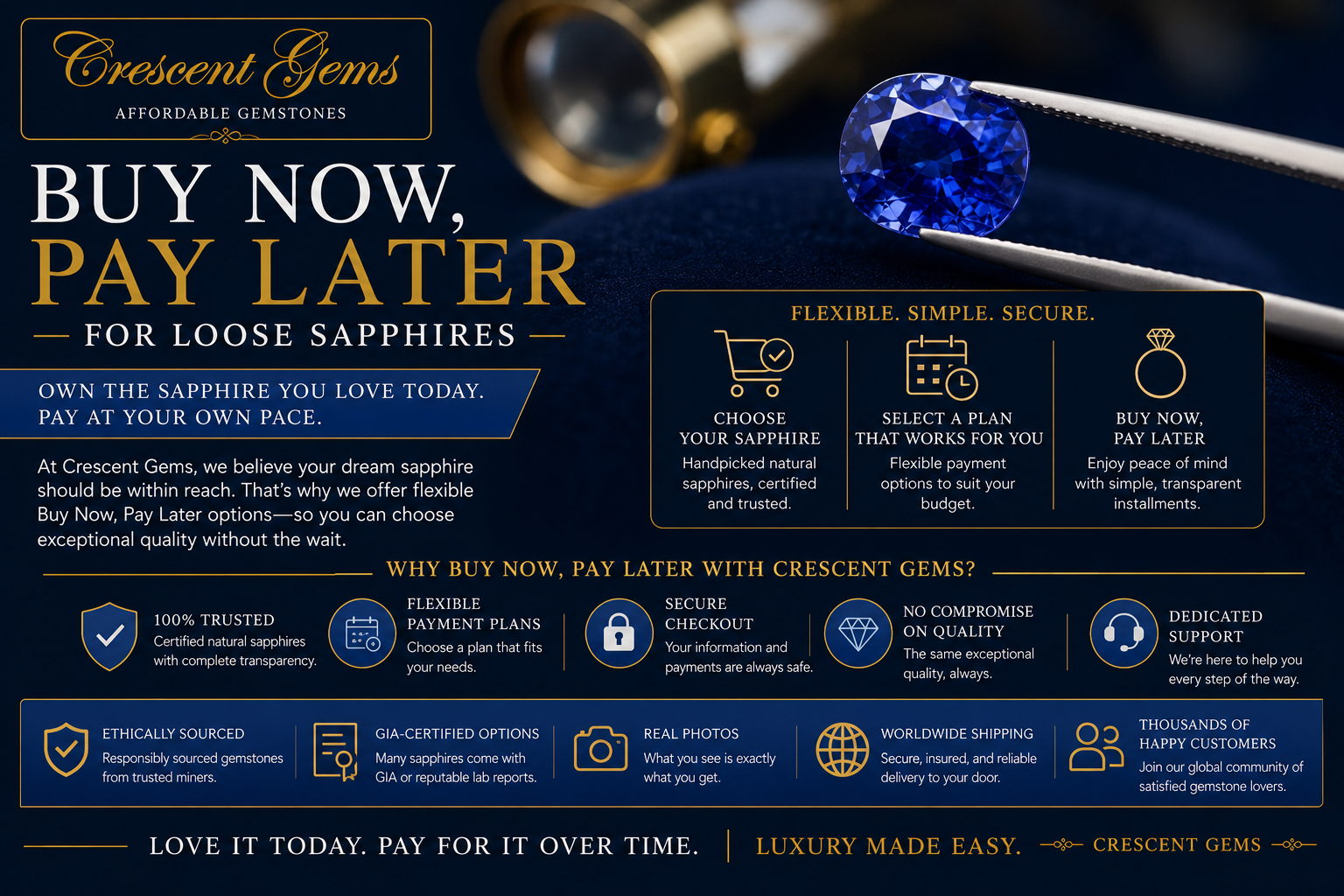
Buy Now, Pay Later for Loose Sapphires: How Financing Works at Crescent Gems
Read moreabout Buy Now, Pay Later for Loose Sapphires: How Financing Works at Crescent Gems
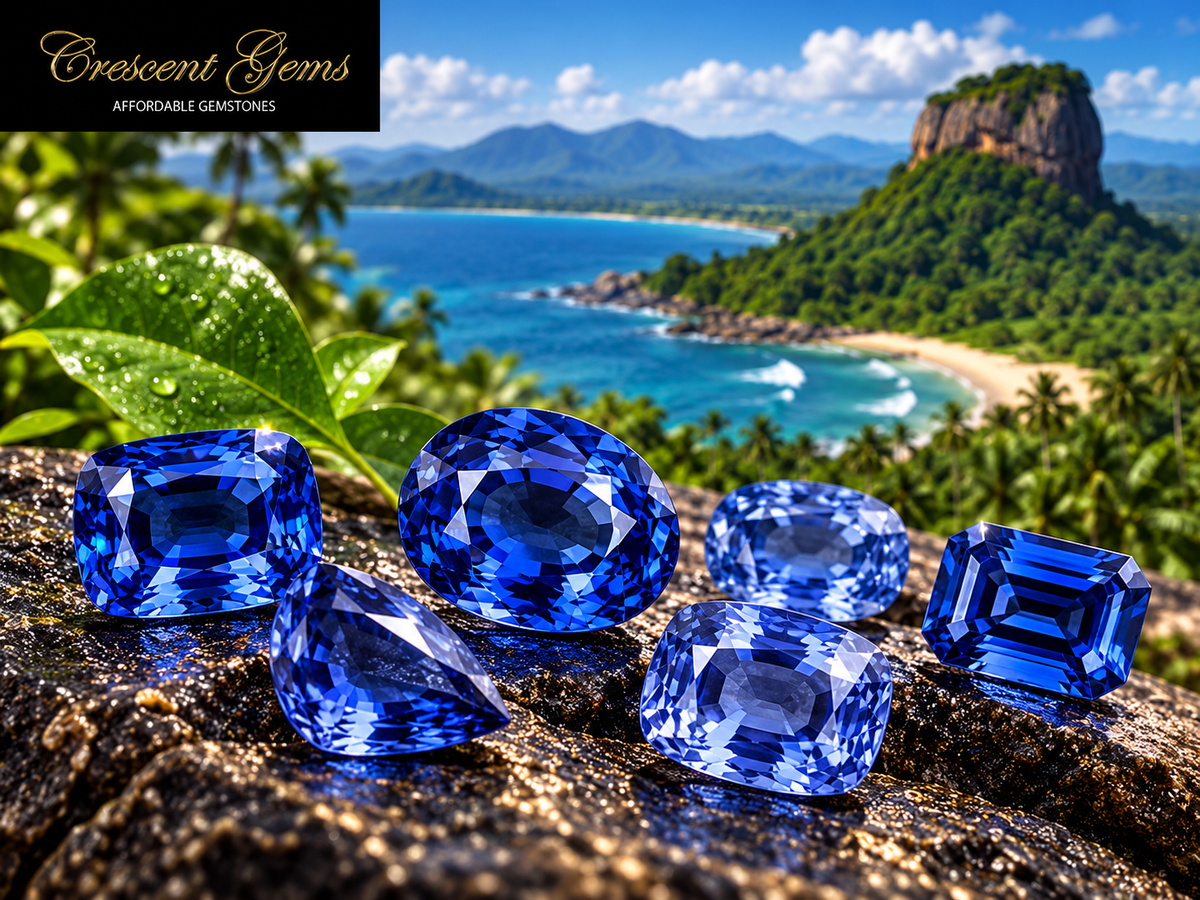
Ceylon Sapphire: The Complete Guide to the World's Most Trusted Sapphire Origin
Read moreabout Ceylon Sapphire: The Complete Guide to the World's Most Trusted Sapphire Origin
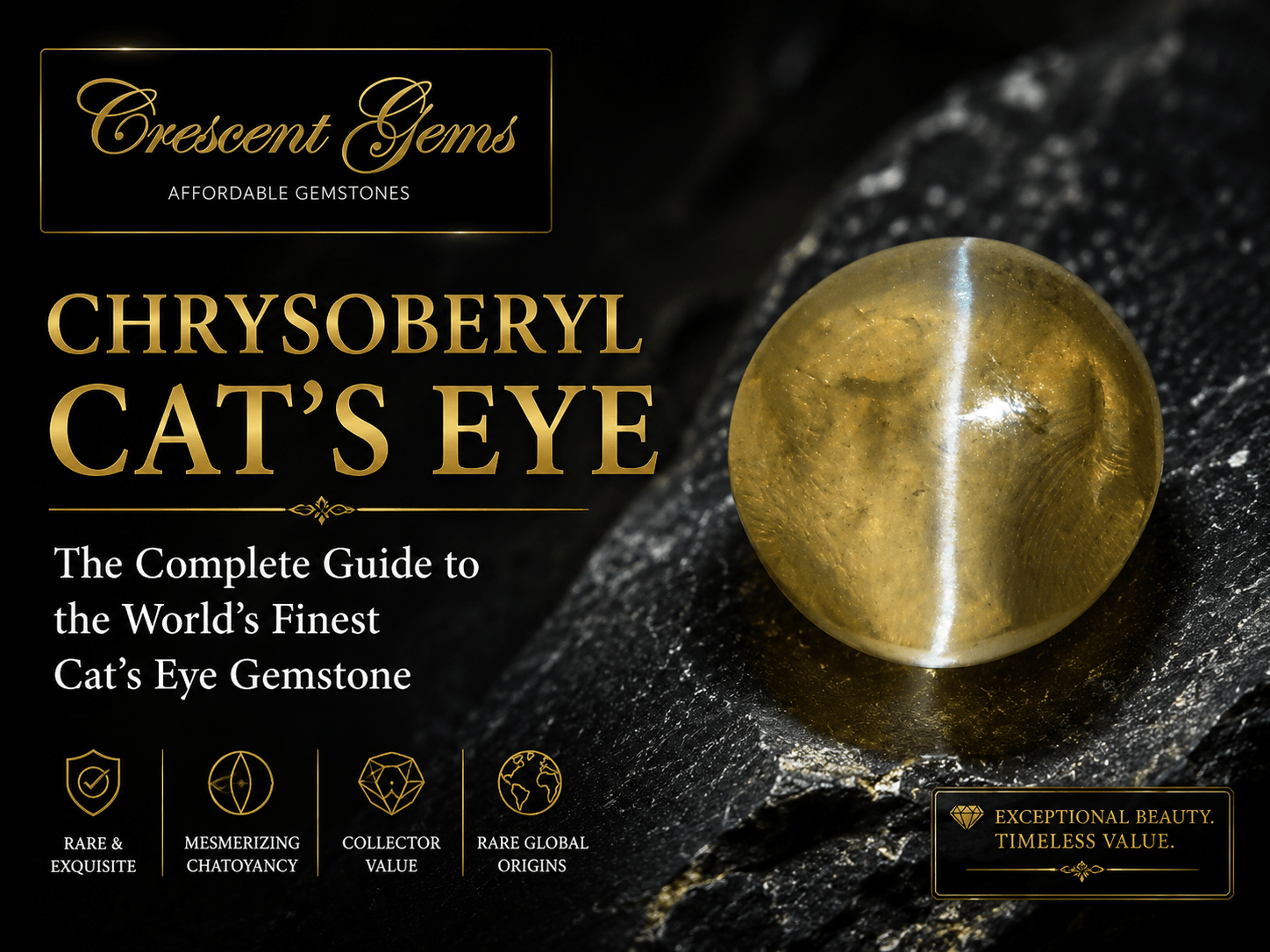
Cat's Eye Chrysoberyl — The Complete Buyer's Guide to the Most Prized Phenomenon Gemstone
Cat's eye chrysoberyl (cymophane) is the most prized chatoyant gemstone in the world — displaying a single mobile band of light (the cat's eye) caused by parallel fibrous inclusions aligned within the crystal. This guide covers the gemology of chrysoberyl, the three conditions required for chatoyancy, the five quality factors including the milk and honey effect, the full body color spectrum, origin differences between Ceylon, Brazil, and India, the Jyotish Lahsuniya dimension, imitations and synthetics to avoid, a quality-grade pricing table, settings, and certification guidance.
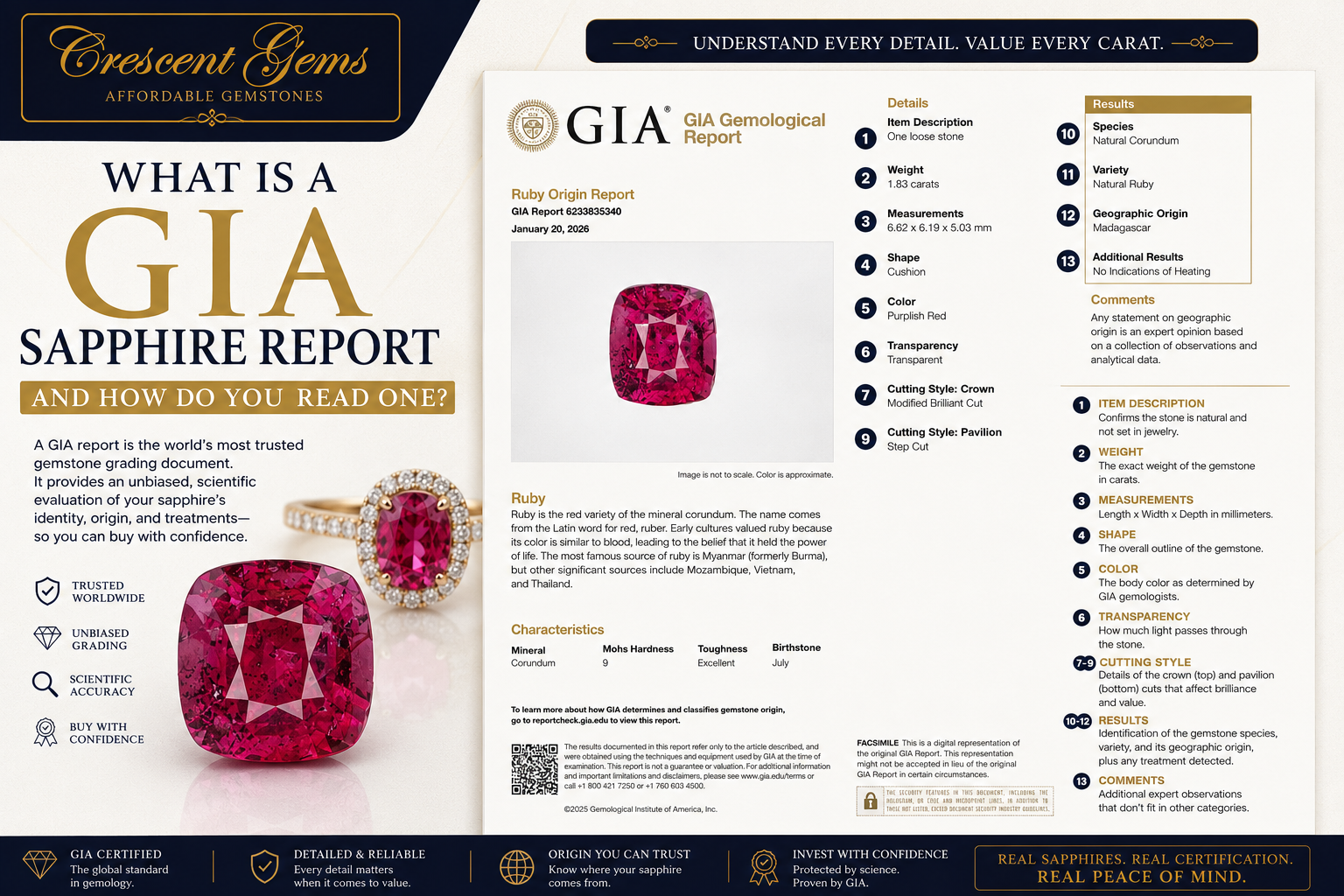
Ruby — The Complete Buyer's Guide to the World's Most Valuable Colored Gemstone
Ruby is the most commercially valuable colored gemstone in the world — fine unheated Burmese pigeon’s blood ruby above 3 carats commands prices that exceed comparable diamonds at auction. This guide covers the chromium color science, what pigeon’s blood actually means and how it is formally designated, the ruby vs. pink sapphire boundary, the full treatment landscape from standard heat to lead glass filling, origin comparisons across Burma, Mozambique, Ceylon, Thailand, and Vietnam, quality grading, a pricing framework from $10 to over $1 million per carat, what GIA and Gübelin reports cover specifically for ruby, Jyotish (Manik) requirements, and engagement ring and jewelry advice.
Read moreabout Ruby — The Complete Buyer's Guide to the World's Most Valuable Colored Gemstone
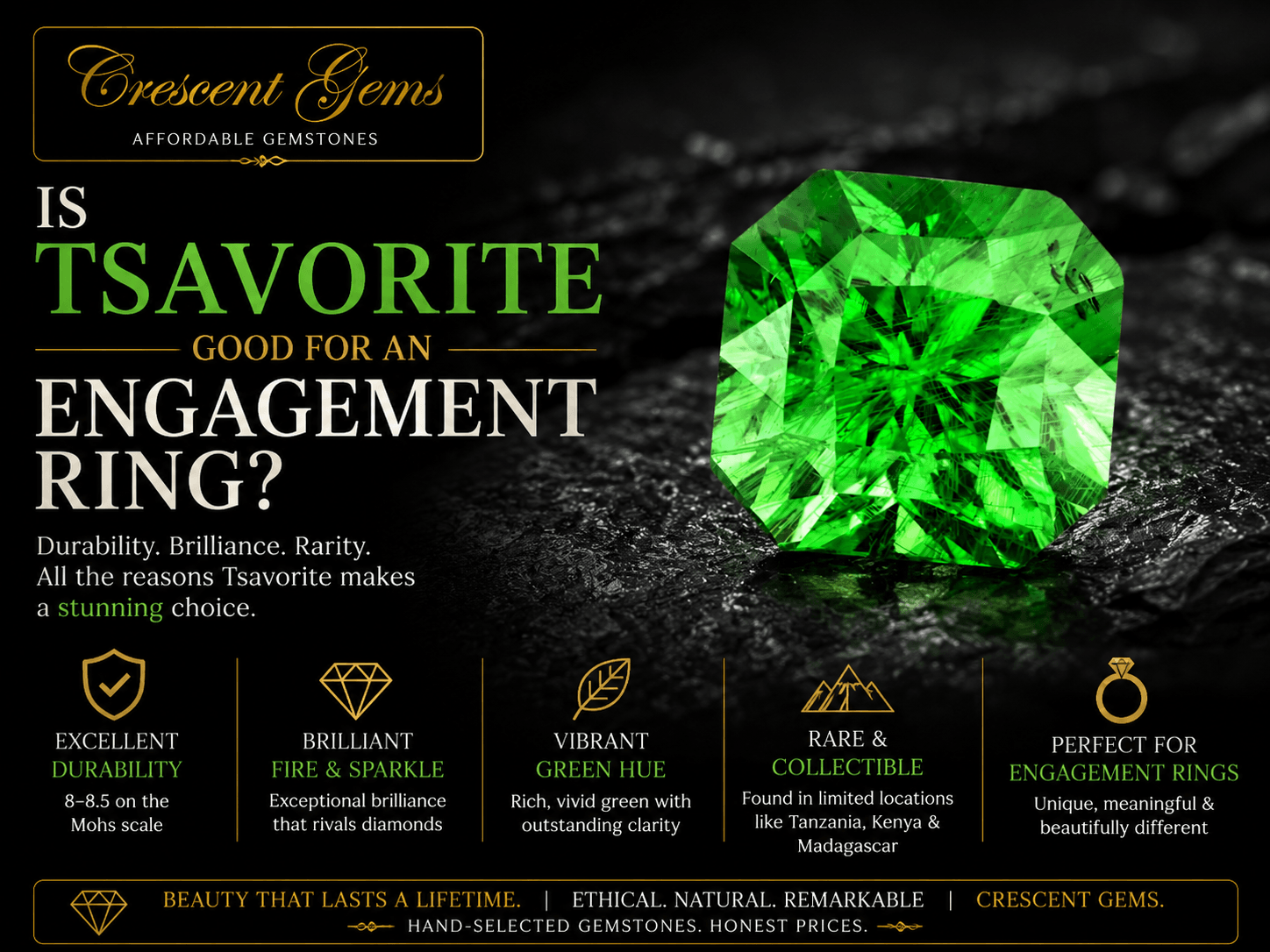
Tsavorite Garnet — The Complete Buyer's Guide to the World's Most Brilliant Green Gemstone
Tsavorite garnet is the most brilliant natural green gemstone in the world — never treated, always natural color, more refractive than emerald, and priced at roughly 30–50% of comparable Colombian emerald. This guide covers the gemology, the Campbell Bridges discovery story, the color spectrum, why tsavorite is structurally always untreated, full comparisons with emerald and green sapphire, quality grading across all four variables, East African origin and mining, pricing, engagement ring durability and settings, and certification guidance.
Star Sapphire — The Complete Buyer's Guide to the Phenomenon Gemstone
Star sapphire displays a six-rayed asterism — a star of light that moves across the dome — caused by needle-like rutile silk inclusions aligned in three crystallographic directions. Every natural star sapphire is unheated. This guide covers how asterism forms, the six quality factors including star sharpness and the milk and honey effect, the full color family breakdown, natural vs. Linde synthetic identification, diffusion treatment, origin differences, Jyotish use, pricing, setting advice, and a 9-point evaluation checklist.
Read moreabout Star Sapphire — The Complete Buyer's Guide to the Phenomenon Gemstone
Orange Sapphire — The Complete Buyer's Guide to the Rarest Warm-Toned Corundum
Orange sapphire is the rarest warm-toned color in natural corundum — vivid pure orange occurs in fewer than 1% of mined sapphires globally. This guide covers the iron-chromium color science, the full orange spectrum from golden-orange to vivid pure orange, the padparadscha boundary, beryllium diffusion fraud risk, origin differences, heat treatment, pricing, skin tone and metal pairing, engagement ring cuts, and comparisons with orange spinel and mandarin garnet.
Read moreabout Orange Sapphire — The Complete Buyer's Guide to the Rarest Warm-Toned Corundum
Green Sapphire — The Complete Buyer's Guide to the Emerald Alternative That Lasts
Green sapphire is natural corundum in the green color family — Mohs 9 hardness, almost always unheated, and one of the most durable and practical alternatives to emerald available. This guide covers the full color spectrum from pale mint to vivid forest green, the complete green sapphire vs. emerald and tsavorite comparisons, origin differences, why heat treatment almost always damages green color, pricing, skin tone and metal pairing, and the best engagement ring cuts.
Read moreabout Green Sapphire — The Complete Buyer's Guide to the Emerald Alternative That Lasts
Teal Sapphire — The Complete Buyer's Guide to the Color That Changes Everything
Teal sapphire is the defining non-traditional engagement ring stone of the current decade — a blue-green corundum that is almost always unheated by nature, shifts between teal-blue in daylight and teal-green indoors, and sits at price points meaningfully below equivalent unheated blue sapphire. This guide covers the full blue-green color spectrum, origin differences, why heat destroys teal color, the color shift phenomenon, pricing, skin tone and metal pairing, and the best engagement ring cuts.
Read moreabout Teal Sapphire — The Complete Buyer's Guide to the Color That Changes Everything
White Sapphire — The Complete Buyer's Guide to the Diamond Alternative
Read moreabout White Sapphire — The Complete Buyer's Guide to the Diamond Alternative
Peach Sapphire vs. Padparadscha: What's the Difference?
Read moreabout Peach Sapphire vs. Padparadscha: What's the Difference?
Loose Sapphires vs. Preset Rings: Why Buying the Stone First Is the Smarter Choice
Read moreabout Loose Sapphires vs. Preset Rings: Why Buying the Stone First Is the Smarter Choice