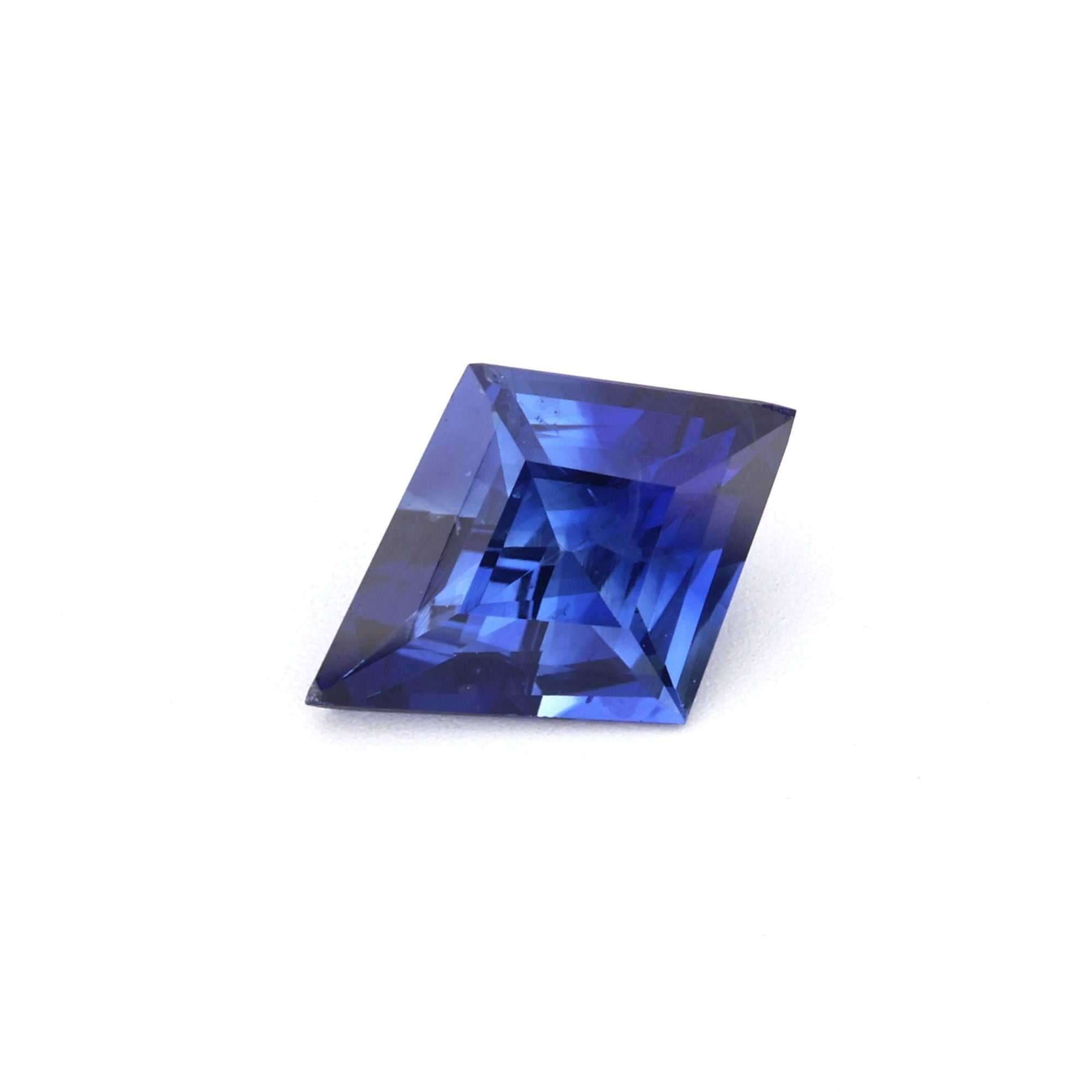
Unheated Yellow Sapphire Over 2 Carats — Natural Loose Stones
Natural Unheated Yellow Sapphire Over 2 Carats — Pukhraj for Jyotish and Collectors
Unheated yellow sapphire above 2 carats is where the category becomes genuinely rare. At this weight threshold, the combination of natural colour, no thermal enhancement, good clarity, and sufficient carat for the most demanding Jyotish prescriptions converges in a way that makes each stone an individual acquisition rather than a commodity purchase. Every stone in this collection is natural corundum coloured by trace iron in the crystal, completely unheated, sourced directly from Sri Lanka, and sold with full treatment disclosure and GIA laboratory documentation on most pieces.
Why 2 Carats Is the Critical Jyotish Threshold
In Jyotish (Vedic astrology), yellow sapphire (Pukhraj/Pushparaga) is the prescribed gemstone for Jupiter (Brihaspati/Guru) — the most benefic planet in the Vedic system, associated with wisdom, prosperity, children, education, and spiritual growth. The 2-carat mark is the standard minimum weight specified by most qualified Jyotish practitioners for meaningful planetary influence. Many senior astrologers recommend 3ct or above for individuals of heavier body weight or when Jupiter's influence needs to be especially strong in the chart.
The Jyotish specification for Pukhraj is exacting and non-negotiable for serious practitioners: natural corundum (not topaz, citrine, heliodor, or beryl — only sapphire), completely unheated, eye-clean clarity, vivid yellow with no visible greenish or brownish modifier, Ceylon (Sri Lanka) origin strongly preferred, and minimum 2ct. Every stone in this collection meets the weight and treatment criteria. Origin and colour are disclosed on every listing. For guidance matching a stone to a specific prescription, email crescentgems@gmail.com with your requirement.
See our Jyotish sapphire guide for the complete specification across all planetary gemstones.
What Changes Above 2 Carats
The shift from sub-2-carat to over-2-carat unheated yellow sapphire is a meaningful market step. Fine yellow sapphire rough of sufficient size and quality to yield a 2ct+ finished stone in unheated condition with good clarity is genuinely scarce. Much of the finest Ceylon yellow rough is cut into sub-2-carat sizes to maximise recovery — 2ct+ unheated yellow sapphire in vivid colour represents the top tier of what the mine produces commercially.
At this weight, individual stone character becomes the primary value driver. Two 2.5ct unheated yellow sapphires from Ceylon can differ by 50% in price based on colour saturation, the specific golden hue position, cut quality, and clarity. GIA documentation at this weight is not optional — it is what makes a stone verifiable, insurable, and resaleable. Three of the five stones in this collection carry GIA reports; the remaining two are Ceylon-origin stones with full treatment disclosure.
The Colour Positions in This Collection
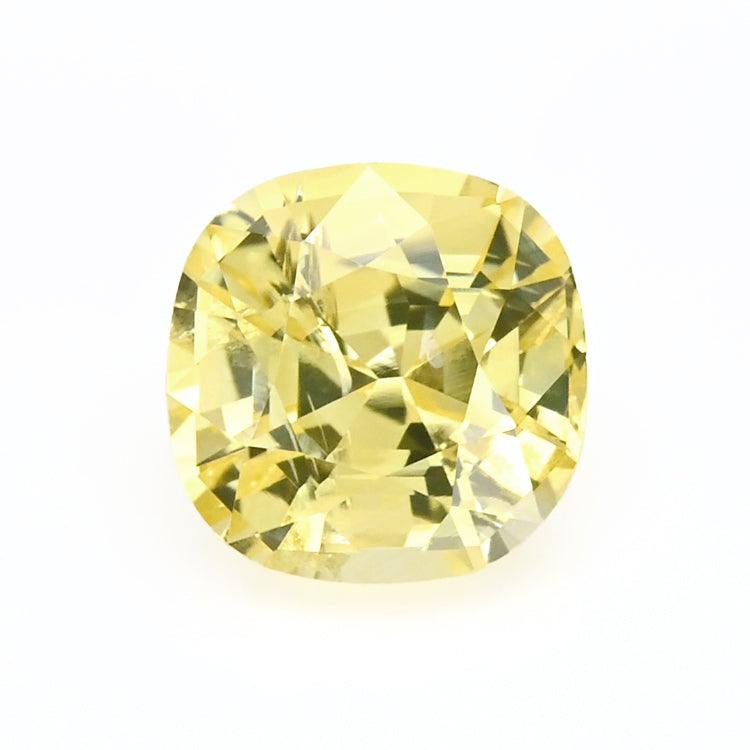
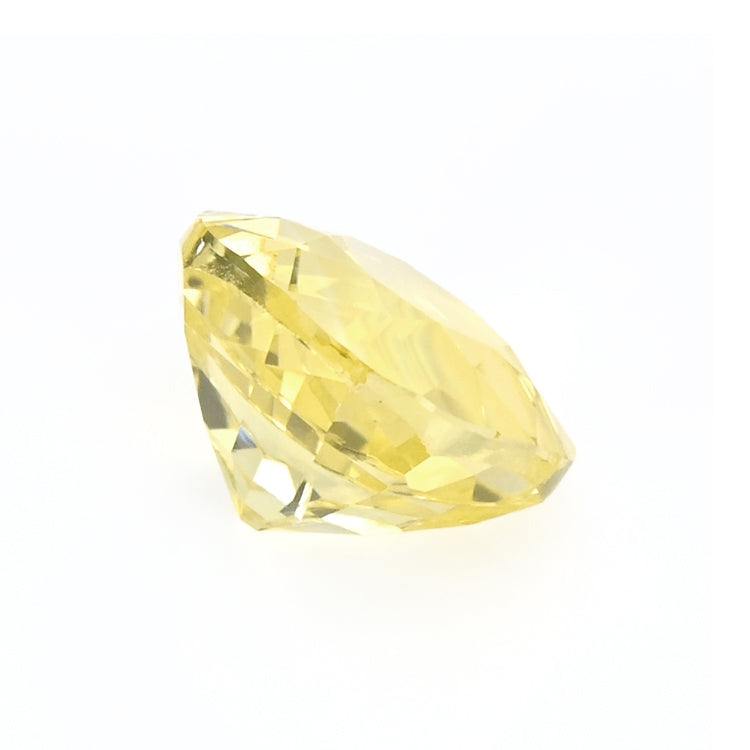
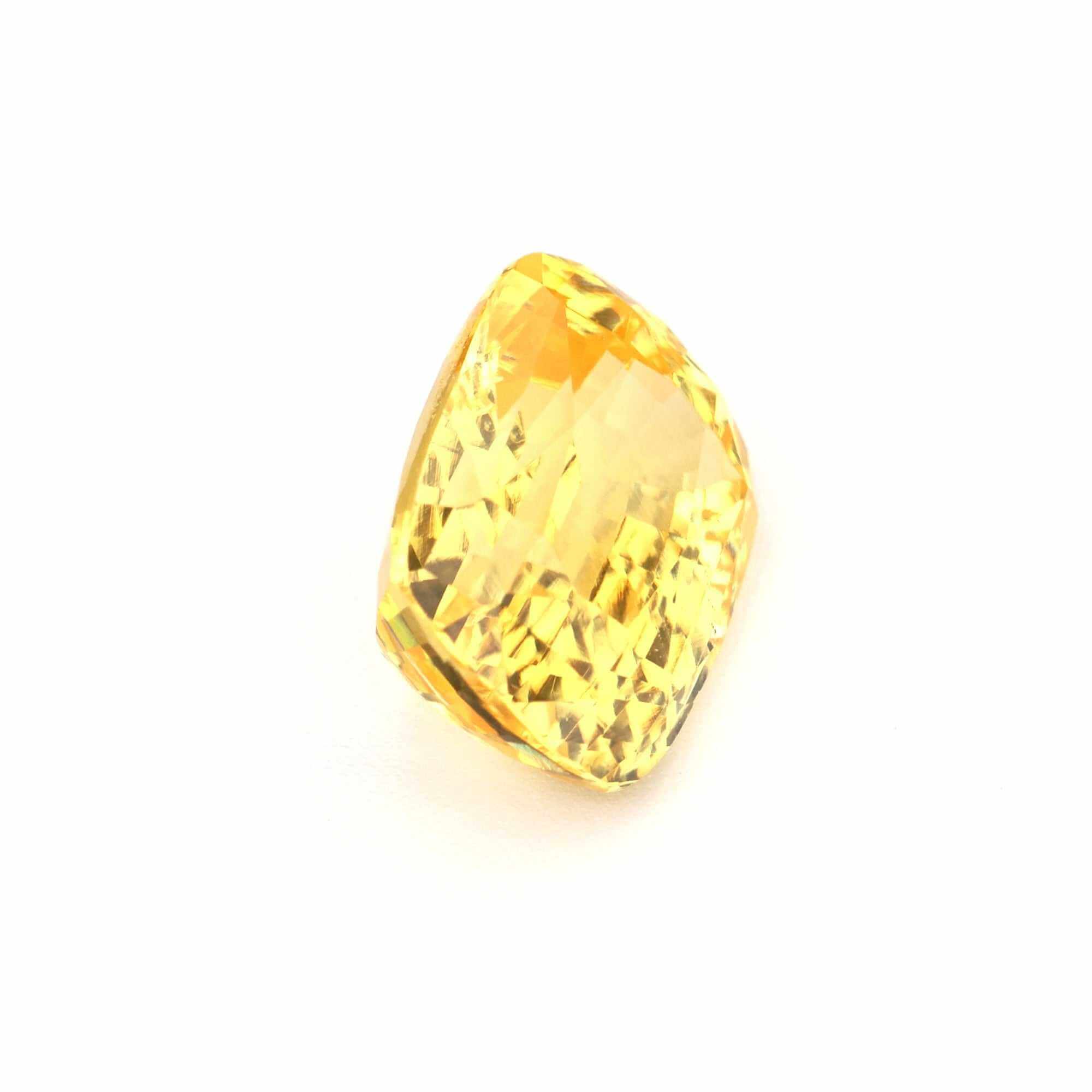
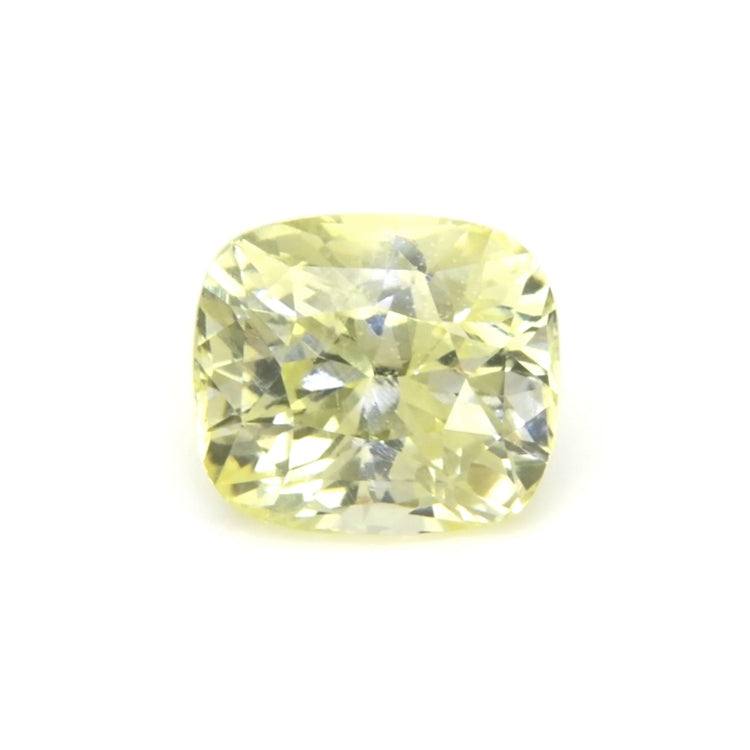
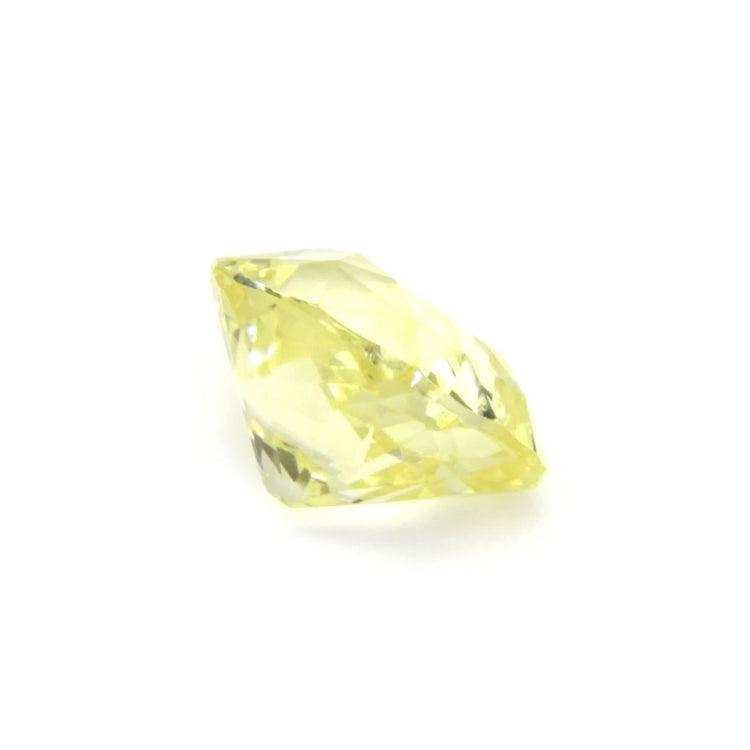
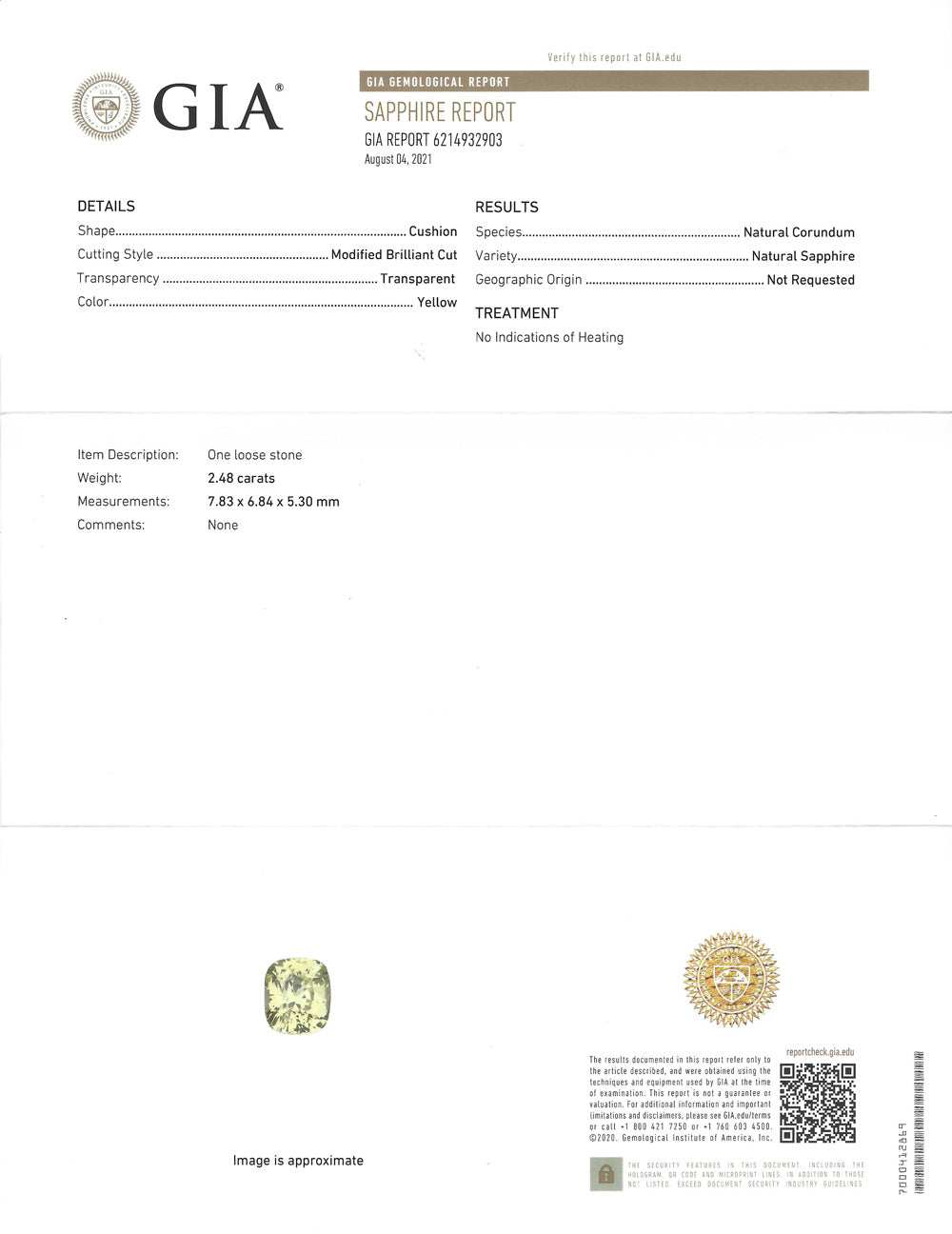
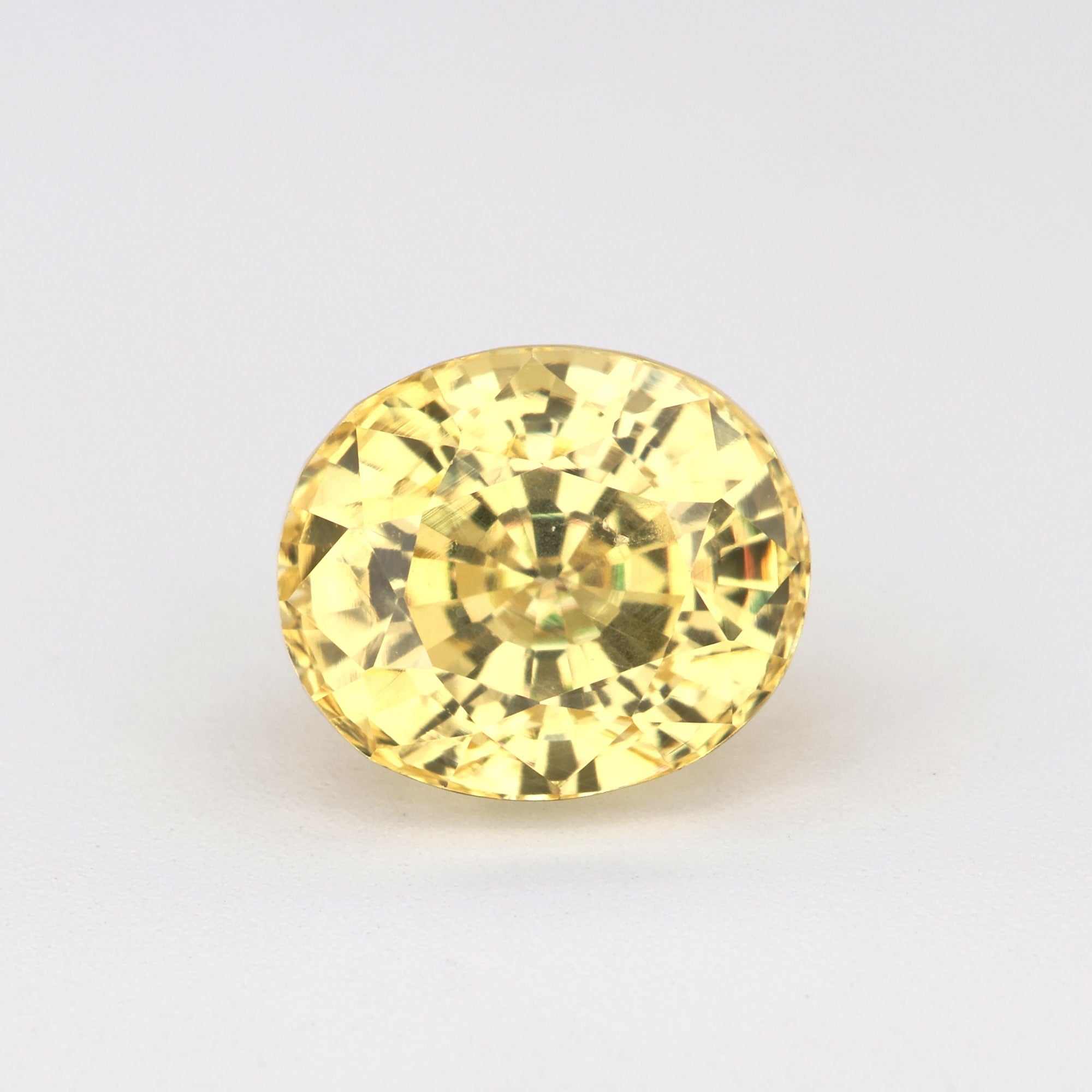
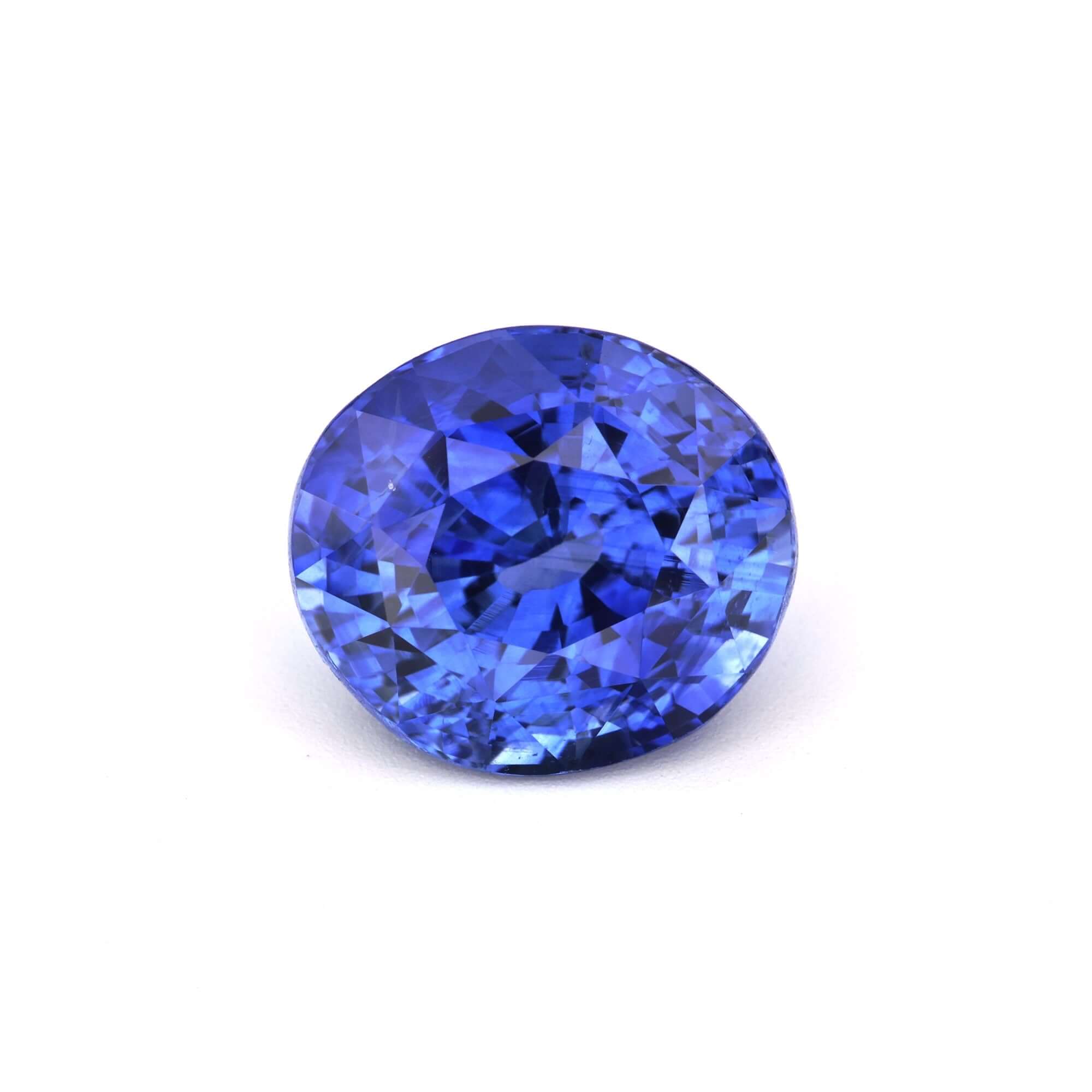
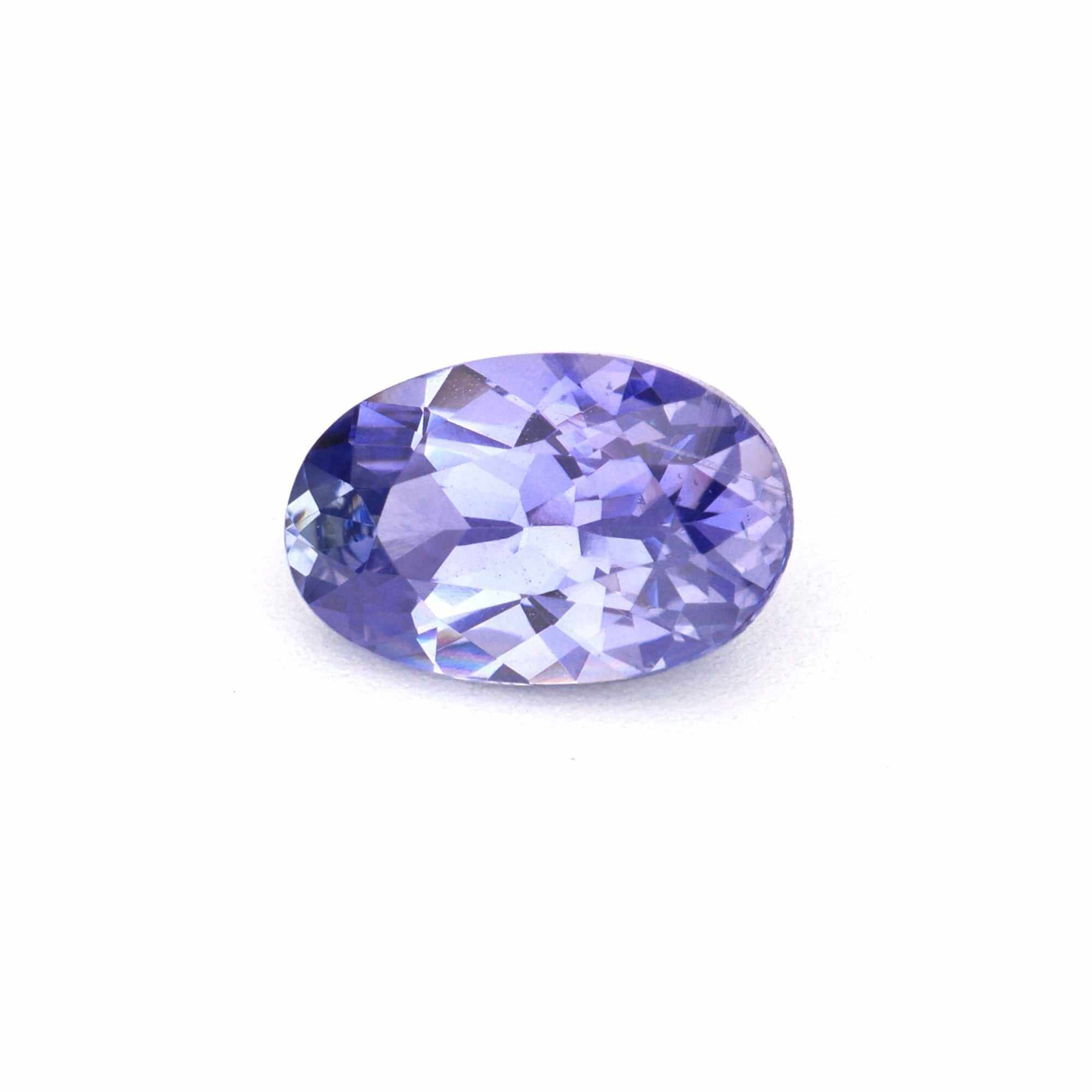
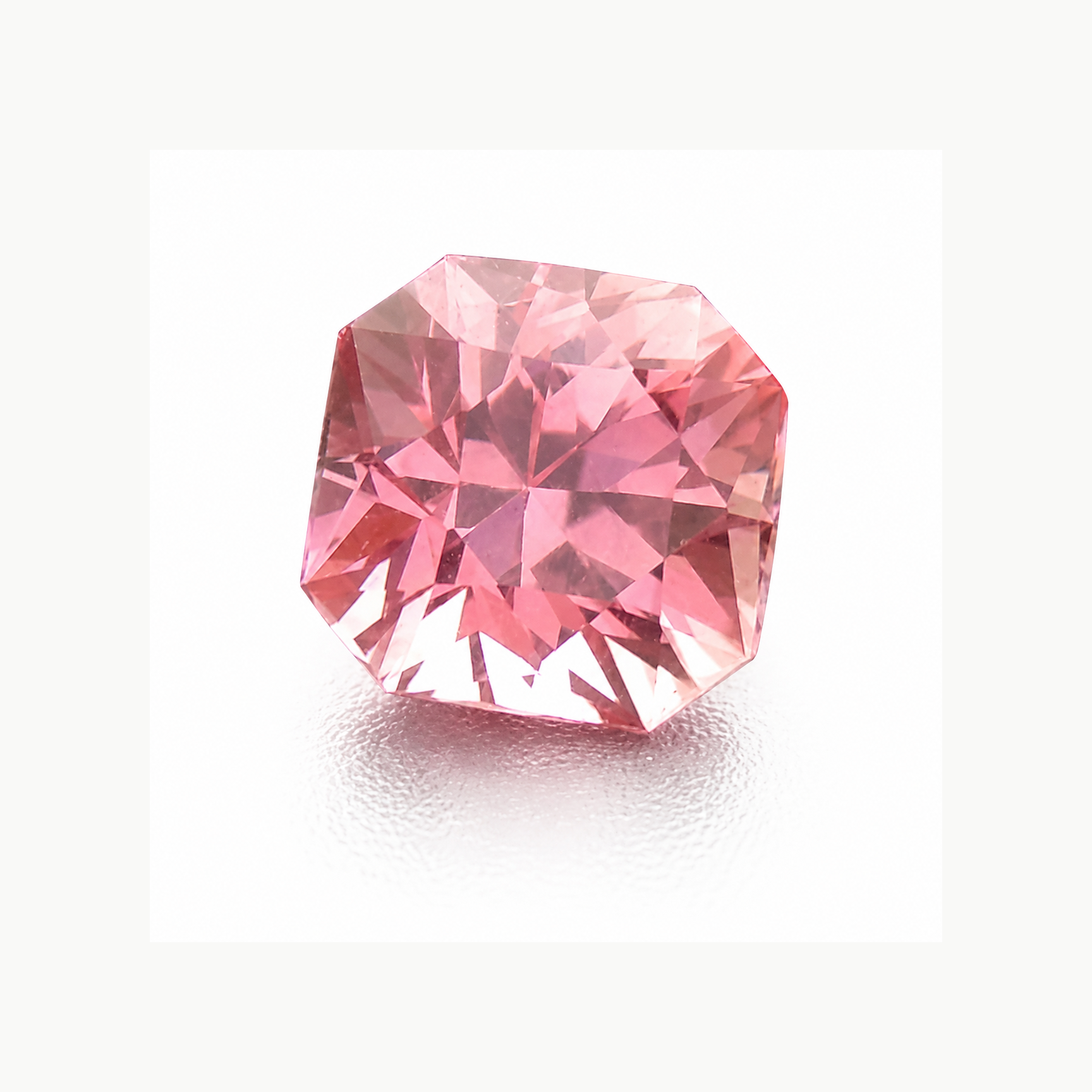
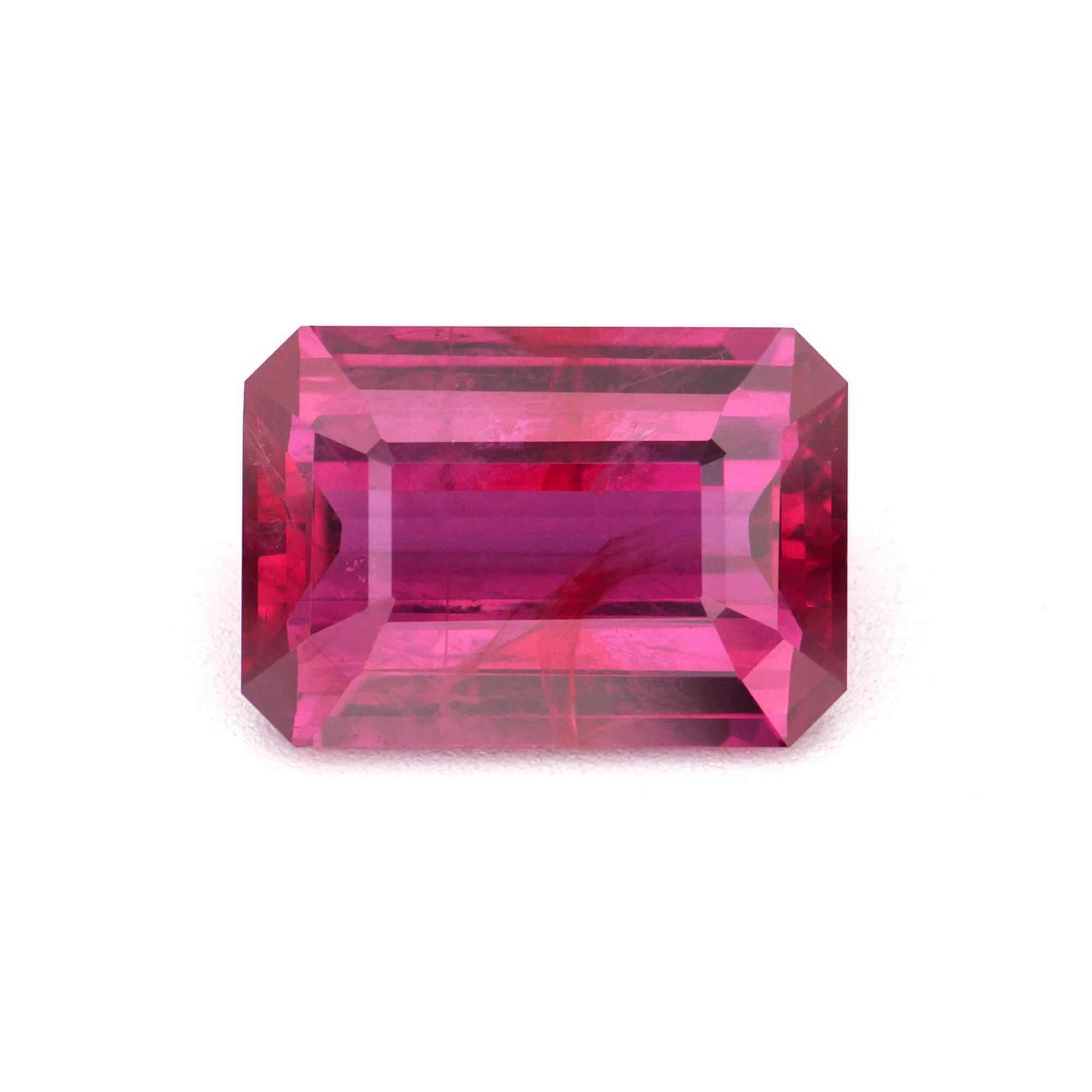
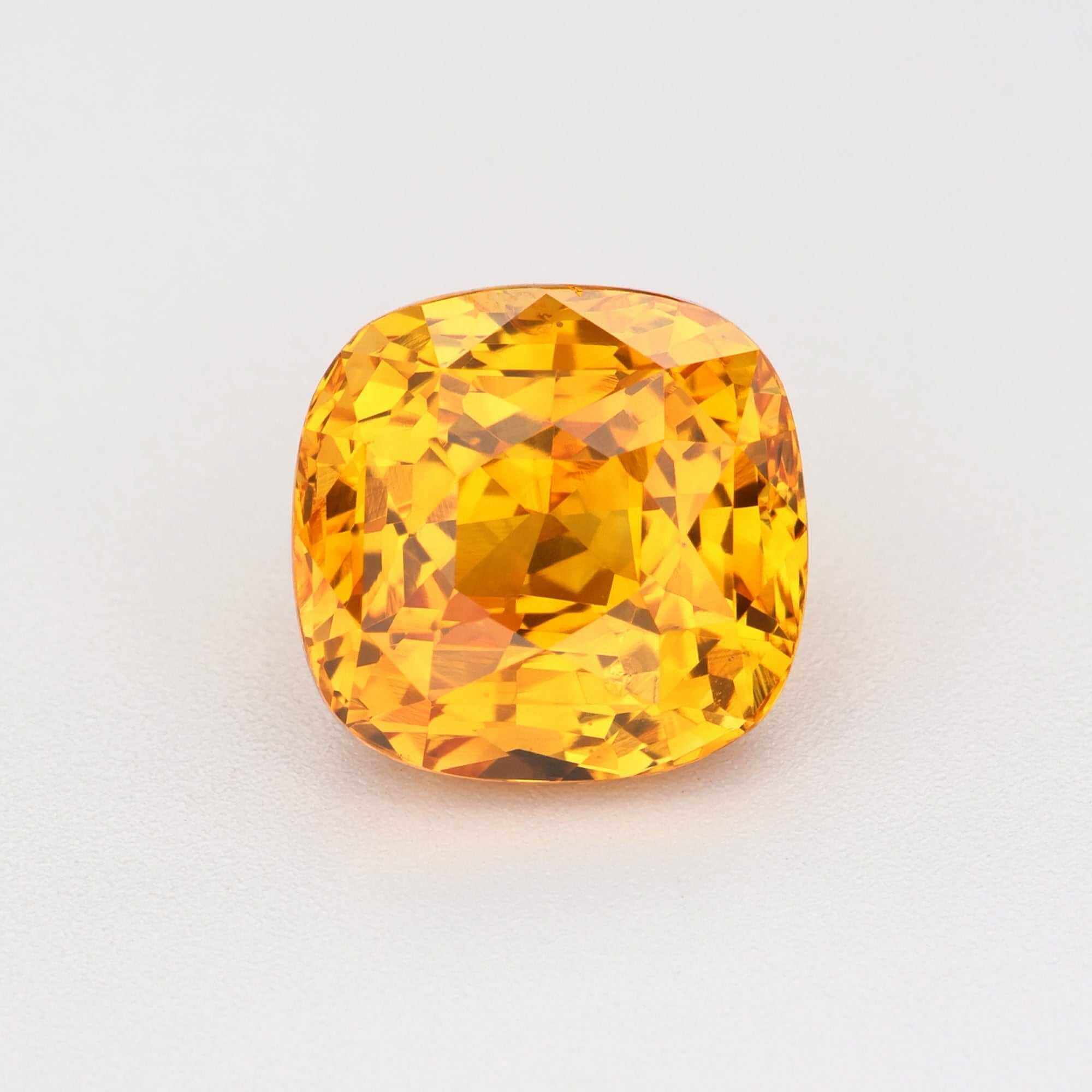
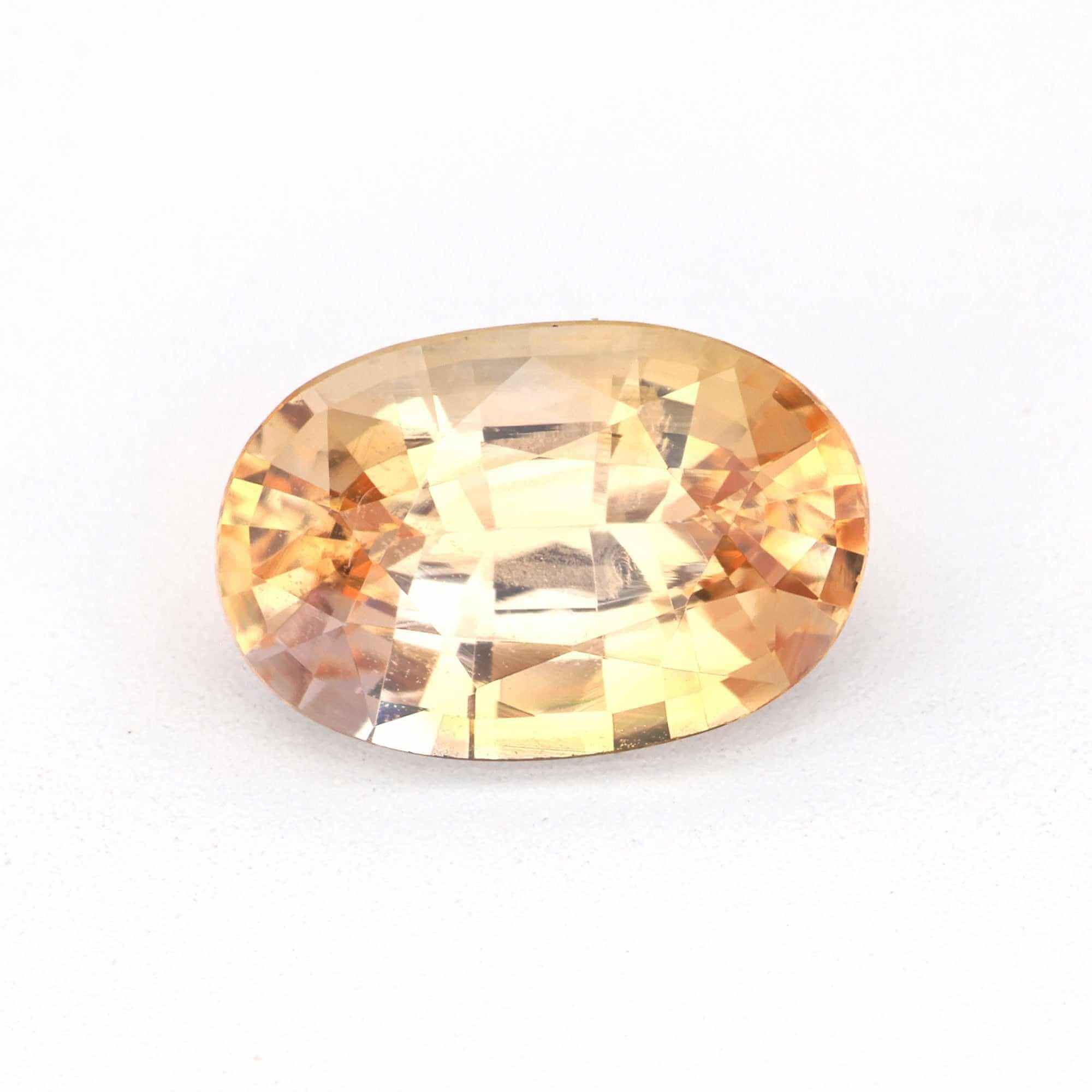
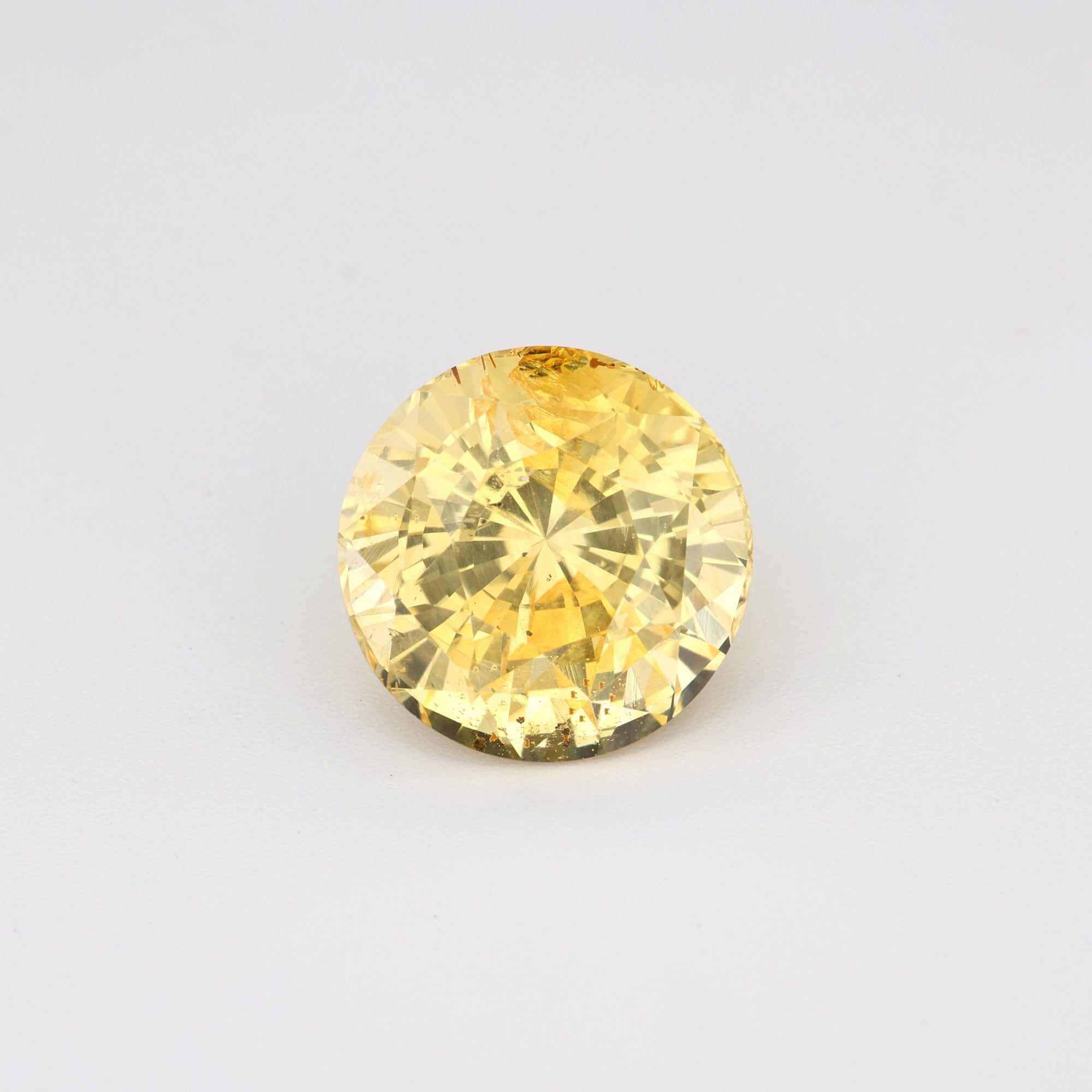
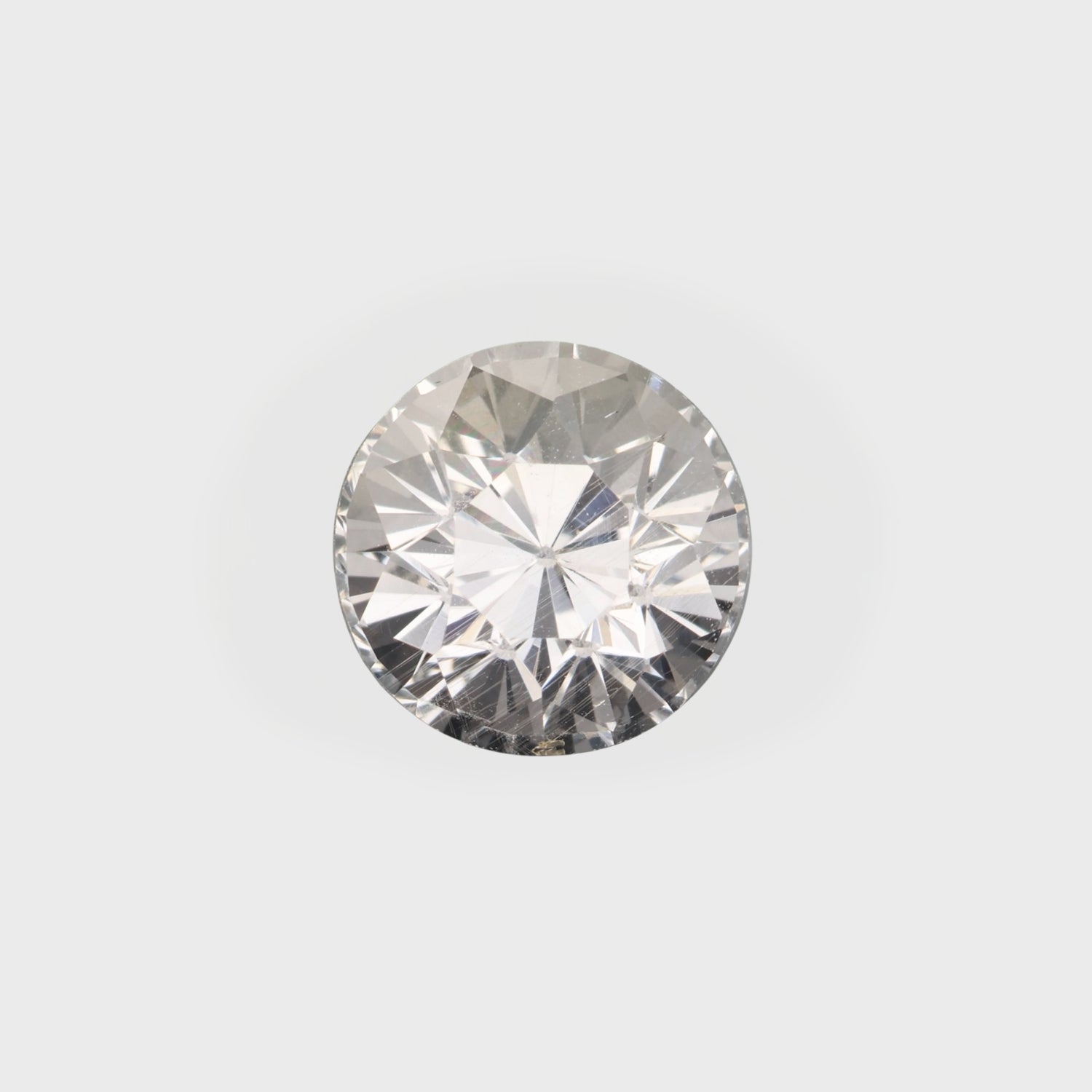
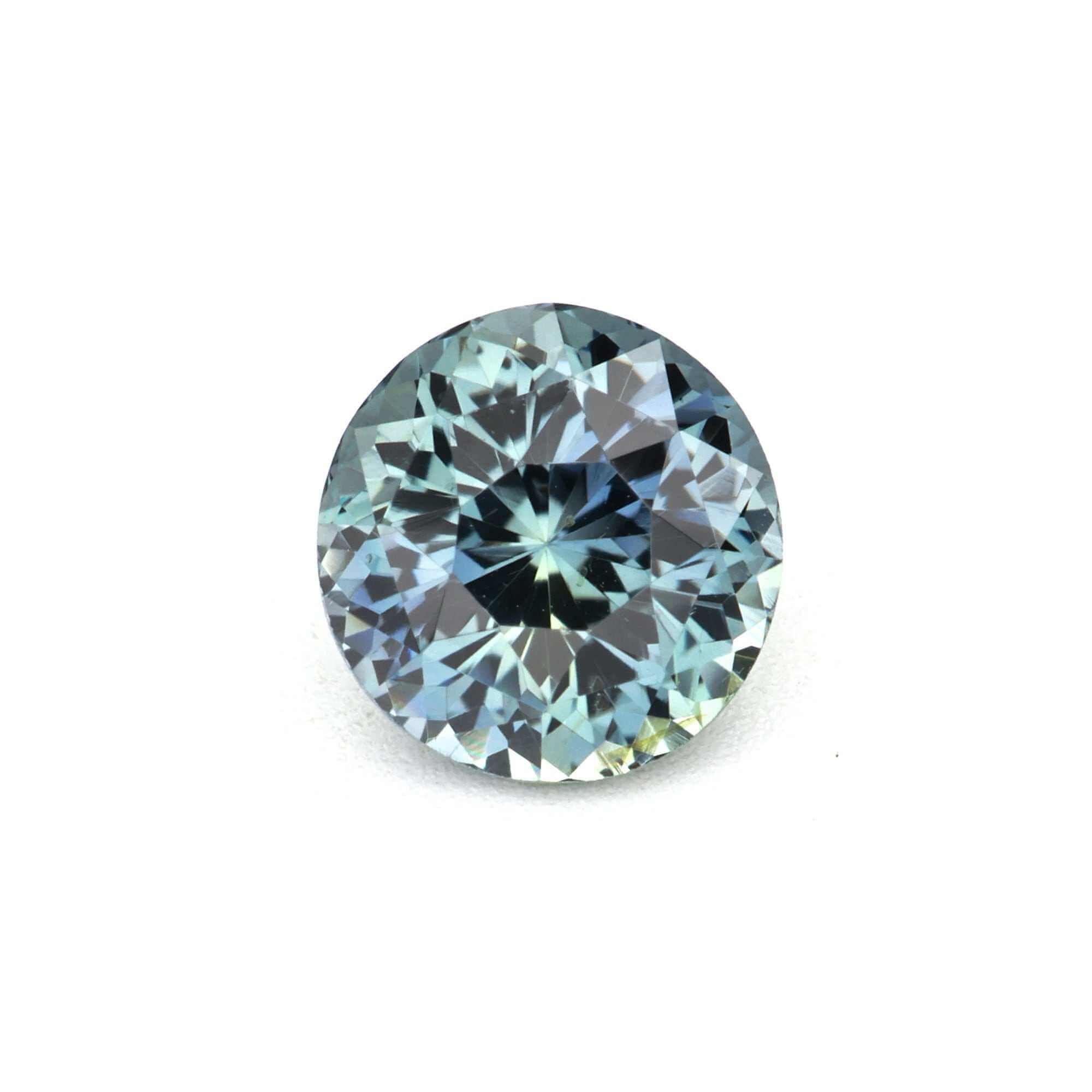
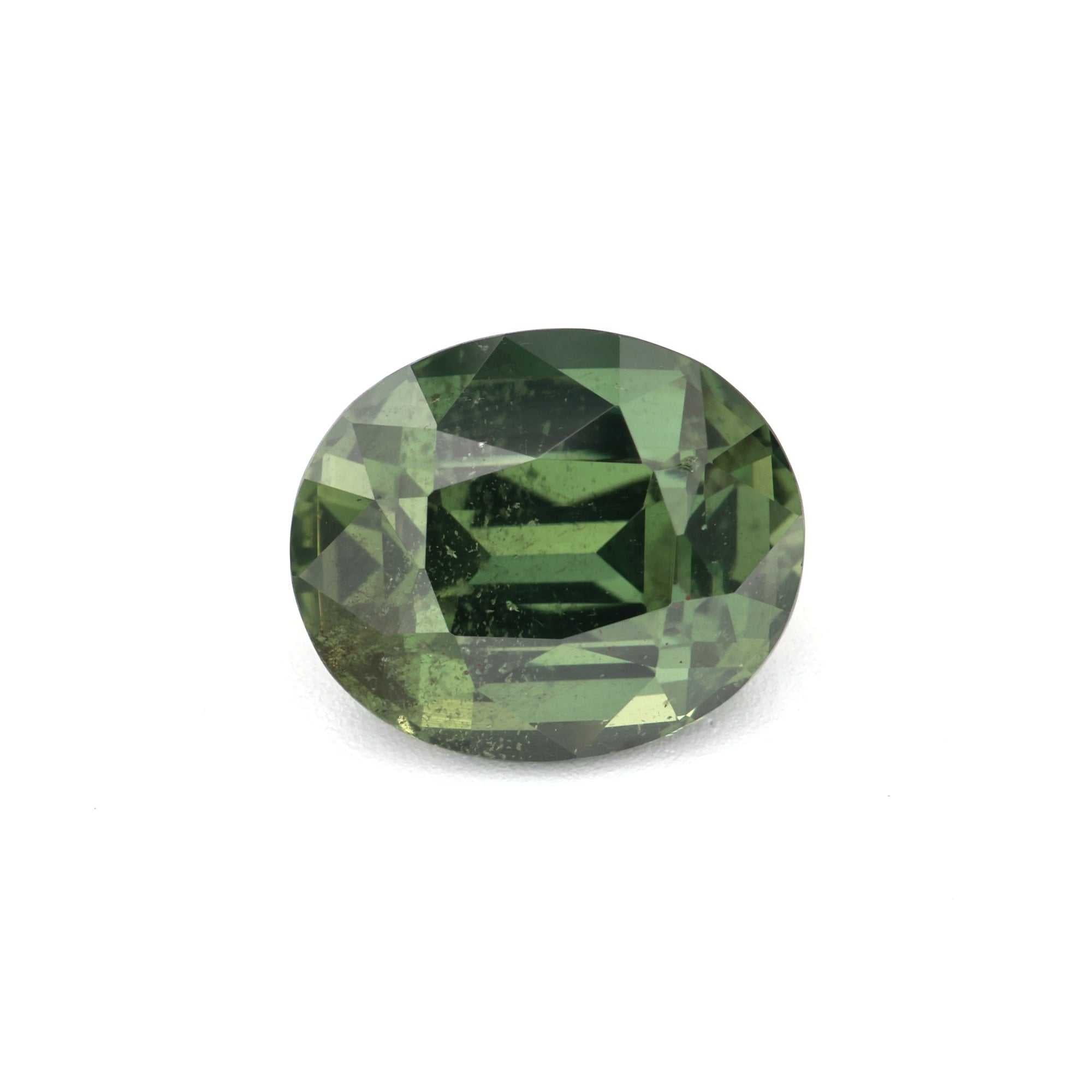
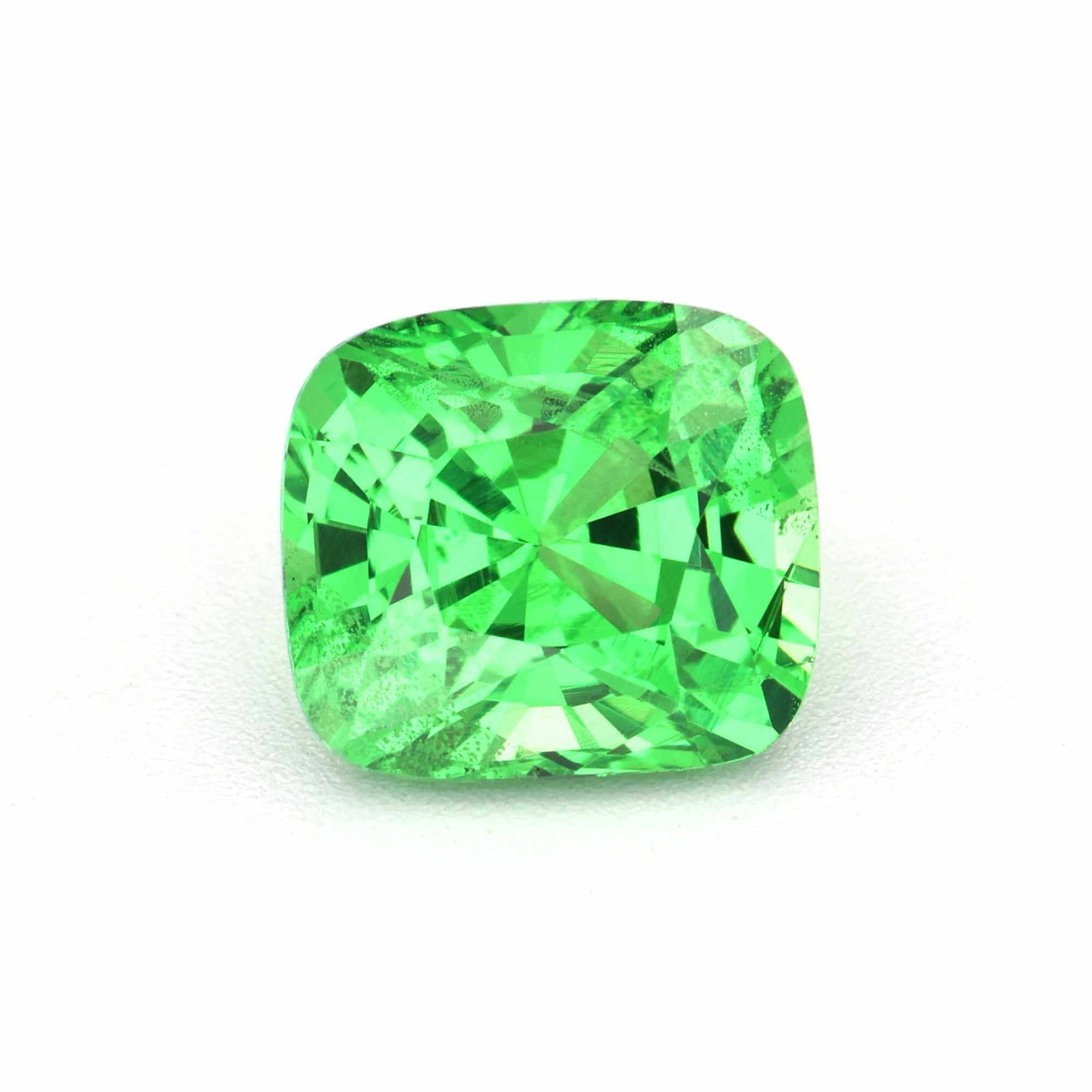
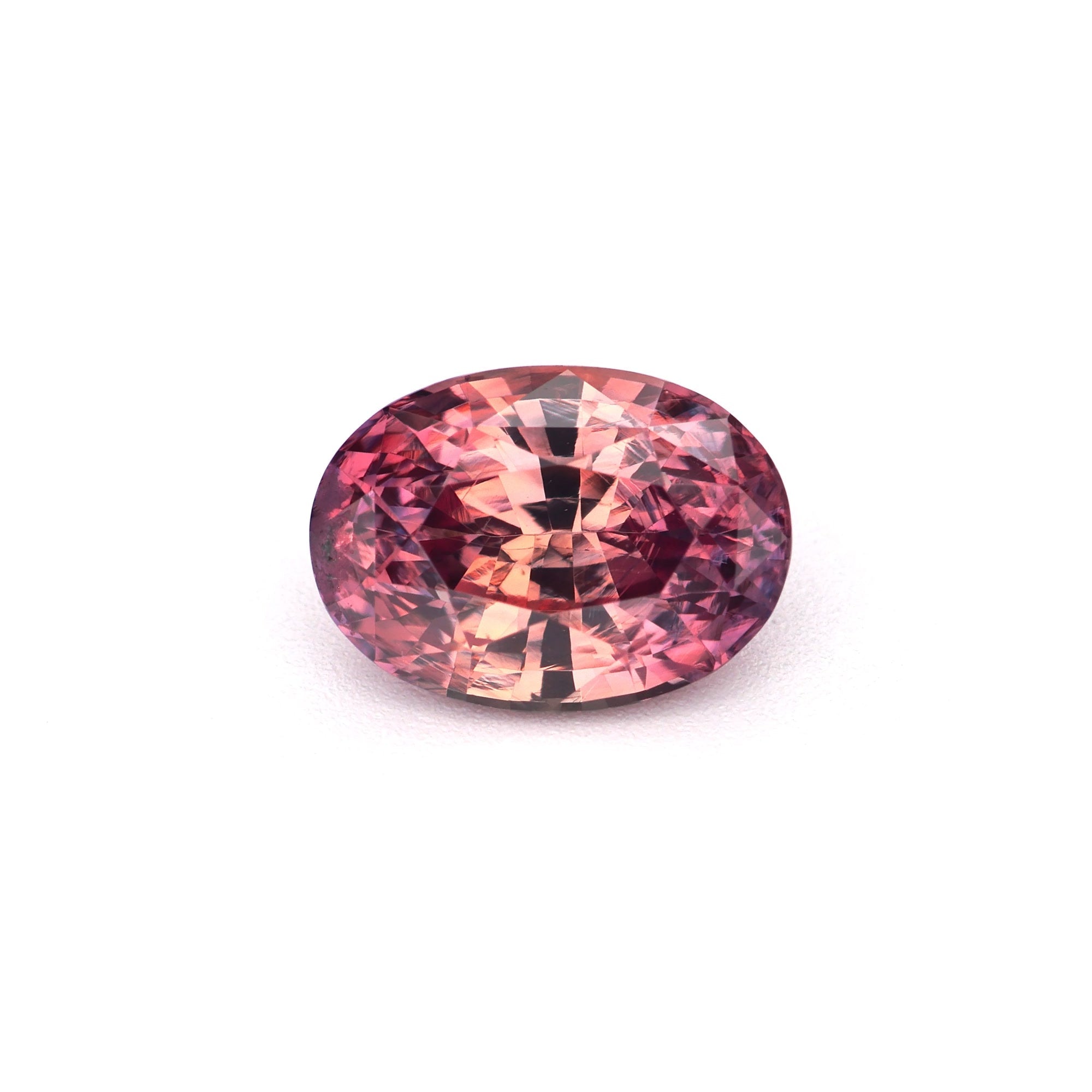
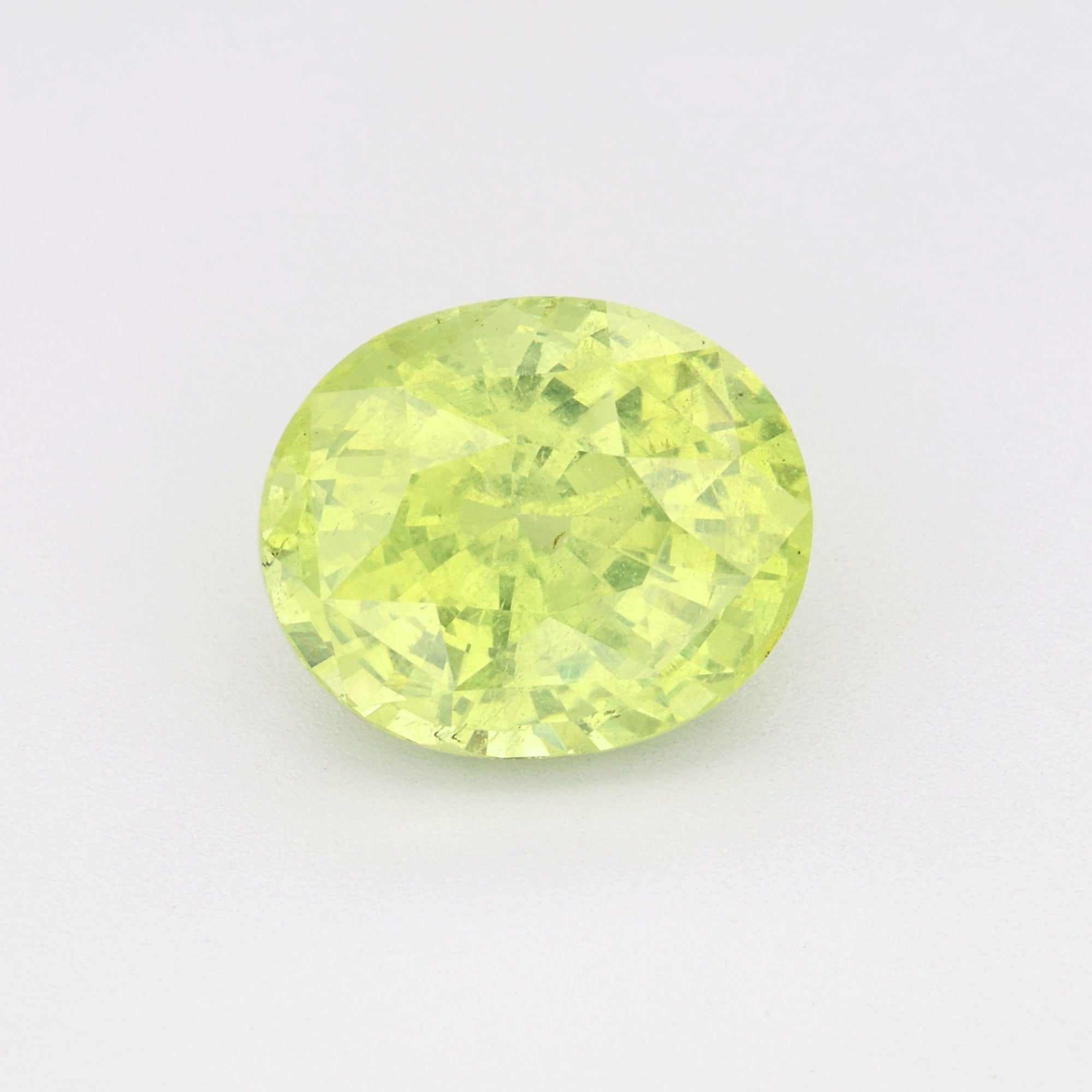
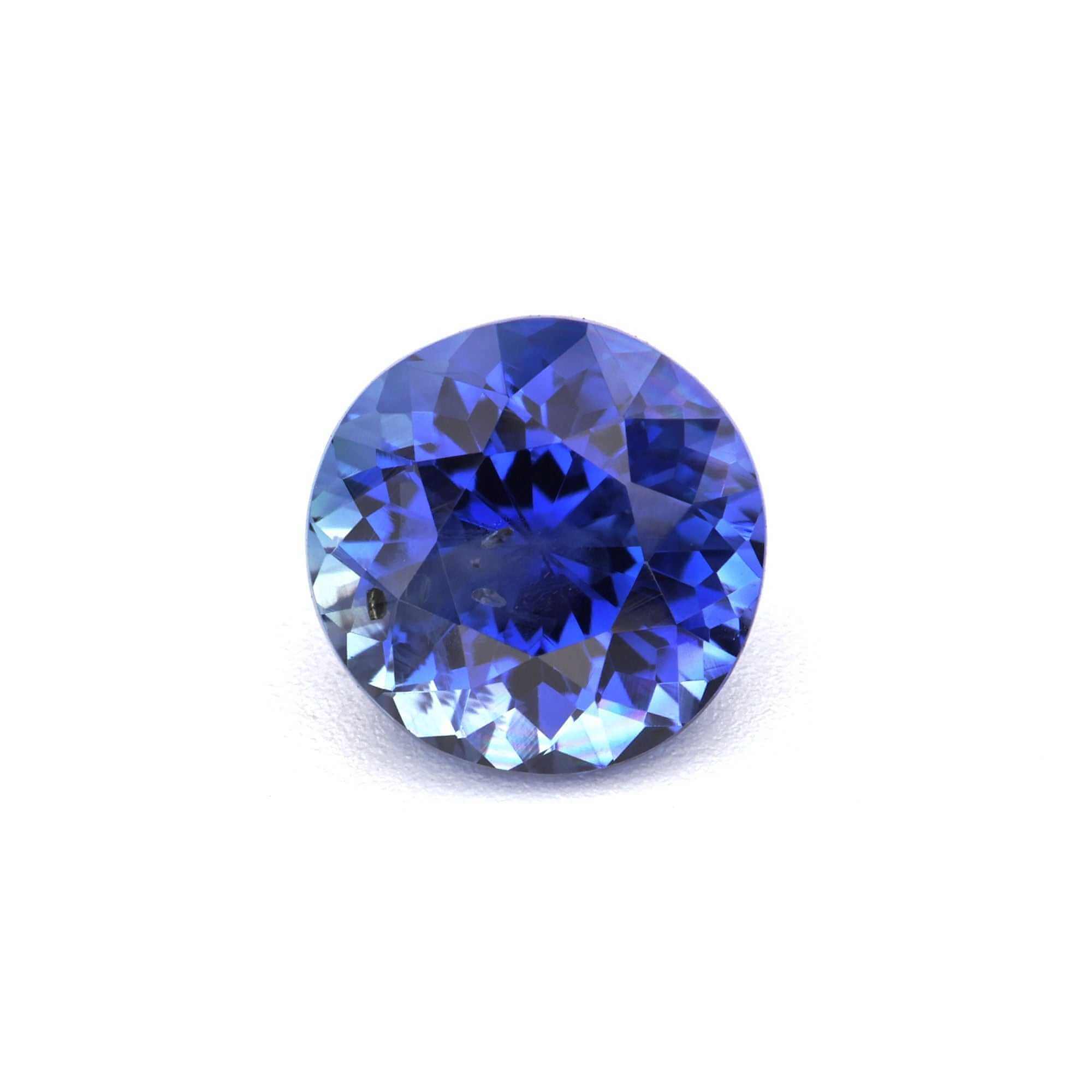
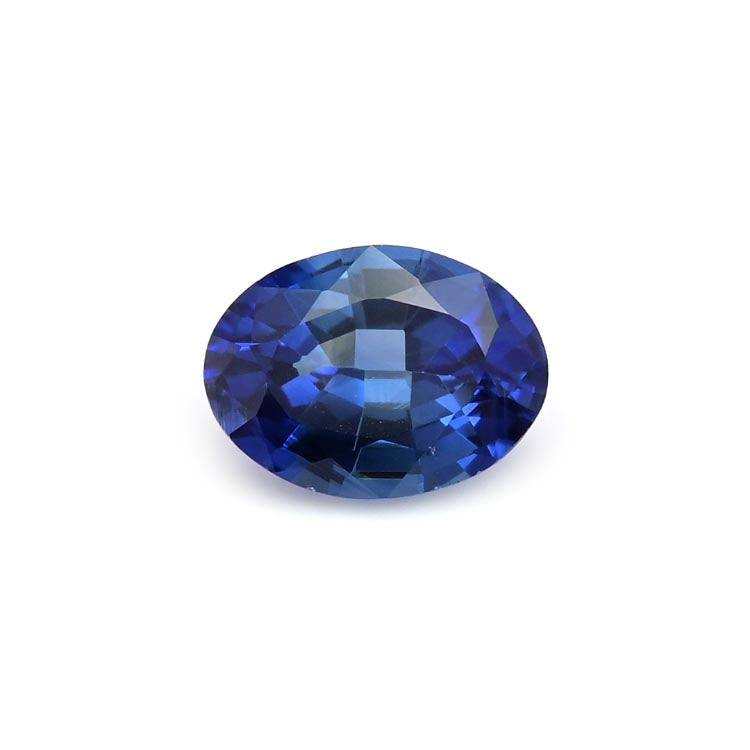
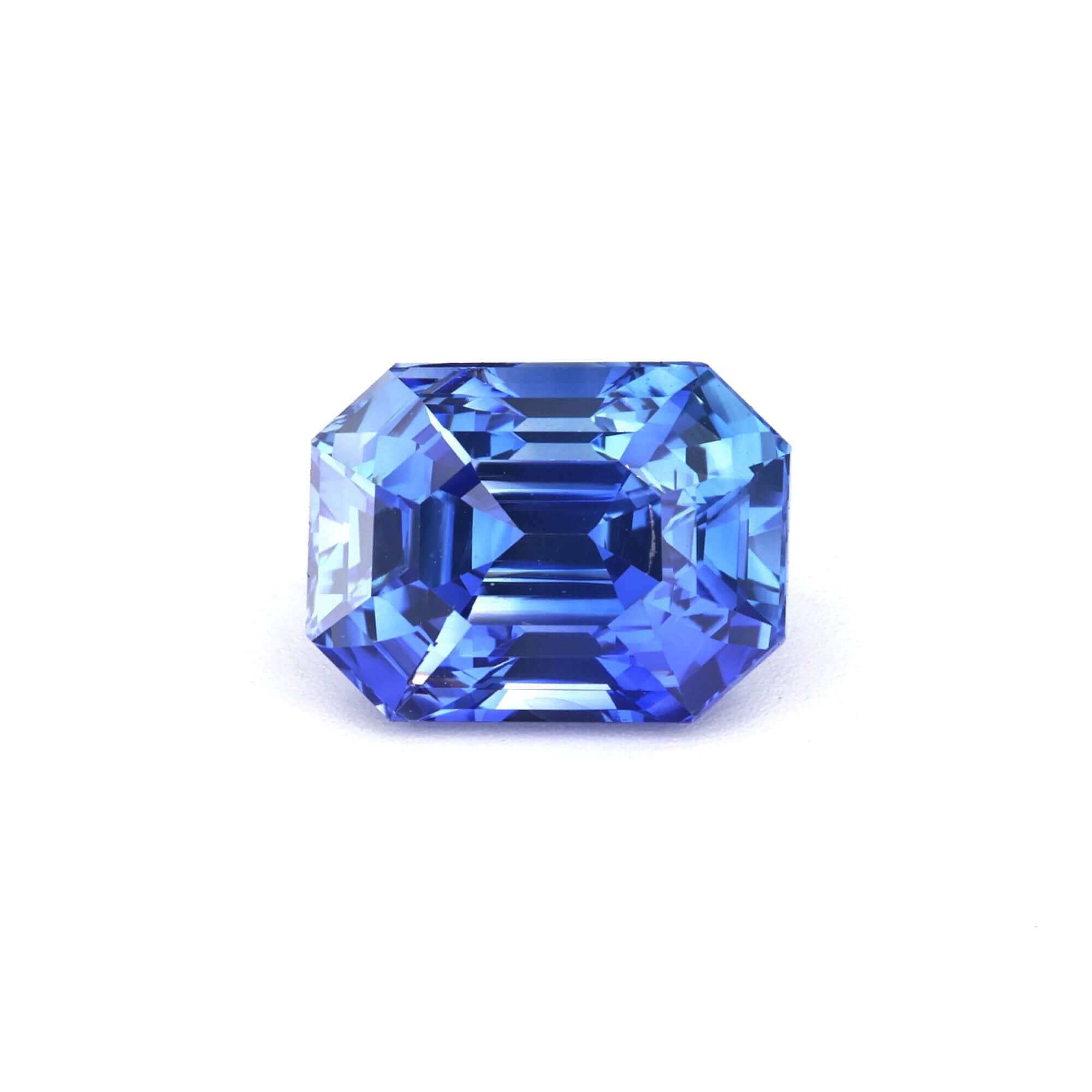
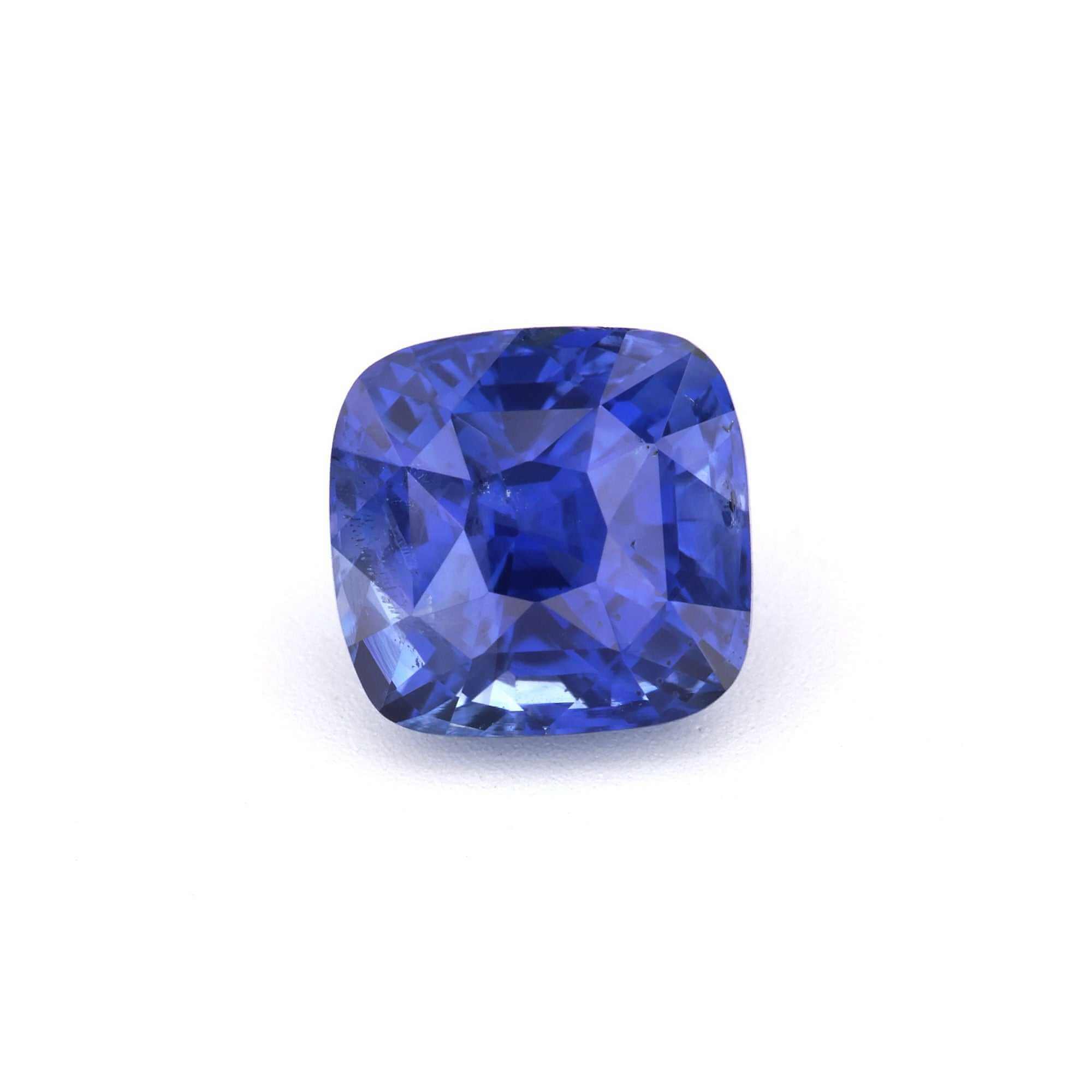
Pale yellow and champagne — the 2.48ct GIA cushion is the reference for this position. Soft, light-toned, delicate presence. Lower saturation but fine clarity and strong documentation. Most Jyotish practitioners prefer stronger colour; this stone suits buyers who prioritise the documentation and carat weight over vivid saturation. Medium golden yellow — the most prized Jyotish position. Warm, luminous golden tone with strong saturation that reads clearly in all lighting including artificial light. The 2.10ct GIA oval and 2.175ct cushion Ceylon sit in this zone — the practical sweet spot for Jyotish buyers who need saturation without paying vivid-canary premiums. Vivid golden and canary — the 2.70ct GIA square cushion and 3.13ct round Ceylon represent the upper colour tier. Strong saturation, immediate visual presence. The rarest and highest-value position in the collection. Every listing describes the exact hue position of the individual stone. We do not flatten all yellows into one description.
GIA Documentation at 2 Carats and Above
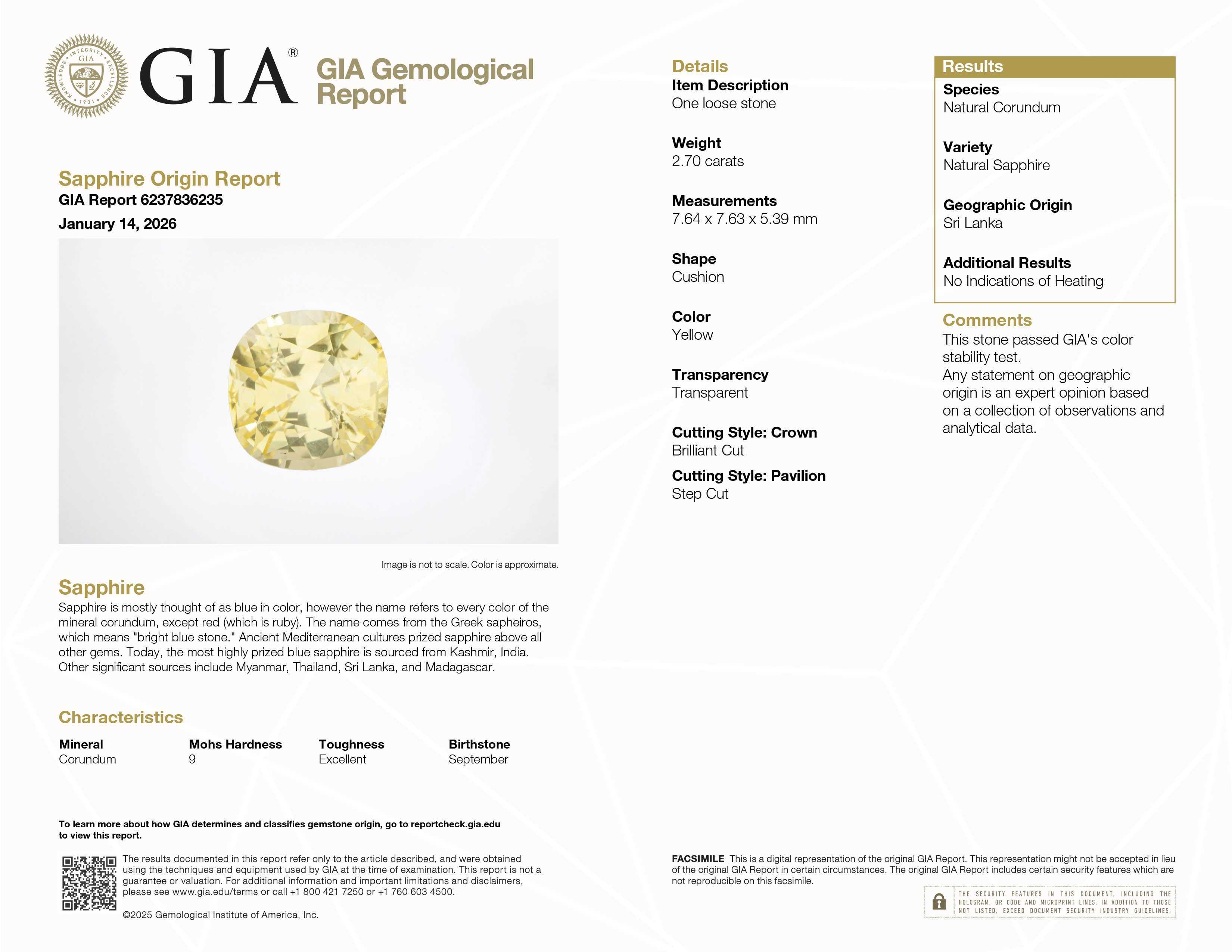
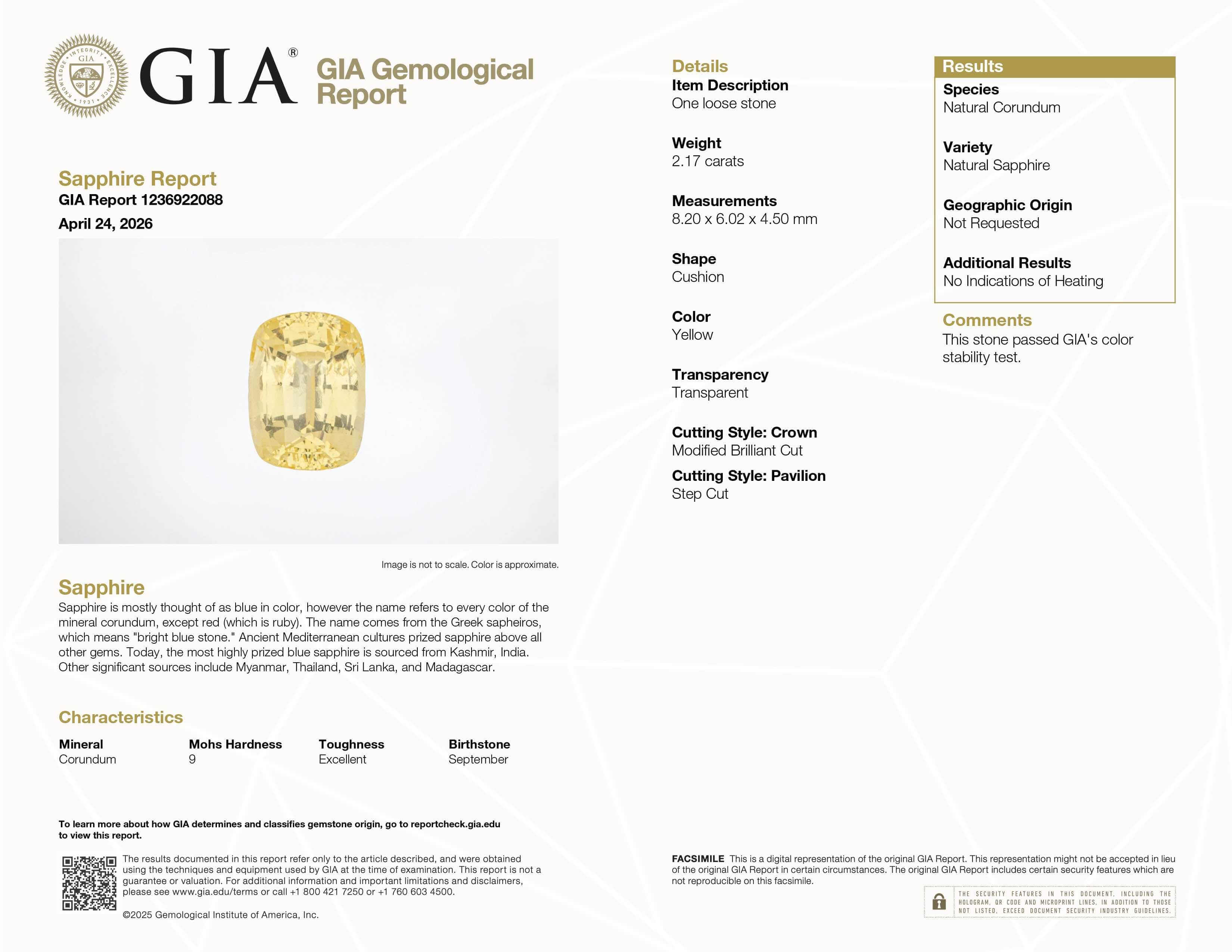
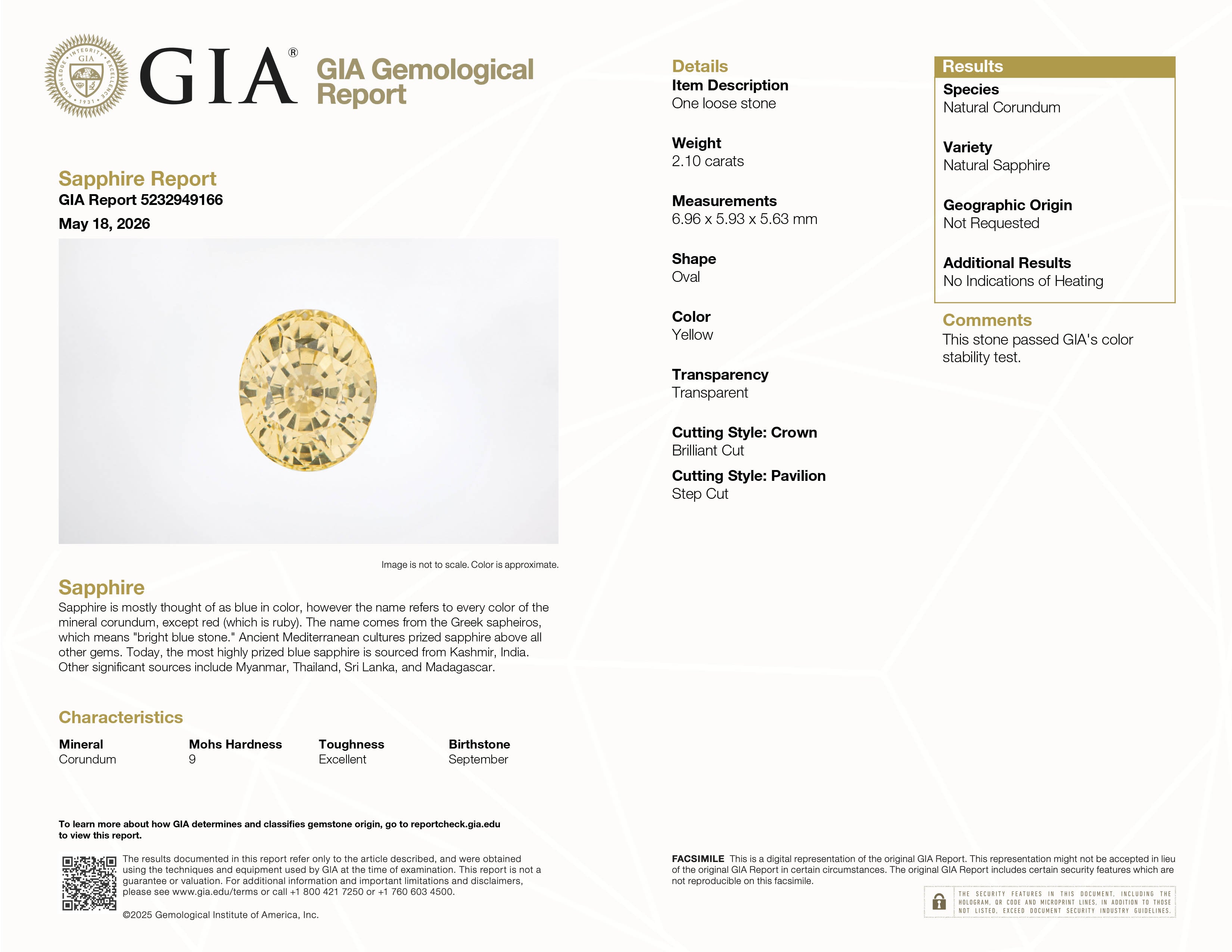
Above 2 carats, GIA documentation is the standard expectation for any serious yellow sapphire transaction. A GIA Colored Stone Identification and Origin Report confirms: species (corundum) and variety (sapphire), carat weight and millimetre dimensions, shape and cutting style, colour grade description, treatment status (no indications of heat treatment), and where determinable, geographic origin. For Jyotish buyers specifically, the GIA report is the instrument that confirms what a practitioner requires: natural corundum, no heat, certified weight.
Three stones in this collection carry GIA reports: the 2.10ct oval, the 2.48ct cushion, and the 2.70ct square cushion. The 2.175ct Ceylon and 3.13ct round Ceylon are fully disclosed unheated stones without individual GIA reports — GIA reports can be obtained on these pieces prior to purchase if required. Email crescentgems@gmail.com to discuss.
Cuts at This Weight
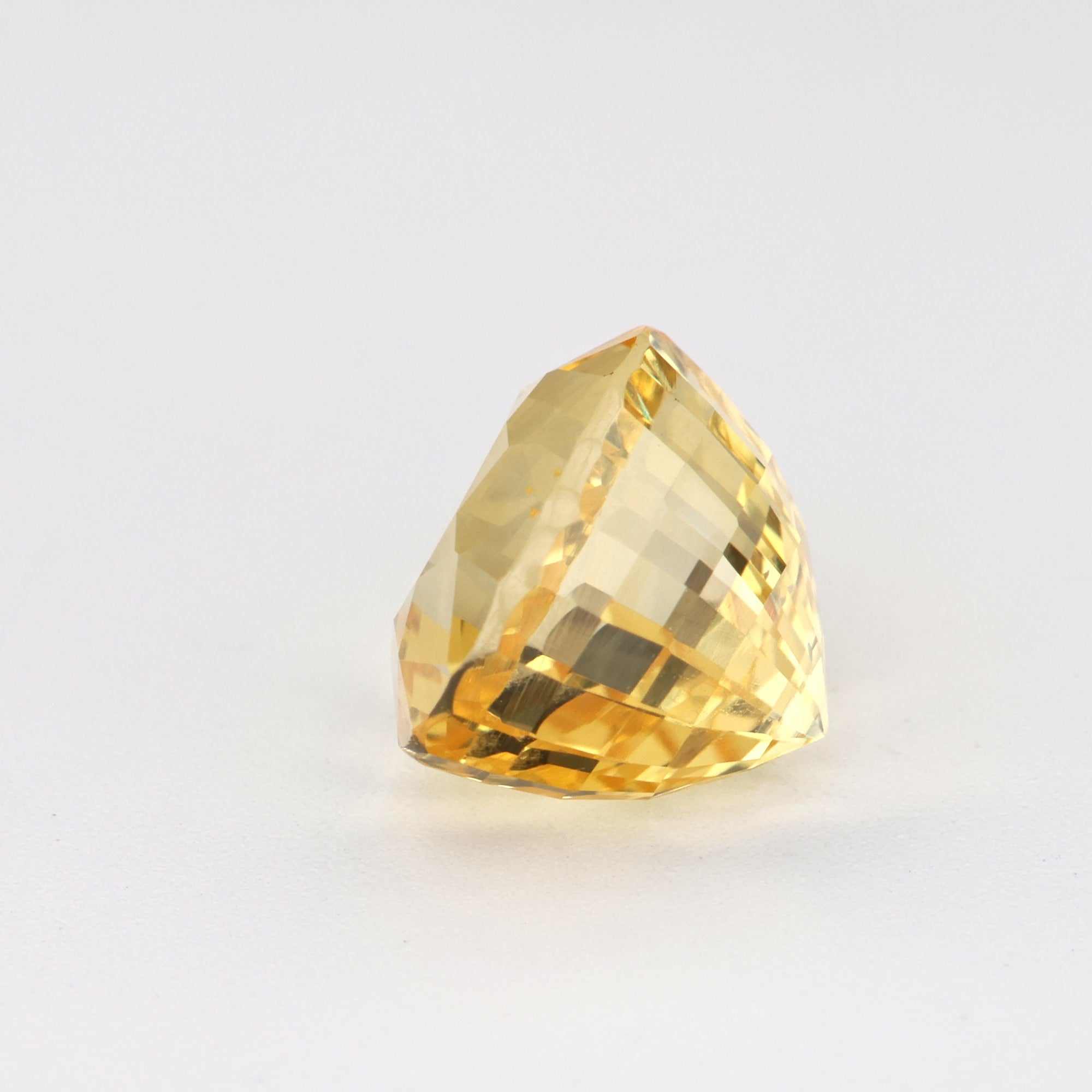
Oval cut — the 2.10ct GIA oval is the most engagement-ring-practical format at this weight, with a 7×6mm face-up footprint that sits proportionately in standard oval solitaire settings. Oval maximises face-up size relative to carat weight. Cushion cut — the dominant commercial format for yellow sapphire at 2ct+. The 2.175ct Ceylon cushion and 2.48ct GIA pale cushion represent the standard market specification: cushion concentrates colour across the face while retaining maximum weight from the rough. Square cushion — the 2.70ct GIA square cushion is the most distinctive format in this collection. Equal-sided with brilliant faceting, the square cushion produces a modern, architectural presence that is unusual for Ceylon yellow sapphire at this weight. Round cut — the 3.13ct round Ceylon is the most commercially standardised format and the most demanding to cut — round cutting sacrifices significantly more rough weight than cushion, making round yellow sapphires above 3ct meaningfully rare. This is also the most Jyotish-traditional format, as round stones are specified in some prescriptions for their optical symmetry.
Collector and Investment Perspective
Fine unheated yellow sapphires above 2 carats in vivid colour with GIA documentation are a category with consistent collector demand from two distinct buyer groups: Jyotish buyers across South and Southeast Asia, and Western collectors building portfolios of natural, unheated Ceylon corundum. The overlap of these demand pools against limited supply from Ceylon — where gem-grade yellow rough is a finite and declining resource — creates a structural supply-demand dynamic that has historically supported value in fine Pukhraj at this weight. For investment buyers, the 2ct+ GIA tier is the practical minimum for stones that trade on secondary markets. See our investment gemstones collection for broader context.
Frequently Asked Questions
Why do Jyotish practitioners specify 2 carats minimum for yellow sapphire?
The 2-carat specification in Jyotish practice is based on the principle that the gemstone must have sufficient mass to carry meaningful planetary energy for the wearer. Most qualified practitioners treat 2ct as the practical minimum for adult wearers, with 3ct+ recommended for individuals of heavier body weight or when Jupiter's influence requires particular strengthening. Sub-2ct yellow sapphires can be prescribed in specific circumstances, but 2ct+ is the standard working specification.
How much does a 2 carat unheated yellow sapphire cost?
A natural unheated 2ct yellow sapphire in good golden colour typically ranges from $1,800 to $3,000 total. GIA-certified stones sit toward the upper end. Pale yellow at 2ct unheated runs $1,500–$2,500. Vivid canary at 2ct+ commands $2,500–$5,000 or more depending on intensity. Above 3ct in round cut with vivid colour, pricing moves into $4,000–$6,000+ territory. Every listing shows price per carat alongside total price for direct comparison across different sizes.
Is Ceylon origin required for Jyotish yellow sapphire?
Ceylon (Sri Lanka) origin is strongly preferred in most Jyotish prescriptions — it is the classical source for Pukhraj and carries historical authority in the tradition. Madagascar, Thailand, and other origins also produce yellow sapphire, but Ceylon is the preferred specification. Stones with GIA-confirmed Ceylon origin command a premium over equivalent stones of uncertain or alternative origin. Three of the five stones in this collection are from Ceylon with confirmed or strongly indicated origin.
What is the difference between a 2ct and 3ct yellow sapphire for Jyotish?
Both are suitable for most adult wearers. The 3ct specification is recommended by some practitioners for: individuals of heavier body weight (typically above 70–75kg), when Jupiter is the chart ruler or lord of particularly important houses, when a previous smaller stone has shown insufficient effect, or when the prescription calls for a particularly strong Jupiter influence. The jump from 2ct to 3ct in unheated quality is a significant price increase — the scarcity increases sharply at 3ct+.
Can a GIA report be obtained before purchase?
Yes. For stones in this collection without existing GIA reports, we can arrange GIA testing prior to purchase. Email crescentgems@gmail.com to discuss the timeline and process for a specific stone. GIA turnaround is typically 3–6 weeks. Alternatively, every stone can be purchased with our 14-day return policy and the GIA report arranged independently after purchase.
Can I try a stone before buying?
Yes — all stones in this collection are Try-On eligible. The stone ships to you for in-hand evaluation before payment. Email crescentgems@gmail.com to arrange. Every purchase includes a 14-day return policy and free US shipping.
Related collections: Unheated yellow sapphire over 1 carat · All yellow sapphires · All unheated sapphires · Investment gemstones · All sapphires
Questions about a specific stone, a Jyotish prescription, or help choosing between two pieces? Email crescentgems@gmail.com — we respond personally within one business day. Free US shipping. 14-day returns.
Natural Unheated Yellow Sapphire Over 2 Carats — Pukhraj for Jyotish and Collectors
Unheated yellow sapphire above 2 carats is where the category becomes genuinely rare. At this weight threshold, the combination of natural colour, no thermal enhancement, good clarity, and sufficient carat for the most demanding Jyotish prescriptions converges in a way that makes each stone an individual acquisition rather than a commodity purchase. Every stone in this collection is natural corundum coloured by trace iron in the crystal, completely unheated, sourced directly from Sri Lanka, and sold with full treatment disclosure and GIA laboratory documentation on most pieces.
Why 2 Carats Is the Critical Jyotish Threshold
In Jyotish (Vedic astrology), yellow sapphire (Pukhraj/Pushparaga) is the prescribed gemstone for Jupiter (Brihaspati/Guru) — the most benefic planet in the Vedic system, associated with wisdom, prosperity, children, education, and spiritual growth. The 2-carat mark is the standard minimum weight specified by most qualified Jyotish practitioners for meaningful planetary influence. Many senior astrologers recommend 3ct or above for individuals of heavier body weight or when Jupiter's influence needs to be especially strong in the chart.
The Jyotish specification for Pukhraj is exacting and non-negotiable for serious practitioners: natural corundum (not topaz, citrine, heliodor, or beryl — only sapphire), completely unheated, eye-clean clarity, vivid yellow with no visible greenish or brownish modifier, Ceylon (Sri Lanka) origin strongly preferred, and minimum 2ct. Every stone in this collection meets the weight and treatment criteria. Origin and colour are disclosed on every listing. For guidance matching a stone to a specific prescription, email crescentgems@gmail.com with your requirement.
See our Jyotish sapphire guide for the complete specification across all planetary gemstones.
What Changes Above 2 Carats
The shift from sub-2-carat to over-2-carat unheated yellow sapphire is a meaningful market step. Fine yellow sapphire rough of sufficient size and quality to yield a 2ct+ finished stone in unheated condition with good clarity is genuinely scarce. Much of the finest Ceylon yellow rough is cut into sub-2-carat sizes to maximise recovery — 2ct+ unheated yellow sapphire in vivid colour represents the top tier of what the mine produces commercially.
At this weight, individual stone character becomes the primary value driver. Two 2.5ct unheated yellow sapphires from Ceylon can differ by 50% in price based on colour saturation, the specific golden hue position, cut quality, and clarity. GIA documentation at this weight is not optional — it is what makes a stone verifiable, insurable, and resaleable. Three of the five stones in this collection carry GIA reports; the remaining two are Ceylon-origin stones with full treatment disclosure.
The Colour Positions in This Collection
Pale yellow and champagne — the 2.48ct GIA cushion is the reference for this position. Soft, light-toned, delicate presence. Lower saturation but fine clarity and strong documentation. Most Jyotish practitioners prefer stronger colour; this stone suits buyers who prioritise the documentation and carat weight over vivid saturation. Medium golden yellow — the most prized Jyotish position. Warm, luminous golden tone with strong saturation that reads clearly in all lighting including artificial light. The 2.10ct GIA oval and 2.175ct cushion Ceylon sit in this zone — the practical sweet spot for Jyotish buyers who need saturation without paying vivid-canary premiums. Vivid golden and canary — the 2.70ct GIA square cushion and 3.13ct round Ceylon represent the upper colour tier. Strong saturation, immediate visual presence. The rarest and highest-value position in the collection. Every listing describes the exact hue position of the individual stone. We do not flatten all yellows into one description.
GIA Documentation at 2 Carats and Above
Above 2 carats, GIA documentation is the standard expectation for any serious yellow sapphire transaction. A GIA Colored Stone Identification and Origin Report confirms: species (corundum) and variety (sapphire), carat weight and millimetre dimensions, shape and cutting style, colour grade description, treatment status (no indications of heat treatment), and where determinable, geographic origin. For Jyotish buyers specifically, the GIA report is the instrument that confirms what a practitioner requires: natural corundum, no heat, certified weight.
Three stones in this collection carry GIA reports: the 2.10ct oval, the 2.48ct cushion, and the 2.70ct square cushion. The 2.175ct Ceylon and 3.13ct round Ceylon are fully disclosed unheated stones without individual GIA reports — GIA reports can be obtained on these pieces prior to purchase if required. Email crescentgems@gmail.com to discuss.
Cuts at This Weight
Oval cut — the 2.10ct GIA oval is the most engagement-ring-practical format at this weight, with a 7×6mm face-up footprint that sits proportionately in standard oval solitaire settings. Oval maximises face-up size relative to carat weight. Cushion cut — the dominant commercial format for yellow sapphire at 2ct+. The 2.175ct Ceylon cushion and 2.48ct GIA pale cushion represent the standard market specification: cushion concentrates colour across the face while retaining maximum weight from the rough. Square cushion — the 2.70ct GIA square cushion is the most distinctive format in this collection. Equal-sided with brilliant faceting, the square cushion produces a modern, architectural presence that is unusual for Ceylon yellow sapphire at this weight. Round cut — the 3.13ct round Ceylon is the most commercially standardised format and the most demanding to cut — round cutting sacrifices significantly more rough weight than cushion, making round yellow sapphires above 3ct meaningfully rare. This is also the most Jyotish-traditional format, as round stones are specified in some prescriptions for their optical symmetry.
Collector and Investment Perspective
Fine unheated yellow sapphires above 2 carats in vivid colour with GIA documentation are a category with consistent collector demand from two distinct buyer groups: Jyotish buyers across South and Southeast Asia, and Western collectors building portfolios of natural, unheated Ceylon corundum. The overlap of these demand pools against limited supply from Ceylon — where gem-grade yellow rough is a finite and declining resource — creates a structural supply-demand dynamic that has historically supported value in fine Pukhraj at this weight. For investment buyers, the 2ct+ GIA tier is the practical minimum for stones that trade on secondary markets. See our investment gemstones collection for broader context.
Frequently Asked Questions
Why do Jyotish practitioners specify 2 carats minimum for yellow sapphire?
The 2-carat specification in Jyotish practice is based on the principle that the gemstone must have sufficient mass to carry meaningful planetary energy for the wearer. Most qualified practitioners treat 2ct as the practical minimum for adult wearers, with 3ct+ recommended for individuals of heavier body weight or when Jupiter's influence requires particular strengthening. Sub-2ct yellow sapphires can be prescribed in specific circumstances, but 2ct+ is the standard working specification.
How much does a 2 carat unheated yellow sapphire cost?
A natural unheated 2ct yellow sapphire in good golden colour typically ranges from $1,800 to $3,000 total. GIA-certified stones sit toward the upper end. Pale yellow at 2ct unheated runs $1,500–$2,500. Vivid canary at 2ct+ commands $2,500–$5,000 or more depending on intensity. Above 3ct in round cut with vivid colour, pricing moves into $4,000–$6,000+ territory. Every listing shows price per carat alongside total price for direct comparison across different sizes.
Is Ceylon origin required for Jyotish yellow sapphire?
Ceylon (Sri Lanka) origin is strongly preferred in most Jyotish prescriptions — it is the classical source for Pukhraj and carries historical authority in the tradition. Madagascar, Thailand, and other origins also produce yellow sapphire, but Ceylon is the preferred specification. Stones with GIA-confirmed Ceylon origin command a premium over equivalent stones of uncertain or alternative origin. Three of the five stones in this collection are from Ceylon with confirmed or strongly indicated origin.
What is the difference between a 2ct and 3ct yellow sapphire for Jyotish?
Both are suitable for most adult wearers. The 3ct specification is recommended by some practitioners for: individuals of heavier body weight (typically above 70–75kg), when Jupiter is the chart ruler or lord of particularly important houses, when a previous smaller stone has shown insufficient effect, or when the prescription calls for a particularly strong Jupiter influence. The jump from 2ct to 3ct in unheated quality is a significant price increase — the scarcity increases sharply at 3ct+.
Can a GIA report be obtained before purchase?
Yes. For stones in this collection without existing GIA reports, we can arrange GIA testing prior to purchase. Email crescentgems@gmail.com to discuss the timeline and process for a specific stone. GIA turnaround is typically 3–6 weeks. Alternatively, every stone can be purchased with our 14-day return policy and the GIA report arranged independently after purchase.
Can I try a stone before buying?
Yes — all stones in this collection are Try-On eligible. The stone ships to you for in-hand evaluation before payment. Email crescentgems@gmail.com to arrange. Every purchase includes a 14-day return policy and free US shipping.
Related collections: Unheated yellow sapphire over 1 carat · All yellow sapphires · All unheated sapphires · Investment gemstones · All sapphires
Questions about a specific stone, a Jyotish prescription, or help choosing between two pieces? Email crescentgems@gmail.com — we respond personally within one business day. Free US shipping. 14-day returns.
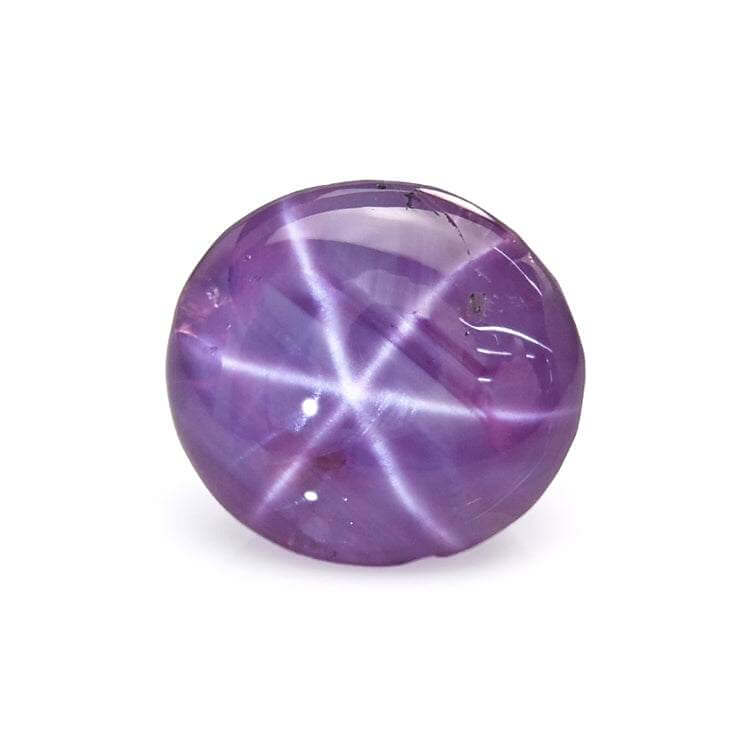
CG8347
3.13 ct Round Ceylon Yellow Sapphire ~ Unheated
CG8313
2.70 ct Square Cushion Yellow Sapphire ~ Unheated, GIA
CG8336
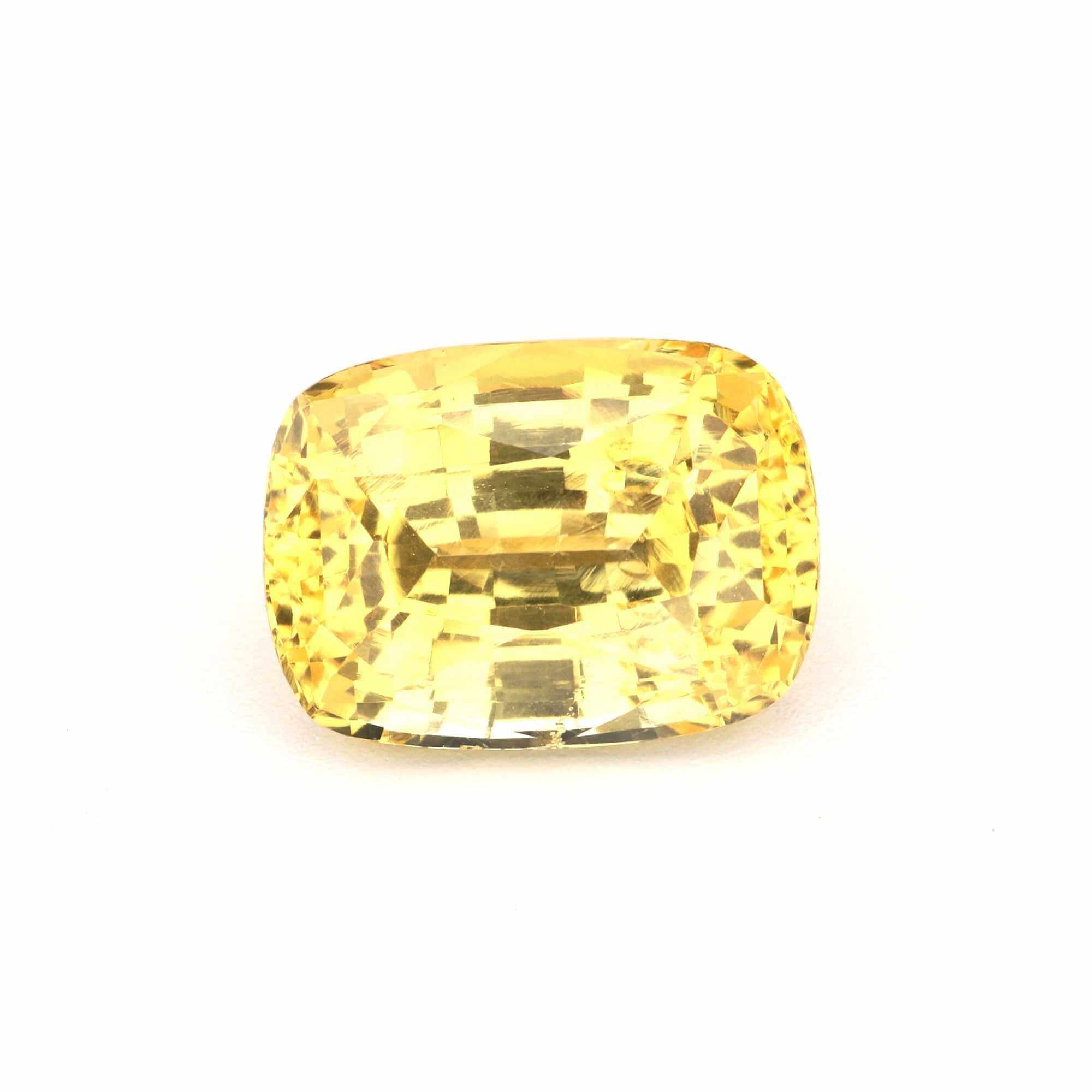
2.175 ct Cushion Yellow Sapphire ~ Unheated
CG8134
2.48 ct Cushion Pale Yellow Sapphire ~ Unheated, GIA
CG8366
2.10 ct Oval Yellow Sapphire ~ Untreated, GIA