

- by Ahmed Shareek
Padparadscha Sapphire — The World's Rarest Sapphire Colour Explained
- by Ahmed Shareek
New to buying sapphires? Start with our Ultimate Sapphire Buying Guide — the complete resource for colour, origin, treatment, and pricing — then return here for padparadscha specifically.
Padparadscha is the rarest color in the sapphire family. Not rarest as a marketing phrase — rarest as a geological and commercial fact. A fine, GIA-documented padparadscha above 2 carats in fine color appears at major auction houses perhaps a few times per year globally. It commands per-carat prices that exceed fine blue sapphire, often exceed fine ruby, and approach the territory of exceptional coloured diamonds.
And yet most people buying sapphires have never seen one in person.
This guide covers everything you need to know: what padparadscha actually is, how it is graded, where it comes from, what it costs, and how to protect yourself in a market where the word is used far more often than the stone deserves it.
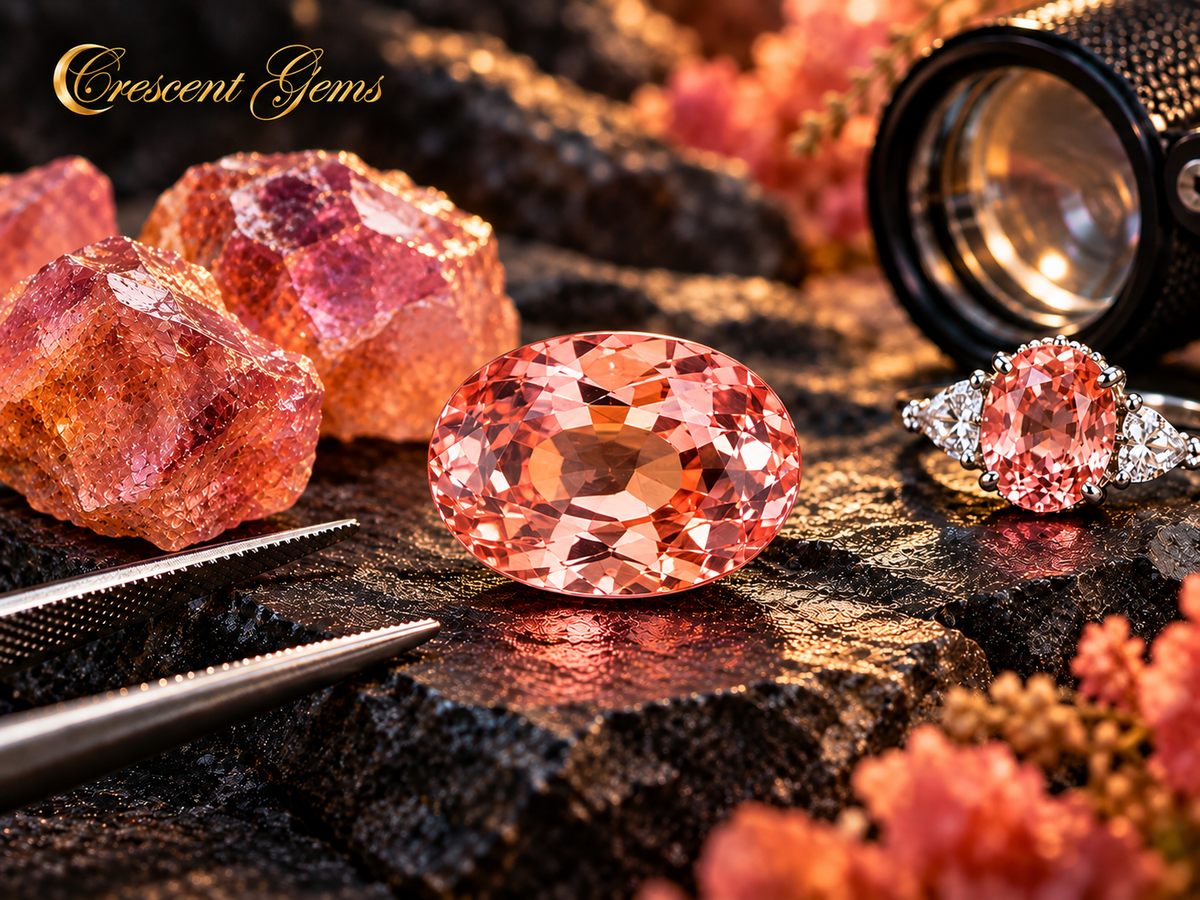
Padparadscha is natural corundum — the same mineral species as blue sapphire, pink sapphire, and ruby — displaying a specific salmon-pink to orange-pink colour that sits precisely between pink and orange. The name derives from the Sinhalese word for the lotus blossom (padma raga), which captures the colour accurately: the warm, luminous pink-orange of a Ceylon lotus at dawn.
The colour it describes is genuinely unlike any other sapphire. Neither pink nor orange, it combines both in a balance that is warm, feminine, and luminous in a way that neither colour achieves alone. Critically: padparadscha is not a trade name or a marketing description. It is a formal laboratory colour designation issued by GIA, Gubelin, and SSEF when a specific stone meets their criteria. A stone is either padparadscha-certified by a major laboratory, or it is not.
The padparadscha colour zone is narrow and precisely defined. Three things must be true simultaneously:
Simultaneous pink and orange. The stone must display both a pink component and an orange component in the face-up appearance. A stone that is purely pink is pink sapphire. A stone that is purely orange is orange sapphire. The balance between pink and orange must be genuine and clear.
Light to medium tone. The stone must be light-to-medium in overall darkness. Too dark and the orange component reads as brownish or rusty. Too pale and the warmth disappears.
Sufficient saturation. The colour must have enough strength to be clearly read as salmon-pink rather than pastel. Very dilute stones in the right hue are not padparadscha.
This combination is extraordinarily rare in natural corundum. Most sapphires that are pink have no orange. Most that are orange have no pink. The stones that genuinely sit at the intersection are a tiny fraction of global corundum production.
Common misrepresentations to watch for:
Ceylon padparadscha is the historical benchmark. Sri Lanka's gem geology produces a characteristic warm, slightly violet-influenced pink-orange that defines the classic padparadscha colour for most collectors and gemologists. Ceylon-origin padparadscha with GIA documentation commands the highest per-carat prices in the category. See our Sri Lanka pit mining guide.
Madagascar has emerged as a meaningful secondary padparadscha source. Madagascar material tends toward a slightly warmer, more orange-influenced tone than classic Ceylon. See our Madagascar sapphire guide.
Tanzania produces padparadscha in the smallest quantities of the three primary sources, with a slightly lighter, more purely pink-salmon tone.
| Factor | Padparadscha | Peach Sapphire |
|---|---|---|
| Definition | Formal lab designation (GIA/Gubelin/SSEF) | Descriptive trade term |
| Colour balance | Precisely balanced pink AND orange | Warm pink-orange, can lean either way |
| Treatment | Usually unheated, and priced for it; the name itself is a colour call, so heated stones can carry it too | Usually unheated; heat degrades colour |
| Documentation required | Yes — GIA/Gubelin/SSEF mandatory | Recommended above $800 total |
| Price per carat (1ct, fine) | $2,000-$10,000+ | $500-$1,500 |
| Investment basis | Strong — lab cert is the asset | Moderate — value in colour, not designation |
| Best for | Collectors, investors, special occasion | Jewellery, engagement rings, daily wear |
Figures above are approximate market guidance, not fixed quotes. Actual value varies by treatment, origin, colour, cut, clarity, and certification.
See our full peach vs padparadscha guide and our peach sapphire buying guide.
Fine padparadscha is almost always unheated — not as a marketing premium, but as a physical consequence of what heat does to the colour. At the temperatures required for heat treatment (1,000-1,800 degrees C), the iron-chromium balance shifts. The result is a stone that becomes more purely orange or more purely pink — no longer padparadscha. Beryllium diffusion treatment is a particular fraud risk in the padparadscha category. GIA, Gubelin, and SSEF test specifically for beryllium diffusion. See our beryllium diffusion guide and heat treatment guide.
Fine padparadscha is one of the most consistently appreciating categories in the coloured gemstone market. Supply cannot expand; demand is growing; and the GIA report is the foundation of the investment thesis. Without it, there is no verified claim to padparadscha status and therefore no premium-price basis. Sub-2ct GIA-documented padparadscha in fine colour trades at $2,000-$8,000 per carat in the specialist dealer market. For the full pricing breakdown by carat weight, see our padparadscha sapphire price guide. See our GIA report guide and our investment-grade gemstones collection.
Yellow gold amplifies the warmth — the warm metal and warm stone create a rich, harmonious combination. Rose gold creates a complementary tonal pairing — the pink component of the rose gold complements the pink in the stone. White gold and platinum provide cool contrast that makes the warm salmon colour appear more vivid by opposition. For the full metal decision framework, see our yellow gold vs. white gold vs. platinum guide and how to choose metal color for a sapphire ring. See our sapphire cut guide for full format analysis.
Four rules that protect every padparadscha purchase:
Our padparadscha collection shows current inventory with full treatment and origin disclosure on every listing. For stones approaching padparadscha territory at peach pricing, browse our peach sapphire collection. Sourcing padparadscha to specification is possible through our Sri Lanka buying office. Email crescentgems@gmail.com with your specification.

Blue Star Sapphire Price Guide — What They Cost and Why
Read moreabout Blue Star Sapphire Price Guide — What They Cost and Why
Tsavorite Garnet Price Guide — What They Cost and Why
Read moreabout Tsavorite Garnet Price Guide — What They Cost and Why
Color-Change Sapphire Price Guide — What They Cost and Why
Read moreabout Color-Change Sapphire Price Guide — What They Cost and Why
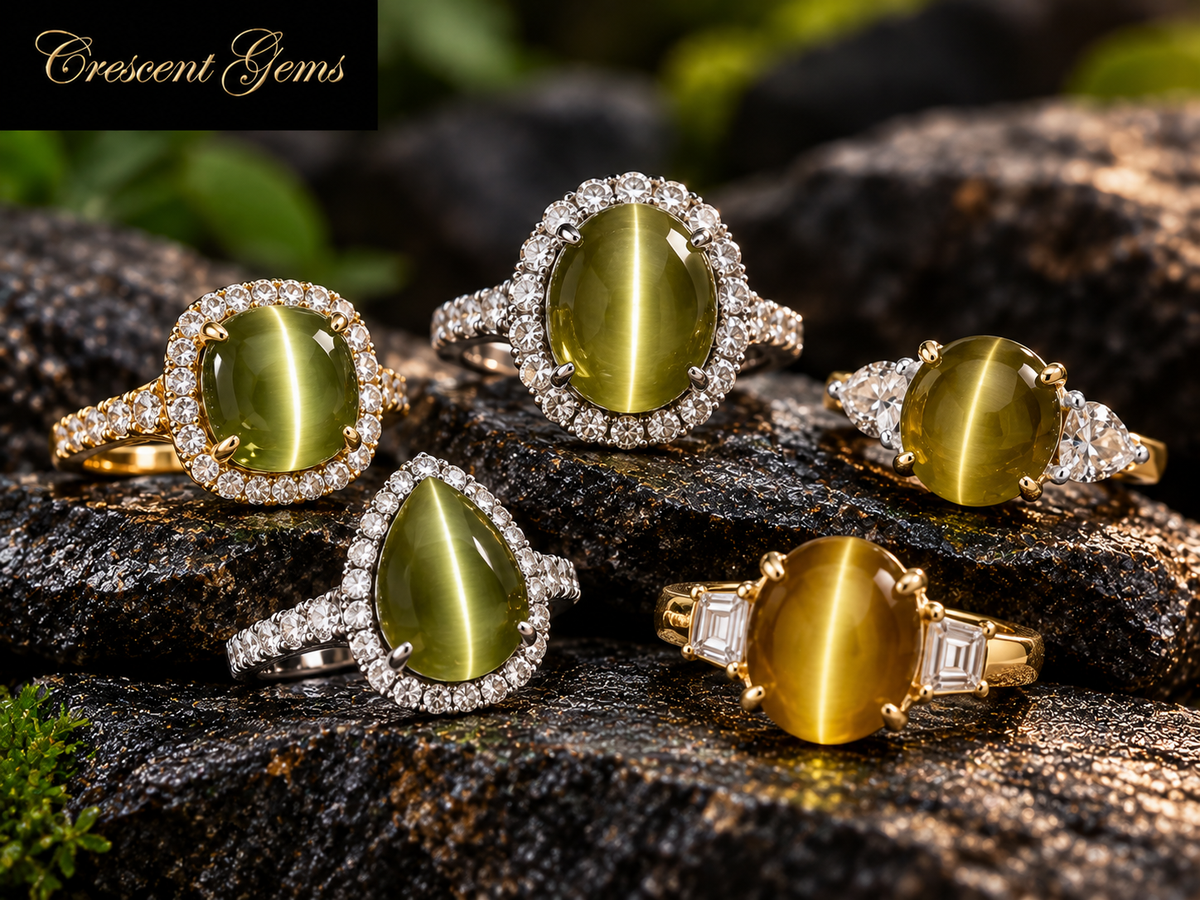
Is Cat's-Eye Chrysoberyl Good for an Engagement Ring?
Read moreabout Is Cat's-Eye Chrysoberyl Good for an Engagement Ring?
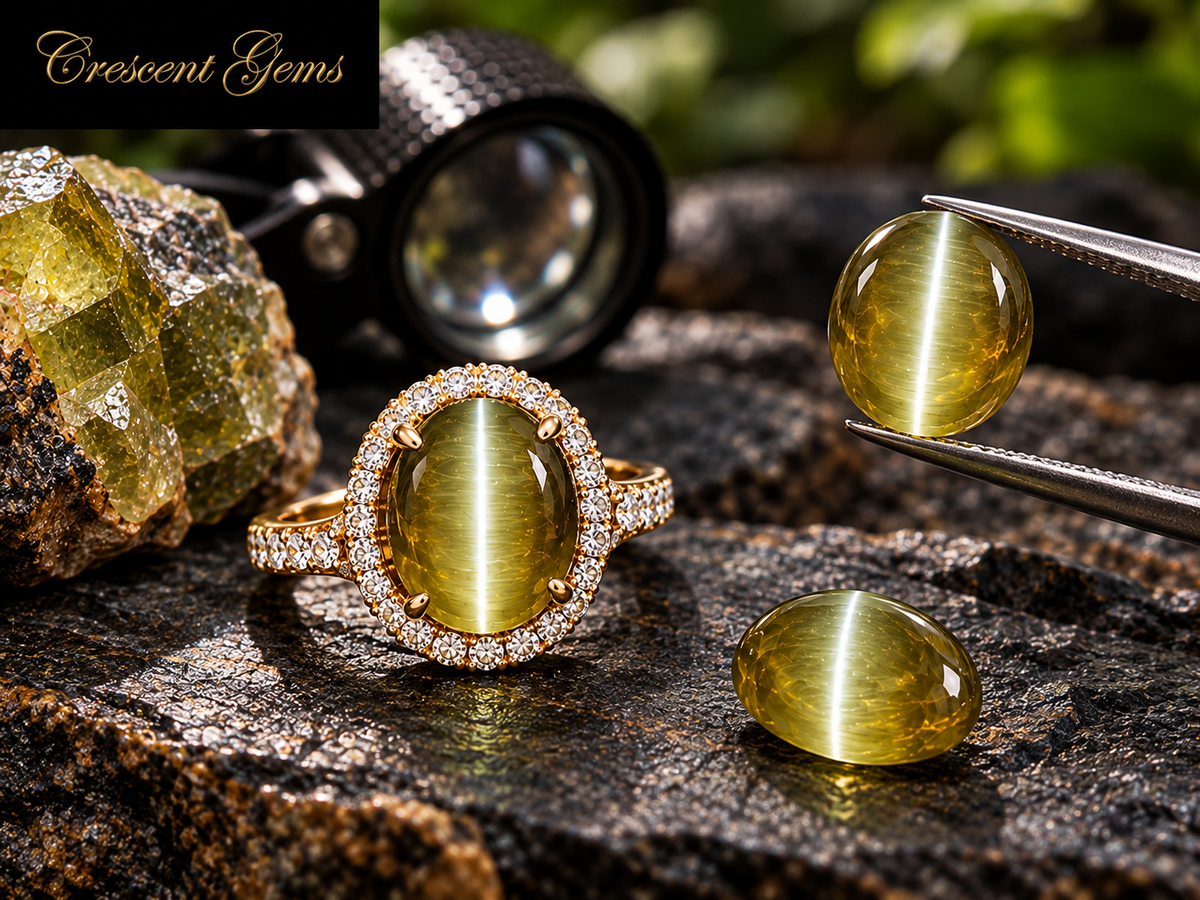
Cat's Eye Chrysoberyl Price Guide — What They Cost and Why
Read moreabout Cat's Eye Chrysoberyl Price Guide — What They Cost and Why