- by Ahmed Shareek
Peach Sapphire vs. Padparadscha: What's the Difference?
- by Ahmed Shareek
Browse our Peach Sapphire Collection. We hold no padparadscha at present; the padparadscha collection page says the same. For deep dives: Padparadscha Complete Guide — Peach Sapphire Buyer's Guide.
Peach sapphire and padparadscha occupy adjacent territory in the corundum colour spectrum. Both sit in the warm pink-orange family, and at the boundary between them the visual difference can be genuinely subtle. The difference between the two names is not subtle at all, and that is where this page starts.
There are really two differences here, and separating them is most of the answer. Padparadscha is a name a laboratory applies, under a published definition. Peach is a name the trade applies, and no published definition stands behind it. That is the first difference and it is the settled one. The second is colour, and it is less tidy: the published definition describes a range rather than a point, the two names cover overlapping ground, and a stone near the edge of that range can receive one name from one laboratory and a different name from another. So the short answer to the question in the title is that the difference is the word on the report — and that the stone underneath it can be the same stone. A report that uses the padparadscha name and one that does not can price that stone very differently, which is why the word on the report matters more than the word in a listing.
The word padparadscha derives from the Sinhalese and Sanskrit for lotus blossom — the warm, delicate pink-orange of the flower that grows in Sri Lanka's lakes and waterways. The colour is not a marketing invention. It is the one colour name in the sapphire trade that laboratories have written a definition for, which is what makes this comparison checkable rather than a matter of taste.
The definition is in LMHC Information Sheet #4 (Corundum), adopted by the laboratories that signed that sheet — GIA, Gübelin and SSEF among them. It harmonises padparadscha as "a subtle mixture of pinkish orange to orangey pink with pastel tones and low to medium saturations". Three things sit inside that one sentence:
Three consequences follow, and they are worth holding on to. The sheet defines a colour, so it says nothing at all about where the stone formed. It is applied by a laboratory to a particular stone, so the name belongs to a report rather than to a seller — a seller can write the word, but only a report can put it on the stone. And it describes a range, so two laboratories looking at one stone near the edge of that range can reasonably write different things. See our full Padparadscha Sapphire Complete Guide.
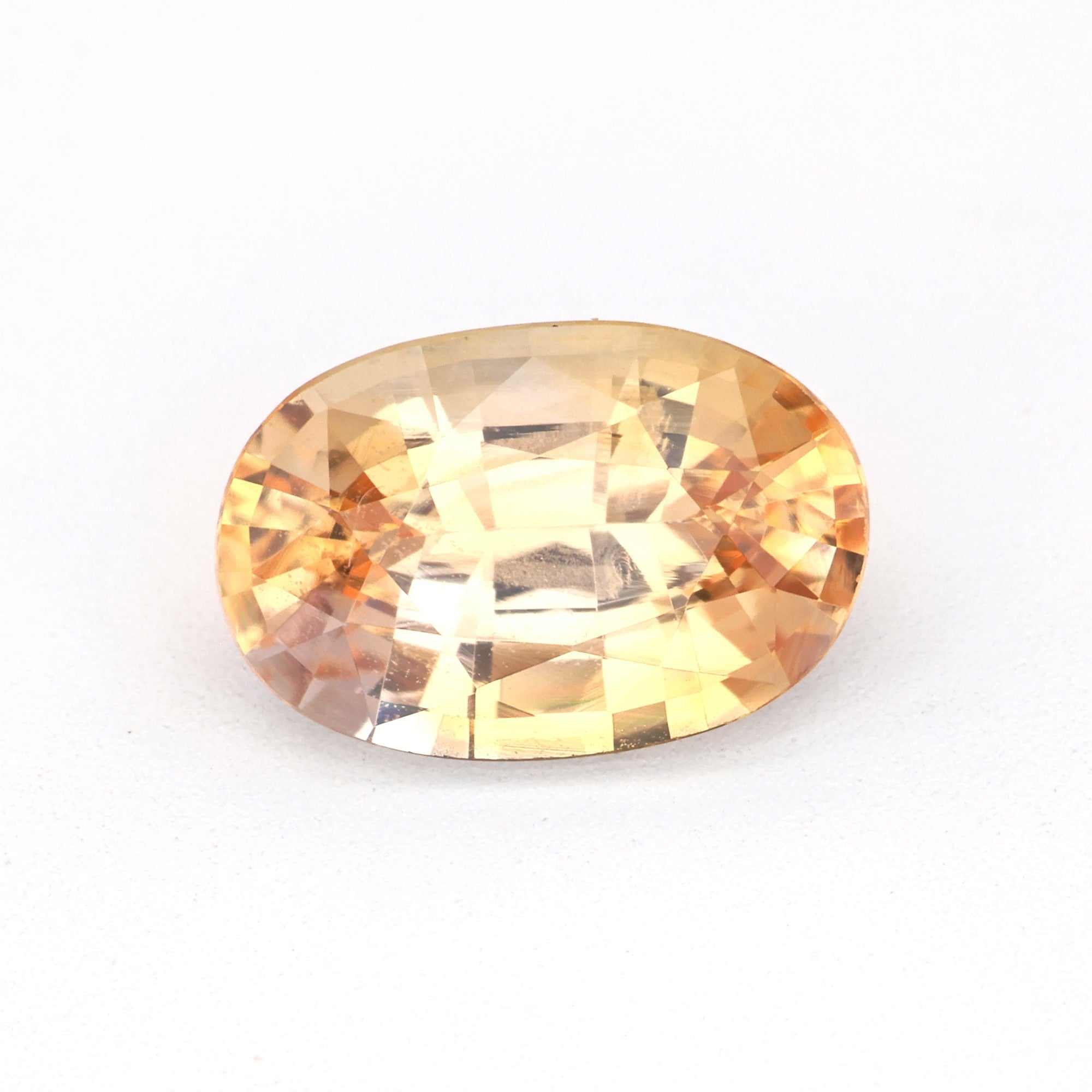
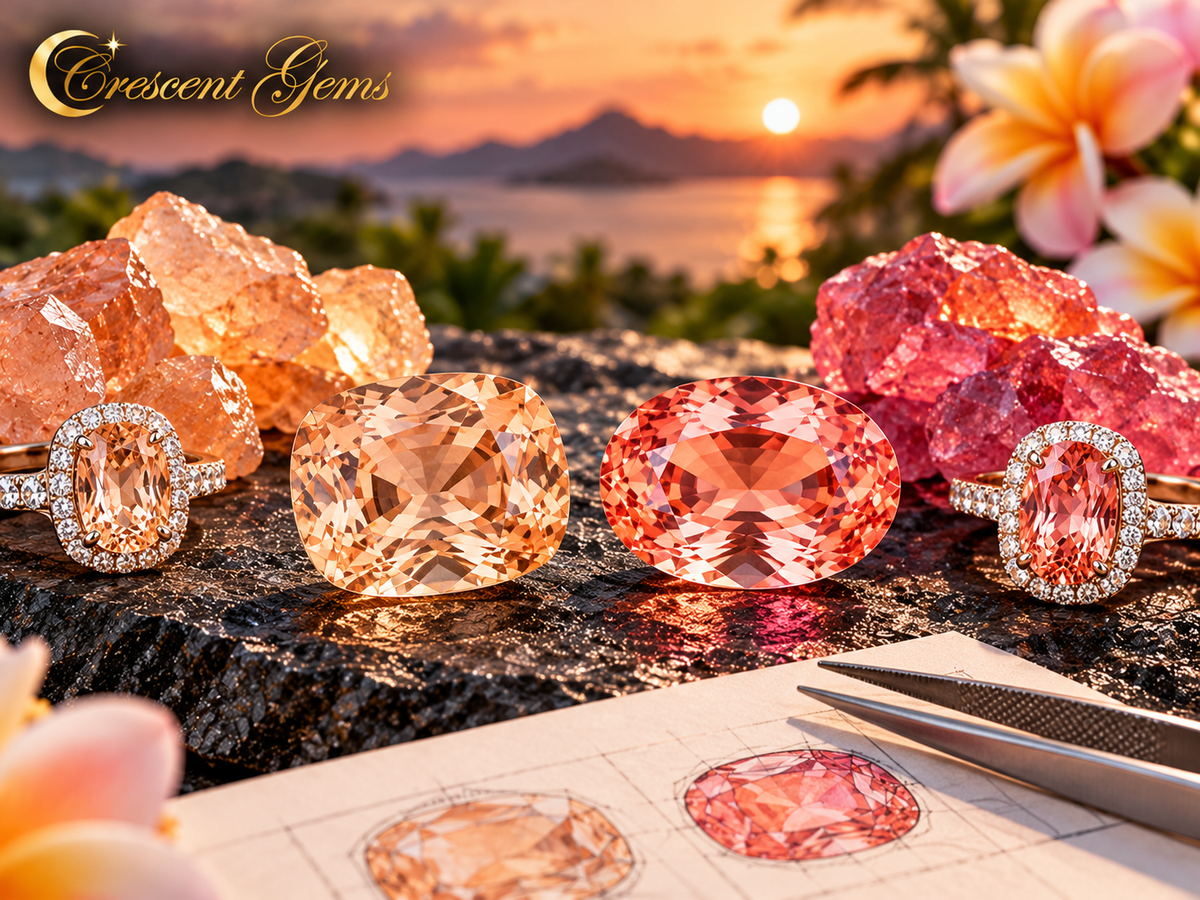
Peach sapphire is a trade term — not a laboratory designation — for corundum in the warm pink-orange family that does not carry the padparadscha name. The term covers a broad range: stones that lean more strongly towards orange than pink, stones that lean more strongly towards pink than orange, stones in the pink-orange range but too saturated or too dark for Sheet #4, and stones at the lighter end that sit close to the padparadscha range without a laboratory having called them that.
Fine peach sapphire is genuinely beautiful material — warm, glowing, and quite unlike the colour most people picture when they hear the word sapphire. Because the name carries no laboratory definition, nothing about a peach sapphire is settled by its name: what the stone looks like, what treatment it has had, and what documentation it carries are three separate questions, and all three are answered on the listing rather than by the word.
| Colour Description | Laboratory Designation | Notes |
|---|---|---|
| Pale orange-pink, pastel, low to medium saturation | Padparadscha, where a laboratory applies the name | Squarely inside the range Sheet #4 describes |
| Light pink-orange, leaning slightly pink, pastel | Padparadscha or pink-orange sapphire, depending on the laboratory | The boundary zone; the same stone may receive different names from different laboratories |
| Warm orange-pink, slightly orange-dominant, light tone | Pink-orange sapphire, or peach sapphire as a trade term | Close to the padparadscha range in appearance; the report decides the name |
| Classic peach — warm, golden-pink, moderate saturation | Peach sapphire (trade term) | The core of what the trade calls peach |
| Pale peachy-pink, very light, low saturation | Peach or light pink sapphire | The lighter end of the range |
| Deep orange-pink, stronger saturation, darker tone | Orange-pink sapphire | Too saturated and too dark for Sheet #4, whatever the hue |
The laboratories that adopted Sheet #4 work to the same written definition, but a definition that describes a range still has to be applied by eye to a particular stone. Near the edge of the range that is a judgement, which is why the same stone sometimes receives the padparadscha name from one laboratory and "pink-orange sapphire" from another. That is a property of the boundary, not a failing of any laboratory.
What the sheet does settle:
The stone this page is really about is the one that sits visually close to the padparadscha range — pastel pink-orange, low to medium saturation — and still receives a different name from the laboratory that examined it. We call that near-padparadscha peach on this page. It is our phrase, not a laboratory's, and it means that and nothing more: it describes how a stone looks, and it says nothing about treatment or documentation. If what you are buying is the look, this is where to look. If what you are buying is the name, it is not.
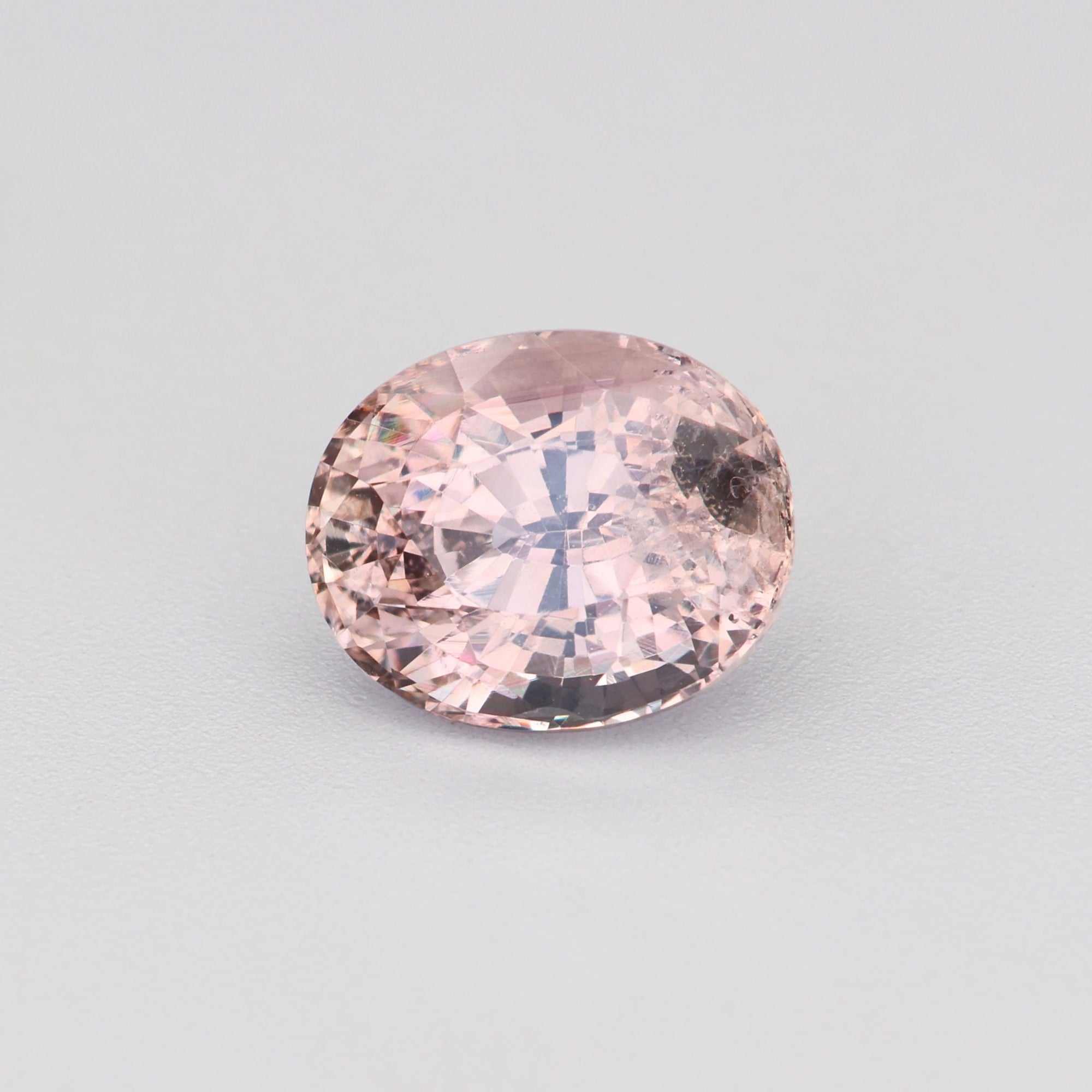
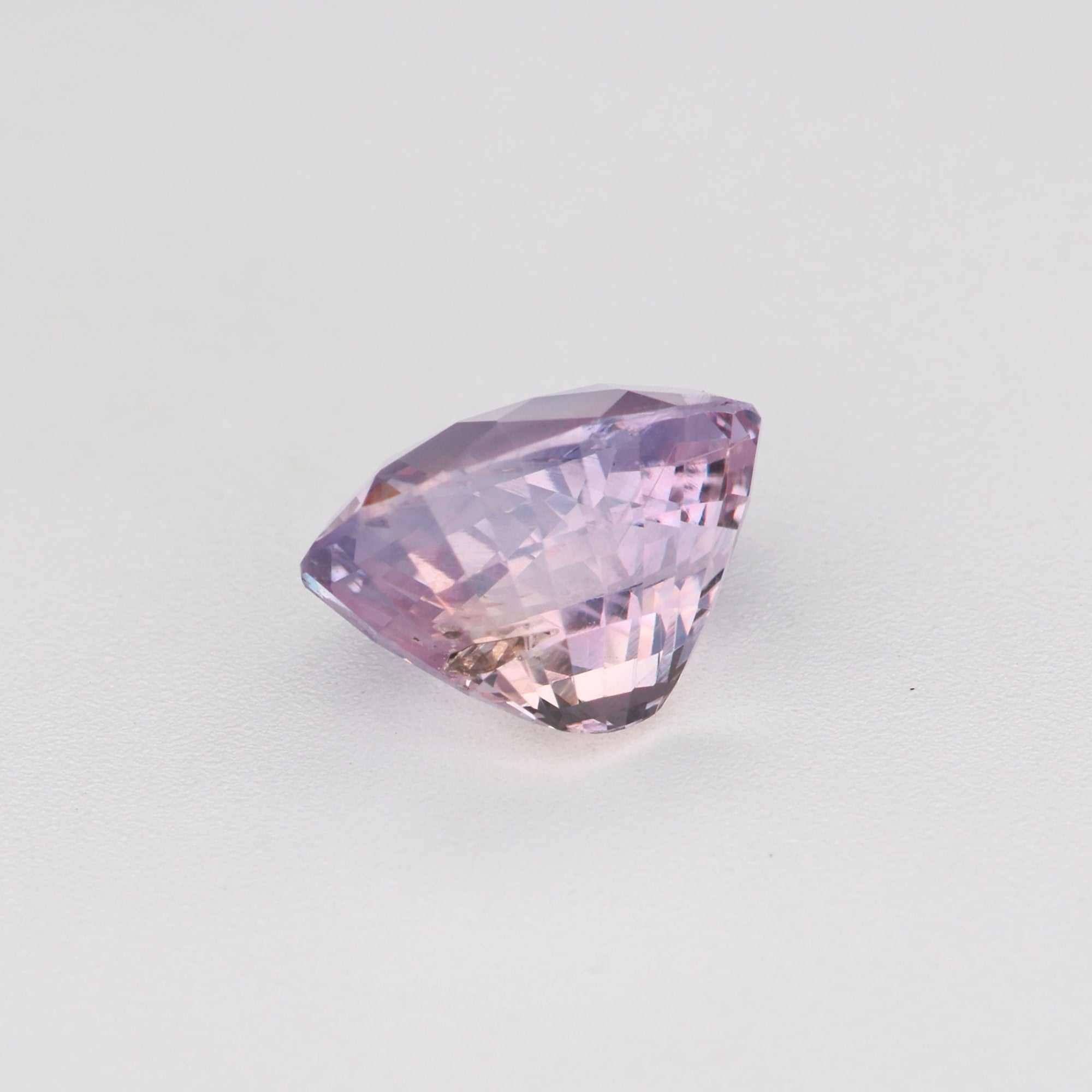
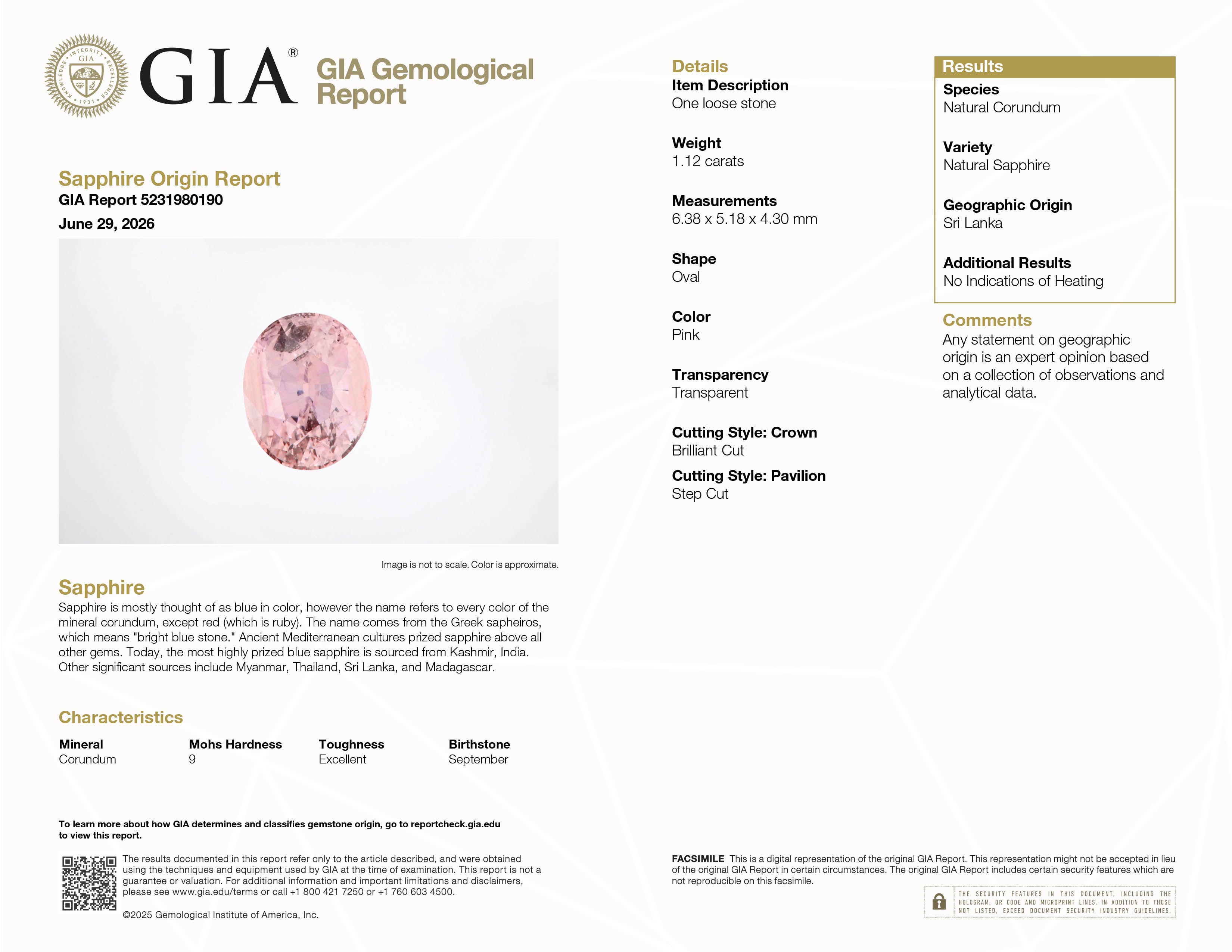
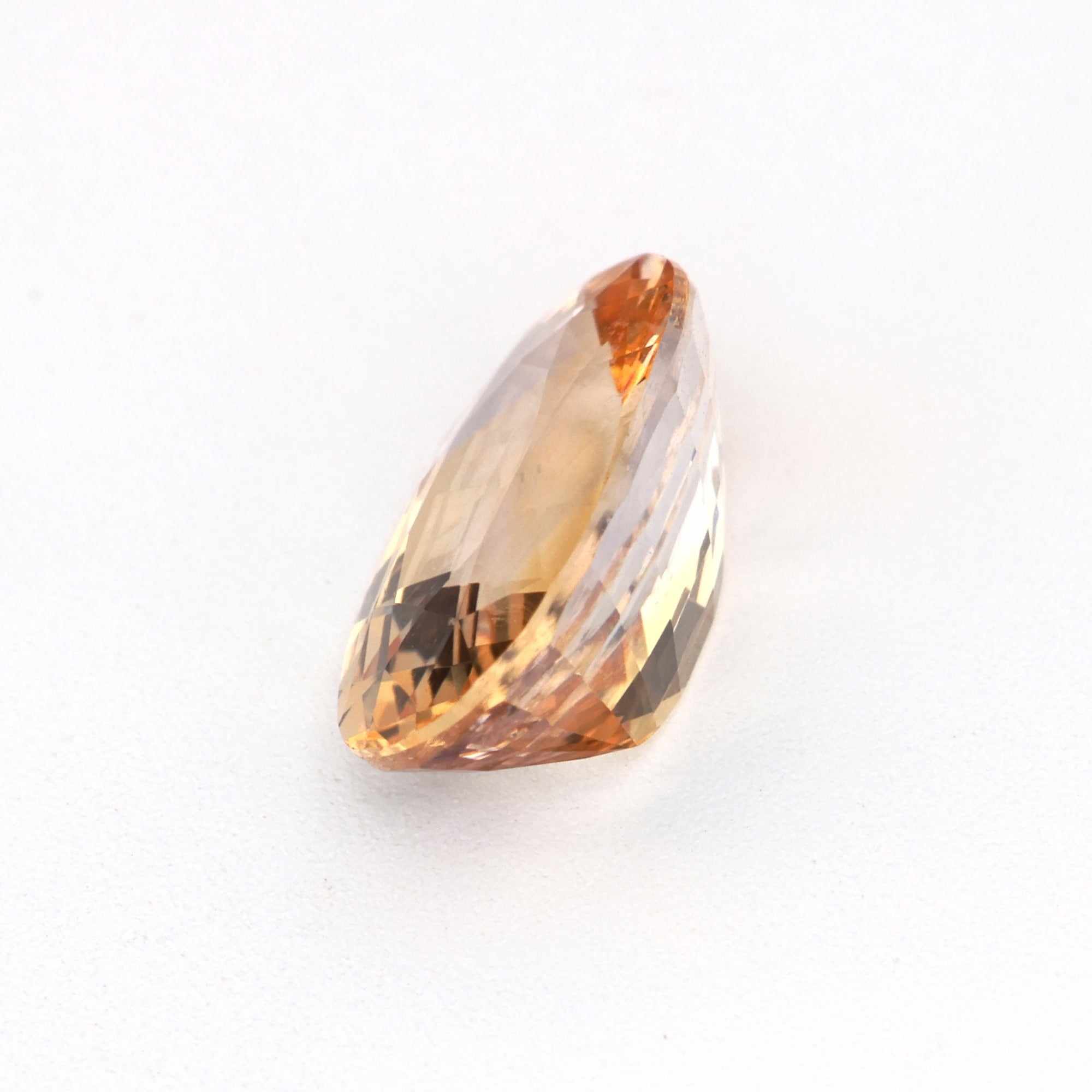
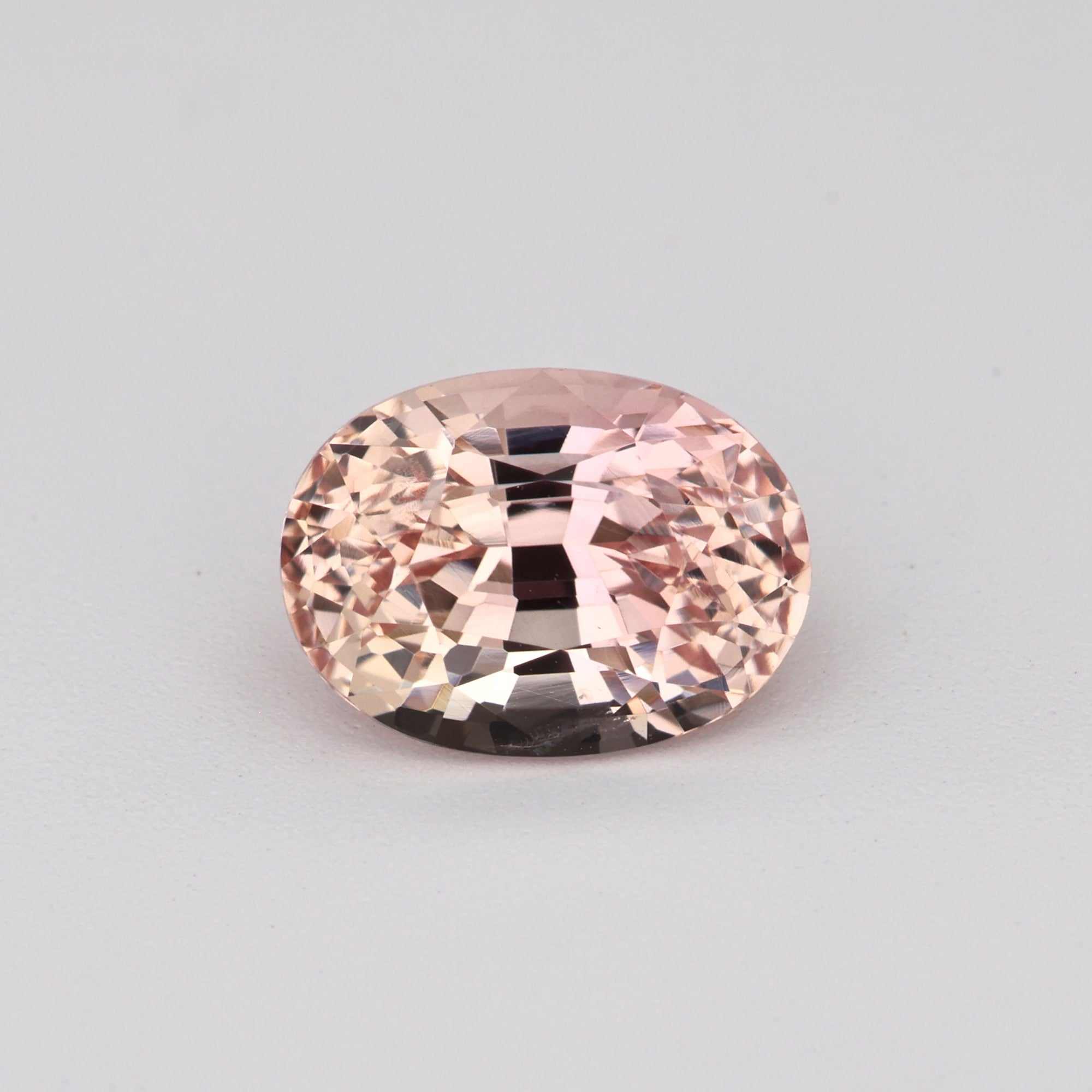
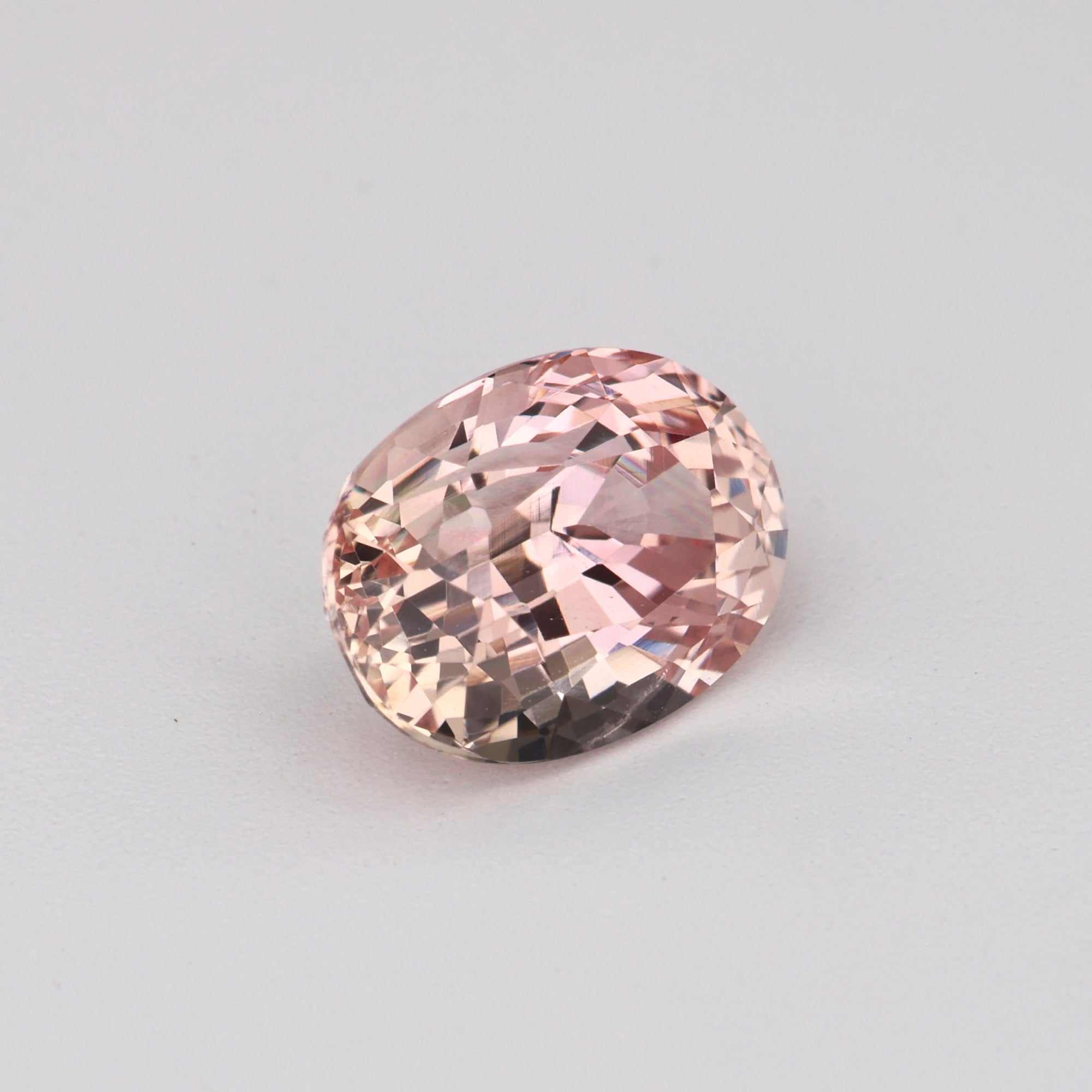
One of our own listings shows where the line falls. Our 1.12 ct unheated oval peach sapphire from Sri Lanka carries GIA Report #5231980190, and the report prints its colour as "Pink" — not padparadscha, and not pink-orange sapphire. We list it as peach. GIA prints a colour; it does not grade one, and where this stone sits on the pink-to-peach line is our own judgement, so the listing records both: our description, and the colour the report prints.
Heat usually pushes a stone out of this colour range, which is why a good deal of the fine material in it has never been heated. Not all of it, though — and ours is not all of it either. Each of our listings states the treatment for the stone it describes.
The pink-orange colour in both is produced by an interaction between chromium (Cr³⁺, responsible for pink) and iron (Fe, contributing the orange modifier) in the corundum lattice, and that interaction is sensitive to temperature. At heat-treatment temperatures the balance shifts, typically pushing the colour towards a plainer pink or a plainer orange and taking away the thing that made the stone interesting. That is a tendency, not a rule, and it is not what decides the name. Lotus Gemology records padparadscha-coloured material from Vietnam's Quy Chau district, Tanzania's Tunduru district and Madagascar as often heat-treated at fairly low temperatures — 1,200 °C and below — and parts of the trade sell those stones under the padparadscha name.
Most commercial blue sapphire is heated. Heat is far less useful in this colour family, because it tends to destroy the colour rather than improve it — which is a reason to expect unheated material here, not a guarantee of it. The treatment line on a particular stone is the only thing that settles that stone. See our What Is an Unheated Sapphire? guide.
| Factor | Peach Sapphire | Padparadscha Sapphire |
|---|---|---|
| Gemmological status | Trade term — no published definition | Laboratory designation, defined in LMHC Information Sheet #4 |
| Colour | Warm pink-orange, with no defined limits | Pinkish orange to orangey pink, pastel tones, low to medium saturations |
| Where the name comes from | The seller, or the trade generally | A laboratory report that uses the word |
| Treatment | Varies — each listing states it | Heat does not withhold the name: Sheet #4 applies it to heated and unheated stones alike |
| Beryllium diffusion | A real risk in this part of the spectrum; trace-element analysis is what addresses it | The same risk, and the reason laboratories run trace-element analysis on stones in this colour |
| Origin | Recorded on each listing | Not part of the definition; recorded separately, and as an opinion |
| What we hold | We list peach sapphire regularly | None at present |
| Choose it if | You are choosing on how the stone looks | You are choosing on what the report says |
Sri Lanka is the origin most associated with this colour, and the name itself is Sinhalese. Material in the pink-orange range is also reported from Madagascar, Tanzania and Vietnam. We do not rank origins against one another, and there is no published scale that would let anyone do it honestly: where a stone formed and how it looks are two separate findings, and the first does not settle the second.
Origin on a report is an opinion, and the laboratory says so in its own words. Next to an origin finding GIA prints: "Any statement on geographic origin is an expert opinion based on a collection of observations and analytical data." Each listing records the origin of its own stone, or says plainly that the origin is not established, and whether a laboratory has given an opinion on it is on that stone's product page. See our Ceylon Sapphire Complete Guide.
Beryllium diffusion introduces beryllium into the corundum lattice at high temperature to produce a colour the stone did not have. It is used disproportionately in the pink-orange and padparadscha range, because that is where the colour is worth most, and it can turn pale, low-value rough into material that looks like the thing itself. That is why this page spends as much time on documentation as it does on colour.
Beryllium diffusion cannot be detected by visual inspection, by loupe examination, or by standard gemmological testing. It is identified by trace-element analysis — LA-ICP-MS. The practical consequence:
See our Beryllium Diffusion Explained guide for the full picture on detection, documentation and what the laboratory report should say. We do not list beryllium-treated stones.
This is not a choice between a better stone and a worse one. It is a choice between two different things you might be buying, and it is worth knowing which one you are after before you start looking.
Before buying a peach or padparadscha sapphire:
Padparadscha is a name a laboratory applies under a published definition. LMHC Information Sheet #4 harmonises it as "a subtle mixture of pinkish orange to orangey pink with pastel tones and low to medium saturations". Peach sapphire is a trade term for warm pink-orange corundum that does not carry that name, and no published definition stands behind it. The two can describe the same stone. What differs is who applies the word, and what the word is defined against.
They can, and the word costs them nothing. It is not checkable, though. The padparadscha name means something only where a laboratory report uses it, because the definition is something a laboratory applies to a particular stone. A seller's description of a stone as padparadscha is the seller's opinion, ours included.
No. Heat tends to push a stone out of this colour range rather than into it, so a good deal of the material here has never been heated. Some of it has, including some of ours. Treatment is stated on every listing, and the treatment line on a laboratory report, where there is one, is what settles it for a particular stone.
It is our phrase for a stone that sits visually close to the padparadscha range, pastel pink-orange at low to medium saturation, and still receives a different name from the laboratory that examined it. It is not a laboratory term and we do not present it as one. It describes appearance only. Nothing about treatment or documentation follows from it.
No. Sheet #4 defines a colour, not a source, and says nothing about origin. Sri Lanka is the origin most associated with this colour and the name itself is Sinhalese, but material in the range is also reported from Madagascar, Tanzania and Vietnam. Where a stone formed is a separate finding, and a laboratory gives it as an opinion: GIA prints that "Any statement on geographic origin is an expert opinion based on a collection of observations and analytical data."
You cannot tell by looking. Beryllium diffusion is not detectable by visual inspection, by loupe, or by standard gemmological testing. It is identified by trace-element analysis, LA-ICP-MS. Ask which laboratory issued the report and whether the report addresses beryllium. Not every laboratory runs that analysis, and a report that does not mention beryllium has not ruled it out.
It depends which of the two things you are buying. If you are buying the colour, judge the stone and let the name follow; near-padparadscha peach is where appearance and name come apart. If you are buying the name, nothing short of a laboratory report that uses the word will do. We list peach sapphire and we hold no padparadscha at present, so for any particular stone the product page is the answer, not this one.
Every listing states the treatment. Where a report exists, the listing names the laboratory and the report number; where none exists, it says so plainly. Our own rule on documentation is that we are moving every stone we list above US$500 to GIA — that is our threshold, not a market standard — and if a particular stone interests you and is not yet GIA-documented, say so and we will send it in before it ships. Because stock turns over, the product page rather than this one is the current answer for any particular stone.
We hold no padparadscha at present. We are not going to describe a peach sapphire in padparadscha's language to get round that. If we list a padparadscha it will be because a laboratory report calls it one, and the listing will name the report.
We are a supplier from the source in Sri Lanka, so our peach sapphires reach you direct, without the intermediaries most sellers buy through. We buy in Ratnapura, Beruwala and Colombo, we cut in our own factory, and we keep no showroom.
Email crescentgems@gmail.com with your budget and colour preference and we will tell you what we actually have. We respond within one business day.
Shopping by size? Browse peach sapphire over 1 carat or peach sapphire under 1 carat.

CG8429
Prices are shown in your local currency and may change.

CG8352
CG8379
CG8429
CG8367
CG8344
CG8132
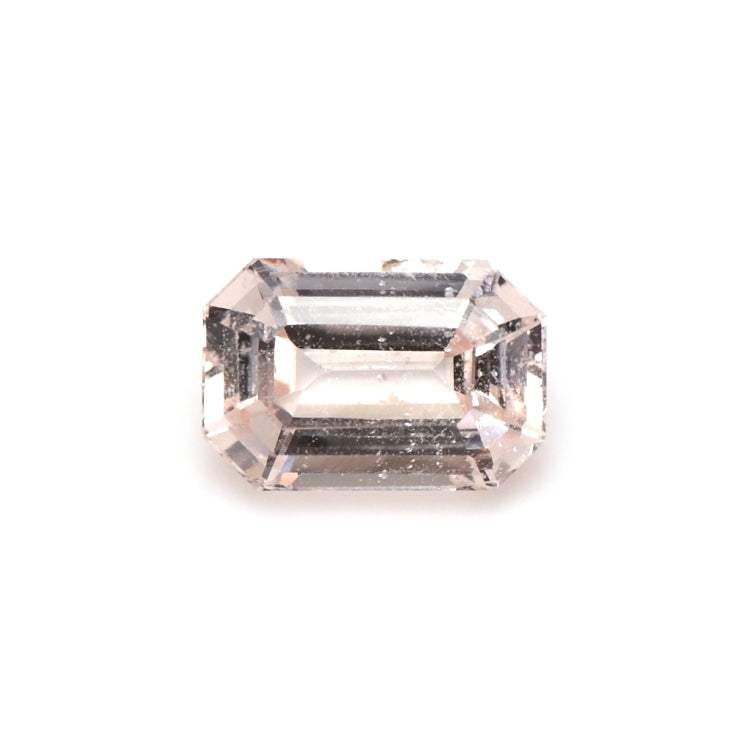
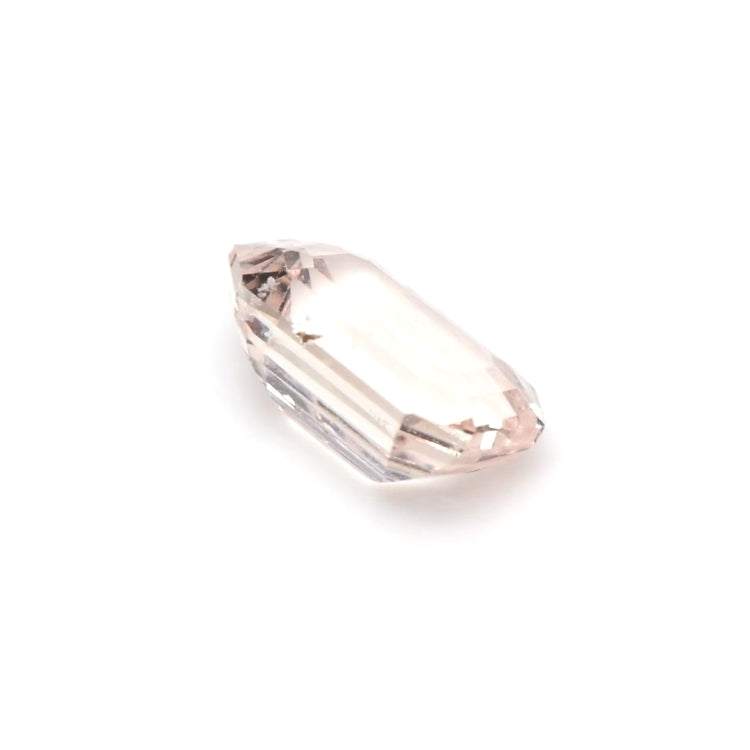
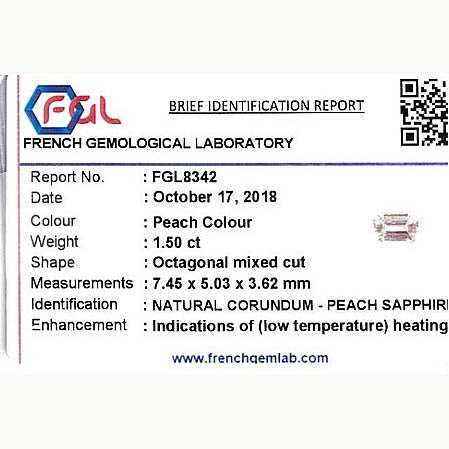
1.50 ct Natural Heated Peach Sapphire – Emerald Cut


Blue Star Sapphire Price Guide — What They Cost and Why
Read moreabout Blue Star Sapphire Price Guide — What They Cost and Why
Tsavorite Garnet Price Guide — What They Cost and Why
Read moreabout Tsavorite Garnet Price Guide — What They Cost and Why
Color-Change Sapphire Price Guide — What They Cost and Why
Read moreabout Color-Change Sapphire Price Guide — What They Cost and Why
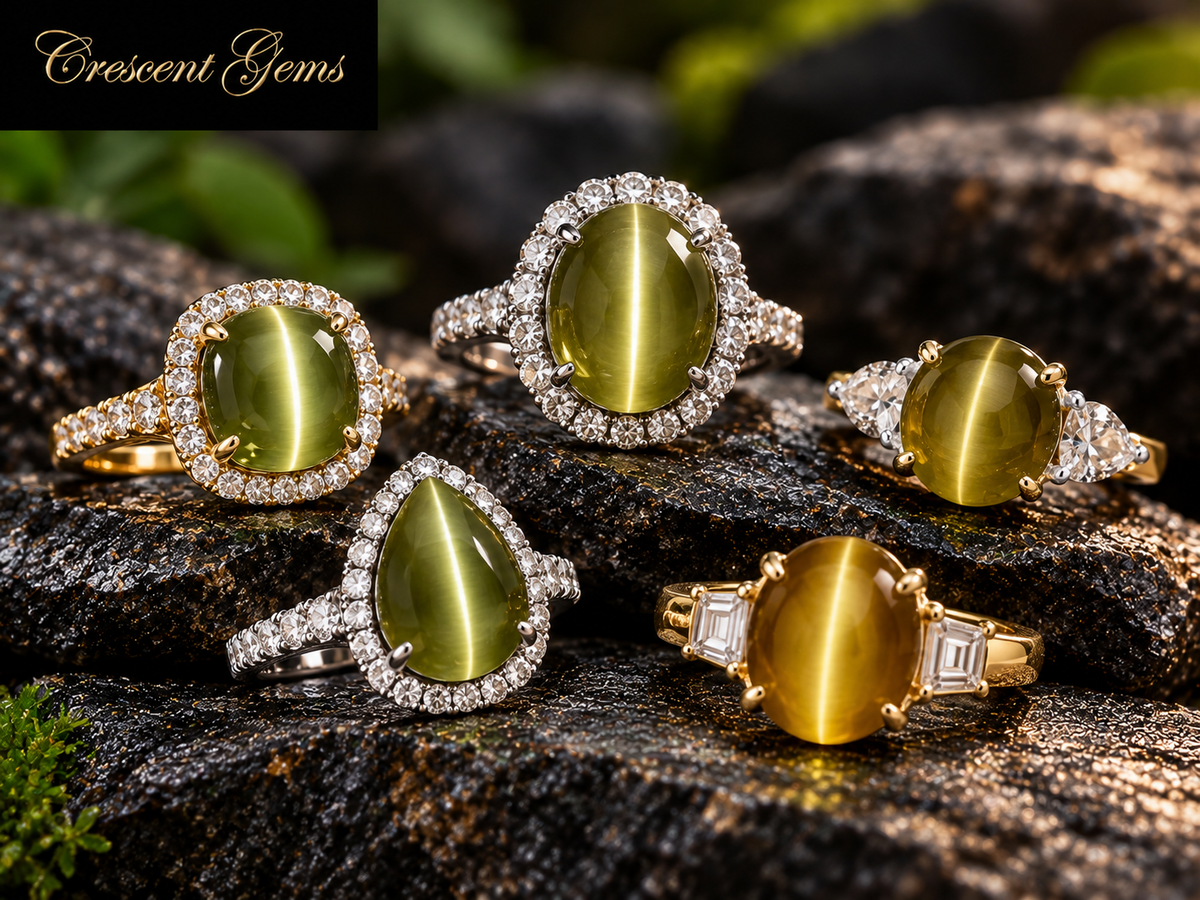
Is Cat's-Eye Chrysoberyl Good for an Engagement Ring?
Read moreabout Is Cat's-Eye Chrysoberyl Good for an Engagement Ring?
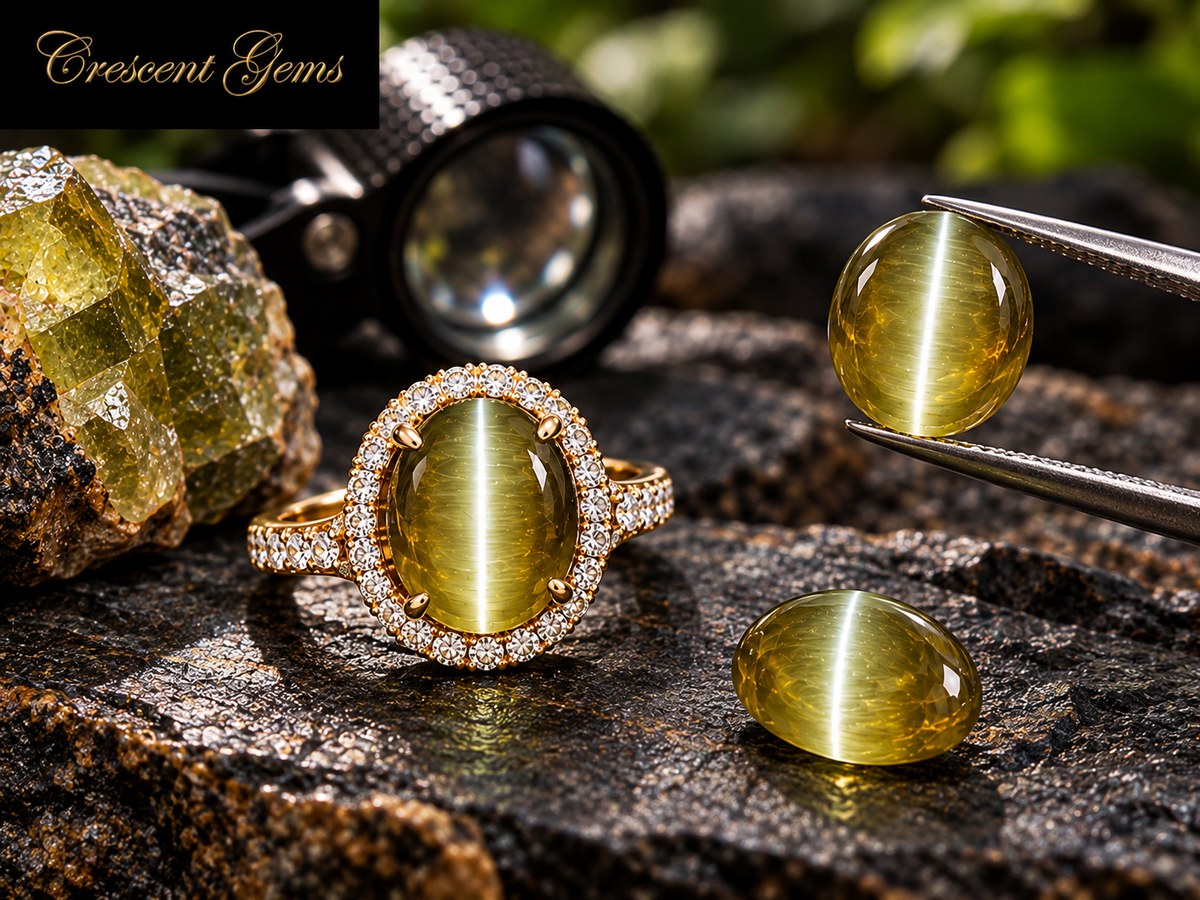
Cat's Eye Chrysoberyl Price Guide — What They Cost and Why
Read moreabout Cat's Eye Chrysoberyl Price Guide — What They Cost and Why