

- 著者:Ahmed Shareek
Sapphire vs Diamond Engagement Rings: The Real Differences, and How to Choose the Right Sapphire
- 著者:Ahmed Shareek
New to buying sapphires? Start with our Ultimate Sapphire Buying Guide — the complete resource for color, origin, treatment, and pricing.
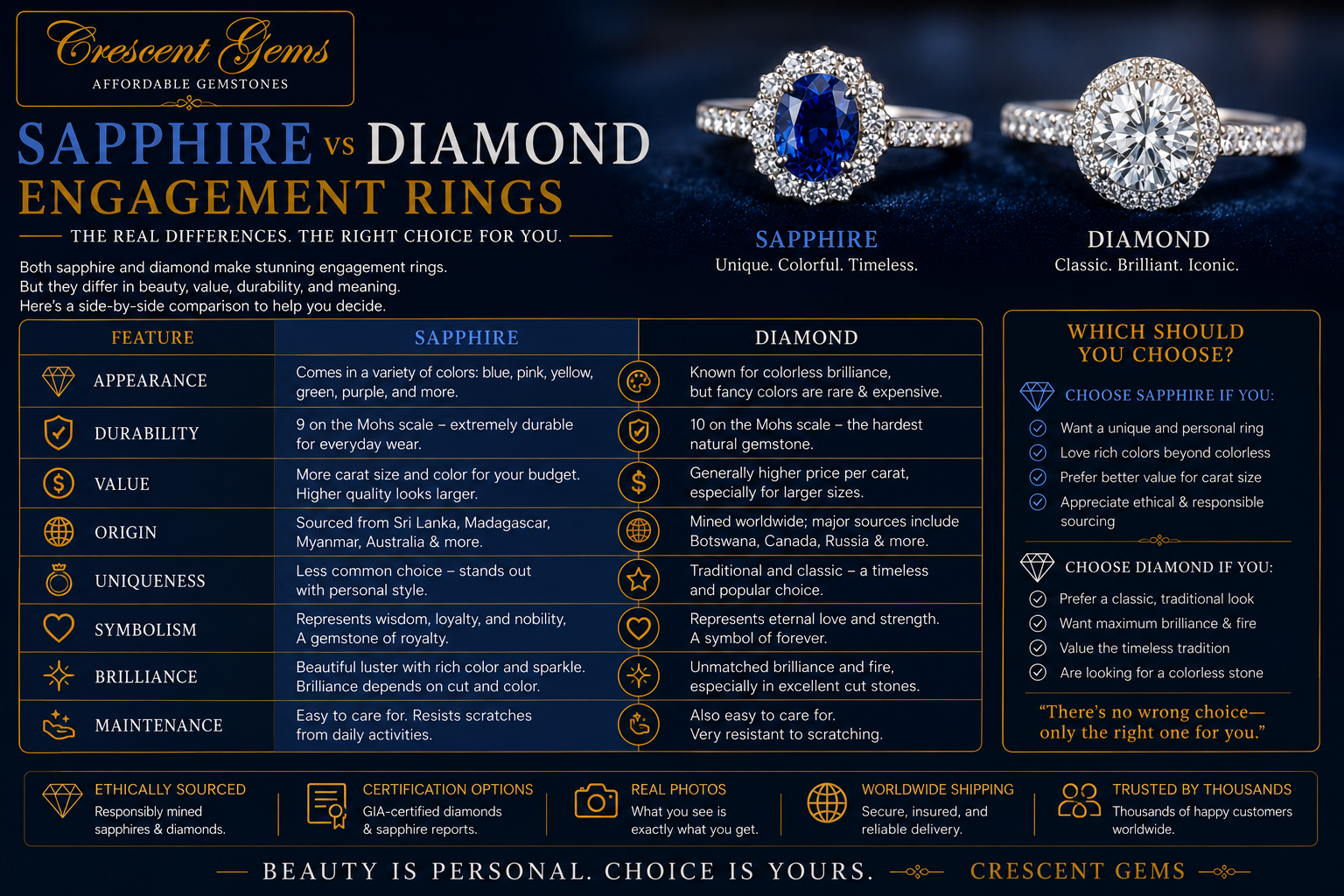
The comparison between sapphire and diamond for an engagement ring is not about which stone is better — it is about which stone is right for a specific person, budget, and aesthetic. Both are genuinely excellent choices for daily-wear rings.
Hardness and Durability: Diamond is Mohs 10. Sapphire (corundum) is Mohs 9. Diamond has perfect octahedral cleavage; sapphire has no cleavage planes. In practical terms for daily ring wear, both are extremely durable. Sapphires are considered suitable for all jewelry applications including everyday-wear engagement rings without reservation.
Brilliance and Appearance: Diamond's refractive index of 2.42 combined with strong dispersion produces the classic white flashes and rainbow fire. Sapphire at ~1.77 is brilliant in its own right but the visual effect is different — body color saturates light rather than dispersing it. This is a different aesthetic, not an inferior one. See our Sapphire Colors Explained guide.
Price: Natural diamond pricing is well established. Natural Ceylon sapphire pricing varies significantly by color and treatment: heated blue 1ct at $300–$800/ct; unheated fine blue at $800–$2,500/ct; padparadscha certified at $5,000–$15,000+/ct; teal unheated at $600–$1,500/ct. For the full pricing context see our Sapphire Pricing Explained, what a good 1 carat costs, and what a good 2 carat costs guides.
Rarity: Natural diamonds are commercially available in large quantities globally. Fine natural sapphires in certain colors — padparadscha, unheated blue above 2ct, orange — are genuinely rare. A fine unheated Ceylon blue above 3ct with a GIA report is a more unusual object than a 3ct natural diamond of equivalent quality.
Blue Sapphire — The most traditional choice. Works in white gold, yellow gold, and platinum. Browse: blue sapphires. Pink Sapphire — Ranges from soft pastel rose to vivid hot pink. Browse: pink sapphires. Peach Sapphire — Pairs exceptionally well with rose gold. Browse: peach sapphires. Padparadscha — The rarest and most valuable non-blue sapphire. Browse: padparadscha sapphires. Teal Sapphire — The most sought-after non-traditional engagement ring color; almost always unheated. Browse: teal sapphires. White Sapphire — The most durable colorless diamond alternative at Mohs 9. Browse: white sapphires.
Color First — Always. Color is the primary quality factor in sapphires. Heated or Unheated: For most engagement ring buyers, heat treatment is not a significant concern. If unheated is important, require a GIA report explicitly stating “no indications of heating.” See our unheated sapphire guide. Cut: See our guides for oval, cushion, and emerald cut sapphires. For the full shape comparison, see our best sapphire cut guide. Certification: For sapphires above $500, a GIA report is worth requiring. See our GIA report guide.
Sapphire's Mohs 9 hardness makes it suitable for all standard engagement ring settings. Metal choices affect color perception significantly. White gold and platinum create the highest color contrast with blue, teal, and pink sapphires. Yellow gold warms the stone and complements peach, padparadscha, and yellow sapphires. Rose gold is the strongest choice for peach sapphires. See our metal comparison guide and how to choose metal color guides. For specific ring styles: solitaire rings, halo rings, three-stone rings, and custom ring design. After purchase, insure your ring: see our jewelry insurance guide.
Crescent Gems carries natural Ceylon sapphires across the full color range in sizes and qualities suited to engagement ring use. Browse: sapphires for engagement rings at Crescent Gems or use our Try Before You Buy program.

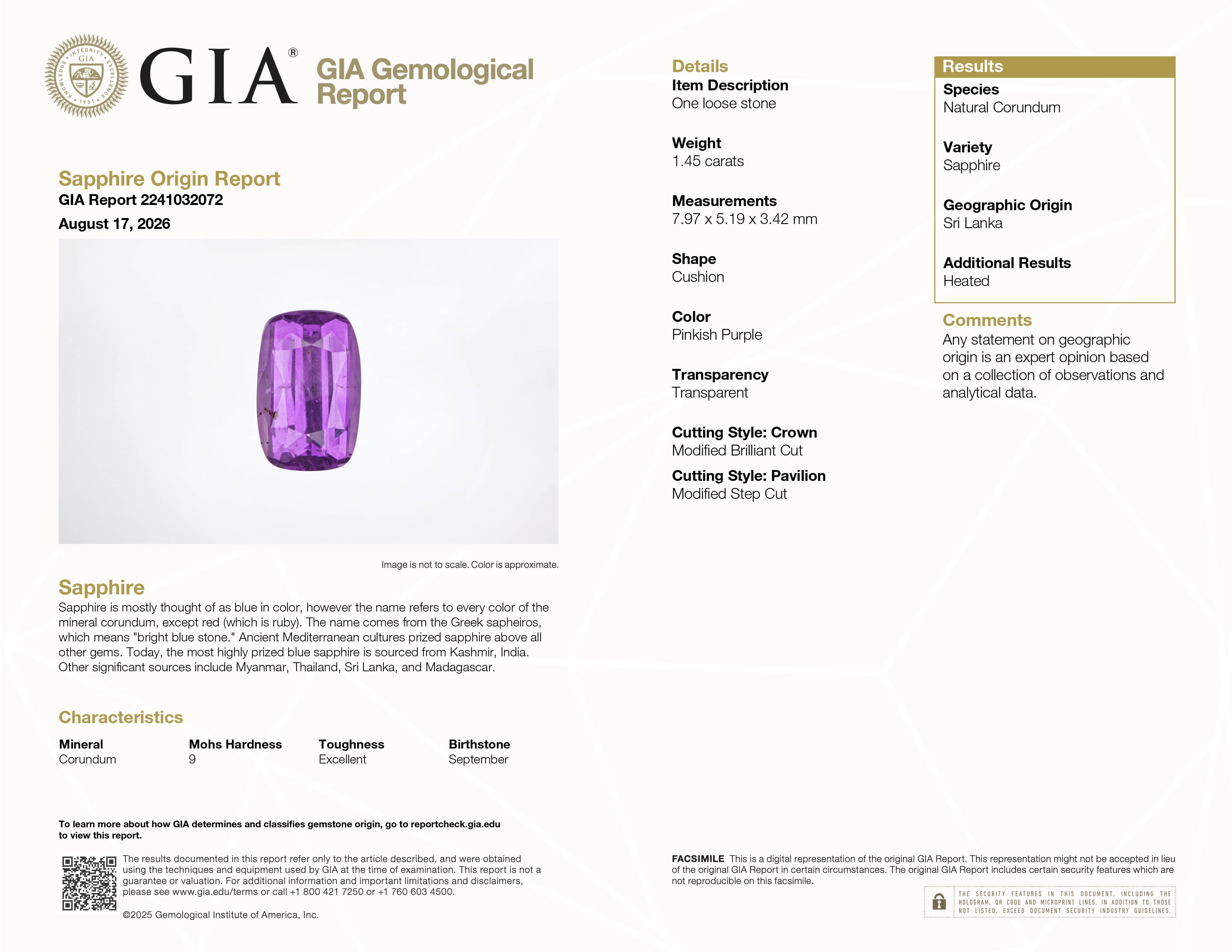
CG8469
ピンキッシュパープルサファイア 1.45ct 【加熱】 スリランカ産 GIA原産地レポート付
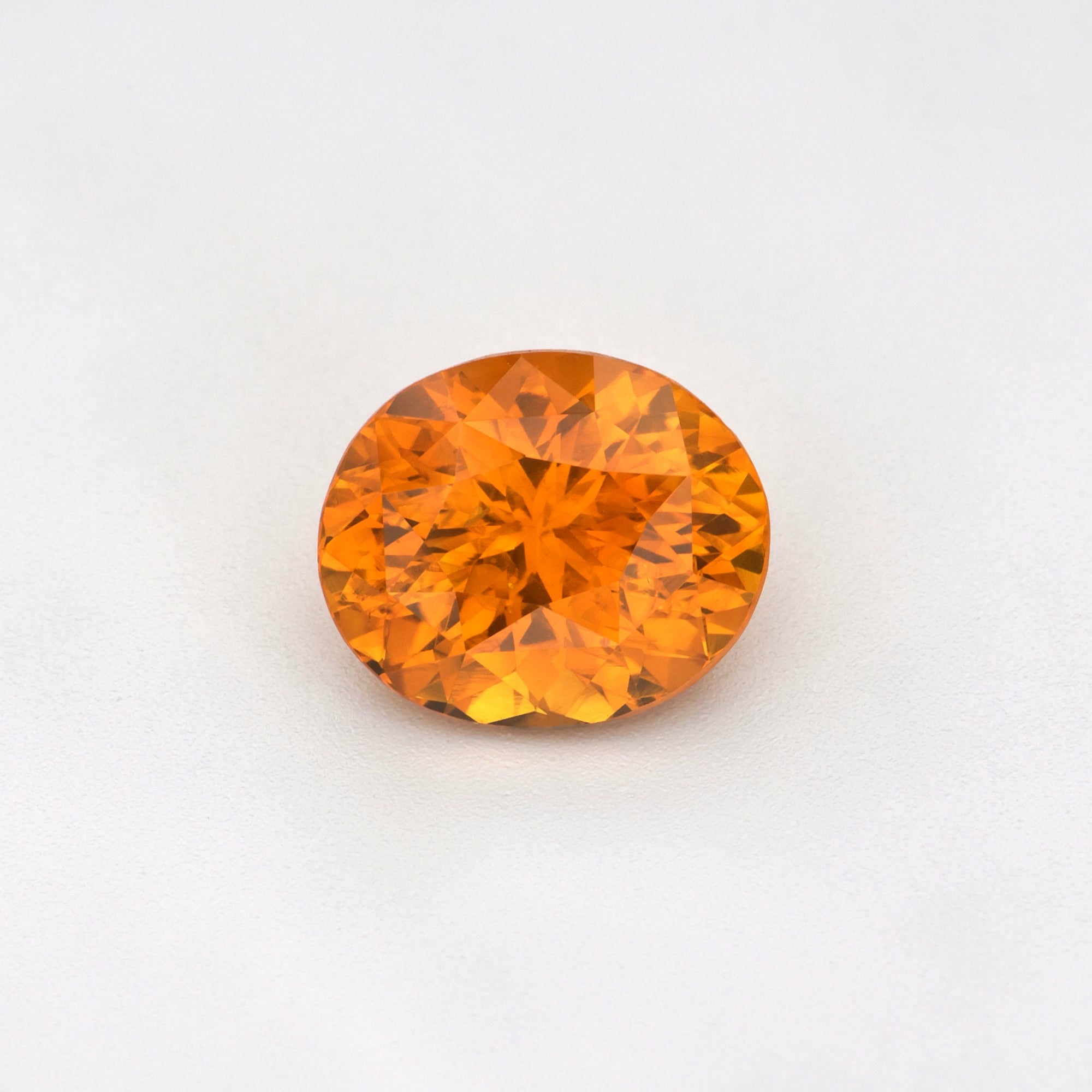
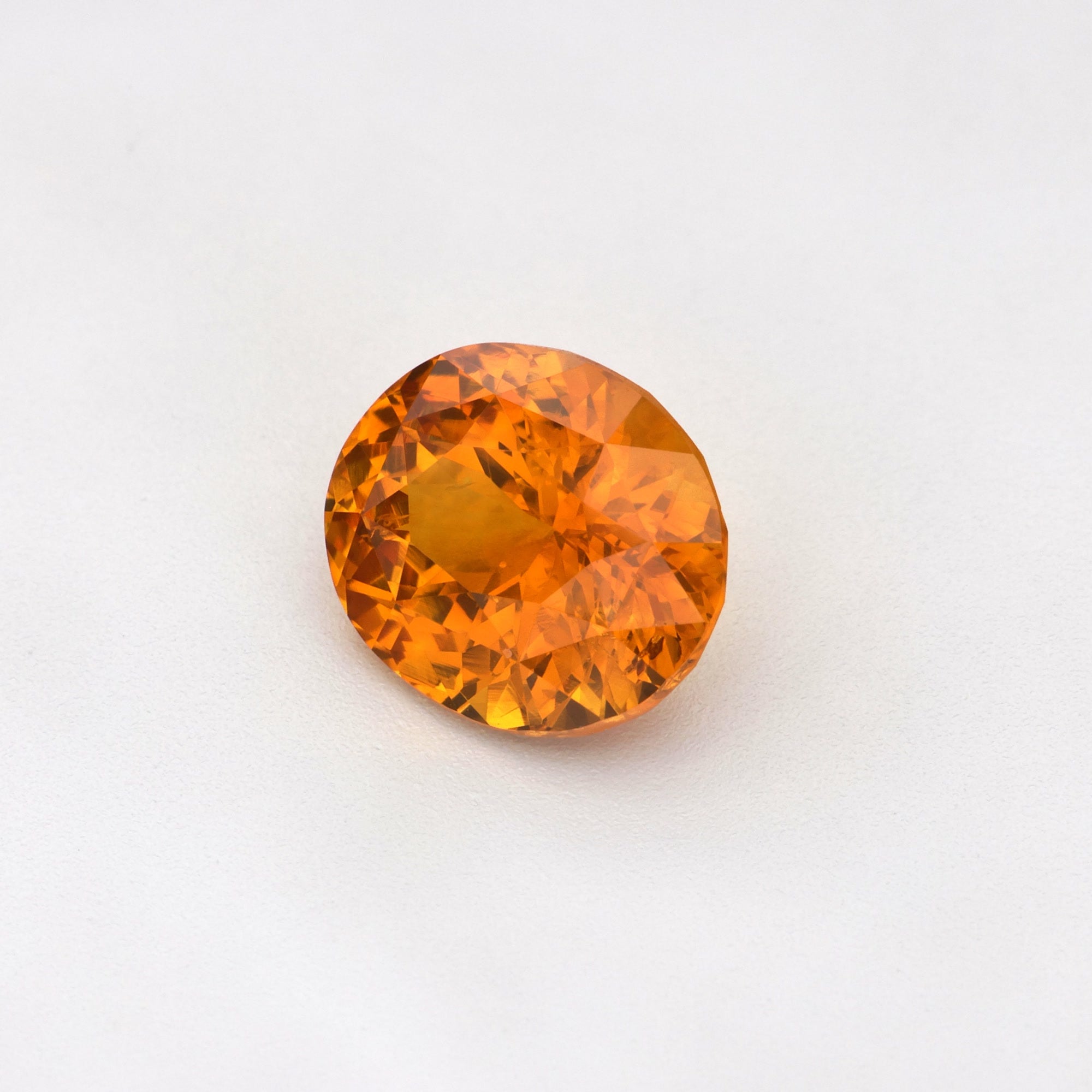
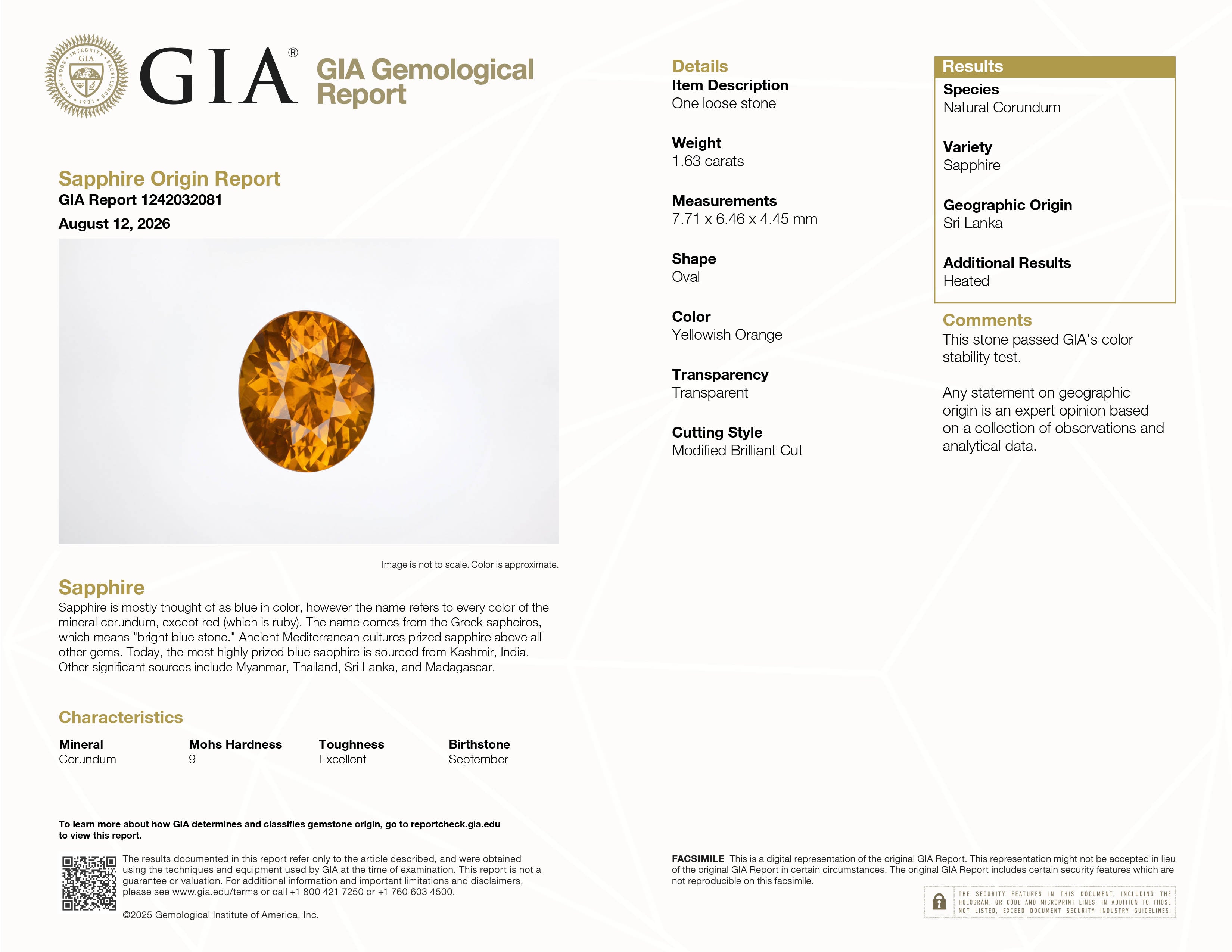
CG8454
天然オレンジサファイア1.63ct・オーバルカット・GIAレポート付・産地スリランカ(レポート記載)
CG8468
CG8465
1.86ct ツァボライト クッション 天然グロッシュラー・ガーネット|GIAレポート #1242032119
CG8464
CG8463
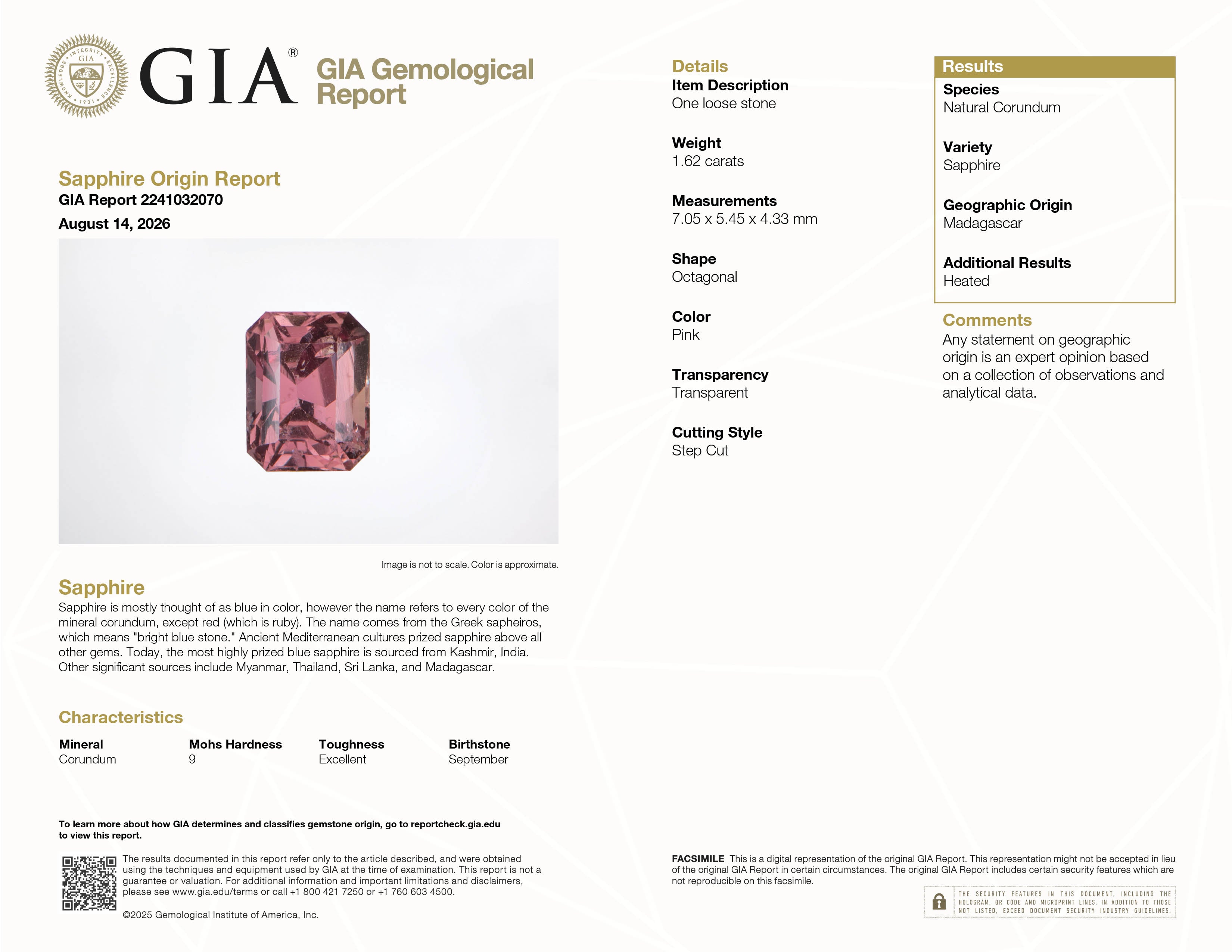
天然ピンクサファイア 1.62ct マダガスカル産【GIA原産地レポート付】エメラルドカット ルース
CG8460
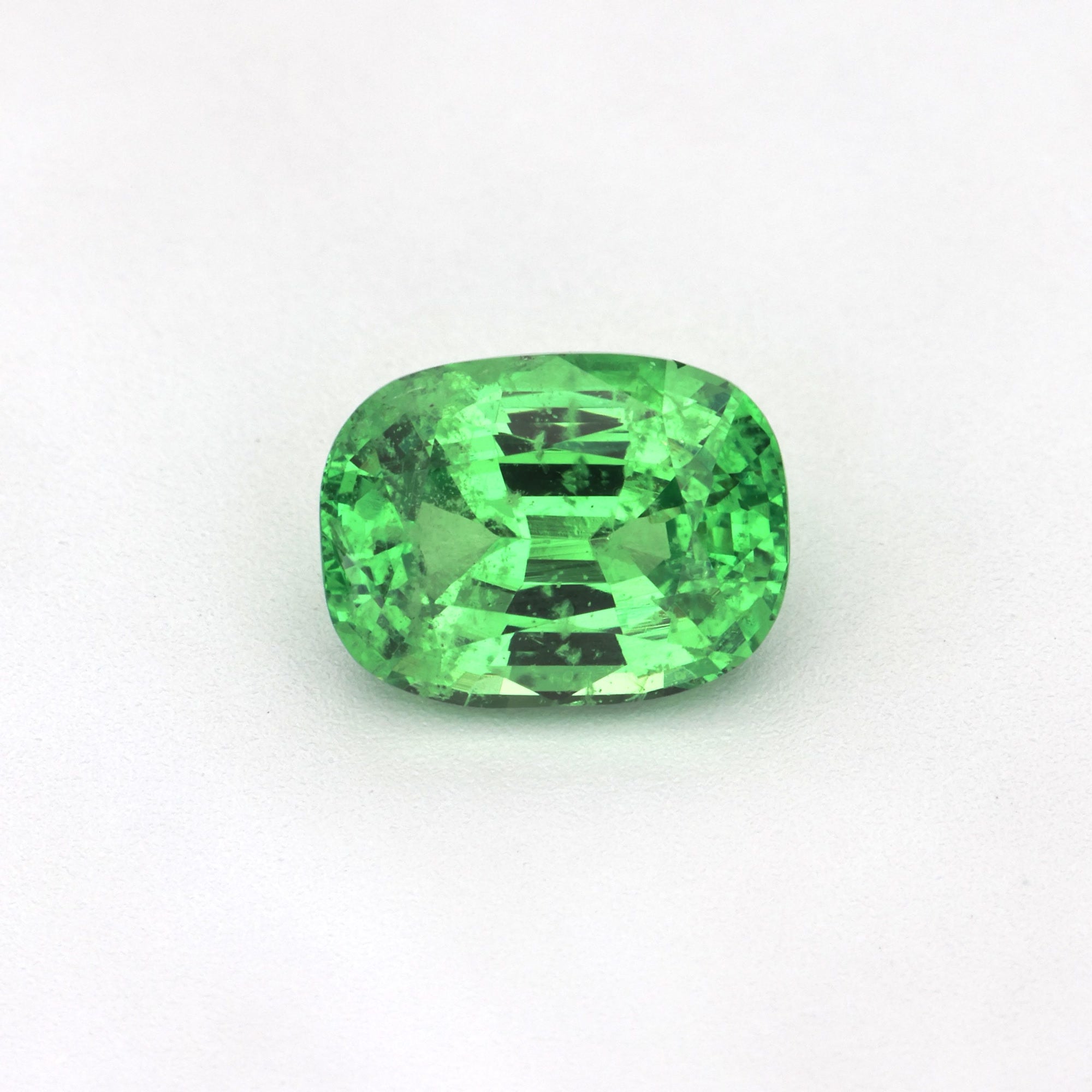
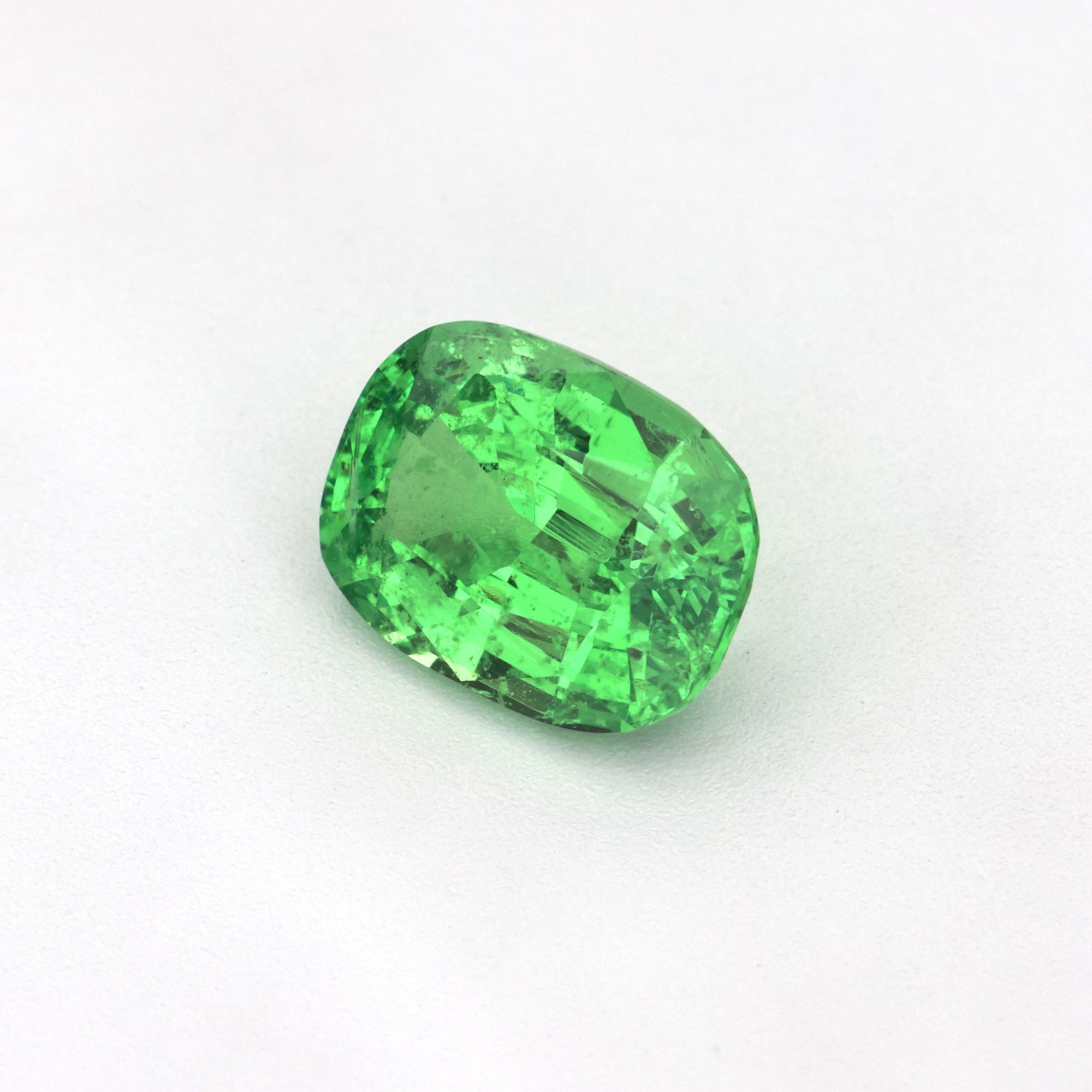
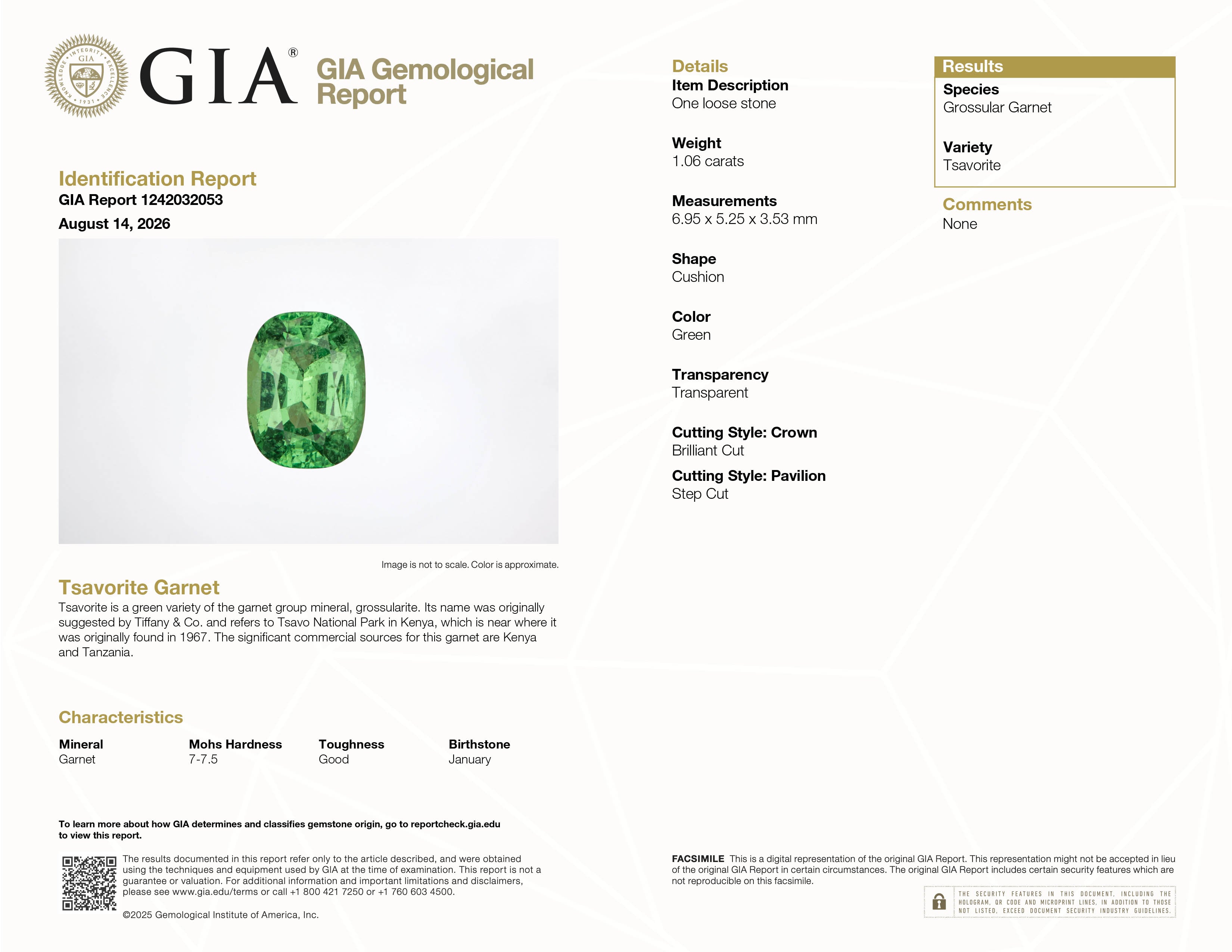
1.06ct ツァボライト クッション 天然グロッシュラー・ガーネット|GIAレポート #1242032053
CG8459
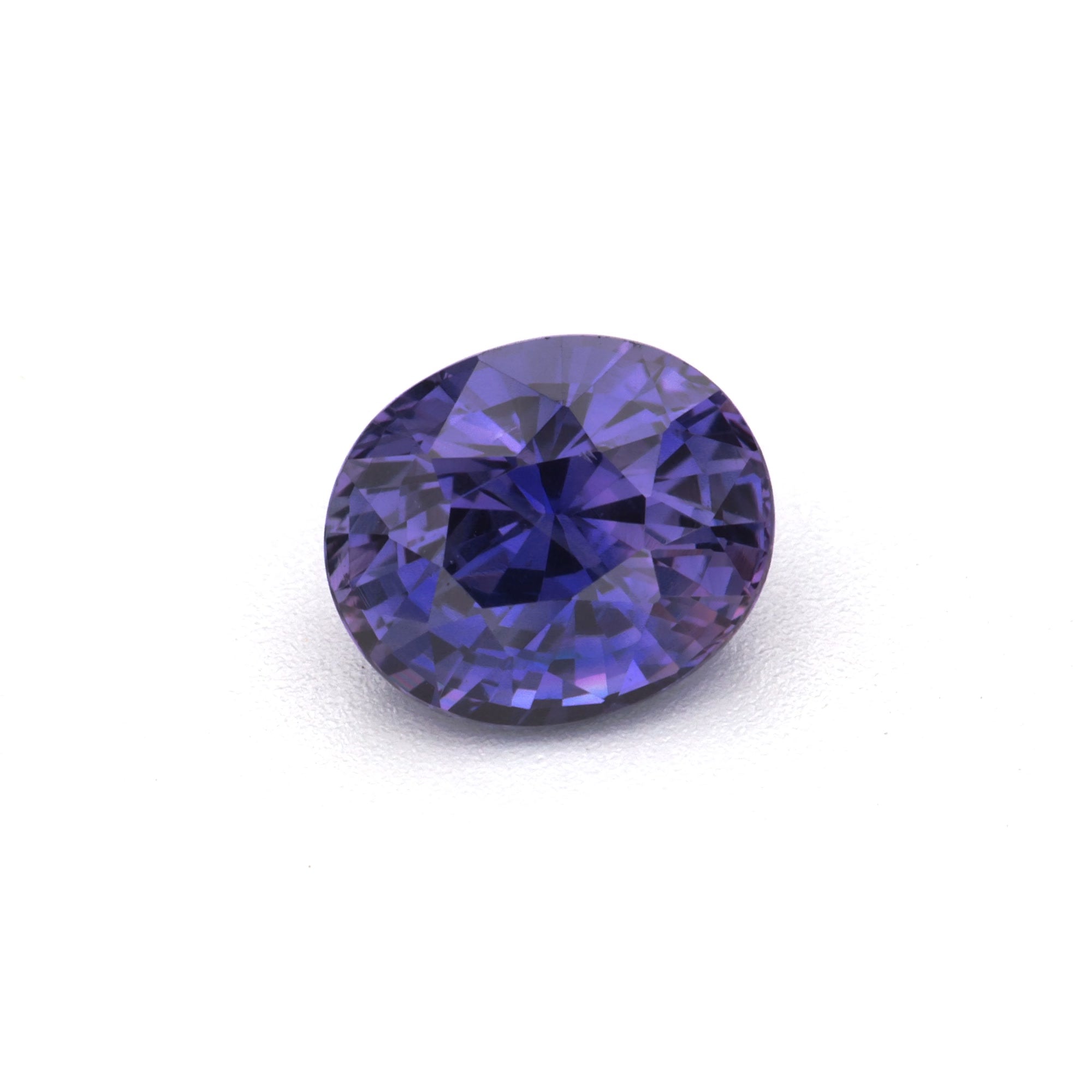
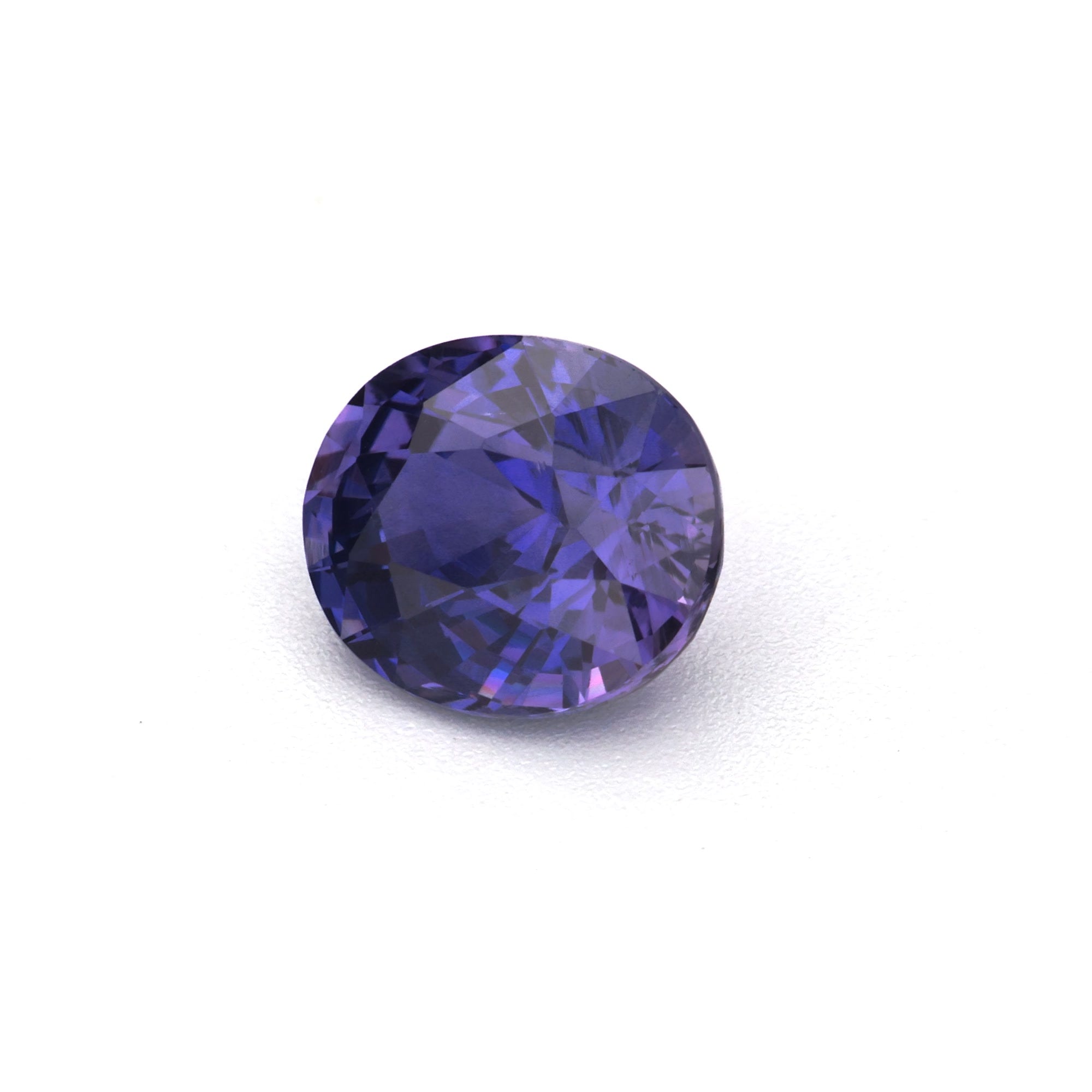
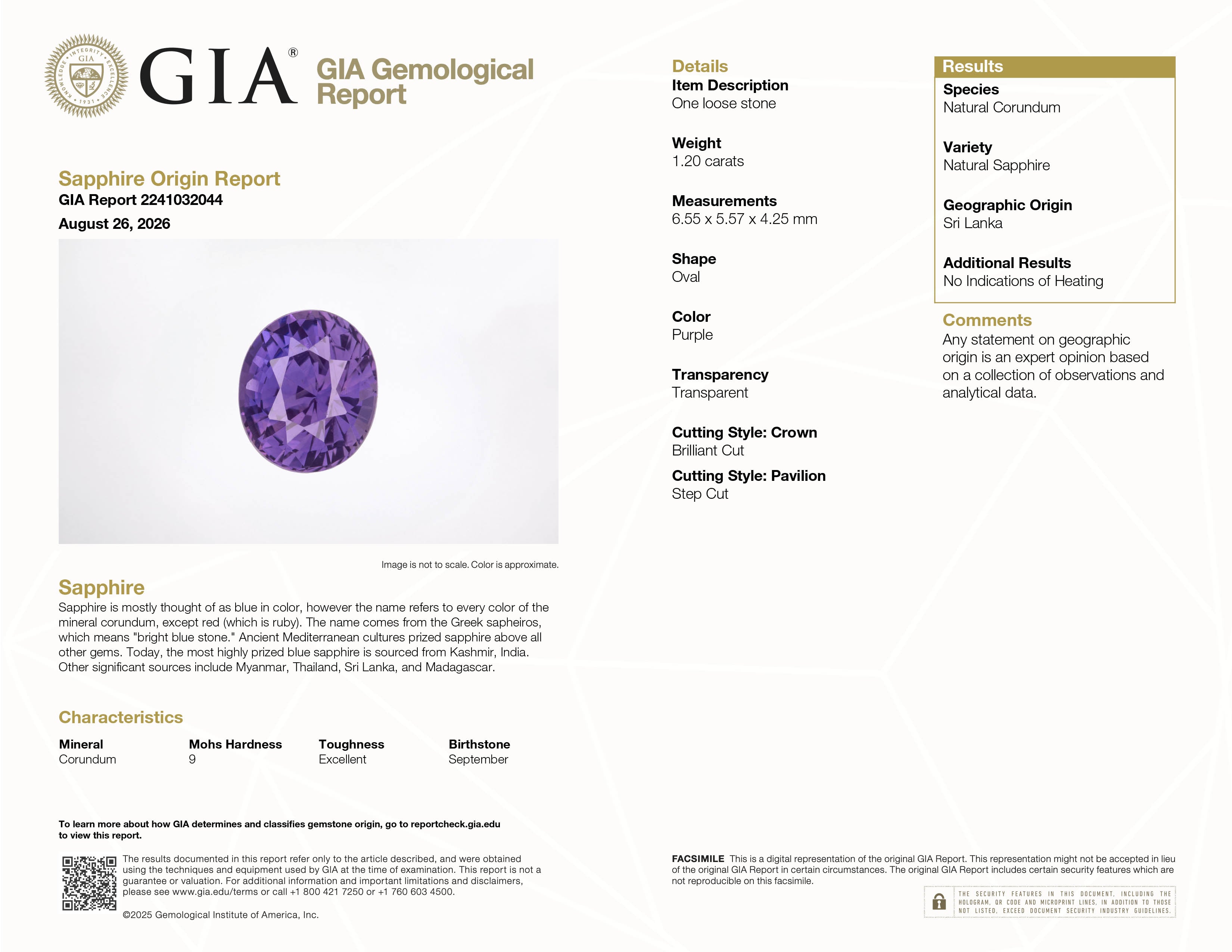
パープルサファイア 1.20ct 非加熱|スリランカ産|GIA原産地レポート付きルース
CG8458
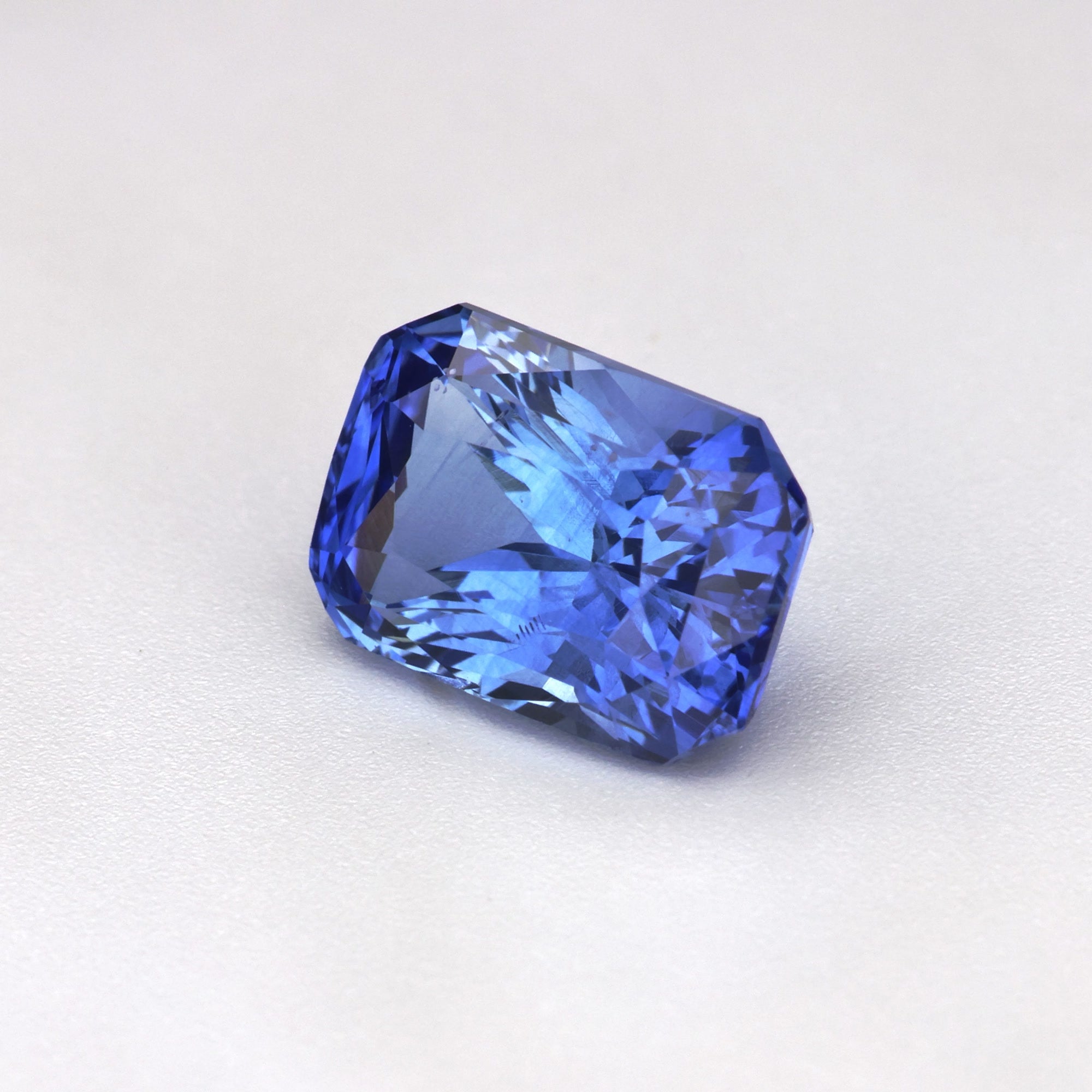
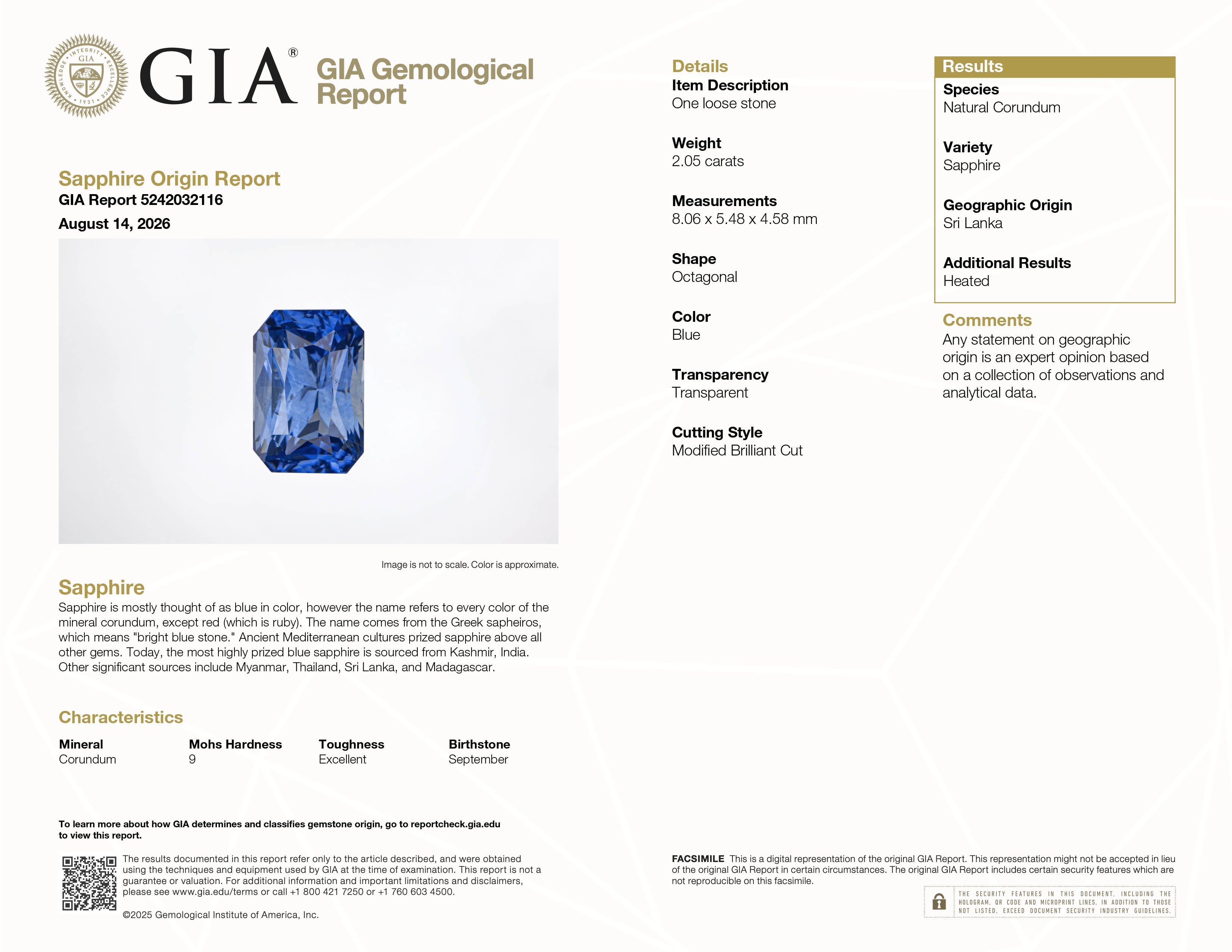
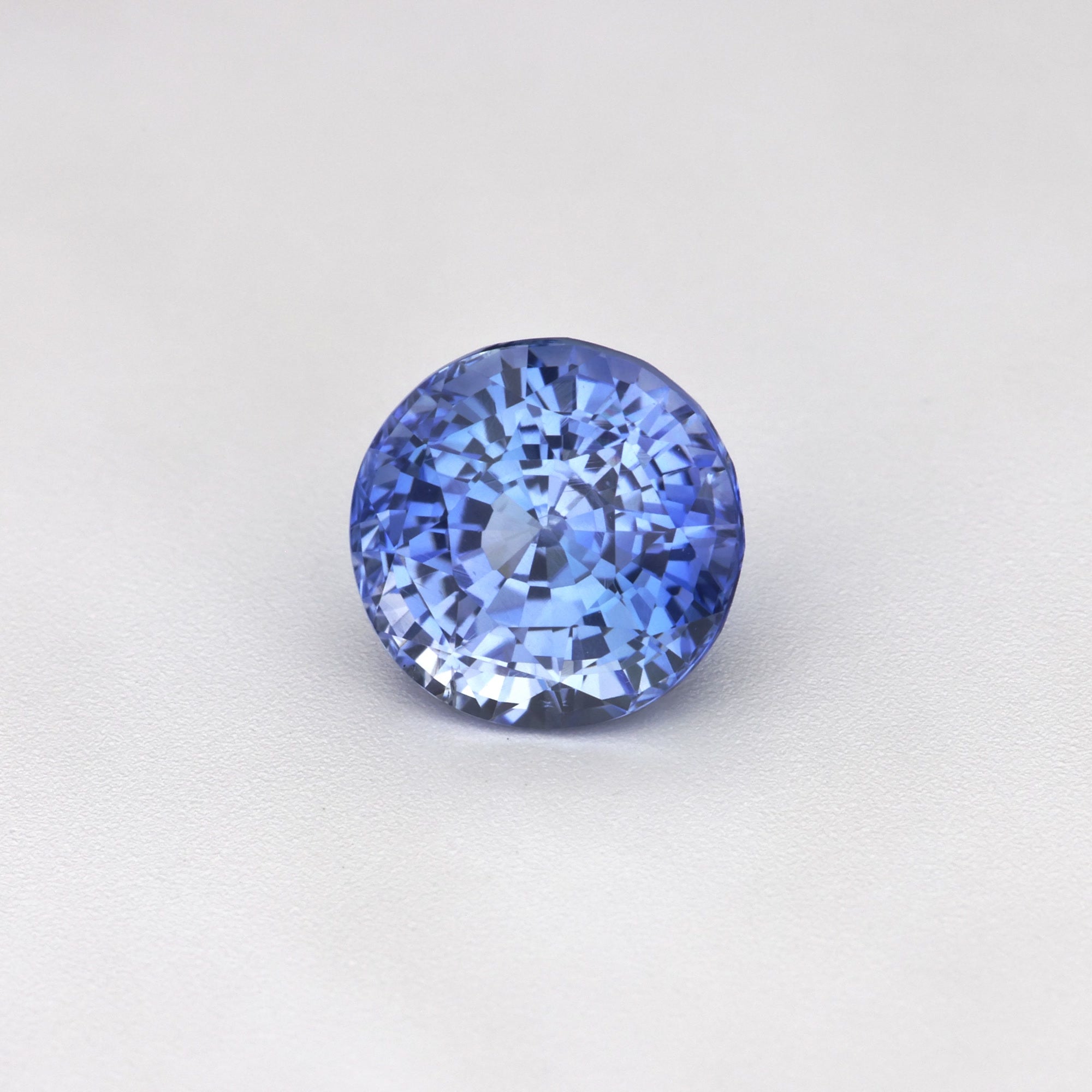
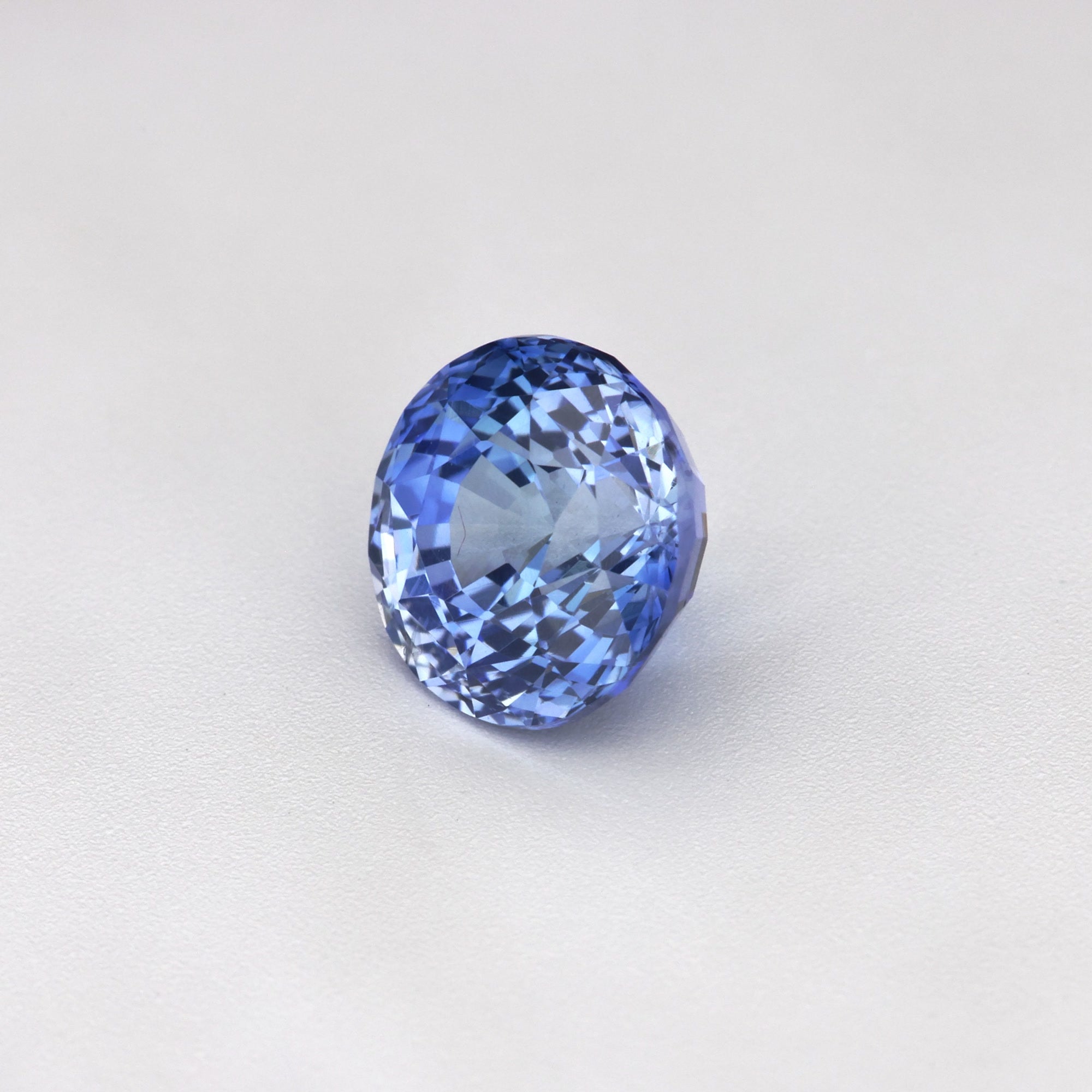
2.05ct 加熱ブルーサファイア|産地:スリランカ(GIAの意見)|ルース・GIA原産地レポート付き
CG8457
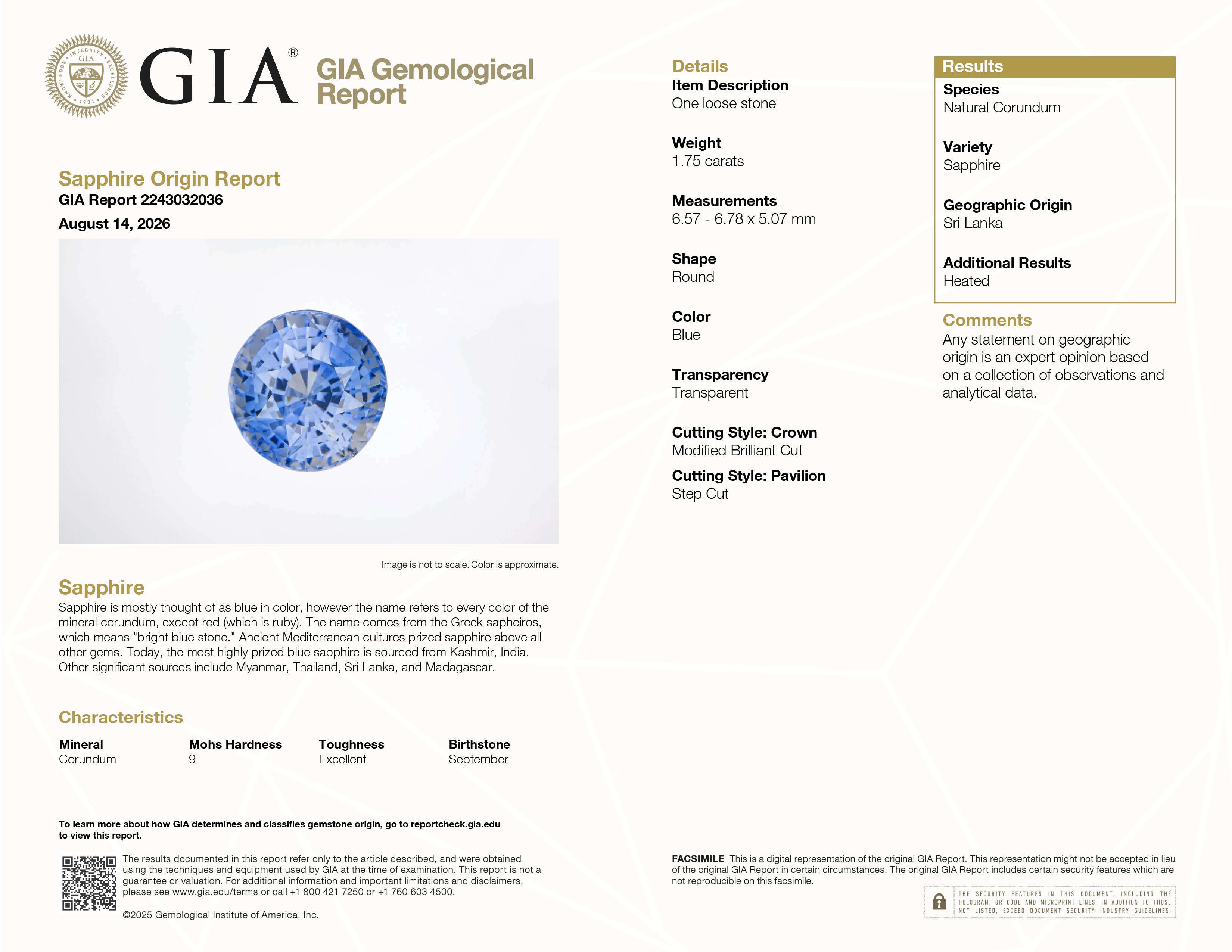
1.75ct スリランカ産ブルーサファイアのルース|加熱|GIA原産地レポート付き
CG8456
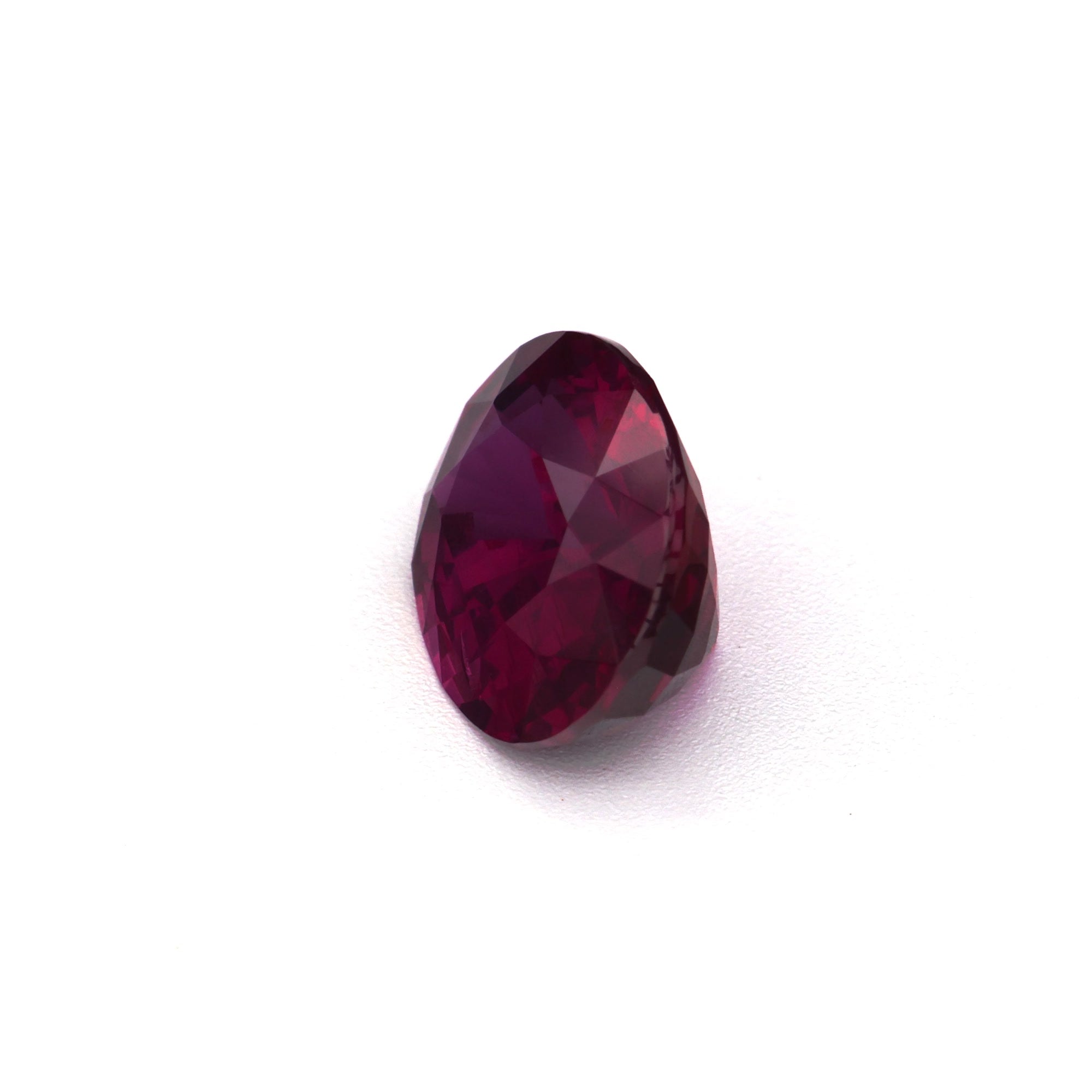
1.65ct 非加熱ルビーのルース|マダガスカル産ルビー・オーバル・GIA原産地レポート付き
CG8453
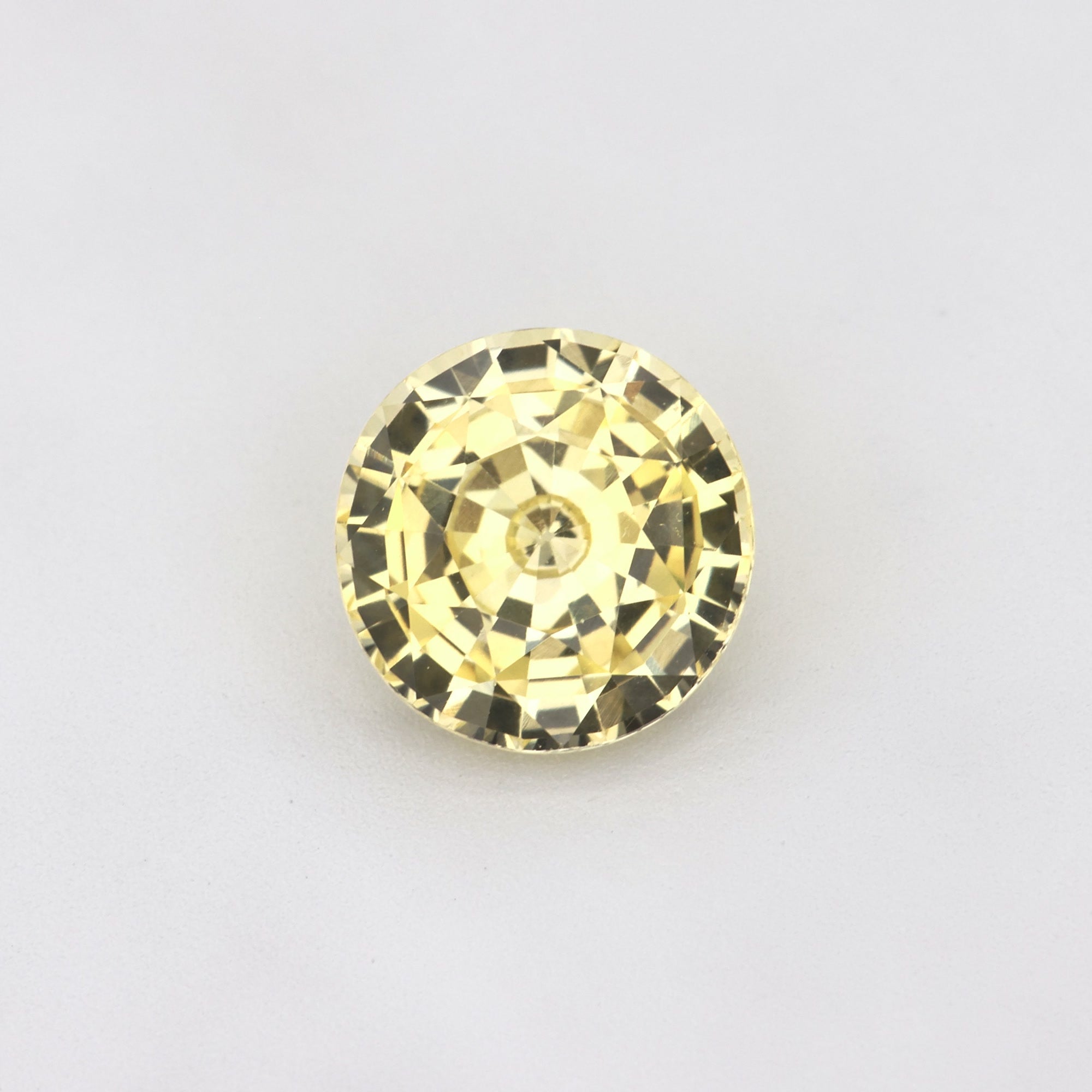
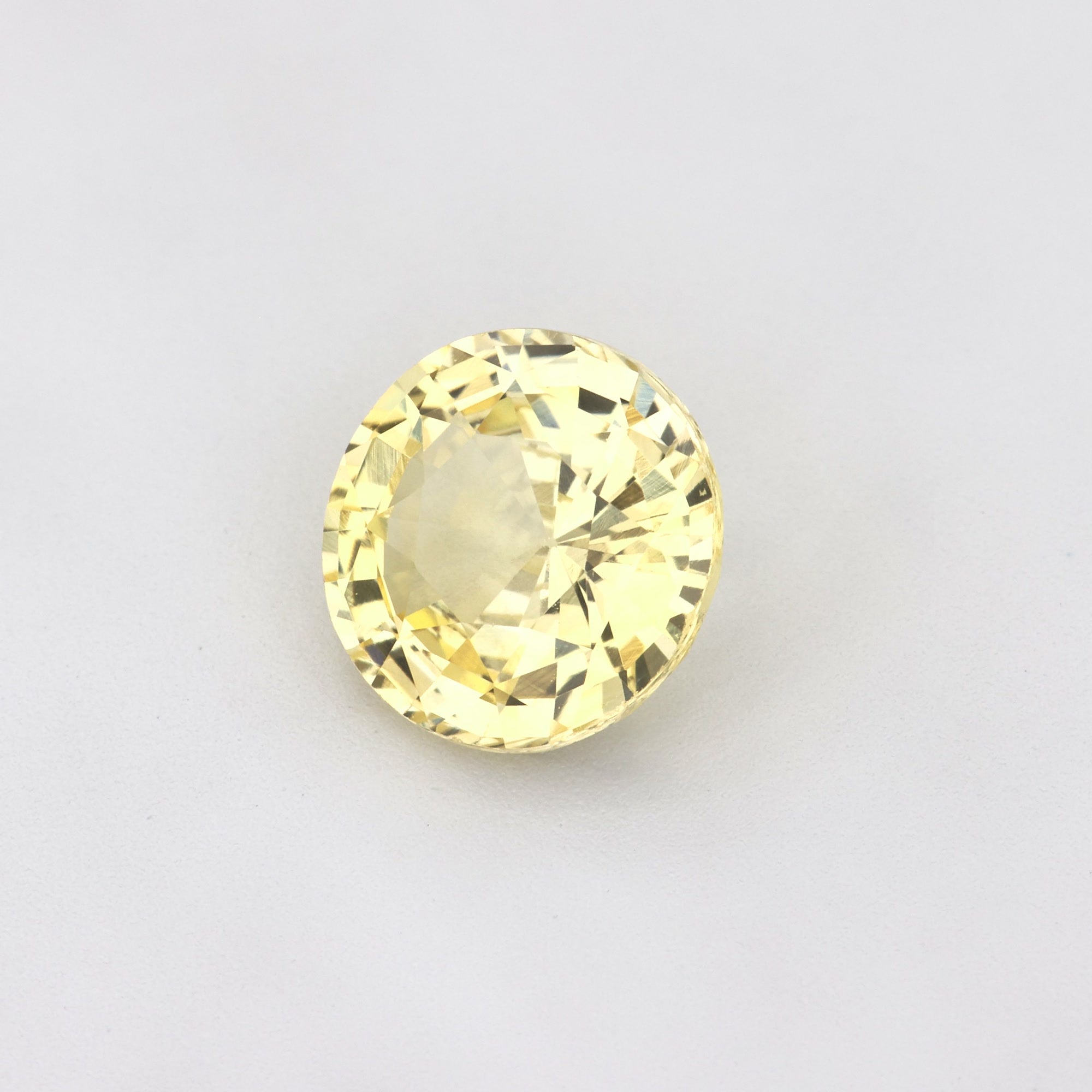
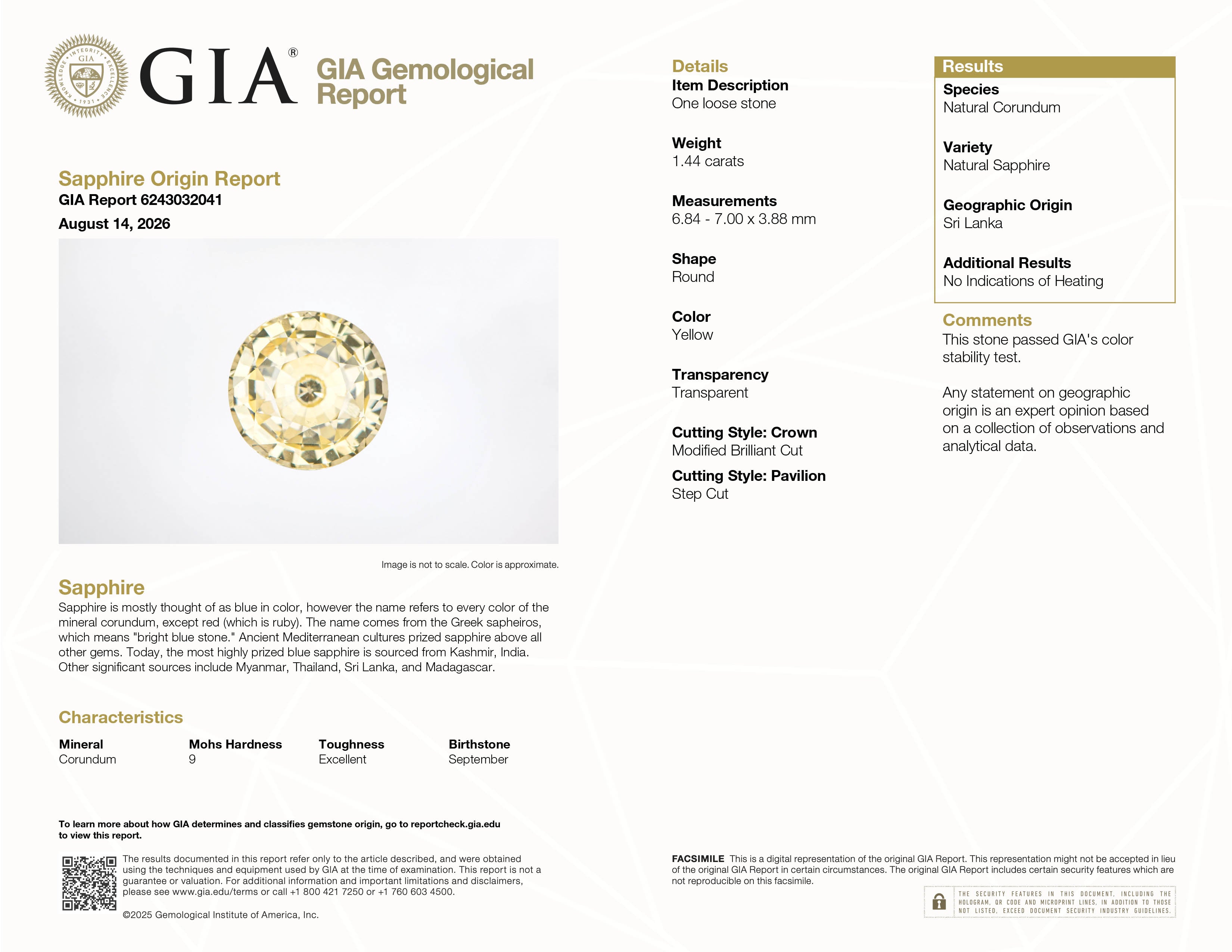
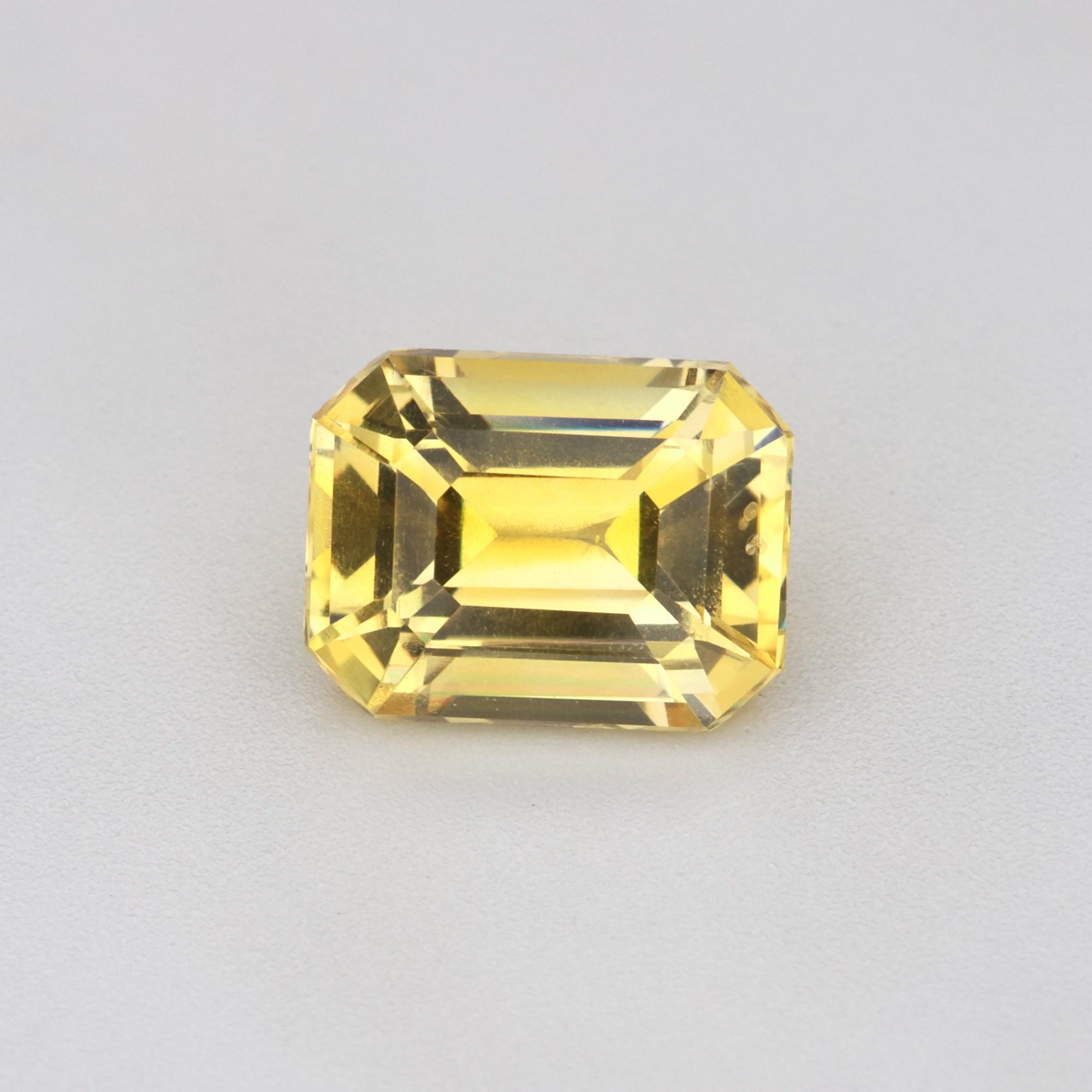
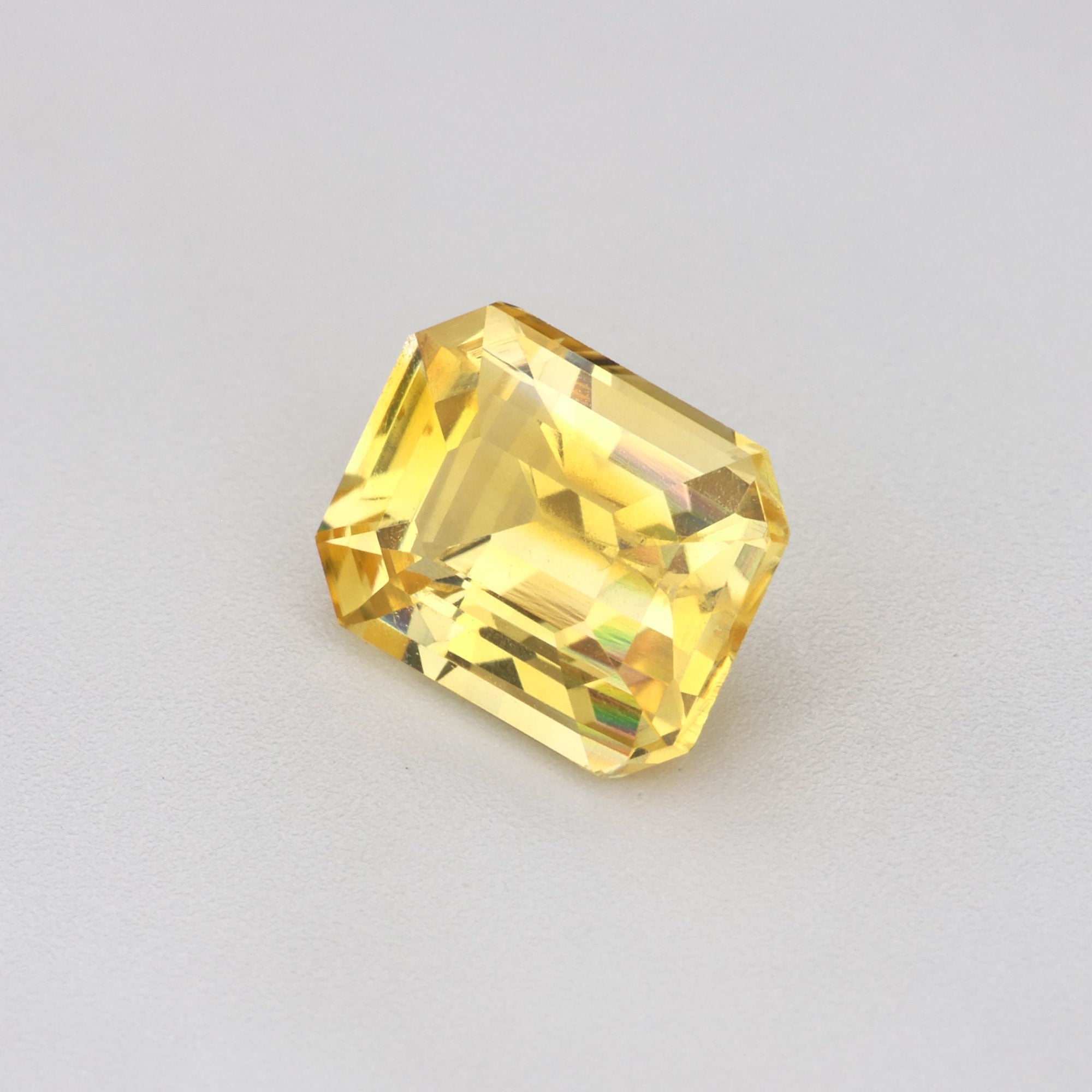
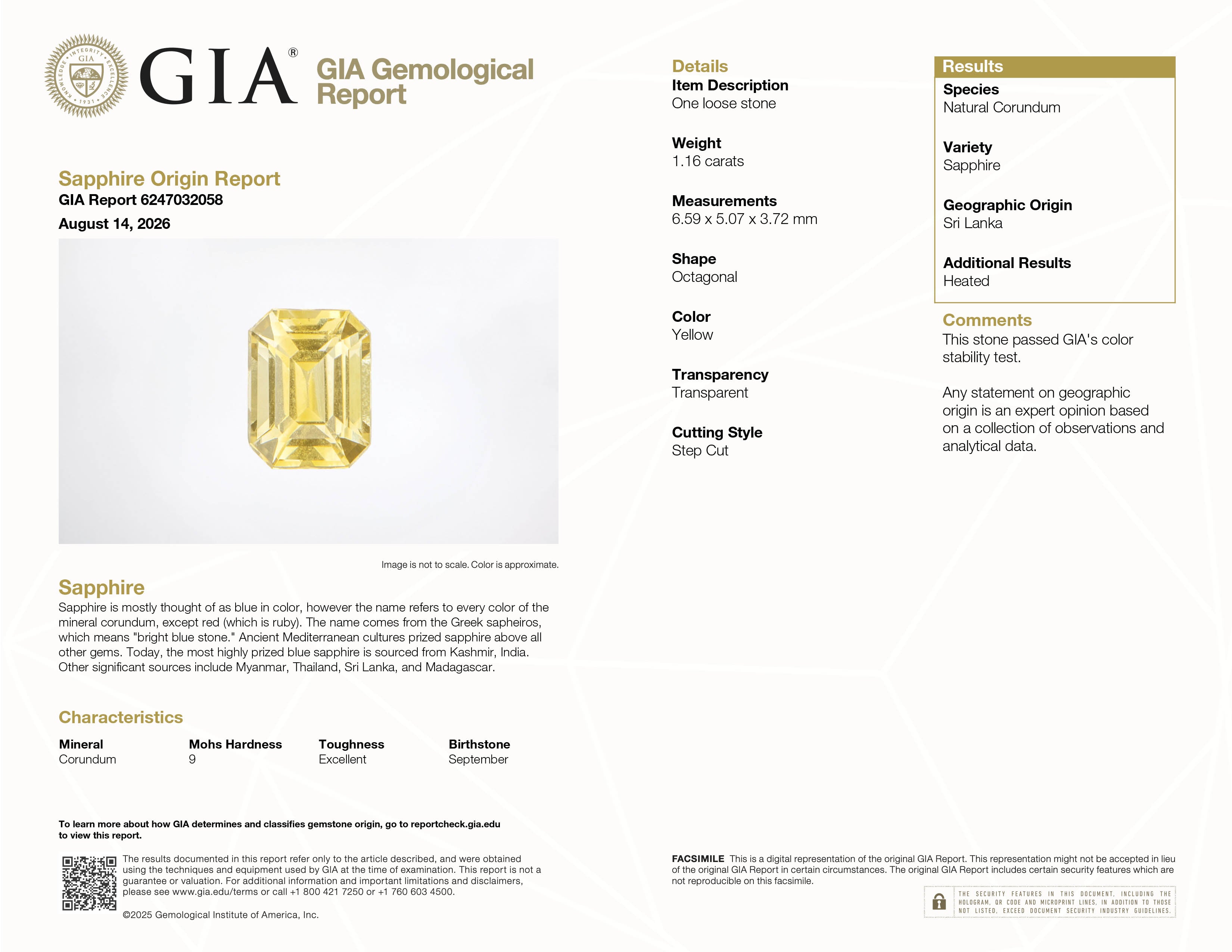
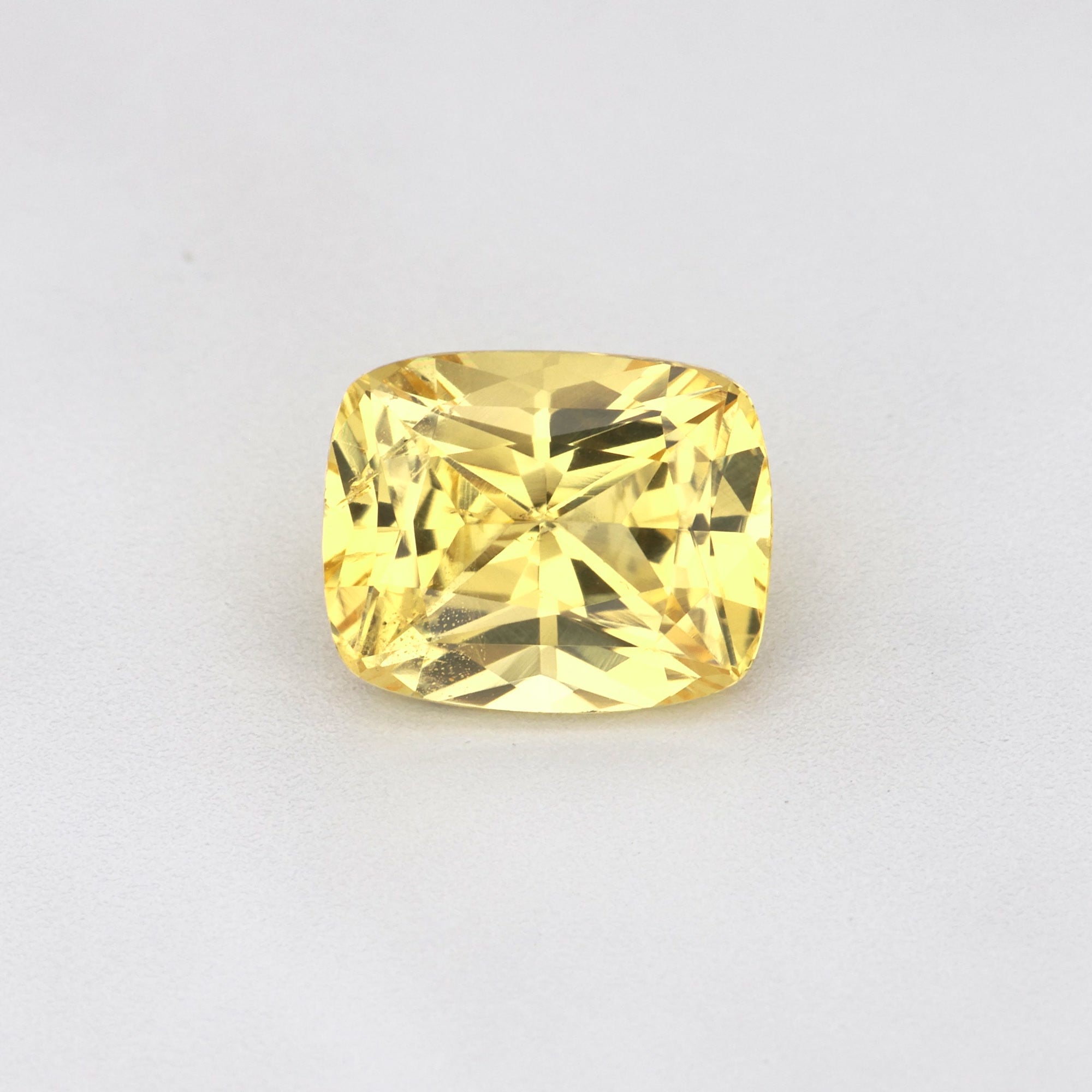
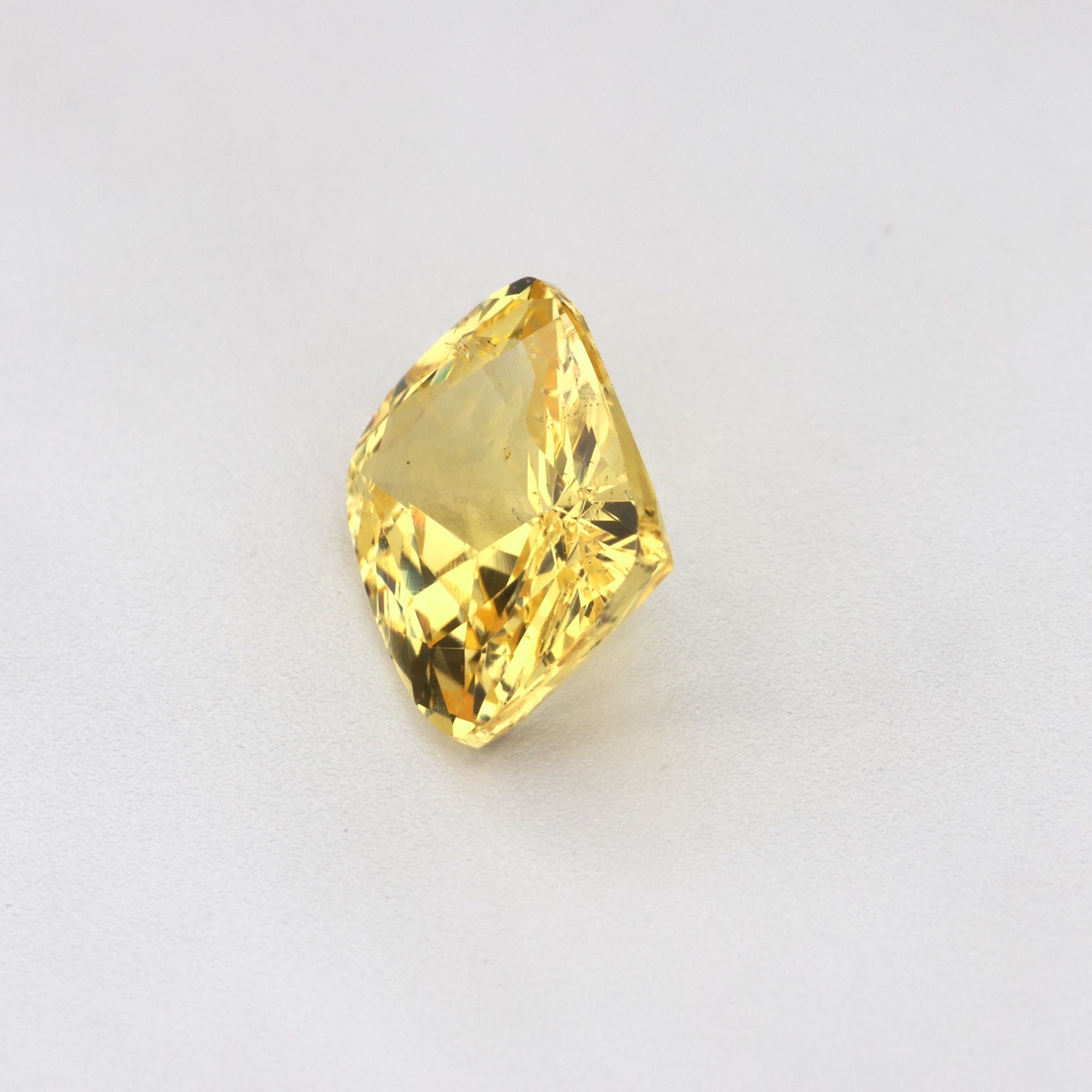
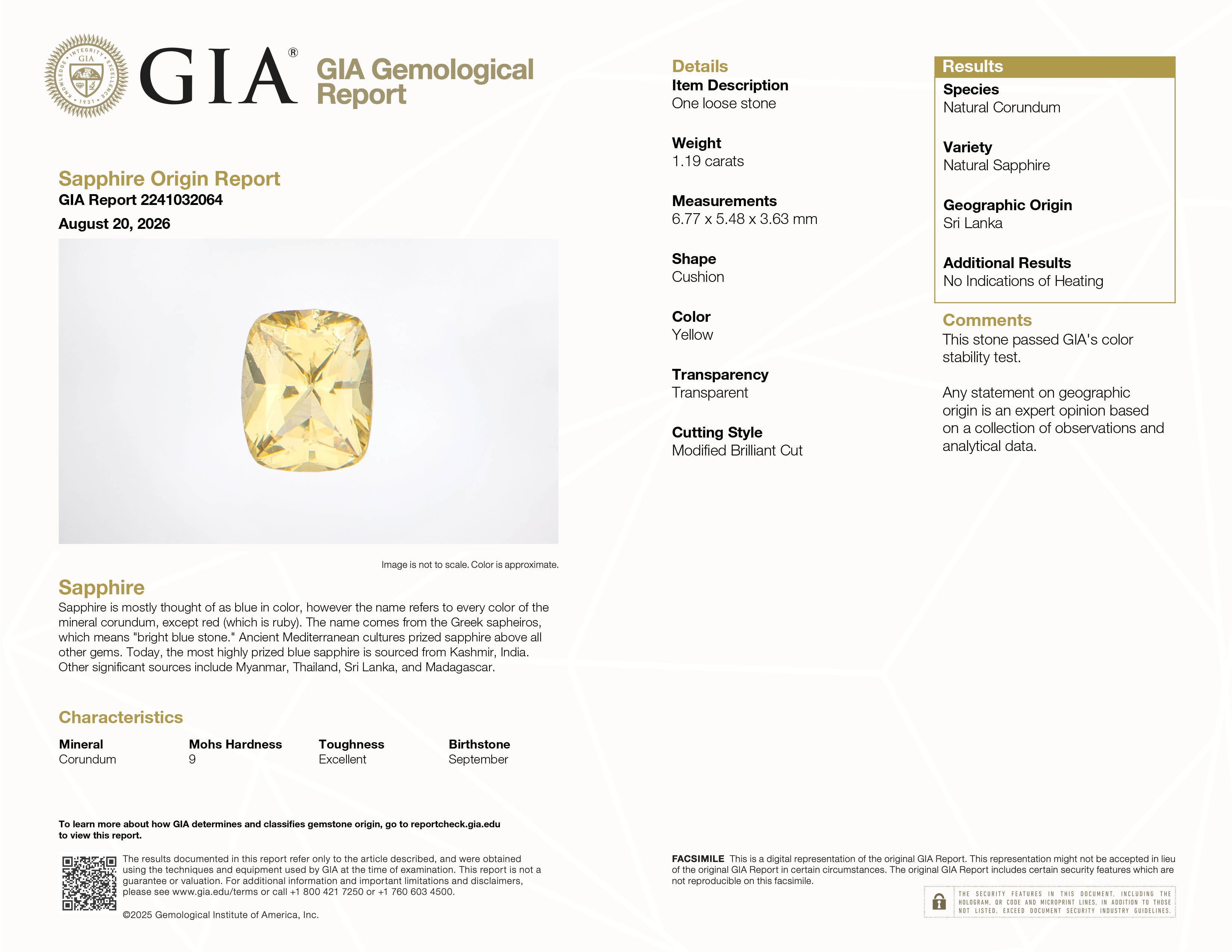
非加熱 イエローサファイア 1.19ct クッションカット|GIAレポート|スリランカ(セイロン)


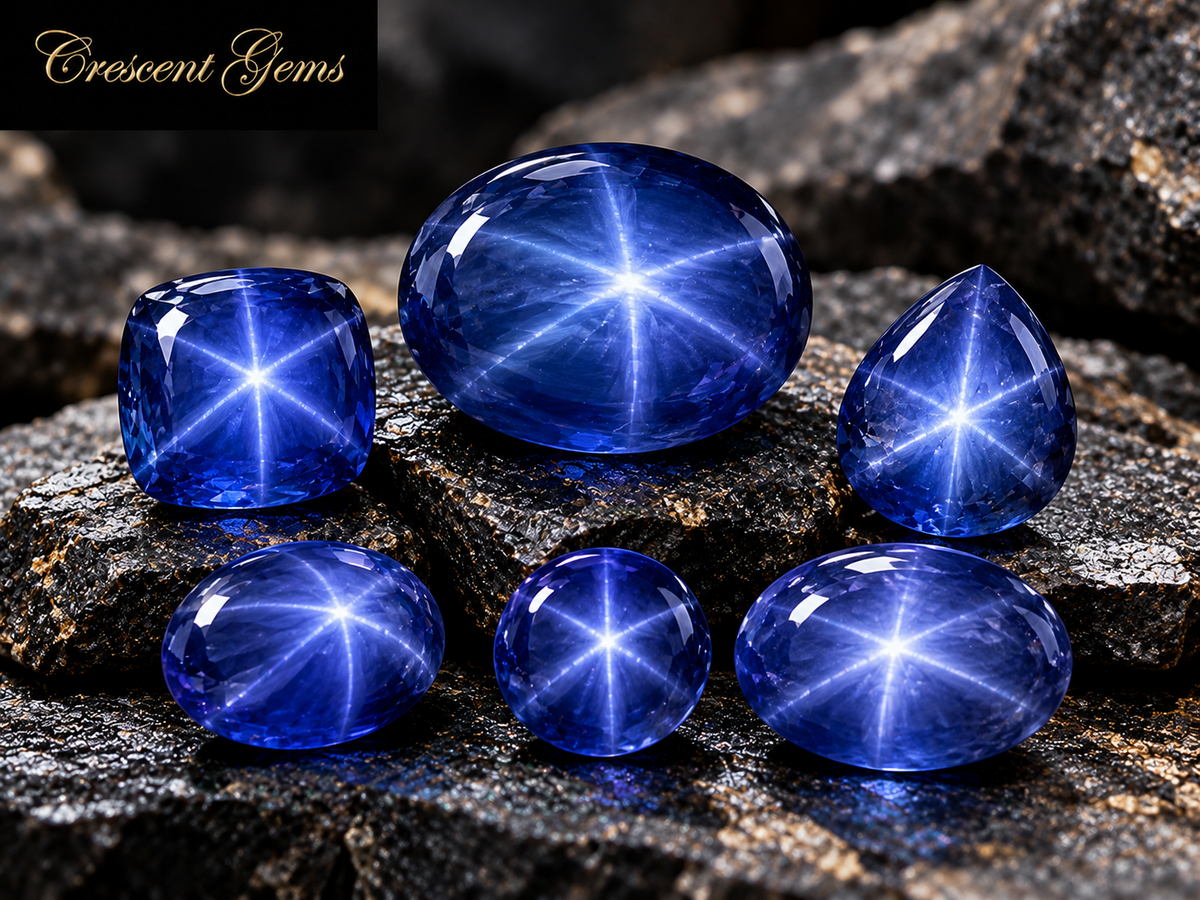
ブルースターサファイアの価格|1カラットあたりの相場と、当店にある8.09ctの1点
ブルースターサファイアは1カラットあたりいくらか。地色・重量・付帯する書類の三つで価格帯を整理し、現象を格付けする機関が存在しないことも説明します。当店の在庫は8.09ctの1点のみです。
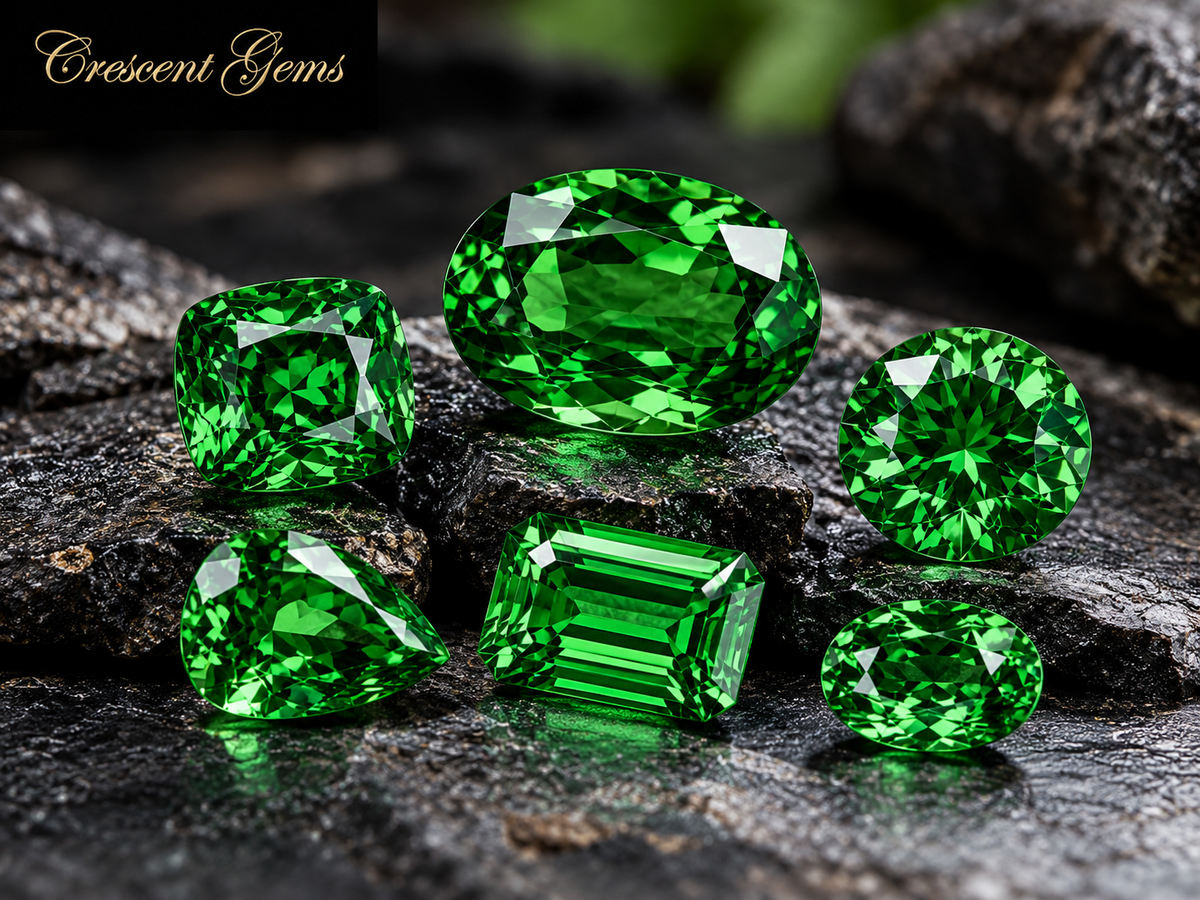
ツァボライトの価格|当店の在庫6点と、グロッシュラー・ガーネットとの違い
ツァボライトはいくらか。当店が現在在庫する6点をすべて示し、重さで値段がどう変わるかを説明します。品質等級表を載せない理由と、大きくて内包物の少ない原石が採れにくい本当の理由もあわせて。
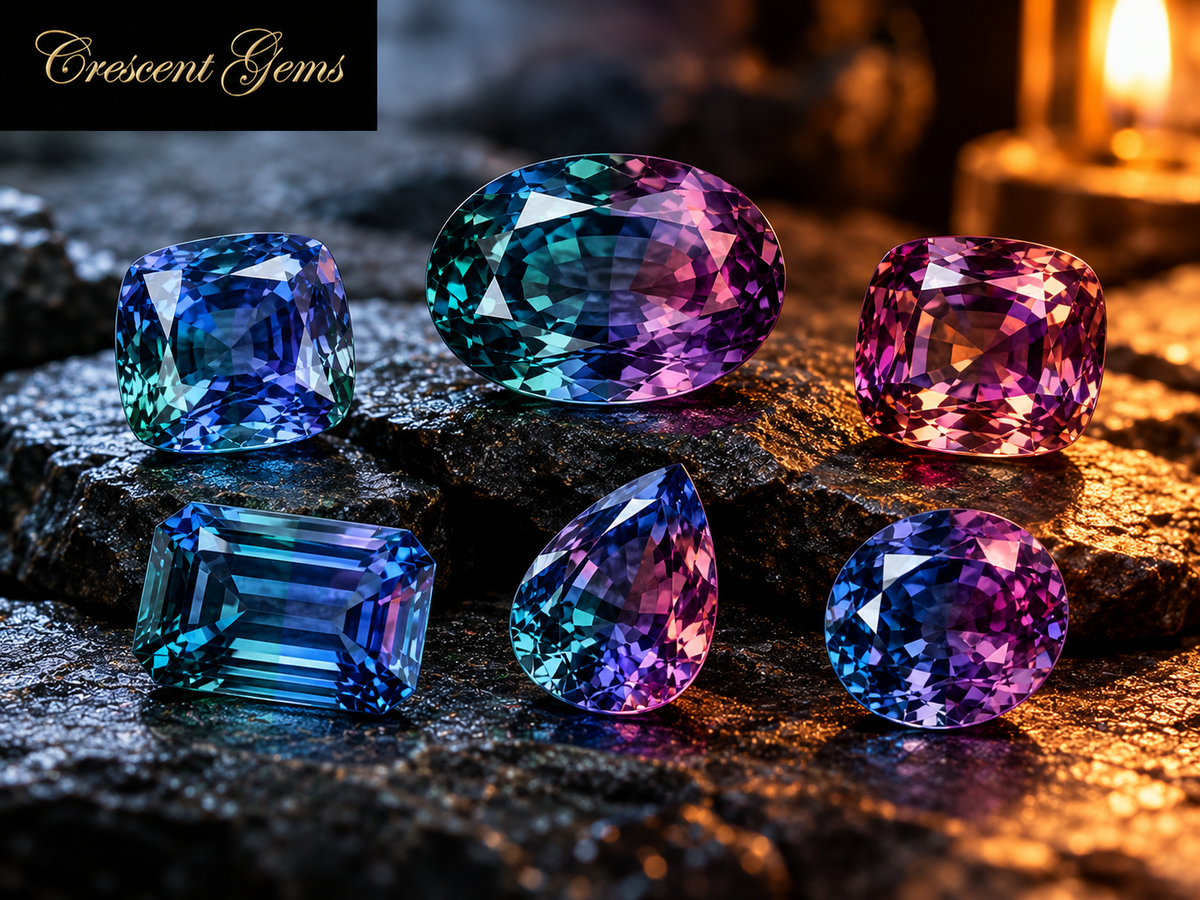
カラーチェンジサファイアの価格|1カラットあたりの相場と、当店にある2点
カラーチェンジサファイアは1カラットあたりいくらか。色と彩度と付帯する書類で価格帯を整理し、カラーチェンジそのものを格付けする機関が存在しないことも説明します。当店の在庫は1.03ctと2.01ctの2点です。
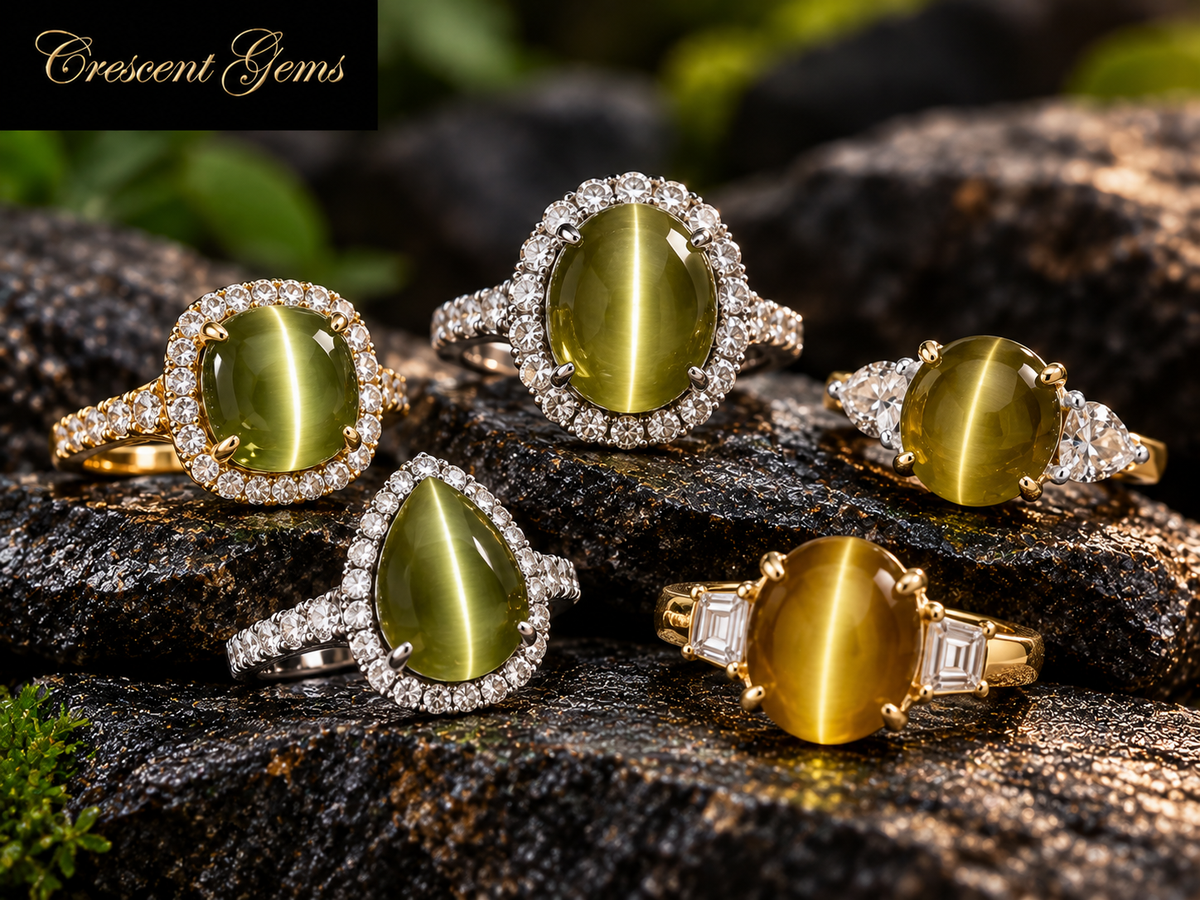
クリソベリル・キャッツアイは婚約指輪に向くか|モース硬度8.5と、留め方とお手入れ
クリソベリルはモース硬度8.5。クォーツ(7)やエメラルド(7.5〜8)より上、コランダム(9)とダイヤモンド(10)より下です。日常的に着ける指輪にとってそれが何を意味するかを、留め方とお手入れとあわせて説明します。
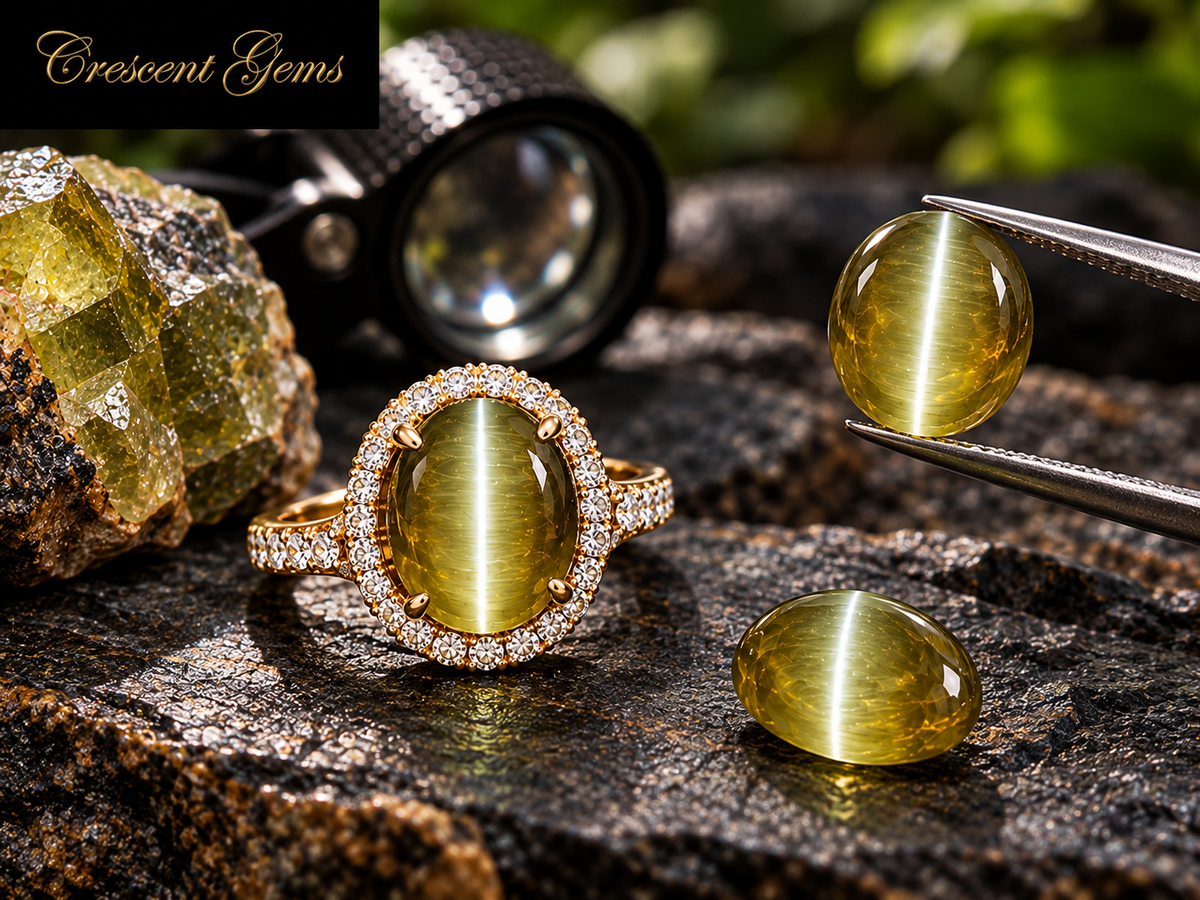
クリソベリル・キャッツアイの価格|1カラットあたりの相場と、当店にある2点
クリソベリル・キャッツアイは1カラットあたりいくらか。大きさと付帯する書類で価格帯を整理し、キャッツアイそのものを格付けする機関が存在しないことも説明します。当店の在庫は2.36ctと4.25ctの2点です。















シェア: