- by Ahmed Shareek
Orange Sapphire — The Complete Buyer's Guide to the Rarest Warm-Toned Corundum
- by Ahmed Shareek
New to buying sapphires? Start with our Ultimate Sapphire Buying Guide — the complete resource for color, origin, treatment, and pricing — then return here for orange sapphire specifically.
Orange sapphire is among the boldest colors in the natural corundum family — and commercially, one of the less common. Vivid, pure orange accounts for only a small fraction of mined sapphire, and in our own trading it is one of the harder colors to source in fine quality. For buyers who specifically want something bold, rare, and unmistakably distinctive, orange sapphire is worth understanding well.
Orange sapphire gets its color from a simultaneous presence of iron and chromium in the corundum crystal lattice. Iron alone produces yellow. Chromium alone produces pink to red. When both are present in specific proportions, their combined absorption produces orange — a color that neither element creates on its own. The narrow window between yellow, peach, padparadscha, and true orange is why vivid orange sapphire is rare.
Vivid pure orange — the scarcest and most sought-after position: A stone that reads as clearly, unmistakably orange in all lighting conditions. Fine vivid orange Ceylon sapphire with GIA documentation is a collector-tier stone regardless of carat weight.
Reddish-orange and orange-red: Bold and dramatic, with a fire-adjacent quality that approaches the territory of some rubies and spinels.
Yellow-orange and golden-orange: More available and less expensive than vivid pure orange. See our yellow sapphire guide for comparison.
Deep orange: Requires precise cut quality — a poorly cut deep orange sapphire will tip near-black in lower light.
| Factor | Orange Sapphire | Padparadscha |
|---|---|---|
| Color balance | Predominantly orange; minimal pink component | Simultaneous balanced pink AND orange; neither dominant |
| Tone | Medium to medium-dark; bolder and deeper | Light to medium; luminous, not bold |
| Price (1ct, fine) | $800-2,500 per carat | $2,000-10,000+ per carat |
| Be fraud risk | High — Be diffusion can mimic vivid orange | High — Be diffusion can mimic padparadscha |
Figures above are approximate market guidance, not fixed quotes. Actual value varies by treatment, origin, colour, cut, clarity, and certification.
See our full padparadscha guide, padparadscha price guide, and peach vs. padparadscha guide.
Orange sapphire is one of the color categories with the highest beryllium diffusion fraud risk in the entire sapphire market. Beryllium diffusion can produce vivid orange indistinguishable from natural orange to the naked eye; the treatment requires specialized laboratory analysis (LA-ICP-MS) to detect.
Buyer protection for orange sapphire — non-negotiable:
See our beryllium diffusion guide, unheated sapphire guide, and heat treatment guide.
Ceylon (Sri Lanka): The benchmark — a warm, rich, vivid orange that other origins do not replicate consistently. See our Ceylon sapphire complete guide.
Madagascar: A meaningful source producing stones across yellow-orange to vivid orange. See our Madagascar sapphire guide.
Tanzania and East Africa: Golden-orange to medium orange; often heat treated; higher beryllium diffusion risk. Treatment disclosure is particularly important.
Thailand: Significant commercial volume with elevated treated-material risk; GIA documentation essential for any significant purchase.
Golden-orange, commercial quality, sub-1ct, heated: $200-$600/ct. Medium orange, unheated, Madagascar, 0.5-1ct: $500-1,200/ct. Vivid orange, unheated, Ceylon or Madagascar, 1ct, GIA: $800-2,500/ct. Finest vivid orange, unheated, Ceylon, 1ct+, GIA: $2,500-5,000+/ct. Exceptional 2ct+, Ceylon, GIA: $4,000-10,000+/ct. See our sapphire pricing guide. See also what a good 1 carat sapphire costs.
Figures above are approximate market guidance, not fixed quotes. Actual value varies by treatment, origin, colour, cut, clarity, and certification.
Yellow gold is the classic partner for orange sapphire — the warm-on-warm combination creates a richness and depth that few other pairings in colored gemstone jewelry match. Rose gold creates a complementary warm pairing. White gold and platinum provide cool contrast making orange appear more vivid. For the full framework, see our metal comparison guide and how to choose metal color. See our sapphire color for skin tone guide.
Orange sapphire at Mohs 9 stands up well to daily wear and needs little beyond normal care, though as with any faceted stone a protective setting and sensible handling are still worthwhile. Best cuts: oval maximizes face-up color (see oval sapphire guide); cushion suits vintage aesthetics (see cushion cut guide); emerald cut displays color as deep, still pools of warm light (see emerald cut guide); pear creates an elongated bold silhouette (see best elongated shapes). For setting styles, see best shapes for solitaire rings, best shapes for halo rings, and how to choose side stones. For custom design, see our custom ring design guide. See our engagement ring guide and best sapphire cut guide.
Any orange sapphire above $500 total value should carry GIA, Gubelin, or SSEF documentation — the same threshold set out under heat treatment above. Verify the report at gia.edu/report-check before purchasing. For a significant collector-tier orange sapphire, documentation from one of those three laboratories should be treated as essential rather than optional. See our GIA report guide.
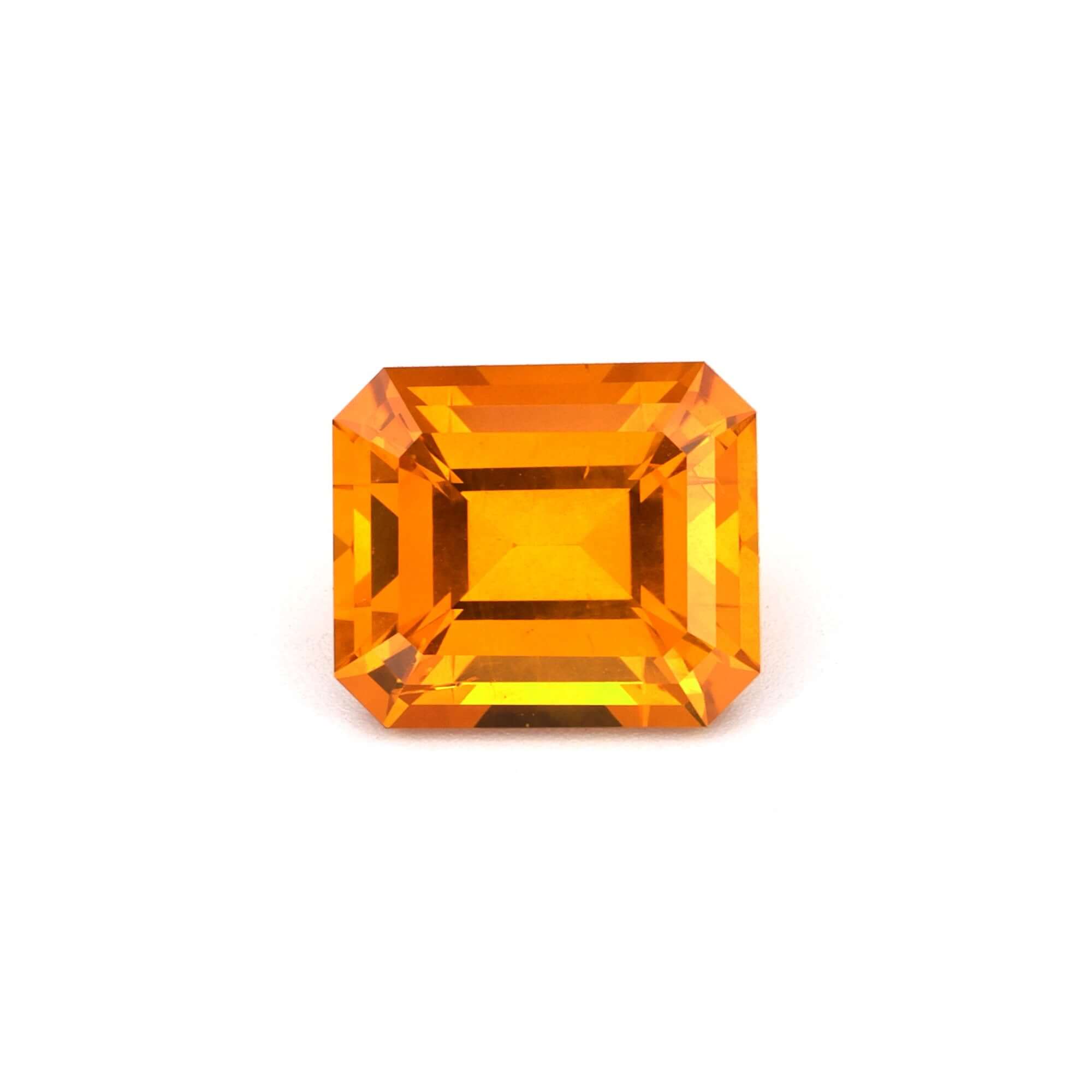
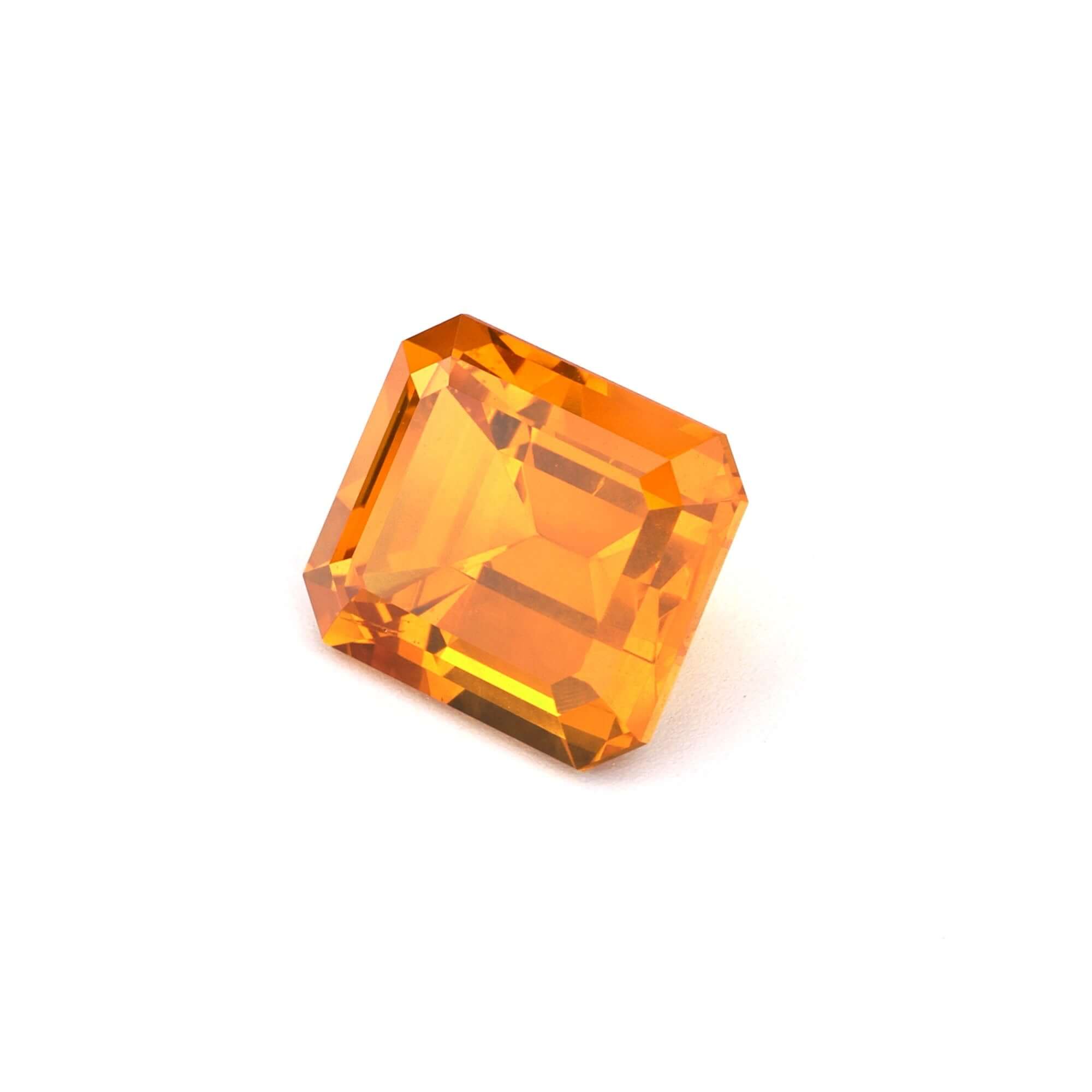
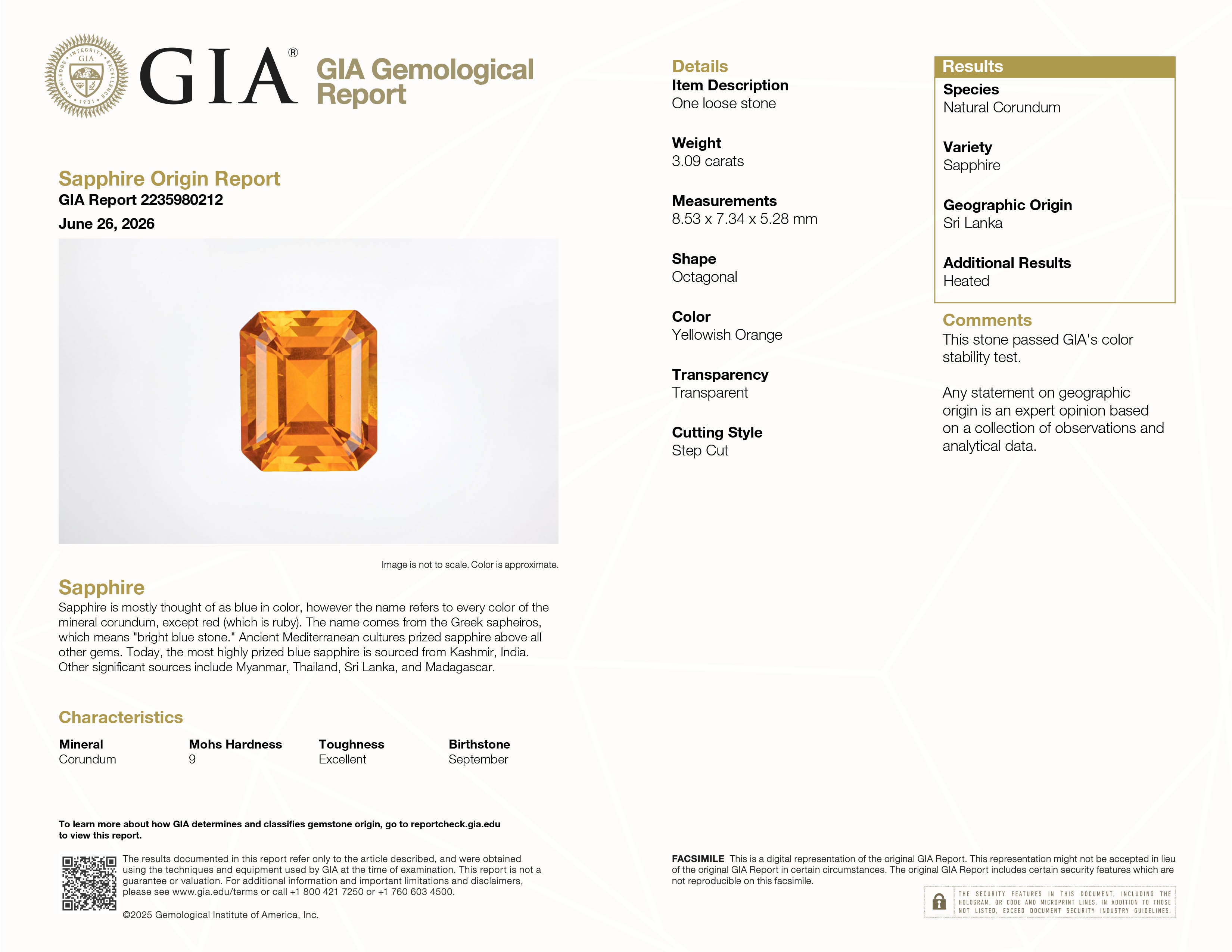
Currently in stock: a 3.09 ct emerald-cut orange sapphire, GIA-documented (Sapphire Origin Report #2235980212) — heat-treated, and graded by GIA as an intense yellowish orange, with Sri Lanka (Ceylon) stated on the report as GIA's origin opinion. A step-cut stone at this size and saturation is an uncommon combination in this color family.
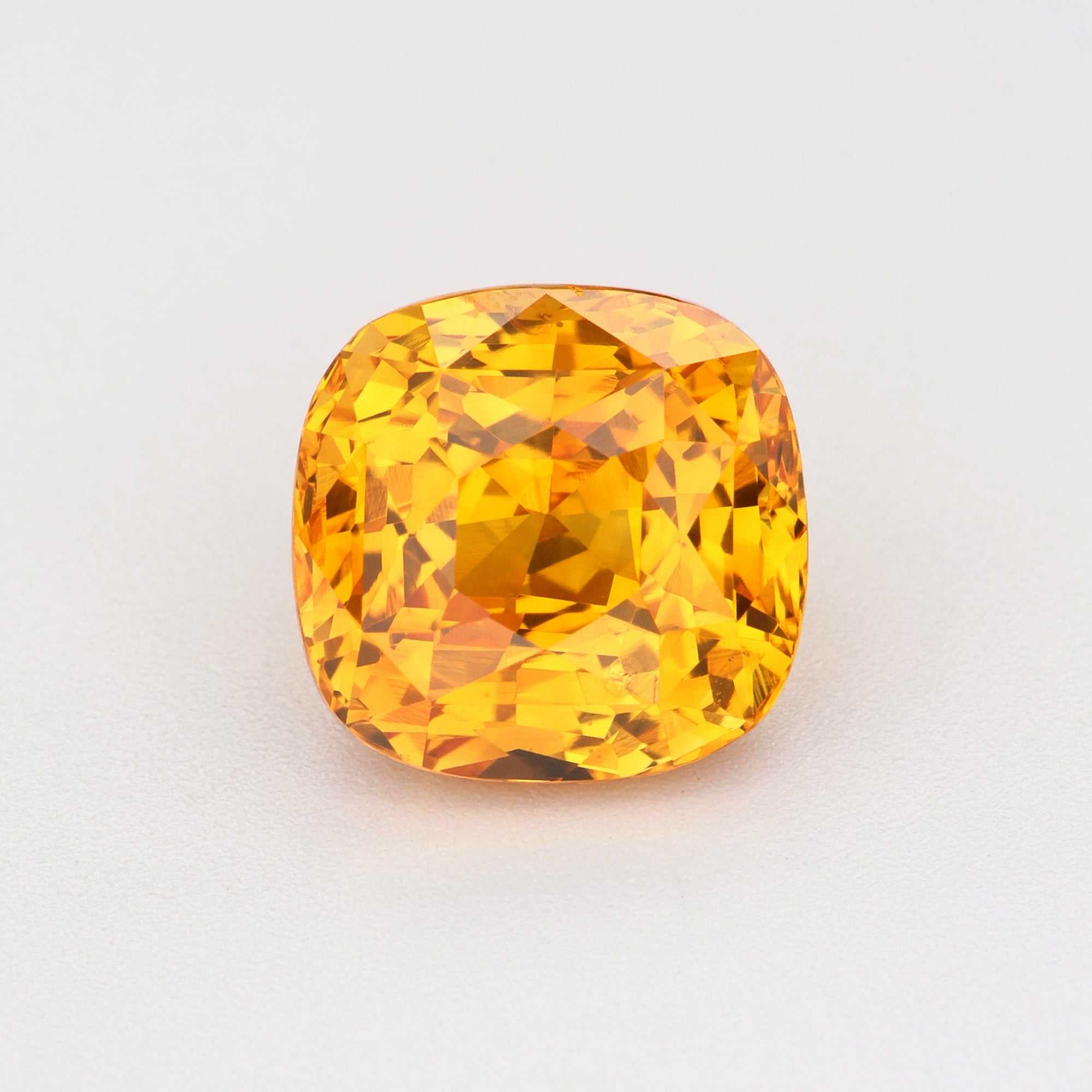
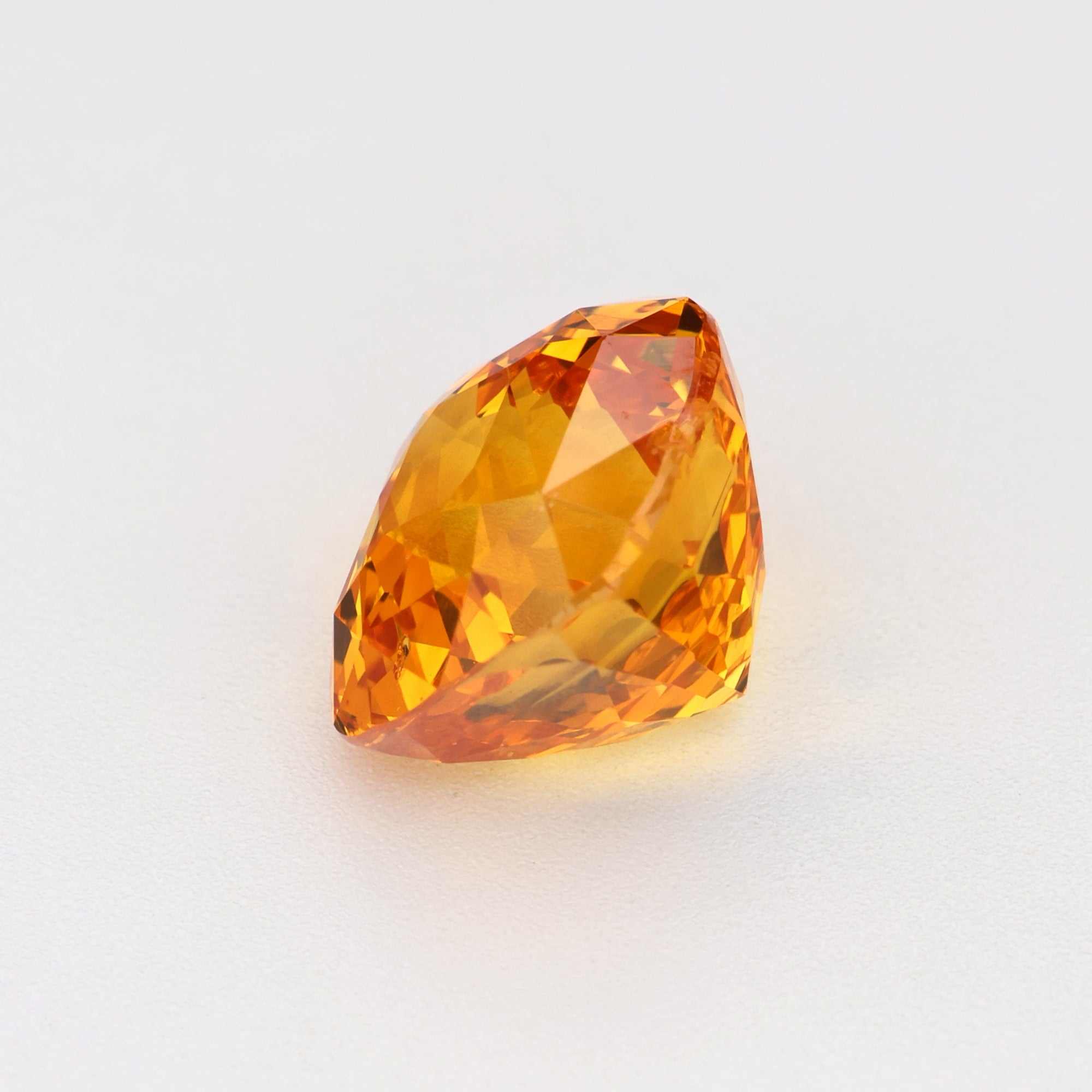
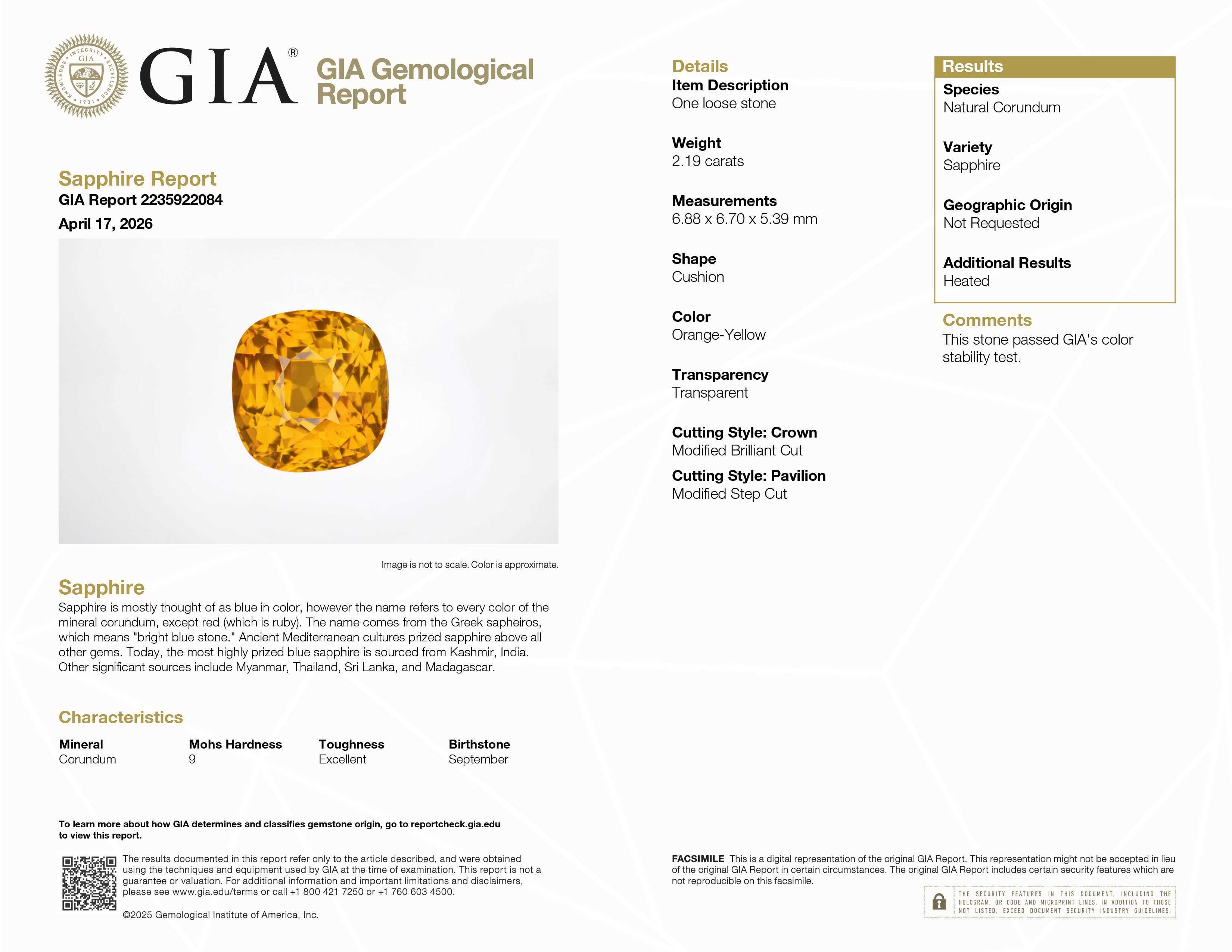
Also available: a 2.19 ct square cushion orange-yellow sapphire, GIA-documented (Report #2235922084), a heat-treated example that passed GIA's color stability test — a more accessible entry point into orange sapphire.
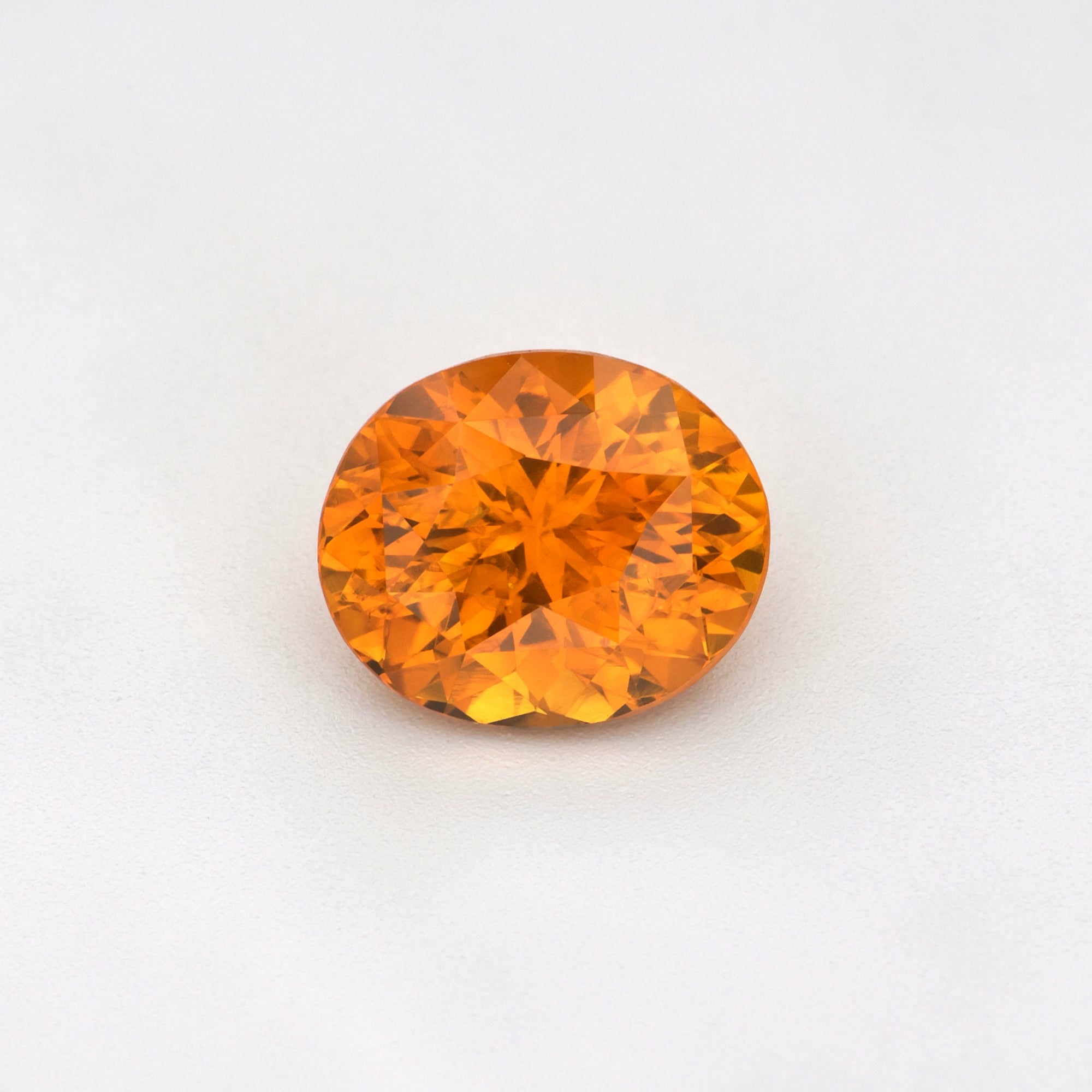
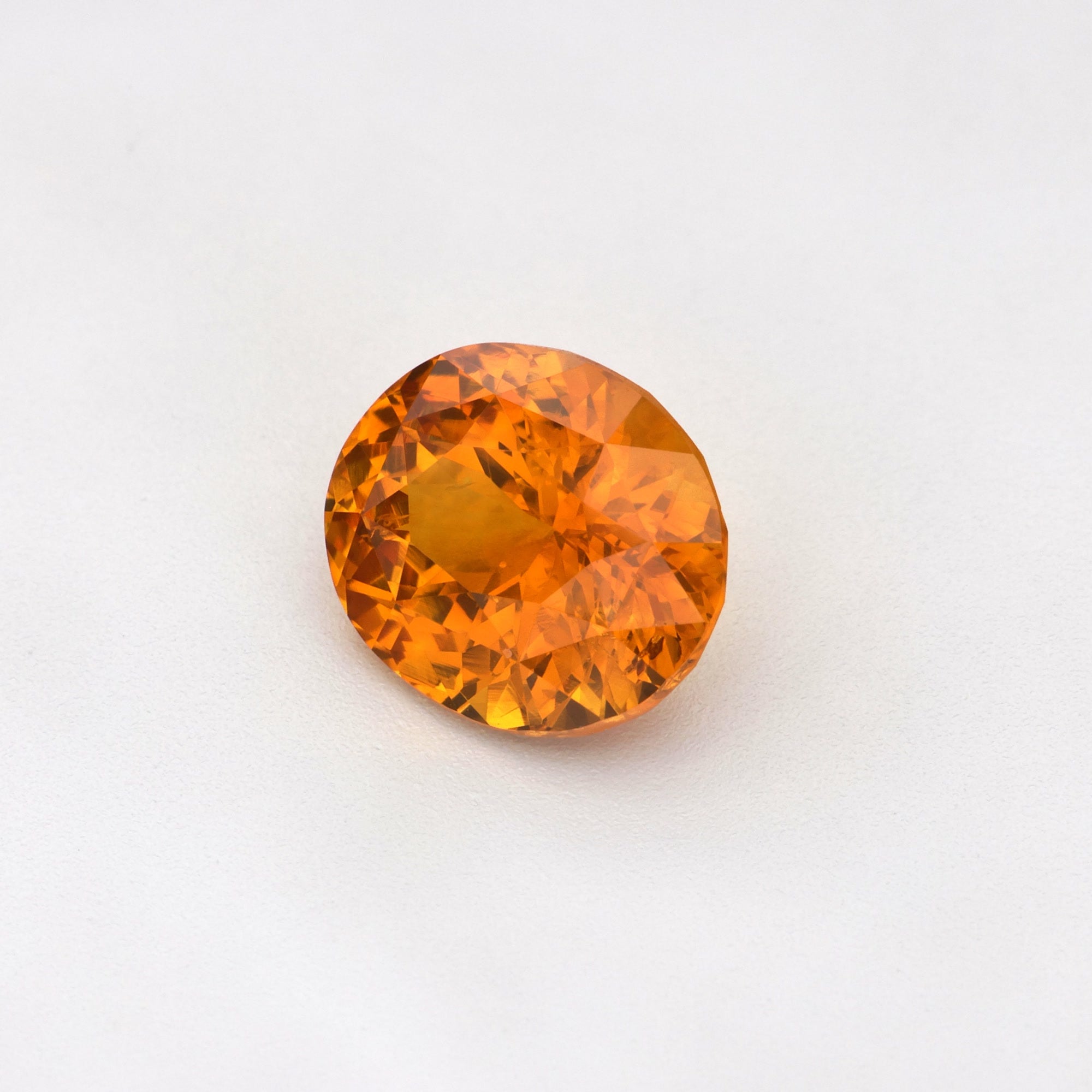
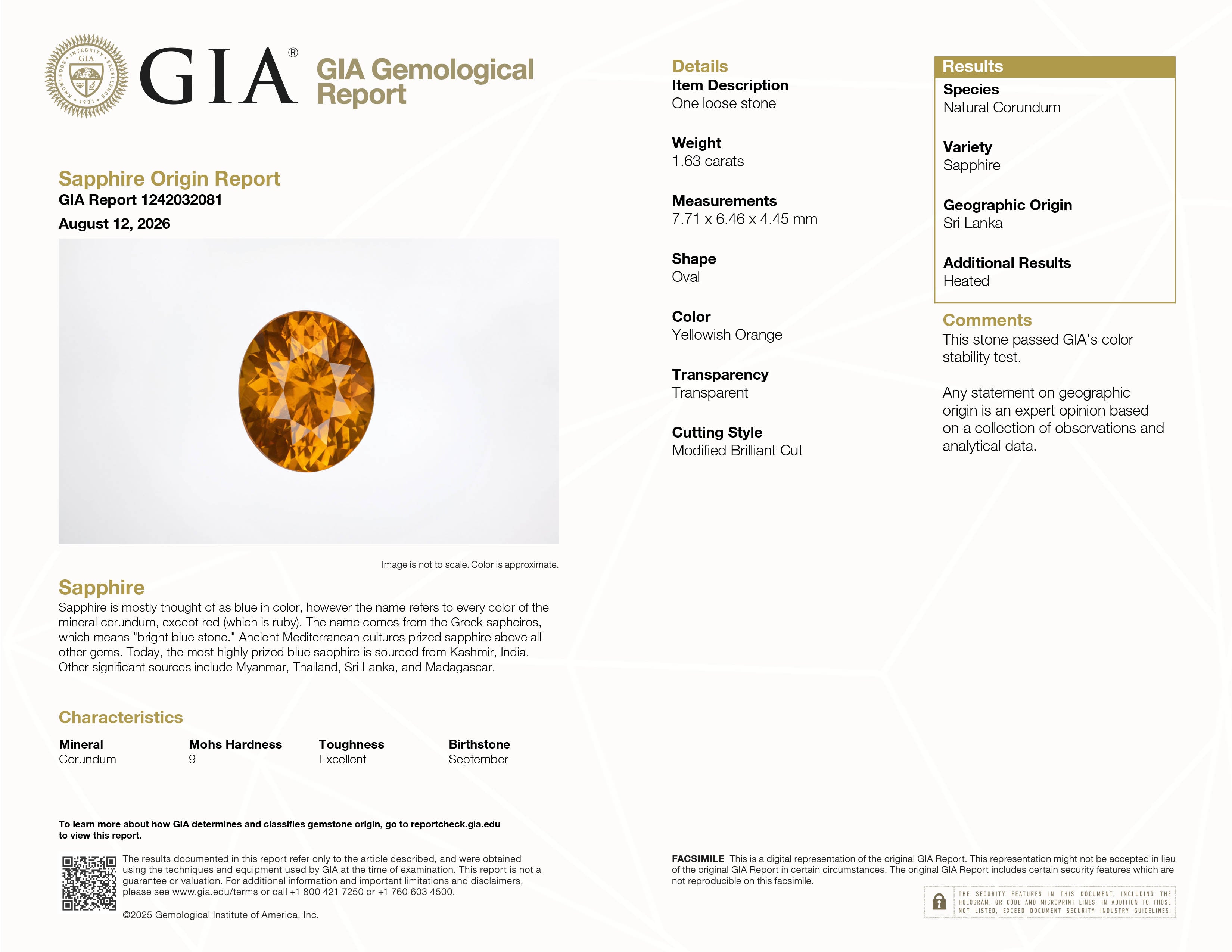
We also stock a 1.63 ct heat-treated oval-cut Ceylon orange sapphire, GIA-documented (Report #1242032081), a vivid yellowish-orange stone that passed GIA's color stability test — a well-documented oval-cut option in this color range.
Our orange sapphire collection covers the full spectrum with complete treatment and origin disclosure. For adjacent warm-tone families: peach sapphire and yellow sapphire. Our Try-On program is strongly recommended for orange sapphire. Email crescentgems@gmail.com to arrange. Free US shipping; 14-day returns.

CG8445
CG8410
Prices are shown in your local currency and may change.
CG8410
CG8445


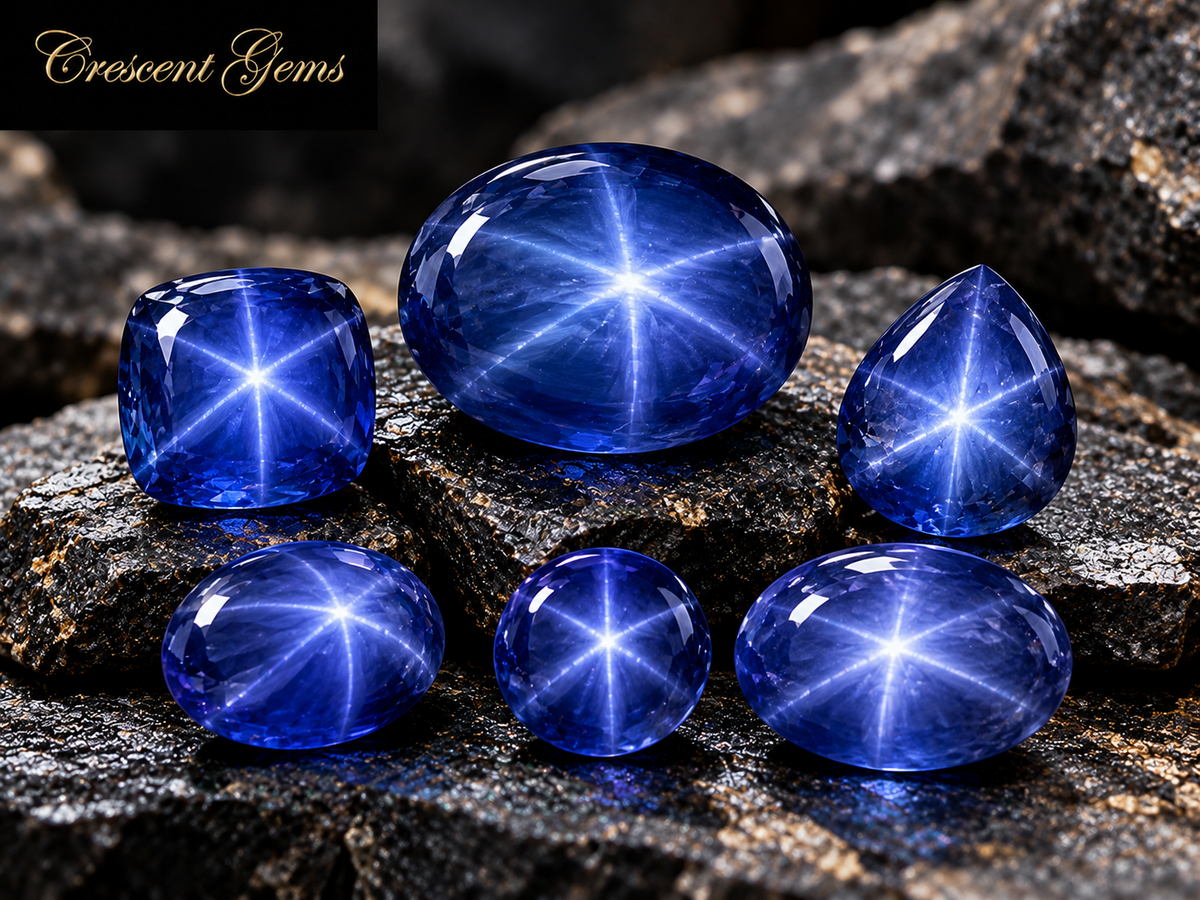
Blue Star Sapphire Price Guide — What They Cost and Why
Read moreabout Blue Star Sapphire Price Guide — What They Cost and Why
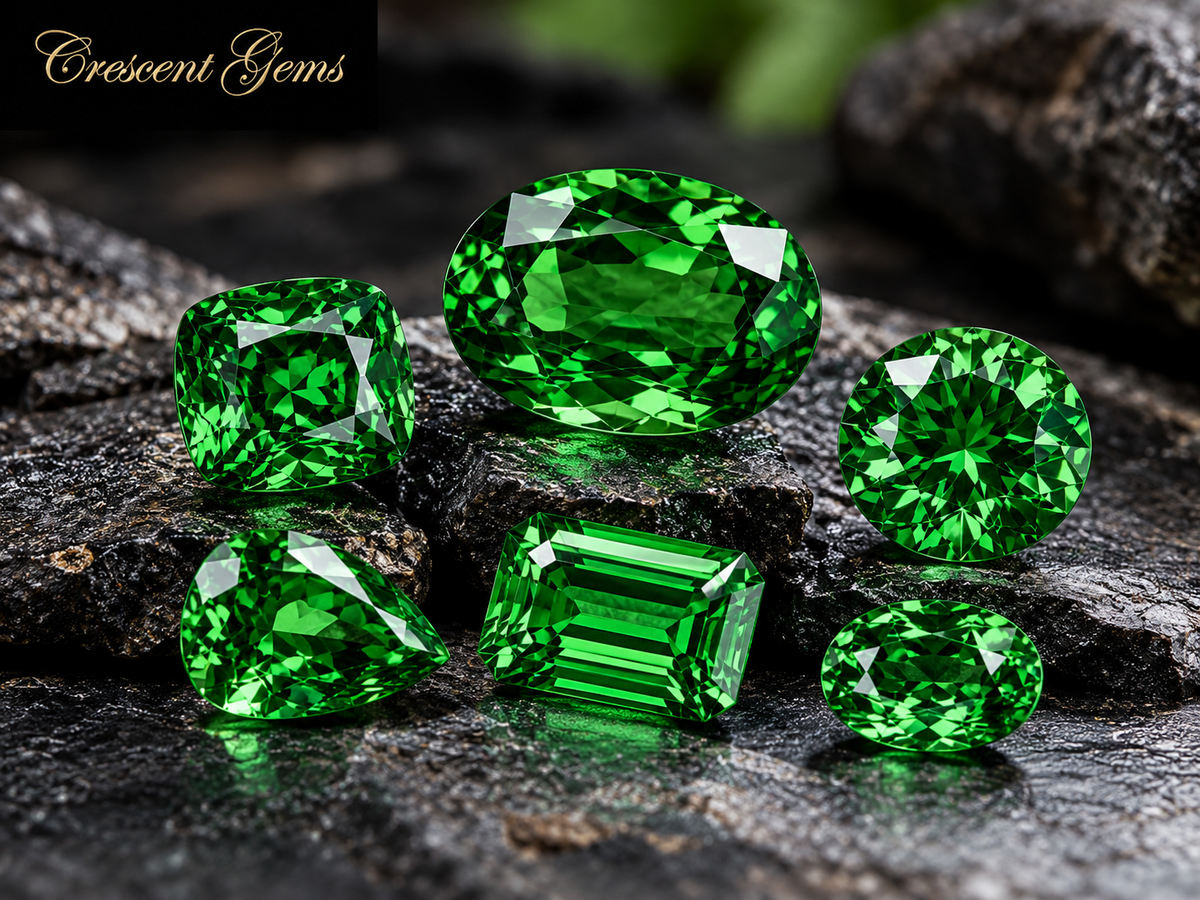
Tsavorite Garnet Price Guide — What They Cost and Why
Read moreabout Tsavorite Garnet Price Guide — What They Cost and Why
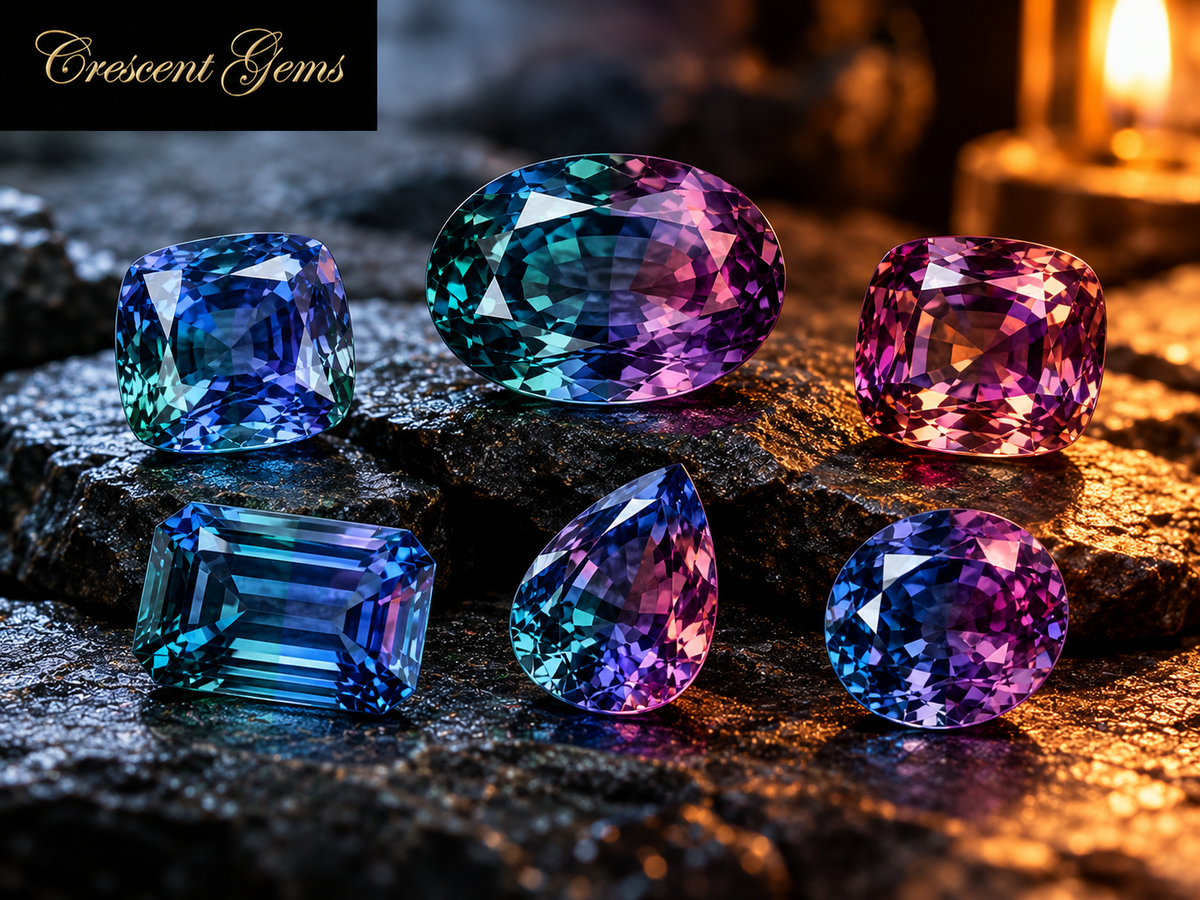
Color-Change Sapphire Price Guide — What They Cost and Why
Read moreabout Color-Change Sapphire Price Guide — What They Cost and Why
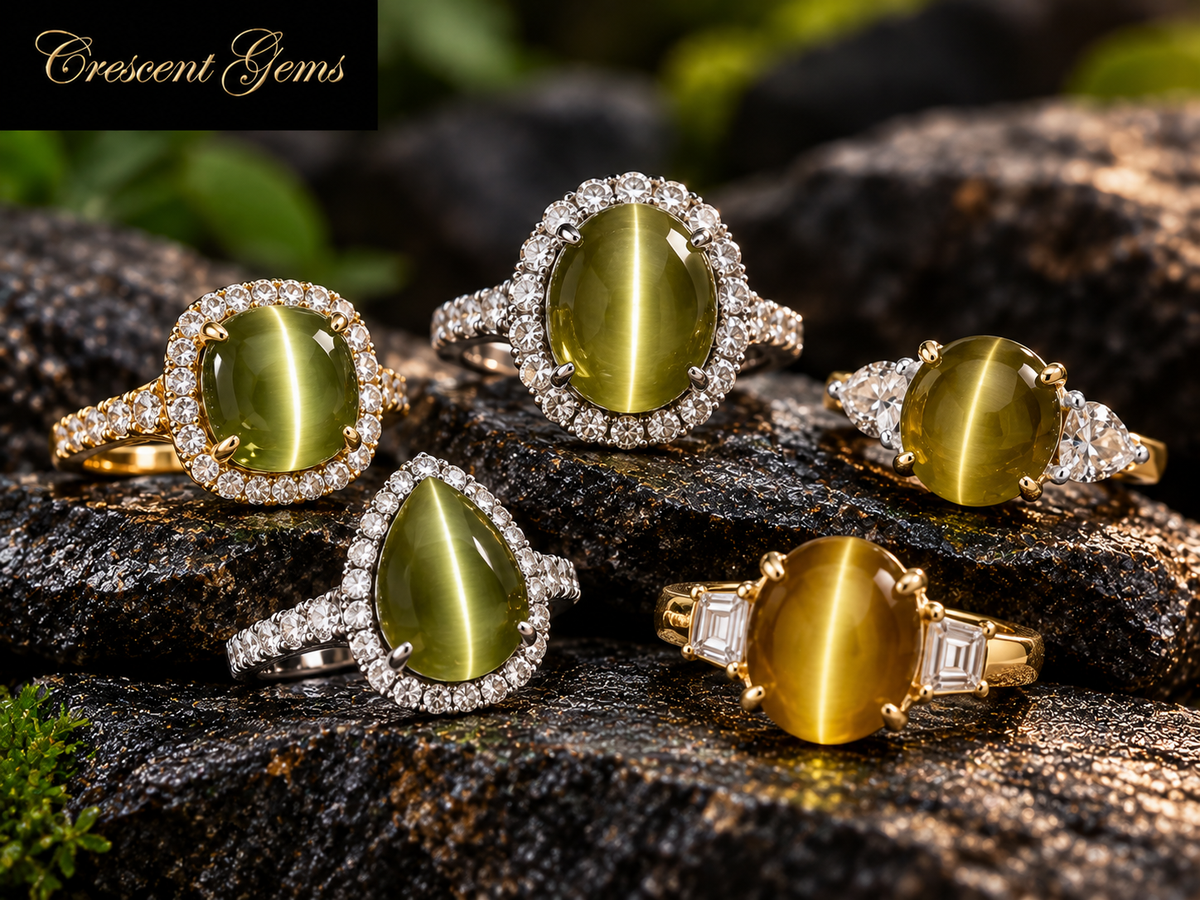
Is Cat's-Eye Chrysoberyl Good for an Engagement Ring?
Read moreabout Is Cat's-Eye Chrysoberyl Good for an Engagement Ring?
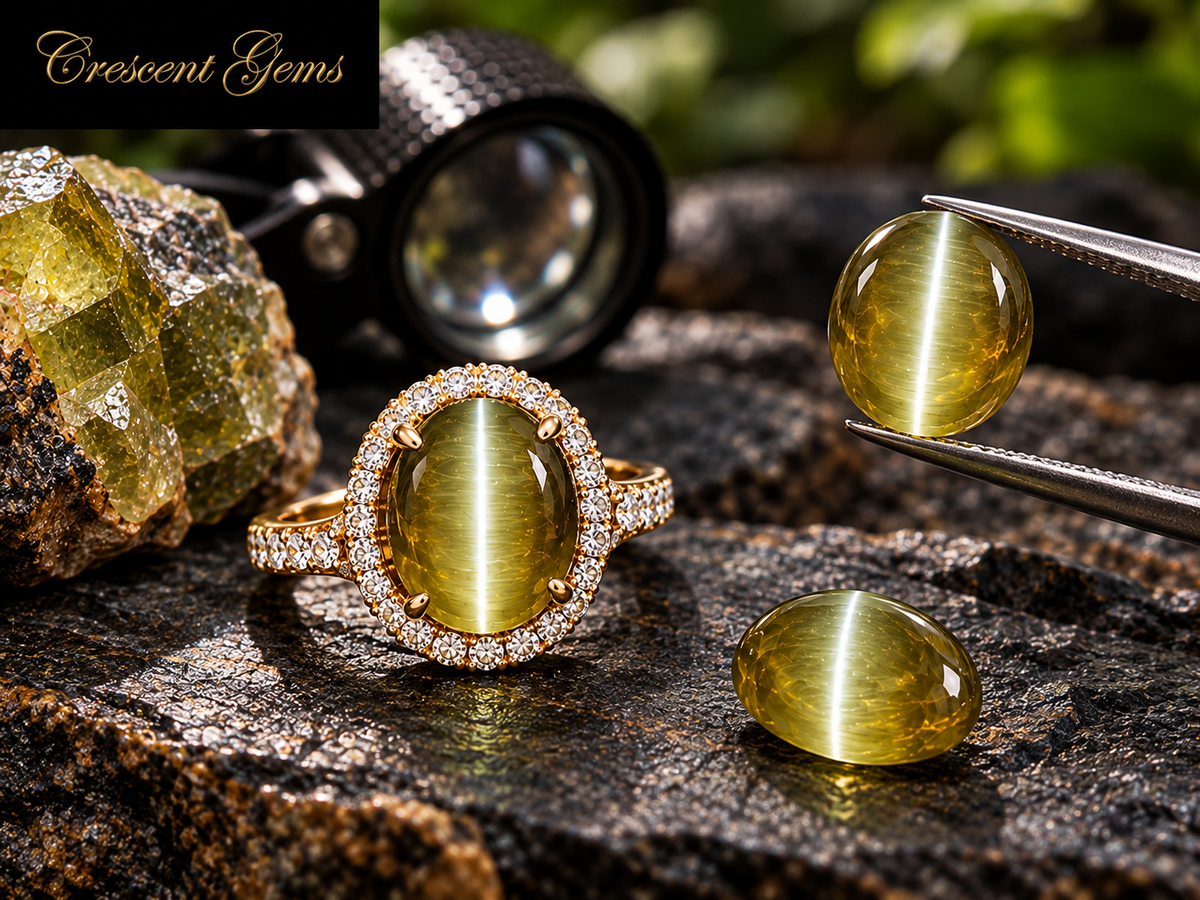
Cat's Eye Chrysoberyl Price Guide — What They Cost and Why
Read moreabout Cat's Eye Chrysoberyl Price Guide — What They Cost and Why