- by Ahmed Shareek
Spinel — A Buyer's Guide to the Species, Its Colors, and Its Documentation
- by Ahmed Shareek
New to buying gemstones? Start with our Ultimate Sapphire Buying Guide — the complete resource for color, origin, treatment, and pricing across all colored gemstones.
For most of recorded history, spinel did not have its own name. The great "rubies" of royal collections — the Black Prince's Ruby in the British Imperial State Crown, the Timur Ruby in the Crown Jewels, the 361-carat stone set in the Russian Imperial Crown — were all identified as spinels only after modern mineralogy could tell the difference. Until then, red was red: a transparent red stone of good size was a ruby, whatever mineral it happened to be.
What ended the confusion was not a better eye but a different kind of evidence. Spinel and corundum are two unrelated minerals that happen to share a coloring element, and once mineralogy could read crystal structure, refractive index and chemistry, the two separated cleanly and conclusively. Everything in this guide follows from that separation: spinel is its own species, with its own optical behavior, color causes, treatment picture and line on a laboratory report. The historical stones kept their old names, which is why the Black Prince's Ruby is still called a ruby and is still a spinel.
Spinel is cut and sold in red, hot pink, cobalt blue, pink, purple, lavender and gray, and it normally reaches the market without the heat treatment that is routine in corundum, because heating does comparatively little to it. This guide covers what the mineral is, what causes each of its colors, which treatments exist, how a laboratory separates it from ruby and sapphire, what a report on it does and does not state, and what to look at when a stone is in front of you.
Spinel is magnesium aluminum oxide (MgAl₂O₄) — a different mineral from corundum (sapphire and ruby), with a different crystal structure, different chemistry, and different optical properties. It crystallizes in the cubic (isometric) system, which means it is singly refractive — light passes through it the same way regardless of direction. This is fundamentally different from corundum, which is doubly refractive and shows pleochroism (different colors along different crystal axes).
The practical consequence of single refraction is a clean, pure optical character. A red spinel shows the same red from every angle. A blue sapphire may show different blues, violets, or greens depending on orientation. Whether you prefer the simpler or the more complex optical behavior is a matter of taste, but spinel's purity of color is one of its defining visual qualities.
Spinel's hardness is Mohs 8. It has good toughness and no cleavage, which is what makes it practical in a daily-wear ring: there is no plane along which a knock can split it, and facet edges hold up to everyday handling. Like any faceted stone it will pick up fine surface wear over years of daily use, most of it on the table and crown facets.
Spinel's treatment picture is different from corundum's, and the difference comes from the mineral rather than from the trade.
Heat does different work in the two minerals. In corundum it dissolves rutile silk and shifts hue, which is why heating is a routine step in the sapphire and ruby trade. Spinel gives it less to act on — there is no rutile silk of that kind to clear — and the effect of heating gem spinel is generally too small to justify the effort, so heating is not a routine step for spinel and most gem spinel is cut and sold in the condition it came out of the ground in. That is a statement about what the species normally requires, not a promise about an individual stone: what has or has not been done to one particular stone is a question for its report.
For a buyer, the practical consequence is that the question which dominates a sapphire purchase — heated or unheated, and on whose authority — sits differently in spinel, where heating is not the expected starting point. It does not go away, and it is not the only treatment question that matters. Treated spinel exists. SSEF states it in three words — "Spinel can be treated" — while also noting that spinel "is not frequently treated." Where its testing finds no evidence of treatment, naming heat treatment and fissure filling as the examples, the comments section of the report carries one line: "No indications of treatment." That line is a finding, not a property of the species, which is why it is worth reading rather than assuming.
Two words are routinely run together here, and they are not the same word. Unheated is a finding about heating and about nothing else. Untreated would mean no treatment of any kind, which is a wider statement, and only a laboratory that has examined that stone can make it. A "no indications of" line reports what the testing found, not a warranty about the stone's history. Read both as written, for the stone in hand. For how the same lines are read on corundum, see What Is an Unheated Sapphire? and How Sapphire Heat Treatment Works.
Spinel's red and hot pink are chromium colors — the same coloring element that works in ruby and pink sapphire, sitting in a different host. The host is what changes the result. Because spinel is cubic and singly refractive, the red has one appearance from every direction; chromium in corundum sits in a doubly refractive structure and gives a red that shows two slightly different hues depending on how the stone is viewed, which a cutter has to orient around. Trade names such as "flame spinel" and "Jedi spinel" attach to the brightest of this material; neither is a laboratory term.
Because chromium reds occur in both minerals and the two turn up in the same deposits, telling red spinel from ruby is the first thing a laboratory settles, and it does not rely on color at all. Spinel is singly refractive and ruby is doubly refractive, so a polariscope or a refractometer separates them in seconds, and the two also differ in density, in spectrum and in the inclusions they carry. A laboratory names the species before it says anything else, which is why the species line is the one nobody should skip.
A subset of blue spinel is colored by cobalt rather than by the iron-titanium pair that produces blue in sapphire. The result is a vivid, slightly violet-tinged blue, and because cobalt leaves a characteristic absorption pattern, the cause of the color can be established instrumentally rather than by eye. Vietnam (Luc Yen) and Tanzania (Mahenge) both produce it. One caution belongs with this color in particular: cobalt can also be introduced into pale blue spinel by diffusion, and diffused material reaches the market, so a cobalt blue is a stone to buy with a report whose comments section addresses treatment.
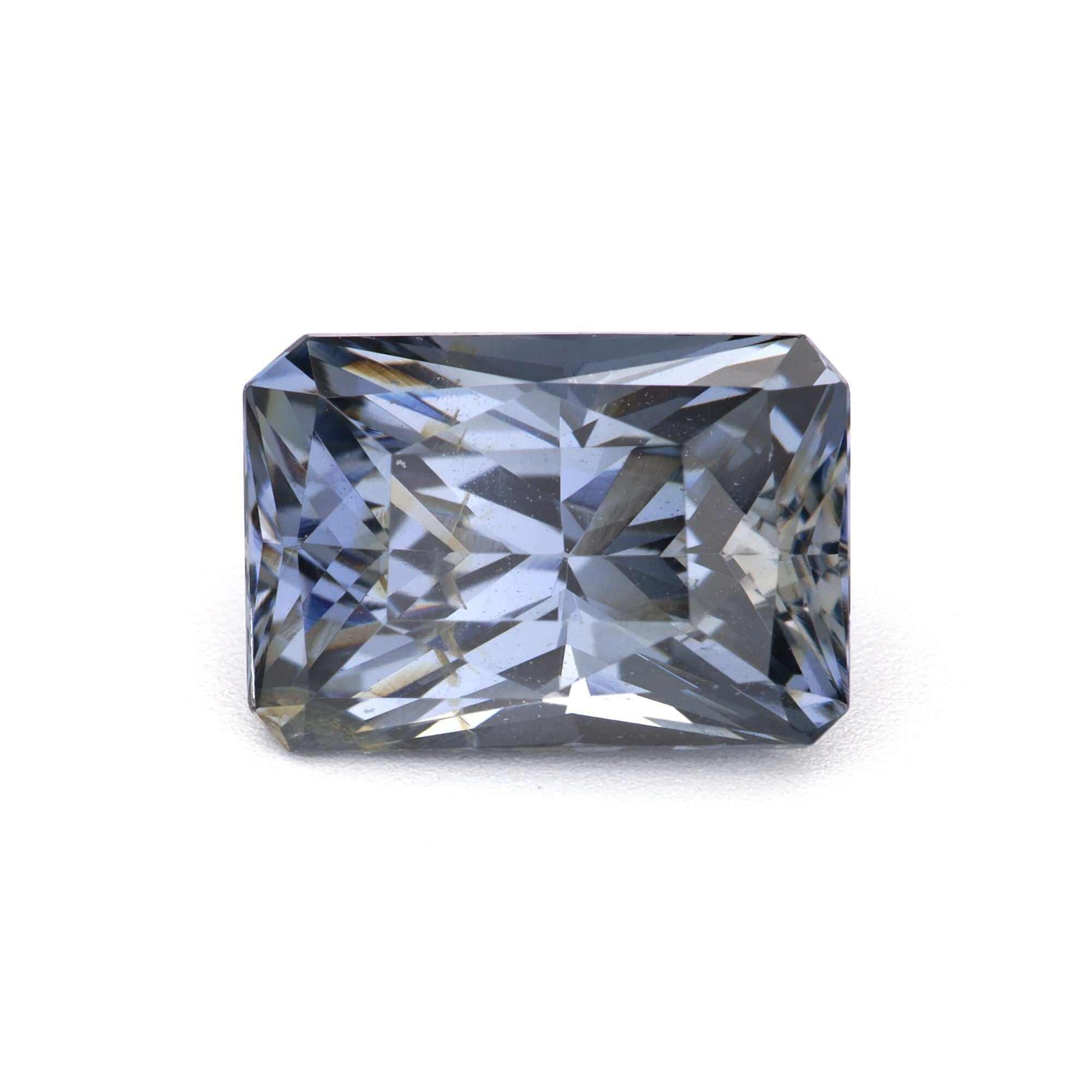
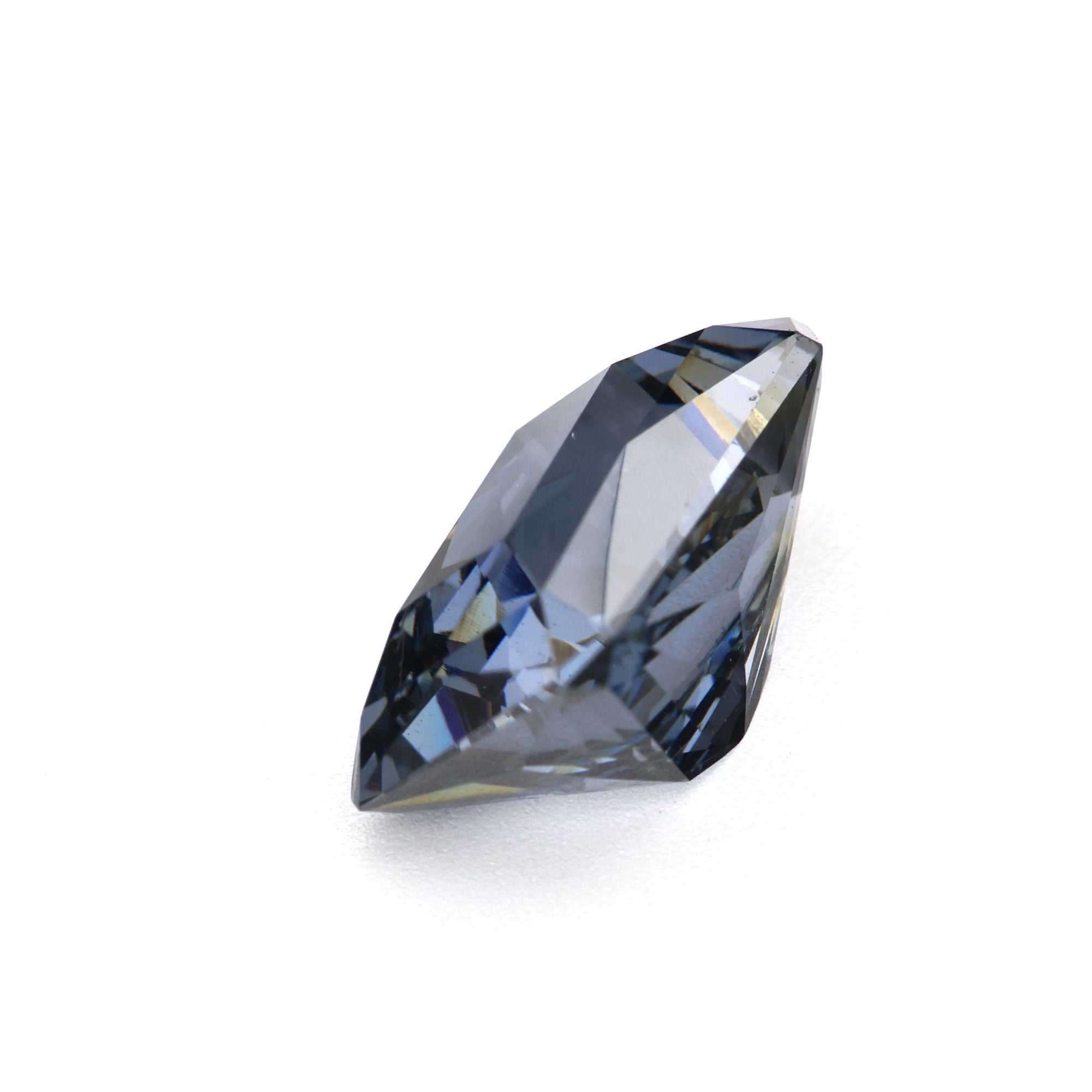
Spinel produces delicate lavender, gray-violet, steel-gray, and soft pastel tones, in which iron rather than chromium or cobalt usually does the coloring. These softer, more nuanced colors have become increasingly popular in modern engagement ring and jewelry designs. Sri Lanka and Tanzania both produce fine lavender and gray spinel.
Pink spinel ranges from soft baby pink through vivid bubblegum to deep rose. Spinel's pink tends to be brighter and more neon than sapphire's pink, which tends warmer and more saturated. Both are excellent for engagement rings in rose gold. Where a pink stone is offered as one or the other, the species is a laboratory question: in cut stones of similar color the two are not reliably told apart by eye.
Spinel produces rich purple, and because the mineral is singly refractive the hue does not change with the direction you view it from. That is a separate matter from lighting: some purple and gray-blue spinels do shift noticeably between daylight and incandescent light, which is best checked in both lights before buying.
Spinel is not a source of colorless material, vivid yellow, orange, green, or teal in any quantity the trade works with. For those colors, sapphire is the relevant gemstone. Nor is padparadscha a spinel matter: it is a designation laboratories apply to a narrow range of pink-orange sapphire, and it is never applied to spinel.
Gem spinel forms in metamorphosed limestone — marble — and is then released by weathering into the alluvial gem gravels from which most of it is actually recovered. Corundum forms under overlapping conditions, which is why the two species so often come out of the same gravel, and why a parcel bought by eye can contain both. The occurrences below are the ones a buyer meets by name.
Sri Lanka produces spinel alongside sapphire in the same alluvial gem gravels — the two minerals are geological siblings, found together in the illam of the Ratnapura and Elahera regions. Ceylon spinel tends toward blue, violet, pink, and lavender tones. Because we source sapphires from these same deposits, we encounter fine spinel regularly. See Pit Mining in Sri Lanka and The Ratnapura Gem Market.
The Mahenge region of Tanzania has produced vivid pink and neon red spinel since the early 2000s, including a documented 2007 find that yielded unusually large crystals. Mahenge is now named on reports and in trade descriptions as a locality in its own right.
Vietnam's Luc Yen district produces fine cobalt blue spinel — the vivid, neon blue that is one of spinel's most distinctive colors. Luc Yen also yields excellent pink and red material.
The source behind the old trade name "Balas ruby" — the name under which pink and red spinel circulated in Persian, Mughal and European jewelry long before it was recognized as a separate mineral. That name is the clearest surviving trace of the confusion this guide opened with: a Balas ruby is a spinel, and always was.
| Factor | Spinel | Sapphire |
|---|---|---|
| Mineral | MgAl₂O₄ | Al₂O₃ |
| Crystal system | Cubic (singly refractive) | Trigonal (doubly refractive) |
| Hardness | Mohs 8 | Mohs 9 |
| Treatment | Heating not a routine step; SSEF names heat treatment and fissure filling, and states the finding on the report | Heating is a routine step; status stated per stone on a report |
| Color range | Red, pink, blue, violet, gray | Every color |
| What the report states | Species, then treatment; origin on request | Species and variety, then treatment; origin on request |
| Red color cause | Chromium in a cubic host; one hue in every direction | Chromium in a trigonal host; two hues by direction |
| Weight at the same size | Lighter; spinel is the less dense mineral | Heavier; corundum is the denser mineral |
| Cobalt-colored blue | Occurs naturally; also produced by diffusion | Blue is iron-titanium, not cobalt |
This table compares the two species on what is documented about them. It is not a valuation and contains no price indication.
For the full side-by-side analysis, read Sapphire vs. Spinel — The Overlooked Comparison Every Collector Should Understand.
Red spinel and ruby share the same chromium colorant, are recovered from the same deposits and gem gravels, and for centuries were classified as the same stone. The differences are these:
The practical reading for a buyer is that red spinel and ruby are two different stones answering to the same description of color, and that nothing short of a laboratory will tell you reliably which one is in front of you. Ask for the species in writing, in either direction. See our Ruby Buyer's Guide.
Color first. Color is described by hue, tone and saturation, and the combination most people respond to is a vivid saturation at a medium tone — dark enough to read as fully colored, light enough not to go sleepy under indoor light. For red and pink, look for clean, bright chromium color without brownish or grayish modifiers. For cobalt blue, look for the electric quality that separates a cobalt-colored stone from an iron-colored one.
Clarity. Spinel is usually bought eye-clean, and single refraction makes transparency easy to read: there is no doubling through the table to confuse what you see. Under a loupe, spinel often shows small octahedral crystals and short needle-like inclusions, and those are part of how a laboratory recognizes the species. Judge the stone face-up first, then look into it.
Cut quality. The same principles that apply to sapphire apply here: no windowing, no heavy extinction, good brilliance, balanced proportions. A well-cut spinel returns light beautifully. See How Cut Affects a Gemstone.
Size. Compare millimeter measurements, not carat weights. Spinel is less dense than corundum, so a spinel and a sapphire of the same face-up dimensions do not weigh the same: the spinel is the lighter of the two, so a carat of spinel buys a slightly larger stone. Ask for those dimensions, and check them against the mount if the stone is being set. See Sapphire Pricing Explained for how size affects colored gemstone pricing generally.
GIA, Gübelin and SSEF all offer geographic origin determination, and for red, hot pink and cobalt blue spinel an origin line is often asked for. Read what that line is before paying for it. GIA, writing in Gems & Gemology, puts it plainly: geographic origin determinations on reports are "opinions—they are not indisputable facts." SSEF states the same in one line: "Origin determination is an expert opinion." GIA adds the consequence: "Because they are opinions, there will sometimes be differences in reports from different organizations." An origin line is a conclusion reached by the laboratory that signed it, which is a different kind of statement from the species line above it.
Sapphire and spinel overlap in some colors and not in others, which makes them complementary in a collection rather than interchangeable:
Sri Lanka produces spinel alongside sapphire in the same alluvial deposits. Ceylon spinel — particularly blue, violet, pink, and lavender varieties — has a long history and produces fine material. The two minerals are found in the same illam gravel and sorted side by side on the same trading tables in Ratnapura, where a rough pink spinel and a rough pink sapphire can sit in the same parcel until someone tests them.
At Crescent Gems, our focus is sapphire, but our direct sourcing from Sri Lankan gem gravels means we encounter and handle fine spinel as part of the same geological and commercial ecosystem. Understanding spinel — what it is, what it is not, and where it excels — is part of the expertise that makes our sapphire guidance trustworthy.
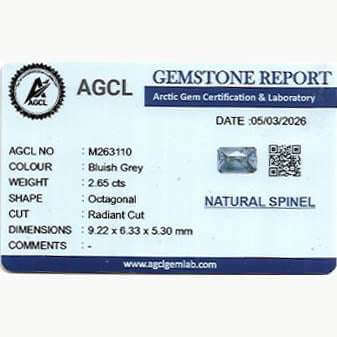
Most of what a buyer can actually settle about a spinel is settled on one page of paper. A report from a laboratory that handles colored stones addresses four things, in descending order of certainty:
One mechanical point belongs with all four, and it is the one most often skipped: match the paper to the stone. Weight, measurements, shape and cutting style are printed on a report so they can be checked against the stone. If nobody has checked them, the documentation is unverified whatever it states — and a report belongs to one stone, not to a parcel, a seller or a species.
Browse our full Ceylon sapphire catalog or email crescentgems@gmail.com with questions about any gemstone. We respond within one business day.
Browse our current spinel collection — natural stones in the same rich color range as sapphire, each listed with its treatment status.

Blue Star Sapphire Price Guide — What They Cost and Why
Read moreabout Blue Star Sapphire Price Guide — What They Cost and Why
Tsavorite Garnet Price Guide — What They Cost and Why
Read moreabout Tsavorite Garnet Price Guide — What They Cost and Why
Color-Change Sapphire Price Guide — What They Cost and Why
Read moreabout Color-Change Sapphire Price Guide — What They Cost and Why
Is Cat's-Eye Chrysoberyl Good for an Engagement Ring?
Read moreabout Is Cat's-Eye Chrysoberyl Good for an Engagement Ring?
Cat's Eye Chrysoberyl Price Guide — What They Cost and Why
Read moreabout Cat's Eye Chrysoberyl Price Guide — What They Cost and Why