Skip to content

 Genuine Gemstones at Affordable Prices 

  • Home
  • Our Gem Stones
  • Wholesale
  • Reviews
  • Gemstone Guides
  • About Us
  • Contact Us
Login
Search
Crescent GemsCrescent GemsCrescent GemsCrescent GemsCrescent Gems
  • HomeHome
  • Our Gem StonesOur Gem Stones
  • WholesaleWholesale
  • ReviewsReviews
  • Gemstone GuidesGemstone Guides
  • About UsAbout Us
  • Contact UsContact Us
Search Login Cart 0
Search
Natural Star Sapphires - Asterism Cabochon Loose Stones
  • Collections
  • Natural Star Sapphires - Asterism Cabochon Loose Stones

Natural Star Sapphires - Asterism Cabochon Loose Stones

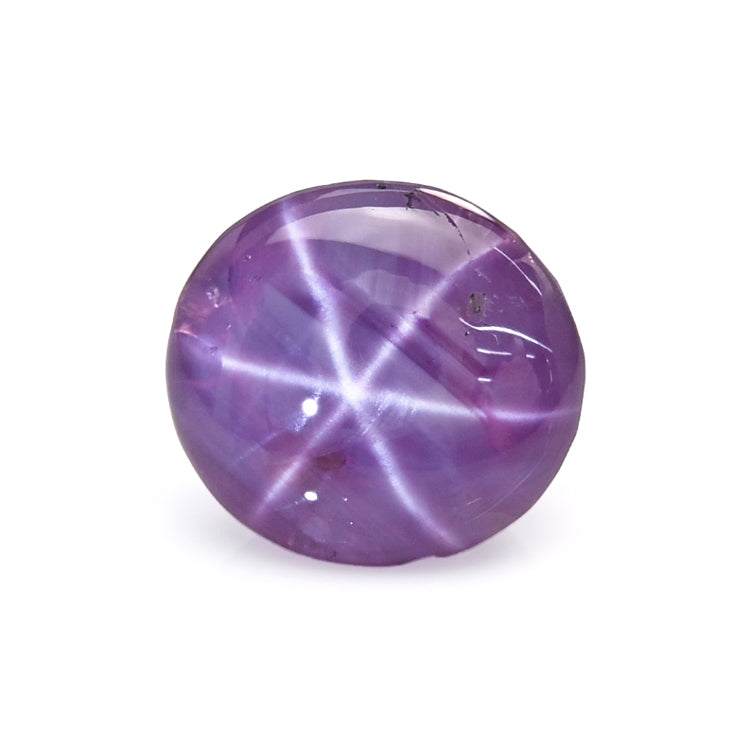
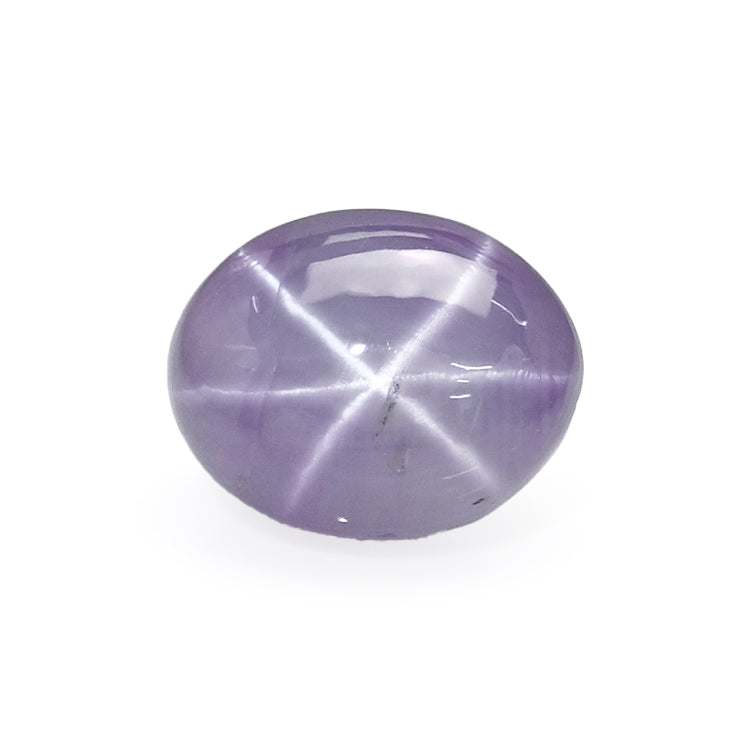
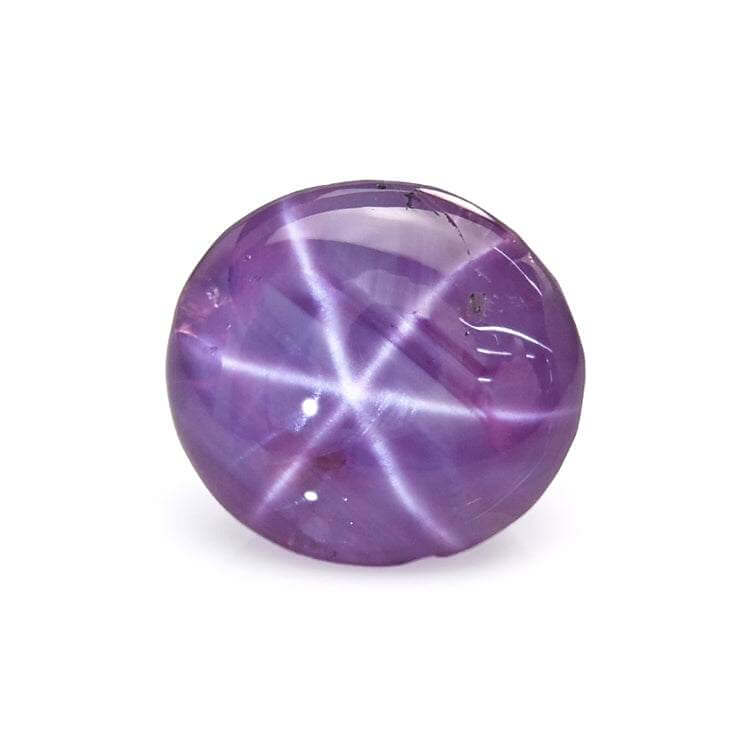
Star sapphire is one of the most extraordinary phenomena in the gemstone world — a star of light that glides across the surface of a cabochon-cut corundum when illuminated by a single point light source. The star is created by dense, precisely aligned rutile silk (microscopic titanium dioxide needles) inside the crystal, reflecting light in three directions that intersect at 60° angles to form the star.

Why our star sapphires

Our star sapphires are sourced from Sri Lanka, the origin of the famous Star of India (563 carats, now in the American Museum of Natural History) and the Star of Lanka (193 carats). Each stone here carries its own GIA report, and each stone's page states that stone's treatment finding in the report's own words rather than inferring anything from the star.

What a report says about a star sapphire, and what it does not

The star itself. A GIA colored-stone report records asterism as an observation: the phenomenon field reads Displaying Asterism. GIA states that it does not grade or provide quality analysis for sapphire or other colored stones, and no laboratory publishes a grading scheme for a star. So there is no laboratory grade for a star, and we do not publish an opinion of our own in place of one. Put the stone under one direct light source, tilt it, and judge it yourself — ask us for more photographs and video and we will send them.

Body color. Star sapphires occur in blue, gray, black, purple, violet, pink, yellow and white. The color on a stone's report is the laboratory's own color description of that stone; anything we add about color is our description and not the laboratory's.

Transparency. Star sapphires run from transparent to opaque. A GIA report prints the transparency it observed as a field value, and that field value is what each stone's page carries. We do not rank one transparency above another.

Cabochon shape. Star stones are cut as cabochons (a smooth, domed surface) rather than faceted, because the dome is the surface on which the reflections from the silk form a star instead of being broken up by facets. Dome height changes how the star reads, and it is one of the things to look at in the photographs.

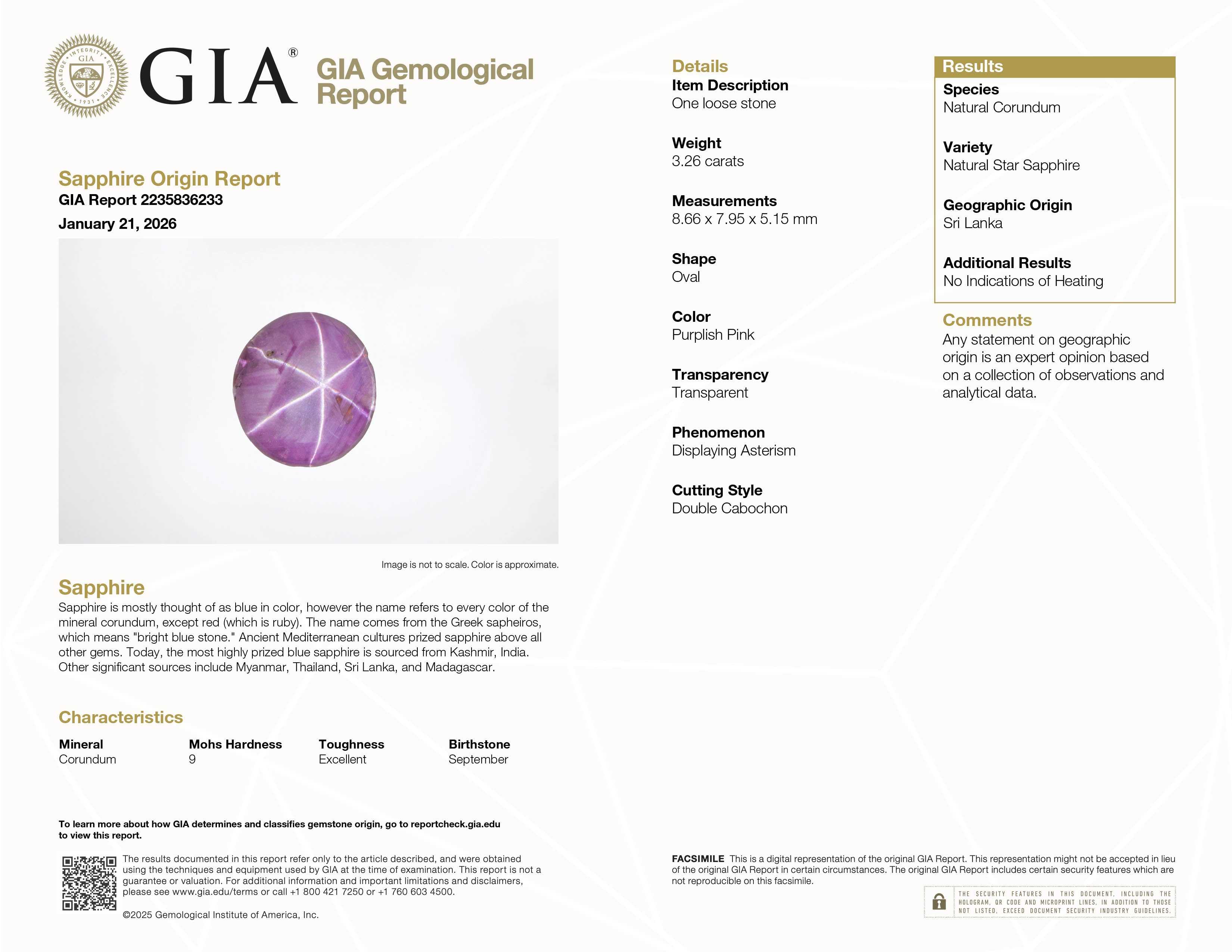
Natural vs. synthetic. Synthetic star sapphires (often called Linde or Lindy stars) are common and inexpensive. Whether a stone is natural or synthetic is answered by a report field rather than by eye: a GIA report names the species and the variety of the material it examined, and each stone's page prints what its own report says. See How to Tell If a Star Sapphire Is Natural.

Heat, silk and the star

The star exists because of rutile silk. In faceted sapphires, heat treatment is used to dissolve that silk: above roughly 1,400°C it returns to the corundum lattice, releasing titanium to pair with iron and deepen blue color, and dissolving the silk takes the star with it. But heat does not run in one direction only. GIA publishes that heating can also recrystallize silk and make it more prominent, which lets a stone show a stronger star, and that titanium diffusion is used to create stars in sapphire. A visible star is therefore not evidence about a stone's treatment history in either direction. What a laboratory found is on that stone's own report, and each stone's page prints what its report says. For the full science, see How Sapphire Heat Treatment Works.

Learn about star sapphires

Star sapphire buying guides

  • Star Sapphire Complete Buyer's Guide — the definitive resource
  • How to Tell If a Star Sapphire Is Natural — spotting synthetics and fakes
  • Ultimate Sapphire Buying Guide — the central hub for all sapphire education
  • Sapphire Pricing Explained
  • Interactive Sapphire Color Chart

The science behind the star

  • How to Read Sapphire Inclusions — rutile silk, the inclusion that creates asterism
  • What Is an Unheated Sapphire? — why heat and asterism work against each other
  • How Sapphire Heat Treatment Works — the silk dissolution process
  • Sapphire Colors Explained
  • How Gemstones Are Formed

Engagement rings and custom jewelry

  • How to Choose a Sapphire for Your Engagement Ring
  • How to Commission a Custom Ring — we prefer a bezel or another protective setting for a star cabochon, and that is our preference rather than a line from any report
  • How to Care for a Sapphire Ring

Reports and trust

  • How to Read a GIA Sapphire Report
  • Beryllium Diffusion Explained

Origin and sourcing

  • Ceylon Sapphire Complete Guide — sapphire from Sri Lanka, and what an origin opinion on a report does and does not say
  • The Ratnapura Gem Market
  • Pit Mining in Sri Lanka
  • Madagascar Sapphire Guide

Comparisons

  • Sapphire vs. Diamond
  • Sapphire vs. Spinel
  • Sapphire vs. Moissanite vs. Lab Diamond
  • Cat's Eye Chrysoberyl Guide — another phenomenon stone from Sri Lanka

Have a question about a specific star sapphire? Email crescentgems@gmail.com. We can send additional photos and video showing the star under a direct light source. 14-day return on every order. Free US shipping; international shipping via FedEx and UPS.

Natural Star Sapphires - Asterism Cabochon Loose Stones

Star sapphire is one of the most extraordinary phenomena in the gemstone world — a star of light that glides across the surface of a cabochon-cut corundum when illuminated by a single point light source. The star is created by dense, precisely aligned rutile silk (microscopic titanium dioxide needles) inside the crystal, reflecting light in three directions that intersect at 60° angles to form the star.

Why our star sapphires

Our star sapphires are sourced from Sri Lanka, the origin of the famous Star of India (563 carats, now in the American Museum of Natural History) and the Star of Lanka (193 carats). Each stone here carries its own GIA report, and each stone's page states that stone's treatment finding in the report's own words rather than inferring anything from the star.

What a report says about a star sapphire, and what it does not

The star itself. A GIA colored-stone report records asterism as an observation: the phenomenon field reads Displaying Asterism. GIA states that it does not grade or provide quality analysis for sapphire or other colored stones, and no laboratory publishes a grading scheme for a star. So there is no laboratory grade for a star, and we do not publish an opinion of our own in place of one. Put the stone under one direct light source, tilt it, and judge it yourself — ask us for more photographs and video and we will send them.

Body color. Star sapphires occur in blue, gray, black, purple, violet, pink, yellow and white. The color on a stone's report is the laboratory's own color description of that stone; anything we add about color is our description and not the laboratory's.

Transparency. Star sapphires run from transparent to opaque. A GIA report prints the transparency it observed as a field value, and that field value is what each stone's page carries. We do not rank one transparency above another.

Cabochon shape. Star stones are cut as cabochons (a smooth, domed surface) rather than faceted, because the dome is the surface on which the reflections from the silk form a star instead of being broken up by facets. Dome height changes how the star reads, and it is one of the things to look at in the photographs.

Natural vs. synthetic. Synthetic star sapphires (often called Linde or Lindy stars) are common and inexpensive. Whether a stone is natural or synthetic is answered by a report field rather than by eye: a GIA report names the species and the variety of the material it examined, and each stone's page prints what its own report says. See How to Tell If a Star Sapphire Is Natural.

Heat, silk and the star

The star exists because of rutile silk. In faceted sapphires, heat treatment is used to dissolve that silk: above roughly 1,400°C it returns to the corundum lattice, releasing titanium to pair with iron and deepen blue color, and dissolving the silk takes the star with it. But heat does not run in one direction only. GIA publishes that heating can also recrystallize silk and make it more prominent, which lets a stone show a stronger star, and that titanium diffusion is used to create stars in sapphire. A visible star is therefore not evidence about a stone's treatment history in either direction. What a laboratory found is on that stone's own report, and each stone's page prints what its report says. For the full science, see How Sapphire Heat Treatment Works.

Learn about star sapphires

Star sapphire buying guides

  • Star Sapphire Complete Buyer's Guide — the definitive resource
  • How to Tell If a Star Sapphire Is Natural — spotting synthetics and fakes
  • Ultimate Sapphire Buying Guide — the central hub for all sapphire education
  • Sapphire Pricing Explained
  • Interactive Sapphire Color Chart

The science behind the star

  • How to Read Sapphire Inclusions — rutile silk, the inclusion that creates asterism
  • What Is an Unheated Sapphire? — why heat and asterism work against each other
  • How Sapphire Heat Treatment Works — the silk dissolution process
  • Sapphire Colors Explained
  • How Gemstones Are Formed

Engagement rings and custom jewelry

  • How to Choose a Sapphire for Your Engagement Ring
  • How to Commission a Custom Ring — we prefer a bezel or another protective setting for a star cabochon, and that is our preference rather than a line from any report
  • How to Care for a Sapphire Ring

Reports and trust

  • How to Read a GIA Sapphire Report
  • Beryllium Diffusion Explained

Origin and sourcing

  • Ceylon Sapphire Complete Guide — sapphire from Sri Lanka, and what an origin opinion on a report does and does not say
  • The Ratnapura Gem Market
  • Pit Mining in Sri Lanka
  • Madagascar Sapphire Guide

Comparisons

  • Sapphire vs. Diamond
  • Sapphire vs. Spinel
  • Sapphire vs. Moissanite vs. Lab Diamond
  • Cat's Eye Chrysoberyl Guide — another phenomenon stone from Sri Lanka

Have a question about a specific star sapphire? Email crescentgems@gmail.com. We can send additional photos and video showing the star under a direct light source. 14-day return on every order. Free US shipping; international shipping via FedEx and UPS.

Filter and sort
Sort by:
Alphabetically, A-Z Sort by
GIA
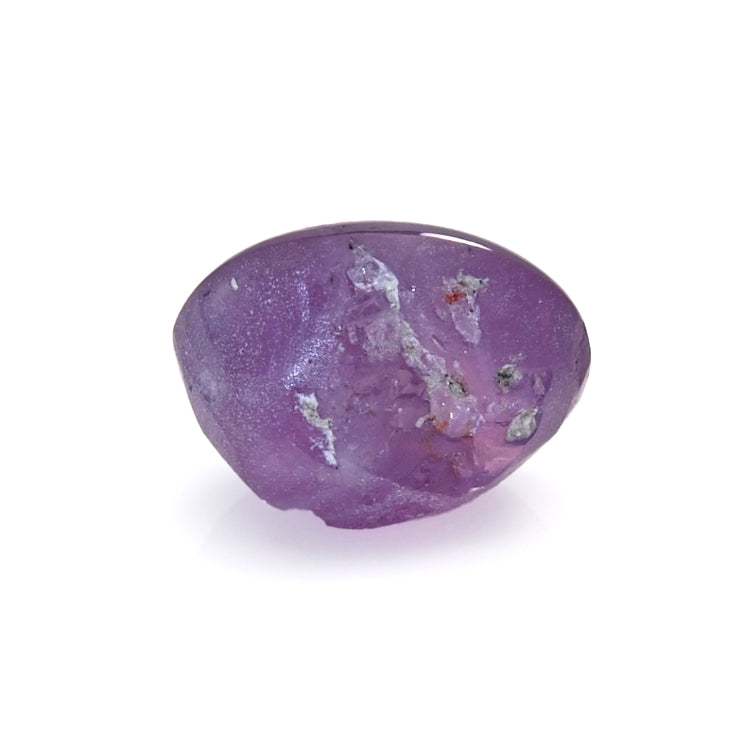
3.26 ct oval pink star sapphire displaying a six-ray star asterism, unheated

CG8288

3.26 ct Natural Pink Star Sapphire - Oval, Double Cabochon | Unheated | GIA Certified | Sri Lanka

$4,104.00 CAD
GIA
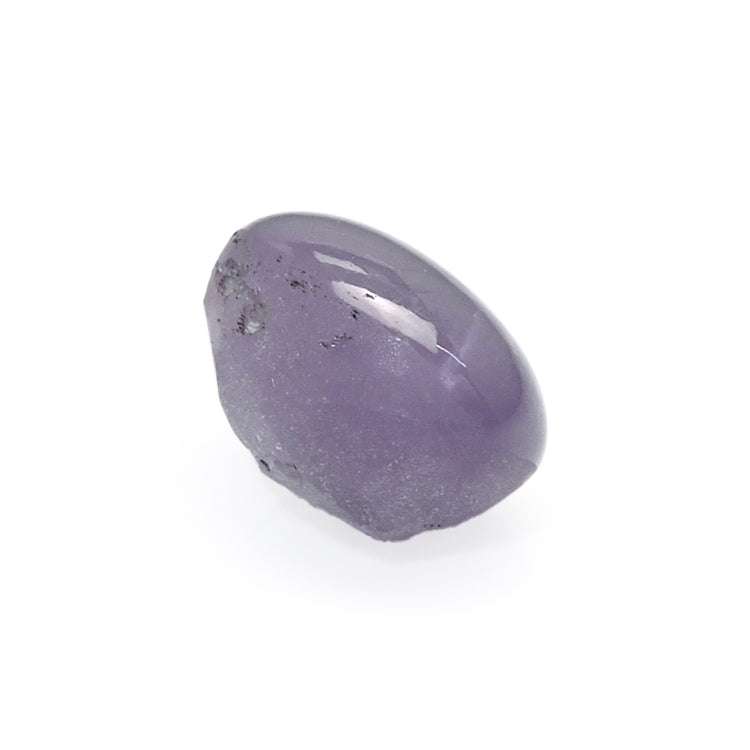
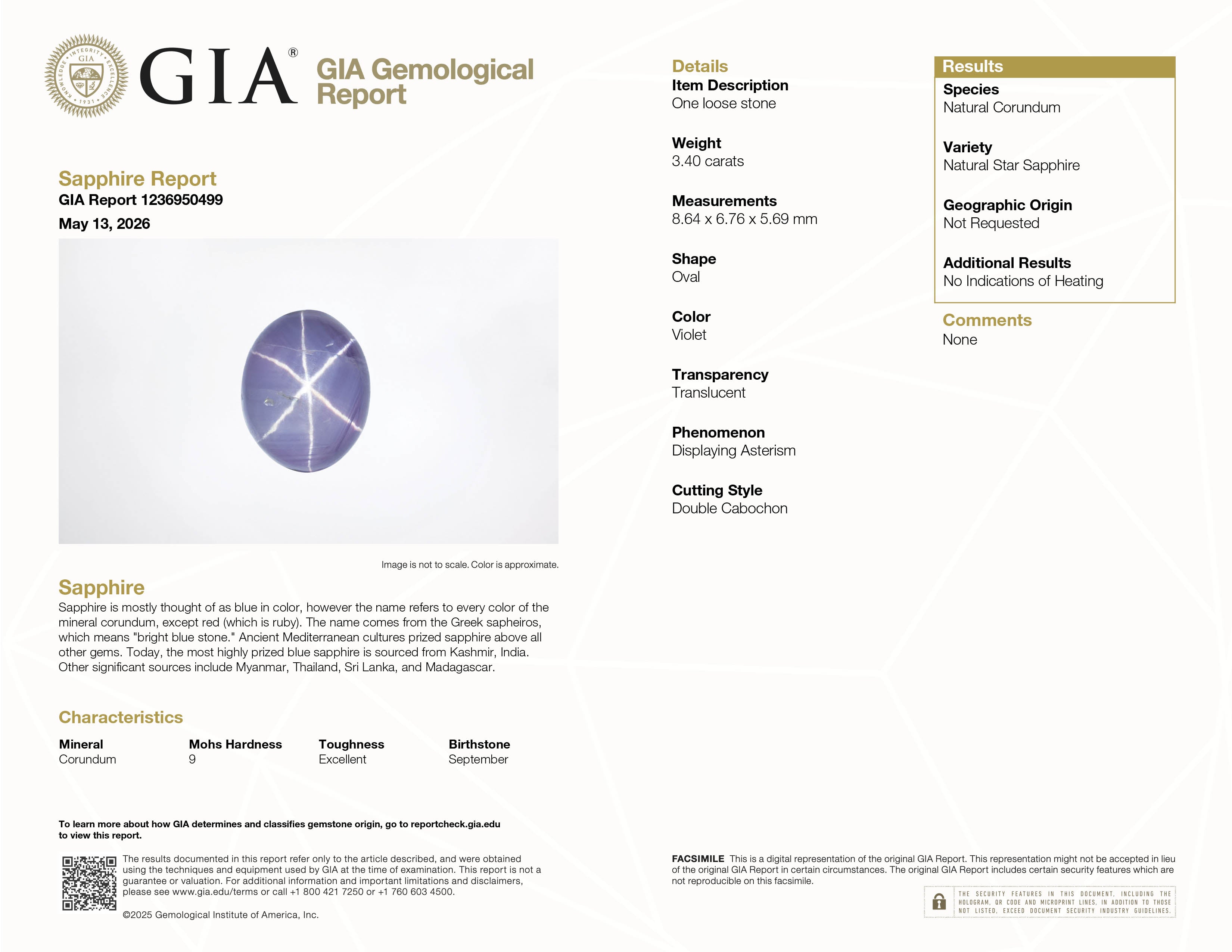
3.40 ct oval violet star sapphire — six-ray asterism, unheated, GIA certified

CG8293

3.40 ct Natural Unheated Violet Star Sapphire – Oval | GIA Certified

$3,446.00 CAD
GIA
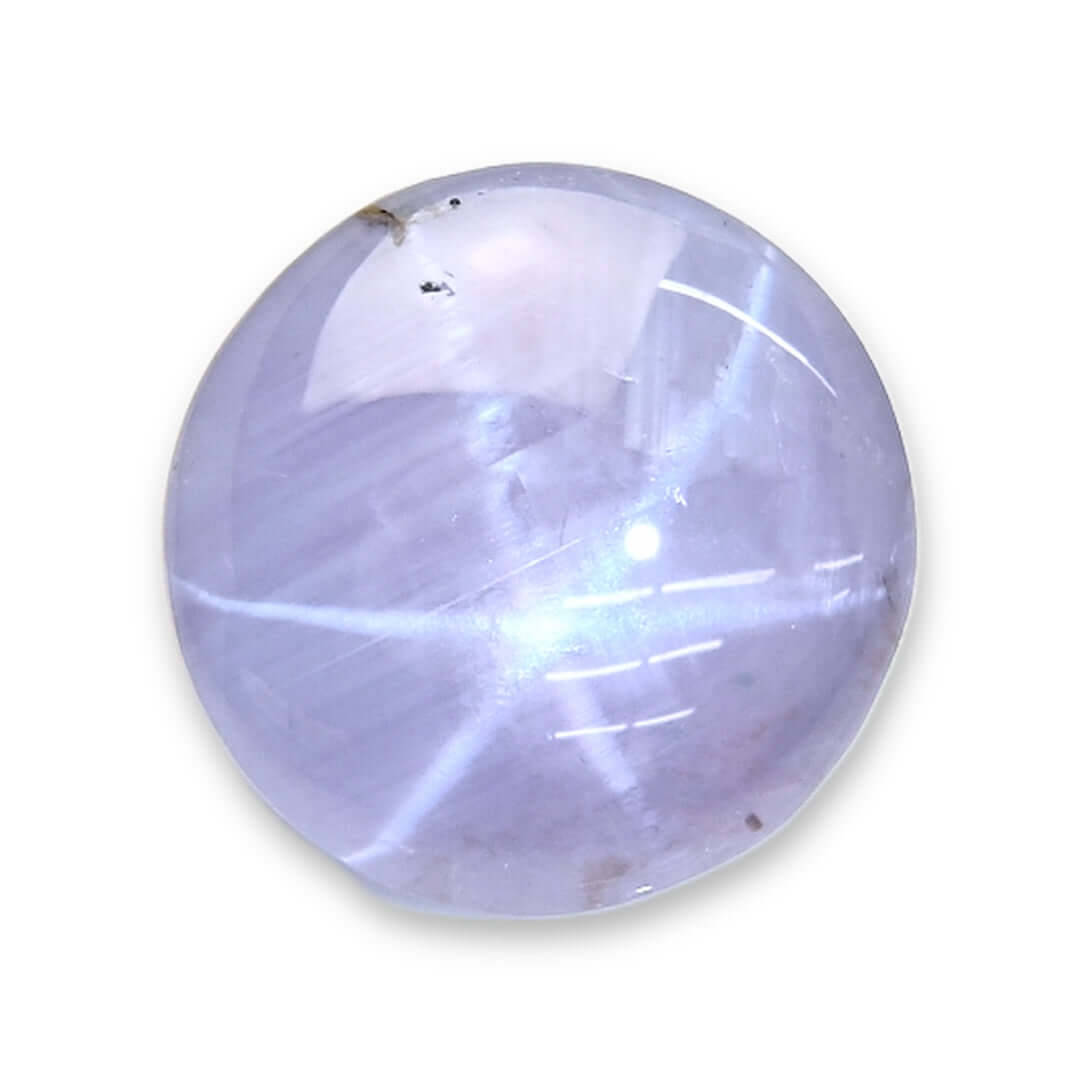
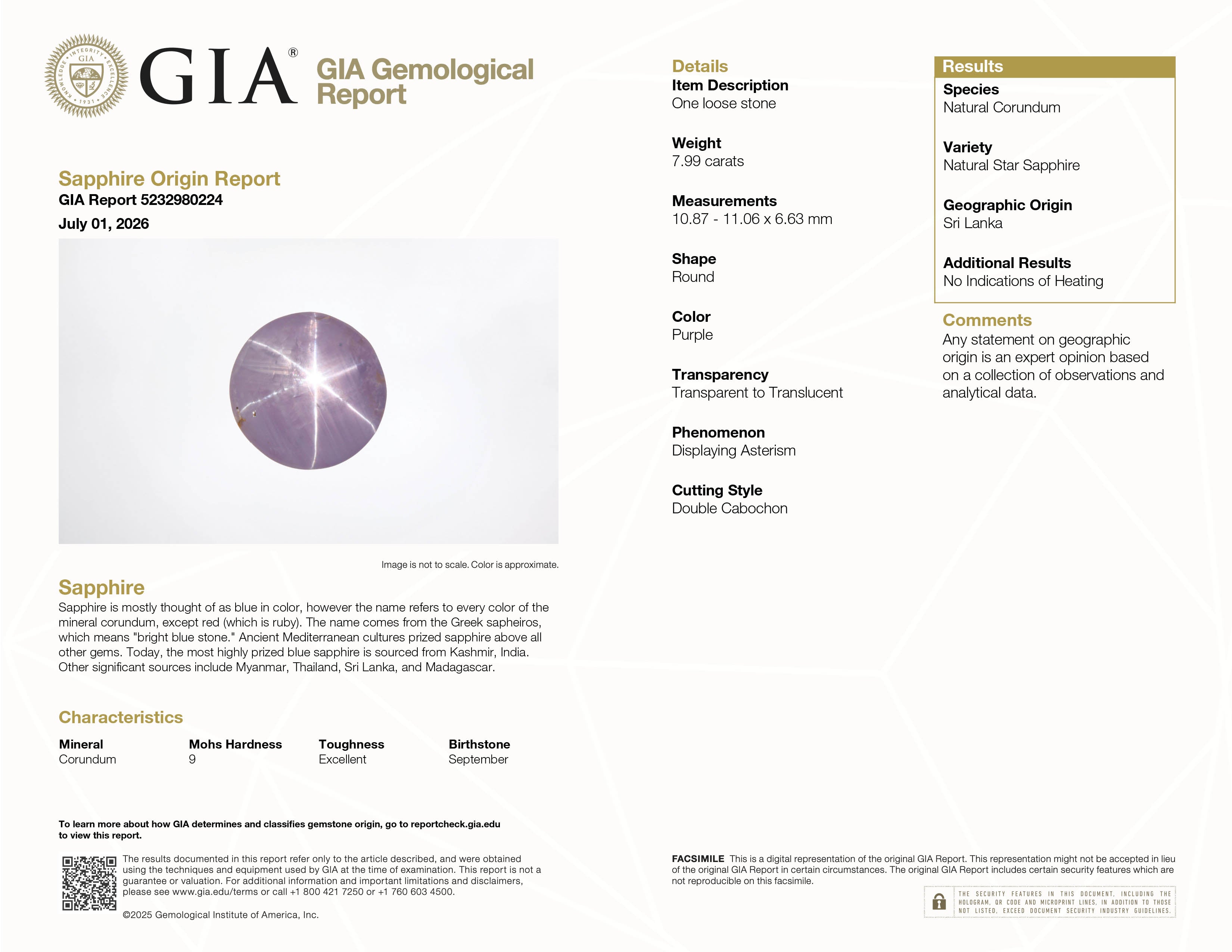
7.99 ct Round Purple Star Sapphire showcasing a six-ray asterism under light, GIA certified.
CG8441

7.99 ct Natural Purple Star Sapphire - Round, Double Cabochon | Unheated | GIA Certified | Sri Lanka

$5,777.00 CAD
GIA
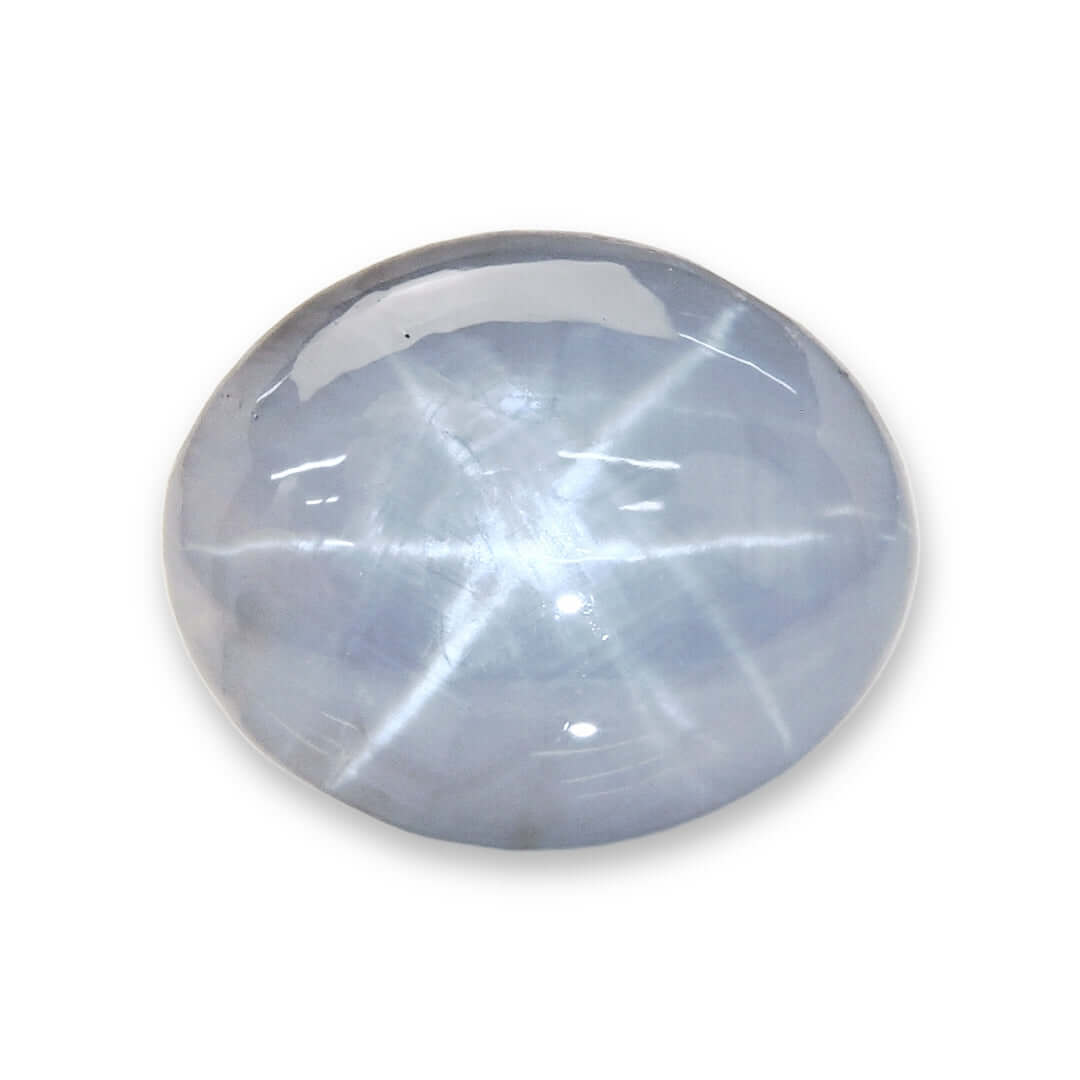
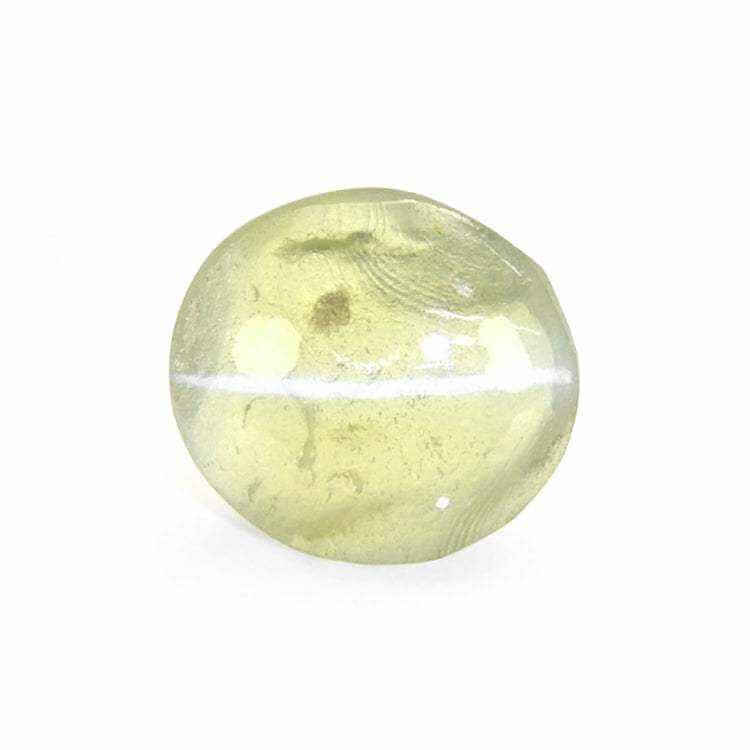
8.09 ct Gray Ceylon Star Sapphire showcasing a six-ray asterism with elegant gray body color.

CG8440

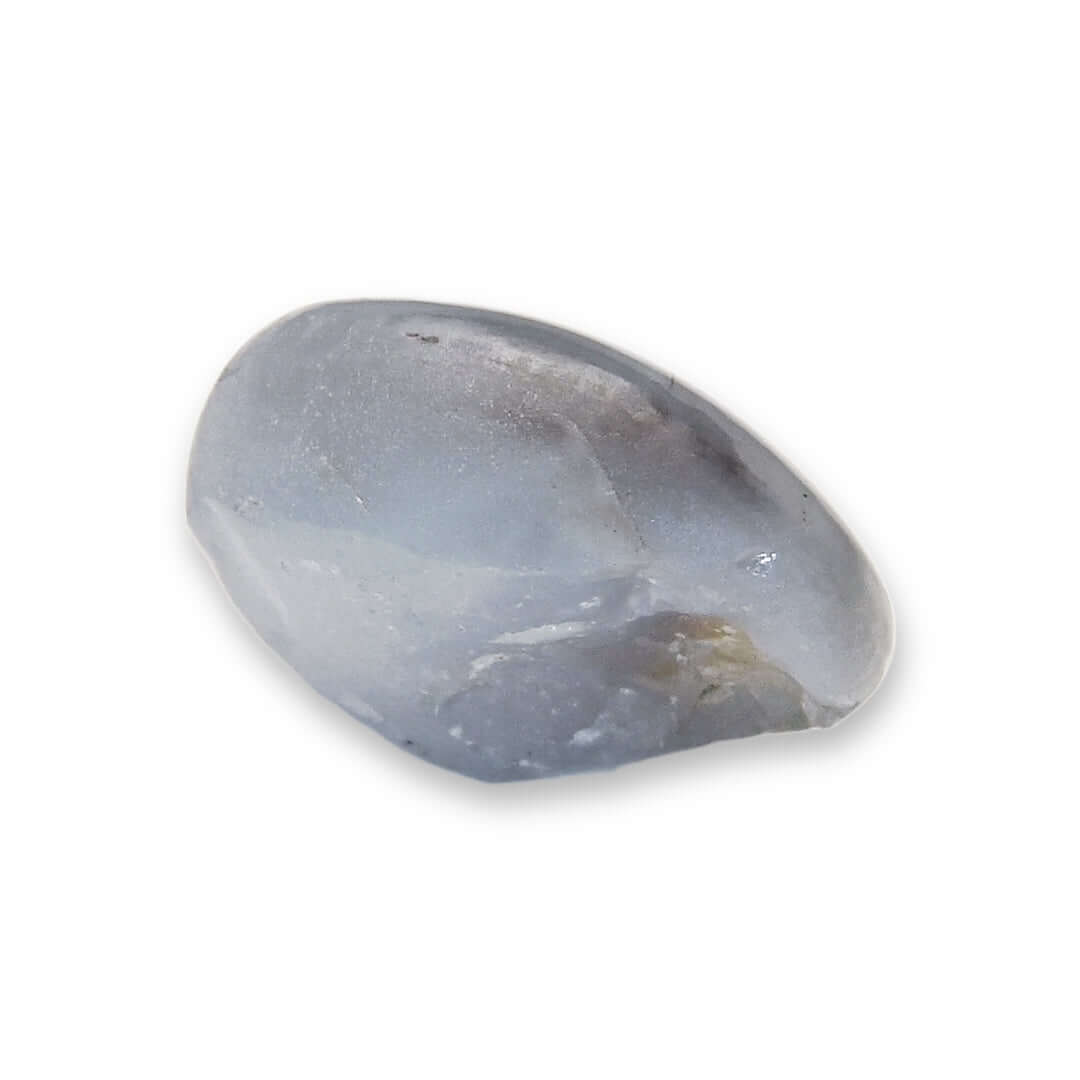
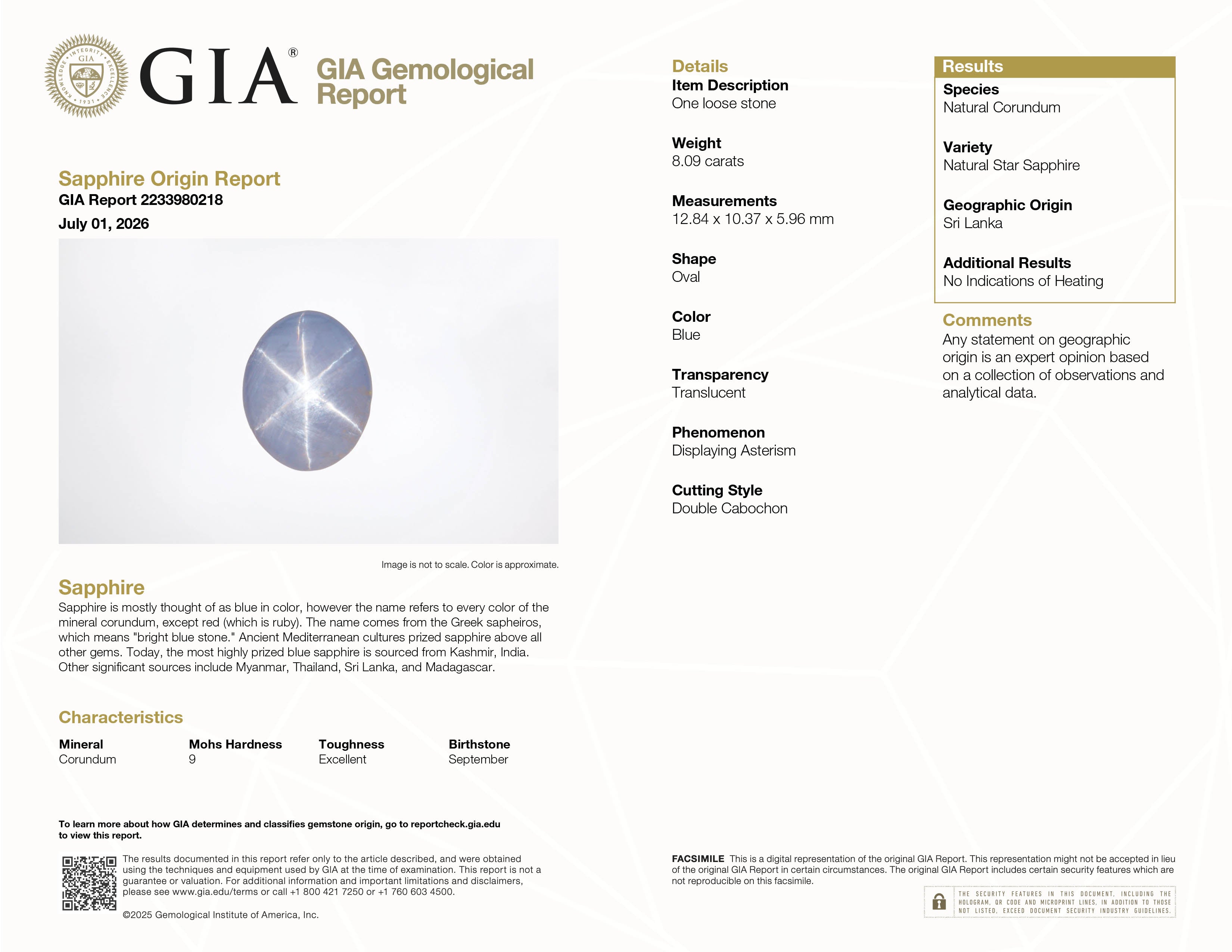
8.09 ct Blue Star Sapphire – Oval, Double Cabochon | Unheated | Sri Lanka | GIA Report #2233980218

$5,850.00 CAD
Natural blue sapphire loose stone in a rich royal blue hue

Blue

Close-up of a rare Loose Purple Sapphires gemstone showcasing its royal and mysterious deep violet hue

Purple

Close-up of a vibrant Pink Sapphire gemstones showcasing its brilliance and color variations

Pink

Close-up of a deep red Ruby Gemstones symbolizing passion and power, known as the King of Gemstones

Ruby

Vivid orange sapphire gemstones with deep tangerine hue and brilliant cut, showcasing clarity and strong saturation

Orange

Close-up of a soft pink-orange peach sapphire gemstone showcasing its delicate hues

Peach

Close-up of vibrant yellow sapphire gemstones showcasing their radiant golden hues and brilliant sparkle

Yellow

White

Close-up of a Teal Sapphire gemstones blue and green hues

Teal

Faceted Green Sapphire gemstones, showcasing vibrant green hues as an attractive emerald alternative.

Green

Close-up of a brilliant green Tsavorite garnet gemstones showcasing its vibrant color and rare beauty

Tsavorite

Natural padparadscha sapphire loose stone in a rare peachy-pink lotus-blossom hue

Padparadscha

Close-up of a Natural Chrysoberyl gemstone showcasing its brilliance and durability, symbolizing strength, light, and luxury.

Chrysoberyl

Close-up of natural cat's eye chrysoberyl gemstone showing sharp chatoyancy phenomenon on honey-yellow cabochon stone

Cats eye

Natural Star Sapphires gemstone with glowing asterism star effect in smooth cabochon cut

Star Sapphires

Natural colour-change sapphire loose stone shifting hue between light sources

Color Change

Sapphire pairs showcasing balanced color, size, and shape for elegant jewelry designs

Matched pairs

Round Sapphires Ceylon blue sapphire 6mm — calibrated loose stone for engagement rings

Round Gemstones

Natural Oval Sapphire — unheated loose stone for engagement rings

Oval Gemstones

rectangular sapphires— unheated elongated loose stone

Rectangular Gemstones

Square Sapphires— square loose stone, diamond alternative

Square Gemstones

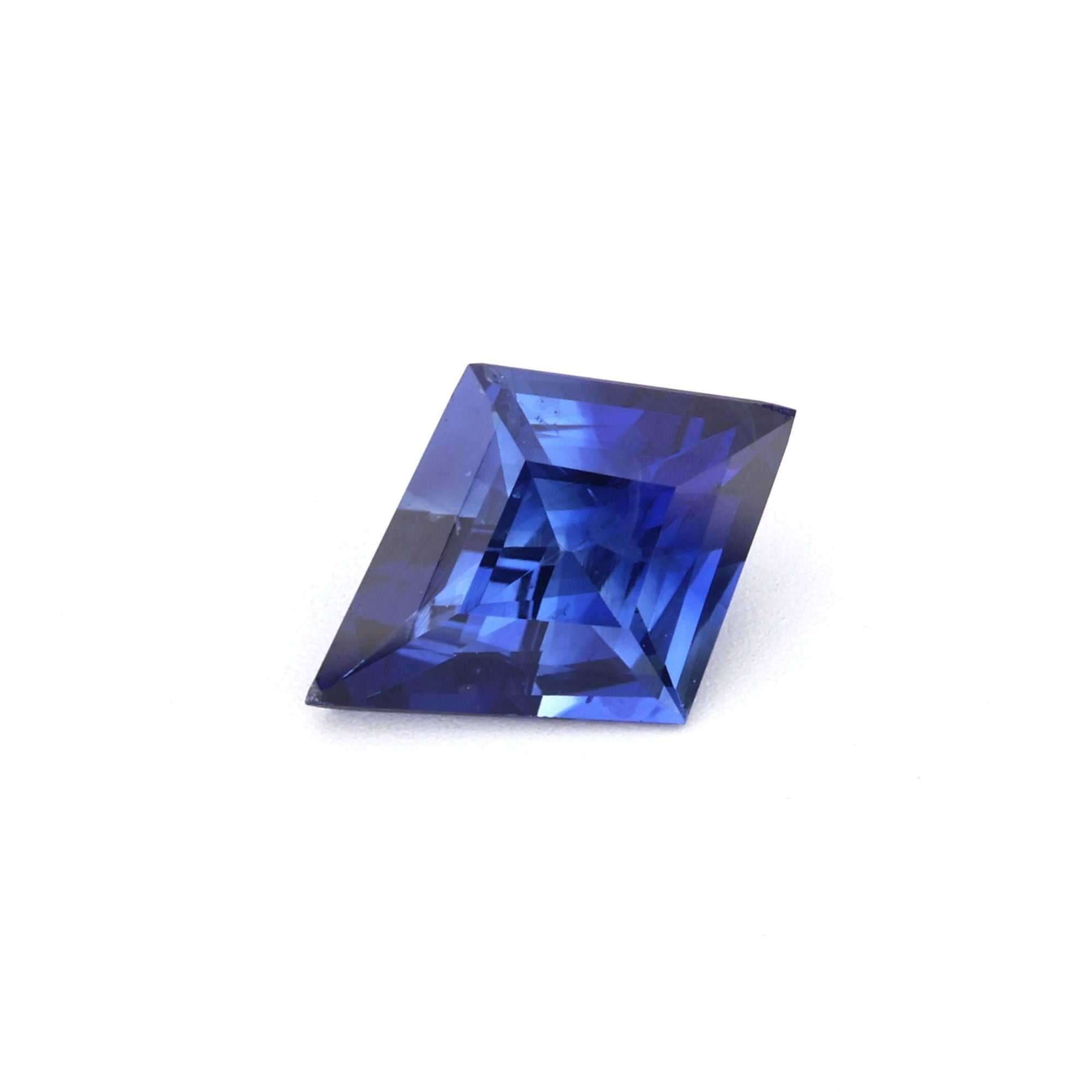
1.06 ct Kite-Shaped Blue Sapphire showcasing a unique geometric design and vibrant blue color.

Fancy cut Gemstones

View all

Exceptional Gems

Hand selected for exceptional clarity and brilliance.

Precision Cut

Crafted to exact dimensions for perfect symmetry.

Calibrated Sizes

Designed to fit fine jewellery settings flawlessly.

Natural Colours

Vivid natural hues, every treatment fully disclosed.

Quick links
  • Home
  • Our Gemstones
  • Wholesale
  • Customer Reviews
  • Gemstone Guides
  • Package tracking
  • About us
  • Contact us
  • Profile
Shop by Shape
  • Round
  • Oval
  • Square
  • Pear
  • Rectangle
  • Trilliant
  • Emerald cut
  • Radiant Cut
  • Asscher cut
  • Cushion cut
  • Fancy Cut
Shop by Collections
  • Blue Sapphire
  • Color Change Sapphire
  • Chrysoberyl
  • Chrysoberyl Catseye
  • Green Sapphire
  • Matched Pair
  • Orange Sapphire
  • Peach Sapphire
  • Pink Sapphire
  • Purple Sapphire
  • Red Ruby
  • Star Sapphires
  • Teal Sapphire
  • Tsavorite Garnets
  • Violet Sapphires
  • White Sapphire
  • Yellow Sapphires
Buyer's Guides
  • Sapphire Engagement Ring Guide
  • Ceylon Sapphire Origin Guide
  • Heated vs Unheated Sapphire
  • Buying Sapphires for Jyotish
  • How to commission a custom ring
  • Gemstone faceting service
© 2026 Crescent Gems. Powered by Shopify
  • Privacy policy
  • Shipping policy
  • Terms of service
  • Refund policy
  • Cancellation policy
  • Contact information
  • Legal notice
  • Amazon
  • American Express
  • Apple Pay
  • Bancontact
  • Bizum
  • BLIK
  • Diners Club
  • Discover
  • EPS
  • Google Pay
  • JCB
  • Maestro
  • Mastercard
  • Multibanco
  • MB WAY
  • MobilePay
  • PayPal
  • Shop Pay
  • Twint
  • Union Pay
  • Visa
  • Choosing a selection results in a full page refresh.
  • Opens in a new window.