- by Ahmed Shareek
What Is a GIA Sapphire Report and How Do You Read One?
- by Ahmed Shareek
New to buying sapphires? Start with our Ultimate Sapphire Buying Guide — the complete resource for color, origin, treatment, and pricing. For treatment background: What Is an Unheated Sapphire? For the heated vs. unheated comparison: Heated vs. Unheated.
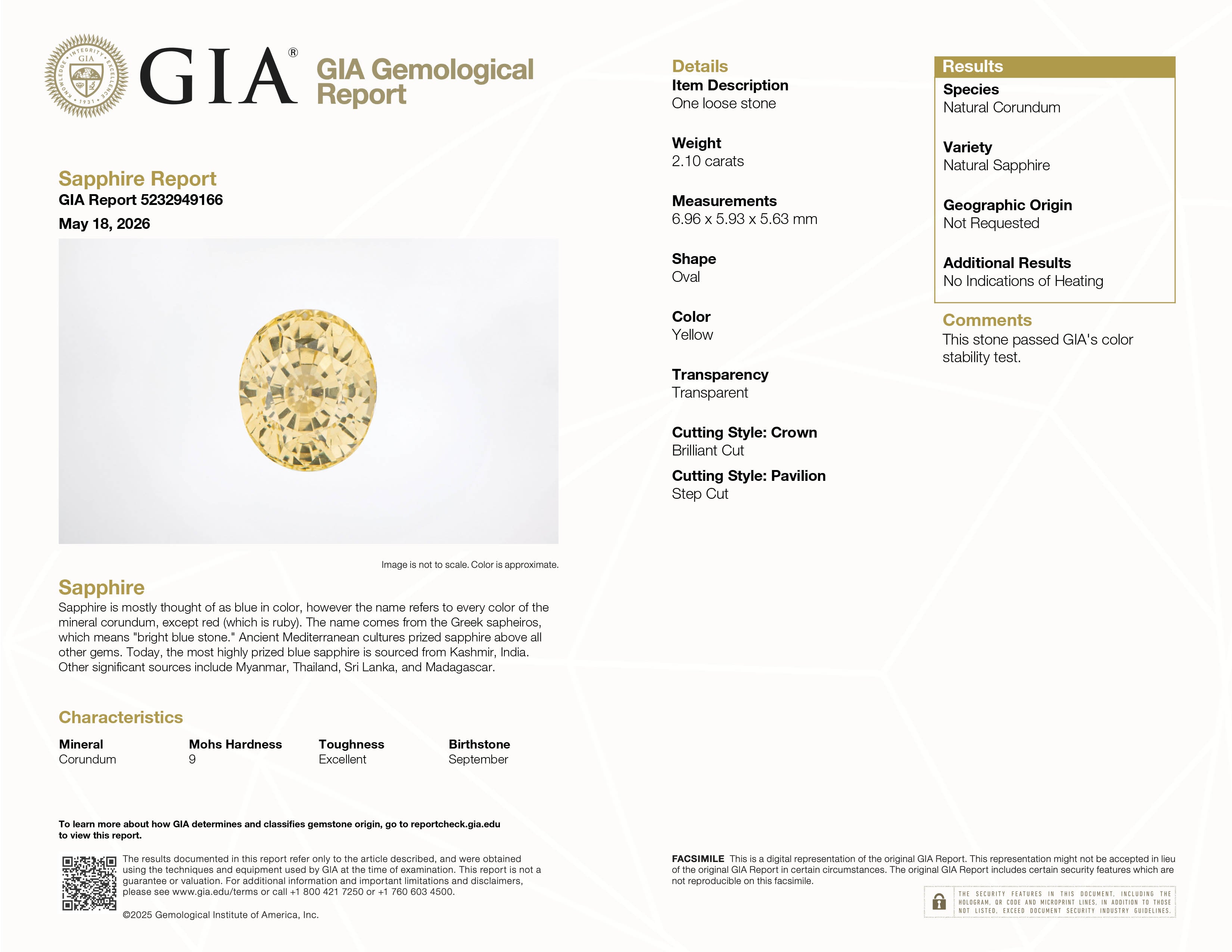
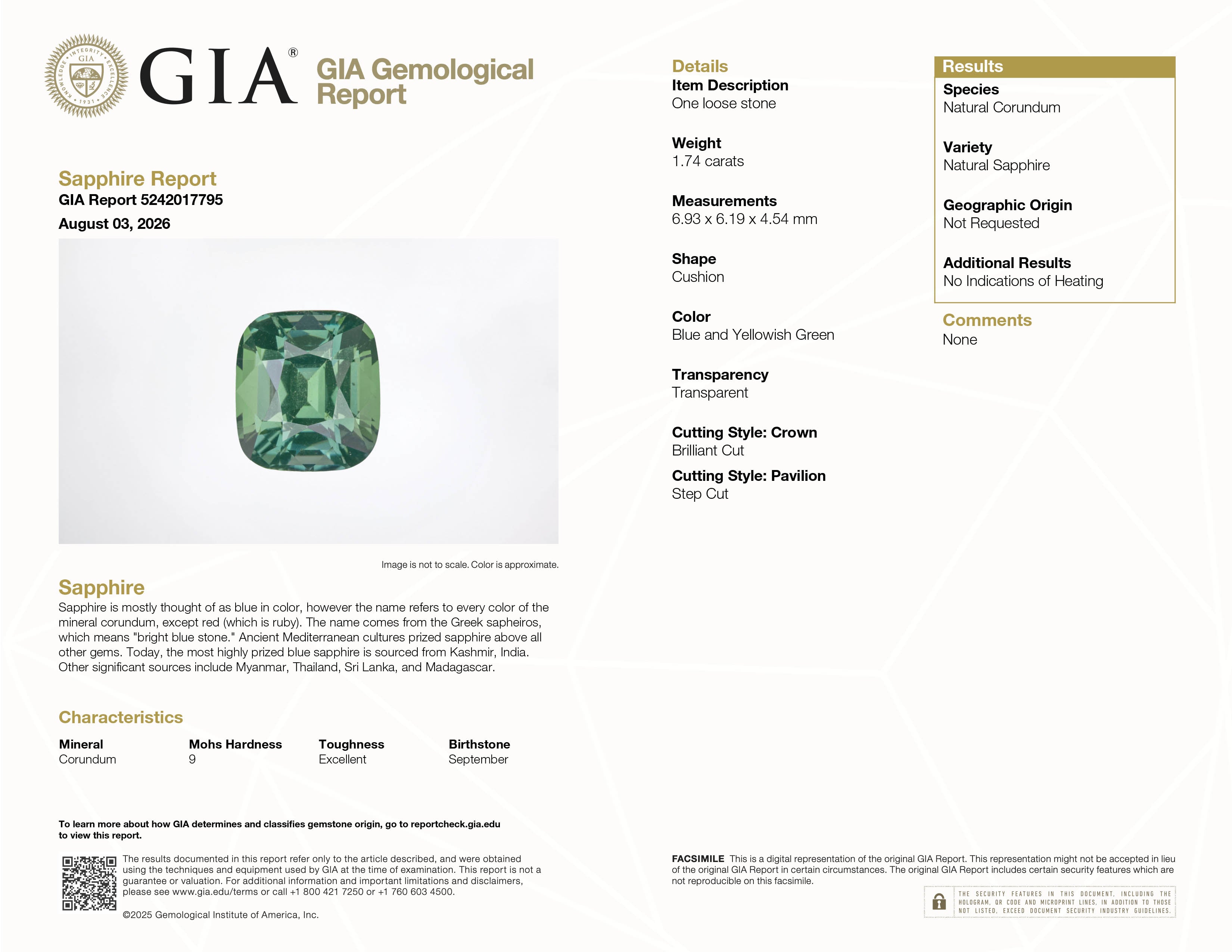
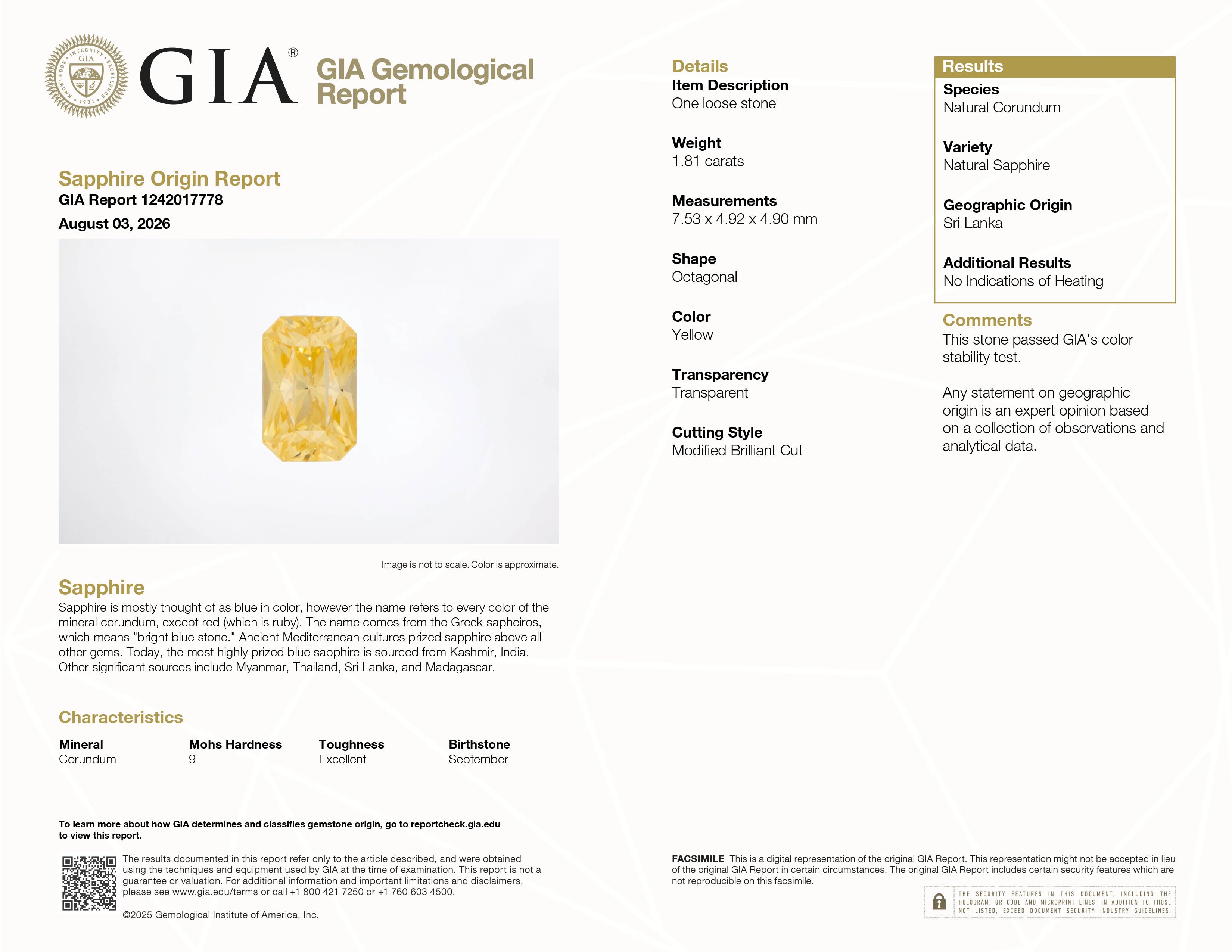
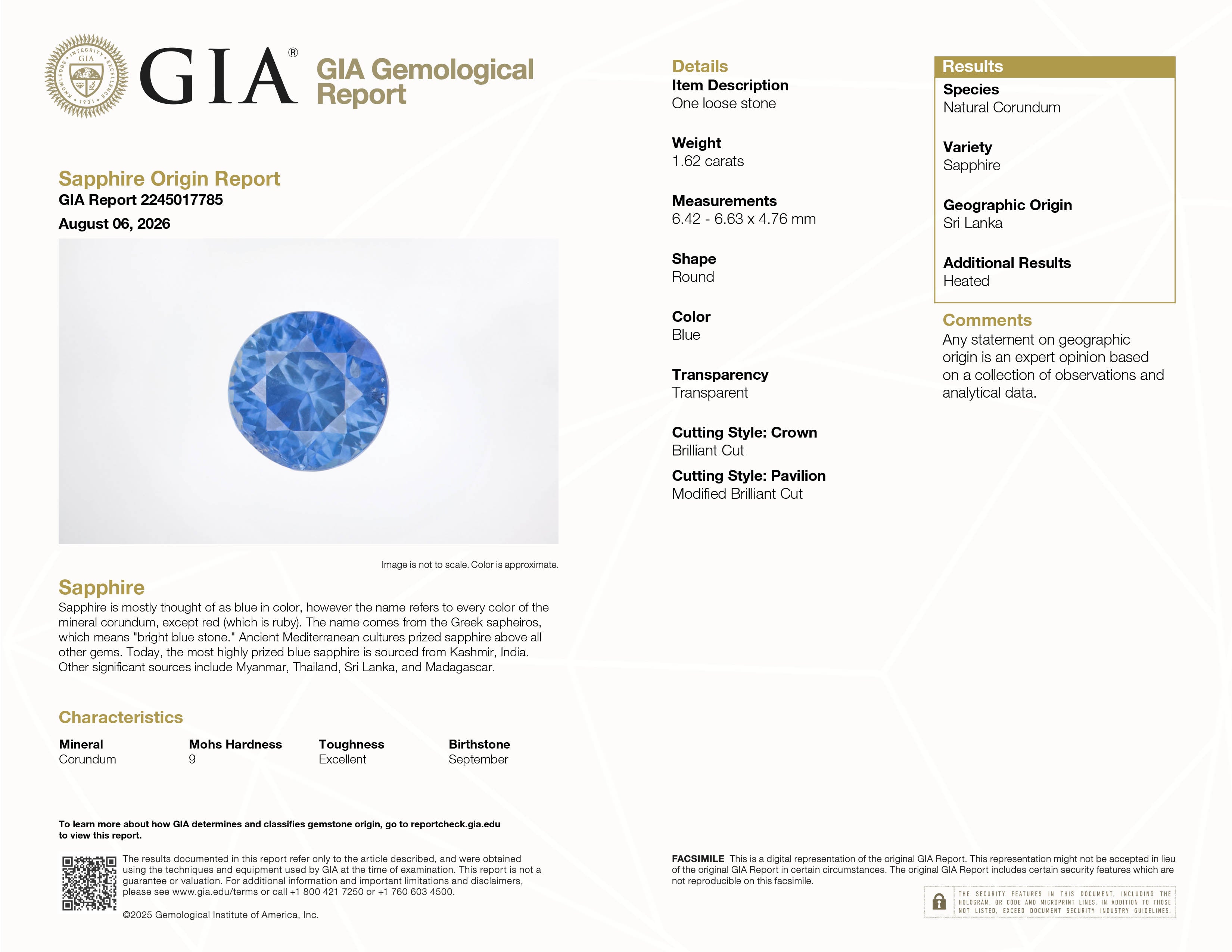
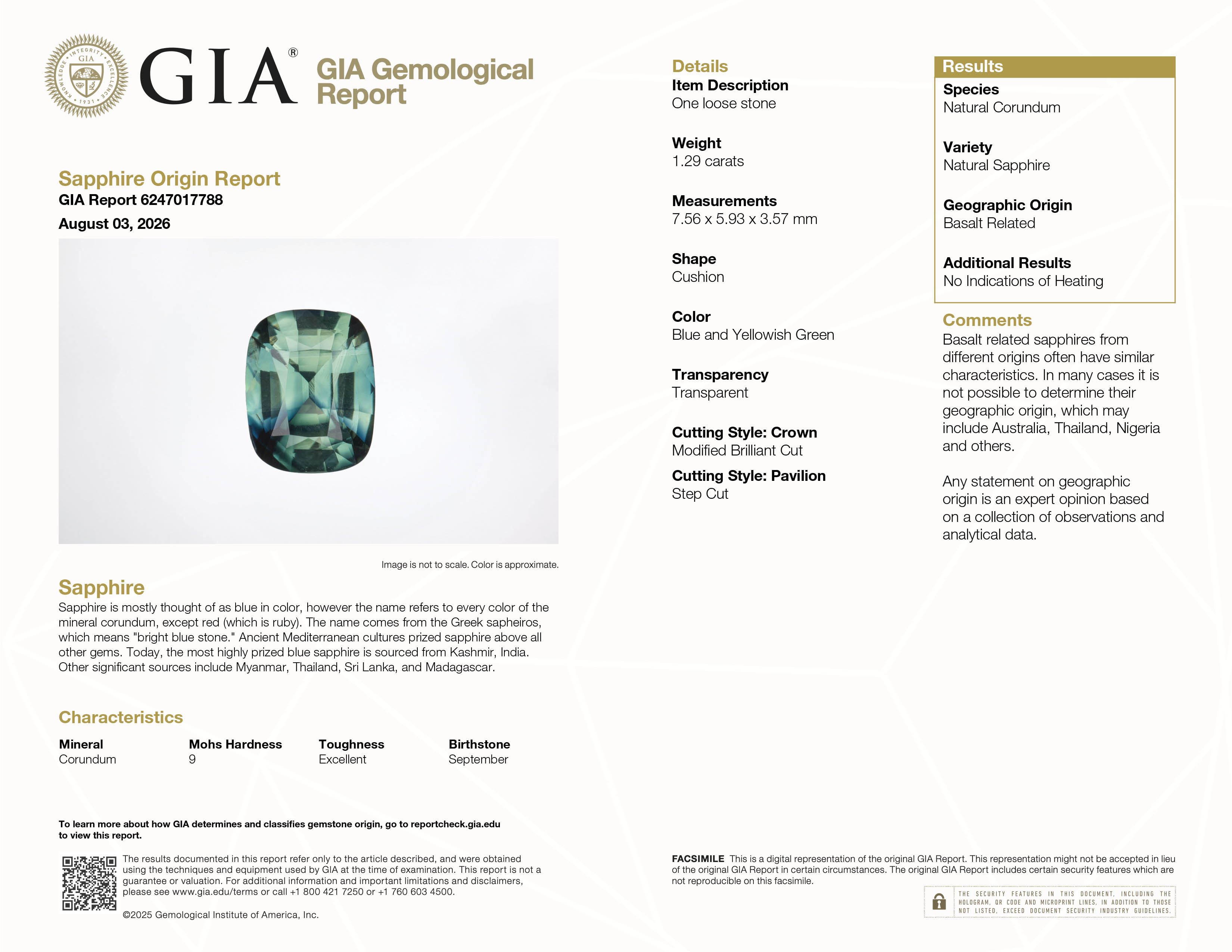
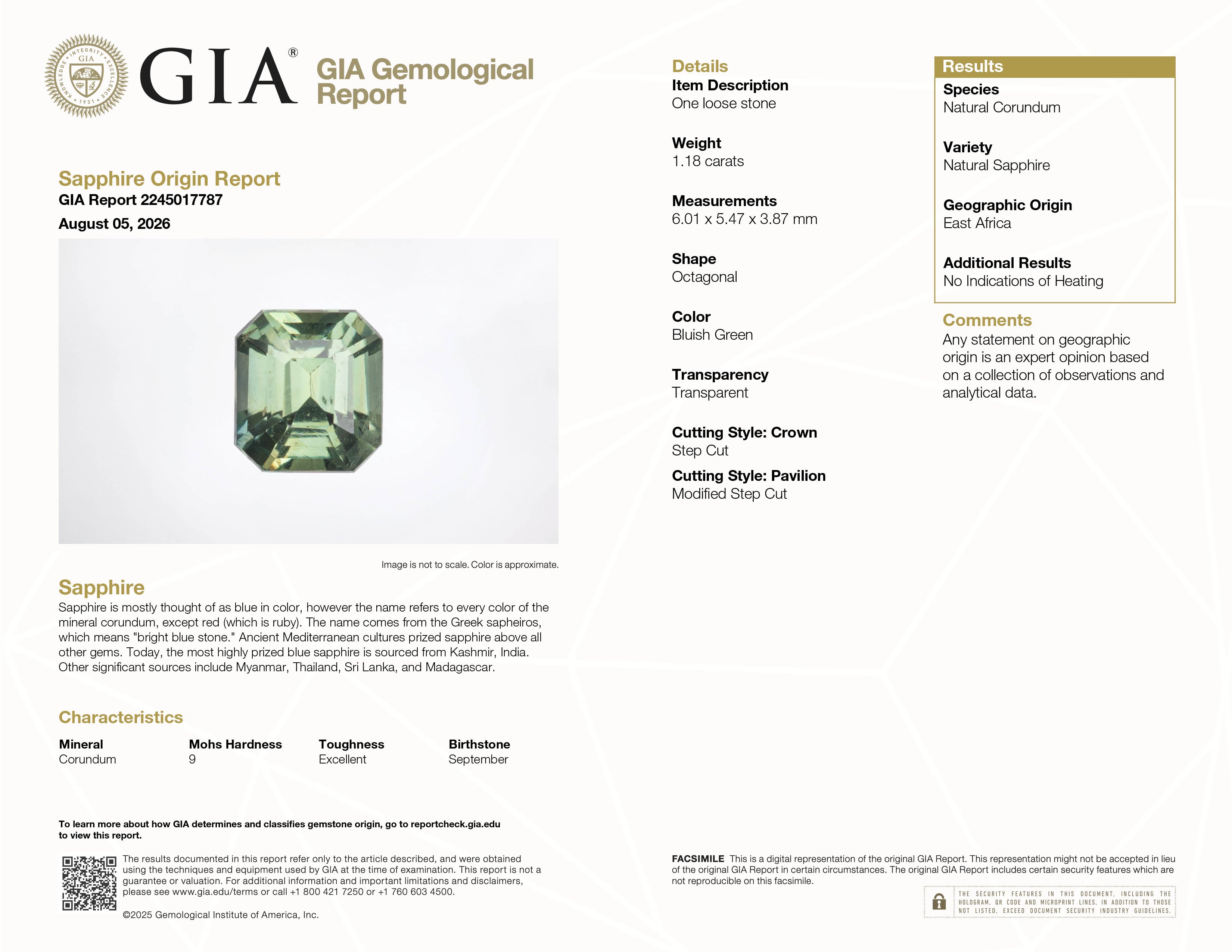
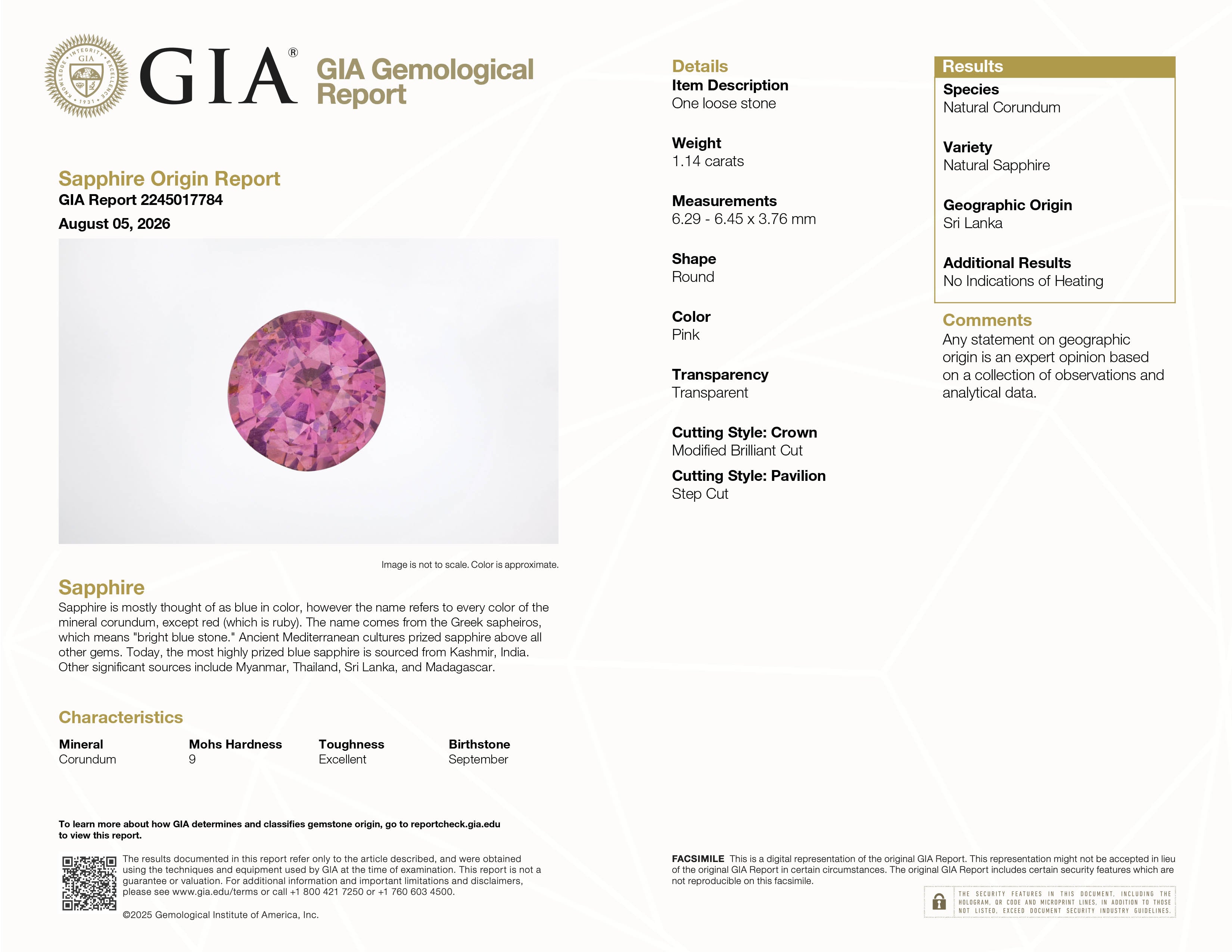
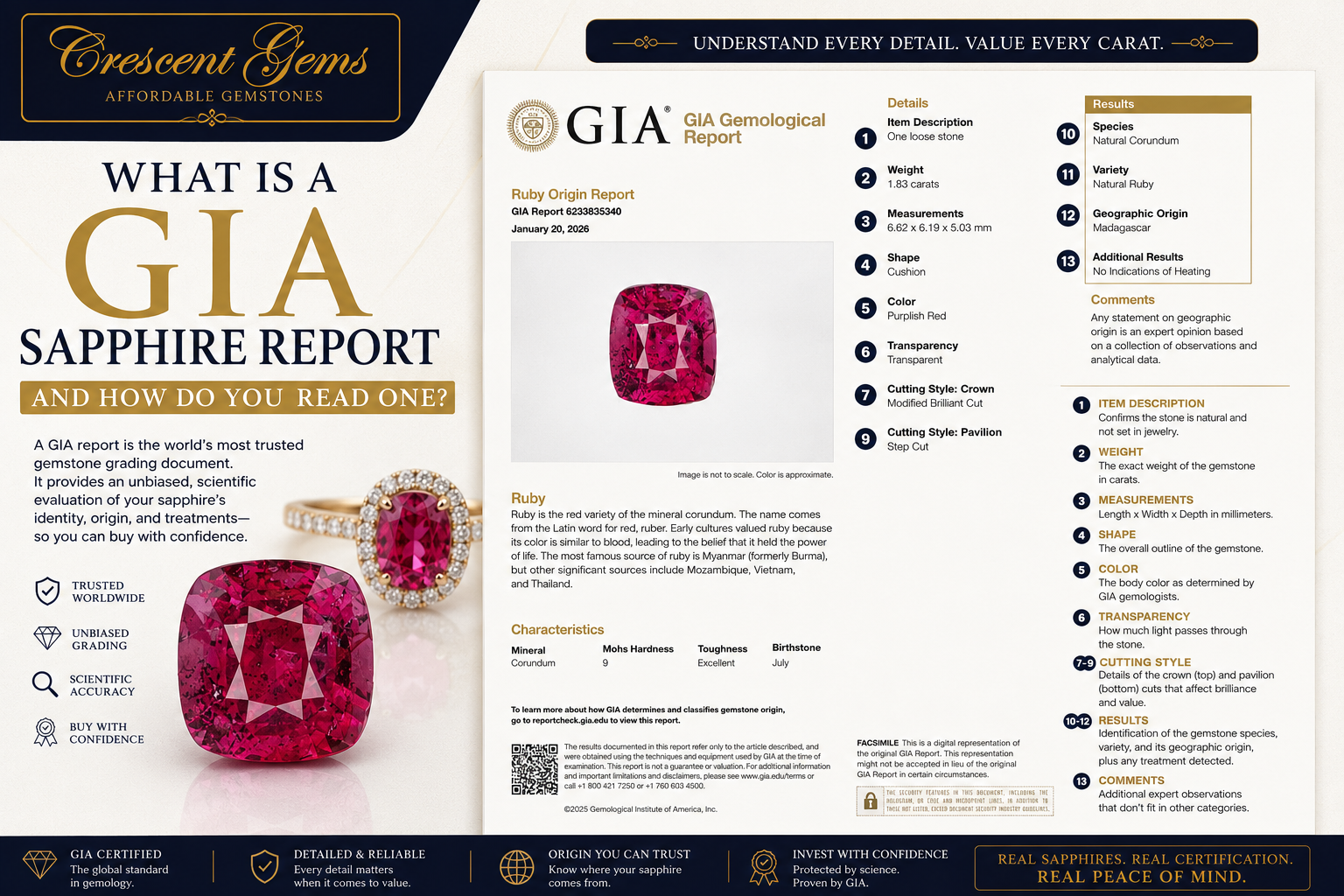
A GIA sapphire report is a document issued by the Gemological Institute of America that independently records what a specific sapphire is: its identity, weight, measurements, shape, colour description and treatment indications — and, when an origin report is requested, GIA's expert opinion of geographic origin. It is among the most widely recognised forms of sapphire documentation, and on a high-value stone it is what turns a seller's description into something you can check. Note the two things it does not do: it does not grade clarity on a coloured stone, and it does not guarantee origin. If a stone is being sold to you as unheated, or as a particular origin, a report from GIA (or an equivalent from Gübelin or SSEF) is what that claim rests on — and above two carats, or above roughly $2,000, we would not buy a sapphire without one. The section below sets out where a report is worth its cost at each price level.
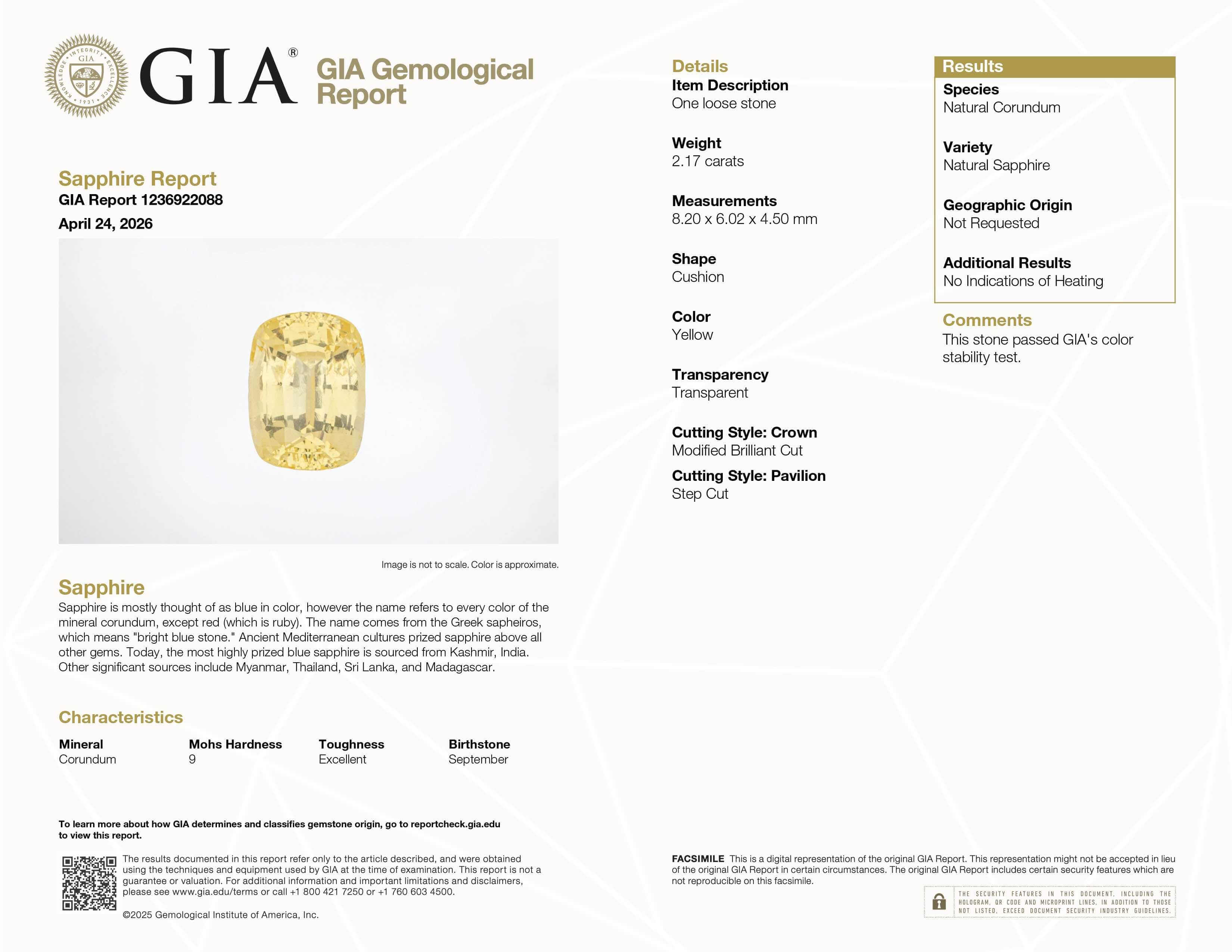
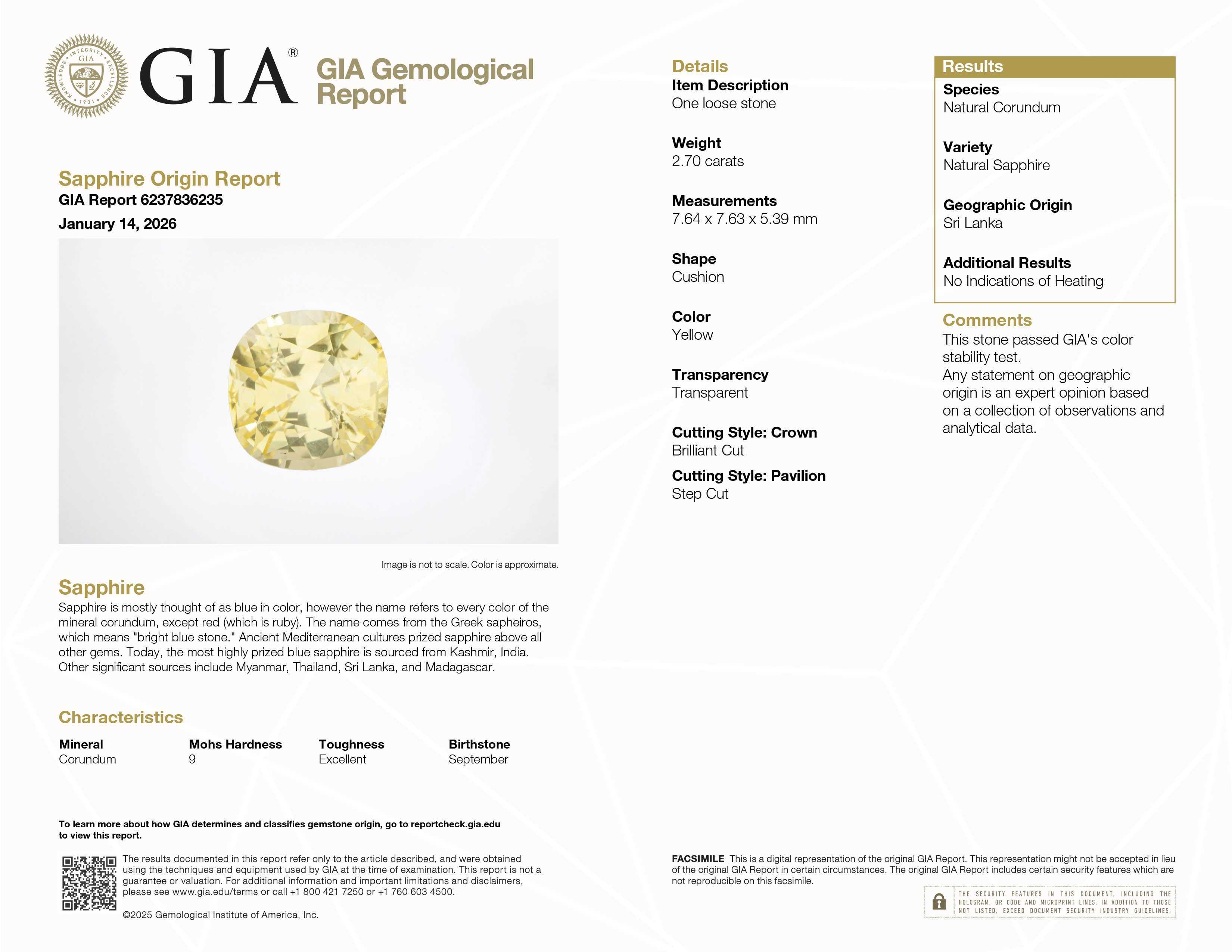
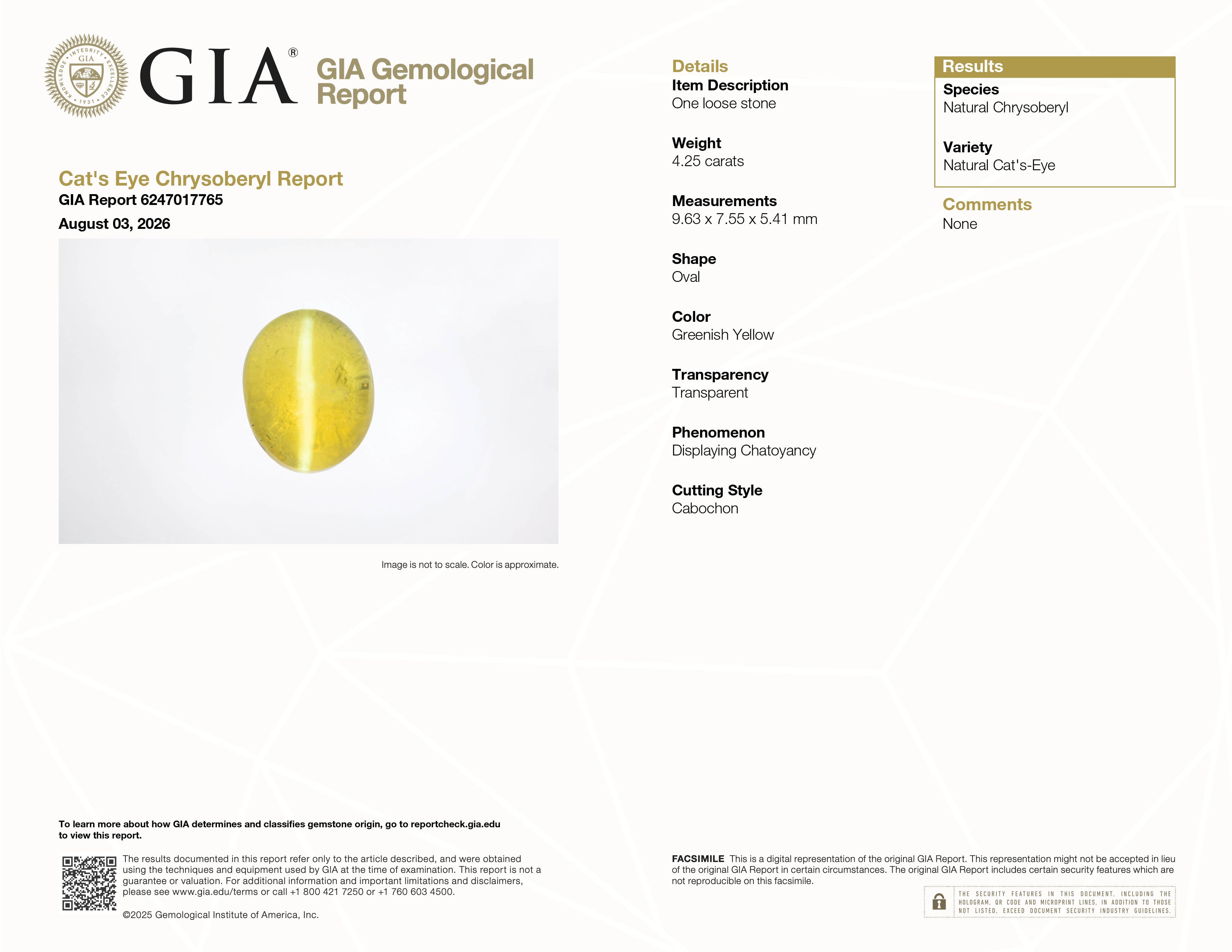
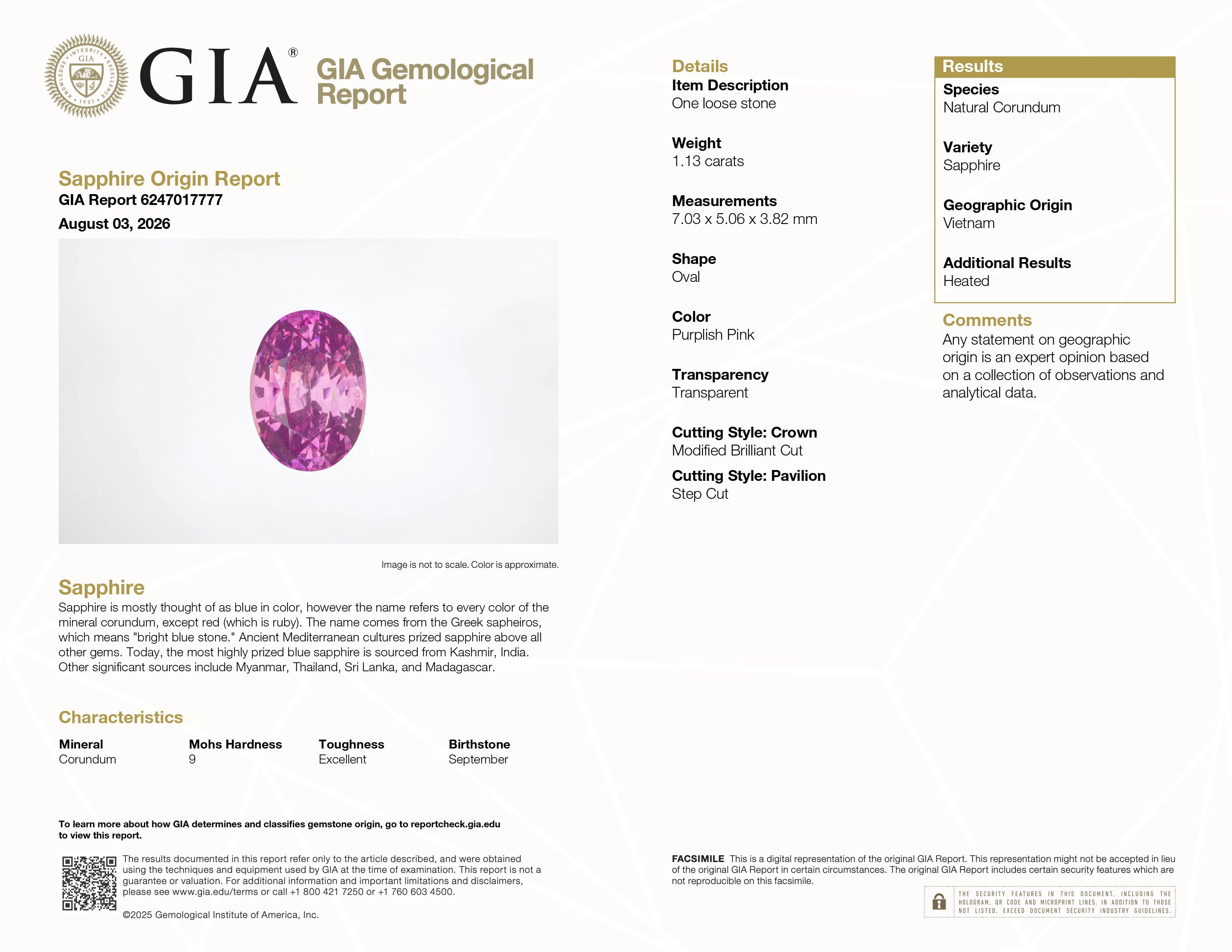
GIA issues two main document types for sapphires: the GIA Colored Stone Identification Report (confirms species, variety, natural status, color description, measurements, weight, shape, cutting style, and treatment comments) and the GIA Colored Stone Origin Report (includes everything in the identification report plus a geographic origin determination). A GIA report is issued for one specific stone, identified by its exact weight and millimeter measurements and confirmed by the photograph embedded in the report.
Report Number: Verify at gia.edu/report-check before purchasing. If the number doesn't verify online, do not proceed.
Identification: States “Natural Corundum” — confirming the stone is a genuine mineral, not synthetic, glass, or simulant.
Variety: States “Sapphire” for blue and most colors, or the specific variety for fancy colors (e.g., “Padparadscha Sapphire,” “Star Sapphire”). GIA's criteria for the padparadscha designation are rigorous.
Weight: The carat weight measured to the hundredth of a carat. This is a locked identifier.
Shape and Cutting Style: Describes the outline and faceting style. GIA does not issue a cut grade for colored stones. For the full analysis of how cut quality affects sapphire, see our How Cut Affects a Sapphire guide.
Color Description: GIA describes color using hue (dominant color and any modifying secondary hue), tone (lightness to darkness), and saturation (intensity). There is no numeric color grade on a GIA colored stone report. For guidance on how to evaluate sapphire color yourself, see our Sapphire Colors Explained guide.
Clarity Grade: GIA does not assign a standard clarity grade to colored stones. Significant inclusions are noted in comments if they affect the stone's appearance or identity. See our How to Read Sapphire Inclusions guide.
| Report Language | What It Means | Commercial Value Impact |
|---|---|---|
| No indications of heating | GIA's examination found no evidence of heating — a record of what was found, not proof the stone was never heated | Full unheated premium — 2x-5x over heated equivalent, up to 8x for large, vivid, well-documented stones |
| Indications of heating | Stone has been heat treated; standard commercial material | Heated market pricing; must be disclosed |
| Residues consistent with heat treatment in fractures | Heated and fracture-filled | Significant discount |
| Beryllium detected | Beryllium diffusion treatment — color artificially produced | Large discount; not accepted by most serious buyers |
Figures above are approximate market guidance, not fixed quotes. Actual value varies by treatment, origin, colour, cut, clarity, and certification.
If you are paying an unheated premium, “No indications of heating” is the wording to look for, and nothing weaker should be accepted in its place. Bear in mind that it addresses heat alone: unheated is not the same claim as untreated, and the report should be read for what else it says. See our What Is an Unheated Sapphire? guide and Beryllium Diffusion Explained.
Geographic Origin (on Origin Reports): GIA will give a geographic origin (e.g., “Sri Lanka,” “Kashmir,” “Burma”) or note that origin is “undetermined” if the evidence is insufficient. Read that line for what it is: GIA states geographic origin as an expert opinion, formed by comparing the stone's trace-element chemistry and inclusions against reference material of known origin — never as a confirmation or a guarantee, and GIA says so on the report itself. An opinion from a laboratory of that standing is still the strongest evidence available, and far stronger than a seller's verbal claim of “Kashmir” or “Ceylon” with no report behind it, which carries little weight in the trade. For more on origin and its impact on value, see our Ceylon Sapphire Complete Guide, Burma / Mogok Sapphire Guide, Tanzania Sapphire Guide, and Mozambique Sapphire Guide.
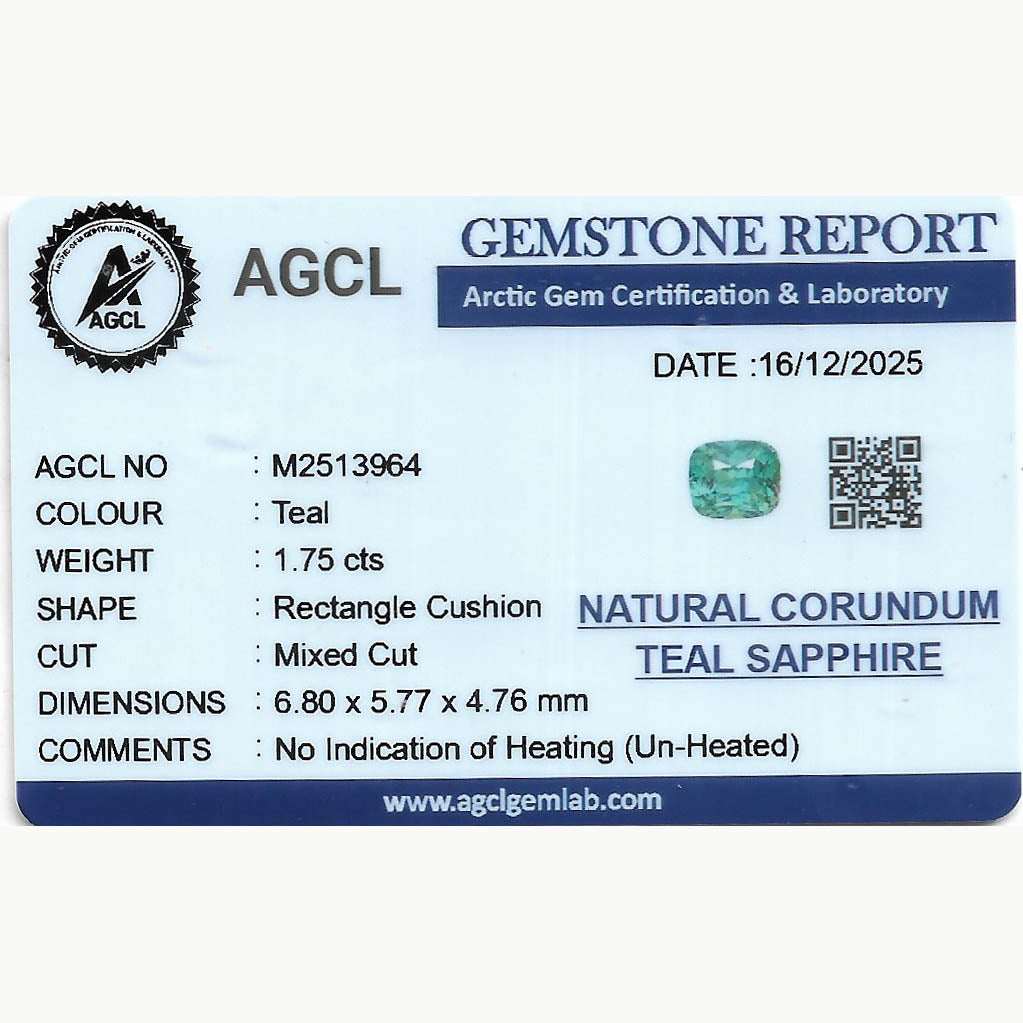
In the US market GIA is the name most buyers, jewellers and insurers recognise, and in our trading experience the most practical choice. For international collectors and auction material, Gübelin and SSEF are equally credible and often preferred for Kashmir and Burma origin reports; Lotus is also well regarded for coloured stones. All are accepted at Sotheby's, Christie's, and Bonhams. We hold no stone with a Gübelin, SSEF or Lotus report at present; the international reports on our own stones are GIA. Below that international tier sit the working trade laboratories of the producing countries, and they document a large part of what we sell: of the 150 stones we currently list, 70 carry a report from AGCL Gem Lab in Sri Lanka, 65 from GIA, six from FGL and one from the Gemmological Institute of Colombo. AGCL, FGL and GIC are laboratories we deal with directly, and we stand behind their colour and treatment calls. What they do not carry is the international recognition GIA, Gübelin, SSEF and Lotus have at auction and with insurers, so the practical rule we apply is this: a stone above two carats or above roughly $2,000, and any stone sold as unheated or as a specific origin, should carry a report from one of the international laboratories — below that level a working trade laboratory report is reasonable documentation for what it states. Where a stone we sell carries a report, its listing names the issuing laboratory and the report number, so you can see which one you are getting before you buy.
Under $500 total: not typically required (the cost of a report is disproportionate). $500-$2,000: optional but required if stone is claimed unheated. $2,000-$5,000: strongly recommended. Above $5,000: essential. Any stone above two carats: always required, whatever the price. Any stone claimed as unheated: always required regardless of price. Any stone claimed as Kashmir or Burma origin: always required (a Kashmir premium of 3x-10x over Ceylon, or a Burma premium of 1.5x-3x, is only justified by documented evidence). For pricing context, see our what a good 1 carat sapphire costs and what a good 2 carat costs guides.
Figures above are approximate market guidance, not fixed quotes. Actual value varies by treatment, origin, colour, cut, clarity, and certification.
Does a GIA report grade a sapphire like a diamond? No. Color is described in prose (hue, tone, saturation) rather than on a numeric scale. The report identifies and describes the stone — it does not score it. Does a GIA report confirm the sapphire is unheated? Not in those words. The treatment comments field will state either “no indications of heating” or “indications of heating” — a record of what GIA's examination found, which is the strongest evidence available but not an absolute guarantee. It also covers heat only: a stone with no indications of heating has not thereby been shown to be free of every treatment. Without such documentation, an unheated claim cannot be checked at all. How do I verify a GIA report is real? Go to gia.edu/report-check and enter the report number. Always verify before purchasing.
Every sapphire we sell above two carats, and every sapphire we sell above $2,000, carries a GIA report. Use our Try Before You Buy program to examine any stone before committing. Email crescentgems@gmail.com with questions about any stone's report, treatment status, or origin documentation.
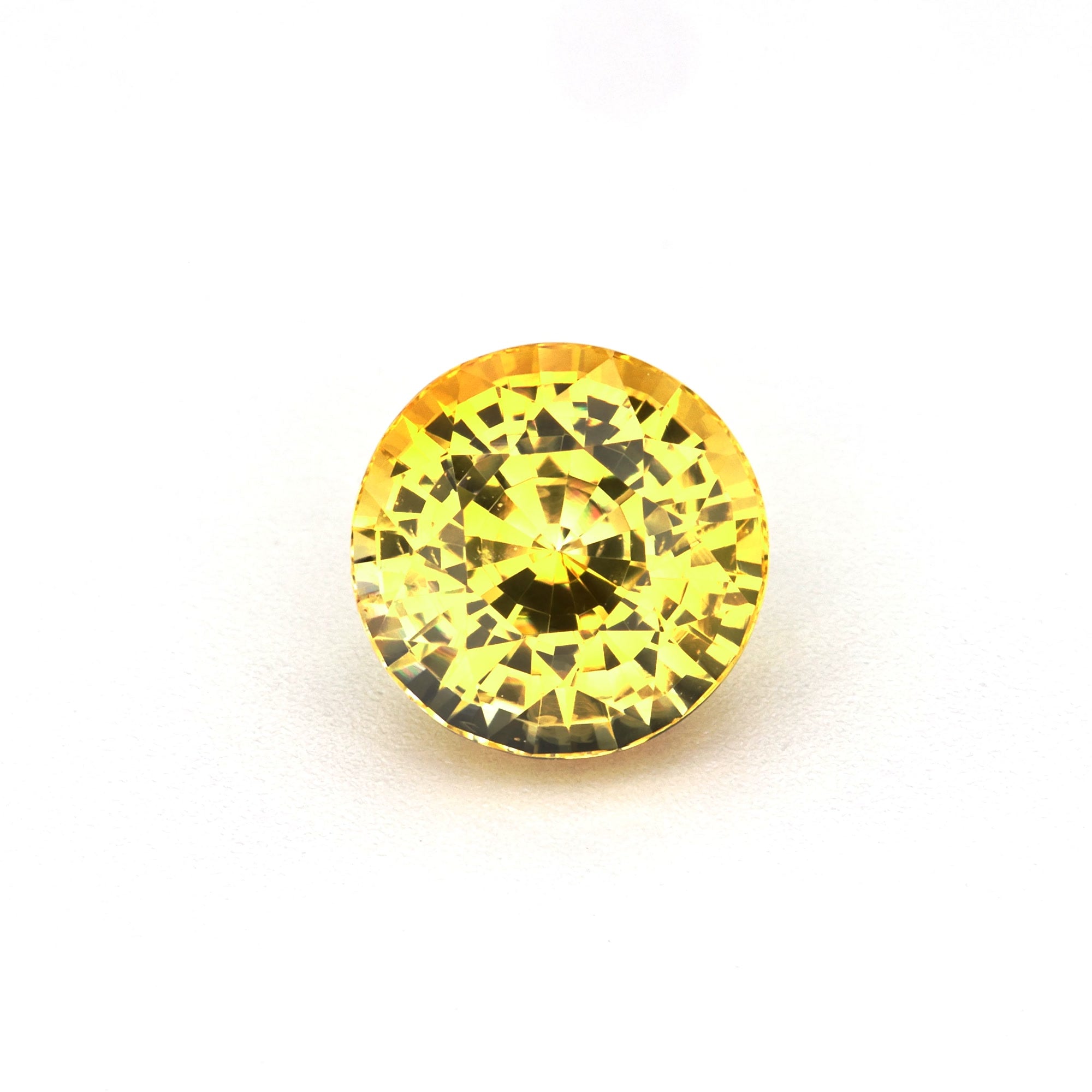
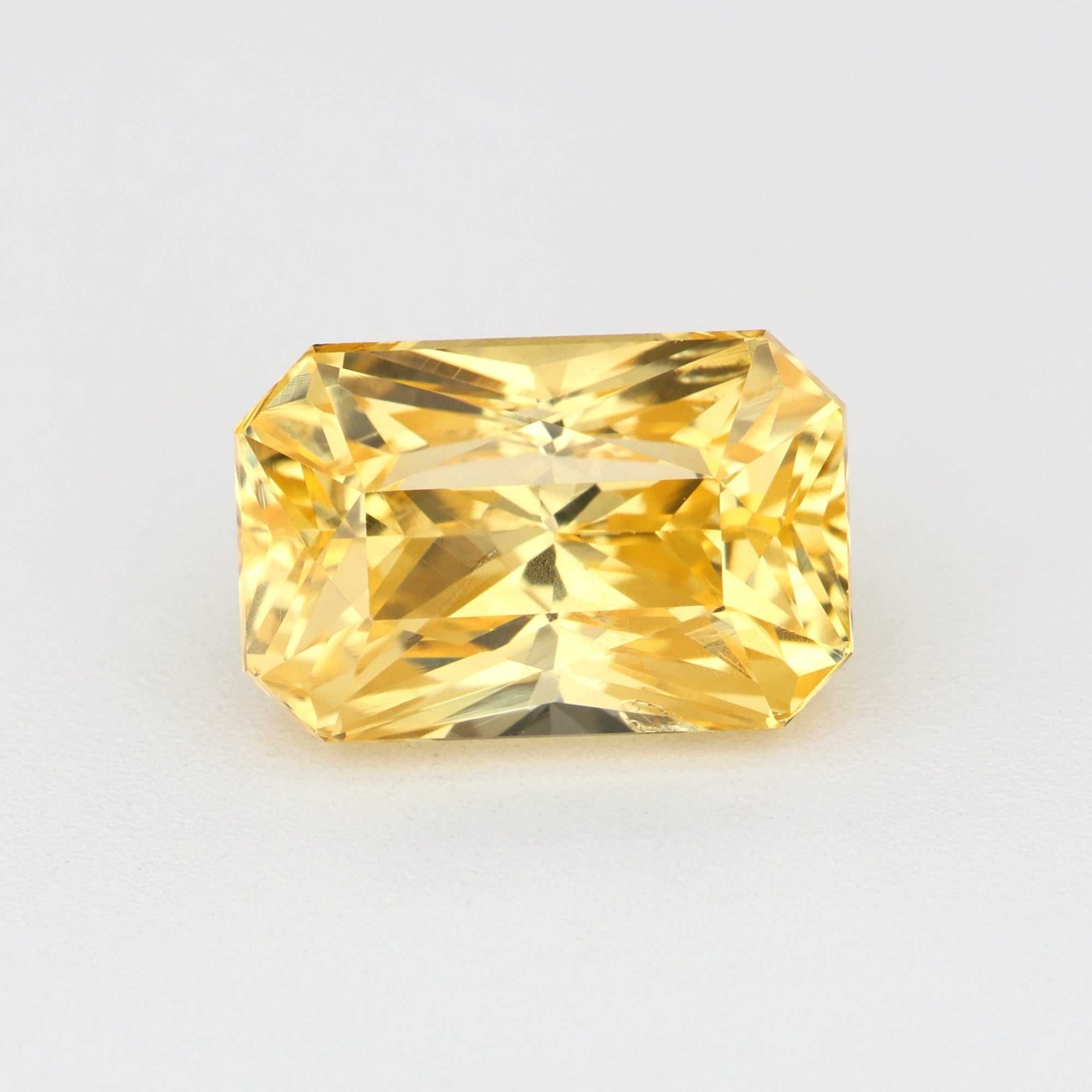
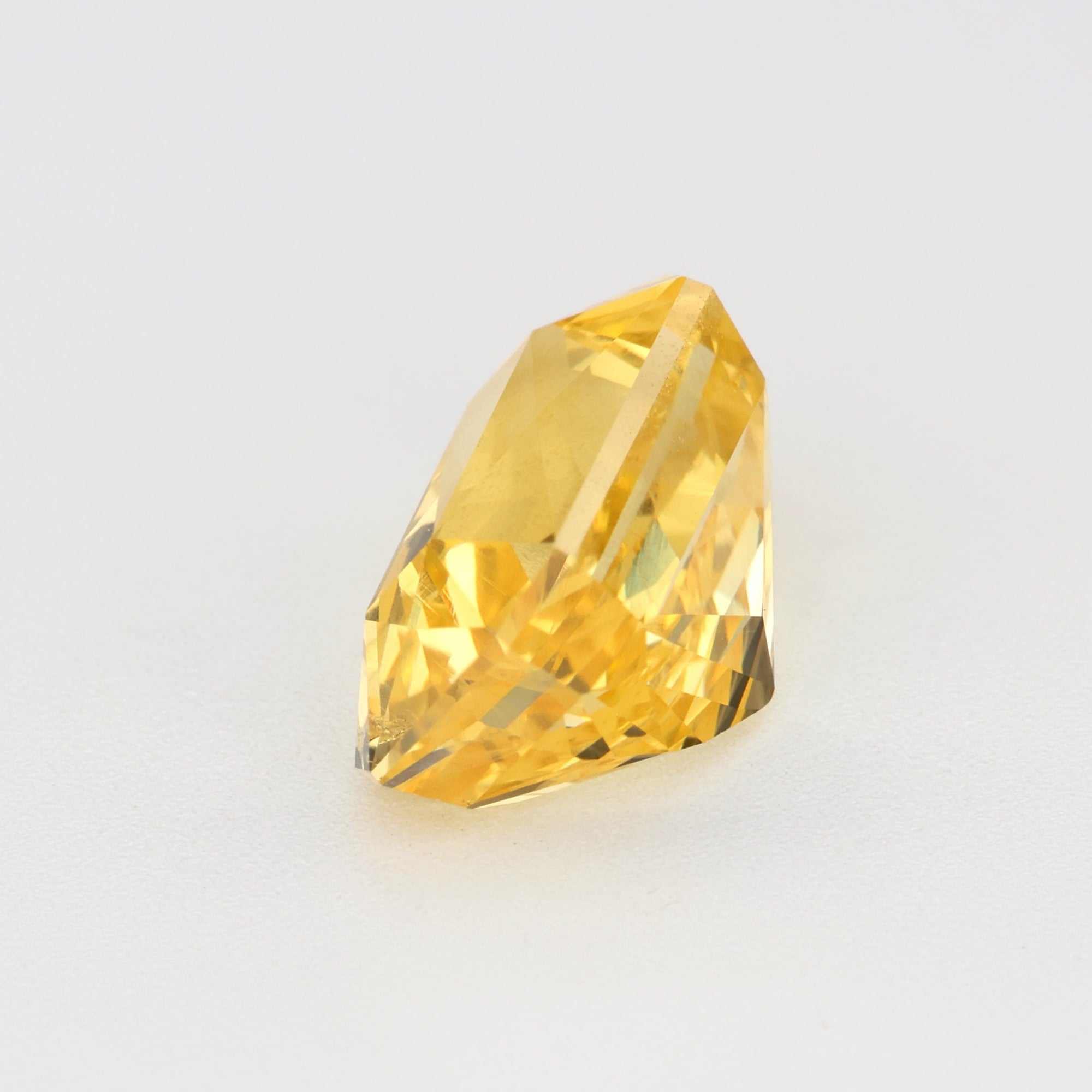
For a current example of what a GIA report looks like in practice, see our 1.50 ct GIA-documented round yellow sapphire — GIA Sapphire Origin Report #1246017783, which gives Sri Lanka as its origin opinion, records the heat treatment, and records a colour stability test with no change observed. It carries no clarity grade, as no GIA coloured-stone report does.
Continue Learning
Return to the Ultimate Sapphire Buying Guide for the full picture on colors, origins, shapes, certification, and pricing — everything you need to buy a natural loose sapphire with confidence.
Looking beyond sapphire? The GIA-Documented Gemstones collection gathers GIA-documented stones from across the gem types we carry. It is not every lab-documented stone on the site — many of our stones carry reports from other laboratories, and each listing names its own. See also our ruby collection, where four of the five stones currently listed carry a GIA report.
Every stone in the collections below ships with its GIA report, so you can check the origin opinion, the treatment comments, and GIA's colour description before you buy. GIA coloured-stone reports carry no numeric colour grade and no clarity grade — any clarity wording you see from us is our own assessment, not a laboratory finding.
White sapphire is not in that list because we do not currently hold a GIA-documented white sapphire. The white sapphires we carry are documented by AGCL, or in a few cases carry no laboratory report at all — each listing says which.


CG8456
Prices are shown in your local currency and may change.
CG8366
CG8313
CG8357
CG8452
CG8437


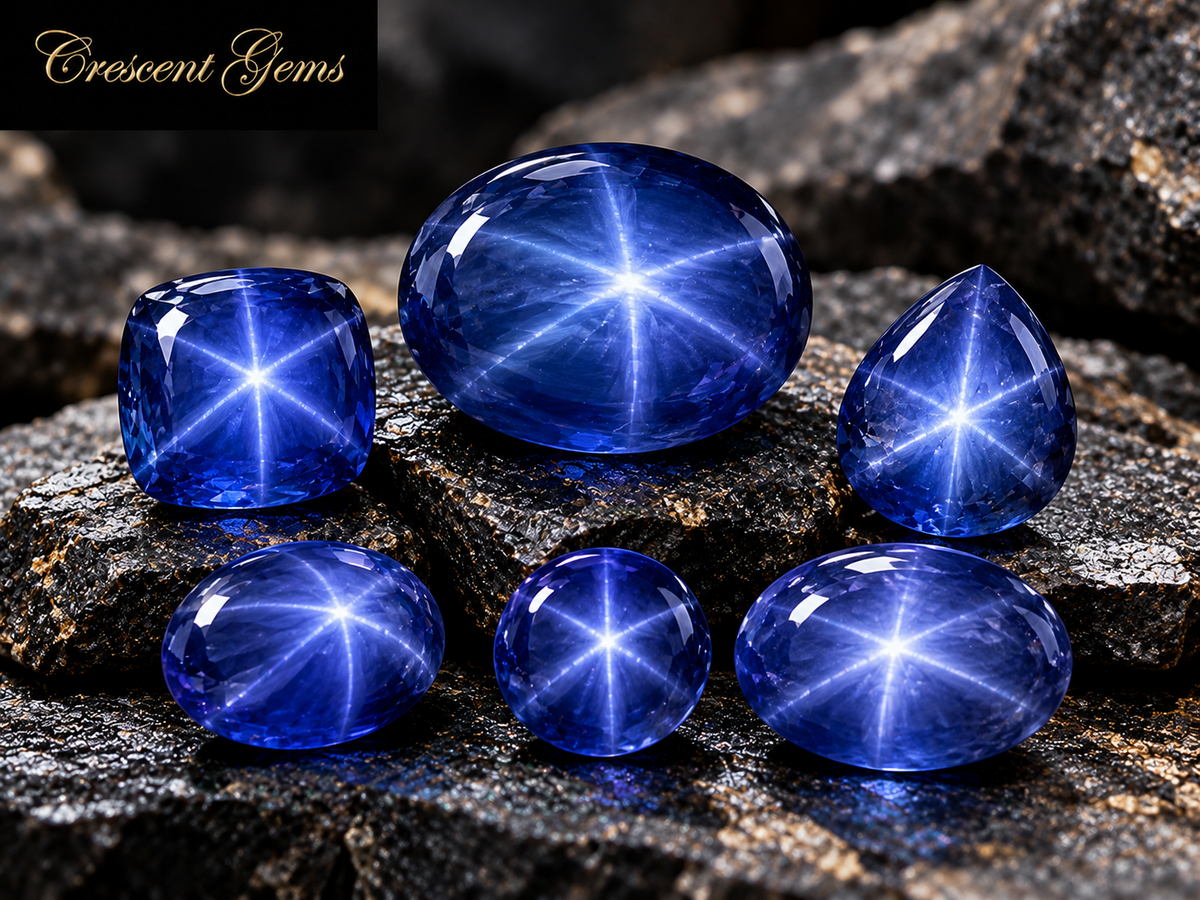
Blue Star Sapphire Price Guide — What They Cost and Why
Read moreabout Blue Star Sapphire Price Guide — What They Cost and Why
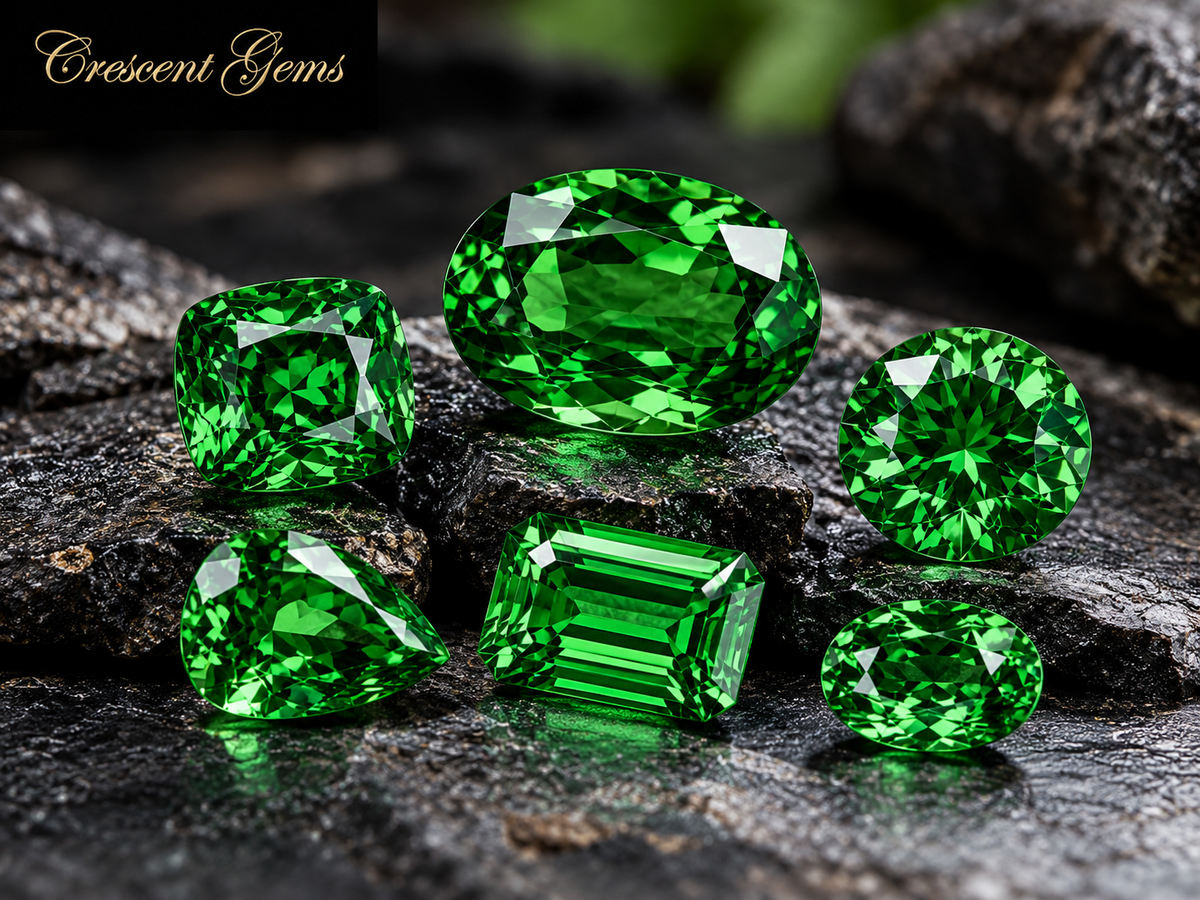
Tsavorite Garnet Price Guide — What They Cost and Why
Read moreabout Tsavorite Garnet Price Guide — What They Cost and Why
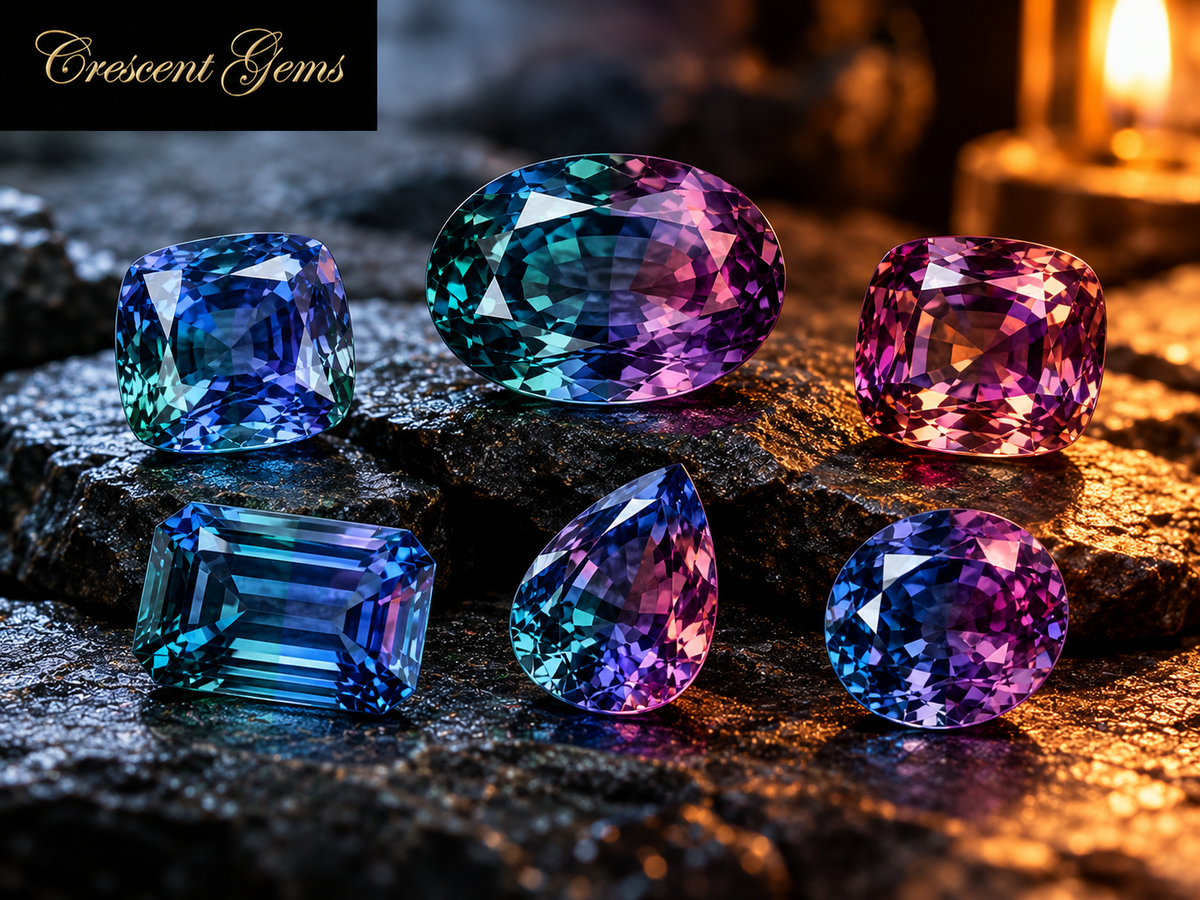
Color-Change Sapphire Price Guide — What They Cost and Why
Read moreabout Color-Change Sapphire Price Guide — What They Cost and Why
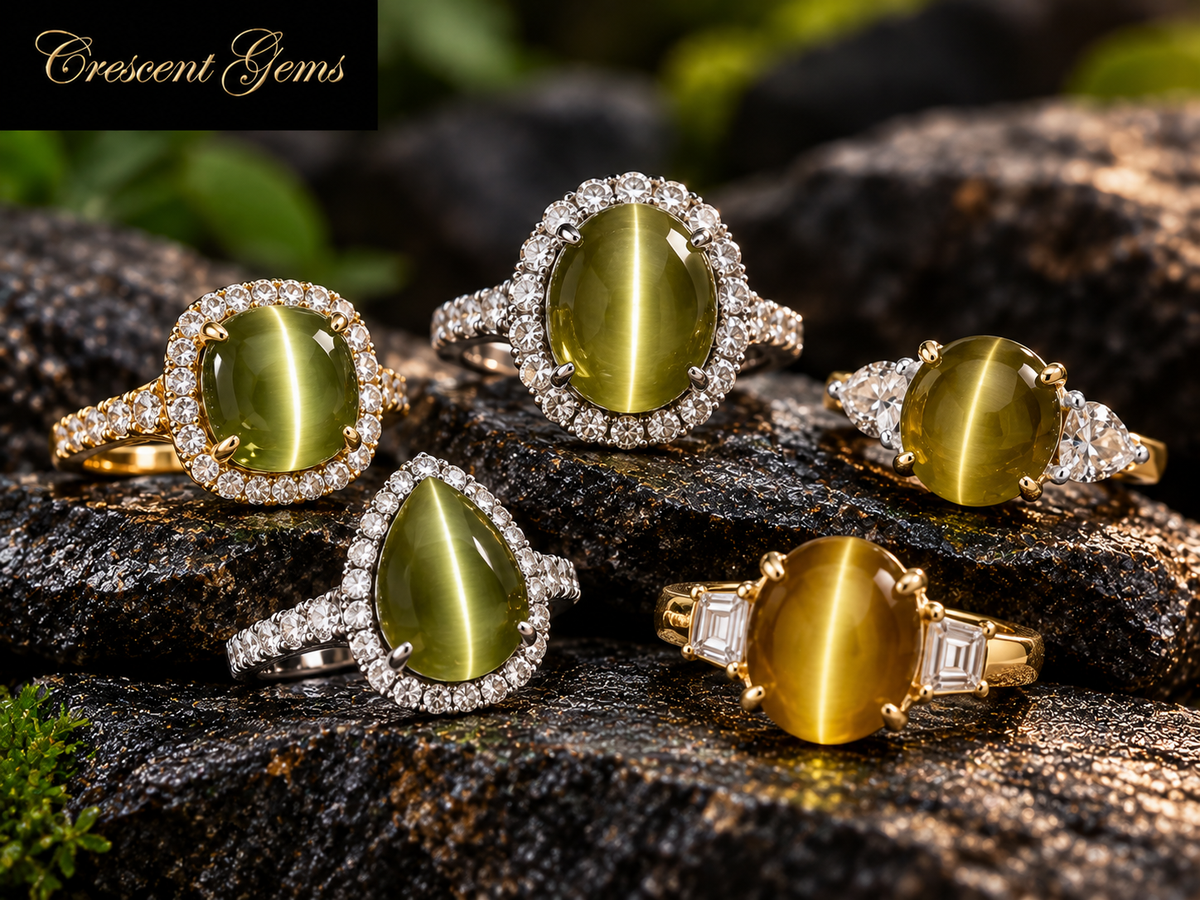
Is Cat's-Eye Chrysoberyl Good for an Engagement Ring?
Read moreabout Is Cat's-Eye Chrysoberyl Good for an Engagement Ring?
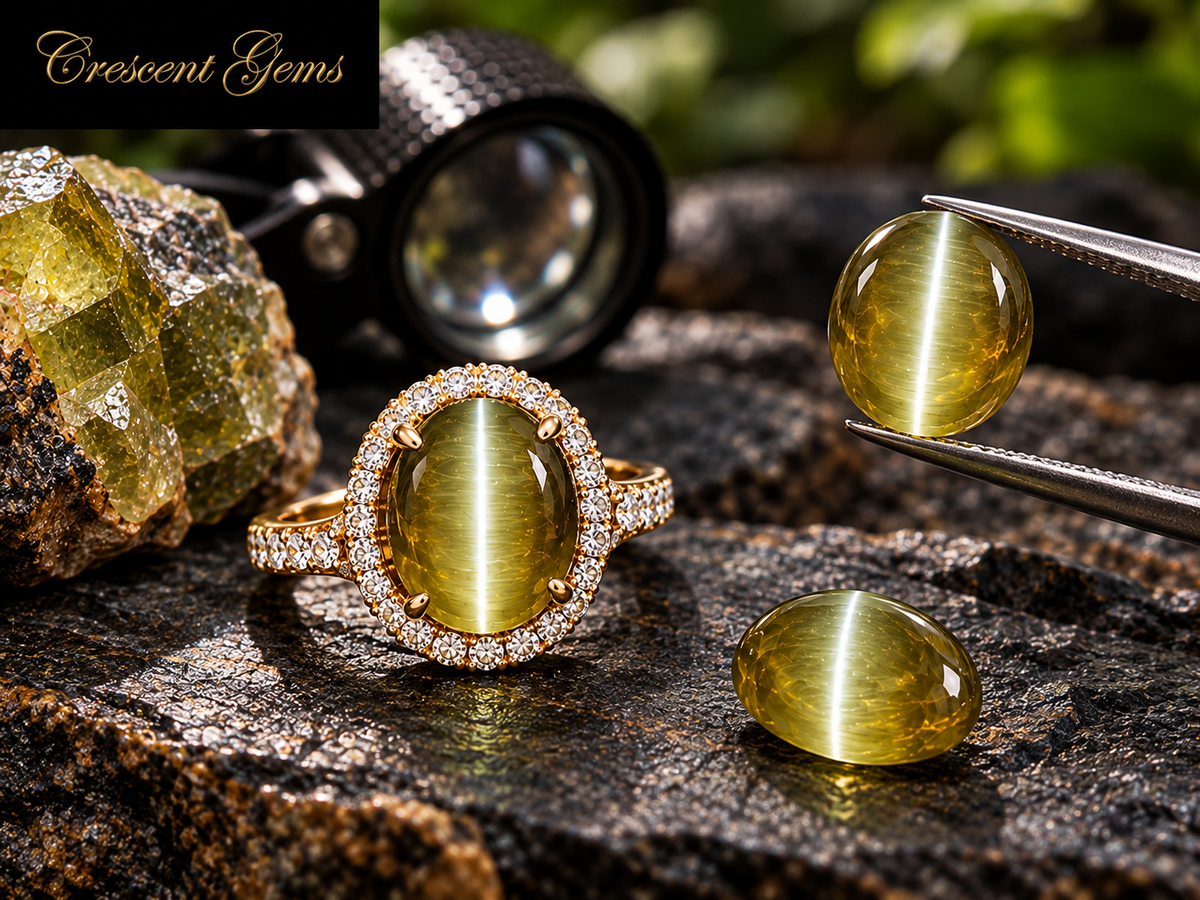
Cat's Eye Chrysoberyl Price Guide — What They Cost and Why
Read moreabout Cat's Eye Chrysoberyl Price Guide — What They Cost and Why