

- by Ahmed Shareek
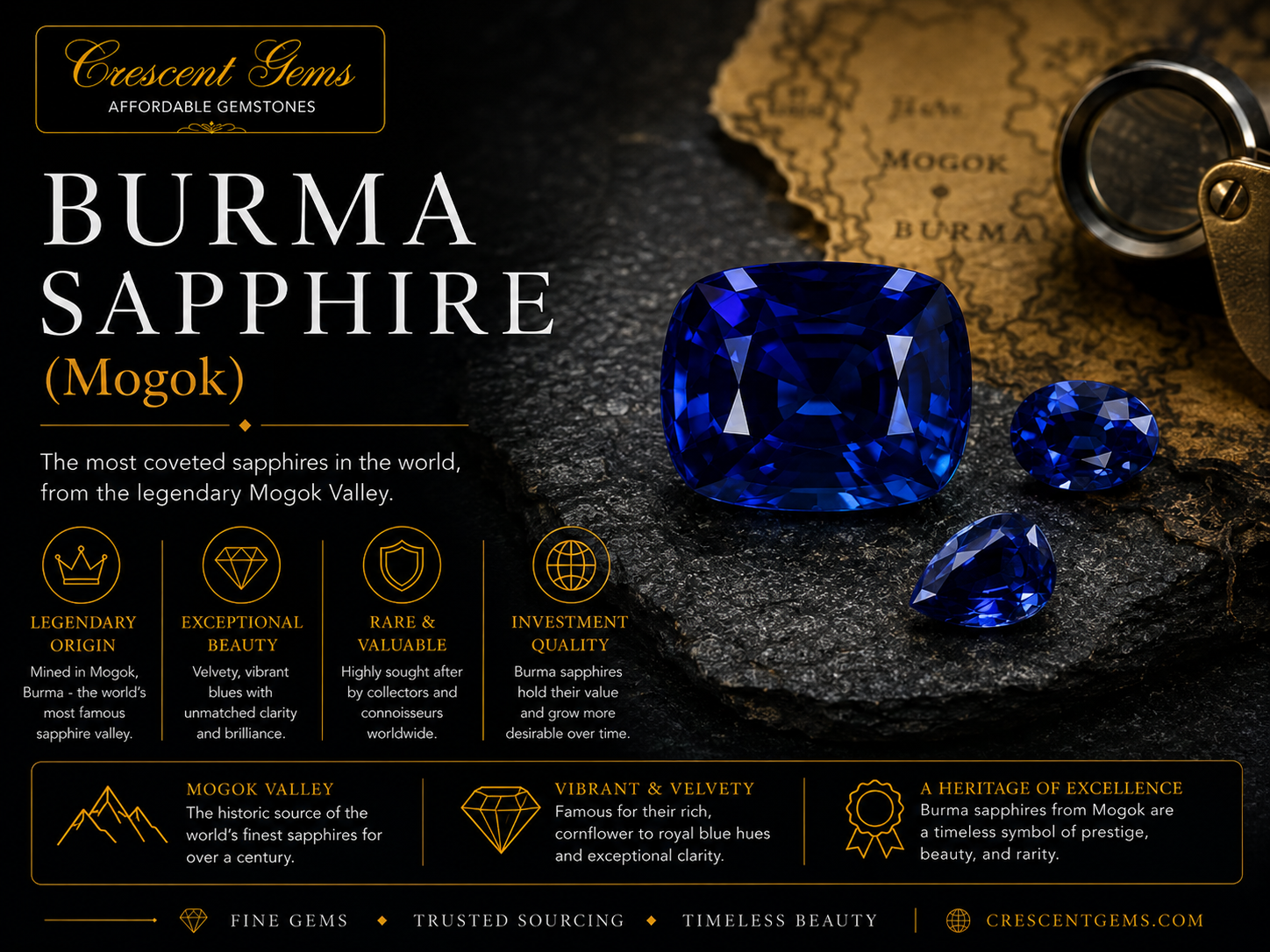
Burma Sapphire (Mogok) — The World's Most Coveted Origin, Explained
- by Ahmed Shareek
For origin context: Ceylon Sapphire Complete Guide. For how labs confirm origin: How to Read a GIA Sapphire Report. For the buying foundation: Ultimate Sapphire Buying Guide.

No sapphire origin carries more prestige than Burma. A blue sapphire with a confirmed Mogok origin and no indications of heat treatment commands the highest per-carat prices in the sapphire market — often 3x to 10x the price of equivalent Ceylon material, and significantly more for truly exceptional stones. But understanding why Burma commands that premium, how to verify it, and whether it is worth paying requires a clearer picture than the name alone provides.
Burma sapphires come from the Mogok Stone Tract — a valley roughly 200 kilometers north of Mandalay in Myanmar, at approximately 2,000 meters elevation in the Himalayan foothills. The area covers around 400 square kilometers and has been producing gemstones for at least 1,000 years. The geology is a metamorphic complex: marble-hosted deposits formed when calcareous sediments were subjected to intense heat and pressure during tectonic plate collision roughly 15-30 million years ago. Corundum crystallized within this marble matrix under specific conditions that produced stones with characteristic trace element signatures — particularly very low iron content — that distinguish Mogok material from sapphire of all other origins. To understand why low iron matters so much to color, see our Sapphire Fluorescence Guide.
The color most closely associated with Mogok sapphire is a vivid, pure blue with a slightly violet secondary hue. What distinguishes fine Mogok blue at its best is a quality of luminosity — the stone appears to glow from within, particularly in incandescent light. This quality is partly explained by the very low iron content and partly by the presence of chromium in some Mogok stones, which contributes to fluorescence and warmth in the color. Not all Burma sapphire is royal blue — Mogok produces the full sapphire color range — but blue is what the origin is known and priced for.
The premium structure for Burma sapphire is specifically tied to unheated material. An unheated Burma sapphire with confirmed Mogok origin commands the highest per-carat prices in the entire sapphire market. For the full pricing framework across all origins, see Sapphire Pricing Explained, what a good 1 carat costs, and what a good 2 carat costs. For stones above $2,000, treatment verification is non-negotiable. See our GIA report guide and guide to what unheated status means and how to verify it.
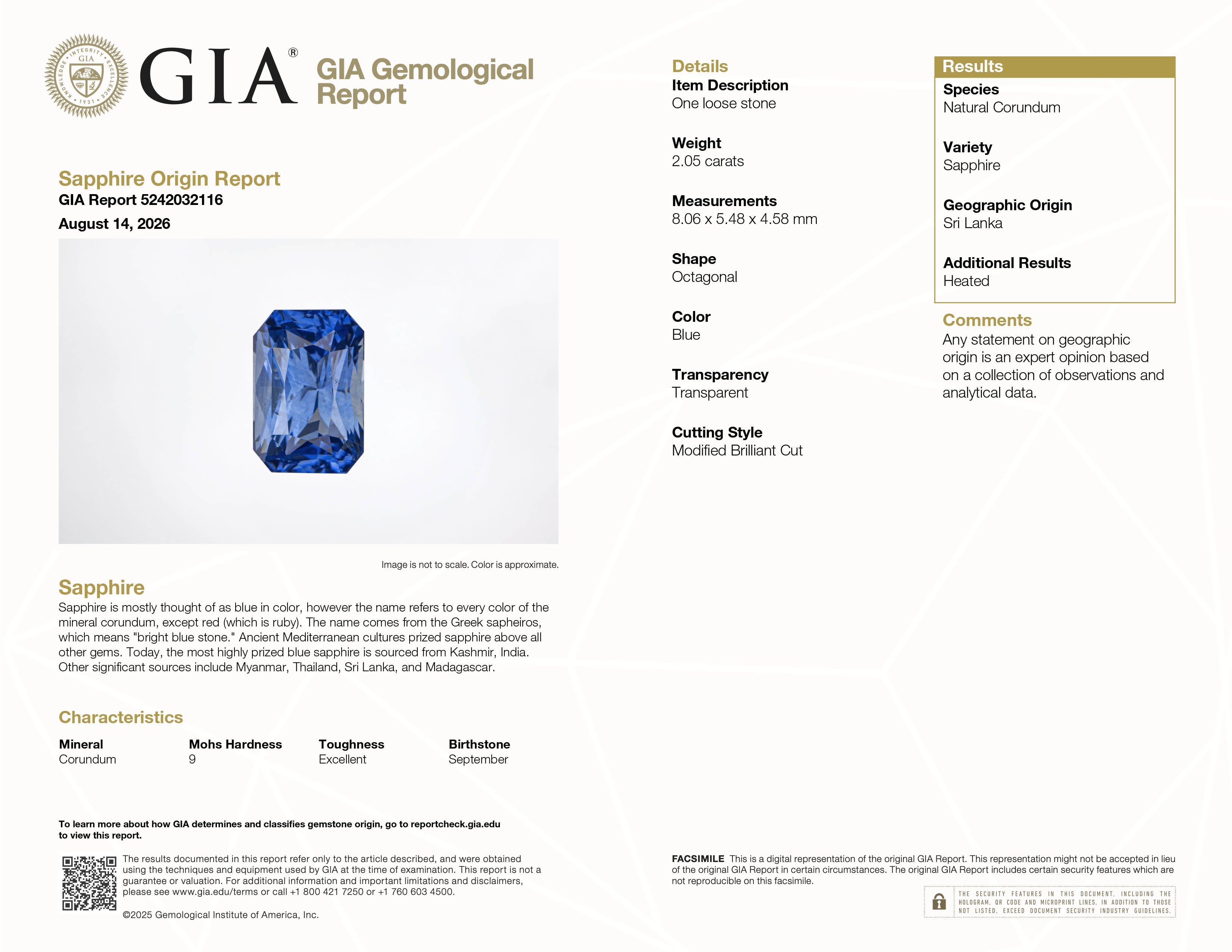
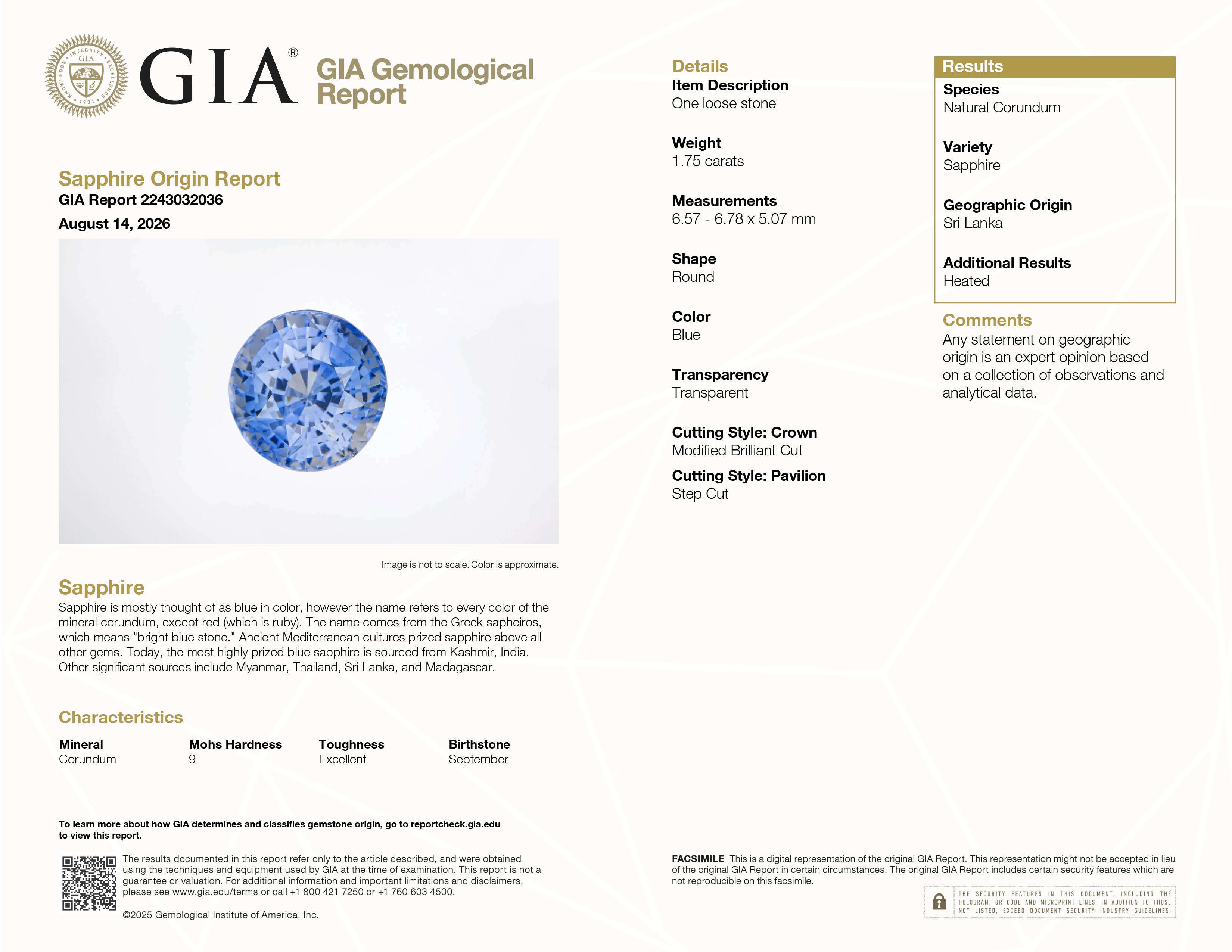
Origin determination is performed reliably by GIA, Gubelin Gem Lab, and SSEF using: trace element analysis (LA-ICP-MS); UV-Vis-NIR spectroscopy; inclusion analysis (see How to Read Sapphire Inclusions); and fluorescence (some Mogok stones show strong red fluorescence due to chromium). No single test confirms Burma origin — labs use a combination. For the highest-premium Burma material, Gubelin and SSEF reports carry particular weight.
Mong Hsu in eastern Myanmar has produced very large volumes of blue sapphire since the 1990s. Mong Hsu material is not Mogok material. A laboratory report that states “Myanmar” origin is not equivalent to one specifying “Mogok.” Always confirm the report specifies Mogok specifically.
If your goal is a beautiful natural blue sapphire for an engagement ring at a reasonable price, Ceylon is almost certainly the right answer. For ring design guidance, see our oval sapphire guide, cushion cut guide, emerald cut guide, best shapes for solitaire rings, halo ring guide, and metal comparison guide. For provenance-driven investment at the fine end of the market, Burma/Mogok is the benchmark — but you need a Gubelin or SSEF report, unheated confirmation, and a budget that reflects the actual market. For a full origin comparison see also our Madagascar Sapphire Guide, Tanzania Sapphire Guide, and Mozambique Sapphire Guide. After purchase, insure your ring: see our jewelry insurance guide.
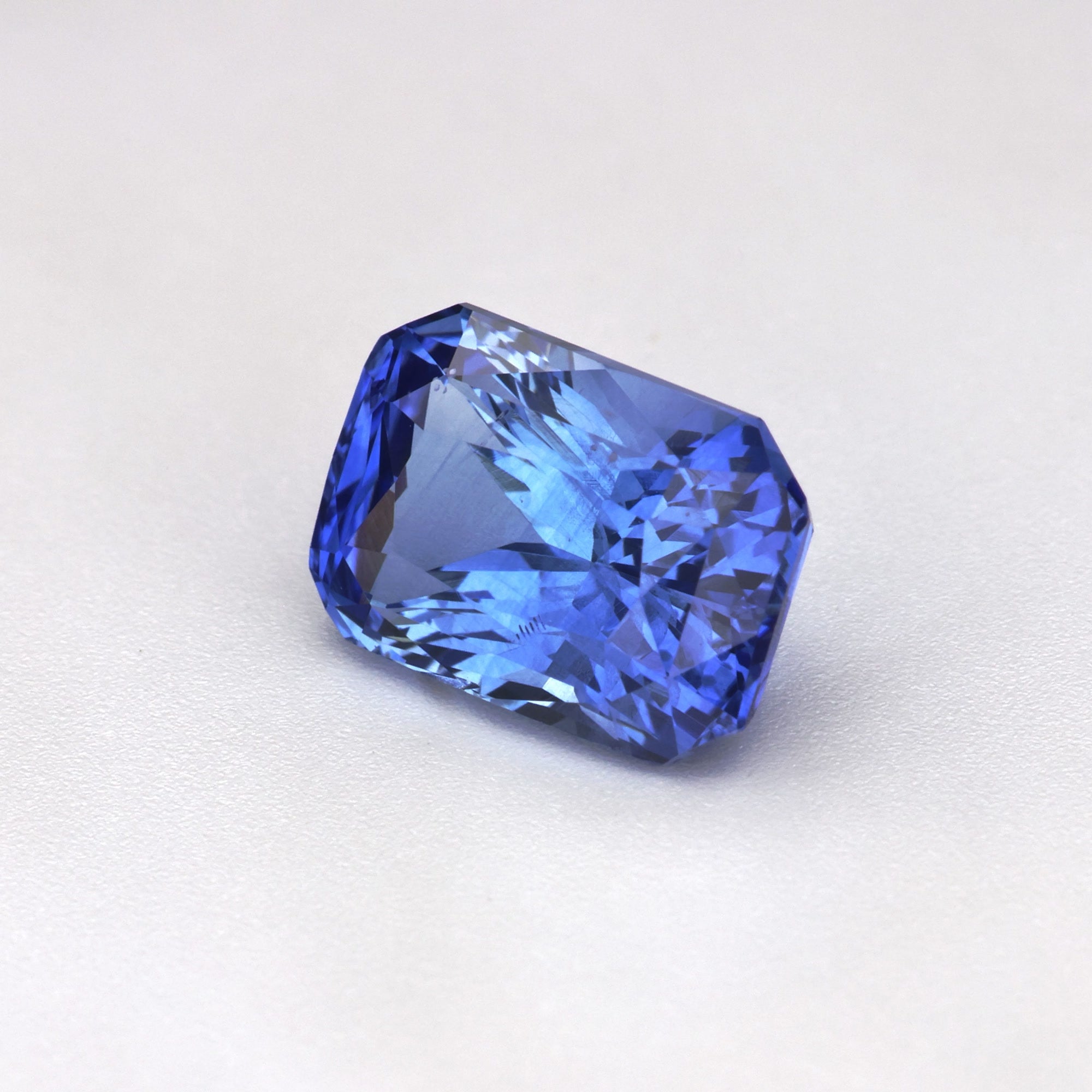
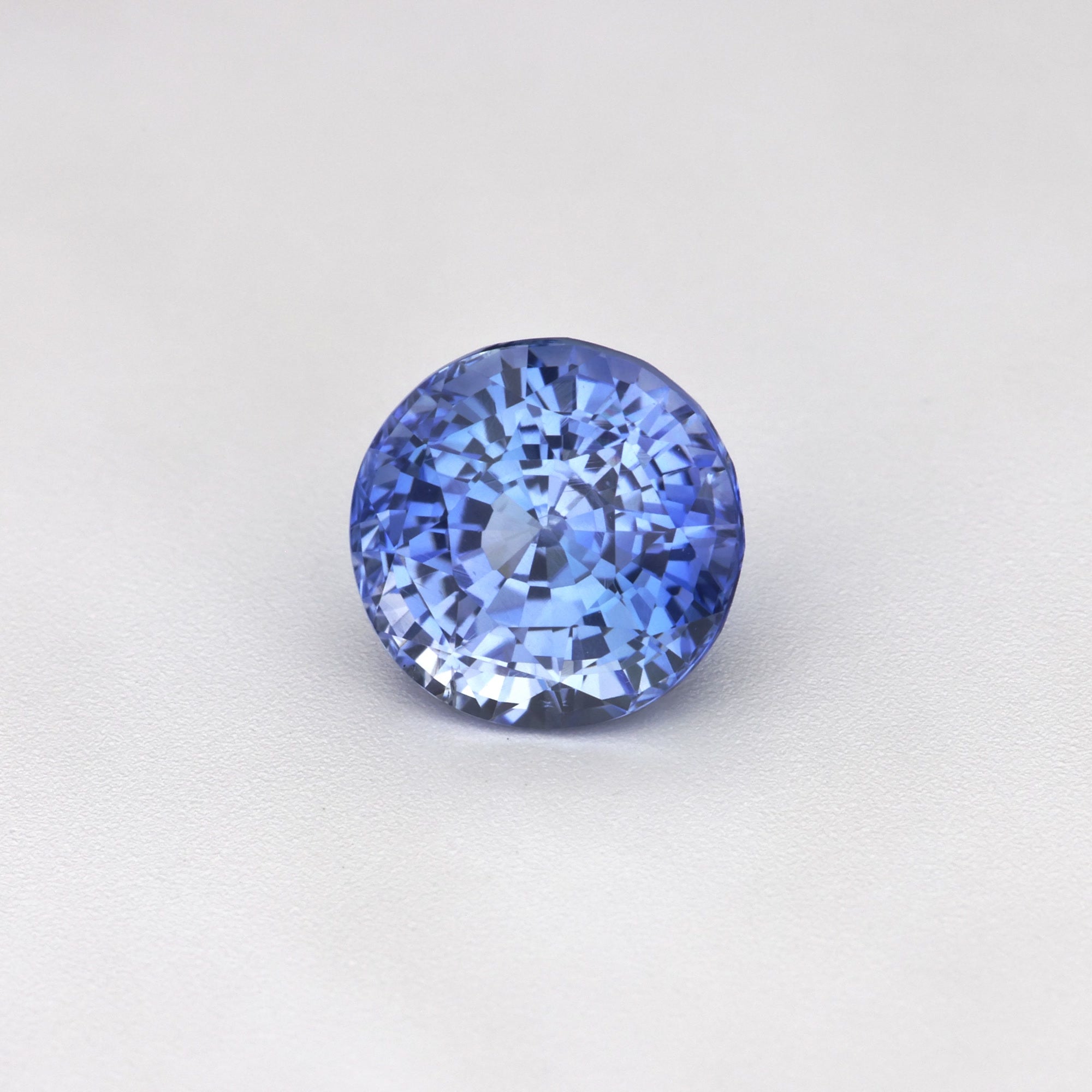
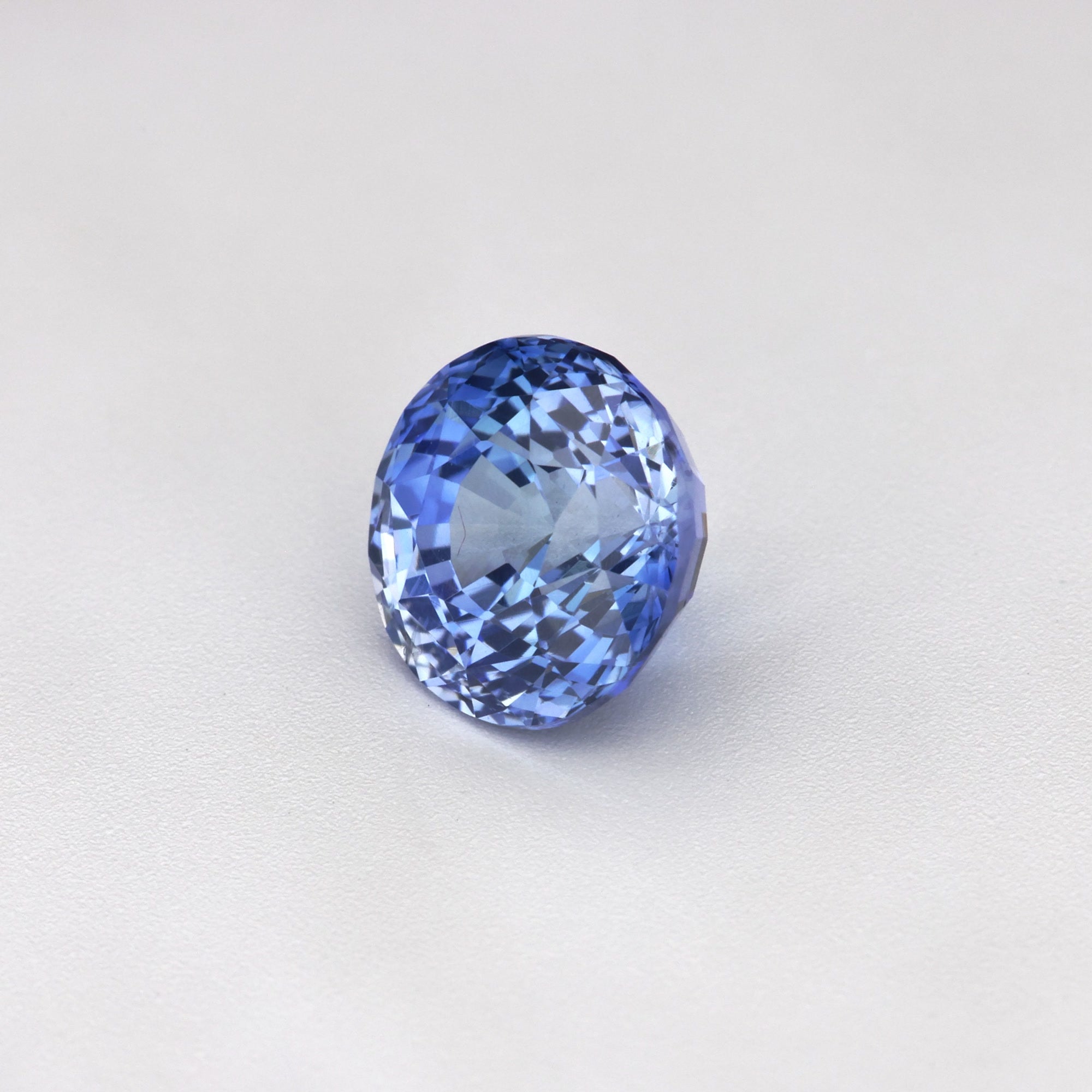
Browse our unheated blue sapphire catalog — vivid, individually selected Ceylon stones with complete treatment disclosure — or email crescentgems@gmail.com with your specifications. We respond within one business day.

CG8465
CG8460
CG8456


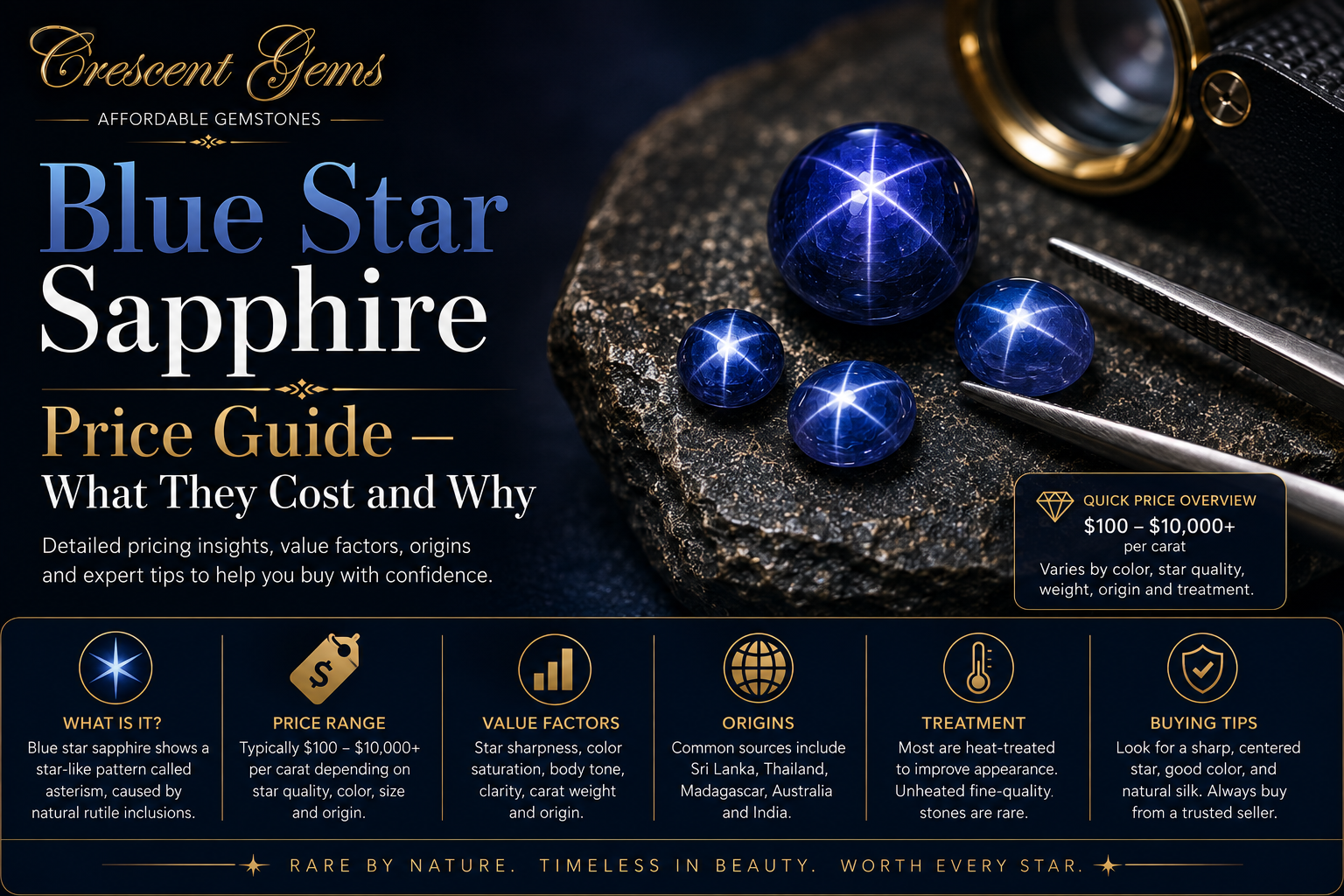
Blue Star Sapphire Price Guide — What They Cost and Why
Read moreabout Blue Star Sapphire Price Guide — What They Cost and Why
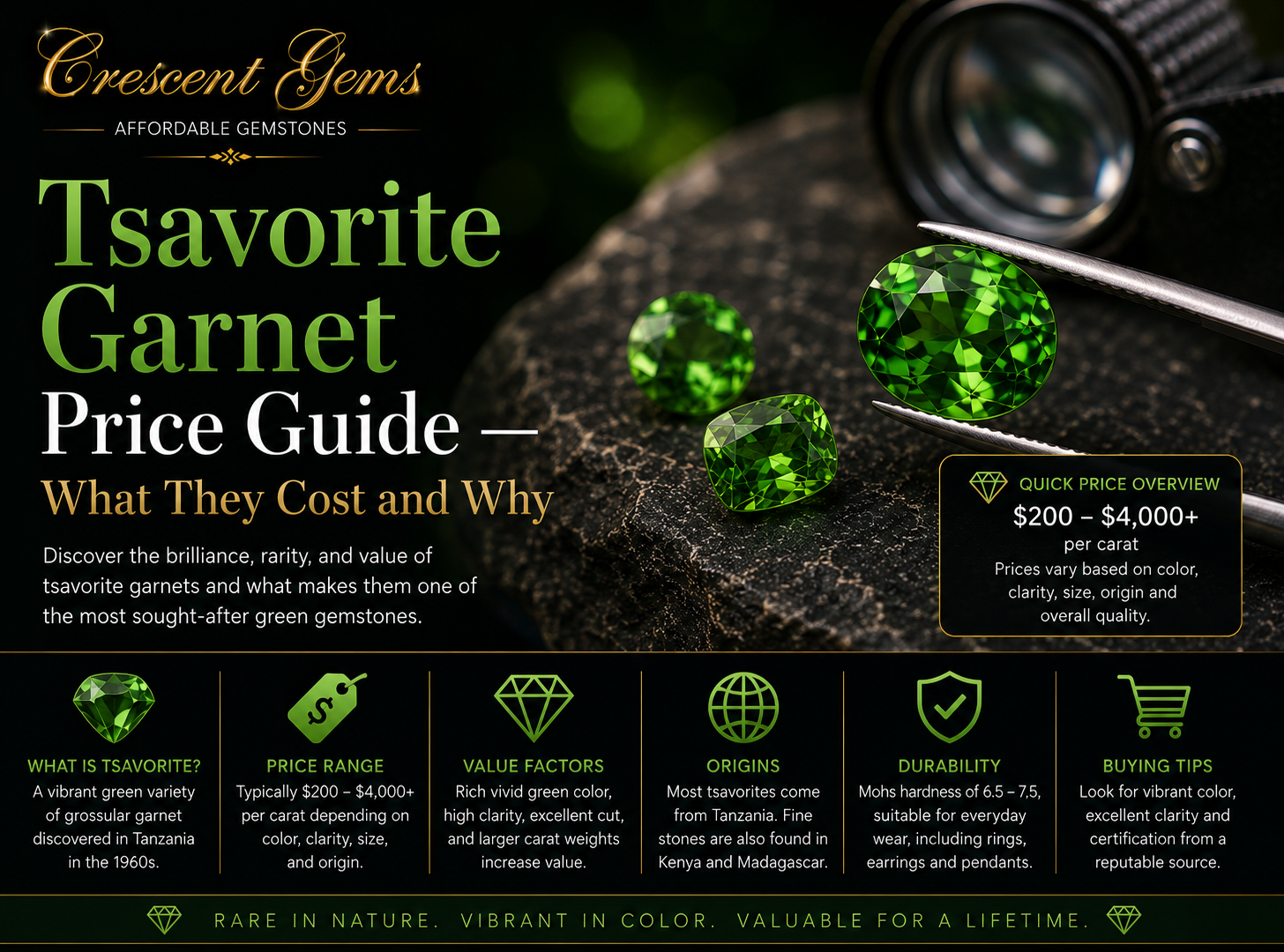
Tsavorite Garnet Price Guide — What They Cost and Why
Read moreabout Tsavorite Garnet Price Guide — What They Cost and Why
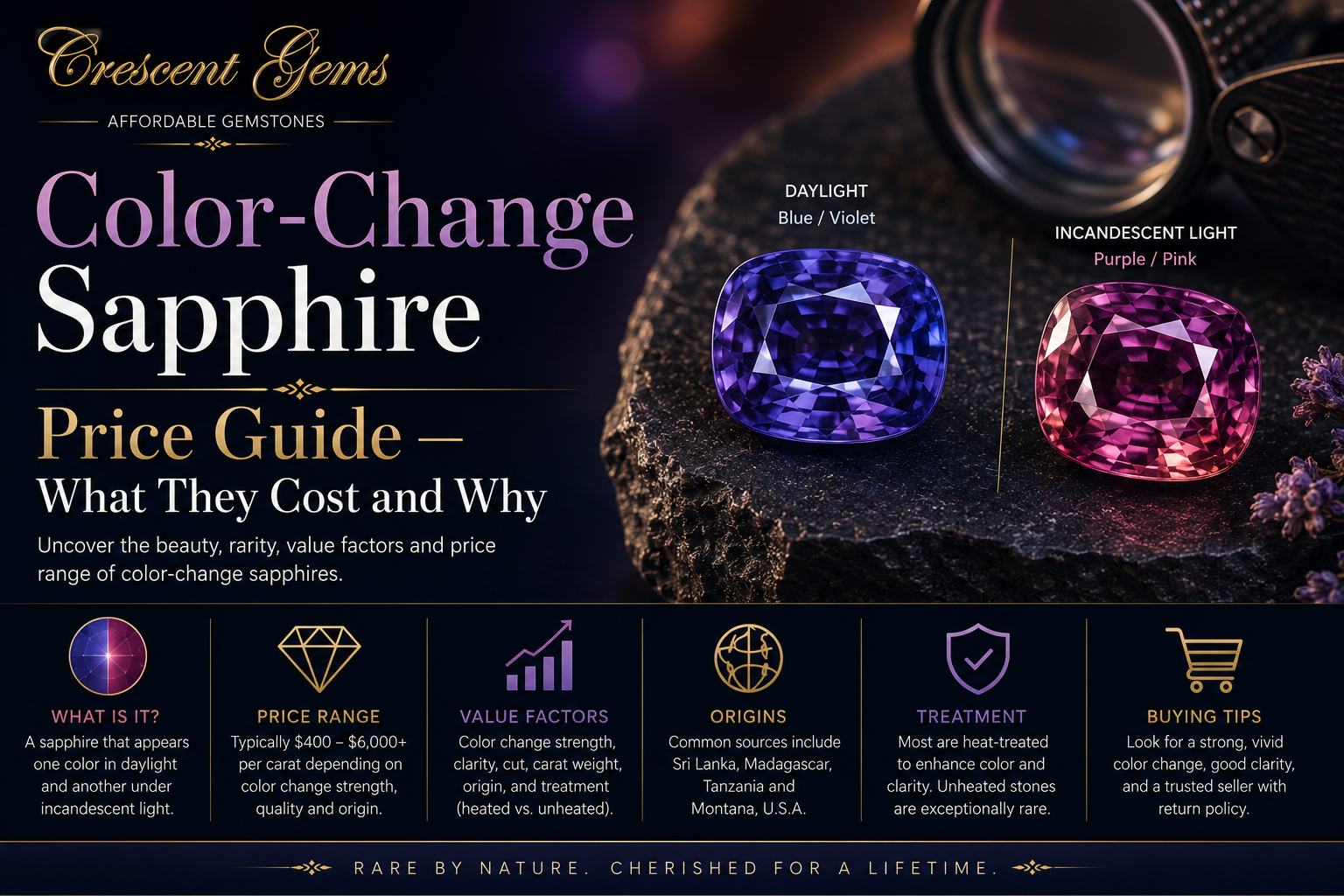
Color-Change Sapphire Price Guide — What They Cost and Why
Read moreabout Color-Change Sapphire Price Guide — What They Cost and Why
Is Cat's-Eye Chrysoberyl Good for an Engagement Ring?
Read moreabout Is Cat's-Eye Chrysoberyl Good for an Engagement Ring?
Cat's Eye Chrysoberyl Price Guide — What They Cost and Why
Read moreabout Cat's Eye Chrysoberyl Price Guide — What They Cost and Why















Share: