

- par Ahmed Shareek
Sapphire vs Diamond Engagement Rings: The Real Differences, and How to Choose the Right Sapphire
- par Ahmed Shareek
New to buying sapphires? Start with our Ultimate Sapphire Buying Guide — the complete resource for color, origin, treatment, and pricing.
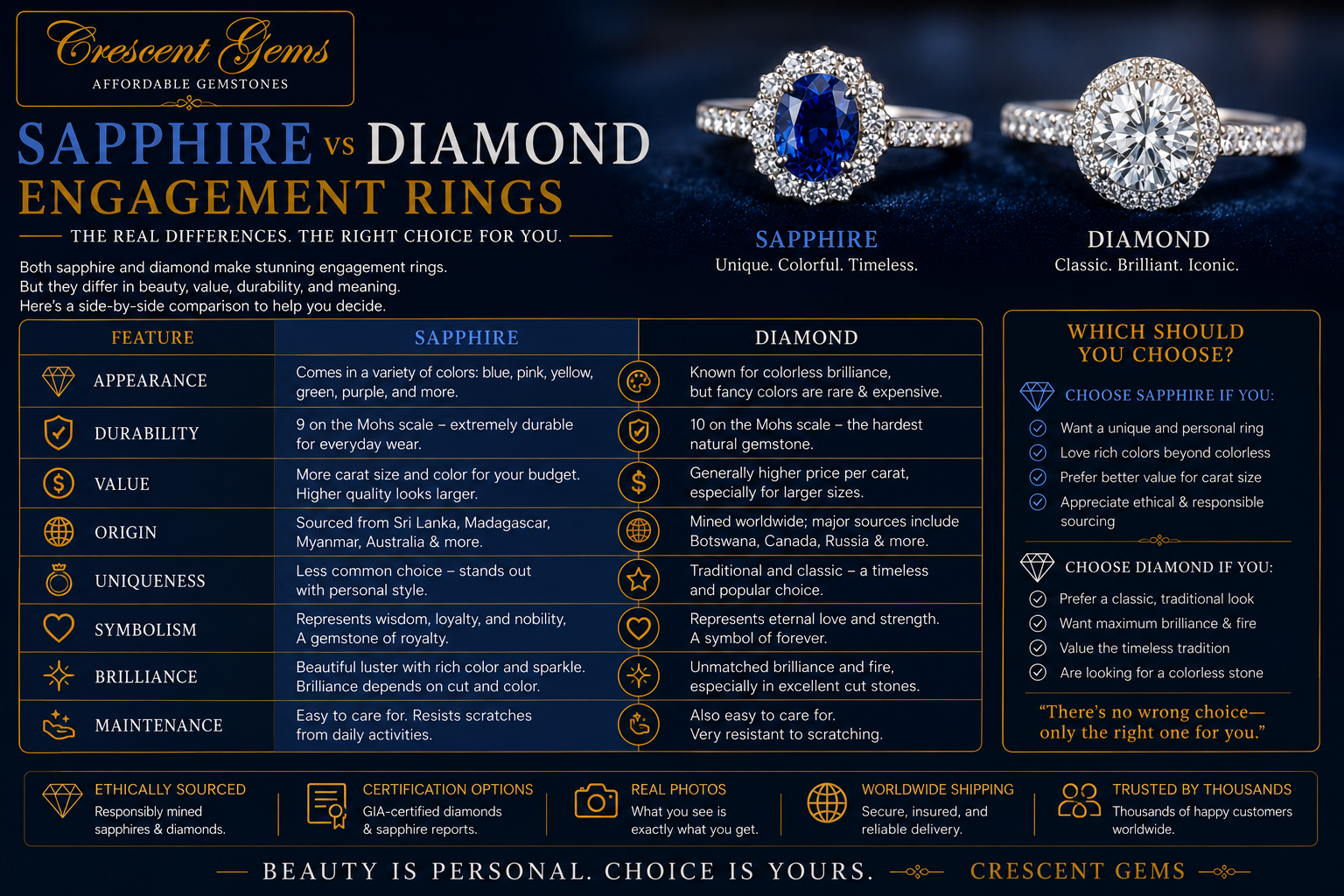
The comparison between sapphire and diamond for an engagement ring is not about which stone is better — it is about which stone is right for a specific person, budget, and aesthetic. Both are genuinely excellent choices for daily-wear rings.
Hardness and Durability: Diamond is Mohs 10. Sapphire (corundum) is Mohs 9. Diamond has perfect octahedral cleavage; sapphire has no cleavage planes. In practical terms for daily ring wear, both are extremely durable. Sapphires are considered suitable for all jewelry applications including everyday-wear engagement rings without reservation.
Brilliance and Appearance: Diamond's refractive index of 2.42 combined with strong dispersion produces the classic white flashes and rainbow fire. Sapphire at ~1.77 is brilliant in its own right but the visual effect is different — body color saturates light rather than dispersing it. This is a different aesthetic, not an inferior one. See our Sapphire Colors Explained guide.
Price: Natural diamond pricing is well established. Natural Ceylon sapphire pricing varies significantly by color and treatment: heated blue 1ct at $300–$800/ct; unheated fine blue at $800–$2,500/ct; padparadscha certified at $5,000–$15,000+/ct; teal unheated at $600–$1,500/ct. For the full pricing context see our Sapphire Pricing Explained, what a good 1 carat costs, and what a good 2 carat costs guides.
Rarity: Natural diamonds are commercially available in large quantities globally. Fine natural sapphires in certain colors — padparadscha, unheated blue above 2ct, orange — are genuinely rare. A fine unheated Ceylon blue above 3ct with a GIA report is a more unusual object than a 3ct natural diamond of equivalent quality.
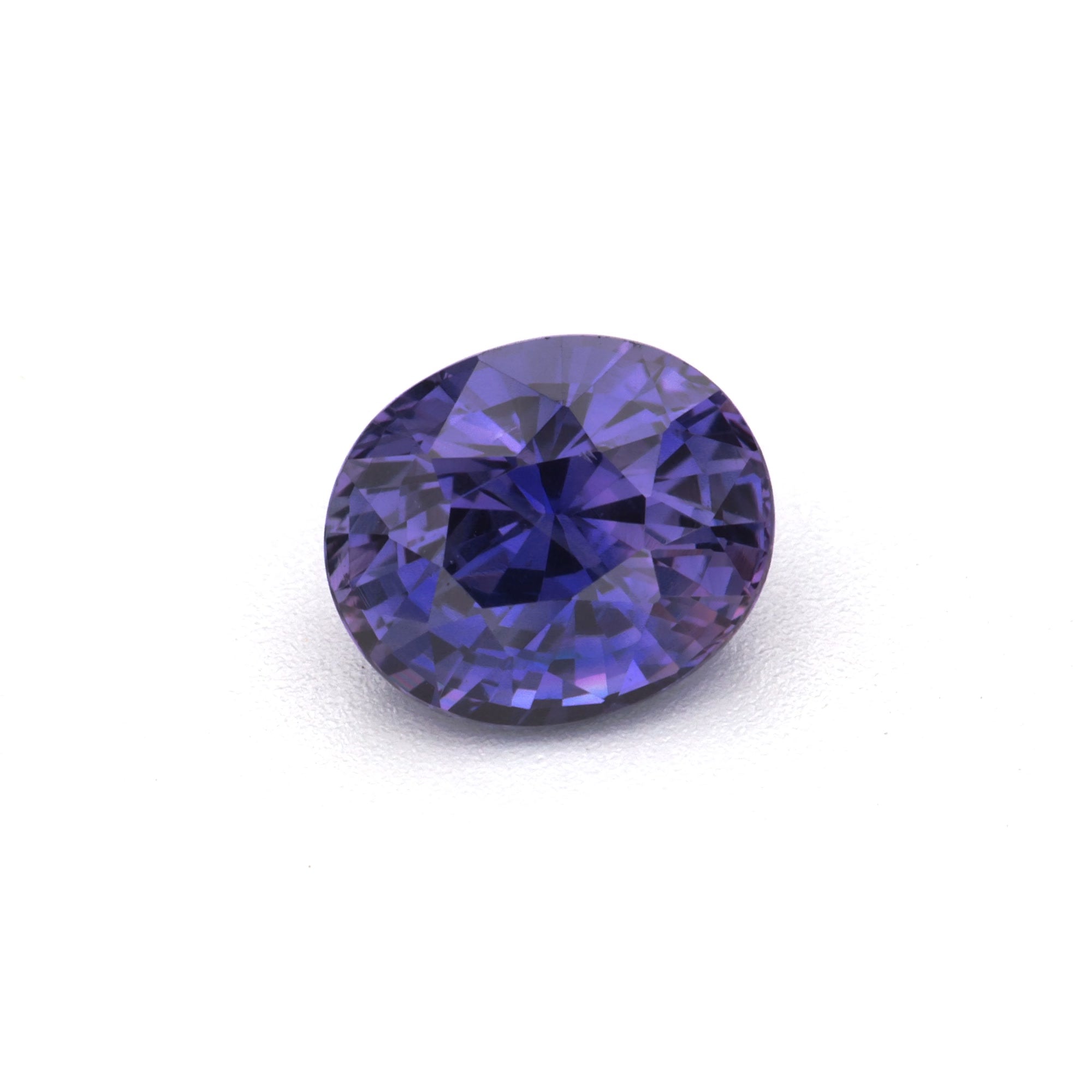
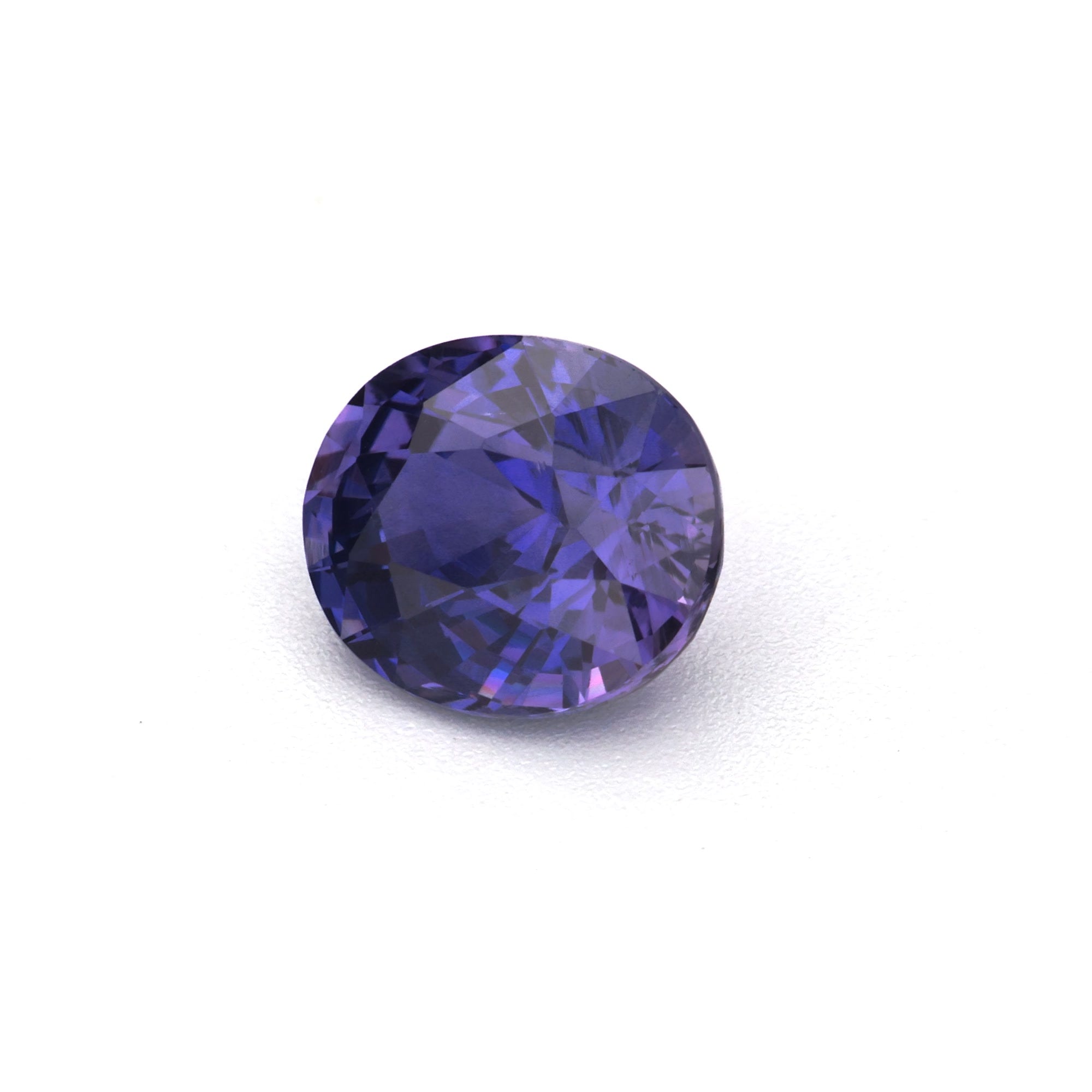
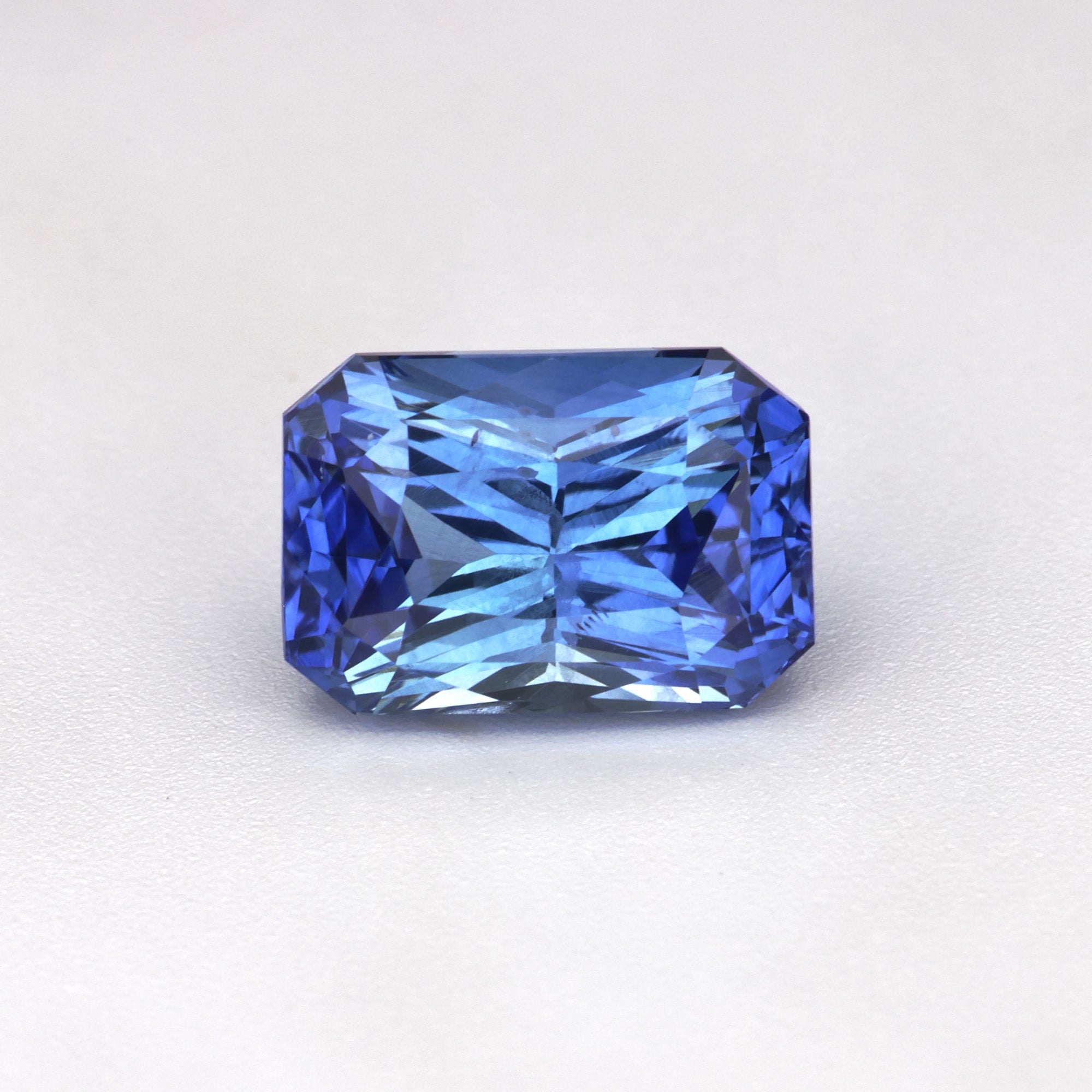
Blue Sapphire — The most traditional choice. Works in white gold, yellow gold, and platinum. Browse: blue sapphires. Pink Sapphire — Ranges from soft pastel rose to vivid hot pink. Browse: pink sapphires. Peach Sapphire — Pairs exceptionally well with rose gold. Browse: peach sapphires. Padparadscha — The rarest and most valuable non-blue sapphire. Browse: padparadscha sapphires. Teal Sapphire — The most sought-after non-traditional engagement ring color; almost always unheated. Browse: teal sapphires. White Sapphire — The most durable colorless diamond alternative at Mohs 9. Browse: white sapphires.
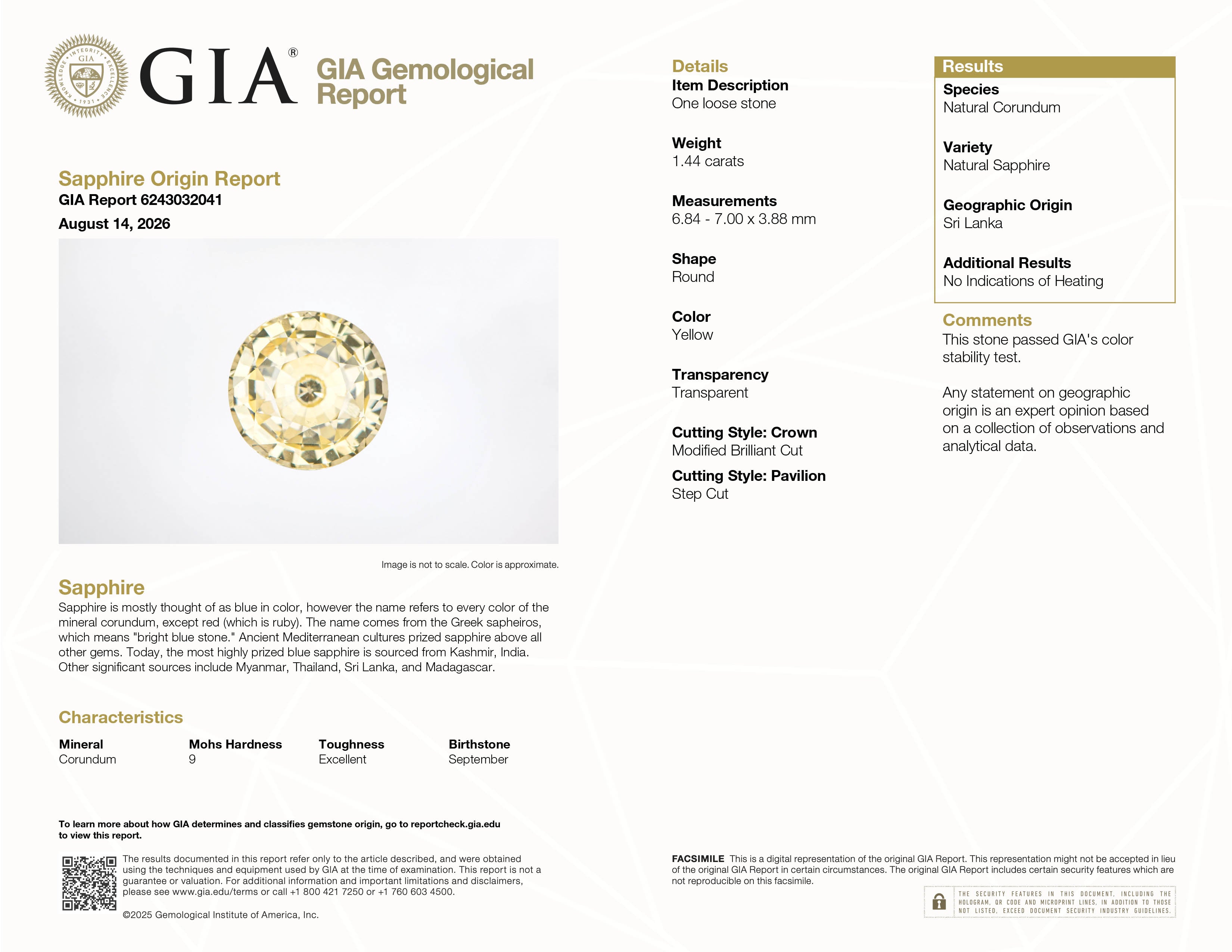
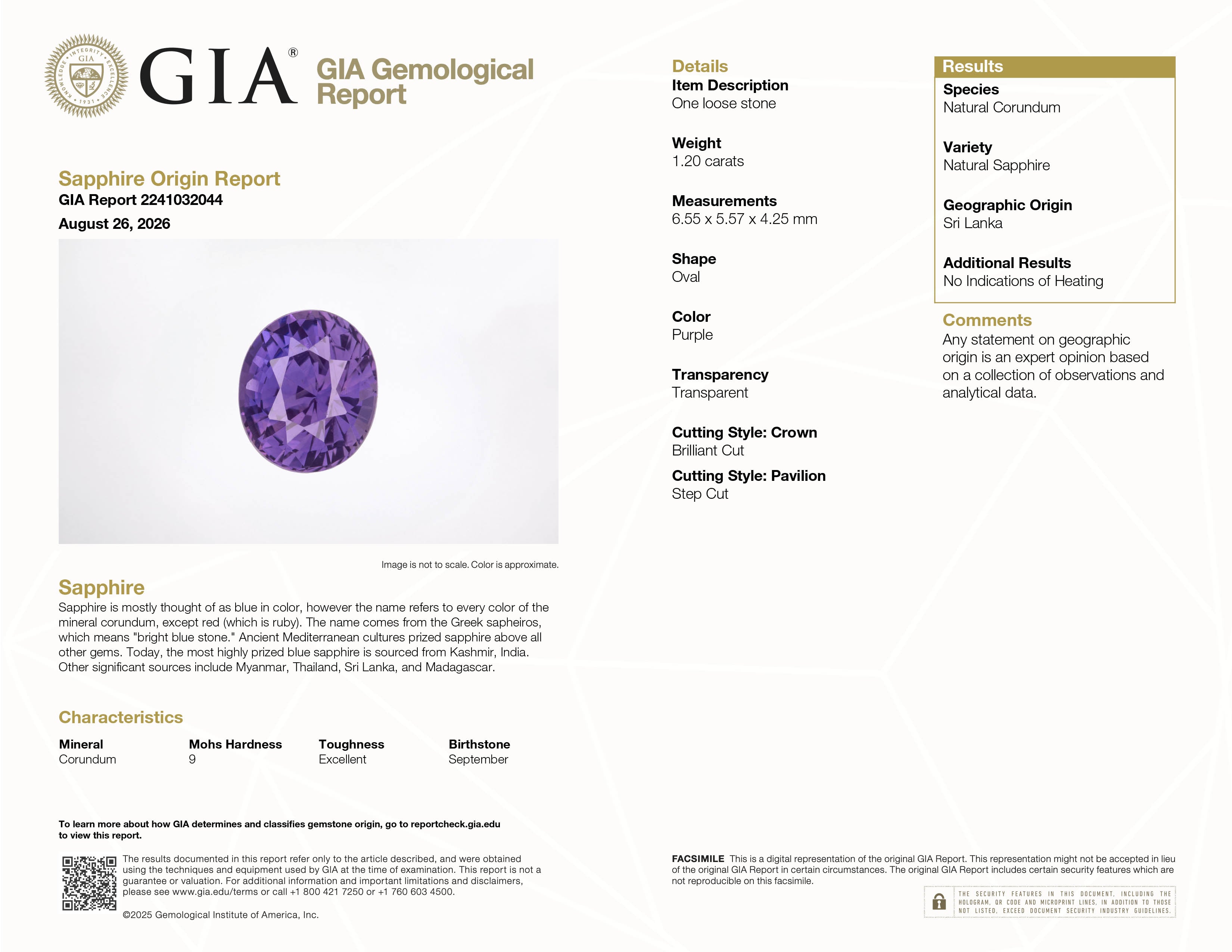
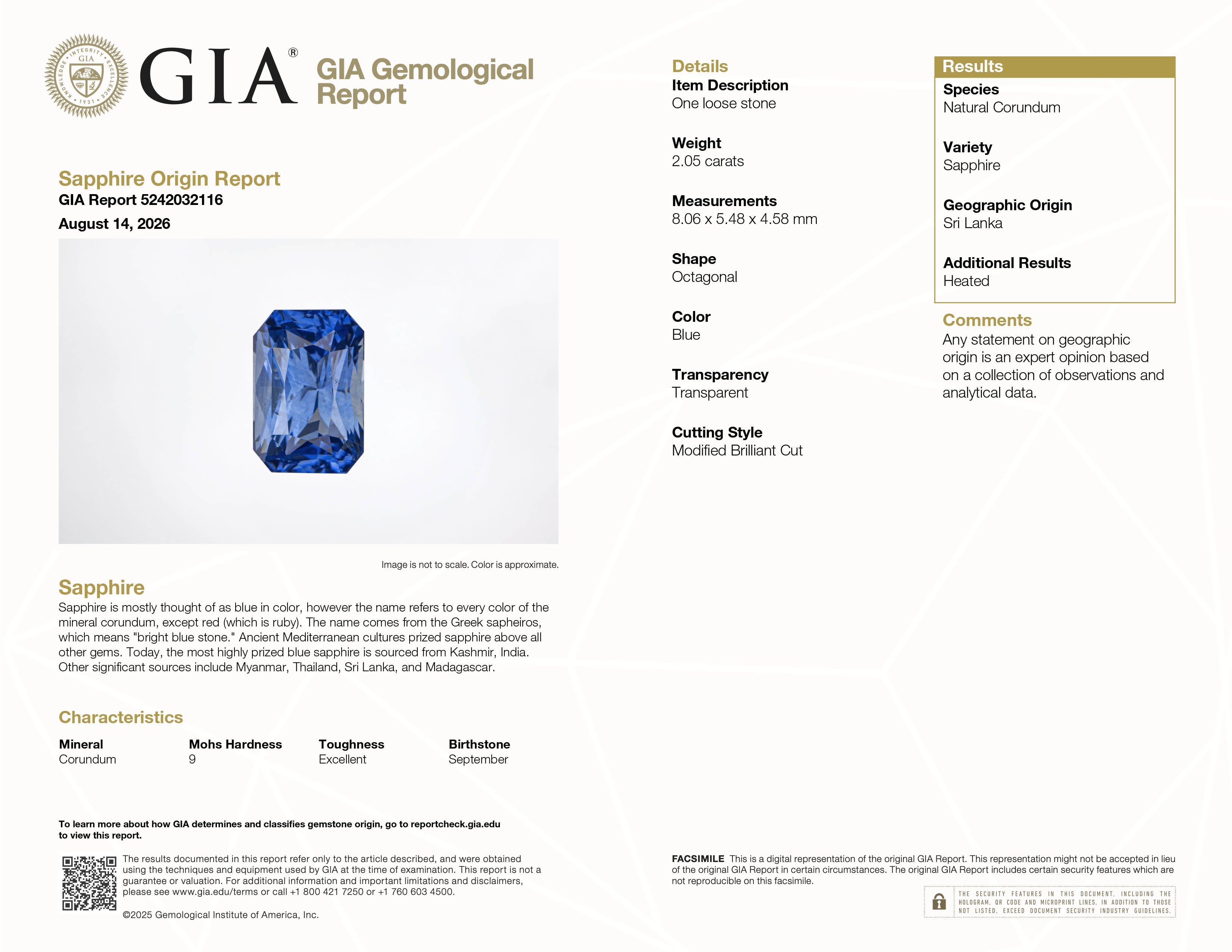
Color First — Always. Color is the primary quality factor in sapphires. Heated or Unheated: For most engagement ring buyers, heat treatment is not a significant concern. If unheated is important, require a GIA report explicitly stating “no indications of heating.” See our unheated sapphire guide. Cut: See our guides for oval, cushion, and emerald cut sapphires. For the full shape comparison, see our best sapphire cut guide. Certification: For sapphires above $500, a GIA report is worth requiring. See our GIA report guide.
Sapphire's Mohs 9 hardness makes it suitable for all standard engagement ring settings. Metal choices affect color perception significantly. White gold and platinum create the highest color contrast with blue, teal, and pink sapphires. Yellow gold warms the stone and complements peach, padparadscha, and yellow sapphires. Rose gold is the strongest choice for peach sapphires. See our metal comparison guide and how to choose metal color guides. For specific ring styles: solitaire rings, halo rings, three-stone rings, and custom ring design. After purchase, insure your ring: see our jewelry insurance guide.
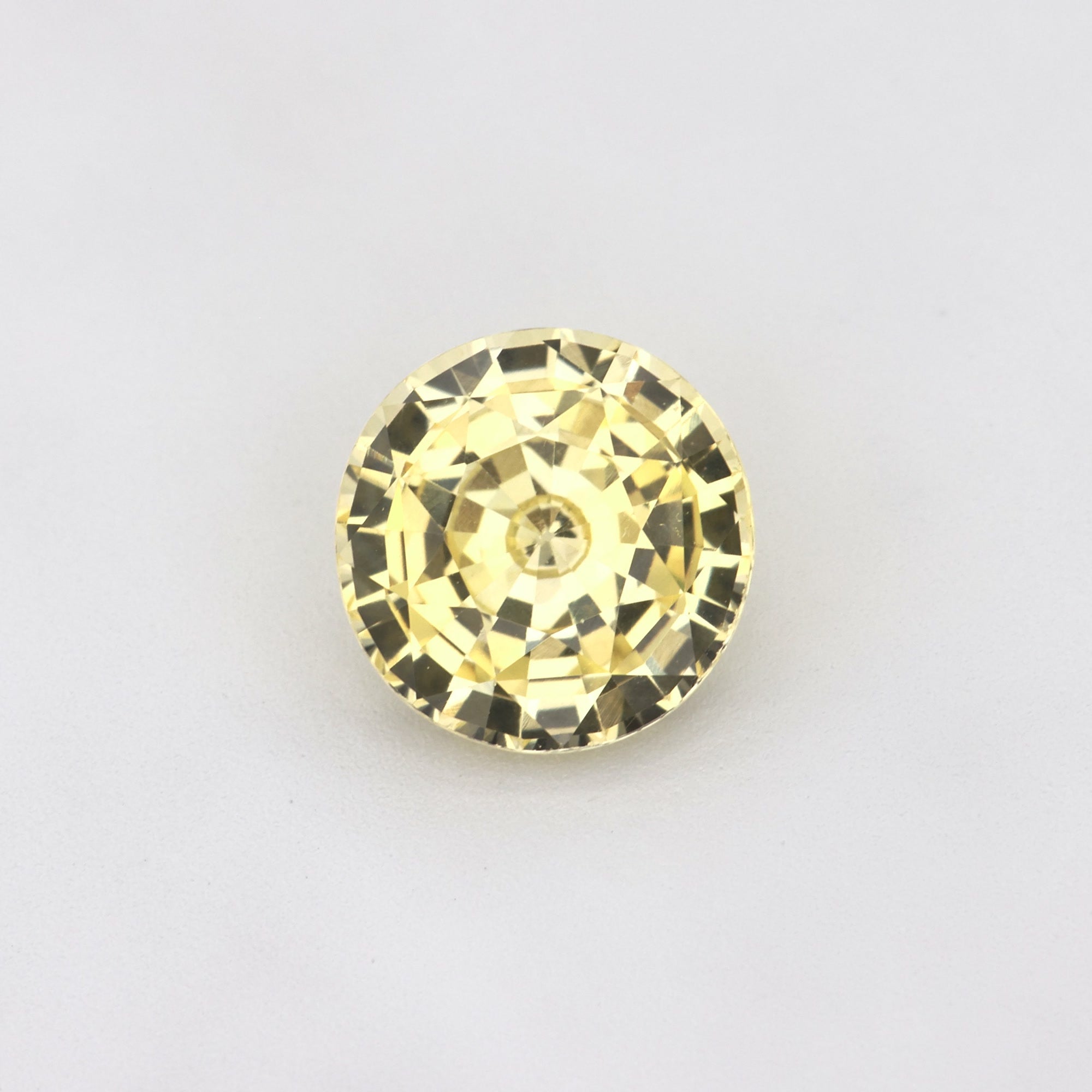
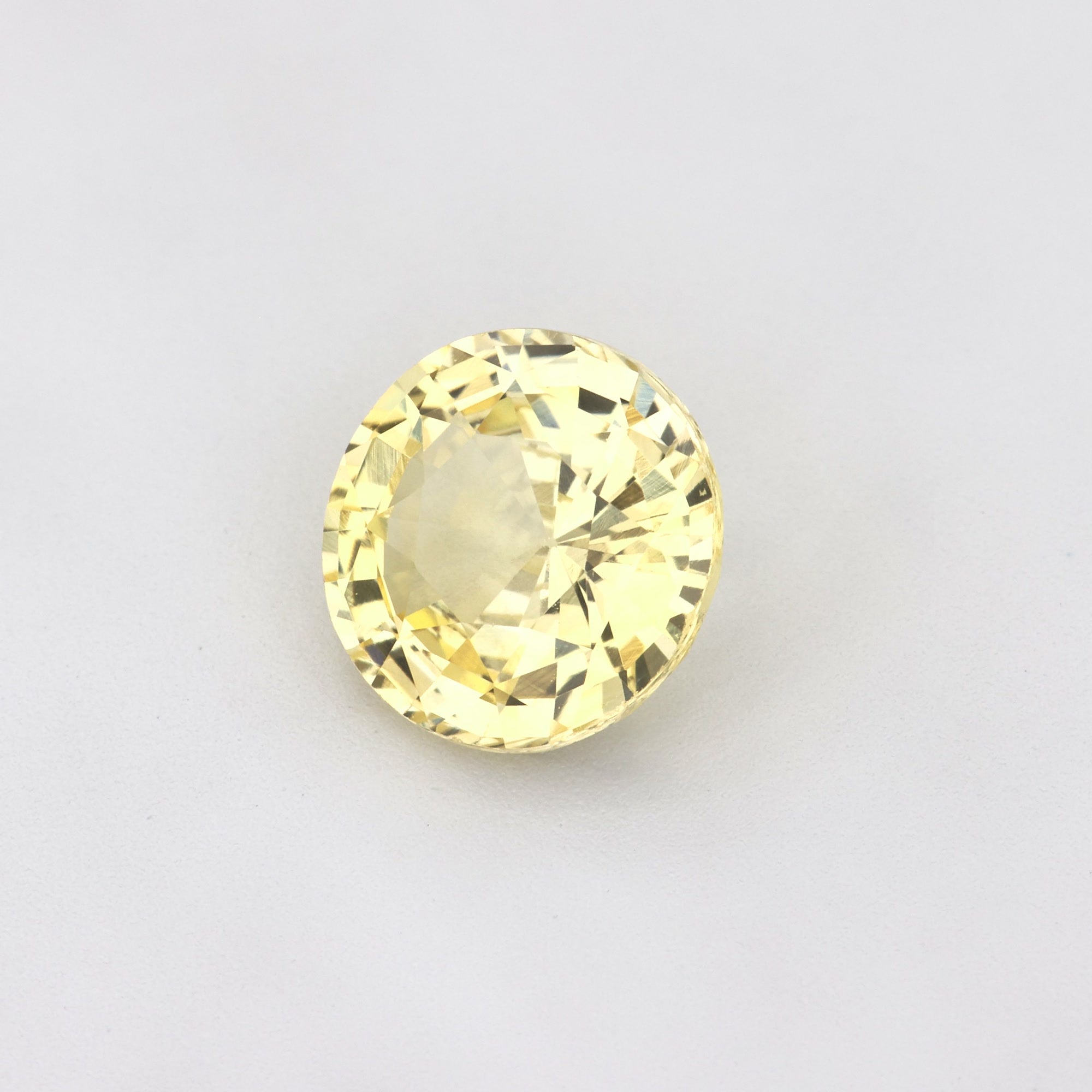
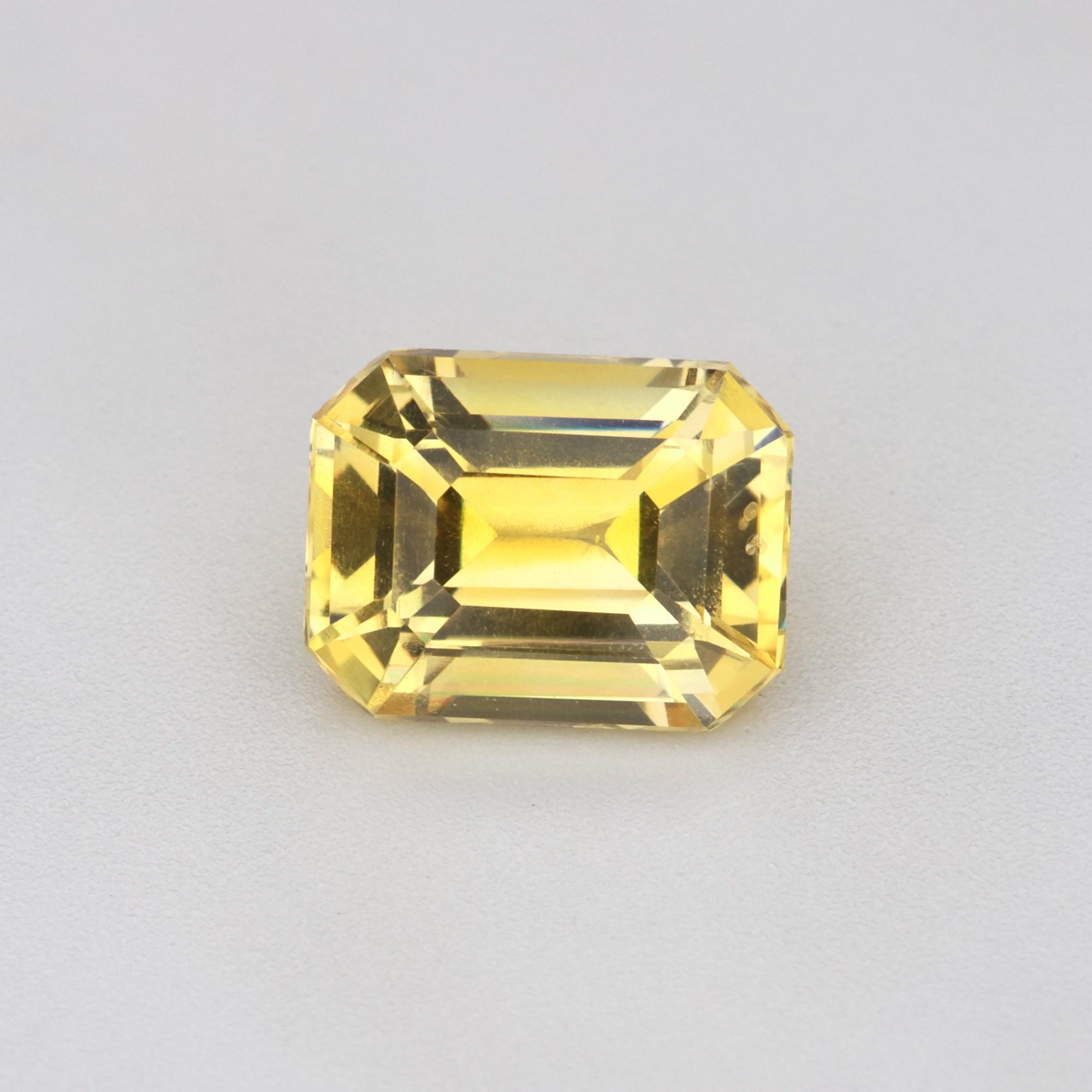
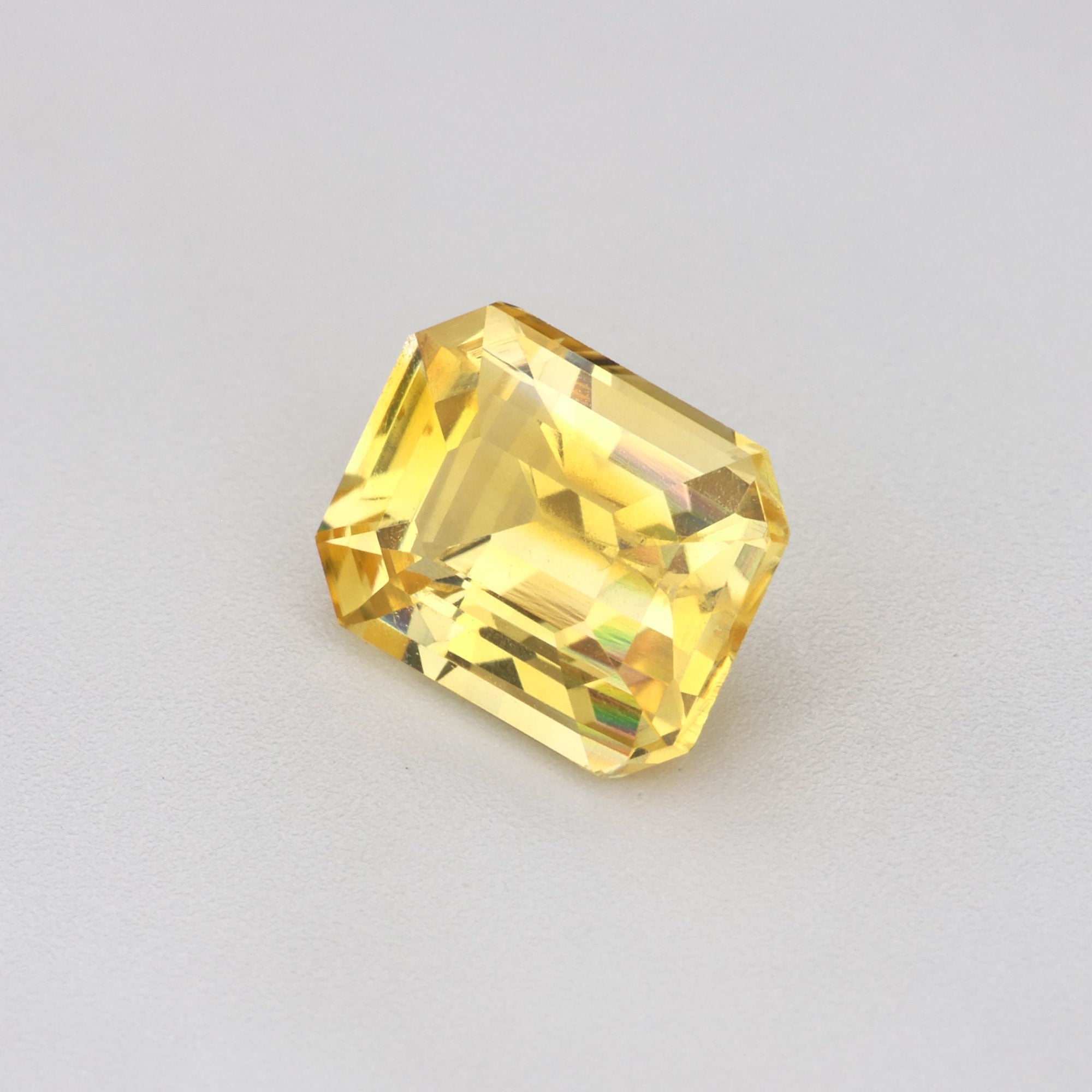
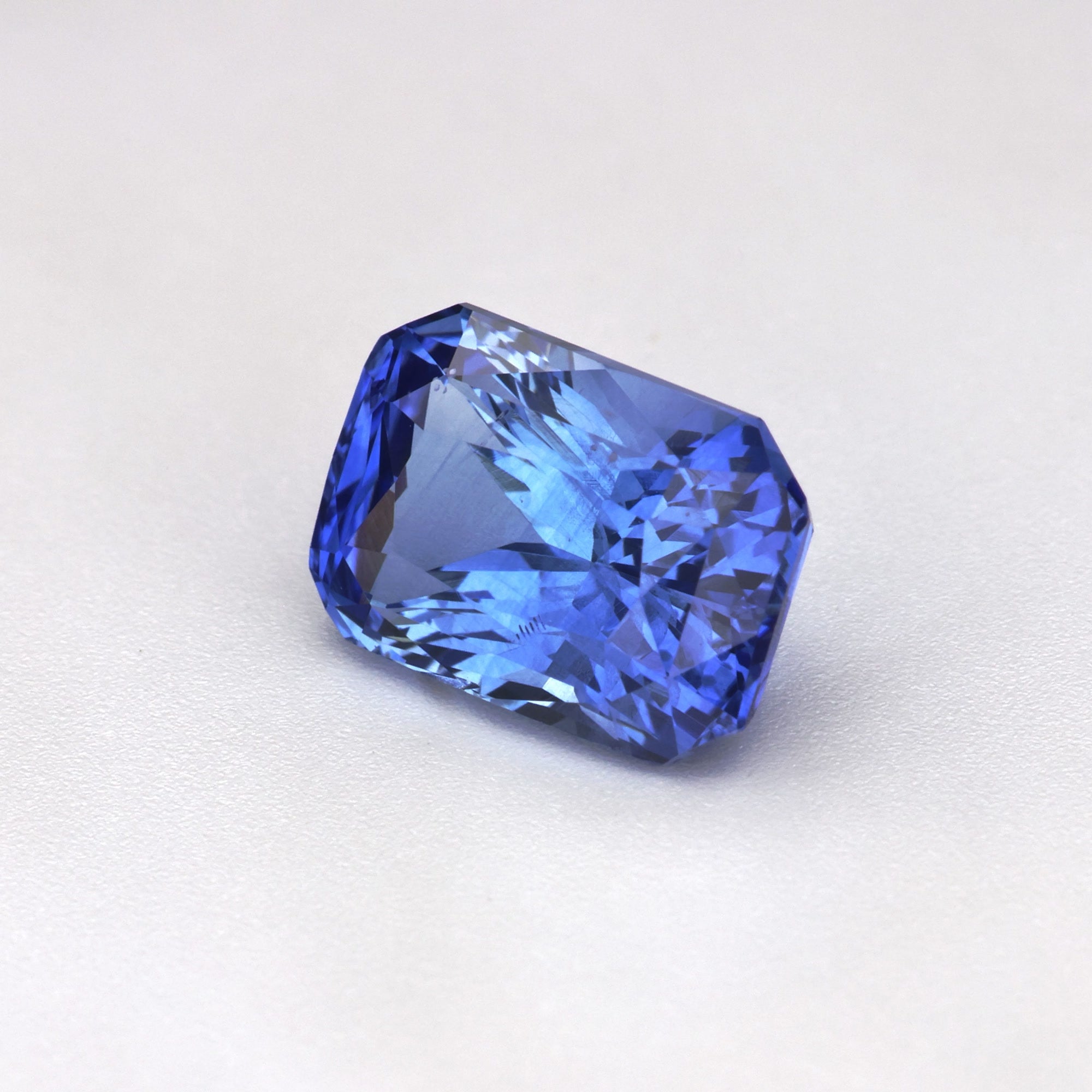
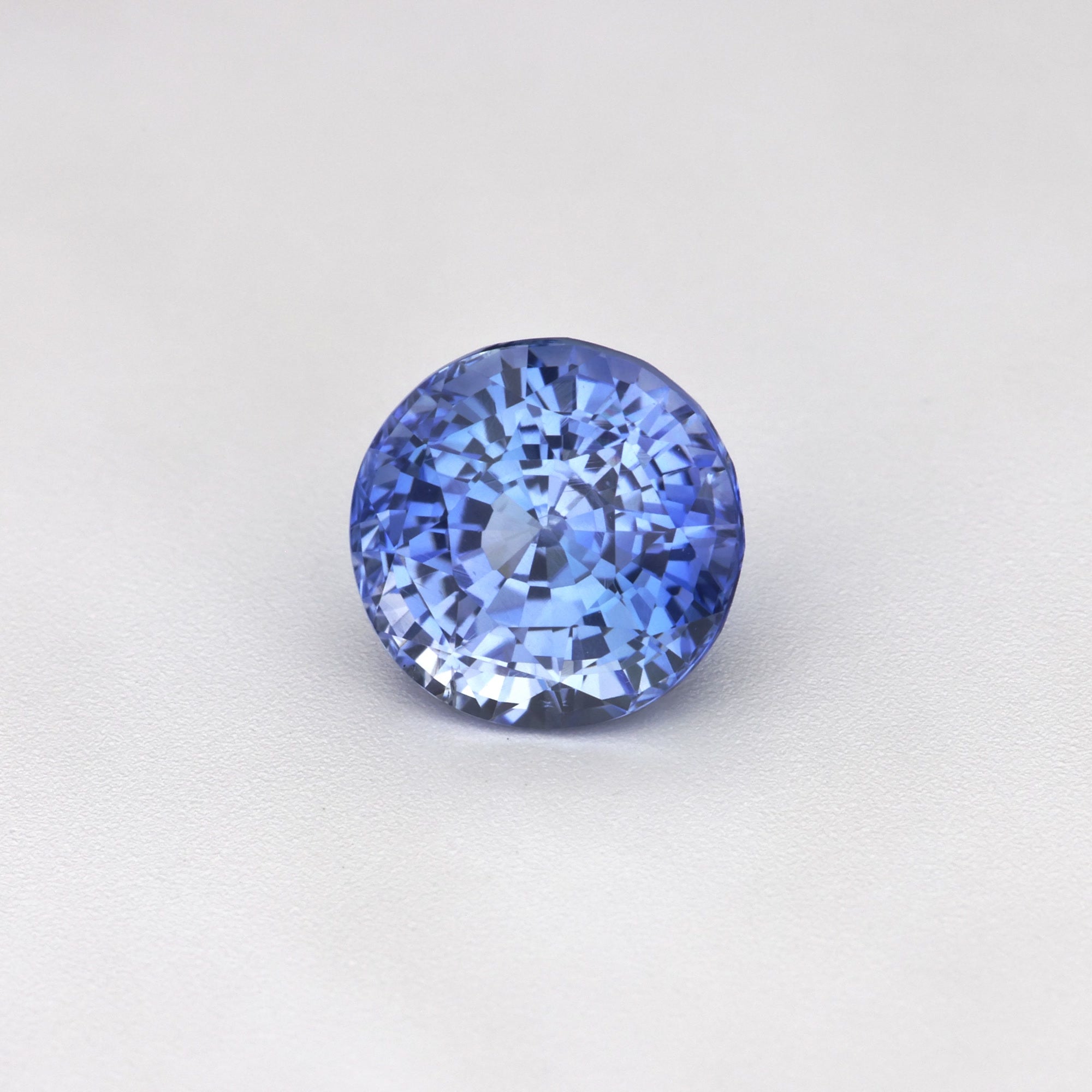
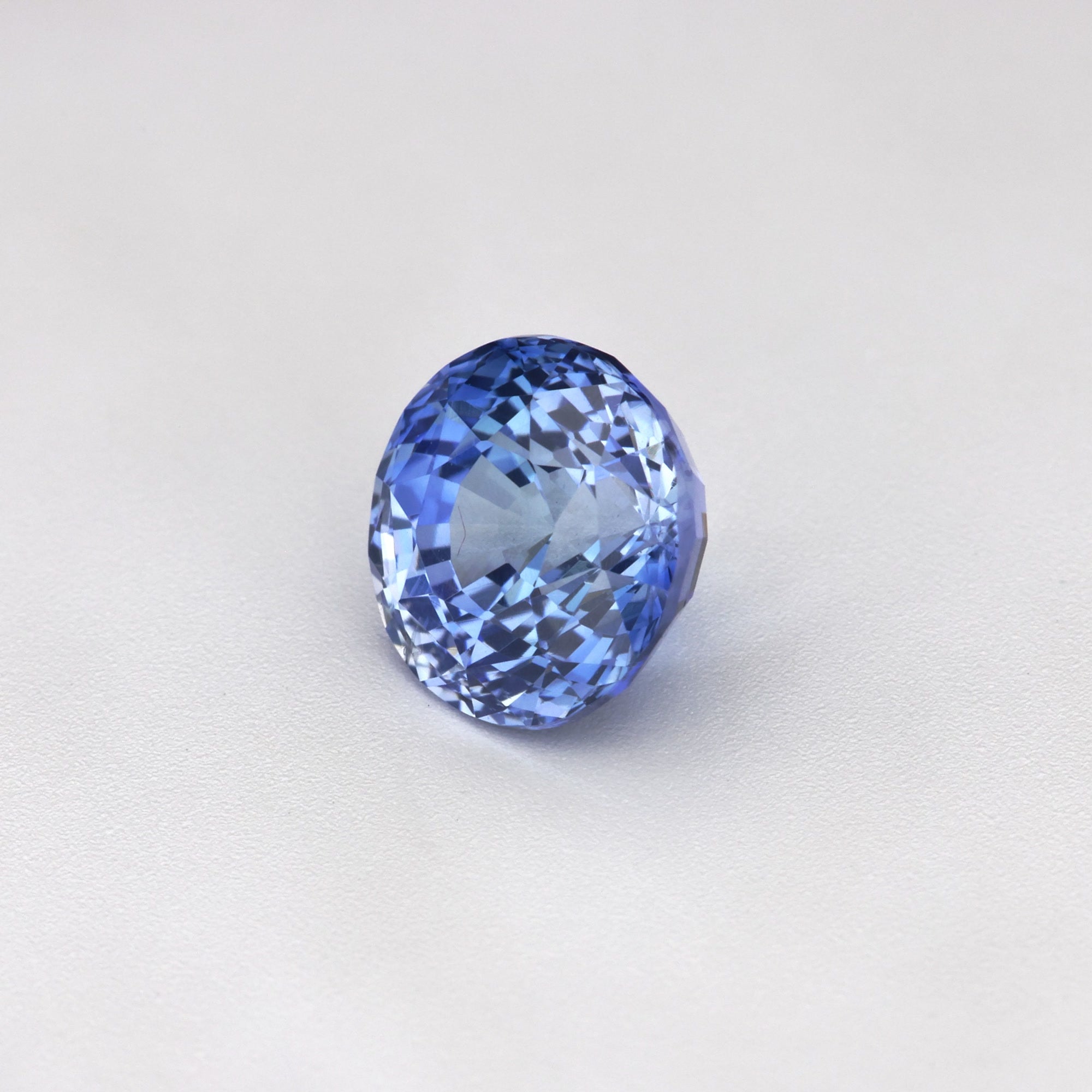
Crescent Gems carries natural Ceylon sapphires across the full color range in sizes and qualities suited to engagement ring use. Browse: sapphires for engagement rings at Crescent Gems or use our Try Before You Buy program.

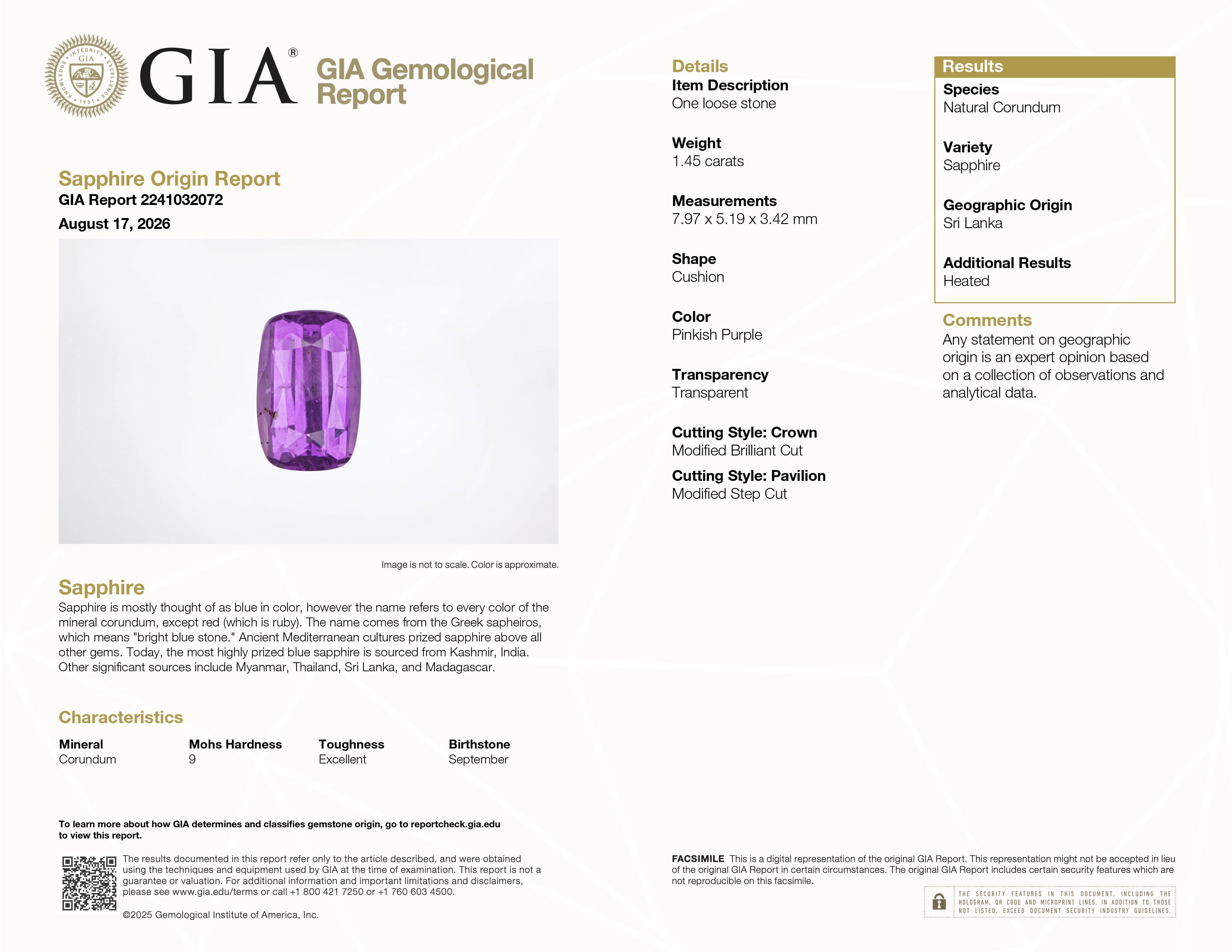
CG8469
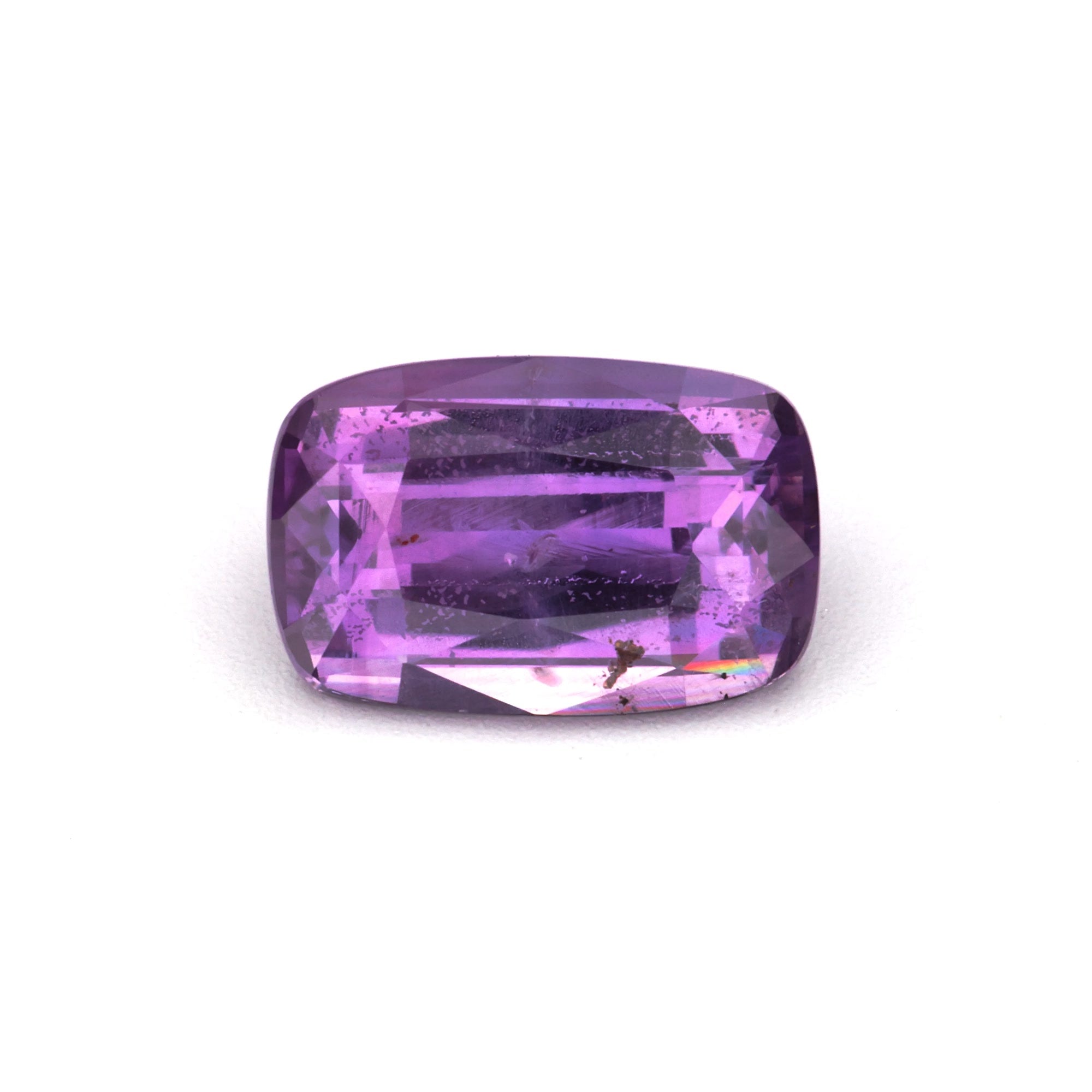
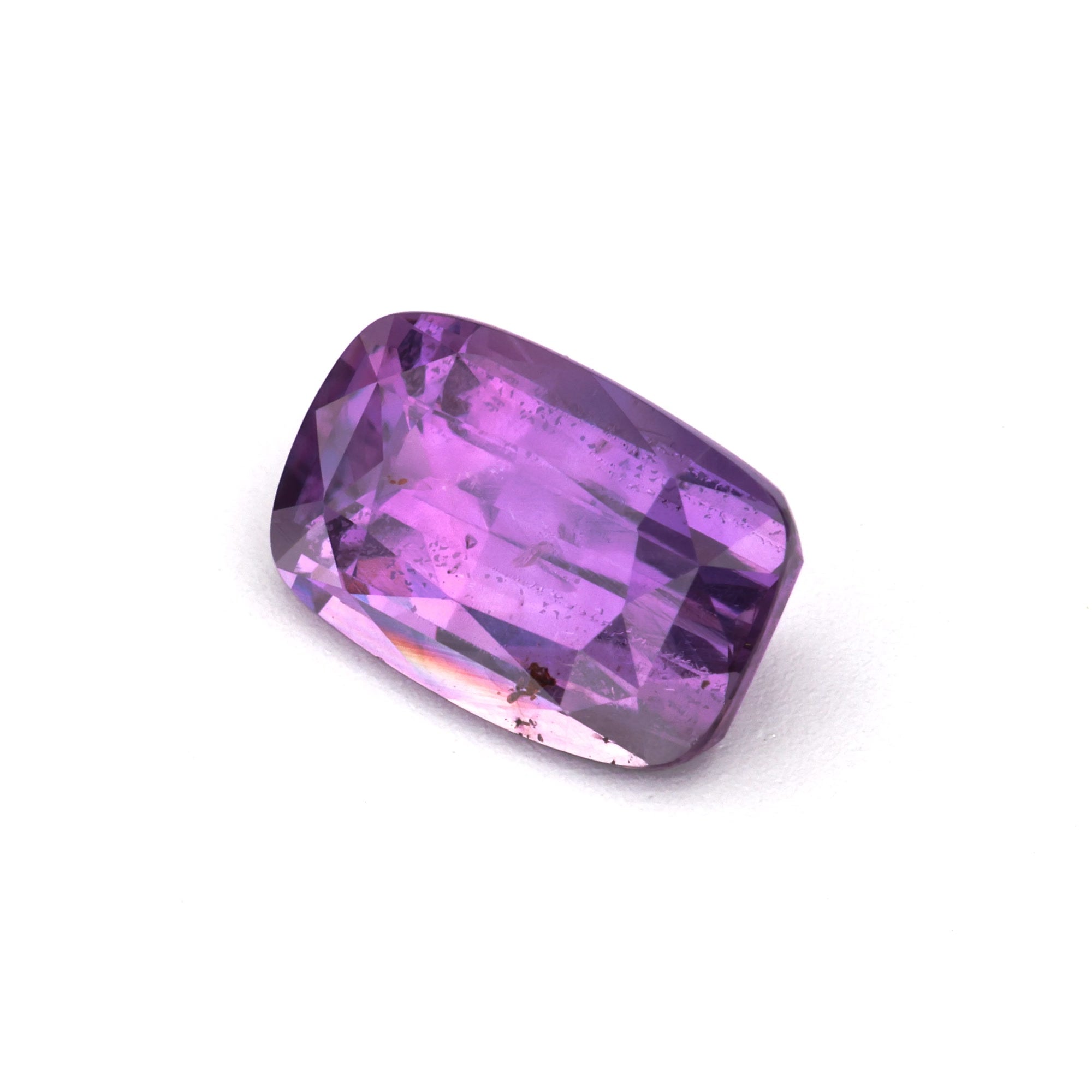
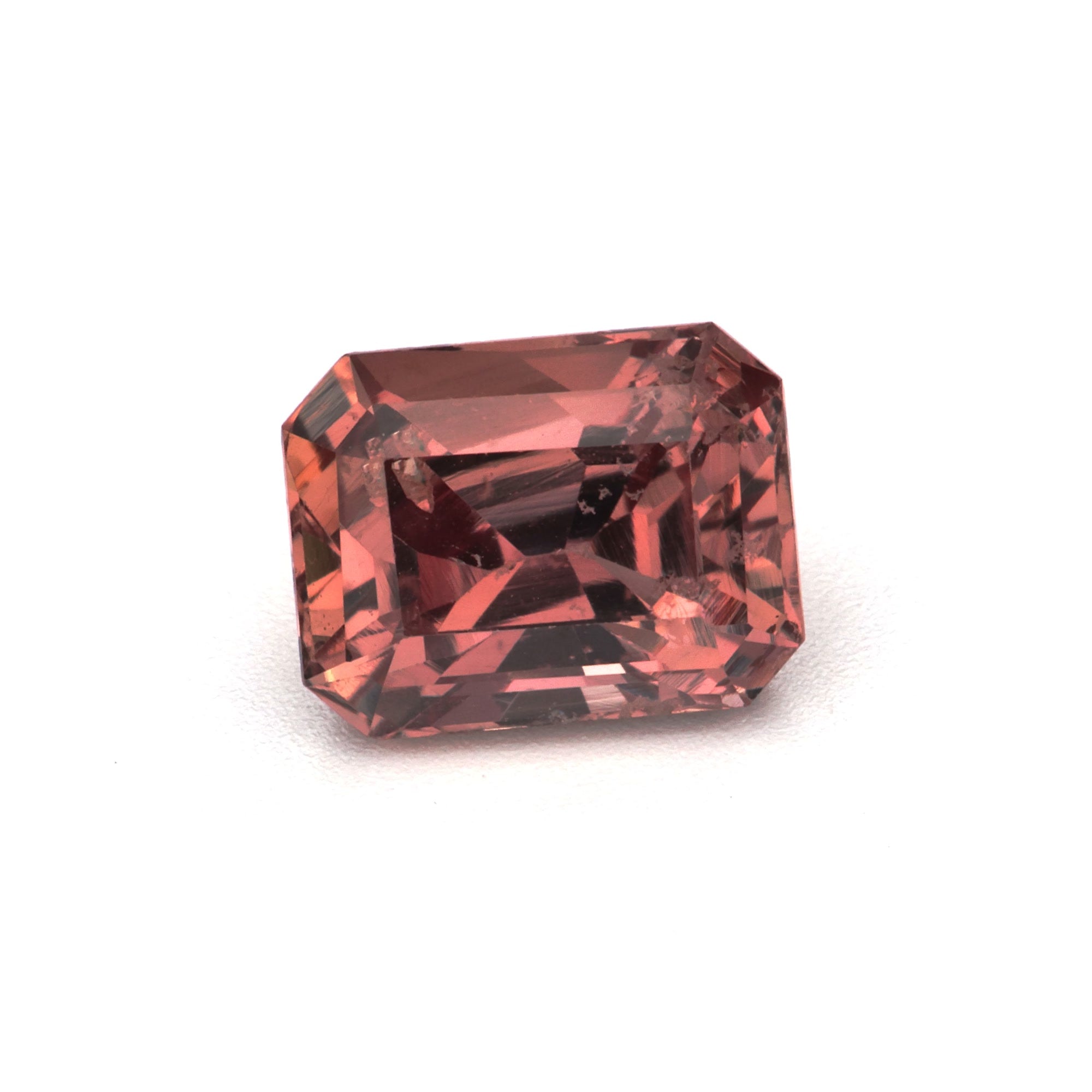
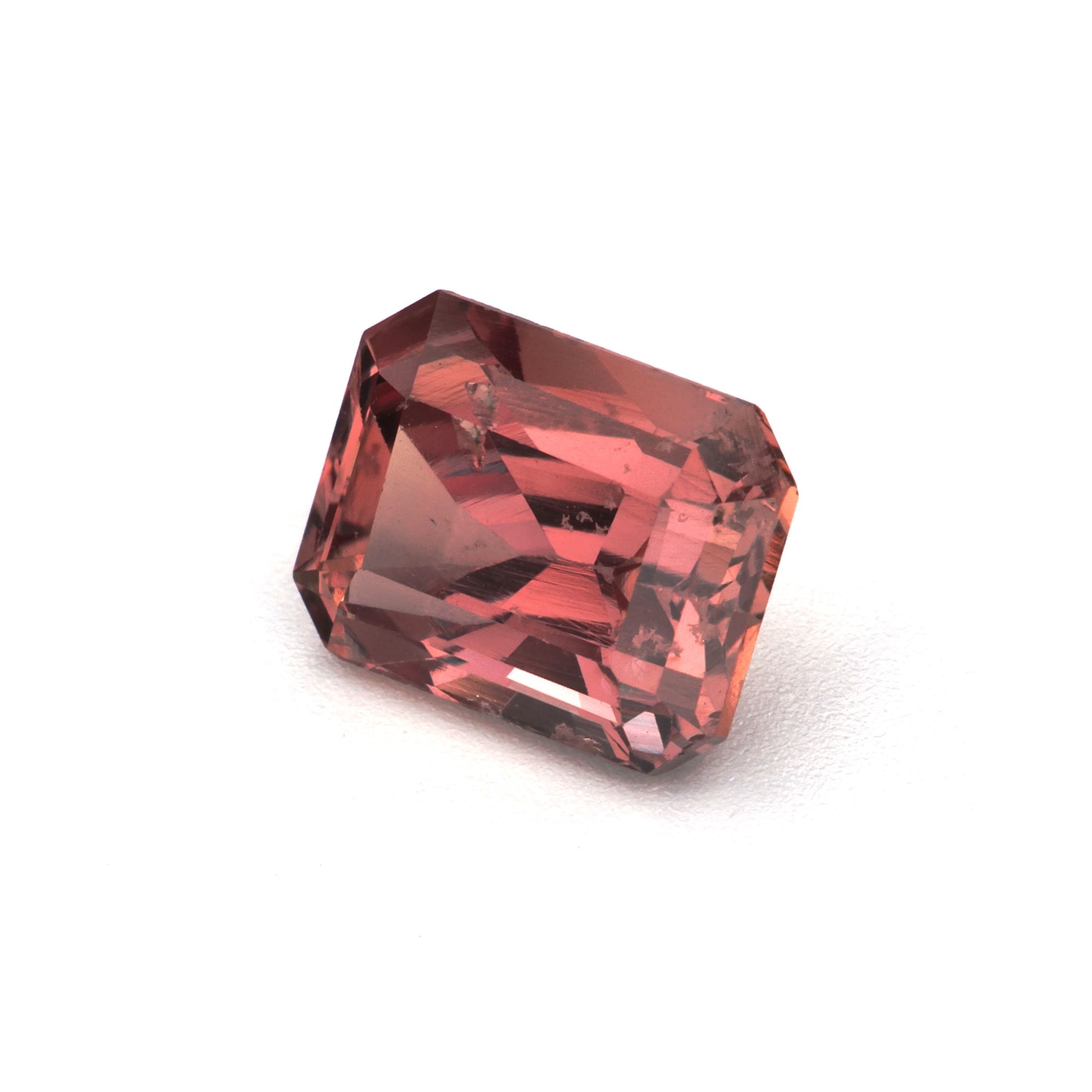
Saphir violet rosé 1,45 ct, chauffé — Rapport GIA
CG8468
CG8465
CG8463
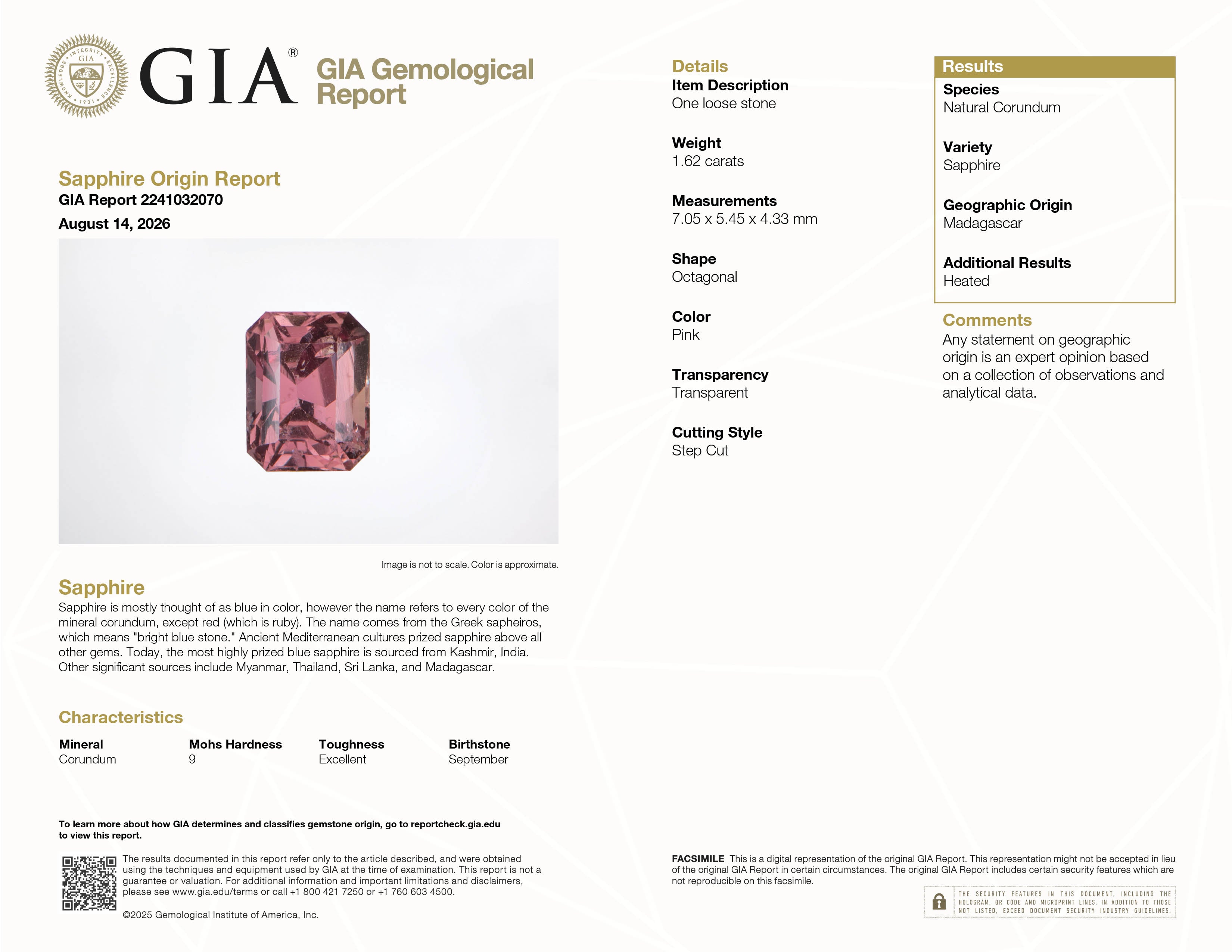
Saphir rose de Madagascar 1,62 ct — chauffé, rapport GIA
CG8460
CG8459
CG8458
CG8457
CG8456
Rubis non chauffé 1,65 ct — ovale Madagascar, certifié GIA
CG8453


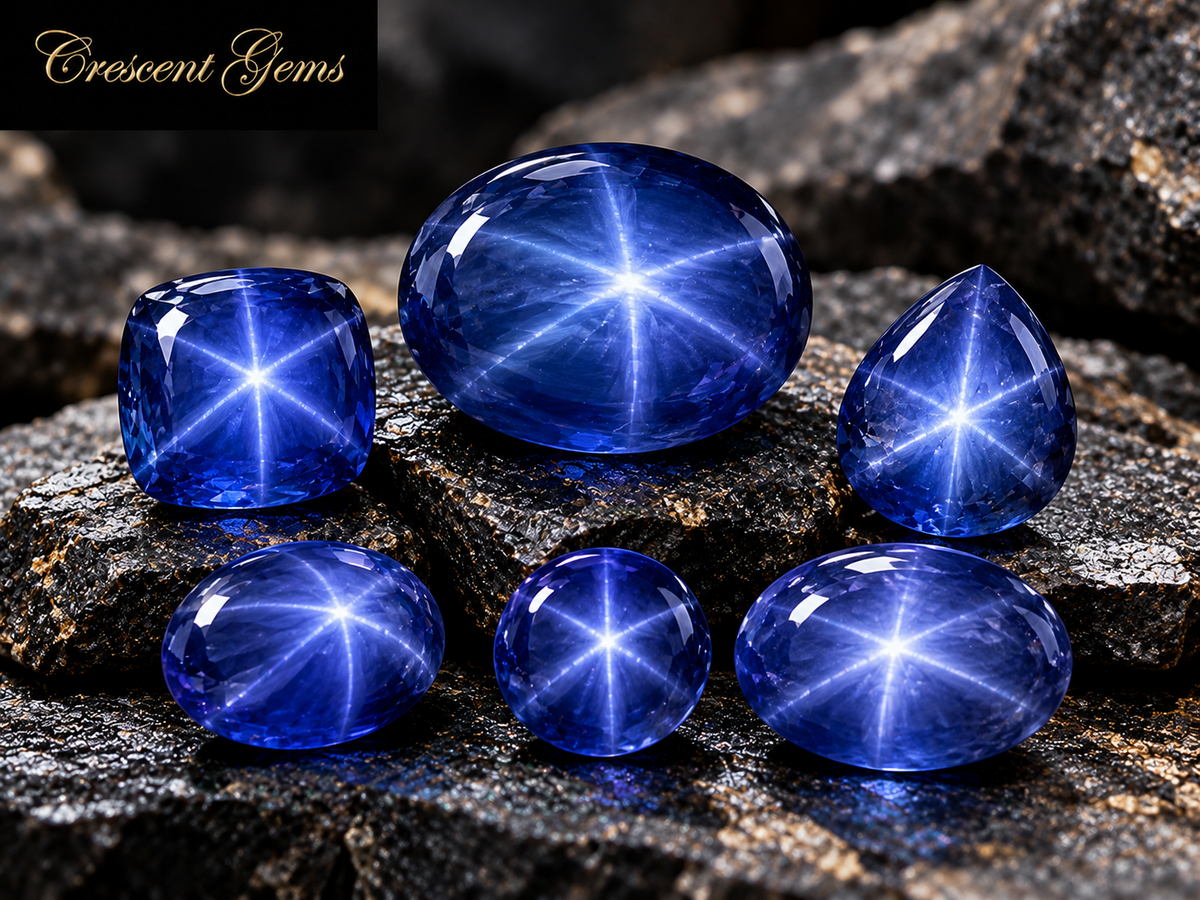
Prix du saphir bleu étoilé : fourchettes au carat et notre pierre
Ce que coûte un saphir bleu étoilé au carat, ce qui fait varier le prix, et la seule pierre que nous ayons : 8,09 ct à $4,040, avec un rapport d'origine GIA.
Plussur Prix du saphir bleu étoilé : fourchettes au carat et notre pierre
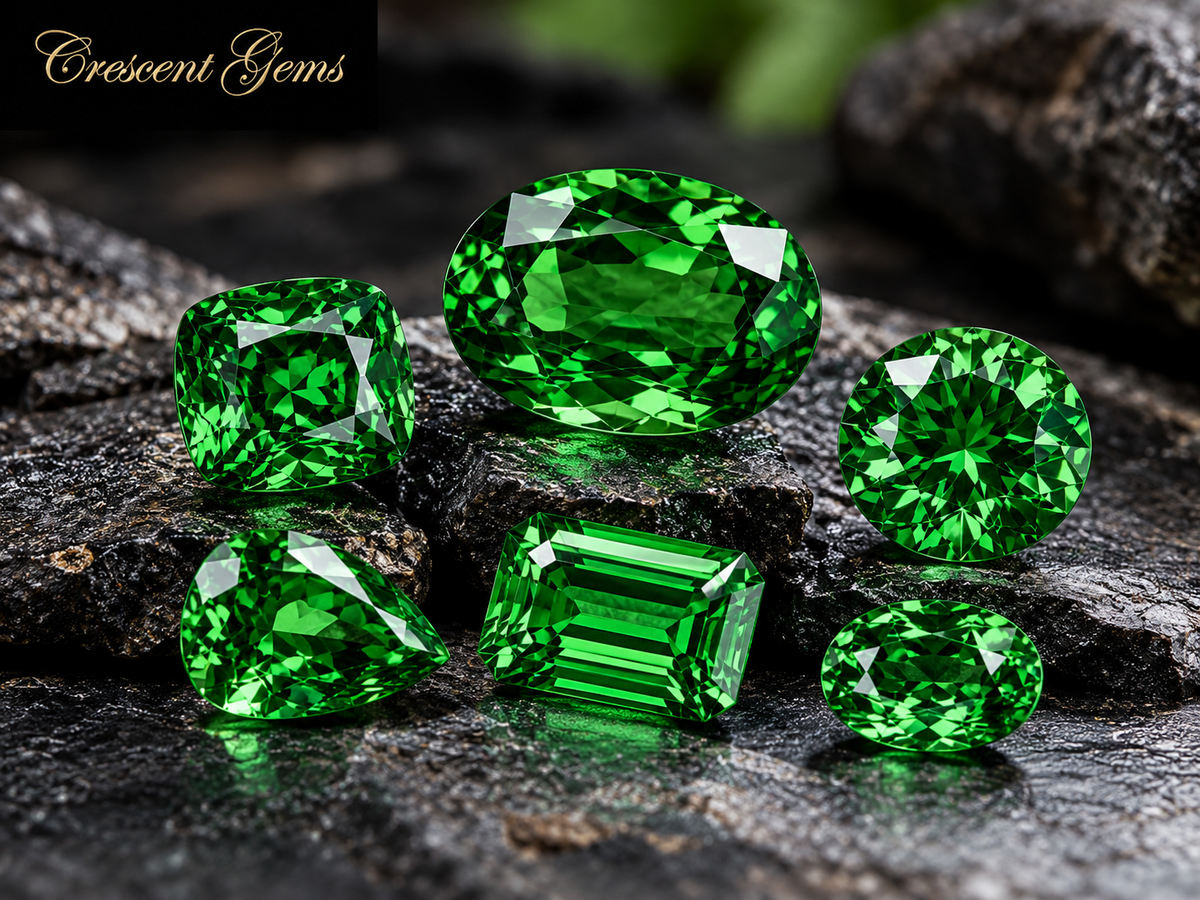
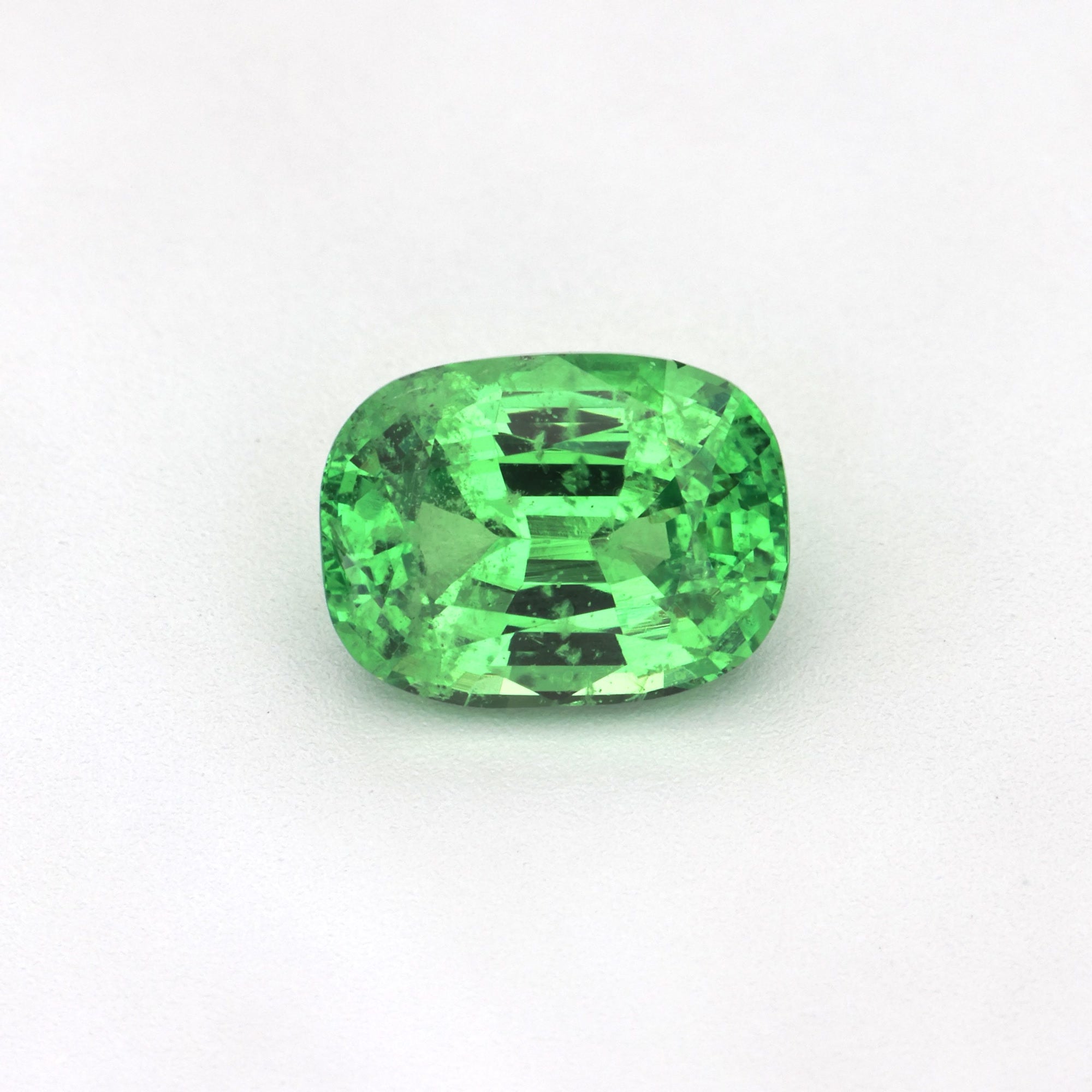
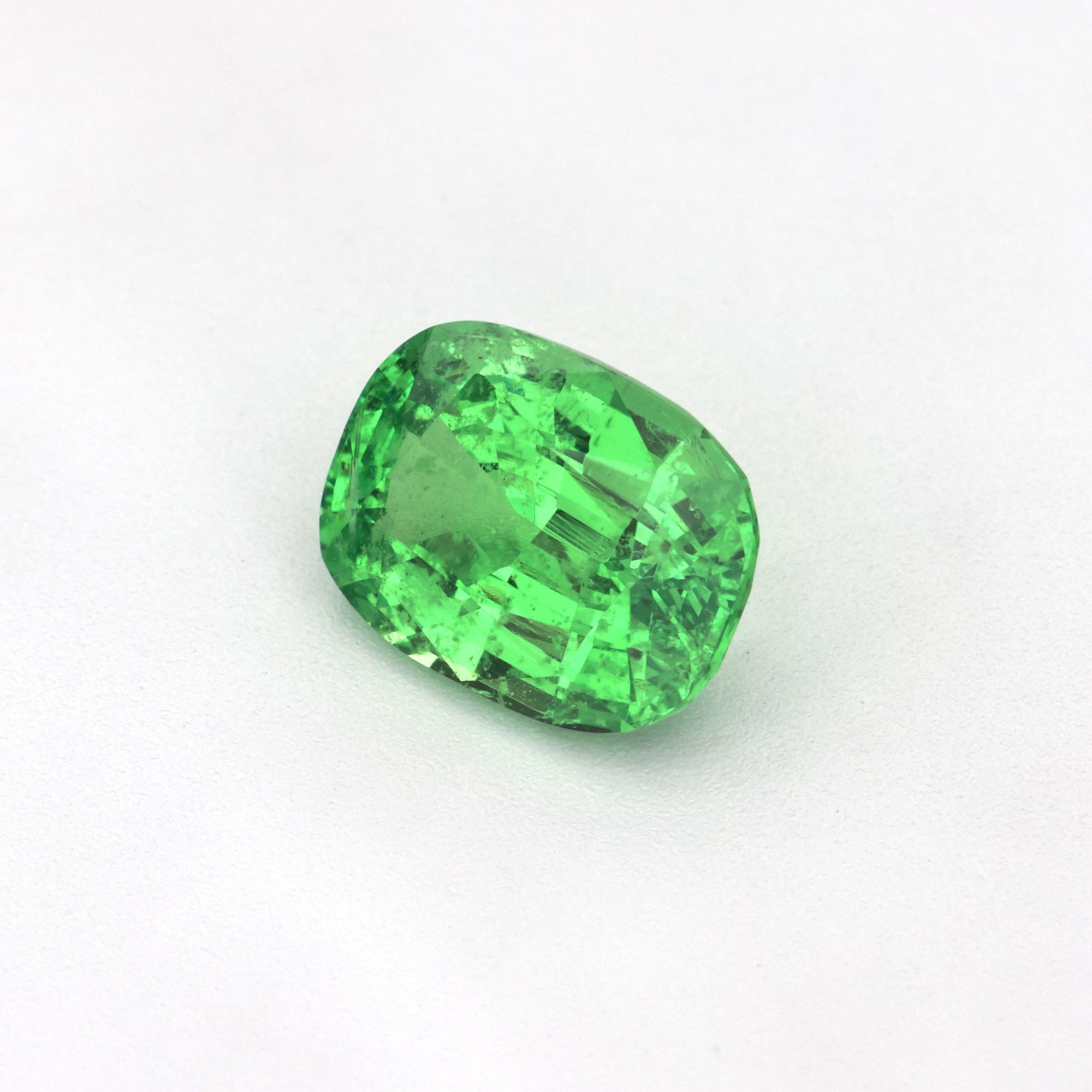
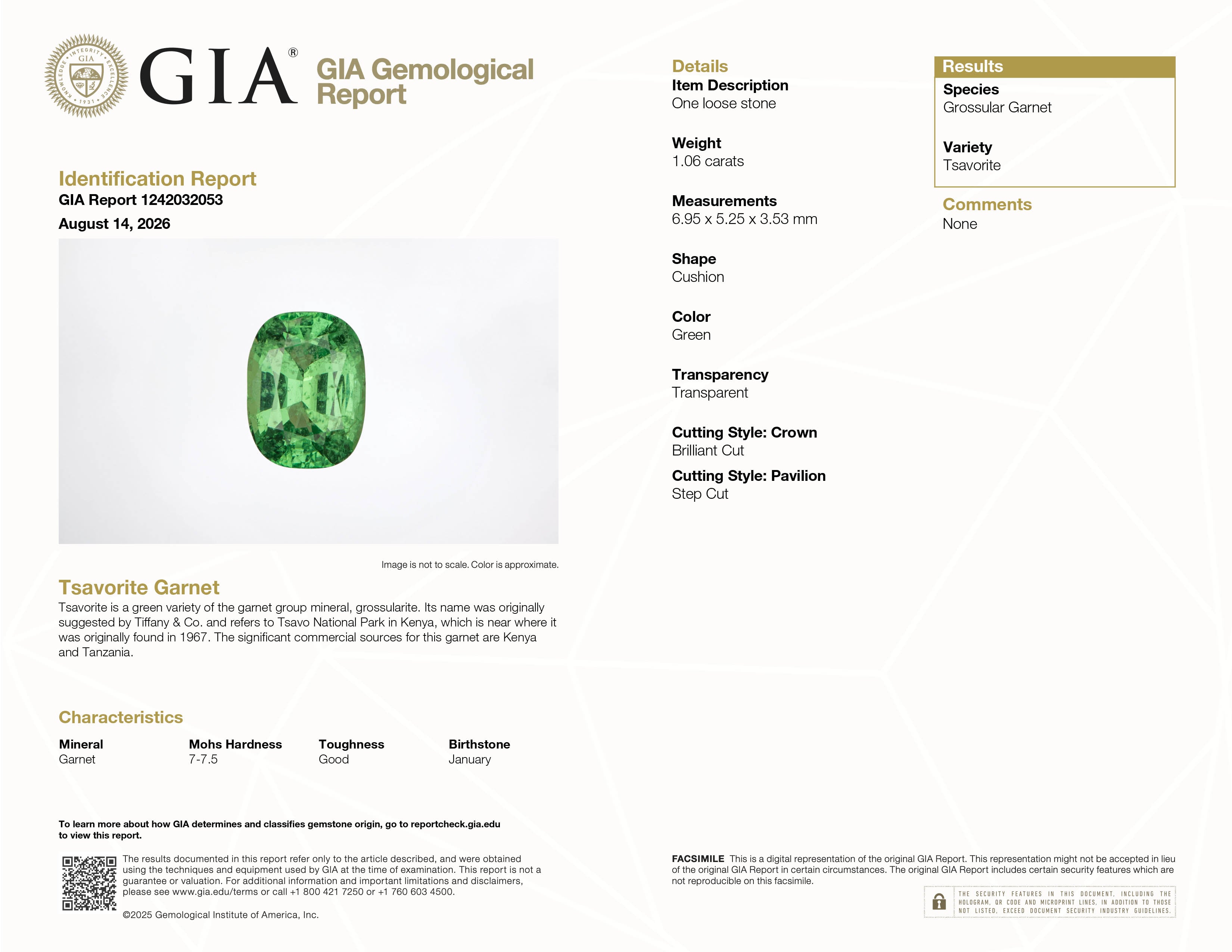
Prix de la tsavorite : notre stock, pas une grille de qualité
Nos sept tsavorites au 29 septembre 2026, de $1,177 à $22,724, dont une traitée et annoncée comme telle — et ce qui limite l'offre en grosses pierres propres.
Plussur Prix de la tsavorite : notre stock, pas une grille de qualité
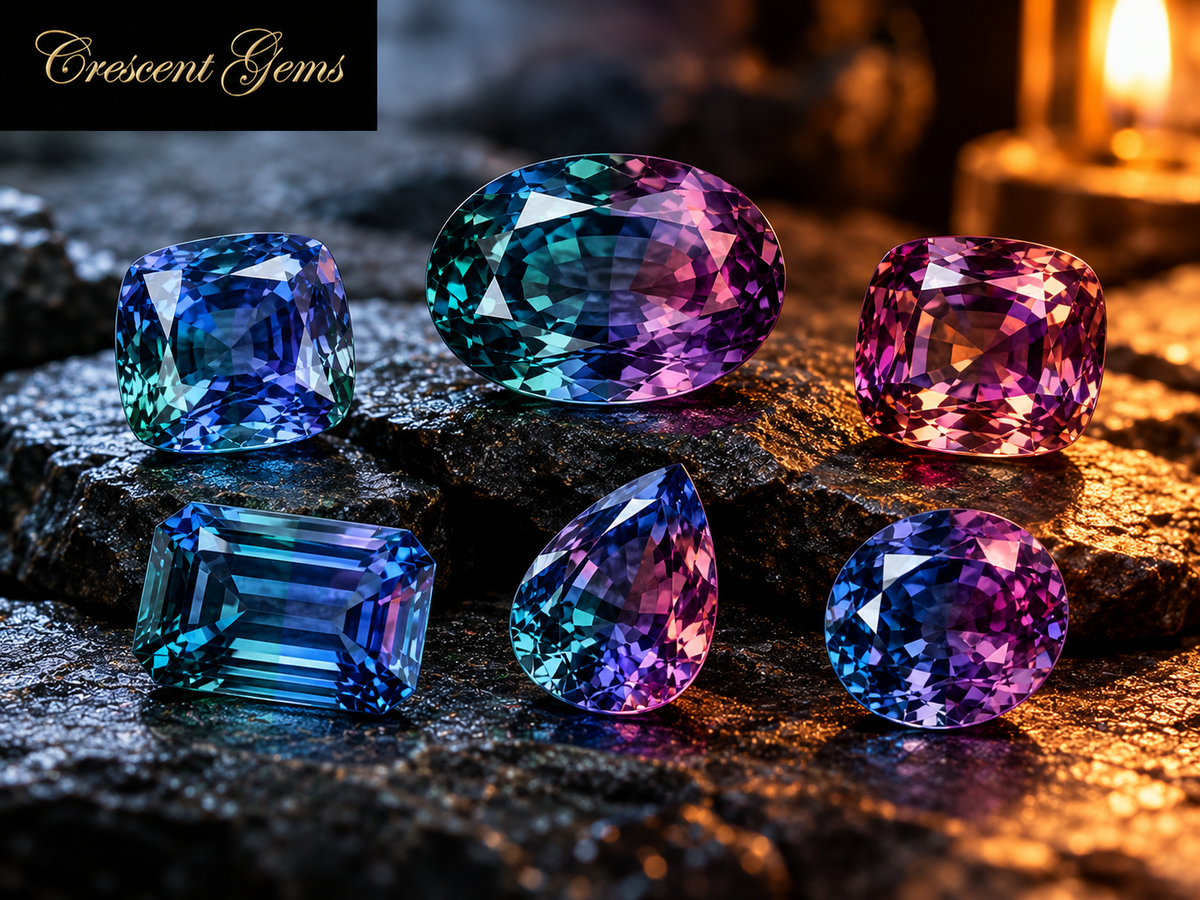
Prix du saphir à changement de couleur : au carat et nos deux pierres
Ce que coûte un saphir à changement de couleur au carat, ce qui fait réellement le prix, et nos deux pierres : 1,03 ct à $824 et 2,01 ct à $2,211.
Plussur Prix du saphir à changement de couleur : au carat et nos deux pierres
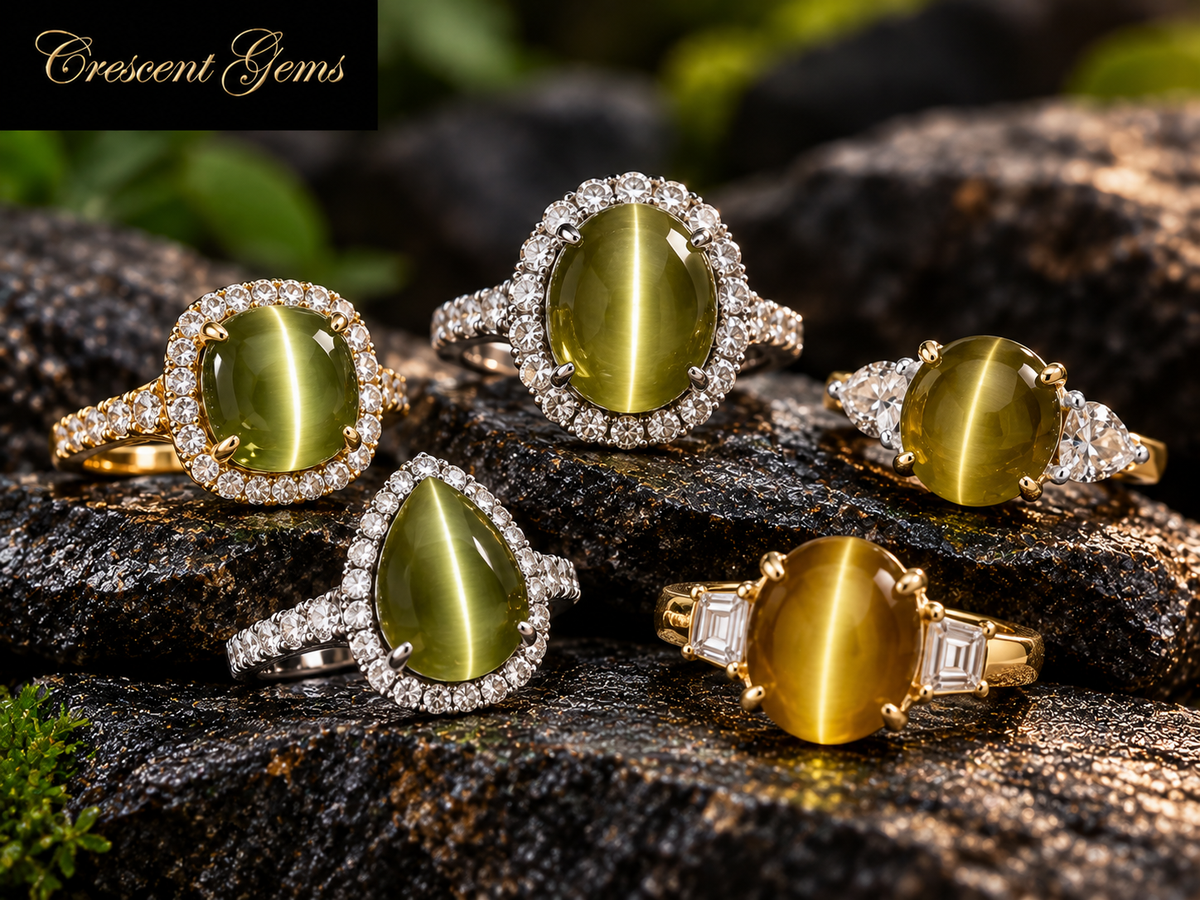
Le chrysobéryl œil-de-chat convient-il à une bague de fiançailles ?
Le chrysobéryl est à 8,5 sur l'échelle de Mohs, au-dessus du quartz (7) et en dessous du corindon (9). Ce que cela change au porter, à la monture et à l'entretien.
Plussur Le chrysobéryl œil-de-chat convient-il à une bague de fiançailles ?
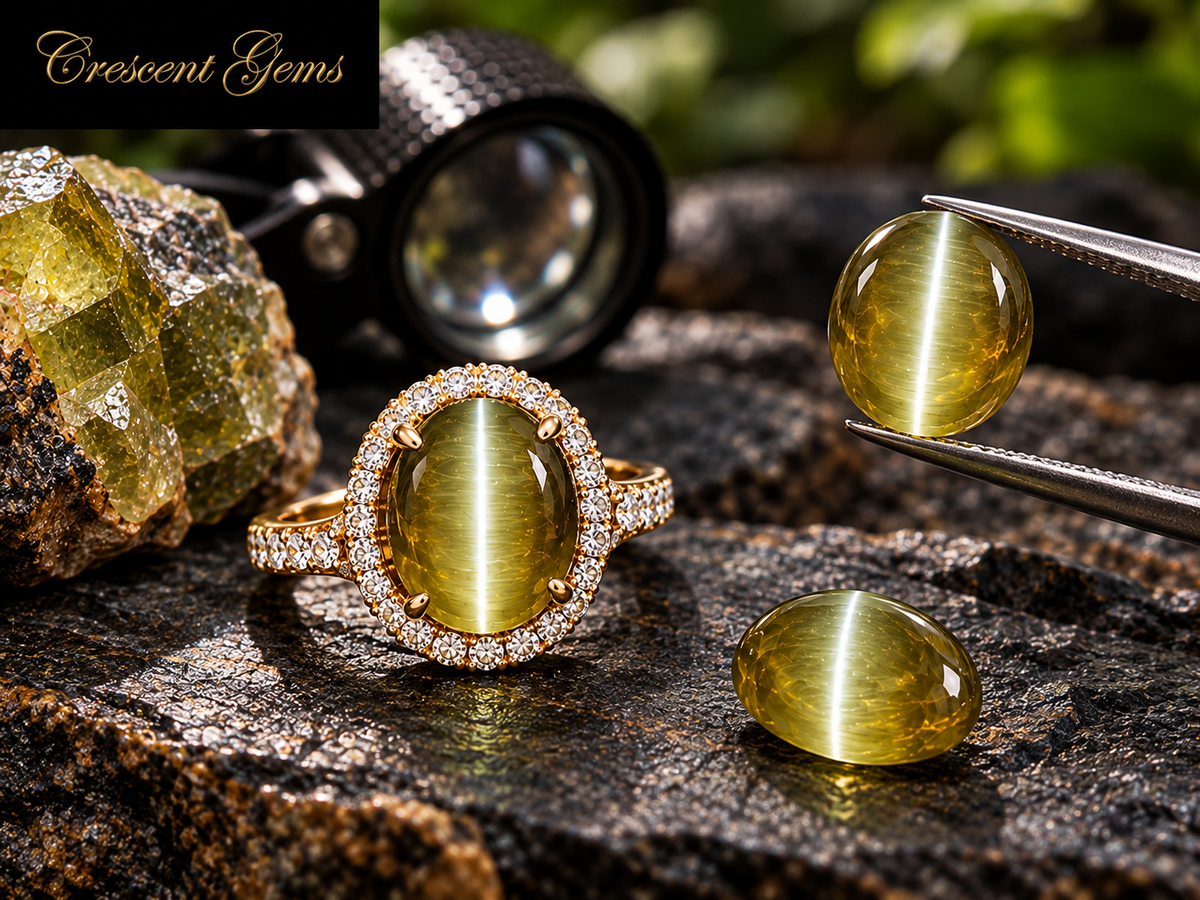
Prix du chrysobéryl œil-de-chat : au carat et nos deux pierres
Ce que coûte réellement un chrysobéryl œil-de-chat au carat, ce qui fait varier le prix, et nos deux pierres chiffrées : 2,36 ct à $3,792 et 4,25 ct à $9,482, soit $1,606.78 et $2,231.06 le carat.
Plussur Prix du chrysobéryl œil-de-chat : au carat et nos deux pierres















Partager: