

- par Ahmed Shareek
Le saphir padparadscha : ce qu'est la couleur, et ce que le rapport doit imprimer
- par Ahmed Shareek
Premier achat de saphir ? Commencez par notre guide d'achat complet du saphir, qui couvre la couleur, l'origine, le traitement et le prix ; revenez ensuite ici pour ce qui est propre au padparadscha.
Le padparadscha est l'un des très rares noms de couleur du négoce des pierres qu'un laboratoire définit réellement. Le LMHC — le comité qui harmonise la rédaction des rapports entre les grands laboratoires — lui consacre une fiche d'information, la fiche n° 4, et les laboratoires qui ont adopté cette fiche, parmi lesquels le GIA, Gübelin et la SSEF, décrivent la couleur comme « une variété de corindon, de n'importe quelle origine géographique, dont la couleur est un mélange subtil d'orange rosé à rose orangé, aux tons pastel et de saturation faible à moyenne ».
Cela coupe dans les deux sens. D'un côté, une affirmation de padparadscha peut être recoupée avec un document, ce qui est inhabituel pour une affirmation de couleur sur un saphir. De l'autre, le mot est étroit : la définition demande un mélange de deux teintes, de sorte qu'une pierre dont le rapport imprime une teinte unique est hors du terme, aussi belle soit-elle.
Et pourtant, la plupart des gens qui achètent des saphirs n'en ont jamais vu un en main.
Une chose que cette page ne fera pas, c'est vous expliquer comment le padparadscha est noté, parce qu'aucun laboratoire ne le note. Le GIA écrit lui-même qu'il « n'attribue pas de note et ne réalise pas d'analyse de qualité pour le saphir ni pour les autres pierres de couleur ». Ce qu'un laboratoire fait, c'est se prononcer sur la couleur d'une pierre précise, puis imprimer ce constat ou le retenir. Cette page couvre donc ce que la définition exige, ce qu'un rapport doit imprimer pour qu'une pierre porte le nom, où la couleur se rencontre, ce qui la sépare du saphir pêche, ce qui en fait le prix — et ce que nous détenons, qui est pour l'instant : rien.
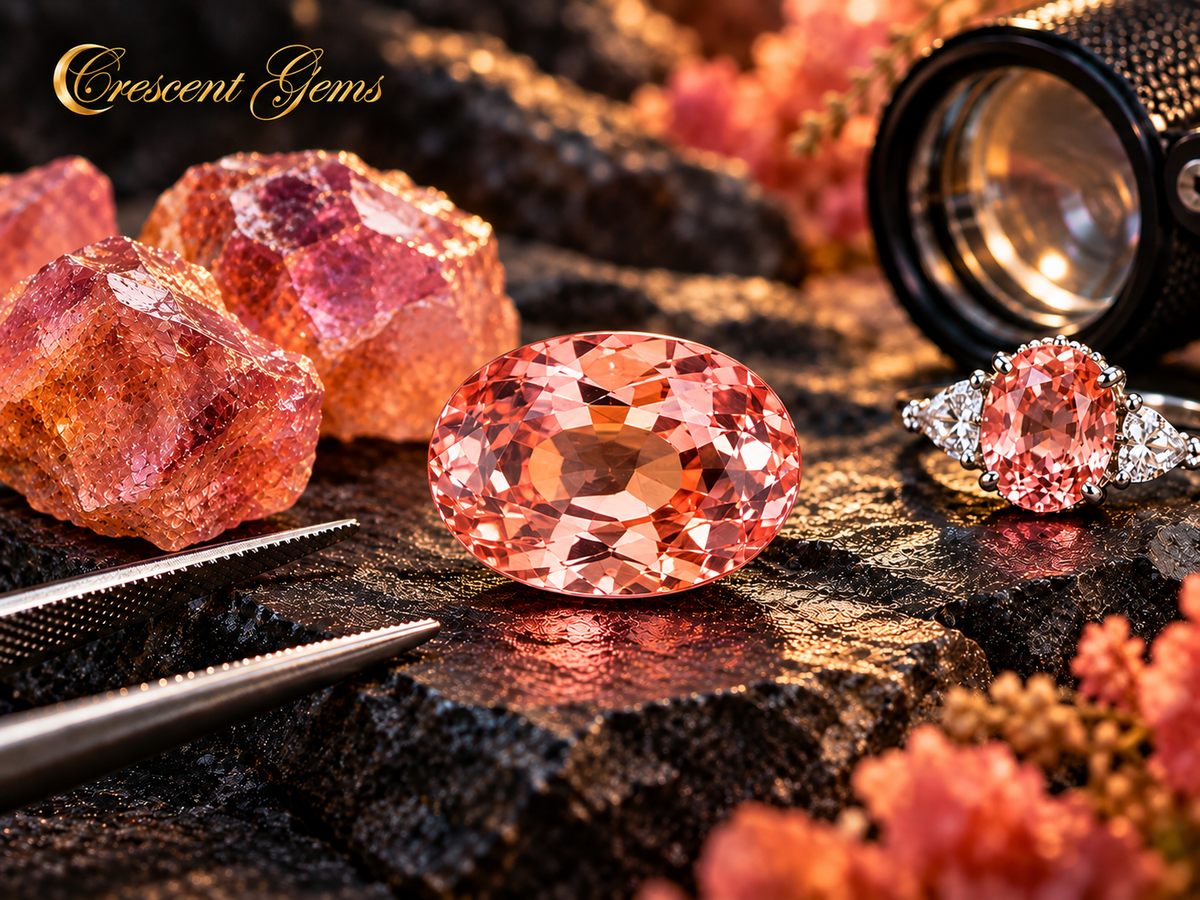
C'est du corindon naturel — la même espèce minérale que le saphir bleu, le saphir rose et le rubis — dont la couleur se place entre le rose et l'orange : orange rosé à un bord de la fourchette publiée, rose orangé à l'autre. Le nom vient du mot cinghalais qui désigne la fleur de lotus (padma raga), et il décrit la couleur avec justesse : le rose-orange chaud et lumineux d'un lotus de Ceylan au lever du jour.
Ni rose ni orange, la pierre tient les deux dans un équilibre que ni l'une ni l'autre des deux couleurs n'atteint seule. Contrairement à la plupart des mots de couleur du négoce, le padparadscha est normalisé : le LMHC publie une fiche d'information à son sujet, et le GIA, Gübelin et la SSEF n'impriment le nom sur un rapport que là où la pierre répond aux critères publiés. Gübelin l'écrit dans ses propres termes : le laboratoire « adopte la définition du LMHC ». La question pratique, sur une pierre donnée, n'est donc pas de savoir si un vendeur l'appelle padparadscha. Elle est de savoir si un laboratoire a imprimé le mot, ou ne l'a pas imprimé.
Un point de vocabulaire, pendant que nous y sommes : Ceylan est un nom commercial. L'énoncé factuel d'origine est Sri Lanka, et c'est ce que porte un rapport d'origine.
La zone de couleur du padparadscha est étroite, et la définition publiée est précise sur trois points.
Du rose et de l'orange en même temps. La pierre doit montrer une composante rose et une composante orange dans son aspect de face. Une pierre purement rose est un saphir rose. Une pierre purement orange est un saphir orange. Les deux composantes doivent être lisibles — c'est pour cela qu'un rapport qui imprime une teinte unique place la pierre hors du terme.
Un ton clair à moyen. La pierre doit être claire à moyenne dans son degré d'obscurité générale. Trop sombre, la composante orange se lit comme un brun ou une rouille, et la définition demande un ton clair plutôt qu'un ton profond.
Des tons pastel, à saturation faible à moyenne. C'est la condition que l'on inverse le plus souvent, y compris de bonne foi. La définition publiée ne demande pas une couleur forte et vive : elle demande des tons pastel, à saturation faible à moyenne. Au-delà de cette fourchette, la pierre cesse de se lire comme un mélange et se lit comme un saphir rose, ou comme un saphir orange. Si vous lisez quelque part qu'un padparadscha doit être intensément saturé, c'est la définition prise à l'envers — et c'est la confusion la plus répandue sur cette couleur. Les critères publiés par Gübelin ajoutent une répartition homogène de la couleur sur toute la face.
Ces trois conditions réunies sont ce qui rend le mot difficile à mériter. La plupart des saphirs qui se lisent rose ne portent pas d'orange, et la plupart de ceux qui se lisent orange ne portent pas de rose ; il faut que la pierre se tienne dans le recouvrement, à une saturation assez basse pour que les deux teintes restent lisibles, et qu'elle tienne une couleur homogène sur la face.
Personne ne publie de chiffres de production par couleur. Nous ne classerons donc pas le padparadscha par rapport à toutes les autres couleurs du saphir, et vous ne lirez pas sur cette page que c'est « la couleur de saphir la plus rare ». Cette formule circule beaucoup, en français comme ailleurs ; elle n'est adossée à aucune fréquence publiée, et une affirmation de rareté sans fréquence n'est pas vérifiable. Ce qui est recoupable, c'est que la fenêtre laissée ouverte par la définition est étroite, et que l'appellation est une dénomination de négoce appréciée pierre par pierre : les laboratoires ne placent pas tous la limite au même endroit. Gübelin le dit franchement : « tant que le travail de laboratoire conservera une part de subjectivité, l'harmonisation entre laboratoires restera une ambition et rien de plus ».
Le sigle LMHC revient à plusieurs reprises sur cette page et il ne dit probablement rien au lecteur français, alors autant le poser. Le Laboratory Manual Harmonisation Committee n'est pas un organisme de contrôle, et il ne délivre ni agrément ni label. C'est un comité auquel participent de grands laboratoires de gemmologie et qui publie des fiches d'information dont l'objet est d'harmoniser la rédaction des rapports : comment telle ou telle constatation doit être formulée, pour qu'un même constat ne soit pas écrit de trois façons différentes selon le laboratoire qui l'imprime.
Et c'est là que se joue toute l'asymétrie que cette page essaie de rendre lisible. Les fiches publiées couvrent des points de rédaction précis ; aucune ne porte sur l'astérisme — l'étoile d'un saphir étoilé —, aucune ne porte sur la chatoyance, et aucune ne porte sur une note de qualité, pour la bonne raison qu'il n'existe pas d'échelle de qualité publiée pour le saphir. Une seule porte sur un nom de couleur du corindon, et c'est celle du padparadscha.
D'où une règle simple, et elle vaut dans les deux sens. Sur une étoile, sur un œil-de-chat, sur une « qualité » quelconque, personne ne peut produire de document : la description est l'expression du vendeur, la nôtre comprise. Sur le padparadscha, au contraire, il y a bien un document à produire, et le vendeur qui ne le produit pas vous dit quelque chose. Ne transposez donc pas le raisonnement habituel ici. Sur toutes les autres couleurs, « aucun laboratoire ne note cela » est la bonne réponse. Sur celle-ci, la bonne réponse est : montrez-moi le rapport.
Cette section n'a pas d'équivalent dans la version anglaise de cette page, et c'est pourtant ici qu'un acheteur francophone a le plus à gagner.
Si vous avez parcouru des annonces de pierres en français, vous avez lu partout le mot certificat. Les laboratoires, eux, écrivent rapport. Sur toutes les autres couleurs du saphir, cet écart est embarrassant sans être tranchable : « saphir bleu certifié » ne vous apprend rien de vérifiable, parce qu'il n'existe aucune note de qualité publiée pour le saphir et donc rien que le document puisse certifier au sens où le mot le suggère.
Le padparadscha est l'exception, et c'est pour cela que cette page existe. Ici, il y a bien quelque chose à trancher. Le nom est défini par une fiche publiée. Le mot figure sur le document, ou il n'y figure pas. Une annonce qui écrit « certifié padparadscha » fait donc une affirmation précise et contrôlable — pour une fois — et vous pouvez la contrôler vous-même en trois demandes.
D'où le piège, qui est propre à cette couleur et que les annonces françaises reproduisent sans toujours le vouloir : un rapport peut parfaitement imprimer orange rosé ou rose orangé dans la ligne de couleur et ne pas imprimer le mot. La teinte est décrite ; l'appellation n'est pas accordée. Une fiche qui annonce « certifié padparadscha » alors que le document ne porte que la teinte affirme quelque chose que le document ne porte pas, et c'est exactement le genre d'écart que le lecteur français n'a aucun moyen de repérer sans demander le scan.
Une précision de vocabulaire qui va avec, et qui vaut pour tout le reste du marché : vérifier est ce que vous faites, vous. Un rapport, lui, n'atteste pas : il consigne des observations et exprime un avis. Le LMHC l'écrit des rapports en général : « Tous les constats décrits dans le rapport sont des opinions exprimées par le laboratoire. » Nous écrivons donc rapport GIA quand nous nommons le document du laboratoire, et nous ne gardons certificat que dans un passage comme celui-ci, où il s'agit précisément d'expliquer l'écart.
Autour du padparadscha, les annonces francophones font circuler une petite famille de mots : abricot, saumon, corail, pêche, lotus. Ils décrivent des choses réelles et ils ne sont pas malhonnêtes. Mais il faut savoir ce qu'ils valent comme document : aucun d'entre eux ne fait l'objet d'une fiche d'information, aucun n'a de définition harmonisée entre laboratoires, et aucun ne sera imprimé comme appellation sur un rapport. Ce sont des mots de vendeur — les nôtres compris quand nous les employons.
Un seul nom de couleur, sur toute la famille du corindon rose-orange, a une définition publiée derrière lui. C'est pour cela que nous le traitons autrement que les autres, et pour cela que nous ne l'écrirons pas d'une pierre dont le rapport ne le porte pas.
Les présentations trompeuses à repérer :
L'origine ne fait pas partie de la définition. La rédaction du LMHC couvre le corindon « de n'importe quelle origine géographique », et Gübelin publie que les saphirs padparadscha « se rencontrent aussi ailleurs, notamment à Madagascar, en Tanzanie ou au Vietnam ». Un rapport peut donc imprimer le nom sans nommer de pays, et nommer un pays ne fait pas gagner le nom.
Le Sri Lanka est la source historique de la couleur, et l'origine que la plupart des acheteurs et des gemmologues ont en tête quand ils se représentent un padparadscha. La matière srilankaise tend vers un orange rosé chaud, légèrement teinté de violet. C'est une description d'usage, la nôtre comprise, et non un constat de laboratoire : aucun rapport ne porte de proportion entre les teintes. Voir notre guide de l'extraction en puits au Sri Lanka.
La matière malgache tend vers un ton un peu plus chaud, plus marqué par l'orange. Voir notre guide du saphir de Madagascar.
Les deux figurent dans la liste d'origines que Gübelin publie pour cette couleur. La matière tanzanienne tend vers un ton plus clair, plus franchement rose saumoné.
L'origine n'est pas un critère de qualité. L'endroit où une pierre s'est formée et l'aspect qu'elle a sont deux constats distincts, et tarifer l'un comme si c'était l'autre est une habitude dont il vaut la peine de se défaire. Nous ne classerons donc pas ces quatre origines les unes par rapport aux autres.
| Critère | Padparadscha | Saphir pêche |
|---|---|---|
| Définition | Une couleur que les laboratoires définissent et impriment, pierre par pierre | Un terme descriptif de négoce |
| Équilibre de couleur | D'orange rosé à rose orangé, pastel, saturation faible à moyenne | Rose-orange chaud, qui peut pencher d'un côté comme de l'autre |
| Traitement | Un constat de couleur, pas un constat de traitement : des pierres chauffées comme non chauffées peuvent le porter, et les traitements avancés sont écartés | Une description de négoce ; le traitement est indiqué sur chaque fiche dans les deux cas |
| Documentation nécessaire | Le nom repose sur le rapport ; sans rapport, c'est le constat de couleur du vendeur | Nous faisons passer au GIA toutes les pierres affichées au-dessus de 500 $ ; la fiche nomme le laboratoire, ou dit qu'il n'y en a pas |
| Plutôt pour | Les pièces d'occasion particulière et les commandes sur mesure | Les bagues de fiançailles et le port quotidien |
Voir notre comparaison complète pêche et padparadscha et notre guide d'achat du saphir pêche.
La chauffe ordinaire ne retire pas le nom. C'est contre-intuitif, et c'est l'inverse de ce que beaucoup d'annonces laissent entendre, alors autant le dire nettement : Gübelin publie que des pierres chauffées comme non chauffées peuvent répondre à l'appellation, et que la chauffe ordinaire est considérée comme admissible. Ce qui est écarté, c'est le traitement avancé — et la diffusion au béryllium dans le réseau cristallin est le cas qui compte sur cette couleur.
La chauffe peut en revanche déplacer la couleur, en modifiant l'équilibre entre la composante rose et la composante orange, et le résultat habituel est une pierre qui se lit plus franchement comme l'une ou comme l'autre. C'est tout l'enjeu : la ligne de traitement du rapport compte autant que la ligne de couleur, et aucune des deux ne se déduit de l'autre.
Deux mots français à ne pas confondre au passage, parce qu'ils ne disent pas la même chose et que la confusion joue régulièrement en faveur du vendeur. « Non chauffé » ne veut pas dire « non traité ». Le premier porte sur la chauffe et sur rien d'autre, et c'est ce que constate un rapport quand il imprime « No Indications of Heating » — ce que la SSEF écrit en français « Aucune indication de chauffage ». Le second exclurait toute intervention. Nous faisons la déclaration la plus étroite et nous laissons la plus large de côté. Et « sans chaleur » ne se dit pas d'une pierre : c'est une traduction mot à mot de no heat.
La diffusion au béryllium est le risque de fraude propre à cette couleur, parce qu'elle peut fabriquer un orange-rose que la pierre n'a jamais eu. Le GIA, Gübelin et la SSEF la testent. Voir notre guide de la diffusion au béryllium et notre guide du traitement thermique.
Trois choses font le prix d'un padparadscha : le constat de couleur porté sur le rapport, le poids, et le constat de traitement. Sans le constat de couleur, il n'y a pas de padparadscha à tarifer — il y a un saphir orange-rose, qui est une autre pierre, sur un autre marché.
Nous ne publions pas de prévision de prix. Personne ne publie les chiffres de production ou de demande qui en permettraient une. Et nous n'en détenons aucun, donc nous n'avons pas de prix à nous à citer : ce que nous demanderions serait fixé par la pierre que nous aurions trouvée et par ce qu'elle nous aurait coûté. Pour la discussion plus longue de ce qui déplace le coût au carat, voir notre guide des prix du padparadscha, et pour ce que signifie chaque entrée d'un rapport, notre guide du rapport GIA.
En France, le commerce des pierres gemmes et des perles est régi par le décret n° 2002-65 du 14 janvier 2002. Son article 9 étend les obligations de dénomination à « tout document commercial ou publicitaire s'y référant ». Autrement dit : la façon dont une pierre est nommée dans une annonce, dans un courriel ou sur une page comme celle-ci relève du même cadre que la façon dont elle est nommée sur la facture.
Disons aussitôt ce que le texte ne dit pas, parce que c'est là que les pages françaises dérapent le plus souvent : le décret ne dit rien de « padparadscha » en particulier, il n'impose pas de rapport de laboratoire, et il ne crée pas d'obligation que nous puissions vous citer au-delà de la clause de portée ci-dessus. Nous ne lui ferons pas dire autre chose que ce qu'il dit.
Ce qu'il change, en pratique, c'est l'attitude à avoir devant un nom. Une dénomination employée dans une annonce n'est pas une formule décorative, et « padparadscha » est, de tous les noms de couleur du saphir, celui qui se recoupe le plus simplement avec un document. C'est aussi la raison pour laquelle nos pages françaises donnent la dénomination pierre par pierre plutôt que de s'en tenir à de la prose. La règle que nous nous imposons — ne pas écrire le mot d'une pierre dont le rapport ne le porte pas — est la nôtre, pas celle du décret.
L'or jaune amplifie la chaleur de la pierre : métal chaud et pierre chaude produisent un accord riche et homogène. L'or rose crée un accord tonal par complémentarité : la composante rose du métal répond à la composante rose de la pierre. L'or gris et le platine apportent un contraste froid qui fait paraître la couleur chaude plus vive par opposition.
C'est notre recommandation, tirée de la manipulation de ces pierres — aucun laboratoire ne publie de consigne sur les montures, et nous n'en rapportons aucune. Pour le cadre de décision complet sur le métal, voir notre comparaison or jaune, or gris et platine et comment choisir la couleur du métal pour une bague en saphir. Voir notre guide des tailles de saphir pour l'analyse complète des formes.
Quatre règles qui protègent tout achat de padparadscha :
Nous n'avons aucun padparadscha en stock, à aucun statut. Notre page padparadscha dit la même chose : elle est là pour le jour où nous en listerons un, et pour les acheteurs qui veulent savoir entre-temps ce qu'il faut demander.
Nous achetons nous-mêmes au Sri Lanka, à Ratnapura, Beruwala et Colombo. Si vous voulez qu'une pierre soit cherchée à la spécification, écrivez à crescentgems@gmail.com en disant ce que vous cherchez. Nous vous dirons ce que nous trouvons et ce que dit le rapport, et nous n'appellerons pas une pierre padparadscha sans qu'un laboratoire ait imprimé le mot.
Ce que nous détenons dans la couleur voisine, c'est du saphir pêche — une couleur de plein droit et non un substitut : voir notre collection de saphirs pêche. Comme le stock tourne, c'est la fiche produit, et non cette page, qui donne la réponse actuelle pour une pierre donnée. La règle, elle, ne bouge pas : le traitement est indiqué sur chaque fiche, le laboratoire et le numéro de rapport sont nommés dès qu'un rapport existe, et là où il n'y a pas de rapport, la fiche le dit clairement.
Nos prix sont en dollars américains et s'entendent hors TVA à l'importation et hors droits de douane : ceux-ci sont perçus à la livraison dans votre pays et restent à votre charge.

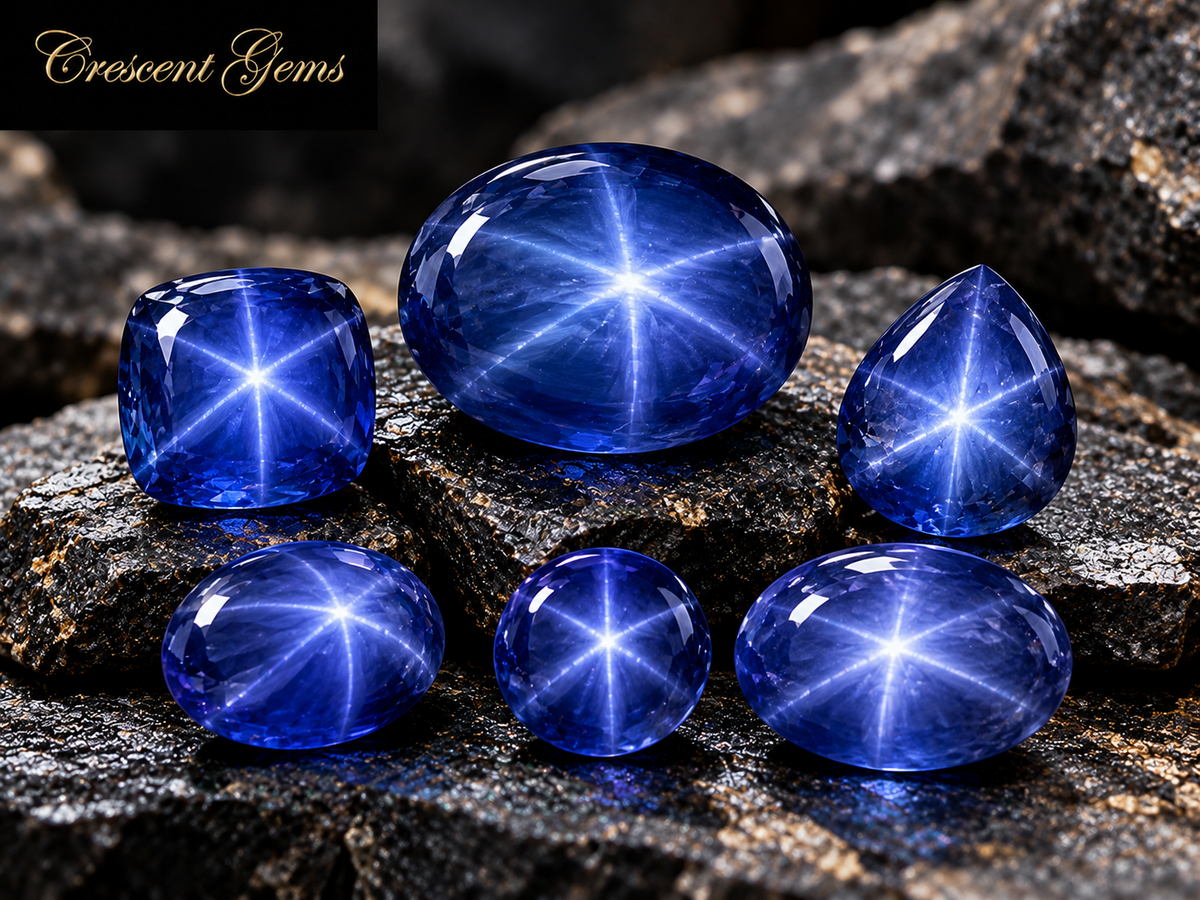
Prix du saphir bleu étoilé : fourchettes au carat et notre pierre
Ce que coûte un saphir bleu étoilé au carat, ce qui fait varier le prix, et la seule pierre que nous ayons : 8,09 ct à $4,040, avec un rapport d'origine GIA.
Plussur Prix du saphir bleu étoilé : fourchettes au carat et notre pierre
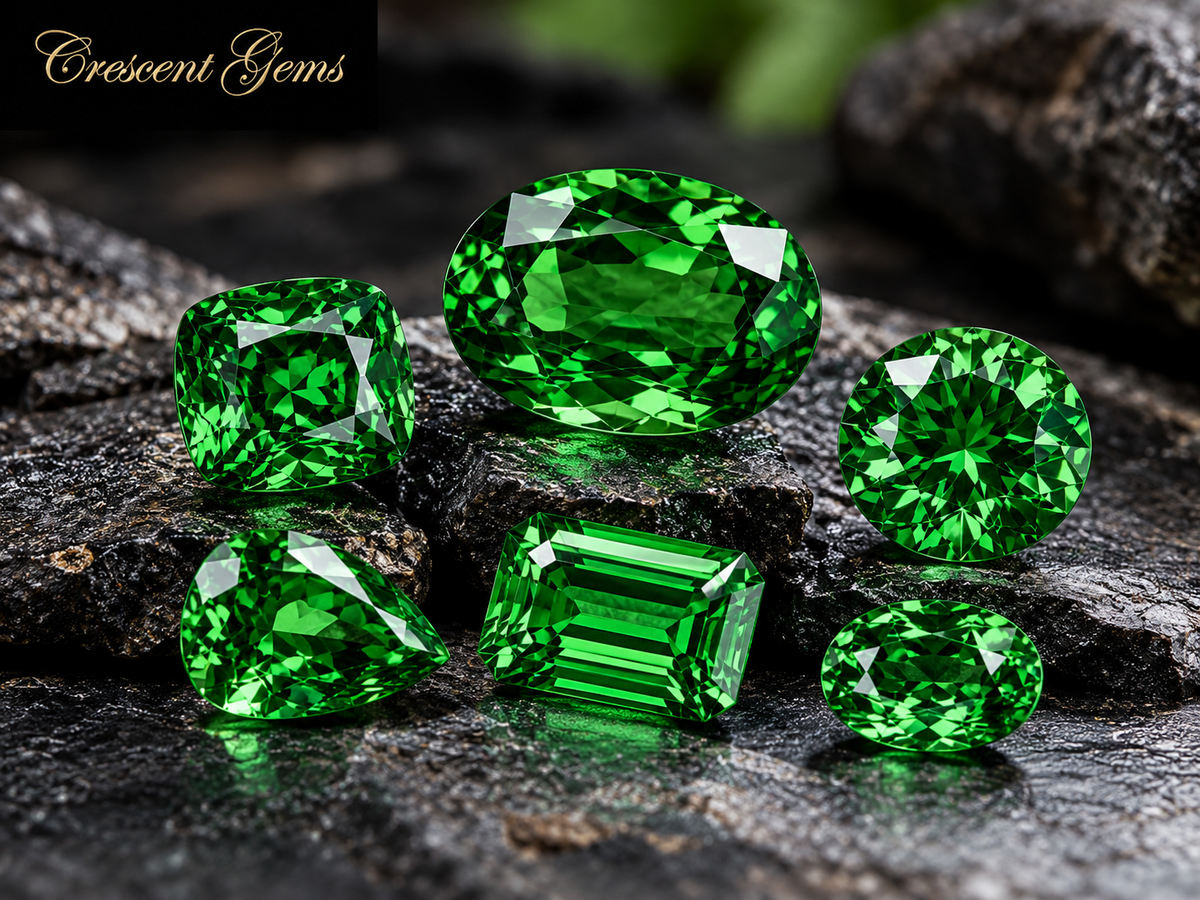
Prix de la tsavorite : notre stock, pas une grille de qualité
Nos sept tsavorites au 29 septembre 2026, de $1,177 à $22,724, dont une traitée et annoncée comme telle — et ce qui limite l'offre en grosses pierres propres.
Plussur Prix de la tsavorite : notre stock, pas une grille de qualité
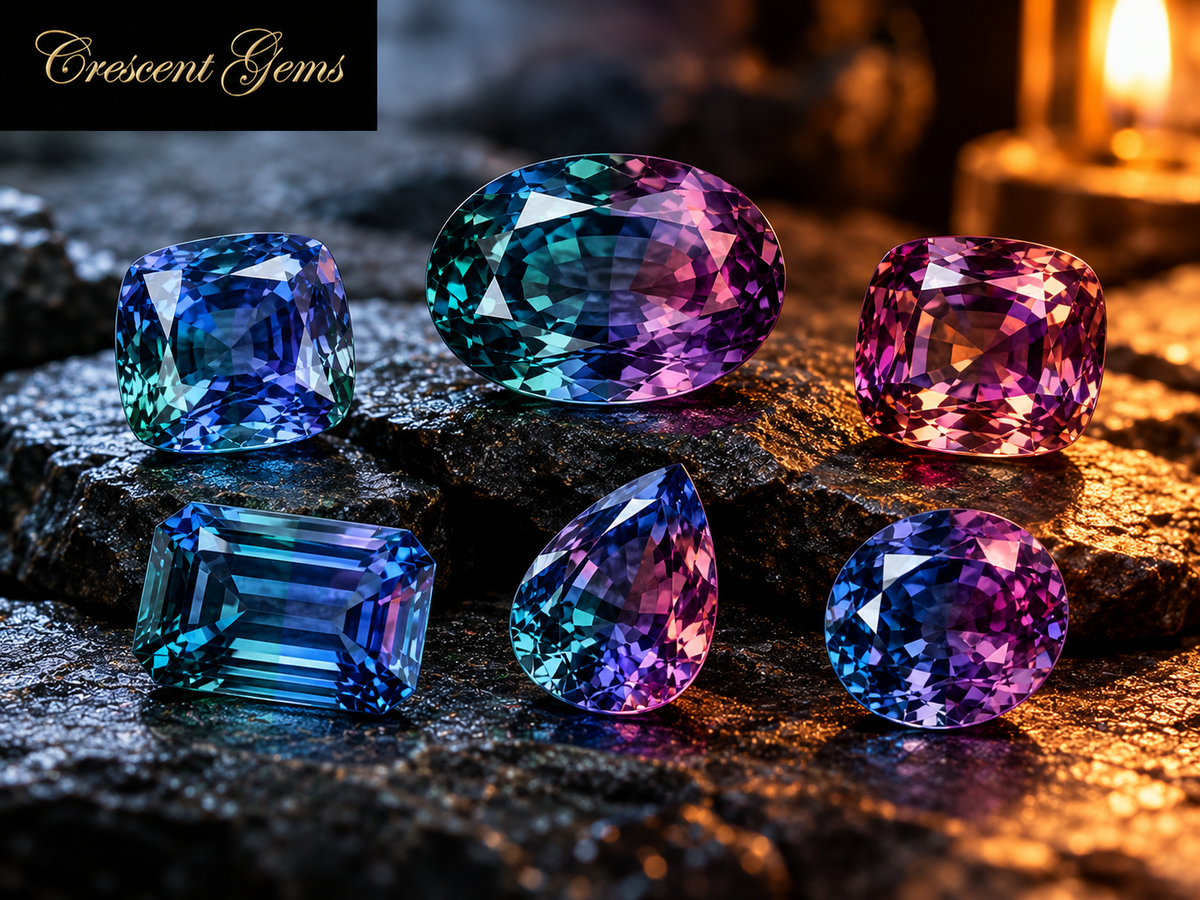
Prix du saphir à changement de couleur : au carat et nos deux pierres
Ce que coûte un saphir à changement de couleur au carat, ce qui fait réellement le prix, et nos deux pierres : 1,03 ct à $824 et 2,01 ct à $2,211.
Plussur Prix du saphir à changement de couleur : au carat et nos deux pierres
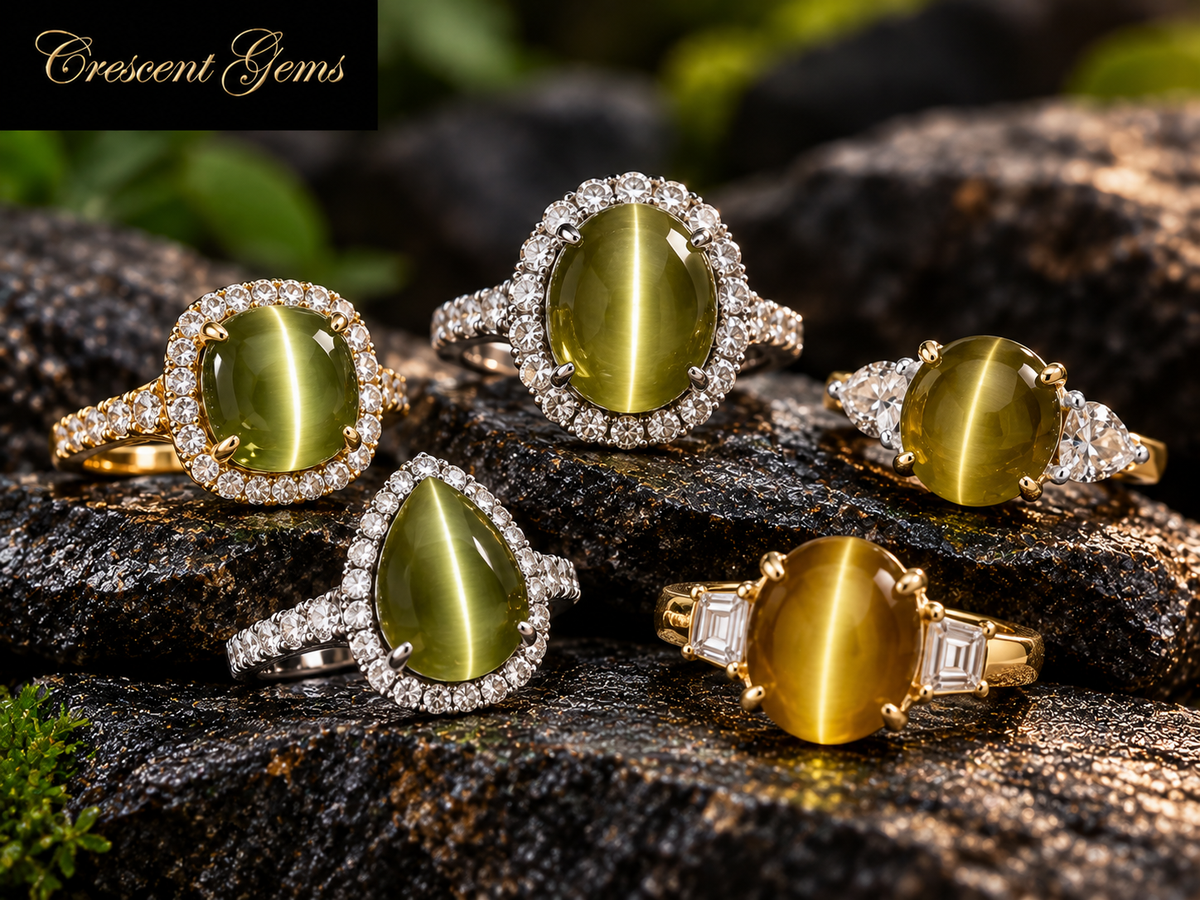
Le chrysobéryl œil-de-chat convient-il à une bague de fiançailles ?
Le chrysobéryl est à 8,5 sur l'échelle de Mohs, au-dessus du quartz (7) et en dessous du corindon (9). Ce que cela change au porter, à la monture et à l'entretien.
Plussur Le chrysobéryl œil-de-chat convient-il à une bague de fiançailles ?
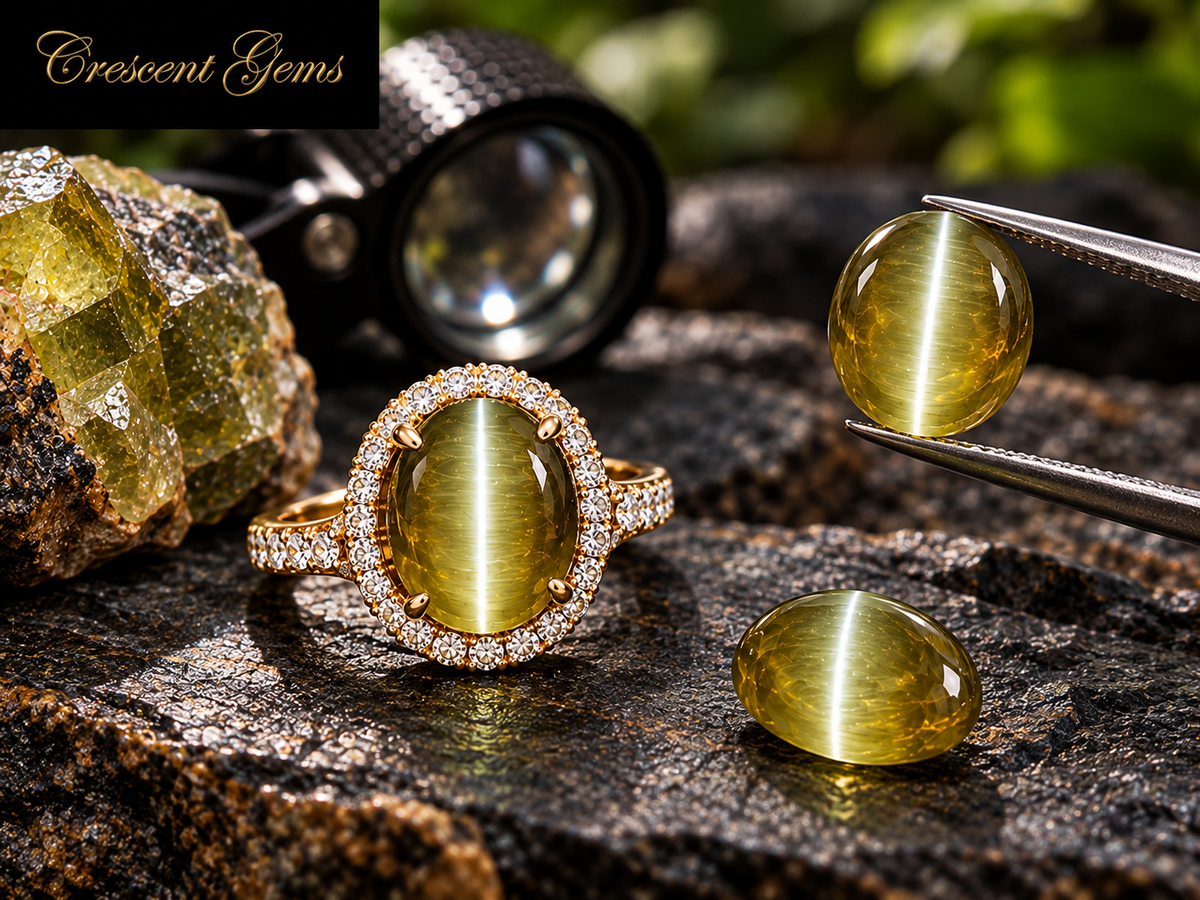
Prix du chrysobéryl œil-de-chat : au carat et nos deux pierres
Ce que coûte réellement un chrysobéryl œil-de-chat au carat, ce qui fait varier le prix, et nos deux pierres chiffrées : 2,36 ct à $3,792 et 4,25 ct à $9,482, soit $1,606.78 et $2,231.06 le carat.
Plussur Prix du chrysobéryl œil-de-chat : au carat et nos deux pierres