- by Ahmed Shareek
Green Sapphire — The Complete Buyer's Guide to the Emerald Alternative That Lasts
- by Ahmed Shareek
New to buying sapphires? Start with our Ultimate Sapphire Buying Guide — the complete resource for color, origin, treatment, and pricing — then return here for green sapphire specifically.
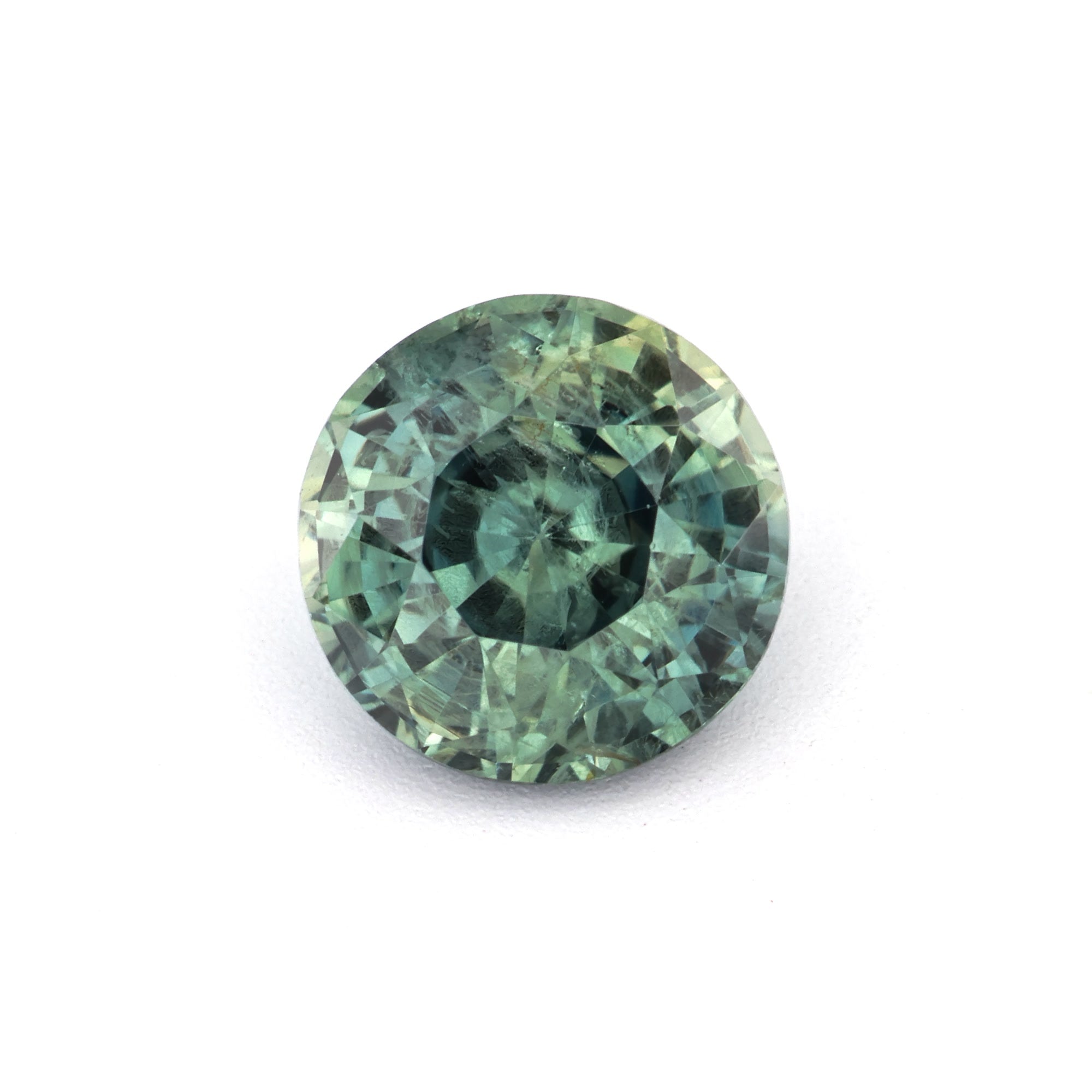
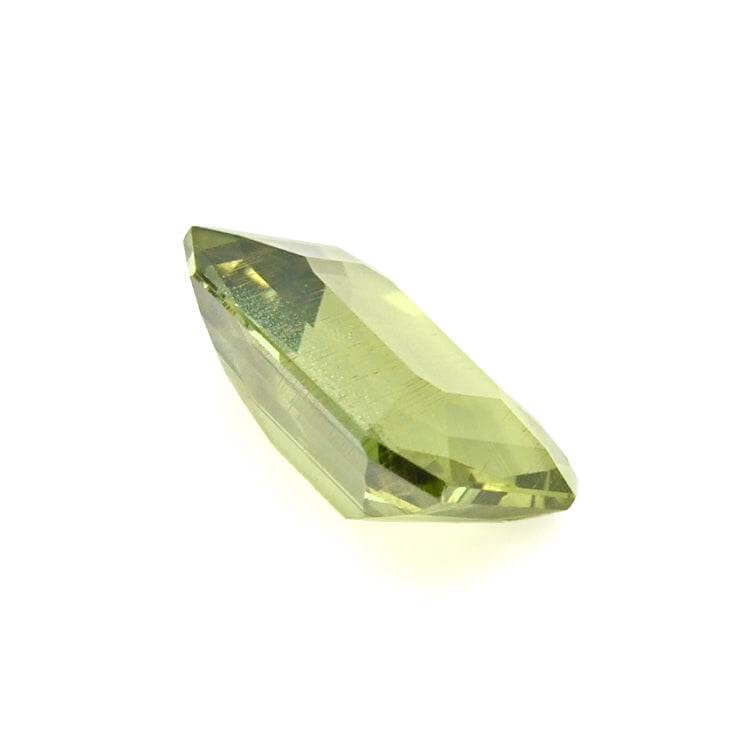
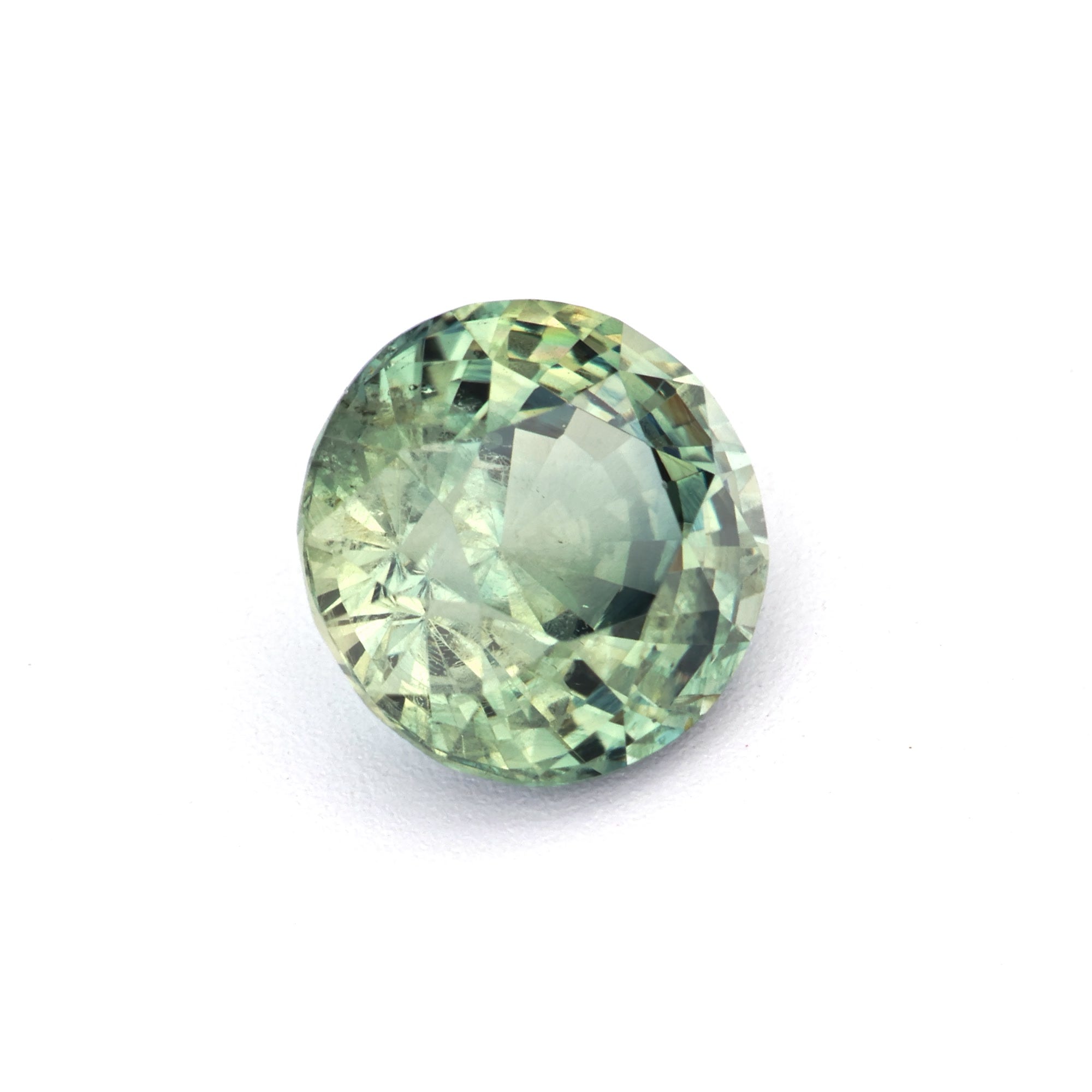
Green sapphire is one of the more overlooked stones in the emerald-alternative category, and in the sapphire family more widely. At Mohs 9, frequently unheated, in a color range from pale mint through vivid forest green, it offers a great deal for the money at its price point.
Green sapphire gets its color primarily from iron in the corundum crystal lattice in a different oxidation state from that responsible for blue. Like teal sapphire, heat treatment in green corundum tends to shift or destroy the green color — fine green sapphire on the market is predominantly unheated because heating iron-colored green corundum tends to oxidize it toward yellow rather than improve the green. Heated green stones do exist, so the treatment line on the report is what settles an individual stone. See our heat treatment guide and unheated sapphire guide.
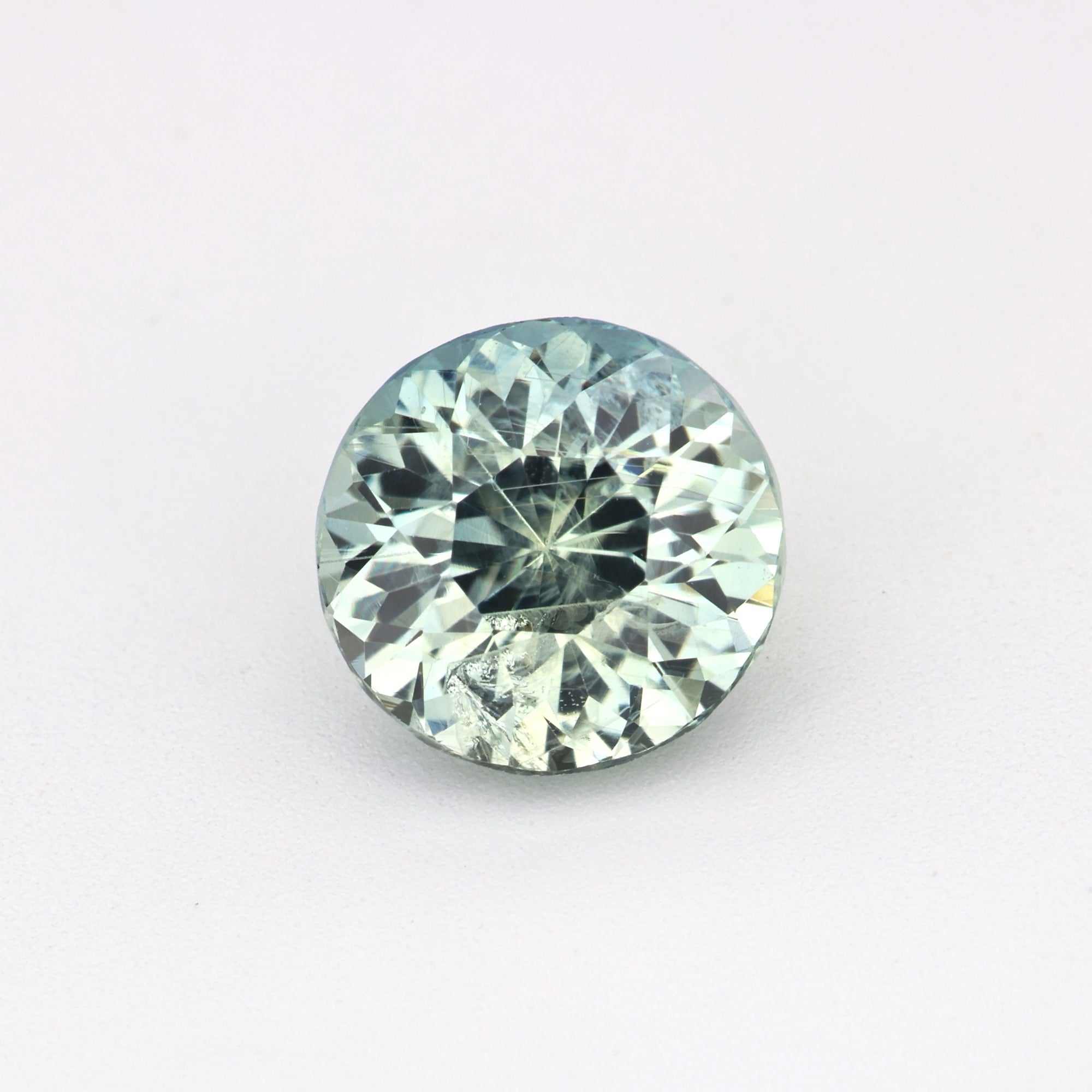
Pale mint and light green: Subtle and delicate; least expensive; frequently unheated. Risk: can appear nearly colorless in product photographs.
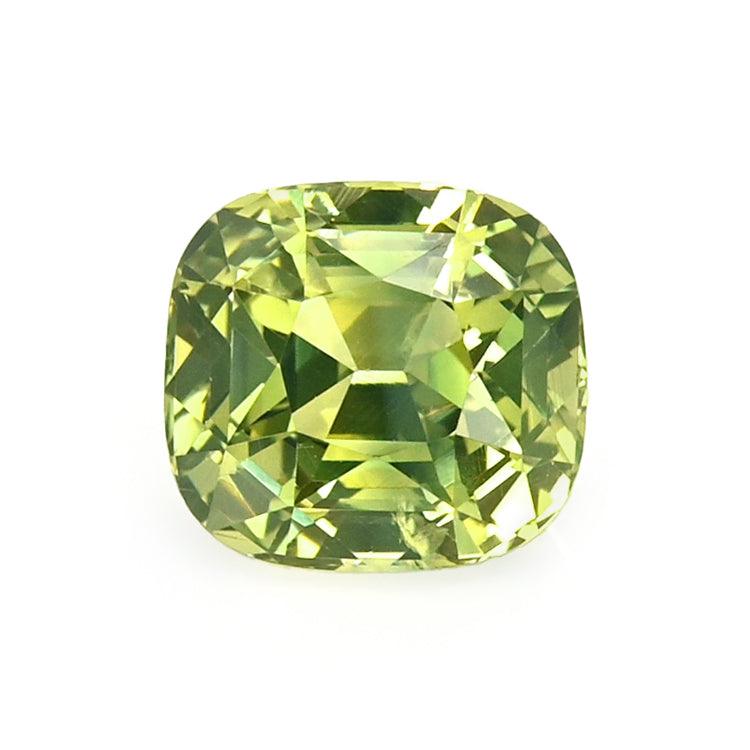
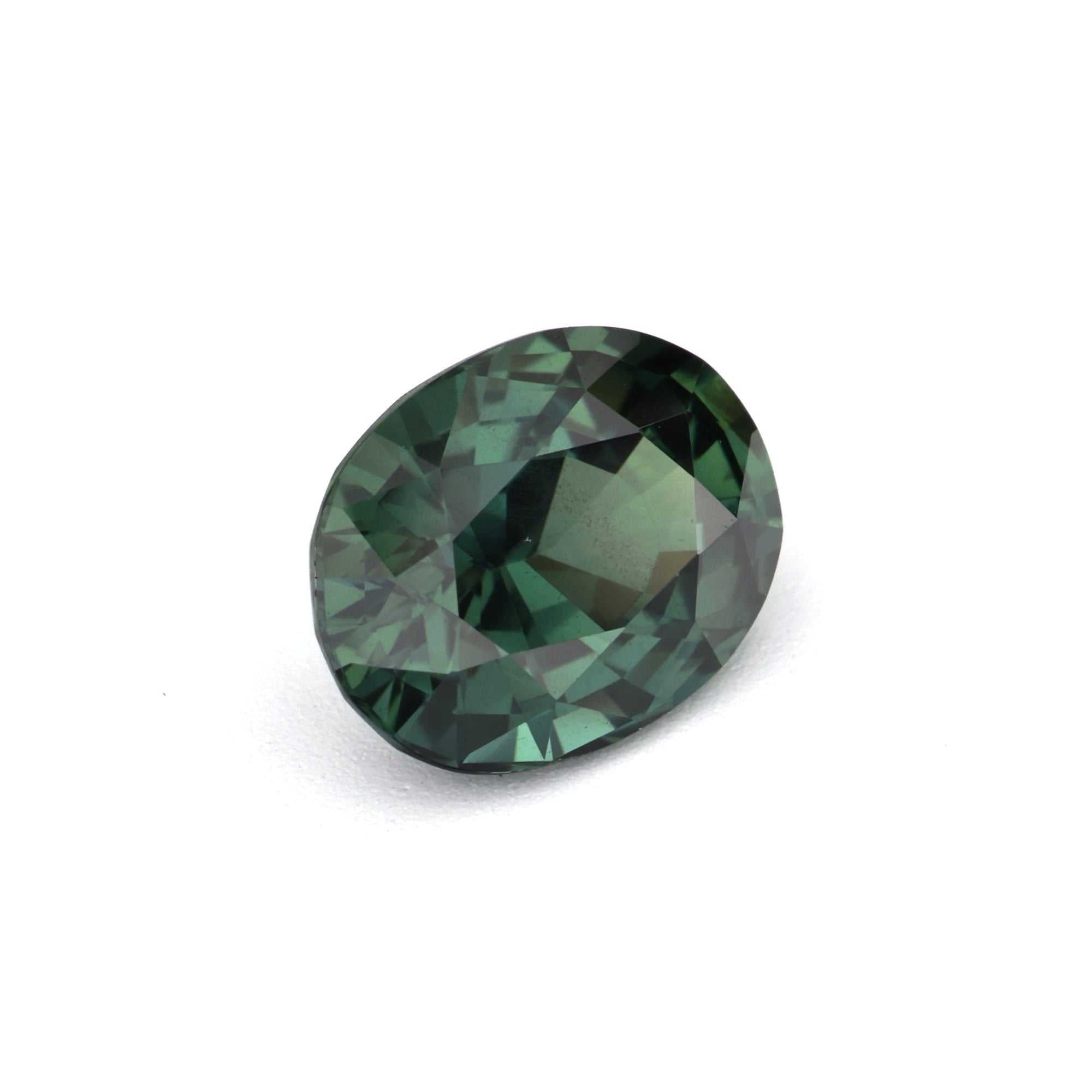
Medium green — the commercial sweet spot: Clearly and unmistakably green in all lighting without the significant color shift that characterizes teal sapphire. This is where the finest unheated Ceylon material sits.
Vivid and deep green: Bold and dramatic. Cut quality is critical at deeper saturations to avoid stones that tip near-black in lower light.
Blue-green — the teal boundary: At the cool end, green sapphire shades into the teal family. See our teal sapphire guide.
| Factor | Green Sapphire | Emerald |
|---|---|---|
| Mohs hardness | 9 | 7.5-8 |
| Fracture filling | Not standard practice in the trade | Standard trade practice; oil or resin required |
| Treatment required | Commonly none — green sapphire is usually unheated because heat tends to shift or destroy the green, but heat-treated green sapphire exists and should be disclosed | Oil or resin filling in virtually all commercial stones |
| Price (1ct, fine vivid green) | $500-2,500 per carat | $3,000-10,000+ per carat (Colombian, fine) |
| Best for | Daily-wear rings, active lifestyles, value | Occasional-wear pieces, collector investment |
Figures above are approximate market guidance, not fixed quotes. Actual value varies by treatment, origin, colour, cut, clarity, and certification.
See our full sapphire vs. emerald engagement ring guide.
Ceylon (Sri Lanka): The benchmark — a pure, slightly cool forest green. See our Ceylon sapphire complete guide.
Australia: Significant source by volume; darker, more deeply saturated green. See our Australian sapphire guide.
Madagascar: Bright, blue-green to pure green; good larger sizes. See our Madagascar sapphire guide.
Tanzania and East Africa: Warmer; yellow-green tendency in lower grades. More variable treatment status.
Pale mint, sub-1ct: $100-$400/ct. Medium green, Australian or Madagascar, 0.5-1ct: $300-$800/ct. Fine medium green, unheated, Ceylon, 1ct: $500-1,800/ct. Vivid forest green, unheated, Ceylon, 1ct, GIA: $500-2,500/ct. Exceptional 2ct+, unheated, Ceylon, GIA: $3,000-7,000+/ct. See our sapphire pricing guide.
Figures above are approximate market guidance, not fixed quotes. Actual value varies by treatment, origin, colour, cut, clarity, and certification.
Green sapphire makes one of the most compelling engagement ring choices for buyers who want something unmistakably distinctive. Mohs 9 hardness means daily wear without special precautions. Best cuts: oval maximizes face-up color area (see oval sapphire guide); cushion suits the organic aesthetic (see cushion cut guide); emerald cut displays color as deep, still pools (see emerald cut guide); pear and marquise elongate the stone (see best elongated shapes). For setting styles, see best shapes for solitaire rings, best shapes for halo rings, and best colors for vintage-style rings.
Yellow gold is the most natural partner for green sapphire. For the full framework, see our metal comparison guide and how to choose metal color. See also our side stones guide and custom ring design guide.
See our engagement ring guide and best sapphire cut guide.
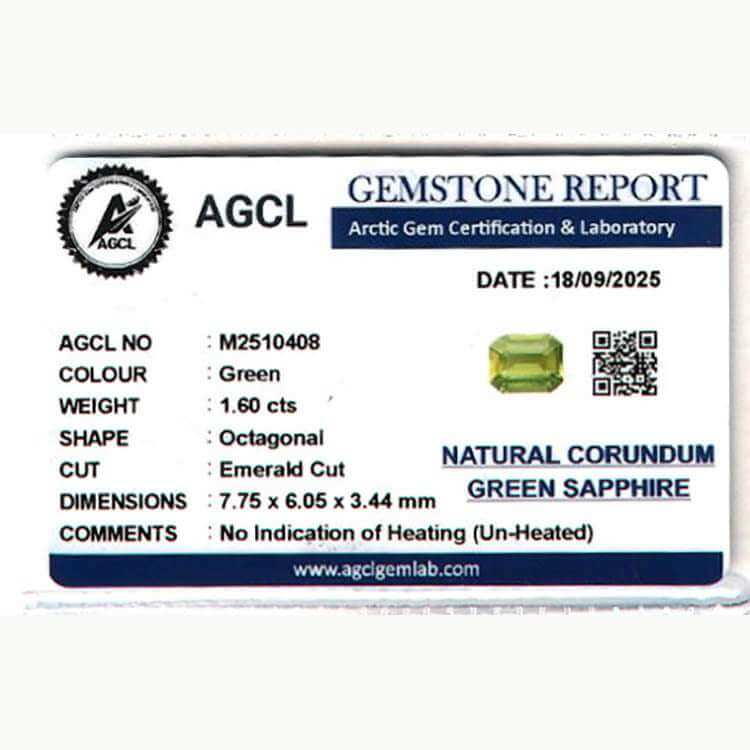
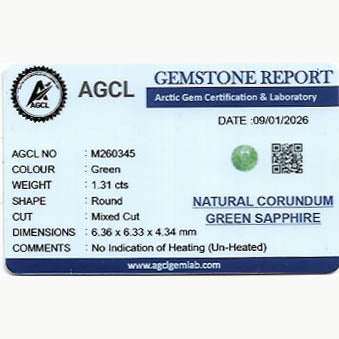
For pale to medium green under $500 total, seller disclosure is sufficient. For any unheated claim above $500 total, GIA documentation is required. For the highest-value purchases (vivid, unheated, Ceylon, 1ct+), GIA documentation is mandatory. See our GIA report guide.
Our green sapphire collection covers the full range with complete treatment and origin disclosure. For teal-adjacent blue-green: teal sapphire collection. For the other leading emerald alternative: tsavorite garnet collection. Our Try-On program is available for most stones. Email crescentgems@gmail.com to arrange. Free US shipping; 14-day returns.
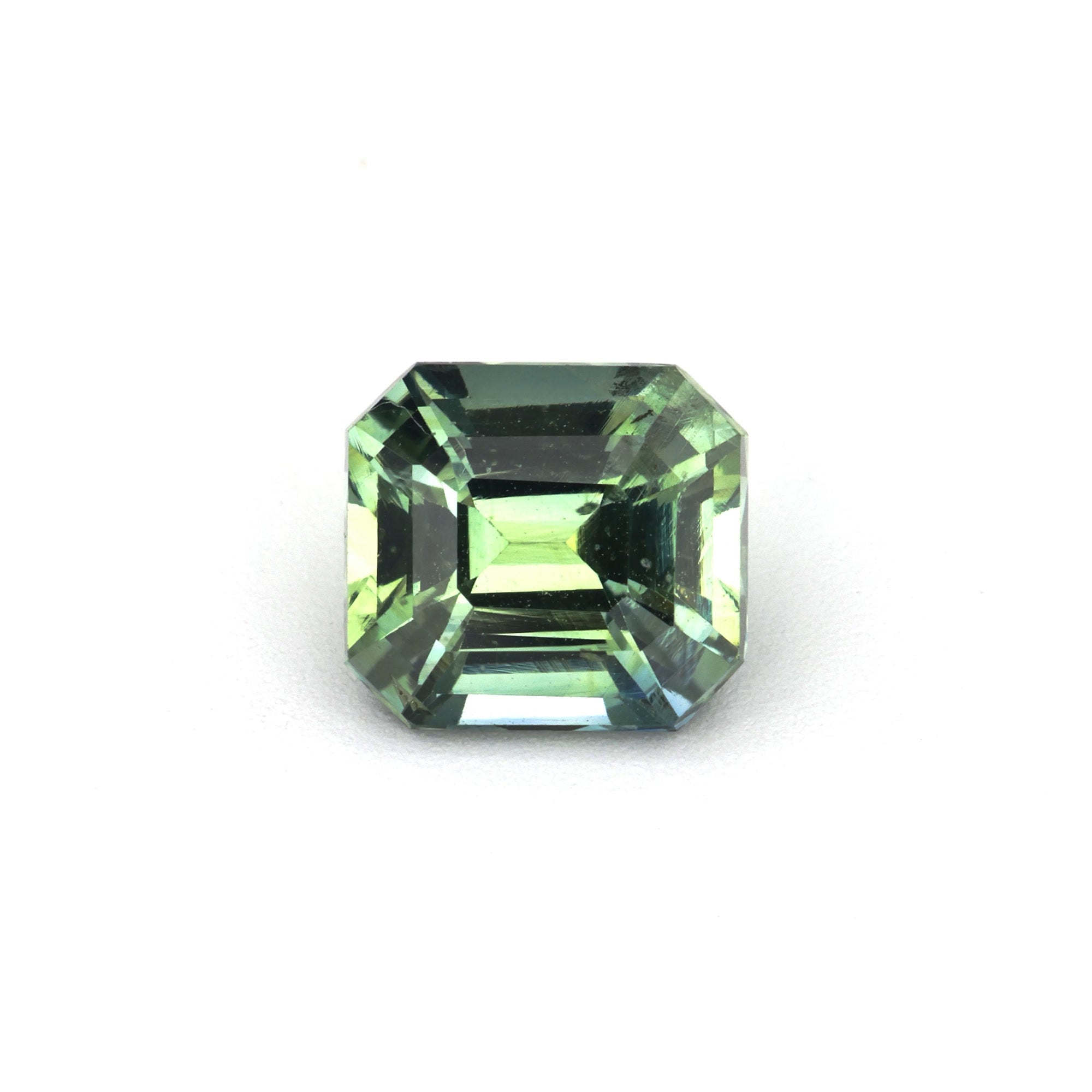
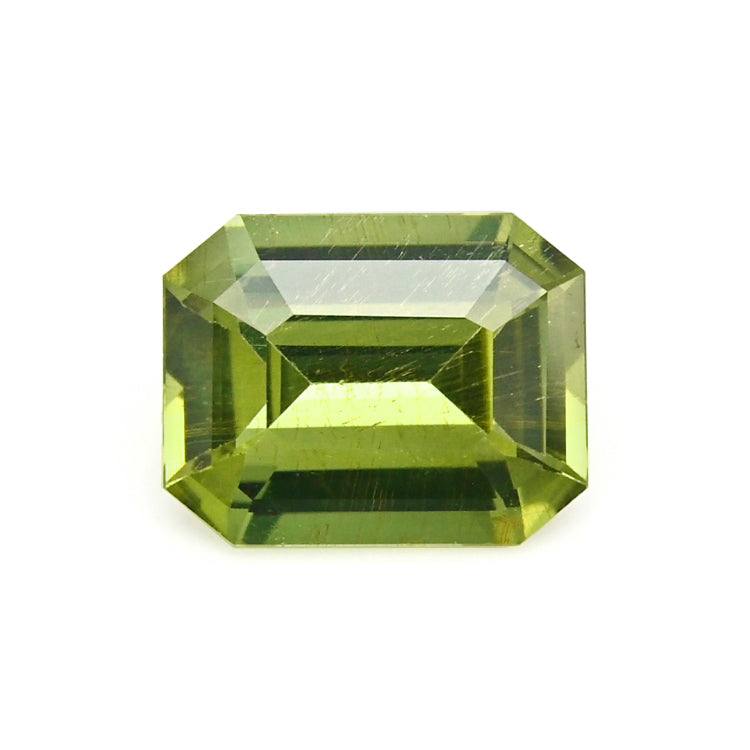
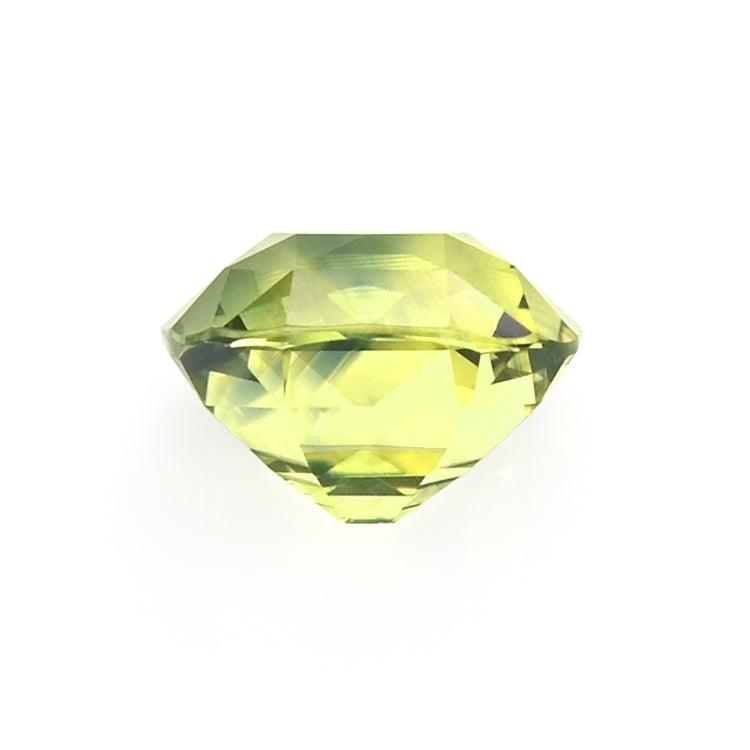
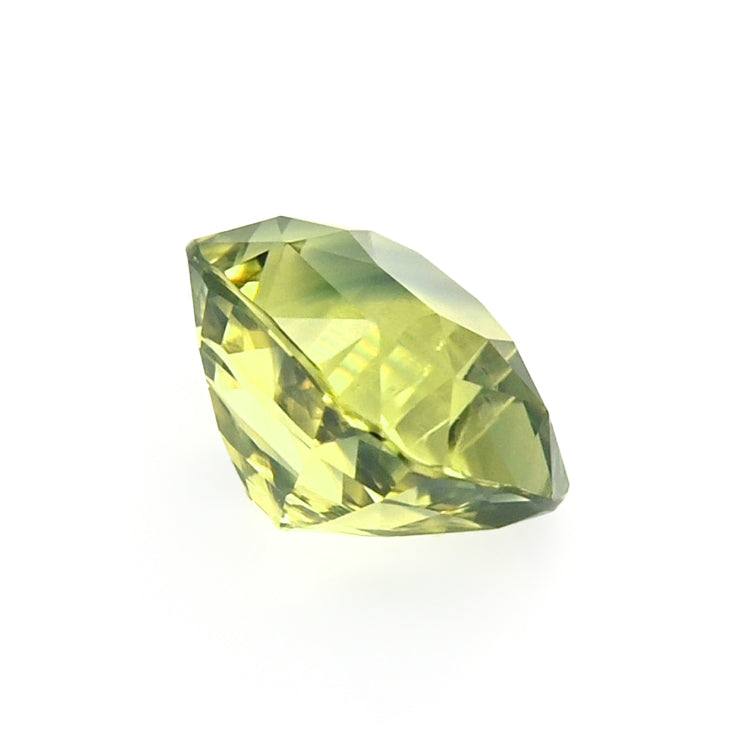
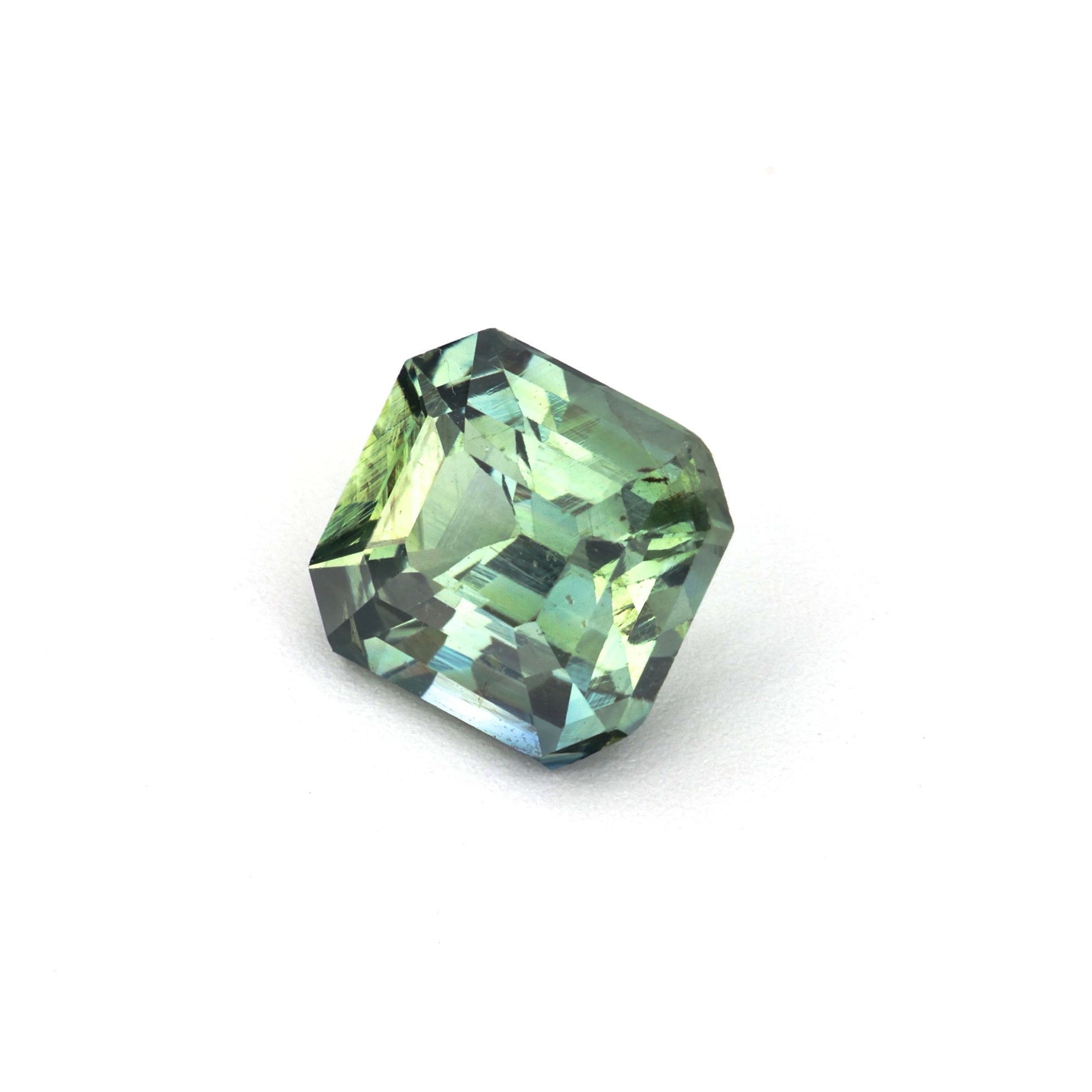
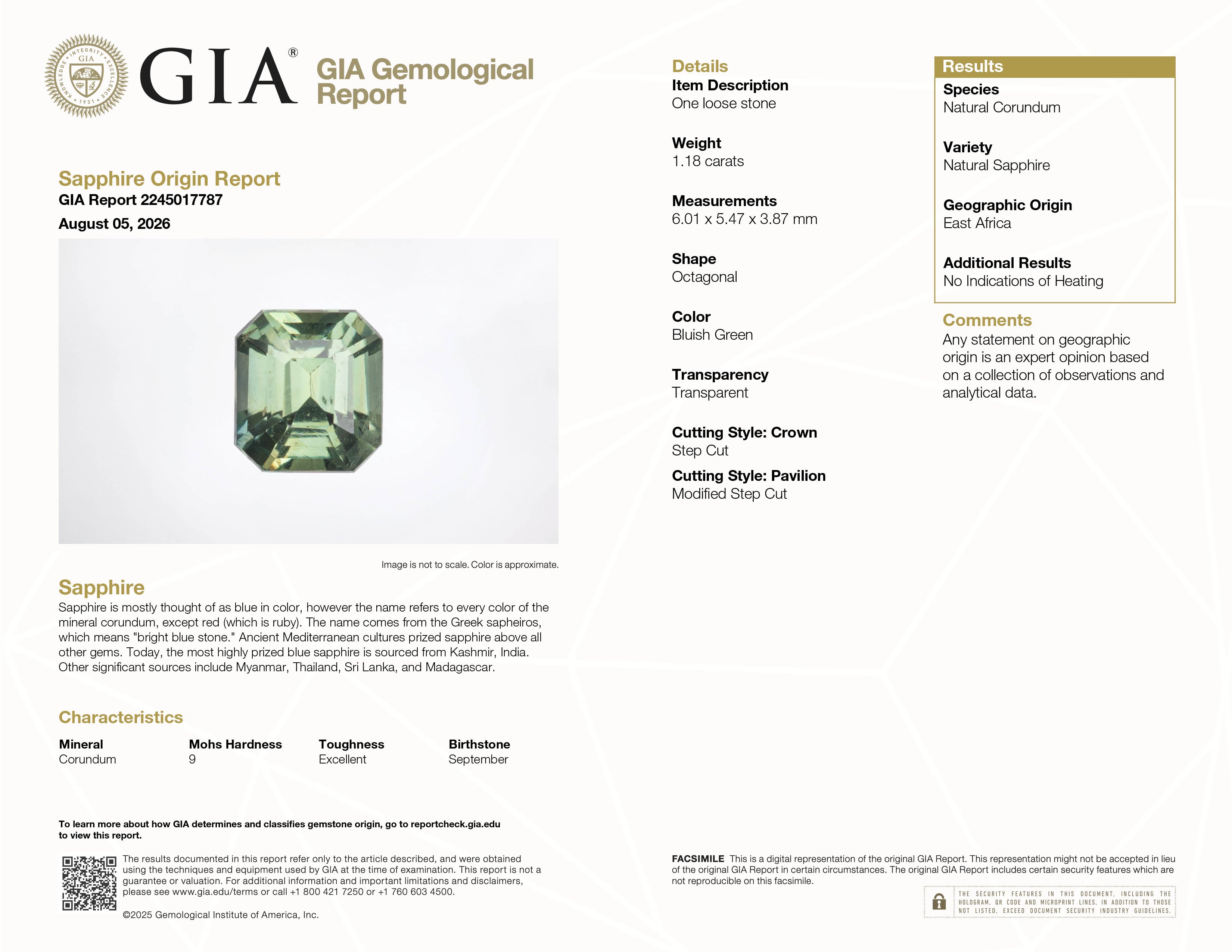
Currently in stock: a 1.18 ct unheated emerald-cut bluish green sapphire, GIA-documented and East Africa origin — a loupe-clean stone whose open step facets show off its natural bluish-green hue clearly.
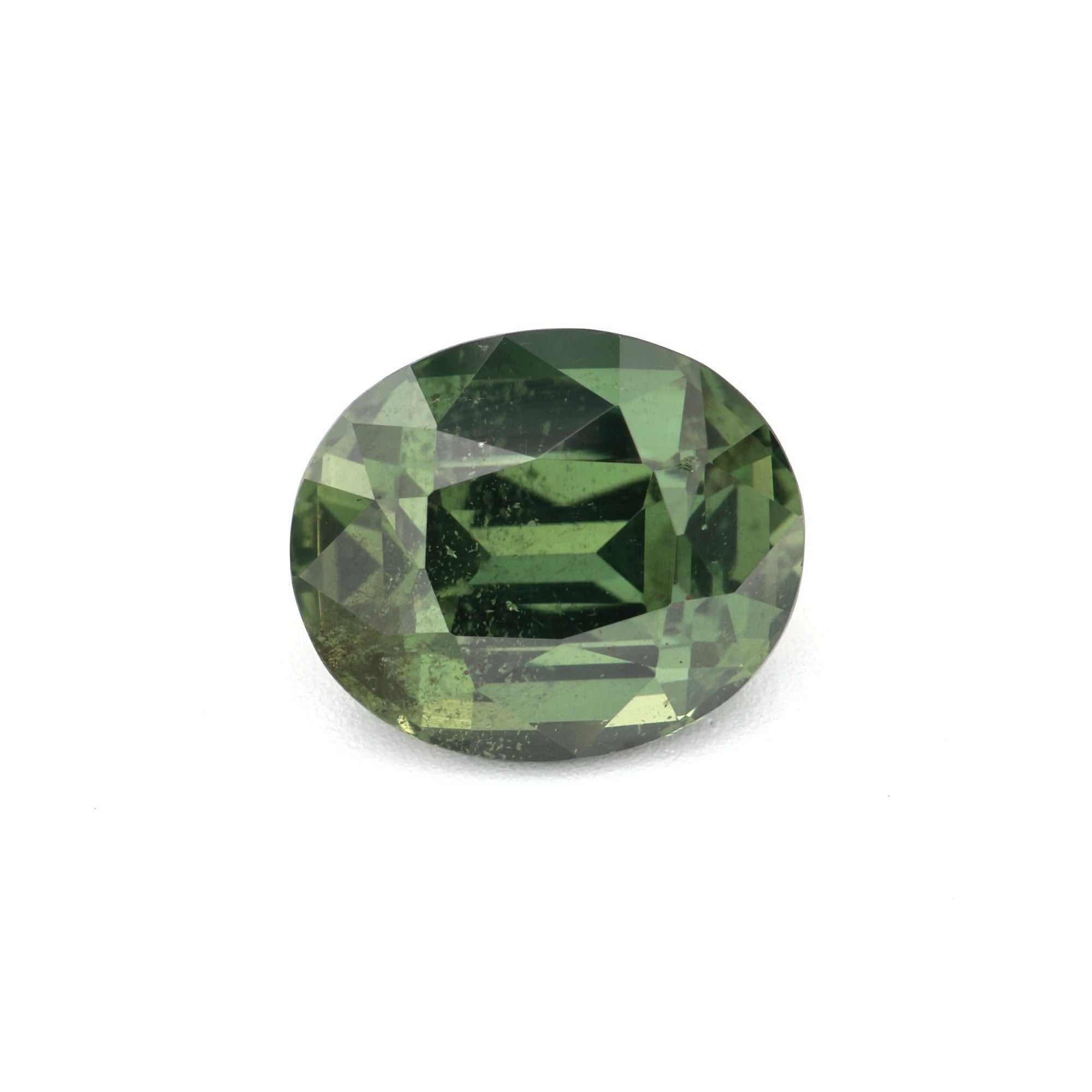
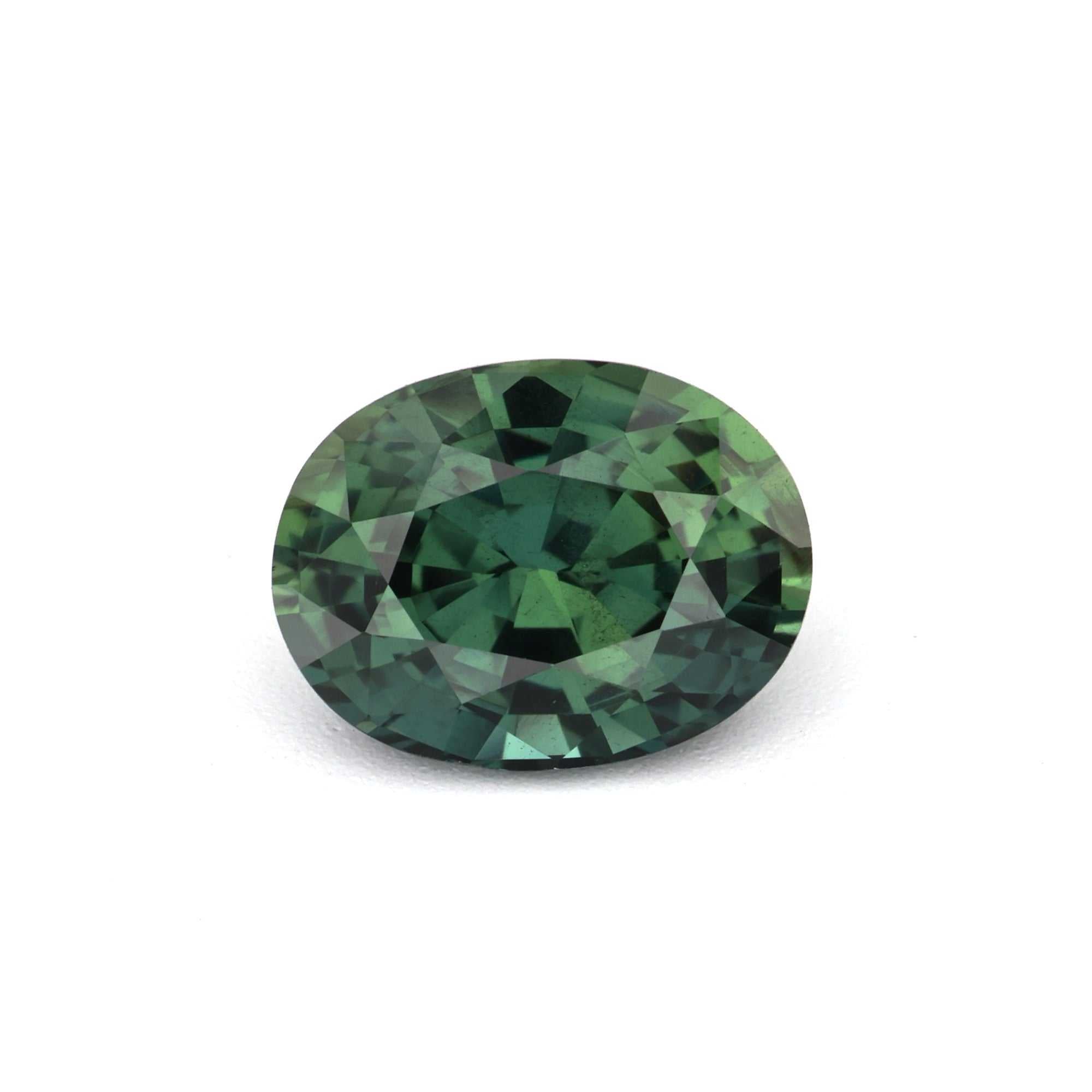
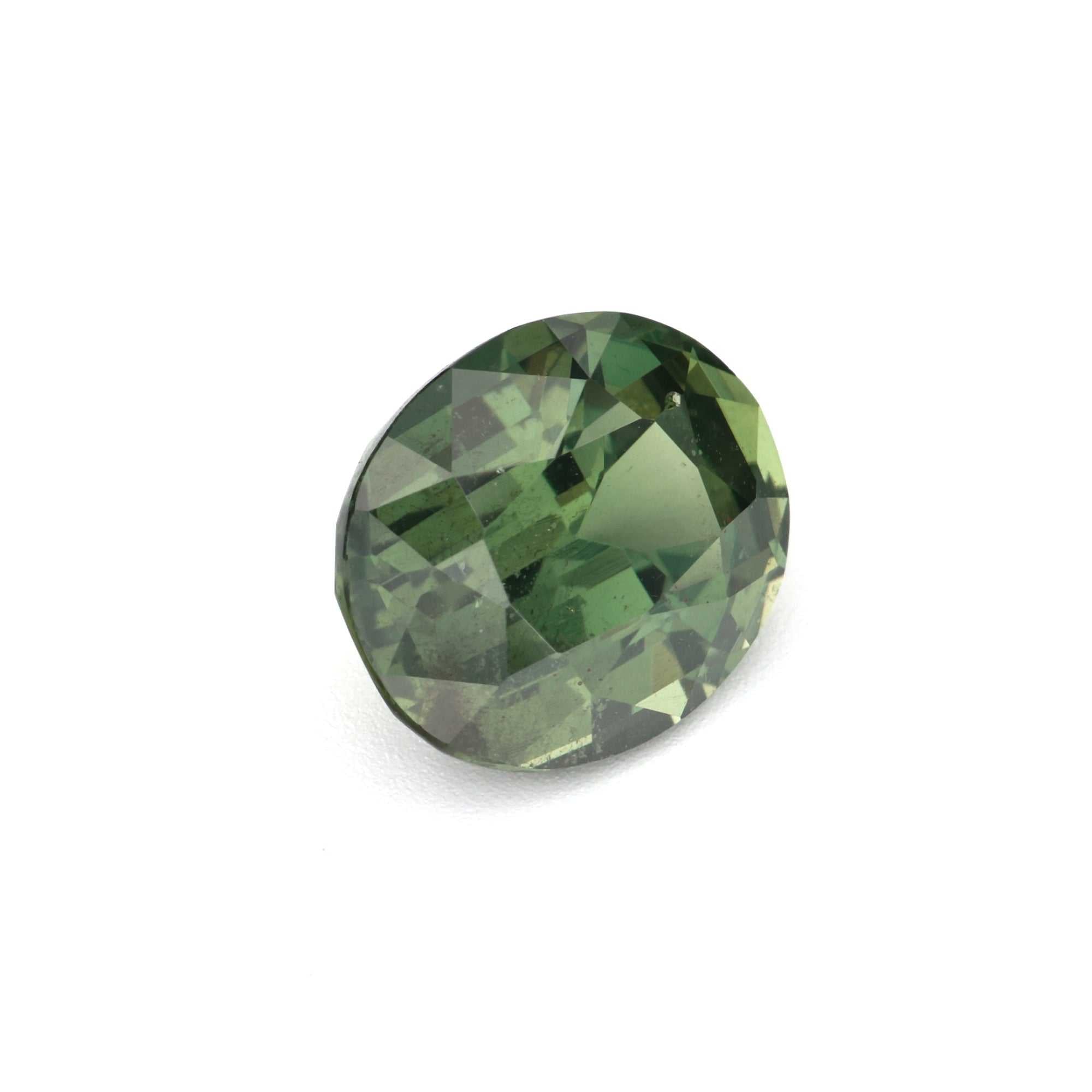
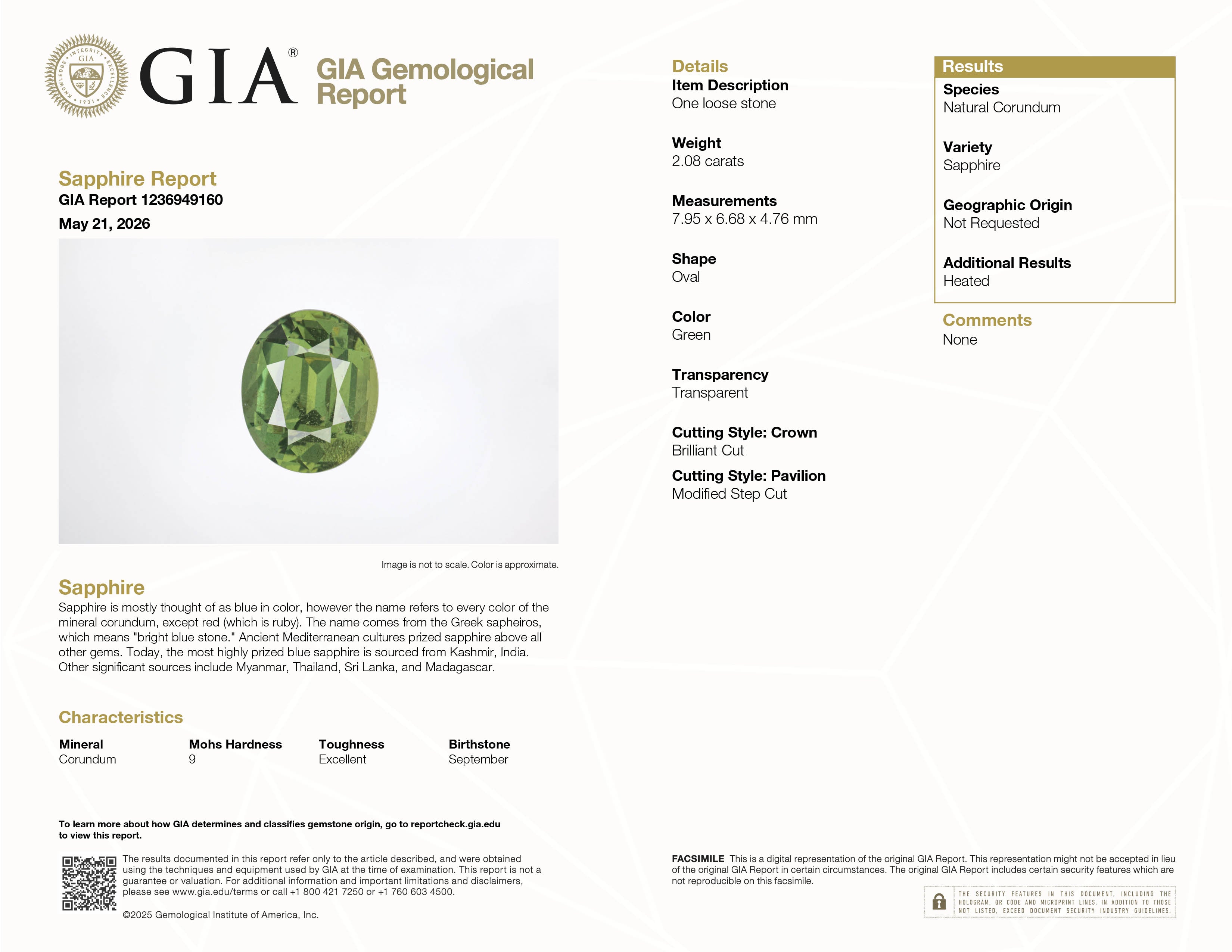
We also currently stock a 2.08 ct heat-treated oval-cut green sapphire, GIA-documented (Report #1236949160), in a vivid leaf-green color with Tanzania origin reflecting our own store assessment — GIA origin testing was not requested for this stone — a larger, heat-treated alternative for buyers who prioritize size and saturation over unheated status.
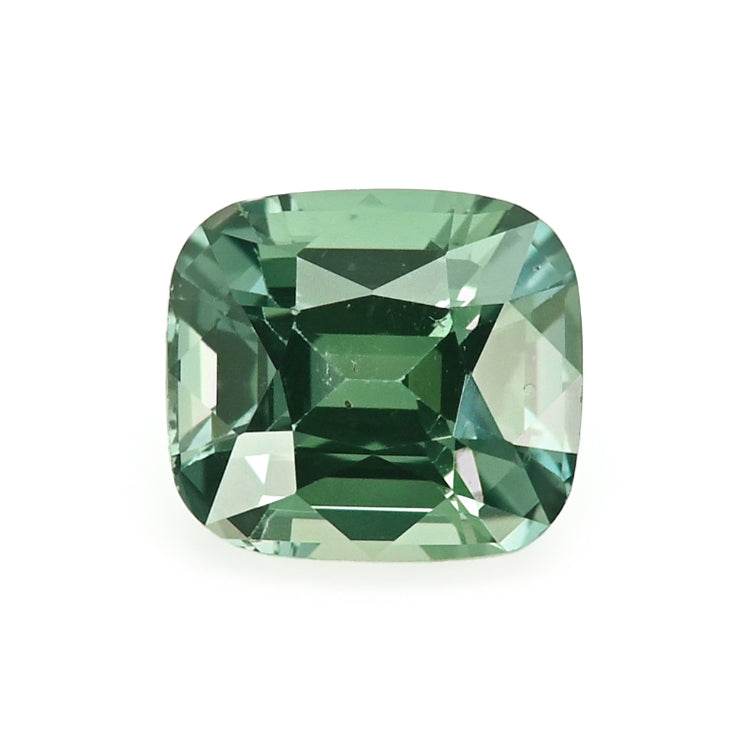
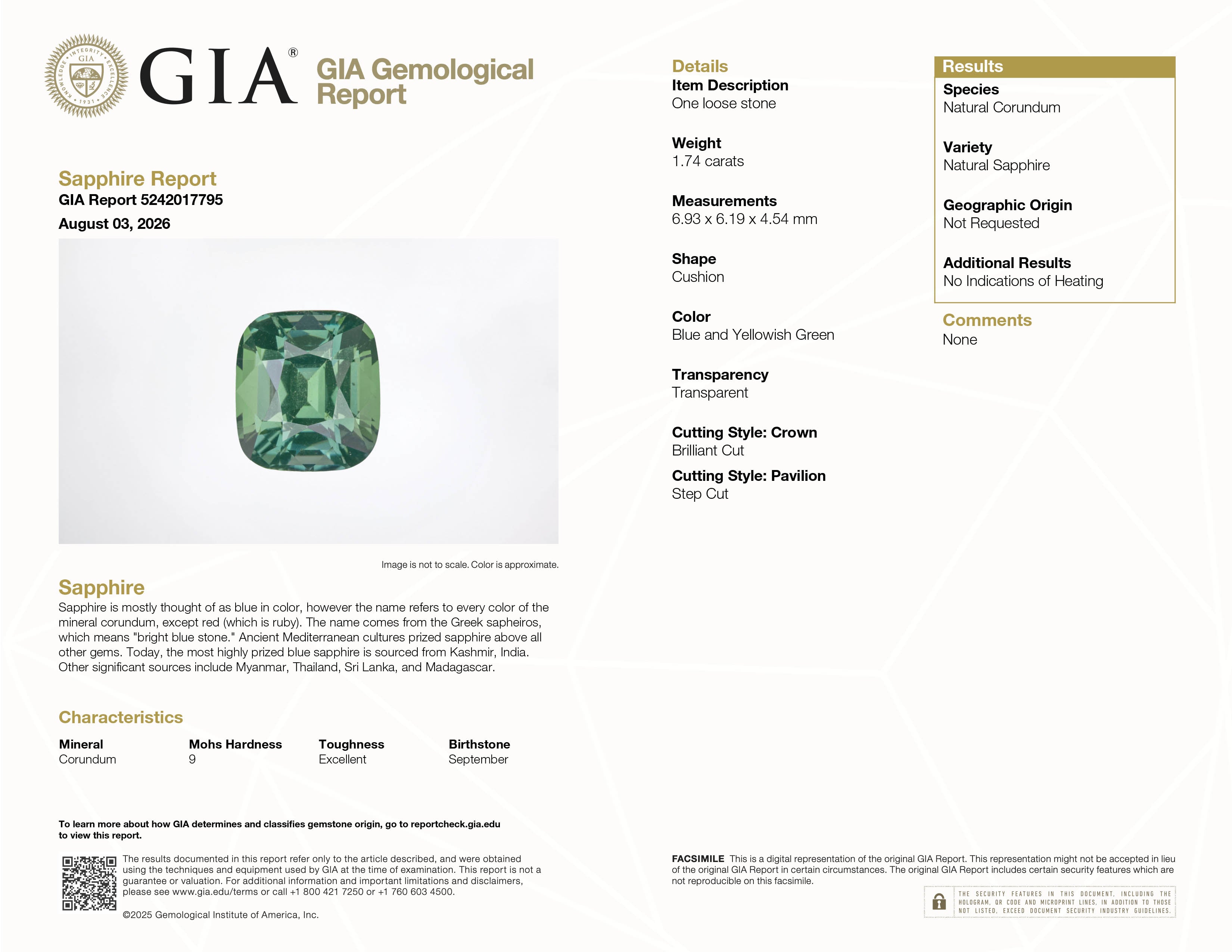
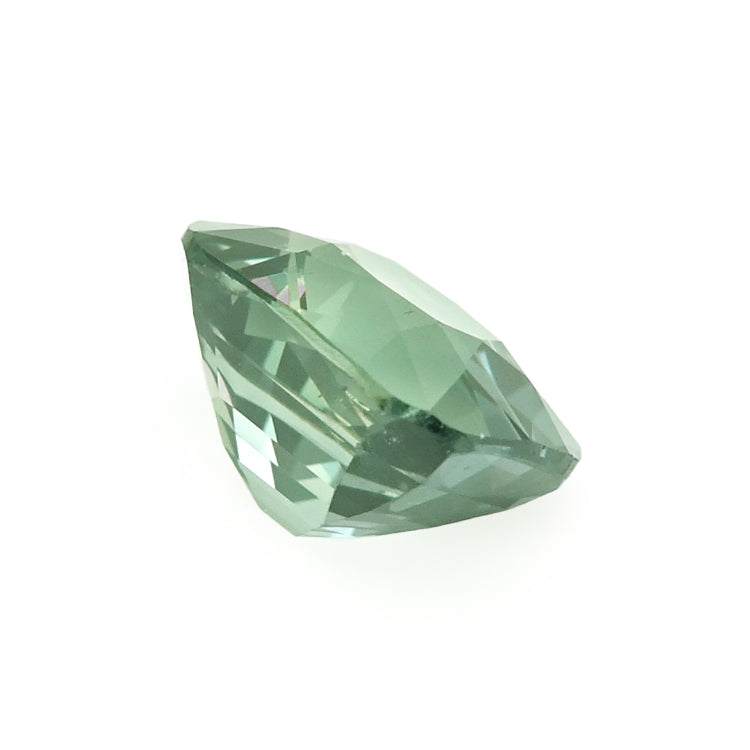
For buyers wanting an unheated option, we also stock a 1.74 ct unheated cushion-cut bluish-green sapphire, GIA-documented (Report #5242017795), with Madagascar origin reflecting our own store assessment — geographic origin was not requested on the GIA report — occupying the boundary zone between blue and teal, with more blue content than pure teal.
For lab-verified stock, see our GIA-documented green sapphires.
Looking for a larger stone? See our green sapphires over 1 carat.

CG8449
CG8335
CG8319
CG8292
1.46 ct Natural Unheated Green Sapphire – Cushion Cut | Madagascar

CG8375
CG8320
CG8343
CG8372
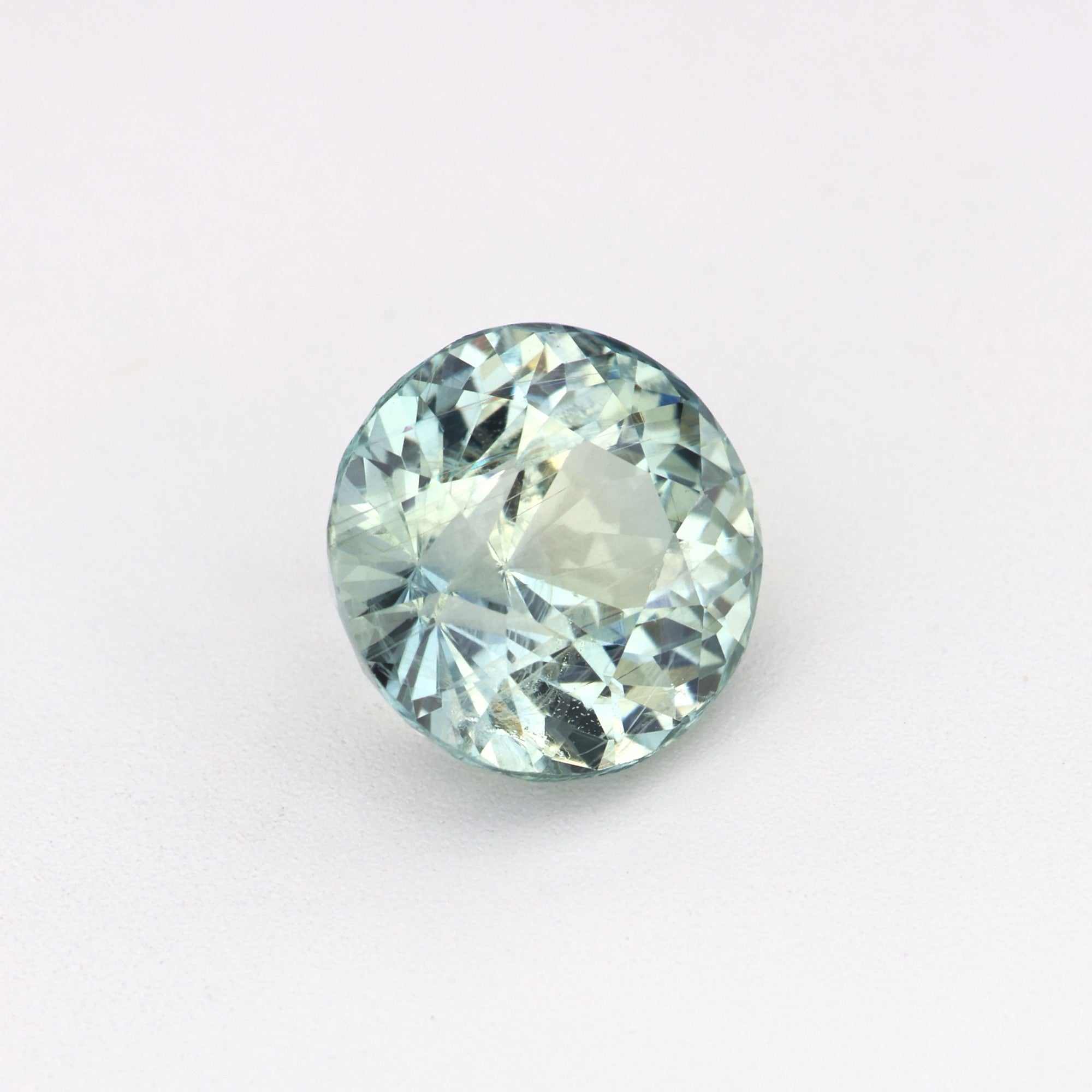
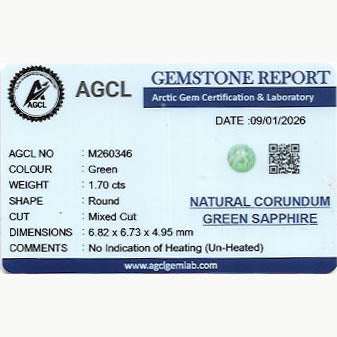
1.70 ct Natural Unheated Green Sapphire
Prices are shown in your local currency and may change.
CG8335
CG8372
1.70 ct Natural Unheated Green Sapphire
CG8319
CG8343
CG8320
CG8375
CG8292
1.46 ct Natural Unheated Green Sapphire – Cushion Cut | Madagascar
CG8449


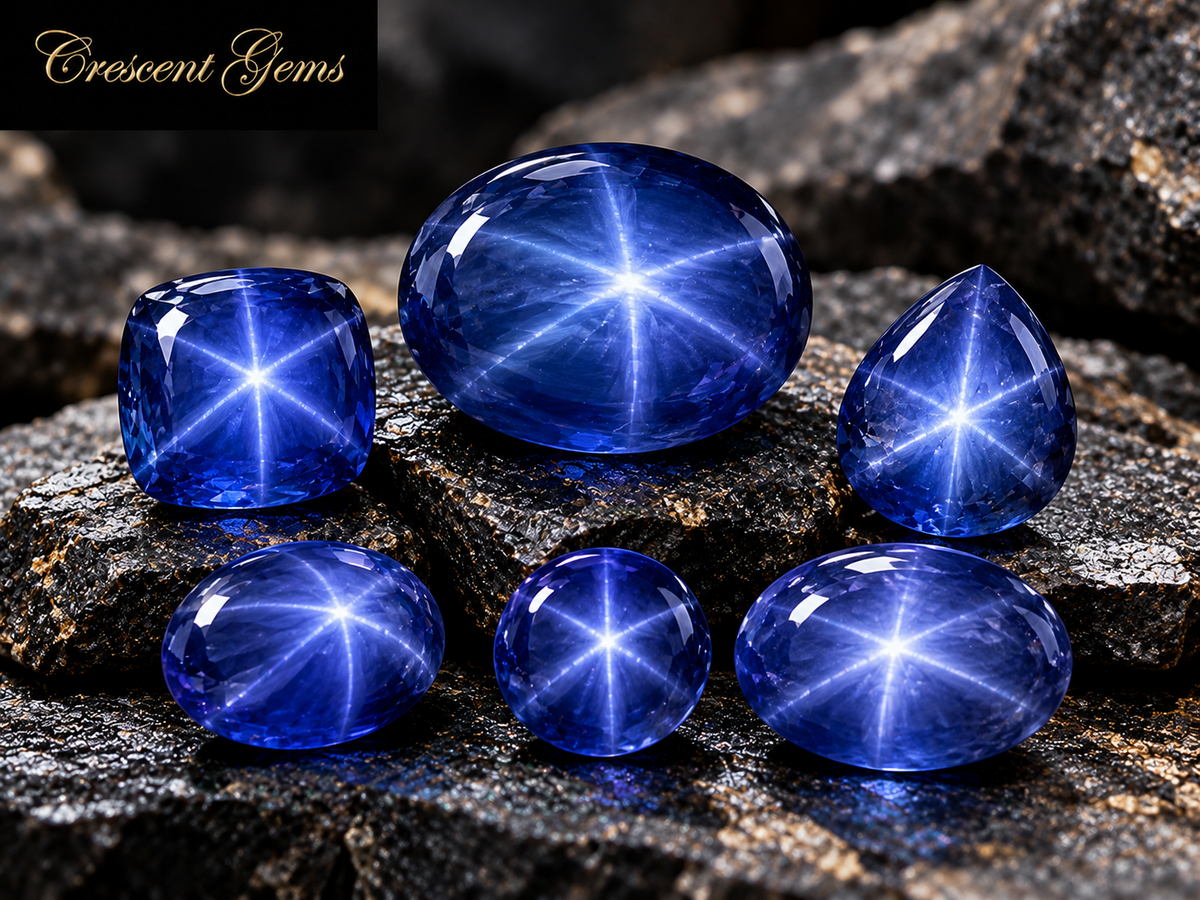
Blue Star Sapphire Price Guide — What They Cost and Why
Read moreabout Blue Star Sapphire Price Guide — What They Cost and Why
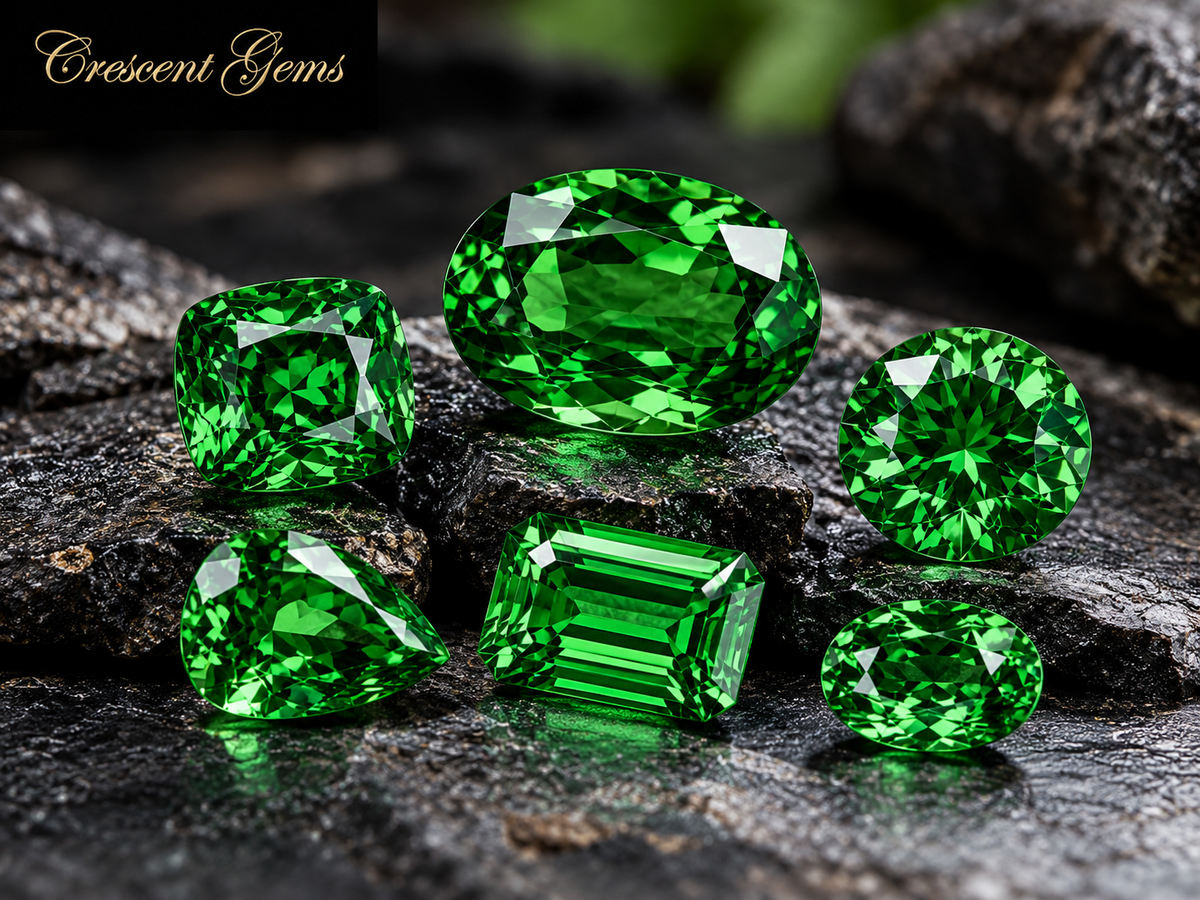
Tsavorite Garnet Price Guide — What They Cost and Why
Read moreabout Tsavorite Garnet Price Guide — What They Cost and Why
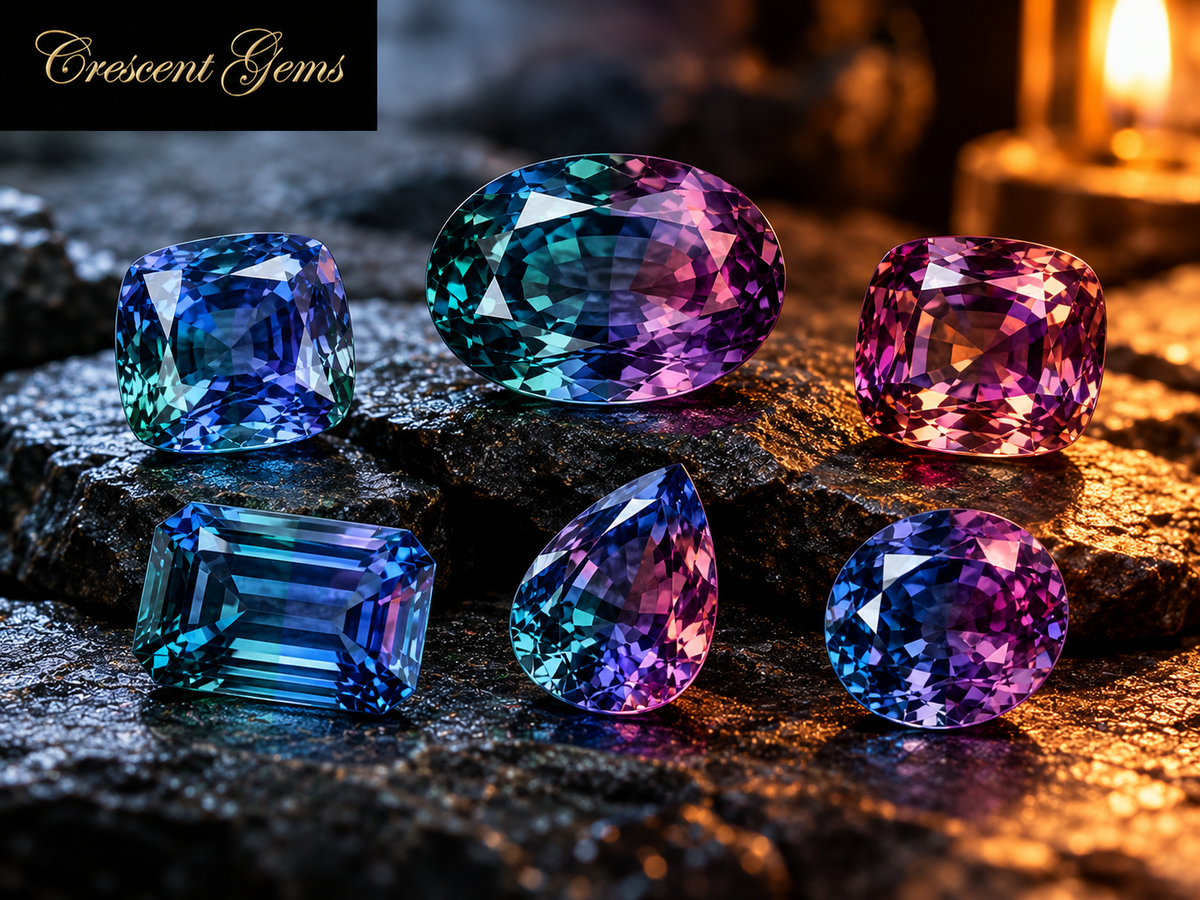
Color-Change Sapphire Price Guide — What They Cost and Why
Read moreabout Color-Change Sapphire Price Guide — What They Cost and Why
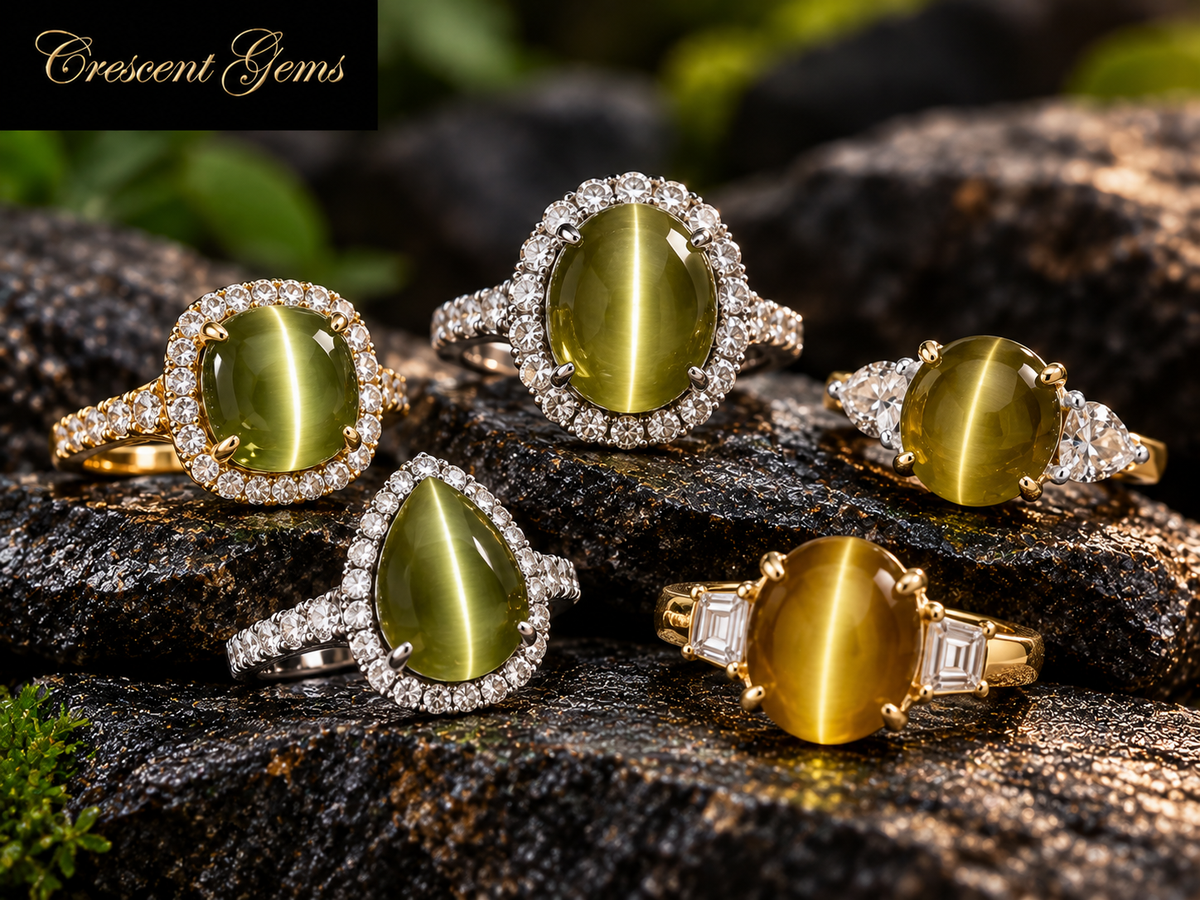
Is Cat's-Eye Chrysoberyl Good for an Engagement Ring?
Read moreabout Is Cat's-Eye Chrysoberyl Good for an Engagement Ring?
Cat's Eye Chrysoberyl Price Guide — What They Cost and Why
Read moreabout Cat's Eye Chrysoberyl Price Guide — What They Cost and Why