

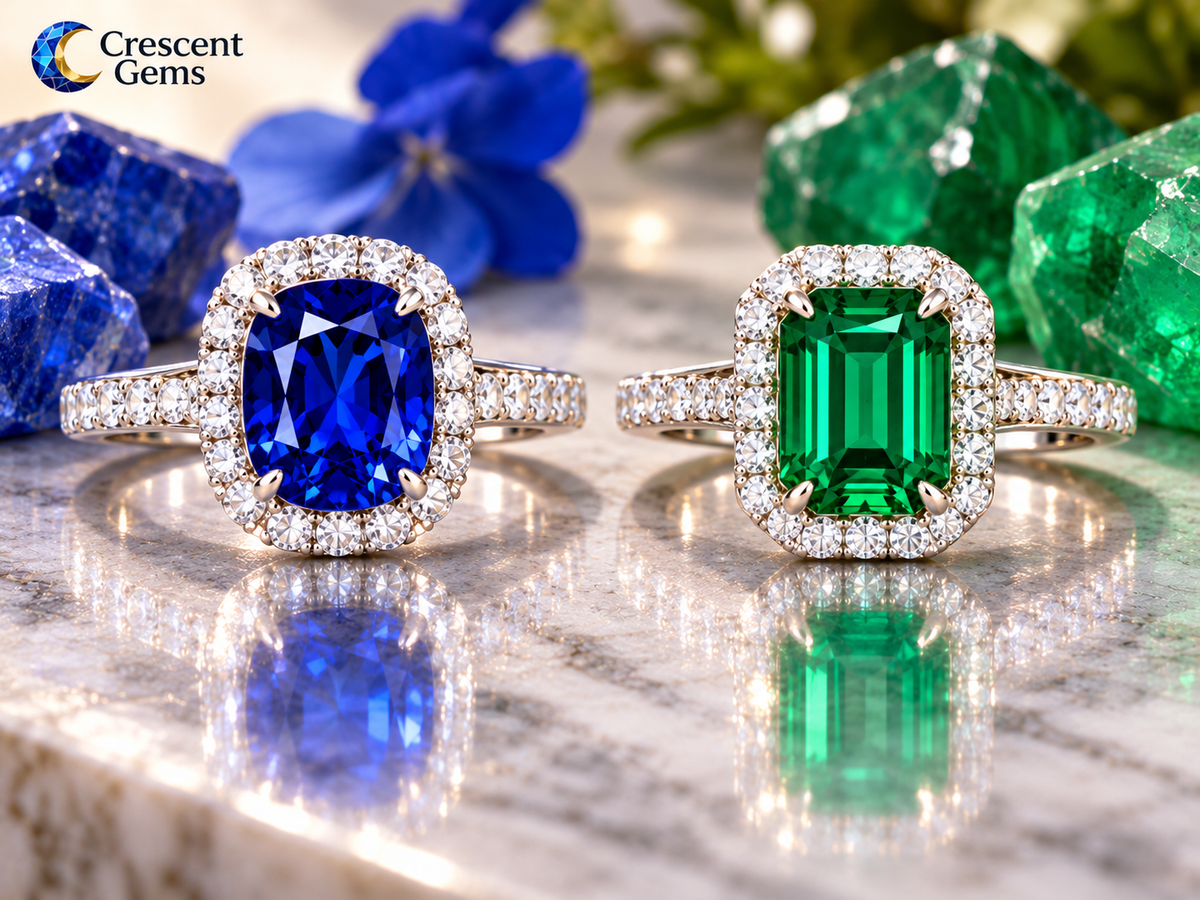
- by Ahmed Shareek
Sapphire and Emerald: What Each Report Records
- by Ahmed Shareek
This guide does not end in a verdict about which of the two stones is better. The thing a buyer can actually check is not which stone is better — it is what each stone's laboratory report records, and the two reports do not record the same things at all. That difference is documented, it is published, and it is the subject of this guide.
One disclosure first: we hold no emerald. We sell sapphire and a small range of other coloured stones, and no beryl is listed in our catalogue. So nothing here is a price for an emerald, a judgement of an emerald, or a claim about the emerald trade. What follows is what the laboratories publish about each species, quoted, and what we hold in green sapphire, measured.
It comes down to a single line.
A GIA emerald report states a degree of clarity enhancement, on a published three-step scale. A GIA sapphire report states no clarity grade at all. Everything else on this page follows from that.
Neither of those is a statement about which stone is nicer, or harder, or worth more. They are statements about which questions a document will answer for you, and which ones you will be left to answer for yourself.
GIA states the degree of clarity enhancement in two notations at once: "This is a judgment of the degree of clarity enhancement: minor (F1), moderate (F2), and significant (F3)."
GIA defines the two ends of that scale and not the middle. On minor and significant, it writes that "“Minor” enhancement indicates the treatment has had only a slight effect on the face-up appearance, whereas “significant” indicates an obvious effect on the appearance." Moderate is named as a step but is not defined in those terms, so we will not define it either.
There is one more thing GIA says about that scale, and it is the part that decides how a report should be read. GIA says the scale measures the treatment and not the stone: "The GIA Laboratory emphasizes that it uses the classification system only to evaluate the level of treatment, and not to offer an overall clarity grade for the stone." An F1 emerald has not been graded as clearer than an F3 emerald. It has been assessed as less affected by filling.
The degree is one service. What the fissures were filled with is another, which a client has to ask for. GIA began offering filler identification with its emerald reports on 15 December 2024, initially at no cost, and the report then carries one of three conclusions, in GIA's own wording: "Filler Type: A (may include oil, wax and/or natural resin)"; "Filler Type: B (artificial resin)"; or "The clarity enhancing material present cannot currently be identified."
That third conclusion is worth sitting with. A laboratory examining the stone in front of it may be unable to say what is in the fissures. It is printed as a possible outcome of the service.
The three steps are not GIA's alone. The Laboratory Manual Harmonisation Committee, whose information sheets standardise report wording across the major laboratories, covers emerald in Information Sheet #5, "Emerald – fissure filling / clarity enhancement", version 6, May 2025, which carries the same pairing — F1 or minor, F2 or moderate, F3 or significant — and treats filler identification as an option there too. The same sheet separately addresses resin or wax in cavities, which is a different finding from fissure filling and is worded separately.
A small thing, so that nobody reads it as a contradiction: the committee's index titles the sheet "clarity enhancement" and the sheet's own body says "clarity modification". That is two names for one subject, not two findings.
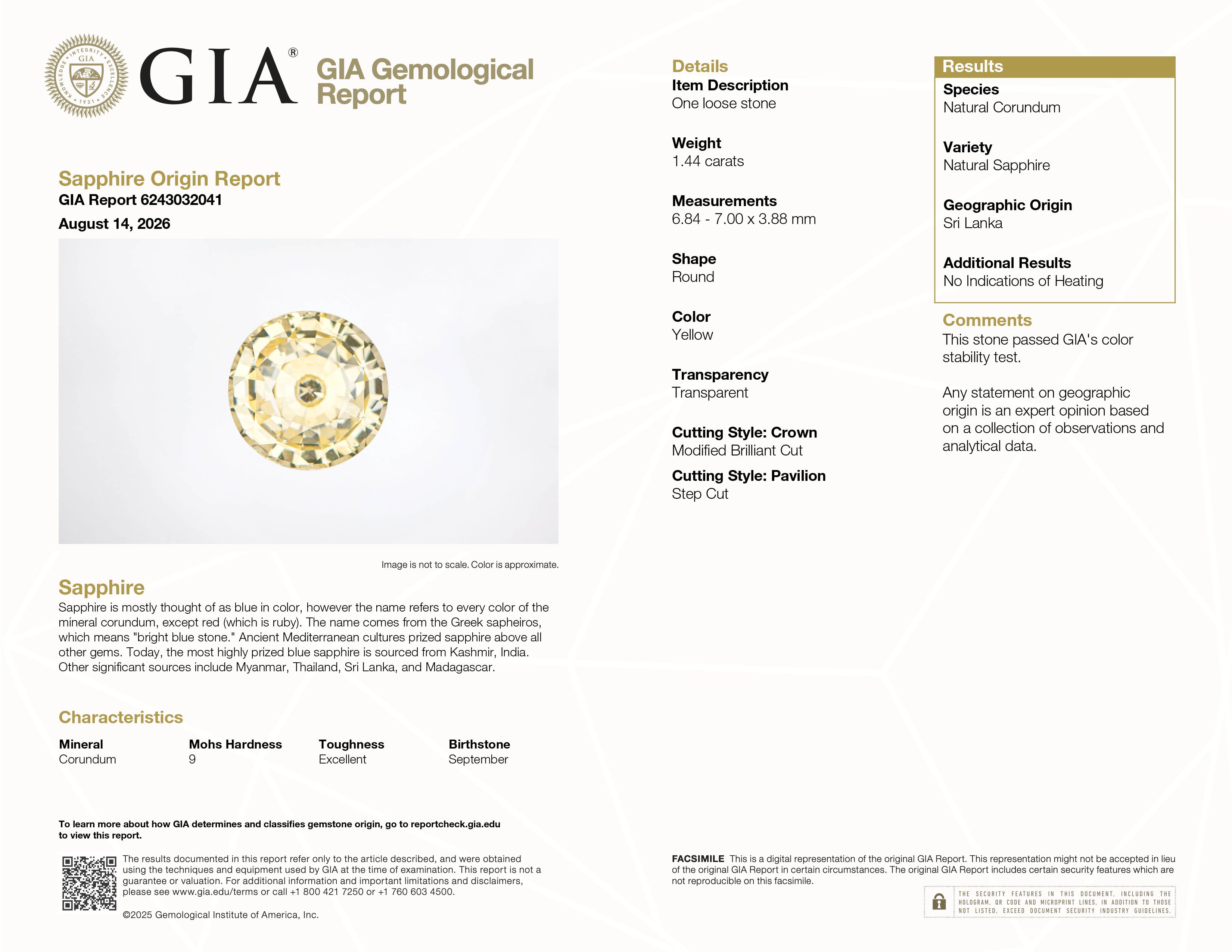
No clarity grade, and no quality assessment of any kind. GIA's position is that it "doesn't grade or provide quality analysis for sapphire or other colored stones." There is no sapphire equivalent of F1, F2 and F3, because there is no sapphire clarity scale to place a stone on.
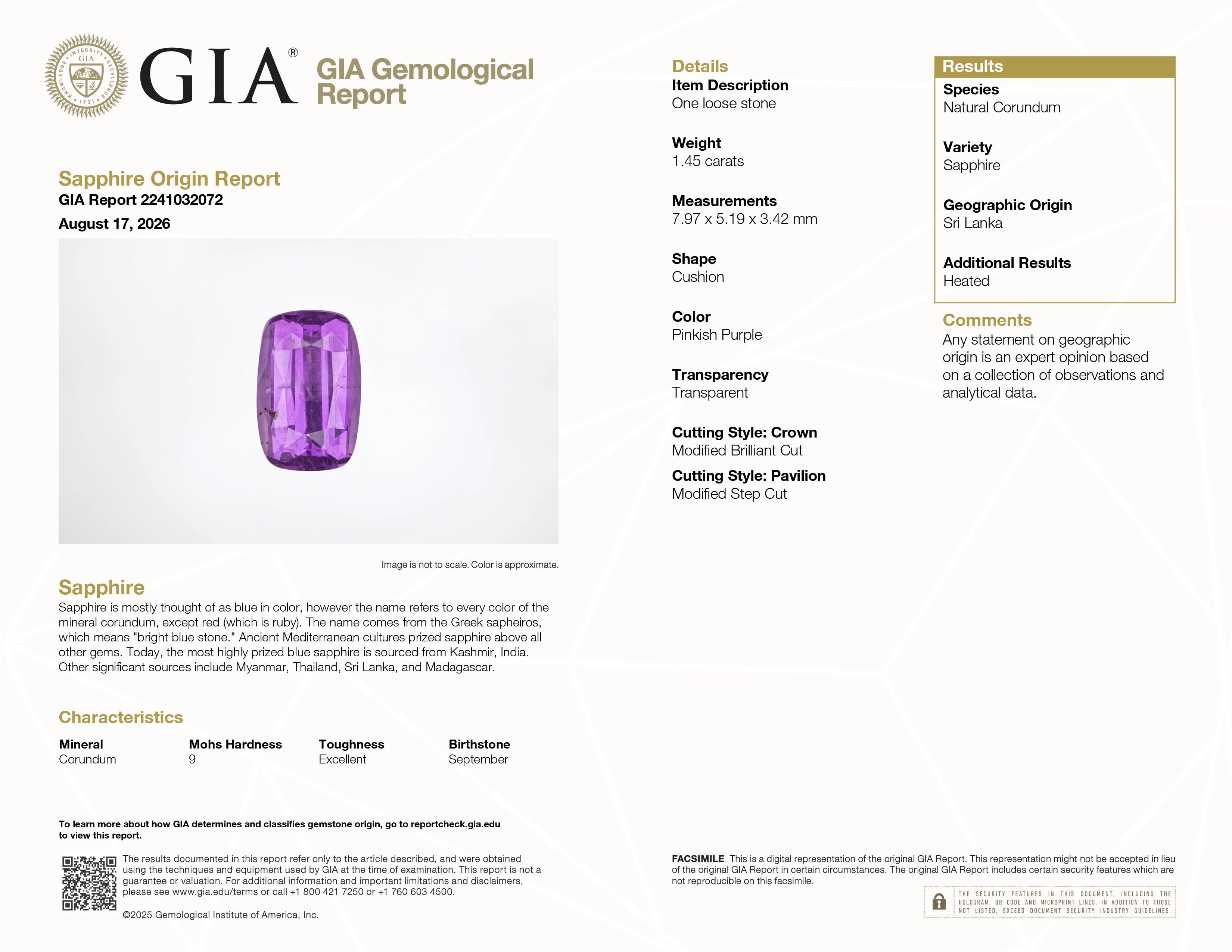
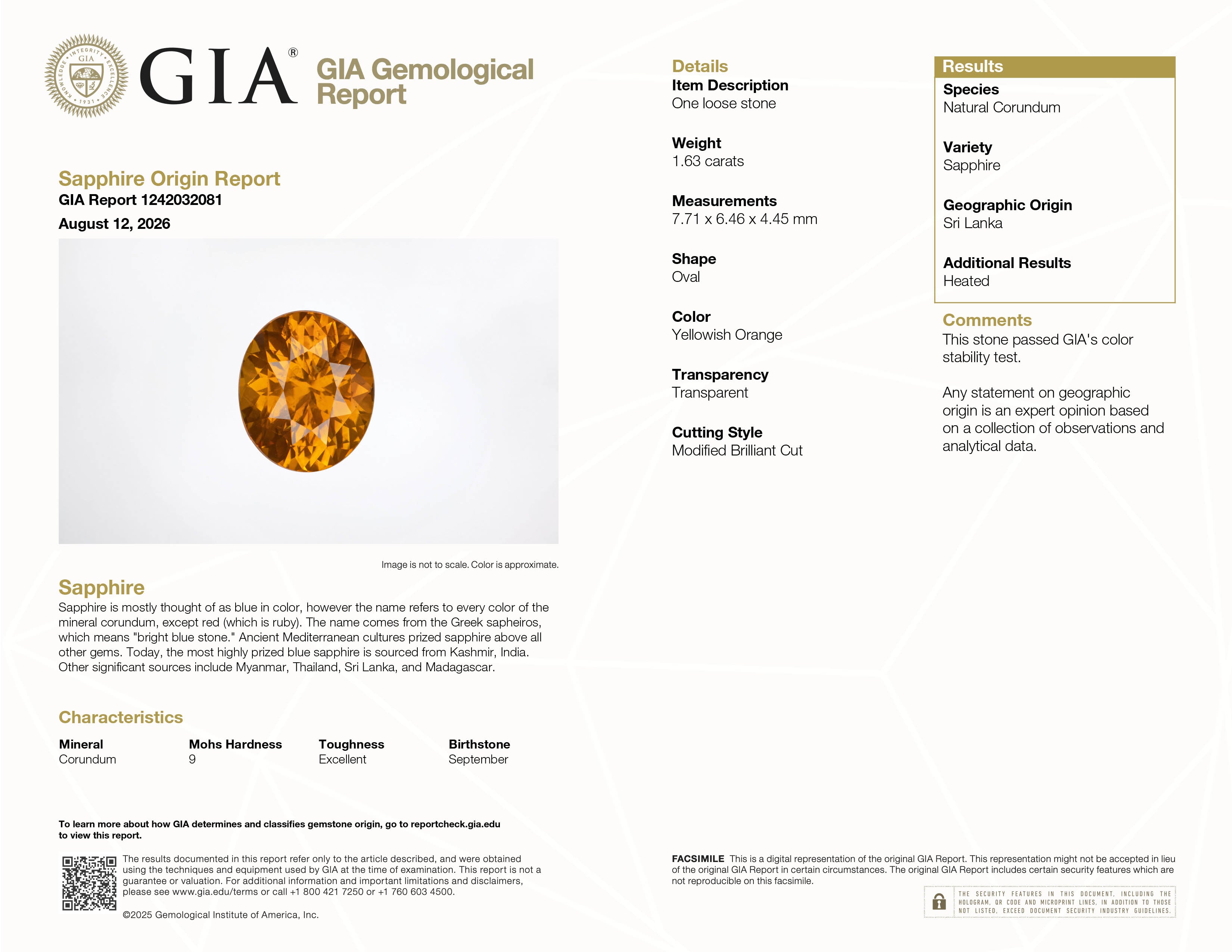
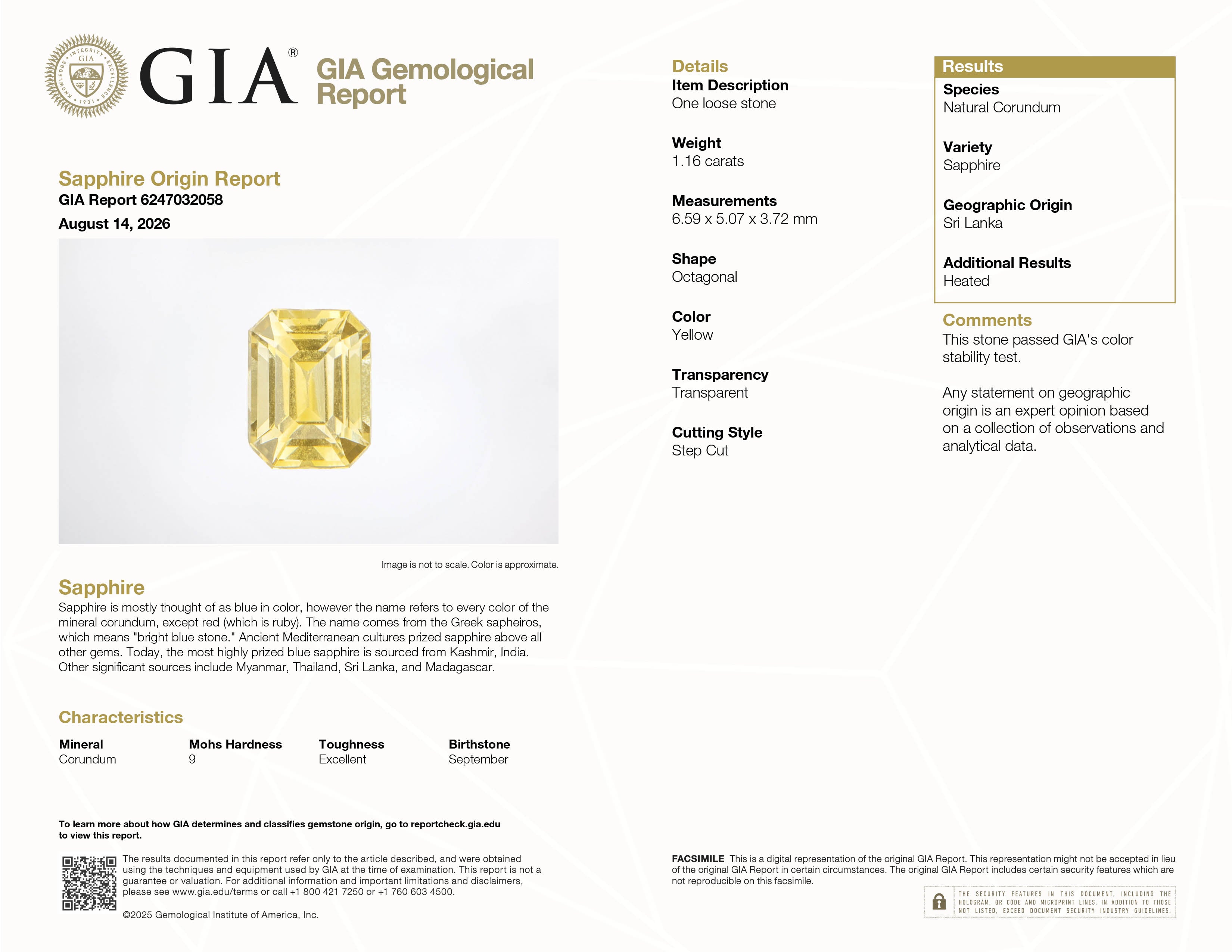
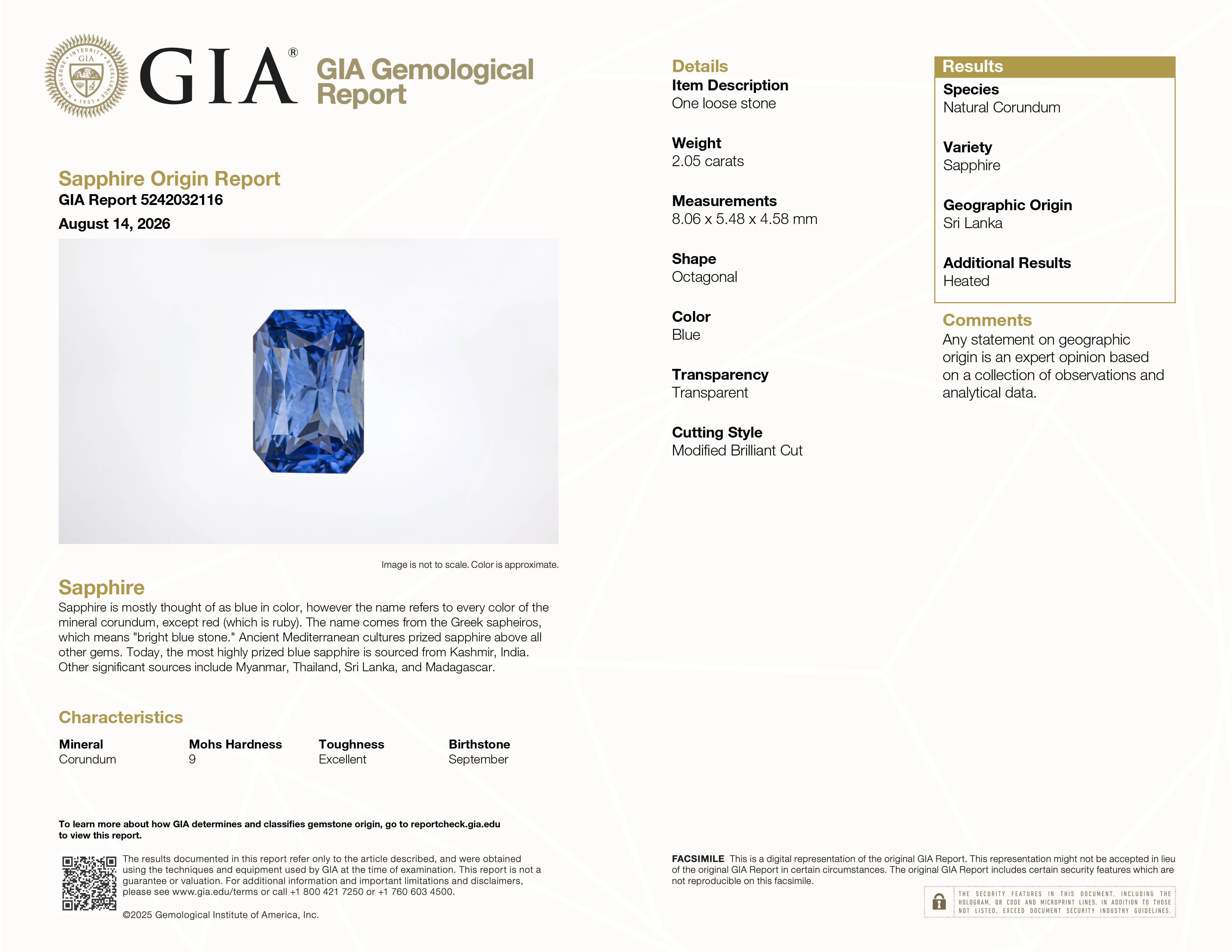
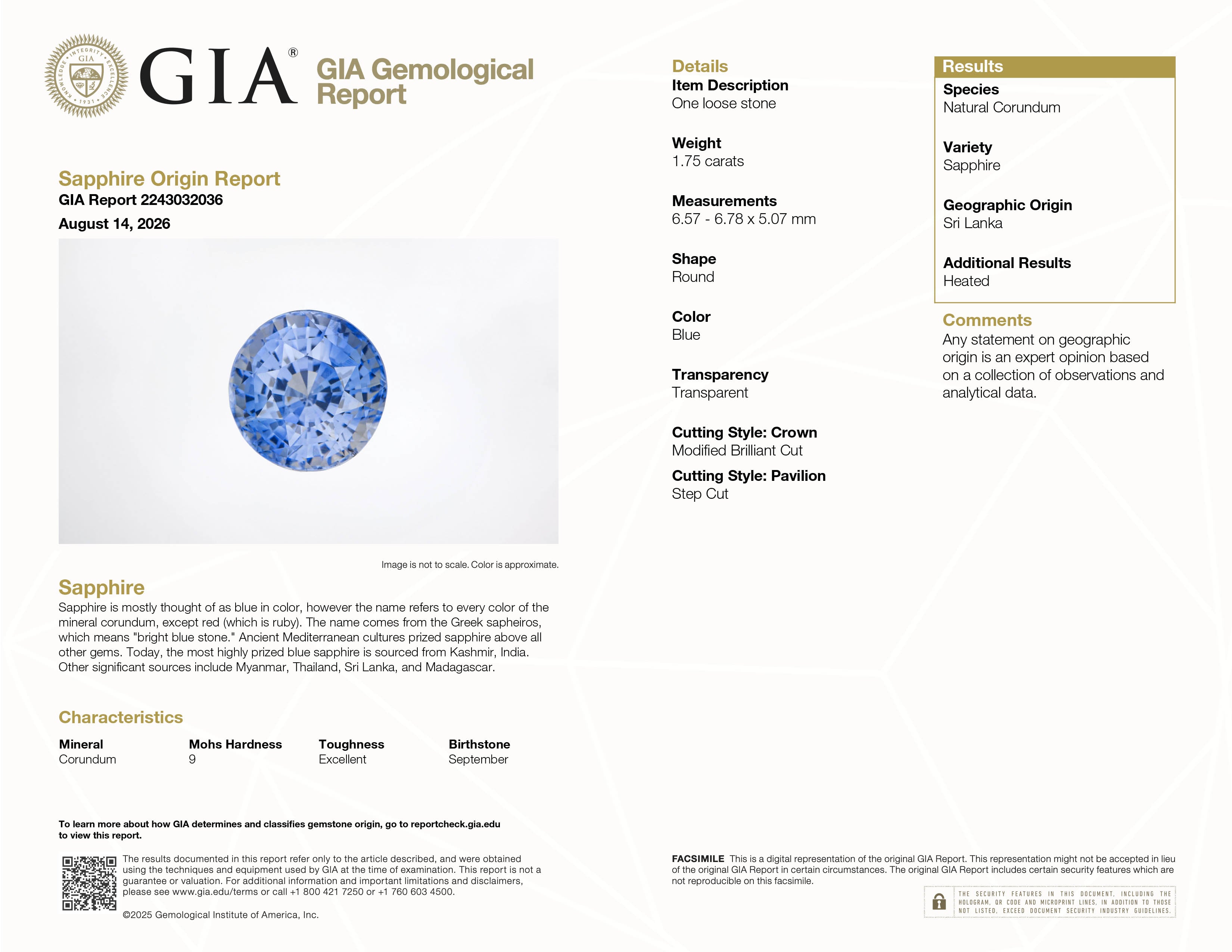
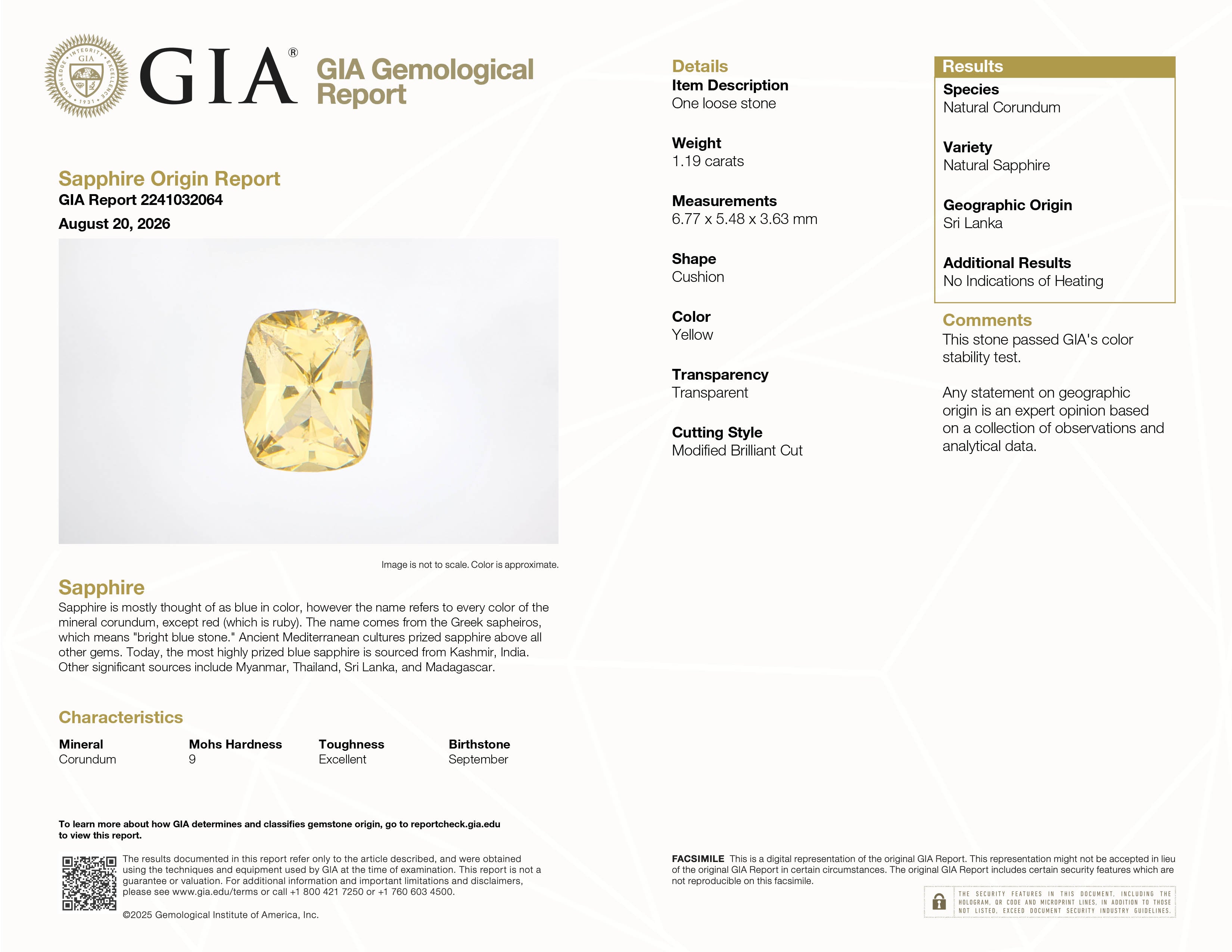
What the report does carry is a treatment finding, worded to a standard: the Laboratory Manual Harmonisation Committee's Information Sheet #7, "Corundum – No indications of heating and Indications of heating", version 6, February 2023. That is where the phrasing on our own listings comes from. Where a report reads No Indications of Heating, the word we use is unheated, and we use it for exactly that finding and no further. We do not write untreated, which is a larger claim about the whole history of a stone and is not ours to make.
Geographic origin is a third thing again — a separate service, separately requested. Where a report gives an origin opinion, GIA prints its own reservation beside it, which we would rather quote than paraphrase: "Any statement on geographic origin is an expert opinion based on a collection of observations and analytical data." The committee makes the same general point about reports: "All findings described in the report are opinions expressed by the laboratory." Those are opinions reached by qualified examiners, and that is exactly how we present them.
These are fixed properties of each mineral species, not findings about any individual stone, and not a score. They are the figures a laboratory measures to tell the two species apart, and they are the reason that question is settled rather than argued.
| Property | Corundum (sapphire) | Beryl (emerald) |
|---|---|---|
| Chemistry | Al₂O₃ | Be₃Al₂Si₆O₁₈ |
| Mohs hardness | 9 | 7.5 to 8 |
| Refractive index | 1.762–1.770 | 1.577 to 1.583 |
| Specific gravity | 3.99–4.10 | 2.72 |
The beryl figures are GIA's published values for emerald. We print them as GIA prints them, including the "to" rather than a dash. We publish no toughness category for either species, because we have no published figure to quote for either.
What those numbers do is identify. A refractive index reading or a hydrostatic weighing separates corundum from beryl, because the two sets of figures do not overlap. What they do not do is rank the two stones, and we are not going to use them for that. A hardness figure is a property of a species; a decision about a ring is a decision about a stone, a setting and a wearer, and no constant in that table settles it.
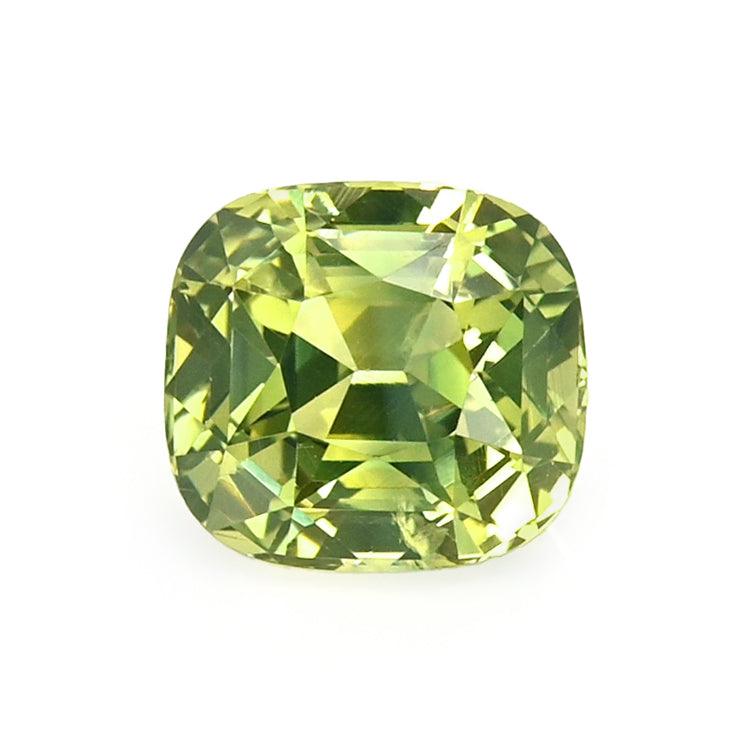
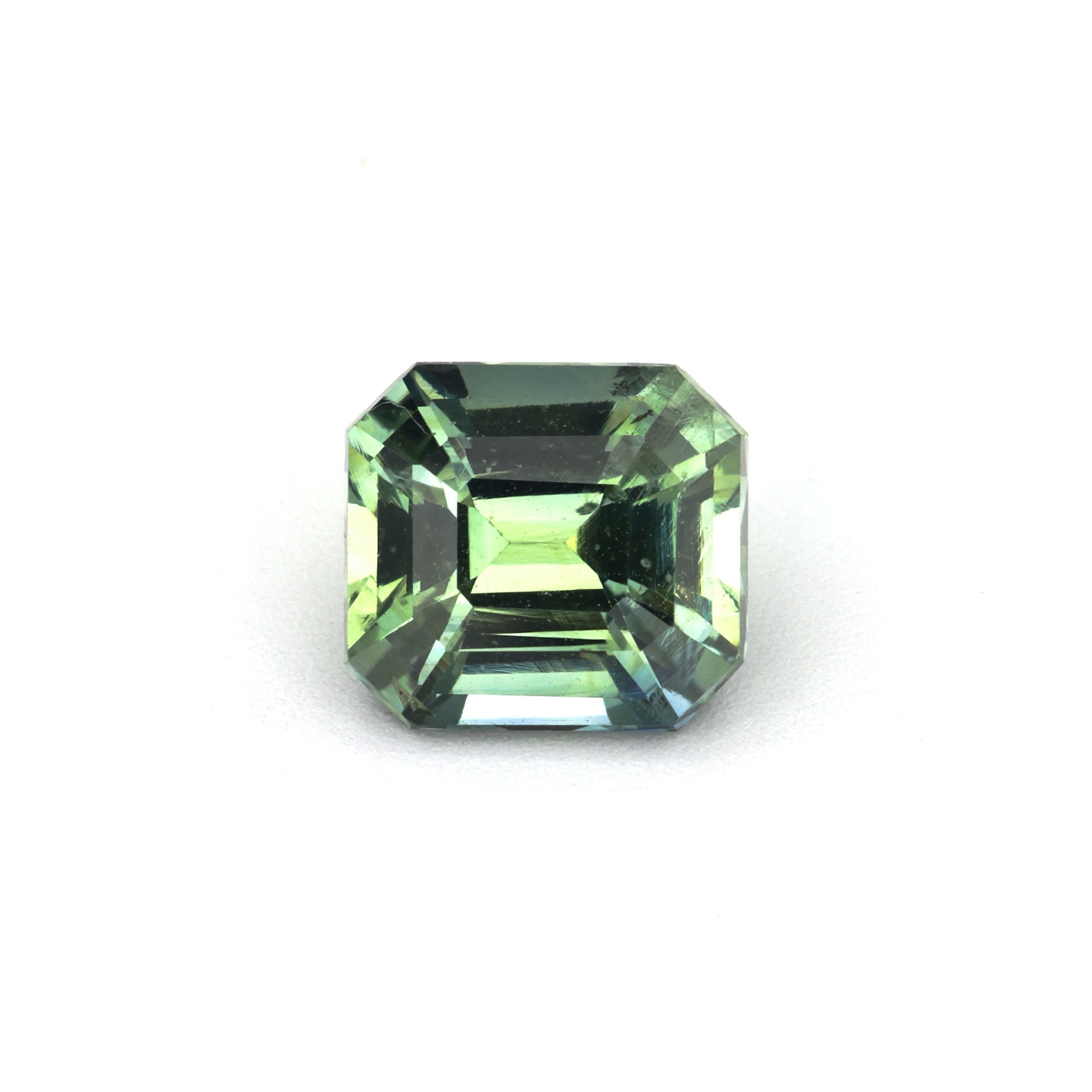
Here is our own green sapphire stock, read from our live listings on 16 November 2026. Four listings were visible and in stock.
| Stone | Carat | Listed price | Per carat | What the listing names |
|---|---|---|---|---|
| Oval, heated | 2.08 | $1,877 | $902.40 | GIA Sapphire Report 1236949160 |
| Emerald cut, unheated | 1.60 | $1,280 | $800.00 | AGCL report; Sri Lanka |
| Cushion, unheated | 1.46 | $1,168 | $800.00 | No laboratory named; Madagascar |
| Emerald cut, unheated | 1.18 | $1,053 | $892.37 | GIA Report; colour Bluish Green |
Four stones, not a price range, and we have not presented them as one. Per-carat figures are the listed price divided by the listed carat weight, rounded to the nearest cent, and that is the only rounding on this page. Three of the four name a laboratory on the listing and one does not; one of the four is heated and three are unheated. Prices move with stock — each stone's own product page is the current figure.
Two of those four work out at exactly $800.00 per carat at different weights, which is a useful reminder that a per-carat figure is a division and not a grade. The spread across the four is $800.00 to $902.40 per carat. We publish no band wider than that, because four stones in one colour in one catalogue is what we have measured, and anything beyond it would be a figure we had invented.
One of our green stones is listed with its colour as Bluish Green, which is the laboratory's own value for that stone. Where our listings use a trade word of our own — teal is the obvious one — we say on the product page that the word is ours and print what the report says instead. Our teal sapphire price guide sets out that stock the same way.
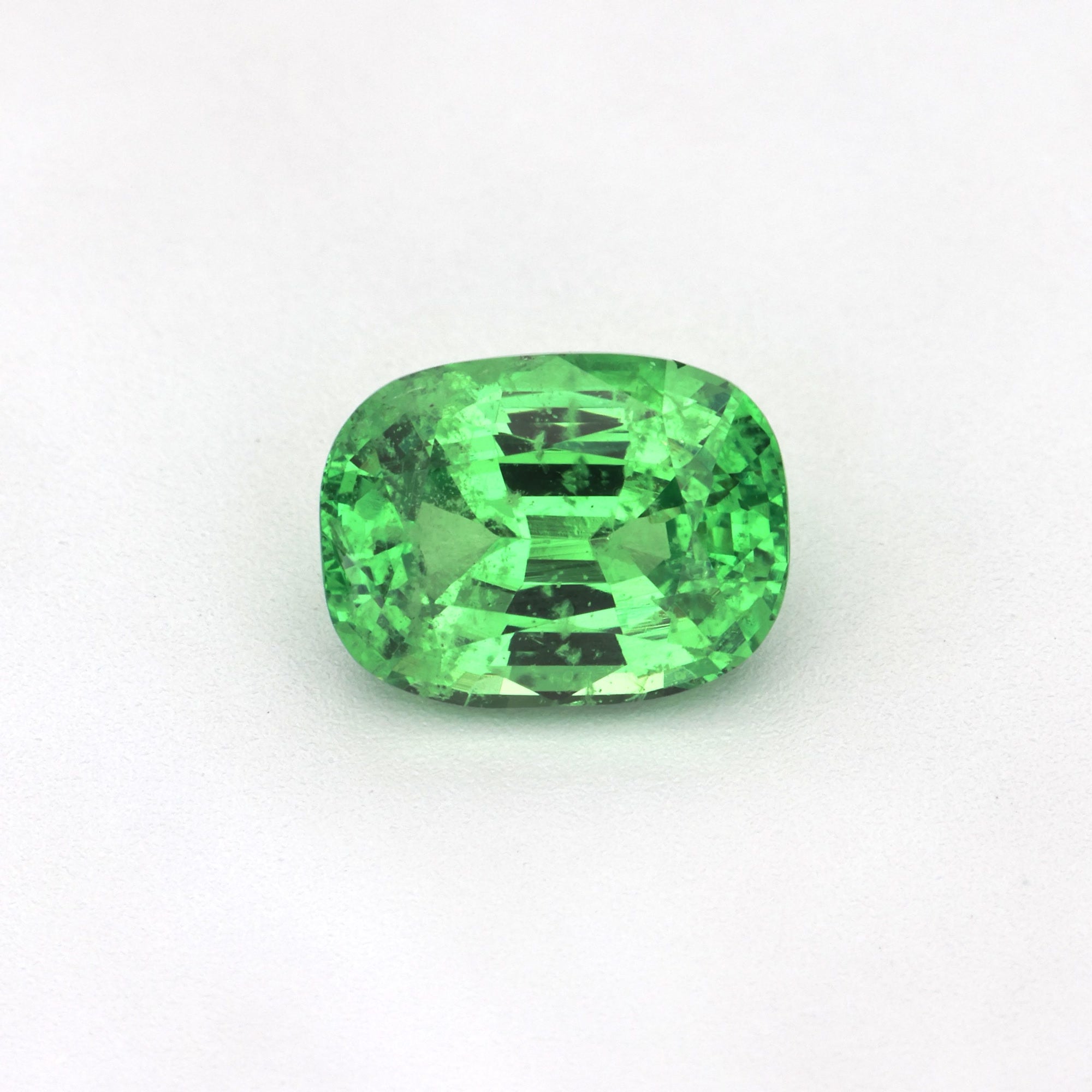
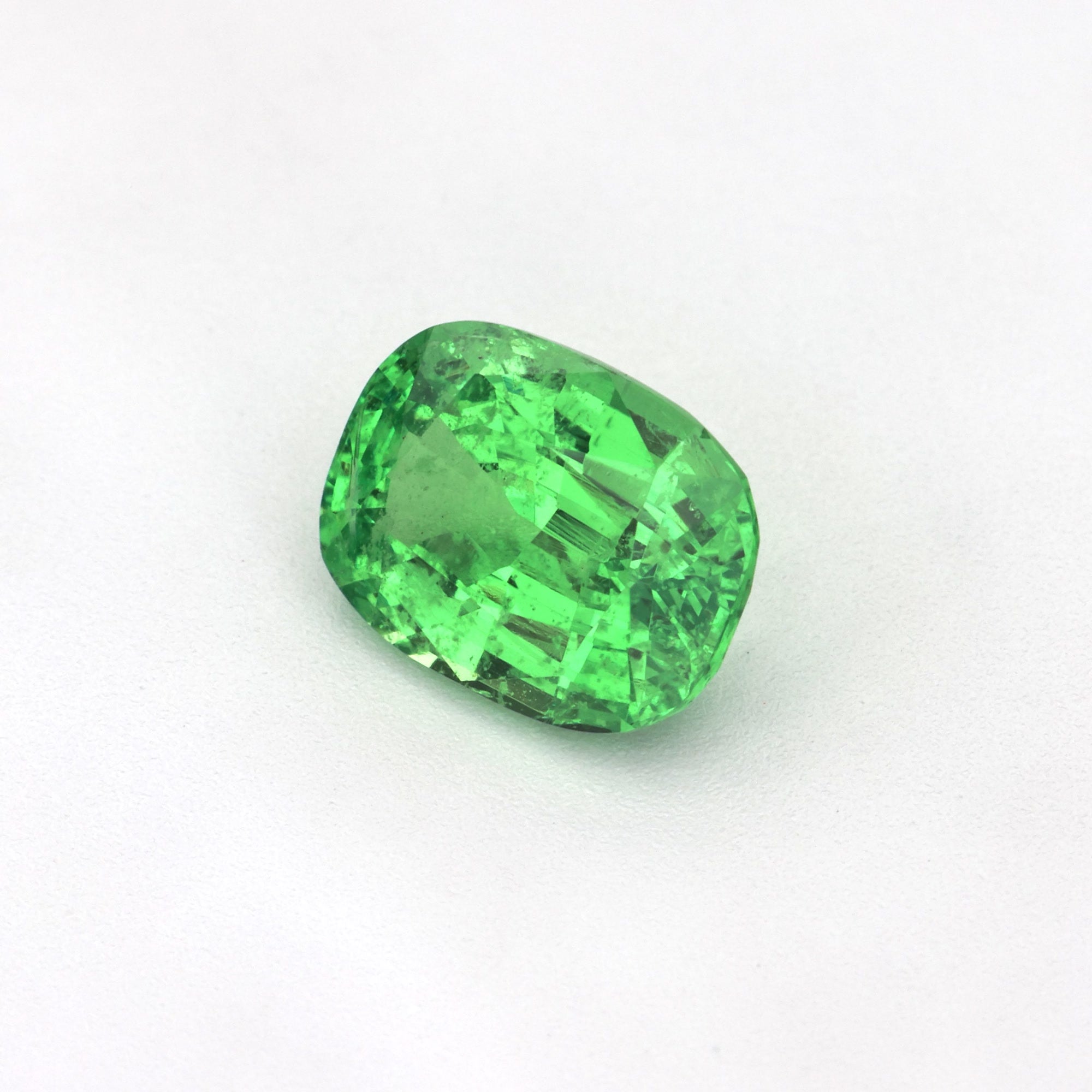
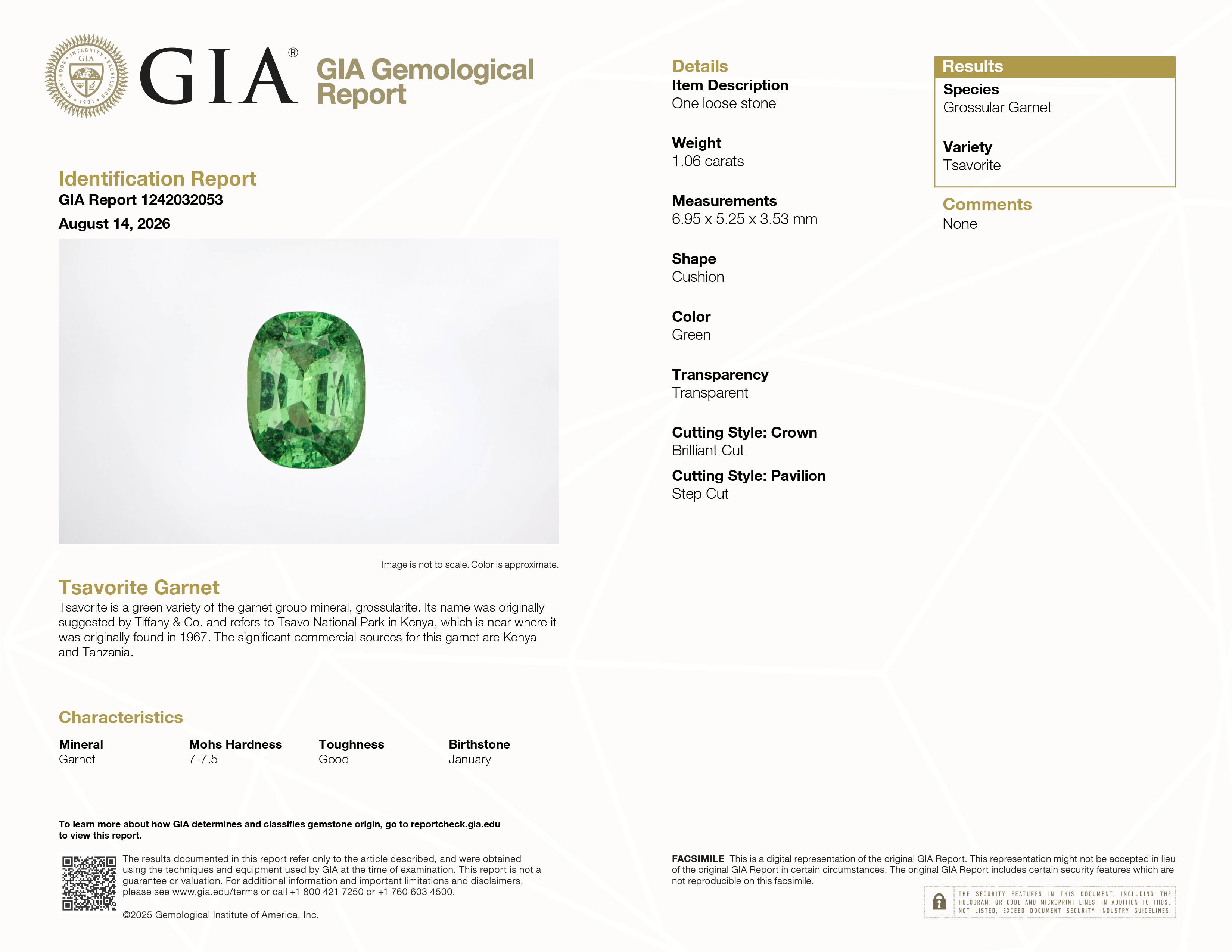
Green sapphire is not the only green stone in our range. We also hold tsavorite, a green grossular garnet, and it is a third species again with its own constants and its own documentation. Read from our own listings on 16 November 2026, two tsavorites were in stock: a 1.06 ct cushion at $1,590, with GIA Report #1242032053, and a 4.95 ct oval at $22,724, with GIA Report #5231980220. Two stones at those two weights are not a price range either. Our tsavorite price guide sets out that stock the same way, stone by stone. We mention it because a reader comparing green stones should know it exists, not because we are ranking it against anything.
The habit that travels between the two species is the same one: read the fields, and notice which fields are absent.
A GIA emerald report states a degree of clarity enhancement on a three-step scale — minor (F1), moderate (F2), significant (F3) — and GIA defines minor as having "only a slight effect on the face-up appearance" and significant as "an obvious effect on the appearance". What the fissures were filled with is a separate, optional service, which since 15 December 2024 reports Filler Type A, Filler Type B, or that the material cannot currently be identified. Read the fields on the report for the stone in front of you.
It is not a clarity grade at all, and GIA says so directly: it uses the classification "only to evaluate the level of treatment, and not to offer an overall clarity grade for the stone." The scale records how much the filling affects the face-up appearance. It does not rate the stone, and we will not read it as though it did.
No. GIA "doesn't grade or provide quality analysis for sapphire or other colored stones," so there is no sapphire equivalent of the emerald enhancement scale. A sapphire report identifies the material, records a heating finding, and records an origin opinion where that service was requested. Any description of how a sapphire looks is the seller's own opinion, ours included, which is why we would rather send you video of the stone than hand you an adjective.
Corundum is Mohs 9 and GIA publishes emerald as "7.5 to 8". Those are properties of each species, published by the laboratory, and we print them without building a ranking out of them: what a stone will tolerate in a ring depends on the individual stone, the setting and the wearer, and a species constant does not decide it. If you want our help thinking that through for a particular stone and a particular design, write to us.
No. We hold no emerald, so every figure on this page about our own stock is a sapphire. If you are specifically sourcing emerald, we are the wrong supplier and will say so rather than sell you something else — email crescentgems@gmail.com and we will tell you what we think is worth asking a seller who does carry it.
Our green sapphire collection carries the four stones above, each with its own documentation stated on its own page. We can send video of any of them before you buy.
Have a question about a particular green sapphire, or want video of one before deciding? Email crescentgems@gmail.com — we respond within one business day. Shipping is free at any order value to the United States, Canada, China, Japan, Australia, New Zealand, Germany and Austria, and Canadian orders ship with duties included; to the other countries we ship to, it is $60 up to $499 and free above that. Import duty and tax, where the destination charges them, are paid by the recipient on delivery. 14-day returns on every order.

CG8335

CG8320
CG8292
1.46 ct Natural Unheated Green Sapphire – Cushion Cut | Madagascar
CG8449
Prices are shown in your local currency and may change.
CG8454
CG8465
1.86 ct Natural Tsavorite Garnet, Cushion Shape | GIA Report #1242032119
CG8464
CG8463
CG8460
1.06 ct Natural Tsavorite Garnet, Cushion Shape | GIA Report #1242032053
CG8459
CG8458
CG8457
CG8456
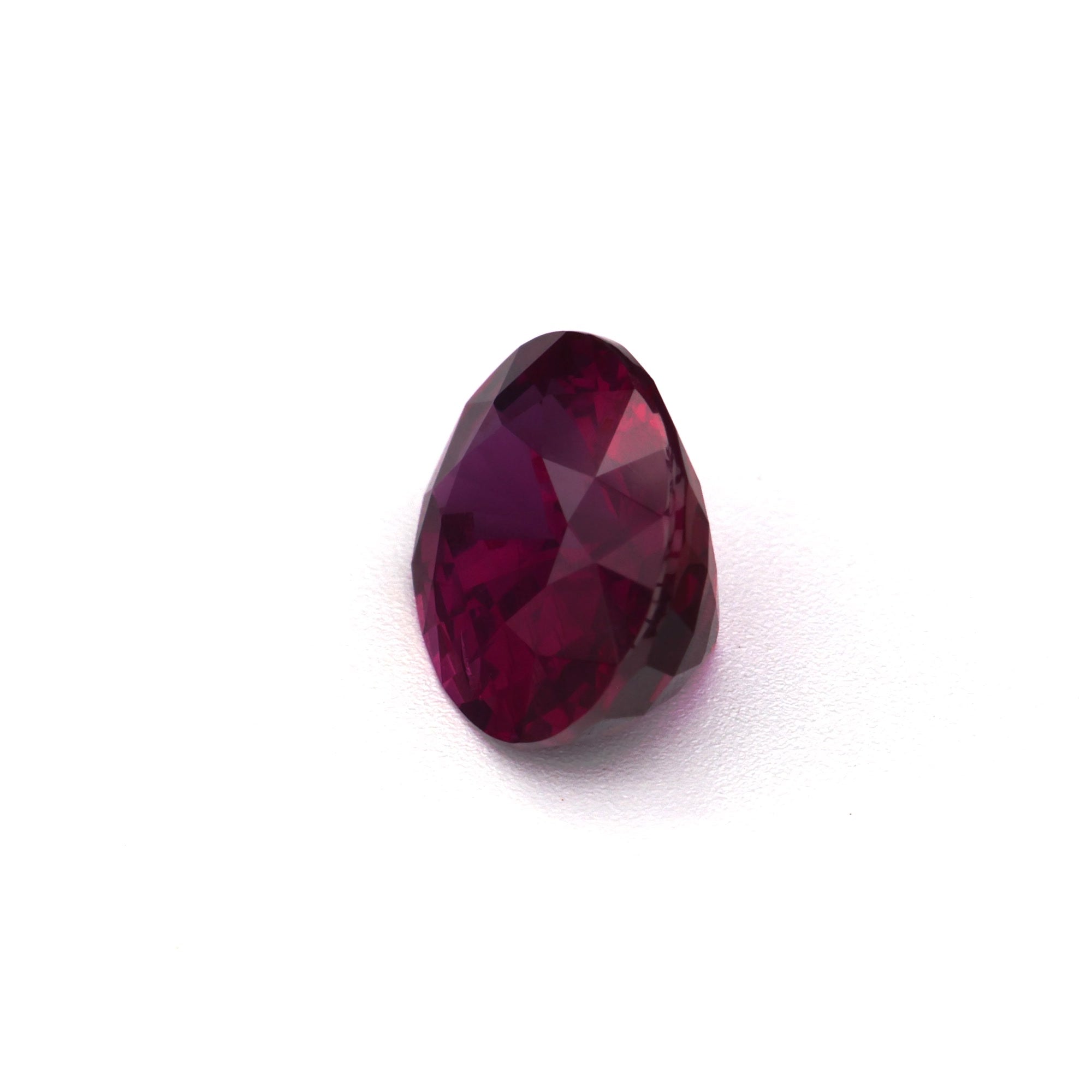
1.65 ct Natural Unheated Ruby – Oval Cut | GIA Report | Madagascar
CG8453


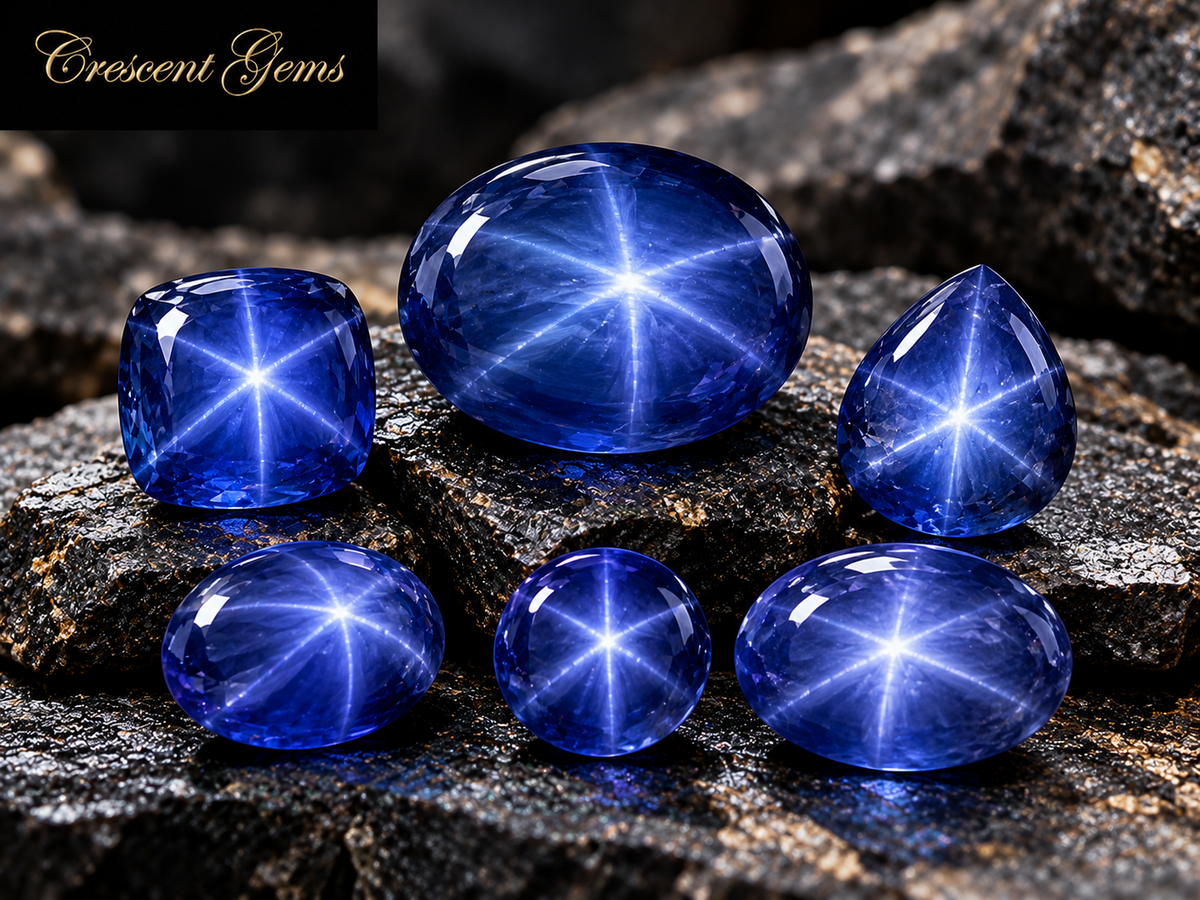
Blue Star Sapphire Price Guide — What They Cost and Why
Read moreabout Blue Star Sapphire Price Guide — What They Cost and Why
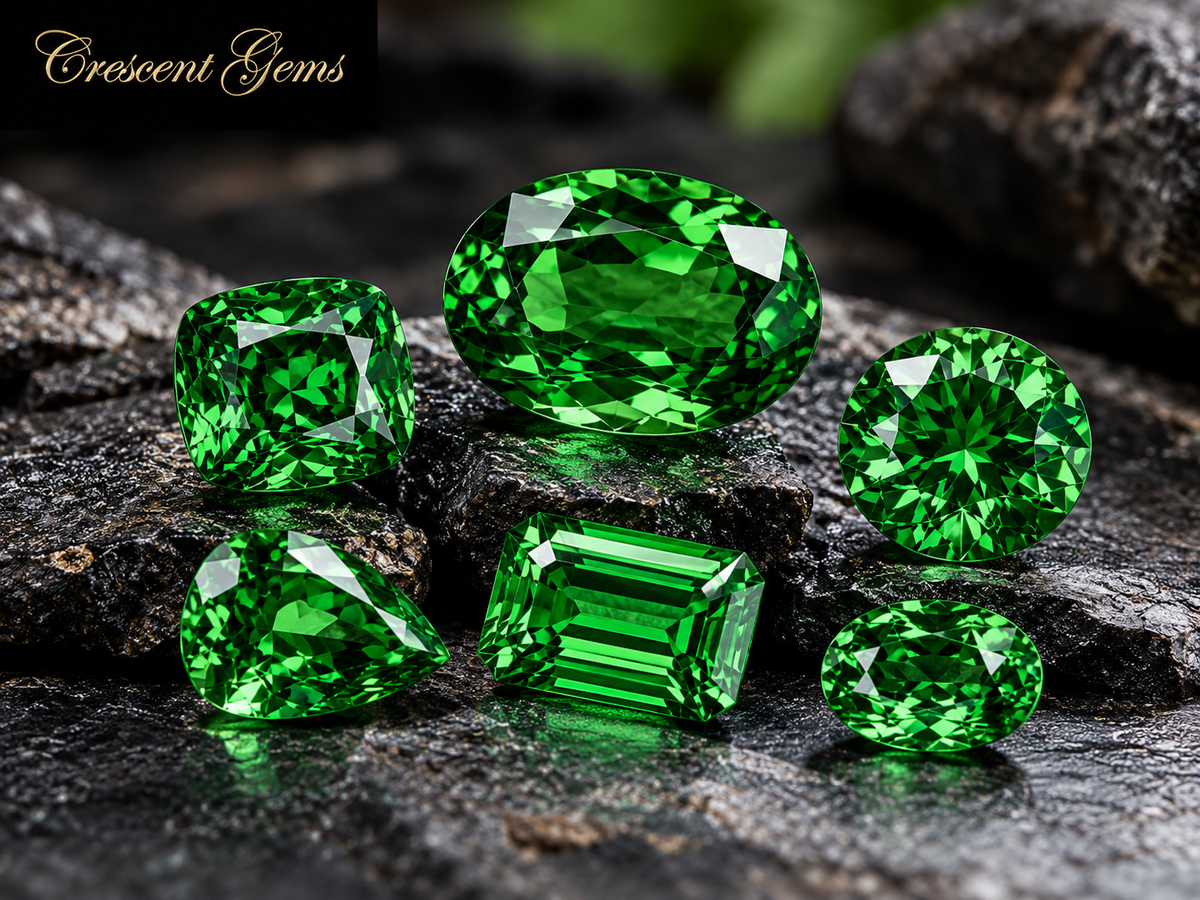
Tsavorite Garnet Price Guide — What They Cost and Why
Read moreabout Tsavorite Garnet Price Guide — What They Cost and Why
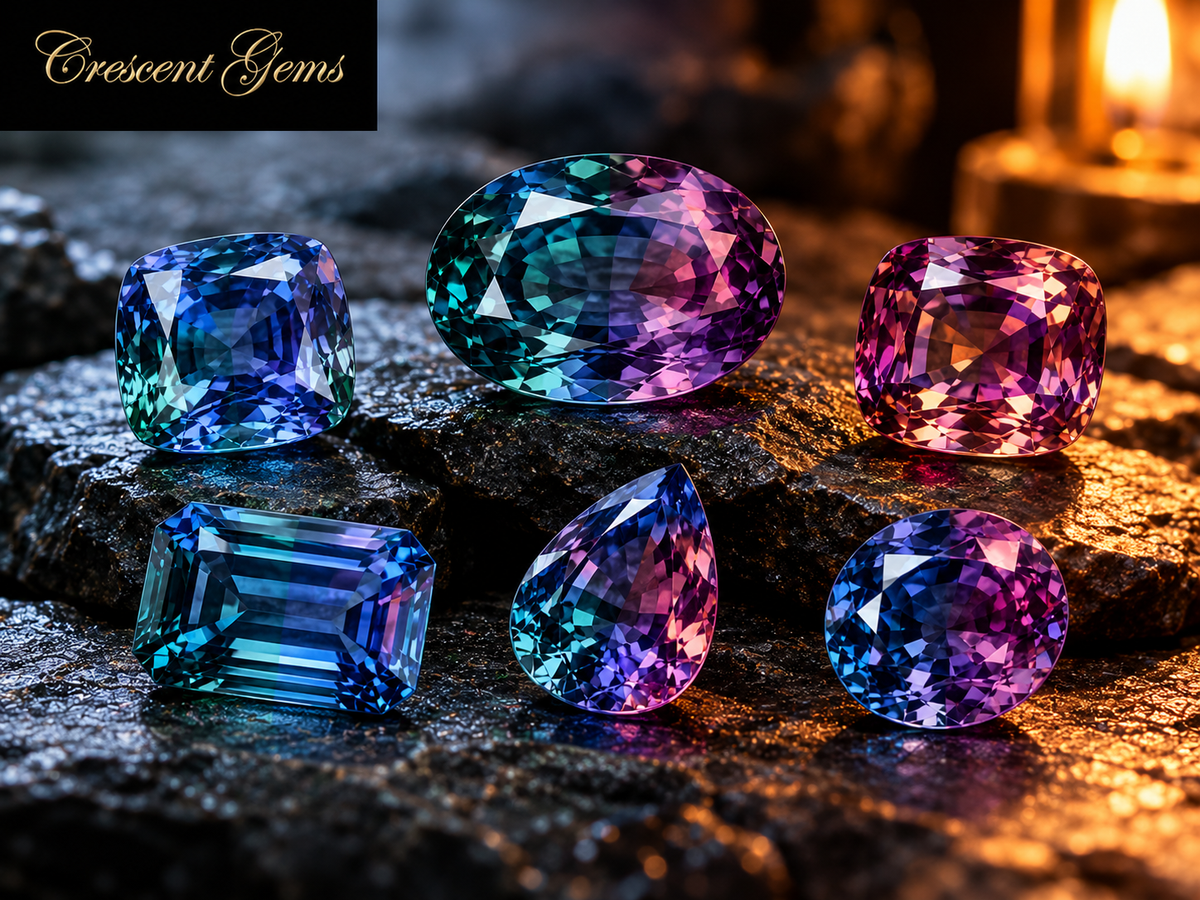
Color-Change Sapphire Price Guide — What They Cost and Why
Read moreabout Color-Change Sapphire Price Guide — What They Cost and Why
Is Cat's-Eye Chrysoberyl Good for an Engagement Ring?
Read moreabout Is Cat's-Eye Chrysoberyl Good for an Engagement Ring?
Cat's Eye Chrysoberyl Price Guide — What They Cost and Why
Read moreabout Cat's Eye Chrysoberyl Price Guide — What They Cost and Why



















Share: