- by Ahmed Shareek
Tsavorite Garnet — The Complete Buyer's Guide to the World's Most Brilliant Green Gemstone
- by Ahmed Shareek
We are a supplier from the source in Sri Lanka, so our gemstones reach you direct, without the intermediaries most sellers buy through.
Comparing green gemstone options? Read our Green Sapphire Guide and our Sapphire vs. Emerald guide alongside this one. For tsavorite as a ring stone specifically, see our tsavorite engagement ring guide.
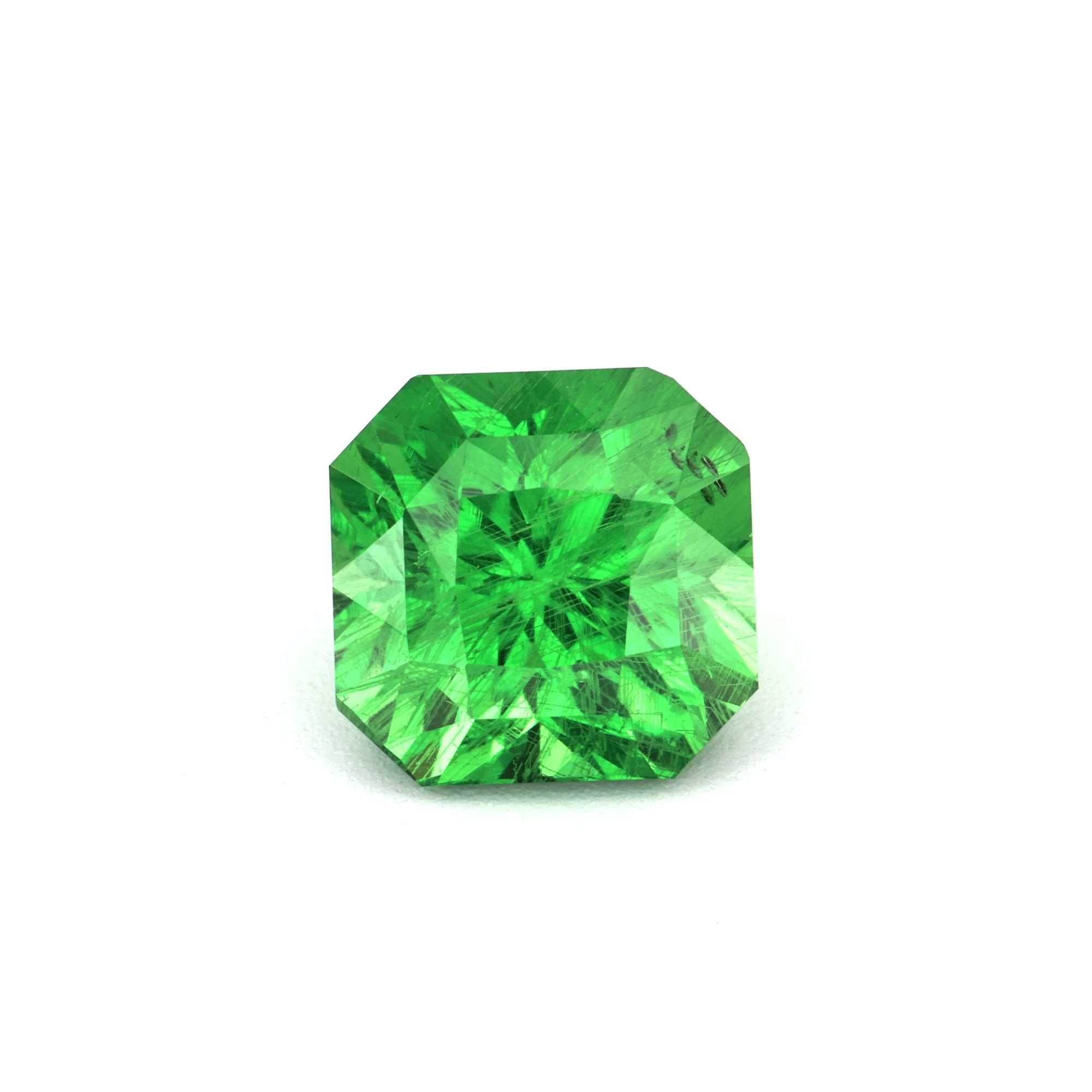
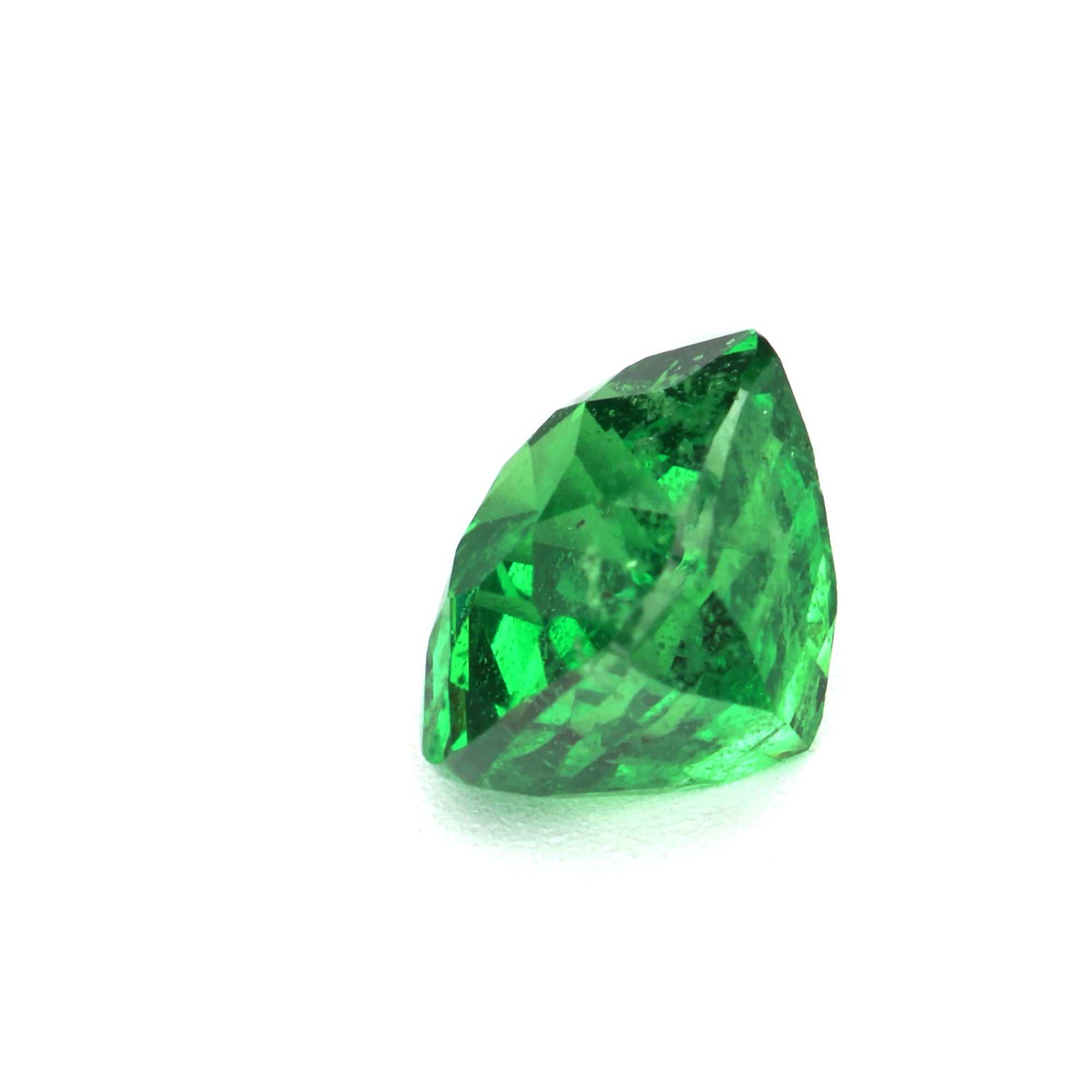
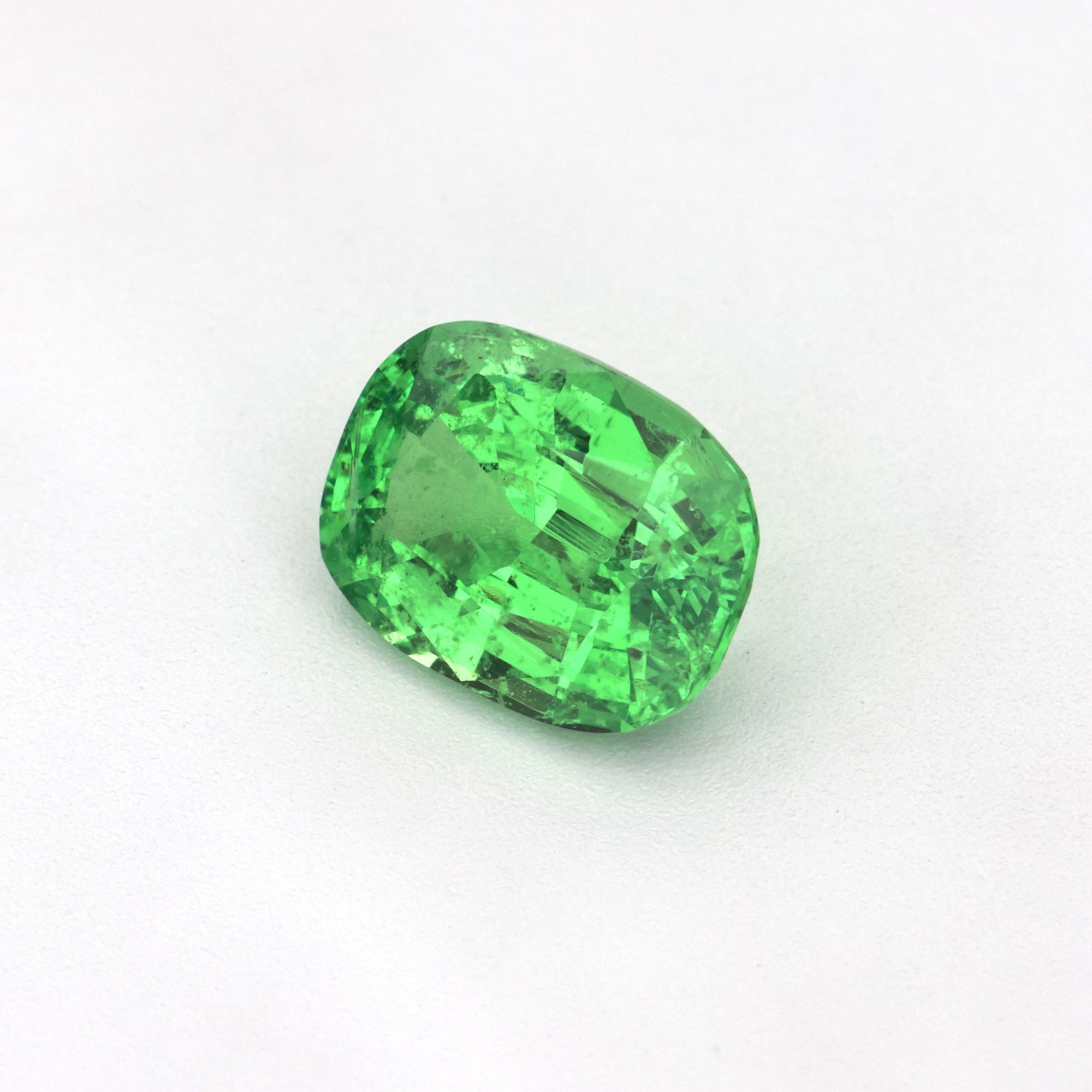
Tsavorite garnet is one of the most brilliant natural green gemstones available. Not the most famous — emerald holds that position — but brighter and livelier than emerald face-up, far more consistently untreated, and at comparable color quality, more accessible in price. It is not the hardest green stone in this guide: green sapphire at Mohs 9 is harder and more scratch-resistant, as the comparison below sets out. For buyers who want vivid green in a gemstone that can be worn on a finger every day with sensible care, tsavorite makes a stronger case than emerald on most practical metrics.
It is also, in our own trading experience, one of the better-value stones in the fine gemstone market. There is a gap between tsavorite’s optical quality and its commercial profile — buyers are still largely unaware of it compared to emerald, sapphire, or ruby — and that gap is why informed buyers and collectors have favoured it for decades. Awareness has grown steadily, and we make no prediction about where prices go from here.
This guide covers everything: the geology, the color science, the comparison to emerald and green sapphire, origin, quality grading, pricing, settings, and how to buy correctly.

Tsavorite is a variety of grossular garnet — calcium aluminum silicate — colored by vanadium and chromium. It belongs to the garnet mineral group, which encompasses a wide range of silicate minerals with similar crystal structures but different chemical compositions. Grossular garnet is named for the gooseberry (Ribes uva-crispa, Latin grossularia) because early specimens had a gooseberry-green color.
Tsavorite specifically is the vivid, emerald-green to blue-green variety of grossular that occurs in the metamorphic rock belts of East Africa. The chromophore elements — vanadium and chromium — are exactly the same elements responsible for emerald’s color. This is not a coincidence: both tsavorite and emerald form in geological environments where vanadium and chromium are present in the host rock during crystal growth. The visual similarity in color is therefore chemically genuine, not coincidental.
Key properties:
| Property | Tsavorite Garnet |
|---|---|
| Mineral species | Grossular garnet (Ca₃Al₂Si₃O₁₂) |
| Coloring agents | Vanadium and chromium |
| Mohs hardness | 7–7.5 |
| Refractive index | 1.734–1.759 |
| Cleavage | None — no directional weakness |
| Fracture | Conchoidal — common to all garnets; no fracture sensitivity |
| Treatment | Virtually always untreated; a clarity enhancement is occasionally used and, when it is, it is identifiable by GIA or another major laboratory and should be disclosed |
| Origin | Commercially, East Africa only (Kenya, Tanzania); minor occurrences elsewhere |
Tsavorite has one of the most dramatic discovery stories in the gemstone world. British geologist Campbell Bridges first encountered the vivid green grossular garnet in 1967 in the Lelatema Mountains of Tanzania while on a geological survey. He was so excited by the find that, according to the account he gave later in life, he hid specimens on his body while crossing the border with Uganda to avoid having them confiscated.
After Tanzania nationalized its mining sector and effectively closed access to foreign prospectors, Bridges relocated his search to Kenya. In 1971 he discovered deposits near the Tsavo National Park — a reserve famous for its man-eating lions and one of Africa’s most iconic wildlife areas. He named the stone after the park.
Bridges partnered with Tiffany & Co., who launched tsavorite commercially in 1974. Tiffany’s marketing positioned it as the vivid green alternative to emerald, and their backing gave the stone its first significant commercial exposure in the US market. Campbell Bridges continued mining in Kenya until his murder near his mine in 2009, one of the more tragic endings to a gemstone discovery story.
The geological belt where tsavorite forms — the Mozambique Belt, a system of ancient metamorphic rocks stretching from Mozambique through Tanzania and Kenya — is geologically specific and not extensive. This geological constraint is one of the structural reasons for tsavorite’s supply limitation. See our tsavorite mining guide for the full geological and mining background.
Tsavorite’s color ranges from a slightly yellowish-green through pure vivid green to a slightly bluish-green. Within this range, specific positions are more commercially prized than others.
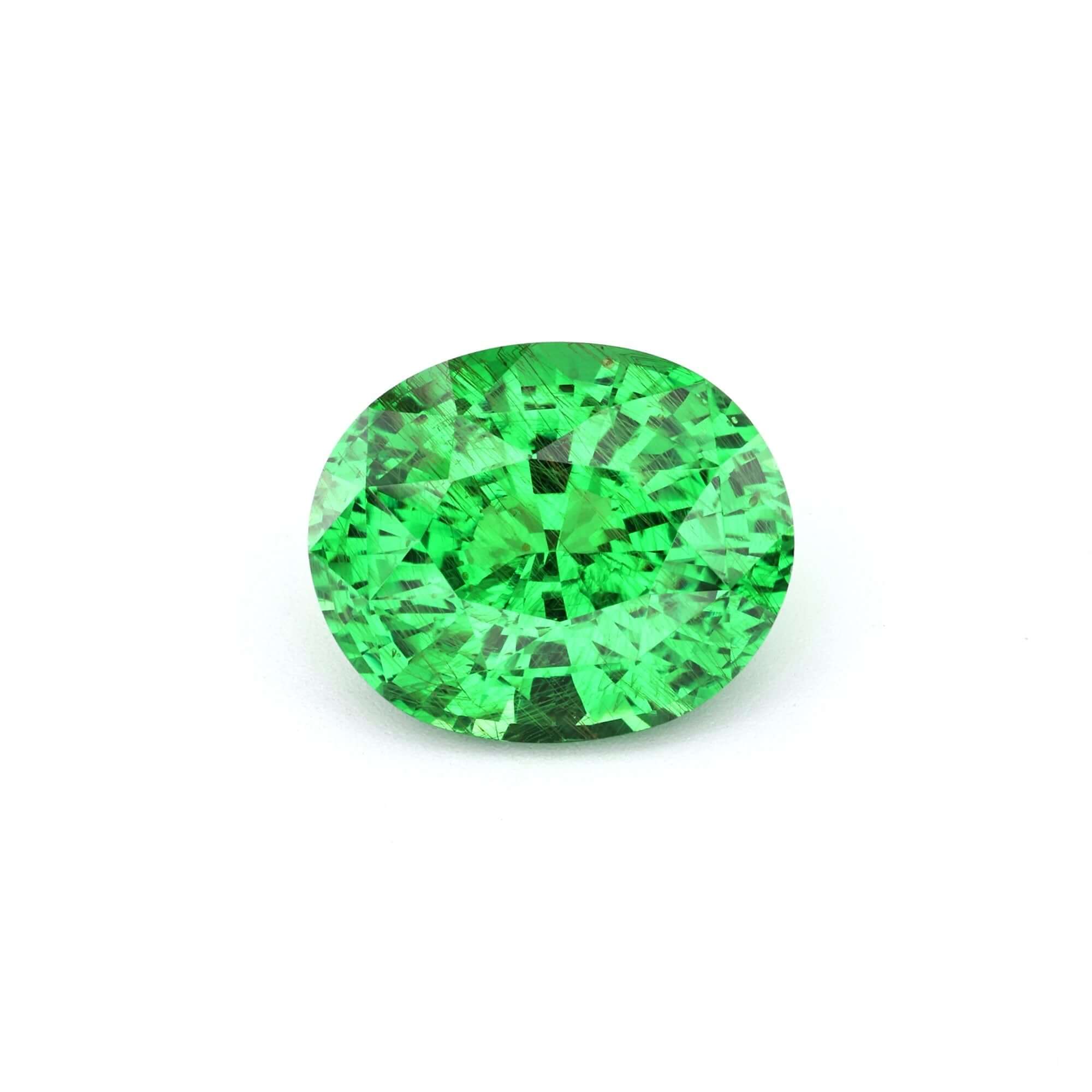
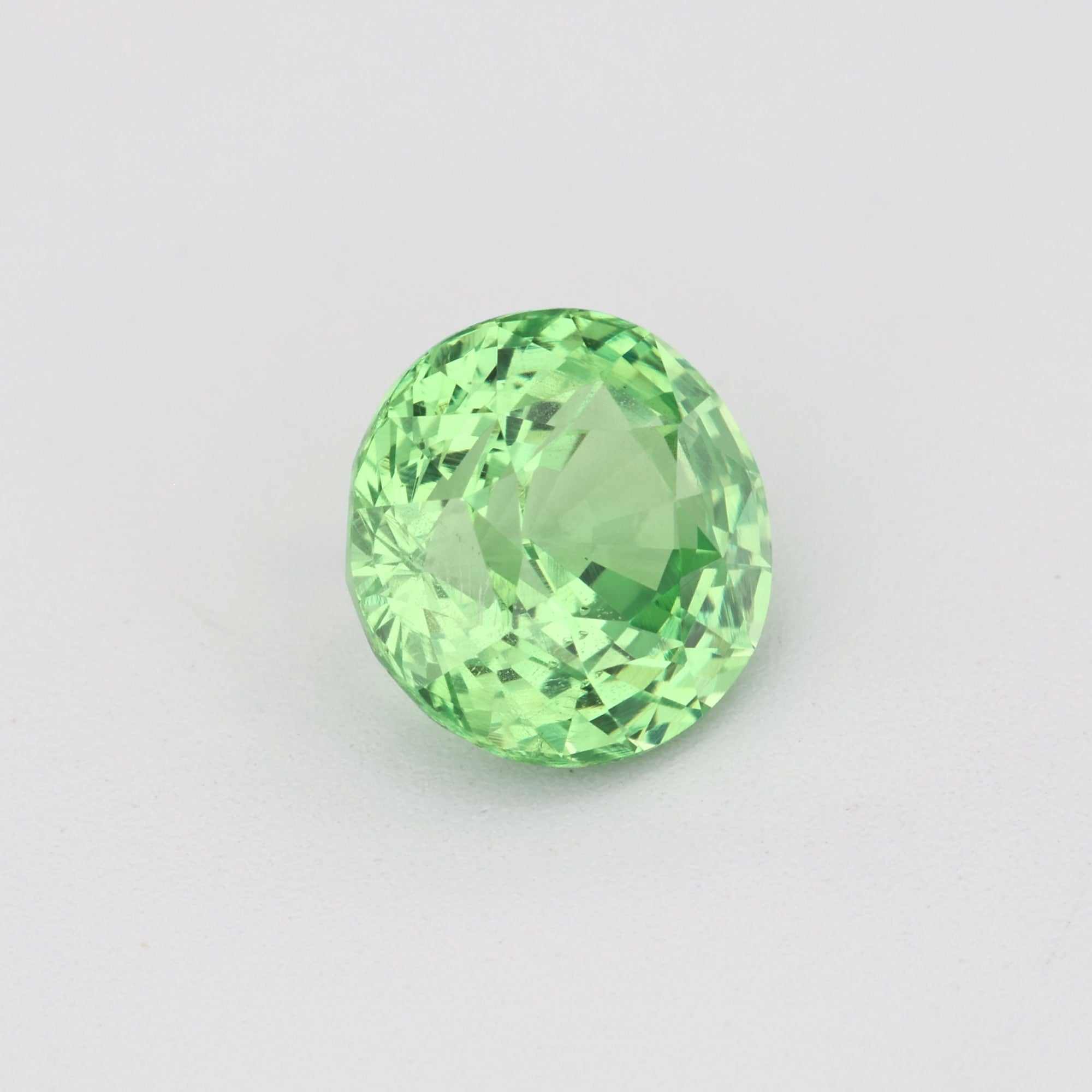
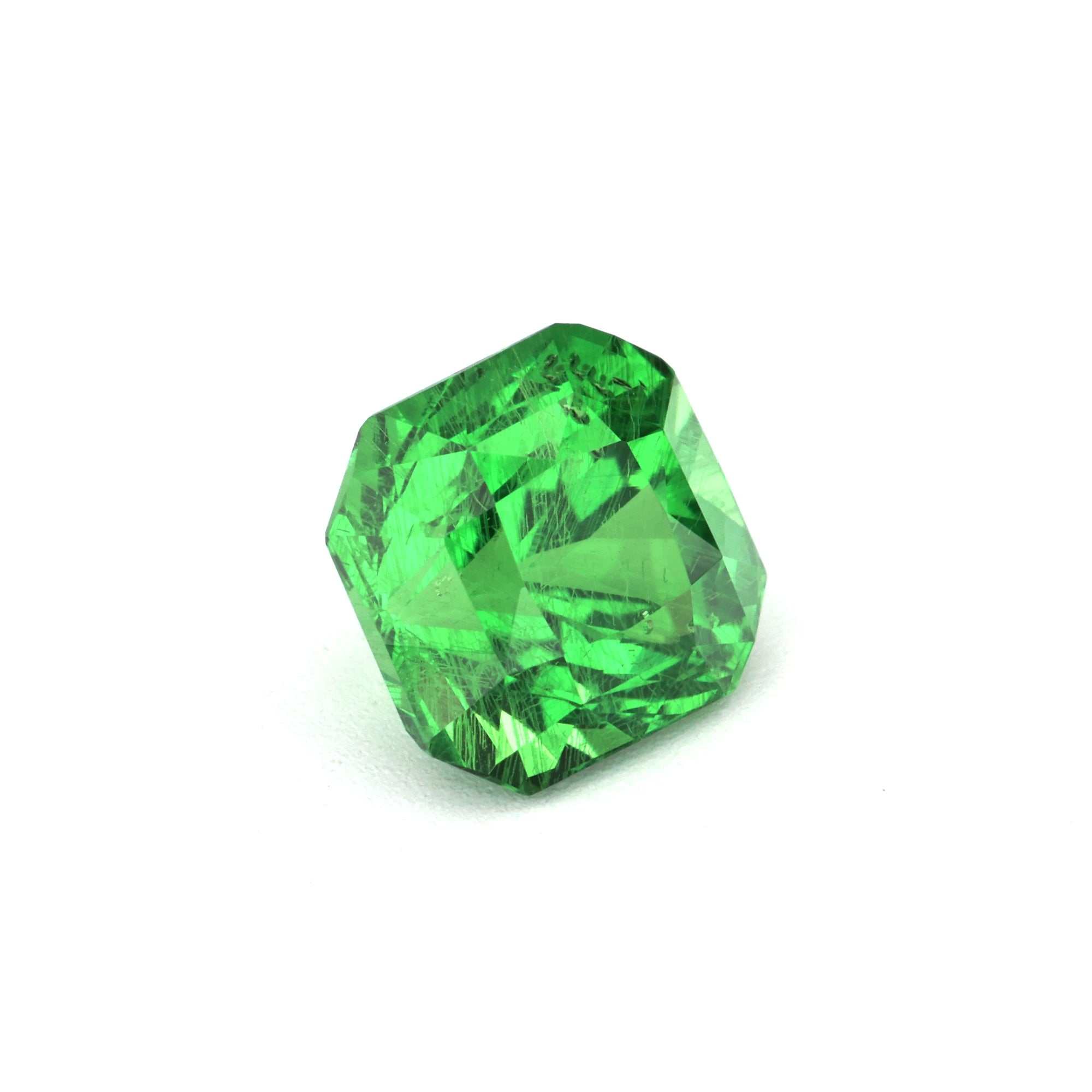
The most prized tsavorite is a vivid, pure green — neither notably yellow nor notably blue in its green, saturated enough to appear rich and jewel-like in all lighting, and light enough in tone to maintain that saturation in lower light. The finest examples have been described as resembling the most vivid Colombian emerald in color, but with the added brilliance that tsavorite’s higher refractive index delivers. This is the stone that stops collectors cold. Fine vivid tsavorite at this color position in sizes above 2 carats is genuinely rare.
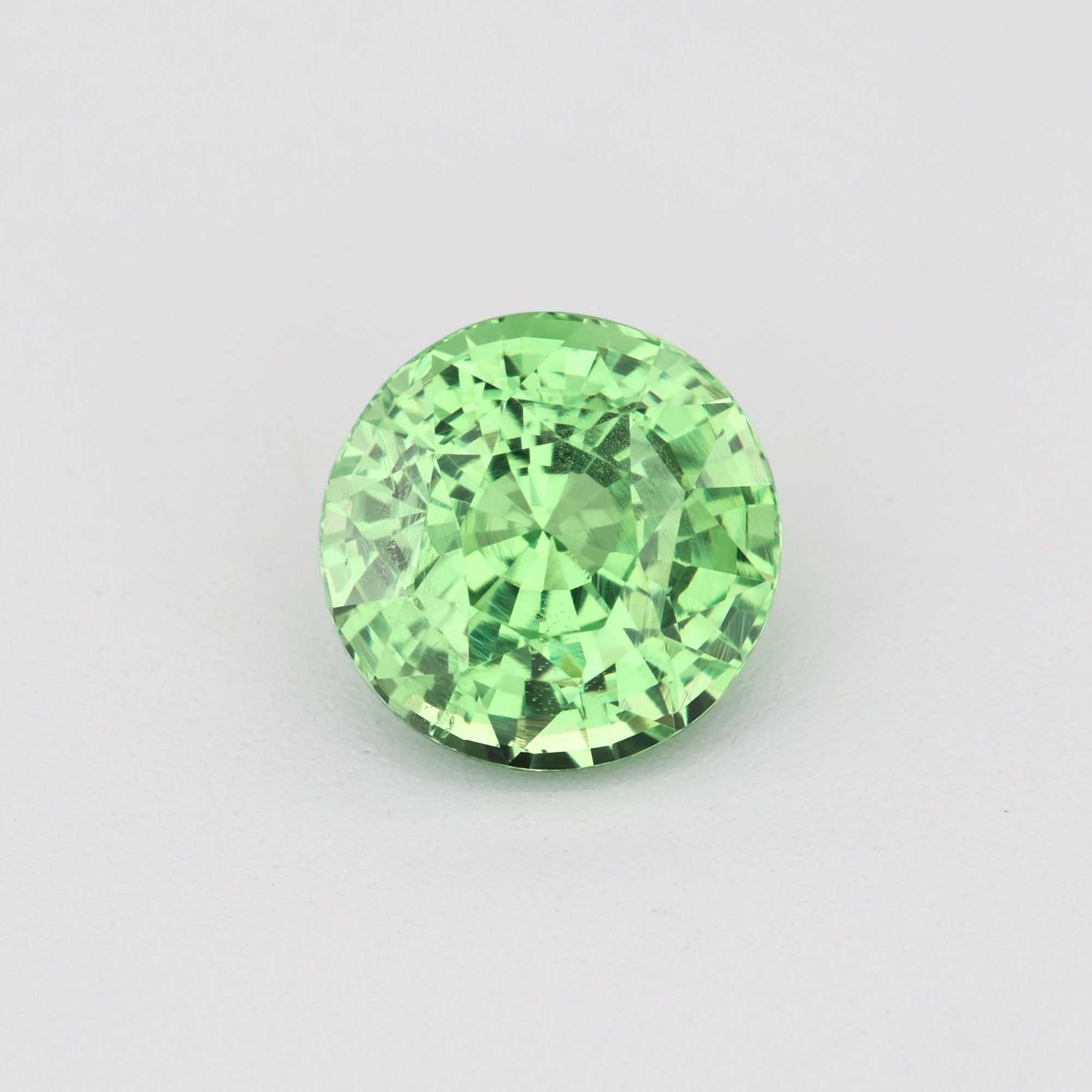
The most commercially available tsavorite sits in a slightly yellowish-green range — clearly green, bright, and vivid, but with a warm yellow undertone that keeps it from the pure green benchmark. These stones are beautiful and represent the best value-per-dollar in the tsavorite family: the color is clearly green and vivid, the price is meaningfully lower than the finest pure green, and availability is significantly better. For buyers who want tsavorite for jewelry without a collector-level budget, this is the practical sweet spot.
A small proportion of tsavorite shows a cool, slightly bluish-green quality that sits adjacent to the teal sapphire color zone. These stones are among the rarest in the tsavorite family and appeal specifically to buyers drawn to cool, blue-influenced greens. At equivalent color saturation, slightly bluish tsavorite commands premiums over yellowish-green material.
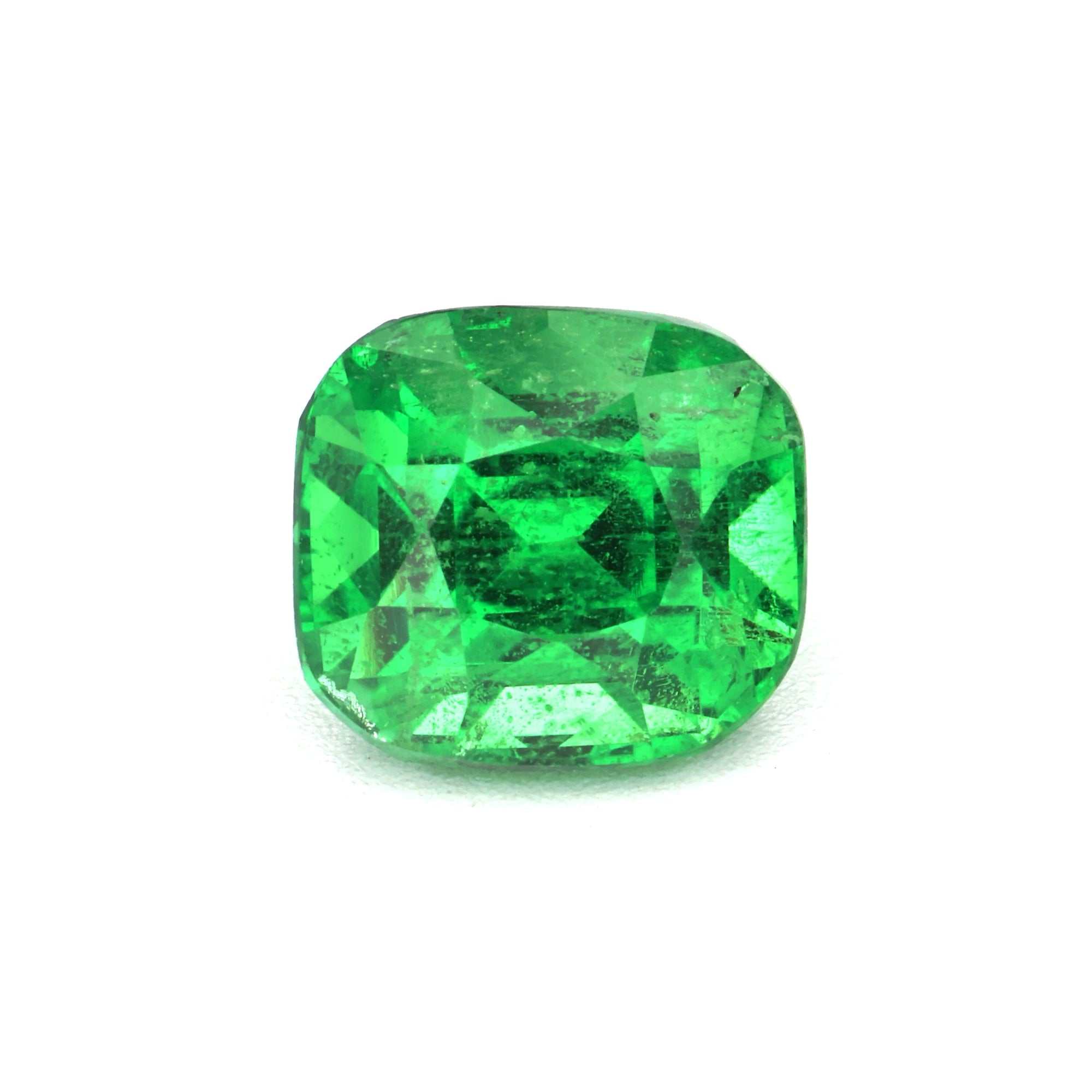
Heavily saturated, very dark tsavorite — forest green approaching bottle green at high darkness — can appear near-black in lower lighting, losing the vivid green character that makes the stone desirable. As with all deeply saturated colored stones, cut quality is critical at high saturation levels: a well-cut deep tsavorite manages light return to maintain face-up color; a poorly cut one tips into darkness. Always evaluate deep tsavorite under multiple lighting conditions before purchasing.

The overwhelming majority of tsavorite garnet ever sold — at any price point, from any source, by any seller — is untreated. This reflects the physical reality of the material, not a marketing claim. On the rare occasion a treatment is used, it is a clarity enhancement rather than heat (heat does not work on garnet — see below), and GIA identifies it.
Heat treatment is the most common gemstone enhancement globally. It works in corundum (sapphire) by redistributing trace elements within the crystal lattice at high temperatures. In garnet, this mechanism does not produce beneficial color change. Heat treatment of tsavorite does not improve color, does not improve clarity, and offers no commercial advantage. No commercial incentive therefore exists to heat tsavorite rough, and heating is not part of normal tsavorite production.
Fracture filling — the oil or resin treatment standard in emerald — is not routine in tsavorite. Tsavorite does not typically carry the surface-reaching fractures that require filling in emerald, so most tsavorite reaches the market clean without enhancement. It is not unheard of, however: a clarity enhancement is used on a minority of stones, and where one of our stones carries it, it is disclosed in full on its listing.
The practical consequence for buyers: treatment status is rarely a concern when buying tsavorite. Unlike sapphire (where 90%+ is heated) and emerald (where virtually all commercial material is fracture-filled), the vast majority of tsavorite you encounter is natural color with no enhancement of any kind — and on the rare exception, it is identifiable by GIA and should be disclosed by any reputable seller rather than passed off as untreated. This is a significant buyer advantage that is often underappreciated.
The emerald comparison is the most important one for most tsavorite buyers. Here is the full picture:
| Factor | Tsavorite Garnet | Emerald |
|---|---|---|
| Mohs hardness | 7–7.5 | 7.5–8 |
| Cleavage | None | Imperfect in one direction |
| Fractures | Uncommon; not surface-reaching in quality stones | Expected in virtually all commercial stones |
| Treatment | Virtually always untreated; rare clarity enhancement, which a reputable seller discloses | Fracture filling (oil, resin) standard on virtually all commercial stones |
| Re-treatment required | Not required — no treatment to degrade on untreated stones | Yes — oil treatment degrades; re-oiling may be needed |
| Refractive index | 1.734–1.759 — higher brilliance | 1.565–1.602 — less brilliant |
| Ultrasonic cleaning | Generally safe on untreated stones; avoid on clarity-enhanced material | Dangerous — damages oil treatment and can extend fractures |
| Daily wear suitability | Very good with sensible care; bezel setting recommended | Moderate — fractures sensitive to impact; requires careful handling |
| Color comparability | Rivals finest Colombian emerald; higher face-up brilliance | The benchmark; slightly warmer, more characteristic color |
| Price (1ct, vivid green, fine) | $1,000–2,500 | $3,000–10,000+ (Colombian, minor oil) |
| Prestige / recognition | Growing; still underrecognized by general public | Maximum — one of the Big Four gemstones |
Figures above are approximate market guidance, not fixed quotes. Actual value varies by treatment, origin, colour, cut, clarity, and certification.
The most counterintuitive finding in this comparison: tsavorite at Mohs 7–7.5 is technically softer than emerald at Mohs 7.5–8, yet it is more practical for daily ring wear. The reason is fractures and cleavage. Emerald’s omnipresent internal fractures make it sensitive to impact in ways that clean tsavorite is not. An emerald ring that is knocked against a countertop can extend an existing fracture significantly. A tsavorite ring with the same impact typically shows no damage. Hardness is one durability variable; toughness (resistance to fracture) is another, and tsavorite wins on toughness even though emerald wins on hardness. See our sapphire vs. emerald guide for more on the durability framework.
| Factor | Tsavorite Garnet | Green Sapphire |
|---|---|---|
| Mohs hardness | 7–7.5 | 9 — significantly harder |
| Brilliance | Slightly lower RI (1.734–1.759 vs. sapphire’s 1.762–1.770) but markedly higher dispersion; reads as livelier and more sparkling | High but slightly different character; more glass-like |
| Color character | Electric, vivid green; high saturation per carat | Earthy, slightly muted; more organic aesthetic |
| Treatment | Virtually always untreated | Usually unheated; heat degrades green color |
| Size availability above 2ct | Limited; fine quality above 2ct is scarce | Better availability at larger sizes |
| Price (1ct, vivid green) | $1,000–2,500 | $500–2,000 |
| Best aesthetic for | Maximum color impact, electric vivid green | Nature-inspired, vintage, earthy designs |
Figures above are approximate market guidance, not fixed quotes. Actual value varies by treatment, origin, colour, cut, clarity, and certification.
The choice between tsavorite and green sapphire is largely aesthetic: tsavorite is more electric and vivid — it pops in a way that reads as high-impact colored gemstone. Green sapphire is more earthy and organic — it suits nature-inspired and vintage designs where the color complements rather than dominates. Green sapphire at Mohs 9 is also significantly harder and more scratch-resistant in daily ring wear. Both are legitimate choices for buyers who want a green center stone without emerald’s maintenance requirements. Browse our green sapphire collection and green sapphire guide for the side-by-side.
Tsavorite is graded on four primary variables, with color being the dominant value driver by a significant margin.
Color drives 60–70% of tsavorite’s value at a given size. The most prized position is medium-vivid to vivid pure green — saturated enough to appear rich and jewel-like in all lighting without going so dark that the color disappears in dim conditions. Stones that maintain vivid color face-up across daylight and incandescent light are the most desirable. GIA uses standardized color grading terminology (hue, tone, saturation) for tsavorite in their reports.
Unlike emerald — where inclusions are so expected that they are described romantically as jardin (garden) — tsavorite is held to a higher clarity standard. Eye-clean tsavorite (no inclusions visible to the naked eye face-up) is the commercial expectation for quality material, and the majority of fine tsavorite on the market meets this standard. Included material is significantly less expensive. GIA-graded tsavorite will note any inclusions in the clarity section of the report.
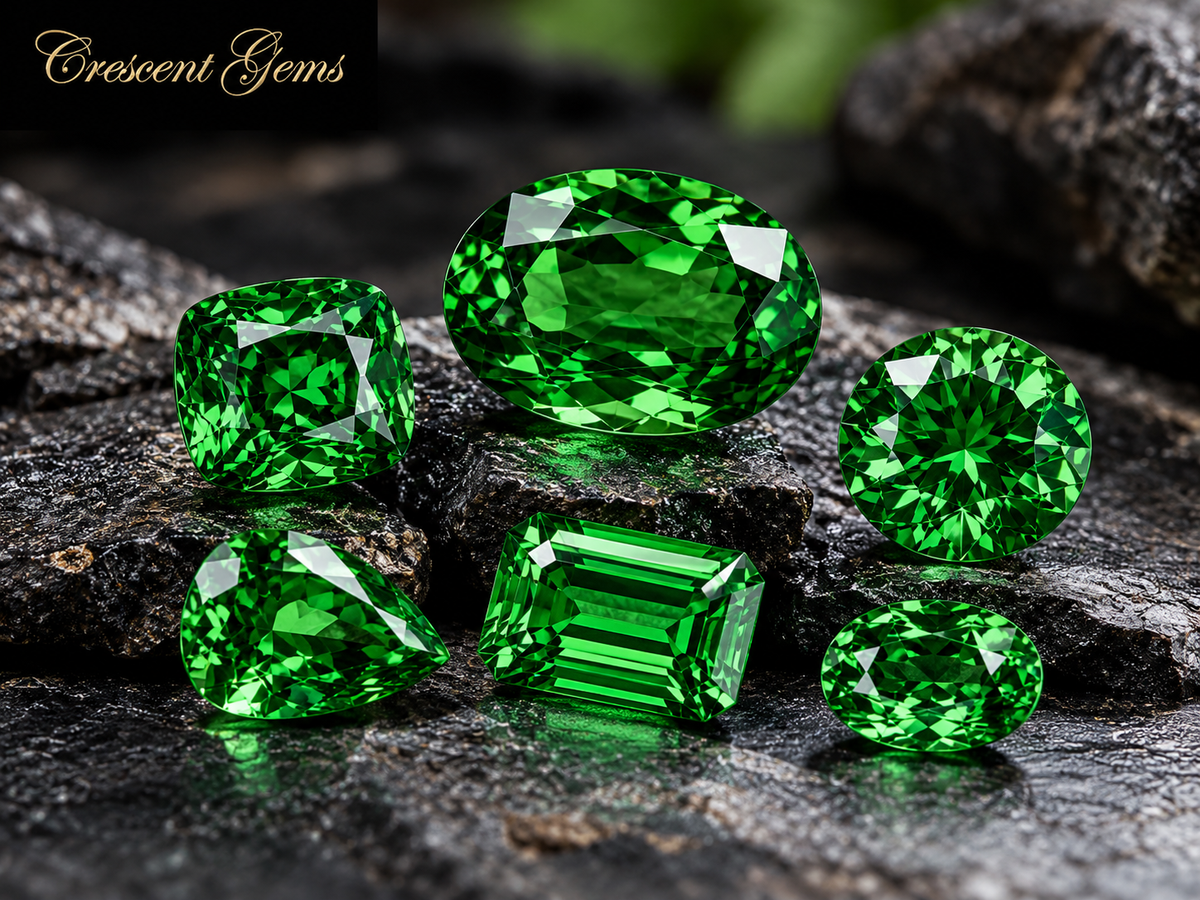
Tsavorite is typically cut in round, oval, cushion, and pear formats. Cut quality matters significantly for color performance: a well-cut tsavorite with good light return appears more vivid and saturated than an equivalently colored stone cut to maximize carat weight at the expense of optical performance. Window effects (where light passes straight through the stone face-up without being returned) are a common cut flaw in tsavorite and should be checked by looking straight down through the table under diffuse lighting.
Tsavorite above 2 carats in fine vivid green is genuinely scarce, and prices per carat increase sharply at the 1ct and 2ct thresholds. The rough deposit produces predominantly small crystals; the relatively few pieces of rough large enough to yield stones above 2 carats command significant premiums. A 3ct fine vivid tsavorite is not simply three times the price of a 1ct equivalent — it is substantially more per carat due to the rarity of the rough. This supply constraint is structural and reflects the limited geological deposit, not market manipulation.
Tsavorite occurs only in a specific geological belt — the Mozambique Belt — running through Kenya and Tanzania. This is not simply a geographic statement; it reflects a specific metamorphic geological environment that is required for tsavorite formation.
The Merelani Hills in northern Tanzania — the same area that produces tanzanite — yield tsavorite alongside that blue-violet stone. Merelani tsavorite tends toward fine vivid greens and produces the finest material alongside Kenyan output.
The Taita-Taveta district of southeastern Kenya, near the Tsavo National Park, is the other major source and was where Campbell Bridges made his second discovery. Kenyan tsavorite is well-regarded and the source of significant commercial production. Both Kenyan and Tanzanian material are considered interchangeable in quality terms; neither commands a specific origin premium over the other in the current market.
Small deposits of grossular garnet in tsavorite-green colors have been reported elsewhere — Madagascar, and further afield in Pakistan — but the Kenya-Tanzania belt remains the only commercially significant source globally. See our tsavorite mining guide for the full geological background.
Tsavorite is priced on color and size primarily, with clarity as a secondary variable for already eye-clean material. The price curve is steep at size thresholds because of the rarity of large rough.
Tsavorite Price Ranges
The final comparison in that box is the most commercially significant: a fine tsavorite at 2 carats costs $2,500–5,000 per carat; a comparable Colombian emerald in equivalent vivid green at 2 carats with minor oil treatment is $6,000–15,000 per carat. The tsavorite requires no maintenance, no re-oiling, and is more brilliant face-up. The emerald carries prestige and centuries of history. The buyer chooses based on which matters more. See our gemstone pricing guide.
Figures above are approximate market guidance, not fixed quotes. Actual value varies by treatment, origin, colour, cut, clarity, and certification.
Tsavorite at Mohs 7–7.5 is appropriate for engagement rings with sensible setting choices. It is harder than most everyday materials and resists scratching from ordinary contact with skin, fabric, and most surfaces — though at Mohs 7–7.5 it is not immune, and airborne grit containing quartz can dull a stone over years of unprotected wear. The practical durability concern is impact — at Mohs 7–7.5, a significant sharp impact against a hard surface (granite countertop edge, concrete, metal hardware) can chip or fracture a tsavorite.
The mitigation is straightforward: a bezel setting protects the stone’s edges — the most vulnerable area — from impact. A bezel-set tsavorite is significantly more protected than a prong-set tsavorite where the girdle edges are exposed. For buyers with active lifestyles or jobs that involve significant hand use, bezel setting is the recommendation. See our dedicated tsavorite engagement ring guide for the full durability analysis.
Yellow gold is the traditional partner for tsavorite and, to most eyes, the most harmonious. The warm gold and vivid green create a rich, jewel-like combination that amplifies the stone’s color. Yellow gold also draws the comparison to vintage and antique emerald jewelry, which tsavorite shares in visual character if not in species. This is the most popular setting choice for tsavorite rings.
White gold and platinum provide cool contrast that makes the vivid green appear more saturated by opposition. A fine tsavorite in a white metal bezel or prong setting is a clean, modern look where the stone’s color is the unambiguous focal point. This is a particularly good choice for slightly bluish-green tsavorite, where the cool metal amplifies the blue character.
Rose gold creates an unusual but beautiful combination — the pink-warm metal against vivid green produces a jewel-toned quality that is distinctive and fashion-forward. Less traditional than yellow gold but increasingly popular in non-traditional engagement ring design.
Best cuts for tsavorite: Round brilliant maximizes brilliance and suits classic settings. Oval is the most popular non-round format and elongates the finger. Cushion suits vintage-inspired designs. Pear creates a distinctive silhouette. Emerald cut — the format named after the stone tsavorite is most often compared to — creates a deep, still window of vivid green that is dramatically beautiful in high-saturation material. See our gemstone cut guide for format analysis that applies broadly to colored stones.
Commercial tsavorite under $800 total: Seller disclosure is sufficient. A GIA report adds cost disproportionate to the stone’s value at this price point. Because tsavorite is almost always untreated, treatment verification is rarely the primary concern.
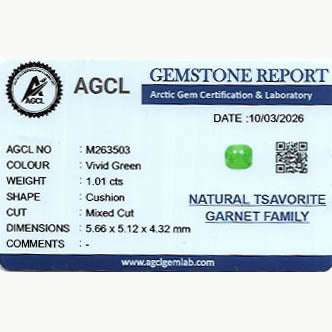
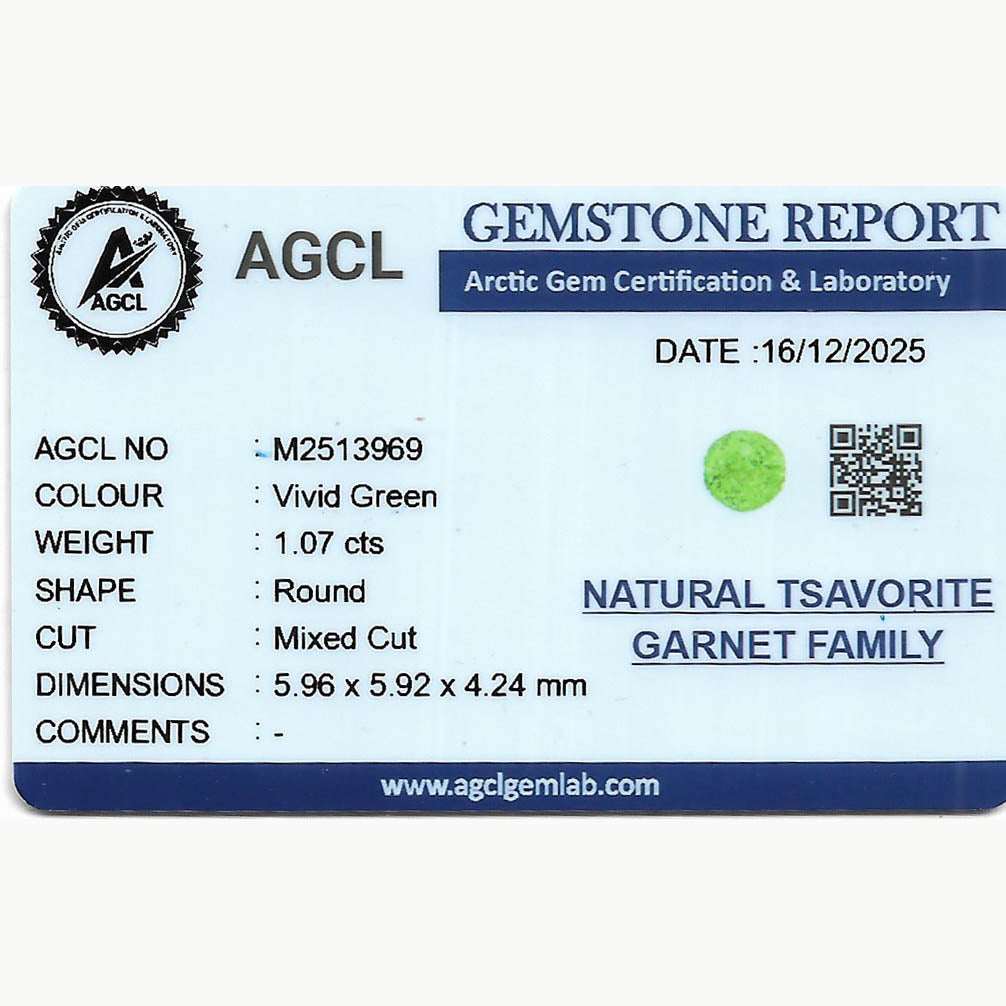
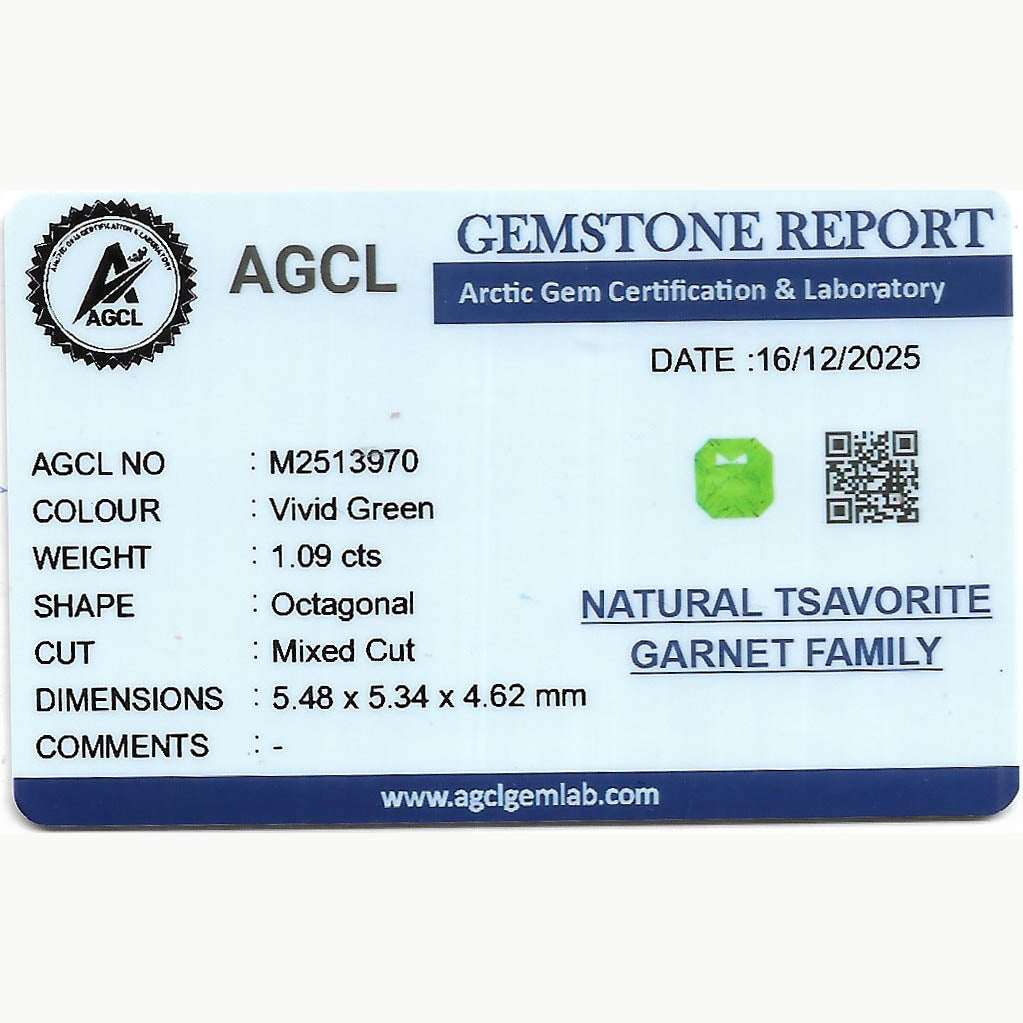
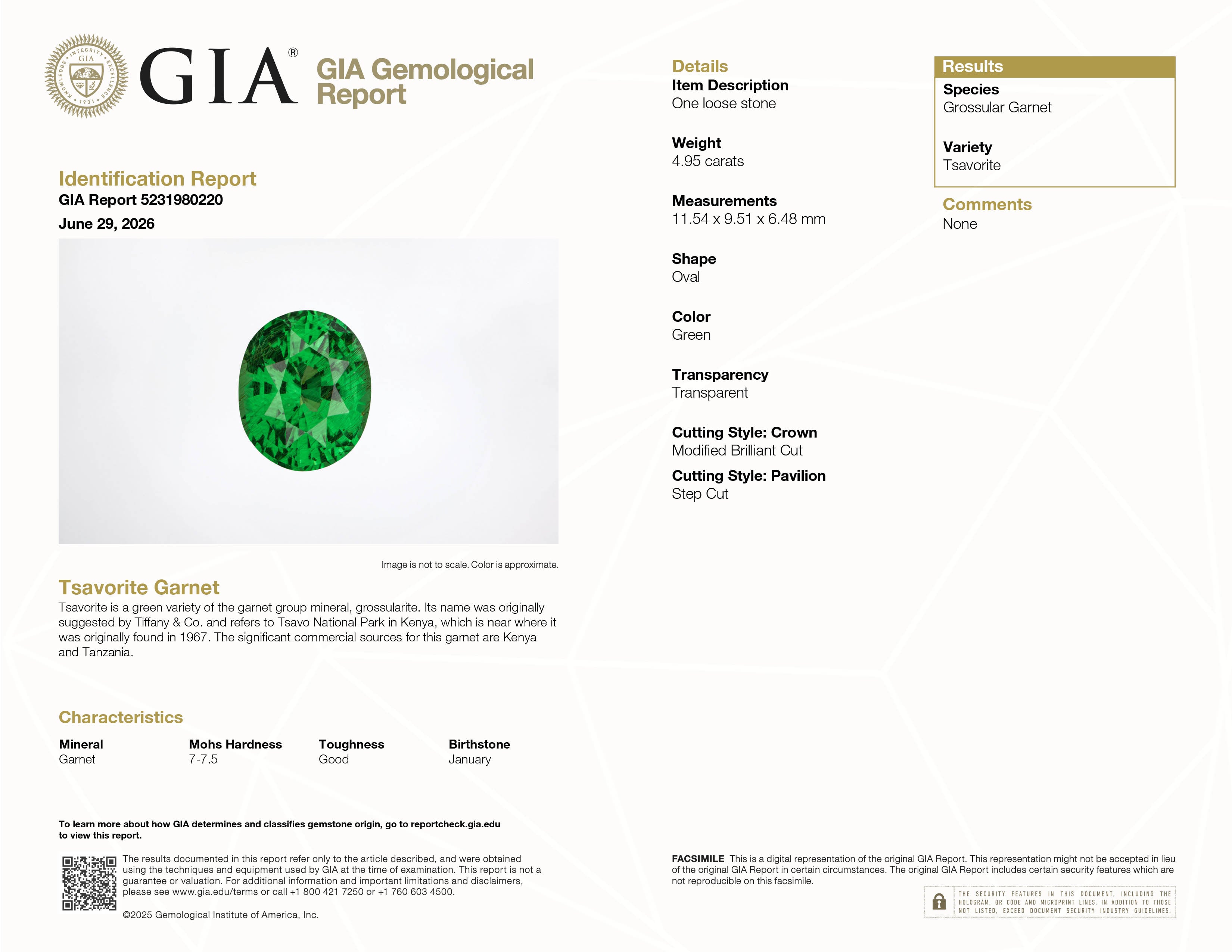
Fine tsavorite above $800: A GIA or AGL report confirming species identification (natural grossular garnet, tsavorite variety) is recommended. It protects against substitution of less valuable green garnets (demantoid, green grossular of lower saturation, or dyed material) for true tsavorite. GIA Colored Stone Reports for tsavorite also confirm treatment status — most report no indications of treatment, since tsavorite is almost always untreated, but on the rare stone that has been clarity enhanced, GIA identifies it directly on the report.
Collector-tier tsavorite (2ct+, finest vivid green): GIA or AGL documentation is strongly recommended. At these prices, independent species and quality verification is meaningful. See our GIA report guide and our collectors and investment collection.
Our tsavorite garnet collection features East African material across the full quality range with complete disclosure on every listing. For the other leading emerald alternative: green sapphire collection.
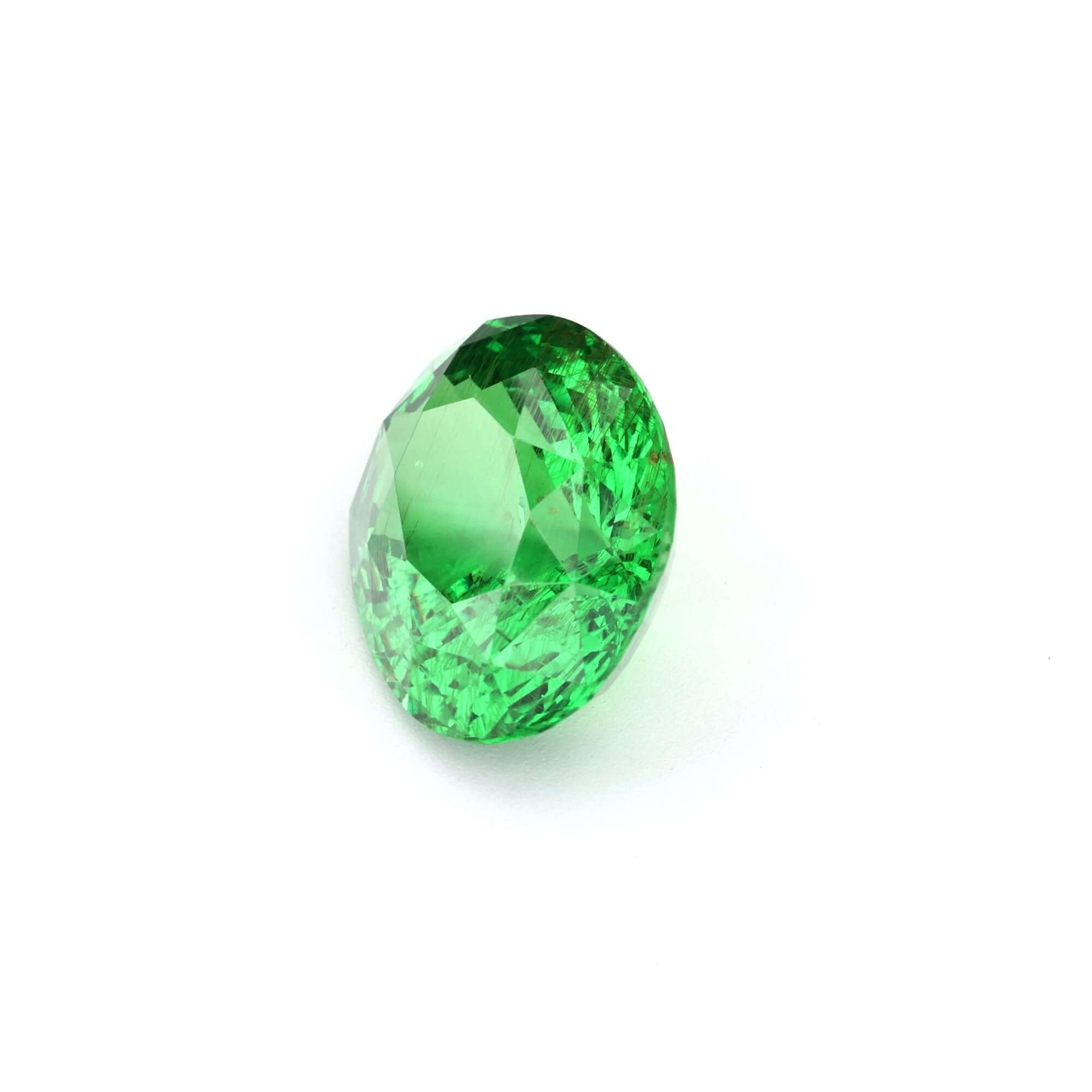
Currently in stock: a 4.95 ct oval tsavorite garnet, GIA-documented untreated (GIA Report #5231980220) — priced at $22,724, a near-5-carat, vivid green, eye-clean example near the top of what East Africa's mines produce. The Kenyan origin reflects our own sourcing documentation rather than a GIA origin determination.
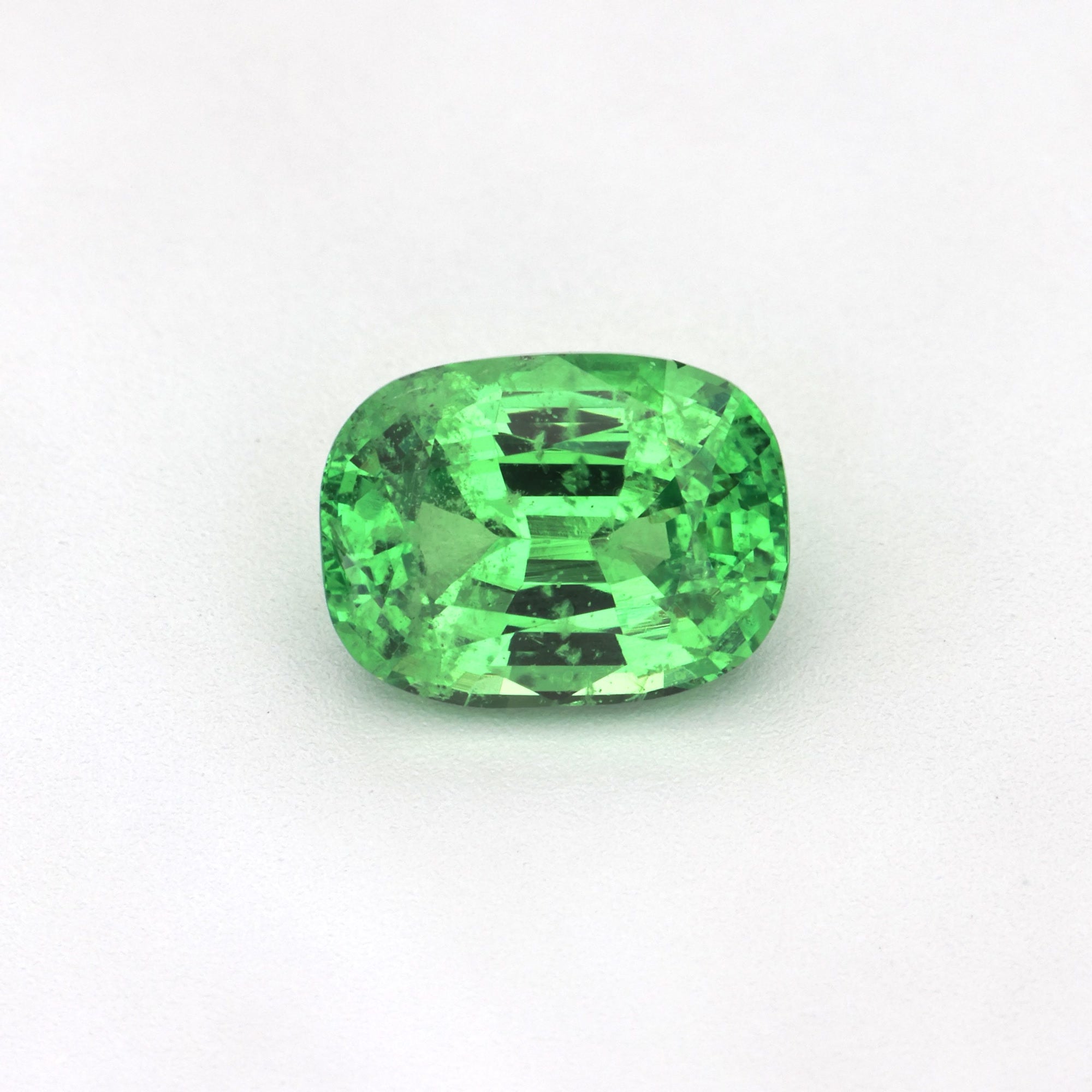
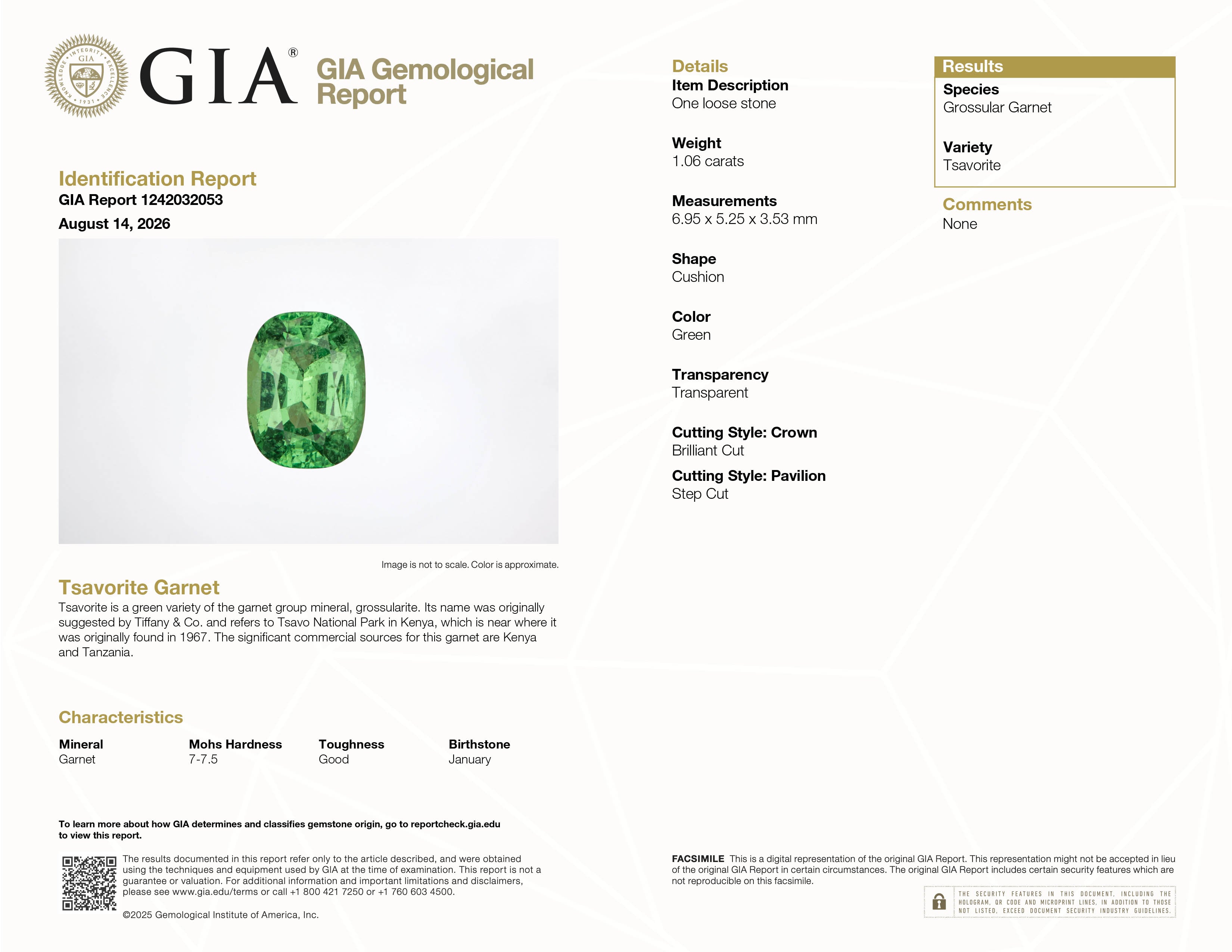
Also in stock: a 1.06 ct untreated cushion-cut tsavorite garnet, GIA Report #1242032053 — a vivid green, above-1-carat stone whose cushion facet pattern concentrates the saturation across the face. Its Kenyan origin is our own assessment; it was not determined by that GIA report.
We also currently carry a 1.86 ct cushion-cut tsavorite garnet, untreated, GIA Report #1242032119 — priced at $2,805, an above-average size for tsavorite with an even, warm yellowish-green saturation and no dead spots across the face. Its Kenyan origin is our own assessment, not a GIA determination.
Email crescentgems@gmail.com with any question about a specific stone, its quality, or sourcing to specification. Free US shipping; 14-day returns on every order.

CG8447
CG8460
CG8465

CG8359
CG8417
CG8360
Prices are shown in your local currency and may change.
CG8417
CG8460
CG8359
CG8360
CG8465
CG8447


Blue Star Sapphire Price Guide — What They Cost and Why
Read moreabout Blue Star Sapphire Price Guide — What They Cost and Why
Tsavorite Garnet Price Guide — What They Cost and Why
Read moreabout Tsavorite Garnet Price Guide — What They Cost and Why
Color-Change Sapphire Price Guide — What They Cost and Why
Read moreabout Color-Change Sapphire Price Guide — What They Cost and Why
Is Cat's-Eye Chrysoberyl Good for an Engagement Ring?
Read moreabout Is Cat's-Eye Chrysoberyl Good for an Engagement Ring?
Cat's Eye Chrysoberyl Price Guide — What They Cost and Why
Read moreabout Cat's Eye Chrysoberyl Price Guide — What They Cost and Why