- by Ahmed Shareek
Teal Sapphire — The Complete Buyer's Guide to the Color That Changes Everything
- by Ahmed Shareek
New to buying sapphires? Start with our Ultimate Sapphire Buying Guide — the complete resource for color, origin, treatment, and pricing — then return here for teal sapphire specifically.
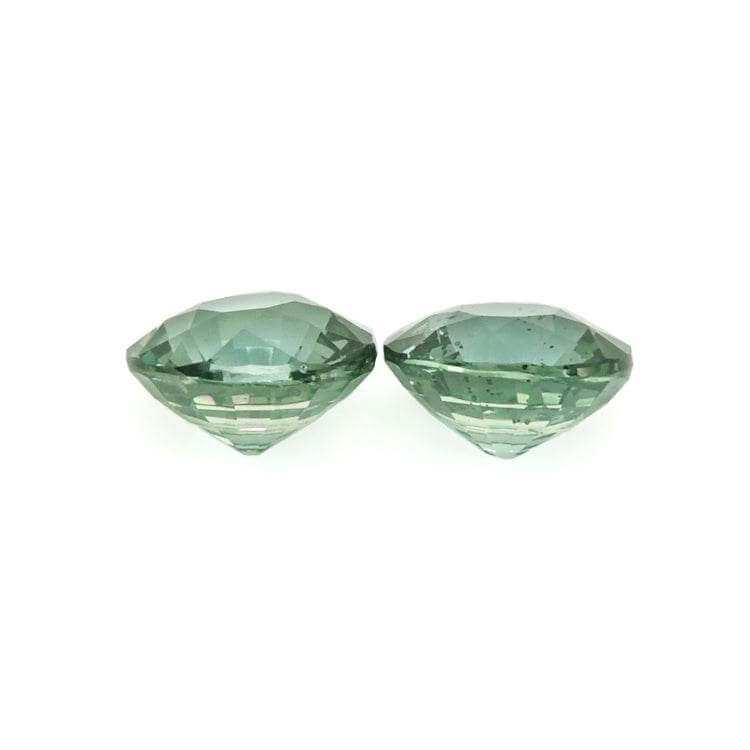
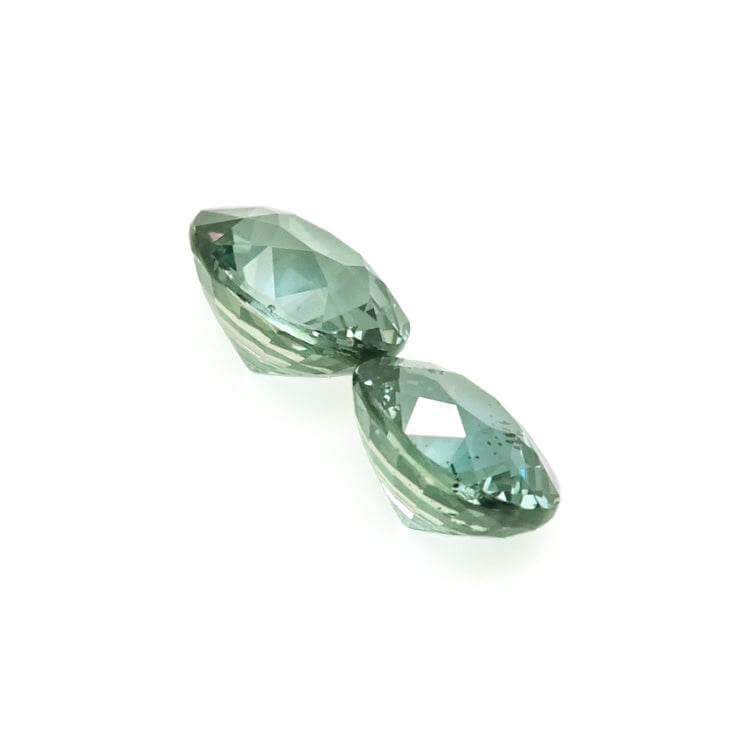
Teal sapphire is the most significant new color category in the engagement ring market of the past decade. Its blue-green character — simultaneously oceanic and earthy, cool and warm, classic and completely distinctive — has driven a wave of demand from buyers who want something genuinely different from blue sapphire while keeping the credibility and durability that only corundum provides.
It is also one of the most naturally understandable sapphire colors for first-time buyers: if you can see blue and you can see green and you appreciate what happens when they meet in a gemstone, you already understand teal sapphire. The complexity is in learning to read the quality differences, understand why treatment status matters differently here than in other sapphire colors, and know what the color shift means for how the stone will behave in daily wear.
This guide covers all of it.
Teal sapphire gets its color from iron and titanium in the corundum crystal lattice — the same two elements responsible for blue in standard blue sapphire, but present in different proportions and oxidation states. In ordinary blue sapphire, the iron-titanium pairing produces charge transfer that absorbs yellow light and transmits blue. In teal sapphire, additional iron in a different oxidation state contributes an absorption of red and yellow light that produces a green component alongside the blue.
The result is a color that the eye reads as simultaneously blue and green — teal. The specific ratio of blue to green is determined by the exact iron-titanium balance in that individual crystal, which is why no two teal sapphires look identical. Even stones from the same mine, the same parcel of rough, can produce meaningfully different blue-green ratios when cut.
This also explains the most commercially important thing about teal sapphire: heat treatment destroys the color. At the temperatures used in sapphire heat treatment (1,000-1,800 degrees C), the iron balance that produces the green component shifts. The additional iron oxidizes or the charge transfer relationships change, and the stone moves toward purely blue or toward grey-green. The teal balance disappears. A teal sapphire that has been heated is, in most cases, no longer teal. See our heat treatment guide for the full mechanism.
Teal sapphire is not one color — it is a family of blue-green colors that spans a meaningful range. Where a stone sits within that range is one of the primary quality and preference variables.
At the blue end of the teal spectrum, stones appear primarily blue with a green secondary hue that keeps them clearly distinct from standard blue sapphire. These stones photograph more conservatively than true teal, appeal to buyers who want teal as a subtle non-traditional touch rather than a bold statement, and are often the most accessible price point within the teal family.
A stone where blue and green are roughly equal in the face-up appearance — neither clearly dominant — is the most commercially prized position in teal sapphire. This is the color most buyers mean when they search for teal sapphire, and the tone that commands the highest prices within the color family. True balanced teal is unmistakably teal in any lighting: not blue, not green, but both simultaneously.
At the green end of the spectrum, teal sapphires appear primarily green with a blue undertone. These stones are rarer than blue-dominant teal and appeal to buyers drawn to the green family — particularly as an alternative to emerald without emerald's fragility and treatment issues. See also our green sapphire guide for the adjacent color family.
Heavily saturated teal sapphires are dramatic and bold. The risk at high saturation is that the stone can appear very dark indoors, losing the blue-green balance in lower light. Cut quality is particularly critical at the deeper saturation levels.
Many teal sapphires — particularly those in the balanced-to-green-dominant range — show a visible color shift between natural daylight and artificial incandescent or warm LED light. Under daylight (blue-wavelength rich), the stone's blue component is amplified. Under incandescent or warm LED light (red-wavelength rich), the stone's green component becomes more pronounced.
This shift is not a defect. It is one of the defining characteristics of the color family and a primary reason buyers love teal sapphire: the ring looks slightly different in the morning sun than it does under restaurant lighting or in the evening at home.
Evaluating color shift in teal sapphire:
The overwhelming majority of fine teal sapphires on the market are unheated — and this is not a marketing claim but a physical consequence of how teal color works in corundum. Heat treatment disrupts the iron balance that creates the blue-green combination and shifts the stone toward pure blue or gray-green. The commercial incentive to heat teal rough simply does not exist: heating does not improve the color, it eliminates it.
This creates a situation unlike almost any other sapphire color: if you are buying a stone that is genuinely and visibly teal, it is almost certainly unheated. The color itself is the evidence of unheated status. And teal sapphire delivers unheated natural corundum at price points that are significantly more accessible than unheated blue or pink sapphire of equivalent quality. See our unheated sapphire guide.
Ceylon produces teal sapphires with a characteristic luminosity and richness in the blue-green balance. Ceylon teal with GIA documentation commands the highest per-carat prices in the category. See our Ceylon sapphire complete guide.
Madagascar has become the most commercially significant teal sapphire source by volume, with material that tends toward a slightly brighter, more saturated blue-green than Ceylon. The largest and most commercial supply of quality teal sapphire in the current market comes from Madagascar. See our Madagascar sapphire guide.
Australia — particularly Queensland — produces blue-green sapphires that sit in the teal-to-green-blue range, with a darker, more deeply saturated character. See our Australian sapphire guide.
Montana produces blue-green sapphires with a cool, steel-blue-green quality that is distinctly American in character. Supply is limited and stones above 1 carat in strong teal color are genuinely scarce. See our Montana vs. Ceylon sapphire guide.
| Origin | Color character | Treatment | Origin premium |
|---|---|---|---|
| Ceylon (Sri Lanka) | Luminous, balanced blue-green | Almost always unheated | Highest |
| Madagascar | Bright, saturated; good larger sizes | Almost always unheated | Moderate |
| Australia | Darker, richer; slightly steely quality | Almost always unheated | Lower; value-positioned |
| Montana (USA) | Cool steel blue-green; distinctly American | Almost always unheated | Niche premium; limited supply |
Teal sapphire is priced below equivalent-quality blue sapphire at most quality levels, which — combined with its near-universal unheated status — makes it one of the best value propositions in natural corundum.
Teal Sapphire Price Ranges
An unheated Ceylon blue sapphire in equivalent quality at 1ct trades at $2,000-6,000+ per carat. Teal at the same quality level is typically 30-50% less expensive. For full teal price breakdowns by carat weight, see our teal sapphire price guide. See also what a good 1 carat sapphire costs and sapphire pricing explained.
| Factor | Teal Sapphire | Blue Sapphire |
|---|---|---|
| Color | Blue-green; shifts between lighting | Pure blue; stable across lighting |
| Treatment status | Almost always unheated | 90-95% heated; unheated commands premium |
| Price (unheated, 1ct, fine) | $1,000-2,500 per carat (Ceylon) | $2,000-6,000+ per carat (Ceylon) |
| Visual distinctiveness | High — immediately recognizable as non-traditional | Classic — the benchmark sapphire color |
| Color shift | Yes — blue-teal in daylight, teal-green indoors | Minimal; stable blue across lighting |
| Metal versatility | All metals; yellow gold most striking | White gold / platinum most traditional |
| Best buyer profile | Wants distinctive, nature-inspired, dynamic | Wants classic, prestigious, stable |
Figures above are approximate market guidance, not fixed quotes. Actual value varies by treatment, origin, colour, cut, clarity, and certification.
Teal sapphire is one of the most versatile sapphire colors across skin tones. Yellow gold is the most popular metal for teal sapphire engagement rings — the warm gold against the cool blue-green creates striking contrast. Rose gold softens the contrast and creates an earthy, romantic combination. White gold and platinum cool the overall look and amplify the blue component. For the full metal decision framework, see our yellow gold vs. white gold vs. platinum guide and how to choose metal color for a sapphire ring. For skin tone guidance, see our sapphire color for skin tone guide.
Teal sapphire has become the dominant non-traditional engagement ring stone for a reason: Mohs 9 hardness means zero special precautions for daily wear. Near-universal unheated status means natural color with no enhancement. A distinctive blue-green character means the ring will never be confused for anyone else's. And a price point meaningfully below equivalent blue sapphire means more stone for the same budget.
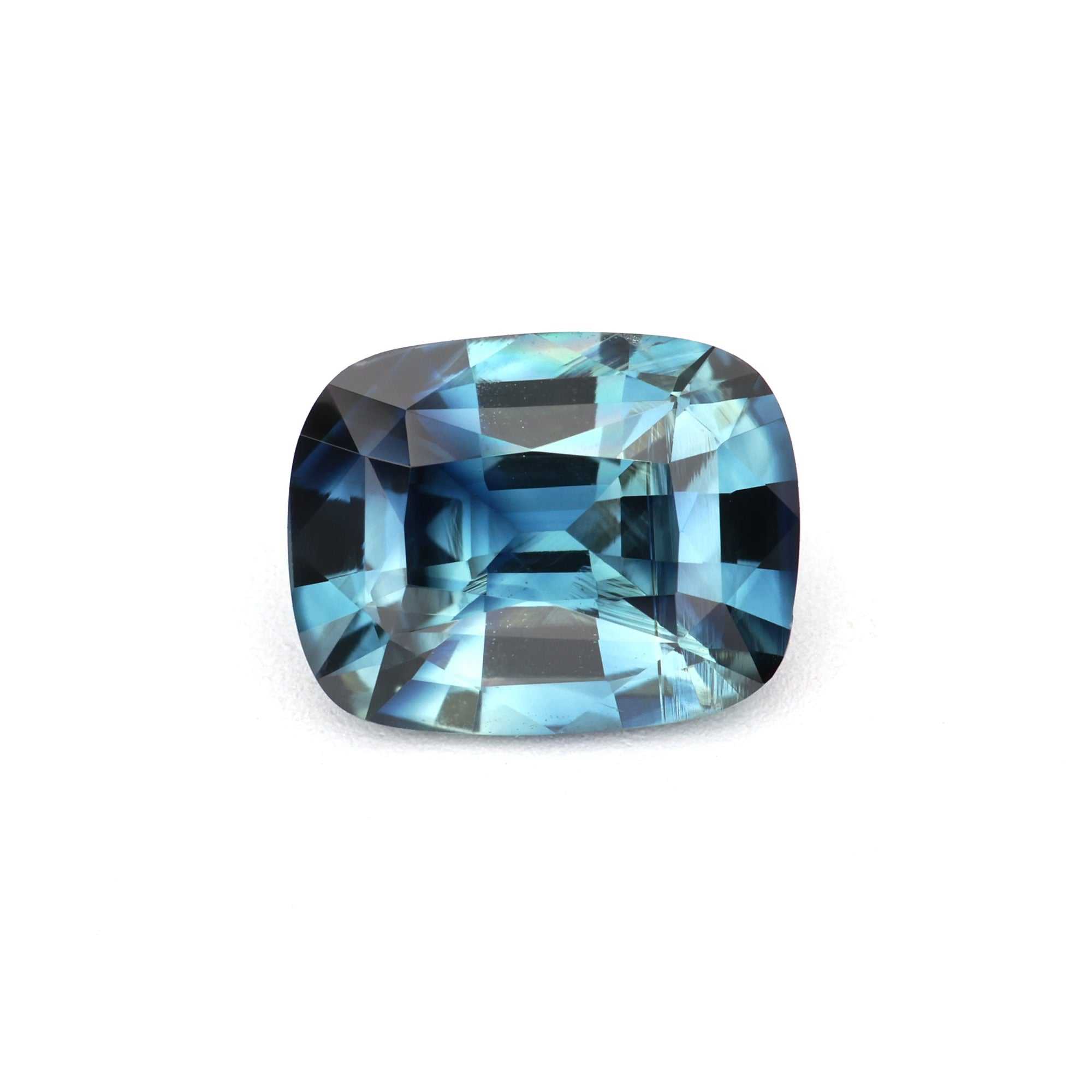
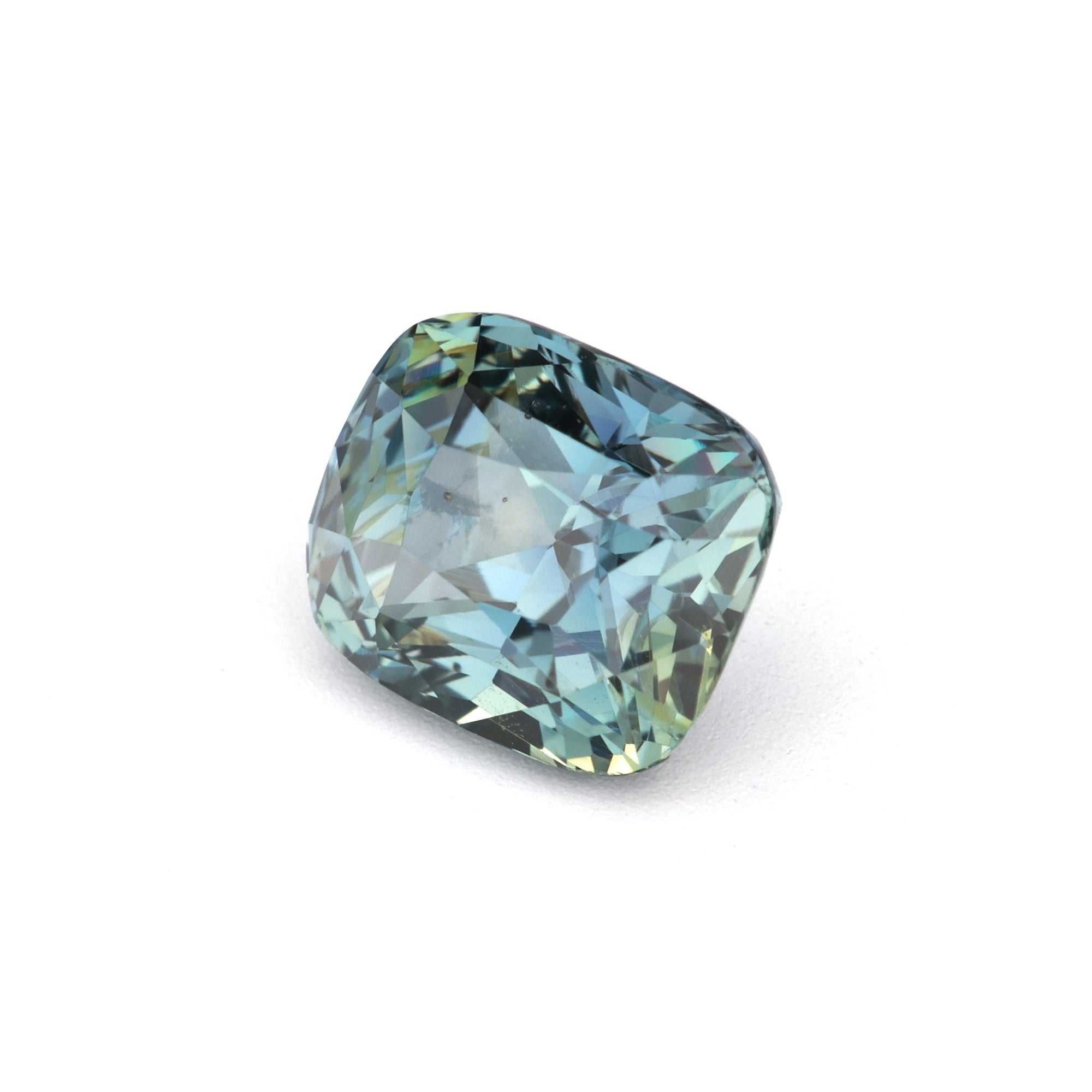
Cushion cut is the most popular format for teal sapphire engagement rings. The rounded corners and brilliant faceting display the blue-green balance generously across the face-up surface. See our cushion cut sapphire guide and best sapphire shapes for solitaire rings.
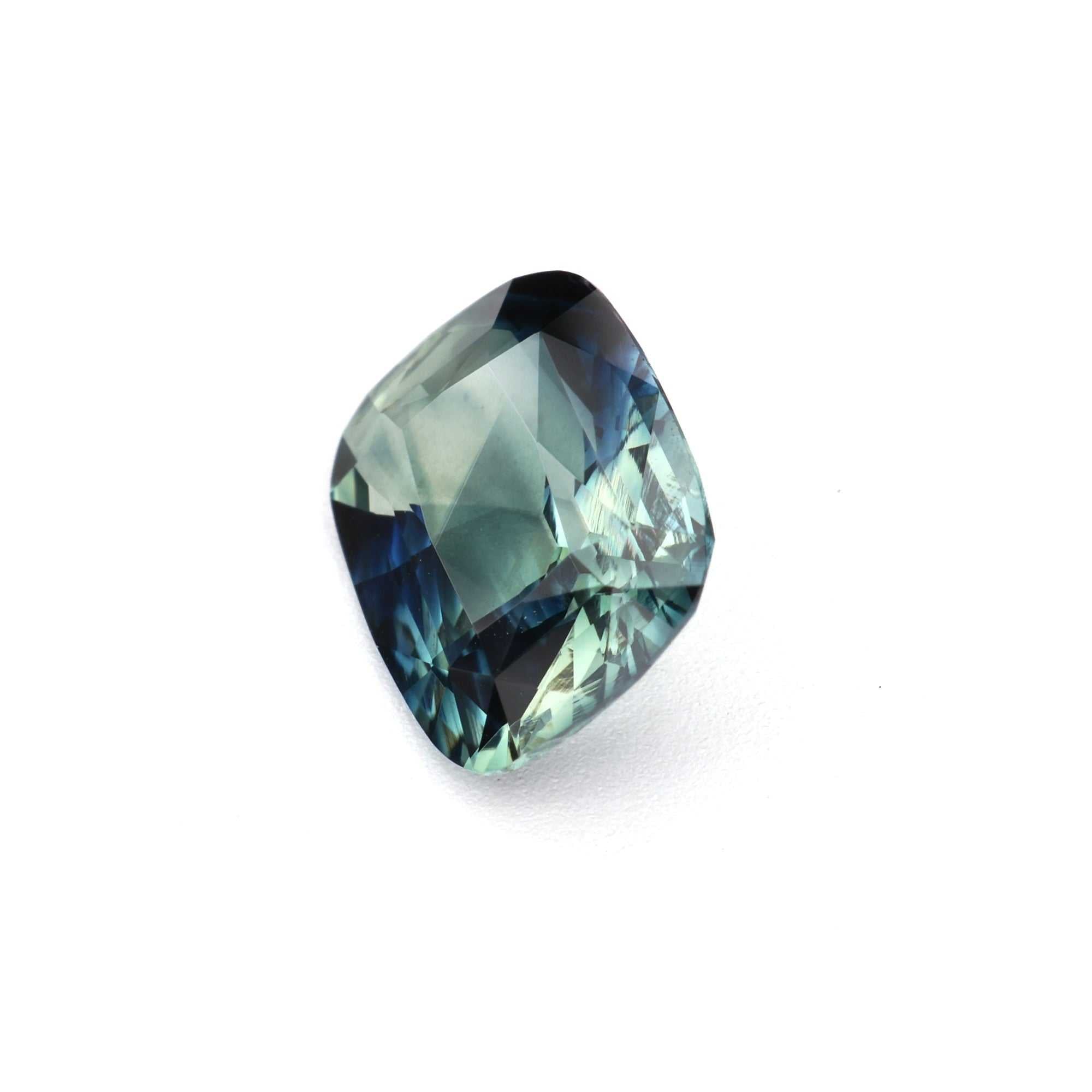
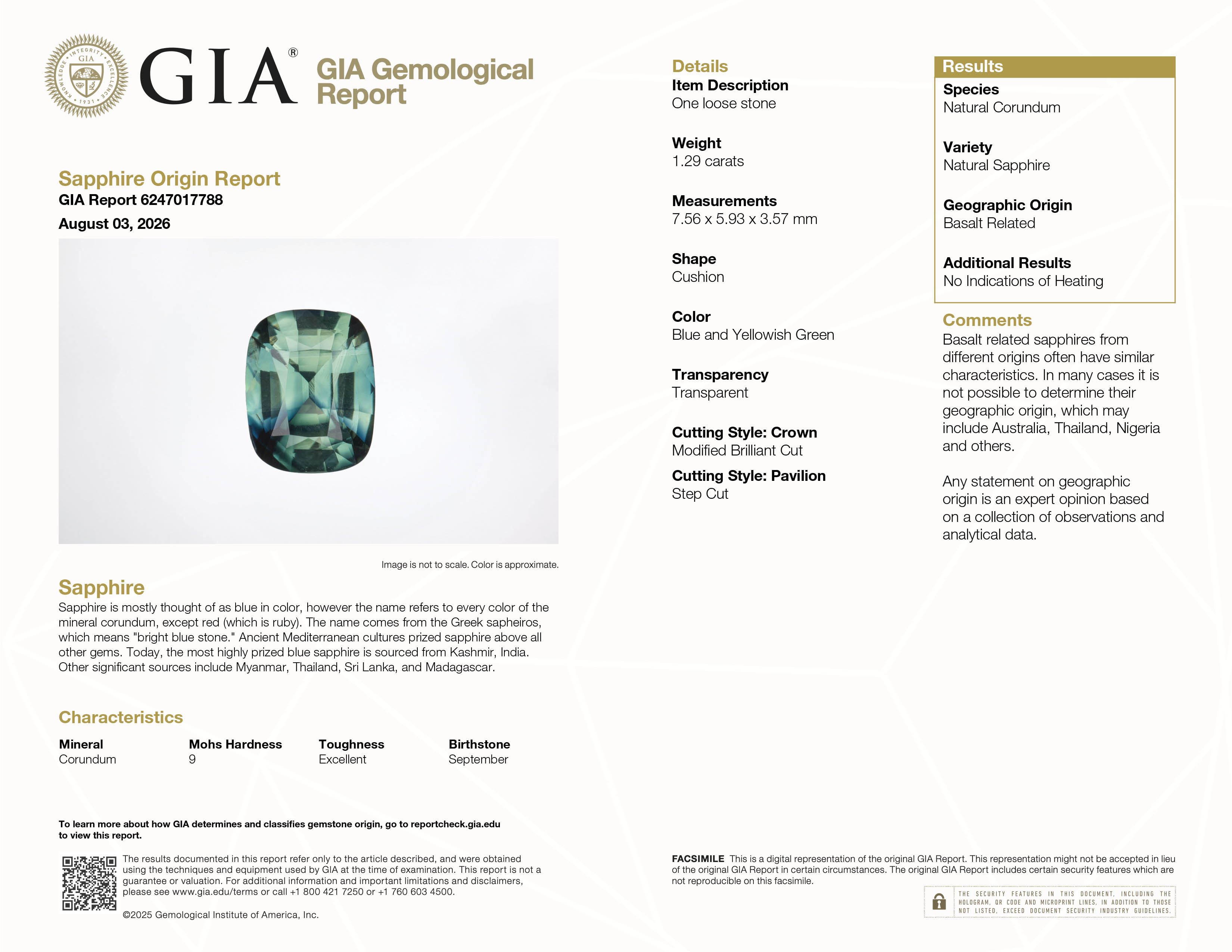
A current in-stock example: this 1.29 ct unheated Ceylon teal sapphire, cushion cut (GIA Report #6247017788), shows the rounded-corner brilliance and balanced blue-green color this cut is prized for.
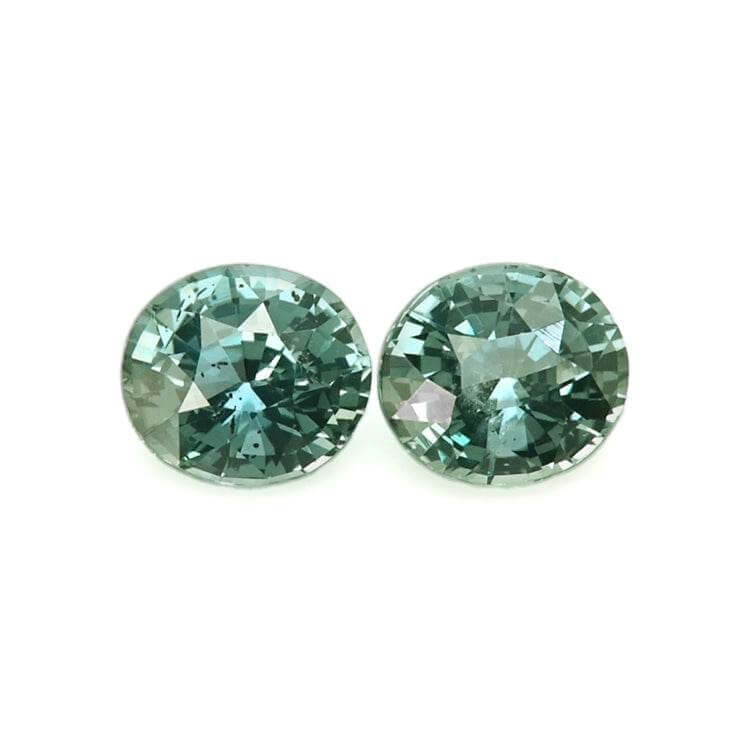
Oval is the second most popular format — it maximizes face-up color area and elongates the finger beautifully. See our oval sapphire guide and best sapphire shapes for halo rings.
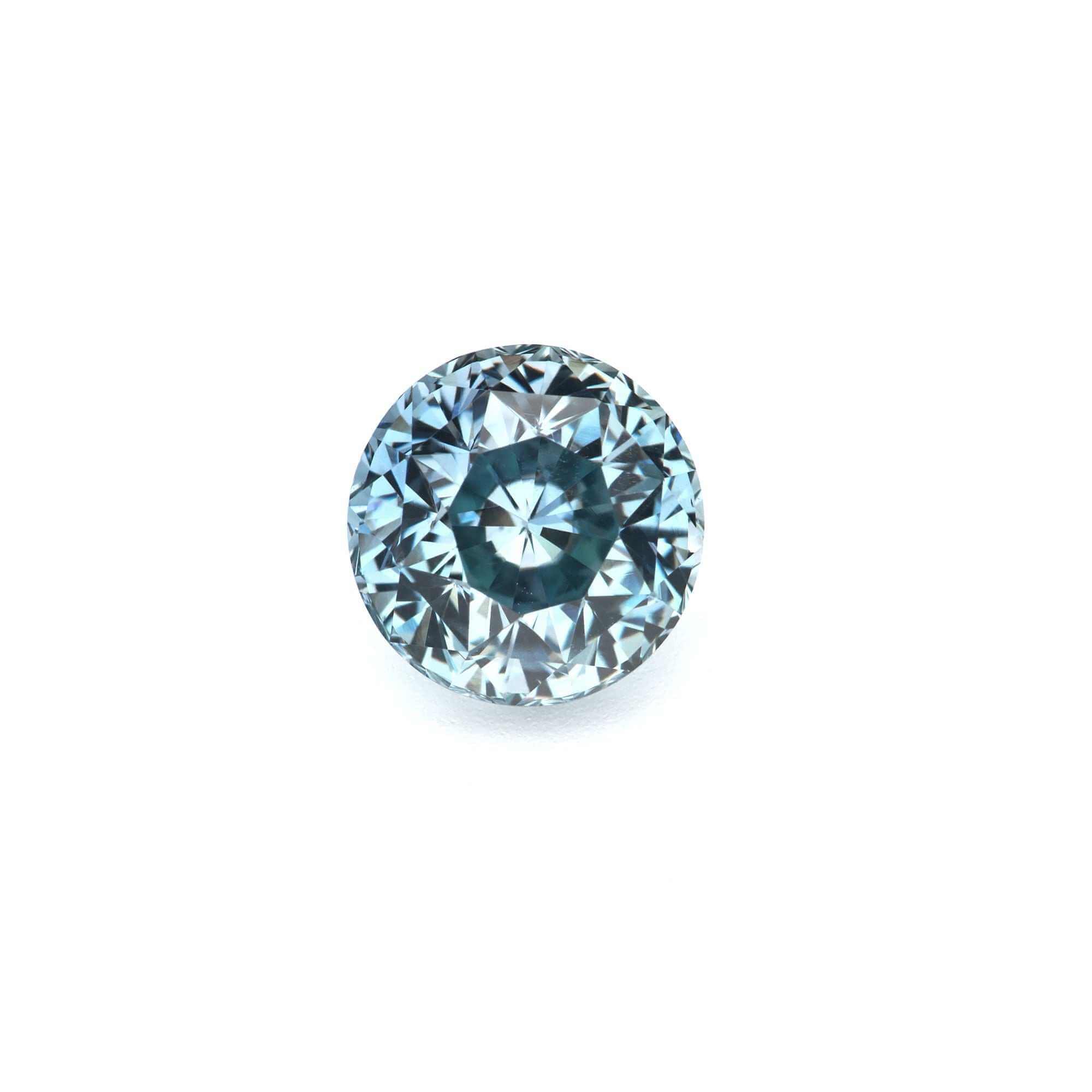
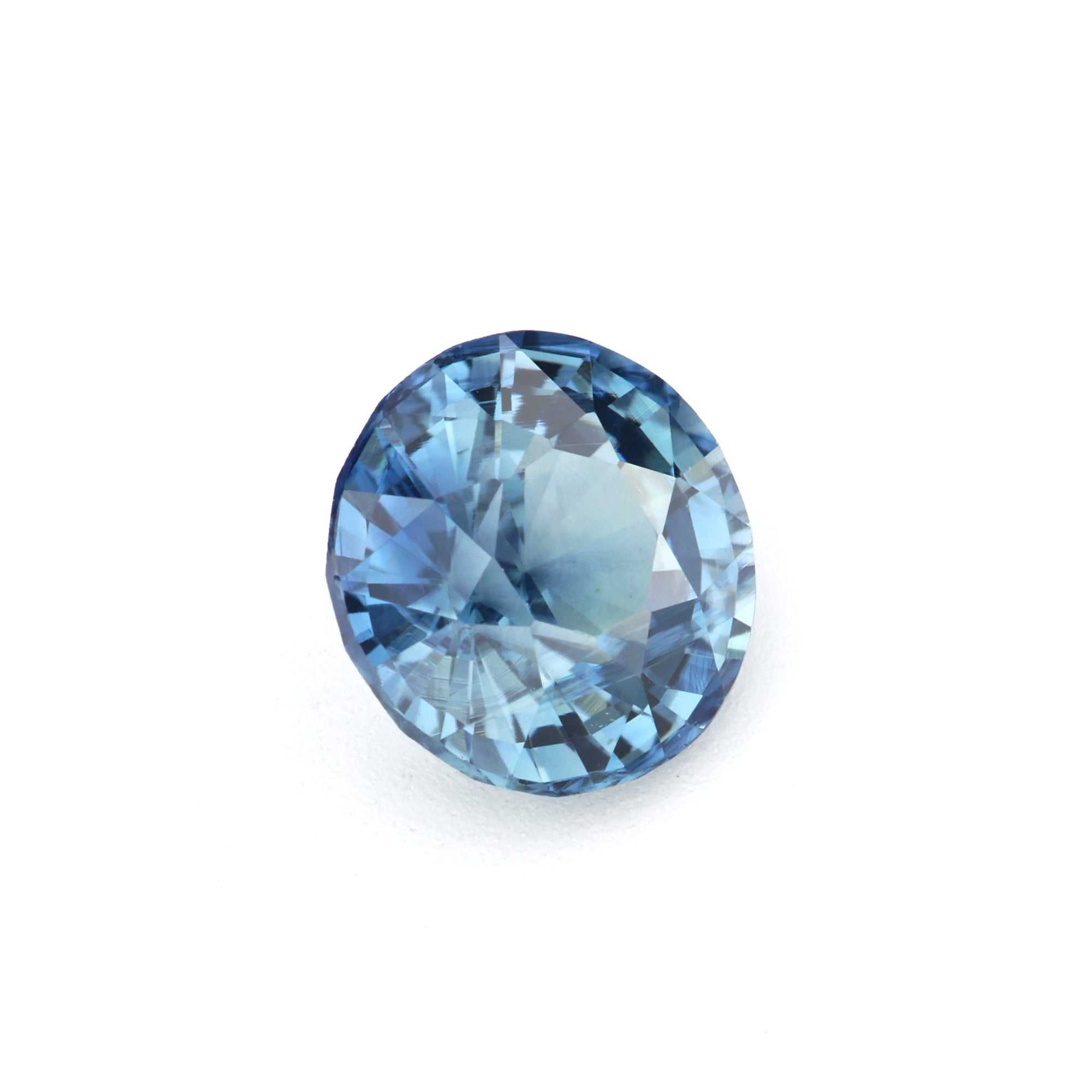
Round teal sapphires create a sophisticated, more classic look that bridges teal's distinctive color with a traditional setting format.
Pear and marquise elongate the face-up appearance and create a distinctive silhouette. See our best elongated sapphire shapes guide.
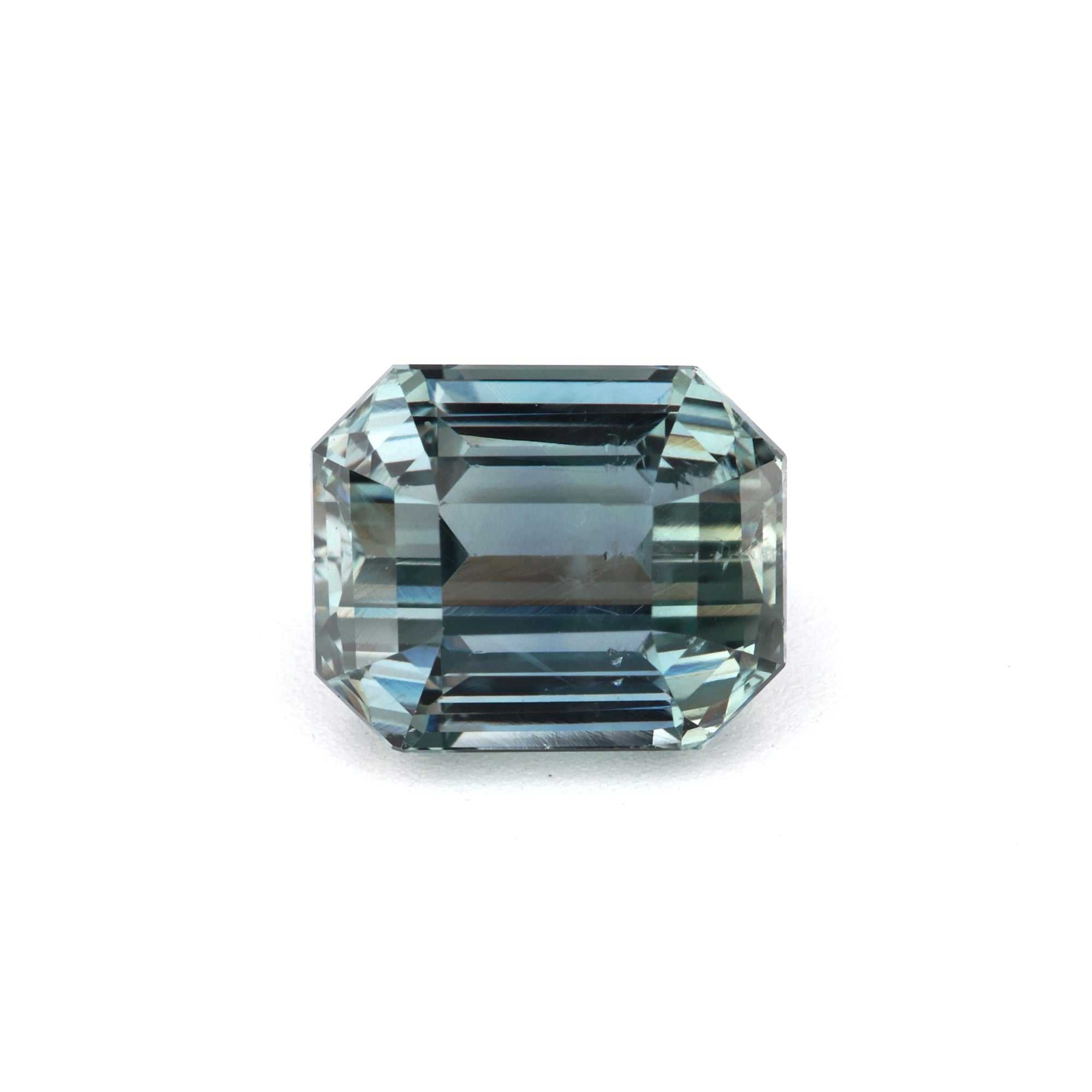
Emerald cut displays teal color as deep, still pools of blue-green light. See our emerald cut sapphire guide.
For bezel settings with teal, see our bezel ring guide. See our engagement ring guide, best sapphire cut guide, and sapphire size guide.
For teal sapphire under $600 total with no specific origin claim, seller disclosure is sufficient. For any stone where Ceylon origin is claimed above $800, GIA or Gubelin documentation is required. For investment-grade teal (fine balanced color, Ceylon or Madagascar, 1ct+), GIA documentation is strongly recommended. See our GIA report guide.
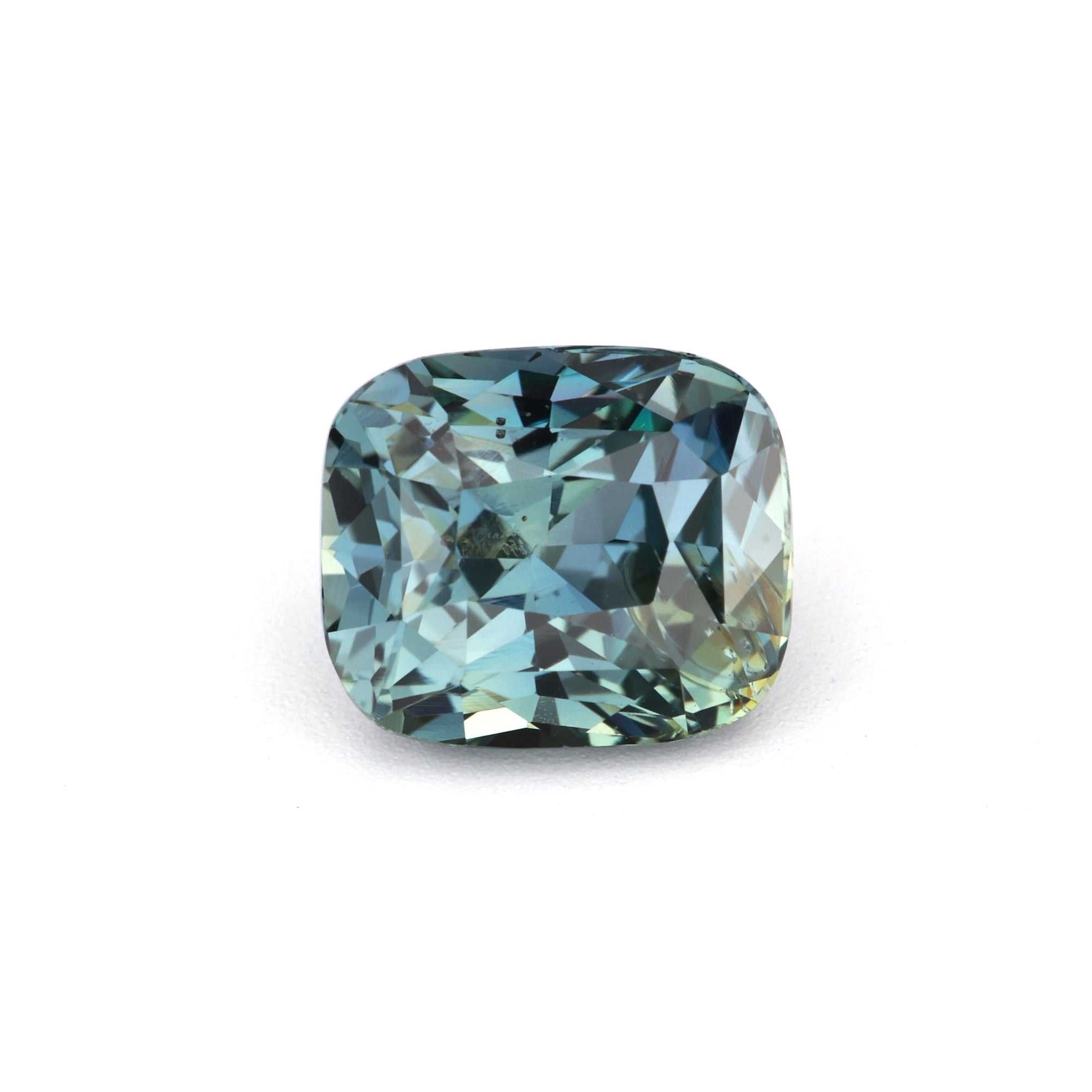
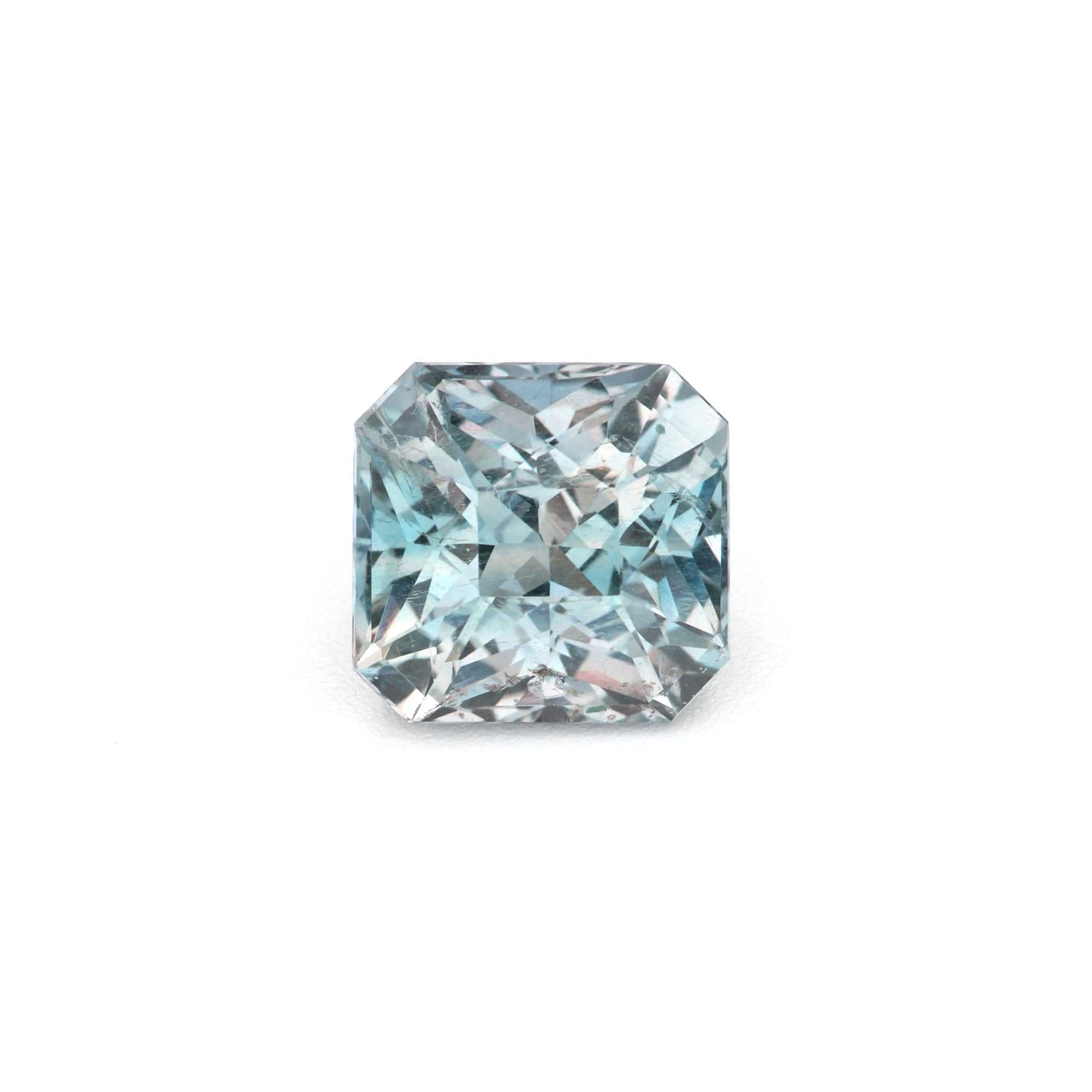
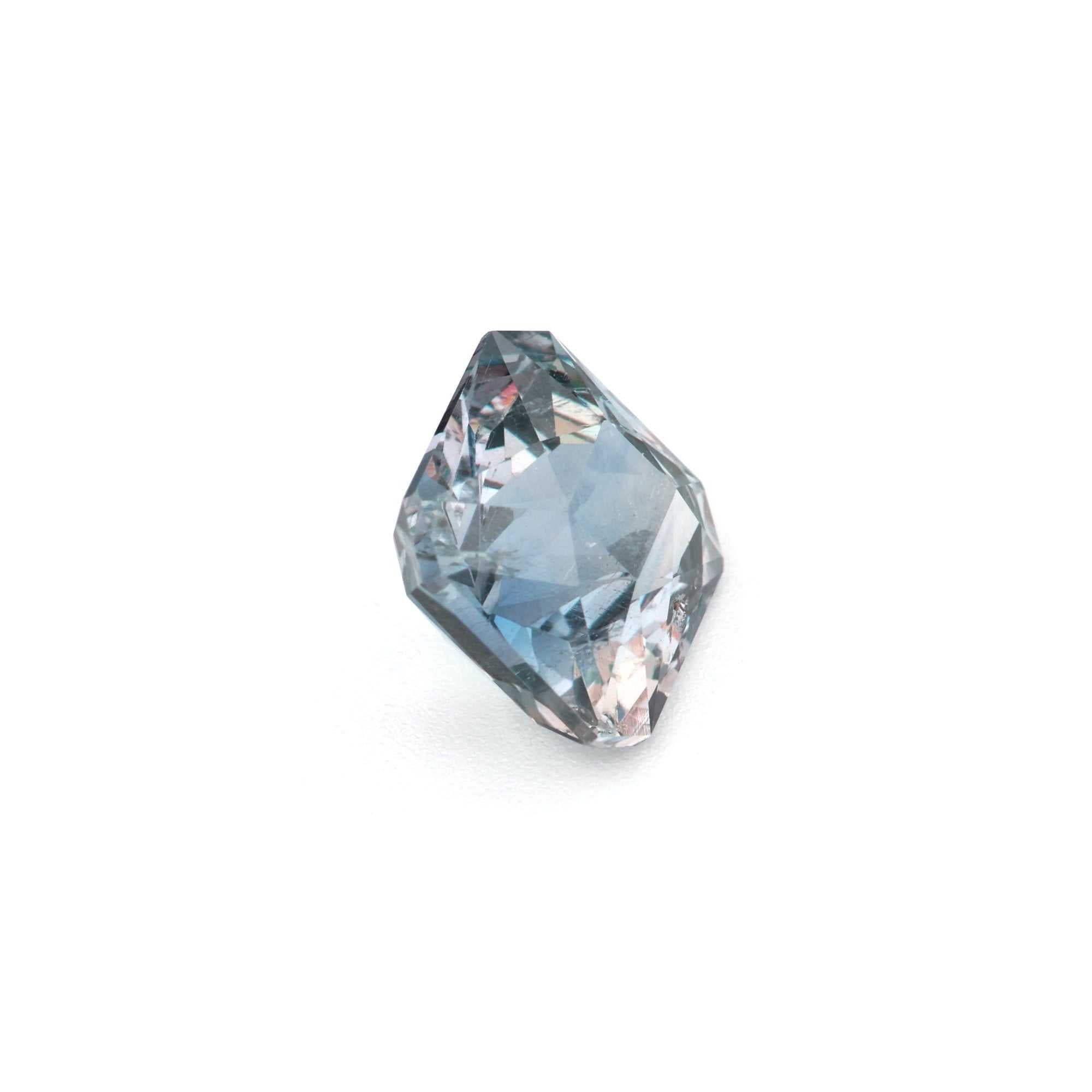
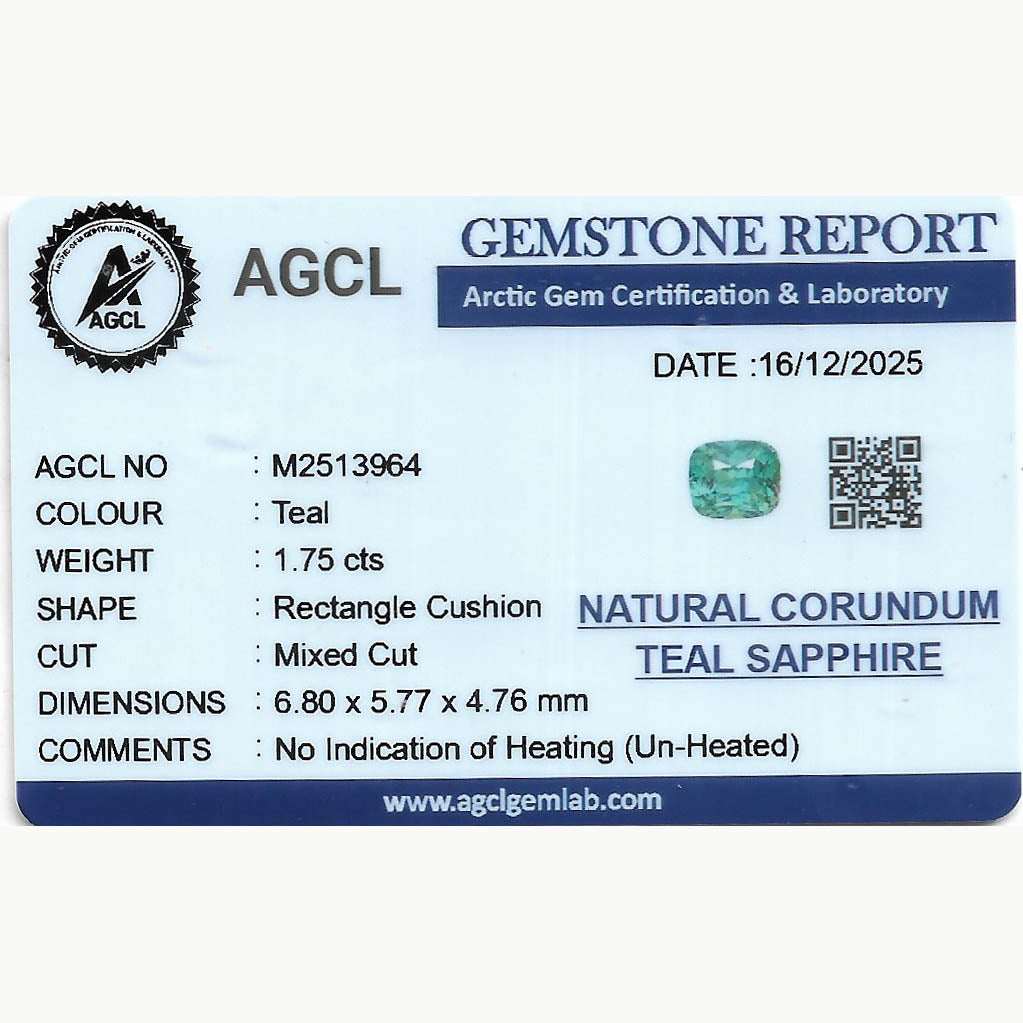
Currently in stock: a 1.75 ct unheated cushion-cut teal sapphire, GIA-documented (Report #1246017790), a medium-intense blue-green stone with a Madagascar origin reflecting our own store assessment (geographic origin testing was not requested on the GIA report) — a larger example of the balanced blue-green color this guide describes.
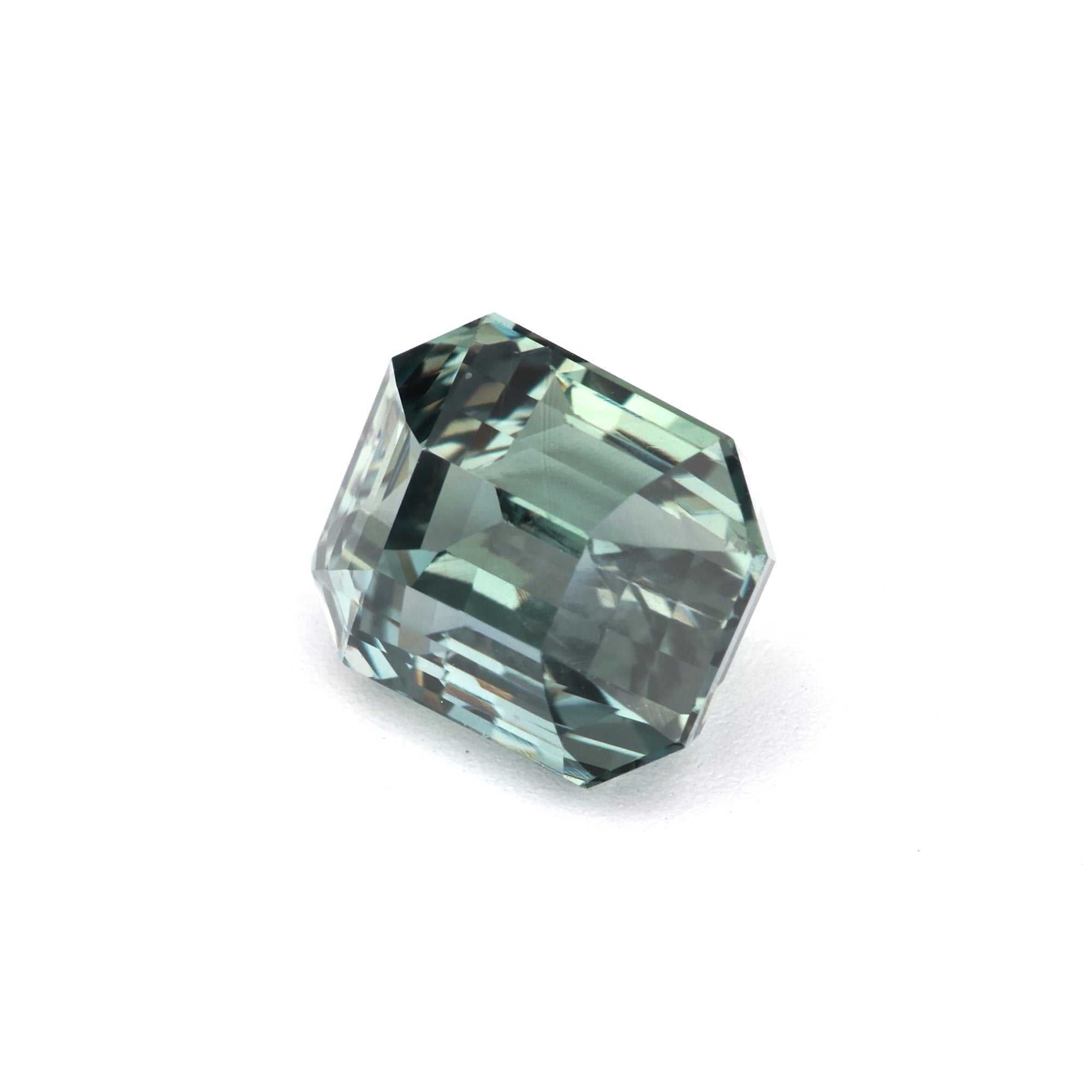
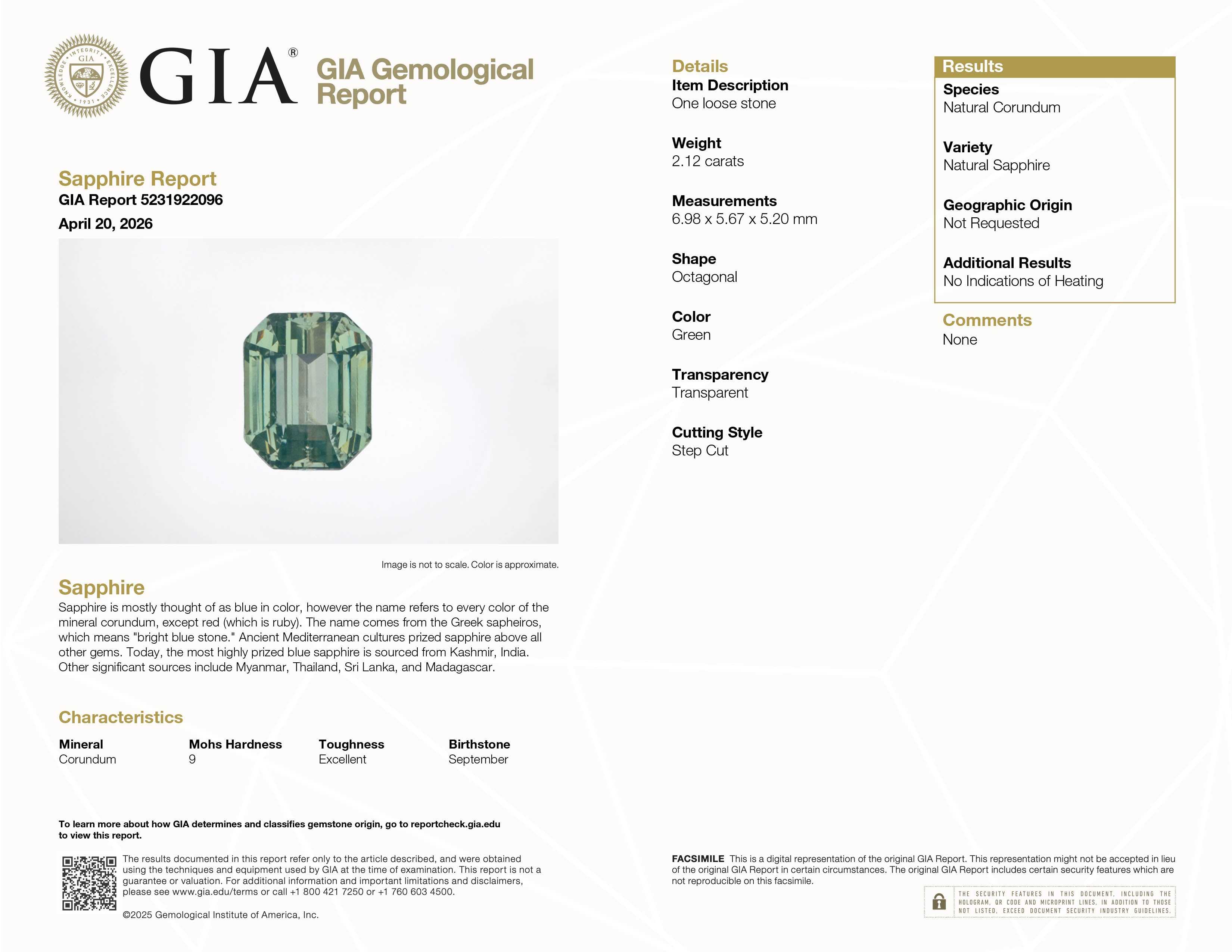
We also currently stock a 2.12 ct unheated emerald-cut teal sapphire, GIA-documented (Report #5231922096), with Madagascar origin reflecting our own store assessment — GIA origin testing was not requested for this stone — a step-cut alternative to the cushion shape above, showing the same blue-green balance in an architectural, open-faceted format.
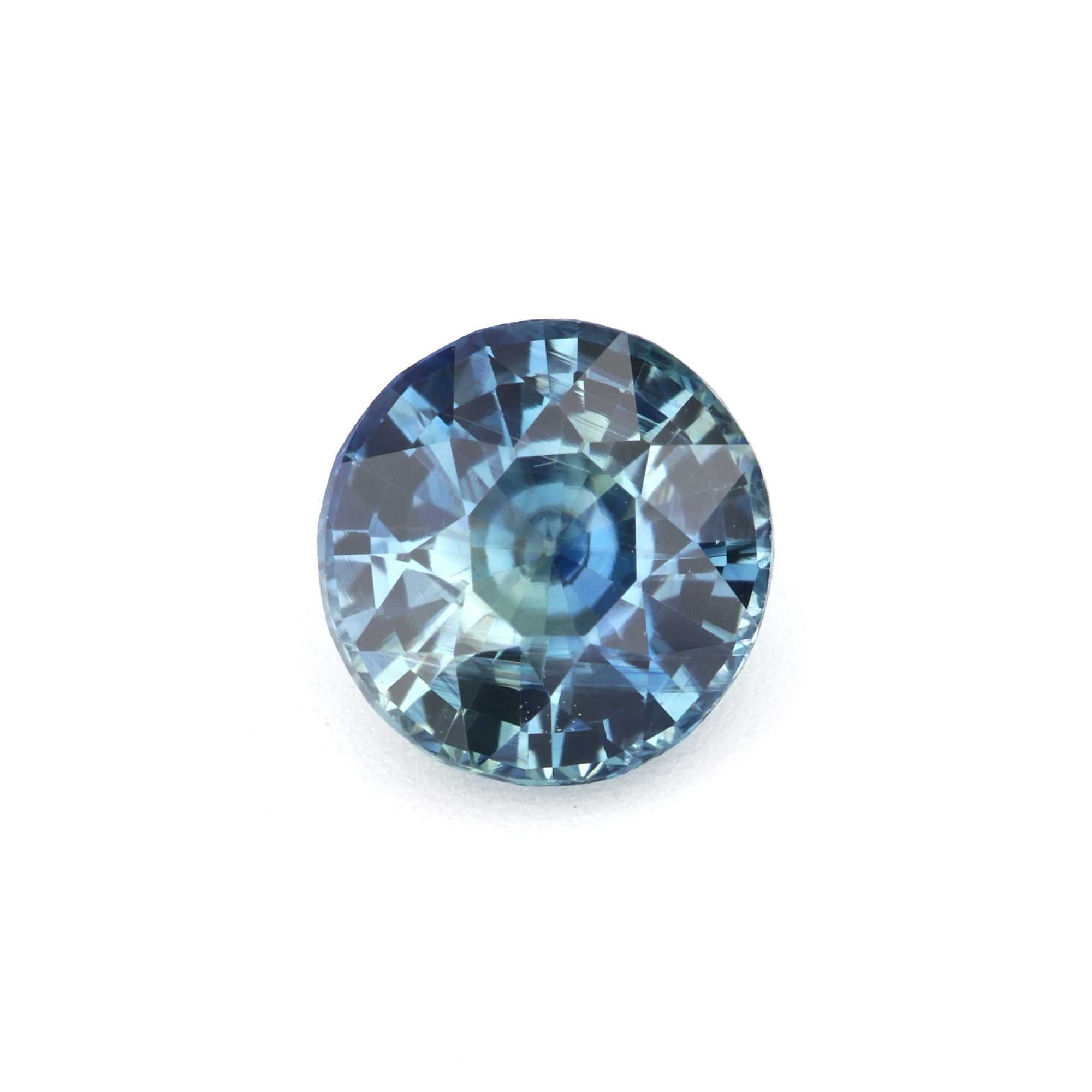
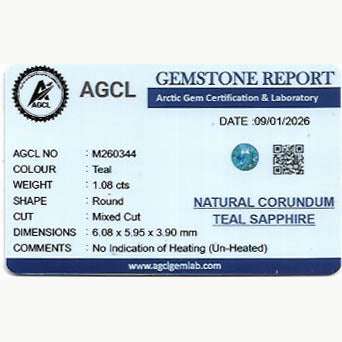
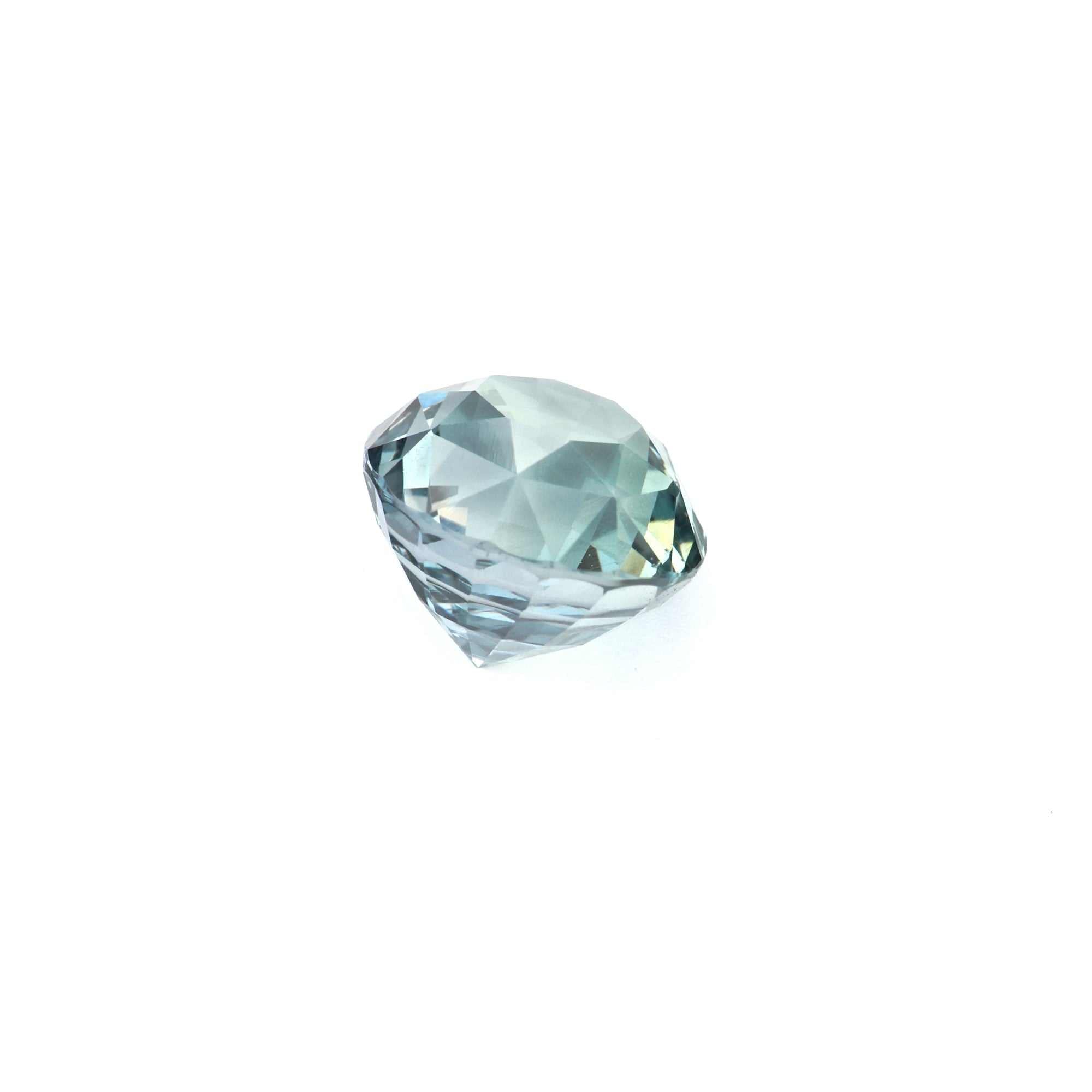
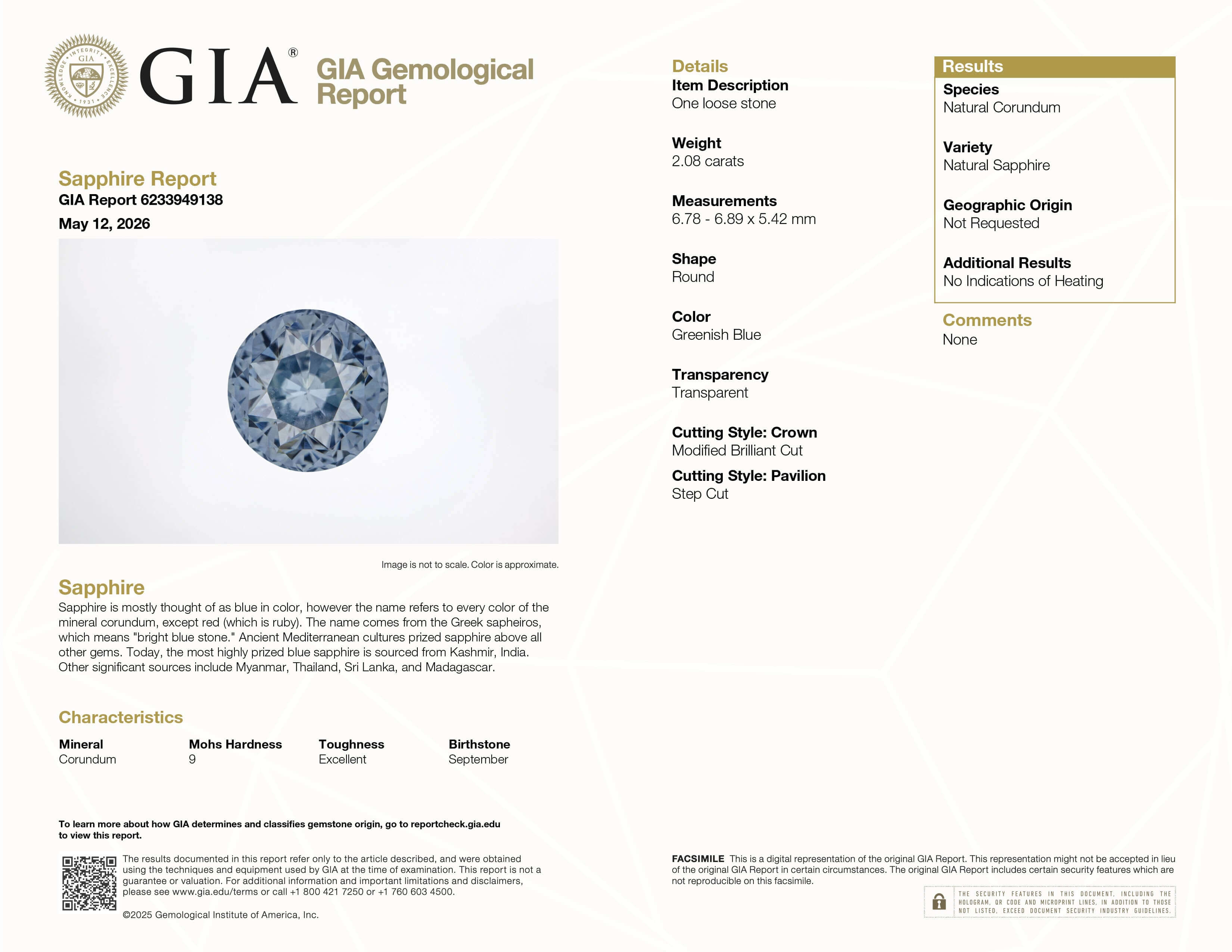
We also stock a 2.08 ct unheated round-cut teal sapphire, GIA-documented (Report #6233949138), with Madagascar origin reflecting our own store assessment — geographic origin was not requested on the GIA report — a loupe-clean stone with strong light return across the mixed brilliant faceting, in a round format not otherwise represented among the stones described above.
Our teal sapphire collection covers the full blue-green spectrum with complete treatment and origin disclosure on every listing. For larger stones: teal over 1 carat. For the green-dominant end: browse our green sapphire collection. Our Try-On program is strongly recommended for teal sapphire. Email crescentgems@gmail.com to arrange. Free US shipping; 14-day returns on every order.
Teal sits close enough to blue and green that lab confirmation matters more than usual — see our GIA-documented teal sapphires.

CG8437
CG8357
CG8354

CG8374
CG8322
1.50 ct Natural Unheated Teal Sapphire – Oval Cut
Prices are shown in your local currency and may change.
CG8374
CG8437
CG8322
1.50 ct Natural Unheated Teal Sapphire – Oval Cut
CG8357
CG8354


Blue Star Sapphire Price Guide — What They Cost and Why
Read moreabout Blue Star Sapphire Price Guide — What They Cost and Why
Tsavorite Garnet Price Guide — What They Cost and Why
Read moreabout Tsavorite Garnet Price Guide — What They Cost and Why
Color-Change Sapphire Price Guide — What They Cost and Why
Read moreabout Color-Change Sapphire Price Guide — What They Cost and Why
Is Cat's-Eye Chrysoberyl Good for an Engagement Ring?
Read moreabout Is Cat's-Eye Chrysoberyl Good for an Engagement Ring?
Cat's Eye Chrysoberyl Price Guide — What They Cost and Why
Read moreabout Cat's Eye Chrysoberyl Price Guide — What They Cost and Why