


- par Ahmed Shareek
Mining for Sapphires in Montana — the Treasure State and What It Produces
- par Ahmed Shareek
New to buying sapphires? Start with our Ultimate Sapphire Buying Guide — the complete resource for color, origin, treatment, and pricing.
The United States has a sapphire origin of its own, and it has been producing gem-quality corundum since the 1860s — a working history that runs from gold placer camps to permitted, reclaimed commercial pits. Montana sapphires are American gemstones in the most literal sense: mined on American soil, under American mining and environmental law, and sold by operators who can often name the claim a parcel of rough came off. What that chain of custody does and does not establish is the subject of the last section of this article.
Montana sapphire mining is a very different enterprise from the alluvial pit mining of Sri Lanka or the deep hard-rock extraction of East African tsavorite. It operates at a different scale and in a different geological context, and the color range it yields follows from the trace-element chemistry of those deposits. This article covers where Montana sapphires are found, how they are mined, what makes the deposits geologically distinct, and what the mining conditions mean for the stones that reach the market.
Montana has three geologically distinct sapphire-producing areas, each with its own mining history, extraction method, and gem character. Understanding which deposit a stone comes from tells you a great deal about what to expect.
The Rock Creek deposit, located in Granite County in western Montana near the town of Philipsburg, is the largest sapphire-producing area in the state. Sapphires were first discovered here in the 1890s during gold placer mining operations — miners panning for gold kept finding small, colorful crystals in their concentrate and eventually identified them as corundum.
The Rock Creek deposit is alluvial: sapphires are found loose in gravel beds deposited by ancient waterways, similar in principle to Sri Lanka's illam deposits (see Pit Mining in Sri Lanka). The sapphire-bearing gravel sits beneath overburden that ranges from a few feet to 30 feet deep. The operation involves removing the overburden with heavy equipment, extracting the gem-bearing gravel, and processing it through washing and screening plants to separate the sapphires from the waste gravel.
Rock Creek sapphires are typically small, and the gravel delivers them water-worn: an alluvial crystal has been rounded and abraded in transport, so it reaches the plant without the sharp crystal faces a primary deposit would give it. The color palette tends toward pastel: soft blues, greens, lavenders, and light teals. In their natural state, many Rock Creek sapphires are pale or near-colorless. Most require heat treatment to develop commercially viable color — the heating process modifies trace element oxidation states and produces the steely blues, greens, and teals that Montana sapphires are known for. Rock Creek rough that already shows vivid color without heating does occur, and where a stone is sold on that basis the heat line on its report is the thing to read.
Located near Deer Lodge in Powell County, the Dry Cottonwood Creek deposit is geologically related to Rock Creek and produces similar material: small, pastel-colored sapphire crystals in alluvial gravel. The deposit was mined intermittently throughout the 20th century and continues to produce on a smaller scale than Rock Creek.
The mining method is the same: overburden removal, gravel extraction, and mechanical processing. The sapphires are comparable in size and color to Rock Creek material, with the same dependence on heat treatment for commercial color development.
The Missouri River sapphire deposits near Helena, Montana, represent a fundamentally different geological setting and produce a different type of stone. Sapphires here are found in igneous rock — specifically in a volcanic dike system that intruded into the surrounding geology millions of years ago. The sapphires crystallized directly from the magma and were later weathered out of the host rock into nearby alluvial deposits along the Missouri River and its tributaries.
Missouri River sapphires tend to be larger and more saturated than Rock Creek material. The deposit has produced stones with vivid natural color — including blues, greens, and pinks — that reach a saleable color without heating. Because of that, the heat status of a Missouri River stone is a real question rather than a formality, and it is answered by the heat line on a report for the individual stone, not by the name of the deposit.
Mining along the Missouri River is primarily small-scale, conducted by individual claim holders and small operations. The Yogo Sapphire Mine (see below) works a different deposit altogether; along the Missouri River and its tributaries the pattern is numerous small claims producing stones on a seasonal basis.
Yogo sapphires deserve separate mention because they come from a geological setting unlike the other three and behave differently as a result. Discovered in 1895 in Judith Basin County, central Montana, Yogo sapphires come from a single, narrow igneous dike that runs approximately 5 miles through the Little Belt Mountains. The dike contains sapphire crystals embedded directly in the host rock — a primary deposit, not alluvial.
What distinguishes Yogo sapphires:
Yogo is a trade name that refers to one dike in Judith Basin County — not to a color and not to a grade. A seller using it is making an origin statement, which is the kind of claim the last section of this article comes back to.
The alluvial deposits are mined using methods that combine modern earth-moving equipment with traditional gravel-processing techniques:
Yogo sapphires require hard-rock mining because the gems are embedded in a solid igneous dike. The host rock must be drilled, blasted (or mechanically broken), hauled to the surface, and crushed to liberate the sapphire crystals. The process is energy-intensive, which is one reason Yogo production has been intermittent — the economics of extracting small stones from hard rock are challenging at any scale.
The crushing stage is particularly difficult. Corundum is Mohs 9, and the dike rock has to be reduced fine enough to release crystals that are small to begin with, without putting those crystals through more force than a gem crystal survives intact. Standard crushing equipment can damage or destroy gem crystals if the process is not carefully controlled. Modern Yogo operations use staged crushing with increasingly fine settings to liberate crystals with minimal breakage.
| Factor | Montana | Sri Lanka (Ceylon) |
|---|---|---|
| Mining history | Since 1860s (~160 years) | Over 2,000 years |
| Extraction method | Mechanized gravel processing + hard rock | Hand-dug vertical shafts, hand washing |
| Scale | Small commercial to mid-scale | Artisanal, community-based |
| Typical finished size | 0.25–0.80ct (most under 1ct) | 0.50–5ct+ routinely |
| Color range | Steel blue, teal, green, pastel | Every sapphire color |
| Treatment | Most heated (except Yogo) | Both heated and unheated at scale |
| Species diversity | Sapphire only | Sapphire, ruby, spinel, garnet, chrysoberyl |
| Environmental regulation | US federal + state DEQ oversight | NGJA licensing; artisanal self-regulation |
| Land reclamation | Legally required | Traditional practice (shafts backfilled) |
| Traceability | Seller's chain of custody, often to a named claim | Seller's chain of custody when bought at source |
The two systems are regulated differently rather than ranked against each other. In Montana, reclamation is a condition of the mining permit and is enforced by a state agency, so the obligation is written down and attaches to a named operator. In Sri Lanka, the NGJA licenses the pit, and backfilling the shaft at the end of a dig is long-standing practice rather than a permit condition. Neither of those facts is a statement about how any individual stone was dug. For the full origin comparison, see Montana Sapphire vs. Ceylon Sapphire.
Montana sapphires occupy a distinctive color territory that overlaps with but does not duplicate what other origins produce:
Steel blue. Montana's signature — a cool, slightly grayish, sophisticated blue that reads as understated rather than vivid. It is the visual opposite of Ceylon's warm, bright blue.
Teal and blue-green. Montana teal carries a cooler, mintier green component than Ceylon teal, which leans warmer and bluer. Teal is a trade description for a blue-green reading rather than a laboratory color term, so two stones both sold as teal can sit some distance apart. See our Teal Sapphire Buyer's Guide.
Green. Soft mint to medium green, typically lighter in tone than Ceylon greens. Montana greens work beautifully in modern, minimalist settings. See our Green Sapphire Buyer's Guide.
Pastel and light tones. Soft lavender, pale blue, light green and near-colorless material comes mainly from Rock Creek, which is the pale end of the Montana range in its natural state. These delicate colors suit buyers who prefer subtle color presence over vivid saturation.
Yogo cornflower. The vivid, naturally blue Yogo stones occupy a class of their own — closer to fine Ceylon cornflower in color than to the steel blue that characterizes other Montana deposits.
For a visual comparison across all sapphire colors, see our Interactive Sapphire Color Chart.
One fact governs this whole section: most commercially sold Montana sapphire is heat-treated.
Rock Creek and Dry Cottonwood rough is predominantly pale, low-saturation material that develops its color through controlled heating. The heat modifies iron oxidation states within the crystal, producing the blues, teals, and greens that define the Montana palette in the market. Without heating, most Rock Creek rough would be too pale for commercial use.
Missouri River and Yogo material are the exceptions: both yield stones whose color is already saleable before any heating. Note the wording. Unheated means no indication of heating was found; it does not mean untreated, which would be a statement about every treatment there is. A report answers the first question, for the one stone it describes.
Heat treatment of Montana sapphires is the same process used for Sri Lankan material (see How Sapphire Heat Treatment Works) and it is a disclosable treatment, which means it belongs on the paperwork either way. The important point is disclosure: if unheated status matters to your purchase, confirm it with documentation for the individual stone. See What Is an Unheated Sapphire?
Montana has a commercial fee-dig industry built on its alluvial deposits. Several operations near Philipsburg and Helena offer experiences where visitors can purchase buckets of pre-screened sapphire-bearing gravel, wash it themselves, and keep whatever they find. The Gem Mountain Sapphire Mine and the Spokane Bar Sapphire Mine are two of the long-running recreational sites.
These experiences are genuine — the gravel contains real sapphires from real deposits, and visitors do find cuttable stones. What comes out of a bucket is Rock Creek-grade rough: small, and usually pale enough that it needs heating before it has much color. Taking your own find through cutting is part of what the operators sell and it makes a real souvenir; what it is not is a documented stone, because a fee-dig find arrives with no report and no record of handling beyond the operator's own.
Understanding how Montana sapphires are mined helps explain the market realities buyers encounter:
Size limitations are geological, not commercial. Montana sapphires are small because the crystals in these deposits are small. No one is holding large Montana stones back; the finished sizes follow from the crystal sizes the deposits yield. If you want a sapphire above 1 carat for an engagement ring, Ceylon or Madagascar is where to look. See What Size Sapphire Is Best?
Origin is a claim, and for Montana it is usually a chain-of-custody claim. A Montana stone is normally sold with an account of where it came from: a named deposit, often a named claim, sometimes the operator who dug it. That is a record kept by people, and it is exactly as good as the record-keeping behind it. The other route — having a laboratory state an origin from the stone itself — is narrower than it sounds. GIA, writing in Gems & Gemology, puts it plainly: geographic origin determinations on reports are "opinions—they are not indisputable facts." SSEF says the same in one line: "Origin determination is an expert opinion." GIA adds that origin "is especially challenging for blue sapphire," which covers the steel blue this origin is named for. So the question to ask about a Montana stone is which kind of origin claim is on offer: a seller's chain of custody, which can be followed back through the people who handled the parcel, or a laboratory's opinion, which a second laboratory is entitled to reach differently. Neither is a confirmation, and establishing which one you have is the thing to settle before the word "Montana" does any work in a description.
Treatment disclosure applies equally. "Montana sapphire" does not inherently mean unheated. Most are heated. Ask the same questions and require the same documentation you would for any sapphire purchase. See How to Read Sapphire Inclusions and How to Read a GIA Report.
Browse the full Ceylon sapphire catalog for stones above 1 carat across the full Ceylon color range, or email crescentgems@gmail.com with questions about any sapphire origin. We respond within one business day.

CG8469
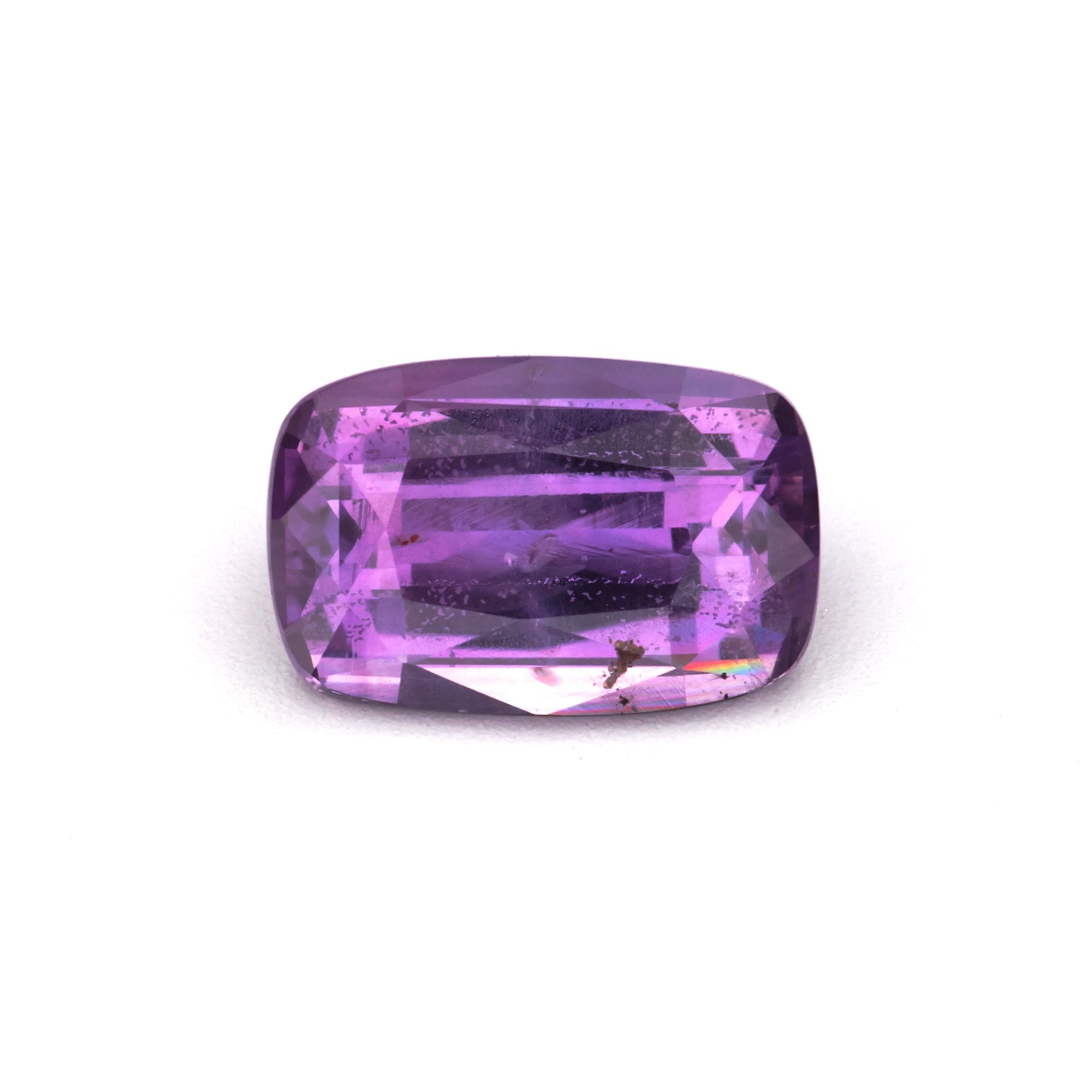
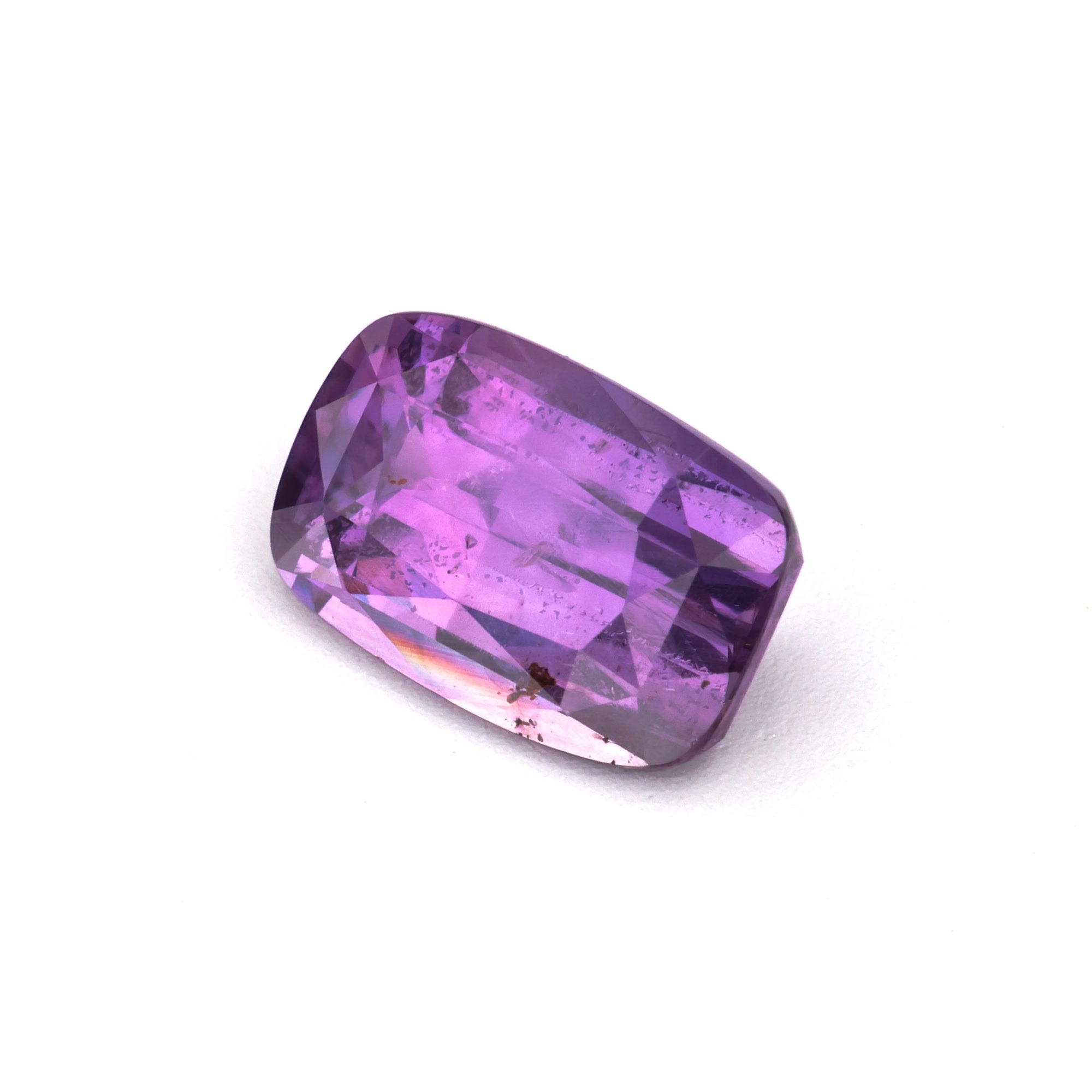
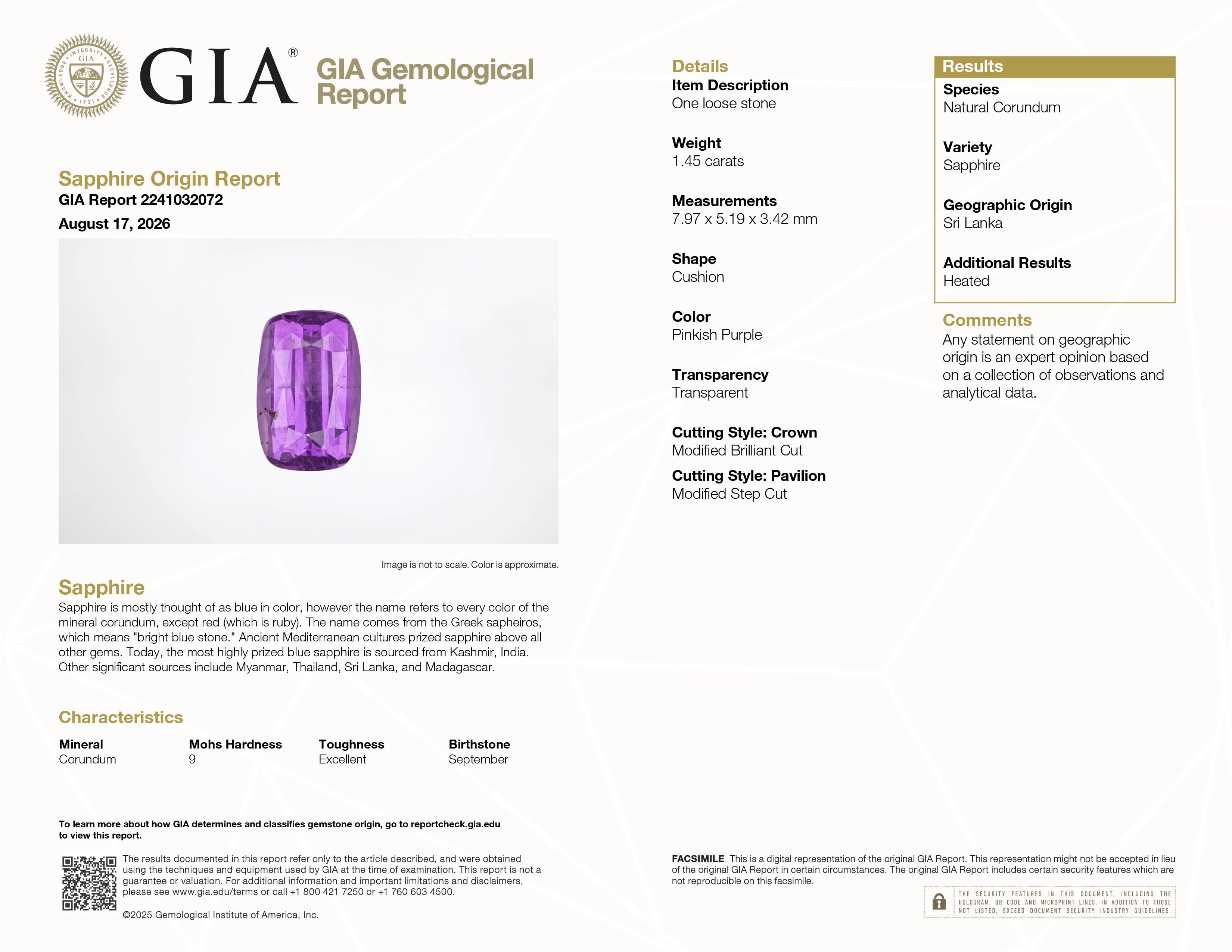
Saphir violet rosé 1,45 ct, chauffé — Rapport GIA
CG8468
CG8465
CG8463
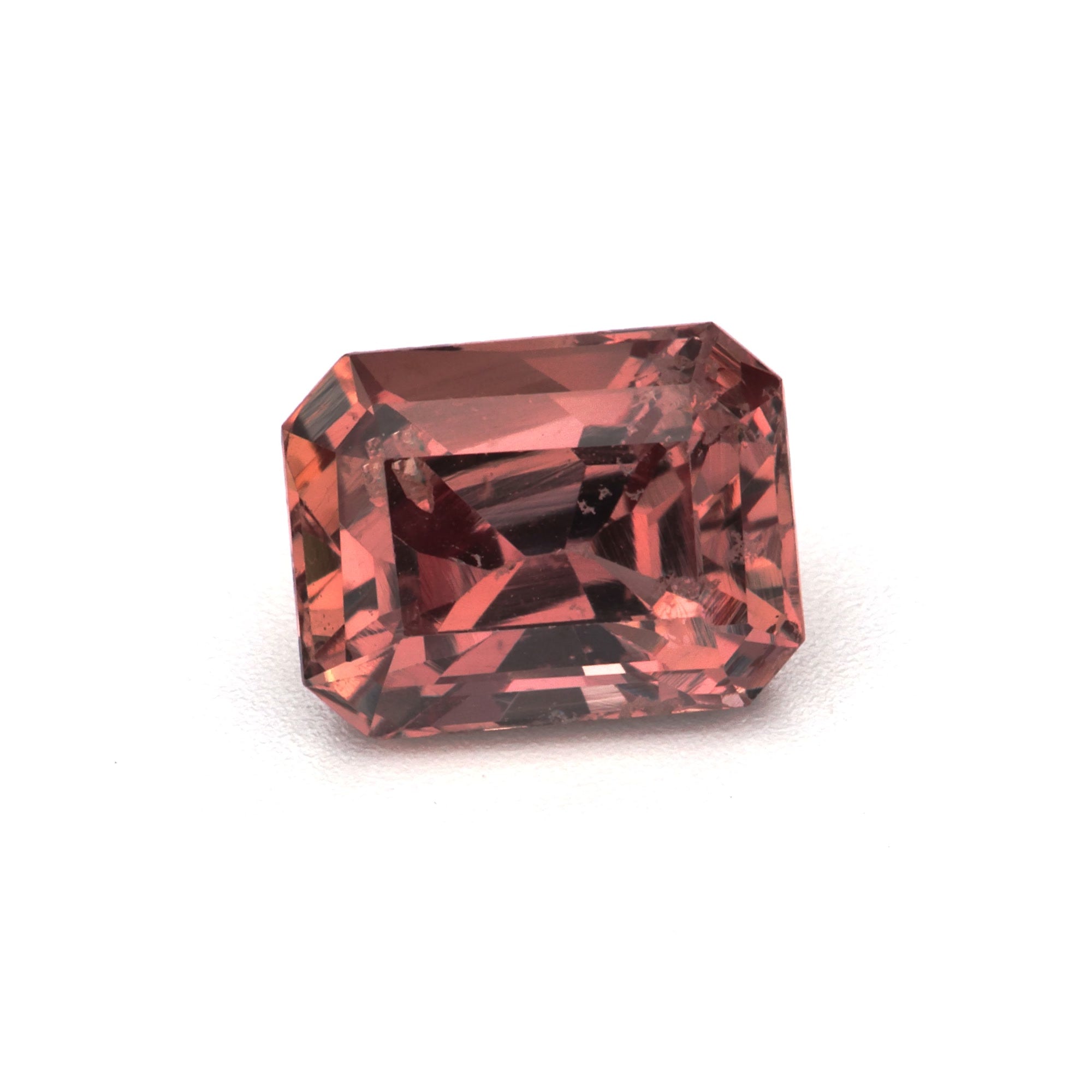
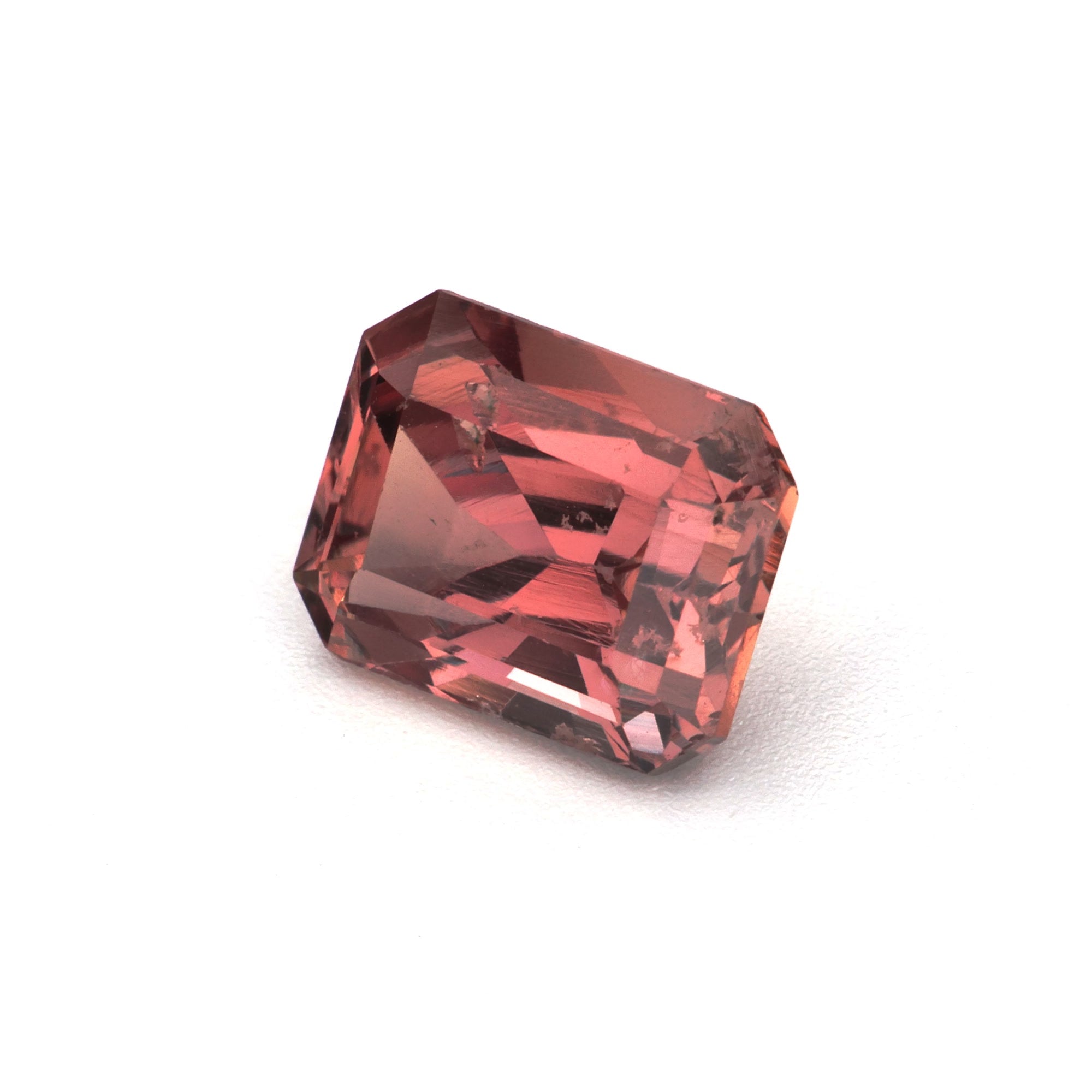
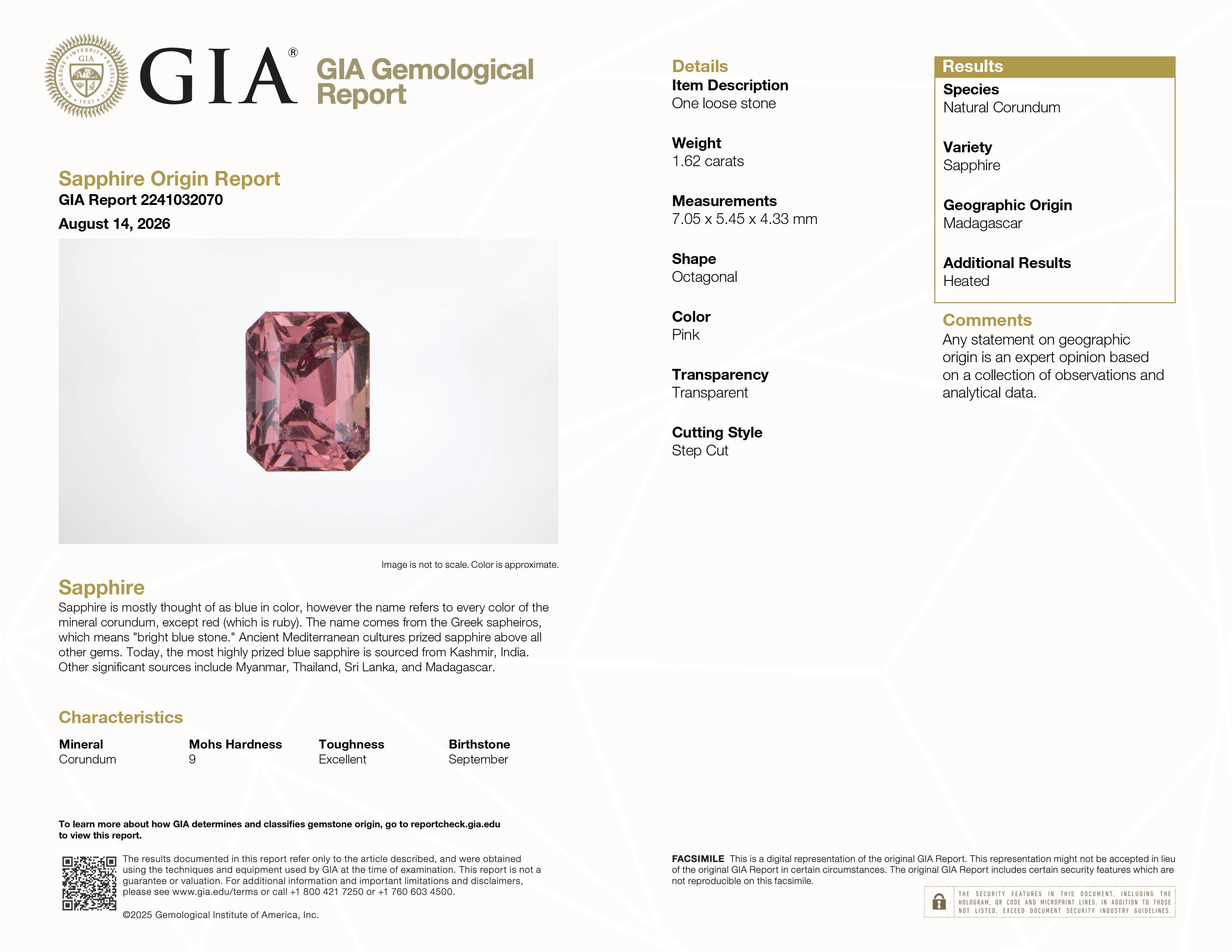
Saphir rose de Madagascar 1,62 ct — chauffé, rapport GIA
CG8460
CG8459
CG8458
CG8457
CG8456
Rubis non chauffé 1,65 ct — ovale Madagascar, rapport GIA
CG8453


Prix du saphir bleu étoilé : notre pierre, son prix au carat et son rapport
Plussur Prix du saphir bleu étoilé : notre pierre, son prix au carat et son rapport
Prix du grenat tsavorite : nos prix affichés, pierre par pierre
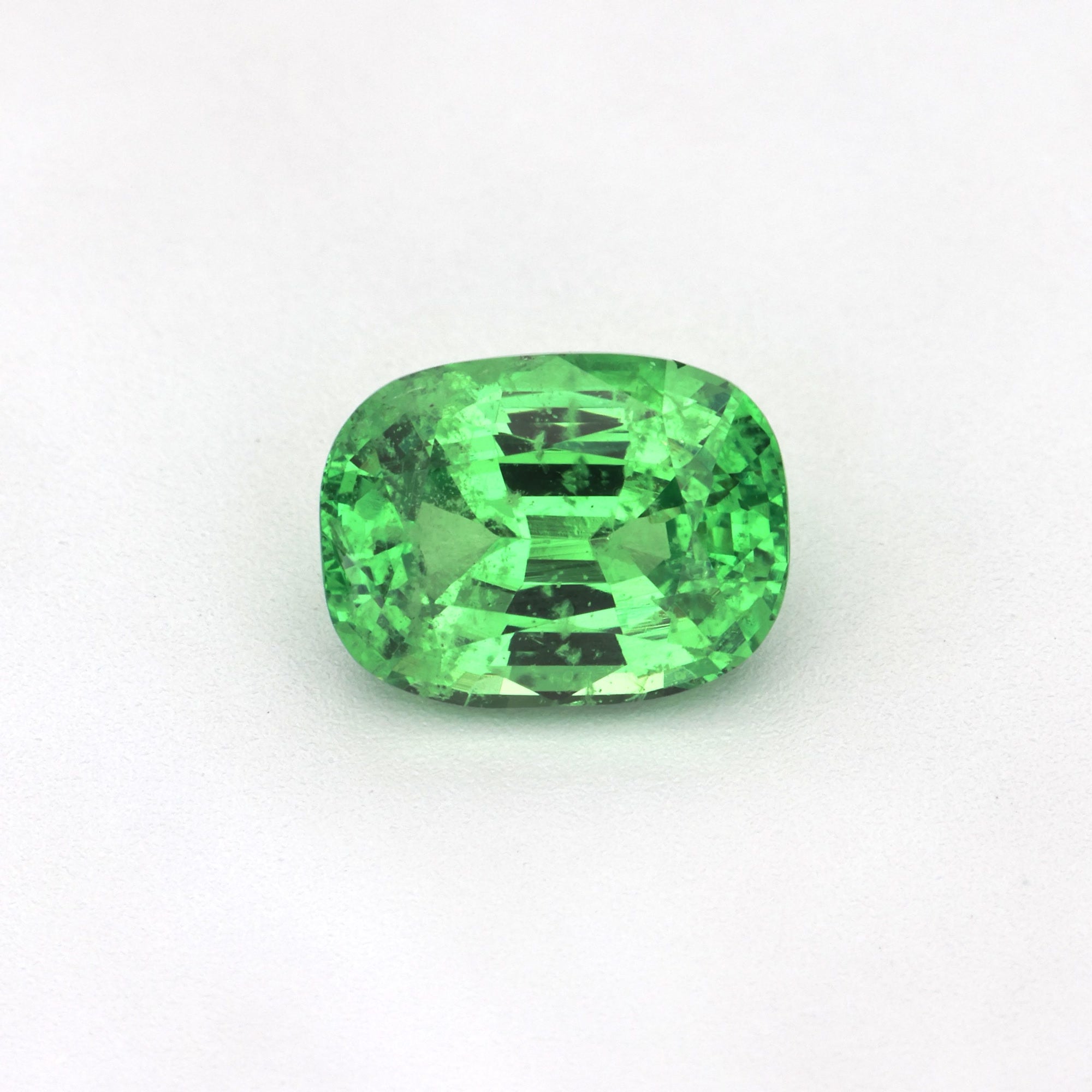
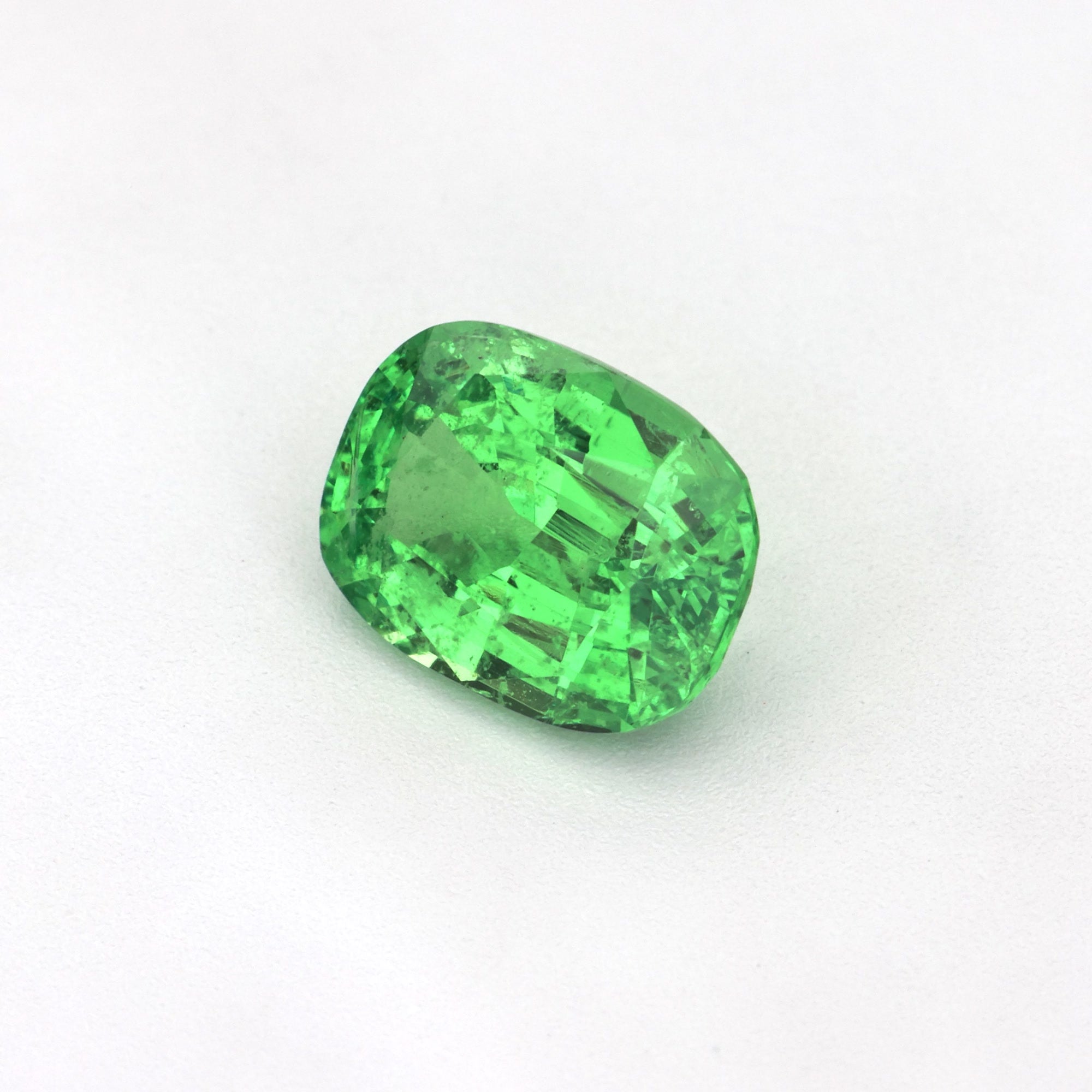
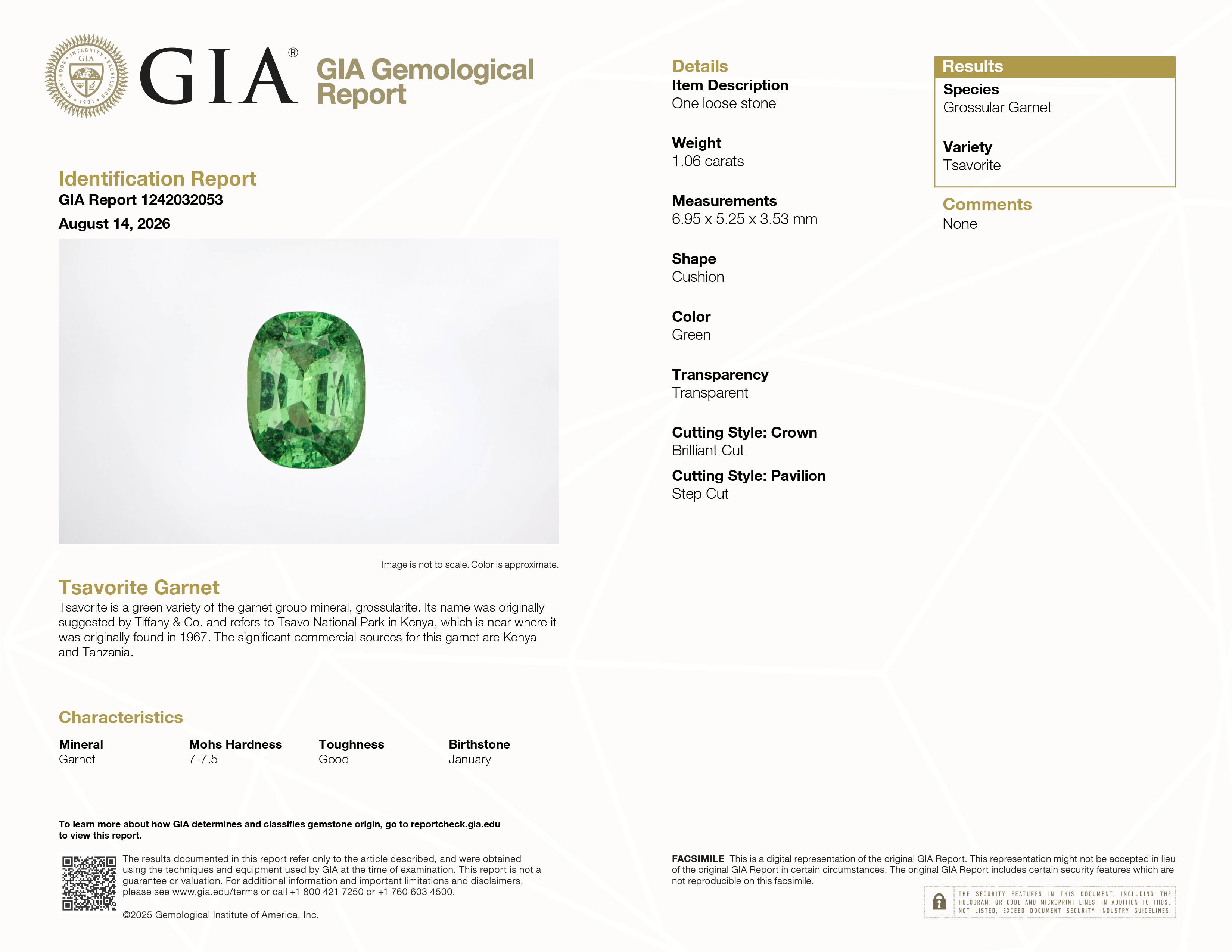
Ce que coûtent les deux tsavorites que nous avons en stock, prix affiché et prix au carat : relevé sur nos propres annonces le 16 novembre 2026, de 1 440 € (1 590 USD) à 20 560 € (22 724 USD). La tsavorite est la variété ; le grenat grossulaire est l’espèce.
Plussur Prix du grenat tsavorite : nos prix affichés, pierre par pierre
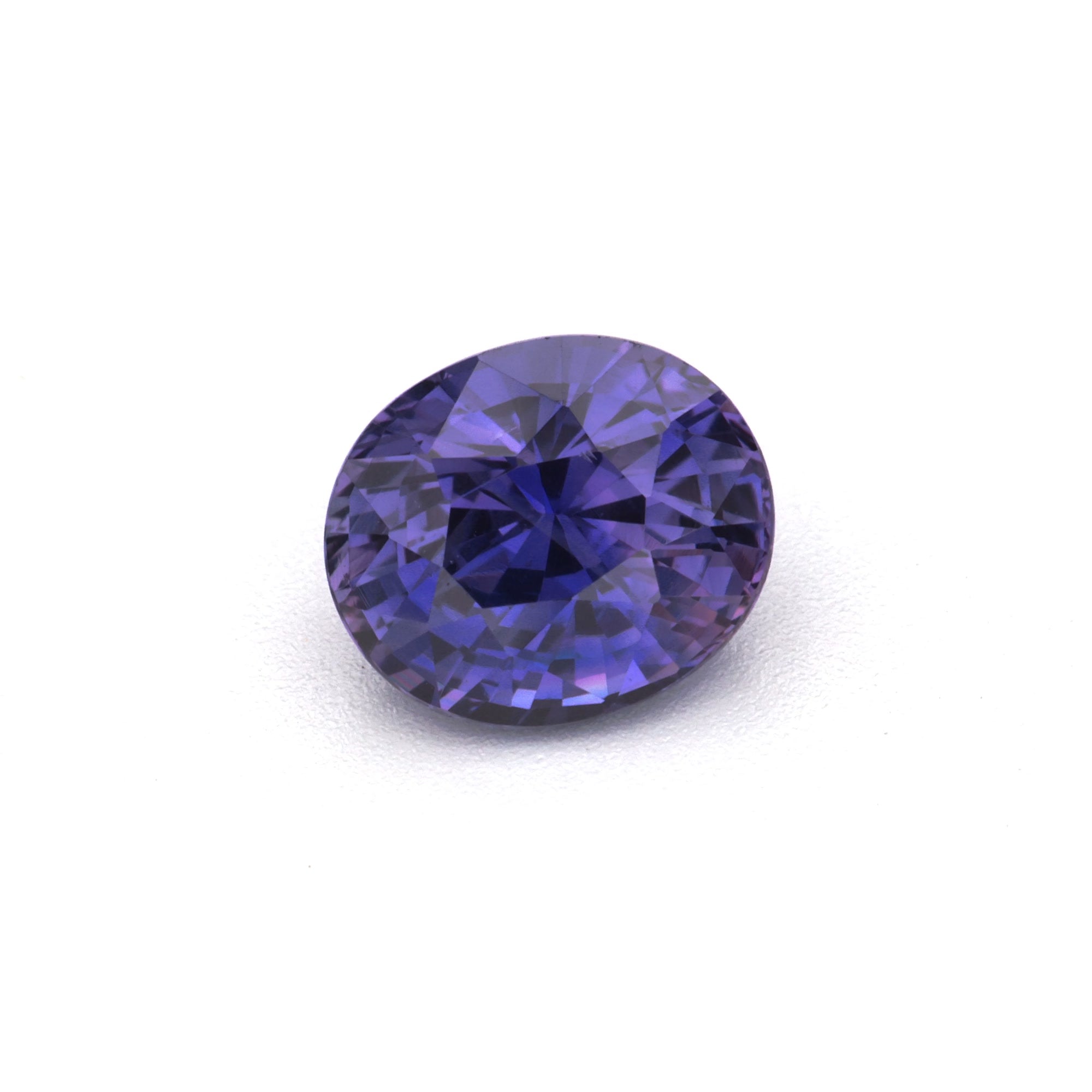
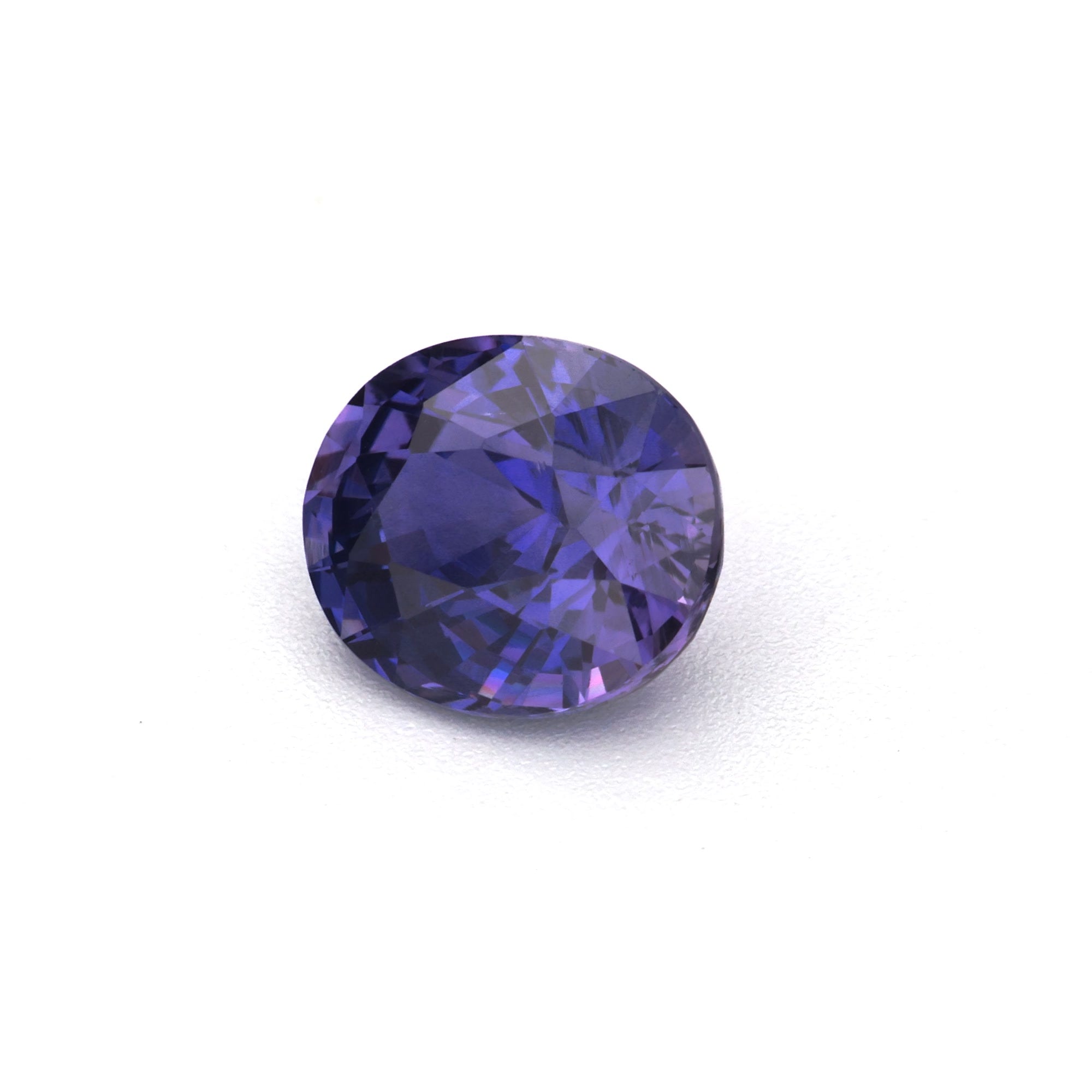
Prix du saphir à changement de couleur : ce que coûtent nos deux pierres
Plussur Prix du saphir à changement de couleur : ce que coûtent nos deux pierres

Le chrysobéryl œil-de-chat convient-il à une bague de fiançailles ?
Le chrysobéryl est à 8,5 sur l'échelle de Mohs, au-dessus du quartz (7) et en dessous du corindon (9). Ce que cela change au porter, à la monture et à l'entretien.
Plussur Le chrysobéryl œil-de-chat convient-il à une bague de fiançailles ?
Prix du chrysobéryl œil-de-chat : au carat et nos deux pierres
Ce que coûte réellement un chrysobéryl œil-de-chat au carat, ce qui fait varier le prix, et nos deux pierres chiffrées : 2,36 ct à $3,792 et 4,25 ct à $9,482, soit $1,606.78 et $2,231.06 le carat.
Plussur Prix du chrysobéryl œil-de-chat : au carat et nos deux pierres















Partager: