- by Ahmed Shareek
Star Sapphire — The Complete Buyer's Guide to the Phenomenon Gemstone
- by Ahmed Shareek
New to buying sapphires? Start with our Ultimate Sapphire Buying Guide — the complete resource for color, origin, treatment, and pricing — then return here for star sapphire specifically. For identifying natural vs. synthetic stars, see our dedicated guide to natural star sapphire identification.
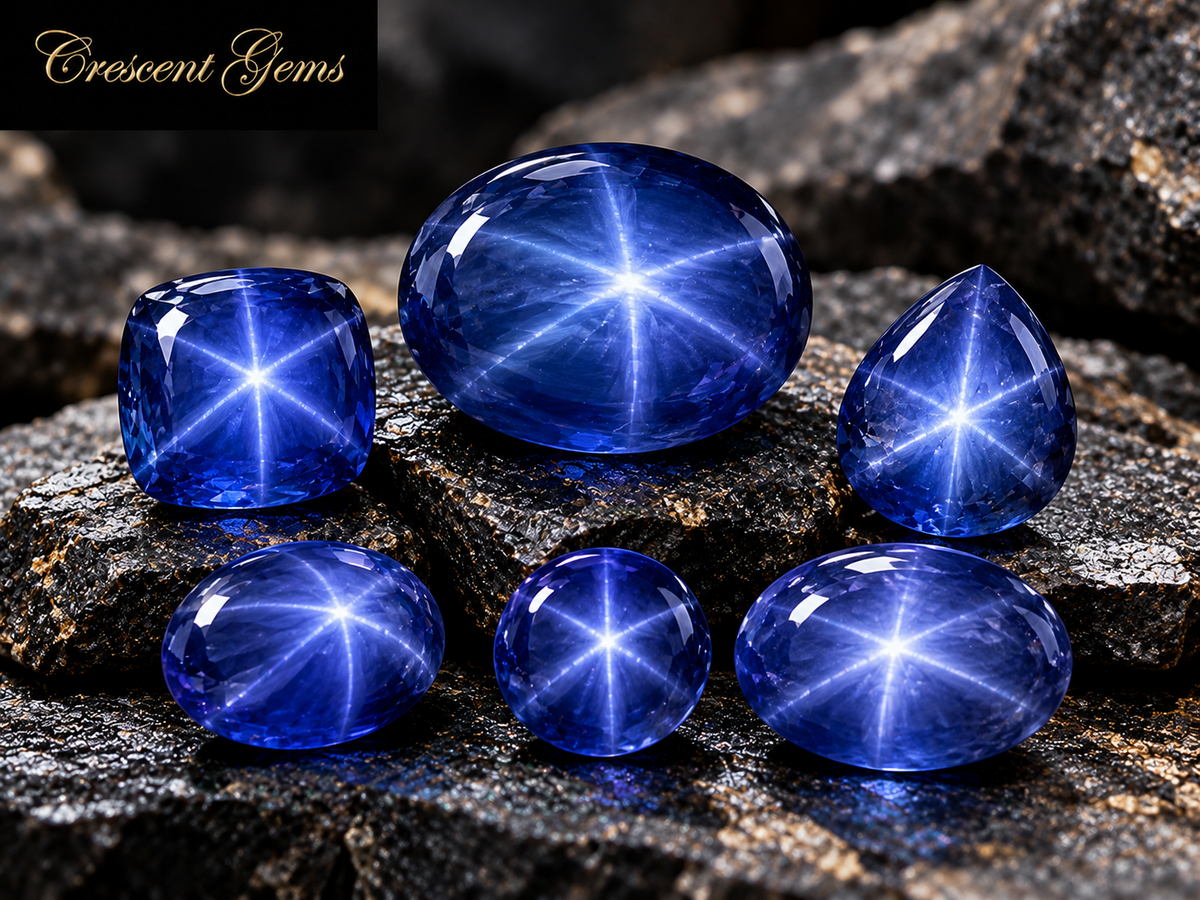
Star sapphire is corundum cut as a cabochon so that it displays asterism — the optical effect GIA describes as "caused by reflections from tiny, needle-like inclusions that are oriented in several specific directions." It is also one of the most misrepresented stone categories on the market: synthetic star sapphires flooded the market for decades and remain common in vintage jewelry and in online sales. This guide covers how asterism forms, how natural material is separated from synthetic and treated material, what a laboratory report does and does not say about a star, and what the stones cost.
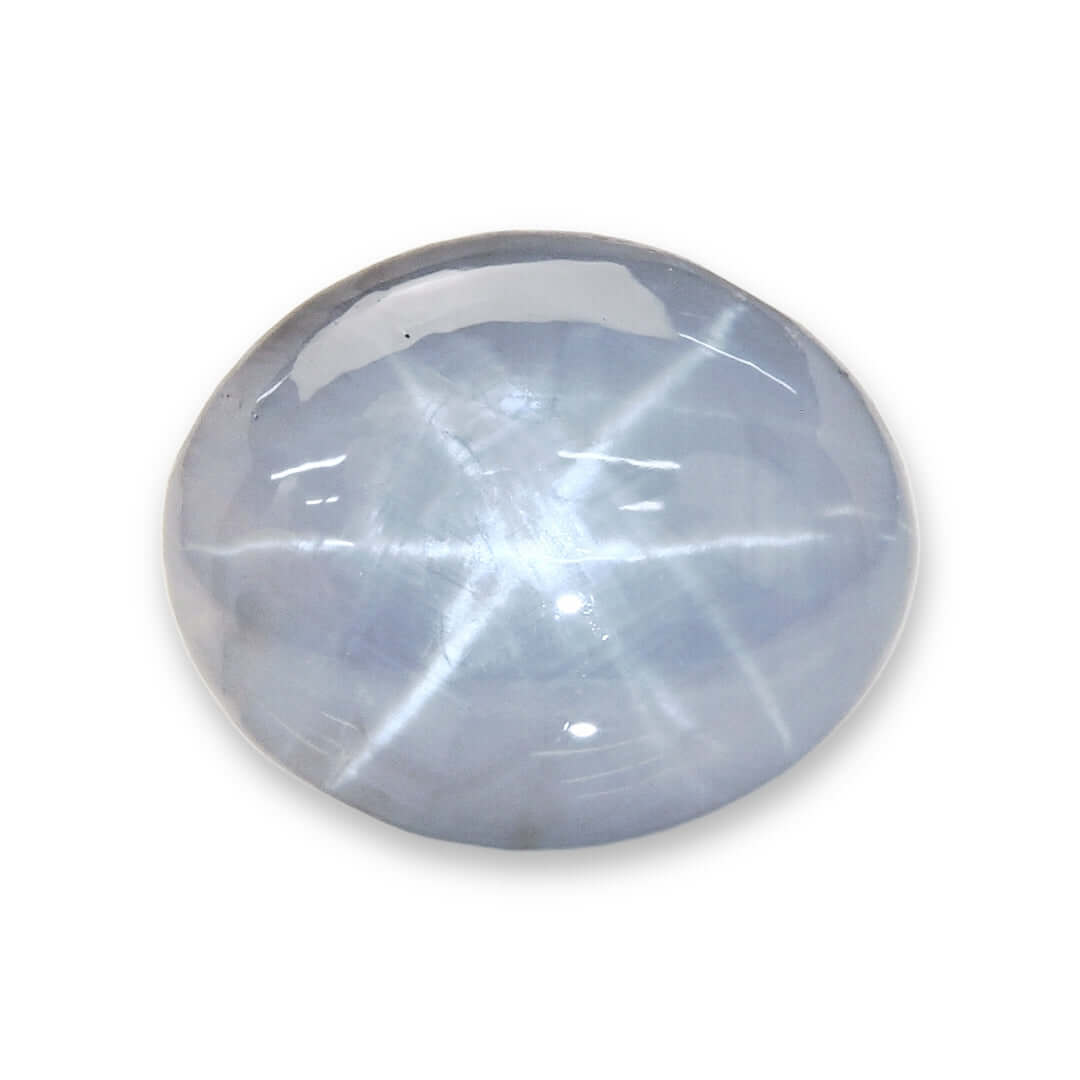
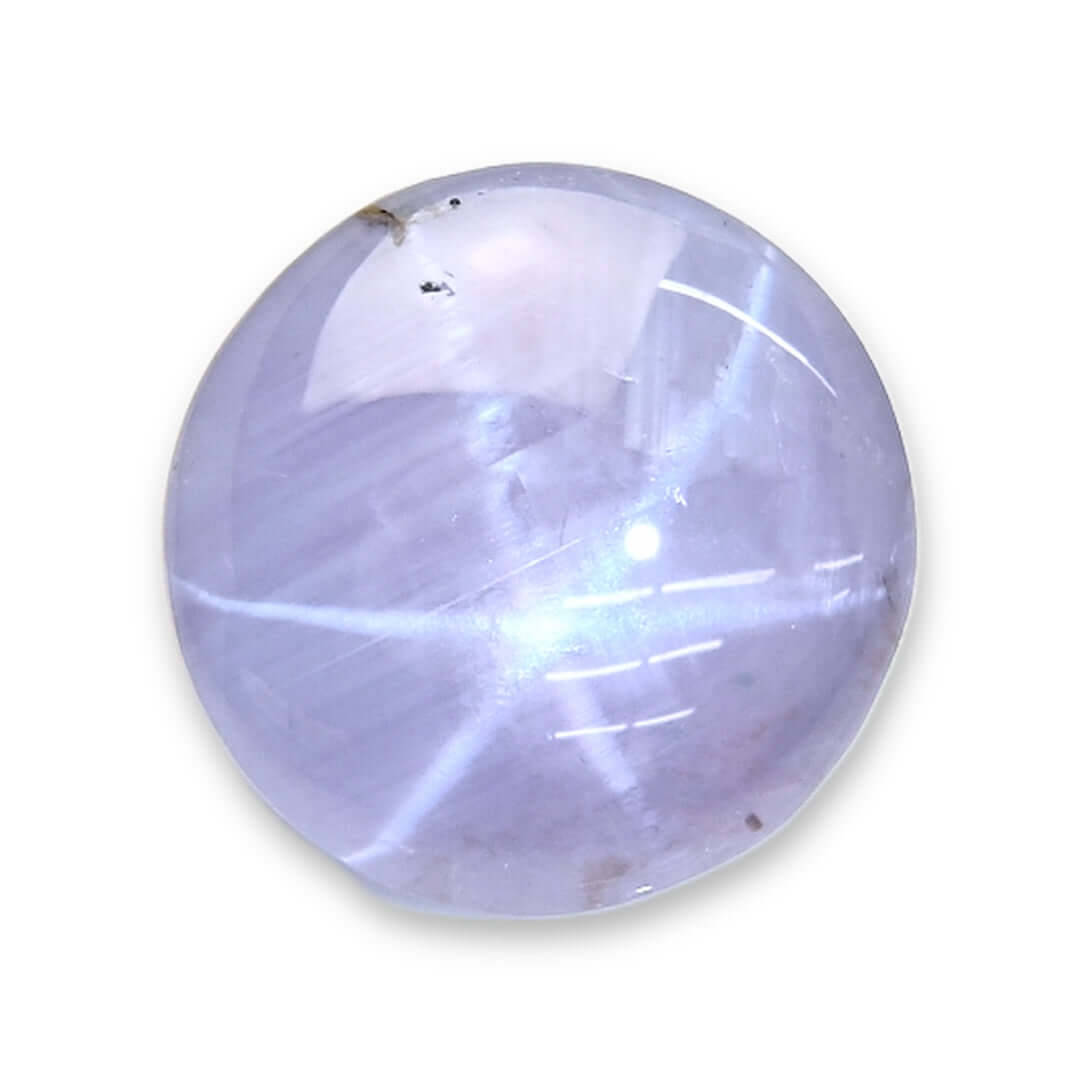
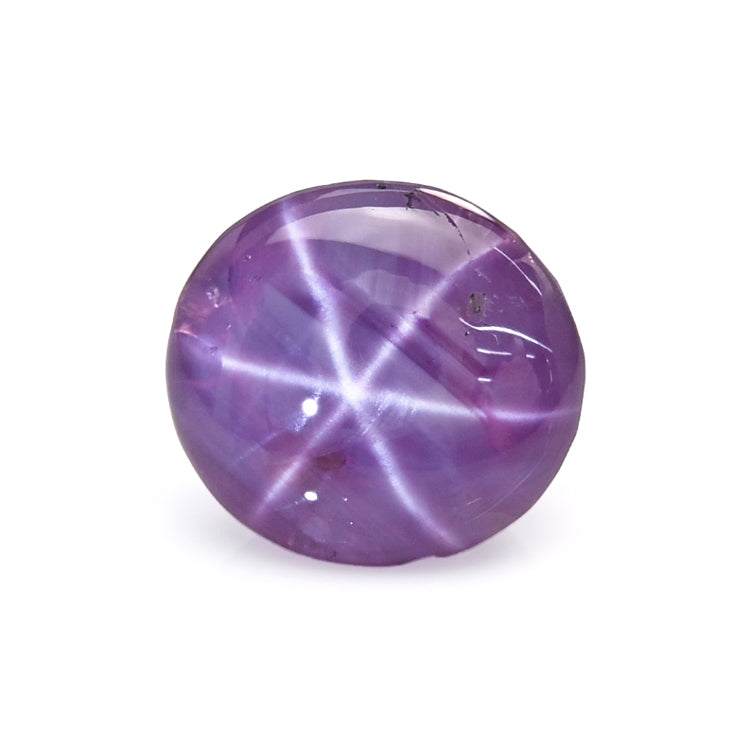
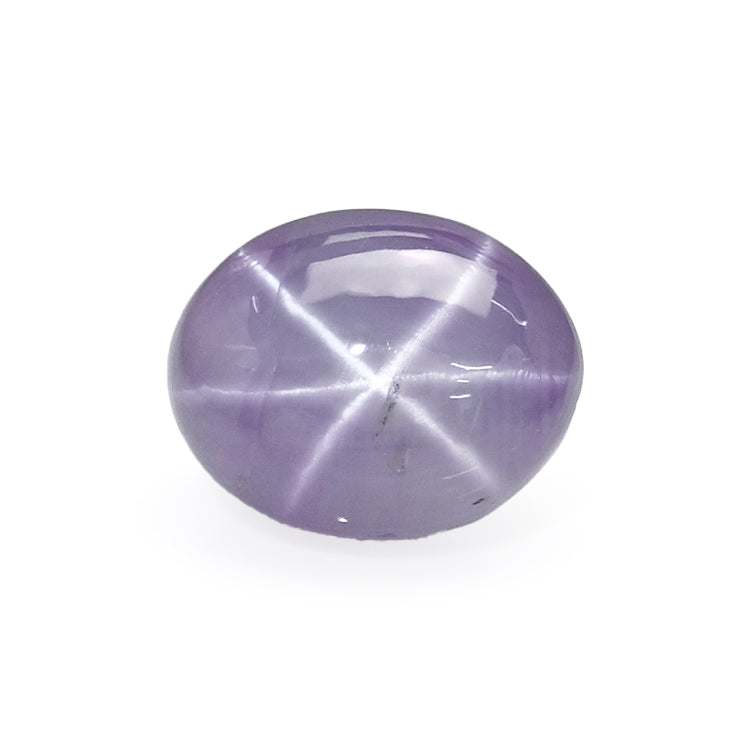
The star is produced by needle-like inclusions of rutile (titanium dioxide) that formed within the corundum crystal during its growth. Because corundum has a trigonal crystal structure, those needles align in three specific crystallographic directions, each set 60 degrees from the next, and the figure on the dome is light reflecting off the three intersecting sets. That geometry is the whole mechanism, and it is the part of this subject that is actually published.
Natural star sapphire is usually unheated. Conventional heat treatment tends to dissolve the rutile silk that asterism depends on, so the two rarely go together. That is a general tendency rather than a guarantee: gentler controlled heating is sometimes applied to star material, and titanium diffusion can induce a star at the surface. So the presence of a star is not by itself evidence that a stone was never heated. What a report records on this point is whether indications of heating were detected — a finding about heating, not a treatment history, and not a statement that nothing else was done to the stone.
Most guides to this material rank it on the quality of the star. This one does not, and the reason is worth stating plainly.
The trade does price star stones on the phenomenon, and that much is not in dispute. What does not exist is any published laboratory grading of it. GIA states that it "doesn't grade or provide quality analysis for sapphire or other colored stones." The Laboratory Manual Harmonisation Committee, whose information sheets standardize report wording across the major laboratories, publishes none that covers asterism. CIBJO defines the category and stops there. So a description of how a particular star looks is the seller's own opinion — ours included — and no report can be produced to substantiate it.
The star is the reason the stone exists. It is simply not something any laboratory will grade for you. So there is no quality scale on this page: where this guide describes a stone it reports what a laboratory recorded, and where we have a view of our own we say that it is ours. For the stones we hold, we would rather send you video than hand you an adjective.
Star sapphires occur across the corundum colour range: blue, grey, silver, black, pink, lavender, purple, violet, yellow and golden. Grey and black material is the most widely available and the least expensive; blue and pink are the colours buyers ask for most often, and they are priced accordingly. A laboratory report does record a colour description for the stone, which is more than it will do for the star, so colour is the more useful of the two to shop on. Our colour-specific price guides cover blue, pink and purple and violet star sapphire in detail.
Flame-fusion synthetic star corundum has been produced since the 1940s — the Linde stars are the best known of it — and plenty is still circulating in vintage jewelry and in the online secondhand market. Some Linde material carries an “L” or “Linde” inscribed on the girdle, but most of what you will meet carries nothing at all. Separating synthetic from natural star corundum is laboratory work rather than an eye call, which is why a report earns its keep in this category more than in most. Our dedicated guide to identifying natural star sapphire goes through it in detail.
On the treated side, the enhancement to know about is titanium diffusion. GIA names it directly — “Titanium diffusion, as used to create artificial stars in sapphire” — so a star is something that can be manufactured into a stone as well as grown into one. A diffusion-induced star is generally confined to a thin surface layer and is identifiable by a major laboratory. Standard heat treatment is less common in this category, because it works against the silk the star depends on.
Sri Lanka is the source we buy from, and the stones listed further down this page come from there. India (Orissa), Thailand, Madagascar, Australia and East Africa all produce star corundum as well. We do not rank those sources against one another: nothing published supports a ranking, and our own buying is a buying pattern rather than a survey of the market.
Where a stone formed is a separate question from how it looks, and it is answered by a separate laboratory service. GIA prints its own caveat beside an origin finding, and we would rather quote it than paraphrase it: “Any statement on geographic origin is an expert opinion based on a collection of observations and analytical data.” The Laboratory Manual Harmonisation Committee makes the same point about reports generally — “All findings described in the report are opinions expressed by the laboratory.” Those are opinions reached by qualified examiners, and that is exactly how we present them. See our Sri Lankan sapphire complete guide and Ratnapura gem market guide.
Because star sapphire is usually unheated, it will often meet the unheated requirement for Jyotish use — but that should be read off the laboratory report for the individual stone rather than assumed from the presence of a star. Blue star sapphire corresponds to Saturn (Shani / Neelam); yellow star sapphire to Jupiter (Guru / Pukhraj); pink star sapphire to Venus (Shukra). See our Jyotish sapphire buying guide.
The table below sets out the per-carat levels star sapphire is commonly offered at across the category, and what tends to change between them. The headings matter: these are price bands, not quality grades. No laboratory grades asterism, for the reason set out above, so nothing here is a grading scale and our own stones are not placed on one. For narrower bands by colour, see our blue, pink and purple and violet price guides.
| Price per carat | Body colour and documentation at this level |
|---|---|
| $30–$150 | A dark or very pale greyish body colour. Usually sold with no laboratory report. |
| $150–$500 | More of the body colour reading through rather than grey. A report from a smaller laboratory, or none at all. |
| $500–$2,500 | A clearly saturated body colour rather than a grey one. A report from a recognized laboratory is the normal expectation at this level. |
| $2,500+ | An even, saturated body colour. A full report from a major laboratory, often one that also carries a separate geographic origin opinion. |
Approximate market orientation as at October 2026, for natural star sapphire sold loose. These are not measured figures, not a survey, and not our own sales data, and they are not offers. The bands carry no size qualifier, so a larger stone's total price cannot be obtained by reading a band and multiplying. Our own stock is four stones and is described separately below.
Origin is also not a quality grade, which is why it does not appear as a column in the table above. Where a stone was formed and how it looks are two separate findings, and pricing one as though it were the other is a habit worth breaking. See our natural star sapphire identification guide.
See also our sapphire pricing guide and what a good 1 carat sapphire costs.
Star sapphires are cut as cabochons, and the domed form is what the asterism requires. We prefer a bezel for them — the metal rim protects the girdle while leaving the dome clear — and that is our preference rather than a line from any report; GIA publishes nothing on settings for sapphire. For bezel selection guidance, see our how to choose a sapphire for a bezel ring guide. For custom ring design around a star sapphire, see our custom sapphire ring design guide. On metal, yellow gold is the traditional pairing for blue star sapphire and rose gold for pink — again our own view, and a matter of taste rather than a finding. For the full framework, see our metal comparison guide and how to choose metal colour.
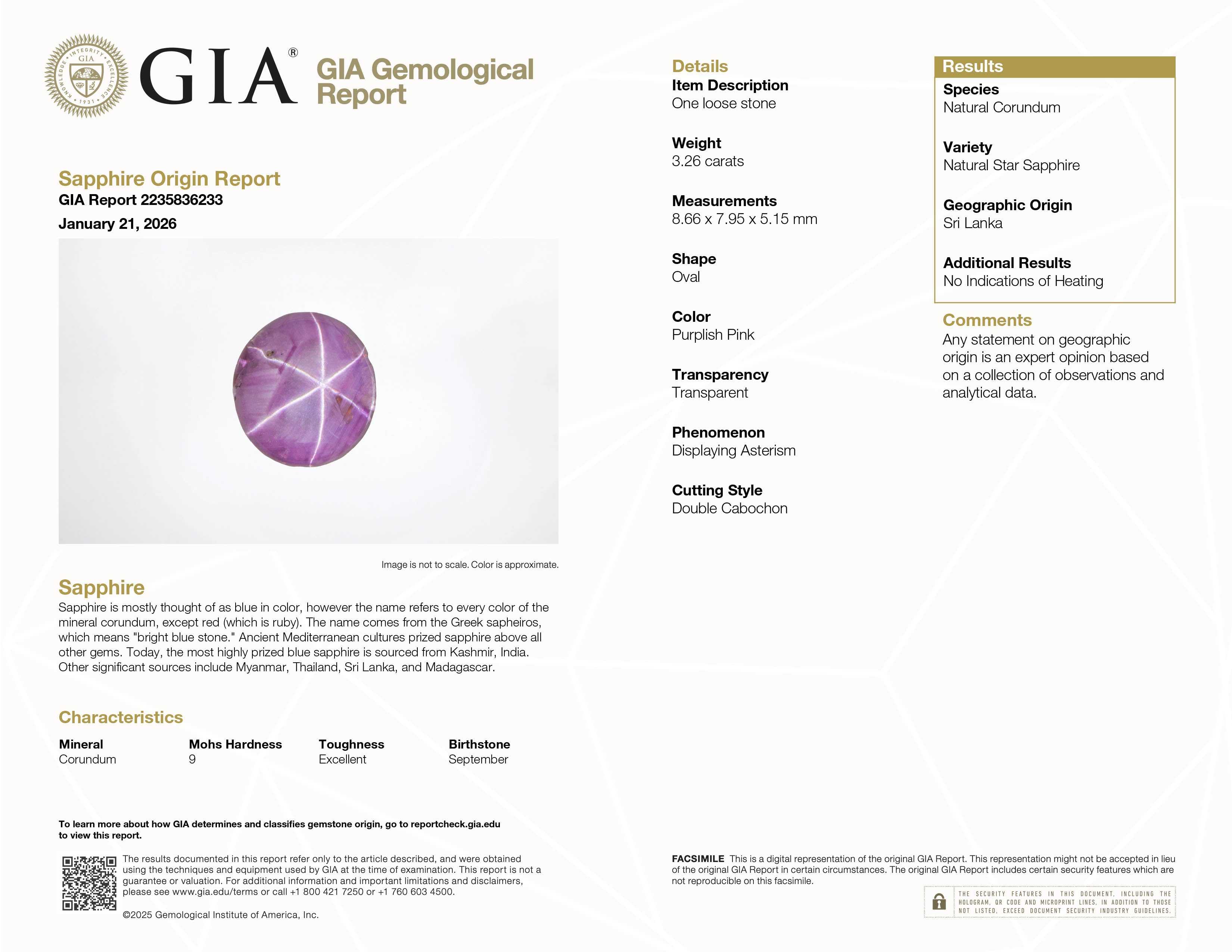
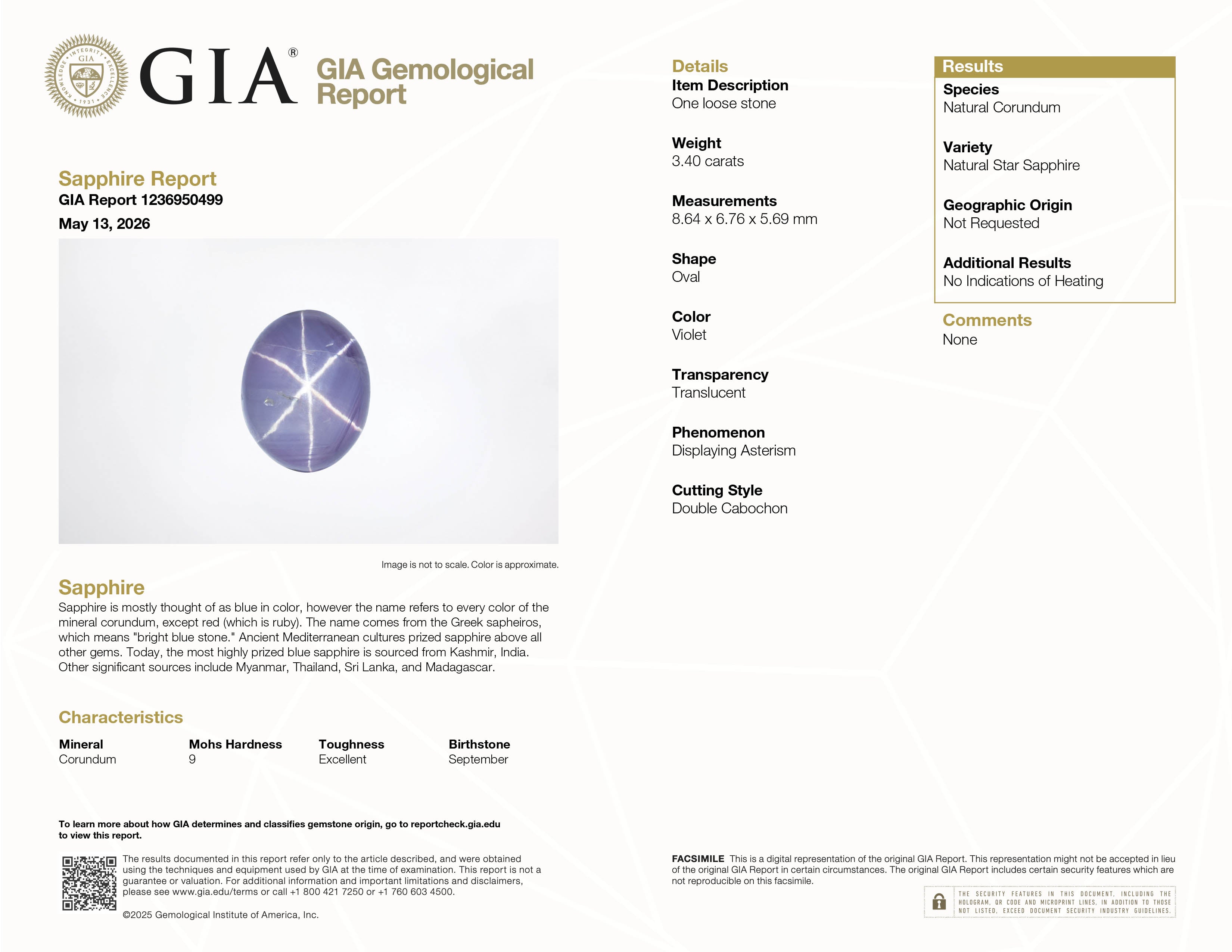
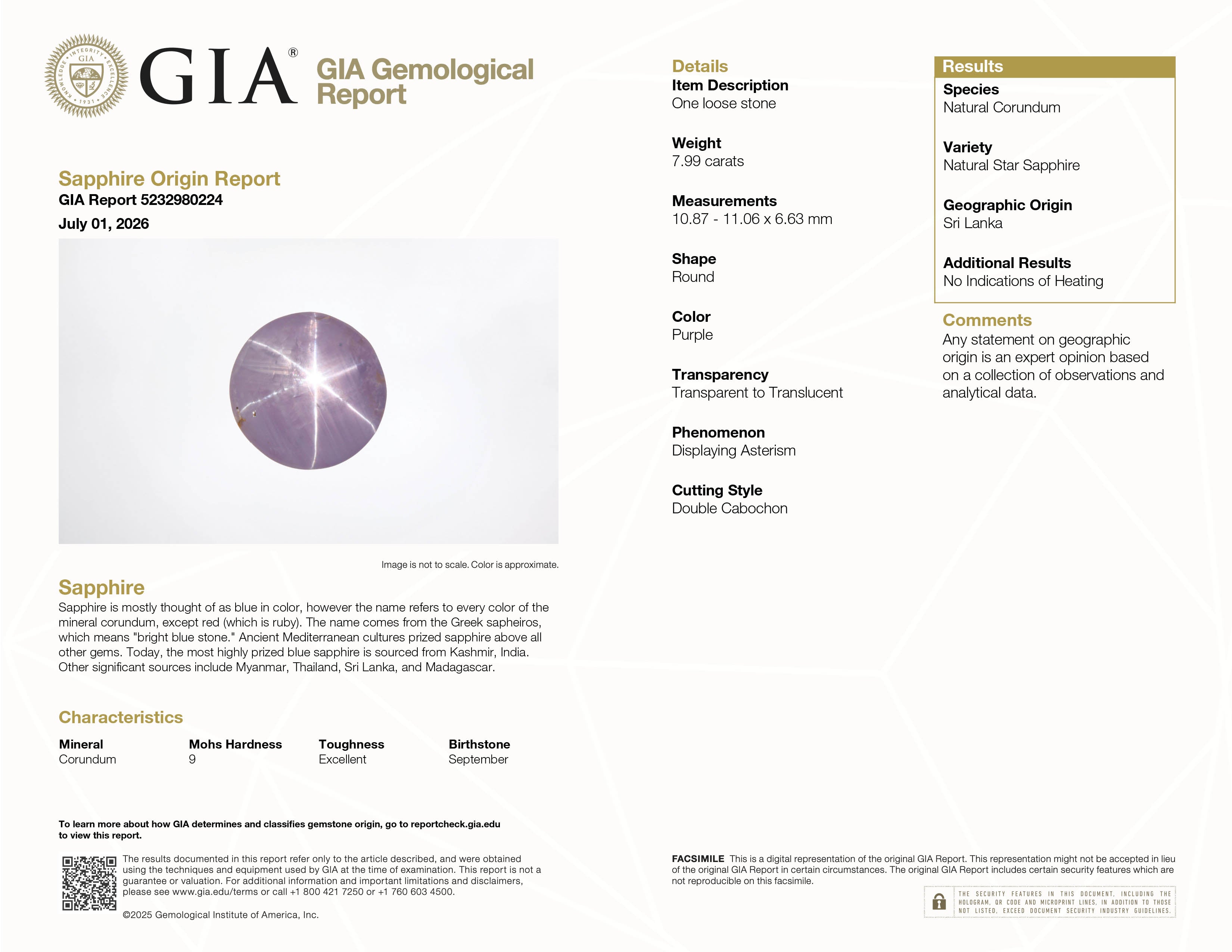
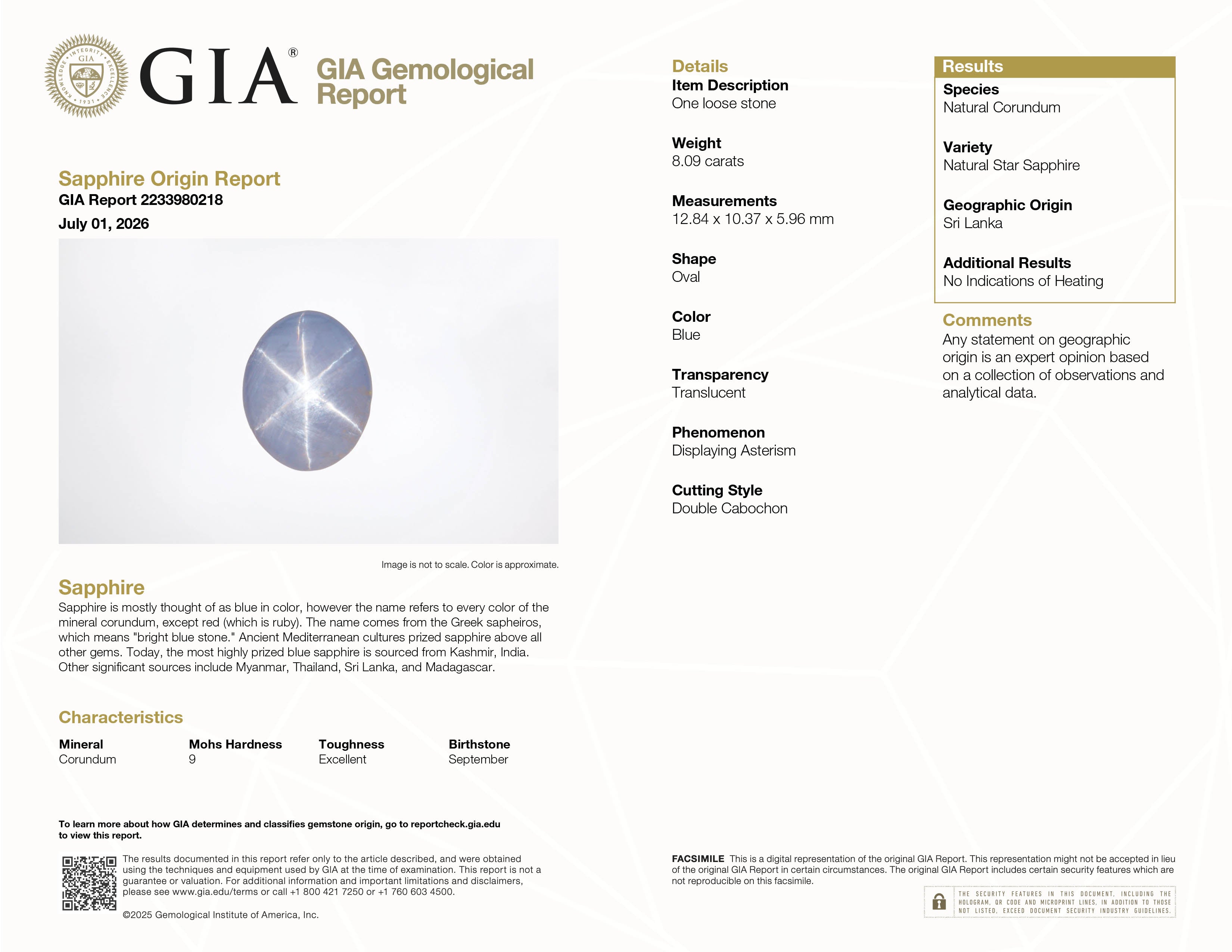
GIA issues reports, not certificates, and the distinction is worth keeping straight when you are reading what you have been handed. What a report on a star sapphire does is identify the material, state whether it is natural or laboratory-grown, record a colour description, and record detectable treatment indications. Where the stone came from is a different question, answered by a different service and printed with its own caveat. What no report does is rate the star.
On any star sapphire represented as natural, a report from a major laboratory is the thing worth insisting on, because synthetic star corundum is common and the separation is not an eye call. See our guide to reading a GIA sapphire report.
Needle-like inclusions of rutile that formed inside the corundum crystal as it grew. Corundum is trigonal, so those needles align in three crystallographic directions set 60 degrees apart, and the figure on the dome is light reflecting off the three intersecting sets. GIA describes the effect as "caused by reflections from tiny, needle-like inclusions that are oriented in several specific directions."
No. GIA states that it "doesn't grade or provide quality analysis for sapphire or other colored stones," and the Laboratory Manual Harmonisation Committee, whose information sheets standardize report wording across the major laboratories, publishes none that covers asterism. A report will record that a stone displays the phenomenon; it will not rate it. So any description of how a particular star looks is the seller's own opinion, ours included, which is why we would rather send you video of the stone than hand you an adjective.
Not reliably by eye. Flame-fusion synthetic star corundum has been made since the 1940s, the Linde stars are the best known of it, and plenty is still circulating in vintage jewelry and the secondhand market. Some Linde material is inscribed “L” or “Linde” on the girdle, but most of what you will meet carries nothing. The separation is laboratory work, which is why a report from a major laboratory is the thing to insist on.
Star sapphire is commonly offered somewhere between about $30 and $2,500 per carat across the category, and where a given stone falls depends on its body colour, its carat weight, and what documentation comes with it. Those figures are an approximate market orientation rather than measured data. Our own stock is four stones, priced from $2,380 to $4,040 in total, which works out between $499.37 and $869.33 per carat.
Warm water, mild soap and a soft brush. Corundum is Mohs 9, which is a species constant describing scratch resistance rather than a finding about any individual stone, and hardness is not the same thing as toughness — a cabochon can still chip on a hard knock. Store it apart from other pieces so it does not scratch them.
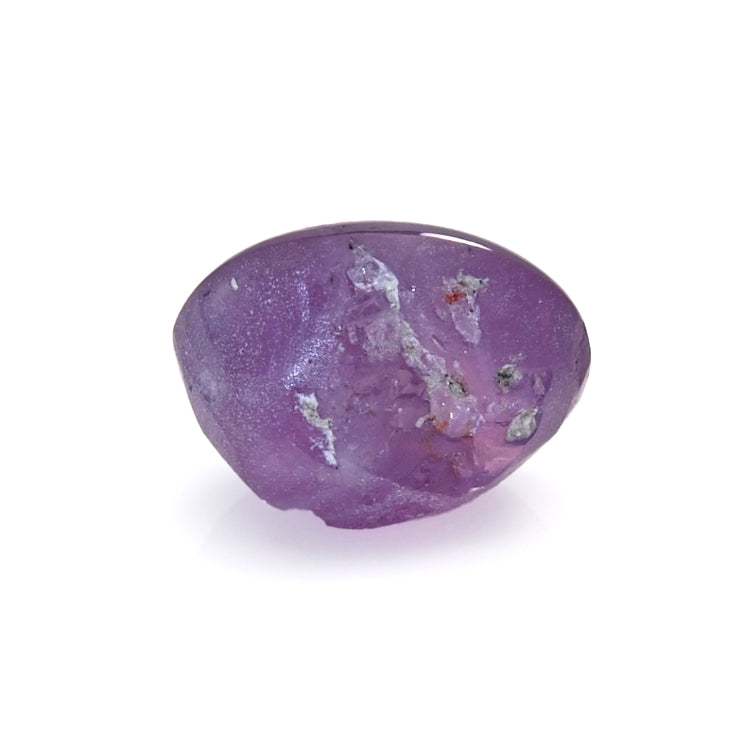
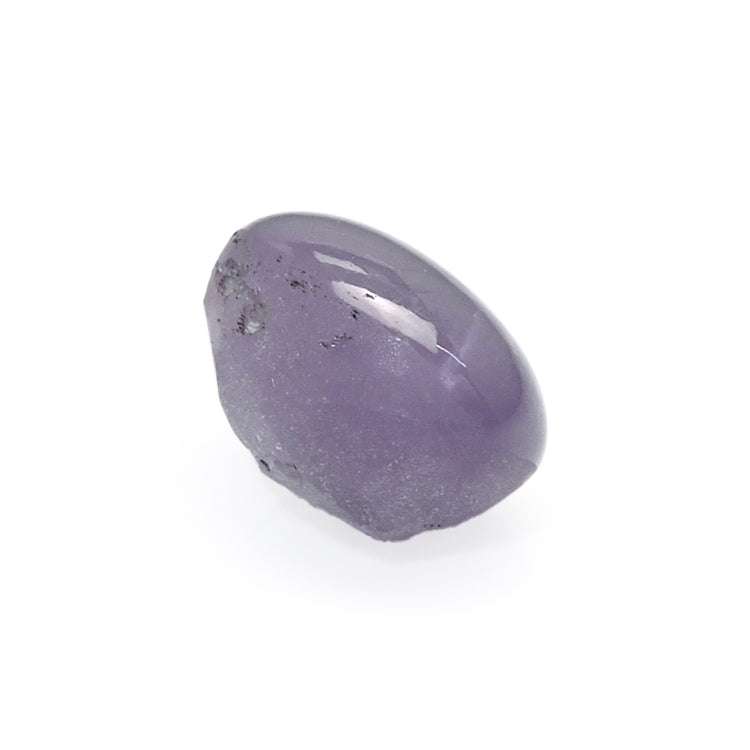
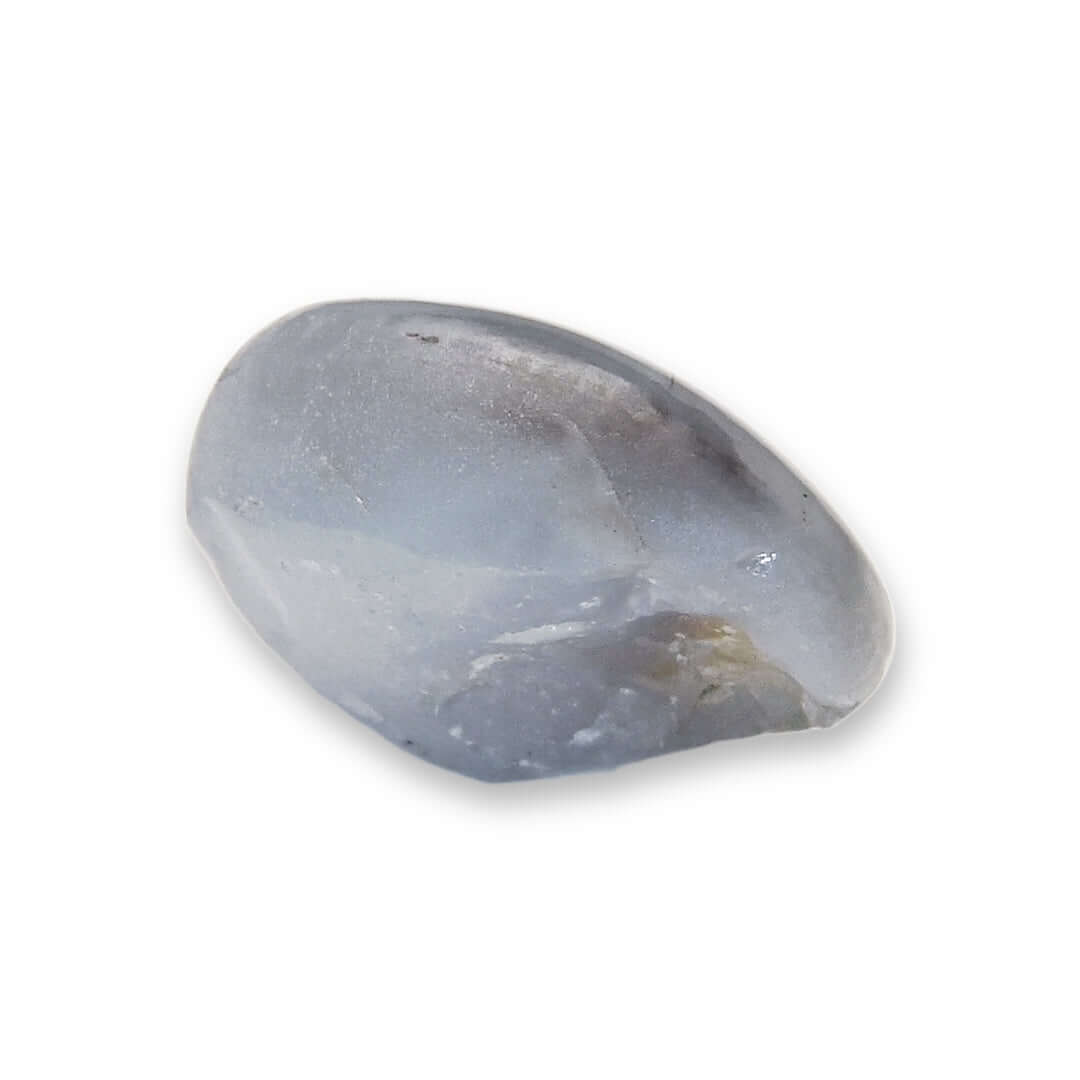
Our star sapphire collection holds four stones at present, each of them natural and each accompanied by a GIA report. For faceted blue sapphires, see our blue sapphire collection.
Those are four stones, not a price range, and we have not presented them as one. We can send video of any of them before you buy.
Have a question about our star sapphires, or want to see one on video before buying? Email crescentgems@gmail.com — we respond within one business day. Free US shipping; $60 flat elsewhere, free over $499. 14-day returns on every order.

CG8293
Prices are shown in your local currency and may change.
CG8293


Blue Star Sapphire Price Guide — What They Cost and Why
Read moreabout Blue Star Sapphire Price Guide — What They Cost and Why
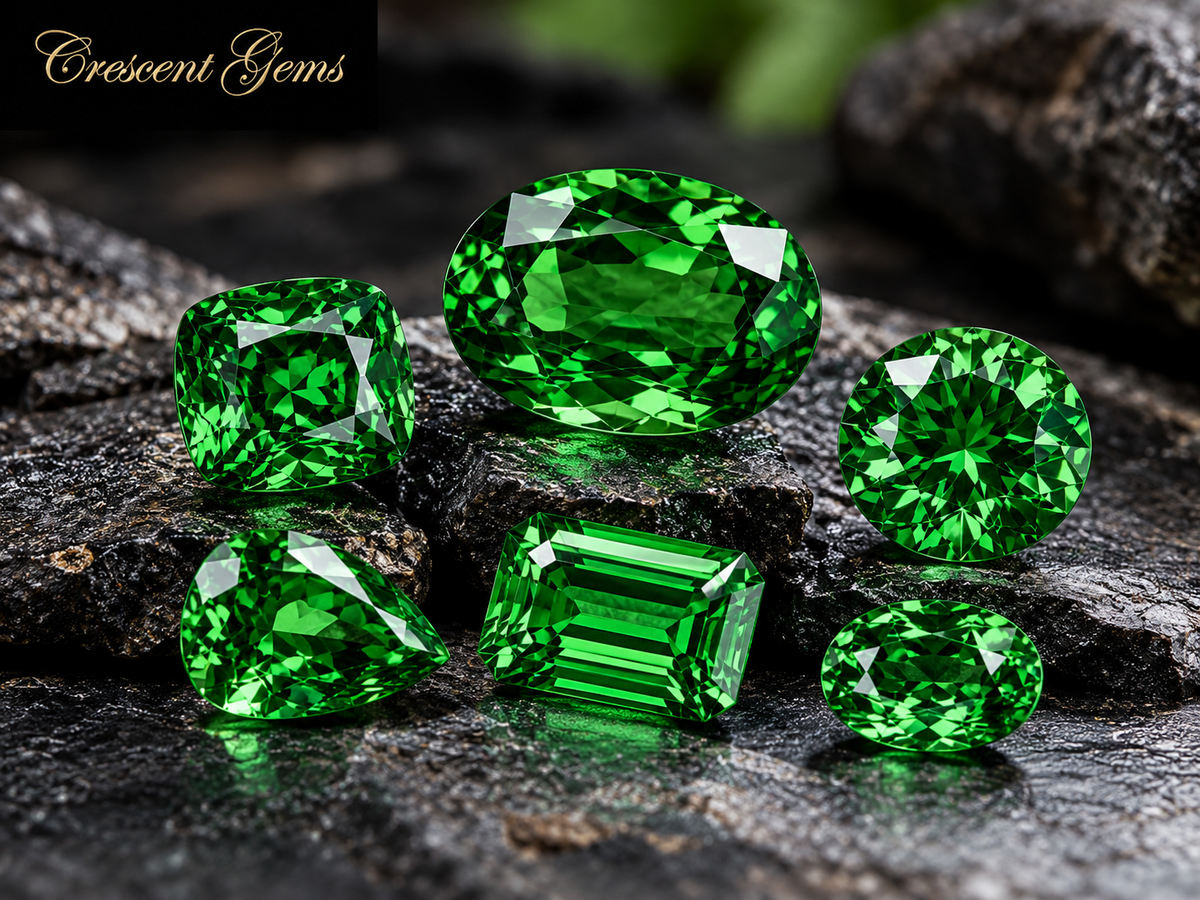
Tsavorite Garnet Price Guide — What They Cost and Why
Read moreabout Tsavorite Garnet Price Guide — What They Cost and Why
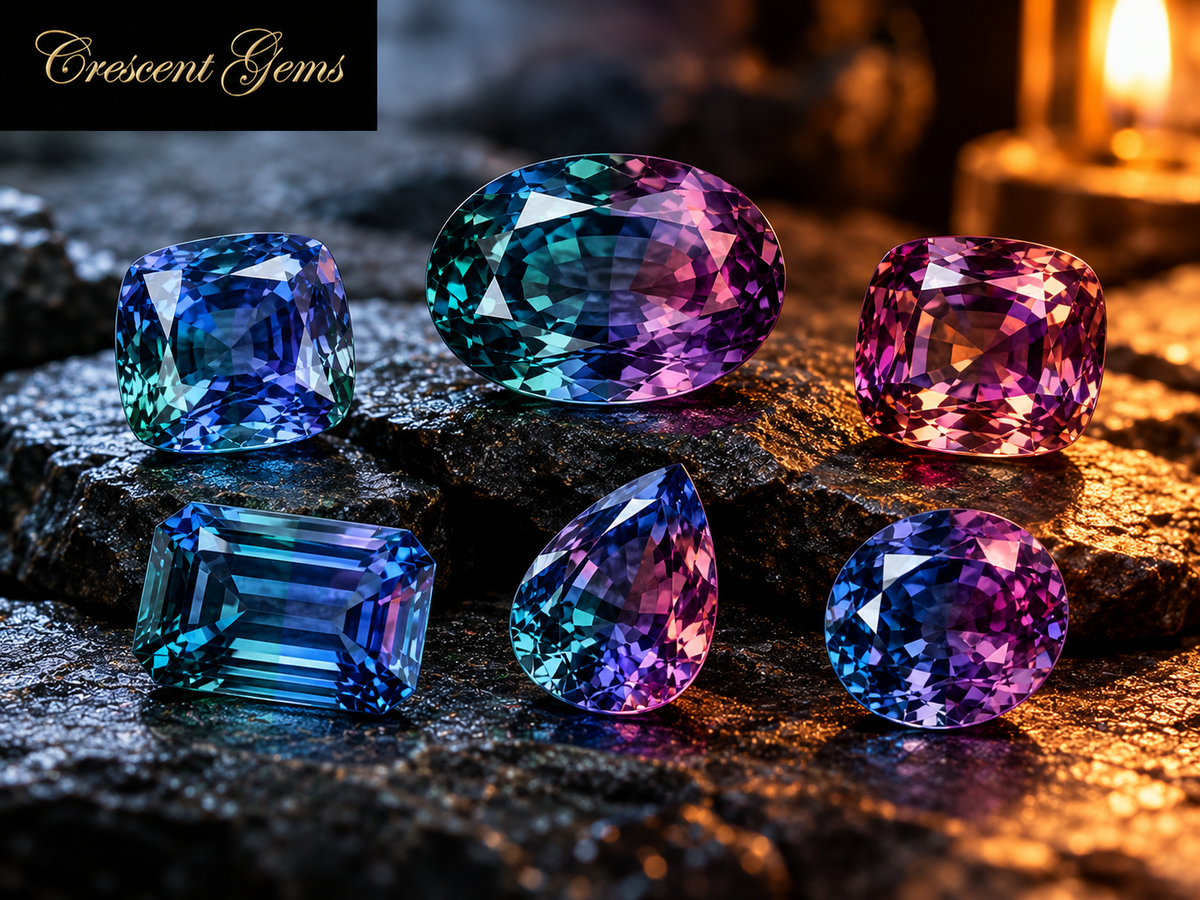
Color-Change Sapphire Price Guide — What They Cost and Why
Read moreabout Color-Change Sapphire Price Guide — What They Cost and Why
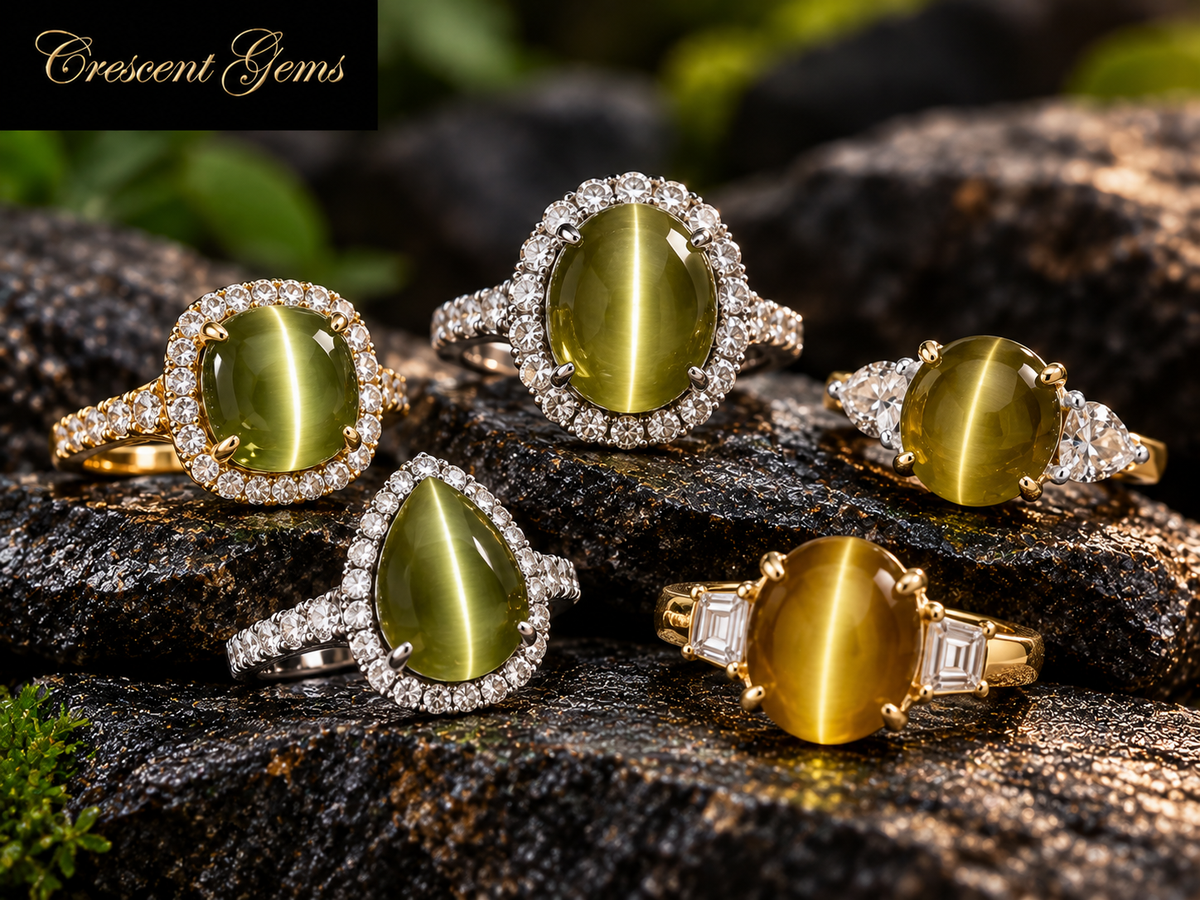
Is Cat's-Eye Chrysoberyl Good for an Engagement Ring?
Read moreabout Is Cat's-Eye Chrysoberyl Good for an Engagement Ring?
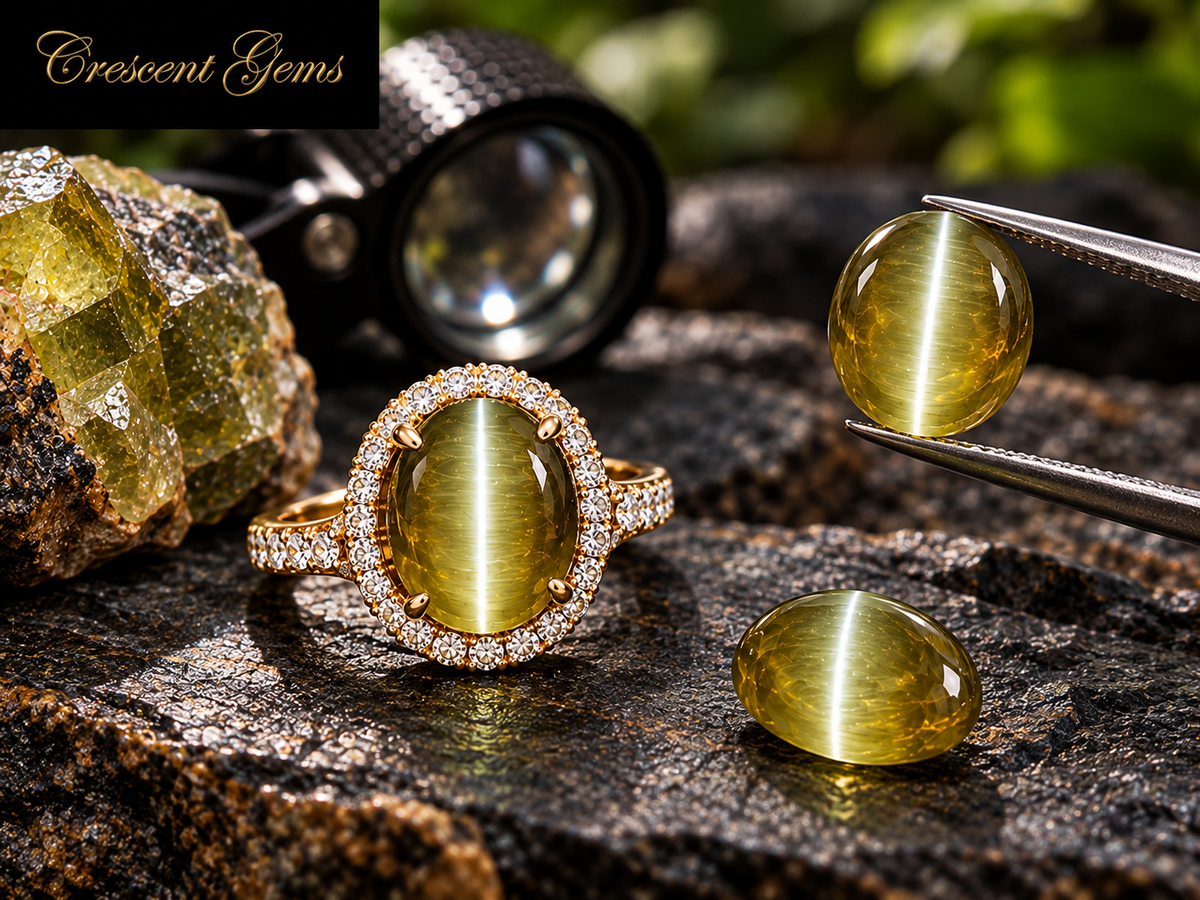
Cat's Eye Chrysoberyl Price Guide — What They Cost and Why
Read moreabout Cat's Eye Chrysoberyl Price Guide — What They Cost and Why