

- par Ahmed Shareek
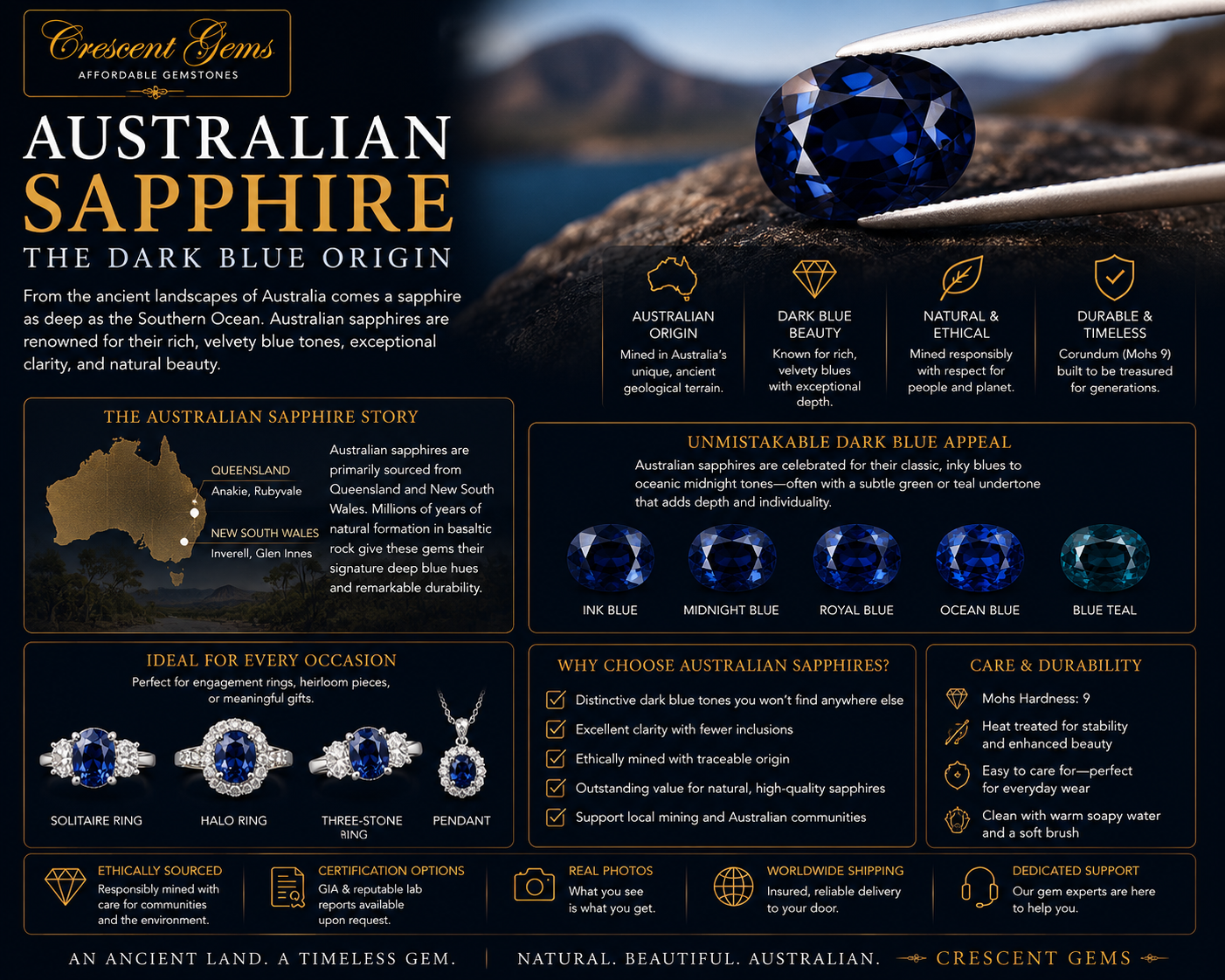
Australian Sapphire — The Dark Blue Origin and What Buyers Need to Know
- par Ahmed Shareek
New to buying sapphires? Start with our Ultimate Sapphire Buying Guide — the complete resource for color, origin, treatment, and pricing.
Australia was once the world's largest sapphire producer by volume. Through the 1980s and into the 1990s, Australian mines — particularly in the New England region of New South Wales and the Anakie fields of central Queensland — supplied a significant proportion of the world's commercial blue sapphire. Australian sapphire has a reputation — earned but often overstated — for dark, inky blue color. This guide covers where Australian sapphires come from, what makes them geologically distinctive, why the color tends dark, what the best material actually looks like, and how Australian sapphire compares to Ceylon and other origins.
New South Wales — the Inverell-Glen Innes fields: The New England region of northern New South Wales is Australia's most productive sapphire area. Sapphires are found in alluvial deposits that have weathered from Cenozoic-era basalt flows. New South Wales sapphires are typically dark blue to very dark blue, with strong green or black secondary modifiers. The region also produces yellow, green, and parti-colored (multicolor) sapphires.
Queensland — the Anakie fields: The Anakie gemfields in central Queensland represent Australia's other major sapphire region. Queensland sapphires share the dark, iron-rich character of New South Wales material but tend to show more green and teal components. The Anakie fields have produced notable parti-colored sapphires — stones showing two or more distinct colors in visible zones within the same crystal. Parti-colored Australian sapphires have become a niche collector category.
Australian sapphires come from basaltic (magmatic) geological environments, and basalt-hosted corundum typically contains significantly higher iron concentrations than corundum from metamorphic environments like Sri Lanka, Kashmir, or Burma. Higher iron concentration means more absorption of light, producing a darker, more saturated blue. Excess iron beyond what is needed for the blue Fe-Ti mechanism also produces yellowish-green absorption that muddies the blue, pushing it toward inky, greenish, or blackish tones. This high iron content also means Australian sapphires show virtually no fluorescence under UV light. See our Understanding Sapphire Fluorescence guide.
A very large proportion of Australian sapphire rough is heat-treated. Controlled heating in an oxidizing atmosphere can reduce the intensity of the dark blue and minimize greenish modifiers, producing a more marketable medium-dark blue. Heat treatment is fully accepted for Australian material and is the norm rather than the exception. For the full science of heat treatment, see How Sapphire Heat Treatment Works. For what unheated means in practice, see What Is an Unheated Sapphire?
Australian material produces parti-colored (bicolor) sapphires with unusual frequency and with distinctly visible, often sharply bounded color zones. Parti-colored sapphires have developed a dedicated collector following, particularly in Australia. The most prized examples show vivid, high-contrast color combinations with clean transitions between zones.
| Factor | Australian | Ceylon |
|---|---|---|
| Geological setting | Basaltic (magmatic) | Metamorphic (alluvial) |
| Iron content | High | Low to moderate |
| Typical color | Dark blue, inky, greenish modifiers | Vivid, bright, medium-toned |
| Treatment | Almost all heated | Both heated and strong unheated supply |
| Price (commercial 1-2ct) | $50-$400/ct | $400-$3,000+/ct |
| Collector appeal | Niche (parti-colored, domestic) | Strong worldwide |
Figures above are approximate market guidance, not fixed quotes. Actual value varies by treatment, origin, colour, cut, clarity, and certification.
For the full origin comparison framework, see Madagascar Sapphire Guide, Burma / Mogok Sapphire Guide, Tanzania Sapphire Guide, and Mozambique Sapphire Guide.
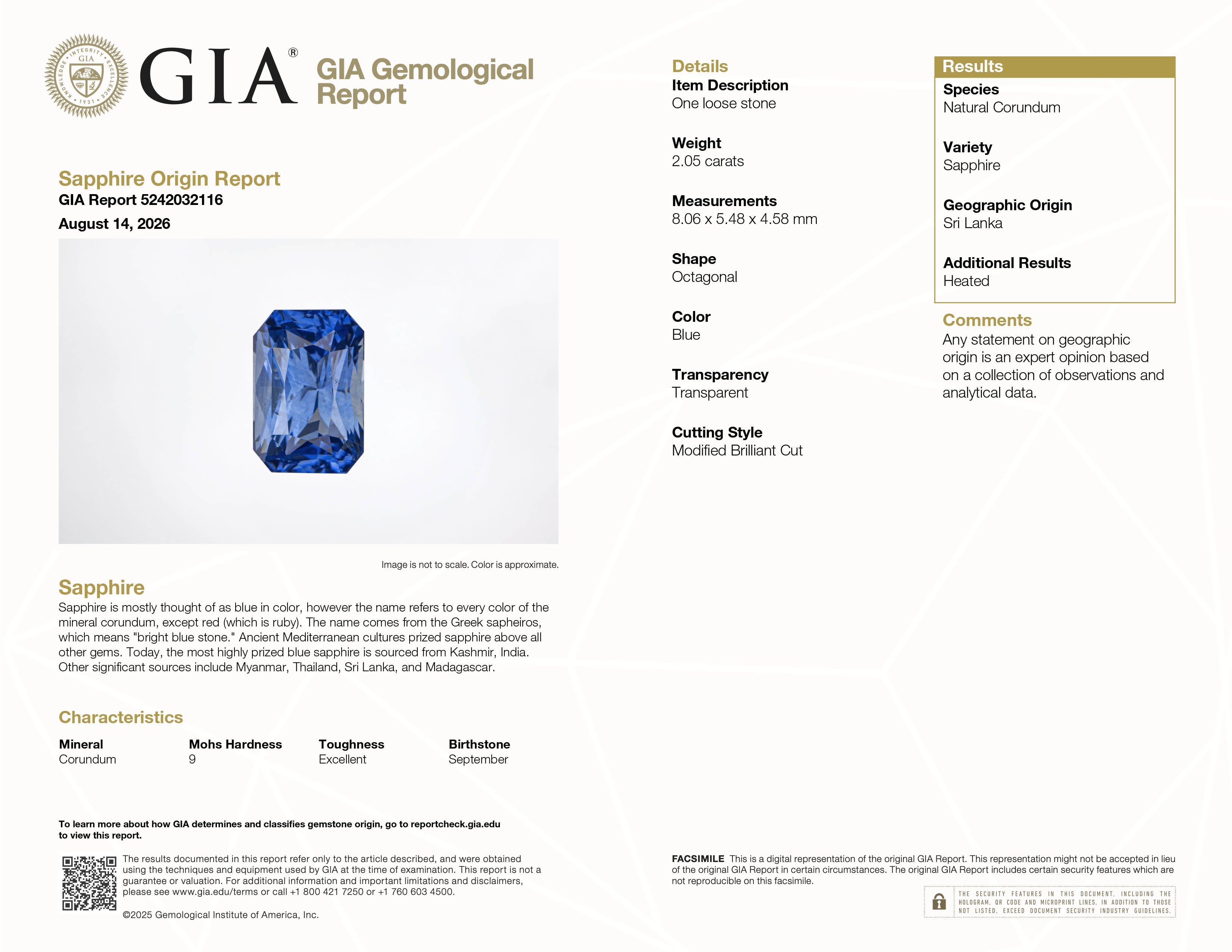
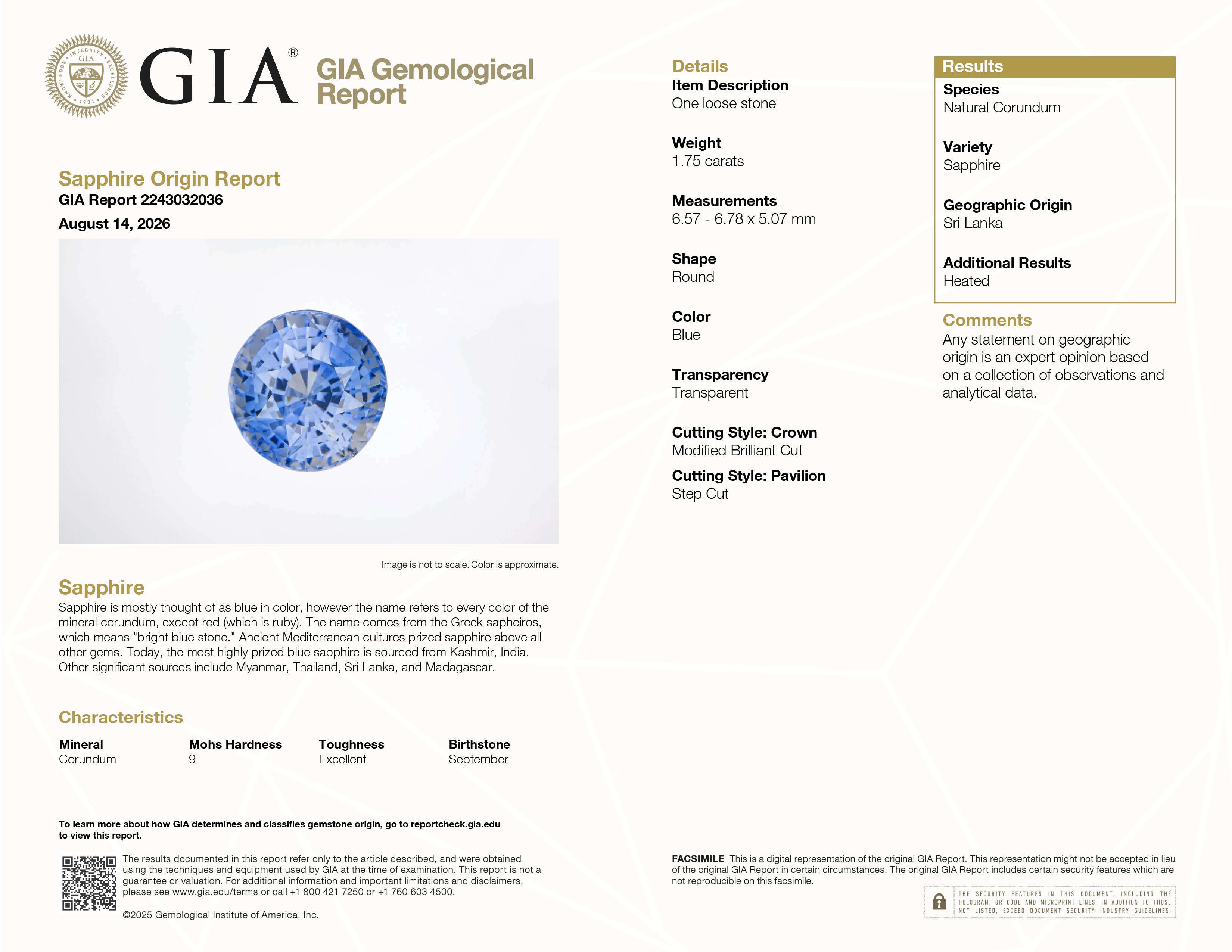
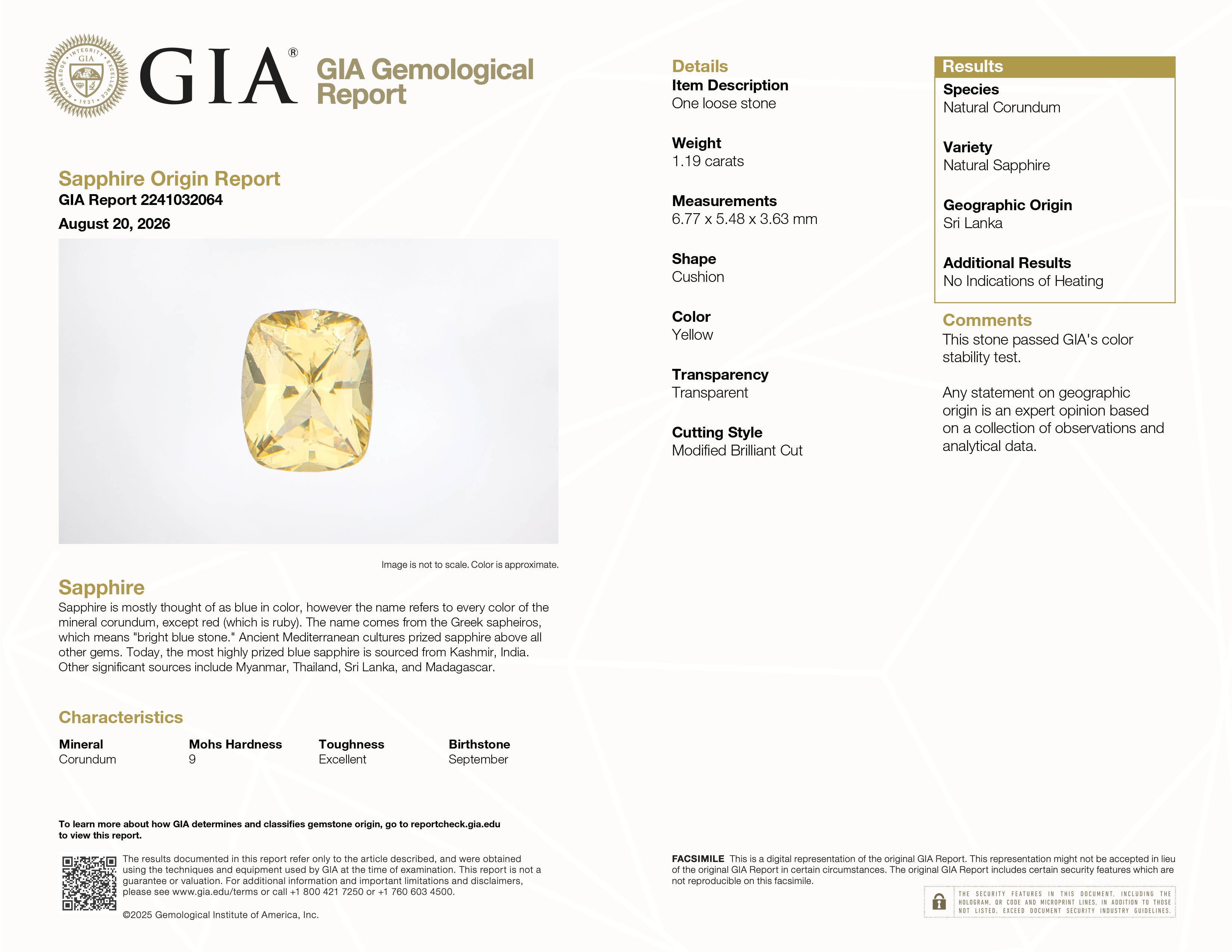
For any purchase where origin matters — or where the price suggests a premium origin — require a GIA or Gubelin report. See our How to Read a GIA Report guide. Australian sapphire can be a legitimate value purchase for commercial jewelry. For engagement rings and fine jewelry, Ceylon is the better choice. Browse our full Ceylon sapphire catalog. For pricing context, see our what a good 1 carat sapphire costs and sapphire pricing guide.
Browse the full Ceylon sapphire catalog — vivid, bright, individually selected stones from the world's most respected origin. Email crescentgems@gmail.com with questions about any sapphire origin. We respond within one business day.

CG8469
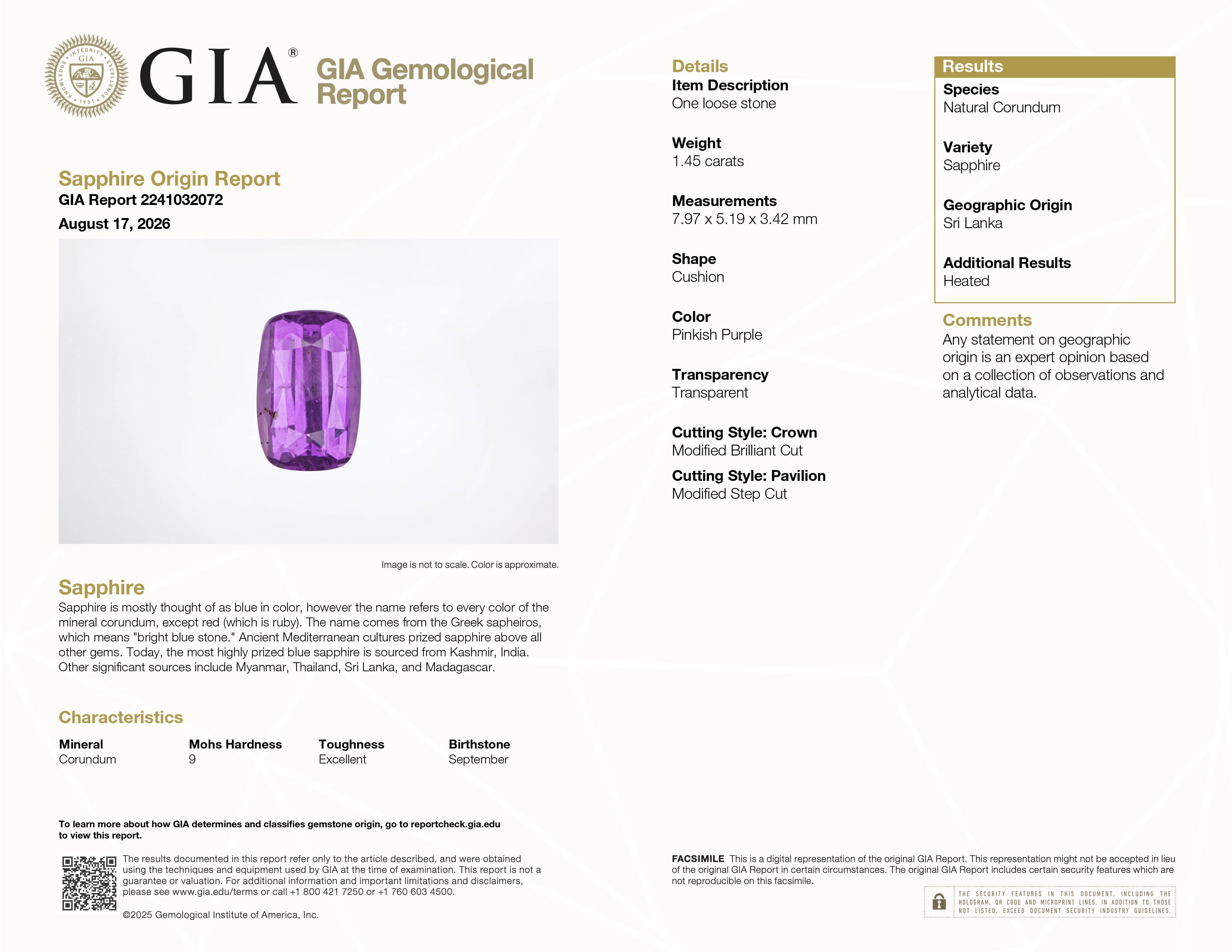
Saphir violet rosé 1,45 ct, chauffé — Rapport GIA
CG8468
CG8465
CG8463
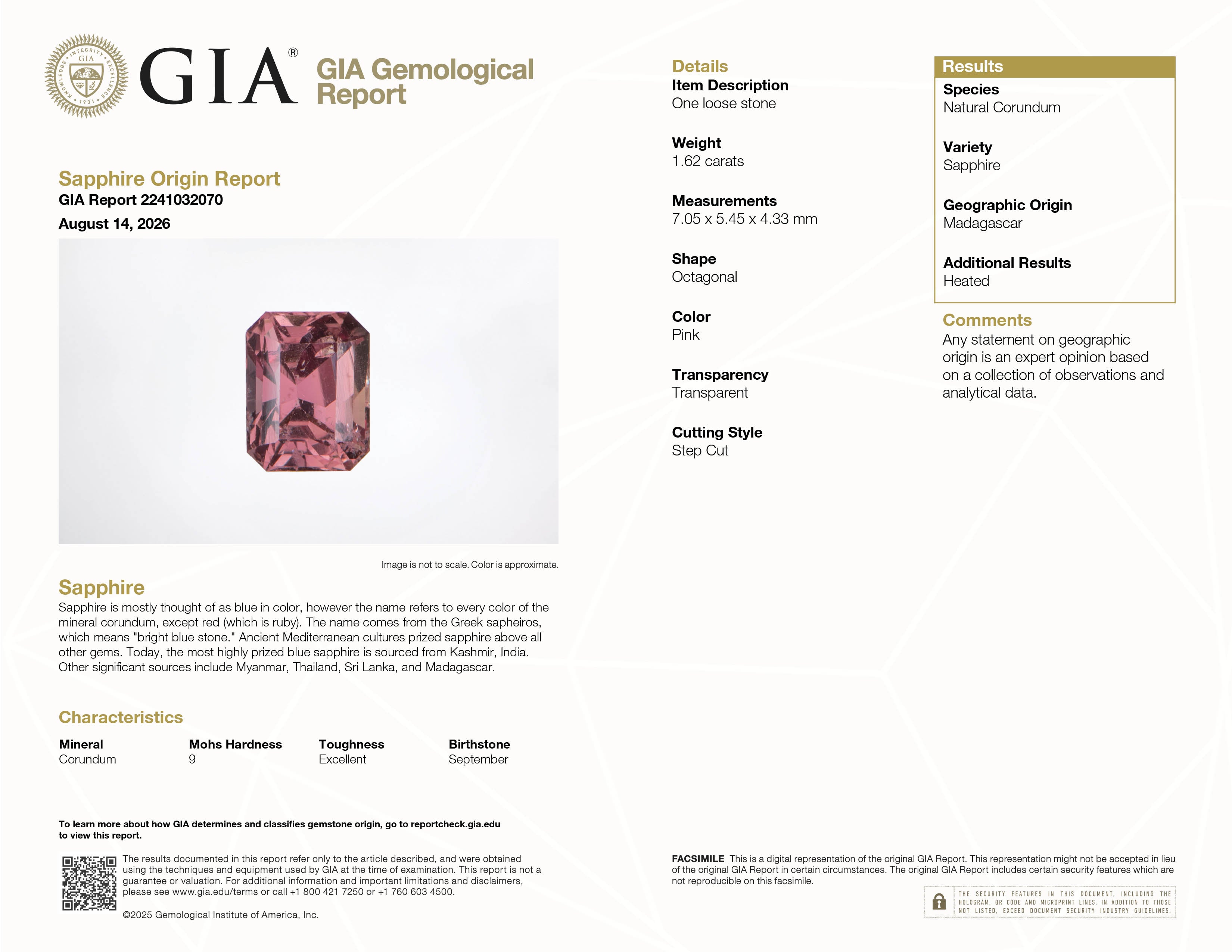
Saphir rose de Madagascar 1,62 ct — chauffé, rapport GIA
CG8460
CG8459
CG8458
CG8457
CG8456
Rubis non chauffé 1,65 ct — ovale Madagascar, certifié GIA
CG8453


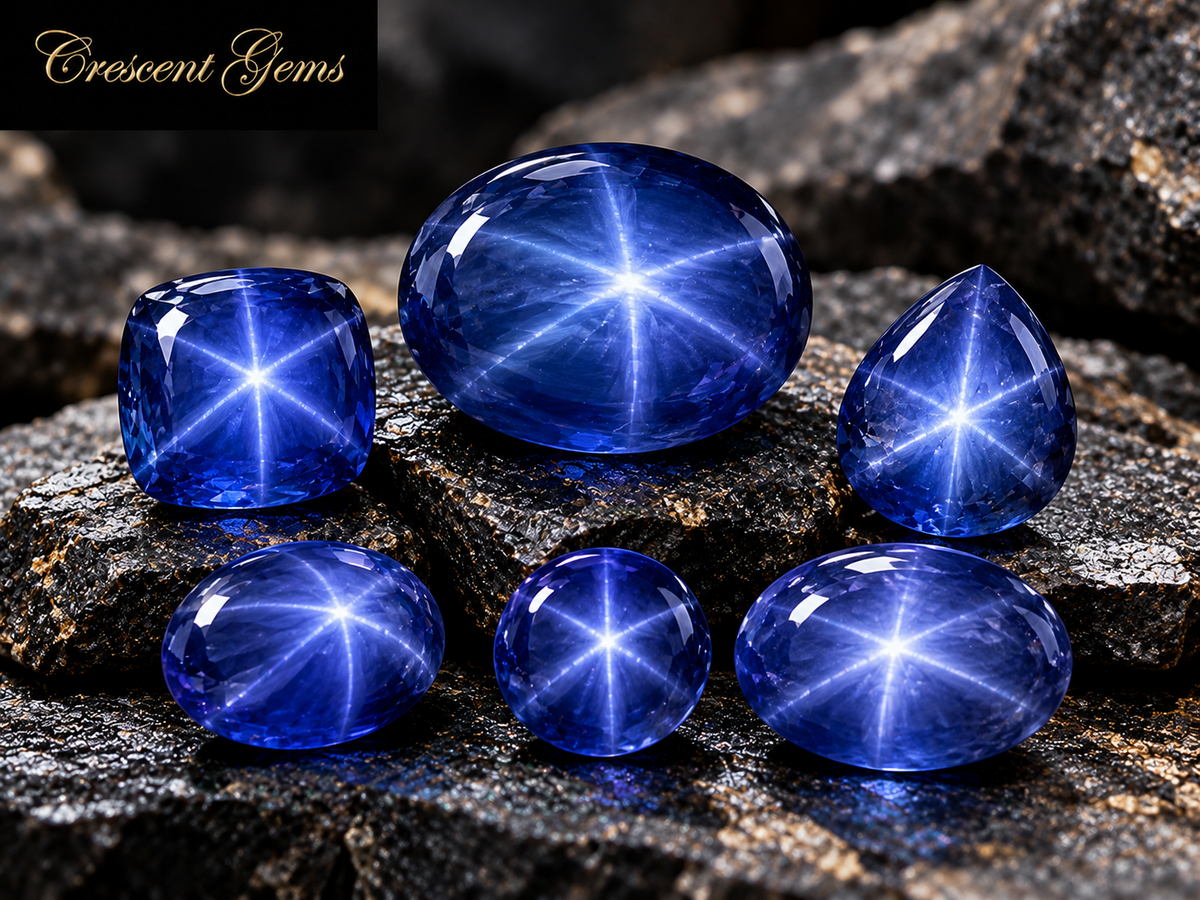
Prix du saphir bleu étoilé : fourchettes au carat et notre pierre
Ce que coûte un saphir bleu étoilé au carat, ce qui fait varier le prix, et la seule pierre que nous ayons : 8,09 ct à $4,040, avec un rapport d'origine GIA.
Plussur Prix du saphir bleu étoilé : fourchettes au carat et notre pierre
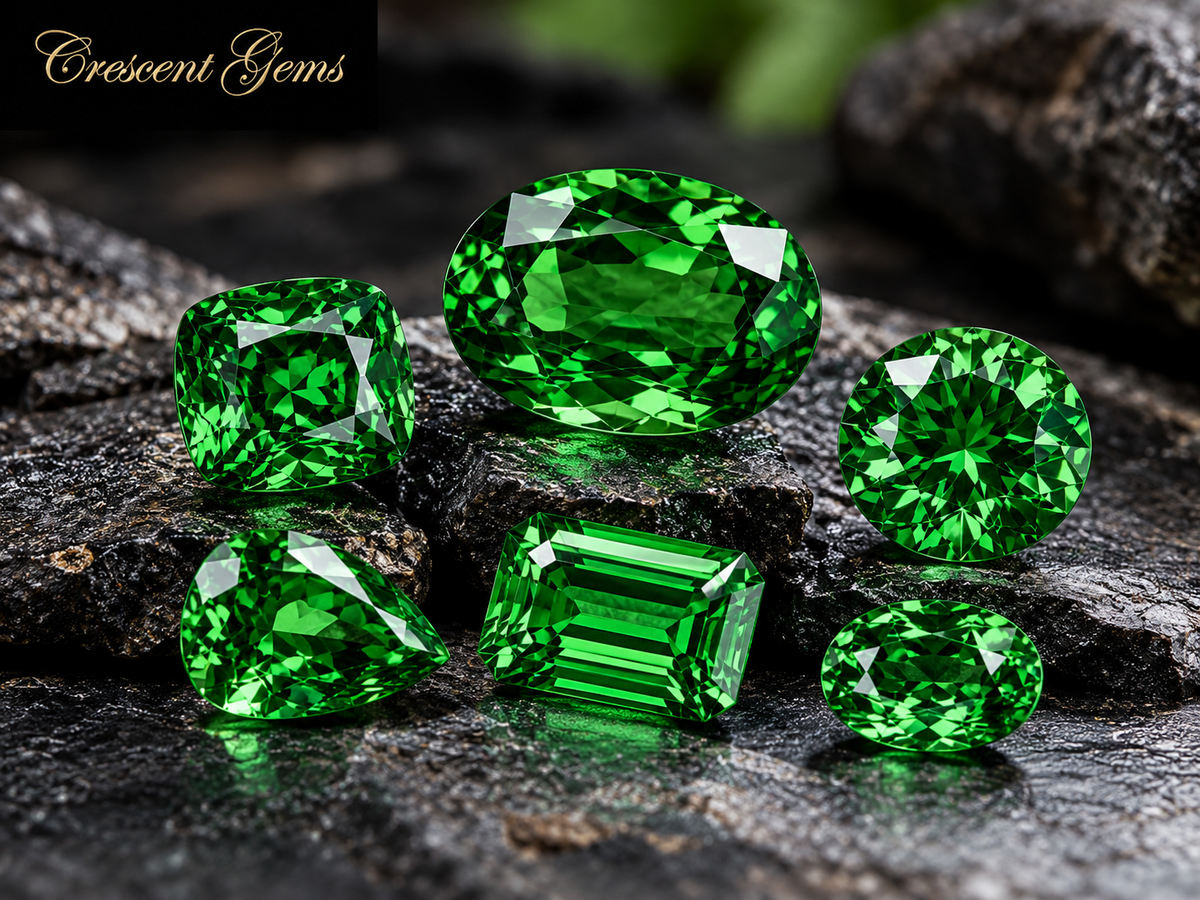
Prix de la tsavorite : notre stock, pas une grille de qualité
Nos sept tsavorites au 29 septembre 2026, de $1,177 à $22,724, dont une traitée et annoncée comme telle — et ce qui limite l'offre en grosses pierres propres.
Plussur Prix de la tsavorite : notre stock, pas une grille de qualité
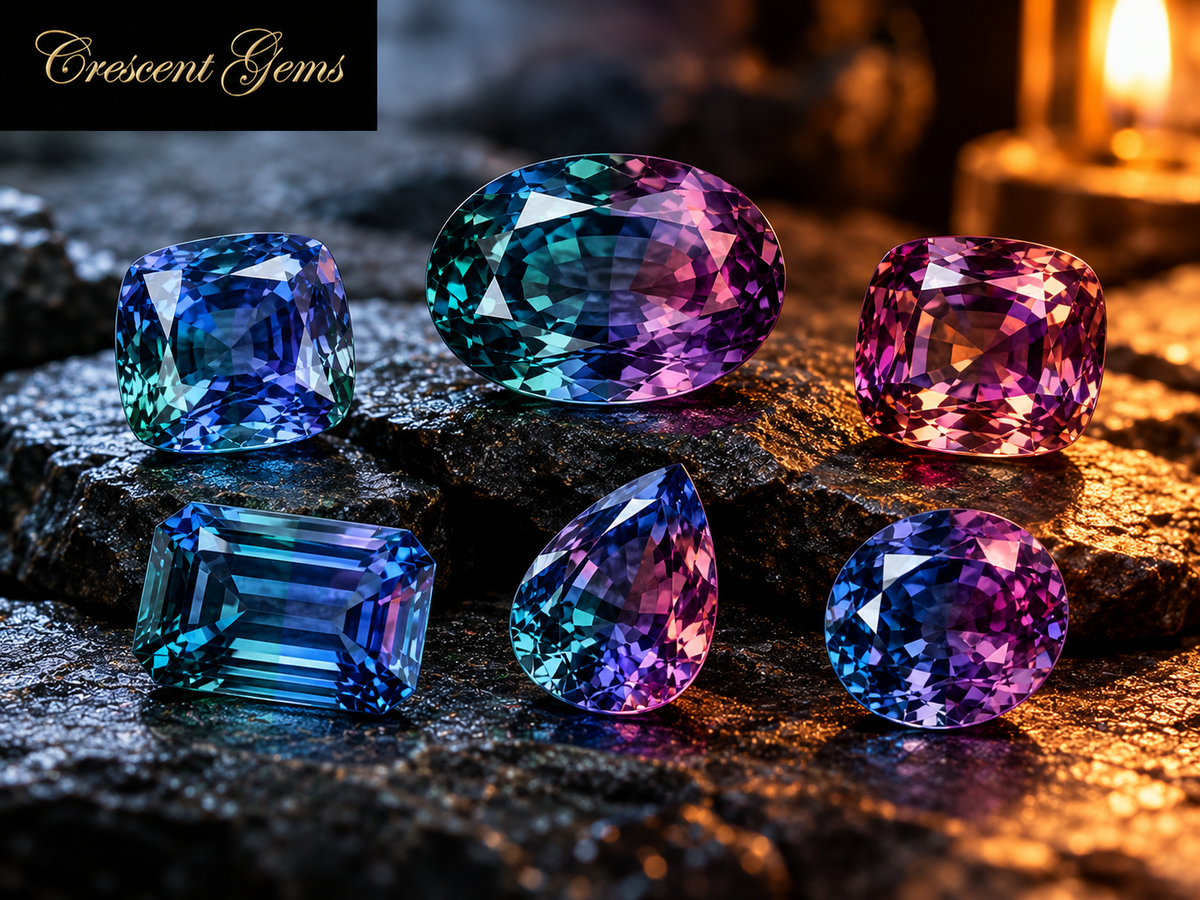
Prix du saphir à changement de couleur : au carat et nos deux pierres
Ce que coûte un saphir à changement de couleur au carat, ce qui fait réellement le prix, et nos deux pierres : 1,03 ct à $824 et 2,01 ct à $2,211.
Plussur Prix du saphir à changement de couleur : au carat et nos deux pierres
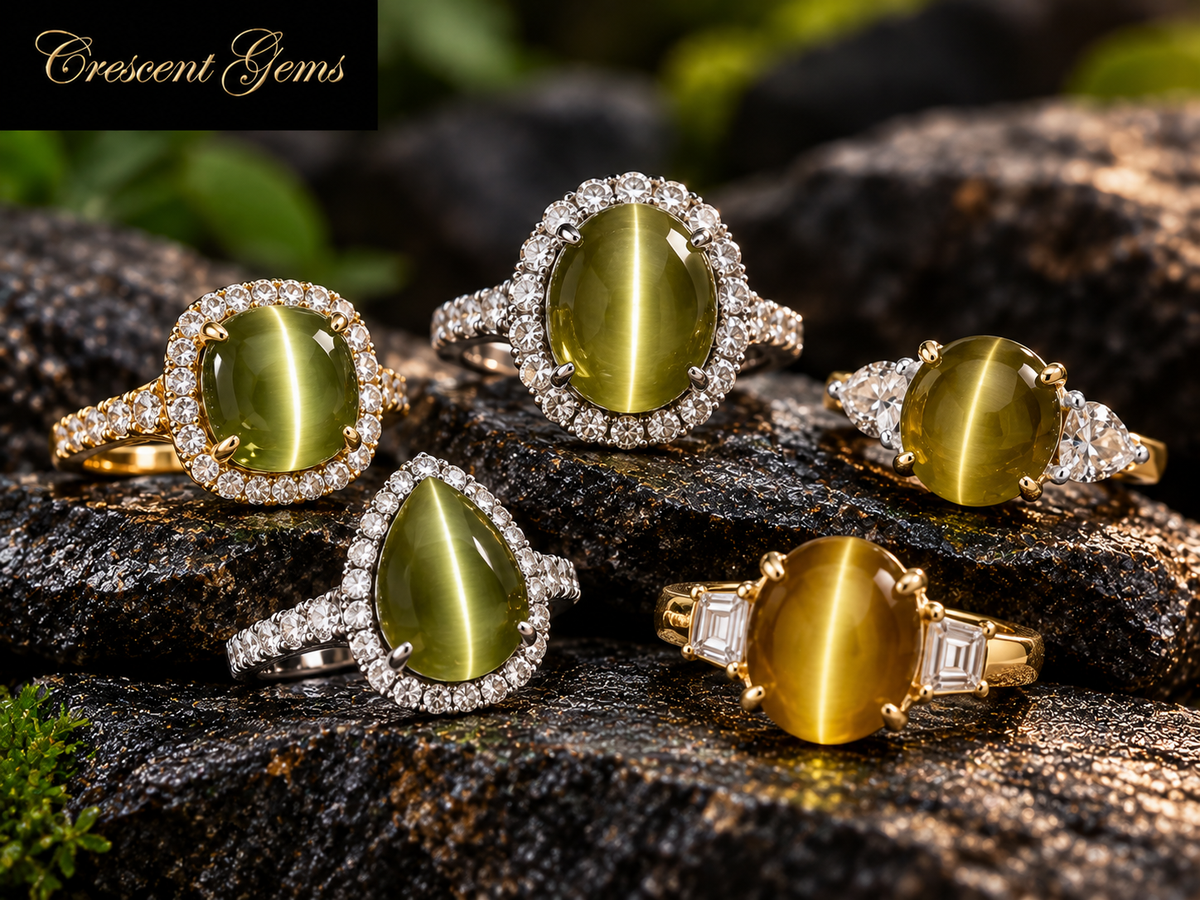
Le chrysobéryl œil-de-chat convient-il à une bague de fiançailles ?
Le chrysobéryl est à 8,5 sur l'échelle de Mohs, au-dessus du quartz (7) et en dessous du corindon (9). Ce que cela change au porter, à la monture et à l'entretien.
Plussur Le chrysobéryl œil-de-chat convient-il à une bague de fiançailles ?
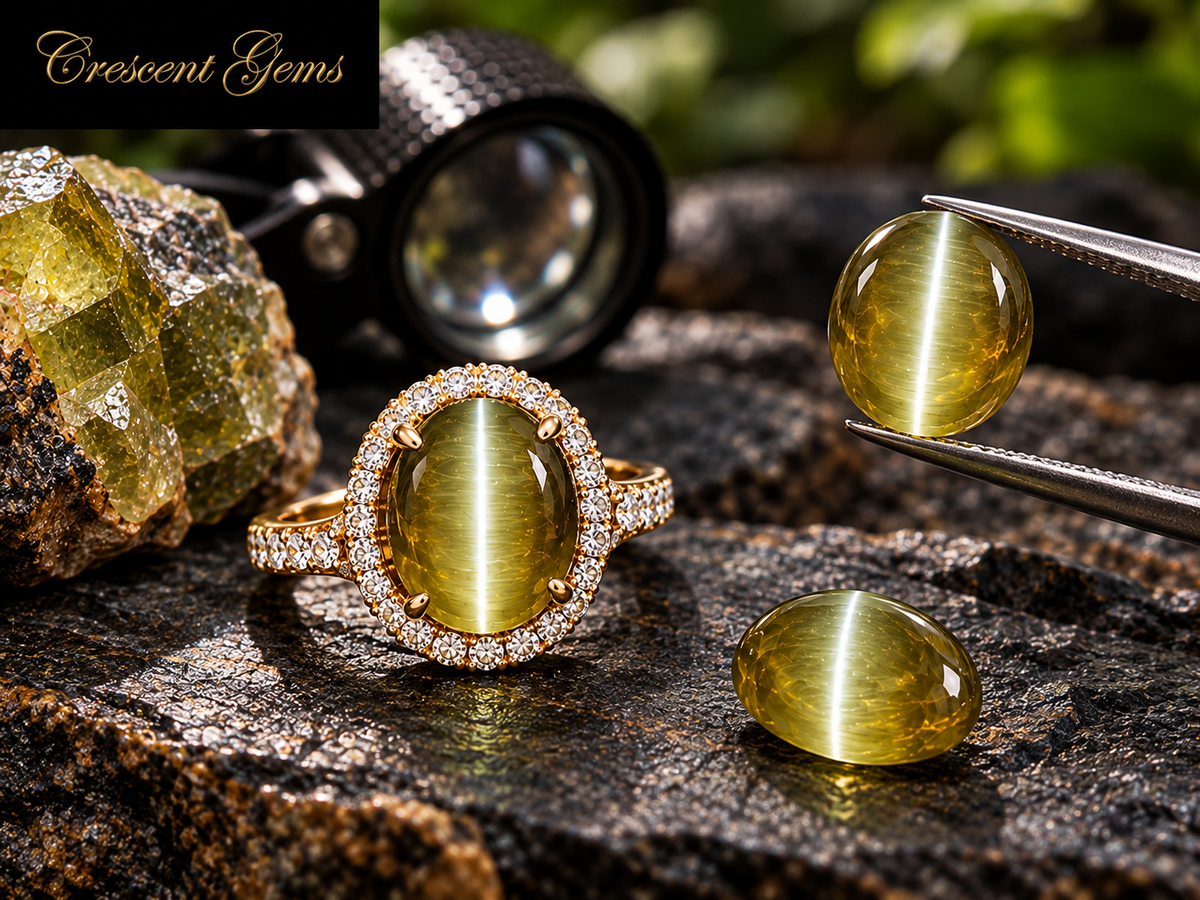
Prix du chrysobéryl œil-de-chat : au carat et nos deux pierres
Ce que coûte réellement un chrysobéryl œil-de-chat au carat, ce qui fait varier le prix, et nos deux pierres chiffrées : 2,36 ct à $3,792 et 4,25 ct à $9,482, soit $1,606.78 et $2,231.06 le carat.
Plussur Prix du chrysobéryl œil-de-chat : au carat et nos deux pierres















Partager: