- par Ahmed Shareek
Prix du saphir violet étoilé : fourchettes au carat et nos deux pierres
- par Ahmed Shareek
Nous achetons nos saphirs étoilés au Sri Lanka, directement à la source, et ils vous parviennent sans intermédiaire.
Le violet est, avec le rose et le bleu, l'une des positions de couleur dans lesquelles le corindon montre de l'astérisme. Cette page porte sur son prix en particulier ; elle complète nos guides consacrés au saphir étoilé rose et au saphir étoilé bleu. Elle a aussi une tâche que les deux autres n'ont pas : la langue des rapports sépare deux valeurs de couleur là où le français n'emploie qu'un seul adjectif, et les annonces passent de l'une à l'autre sans prévenir. Nous commençons donc par ce que les rapports impriment réellement, puis nous travaillons à partir des deux pierres que nous détenons.
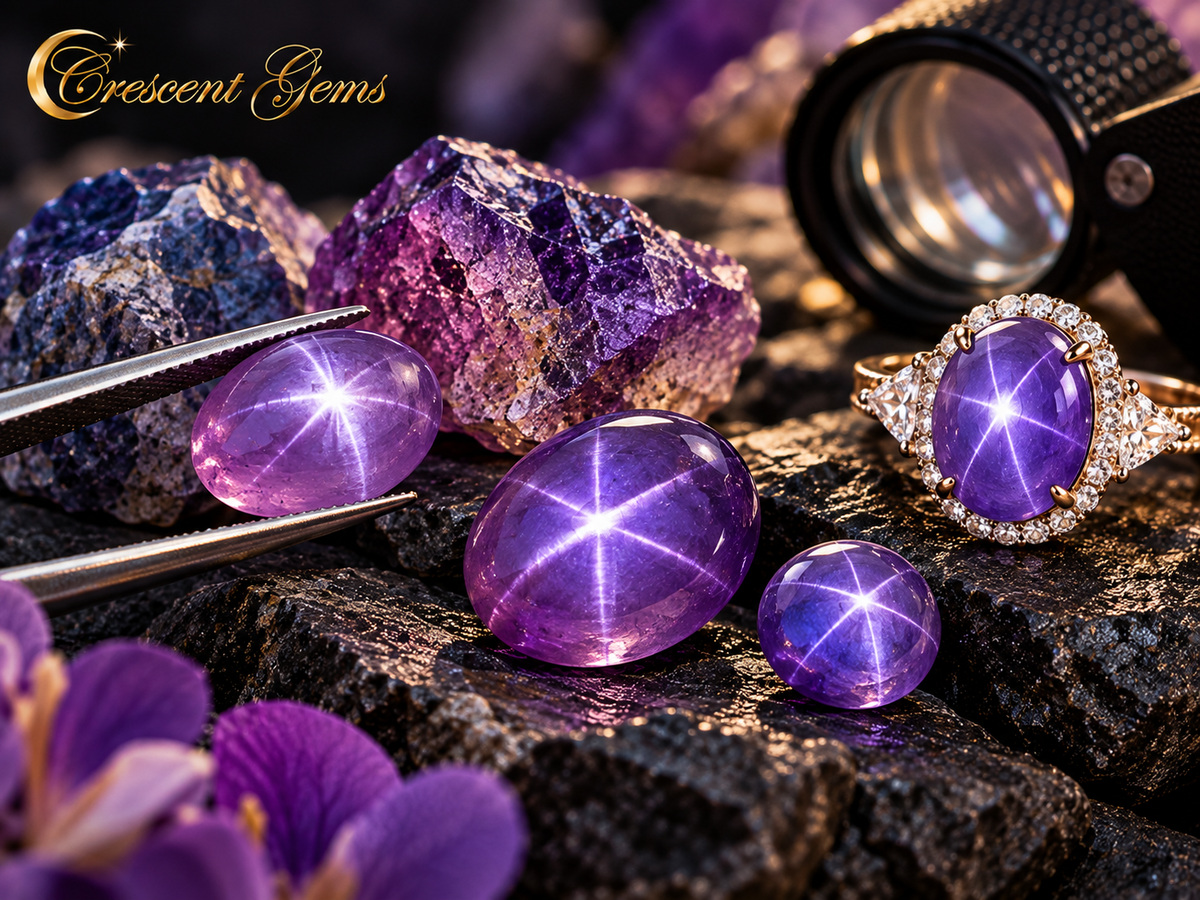
Un saphir étoilé est un corindon qui contient des inclusions aciculaires de rutile, formées dans le cristal pendant sa croissance. Le corindon est trigonal : ces aiguilles se rangent en trois familles orientées à 60° les unes des autres, et un cabochon bombé rassemble leurs reflets en une étoile. Les aiguilles font partie du cristal et survivent à la taille, quelle que soit la forme donnée à la pierre ; ce que le dôme change, c'est la surface sur laquelle ces reflets sont rassemblés. Le GIA décrit l'effet simplement : il est « causé par des reflets sur de minuscules inclusions aciculaires orientées dans plusieurs directions précises ». Pour la mécanique de l'astérisme, voir notre guide d'achat complet du saphir étoilé.
La couleur et le phénomène sont deux propriétés distinctes de la même pierre, et il vaut mieux les garder séparées. La couleur du corps tient à la chimie du corindon ; l'étoile tient aux inclusions. Une pierre peut avoir une belle couleur de corps et une étoile discrète, ou l'inverse. C'est l'une des raisons pour lesquelles le tableau plus bas est construit sur la couleur du corps et sur la documentation, et non sur l'étoile.
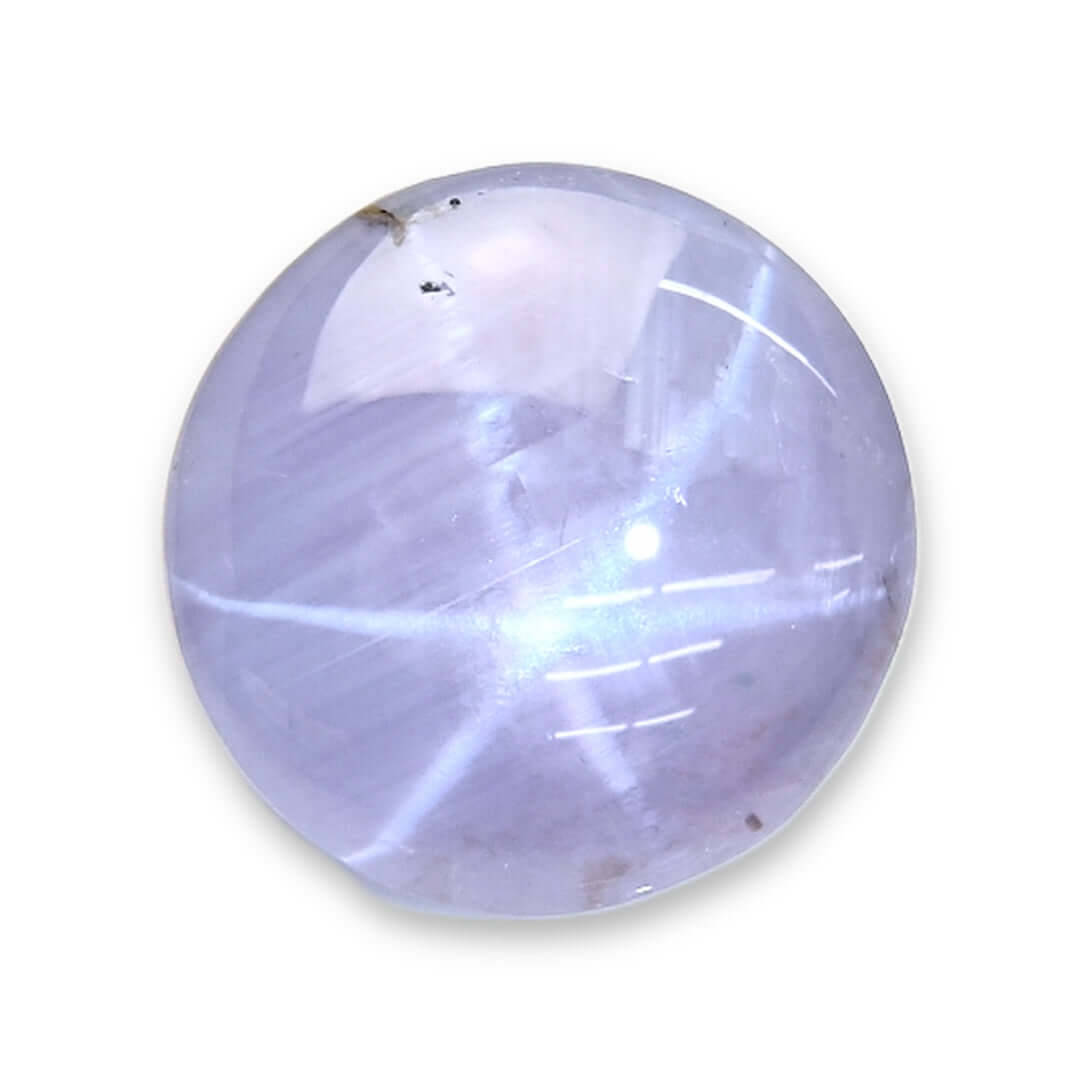
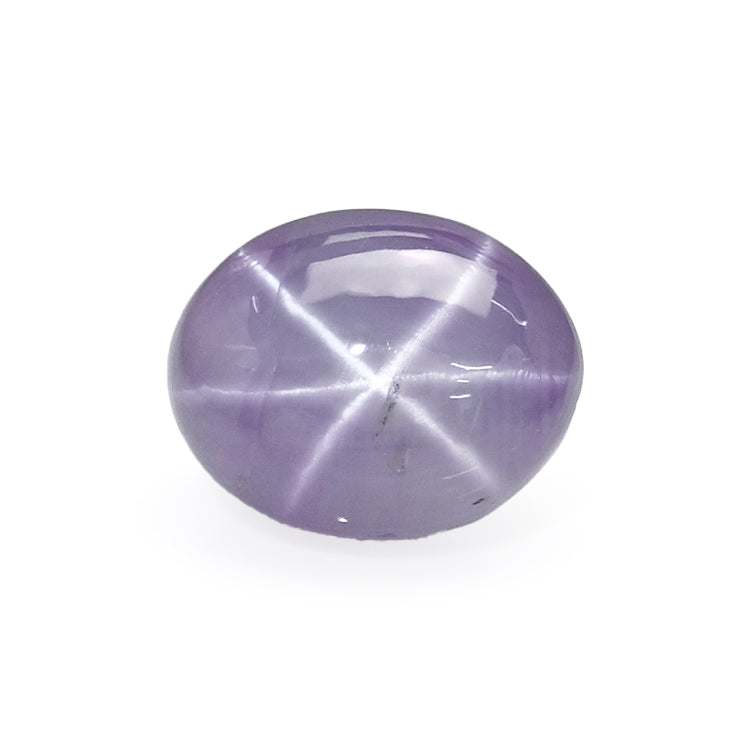
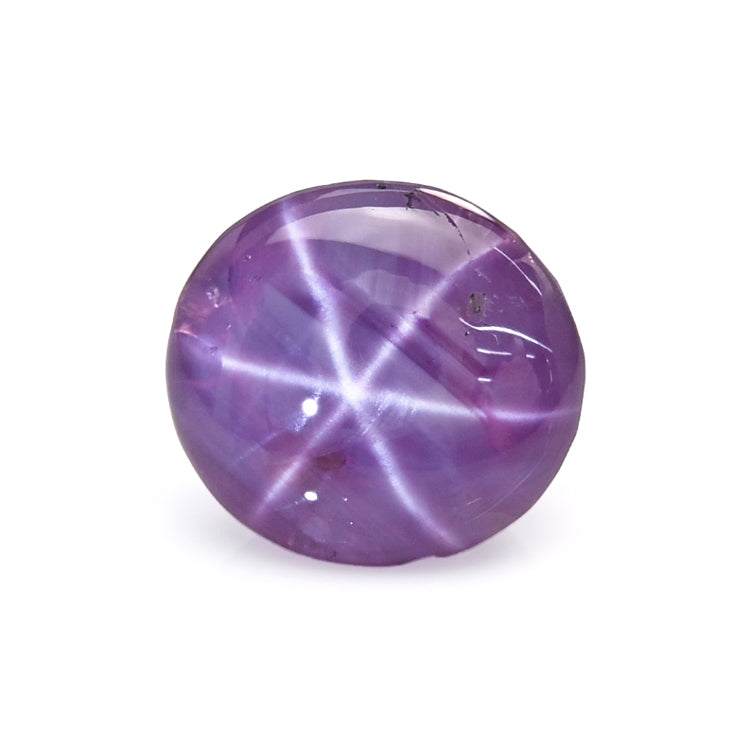
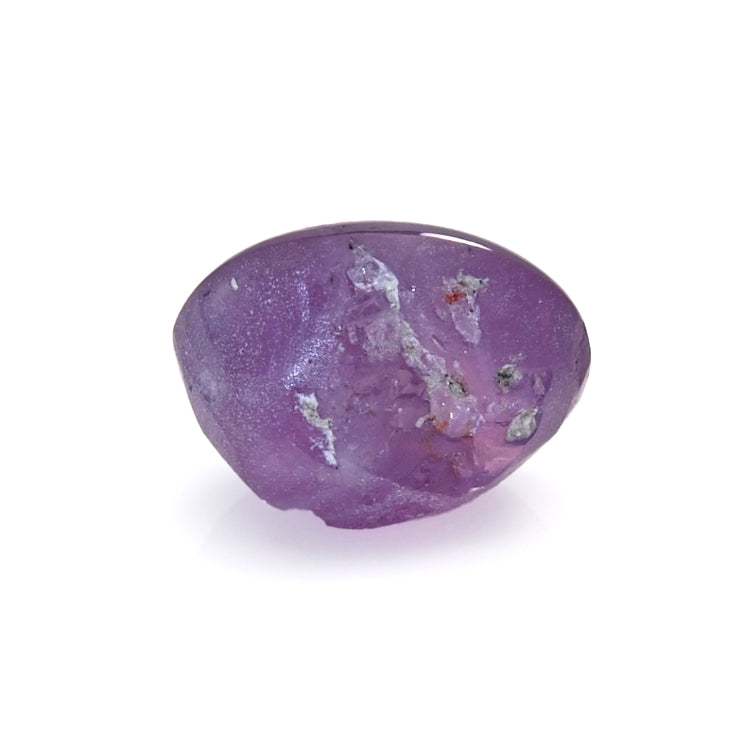
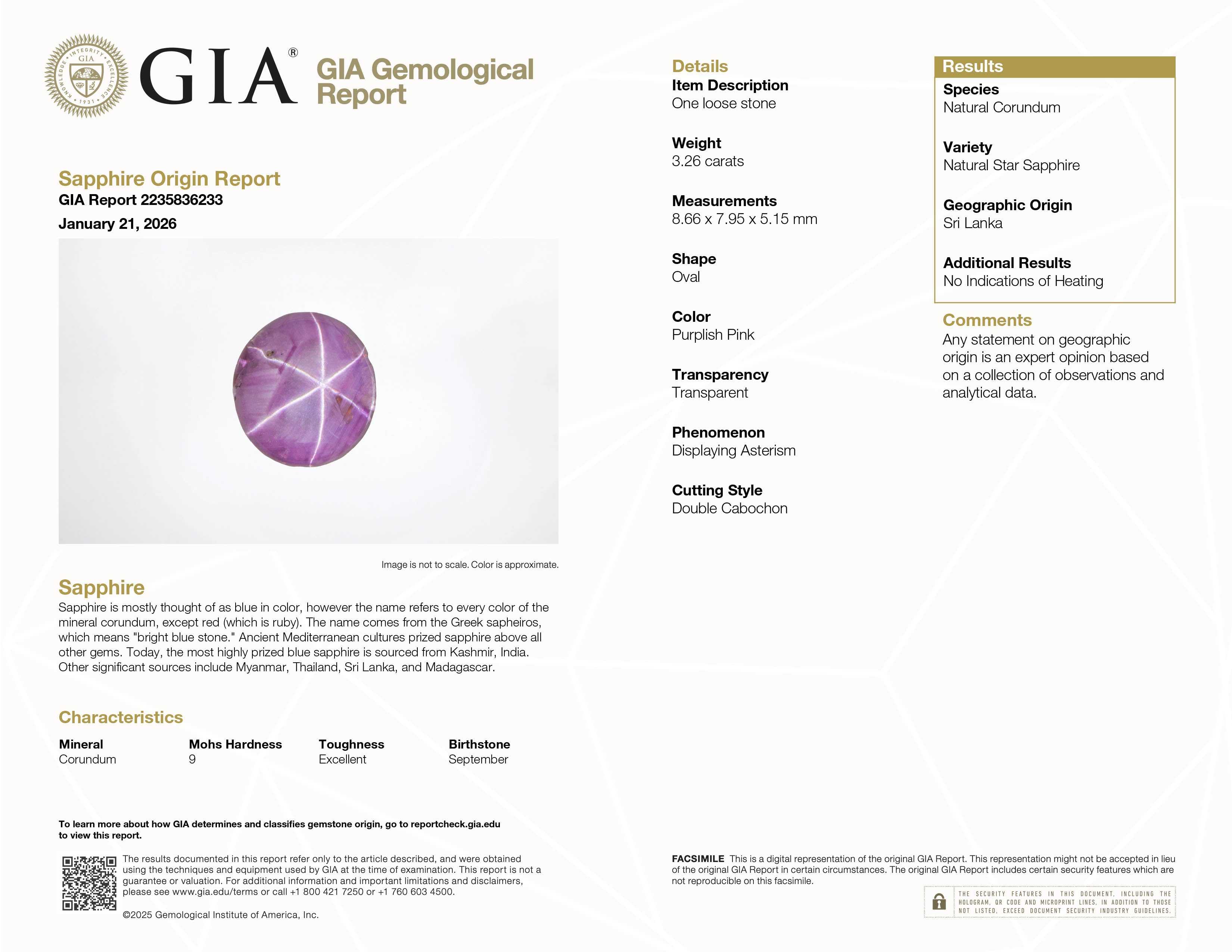
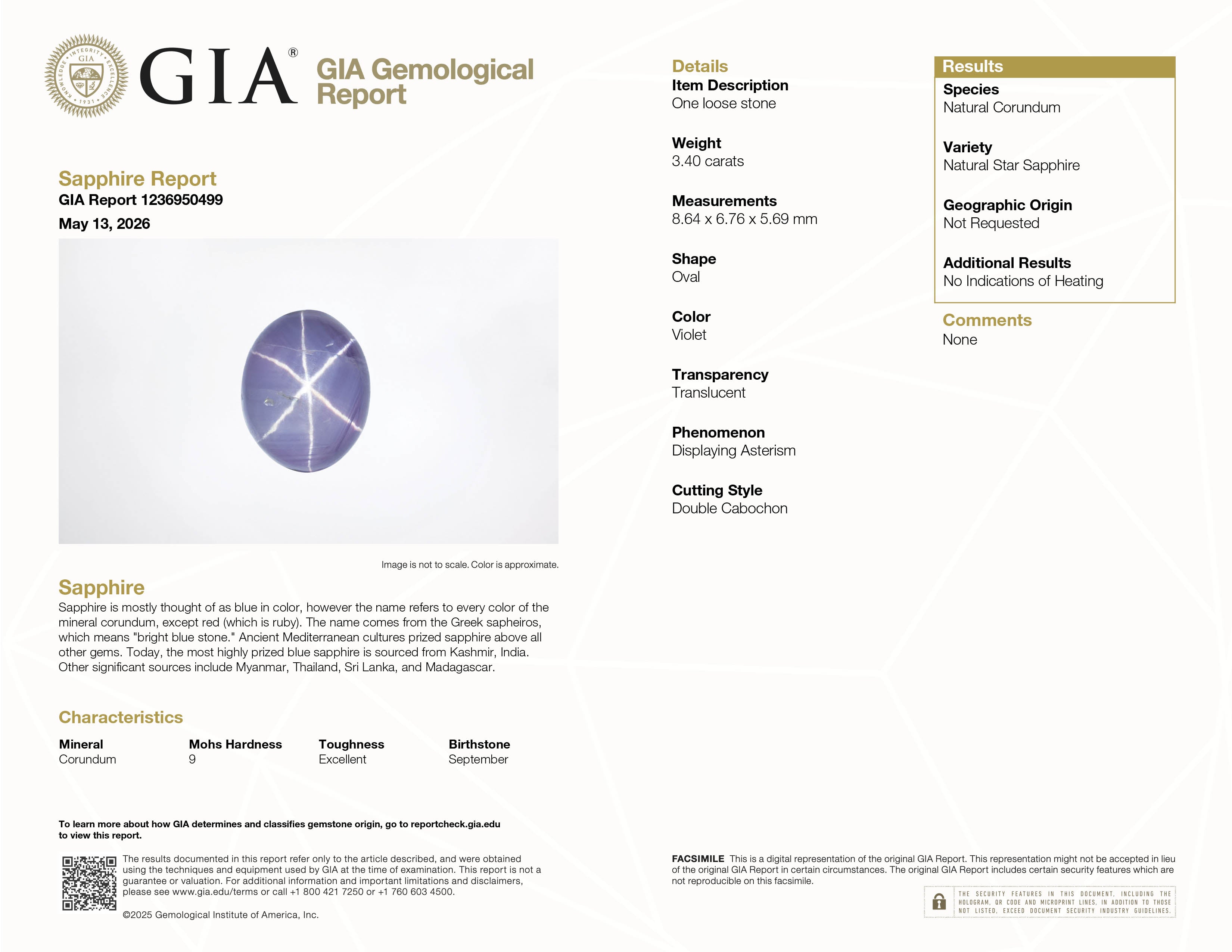
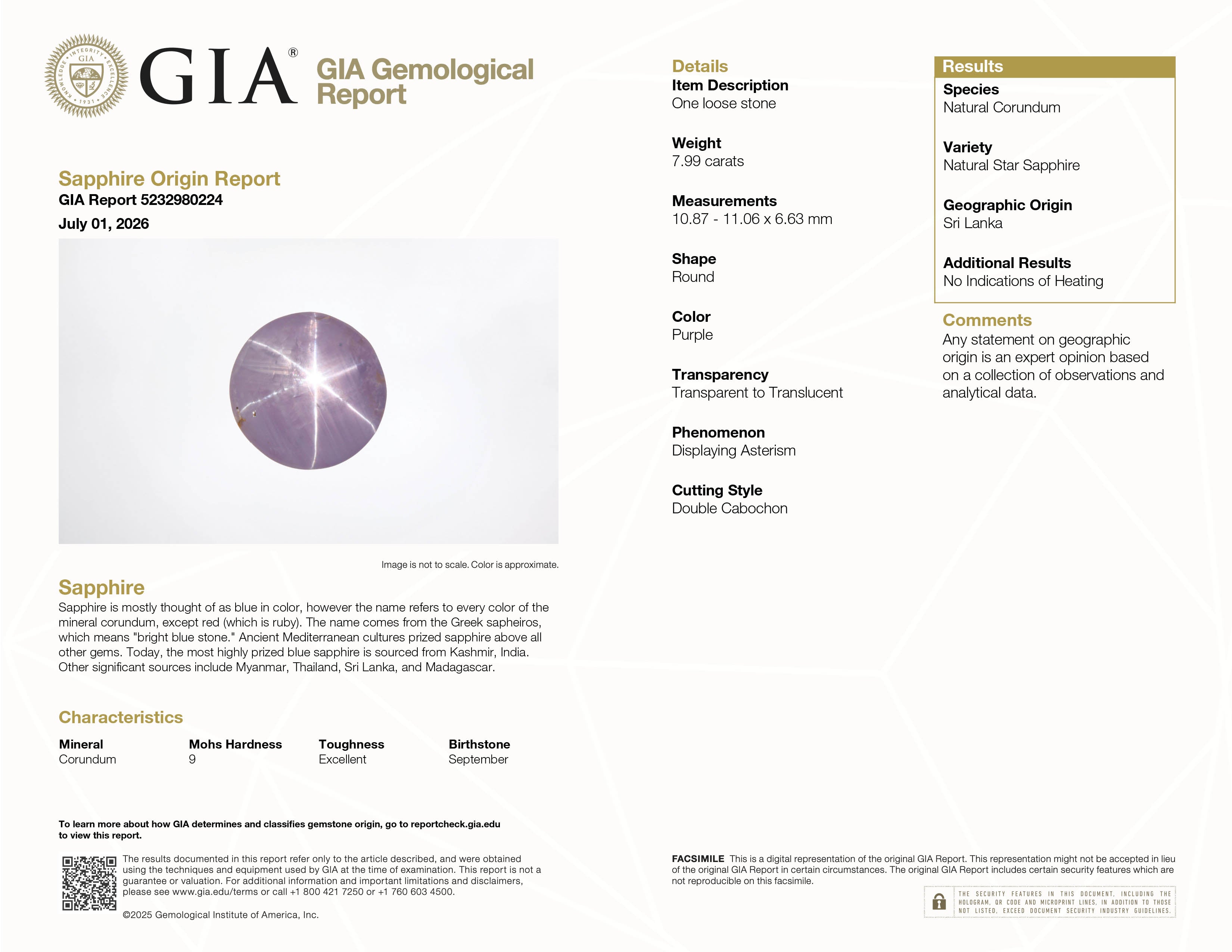
Violet et rose se confondent en permanence dans les annonces, d'un vendeur à l'autre et parfois d'une ligne à l'autre de la même fiche. Ce qui tranche pour une pierre donnée n'est pas une définition, c'est la valeur de couleur qu'imprime son rapport de laboratoire — et ces valeurs sont souvent composées, ce qui est le cas ordinaire et non un cas limite. Trois de nos saphirs étoilés l'illustrent, puisque les trois sont documentés :
Une remarque qui n'a de sens qu'en français. La langue des rapports distingue deux valeurs là où l'usage français n'en a qu'une : nos deux premières pierres portent donc ici le même adjectif alors que leurs rapports portent deux valeurs différentes. Nous citons pour cette raison la valeur imprimée avant de la rendre en français, et jamais l'inverse. Le rapport fait foi ; la traduction n'est que la nôtre, et elle ne hiérarchise rien.
Les trois rapports impriment par ailleurs Variety: Natural Star Sapphire et Phenomenon: Displaying Asterism. Ce qu'aucun des trois n'imprime, c'est un classement entre ces couleurs, et nous n'en fournissons pas à la place.
Le tableau ci-dessous indique les niveaux au carat auxquels le saphir violet étoilé est couramment proposé, et ce qui change d'un niveau à l'autre. L'intitulé compte : ce sont des fourchettes de prix, non une grille de qualité. Aucun laboratoire ne note l'astérisme, il ne peut donc pas y avoir de grille, et nos propres pierres ne sont pas placées dans ce tableau.
| Prix au carat | Couleur du corps et documentation à ce niveau |
|---|---|
| $50–$250 | Un violet pâle ou grisâtre. Vendu le plus souvent sans aucun rapport de laboratoire. |
| $250–$600 | Le violet ressort davantage que le gris. Un rapport d'un laboratoire plus petit, ou aucun rapport. |
| $600–$2,000 | Une couleur de corps franchement violette. À ce niveau, le rapport d'un laboratoire reconnu est l'attente normale. |
| $2,000+ | Un violet régulier et saturé. Le rapport complet d'un grand laboratoire, assorti fréquemment d'un avis d'origine géographique. |
Les chiffres ci-dessus sont des ordres de grandeur du marché, pas des devis fermes. La valeur réelle varie selon le traitement, l'origine, la couleur, la taille, la pureté et la certification. Ces fourchettes ne sont pas des chiffres que nous avons relevés, ce ne sont pas nos prix de vente, et ce ne sont pas des offres. Elles ne comportent aucune indication de poids : on n'obtient pas le prix total d'une pierre plus grosse en lisant une fourchette et en multipliant. Notre propre stock se limite à deux pierres, décrites plus bas. Fourchettes exprimées par carat, au sens du poids de la pierre — les carats de l'or, eux, désignent un titre.
La plupart des guides de prix consacrés à cette matière la tarifent sur la qualité de l'étoile. Celui-ci ne le fait pas, et la raison mérite d'être dite simplement.
Que le négoce tarife les pierres à phénomène sur le phénomène lui-même, personne ne le conteste. Ce qui n'existe pas, c'est une notation de laboratoire publiée. Le GIA écrit qu'il « n'attribue pas de note et ne réalise pas d'analyse de qualité pour le saphir ni pour les autres pierres de couleur ». Le LMHC, dont les fiches d'information harmonisent la rédaction des rapports entre les grands laboratoires, n'en a publié aucune qui concerne l'astérisme. La CIBJO définit la catégorie et s'arrête là. Un rapport constate que la pierre présente le phénomène ; il ne le note pas. Toute description de l'aspect de l'étoile est donc l'expression du vendeur, la nôtre comprise, et aucun document ne peut être produit pour l'étayer.
Les fourchettes ci-dessus reposent donc sur les trois choses qu'un rapport ou une facture enregistrent réellement : la couleur du corps, le poids en carats et la documentation qui accompagne la pierre. L'étoile est la raison d'être de la pierre. Elle n'est simplement pas une chose qu'un laboratoire notera pour vous.
En dessous de $250 le carat, la couleur de corps est pâle ou grisâtre, et la pierre part le plus souvent sans aucun rapport de laboratoire. C'est un saphir violet étoilé reconnaissable, et il est tarifé comme tel.
Entre $250 et $600 le carat, le violet ressort davantage que le gris. La documentation est irrégulière à ce niveau ; c'est une question à poser avant d'acheter. C'est dans cette fourchette que tombe le prix au carat de notre pierre de 7,99 ct : $3,990 ÷ 7,99 ct = $499.37 le carat. C'est de l'arithmétique sur un prix, pas une position sur une échelle de qualité.
Entre $600 et $2,000 le carat, la couleur de corps est franchement violette, et le rapport d'un laboratoire reconnu devient l'attente normale plutôt qu'un supplément. C'est dans cette fourchette que tombe le prix au carat de notre pierre de 3,40 ct : $2,380 ÷ 3,40 ct = $700.00 le carat. Ce nombre est de l'arithmétique lui aussi.
Au-dessus de $2,000 le carat, on paie un violet régulier et saturé et le rapport complet d'un grand laboratoire — souvent assorti d'un avis d'origine géographique.
Le prix au carat et le prix total sont deux nombres différents, et on les confond facilement. Notre pierre de 7,99 ct est à $3,990 au total et à $499.37 le carat ; notre pierre de 3,40 ct est à $2,380 au total et à $700.00 le carat. La plus grosse des deux est la plus chère au total et la moins chère au carat : c'est exactement pour cela que les deux nombres doivent être donnés côte à côte. Le prix au carat sert à comparer des pierres de poids différents ; le prix total est ce que vous réglez.
Nous ne publions pas de ventilation par tranche de poids, faute de source pour en établir une. Quiconque vous dira qu'un saphir violet étoilé coûte tel multiple de plus au carat à 8 ct qu'à 3 ct fait une estimation ; nous n'en ferions pas une meilleure.
Le corindon étoilé produit en laboratoire est courant sur le marché et ne se sépare pas toujours facilement de la matière naturelle à l'œil ; un rapport justifie donc son coût ici plus qu'ailleurs. Ce que fait un rapport : il identifie la matière, dit si elle est naturelle ou produite en laboratoire, et consigne les indices de traitement détectables. D'où vient la pierre est une autre question, à laquelle répond un autre service. Notre guide pour lire un rapport GIA de saphir champ par champ détaille ce que chaque ligne signifie.
Nos deux pierres portent deux documents GIA différents, et la différence mérite d'être explicitée. La pierre de 7,99 ct est accompagnée du rapport d'origine GIA pour saphir n° 5232980224, qui situe son origine géographique au Sri Lanka. Le GIA imprime lui-même sa réserve à côté de ce constat, et nous préférons la citer que la reformuler : « Toute affirmation portant sur l'origine géographique est un avis d'expert fondé sur un ensemble d'observations et de données analytiques. » Le LMHC dit la même chose des rapports en général : « Tous les constats décrits dans le rapport sont des opinions exprimées par le laboratoire. » Ce sont des opinions formées par des examinateurs qualifiés, et c'est exactement ainsi que nous les présentons.
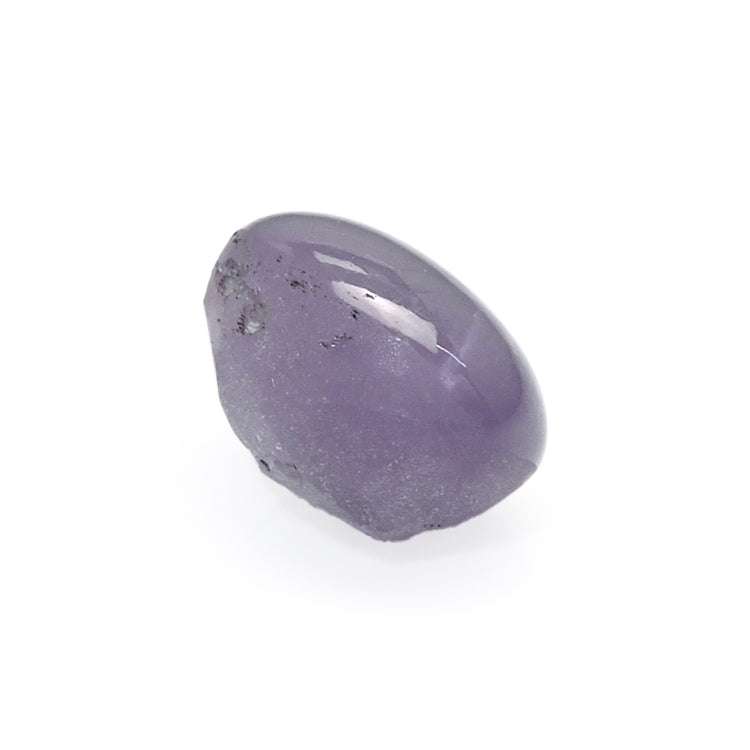
La pierre de 3,40 ct est accompagnée du rapport GIA pour saphir n° 1236950499, qui relève d'un autre service. Son champ d'origine géographique porte la mention Not Requested — la question n'a pas été posée au laboratoire. Ce silence n'est pas un constat sur la pierre, et un champ vide n'est pas une réponse. Nous avons acheté cette pierre au Sri Lanka et nous le disons sous notre seule autorité : pour la pierre de 3,40 ct, le Sri Lanka est notre registre d'achat et non un constat de laboratoire, et nous ne le présentons pas autrement.
Les deux rapports impriment Variety: Natural Star Sapphire et Phenomenon: Displaying Asterism, et tous deux portent au champ Additional Results la valeur « No Indications of Heating » — ce que le SSEF écrit en français « Aucune indication de chauffage ». Les deux pierres sont donc vendues comme non chauffées. Le mot est étroit et doit le rester : il porte sur la chauffe, et sur elle seule. Il ne signifie pas « non traitée », qui engloberait toute intervention ; nous faisons la déclaration la plus étroite et nous laissons la plus large de côté. Un constat de laboratoire porte sur des indices, non sur l'histoire de la pierre.
L'origine n'est pas non plus un critère de qualité, et c'est pourquoi elle ne figure pas en colonne dans le tableau de prix ci-dessus. L'endroit où une pierre s'est formée et l'aspect qu'elle a sont deux constats distincts, et tarifer l'un comme si c'était l'autre est une habitude dont il vaut la peine de se défaire. Voir notre guide d'identification du saphir étoilé naturel.
Plutôt que de résumer les rapports, voici ce qu'ils impriment. Les intitulés de champ sont ceux des documents, en anglais ; les colonnes reproduisent les valeurs telles qu'elles sont écrites.
| Champ du rapport | Pierre de 7,99 ct | Pierre de 3,40 ct |
|---|---|---|
| Report (rapport) | GIA Sapphire Origin Report n° 5232980224 | GIA Sapphire Report n° 1236950499 |
| Weight (poids) | 7,99 ct | 3,40 ct |
| Measurements (dimensions) | 10,87–11,06 × 6,63 mm | 8,64 × 6,76 × 5,69 mm |
| Shape (forme) | Round | Oval |
| Cutting Style (style de taille) | Double Cabochon | Double Cabochon |
| Color (couleur) | Purple | Violet |
| Phenomenon (phénomène optique) | Displaying Asterism | Displaying Asterism |
| Variety (variété) | Natural Star Sapphire | Natural Star Sapphire |
| Geographic Origin (origine géographique) | Sri Lanka | Not Requested |
| Additional Results (résultats complémentaires) | No Indications of Heating | No Indications of Heating |
Deux champs distincts, deux valeurs distinctes : la forme est ronde pour l'une et ovale pour l'autre, et le style de taille est, dans les deux cas, celui que les rapports nomment « Double Cabochon », c'est-à-dire une pierre bombée des deux faces. Il n'existe pas de terme français établi pour cette seconde valeur et nous n'en inventons pas : nous citons celle du rapport et nous la décrivons. C'est aussi pourquoi vous ne lirez pas ici une expression qui fusionnerait les deux champs en un seul mot — les rapports ne le font pas.
Ce sont deux valeurs de couleur distinctes dans la langue des rapports, et le français n'a qu'un seul adjectif pour les deux. Pour une pierre donnée, la question n'est pas tranchée par une définition mais par la valeur que son rapport imprime. Nos deux pierres en sont l'exemple : le rapport d'origine GIA pour saphir n° 5232980224 imprime Color: Purple, et le rapport GIA pour saphir n° 1236950499 imprime Color: Violet. Nous publions la valeur de chaque rapport plutôt que de classer une couleur au-dessus de l'autre.
Le saphir violet étoilé est couramment proposé à partir d'environ $50 le carat, la fourchette haute restant ouverte à $2,000 le carat et au-delà ; la place d'une pierre donnée dépend de sa couleur de corps, de son poids et de la documentation qui l'accompagne. Ces chiffres sont un ordre de grandeur du marché, pas des données relevées. Notre propre stock se limite à deux pierres : 7,99 ct à $3,990 au total, soit $499.37 le carat, et 3,40 ct à $2,380 au total, soit $700.00 le carat.
Non. Le GIA écrit qu'il « n'attribue pas de note et ne réalise pas d'analyse de qualité pour le saphir ni pour les autres pierres de couleur », et le LMHC, dont les fiches d'information harmonisent la rédaction des rapports entre les grands laboratoires, n'en publie aucune qui concerne l'astérisme. Un rapport constatera que la pierre présente le phénomène ; il ne le notera pas. Toute description de l'aspect d'une étoile est donc l'expression du vendeur, la nôtre comprise — raison pour laquelle nous préférons vous envoyer une vidéo de la pierre plutôt qu'un adjectif.
Par le rapport, pas à l'œil. Le corindon étoilé produit en laboratoire est courant sur le marché et ne se sépare pas toujours facilement de la matière naturelle par simple examen visuel. Un rapport d'un laboratoire reconnu identifie la matière et dit si elle est naturelle ou produite en laboratoire. L'origine géographique est une question distincte, à laquelle répond un autre service du laboratoire.
Deux. Un saphir violet étoilé de 7,99 ct à $3,990, soit $499.37 le carat, accompagné du rapport d'origine GIA pour saphir n° 5232980224, qui situe son origine géographique au Sri Lanka ; et un saphir violet étoilé de 3,40 ct à $2,380, soit $700.00 le carat, accompagné du rapport GIA pour saphir n° 1236950499, dont le champ d'origine géographique porte la mention Not Requested. Deux pierres ne font pas une fourchette de prix, et nous ne les présentons pas comme si c'en était une.
Deux pierres, actuellement en stock. Notre saphir violet étoilé naturel non chauffé de 7,99 ct du Sri Lanka, à $3,990 au total et $499.37 le carat, accompagné du rapport d'origine GIA pour saphir n° 5232980224. Son rapport imprime Shape Round et Cutting Style Double Cabochon comme deux champs séparés, et la pierre mesure 10,87–11,06 × 6,63 mm.
Et notre saphir violet étoilé naturel non chauffé de 3,40 ct, à $2,380 au total et $700.00 le carat, accompagné du rapport GIA pour saphir n° 1236950499. Son rapport imprime Shape Oval et Cutting Style Double Cabochon comme deux champs séparés, et la pierre mesure 8,64 × 6,76 × 5,69 mm. Nous pouvons vous envoyer une vidéo de l'une ou l'autre avant l'achat.
Ce sont nos propres prix affichés pour nos saphirs violets étoilés sur ce site au 5 octobre 2026 — ni une étude de marché, ni une estimation. Ils évoluent avec le stock ; la fiche produit donne toujours le prix du jour.
Nos prix sont en dollars américains et s'entendent hors TVA à l'importation et hors droits de douane : ceux-ci sont perçus à la livraison dans votre pays et restent à votre charge.
Une question sur nos saphirs violets étoilés, ou envie d'en voir un en vidéo avant d'acheter ? Écrivez à crescentgems@gmail.com — nous répondons sous un jour ouvré. Livraison gratuite aux États-Unis, sans minimum d'achat. Ailleurs, 60 $ forfaitaires, et gratuite au-delà de 499 $. Retour sous 14 jours sur toute commande.

Les prix s’affichent dans votre devise locale et peuvent évoluer. Les taxes d’importation ne sont pas incluses.


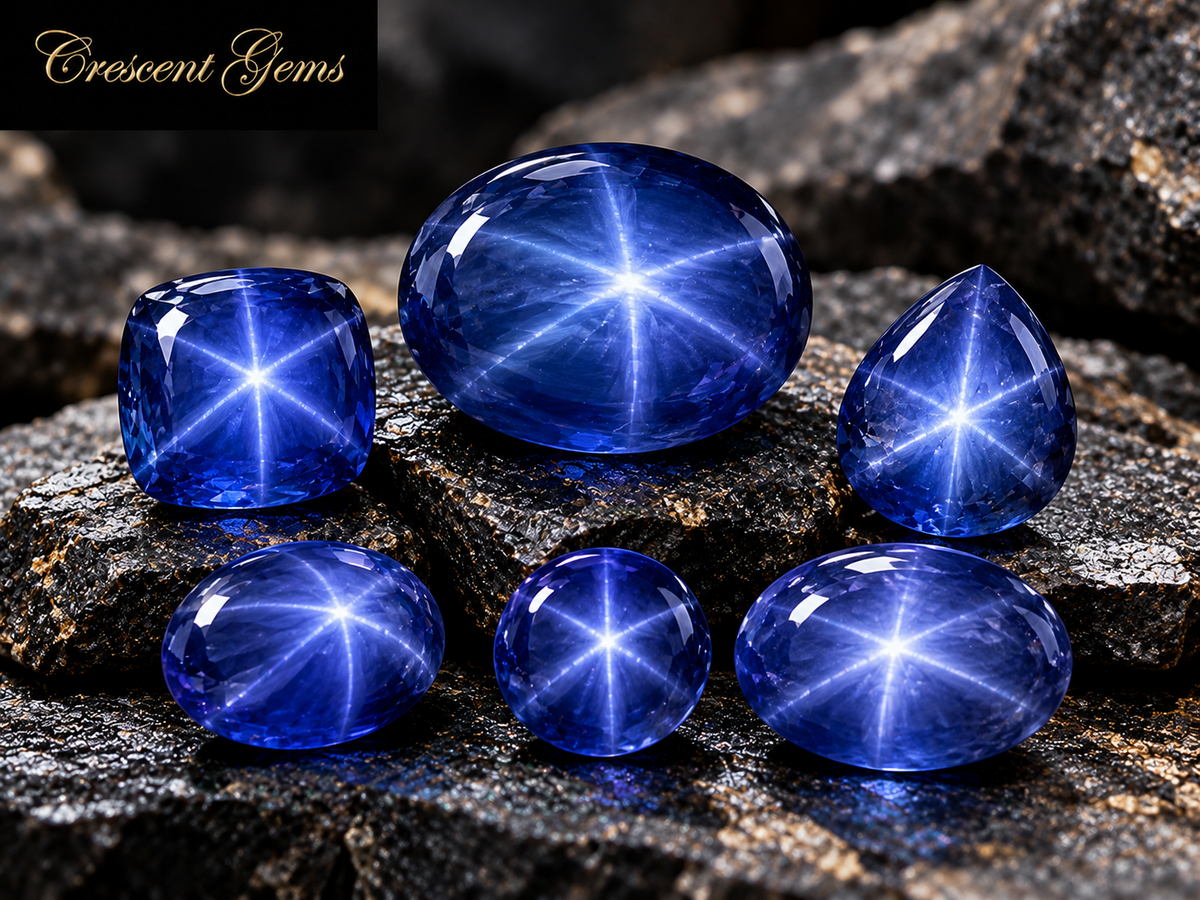
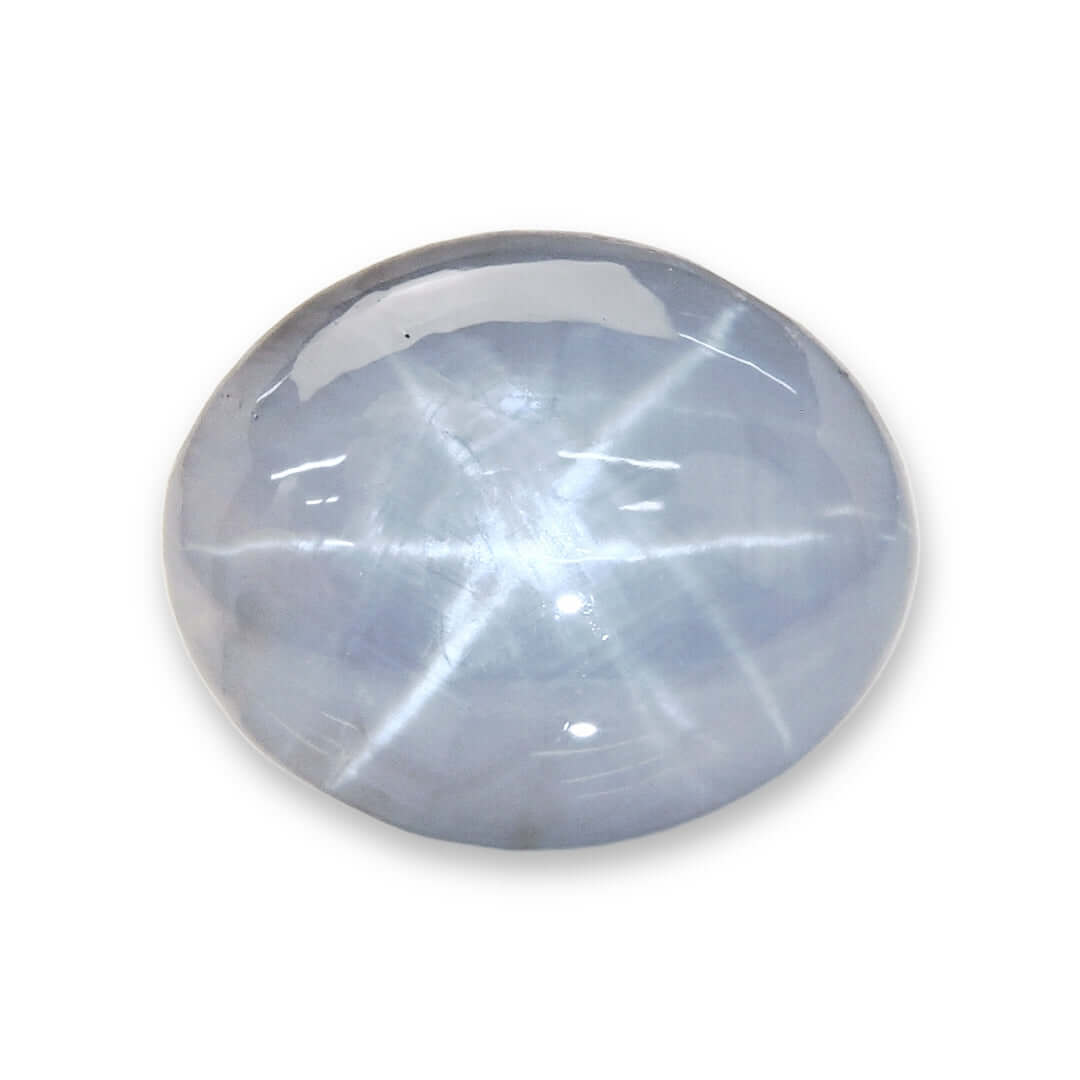
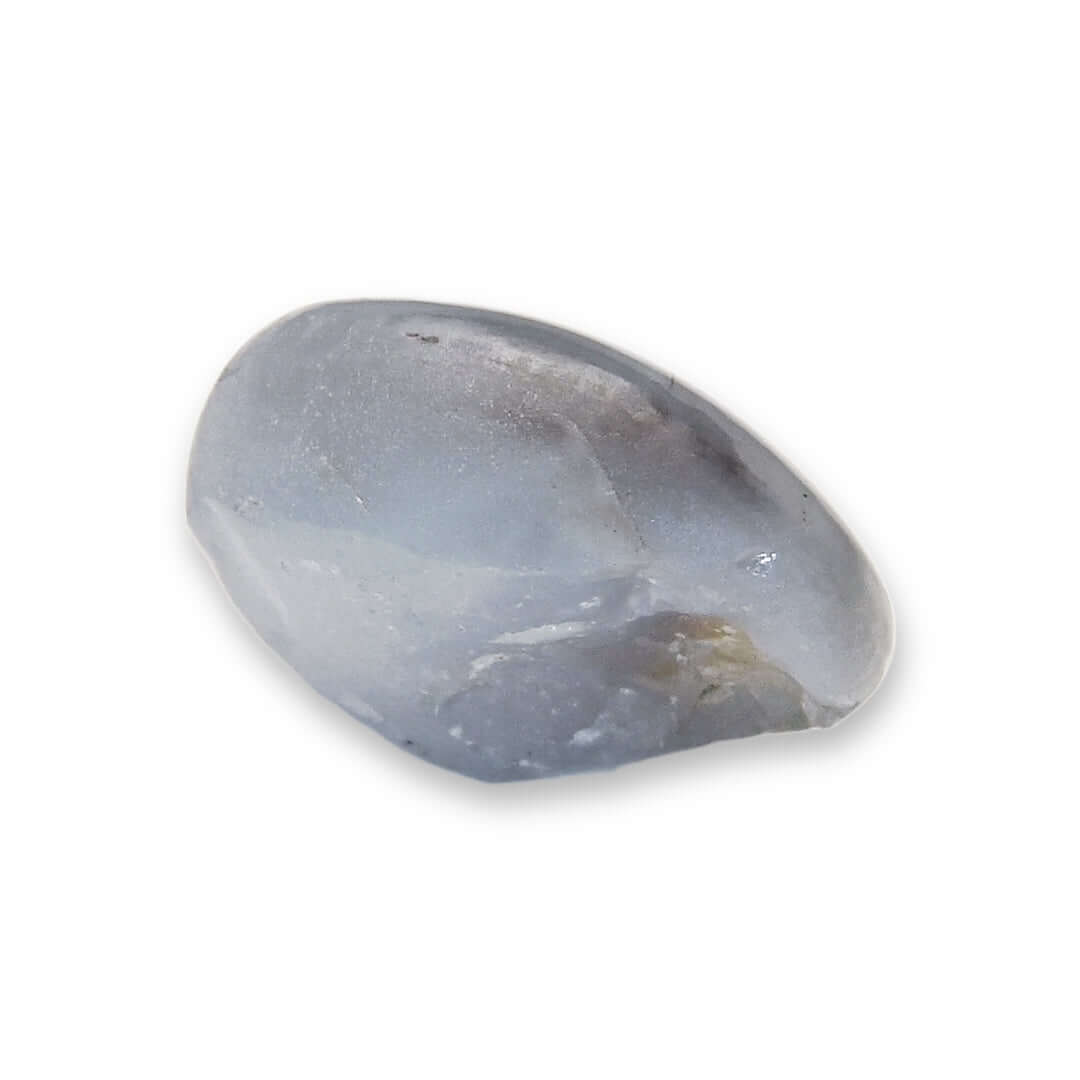
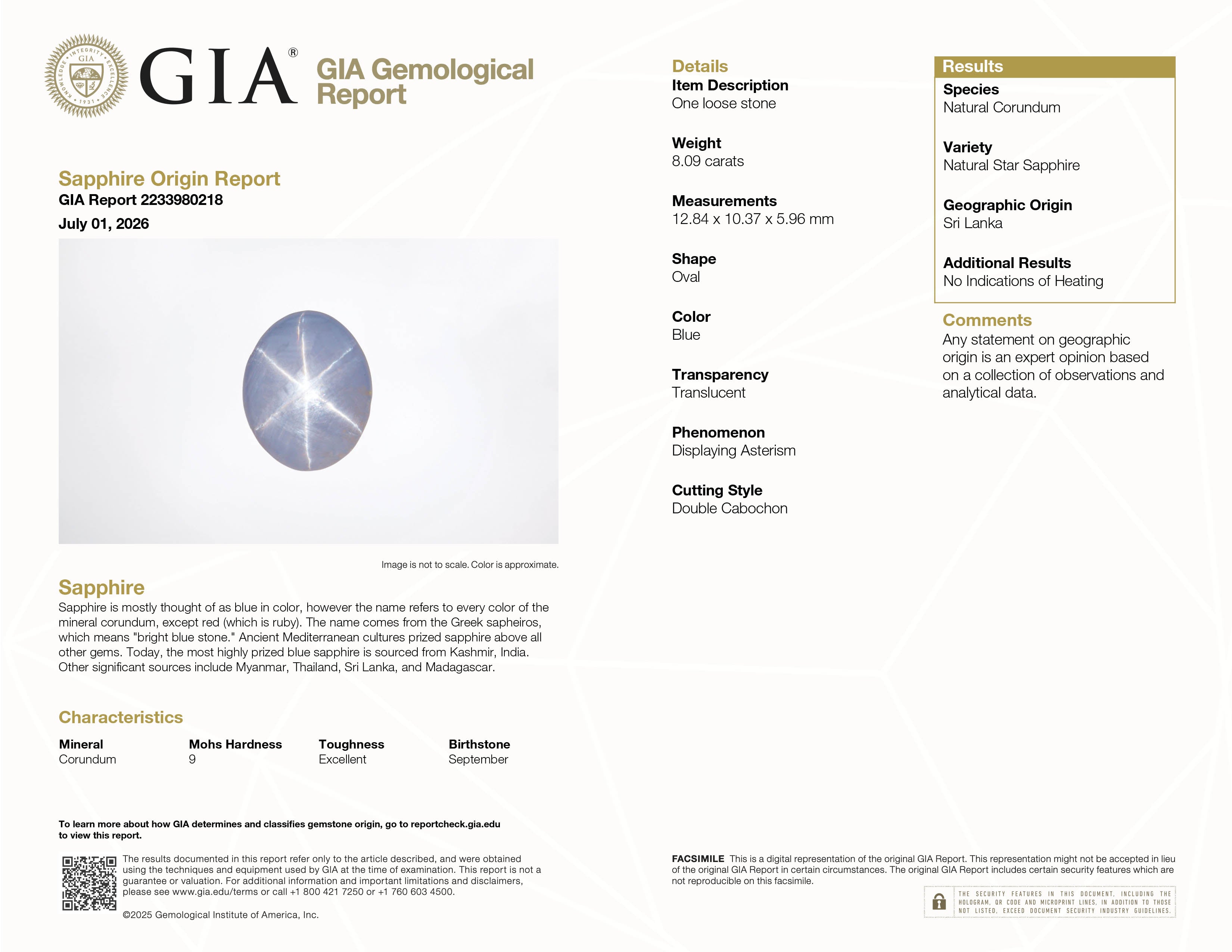
Prix du saphir bleu étoilé : fourchettes au carat et notre pierre
Ce que coûte un saphir bleu étoilé au carat, ce qui fait varier le prix, et la seule pierre que nous ayons : 8,09 ct à $4,040, avec un rapport d'origine GIA.
Plussur Prix du saphir bleu étoilé : fourchettes au carat et notre pierre
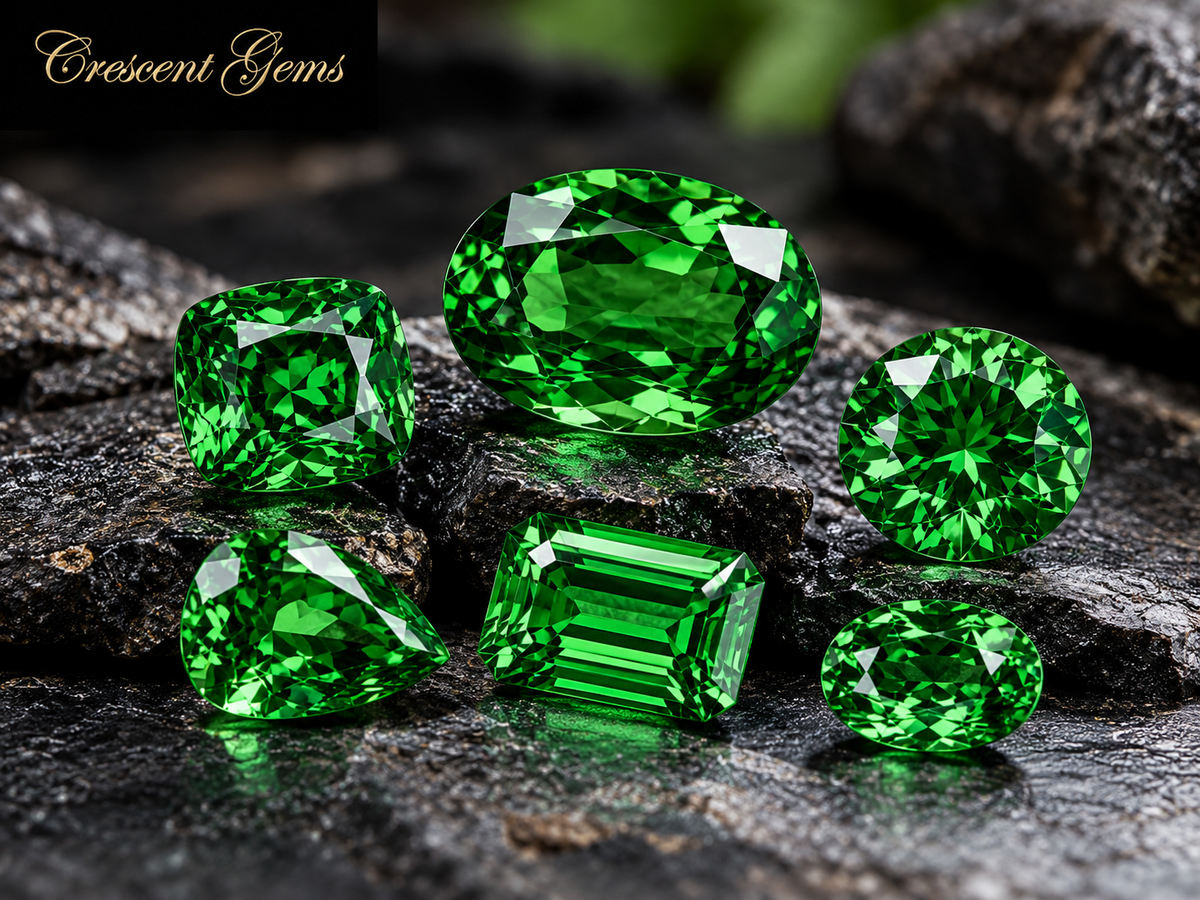
Prix de la tsavorite : notre stock, pas une grille de qualité
Nos sept tsavorites au 29 septembre 2026, de $1,177 à $22,724, dont une traitée et annoncée comme telle — et ce qui limite l'offre en grosses pierres propres.
Plussur Prix de la tsavorite : notre stock, pas une grille de qualité
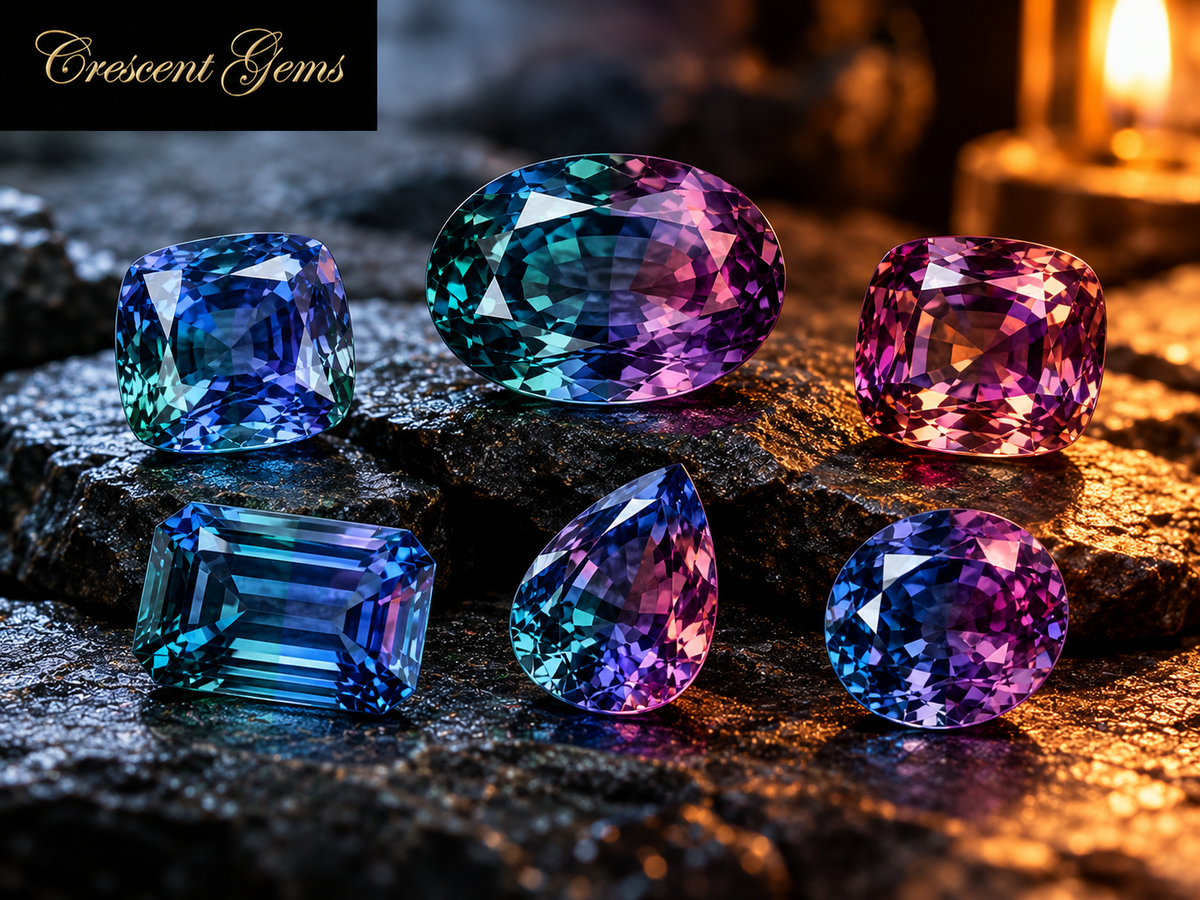
Prix du saphir à changement de couleur : au carat et nos deux pierres
Ce que coûte un saphir à changement de couleur au carat, ce qui fait réellement le prix, et nos deux pierres : 1,03 ct à $824 et 2,01 ct à $2,211.
Plussur Prix du saphir à changement de couleur : au carat et nos deux pierres
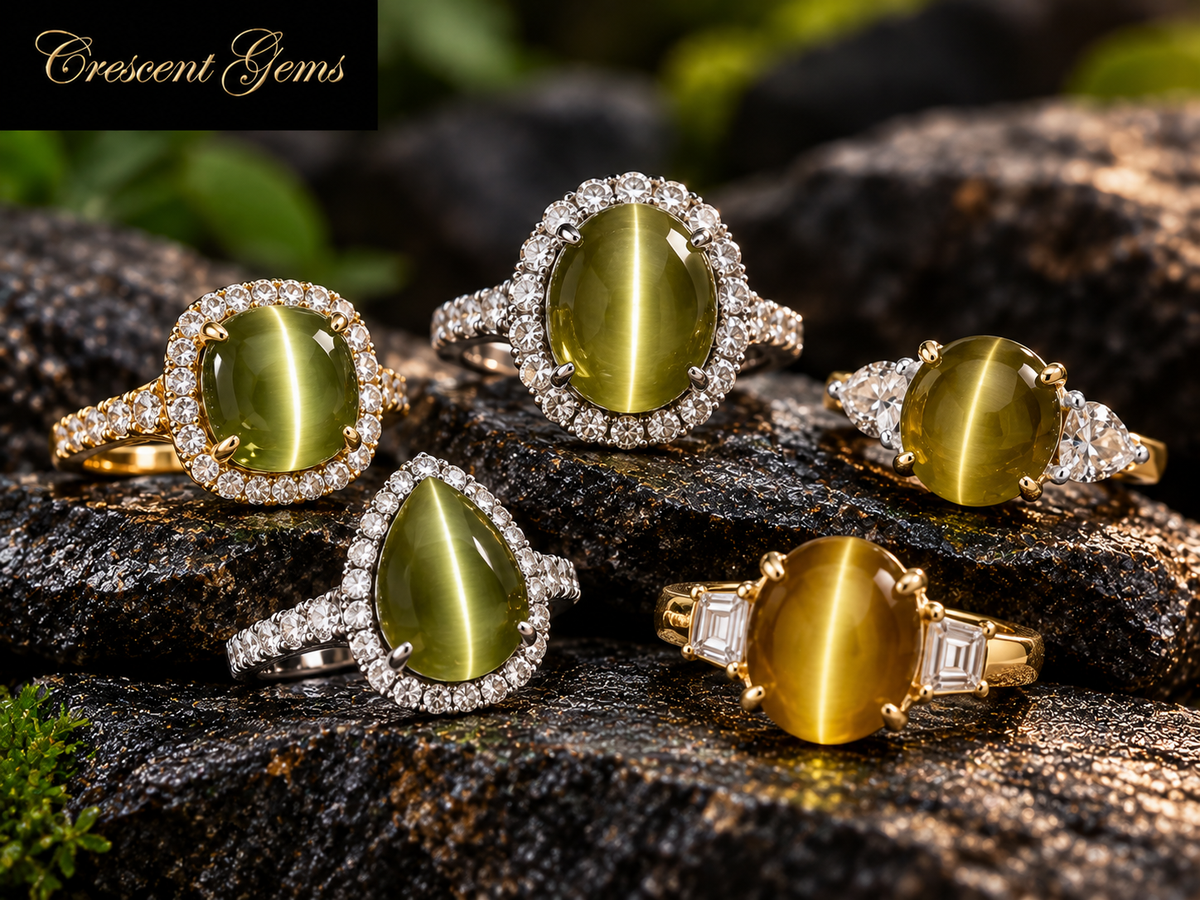
Le chrysobéryl œil-de-chat convient-il à une bague de fiançailles ?
Le chrysobéryl est à 8,5 sur l'échelle de Mohs, au-dessus du quartz (7) et en dessous du corindon (9). Ce que cela change au porter, à la monture et à l'entretien.
Plussur Le chrysobéryl œil-de-chat convient-il à une bague de fiançailles ?
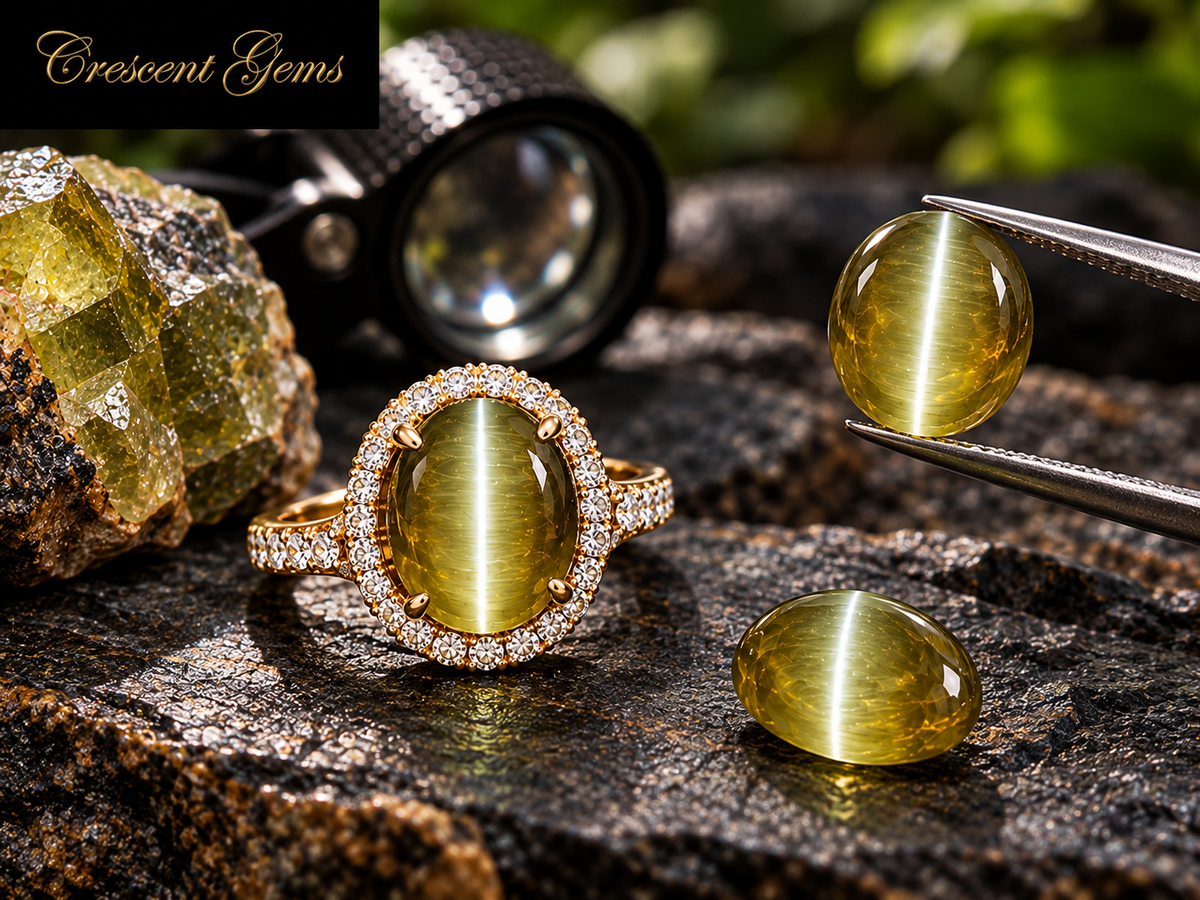
Prix du chrysobéryl œil-de-chat : au carat et nos deux pierres
Ce que coûte réellement un chrysobéryl œil-de-chat au carat, ce qui fait varier le prix, et nos deux pierres chiffrées : 2,36 ct à $3,792 et 4,25 ct à $9,482, soit $1,606.78 et $2,231.06 le carat.
Plussur Prix du chrysobéryl œil-de-chat : au carat et nos deux pierres