

Natural Sapphire & Gemstone Buying Guides

Is Tsavorite Good for an Engagement Ring? Durability, Color, and What Buyers Need to Know

How to Care for a Sapphire Engagement Ring: Cleaning, Storage, and What to Avoid
Read moreabout How to Care for a Sapphire Engagement Ring: Cleaning, Storage, and What to Avoid
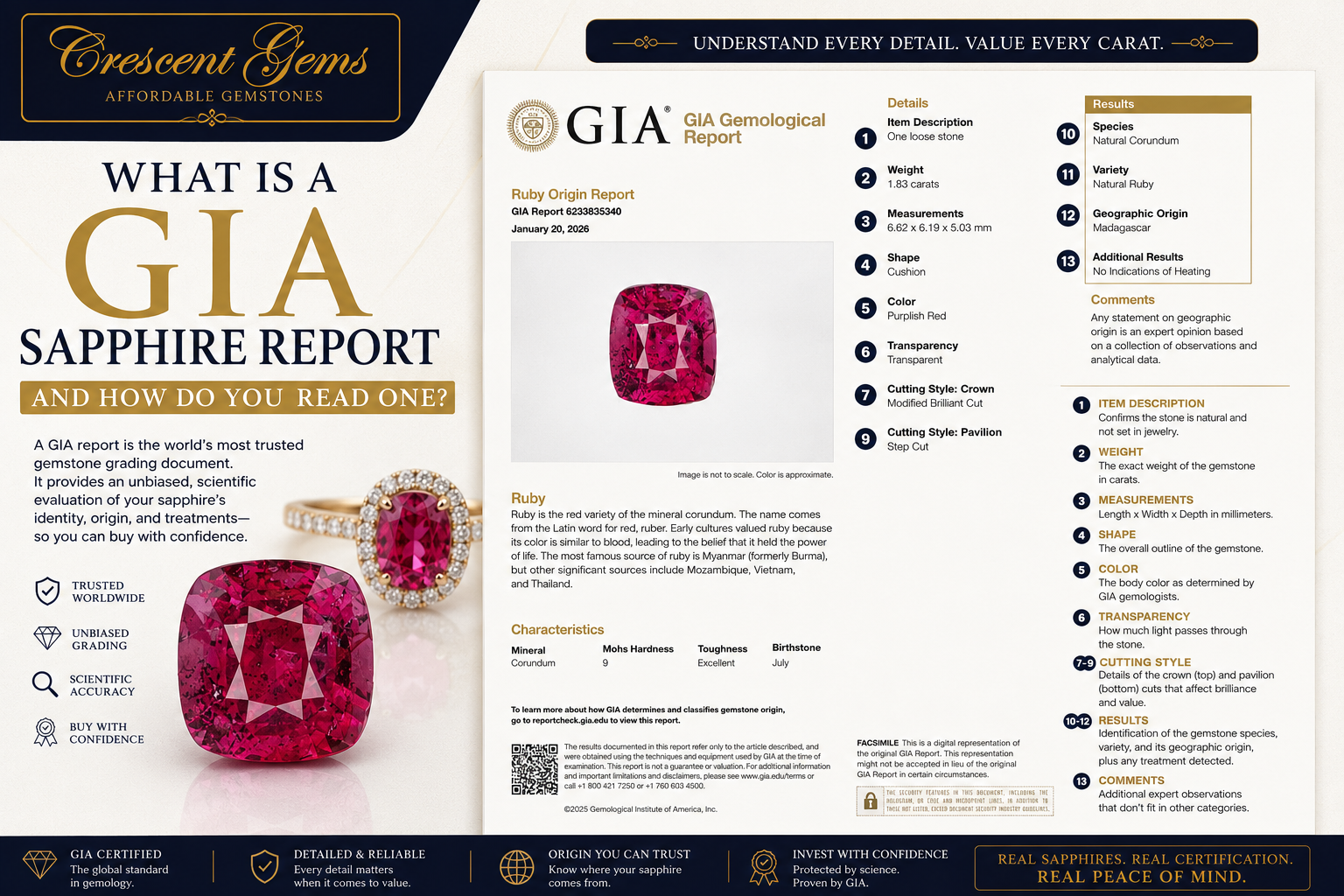
What Is a GIA Sapphire Report and How Do You Read One?
Read moreabout What Is a GIA Sapphire Report and How Do You Read One?
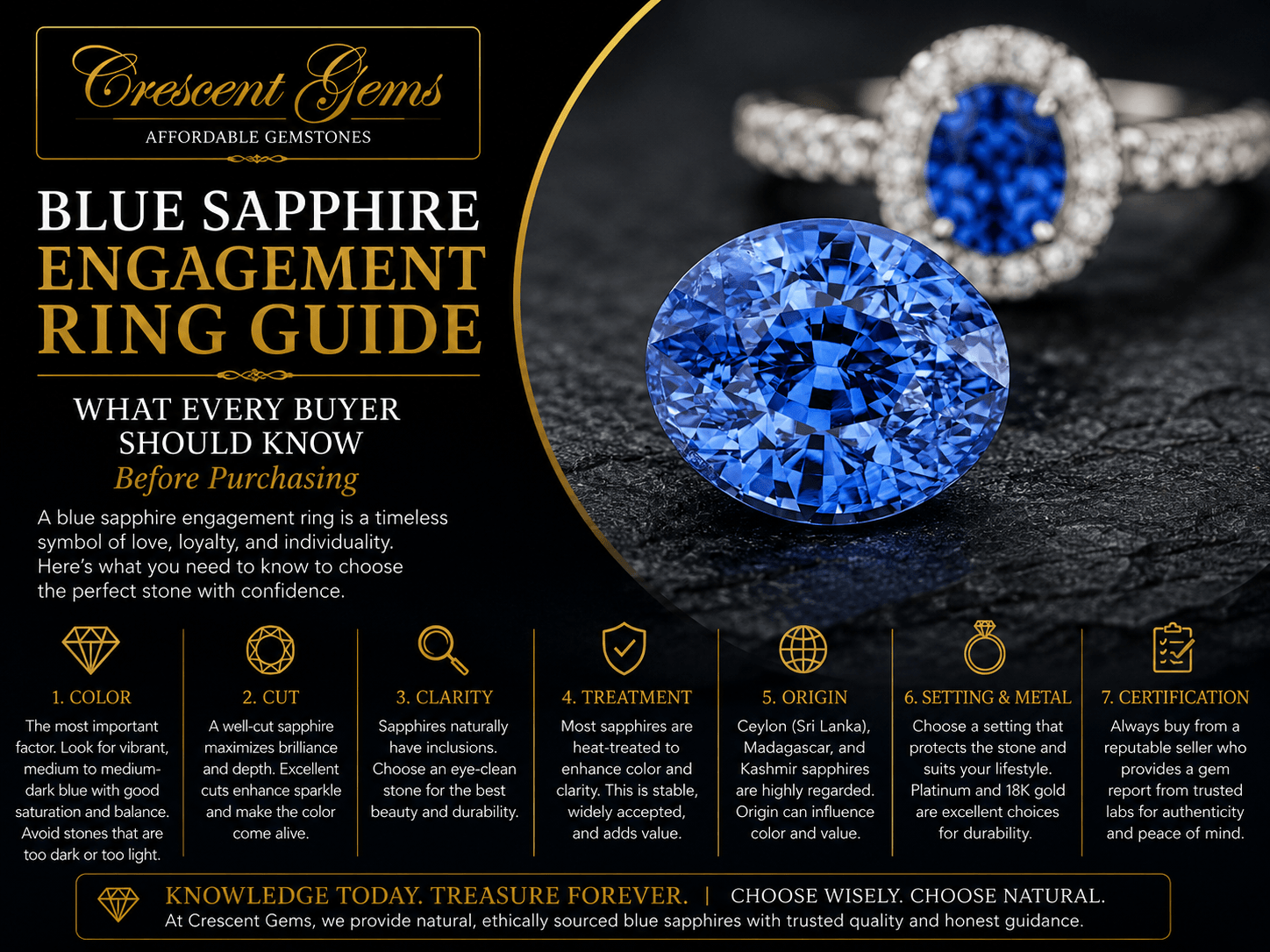
Blue Sapphire Engagement Ring Guide: What Every Buyer Should Know Before Purchasing
Read moreabout Blue Sapphire Engagement Ring Guide: What Every Buyer Should Know Before Purchasing
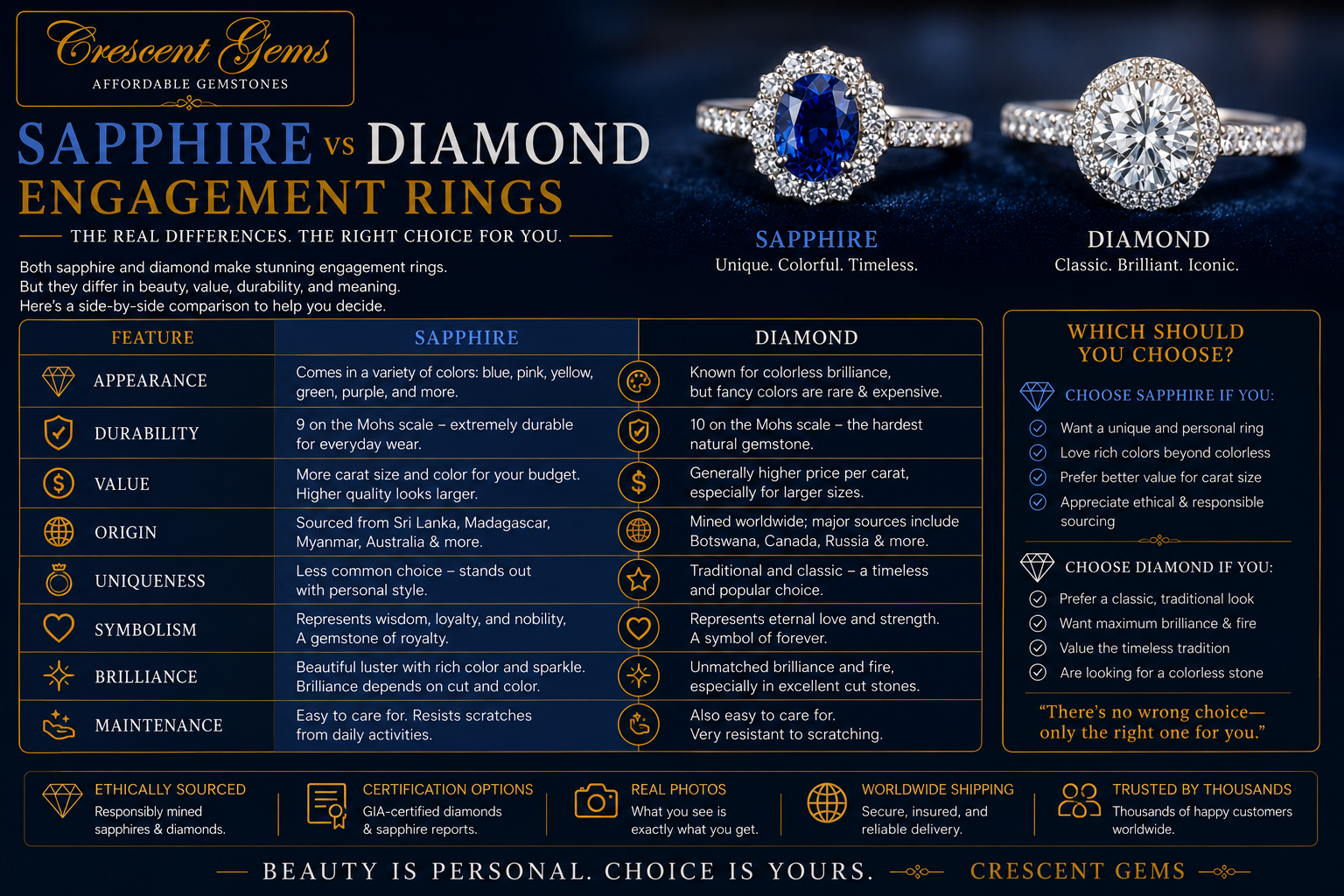
Sapphire vs Diamond Engagement Rings: The Real Differences, and How to Choose the Right Sapphire
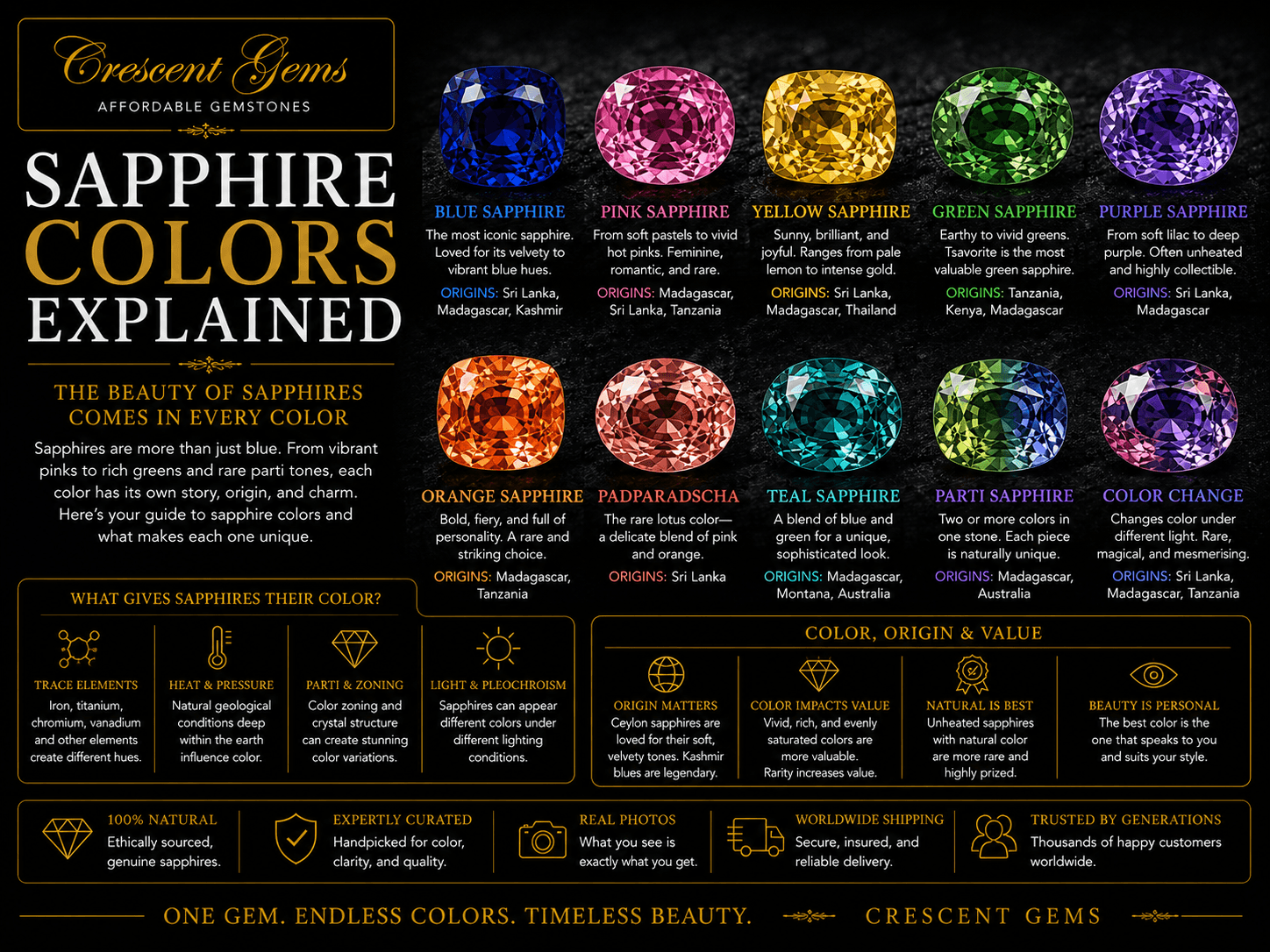
Sapphire Colors Explained — Every Color, What Causes It, and How to Choose
Read moreabout Sapphire Colors Explained — Every Color, What Causes It, and How to Choose

What Sapphire Color Looks Best for Your Skin Tone? A Practical Guide
Read moreabout What Sapphire Color Looks Best for Your Skin Tone? A Practical Guide
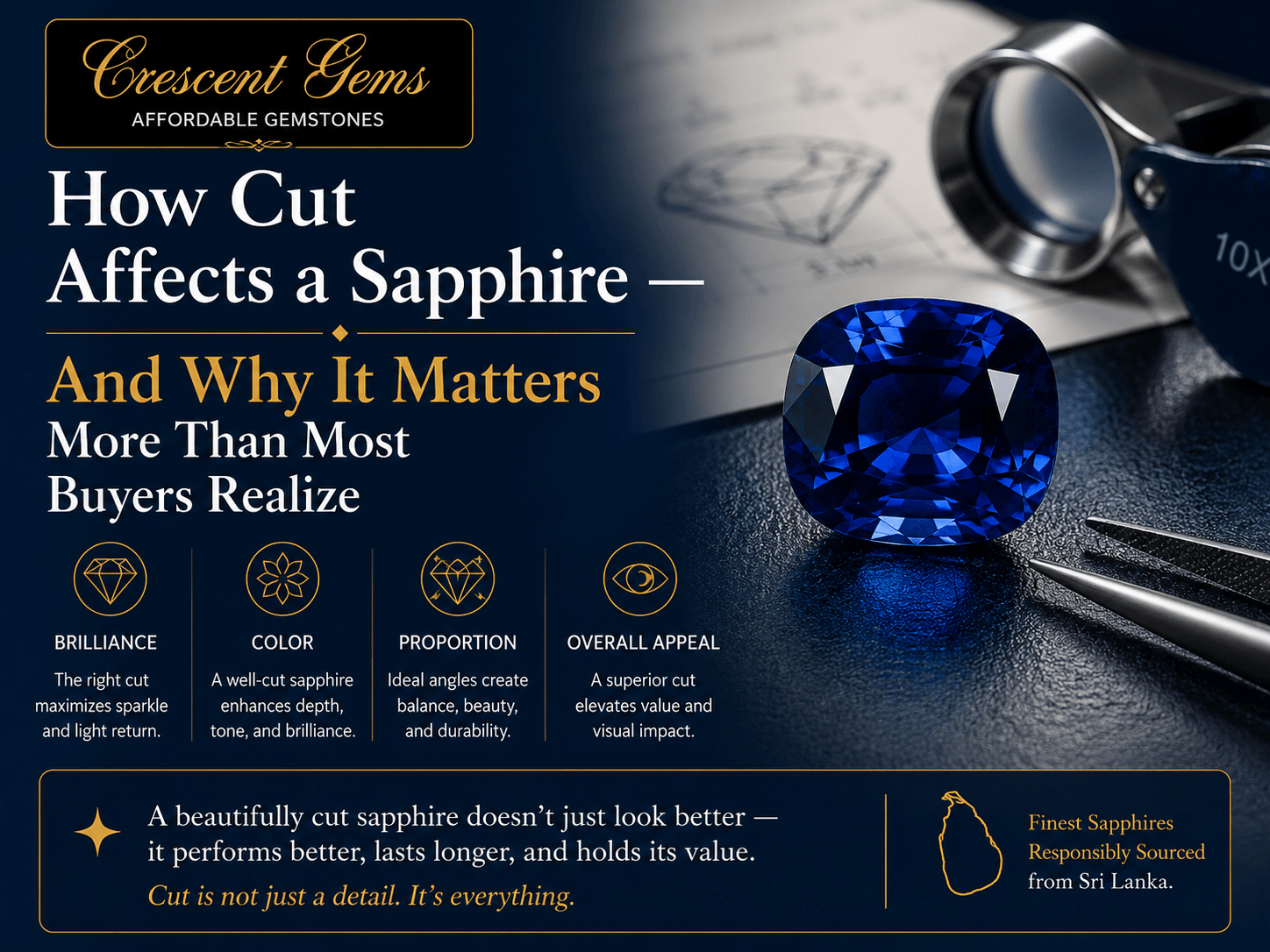
How Cut Affects a Sapphire — And Why It Matters More Than Most Buyers Realize
Read moreabout How Cut Affects a Sapphire — And Why It Matters More Than Most Buyers Realize
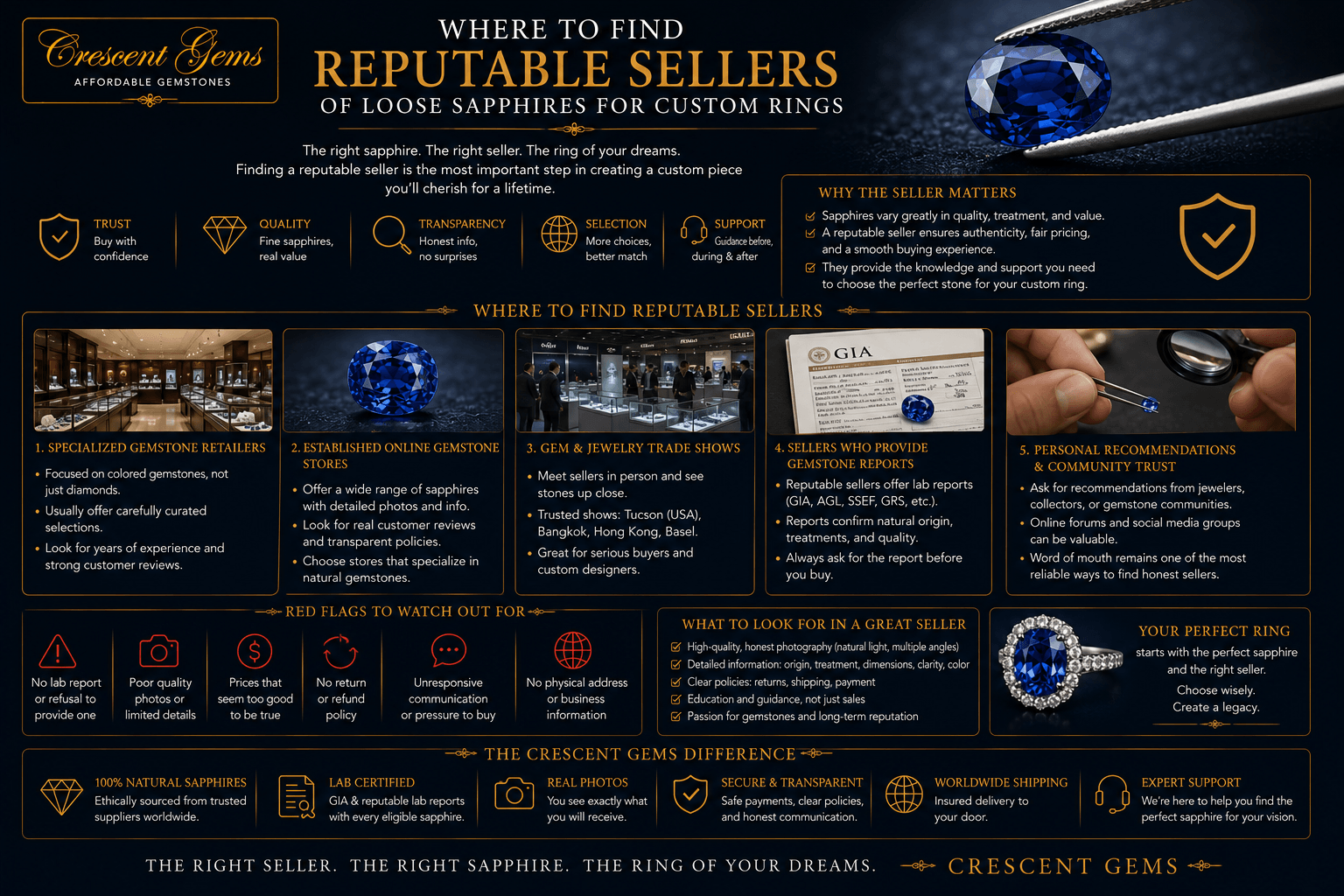
Where to Find Reputable Sellers of Loose Sapphires for Custom Rings
Read moreabout Where to Find Reputable Sellers of Loose Sapphires for Custom Rings

Buy Now, Pay Later for Loose Sapphires: How Financing Works at Crescent Gems
Read moreabout Buy Now, Pay Later for Loose Sapphires: How Financing Works at Crescent Gems
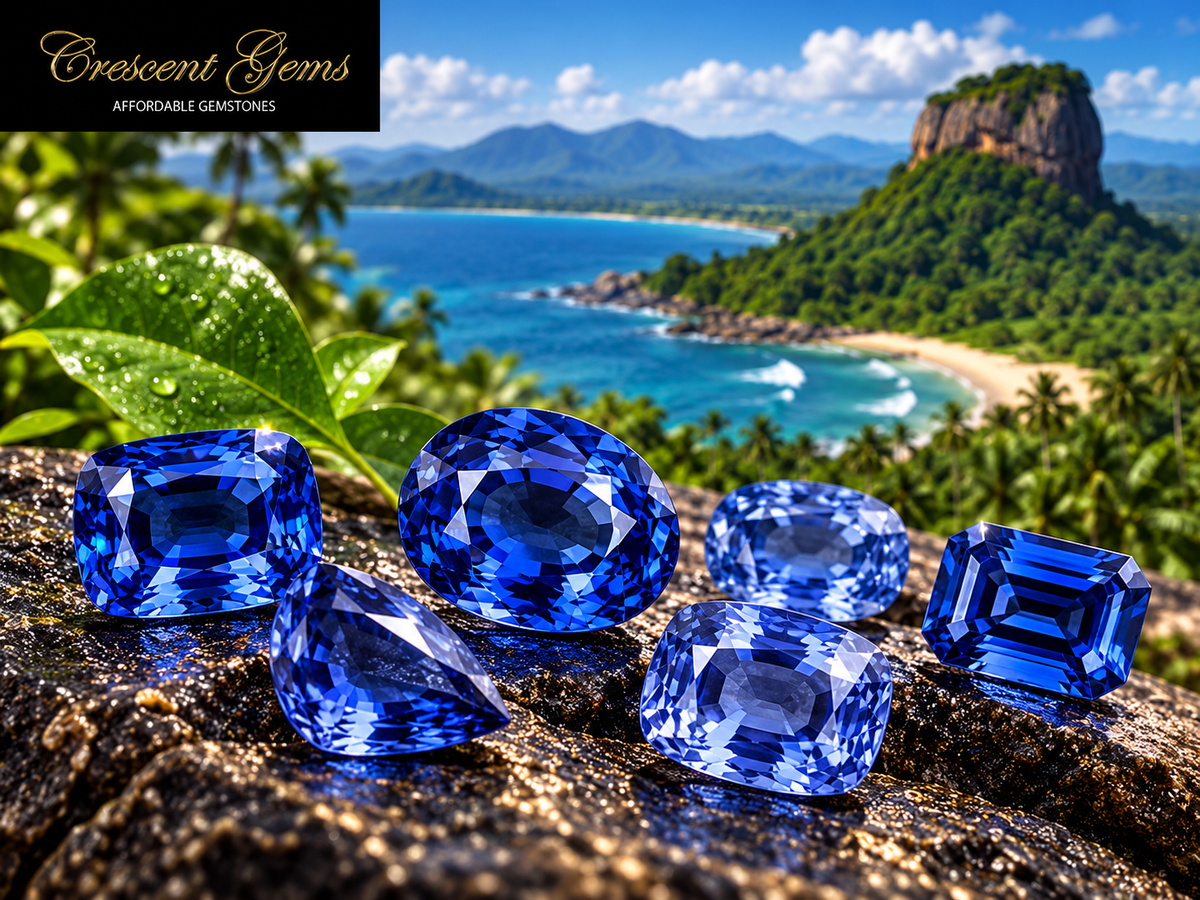
Ceylon Sapphire: The Complete Guide to the World's Most Trusted Sapphire Origin
Read moreabout Ceylon Sapphire: The Complete Guide to the World's Most Trusted Sapphire Origin
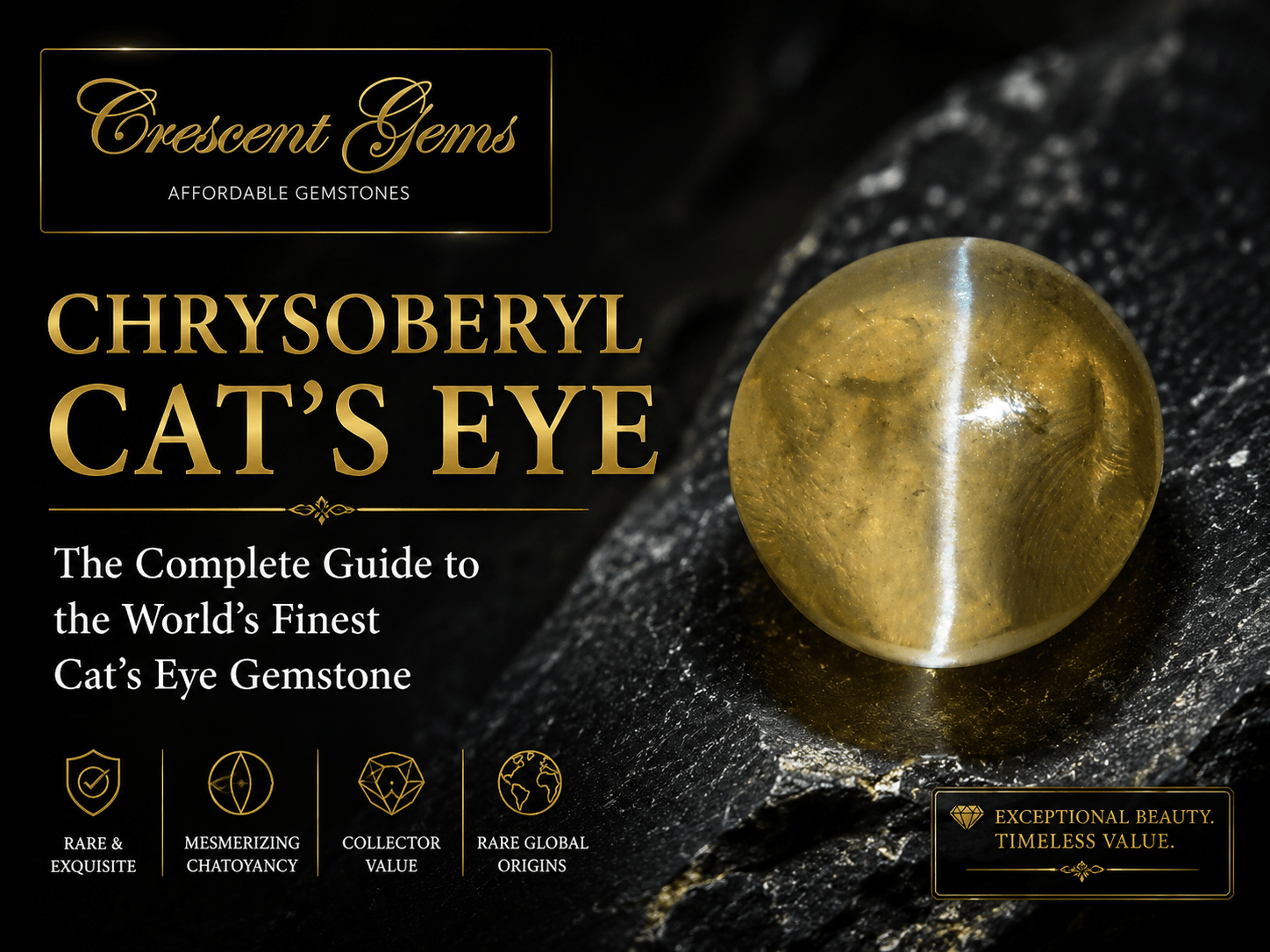
Cat's Eye Chrysoberyl — The Complete Buyer's Guide to the Most Prized Phenomenon Gemstone
Cat's eye chrysoberyl (cymophane) is the most prized chatoyant gemstone in the world — displaying a single mobile band of light (the cat's eye) caused by parallel fibrous inclusions aligned within the crystal. This guide covers the gemology of chrysoberyl, the three conditions required for chatoyancy, the five quality factors including the milk and honey effect, the full body color spectrum, origin differences between Ceylon, Brazil, and India, the Jyotish Lahsuniya dimension, imitations and synthetics to avoid, a quality-grade pricing table, settings, and certification guidance.
