


- by Ahmed Shareek
Is a Round Sapphire Good for an Engagement Ring? Cut, Color, and What to Know Before You Buy
- by Ahmed Shareek
New to buying sapphires? Start with our Ultimate Sapphire Buying Guide — the complete resource for colour, origin, treatment, and pricing.
A round sapphire is cut differently from a round diamond, and the differences are worth understanding before you buy one. The round brilliant was worked out for diamond's optics. Sapphire rough has a different shape from diamond rough. Neither fact is visible in a photograph, and both change what a round sapphire costs and how it behaves in a ring.
This article sets out why the cutting differs, what the round outline does well, what it costs you, how to look at a round sapphire for yourself, what to think about when you set one, and who the shape suits. It also explains why there is no cut grade for a sapphire, which is why this page describes what to look at rather than publishing a scale.
The round brilliant cut was developed to maximize light return in diamond, and its proportions are worked out around diamond's optics. Diamond's refractive index is 2.42; that of corundum, the mineral sapphire belongs to, is 1.762-1.770. The same proportions do not do the same thing in the two materials.
So cutters give a round sapphire different facet angles and proportions from a round diamond. GIA prints a shape and one or more cutting styles for each stone it reports on, and our listing repeats its words — on some reports the crown and the pavilion are named separately, and the listing carries whichever fields the report prints. We quote no facet count, because a figure like that belongs to the cut type rather than to the stone in front of you.
The second difference is in the rough. Sapphire rough is usually an elongated hexagonal prism or a barrel, not a compact block. Cutting a round from that shape discards more of the crystal than cutting an oval or a cushion, which follow its natural elongation. Put the other way round: the same piece of rough yields a smaller round than it would an oval.
Most of what is written about sapphire cut is diamond writing with the stone's name changed. For a round diamond there is a published cut scale. For a sapphire there is none, and that is not an oversight. GIA states that it "doesn't grade or provide quality analysis for sapphire or other colored stones." The Laboratory Manual Harmonisation Committee, whose information sheets standardize report wording across the major laboratories, publishes none that covers cut quality in a colored stone. CIBJO defines the category and stops there.
Everything below is built instead on the things a report and an invoice actually record — the stone's measurements, its weight, its treatment, and what documentation comes with it — plus what we can see in the stone and tell you about it. Where this page describes how a stone looks, that is our own description, and no document can be produced to substantiate it. For the general version of the argument, our sapphire and diamond comparison sets out why there is no sapphire equivalent of the diamond 4Cs.
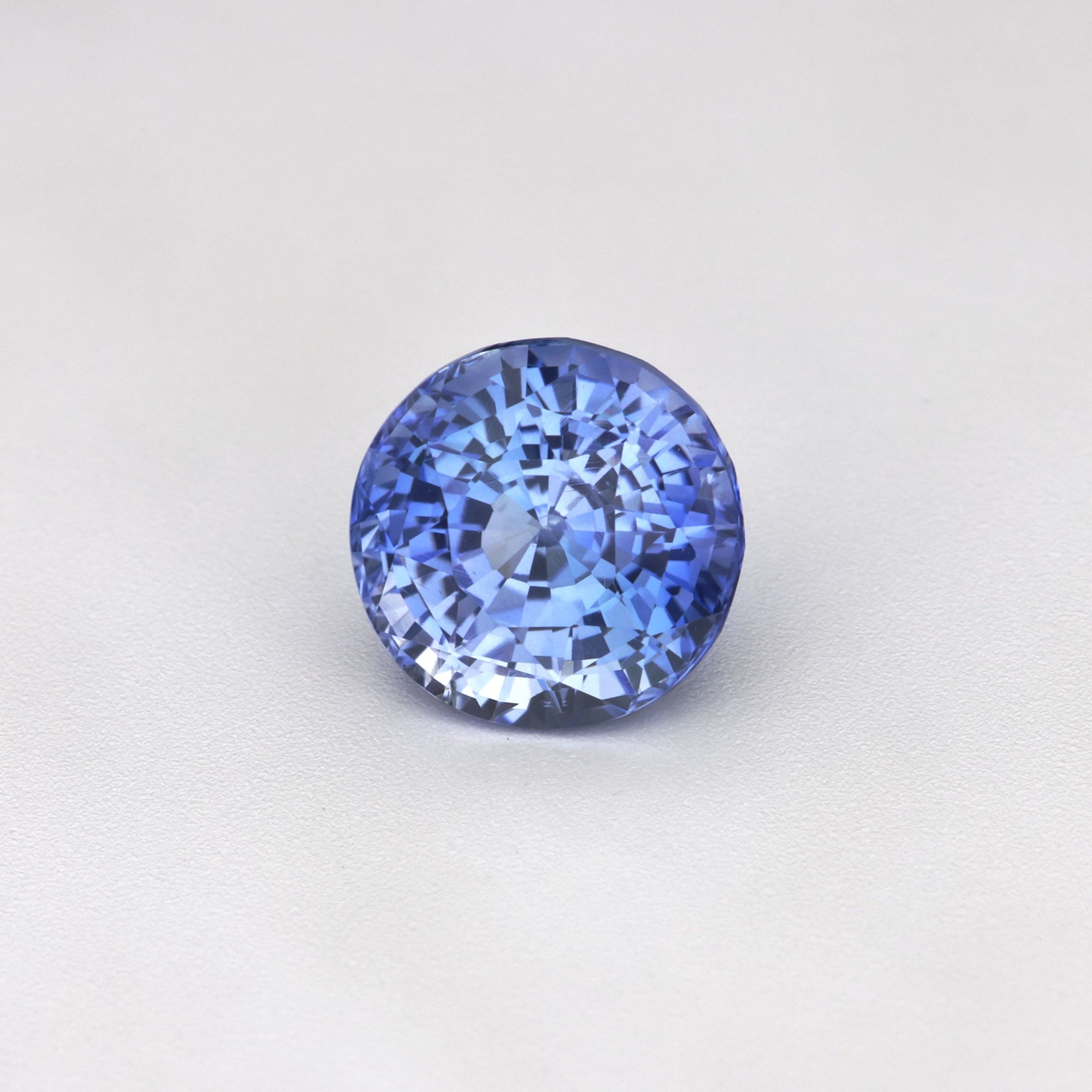
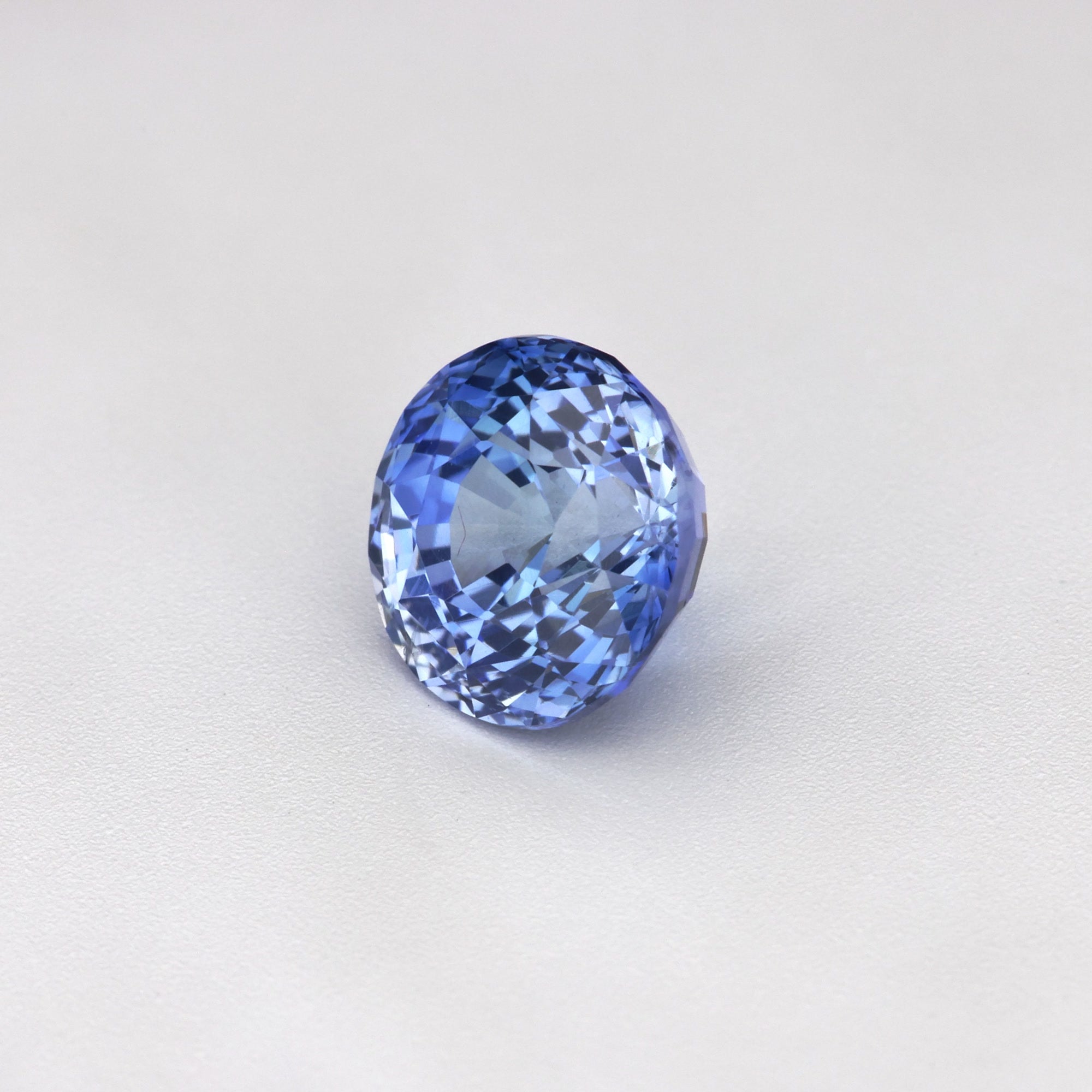
A round's facets are arranged symmetrically, so light comes back evenly from every direction and the stone reads lively from any angle. In our experience that even return is the thing buyers who choose a round were after. It is a description of how the outline behaves, not a score — there is no scale to score it against.
Round stones are the ones standard calibrated settings are sized for, so a round sapphire drops into a ready-made seat and is straightforward to reset later. A fancy shape has a length and a width to match, not just a diameter, so its setting has to suit its proportions as well.
A round has no long axis, so it looks the same from every angle and in every setting position. An oval has a length-to-width ratio that changes how it reads in the ring, and a cushion's corner rounding varies from stone to stone. If you would rather not make that decision, a round is the outline that does not ask you to.
Round sapphires are cut to standard calibrated millimeter diameters, which is how a setting made for a round stone specifies its seat. That makes pairing a round with an off-the-shelf or semi-custom setting straightforward, because you are matching one diameter rather than a length and a width.
Because cutting a round discards more of the rough, a round sapphire generally costs more per carat than an oval or a cushion of the same color and clarity. How much more depends on the stone, and each one is priced on its own listing.
How deep a stone is cut affects how much color you see face-up, because light travels further through a deep stone than through a shallow one before it comes back to your eye. Rounds are cut to a wide range of depths, and so are ovals — it is the individual stone's depth that decides this, not its outline. The depth is on the report, and we will tell you what a particular stone measures.
This one is easy to get the wrong way round, so plainly. At the same carat weight, a round and an oval cover almost the same face-up area. The oval still looks the bigger stone, because an elongated outline reads larger than a compact outline of equal area. If you want the stone to read large on the finger, that is the reason to choose an oval — not a difference in area. Our sapphire size guide carries the millimeter figures, measured from our own stones and dated.
What is true is that a sapphire reads smaller per carat than a diamond does, in any outline, because sapphire is the denser of the two materials. The size guide sets out what that works out to in millimeters.
If you want a particular color at a particular size in a round, it may take us time to find it. Tell us what you are looking for and we will say whether we have it or can get it, rather than offering you something else instead.
Color is the first thing to settle, and it is the one thing no laboratory grades. What you are looking at is three separate properties:
None of these three is a graded value, so what you are choosing between is one stone and another, side by side if you can.
Unlike round brilliant diamonds, round sapphires have no standardized cut grading. GIA does not issue a cut grade for colored stones. Judging how a round is cut means looking at the stone itself, and the four things below are what we look at.
Windows. A window is a transparent area visible face-up in the center of the stone, where light passes straight through instead of coming back. Hold the stone face-up over a white background: if you can see the background through the middle, the stone has a window. In a round that usually means the pavilion was cut shallow — diameter kept at the cost of light return. A window makes the stone read pale, however good its color is.
Extinction. Extinction is the opposite: dark areas, often a ring or a set of patches, where light is absorbed rather than returned. Some extinction is normal in any colored stone. When a round reads dark across much of its face, that is usually the pavilion depth or the facet angles, and you can see it without measuring anything. That is our own assessment of a stone, not a graded figure.
Symmetry. Symmetry shows more in a round than in a fancy shape. Facets placed unevenly, an off-center culet, or an irregular girdle outline are all visible face-up. A well-cut round should look round — not faintly oval, not polygonal.
Girdle. We look for a girdle of even thickness. A very thick girdle carries weight you cannot see, so the stone reads smaller than its carat weight suggests; a very thin or wavy one is uneven cutting. That is our own view of what to prefer, not a published standard.
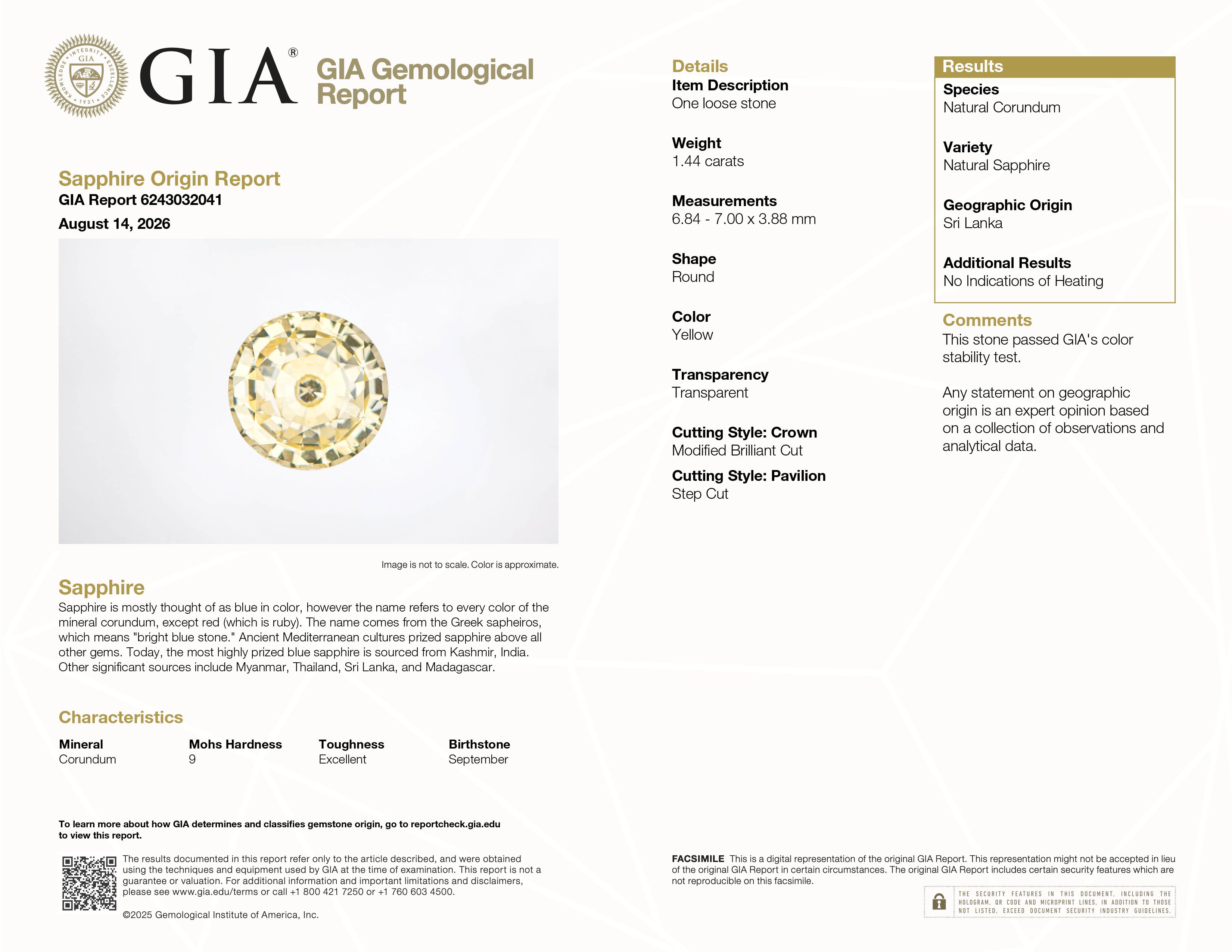
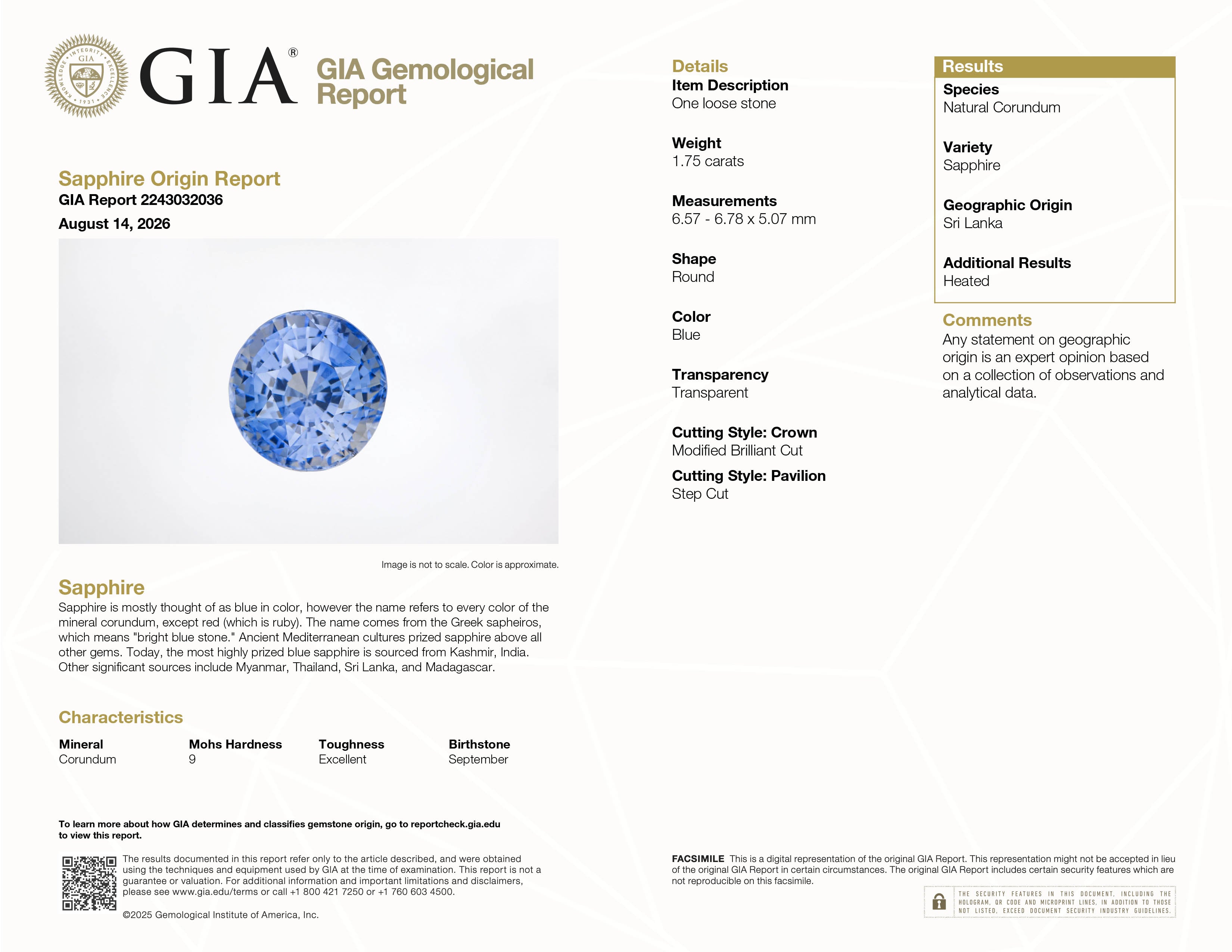
A report gives a round stone's dimensions as a minimum diameter, a maximum diameter and a depth, in that order — a range rather than a single number, written like 6.42 - 6.63 x 4.76 mm. The gap between the two diameters is what tells you whether the outline is truly round, and it is worth asking for. Ask us what a stone measures and we will read it off the report rather than describe it.
Eye-clean — no inclusions visible face-up at normal viewing distance — is what we look for in a round center stone. A GIA colored-stone report carries no clarity grade, so any clarity description you read from us is our own assessment, and the listing says so. The round outline and its symmetrical faceting can make an inclusion slightly more visible than asymmetrical faceting would. Look under ordinary room light, not only under a loupe.
Round cutting works across the sapphire colors, and each one brings something different to it.
Sri Lankan blue sapphire — the trade calls it Ceylon, which names the stone and says nothing about its quality — at a medium tone shows well in a round, and the even light return suits a consistent blue. A round blue has a strong visual identity of its own, particularly in a halo, where a round center inside a circle of round diamonds reads as a single concentric design.
A strongly saturated pink reads vividly from every angle in a round, and the symmetry of the outline suits it. We like a round pink sapphire in white gold or platinum, which is a preference and not a rule.
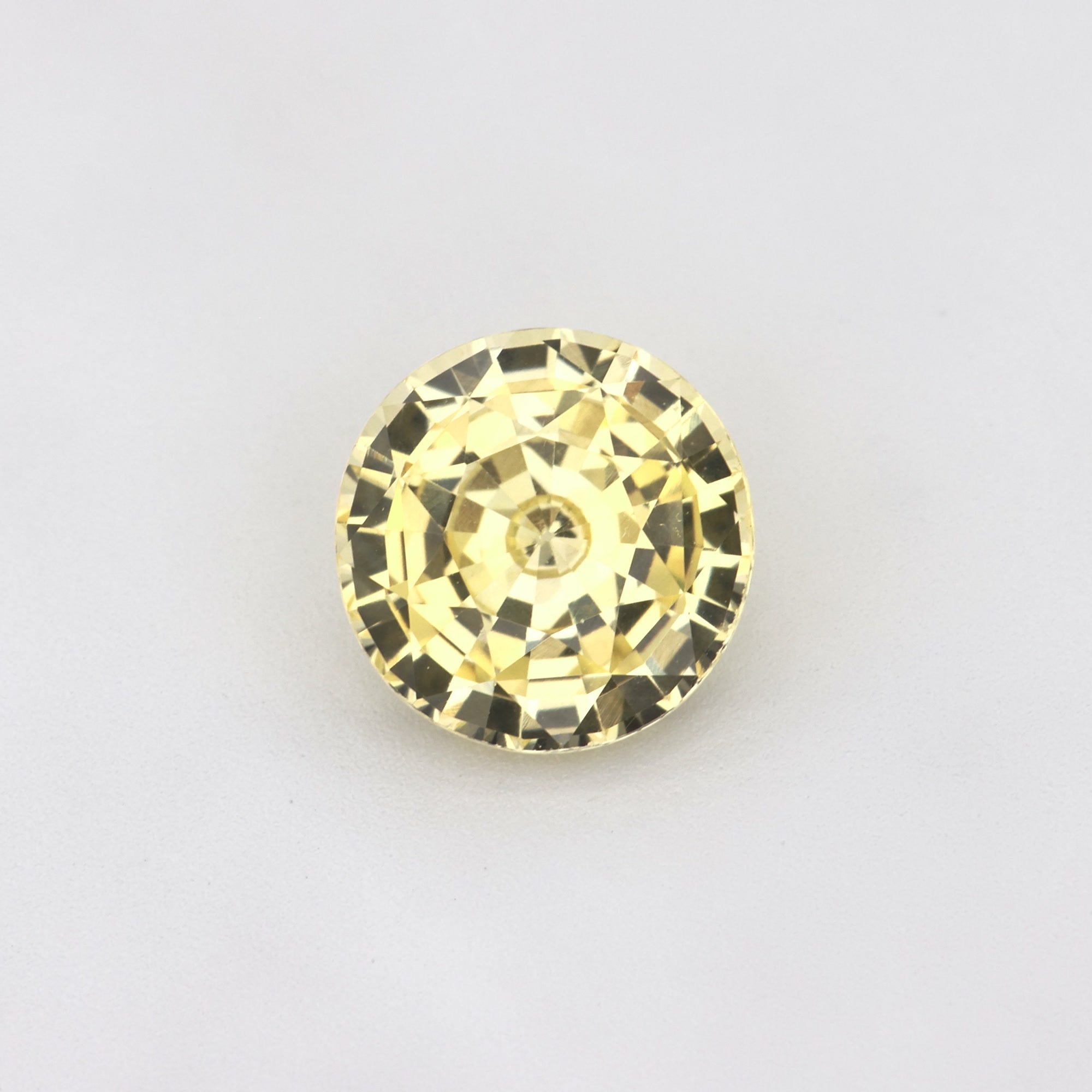
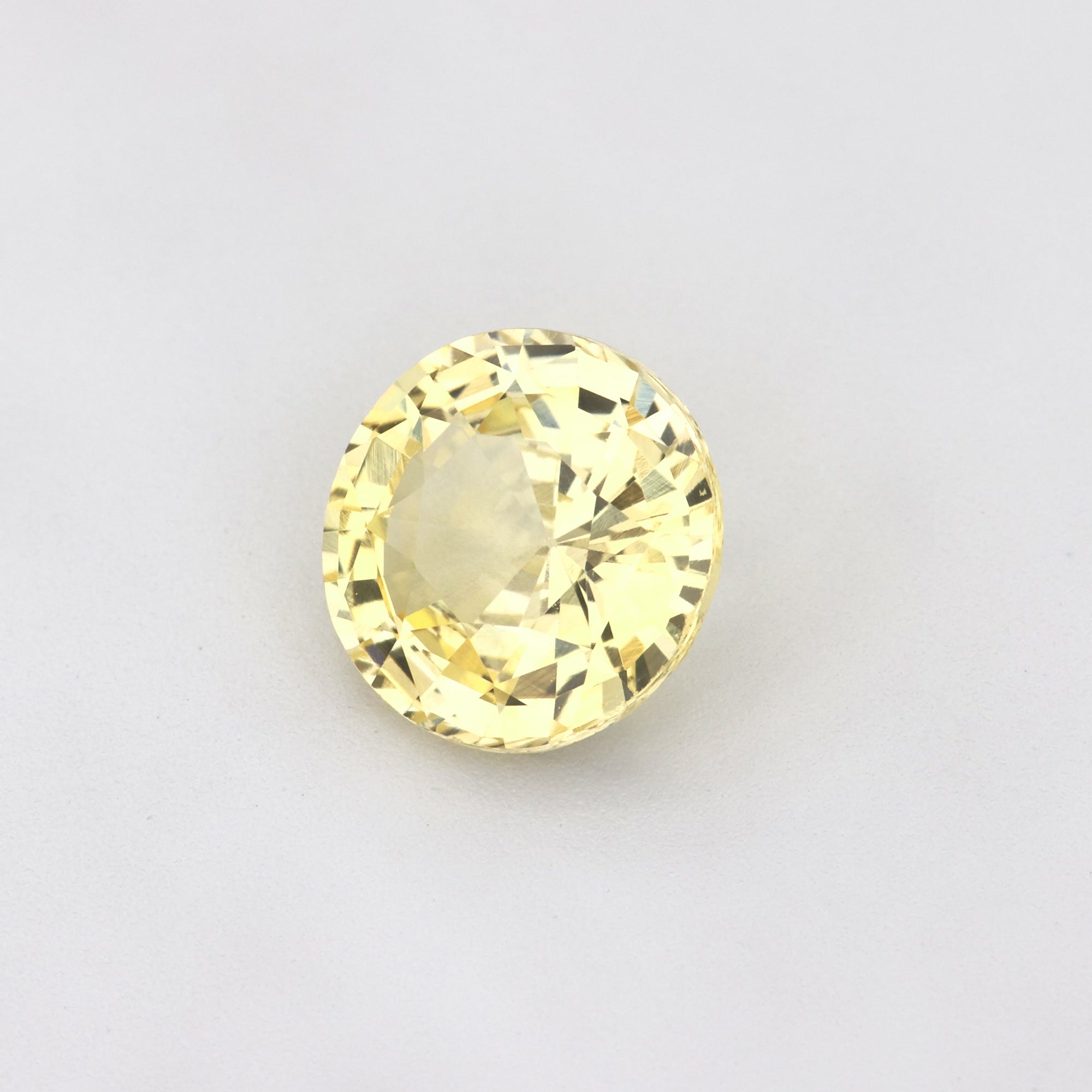
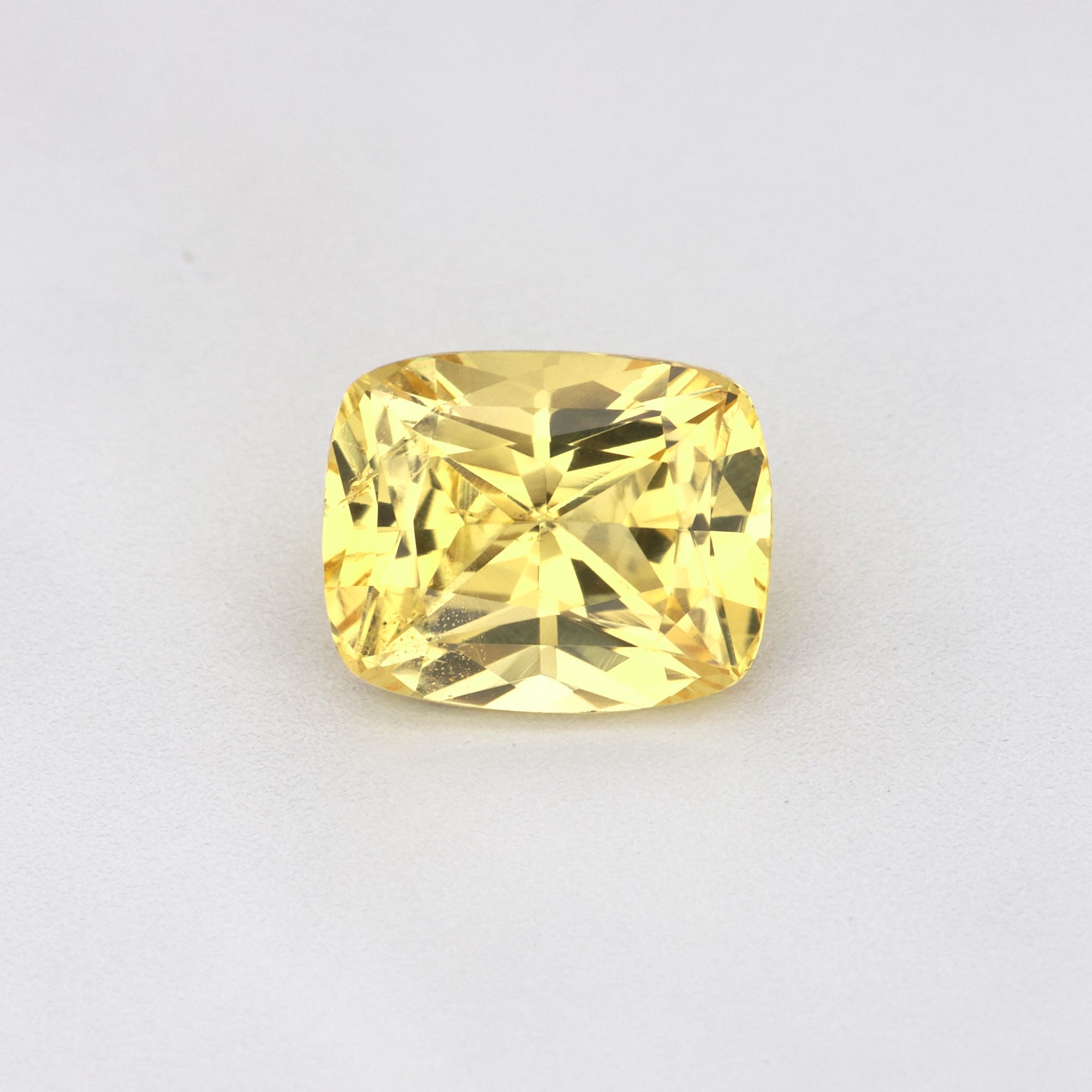
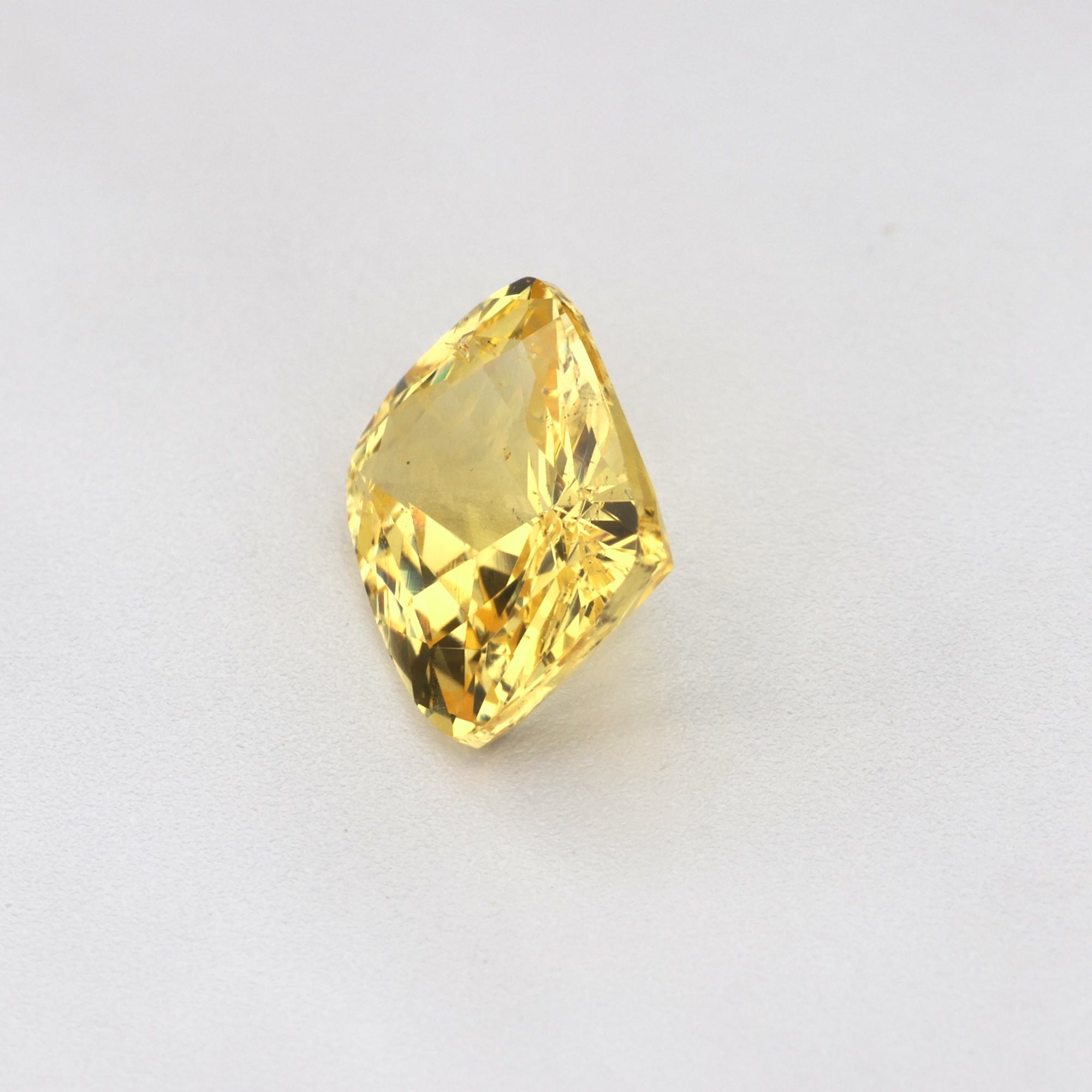
A round yellow sapphire reads much like a yellow diamond face-up, and it works in yellow gold as readily as in white. Yellow is one of the colors we list unheated as well as heated, and every listing states which — “unheated” refers to heat only, and where a stone has had no treatment of any kind we say that separately. Where a stone has a laboratory report we name the laboratory and the report number on its listing, and where it has none we say so plainly.
“Teal” is our own trade word and not a laboratory one: a report prints its own color term for the stone, and the listing gives both so you can see which is which. In a round, the facets return light evenly from every direction. Each listing also states that stone's origin and its treatment. If you are after a particular teal in a round, tell us and we will say what we have.
In a round, a white sapphire is the closest sapphire gets to a round diamond's look — and the difference is also at its most visible in this outline. Diamond's refractive index is 2.42 against corundum's 1.762-1.770, and diamond disperses light into spectral colors more strongly, so the fire differs even where the face-up impression is similar. That is a difference between two materials, not a verdict on either, and it is the thing to look at before you decide.
Sapphire is Mohs 9. Mohs measures resistance to scratching and abrasion only, and the scale is ordinal — the gaps between its steps have no stated size. It says nothing about chipping. Corundum has no cleavage, but it does have parting, and a sapphire chips at a girdle or at a point. A round outline has no point, and its girdle runs all the way round, thin and continuous, so the girdle is the part a setting has to look after. That is what the four options below are weighed against.
Four or six prongs hold the stone while leaving most of it open to light. Six cover a little more of the girdle and hold it in more places; four leave more of the stone visible. Either works on a round.
A ring of pavé or micro-pavé diamonds around a round center gives a concentric, symmetrical design, and the surrounding stones also make the center read wider than it measures. It suits blue and pink particularly well.
A full bezel gives a clean, contemporary profile and puts metal around the whole girdle, which is the part most exposed on a round. It suits modern and minimalist designs.
A round sapphire in a cathedral setting with pavé shoulders puts sparkle across the band with the color as the focal point. The round center anchors the design.
That is our own recommendation, from handling these stones — no laboratory publishes guidance on settings, and we are not reporting one.
Color decides most of it, then weight, then treatment and what documentation comes with the stone. The outline adds one thing: a round has consumed more rough for a given finished weight, so it generally carries a higher price per carat than an oval or a cushion of the same color and clarity.
We do not publish price bands for round sapphires. A band goes stale, and ours would describe our own stock rather than a market rate. Every stone is priced on its own listing, and those prices are the current ones.
Most buyers looking at a round sapphire should look at an oval too. The comparison in plain terms:
If you want the stone to read large on the finger — oval. If you want even light return and the easiest stone to set and reset — round. Both are genuinely good choices for a sapphire engagement ring; the right answer depends on which qualities matter more to the wearer.
We buy our round sapphires ourselves, most of them in Sri Lanka and some in Madagascar, and every listing states that stone's origin, its treatment, and the laboratory and report number where it has one — and says plainly where it has none. Each stone is individually photographed.
Browse round sapphires at Crescent Gems →

CG8451
Prices are shown in your local currency and may change.
CG8469
CG8454
CG8465
1.86 ct Natural Tsavorite Garnet, Cushion Shape | GIA Report #1242032119
CG8464
CG8463
CG8460
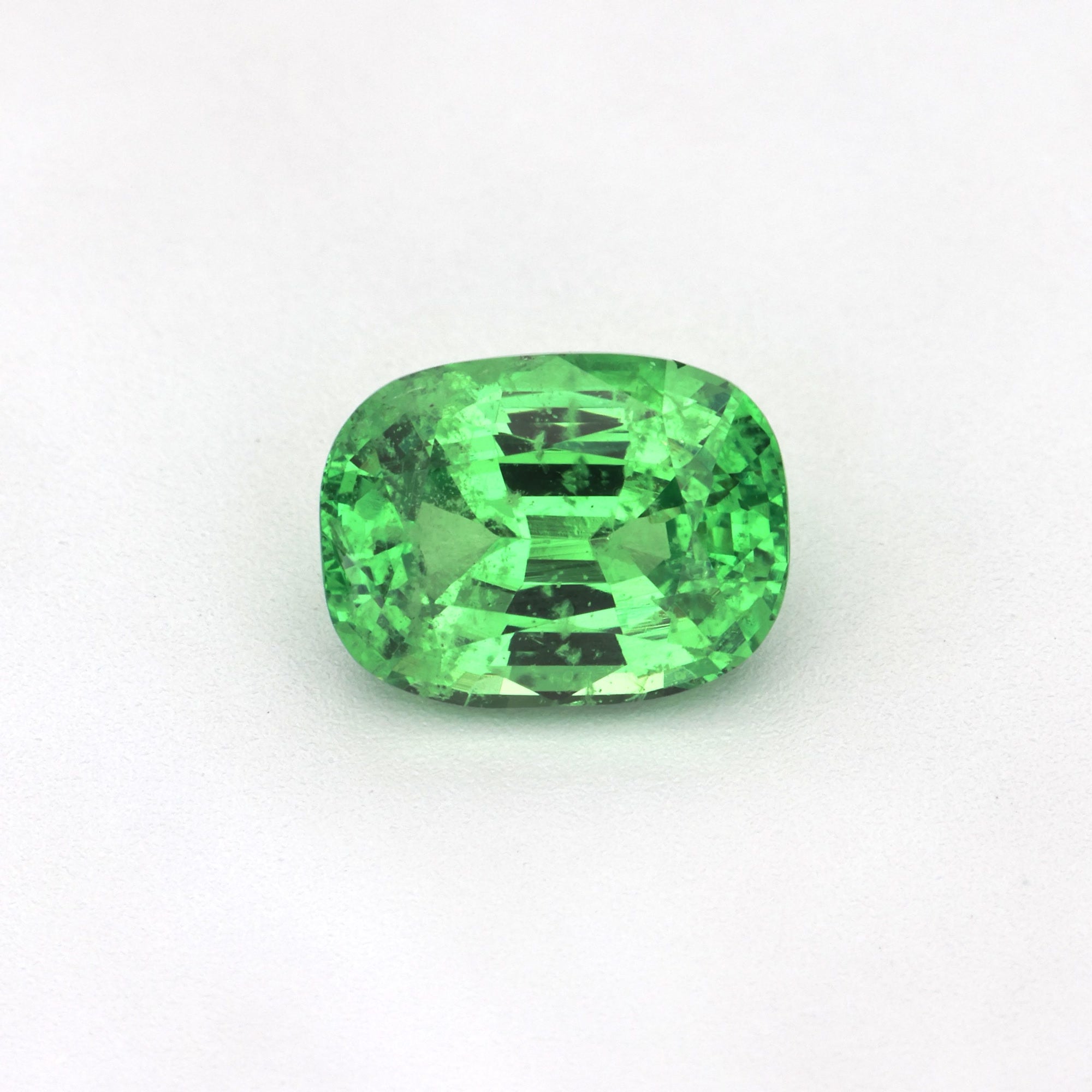
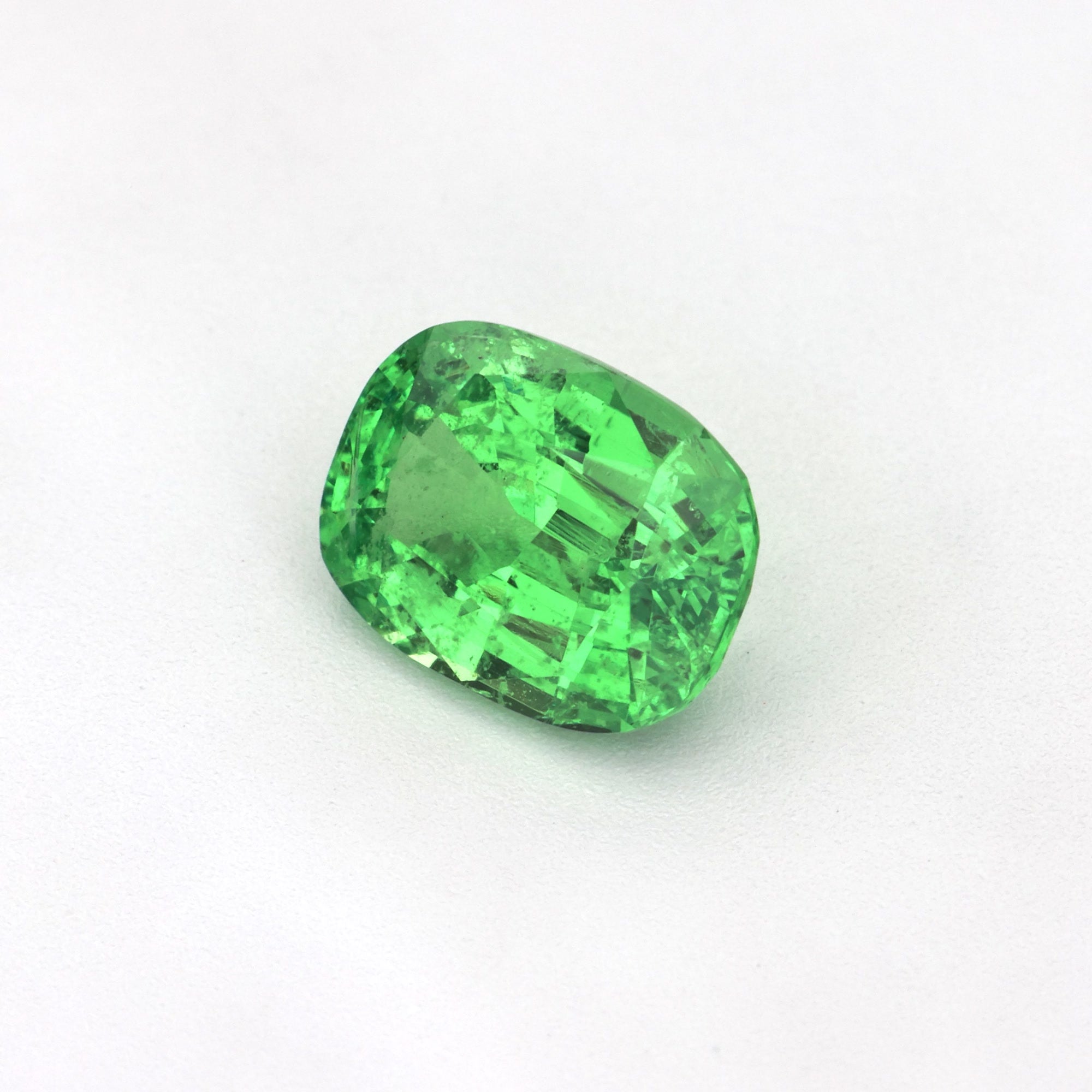
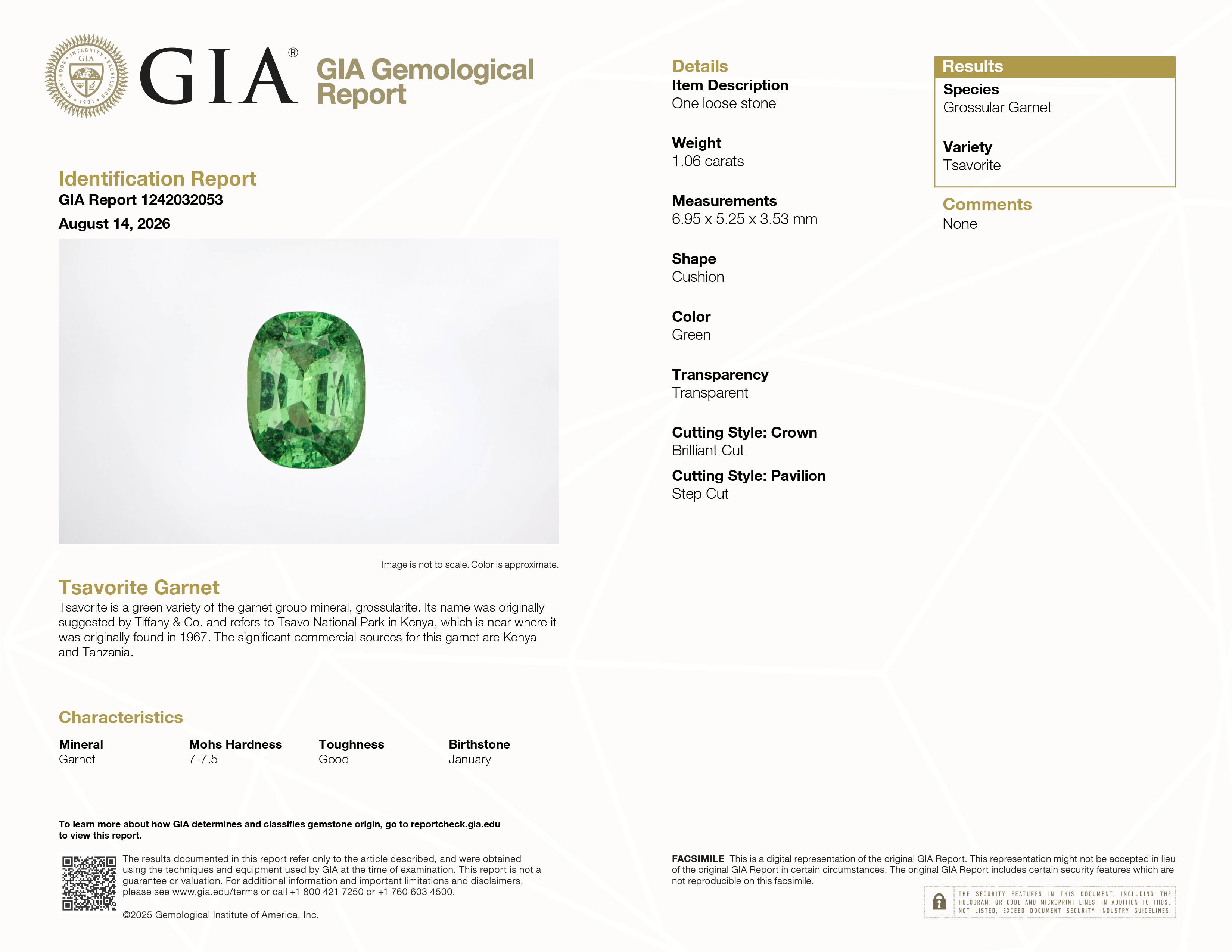
1.06 ct Natural Tsavorite Garnet, Cushion Shape | GIA Report #1242032053
CG8459
CG8458
CG8457
CG8456
1.65 ct Natural Unheated Ruby – Oval Cut | GIA Report | Madagascar
CG8453


Blue Star Sapphire Price Guide — What They Cost and Why
Read moreabout Blue Star Sapphire Price Guide — What They Cost and Why
Tsavorite Garnet Price Guide — What They Cost and Why
Read moreabout Tsavorite Garnet Price Guide — What They Cost and Why
Color-Change Sapphire Price Guide — What They Cost and Why
Read moreabout Color-Change Sapphire Price Guide — What They Cost and Why
Is Cat's-Eye Chrysoberyl Good for an Engagement Ring?
Read moreabout Is Cat's-Eye Chrysoberyl Good for an Engagement Ring?
Cat's Eye Chrysoberyl Price Guide — What They Cost and Why
Read moreabout Cat's Eye Chrysoberyl Price Guide — What They Cost and Why
















Share: