


- by Ahmed Shareek
Best Sapphire Cuts for Low-Profile Rings — How Shape and Depth Affect Setting Height
- by Ahmed Shareek
For bezel settings: How to Choose a Sapphire for a Bezel Ring. For pointed and cornered shapes: How to Choose a Setting That Protects Sapphire Corners. For the buying foundation: Ultimate Sapphire Buying Guide.
A low-profile engagement ring is one where the center stone sits close to the finger rather than rising high above the band. Because it protrudes less, it is less likely to snag on fabric or catch on a surface during physical activity, and a ring that catches on things tends to be the one that comes off before the work starts.
The cut of the sapphire sets the floor on how low the ring can go. A shallow stone with a wide face can be set low; a deeper stone has to sit higher whatever the setting does, because the metal underneath it has to go somewhere. The answer this page arrives at, measured on our own stock, is that the shape name does not tell you where a given stone sits: ask for the three millimeter figures — length, width and depth — before you ask about the setting.
The height of a center stone above the finger comes from two things: the stone’s own total depth — crown, girdle and pavilion together — and the design of the setting head that holds it. The setting is a design choice you can specify. The stone’s depth is fixed before you buy it, so it is the part worth measuring first.
Depth is usually given as a percentage, and two conventions are in use. The gem trade normally divides depth by the width — the short axis of the face-up outline. Dividing instead by the average of length and width gives a lower number on any elongated shape: on a 7 × 5 mm oval the width is 5 mm while the average of length and width is 6 mm, so the two readings differ by a factor of 1.2. Both conventions appear on this page, because which one applies depends on the shape: the oval, emerald-cut and cushion percentages are depth divided by width, the trade convention, while the round percentages are depth divided by average diameter, a round having no short axis to divide by. If you ask a jeweler for a 65% depth oval, say which convention you mean, or you may be shown a different stone from the one you had in mind.
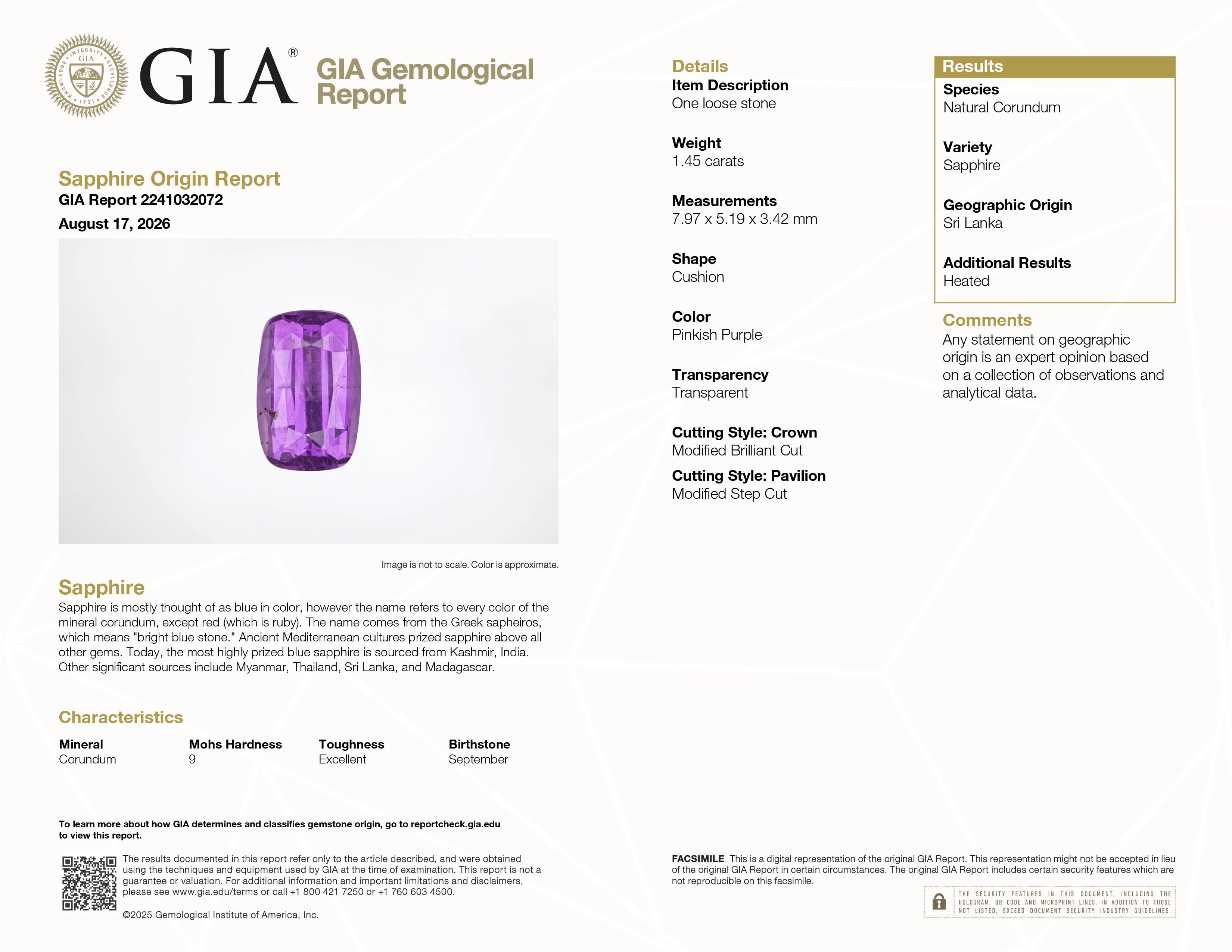
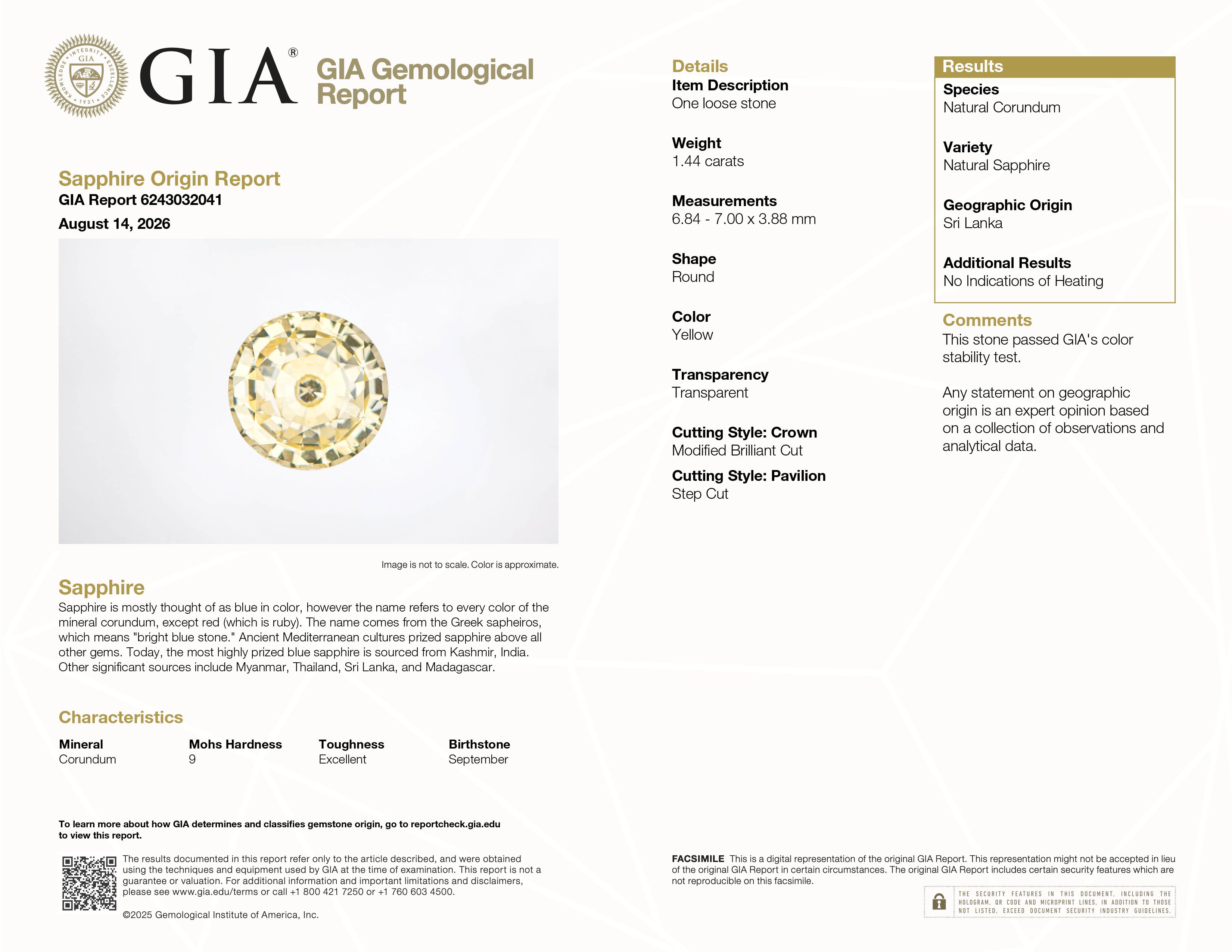
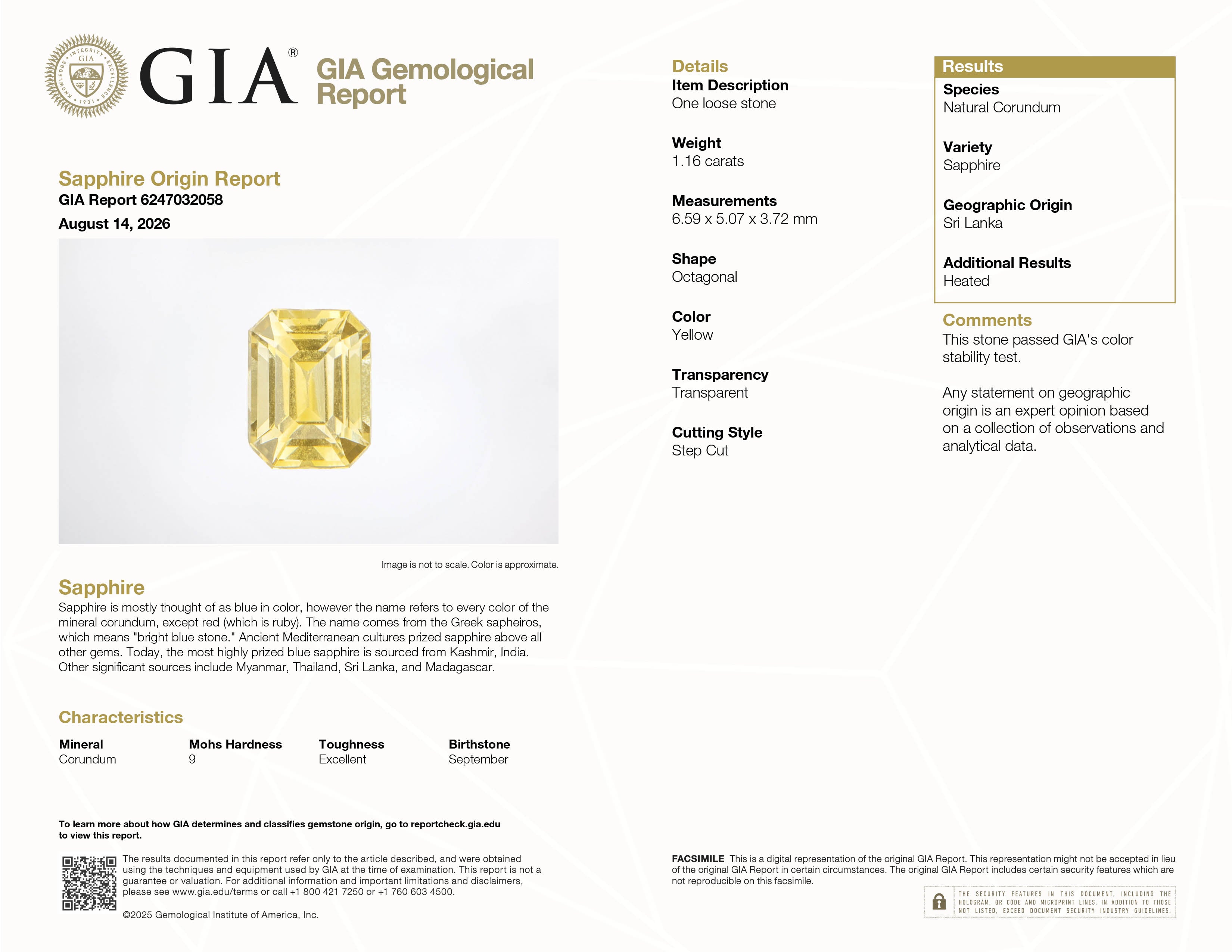
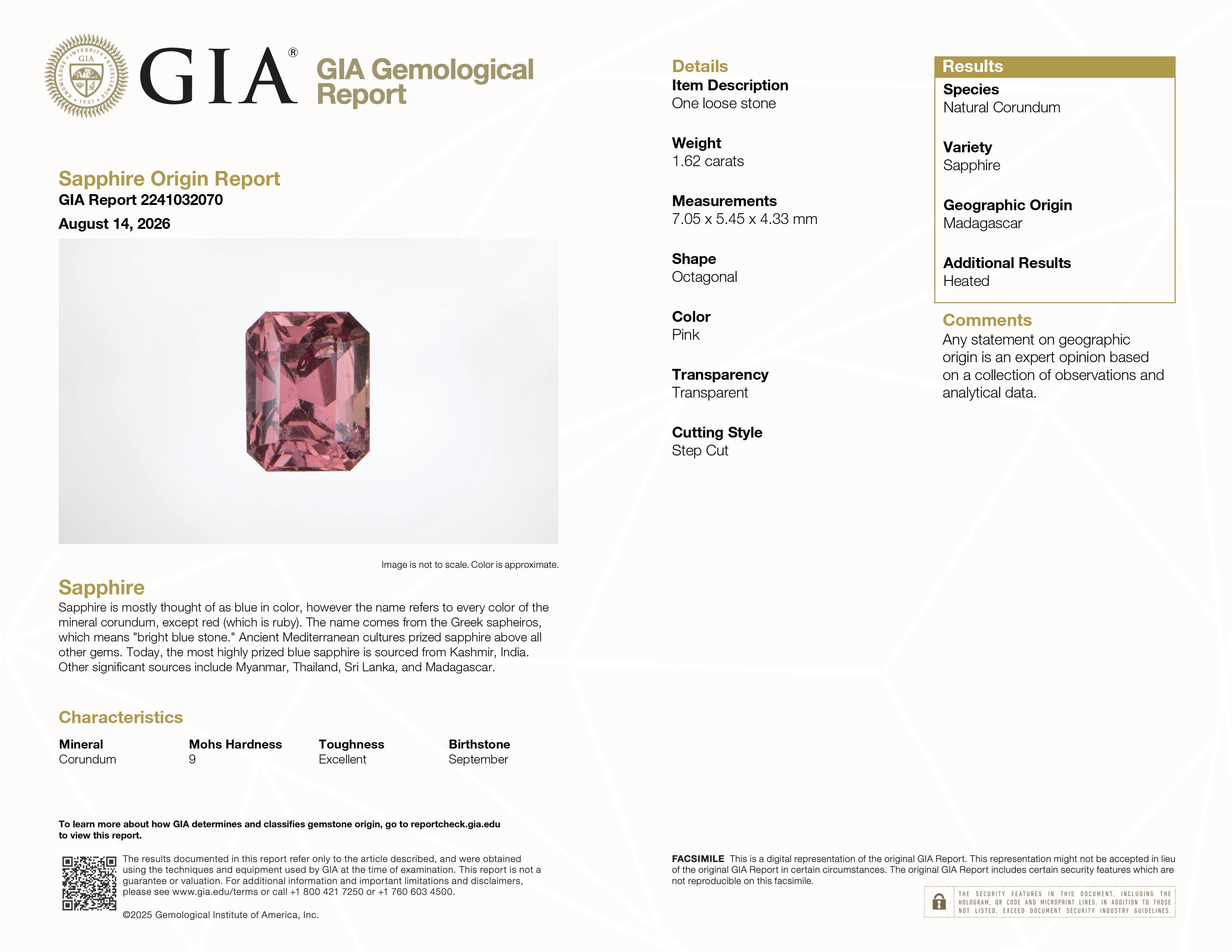
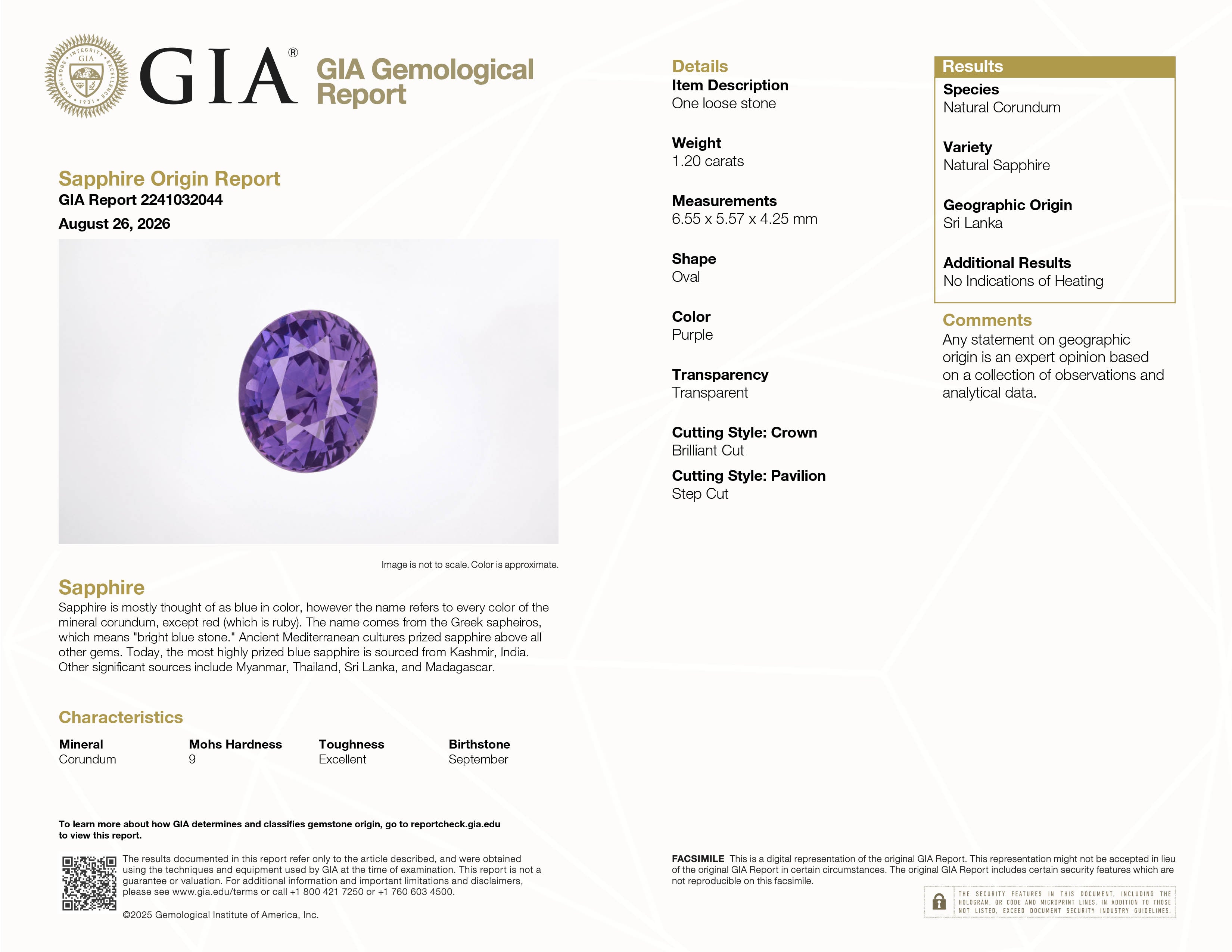
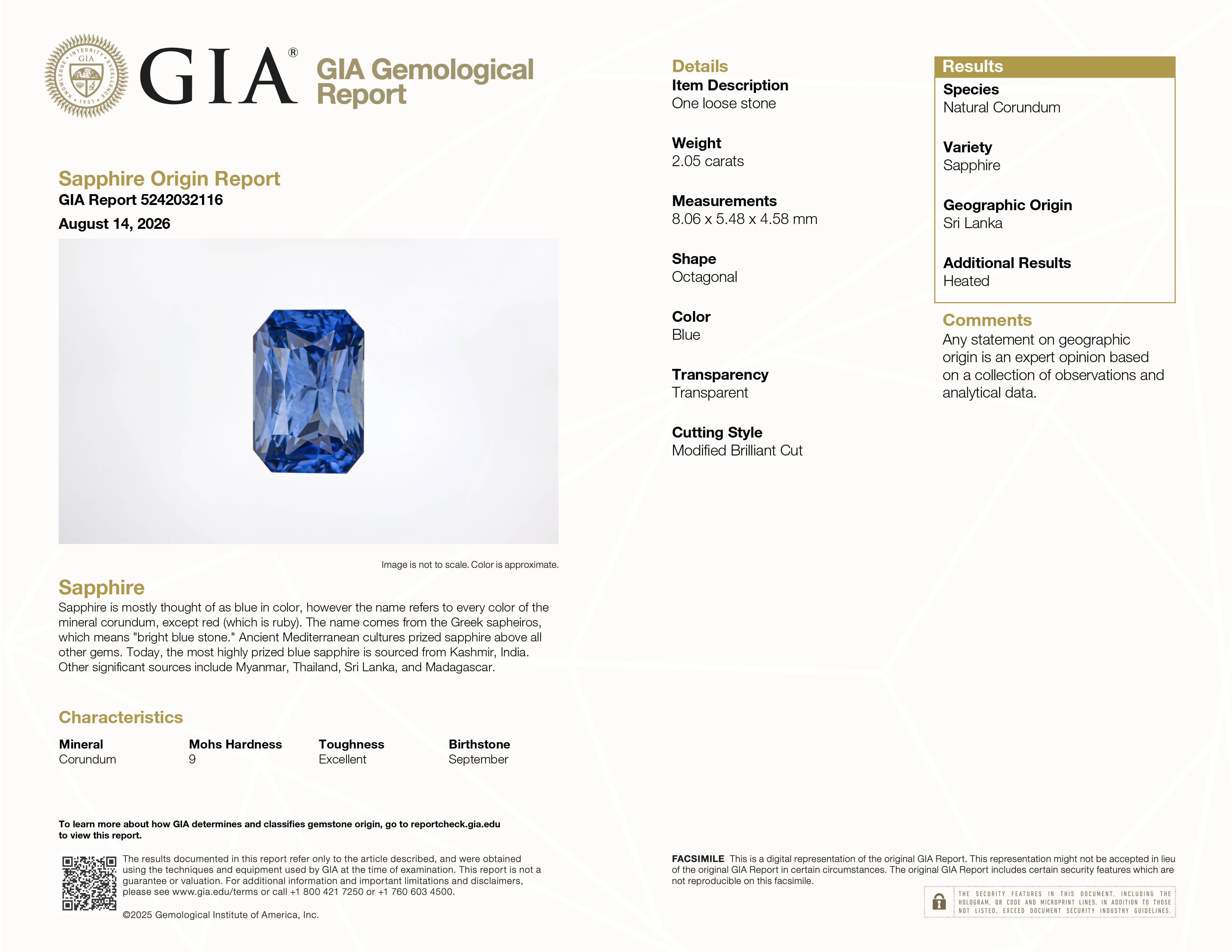
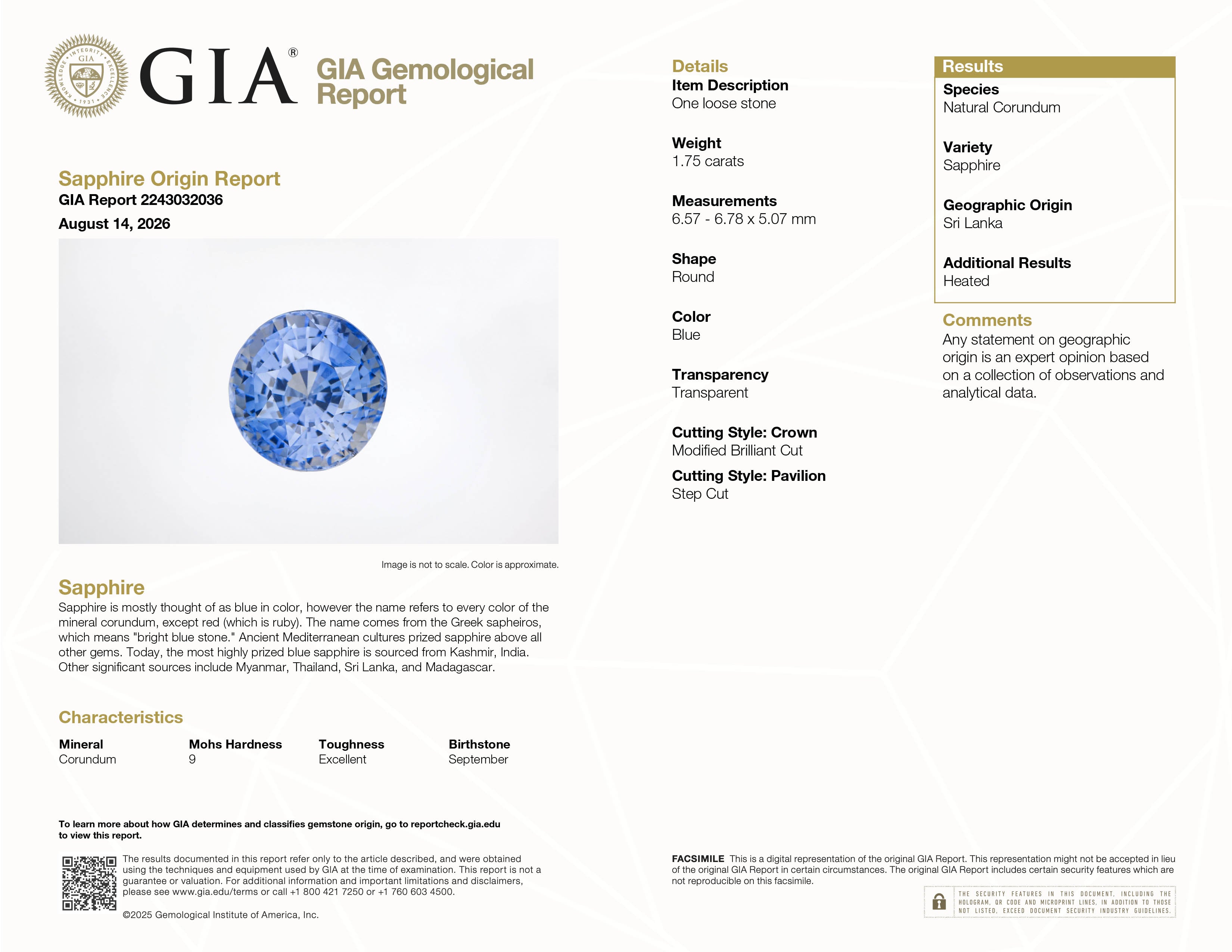
A depth percentage is not a laboratory field. A GIA colored-stone report prints the stone’s measurements in millimeters; it does not print a depth percentage.
Rather than quote trade bands we cannot source, we measured our own stock. Every percentage on this page is our own arithmetic, computed from the millimeter measurements recorded on our product listings, covering every stone in each collection that carries a three-figure measurement, as listed on 15 November 2026. In the table below, the oval, emerald-cut and cushion rows are depth ÷ width and the round row is depth ÷ average diameter. Ninety-two stones in all.
| Collection | Stones measured | Depth range | Median depth | Stones above 75% |
|---|---|---|---|---|
| Oval | 31 of the 32 listed | 58–95% | 76.0% | 17 |
| Round brilliant | 22 of the 23 listed | 54–80% | 66.1% | 4 |
| Emerald cut | 13 of the 13 listed | 56–92% | 71.9% | 4 |
| Cushion | 26 of the 26 listed | 58–94% | 74.5% | 12 |
Ranges are rounded outward to whole percent so that the published range is never tighter than the measured one. The two stones left out are the ones whose listing records two millimeter figures rather than three, so no depth can be computed for them.
Two things follow. First, the spread inside a single shape is wide: our ovals run from 58% to 95%, so the word oval on its own tells you nothing about how high the ring will sit. Second, two of the four medians sit above 74%. What a deeper stone does to ring height, and the questions to ask about it, are set out below.
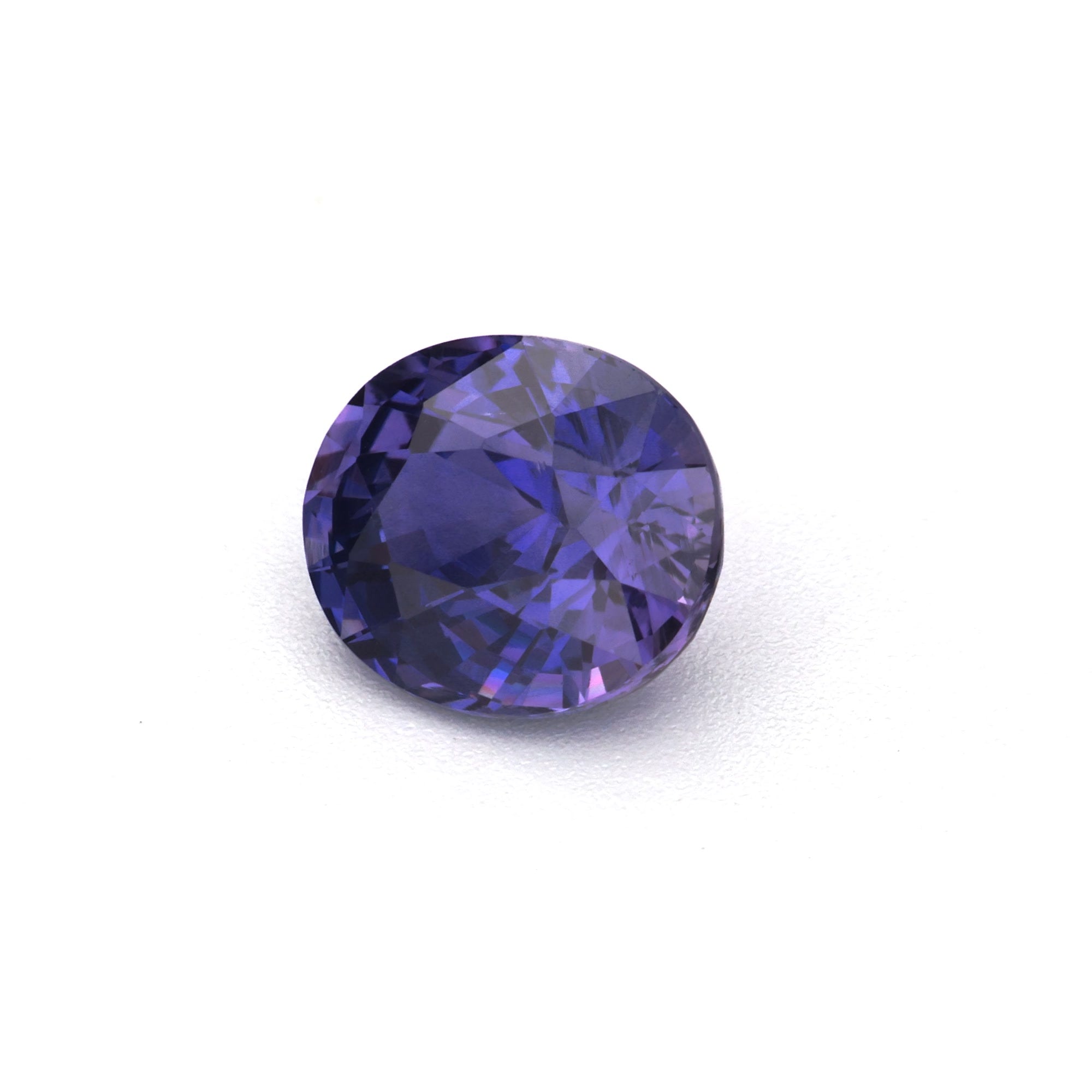
A well-cut oval sapphire at the shallow end of the range gives a wide face for its depth, and the elongated outline lies along the finger. Four of the 31 ovals we list measure 65% depth or less. The shallowest measures 7.05 × 5.00 × 2.92 mm — 58.4% on our arithmetic, and 2.9 mm of stone from table to culet.
Two of our ovals show what depth costs. That stone and another at 7.03 × 5.06 × 3.82 mm (75.5%) have almost the same face-up footprint, and the second is 0.9 mm deeper overall, which the setting has to accommodate. How much of that ends up above the band is the setter’s work rather than the stone’s.
The practical note: shallower ovals can show more windowing — a transparent pale zone face-up — if the pavilion angles are compromised. With correct pavilion angles a shallow oval can sit low and still return light across the face, so request face-up video. See our cut quality guide.
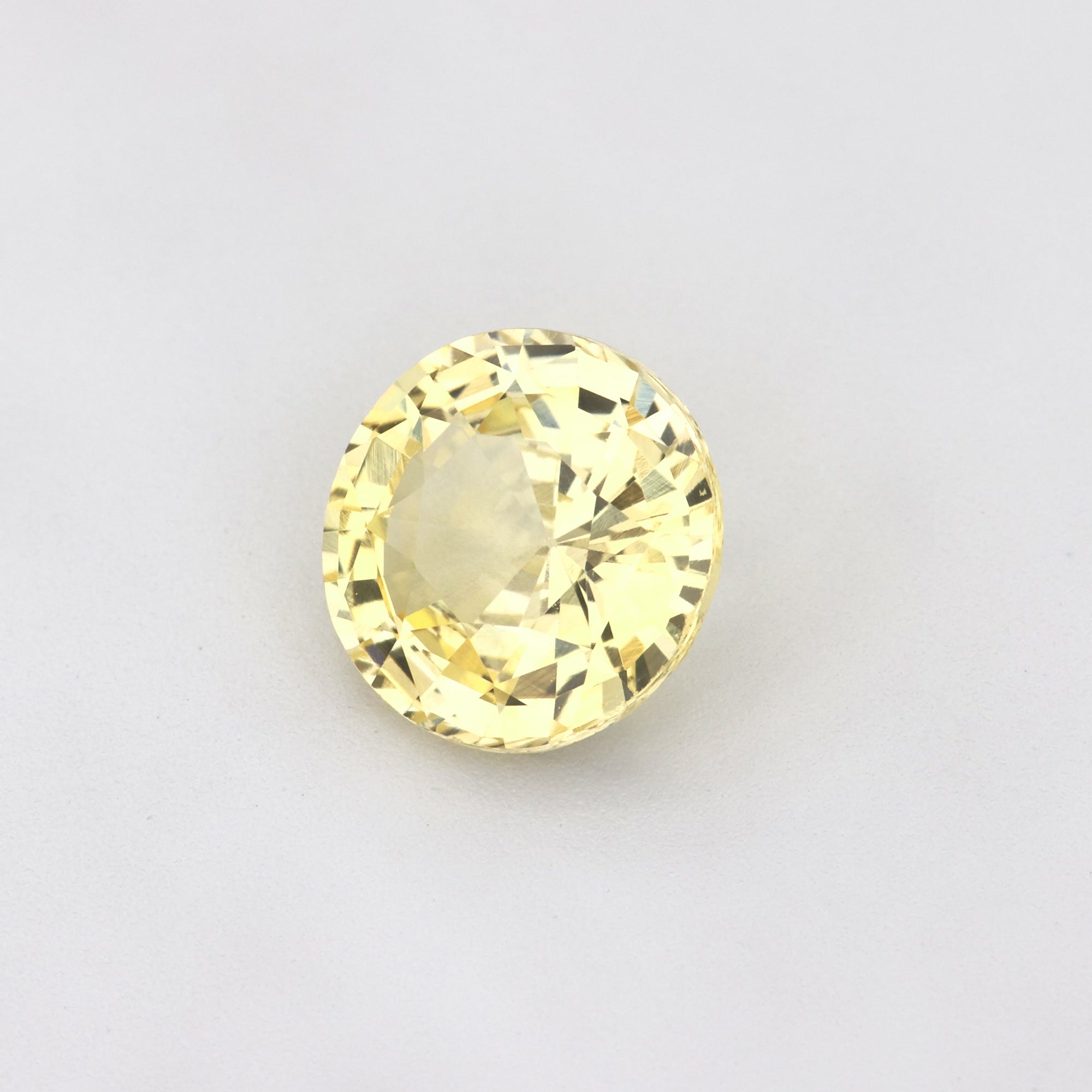
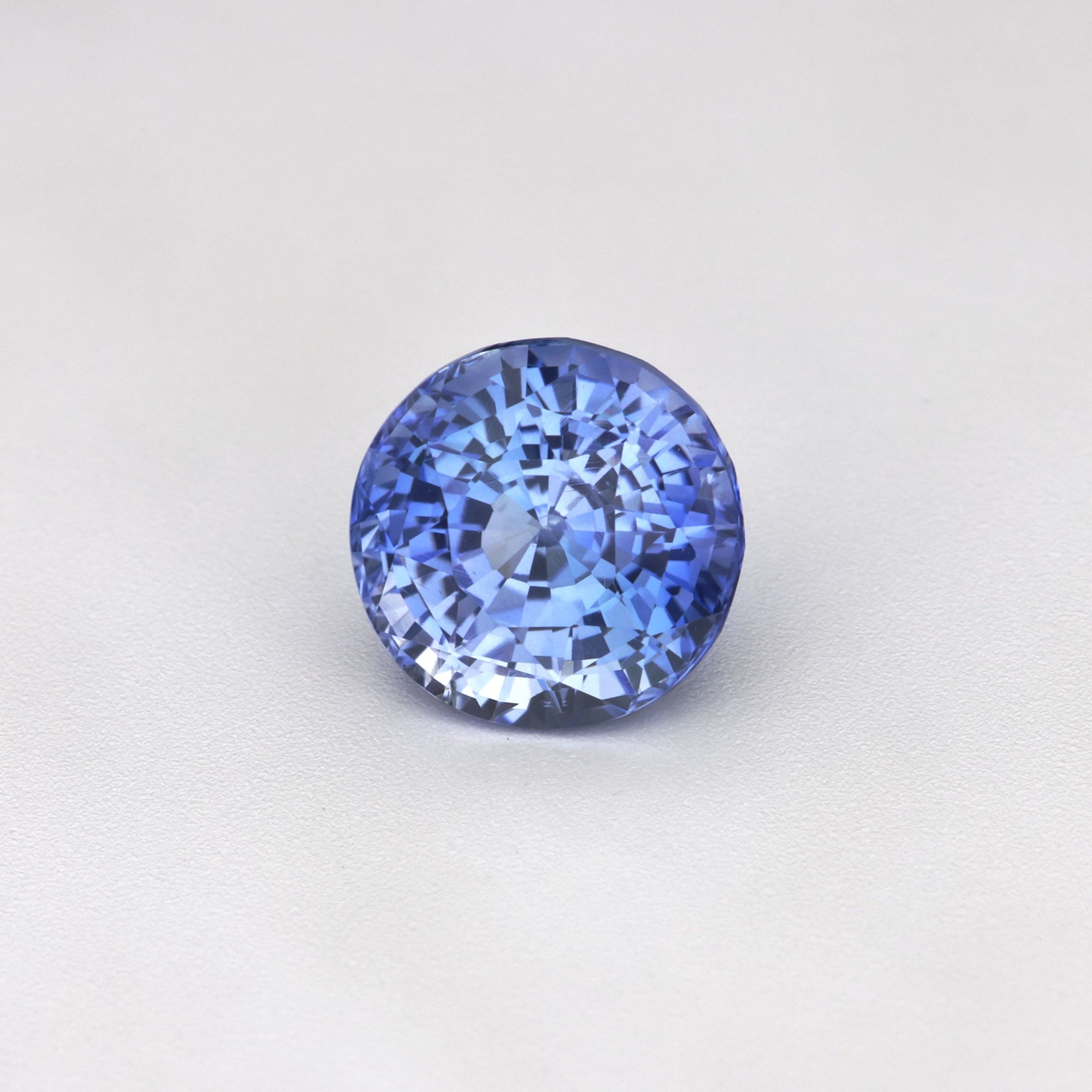
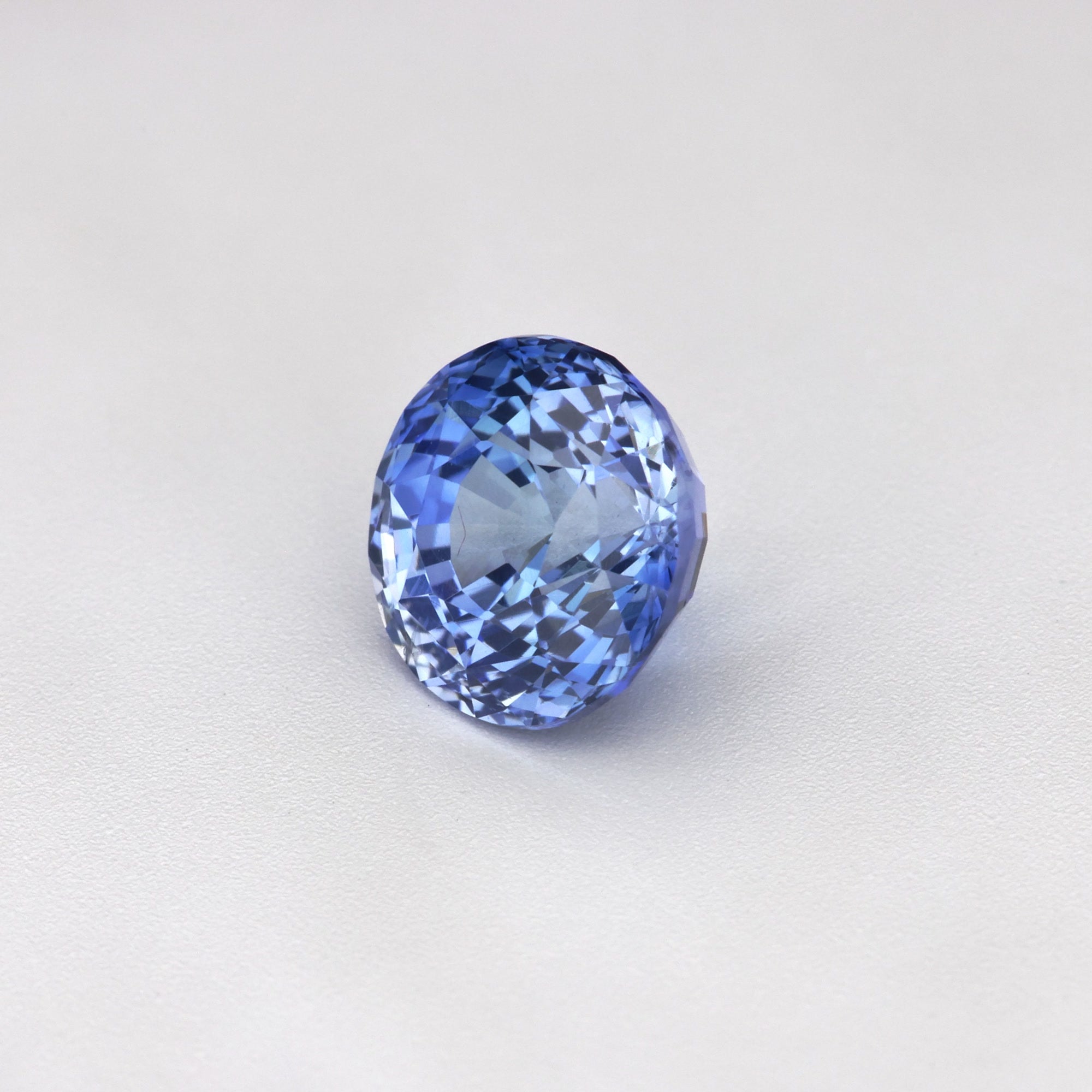
Of the four shapes we measured, the rounds have the lowest median and the narrowest spread: 22 stones, 54% to 80%, median 66.1%. The shallowest round sapphire we list measures 7.40 × 7.34 × 4.00 mm — 54.3% on depth ÷ average diameter, so 4.0 mm of stone on a face 7.4 mm across. A round outline also has no corners, so nothing on the stone has to be covered by a prong that rises above the girdle.
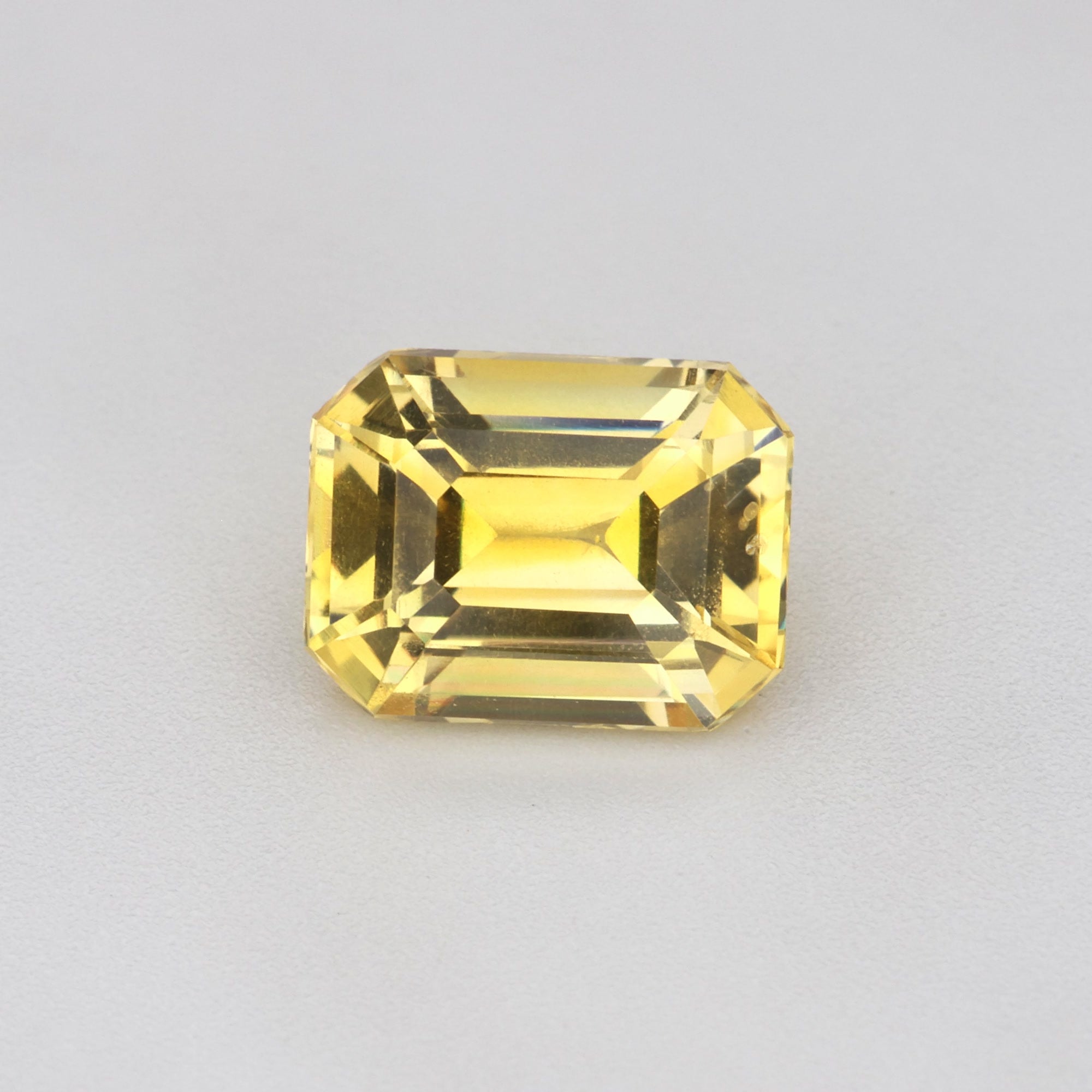
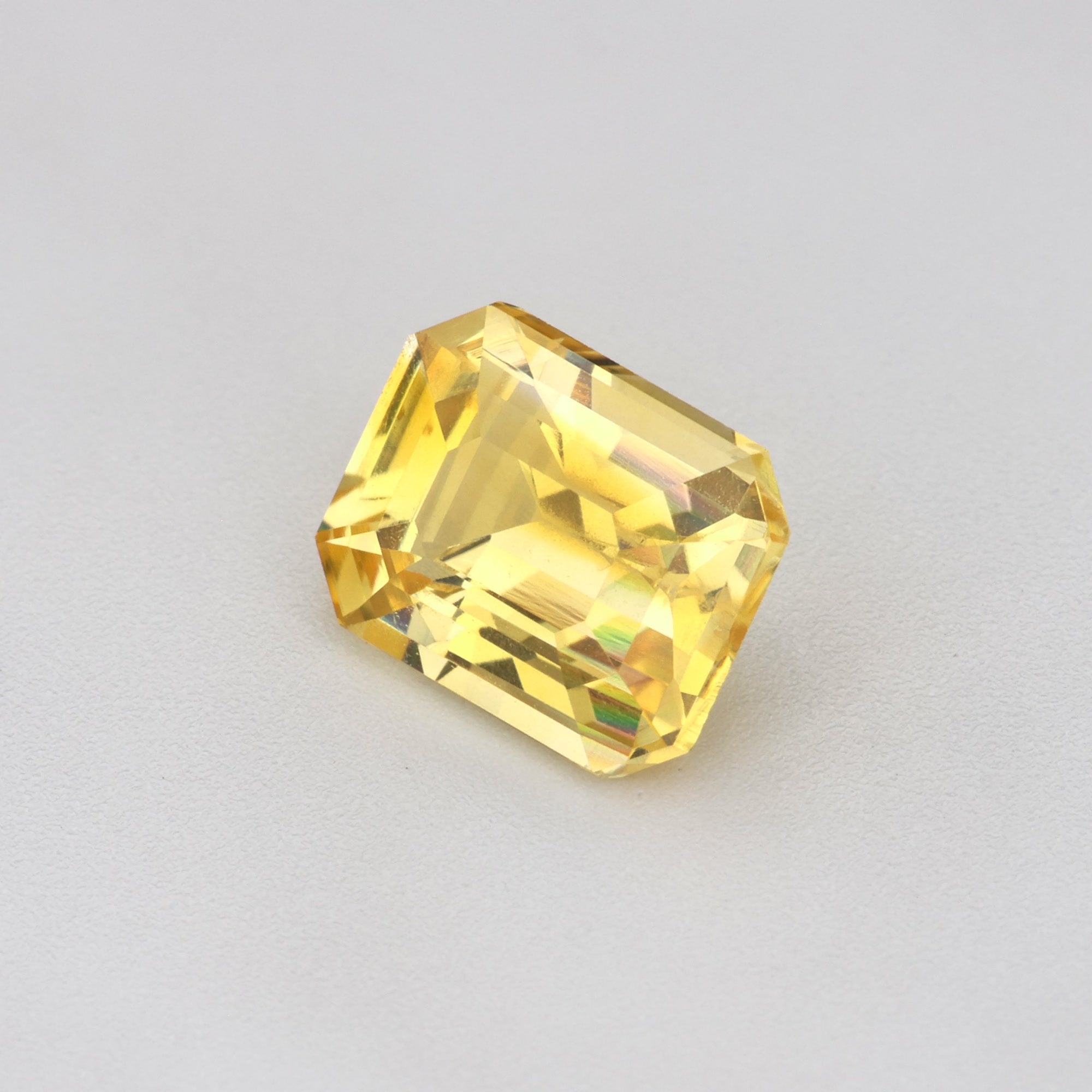
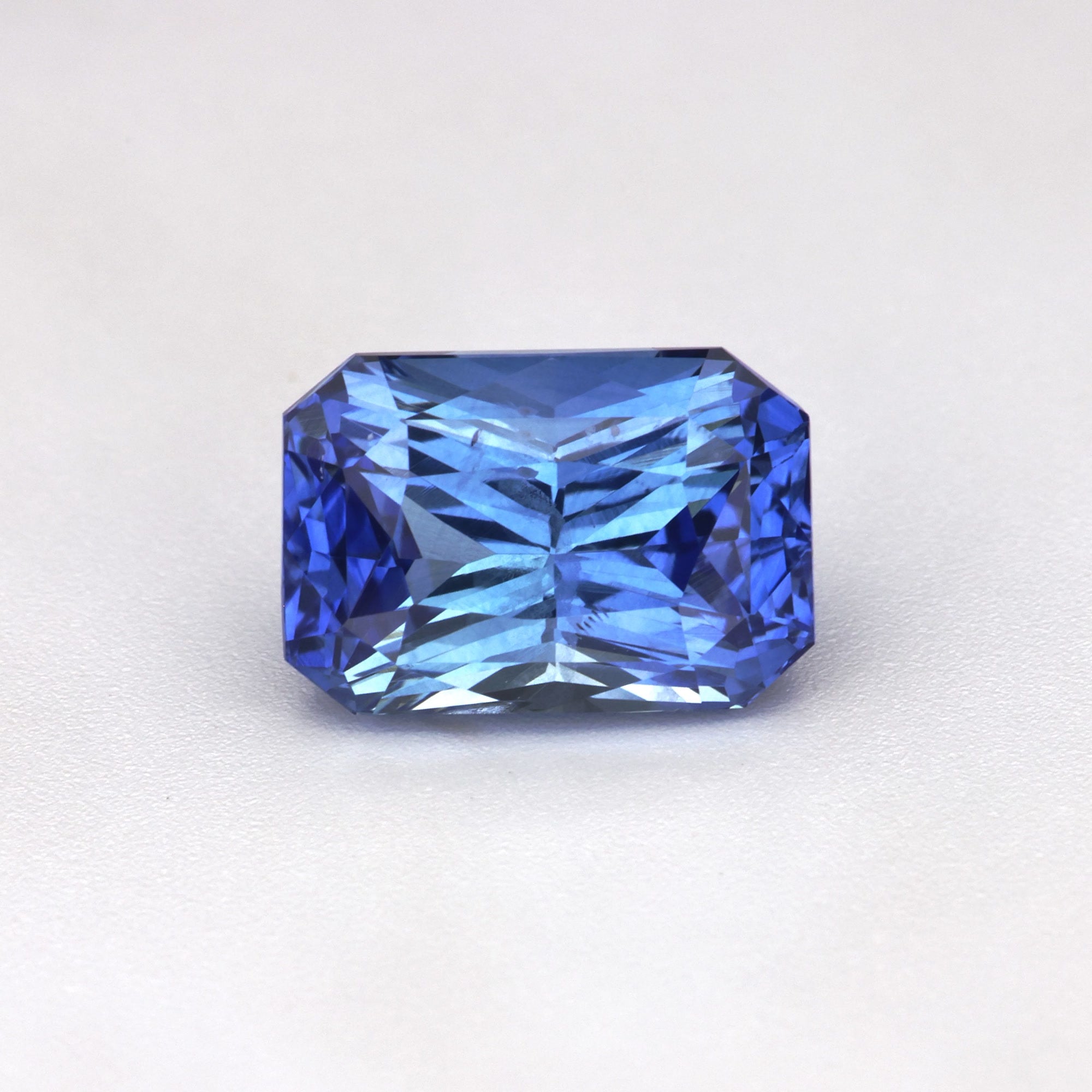
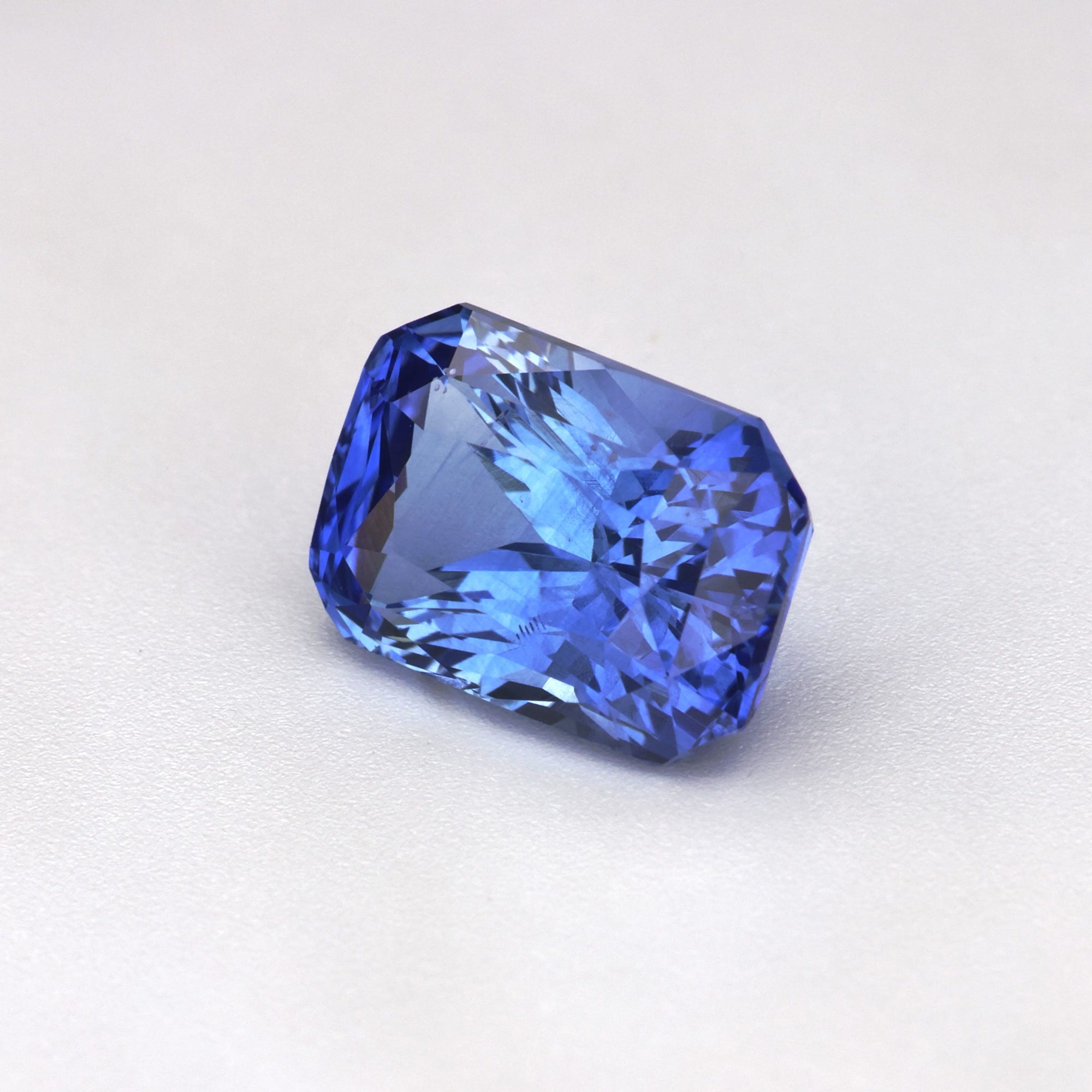
The emerald cut’s large flat table facet and step-cut pavilion put more of the stone’s total depth in the crown, above the girdle, than a brilliant cut does, so the same total depth is distributed differently. The rectangular outline lies flat along the finger, and the flat sides make a more table-like silhouette than a rounded outline does. Our 13 listed emerald cuts measure 56% to 92% depth, median 71.9%. Browse our emerald cut sapphire collection.
A well-cut cushion sapphire at the shallow end of its range can be set in a low-profile configuration, and the cushion’s rounded corners are less likely to snag than a pointed or sharp-cornered outline. Our own measurements do not support the usual claim that cushions run deeper than ovals: across the 26 cushions we list the median is 74.5%, against 76.0% across 31 ovals. The cushion range is wide in both directions — 58% to 94% — so the shape name does not tell you where a particular stone sits. Browse our cushion sapphire collection.
The rest of this section is our own view. No laboratory publishes guidance on settings, so what follows is what we would choose, not a finding from a report.
Bezel setting: the stone sits inside a metal rim rather than being lifted above the band by prongs, and the rim surrounds the girdle. Of the low-profile options this is the one we would choose. We do not publish a head height for it: that figure belongs to the setter and the individual stone, and we would rather you asked for it than took ours. See our bezel ring guide.
Low-profile prong head: heads built with short prongs and a low base plate that sits close to the band reduce overall ring height compared with a standard head. Ask your jeweler for a low-profile setting head explicitly; it is not what a stock head gives you.
Flush or channel setting for accent stones: if the ring has accent diamonds or a pavé band, flush or channel-set accents remove the additional height that prong-set accents add at the edges of the band.
Half-round or flat band: a flat or half-round band profile, rather than a high-domed one, keeps the total ring height lower by reducing the band’s own contribution to the above-finger profile.
Settings we would not choose here: cathedral and tall solitaire settings deliberately elevate the stone for maximum light exposure. They are the opposite of low-profile — they lift the stone further above the band than its own depth requires. For more on setting design see our custom ring design guide.
A deeper stone is not a worse stone. Depth is where the weight is: two sapphires with the same face-up outline can differ in carat weight because one is cut deeper than the other. What depth costs is height. The stone has to sit somewhere, and the deeper it is, the more of it the setting has to place either above the band or against the finger. That is a trade-off rather than a verdict.
What to ask before you buy: the length, width and depth in millimeters; which convention any quoted depth percentage uses; and, once a setting is chosen, the head height the setter expects. We will send the millimeter measurements for any stone we list — email crescentgems@gmail.com, and we reply within one business day.
It is a ring whose head lifts the stone as little as the stone’s own depth allows. There is no standard measurement for the term that we are aware of, so we do not quote a threshold.
In terms of daily wear security, yes — a lower-profile ring is less likely to receive direct impacts to the stone because it protrudes less above the finger. However, low-profile rings where the stone sits very close to the finger can expose the girdle to sidewall impacts. Which of the two matters more depends on how the ring is worn, and we would not claim that any one configuration removes the risk. See our ring care guide for cleaning and storage.
Browse our oval and round sapphire collections.

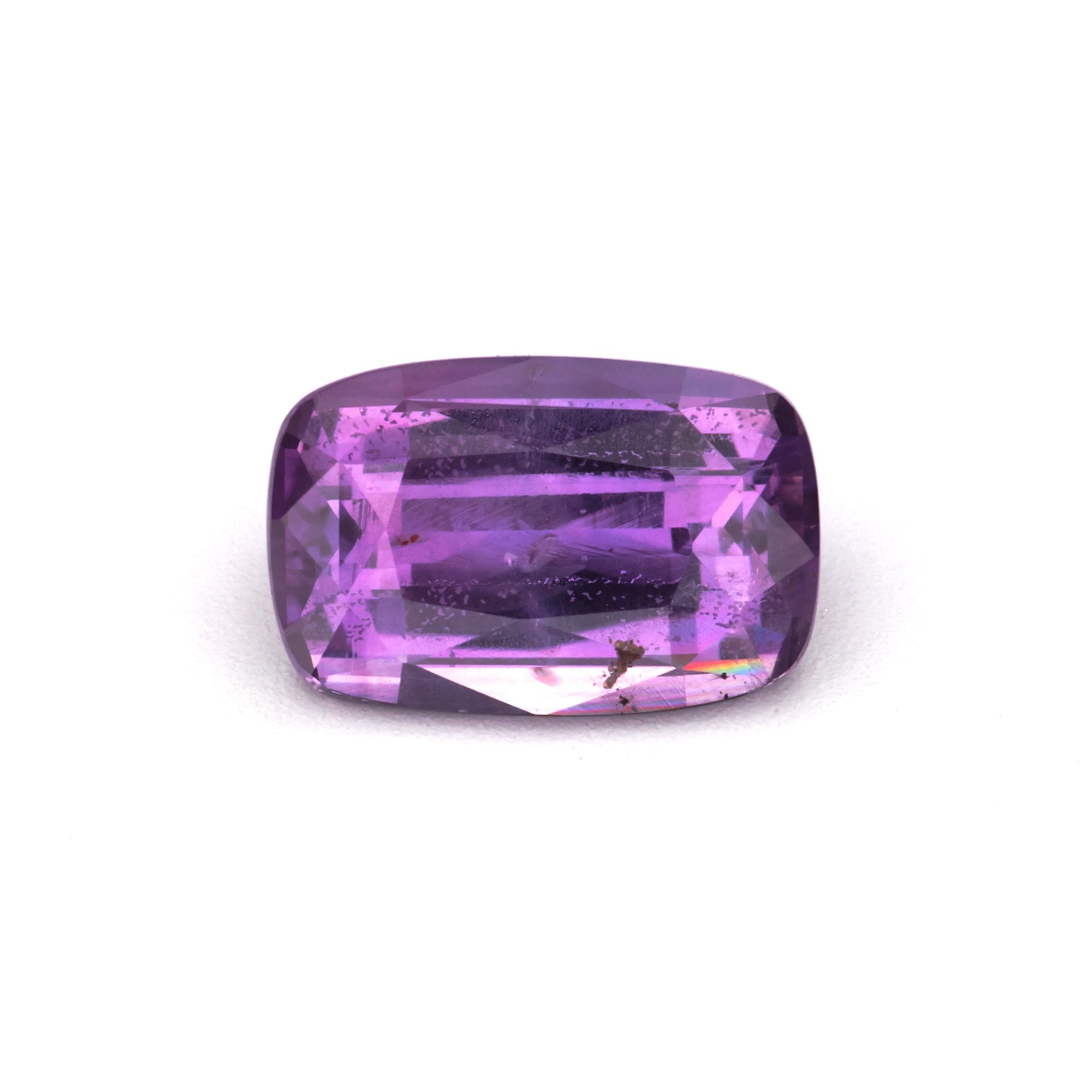
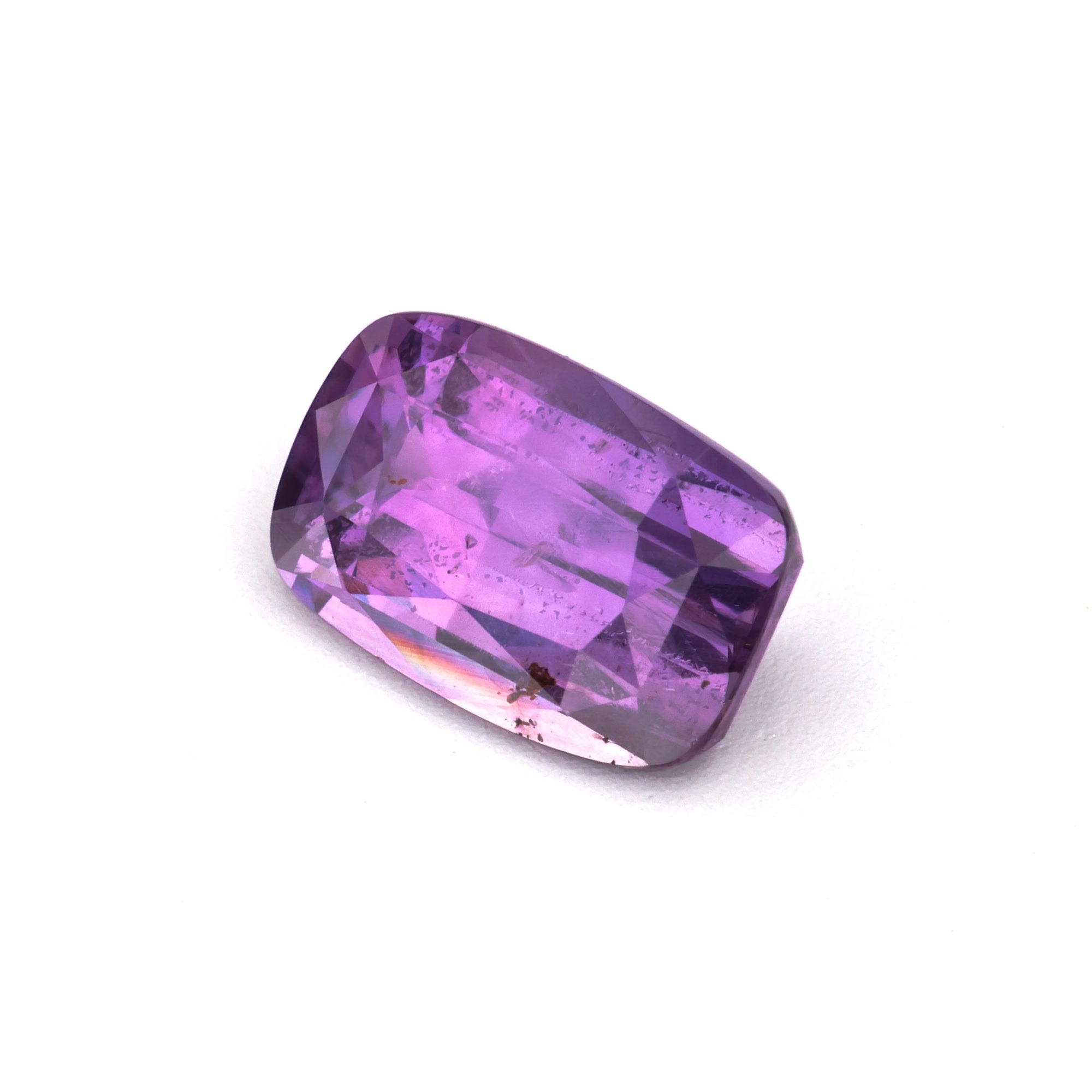
CG8465
CG8463
CG8460
CG8456


Blue Star Sapphire Price Guide — What They Cost and Why
Read moreabout Blue Star Sapphire Price Guide — What They Cost and Why
Tsavorite Garnet Price Guide — What They Cost and Why
Read moreabout Tsavorite Garnet Price Guide — What They Cost and Why
Color-Change Sapphire Price Guide — What They Cost and Why
Read moreabout Color-Change Sapphire Price Guide — What They Cost and Why
Is Cat's-Eye Chrysoberyl Good for an Engagement Ring?
Read moreabout Is Cat's-Eye Chrysoberyl Good for an Engagement Ring?
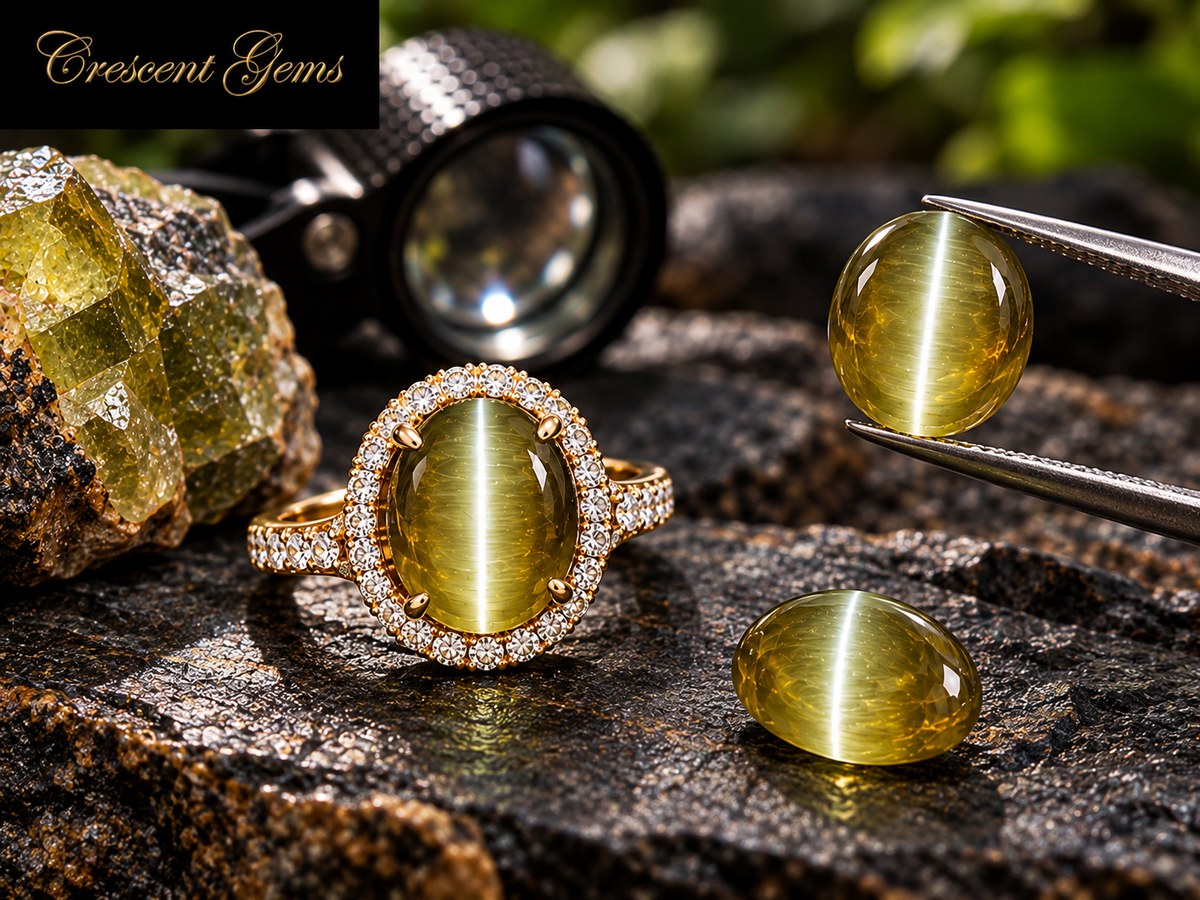
Cat's Eye Chrysoberyl Price Guide — What They Cost and Why
Read moreabout Cat's Eye Chrysoberyl Price Guide — What They Cost and Why















Share: