- by Ahmed Shareek
How Gemstones Are Formed: The Geology Behind Sapphires, Chrysoberyl, and Ceylon's Gem Deposits
- by Ahmed Shareek
Curious about Ceylon's gem deposits? Read our Ceylon Sapphire Complete Guide. For how miners reach the gems: Pit Mining in Sri Lanka and River Bed Mining in Sri Lanka.
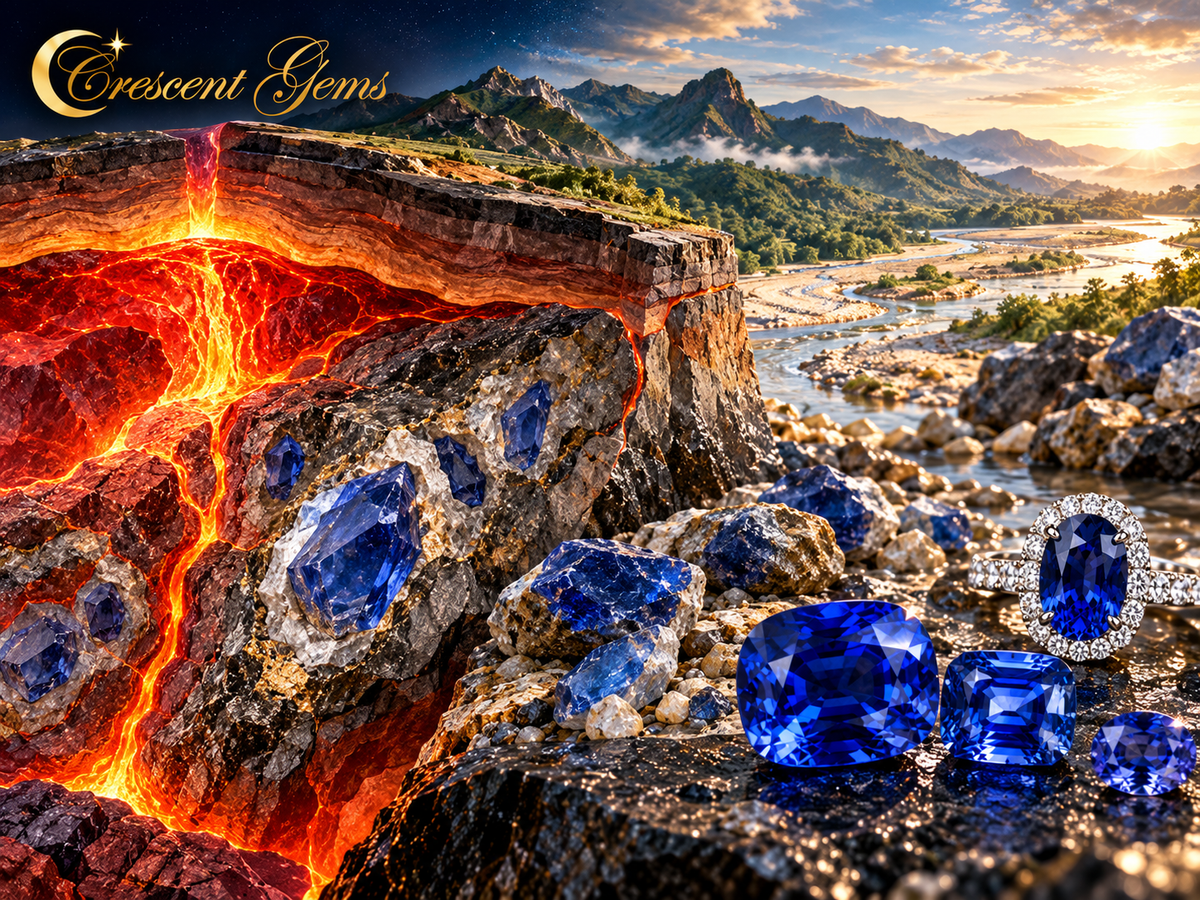
The sapphires, spinels, chrysoberyls, and garnets that come out of Sri Lanka's rivers and mine shafts are not recent creations. They formed between 500 and 600 million years ago — during the tectonic assembly of the ancient supercontinent Gondwana, when vast sections of continental crust were buried, heated, compressed, and chemically transformed at depths of 20–40 kilometers beneath what is now the Indian Ocean region. The geological events that produced Ceylon's gems predate the dinosaurs by hundreds of millions of years. The gems themselves are older than any living thing on earth today.
Understanding how gemstones form matters for buyers and collectors beyond geological curiosity. It explains why specific regions produce specific gems and not others. It explains why certain inclusion types point to certain origins. It explains why an unheated stone's color is a record of where it grew: the trace-element chemistry was set by the host rock, and growing corundum in a laboratory does not reproduce a host rock. And it is the scientific foundation for the origin opinions a gem laboratory is able to express at all. This guide covers the geology from first principles: what conditions create corundum, what gives sapphire its color, why Sri Lanka is so gem-rich, how gems travel from primary rock to alluvial gravel, and how different gem species form in relation to each other in the same deposit.
A gemstone is a mineral crystal — a solid substance with a specific chemical formula and an ordered internal atomic structure — that formed under conditions of high temperature, high pressure, or both, deep within the earth or in special geological environments at or near the surface. What distinguishes gem minerals from common rock-forming minerals is a combination of rarity, durability, and optical properties: hardness high enough to resist scratching from everyday materials, transparency or translucency that allows light interaction, and chemical stability over geological time.
Most of the earth's crust is composed of silicate minerals — quartz, feldspar, mica, pyroxene — which are abundant, geologically ubiquitous, and generally too soft or too common to be commercially significant as gemstones. Gem minerals form in specific geological environments where unusual chemical conditions allow the crystallization of less common mineral species. Corundum (sapphire and ruby), for example, requires aluminum-rich, silica-poor conditions that are unusual in the crust. Beryl (emerald, aquamarine) requires the co-occurrence of beryllium — an element that is rare in most crustal rocks. Spinel requires both magnesium and aluminum in a specific ratio. These unusual requirements are precisely why gem minerals are rare.
Corundum (Al₂O₃) — the mineral species that includes both sapphire and ruby — forms in three principal geological environments. Each produces corundum with a distinctive inclusion chemistry and trace element profile that gemological laboratories weigh when they form a geographic origin opinion:
This is the environment in which Sri Lanka's sapphires crystallized. Metamorphic rocks form when pre-existing rocks are subjected to high temperature and pressure — typically through deep burial during mountain-building events — without fully melting. The original minerals recrystallize into new mineral assemblages appropriate to the new pressure-temperature conditions.
Corundum crystallizes in high-grade metamorphic rocks when the aluminum content of the original rock is high and the silica content is low. If silica were present, it would react with aluminum oxide to form feldspar rather than allowing corundum to crystallize. The rocks most conducive to corundum formation include aluminous gneisses, granulites, and marbles. The conditions required — temperatures above 600°C and pressures above 5 kilobars, typically at crustal depths of 20–40km — are achieved during regional metamorphism associated with continent-continent collision events.
The key characteristic of metamorphic corundum for gemologists: it contains solid mineral inclusions that reflect the metamorphic mineral assemblage of the host rock — zircon, apatite, rutile, feldspar, calcite (in marble-hosted material). These inclusions are among the primary things GIA and Gübelin examine when they form a geographic origin opinion. See our How to Read Sapphire Inclusions guide.
Corundum also forms in igneous environments — rocks that crystallized from molten magma. Two magmatic settings matter for gem corundum:
Where hot igneous bodies intrude into carbonate (limestone or marble) rocks, a contact aureole forms — a zone of chemical and thermal alteration at the boundary between the two rock types. Corundum can crystallize in this zone when the carbonate rocks are contaminated with alumina from the intrusion. Contact metamorphic corundum is found in several deposits globally, including some Burmese (Mogok) localities where corundum occurs in marble with characteristic calcite inclusions — an inclusion type a laboratory weighs when it forms an origin opinion on marble-hosted material.
| Formation Environment | Temperature / Pressure | Typical Inclusion Types | Key Origins | Typical Iron Content |
|---|---|---|---|---|
| High-grade regional metamorphic | 600–900°C / 5–15 kbar | Zircon (with halos), rutile silk, apatite, feldspar | Sri Lanka, Kashmir, Madagascar (metamorphic zones) | Lower iron |
| Basaltic / alkali basalt hosted | High T; low P (near-surface) | Few inclusions; iron-rich; no silk | Australia, Thailand, Cambodia, Vietnam | Higher iron |
| Contact metamorphic (marble-hosted) | 400–700°C / 2–6 kbar | Calcite, dolomite, phlogopite, amphibole | Burma (Mogok), some Afghanistan | Chromium-bearing; lower iron |
| Pegmatitic | Variable; late magmatic | Feldspar, mica, tourmaline | Various localities worldwide | Variable iron and chromium |
Pure corundum (Al₂O₃) is completely colorless. The extraordinary range of sapphire colors — blue, pink, yellow, orange, teal, violet, green, and colorless — is produced entirely by trace amounts of other elements that substitute for aluminum in the crystal lattice or occupy interstitial positions. The concentration of these trace elements is determined by the specific chemical environment in which the crystal grew.
| Color | Chromophore (color-causing element) | Mechanism | Geological Requirement |
|---|---|---|---|
| Blue | Iron (Fe²⁺) + Titanium (Ti⁴⁺) | Intervalence charge transfer between Fe²⁺ and Ti⁴⁺ pairs absorbs orange-yellow light, transmitting blue | Both Fe and Ti must be present in the source rock; metamorphic environments with Fe-Ti mineral phases |
| Pink / Red (ruby) | Chromium (Cr³⁺) | Cr³⁺ absorbs blue-green and yellow-green light, transmitting red and some blue; ratio of Cr to Fe determines pink vs. red | Chromium-bearing metamorphic rocks; marble-hosted environments particularly favorable for Cr enrichment |
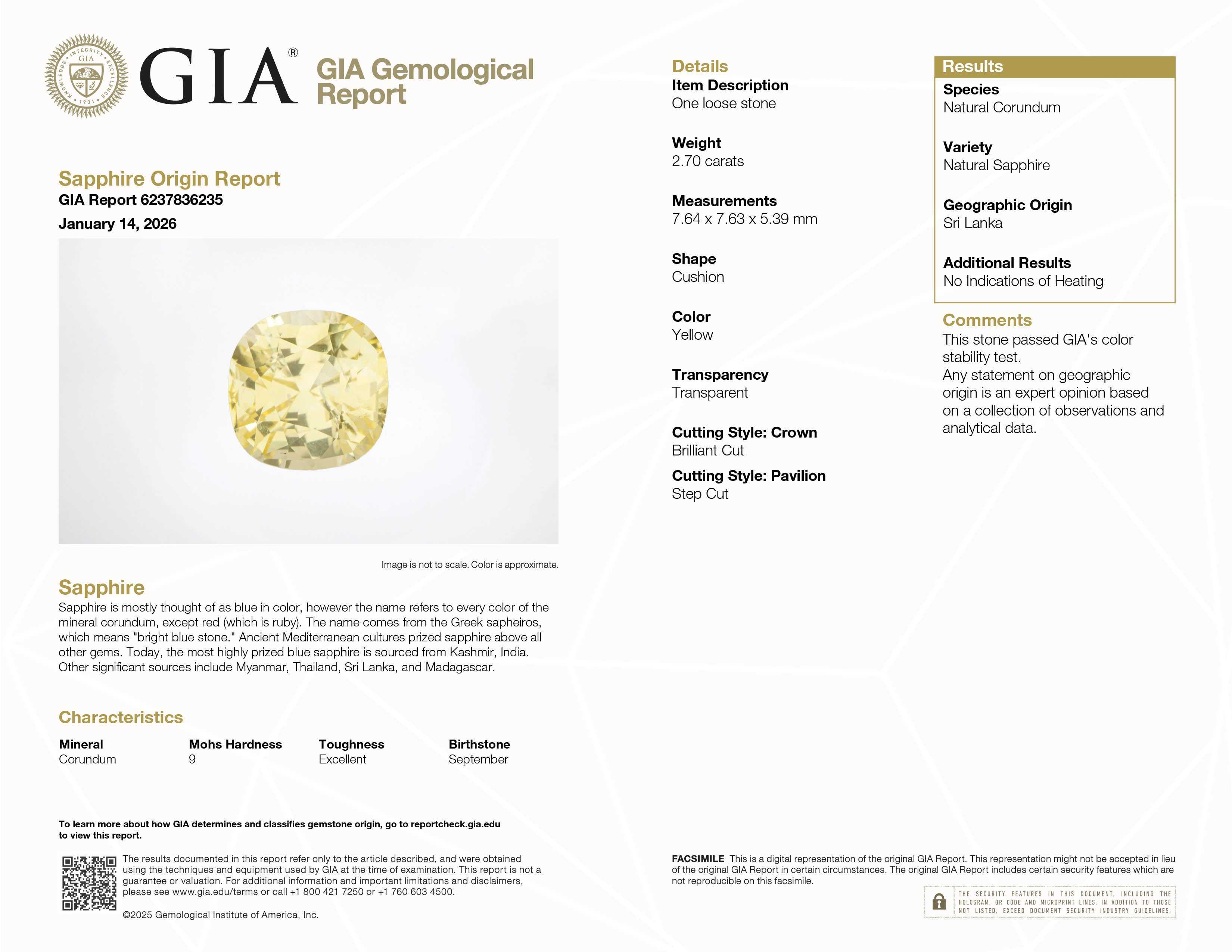
| Yellow | Iron (Fe³⁺) | Fe³⁺ in specific lattice positions absorbs violet and blue light, transmitting yellow | Oxidizing metamorphic environment; elevated iron in source rocks |
| Pinkish orange to orangey pink | Chromium (Cr³⁺) + Iron (Fe) | Combined Cr and Fe color centers; the balance between them sets how far the hue sits between pink and orange | Requires both Cr and Fe together; an uncommon combination in a single growth environment |
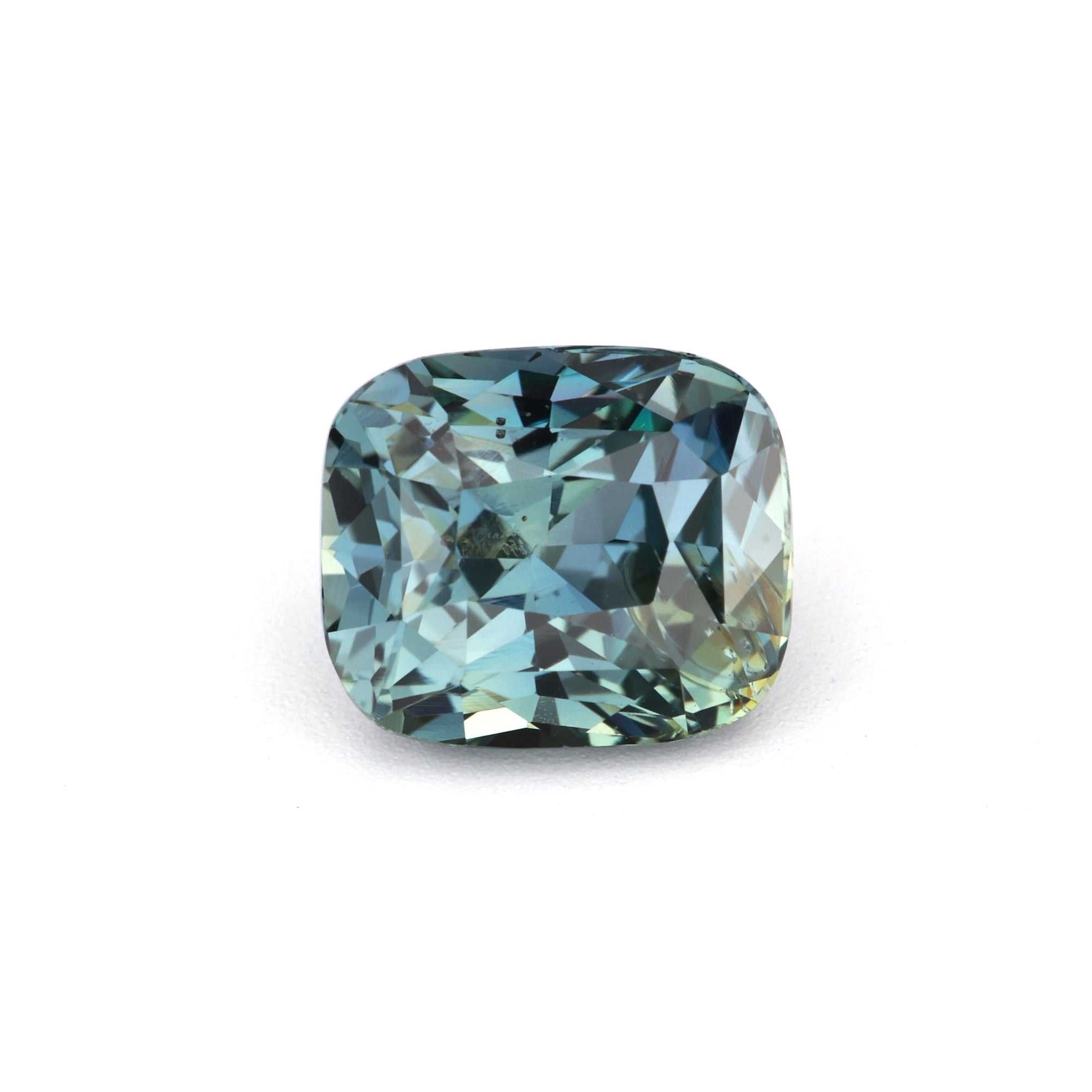
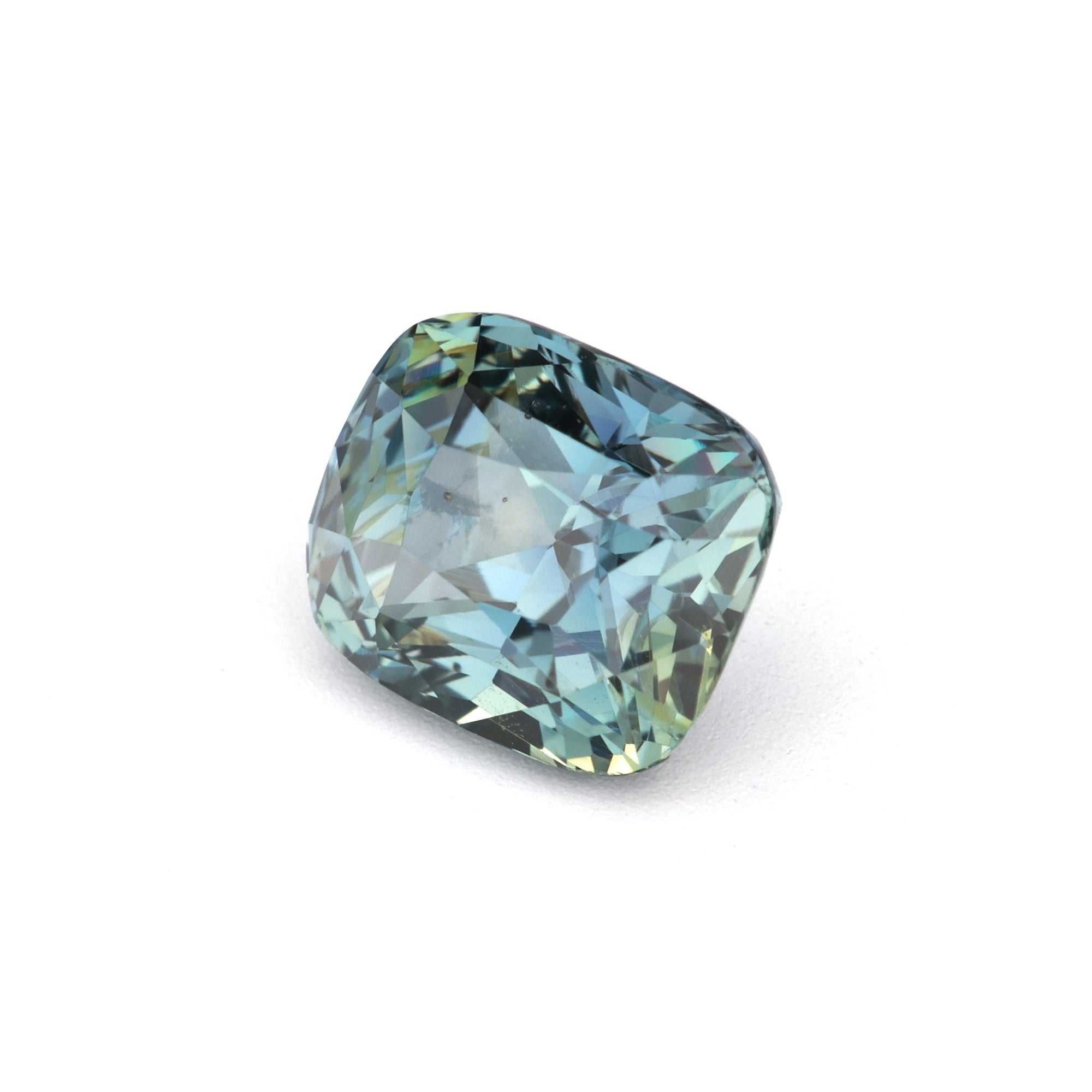
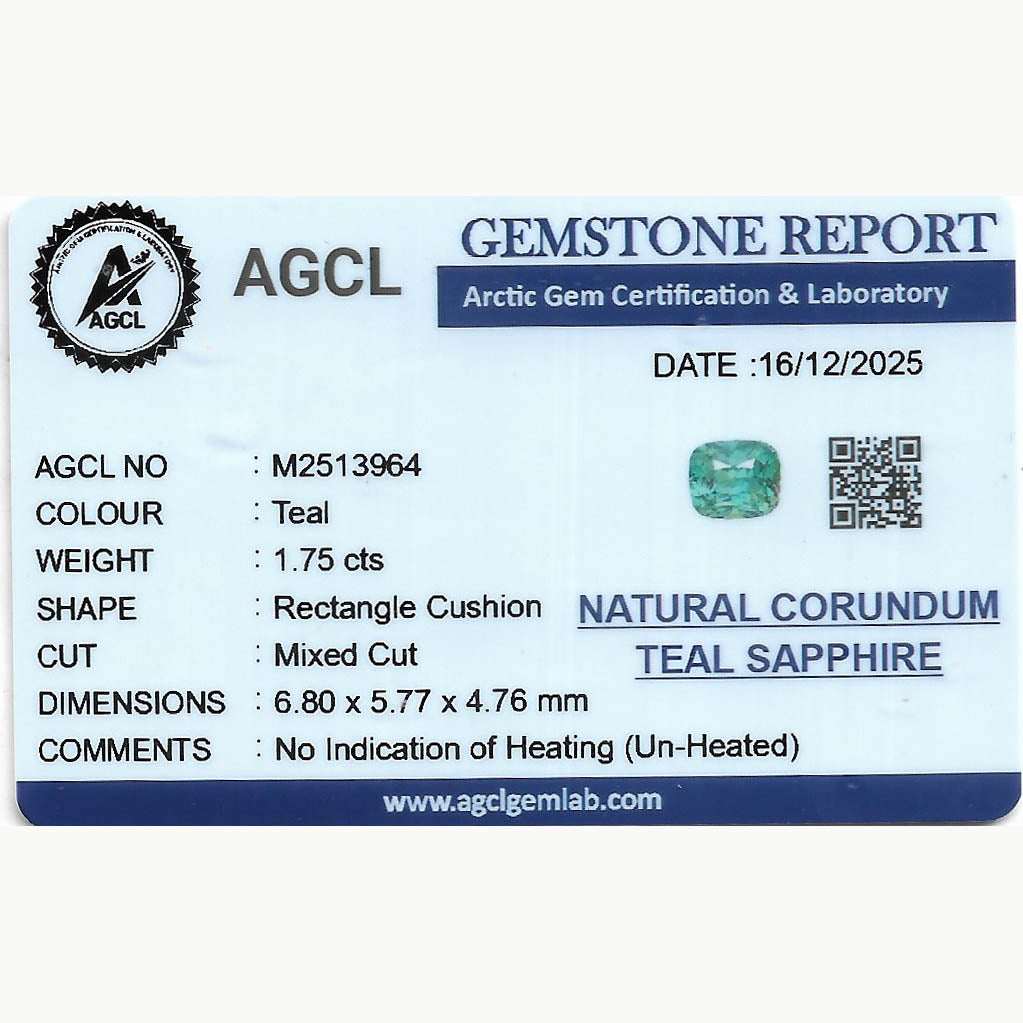
| Teal / Blue-green | Iron (Fe) + minor additional modifiers | Fe in multiple oxidation states produces blue-green combination; heat-sensitive balance | Specific Fe redox conditions during metamorphism; common in certain Sri Lanka zones |
| Violet / Purple | Vanadium (V³⁺) | V³⁺ absorbs selectively to produce violet; may be modified by Fe | Vanadium-bearing source rocks; specific metamorphic chemistry |
| Colorless (white sapphire) | None — pure Al₂O₃ | No significant trace elements present; complete transmission across visible spectrum | Very low trace element environment; unusual |
| Star sapphire (any color) | Same as body color + rutile | Dense rutile silk needles oriented along crystal axes diffract light into six-rayed star (asterism) | High rutile content in source; slow crystal growth allowing silk development |
One sapphire color name is defined by laboratories rather than by chemistry: padparadscha. LMHC Information Sheet #4 describes it as "a subtle mixture of pinkish orange to orangey pink with pastel tones and low to medium saturations", and the laboratories that adopted that sheet — GIA, Gübelin and SSEF among them — apply that description to the stone in front of them. Chromium and iron together are what make a hue in that region possible, but the term itself is a laboratory color definition, not a chemical outcome. We have no padparadscha in stock.
This chemistry has a direct practical consequence: the specific color a sapphire develops follows from the geological environment where it grew, and that in turn follows from which trace elements were available in the source rocks during crystallization. A teal sapphire from Sri Lanka got its teal color because the chemical environment of its host metamorphic rock contained iron in the particular oxidation states that produce it. The growth history that set that chemistry happened once and is not repeated afterwards, which is why an unheated stone's color and a heated stone's color have different histories. See our Sapphire Colors Explained guide and How Sapphire Heat Treatment Works for the full context.
Sri Lanka yields an unusual number of different gem species from a single geological unit. The reason is a specific combination of geological factors that converged on this relatively small island:
The primary source of Sri Lanka's gem wealth is a Precambrian metamorphic terrain called the Highland Complex — ancient continental crust composed of high-grade metamorphic rocks (granulites, gneisses, marbles, and charnockites) that formed during the Pan-African orogenic event approximately 560–600 million years ago. This event, associated with the assembly of Gondwana, subjected vast sections of what is now southern India and Sri Lanka to deep burial and regional metamorphism at temperatures exceeding 800°C and pressures exceeding 8–10 kilobars.
The Highland Complex occupies the central, southern, and southeastern portions of Sri Lanka — the gem-producing heartland. It contains a remarkable diversity of rock types in close spatial proximity: aluminous gneisses and granulites that host corundum; pegmatites that introduce beryllium (enabling chrysoberyl and, in some zones, beryl); carbonate rocks (marbles) that host some ruby and provide calcium for garnet and spinel formation; and charnockites and other high-grade rocks that contribute additional mineral diversity. This rock-type diversity within a single geological terrain is the fundamental reason Sri Lanka produces so many gem species from the same mining districts.
The Highland Complex rocks have been continuously eroding for hundreds of millions of years. Sri Lanka's tropical climate — high rainfall, warm temperatures, abundant vegetation driving chemical weathering — accelerates this erosion. As the host rocks dissolve and decompose over geological time, the gem minerals — chemically inert, physically resistant to abrasion, and denser than most rock-forming minerals — are progressively liberated and concentrated in residual soils, stream sediments, and river gravels.
The result is the illama — the dense, gem-bearing gravel that Sri Lankan miners excavate from pits and river beds. (GIA publishes the spelling illam; illama is the form used in the Sri Lankan trade and the one we use.) The illama is not a random accumulation of gems; it is a naturally concentrated deposit produced by millions of years of selective density sorting. Gem minerals are concentrated into the illama because they survived the weathering and transport processes that destroyed or dispersed the lighter, more soluble minerals. The gems that reach the miner's washing basket — the menik wattiya (මැණික් වට්ටිය) — are, in a very real sense, survivors of an extraordinarily long natural selection process.
A specific geochemical condition of Sri Lanka's Highland Complex is critical for corundum formation and abundance: the aluminum-rich, silica-undersaturated character of large portions of the terrain. In silica-rich rocks, aluminum combines with silicon to form feldspar (KAlSi₃O₈, NaAlSi₃O₈) rather than crystallizing as corundum (Al₂O₃). The silica-undersaturated zones of the Highland Complex — where aluminum is present but silica is insufficient to consume it all as feldspar — are where corundum crystallization is favored. This geochemical characteristic is not common globally, which is why metamorphic corundum deposits occur in relatively few places.
Kashmir sapphires also formed in a high-grade metamorphic environment, specifically in the Zanskar Range of the northwestern Himalayas. The Kashmir deposit formed during the Himalayan orogeny (the collision between the Indian and Eurasian plates beginning approximately 50 million years ago) — a geologically more recent event than Sri Lanka's Gondwana-era metamorphism. The corundum occurs in a pegmatite-veined metamorphic sequence within a crystalline limestone and calc-silicate terrain.
The color the Kashmir deposit is known for — a cornflower blue with a velvety appearance — results from the trace element chemistry of the Zanskar metamorphic environment: relatively high chromium content (which adds a slight red modifier to the blue, producing a violet-blue rather than the green-modified blue of iron-dominant sapphires), combined with iron and titanium, and a distinctive microscopic inclusion distribution (extremely thin rutile needles, which scatter light) that gives the color its soft, diffuse look. See our Kashmir Sapphire Guide.
Chrysoberyl (BeAl₂O₄) — the mineral species that includes cat's eye, alexandrite, and faceted chrysoberyl — requires a specific geological coincidence: beryllium-bearing rocks (typically pegmatites or beryllium-enriched metamorphic sequences) in direct contact with or proximity to aluminum-rich metamorphic rocks. Beryllium is a rare element in the earth's crust — average crustal abundance is approximately 2 parts per million — and is concentrated primarily in late-stage granitic magmas and the pegmatites they produce.
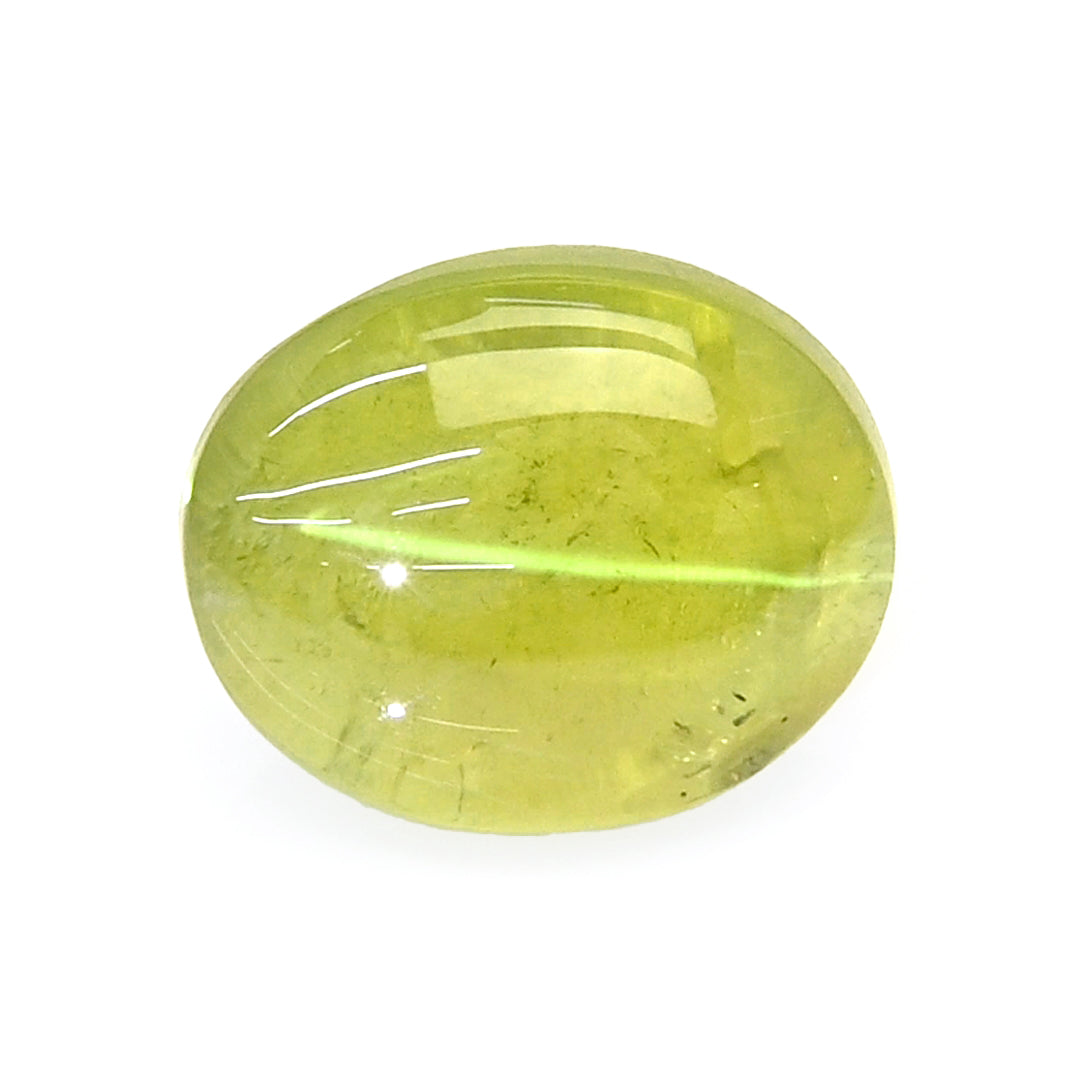
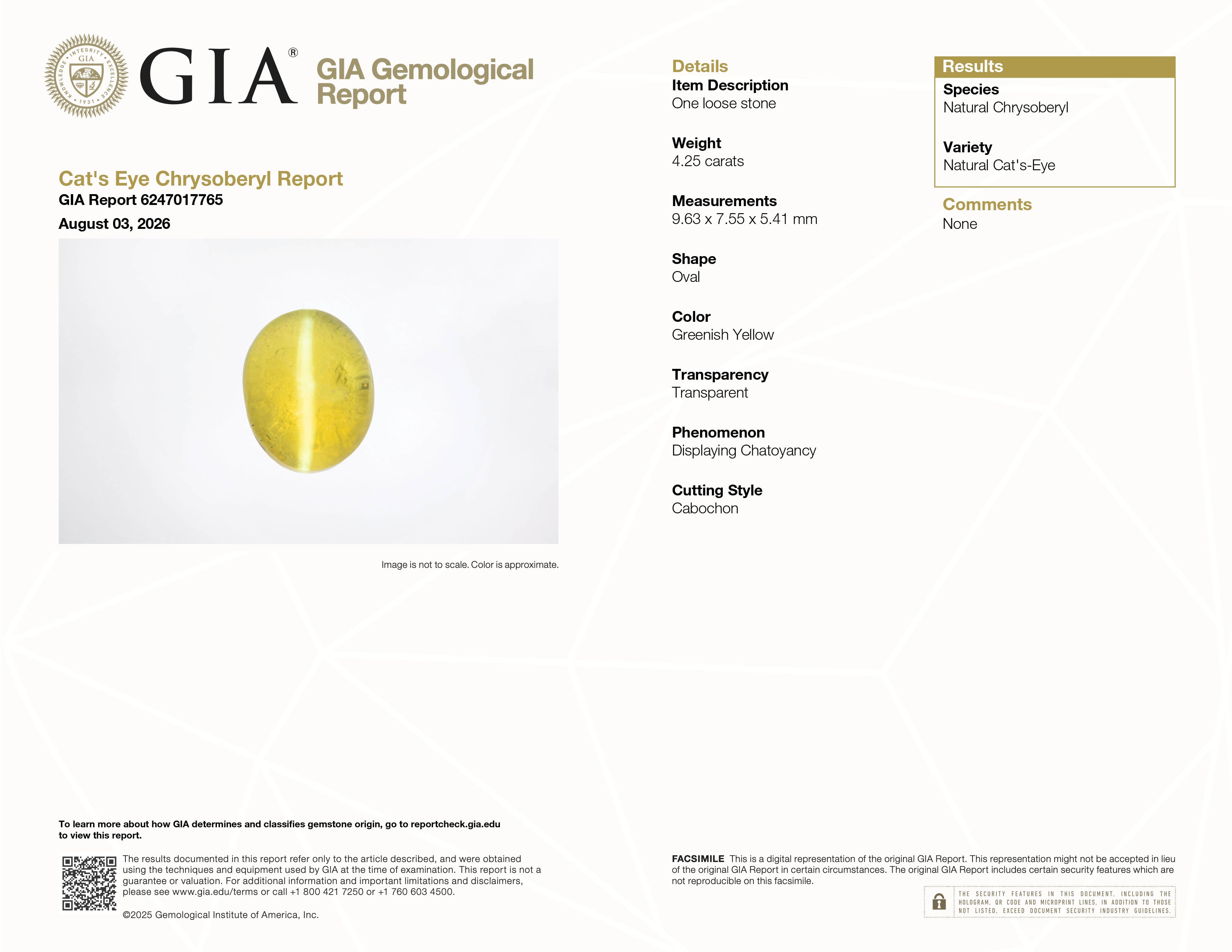
When a pegmatite rich in beryllium intrudes into aluminous metamorphic rock and the two react under high-temperature conditions, chrysoberyl crystallizes at the reaction zone. The cat's eye phenomenon (chatoyancy) develops when the chrysoberyl grows slowly under conditions that allow extremely thin rutile or hollow tube inclusions to develop parallel to the crystal's long axis — the same physical mechanism that produces rutile silk in sapphire, but in a different crystal structure. See our Cat's Eye Chrysoberyl Buyer's Guide.
Sri Lanka's Highland Complex provides the exact geological conditions for chrysoberyl: abundant aluminum-rich metamorphic rocks throughout the terrain, with pegmatite bodies intruded at various stages of the metamorphic history providing the beryllium source. This is why cat's eye chrysoberyl comes out of the same districts as the sapphire — the geological coincidence is embedded in the island's fundamental rock architecture.
Spinel (MgAl₂O₄) is among the gem minerals closest to corundum in its geological formation requirements. It forms in high-grade metamorphic rocks — particularly marbles and calc-silicate rocks — under conditions broadly similar to corundum, but requiring magnesium in addition to aluminum. In magnesium-rich metamorphic environments, spinel and corundum often form together, which is why Ceylon gem deposits commonly yield both sapphire and spinel from the same illama gravel layers.
The trace element chemistry of spinel is different from corundum: spinel color is produced primarily by chromium (red, pink), iron (blue, grey), and zinc (colorless to pale). Red spinel was historically confused with ruby — several famous "rubies" in royal collections are actually spinel — because both are chromium-colored and visually similar. See our Sapphire vs. Spinel guide.
Very few gemstones in commercial production are mined from the original rock in which they crystallized (primary or in-situ deposits). Most — Sri Lanka's gem production among them — come from secondary deposits: alluvial or eluvial accumulations where gems have been liberated from their host rock by weathering and concentrated by water and gravity.
The sequence from crystal formation to the washing basket:
The connection between the geological formation environment and a stone's measurable chemistry has a direct practical application: it is what a laboratory's origin opinion rests on. The mineral inclusions inside a sapphire are fragments of the same geological environment in which it crystallized. A zircon inclusion in a Ceylon sapphire carries the specific zircon chemistry of Sri Lanka's Highland Complex metamorphic terrain. A calcite inclusion in a Burmese sapphire is a remnant of the marble host rock of the Mogok valley.
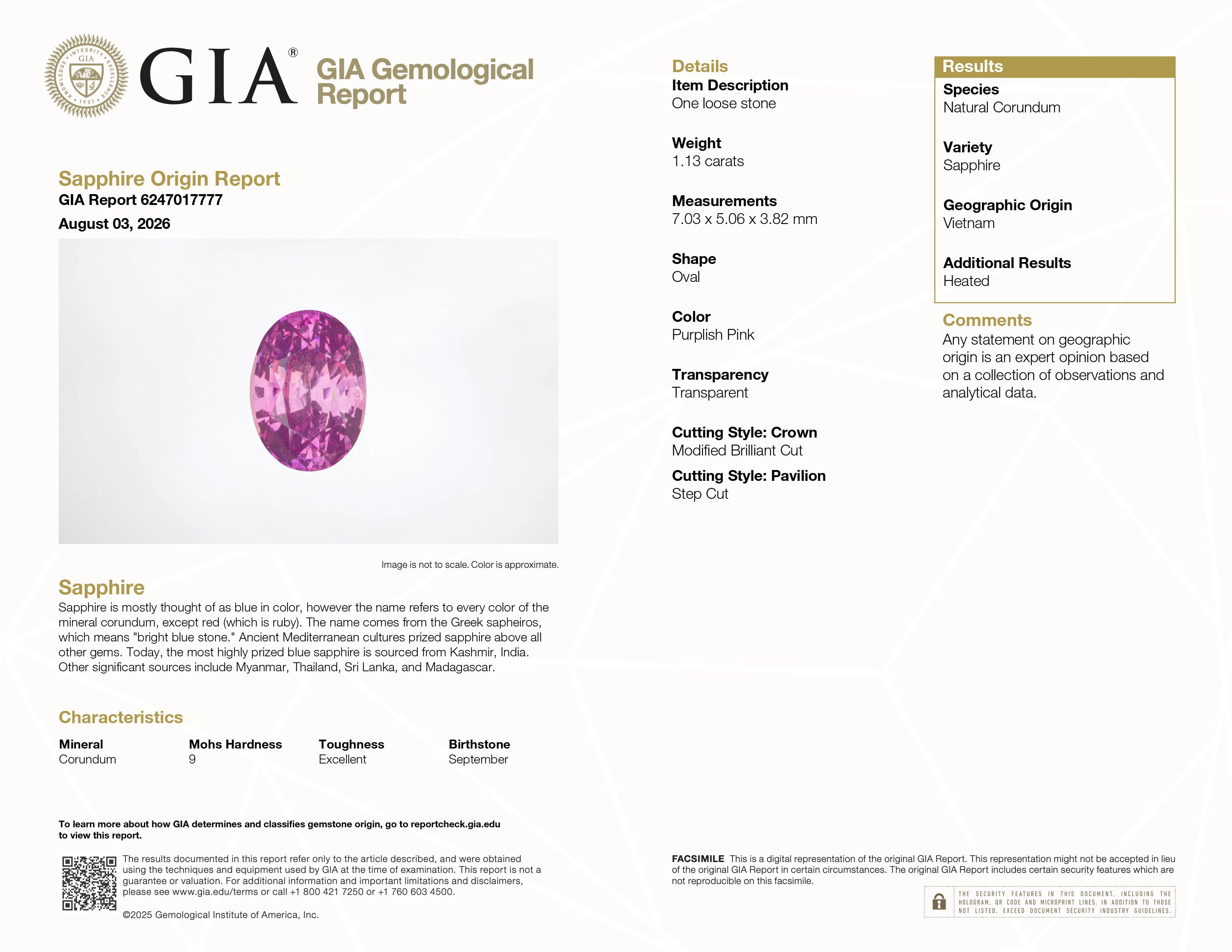
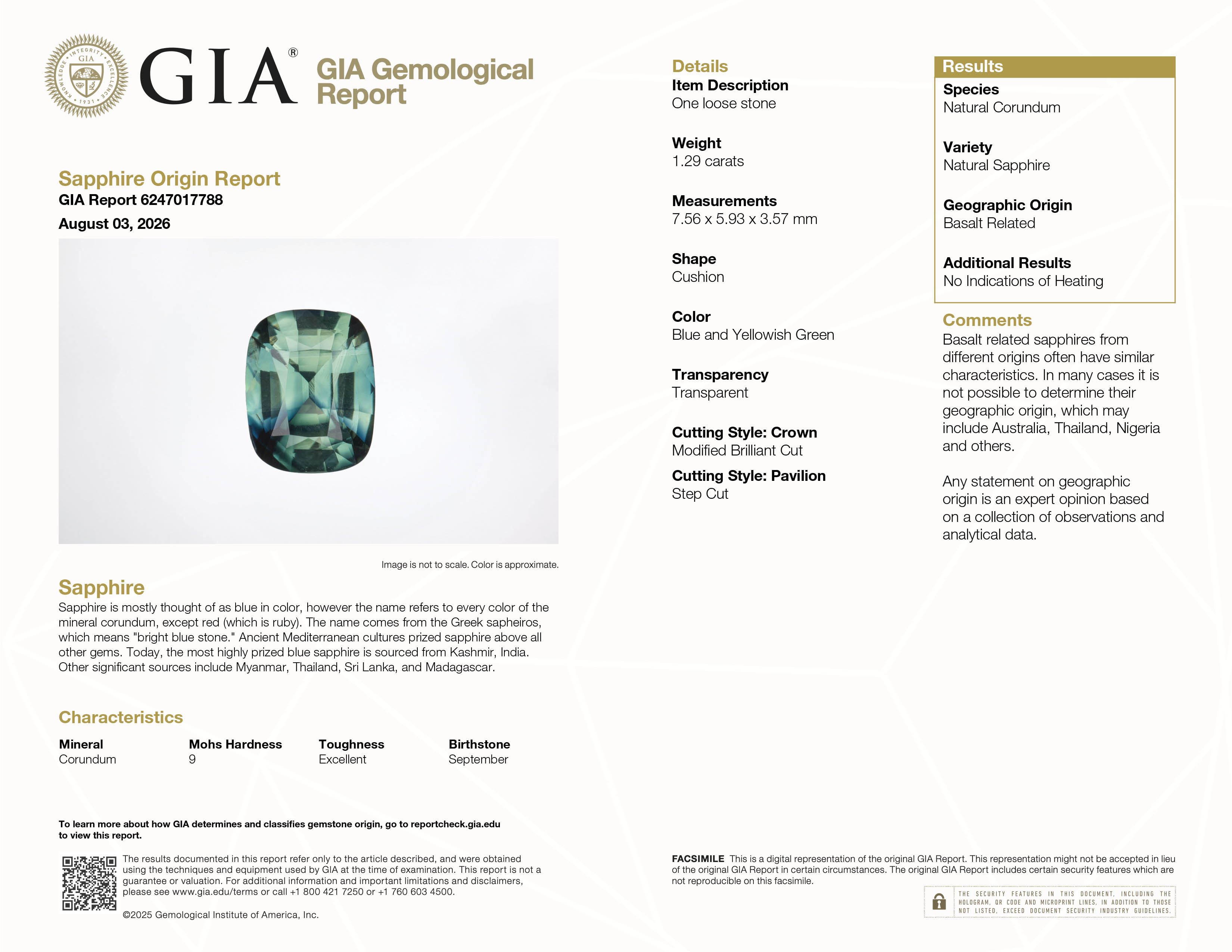
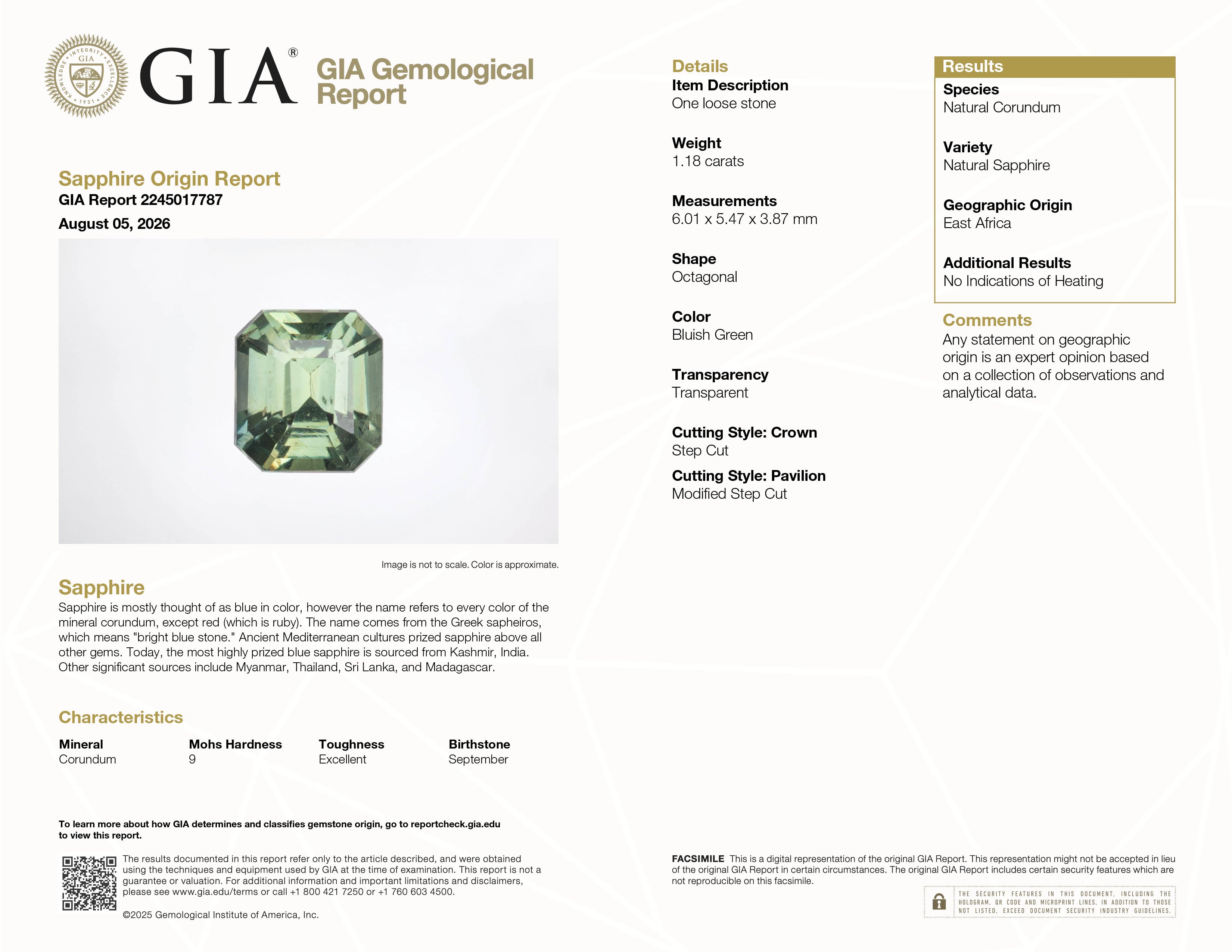
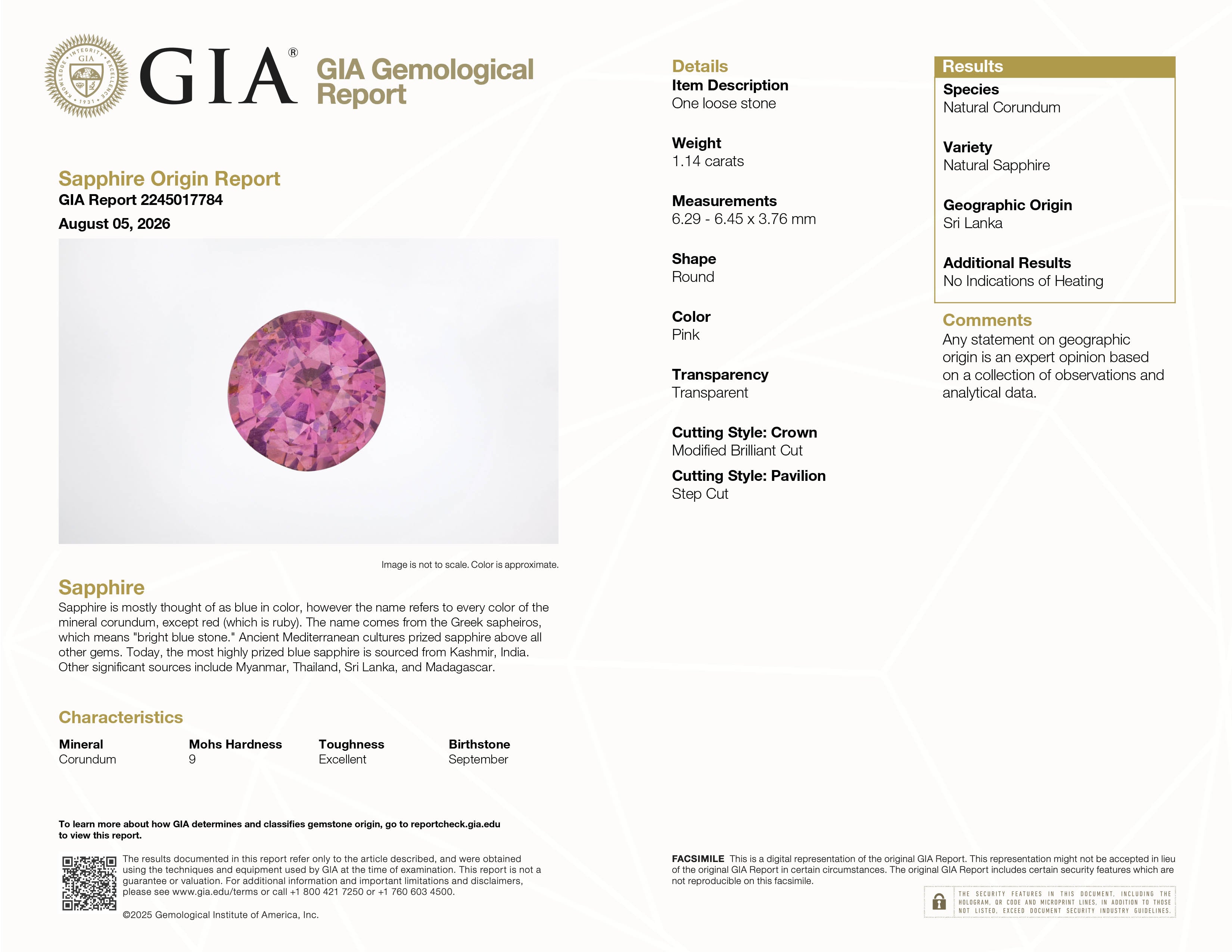
When GIA and Gübelin analyze a sapphire for origin, they are essentially reading the geological fingerprint embedded in the stone's inclusions and trace element chemistry. LA-ICP-MS trace element analysis measures the concentrations of dozens of elements in the corundum lattice — iron, titanium, chromium, gallium, vanadium, magnesium, and others — and compares them against reference data gathered from stones of documented origin. GIA states the standing plainly: "Any statement on geographic origin is an expert opinion based on a collection of observations and analytical data." So the place name printed on a report is the laboratory's reading of the stone's chemical memory of its formation environment — an opinion grounded in measurement. See our How to Read a GIA Sapphire Report guide.
Sapphires are corundum crystals (Al₂O₃) that form in specific geological environments where aluminum is abundant and silica is scarce — conditions that allow aluminum oxide to crystallize directly rather than combining with silica to form feldspar. The relevant environment is high-grade regional metamorphism during continent-collision events, at temperatures above 600°C and depths of 20–40 kilometers. Sri Lanka's sapphires formed during the assembly of Gondwana approximately 560–600 million years ago.
Crystal growth in metamorphic environments occurs over millions of years. The metamorphic events that produced Sri Lanka's sapphires lasted tens of millions of years. Individual crystals grow incrementally as new material is added layer by layer to the crystal's surface during metamorphism — a process measured in geological, not human, time. That slow, stable growth is a description of how the crystal grew, not a grade: GIA, in its own words, "doesn't grade or provide quality analysis for sapphire or other colored stones."
Pure corundum is colorless. Trace elements that substitute for aluminum in the crystal lattice produce color. Blue is caused by iron-titanium pairs (Fe²⁺–Ti⁴⁺ charge transfer). Pink and red (ruby) is caused by chromium. Yellow is caused by iron in a different oxidation state. Chromium and iron together can produce hues between pink and orange. Violet is caused by vanadium. Teal results from iron in specific redox conditions. The specific trace elements present depend entirely on the geological environment in which the crystal grew.
Sri Lanka's gem wealth comes from three converging factors: (1) the Highland Complex — an ancient, chemically diverse metamorphic terrain that provides the geological conditions for corundum, chrysoberyl, spinel, and garnet formation in the same rock sequence; (2) silica-undersaturated geochemistry in large portions of this terrain, favoring corundum crystallization over feldspar; and (3) hundreds of millions of years of tropical weathering and erosion that have progressively liberated and concentrated gem minerals into alluvial deposits accessible by hand mining.
The difference is the chemistry of the host rock. Corundum that grew in high-grade metamorphic rock — Sri Lanka and Kashmir among those settings — generally carries less iron, because there was less iron in the source rocks. Corundum carried up in alkali basalt — Australia and Thailand among those settings — generally carries more, and heating is routine practice for that material. This is a difference in rock chemistry, not a ranking of origins: the two groups overlap, and the division between them is not clean. The geology determines the chemistry; the chemistry determines the color.
The chemistry can be replicated in a laboratory — which is exactly what synthetic sapphire production does. Flame fusion, hydrothermal, and Czochralski methods all produce genuine Al₂O₃ crystals with the same hardness, optical properties, and basic chemistry as natural corundum. What cannot be replicated is the geological history: the millions of years of slow natural crystal growth, the specific trace element chemistry of a natural geological environment, and the inclusion fingerprint of the host rock. Gemmological laboratories separate natural from laboratory-grown corundum by examining growth features, inclusions and trace-element chemistry.
The stones we list come out of the geological environments described in this guide. Most of our sapphires are Sri Lankan, and a minority are not — Madagascar is the largest of those origins. Not every stone in the catalog is a sapphire either: we list chrysoberyl and other species alongside corundum, and each listing names the species we have recorded. Origin and treatment are stated on every listing, the lab and report number are named where a report exists, and we say so plainly where there is none; the product page, not an article, is the current answer for any particular stone.
We buy through our own offices in Colombo, Beruwala and Ratnapura, and we cut to spec. A shorter chain with no showroom costs less to run. That is the whole of the claim: the Sri Lankan rough trade is itself intermediated — rough passes through brokers and dealers before it reaches a cutting table — and we buy inside that trade like everyone else.
Email crescentgems@gmail.com with questions about any stone's geological origin or laboratory documentation — we respond within one business day.
Continue Learning
Return to the Ultimate Sapphire Buying Guide for the full picture on colors, origins, shapes, certification, and pricing — everything you need to buy a natural loose sapphire with confidence.

CG8366
CG8313
CG8342
CG8437


Blue Star Sapphire Price Guide — What They Cost and Why
Read moreabout Blue Star Sapphire Price Guide — What They Cost and Why
Tsavorite Garnet Price Guide — What They Cost and Why
Read moreabout Tsavorite Garnet Price Guide — What They Cost and Why
Color-Change Sapphire Price Guide — What They Cost and Why
Read moreabout Color-Change Sapphire Price Guide — What They Cost and Why
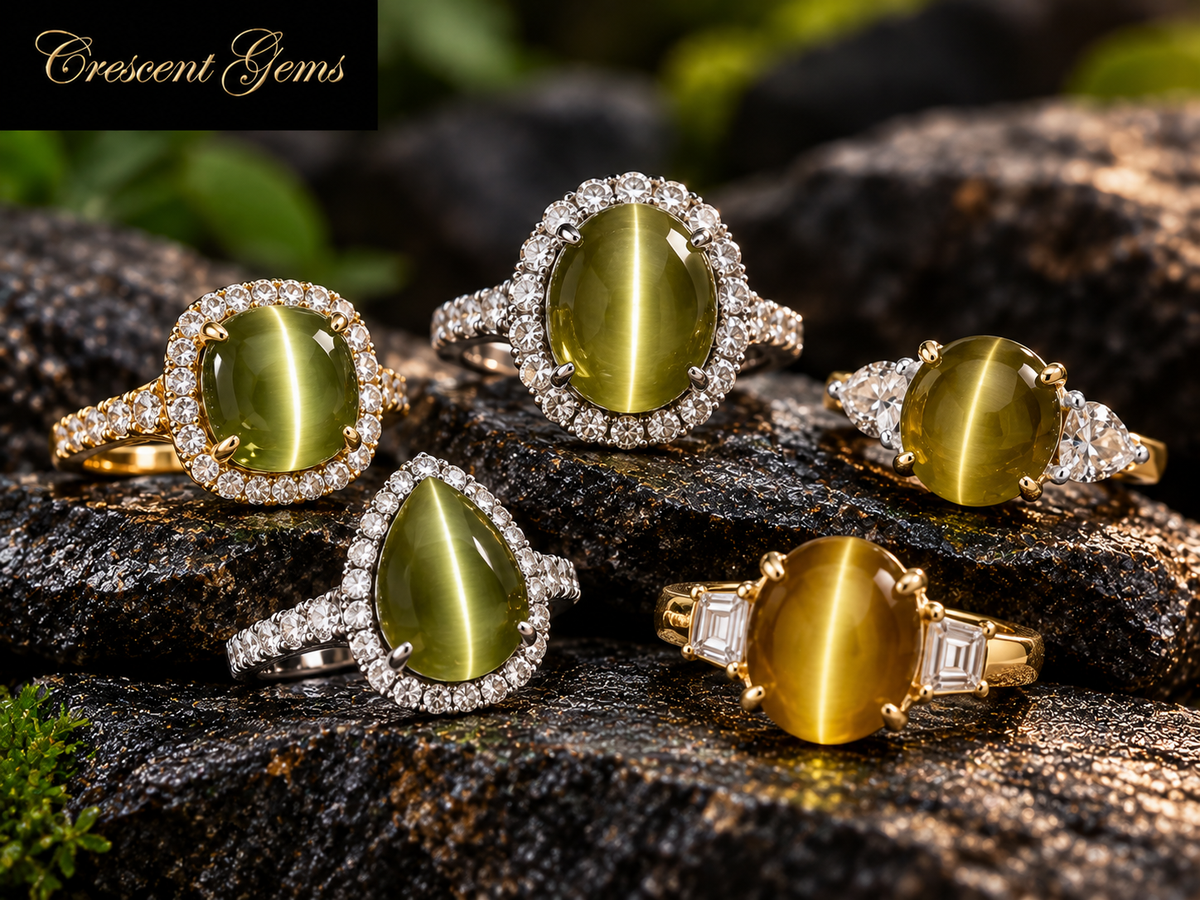
Is Cat's-Eye Chrysoberyl Good for an Engagement Ring?
Read moreabout Is Cat's-Eye Chrysoberyl Good for an Engagement Ring?
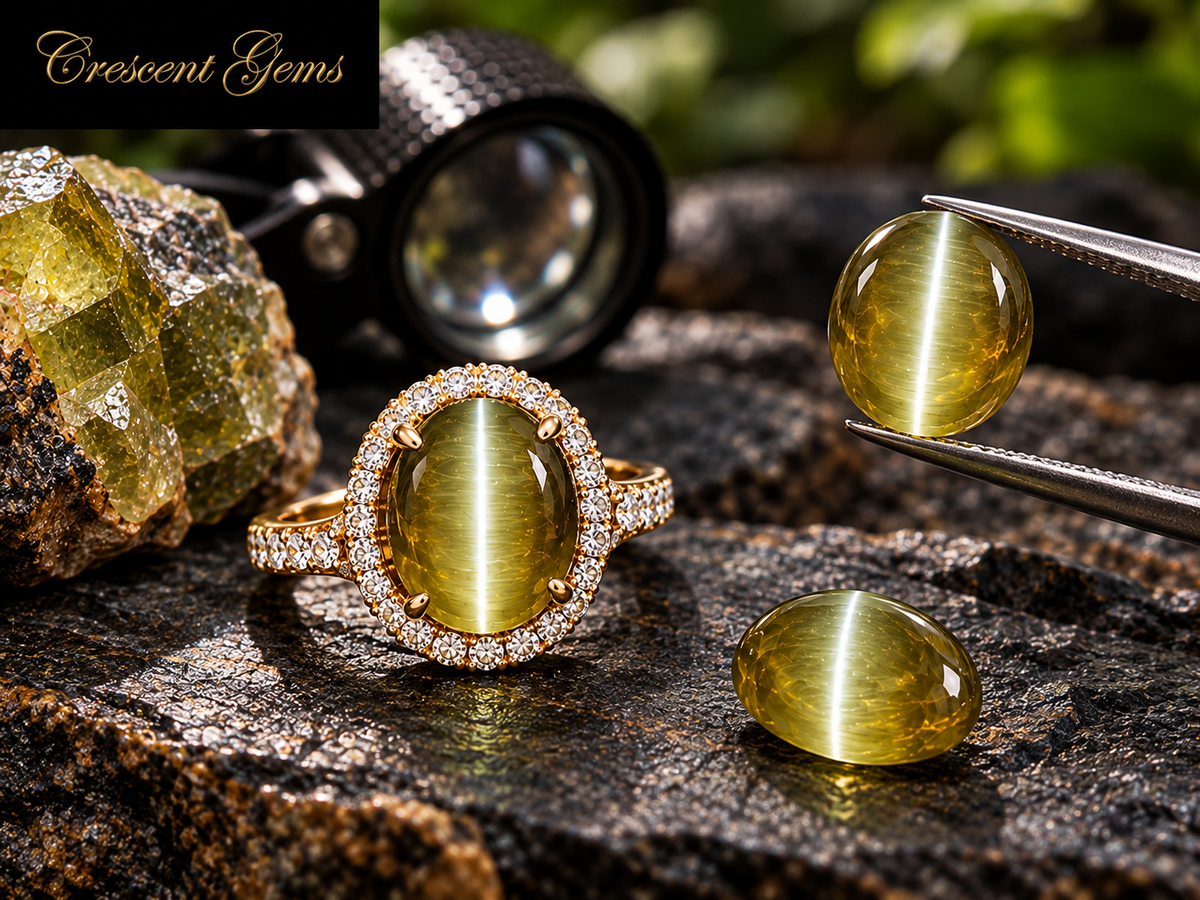
Cat's Eye Chrysoberyl Price Guide — What They Cost and Why
Read moreabout Cat's Eye Chrysoberyl Price Guide — What They Cost and Why