- by Ahmed Shareek
Violet Sapphire — The Complete Buyer's Guide to Color, Origin, and Price
- by Ahmed Shareek
New to buying sapphires? Start with our Ultimate Sapphire Buying Guide. For the adjacent warm-leaning color: our Purple Sapphire Guide. For the most dramatic lighting shift: our Color-Change Sapphire Guide.
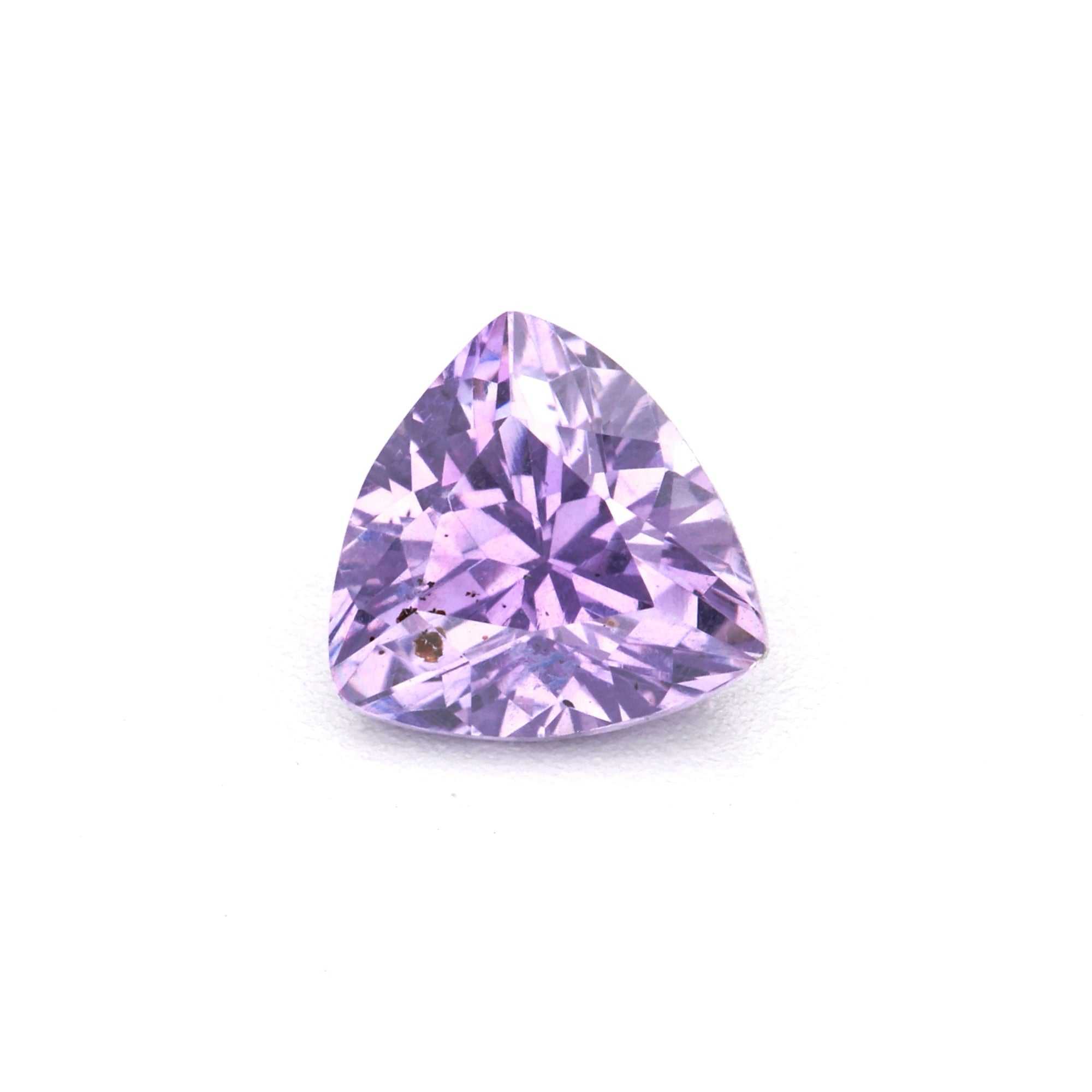
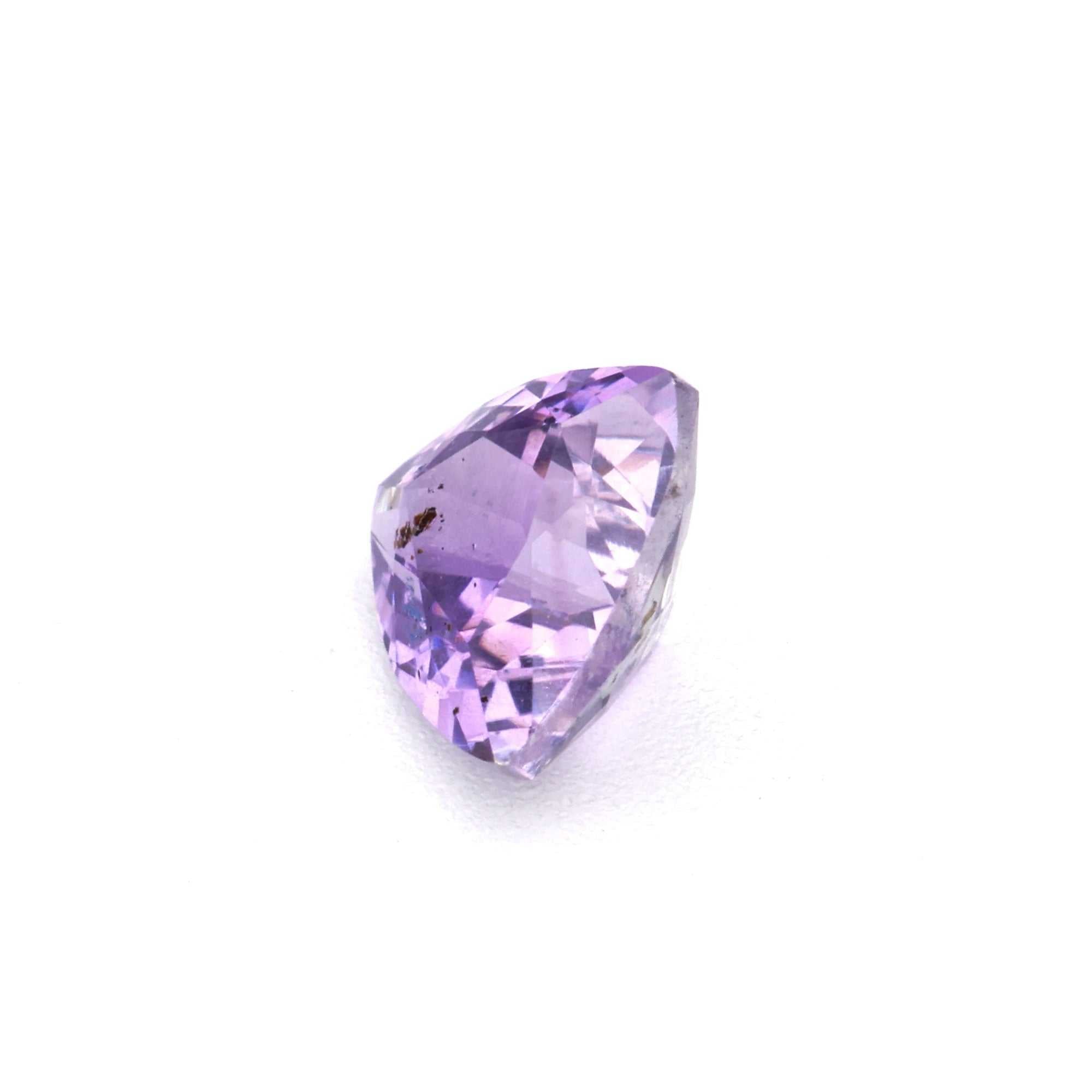
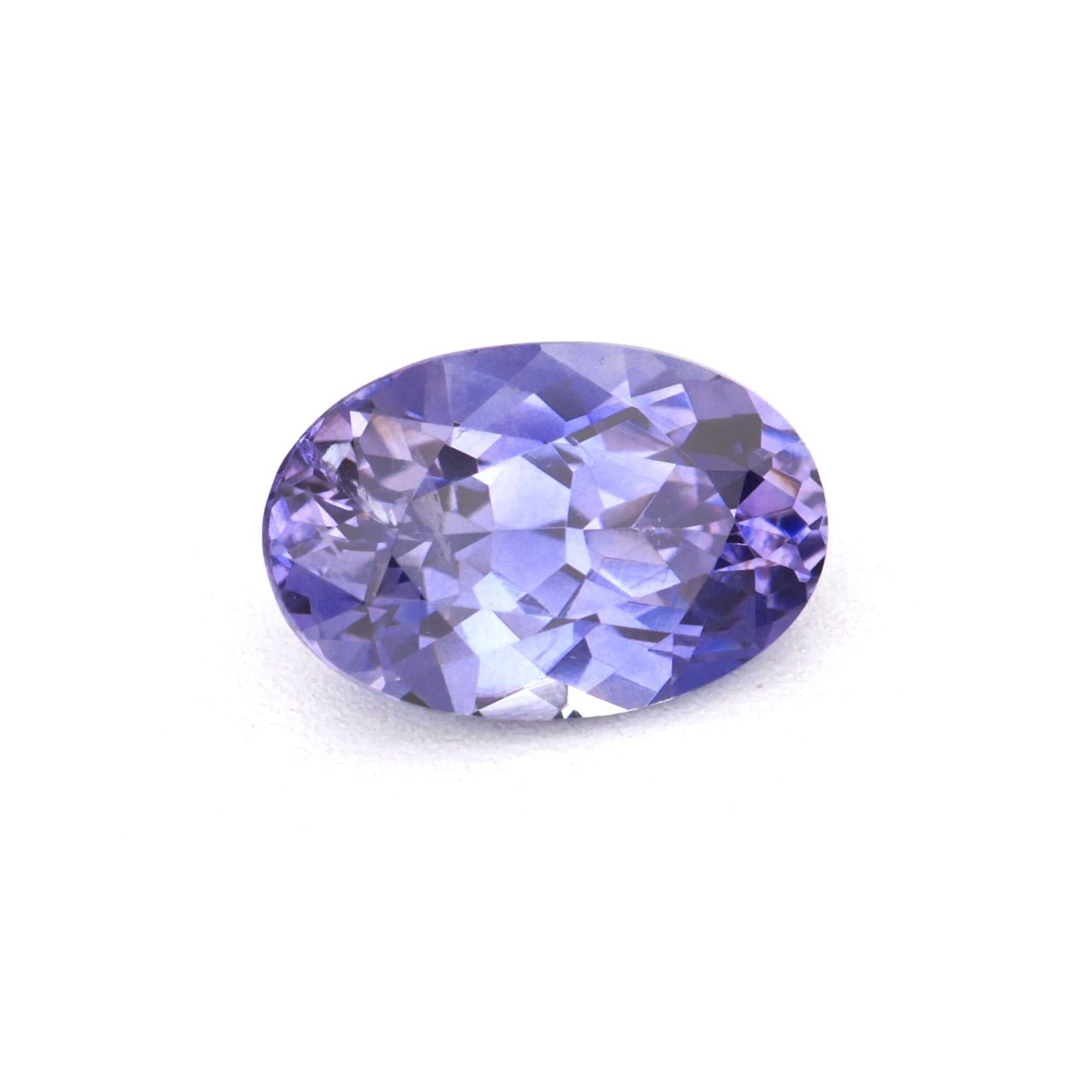
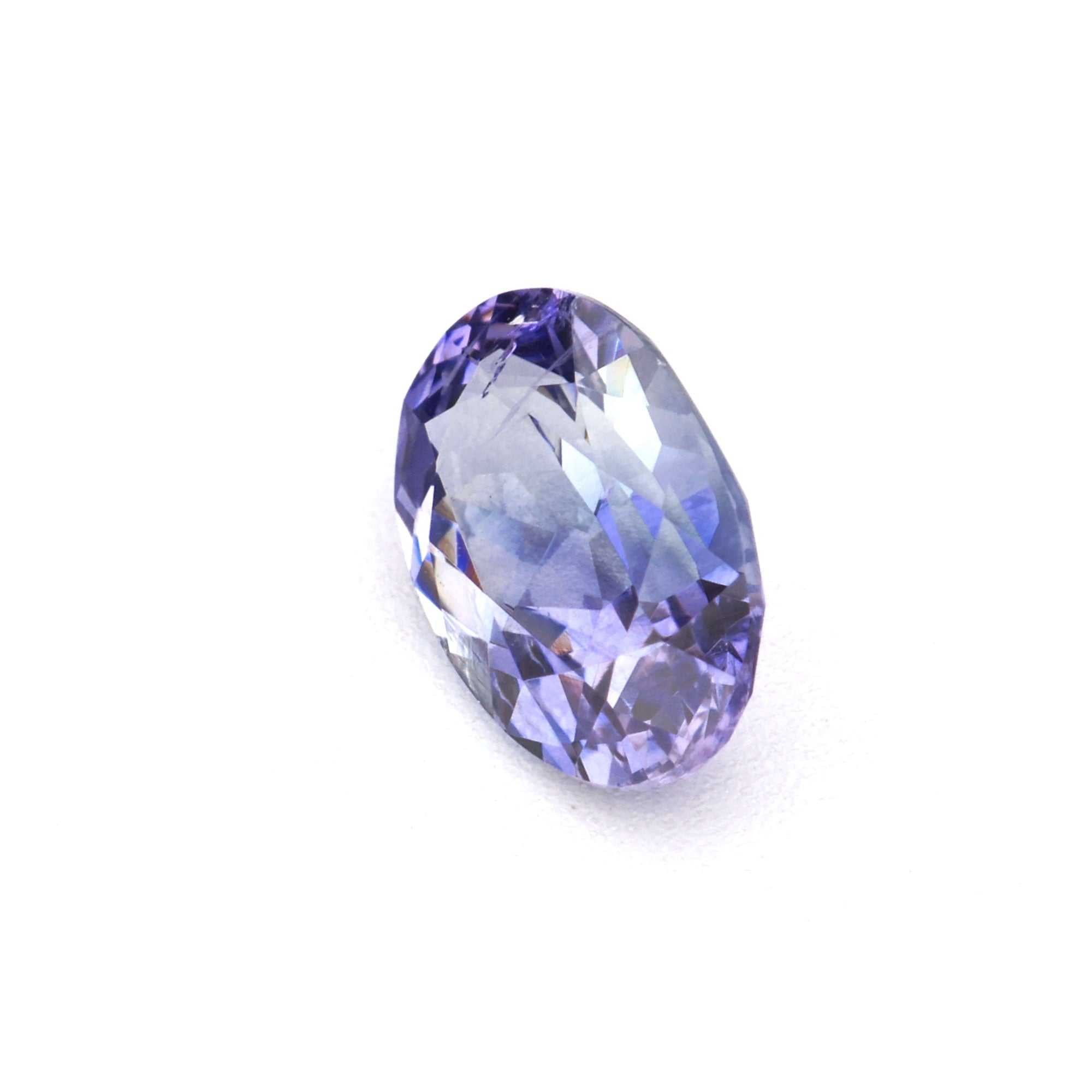
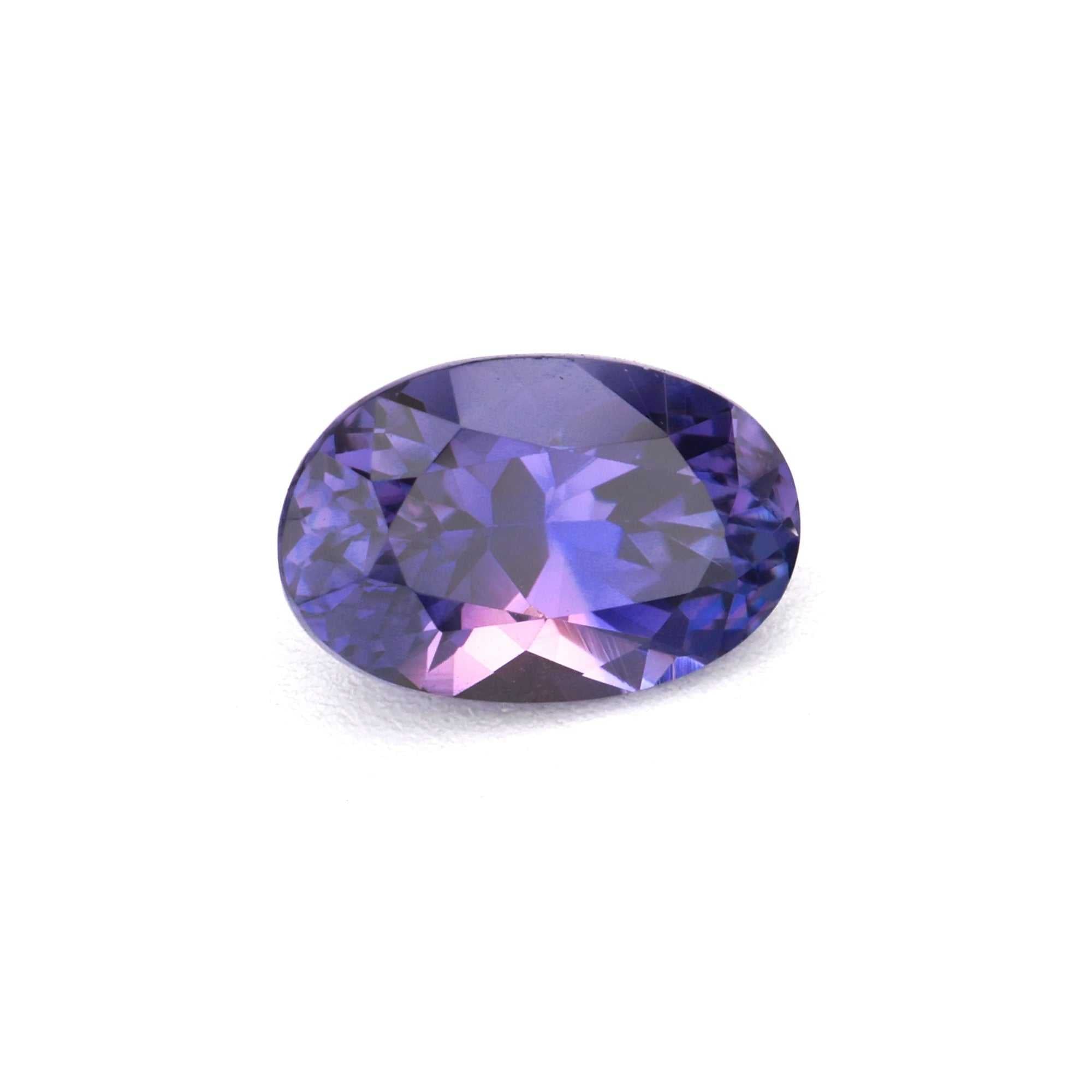
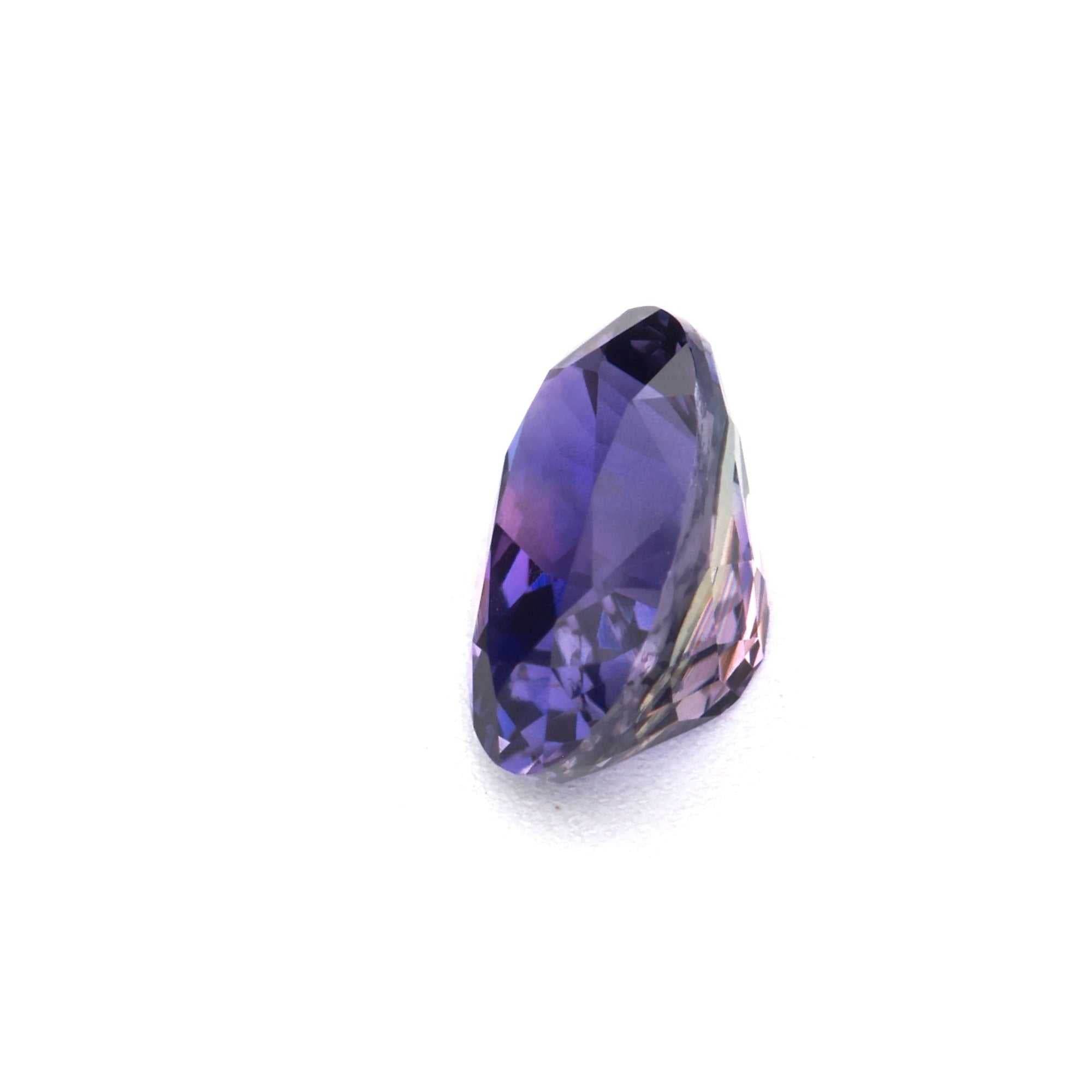
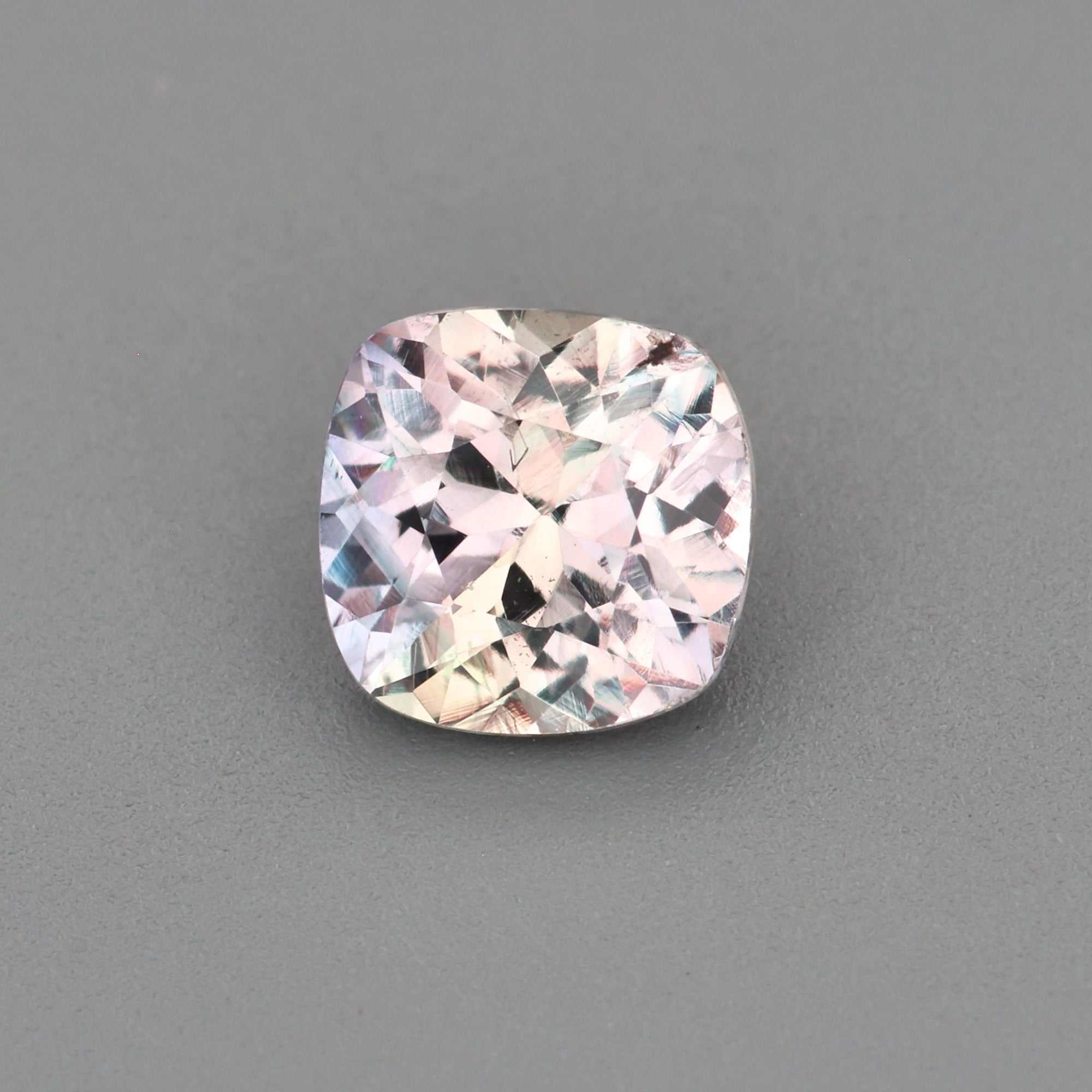
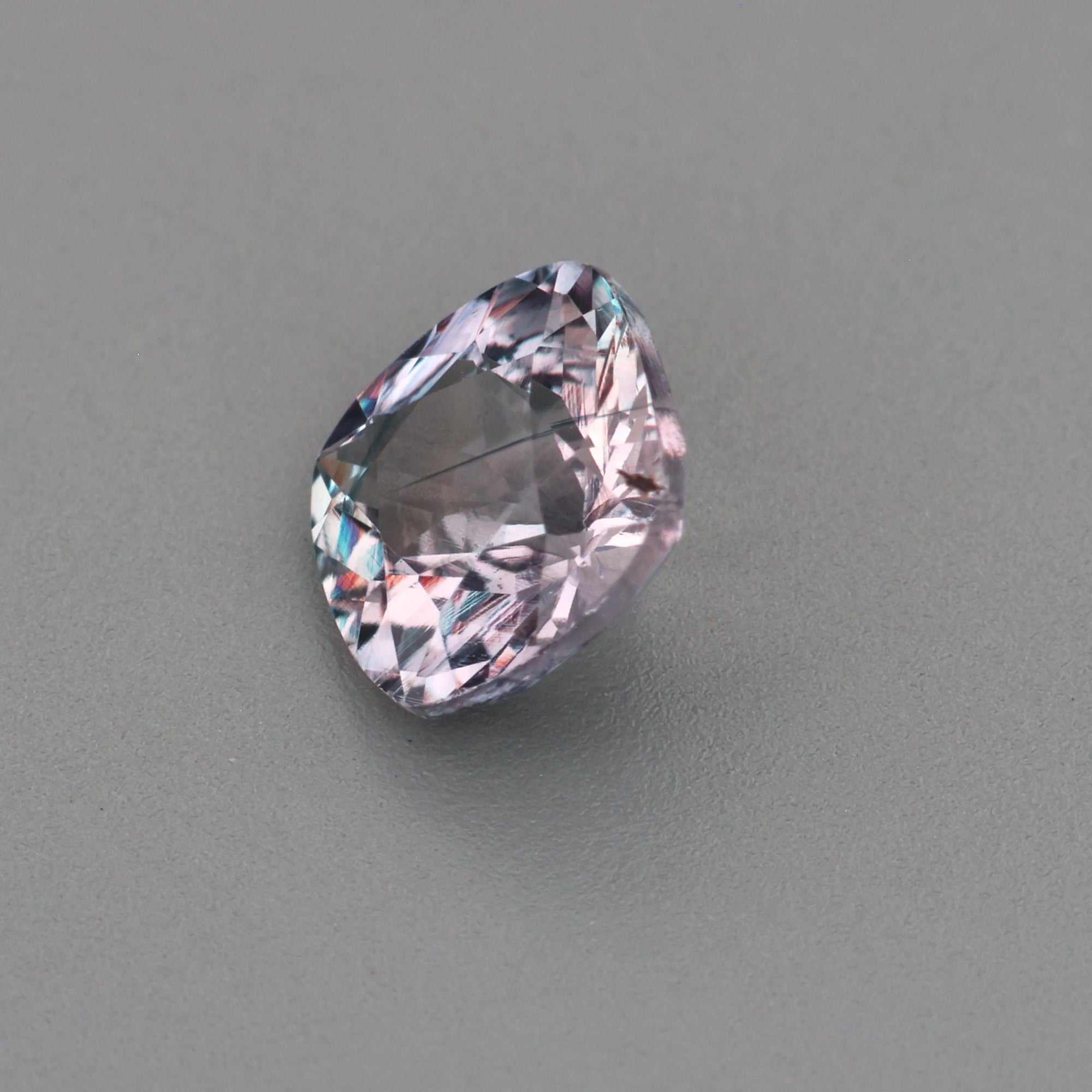
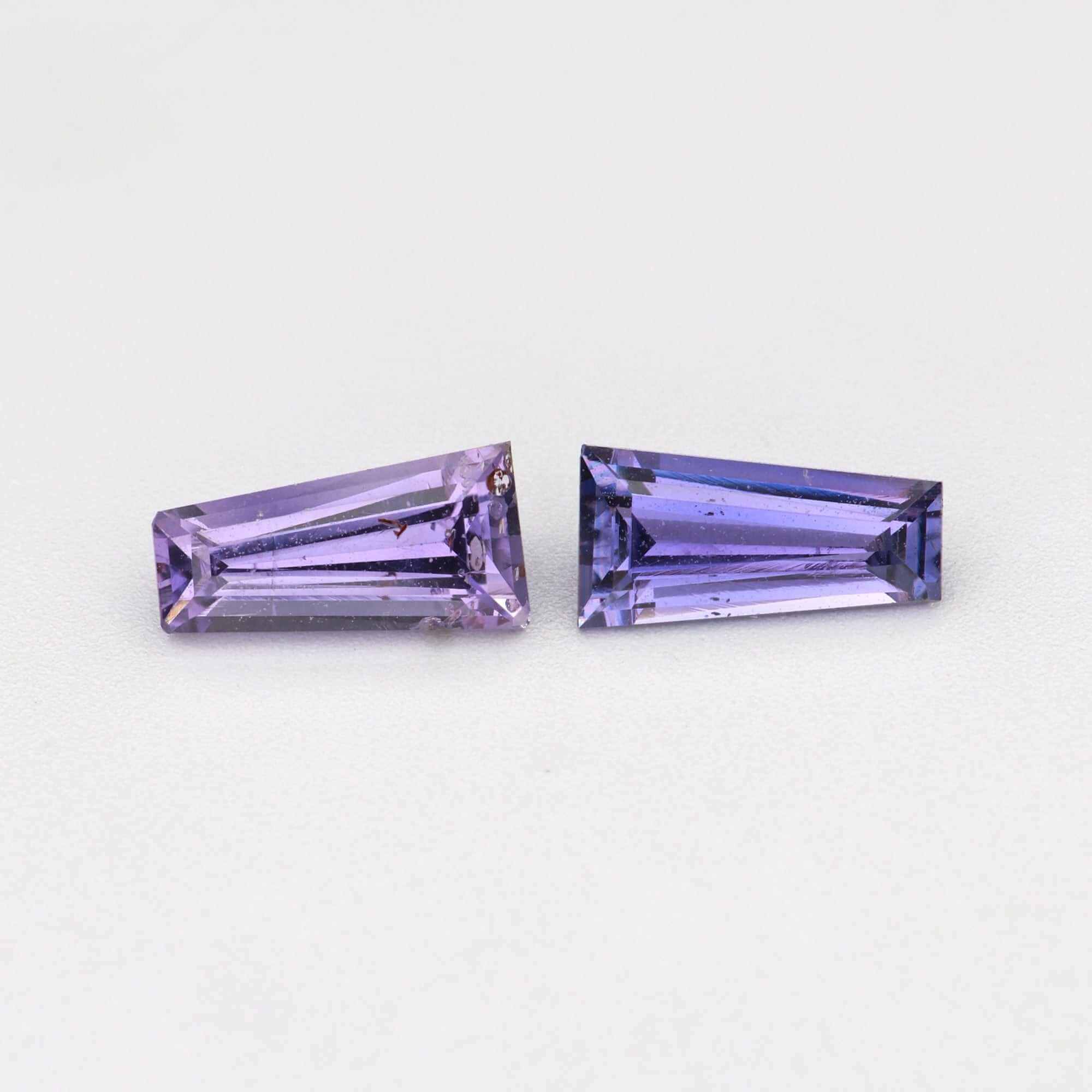
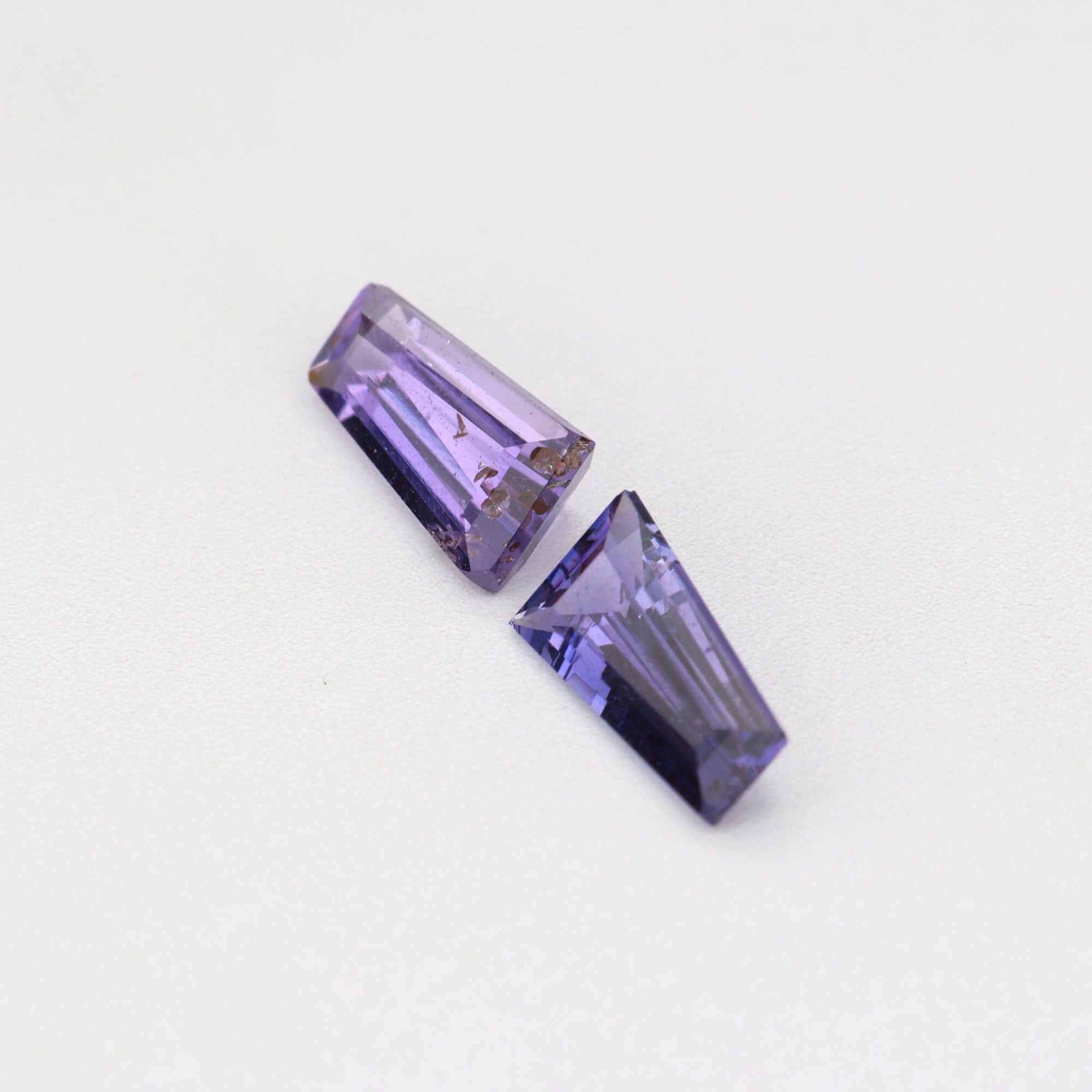
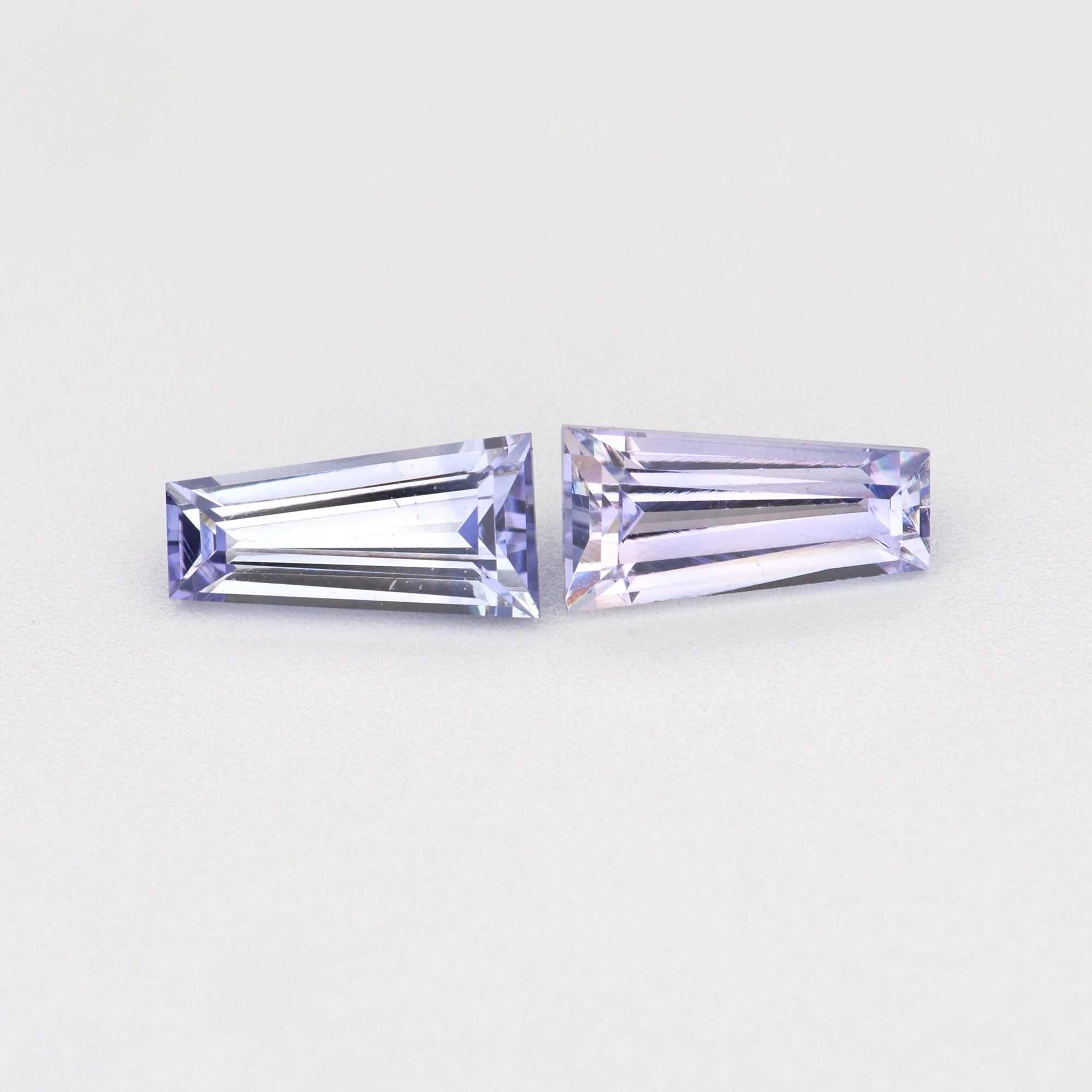
Violet sapphire is one of the most optically complex colors in the sapphire family — it sits between pure blue and reddish-purple on the corundum color wheel, and it behaves differently depending on what light you are standing under. In morning daylight it is distinctly blue-violet, cool and crystalline. Under a restaurant lamp or beside a candle it shifts toward reddish-purple, warm and deep. The same stone on the same finger looks like two different gems at different times of day.
This is not a defect. It is the defining characteristic of the color family, and for buyers who understand it, it is one of the primary reasons violet sapphire is interesting. Two things make it hard to buy. The first is that most buyers have never seen the shift. The second is that two words — violet and purple — are used interchangeably right across the trade, in our own listings included. So this guide starts with the one thing that settles which is which for a particular stone: what a laboratory report actually prints, and what is somebody's description instead.
This guide covers the full picture: what the reports print, what gives the stone its color, the lighting shift explained precisely, where this material comes from, what it costs — per carat and in total — and what to ask before you buy.
GIA prints a single color value on a colored-stone report, and Purple and Violet are two different values. That printed value is the fact about the stone. Everything anyone adds around it — blue-leaning, red-leaning, lavender, orchid, plum — is a description of what the describer is looking at, and that includes ours. GIA prints no hue ratio, no tone grade and no color grade, and says so in its own words: it "doesn't grade or provide quality analysis for sapphire or other colored stones."
This is not a fine distinction, because violet and purple are listed interchangeably all over the trade and our own stock shows it. Of the violet and purple sapphires we hold as this guide is written, five carry a GIA report. This is what those five reports print:
| Our stone | What the report prints | The report |
|---|---|---|
| 1.08 ct, octagonal step cut | Color: Purple · No Indications of Heating | GIA Sapphire Origin Report 2241017793 |
| 1.20 ct, oval mixed cut | Color: Purple · No Indications of Heating | GIA Sapphire Origin Report #2241032044 |
| 1.45 ct, cushion mixed cut | Color: Pinkish Purple · Heated | GIA Sapphire Origin Report 2241032072 |
| 3.40 ct, oval double cabochon star | Color: Violet · No Indications of Heating | GIA Sapphire Report #1236950499 |
| 7.99 ct, round double cabochon star | Color: Purple · No Indications of Heating | GIA Sapphire Origin Report #5232980224 |
That table is the useful part of this page. Four of our five GIA-documented stones in this color family print a purple value; one prints Violet, and it is a star sapphire — which is the stone a faceted-color argument applies to least. Pinkish Purple is a compound value in which the head noun carries the dominant hue: a purple stone leaning pink, not a pink stone leaning purple, and the order is not reversible.
Our own titles and our own color field do not line up with those printed values on every stone, and rather than tidy that away we will say it plainly. Where our wording and a report disagree, the report is the record and our wording is our description. One consequence for you: when you compare stones, from us or from anyone, ask what the report's Color field says. An adjective in a listing is not that, and no amount of it adds up to one.
Violet and purple corundum owe their color to trace elements. The published account of the species attributes the combination to iron and titanium together with chromium, with vanadium contributing in some material: the iron-titanium pair is what produces blue in corundum, chromium is what produces pink and red, and a stone in the violet-to-purple range transmits a blue component and a red component at once. That is a published account of corundum as a species, not a measurement on any individual stone. No colored-stone report prints the chromophore, and we have had no stone of ours analysed for it.
What matters at the counter is the consequence rather than the chemistry. Because both components are present, the balance between them decides where a stone sits: more blue and it reads violet, roughly even and it reads purple, more red and it reads reddish-purple. And because the two components respond to different light, the same stone does not look the same in different light. Daylight is rich in blue wavelengths and amplifies the blue component, pushing the stone toward blue-violet. Incandescent and warm LED light is rich in red and yellow wavelengths and amplifies the red component, pushing it toward reddish-purple or plum. A stone with a strong, well-balanced pair of components shifts dramatically; a stone in which one component is weak shifts subtly or not at all.
Blue, violet and purple sit adjacent on the corundum color wheel, and the three values get confused and conflated constantly in listings. The table below is not a definition of the three and not a ranking of them. It sets out what we have seen in stones whose reports print each value, because no report describes how a stone looks beyond that one-word value. The appearance rows are our own observation from handling this material.
| Factor | Report prints "Blue" | Report prints "Violet" | Report prints "Purple" |
|---|---|---|---|
| Red showing in the stone | None to barely any | Present; blue still dominant | Present; roughly even, or red-leaning |
| Daylight appearance | Pure blue; stable | Blue-violet to pure violet; cool | Reddish-purple to blue-purple; warmer |
| Incandescent appearance | Pure blue; minimal shift | Violet to reddish-purple; noticeable shift | Reddish-purple to plum; often dramatic shift |
| Overall temperature | Cool | Cool to neutral | Neutral to warm |
| Lighting shift intensity | Minimal | Moderate to strong | Often dramatic |
The practical takeaway: if you want a color that reads primarily blue but is clearly not pure blue, with a second color surfacing in certain lights, you are looking for a stone whose report prints Violet, or a blue-leaning stone whose report prints Purple. If you want something warmer, with a red influence and a stronger shift toward plum under warm light, you are at the purple end of the same range. Either way, the report settles which value the stone carries and the listing adjective does not. See our purple sapphire guide for the adjacent end of the family.
The lighting-sensitive behavior of violet sapphire is its most commercially important characteristic and the feature that most distinguishes it from blue sapphire for buyers who experience it in person. Understanding it before purchase helps you decide whether you want this quality, and how to evaluate it in a specific stone.
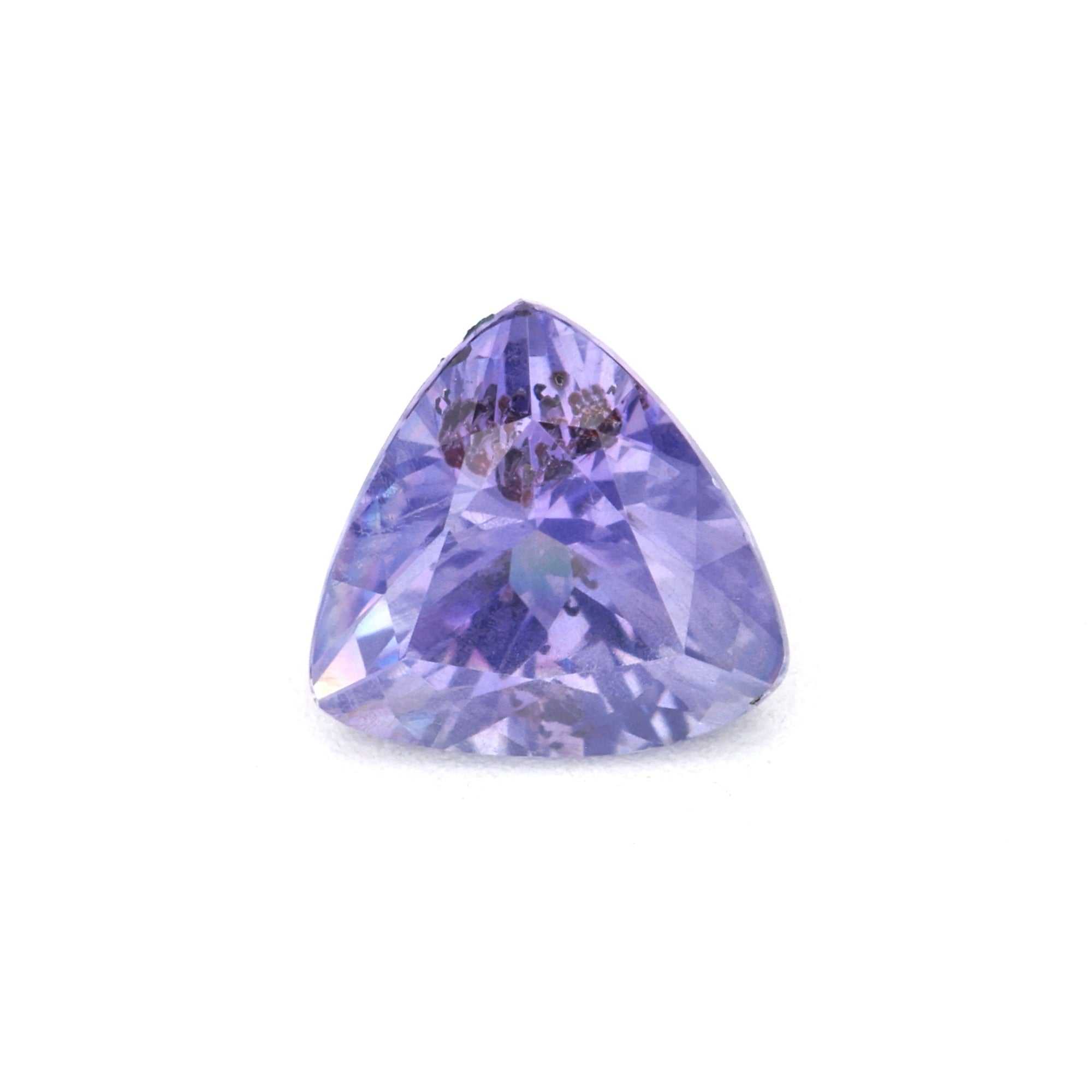
Violet sapphire in natural daylight — bright outdoor light, near a window — appears at its coolest and most blue-dominated. The blue wavelengths in daylight amplify the blue component of the color, pushing the stone toward blue-violet or, in strongly violet material, toward a pure spectral violet. At this position, the stone reads as clearly different from blue sapphire — there is an unmistakable purple quality — but the cool, blue-leaning character gives it a composed, crystalline quality. Some buyers describe fine violet sapphire in daylight as looking like "the color between blue and purple that doesn't have a name in normal conversation."
Under warm artificial light, the red and yellow wavelengths amplify the red component of the color. The stone shifts toward a warmer reddish-purple, violet-red, or in some stones, a clear plum or magenta-adjacent purple. The shift can be subtle or dramatic depending on how strong each of the two components is and how balanced they are. Stones with a strong, well-balanced pair shift more completely. The same stone that appeared composed and blue-violet by the window now appears warm, rich, and almost romantic under the dinner table lamp.
The daylight version of the ring and the indoor version are not the same ring to look at. The daylight personality is cool and composed; the indoor personality is warm and complex. For buyers who wear their ring across multiple lighting environments — which is every buyer who wears a ring daily — this color variability means the ring never becomes visually monotonous. It is one of the few engagement ring choices where the stone genuinely changes with the context.
How to evaluate lighting shift in a violet sapphire:
Violet sapphire with a strong lighting shift is sometimes confused with or described as color-change sapphire. The distinction matters commercially and gemologically.
Color-change sapphire is a designation a laboratory prints when a stone's color shifts between two standardized light sources completely enough to cross from one named color to another — blue in daylight and purple in incandescent light, for example, or green in daylight and red-brown in incandescent. The shift is complete enough that the stone reads as a different color under each source.
Most stones whose reports print Violet or Purple shift inside that one range instead — blue-violet at one end, reddish-purple at the other — and stay inside it at both positions rather than crossing from, say, blue to red. Where a stone sits close to the boundary, whether its report prints a color-change designation or prints a single color value is the laboratory's call, and the only way to know is to read the report. We are not going to predict it.
The commercial consequence is simple enough: a stone is offered as color-change material when its report carries that designation, and as violet or purple when it does not, however strong the shift looks to you across a room. See our color-change sapphire guide for the phenomenon itself.
The lightest violet sapphires — lavender, pale blue-violet, pale periwinkle — are delicate and subtle. The violet character is clearly there but understated, and the lighting shift is typically gentle rather than dramatic. These stones are generally the least expensive in the violet family and suit minimalist settings where the color's subtlety is a feature rather than a limitation. See also our purple and violet sapphire collection, which is where the palest stones in this range sit.
Medium to medium-vivid violet — clearly violet in all lighting, showing a meaningful shift without being so dark that the color disappears indoors — is where most demand sits, and where most of our own stock sits. The daylight color is composed; the indoor shift is clearly visible and warm. That is our own description of stones we handle, not a grade: no laboratory publishes a color grade for sapphire, so there is no grade for us to quote.
Deeply saturated violet sapphires can appear very dark in lower indoor lighting — the same risk that affects all deeply saturated colored stones. At high saturation, the stone can appear near-black indoors while remaining vivid outdoors. Well-cut deep violet sapphires that maintain color face-up in dim conditions are exceptional; poorly cut deep violet that goes dark indoors is a disappointment. Cut quality is particularly critical at the deeper saturation levels.
A small proportion of violet sapphires shows a shift strong enough that the stone appears to be in two clearly different positions across its color family — blue-violet outdoors, vivid reddish-purple or plum indoors. These stones sit at the boundary between a single printed color value and a color-change designation. Which of the two a given stone's report carries is the laboratory's call; read the report rather than the listing.
Violet and purple sapphire is generally offered below blue sapphire of comparable size and documentation. That is a fact about the market for blue, which has been established for well over a century, rather than a fact about the stones.
We are not going to put a multiple on that gap. Any such multiple depends entirely on which stones you put in each of the two sets, and the two sets differ systematically: among our own stones the blue ones are mostly heat-treated and the violet and purple ones mostly are not, and the two groups barely overlap in size. Two populations that different cannot be divided into one another and the answer called a market rate. Earlier versions of this page carried such a multiple. We had no source for it, so it is gone rather than restated at a different value.
We do not publish price forecasts either, and we are not going to tell you this gap is about to close. Nobody publishes the demand data that would support it. What we can tell you is the levels this material is commonly offered at, and exactly what we are asking for the stones we have.
Violet and purple sapphire is frequently unheated, and for a structural reason rather than a commercial one. Heat tends to disturb the balance between the blue and the red components rather than improve it, and the stone commonly comes out of the furnace pushed toward blue or toward pink instead of toward a better violet. The incentive to heat this rough is therefore low — and that, not any selection on our part, is the main reason so much of the material in the market is unheated.
Heated stones in this color do exist — one of the five GIA-reported stones above is one, and its report prints Heated under Additional Results — so the treatment line on the report is what settles an individual stone, not what is typical of the color. Most of the violet and purple sapphire we hold is unheated. Every listing states the treatment, names the laboratory and the report number where there is one, and says plainly where there is no report. See our unheated sapphire guide, heat treatment guide, and heated vs. unheated page.
Everything we currently hold in violet and purple is Sri Lankan, and we buy this material ourselves in Sri Lanka. The other origins below are market information, so that you know what you are being offered when you see it elsewhere. We are not able to supply them in this color.
The same geology that produces blue, pink and purple sapphire in the island's Highland Complex also produces corundum across the violet-to-purple range, and most of it reaches the market unheated. Ceylon is the trade name and a useful search term; the factual statement of origin is Sri Lanka, and Sri Lanka is what a report prints. See our Ceylon sapphire complete guide and Ceylon origin page.
Madagascar produces violet and purple sapphire in quantity. The stones we have handled from there tend to a slightly cooler, more purely violet appearance than Sri Lankan stones carrying the same printed value — that is our own observation, not a finding on any document. We hold no Madagascar violet or purple today. See our Madagascar sapphire guide.
Montana produces violet-leaning sapphire with a cool, steel-toned character, and Tanzania produces violet material alongside its color-change stones. We hold neither in this color, and no Montana stone of any color. Both are here for completeness, not as something we can offer you.
| Origin | Color character (our observation) | Treatment | Available from us |
|---|---|---|---|
| Sri Lanka (Ceylon) | Warm, luminous blue-violet | Mostly unheated | What we stock |
| Madagascar | Slightly cooler, more purely violet | Usually unheated | In the trade; not in our stock |
| Montana (USA) | Cool, steel blue-violet | Often unheated | Not stocked |
| Tanzania / East Africa | Variable | Mixed | Not stocked in this color |
The color-character column is our own description of material we have handled, and it is not a ranking. We are not going to tell you that one of these origins is better than another, or price them against each other.
The table below sets out the per-carat levels violet and purple sapphire is commonly offered at, and what tends to change between them. The headings matter: these are price bands, not quality grades. No laboratory grades the color of a sapphire, so nothing here is a grading scale, and our own stones are not placed on it.
| Price per carat | Body color and documentation at this level |
|---|---|
| $100–$400 | A pale lavender, or a body color more grey than violet. Usually sold with no laboratory report. |
| $400–$900 | More of the violet or purple reading through rather than grey. A report from a smaller laboratory, or none at all. |
| $900–$2,000 | A clearly violet or purple body color. A report from a recognized laboratory is the normal expectation at this level. |
| $2,000 and above | An even, saturated violet or purple, with a full report from a major laboratory — often one that also carries a separate geographic origin opinion. |
Approximate market orientation as at October 2026, for natural violet and purple sapphire sold loose. These are not measured figures, not a survey, and not our own sales data, and they are not offers. The bands carry no size qualifier, so a larger stone's total price cannot be obtained by reading a band and multiplying. Figures above are approximate market guidance, not fixed quotes. Actual value varies by treatment, origin, colour, cut, clarity, and certification.
Origin is also not a quality grade, which is why it does not appear as a column in the table above. Where a stone was formed and how it looks are two separate findings, and pricing one as though it were the other is a habit worth breaking.
A per-carat figure and a total price are two different numbers and they are easy to conflate. The per-carat figure is what lets you compare stones of different weights; the total is what you pay. So here are both, for the five GIA-documented stones named earlier:
Two things in that list cut against the way a price ladder usually reads, and they are worth sitting with. The two largest stones are the cheapest per carat, not the dearest — both are star sapphires, and a cabochon is priced on a different basis from a faceted stone. And the dearest per carat of the five is the heated one. A per-carat figure is arithmetic about a price. It is not a quality ladder, and this is what that looks like in practice.
Those are the prices on the day this guide was written. Prices change and stones sell, so the product page is the current answer for any particular stone — it is also where the treatment, the laboratory and the report number are stated, and where we say so plainly if a stone has no report. See our sapphire pricing guide for how sapphire is priced generally.
Everything in this section and the next — which violet range we would put with which skin tone, which metal we would set it in, which cuts we would choose — is our own view and not a finding from anywhere. That is our own recommendation, from handling these stones — no laboratory publishes guidance on settings, and we are not reporting one.
| Skin Tone | Violet range we would choose | Metal we would choose | Effect |
|---|---|---|---|
| Fair / cool undertone | Pale lavender-violet, cool medium violet | White gold, platinum | Harmonious cool; daylight color amplified |
| Fair / warm undertone | Medium violet, slightly warm violet | Rose gold, yellow gold | Warm contrast; indoor shift enhanced |
| Medium / olive | Medium-vivid violet; all ranges work | All metals; yellow gold richest | Rich, complex complement |
| Tan / brown | Medium-vivid to vivid violet | Yellow gold, rose gold | Bold warm-cool contrast |
| Deep | Vivid violet to deep blue-violet | Yellow gold, white gold both striking | Maximum visual impact; jewel-toned |
Metal pairing detail: White gold and platinum enhance the cooler daylight appearance of violet sapphire, making the blue-violet quality more pronounced and the stone appear more sophisticated. Yellow gold amplifies the warmer indoor shift, making the reddish-purple incandescent position more vivid. Rose gold sits between the two — complementing both the cool outdoor and warm indoor positions without strongly amplifying either. For buyers who want the shift to be as dramatic as possible, try both white and yellow gold settings against the actual stone before deciding. See our sapphire color for skin tone guide.
Violet sapphire offers something a stable color cannot: a ring that looks meaningfully different in different light. The daylight version of the ring and the indoor version are not the same, and for the buyers who want it that is the whole appeal. It is also the reason to see one in person before committing, because a photograph fixes the stone at one position and shows you neither end of the shift.
On durability: corundum is Mohs 9, and Mohs measures resistance to scratching and abrasion only. Toughness is a separate property, and it is the one that matters when a ring is knocked against a door frame. Most of the violet and purple sapphire we hold is unheated and the listings say which — and where a report found no indications of heating, that is what it says. It is a finding about heating on a dated examination, not a warrant that the stone is untreated and not a warrant about its color.
Oval is the most popular format and maximizes face-up color area across a generous surface. An oval violet sapphire in a white gold four-prong setting is a clean, sophisticated choice that presents the daylight cool character prominently.
Cushion suits vintage-inspired and nature-themed settings particularly well. The soft corners and brilliant faceting of a cushion cut display the color shift generously across the face-up surface, making the shift visible from multiple angles.
Round in a solitaire or halo setting is the most classic format. Round violet sapphire bridges the gap between the unconventional color and a traditional setting format — a good choice for buyers who want a distinctive color in a familiar shape.
Emerald cut creates a sophisticated, architectural look that displays violet as a deep, still window of cool-to-warm light depending on the lighting environment. The open faceting makes the shift between the two lighting positions particularly cinematic — the stone appears to change in a slower, more deliberate way than brilliant faceting allows.
Pear and marquise elongate the face-up appearance, which some buyers want and others do not. A pear violet in a yellow gold three-prong setting is a bold combination.
See our engagement ring guide, best sapphire cut guide, sapphire size guide, and our sapphire engagement ring page.
Pale lavender-violet under $400 in total: a report can cost a large fraction of the stone, and seller disclosure is usually what you will get. Ask what the seller is relying on, and expect a straight answer.
Any stone represented as unheated above $500: ask for a report. GIA prints No Indications of Heating under Additional Results where it finds none. That is a finding about heating, made on a dated examination — it is not a statement that the stone is untreated, and unheated is the narrow word we use for exactly that reason. Without a report, an unheated claim is the seller's own.
Sri Lankan origin claimed at any significant value: ask for a GIA origin report. GIA's origin line is the laboratory's expert opinion, and GIA prints that reservation on the report itself: "Any statement on geographic origin is an expert opinion based on a collection of observations and analytical data." The Laboratory Manual Harmonisation Committee makes the same point about reports generally — "All findings described in the report are opinions expressed by the laboratory." Note too that origin is included on a GIA report only by request, so a standard report may print Origin: Not Requested, as one of the two star sapphires above does; for that stone, Sri Lanka is our purchase record and we say so on our own authority rather than citing a document for it. Ceylon is the trade name; the factual statement of origin is Sri Lanka.
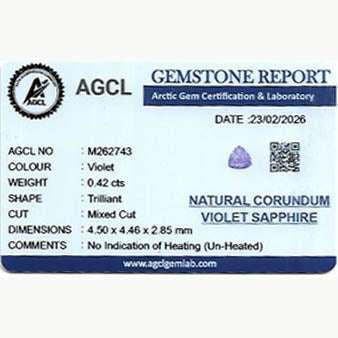
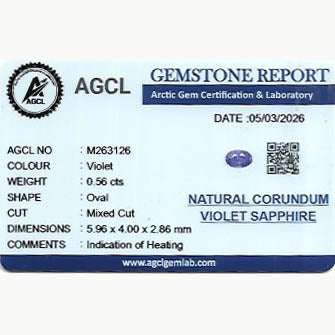
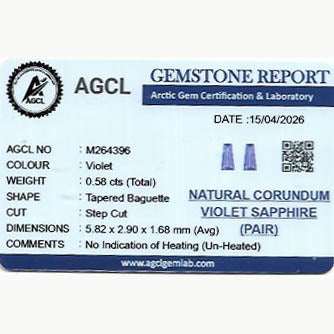
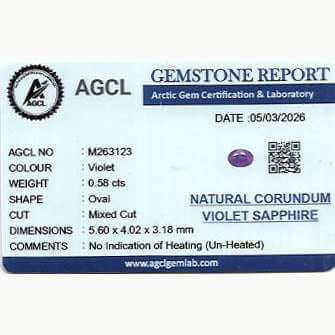
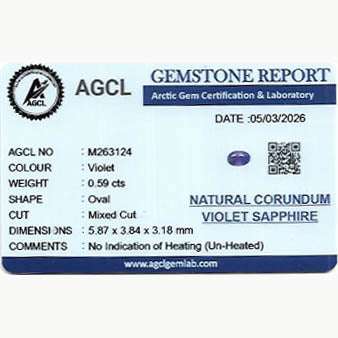
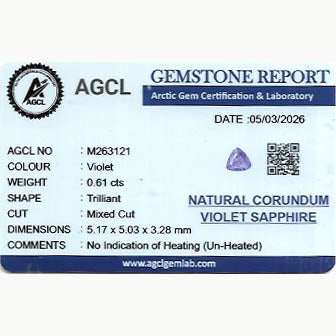
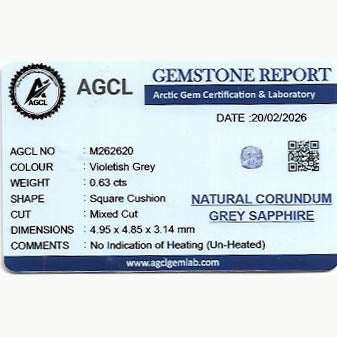
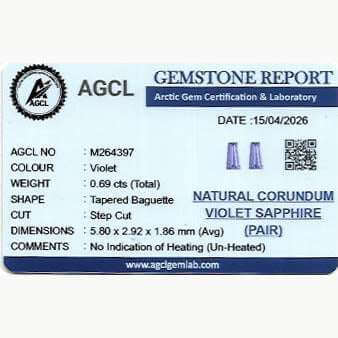
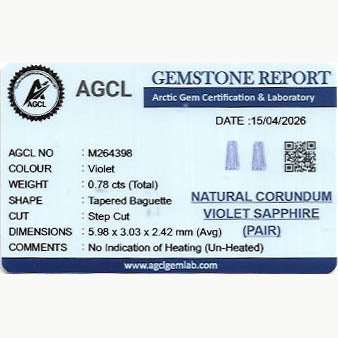
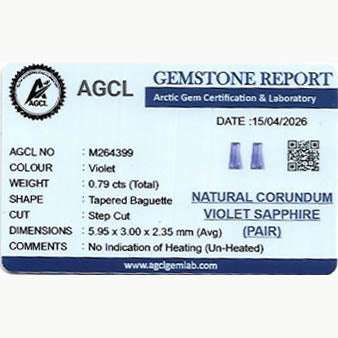
Which laboratory, and what a report is for. Five of our violet and purple stones carry a GIA report; most of the rest carry an AGCL report, and the listing names the laboratory either way. What any report does is identify the material, state whether it is natural or laboratory-grown, record detectable treatment indications, and print one color value. What it does not do is grade color, clarity or cut — GIA publishes that it "doesn't grade or provide quality analysis for sapphire or other colored stones." So read what the document covers rather than whose name is at the top of it. See our GIA report guide.
Our violet sapphire collection and our purple sapphire collection currently select on the same rule and land on the same stones, so do not go looking for two separate grids: there is one, and it holds both printed values. Every listing in it states the treatment, the origin, the laboratory and the report number where there is one, and says so plainly where there is none. By size: under 1 carat and over 1 carat.
Our Try-On program is strongly recommended for violet sapphire — the lighting shift, the specific blue-to-purple color position, and the way the stone reads in your actual environment cannot be assessed from a product photograph. Email crescentgems@gmail.com to arrange. Free US shipping; 14-day returns on every order.


Blue Star Sapphire Price Guide — What They Cost and Why
Read moreabout Blue Star Sapphire Price Guide — What They Cost and Why
Tsavorite Garnet Price Guide — What They Cost and Why
Read moreabout Tsavorite Garnet Price Guide — What They Cost and Why
Color-Change Sapphire Price Guide — What They Cost and Why
Read moreabout Color-Change Sapphire Price Guide — What They Cost and Why
Is Cat's-Eye Chrysoberyl Good for an Engagement Ring?
Read moreabout Is Cat's-Eye Chrysoberyl Good for an Engagement Ring?
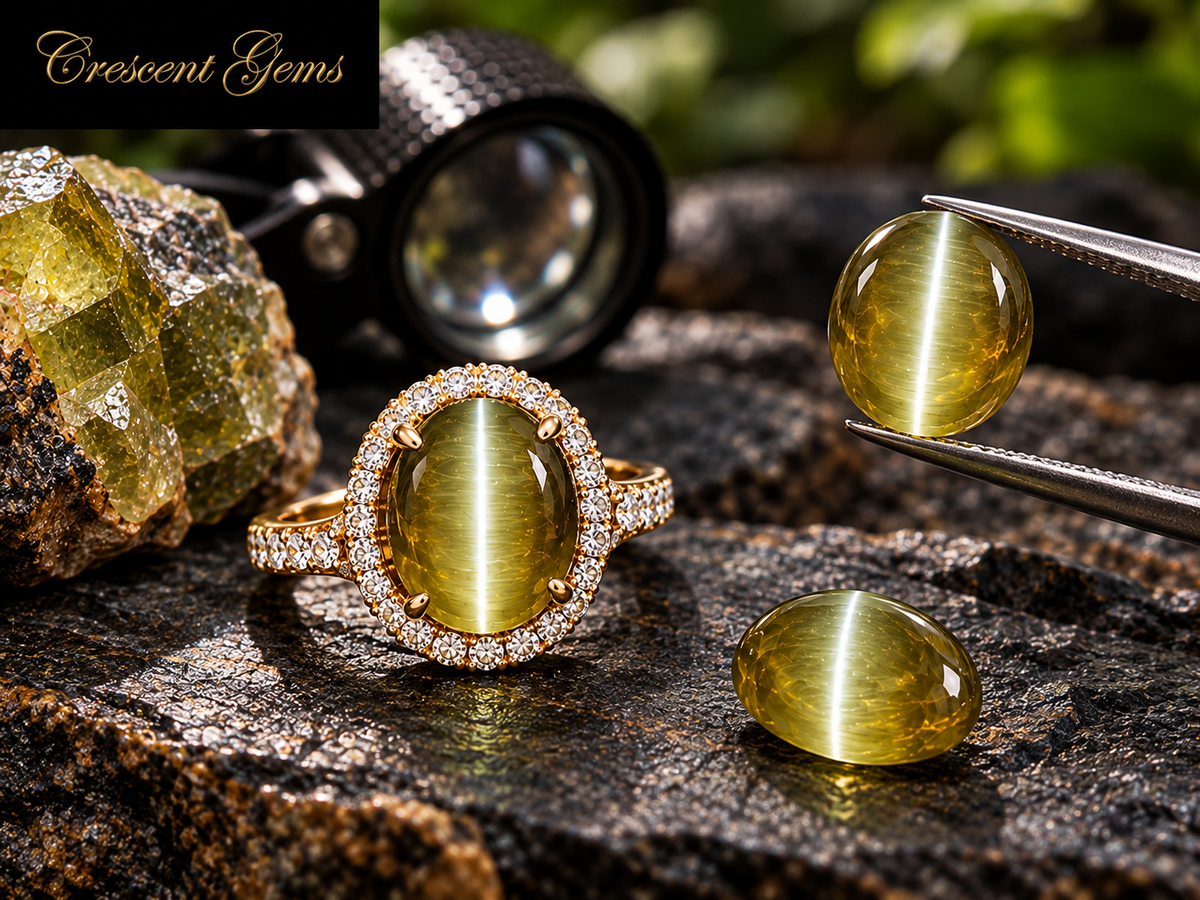
Cat's Eye Chrysoberyl Price Guide — What They Cost and Why
Read moreabout Cat's Eye Chrysoberyl Price Guide — What They Cost and Why