- by Ahmed Shareek
Pink Star Sapphire Price Guide — What They Cost and Why
- by Ahmed Shareek
Pink star sapphire is one of the color positions in which corundum shows asterism. This guide covers it specifically, as a companion to our blue star sapphire price guide, and it works from the stones we actually hold rather than from a market range we cannot source.
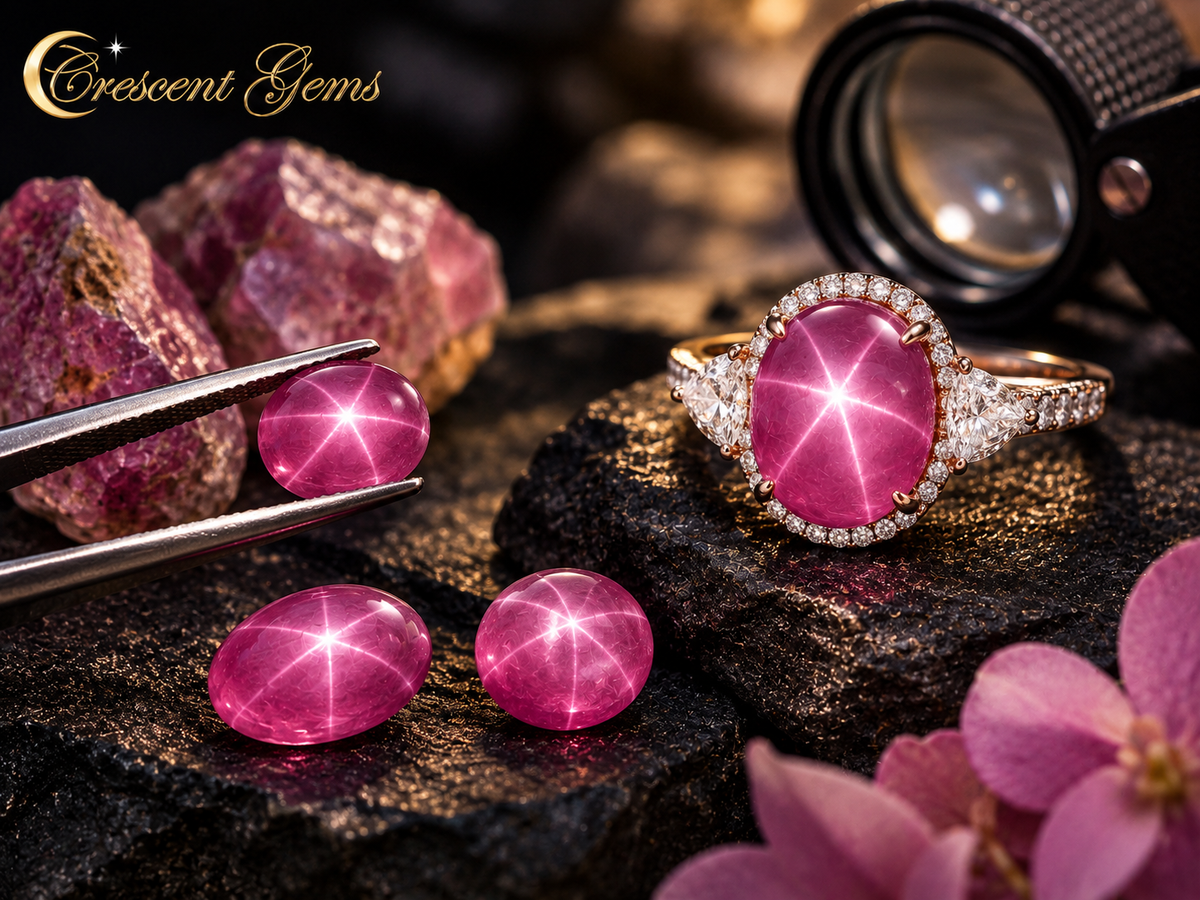
Pink star sapphire is corundum in the pink color range — chromium is the trace element that puts corundum there — carrying the rutile-silk inclusions that produce asterism. GIA describes the effect plainly: it is "caused by reflections from tiny, needle-like inclusions that are oriented in several specific directions." GIA's own journal Gems & Gemology sets out the geometry: three series of needle-like precipitates lying in planes parallel to the crystal's basal plane, forming angles of 60° with each other (Fall 2017). Cut as a cabochon, those three sets return the light to the eye as a star; what the dome changes is the surface those reflections come off. The needles are part of the crystal and survive cutting whatever shape the stone is given. Rutile silk is also not the only route to a star: GIA writes of "titanium diffusion, as used to create artificial stars in sapphire," and AGTA's disclosure code for diffusion covers asterism-producing inclusions — which is why the laboratory report, rather than the star, is what settles whether a stone is natural.
Pink, purple and violet star sapphire are listed interchangeably all over the trade. What settles which is which for a particular stone is not a definition but the color value its own report prints, and those values may be compound rather than a single word. The color printed on our pink star sapphire's report is Purplish Pink, and we publish it as printed rather than rounding it to one word. The other three star sapphires we hold each carry a different color value, and each is given on that stone's own product page. None of these reports ranks one color against another, and we do not supply a ranking in place of one.
This page publishes no per-carat price bands for pink star sapphire. A band is either a measurement we have made or a figure from a source we can name, and we have neither; a page that declines to grade the star has no business inventing a scale for the body color instead. So the only prices here are our own.
All stock figures on this page were read from our own listings on 16 November 2026. Per-carat figures are a stone's price divided by its carat weight, rounded to the nearest cent, and rounding to the nearest cent is the only rounding this page does.
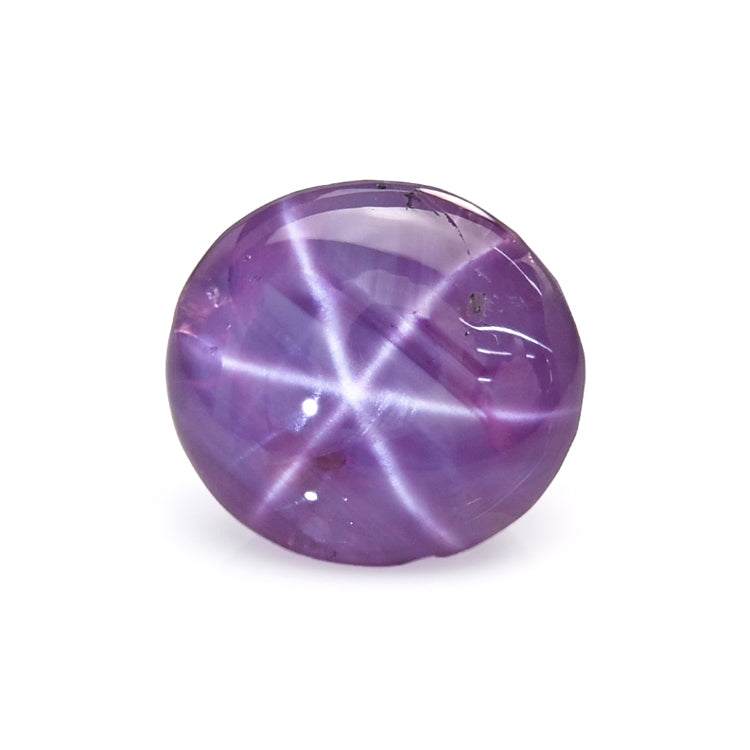
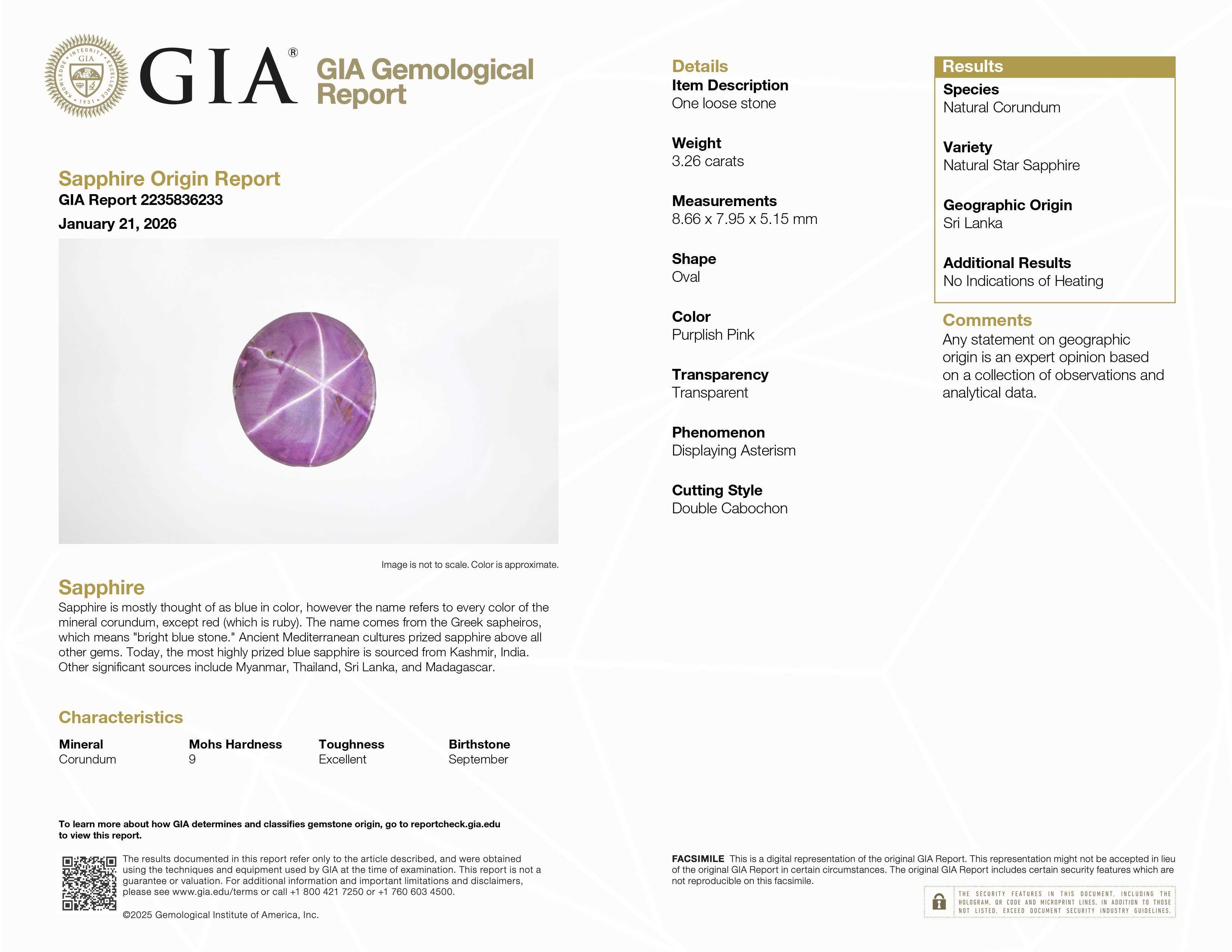
We hold one pink star sapphire: 3.26 ct at $2,834 in total, which is $2,834 ÷ 3.26 ct = $869.33 per carat. One stone is not a price range and we have not presented it as one.
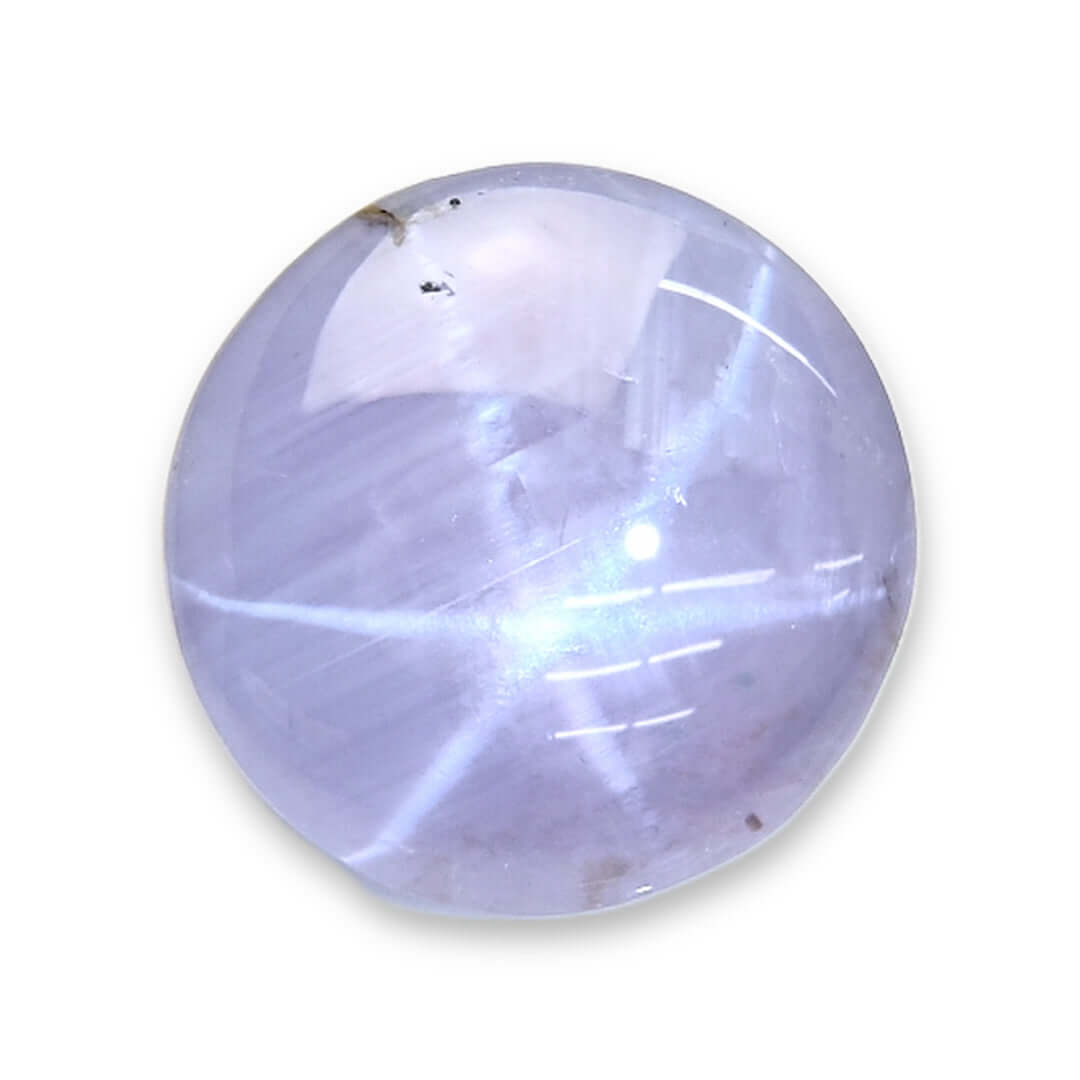
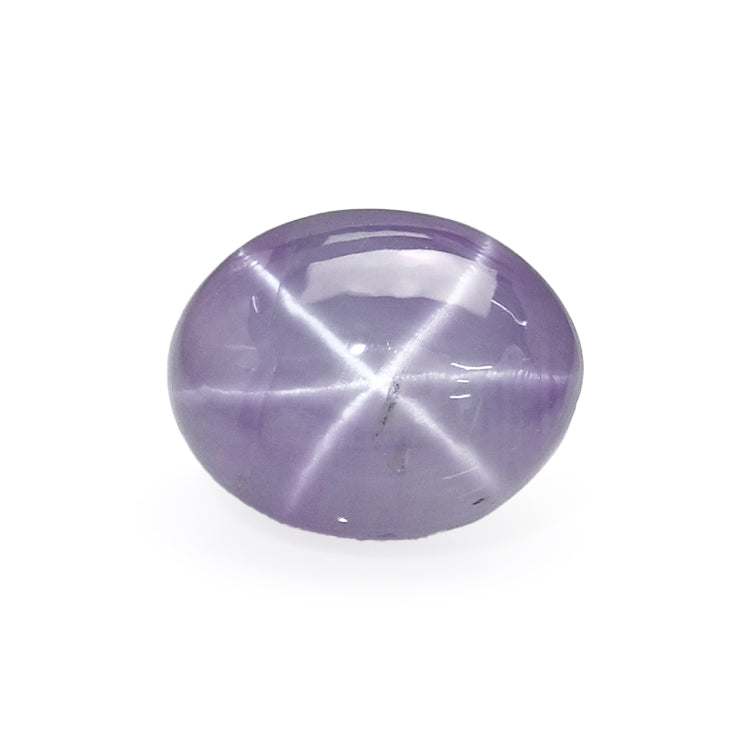
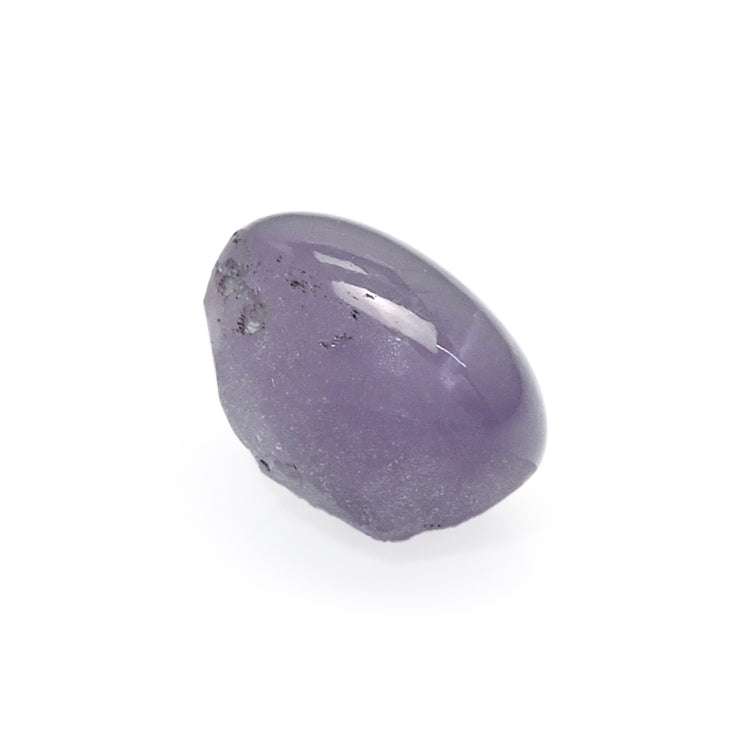
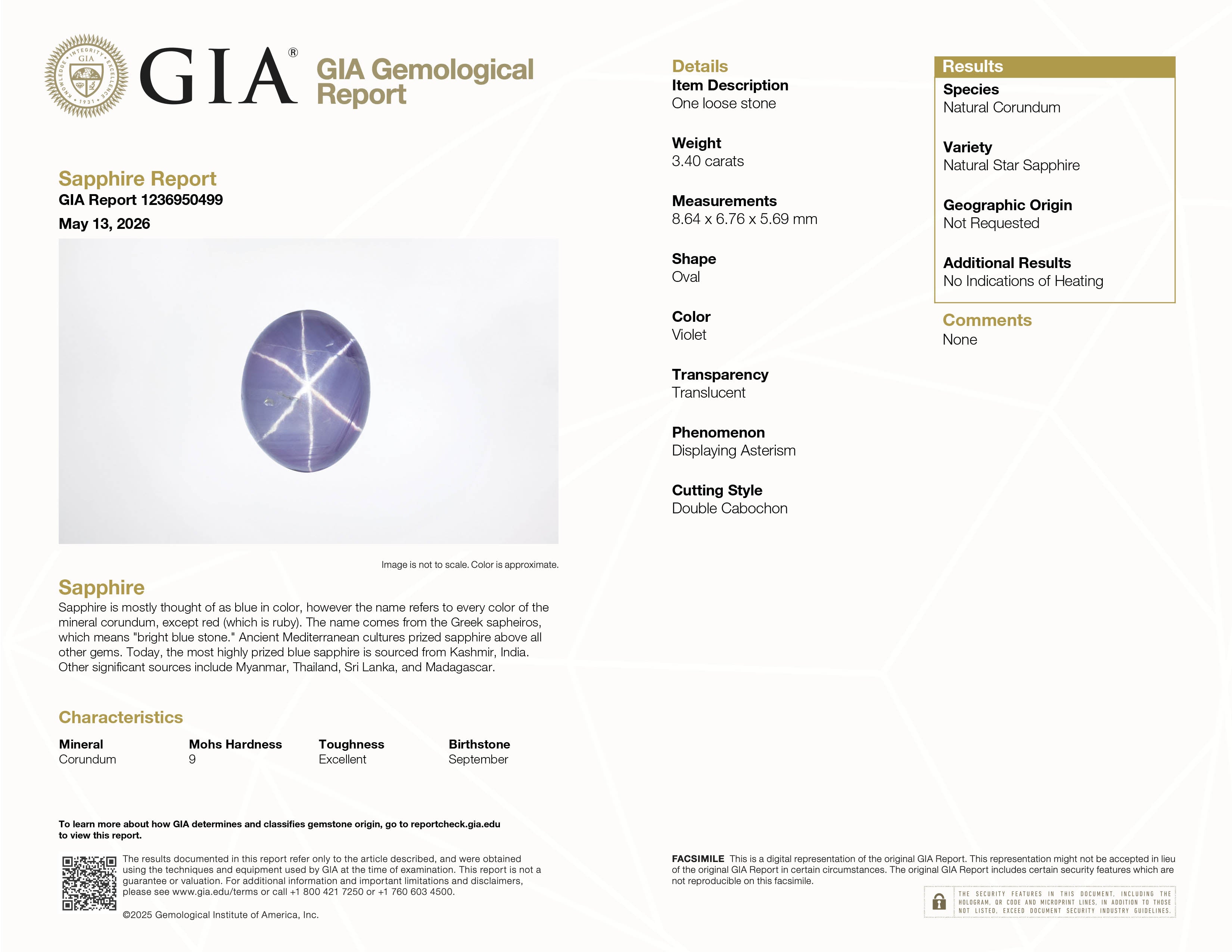
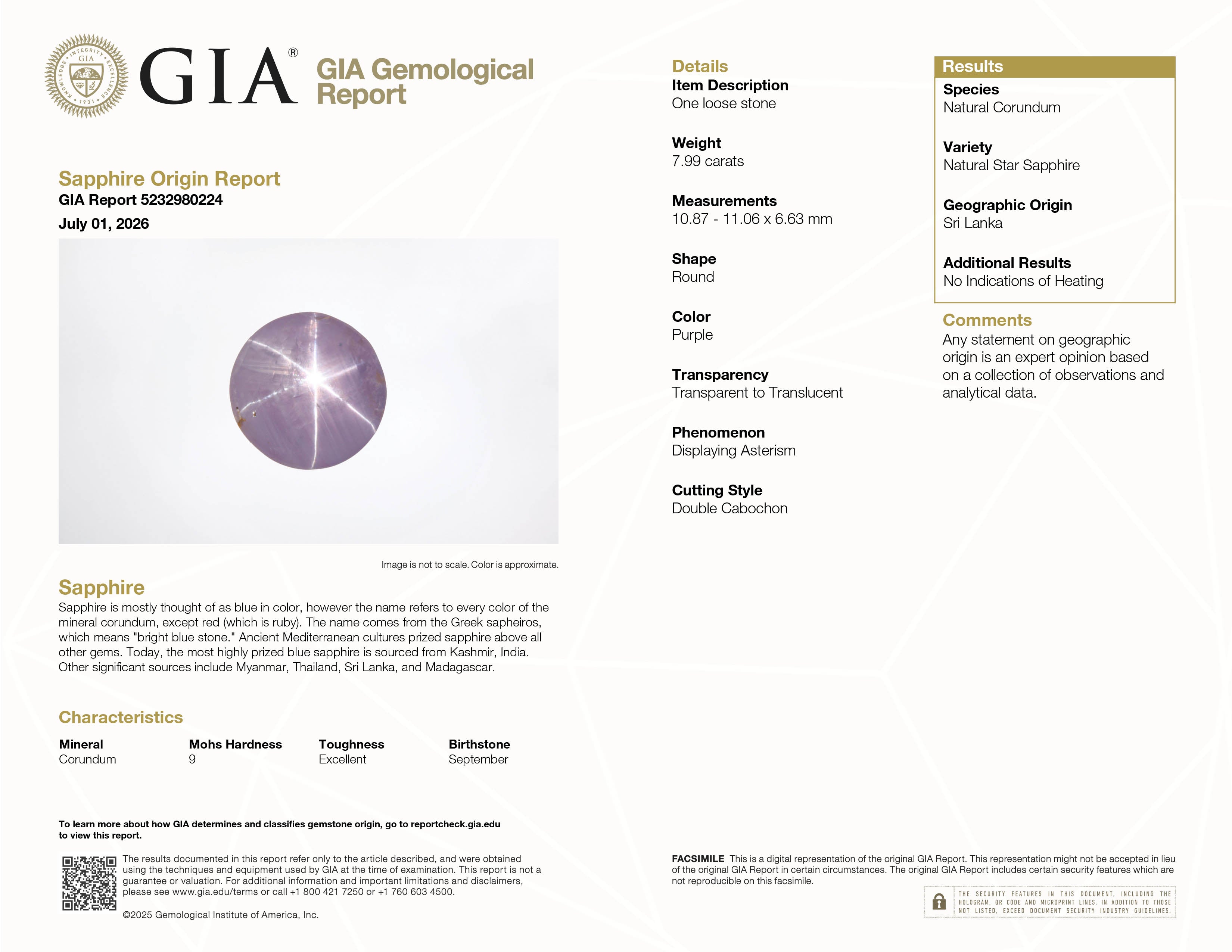
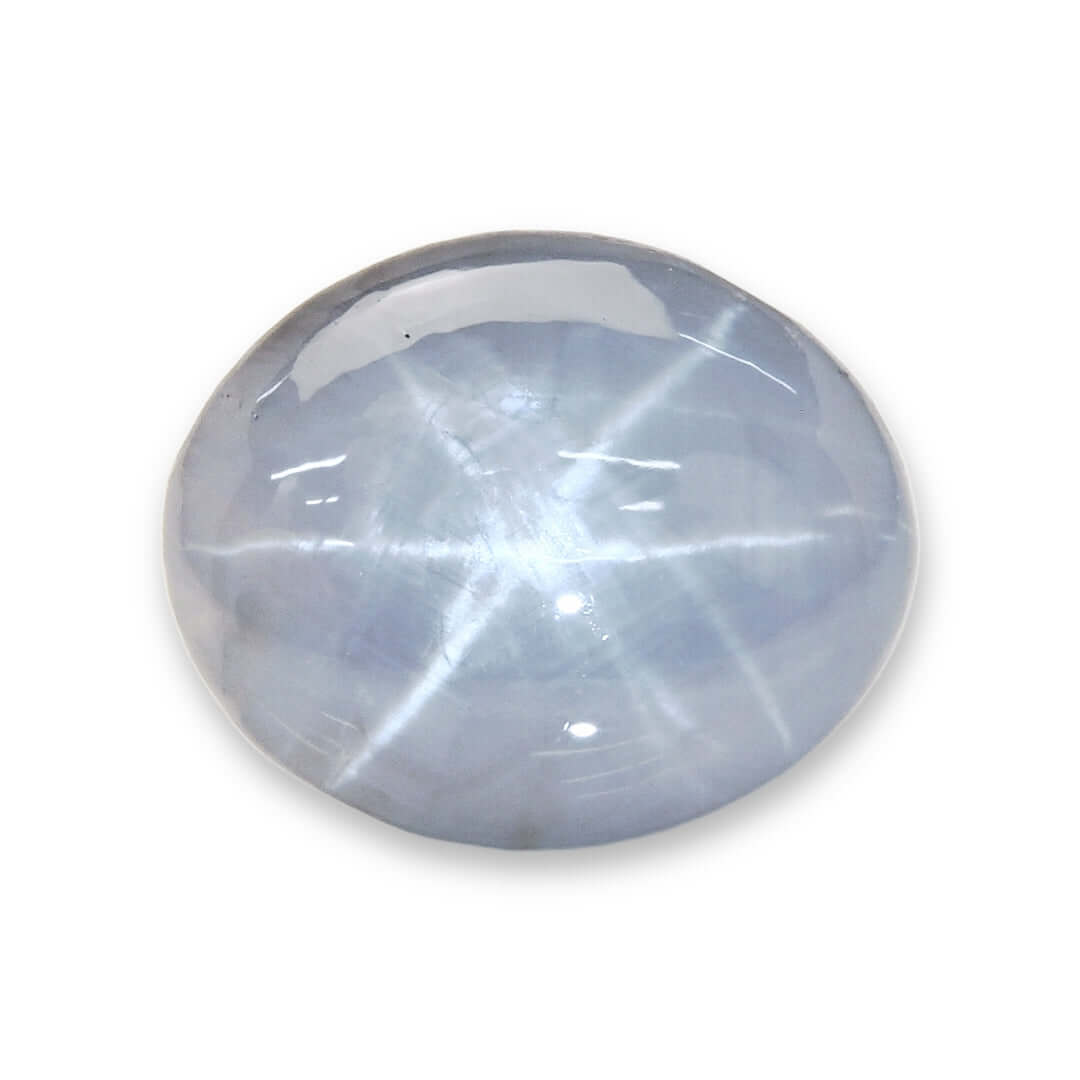
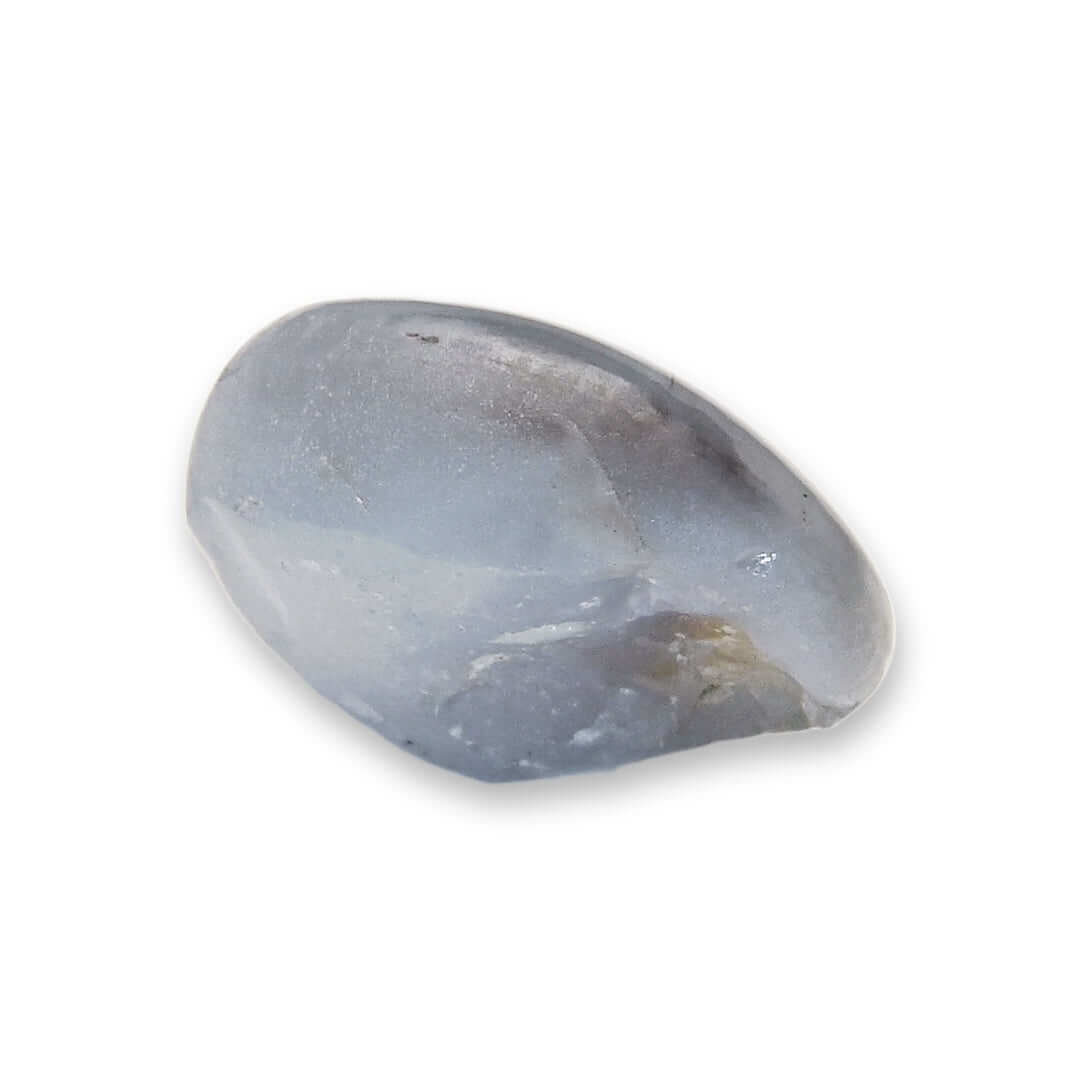
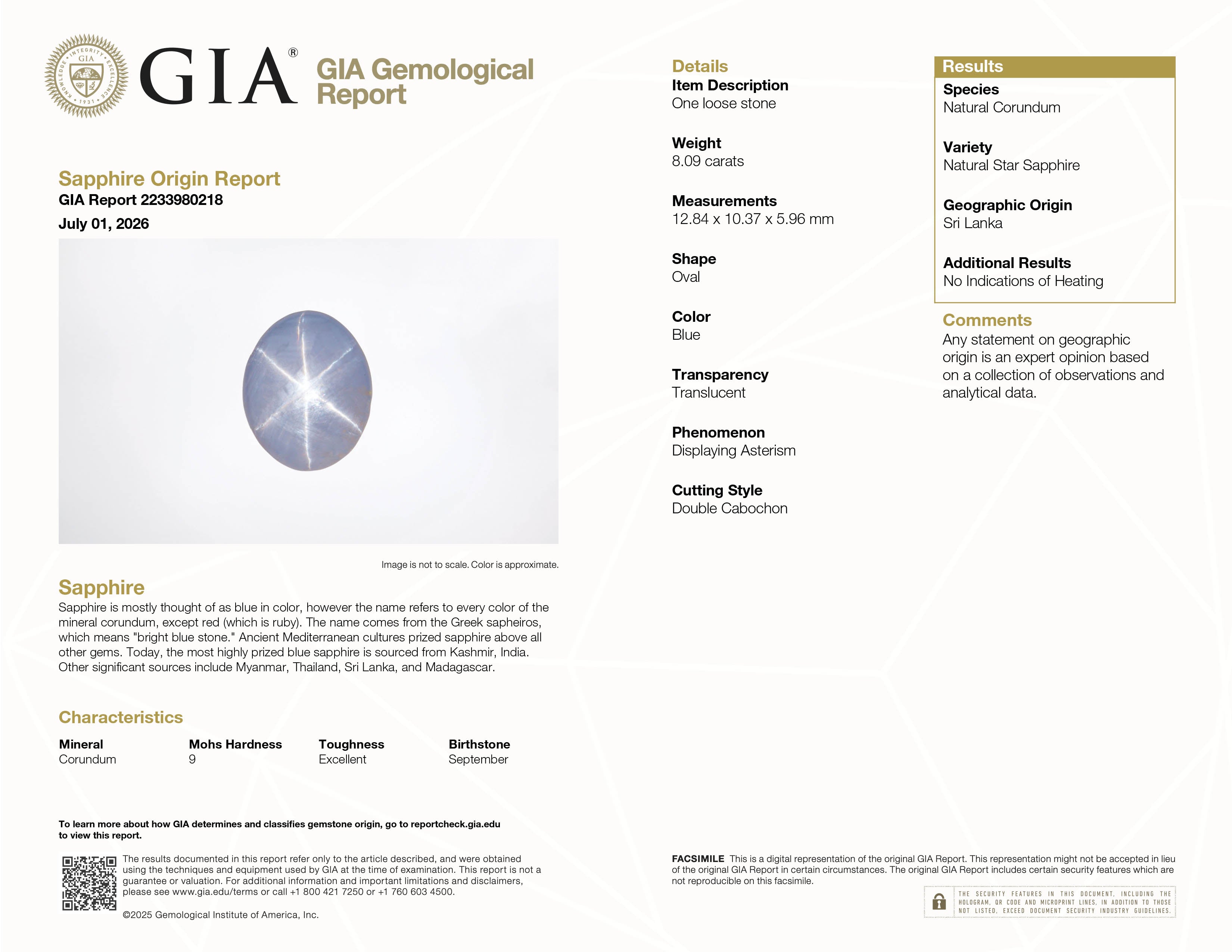
Our star sapphires in all are four listings and four stones, all four active, each a single stone with one in stock: the 3.26 ct pink one above, a 3.40 ct violet at $2,380, a 7.99 ct purple at $3,990 and an 8.09 ct blue at $4,040. All four are corundum, all four are cut as cabochons rather than faceted, and their weights run from 3.26 ct to 8.09 ct. Each stone's own per-carat figure is on its own product page. We do not rank the four against one another, and four stones in one shop is not a basis for a statement about the material at large — ours included.
The pink star sapphire is listed in our pink sapphire collection beside faceted stones, which makes one comparison available that we can actually stand behind: what the star costs per carat against what the faceted stones in the same collection cost per carat.
That collection listed sixteen items on the date above, and sixteen items is not sixteen stones. One listing is a matched pair whose $1,152 buys two stones together, so the sixteen listings are seventeen stones; a pair's price divided by its combined weight is not a single-stone figure and does not belong among the single-stone figures below, so the pair is excluded. One listing is the star cabochon itself, and two further listings are out of stock. That leaves twelve single faceted stones we actually hold, from 0.54 ct to 2.20 ct, seven of them heated and five unheated.
Their per-carat prices run from $400.00 to $2,521.93. Five of the twelve are cheaper per carat than the star and seven are dearer. Two things about that are better said than left to the reader: every one of the twelve is lighter than the 3.26 ct star, so the two groups do not overlap in weight at all, and the twelve mix heated and unheated stones where the star is unheated. It is a comparison inside one color and one catalogue, not a like-for-like comparison of equivalent stones, and it is why we publish no rule about what a star cabochon costs beside a faceted stone.
This page does not price pink star sapphire on the quality of its star, and the reason is worth stating plainly.
The trade does price star stones on the phenomenon, and that much is not in dispute. What does not exist is any published laboratory grading of it. GIA states that it "doesn't grade or provide quality analysis for sapphire or other colored stones." The Laboratory Manual Harmonisation Committee, whose information sheets standardize report wording across the major laboratories, publishes none that covers asterism. CIBJO defines the category and stops there. So a description of how a particular star looks is the seller's own opinion — ours included — and no report can be produced to substantiate it.
What a report or an invoice can actually record about a pink star sapphire is its body color, its carat weight, and what documentation comes with it. Those are the things worth asking a seller about. The star is the reason the stone exists. It is simply not something any laboratory will grade for you.
The general shape of it is this: a document substantiates only the claims it addresses. We hold a GIA report on our own stone, and that report says nothing about the quality of its star, so it cannot be offered as evidence for one.
Per-carat price and total price are different numbers and it is easy to conflate them. Our stone is $2,834 in total and $869.33 per carat. At the same per-carat level, a stone a quarter of the weight comes to roughly a quarter of the total. The per-carat figure is what lets you compare stones of different weights; the total is what you pay.
We have not published a breakdown of price by weight, because we have no source for one. Anyone who tells you pink star sapphire costs a specific multiple more per carat at one weight than at another is estimating, and so would we be.
Laboratory-grown star corundum exists and is not always easy to separate from natural material by eye. We have no source for how much of it is in circulation, so we put no figure and no frequency on it — but it is the reason a report does real work on a stone like this. What a report does is identify the material, state whether it is natural or laboratory-grown, and record detectable treatment indications. Where the stone came from is a different question, answered by a different service.
Our stone is accompanied by GIA Sapphire Origin Report #2235836233, which places its geographic origin in Sri Lanka. GIA prints its own caveat beside that finding, and we would rather quote it than paraphrase it: "Any statement on geographic origin is an expert opinion based on a collection of observations and analytical data." The Laboratory Manual Harmonisation Committee makes the same point about reports generally — "All findings described in the report are opinions expressed by the laboratory." Those are opinions reached by qualified examiners, and that is exactly how we present them.
The same report prints Additional Results: No Indications of Heating, and that is where the word unheated in the listing comes from. We use unheated for exactly that and no further, because it is a finding about heat. We do not write untreated, which is a larger claim about the whole history of the stone and is not ours to make. If that distinction matters to your purchase, ask us for the report and read the field yourself; we send a scan on request.
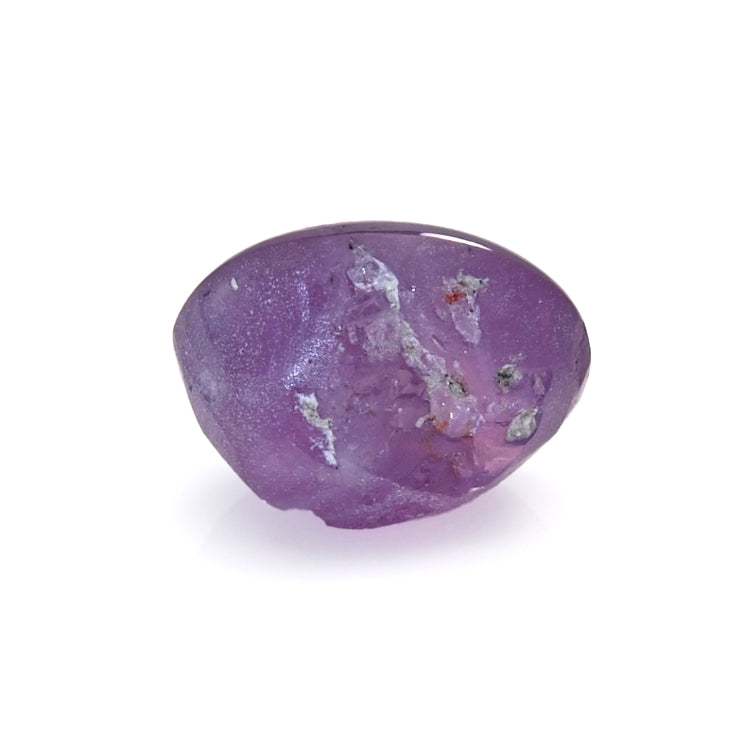
The report prints Shape Oval and Cutting Style Double Cabochon as two separate fields, and the stone measures 8.66 × 7.95 × 5.15 mm.
Origin is also not a quality grade. Where a stone was formed and how it looks are two separate findings, and pricing one as though it were the other is a habit worth breaking.
We do not publish a market range for pink star sapphire, because we have no measurement and no named source for one. What a particular stone costs turns on its body color, its carat weight, and what documentation comes with it. Our own stock is one stone: 3.26 ct at $2,834 in total, which works out at $869.33 per carat.
Both are color positions corundum occurs in, and a star sapphire can be either. For a particular stone the question is settled by the color value its laboratory report prints rather than by a definition, and those values may be compound rather than a single word. Our own stone is a case in point: GIA Sapphire Origin Report #2235836233 prints its color as Purplish Pink, and we publish the report's value rather than rounding it to one word.
No. GIA states that it "doesn't grade or provide quality analysis for sapphire or other colored stones," and the Laboratory Manual Harmonisation Committee, whose information sheets standardize report wording across the major laboratories, publishes none that covers asterism. A report will record that a stone displays the phenomenon; it will not rate it. So any description of how a particular star looks is the seller's own opinion, ours included, which is why we would rather send you video of the stone than hand you an adjective.
It goes both ways, which is why we publish no rule about it. Of the twelve single faceted stones we hold in the same pink sapphire collection, five are cheaper per carat than the 3.26 ct star at $869.33 per carat and seven are dearer, their per-carat prices running from $400.00 to $2,521.93. Those twelve run from 0.54 ct to 2.20 ct and mix heated and unheated stones, so not one of them matches the star on weight or on treatment.
One. A 3.26 ct pink star sapphire at $2,834, or $869.33 per carat, accompanied by GIA Sapphire Origin Report #2235836233, which places its geographic origin in Sri Lanka. One stone is not a price range and we have not presented it as one.
One stone, currently in stock: our 3.26 ct natural unheated pink star sapphire from Sri Lanka, $2,834 in total and $869.33 per carat, accompanied by GIA Sapphire Origin Report #2235836233. Our other three star sapphires are the 3.40 ct violet star sapphire at $2,380, the 7.99 ct purple star sapphire at $3,990 and the 8.09 ct blue star sapphire at $4,040. We can send video of the stone before you buy.
Have a question about our pink star sapphire, or want to see it on video before buying? Email crescentgems@gmail.com — we respond within one business day. Shipping is free at any order value to the United States, Canada, China, Japan, Australia, New Zealand, Germany and Austria, and Canadian orders ship with duties included. To the other countries we ship to, it is $60 up to $499 and free above that. Import duty and tax, where a destination other than Canada charges them, are assessed locally and paid by the recipient on delivery. 14-day returns on every order.

CG8293
Prices are shown in your local currency and may change.
CG8293


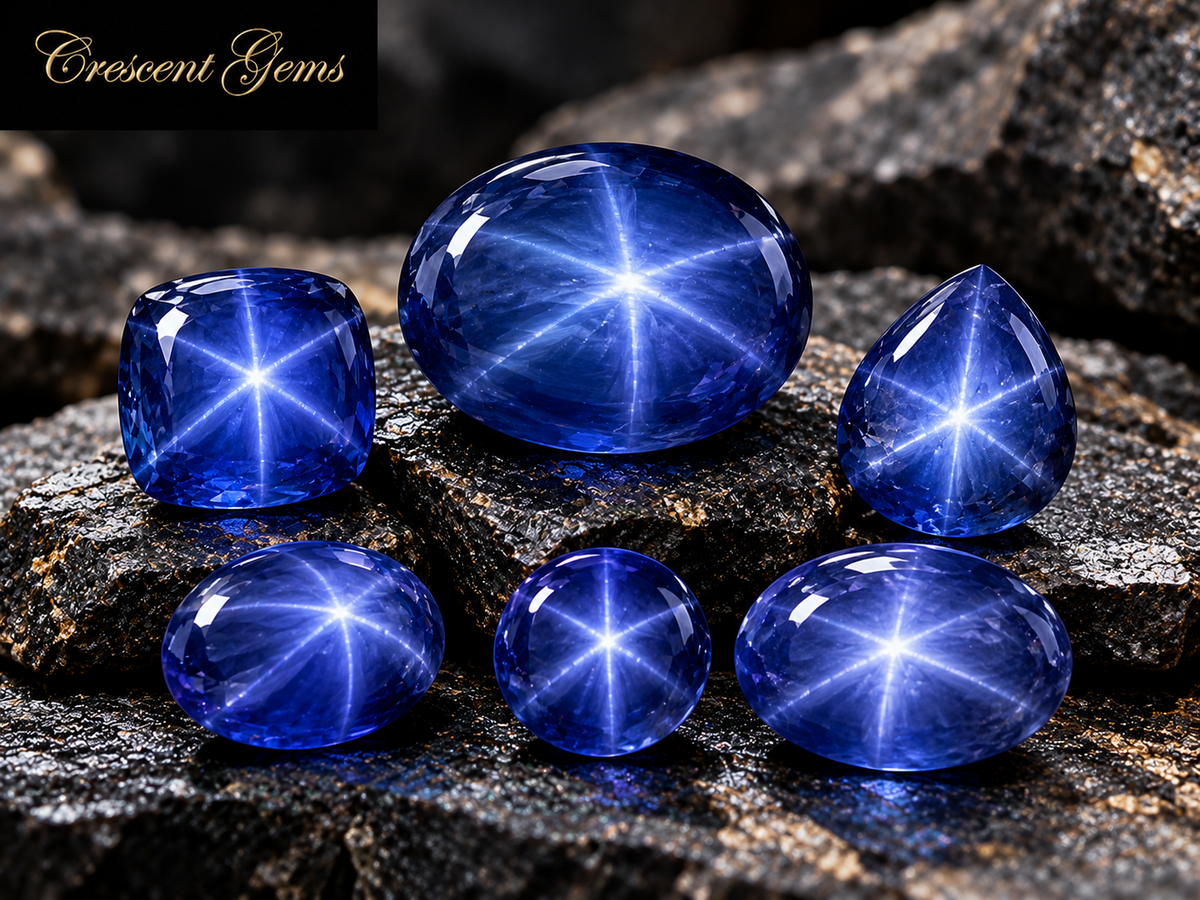
Blue Star Sapphire Price Guide — What They Cost and Why
Read moreabout Blue Star Sapphire Price Guide — What They Cost and Why
Tsavorite Garnet Price Guide — What They Cost and Why
Read moreabout Tsavorite Garnet Price Guide — What They Cost and Why
Color-Change Sapphire Price Guide — What They Cost and Why
Read moreabout Color-Change Sapphire Price Guide — What They Cost and Why
Is Cat's-Eye Chrysoberyl Good for an Engagement Ring?
Read moreabout Is Cat's-Eye Chrysoberyl Good for an Engagement Ring?
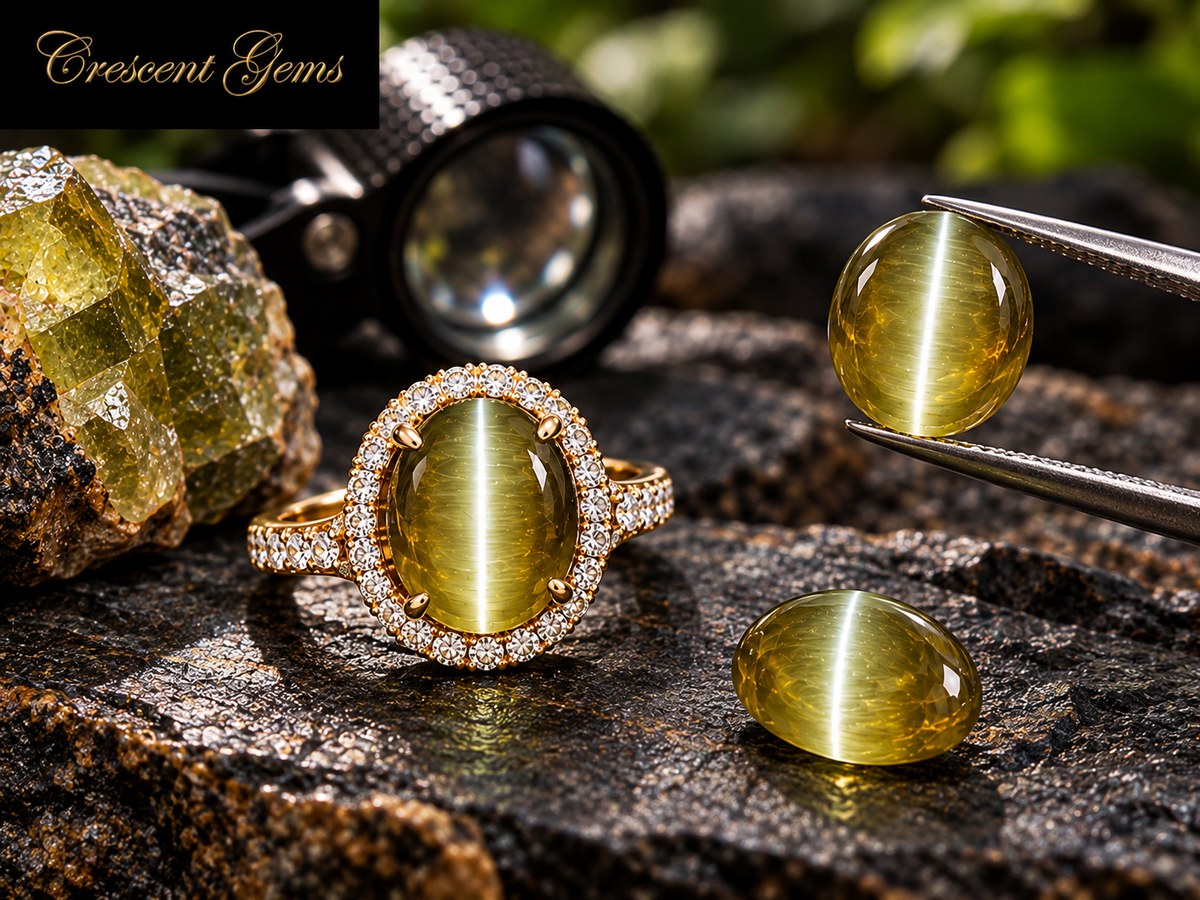
Cat's Eye Chrysoberyl Price Guide — What They Cost and Why
Read moreabout Cat's Eye Chrysoberyl Price Guide — What They Cost and Why