Buying a loose gemstone gives you independence, you get the freedom to make your own choice, your own jewelry design.
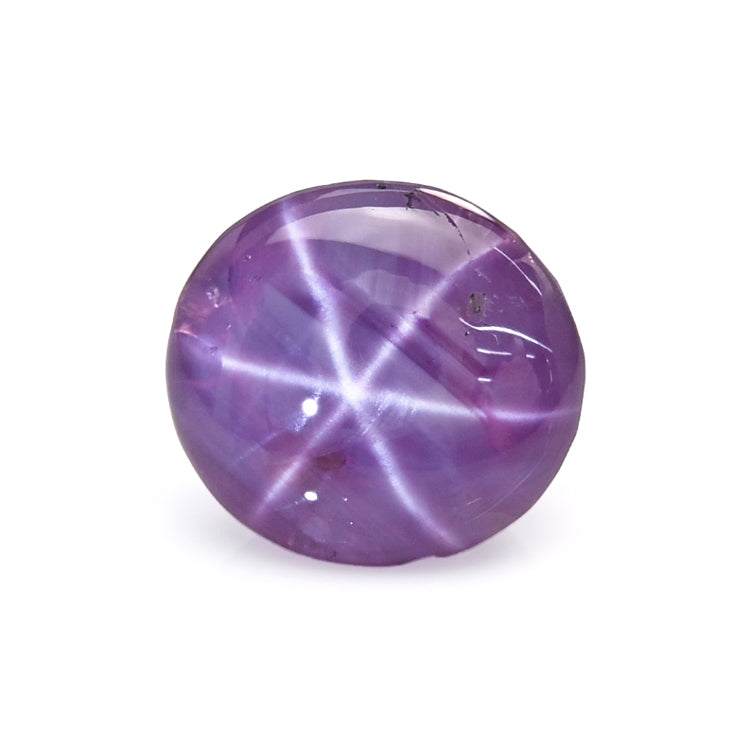
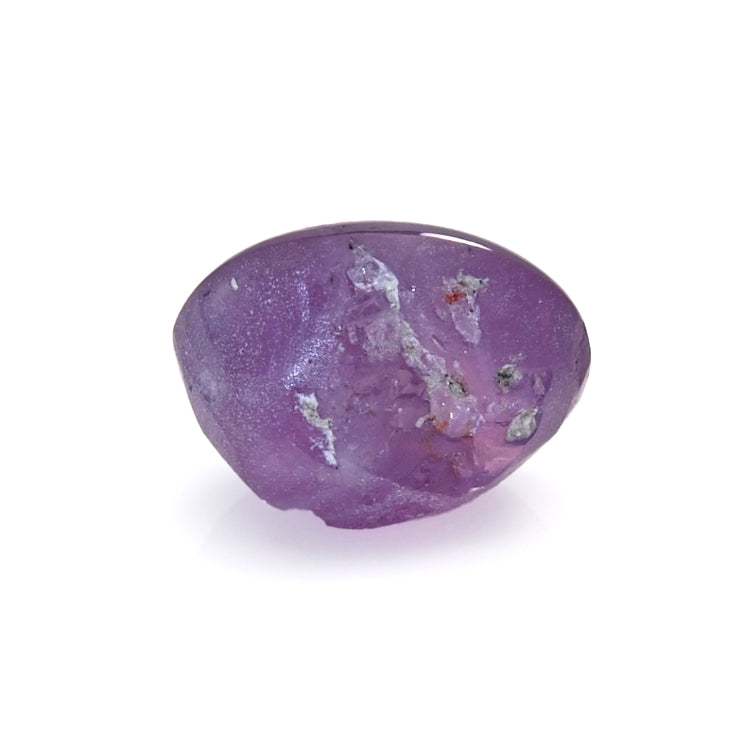
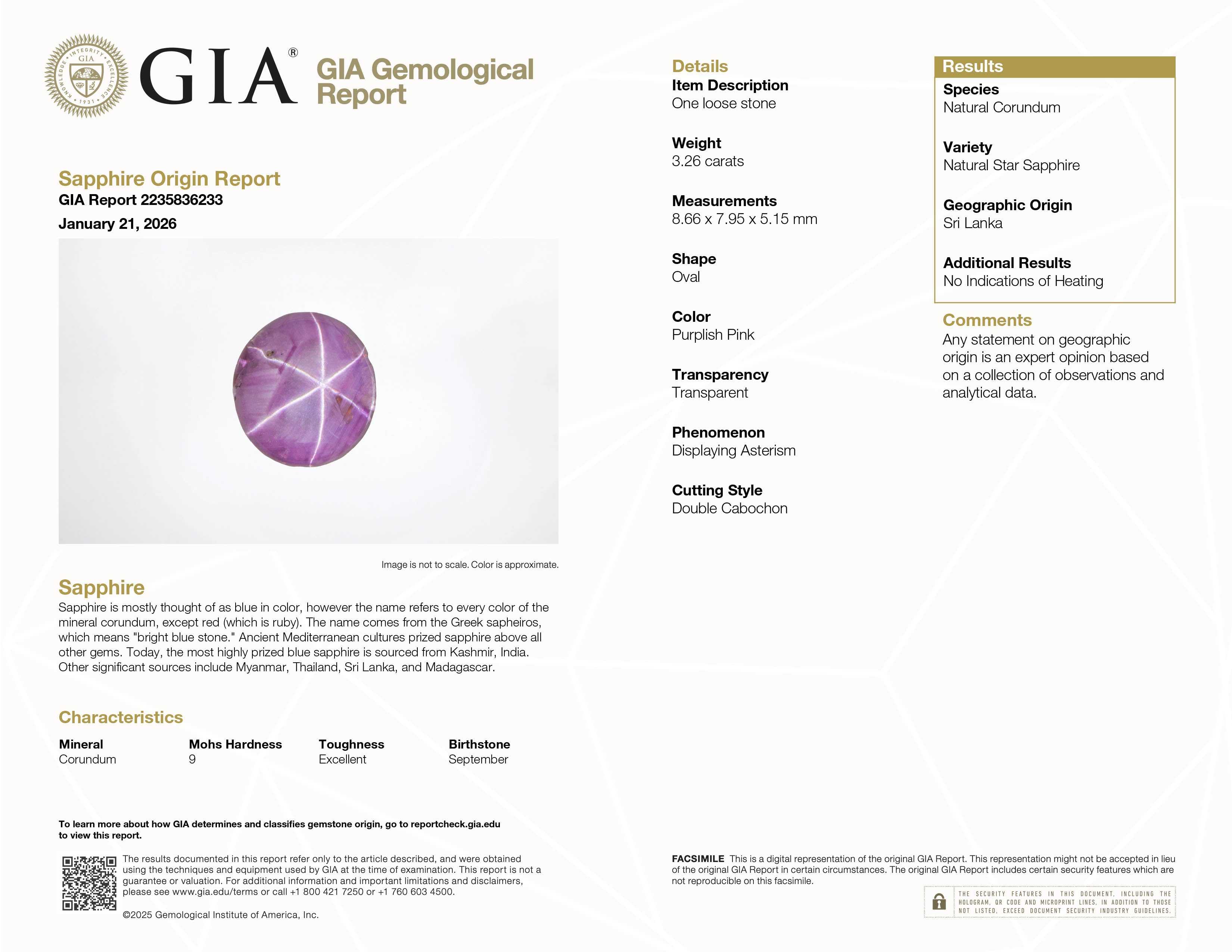
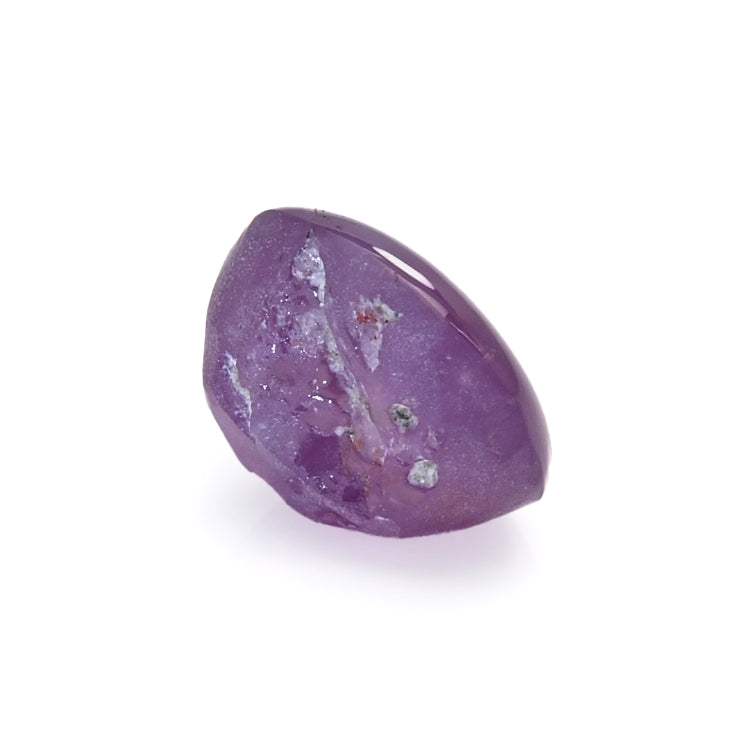
A natural 3.26 carat star sapphire, shape Oval, cutting style Double Cabochon, documented on GIA Sapphire Origin Report #2235836233, dated 21 January 2026. The report records species Natural Corundum, variety Natural Star Sapphire, a weight of 3.26 carats, measurements of 8.66 x 7.95 x 5.15 mm, color Purplish Pink and transparency Transparent; its Phenomenon field prints Displaying Asterism. Under Additional Results the report prints No Indications of Heating. Its Geographic Origin field reads Sri Lanka, and the comment the report prints about an origin statement is quoted in full below.
Expert Opinion
Ahmed Shareek's Assessment
"A 3.26 carat oval double cabochon that carries a GIA origin opinion is what I was buying here. Almost everything on this page is the report's. The report's: species Natural Corundum, variety Natural Star Sapphire, shape Oval, cutting style Double Cabochon, color Purplish Pink, Displaying Asterism in the Phenomenon field, No Indications of Heating under Additional Results, and Sri Lanka in the Geographic Origin field as GIA's expert opinion, which is how GIA itself describes it on the paper. What is mine is the decision to stop where the report stops. GIA does not grade colored stones, so I do not describe the quality of the star, and I would rather you looked at the stone than read my adjectives."
What GIA Sapphire Origin Report #2235836233 Records
The document's own printed header reads Sapphire Origin Report. GIA's published service catalogue describes this class of service as "An Identification Report, with geographic origin added". Of what a colored-stone report does, GIA publishes that it will "assess the characteristics of a stone (weight, measurements, shape, cutting style and color)", "determine if it is natural or laboratory-grown" and "indicate detectable treatments". This report does all of that and adds the origin opinion. It carries no color grade, no clarity grade and no grade for the star.
The Star
The Phenomenon field of GIA Sapphire Origin Report #2235836233 prints Displaying Asterism. That field is an identification field, in the same family as Species and Variety: it records that the laboratory observed the stone displaying asterism. The report's Variety field states the same observation as a variety name, Natural Star Sapphire.
GIA publishes the mechanism. "The star effect is called asterism. It's caused by reflections from tiny, needle-like inclusions that are oriented in several specific directions." In its own journal GIA names the inclusion species as rutile, in needle form, and states that "The bright lines of different orientations intersect at a single point to form a star only when the needle directions lie in the same plane." GIA also publishes why a star stone is domed rather than faceted: "Star corundum must be cut as a cabochon to display asterism", and "The cabochon-cut surface of the stone acts as a convex lens, which focuses the scattered light from multitudes of needles inside the crystal into a bright line." Those are GIA's published statements about how asterism works. They are not findings about this stone.
What nobody grades. GIA states that "GIA doesn't grade or provide quality analysis for sapphire", and GIA publishes no grade for a star. So this page states nothing about the quality of the star, in its prose, in its specification table or in its structured data. The report's authority stops at Displaying Asterism, and this page stops there too.
How the star is seen. GIA's own guidance on photographing gems states that "Direct lighting ... is also sometimes used to bring out gemstone phenomena such as asterism (a star effect) or chatoyancy (a cat's eye effect)." A star is seen under direct lighting, from a single light source. Ask us for more images, or use the Try Before You Buy option, and look at the stone yourself under the light you intend to use.
Where This Star Sapphire Comes From
The Geographic Origin field of GIA Sapphire Origin Report #2235836233 reads Sri Lanka. GIA's report places the geographic origin of this stone in Sri Lanka. The report prints, under Comments, what that statement is:
"Any statement on geographic origin is an expert opinion based on a collection of observations and analytical data."
That sentence is GIA's own and it is printed on the paper that comes with the stone. It is why this page states the origin as GIA's expert opinion, in GIA's own words, and adds nothing to it.
Buying Guidance
A few practical points to weigh before purchasing this specific stone:
-
Read the shape field and the cutting-style field separately. The report prints shape Oval and cutting style Double Cabochon. Shape is the face-up outline; cutting style is how the surfaces are finished. GIA defines a double cabochon as having "both a rounded top and bottom", against a simple cabochon's "rounded top and flat bottom". A single phrase such as "oval cabochon" collapses the two fields into one and drops the report's own word Double, so this page names each field separately.
-
Read the origin line as GIA writes it. The report gives Sri Lanka and prints, in the same document, that any statement on geographic origin is an expert opinion based on a collection of observations and analytical data. That is the strongest thing this page can say about where the stone came from, and it is said in GIA's words.
-
Understand what Mohs 9 does and does not tell you. Mohs measures resistance to scratching and abrasion only. Toughness is the separate property that describes how a stone resists chipping and breaking; this report prints it as "Excellent", and GIA publishes no defined toughness scale, so the report's word is quoted as printed and is not ranked inside one.
-
Choose a setting with the depth in mind. For a ring we recommend a mounting that shields the girdle edge of a domed stone, and the 5.15 mm depth on the report is worth showing to your jeweller before a design is settled. That recommendation is Crescent Gems' own: GIA publishes no setting guidance for sapphire.
-
Check the report against the stone. Read the weight and the measurements off the report and match them to the stone in front of you before finalizing any loose gemstone purchase.
-
Use the Try Before You Buy option if you would like to see the stone in hand, under your own lighting, before finalizing the purchase.
Learn More About This Gemstone
Gemstone Data — At a Glance
| Item # |
CG8288 |
| Carat Weight |
3.26 ct - as printed on the GIA report |
| Species / Variety |
Natural Corundum / Natural Star Sapphire - both as printed on the GIA report |
| Shape |
Oval - as printed on the GIA report |
| Cutting Style |
Double Cabochon - as printed on the GIA report |
| Dimensions |
8.66 x 7.95 x 5.15 mm - as printed on the GIA report |
| Color |
Purplish Pink - as printed on the GIA report (GIA colored-stone reports carry no color grade) |
| Phenomenon |
Displaying Asterism - as printed on the GIA report. GIA does not grade star quality, so no statement about the star's quality is made on this page. |
| Transparency |
Transparent - as printed on the GIA report |
| Additional Results |
No Indications of Heating - as printed on the GIA report |
| Geographic Origin |
Sri Lanka - GIA's expert opinion, as the report itself states |
| Report Comment |
"Any statement on geographic origin is an expert opinion based on a collection of observations and analytical data." - printed on the GIA report |
| Clarity |
GIA colored-stone reports carry no clarity grade, and Crescent Gems states none for this stone |
| Hardness |
9 (Mohs) - as printed on the GIA report. Mohs measures resistance to scratching and abrasion only. |
| Toughness |
"Excellent" - as printed on the GIA report. GIA publishes no defined toughness scale, so the report's word is quoted as printed. |
| Birthstone |
September - as printed in the Characteristics panel of the GIA report, and given to SAPPHIRE the variety, not to corundum the species |
| Laboratory Report |
GIA Sapphire Origin Report #2235836233, 21 January 2026 |
Why Choose this 3.26 ct Pink Star Sapphire, Oval Double Cabochon?
The GIA report records the identification, the measurements, the phenomenon, the heating finding and the origin opinion: Natural Corundum, variety Natural Star Sapphire, 3.26 carats, 8.66 x 7.95 x 5.15 mm, shape Oval, cutting style Double Cabochon, color Purplish Pink, transparency Transparent, Displaying Asterism in the Phenomenon field, No Indications of Heating under Additional Results, and Sri Lanka in the Geographic Origin field as GIA's expert opinion. That is the whole of what the report records.
What is not on the report is said so on this page. A GIA colored-stone or origin report carries no color grade and no clarity grade, and GIA does not grade colored stones at all, so there is no grade for the star either: nothing on this page describes the quality of the star. The price per carat is our arithmetic on our own asking price, not a report field. The uses suggested at the foot of the page are ours.
Key Points of this Natural Star Sapphire
-
GIA Sapphire Origin Report #2235836233
Dated 21 January 2026. Records species, variety, weight, measurements, shape, cutting style, color, transparency, the phenomenon, the heating finding and an opinion on geographic origin.
-
Species Natural Corundum, Variety Natural Star Sapphire
Both as printed on the report. The report prints the word Natural in each of the two fields.
-
Phenomenon: Displaying Asterism
As printed on the report. GIA does not grade star quality, so no statement about the star's quality is made on this page.
-
Additional Results: No Indications of Heating
As printed on the report, in the report's own wording.
-
Geographic Origin: Sri Lanka
GIA's expert opinion, and the report prints that any statement on geographic origin is an expert opinion based on a collection of observations and analytical data.
-
3.26 Carats, 8.66 x 7.95 x 5.15 mm
The weight and measurements printed on the report.
-
Shape Oval, Cutting Style Double Cabochon
Two separate fields on the report, making two separate statements, named separately here.
-
Color Purplish Pink, Transparency Transparent
Both as printed on the report. A GIA colored-stone report carries no color grade.
-
Mohs 9, Toughness "Excellent"
From the report's Characteristics panel. Mohs measures resistance to scratching; toughness is the separate property that describes how a stone resists chipping and breaking. GIA publishes no defined toughness scale, so the report's word is quoted as printed.
-
September Birthstone of SAPPHIRE the Variety
The report's Characteristics panel prints Birthstone: September. September is given to sapphire the variety, not to corundum the species.
Features
- Carat Weight: 3.26 Carats
- Species: Natural Corundum
- Variety: Natural Star Sapphire
- Dimensions: 8.66 x 7.95 x 5.15 mm (as printed on the GIA report)
- Shape: Oval
- Cutting Style: Double Cabochon
- Color: Purplish Pink - as printed on the GIA report
- Transparency: Transparent - as printed on the GIA report
- Phenomenon: Displaying Asterism - as printed on the GIA report
- Additional Results: No Indications of Heating - as printed on the GIA report
- Geographic Origin: Sri Lanka - GIA's expert opinion on the report
- Clarity: GIA colored-stone reports carry no clarity grade, and Crescent Gems states none
- Laboratory Report: GIA (Gemological Institute of America), Sapphire Origin Report #2235836233, 21 January 2026
- Hardness: 9 on the Mohs scale - scratch and abrasion resistance only
- Toughness: "Excellent" as printed on the report - GIA publishes no defined toughness scale, so the report's word is quoted as printed
This Particular Stone
This is a natural gemstone: the report prints Natural Corundum and Natural Star Sapphire. Once it is sold it cannot be reordered or reproduced.
Care of this 3.26 ct Pink Star Sapphire, Oval Double Cabochon
GIA publishes care guidance for sapphire, and it states that warm, soapy water is always safe. GIA's guidance on ultrasonic and steam cleaners is conditional on the stone, and this page does not reproduce those conditions.
What we prefer, which is ours and not GIA's. We clean a stone like this one with warm soapy water and a soft brush, and we would not put a cabochon we did not set through an ultrasonic or a steam cleaner, because we cannot see how it is held. That is Crescent Gems' own preference and not a warning from the report. GIA publishes nothing about care for cabochons, for star stones or for inclusion-rich corundum, so there is no GIA position on any of those for this page to attribute.
- Warm soapy water and a soft brush - GIA states that warm, soapy water is always safe for sapphire
- Tell your jeweller the stone is a domed cabochon before any cleaning, setting or repair work - our request, not GIA's
- Remove before heavy physical activity, sports or manual work - our preference, not GIA's
- Store separately from other jewelry to protect the polished dome from scratching - our preference, not GIA's; the Mohs figure the report prints measures scratch and abrasion resistance only
Uses for this 3.26 ct Pink Star Sapphire, Oval Double Cabochon
- Center stone for a pendant
- Center stone for a ring
- Earring pair center stone
- Custom jewelry commission
These are uses we suggest, not a line from the GIA report.
Free US shipping; Try-On available.
Item #: CG8288 | GIA Report #: 2235836233





 Pay $0 today
 Trial
Trial
 Pay
Pay


